Day: May 11, 2026

  • The Essential Guide to Hiring a Webcasting Production Company

    The Essential Guide to Hiring a Webcasting Production Company

    The Essential Guide to Hiring a Webcasting Production Company

    Why a Live Streaming Production Company Can Make or Break Your Event

    A live streaming production company is a professional team that plans, films, and broadcasts your event to online audiences in real time — using broadcast-grade cameras, audio, and internet technology.

    Here is a quick look at what these companies typically handle:

    • Multi-camera video capture — 2 to 4+ cameras depending on event size
    • Live switching and directing — a technical director manages the broadcast in real time
    • Audio and lighting — professional-grade sound and illumination for clean, watchable video
    • Platform distribution — streaming to YouTube, Facebook, Twitch, LinkedIn, and more simultaneously
    • Connectivity solutions — cellular bonding for locations with unreliable internet
    • Post-event delivery — web-ready video files after the broadcast ends

    Pricing typically starts around $1,750 per day for a single-camera setup and scales to $10,999 or more for premium multi-camera productions with a full crew.

    The live streaming industry has grown fast. Companies have been serving hybrid and virtual audiences for close to two decades now, and the technology — from bonded 4G uplinks to interactive Q&A tools — has matured significantly alongside that demand.

    I’m Nic Canobbio, founder of Canatos Media, and with over two decades overseeing live production and broadcast content — including events that have reached tens of millions of viewers — I know exactly what separates a reliable live streaming production company from one that leaves you scrambling on event day. In the sections below, I’ll walk you through everything you need to make a smart hiring decision.
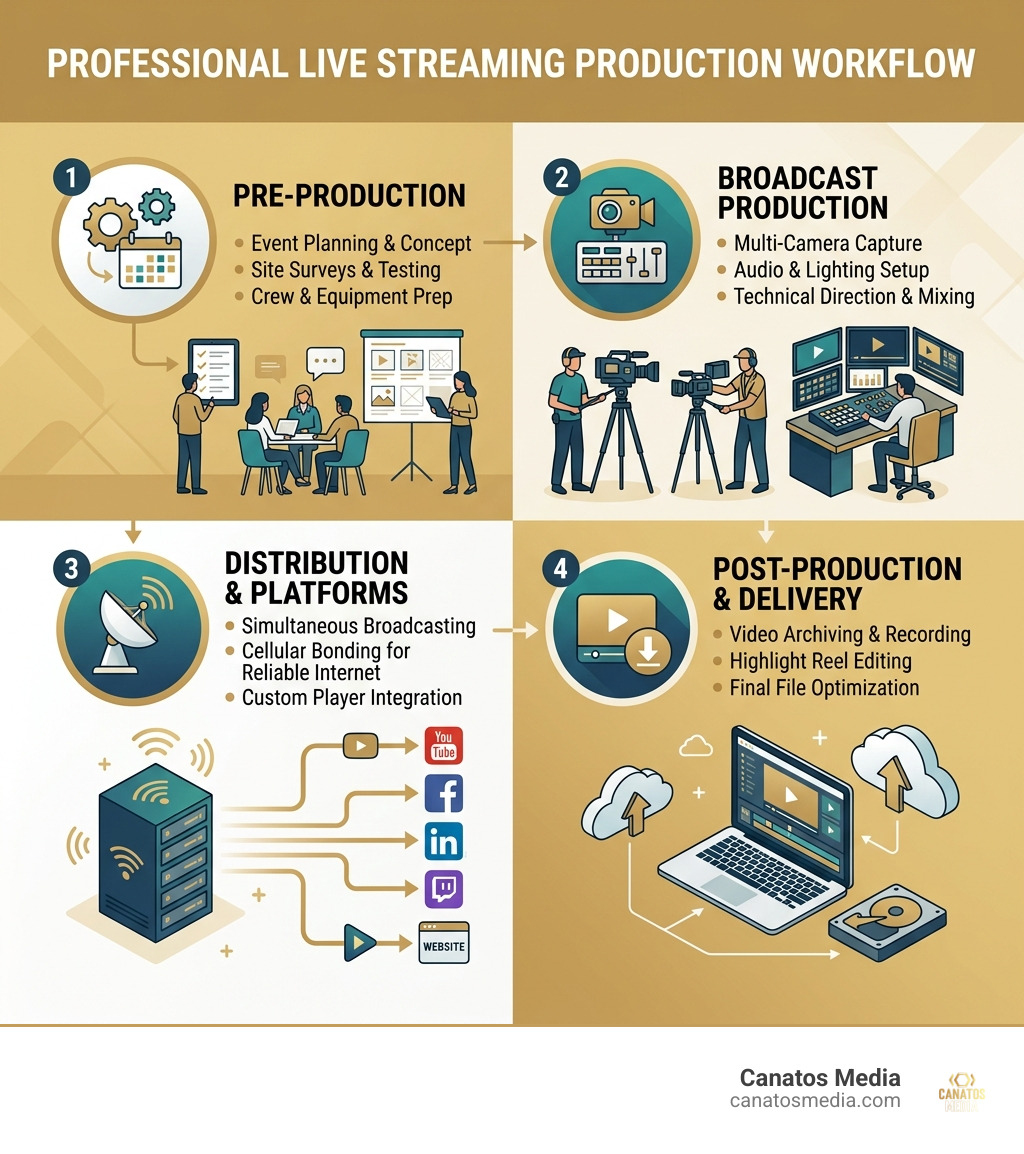
    Live streaming production workflow infographic showing pre-production, broadcast, platforms, and post-delivery - live

    What Does a Professional Live Streaming Production Company Do?

    When you hire a live streaming production company, you aren’t just paying for someone to hold a camera. You are hiring a full-service broadcast partner that bridges the gap between a physical room and a global digital audience. At Canatos Media, our Live Production team focuses on creating an immersive experience that rivals traditional television.
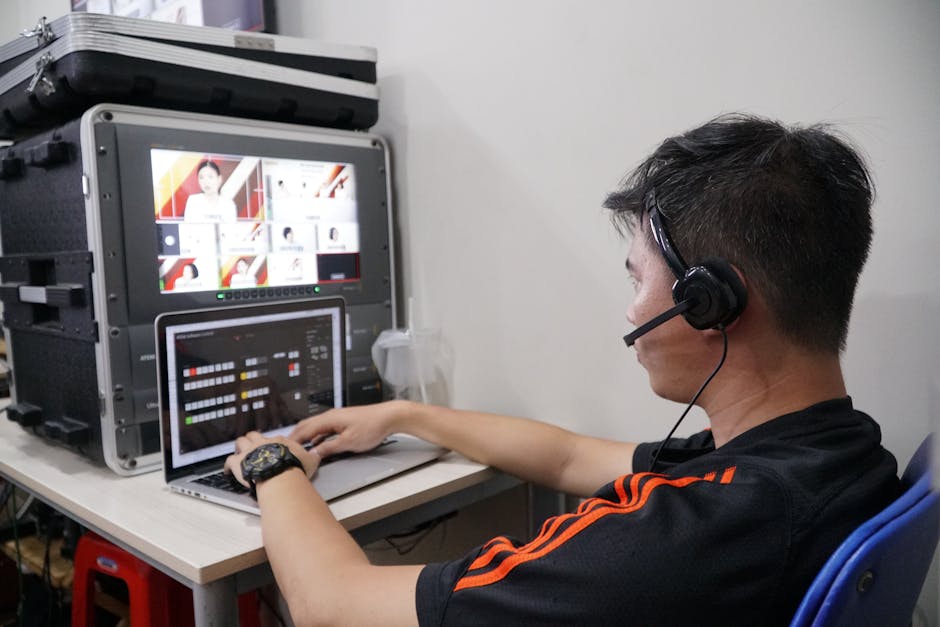
    Technical director at a multi-camera switching console managing a live broadcast - live streaming production company

    The core of the work involves multi-camera switching. This is where a technical director sits at a console and chooses the best angle in real-time. If a speaker is talking on stage, we might have one wide shot of the room, one tight shot on the presenter, and a third camera capturing audience reactions. We switch between these seamlessly, ensuring the viewer never gets bored.

    Beyond the cameras, these companies handle the “packaging” of your content. This includes:

    • Real-time graphics: Lower-thirds (names of speakers), logos, and full-screen data slides.
    • Interactive Q&A: Integrating tools like Slido or social media comments directly into the stream.
    • Global distribution: Ensuring your feed reaches viewers in the Tri-State area and across the world simultaneously.
    • Hybrid integration: Connecting remote speakers via Zoom or Teams into a high-end physical stage production.

    Whether it is a corporate town hall in a Manhattan skyscraper or a large-scale Commercial Production for a product launch, the production company acts as the “nervous system” of the event, coordinating every technical pulse.

    Why Your Business Needs a Live Streaming Production Company

    You might be tempted to just prop up an iPhone and hit “Go Live.” Please, for the sake of your brand authority, don’t do that. A professional team brings technical reliability. If your internet drops or a microphone dies during a DIY stream, the event is over. A professional crew has redundancies for everything.

    High-quality Services ensure that your audio is crisp and your lighting is cinematic. In live video, viewers will forgive a slightly fuzzy picture, but they will leave immediately if the audio is scratchy or echoing. We ensure broadcast-grade sound through digital mixers and professional-grade wireless mics, providing a seamless execution that reflects the quality of your brand.

    Platforms Supported by a Live Streaming Production Company

    A major advantage of working with pros is the ability to “simulcast.” This means we can send your video feed to multiple destinations at once. Common platforms include:

    • YouTube Live & Facebook Live: Great for public-facing community events and reach.
    • LinkedIn Live: The gold standard for B2B corporate events and thought leadership.
    • Twitch: Ideal for gaming, tech talks, or highly interactive sessions.
    • Custom OTT Platforms: For companies that want their own branded “Netflix-style” experience with pay-per-view or subscription options.
    • Vertical Streaming: Modern crews can now stream to Instagram or TikTok in a native vertical format while simultaneously broadcasting a horizontal 1080p feed to YouTube.

    Essential Technology and Equipment for High-Value Broadcasts

    To get “TV quality,” you need “TV gear.” A professional live streaming production company arrives with a van full of specialized equipment designed for the rigors of live broadcast.

    4K cinema cameras on a production floor prepared for a high-end live stream - live streaming production company

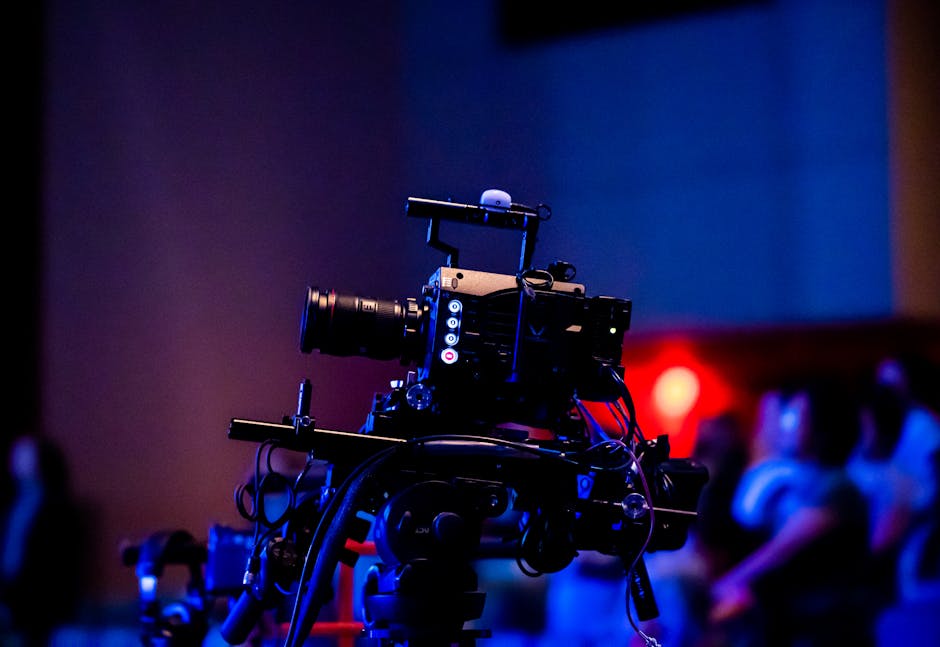
    We often utilize 4K cinema cameras because they offer a shallow depth of field, making your speakers pop off the screen. For more discreet setups, we use PTZ (Pan-Tilt-Zoom) units, which can be controlled remotely by a single operator, saving space in tight Tri-State venues. Check out our Case Studies to see how we’ve deployed these technologies in real-world scenarios.

    Other essential tech includes:

    • Dante Audio: A digital networking protocol that allows us to send high-quality audio over standard internet cables without interference.
    • Wireless Intercoms: So the director can talk to camera operators without the audience hearing a word.
    • Hardware Switchers: Dedicated machines (like Blackmagic ATEM or vMix systems) that handle the heavy lifting of video processing, ensuring the stream doesn’t crash.

    Standard Equipment Used by a Live Streaming Production Company

    Aside from the cameras, there is a “supporting cast” of gear:

    • Tripod systems: Fluid-head tripods for smooth pans and tilts.
    • Lighting kits: 3-point LED lighting to ensure presenters don’t look washed out or shadowed.
    • Jib arms: For those sweeping, cinematic overhead shots of a crowd.
    • Teleprompters: To help your executives stay on script while looking directly into the lens.
    • Professional monitoring stations: Multiple screens so the crew can see every angle and the “return feed” (what the viewers actually see).

    Solving Connectivity Issues with Cellular Bonding

    The biggest fear in live streaming is a “dead” internet connection. Many venues on Long Island or in NYC have notoriously spotty Wi-Fi. This is where cellular bonding saves the day.

    Using devices like LiveU units, we can “bond” together multiple cellular signals (4G and 5G) from different carriers (Verizon, AT&T, T-Mobile) into one super-stable internet pipe. If one carrier drops out, the others pick up the slack instantly. This provides a fail-safe internet protocol that allows us to stream from a parade float, a park, or a basement with zero downtime and stable bitrates.

    Understanding Pricing and Packages for Your Live Event

    Pricing for a live streaming production company is generally tiered based on the number of cameras and the size of the crew. While every project is unique, having a baseline helps with budgeting.
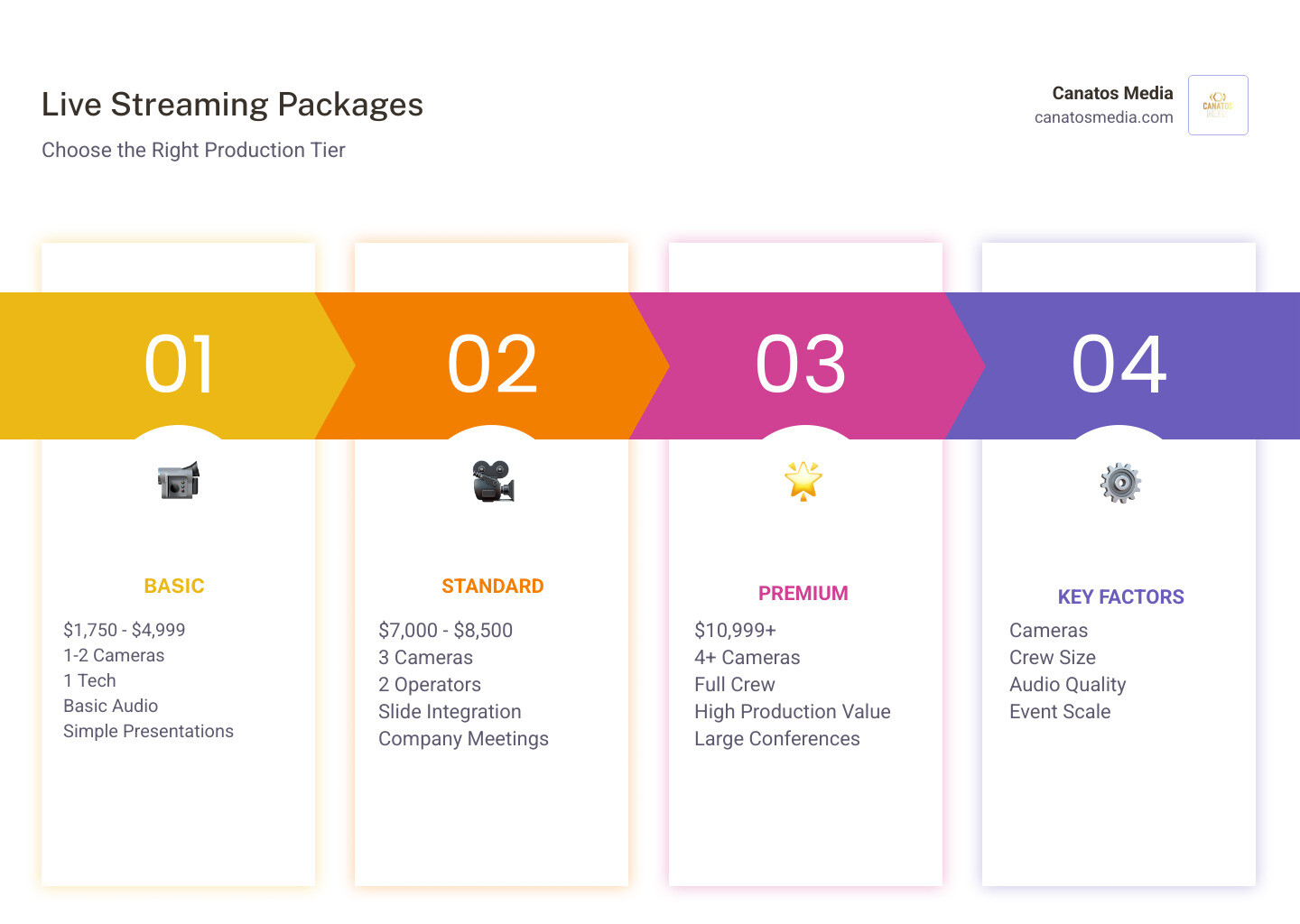
    Infographic comparing basic, standard, and premium live streaming packages - live streaming production company infographic

    Package Tier Typical Starting Price Best For Included
    Basic $1,750 – $4,999 Simple Presentations 1-2 Cameras, 1 Tech, Basic Audio
    Standard $7,000 – $8,500 Company Meetings 3 Cameras, 2 Operators, Slide Integration
    Premium $10,999+ Large Conferences 4+ Cameras, Full Crew, High Production Value

    You can view more detailed Pricing information on our site, but factors like travel within the Tri-State area or specialized equipment rentals (like Steadicams) can influence the final quote.

    Basic vs. Standard Production Tiers

    A Basic setup is usually a single-camera stream. This is perfect for a lone speaker at a podium. It is a “set it and forget it” style that captures the presentation and audio clearly but lacks dynamic movement.

    The Standard tier is the “sweet spot” for most corporate clients. It usually involves a 2 or 3-camera configuration. This allows for a “wide” shot of the stage and a “tight” shot of the speaker. It also includes professional slide integration, so the online audience sees the PowerPoint clearly on their screen rather than a blurry shot of a projector screen in the room.

    Premium and Elite Production Packages

    When you move into Premium territory, you are hiring a small army of specialists. This includes:

    • Technical Directors: The “conductor” of the broadcast.
    • Video Engineers: Who ensure the colors match across all cameras (shading).
    • Audio Engineers: Dedicated to managing complex soundscapes, like panels with 8+ microphones.
    • Elite Add-ons: This might include 4K streaming, custom-built landing pages with paywalls, or even augmented reality (AR) elements integrated into the video.

    How a Live Streaming Production Company Ensures Reliability

    Reliability is the product we are actually selling. Anyone can buy a camera; not everyone can ensure a 3-hour broadcast goes off without a single glitch.

    We achieve this through signal redundancy. We often record the “clean” feed of every camera locally to hard drives while simultaneously streaming. If the internet fails globally, we still have a high-definition recording ready for immediate upload. We also use backup power systems (UPS) to ensure that a tripped circuit breaker at the venue doesn’t take the whole show offline.

    Before any event, we perform rigorous network testing. We don’t just check the speed; we check for “jitter” and “packet loss,” which are the real killers of video quality. If you’re planning an event, we recommend a Consultation Booking early in the process so we can scout your venue and test the infrastructure.

    Key Considerations When Selecting a Live Streaming Production Partner

    Choosing the right partner is about more than just the gear. You need a team that understands your specific geography and needs. If you are in the Tri-State area or Long Island, you want a crew that knows the local venues and the logistical hurdles of NYC production.

    Consider these factors:

    1. Crew Staffing: Does the company have their own regular crew, or do they hire random freelancers? Consistency matters.
    2. Scalability: Can they handle a small 10-person meeting and a 1,000-person hybrid conference?
    3. Client Portfolio: Look for a variety of work—from corporate keynotes to entertainment events.
    4. Technical Support: Do they offer pre-production planning and “speaker coaching” to ensure your presenters look and sound their best?

    If you’re ready to start the conversation, you can Contact Us to discuss your vision.

    Frequently Asked Questions about Live Streaming Production

    What is the difference between a webinar and a professional live stream?

    A webinar (like a standard Zoom call) is designed for two-way communication and is usually low-resolution. A professional live stream is a “one-to-many” broadcast. It uses high-end cameras, professional lighting, and cinematic switching to create a polished, “TV-like” experience for the viewer.

    How many crew members are needed for a standard corporate live stream?

    For a standard 3-camera setup, you typically need at least two or three people: a Technical Director (to switch the show) and one or two Camera Operators. Larger shows may add a dedicated Audio Engineer and a Graphics Operator.

    Can you live stream from a location with no hardwired internet?

    Yes! Thanks to cellular bonding technology (like LiveU or Teradek systems), we can combine multiple 5G signals to create a high-speed connection almost anywhere in the Tri-State area, even in parks or outdoor venues.

    Conclusion

    Hiring a live streaming production company is an investment in your brand’s digital presence. In an era where “hybrid” is the new standard, your online audience deserves the same high-quality experience as the people sitting in the front row.

    At Canatos Media, we don’t just provide cameras; we provide an integrated digital strategy. We combine cinematic content with expert targeting to ensure your live event reaches the right people and drives measurable growth. Whether you need a simple webcast or a complex multi-city hybrid production, we have the experience to make it happen.

    Ready to take your next event live? Visit our Home page or jump straight to our Live Production Services to learn more.
  • Lead Generation Video Production: How to Choose the Right Agency in 2026

    Lead Generation Video Production: How to Choose the Right Agency in 2026

    Why Video Content Drives Lead Generation Better Than Static Marketing

    Video captures attention in ways that static images and text cannot. When someone scrolls through their social feed, a video thumb-stops them. When they land on your website, a video on the homepage keeps them there longer. The data backs this up: video content generates 1200% more shares than text and images combined, and viewers retain 95% of a message when they watch it in video form compared to 10% when reading text.

    For lead generation specifically, video works because it compresses trust-building into seconds. Your potential customer can see your product in action, hear your voice, and understand your value proposition before they commit to anything. This matters enormously for service-based businesses, where the buyer needs confidence in both your expertise and your approach.

    The real advantage sits in conversion velocity. A prospect who watches 60 seconds of video content moves further down your sales funnel than someone who only read a headline. They’ve invested attention. They understand what you do. When your video ends with a clear call-to-action, they’re primed to respond.

    What to do next: Audit your current content mix. If more than 80% of your marketing assets are static (images, text posts, written blogs), you’re likely leaving qualified leads on the table.

    The Problem Most Agencies Miss: Disconnecting Video from Sales Systems

    Many video production agencies excel at making beautiful content. They shoot it, edit it, deliver it, and then step back. You own a great video. Now what?

    This disconnect costs you leads. We’ve worked with dozens of businesses who had professionally produced video sitting on their website or social channels generating views but no actual lead conversions. The video looked polished. The views climbed. Nothing happened.

    The missing piece is the sales system that sits behind the video. Without a structured approach to capturing leads from video viewers, you’re essentially creating entertainment rather than a lead generation tool. A great video needs:

    • Clear messaging aligned with what your sales team actually sells
    • Strategic placement where your target customer actually looks
    • A frictionless path from viewing to inquiry
    • Retargeting mechanisms to follow up with viewers who don’t convert immediately

    When video production operates in isolation from your broader marketing and sales infrastructure, you lose the compounding effect that makes video truly powerful. The video becomes a standalone asset instead of a driver within a system.

    What to do next: Document your current lead capture flow. Where does someone go after they watch your video? Does a lead form appear? Can they book a call directly? If the answer is unclear, that’s where your revenue leak is.

    How Integrated Video and Digital Strategy Creates Measurable Results

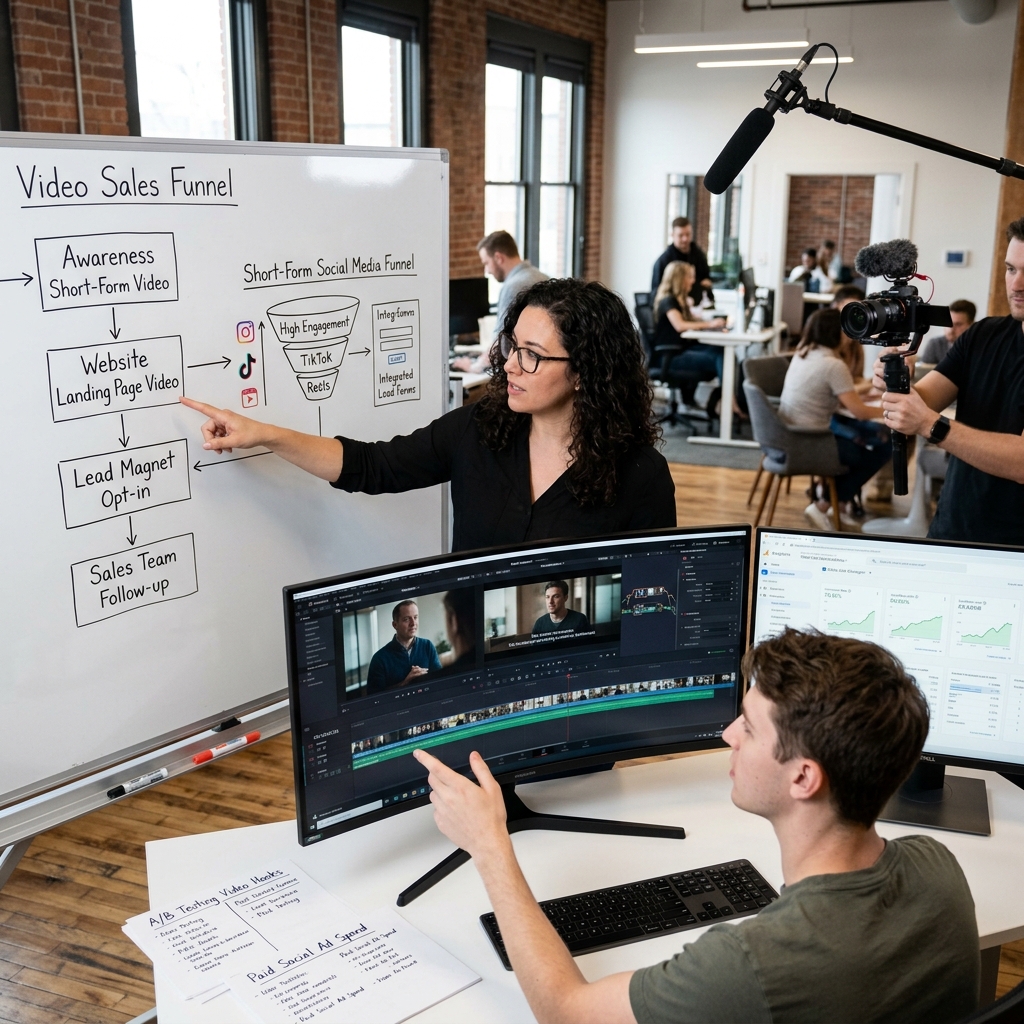
    We’ve learned that the agencies and internal teams that win with video treat it as one piece of a larger machine. Video creates the attraction and builds initial trust. Paid advertising amplifies it to the right audiences at the right time. Email and retargeting keep the conversation alive. Your website and sales process convert viewers into customers.

    When these systems work together, the results compound. A viewer watches a 15-second video on Instagram. That video is so relevant and well-targeted that they click through to your website. Your website reinforces the message with supporting copy and another video. A retargeting ad follows them the next day with a customer testimonial video. They book a call. Now your sales team has context because they’ve seen you repeatedly and know exactly what you do.

    This integrated approach also makes attribution clear. You can track which video formats drive the most qualified leads. You can see which audiences convert best. You can measure ROI on the entire system, not just view counts or engagement metrics.

    We help clients build this integration by connecting video production directly to their digital strategy. Your video isn’t just about storytelling; it’s about moving specific people from awareness to action using a coordinated set of tools.

    What to do next: Map out your current marketing funnel. Identify where video could sit at each stage (awareness, consideration, decision). Fill any gaps where static content is currently holding space.

    Short-Form Video for Social Media Attention and Lead Capture

    Short-form video dominates attention in 2026. The algorithm favors it. Your audience watches it (often without sound). It performs across every major platform. But not all short-form video performs equally for lead generation.

    The most effective short-form videos for leads typically fall into a few categories:

    Problem-solution videos show a pain point your customer experiences, then demonstrate how you solve it. A property manager watching a 20-second video about tenant screening tools immediately sees the relevance.

    Social proof and case study videos feature real customers talking about results. These compress credibility into digestible formats. A 30-second clip of a satisfied customer mentioning a specific outcome influences viewers far more than you talking about how great your service is.

    Educational snippets position you as knowledgeable. A roof inspector sharing a 45-second safety tip or a bookkeeper explaining a common tax mistake establishes expertise that drives qualified inquiries.

    Testimonial and transformation videos show before-and-after results or genuine customer reactions. These work because they’re authentic and benefit-focused.

    The production quality matters, but accessibility matters more. A well-lit phone video with clear audio outperforms a poorly recorded professional production. Viewers want to see real people solving real problems, not over-produced corporate content.

    We specialize in short form video production that balances cinematic quality with authentic relatability. The goal is to stop the scroll, build recognition, and funnel viewers toward your lead capture mechanism.

    What to do next: Identify three specific problems your customers have before they work with you. Plan one short-form video for each that demonstrates how you solve it. Start shooting this week.

    Organic reach is limited. A great video reaches your existing followers, but it doesn’t scale. Paid advertising turns your video into a lead generation engine by putting it in front of people who haven’t seen you yet but fit your ideal customer profile.

    Meta (Facebook and Instagram) and Google offer distinct advantages for video advertising. Meta’s targeting is audience-based, allowing you to reach specific demographics, interests, and behaviors. Google’s approach is intent-based; you’re reaching people actively searching for solutions. Both matter for lead generation, but they serve different purposes.

    On Meta, your video ads can be targeted to lookalike audiences of your best customers, competitors’ audiences, or custom audiences built from your website visitors. Video ads typically outperform static ads by 2-3x on these platforms. A well-crafted 15-second video ad can generate leads at half the cost of a static image ad.

    Google advertising works best when you’re running video ads on YouTube (placement-based targeting) or using video in search ads (showing short video clips alongside search results). This captures people in active problem-solving mode.

    The integration happens when your paid advertising strategy directly amplifies your best-performing organic video content. If a particular short-form video resonates with your audience, you boost it with paid budget targeting lookalike audiences. You also retarget people who viewed the video but didn’t convert, showing them different variations or social proof content.

    What to do next: Analyze your top three performing organic videos. Calculate what you’d need to spend to reach 10x that audience through paid ads. Start with a small budget test on your best performer.

    SEO Optimization Through Video Content and Technical Implementation

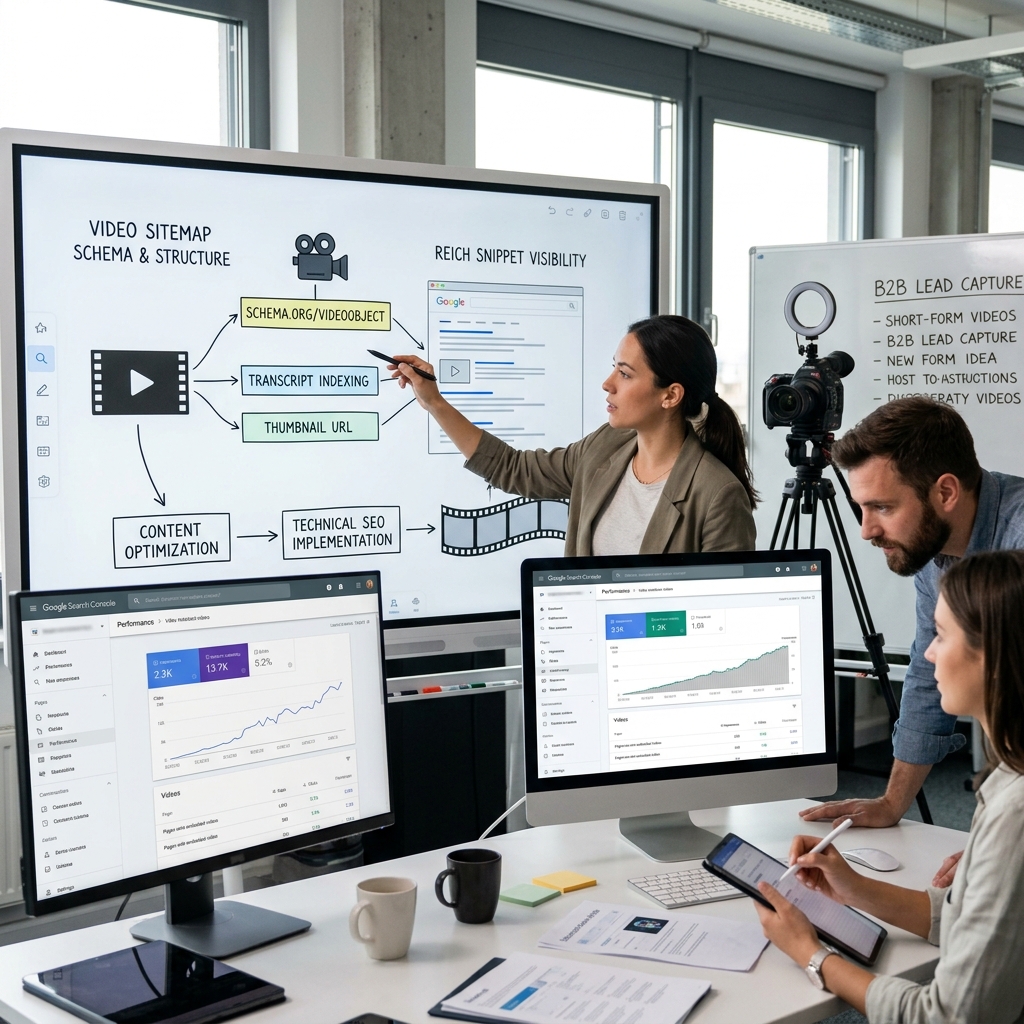
    Video improves your SEO in multiple ways. Google’s algorithm now heavily weights video content in search rankings, especially for competitive queries. Pages with video rank higher and get more clicks. Video also increases time-on-page, which signals quality content to search engines.

    But SEO optimization for video goes beyond just embedding a video on your page. The technical implementation matters. Your video needs proper schema markup so search engines understand what it is. It needs descriptive titles and transcripts. Your page needs strategic keyword placement in headers, metadata, and surrounding text.

    For B2B and service-based businesses, video content combined with solid on-page SEO creates a powerful lead generation channel. A service business in a competitive local market can rank for “best plumbers in [city]” by creating video content that answers the questions prospects are searching for, then optimizing the page technically.

    Cinematic website videos that sit on your key landing pages also improve conversion rates, which indirectly supports SEO through improved user engagement metrics.

    What to do next: Identify 10 keywords your ideal customer is searching for. Note which ones already have video in the top 10 results. These are your highest-opportunity targets for video content creation.

    Building Lead Generation Systems That Convert Video Viewers to Customers

    A lead generation system is the infrastructure that turns video viewers into actual leads and customers. It consists of several integrated components.

    The first component is your landing page. When someone clicks through from your video ad or organic social content, where do they land? A well-designed landing page reinforces the video message and makes the next step obvious. That next step might be a form, a phone number, a booking link, or another piece of content.

    The second component is your lead capture mechanism. Forms should be short (three to five fields maximum for cold traffic). Alternatively, calendar booking tools remove friction by letting prospects schedule directly. Some businesses use chat or SMS collection.

    The third component is lead qualification. Not all leads are equally valuable. A system that automatically scores or segments leads based on their behavior helps your sales team focus on the highest-potential prospects.

    The fourth component is follow-up. Most leads don’t convert on first contact. An automated email sequence, SMS sequence, or retargeting campaign keeps your brand in front of prospects who showed initial interest.

    We build these systems so that video isn’t just a content asset; it’s the entry point to a coordinated lead-generating machine. The best system you can build is one where a prospect watches a 30-second video, clicks to a relevant landing page, enters their information, and immediately receives a confirmation message with next steps and a calendar link to schedule a call.

    What to do next: Map your current lead capture flow end-to-end. Identify any steps that feel clunky or multi-click. Simplify at least one bottleneck this month.

    The Cinematic Brand Storytelling Advantage in Competitive Markets

    In crowded markets, differentiation matters. Two roofing companies offering similar services at similar prices compete on brand, not features. A plumber with generic before-and-after photos looks like every other plumber. A plumber with cinematic video storytelling that showcases their process, their team, and their care for customer homes stands apart.

    Cinematic storytelling means video production with intentional cinematography, color grading, sound design, and narrative structure. It doesn’t mean “expensive”; it means purposeful. A 60-second video showing your team in action, with proper lighting and a compelling soundtrack, makes a profound impact on how prospects perceive your business.

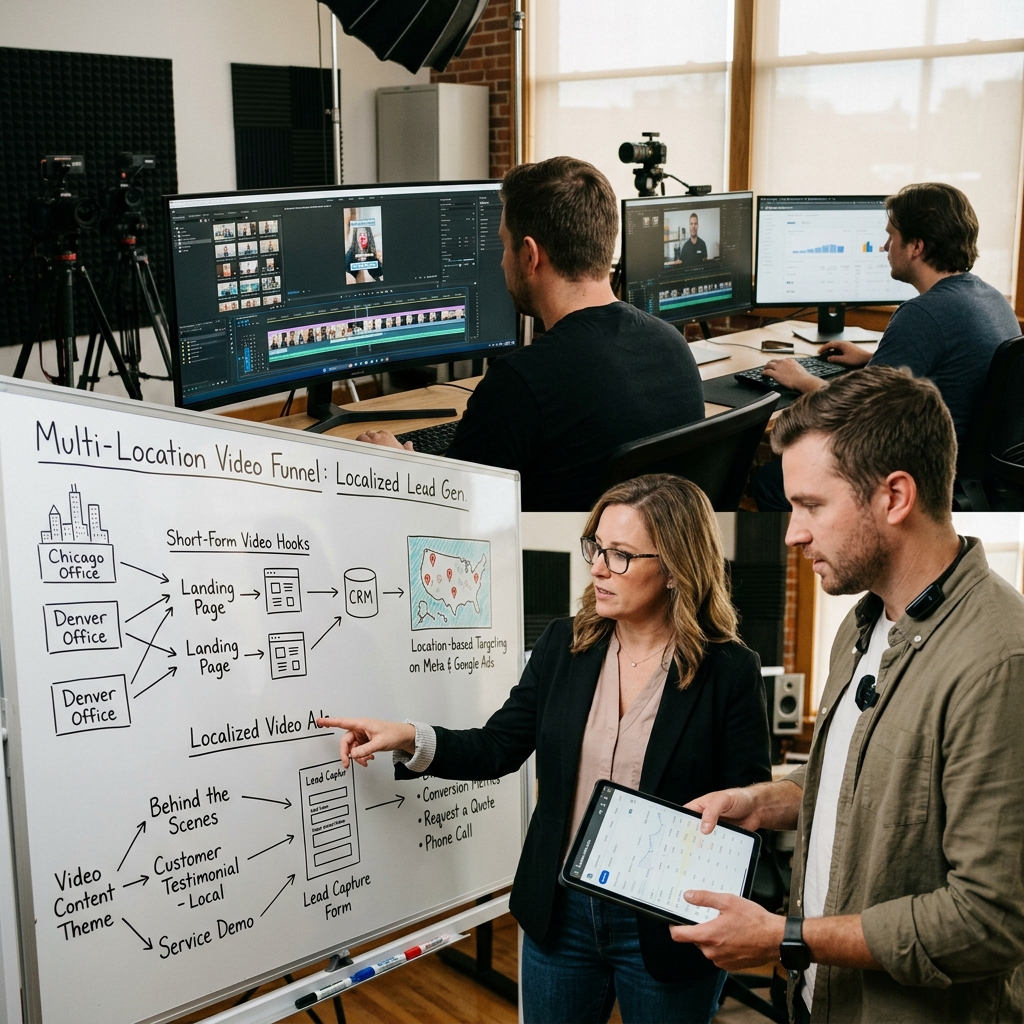
    For multi-location brands, cinematic storytelling creates consistency. Every video reinforces the same visual identity and messaging, which strengthens brand recognition across markets. A customer in your Chicago location recognizes the same brand experience as your New York location.

    Cinematic video also performs better on social media. The algorithm favors high-production-value content. Viewers stop scrolling for a visually striking video more often than for amateur footage. This means more views, more engagement, and more opportunities to capture leads.

    What to do next: Audit your competitor’s video content. Note the production quality level and storytelling approach they’re using. Plan to exceed it by one level.

    What to Evaluate When Selecting a Lead Generation Video Partner

    Not all video production agencies understand lead generation. Some specialize in brand awareness videos. Some focus on short-form social content. Some excel at cinematic storytelling but don’t connect it to sales systems.

    When evaluating a lead generation video partner, look for several specific things:

    Lead generation experience. Ask for case studies showing not just video metrics (views, engagement) but actual business results (leads generated, cost per lead, conversion rates). If an agency can’t show this, they likely aren’t thinking about video the same way you are.

    Integration capability. Do they work with your existing marketing stack? Can they coordinate with your paid advertising strategy, your email platform, and your CRM? A siloed approach creates extra work and disconnected results.

    Multi-location understanding. If you operate multiple locations, does your partner understand the challenges of maintaining consistency while allowing local relevance? This is a specialized skill.

    Strategic thinking, not just production. The best partners ask questions about your sales process, your ideal customer, and your specific business goals before they pick up a camera. Production is the easy part. Strategy is what moves the needle.

    Transparent reporting. You should know exactly how many leads each video generated, at what cost, and which audiences converted best. If an agency is vague about results, keep looking.

    Why Multi-Location and Service-Based Brands Need Specialized Video Strategies

    Multi-location businesses face a unique set of challenges. You need consistency across brands so customers recognize you everywhere. You also need local relevance so a prospect in Denver feels like you’re speaking directly to them, not running a generic corporate playbook.

    Standard video production agencies treat all businesses the same. But a five-location HVAC company has entirely different needs than a national software company. The local HVAC company needs short-form video content that speaks to local pain points, local team introductions, and local customer testimonials. They need volume (lots of videos across all five locations). They also need some central brand videos that reinforce the company mission and quality standards.

    Service-based businesses similarly need specialized approaches. A landscaping company’s video strategy looks different from a consulting firm’s. A contractor’s lead gen video needs to show work, build trust in craftsmanship, and address specific homeowner concerns. A consultant’s video needs to establish thought leadership and speak to strategic challenges.

    The video production partner you choose should have direct experience with your specific business type and should already understand your market. This saves months of trial and error and gets you to effective lead generation faster.

    We focus specifically on growth-focused service-based and multi-location brands because we understand the operational complexity, the sales cycles, and the scaling challenges you face. This specialization means our video strategies are built around how you actually do business.

    What to do next: Reach out to three video production agencies this week. Ask specifically about their experience with multi-location brands or your specific industry. Their answers will tell you whether they can actually help.

    Contact us today for a free consultation to see how we can help you grow your business.

    Frequently Asked Questions (FAQ)

    How do we connect video content directly to lead generation instead of just getting views?

    We build integrated systems that pair cinematic short-form video with paid advertising, landing pages, and lead capture workflows. Our approach treats video as the attention mechanism, but we layer in conversion infrastructure through Meta and Google advertising, SEO optimization, and backend tracking so that viewers become qualified leads. We’ve found that disconnecting video from sales systems is where most brands lose momentum, so we ensure every piece of content feeds into a measurable funnel.

    Why does our video strategy work differently for multi-location and service-based brands?

    We recognize that these business models require consistent brand messaging across multiple locations while driving local lead volume, which demands a different production and distribution approach than one-off campaigns. We produce cinematic content that scales across your locations, then run localized paid advertising and optimize your technical SEO so prospects in each area find you when searching for your services. This combination of centralized storytelling with distributed lead capture is specifically designed for how your customers actually search and decide.

    What’s included when we partner with you on lead generation video production?

    We handle short-form video production, social media management, paid advertising setup and optimization on Meta and Google, website design and support, and AEO optimization to ensure your content and technical foundation work together. Rather than handing off video files and disappearing, we stay involved in the entire digital ecosystem so we can adjust strategy based on what’s actually converting into leads and sales for your business.