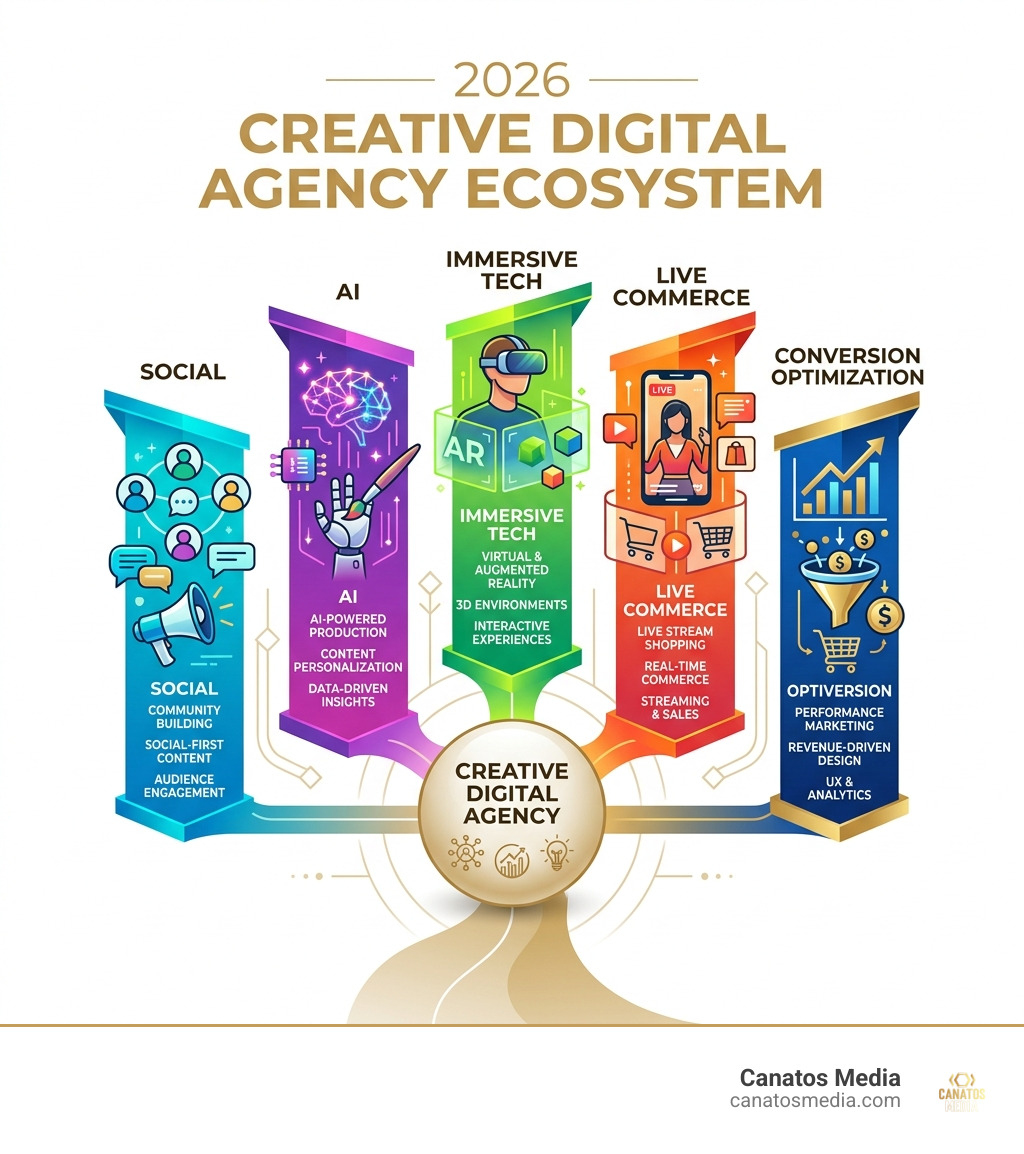
The Challenge of Scaling Content Across Multiple Locations
Managing social media for multiple locations feels like juggling flaming torches while riding a unicycle. You need consistency so customers recognize your brand across all touchpoints. You also need authenticity and local relevance so each community feels seen and valued. Most multi-location brands end up choosing one or the other, which creates problems either way.
The truth is that scaling social content across branches doesn’t require sacrificing either consistency or local flavor. It requires a deliberate framework, the right tools, and a content approach built specifically for distributed teams.
Running social media for ten locations simultaneously means managing ten different teams, ten different customer bases, and ten different competitive landscapes, often with minimal central oversight. Your Portland location operates in a different market than your Denver branch. The staff turnover is different. The seasonal demand is different. The local influencers and community partners are different.
Without a system in place, you face several friction points:
- Team members post inconsistently, sometimes missing posting schedules altogether
- Brand messaging shifts between locations, confusing customers who follow multiple branches
- Content gets repetitive because central teams lack insight into local opportunities
- Approval processes either bog down posting schedules or disappear entirely
- Performance data stays siloed, so you never learn what actually resonates across your network
For service-based brands and multi-location franchises, this isn’t a minor operational issue. It directly impacts lead quality, conversion rates, and customer lifetime value across your entire business.
Why Generic Posts Fail Multi-Location Brands
A single post pushed out to all ten locations might reach a lot of people, but it rarely converts them into leads. Generic content treats your entire customer base as interchangeable, which they’re not.
Consider a dental practice with five locations. A post that says “Keep smiling with regular checkups” works everywhere, but it doesn’t speak to the frustrated 35-year-old in Boise who’s been putting off a crown, or the 28-year-old in Tucson who’s considering teeth whitening for an upcoming wedding. It doesn’t mention your Boise team’s emergency appointment availability or highlight the new tech at your Tucson location.
When you skip local relevance, engagement drops noticeably. Comments decline. Shares are rare. The algorithm notices low interaction and shows your post to fewer people. Worst of all, those visitors who do see your post often can’t tell whether they should visit your Phoenix location, your Sacramento location, or neither.
The fix isn’t to abandon centralized messaging. It’s to use central messaging as a foundation while empowering each location to add the context and details that make it resonate locally.
The Balance Between Brand Consistency and Local Authenticity
Strong multi-location brands maintain recognizable visual identity and core messaging while allowing local teams freedom in execution. This balance prevents two problems simultaneously: brand confusion and content staleness.
Think of it like a restaurant chain with a signature dish. The recipe stays consistent. The plating follows brand guidelines. But the location’s head chef can feature seasonal ingredients from local farmers, highlight regional flavor preferences, and photograph the dish in their own dining room with their own team.
The framework requires clarity on three levels:
Non-negotiable brand elements – Logo treatments, color palette, core value propositions, and legal messaging that never change regardless of location.
Flexible strategic themes – Monthly content pillars or campaign angles that all locations participate in, but adapt locally. For example, “Customer Success Stories” might look different in Denver versus Dallas, but both locations contribute stories.
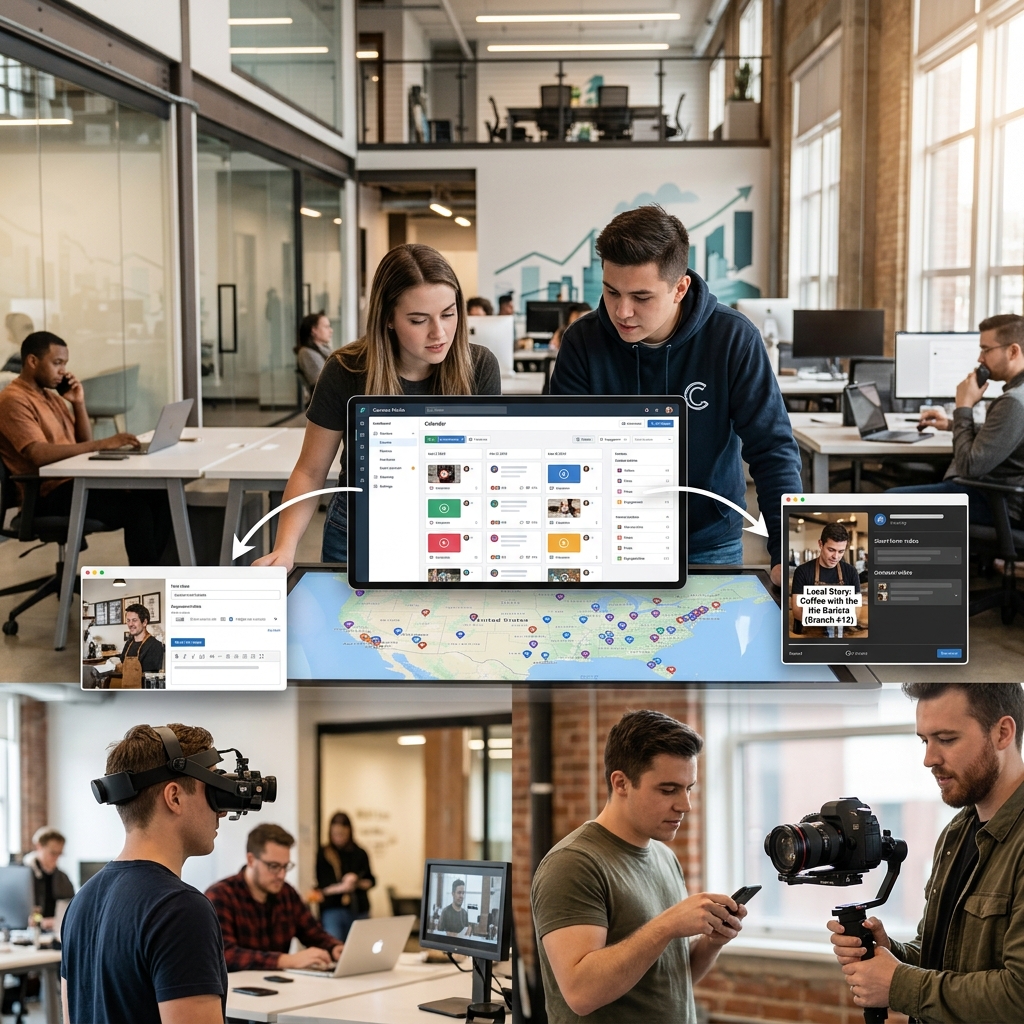
Local execution authority – Each location controls the specific details: which stories they tell, which community partnerships they highlight, which local trends they tap into, and what call-to-action they emphasize.
This three-tier approach prevents the “corporate drowning local flavor” problem while ensuring customers see a cohesive brand experience.
Building a Centralized Content Framework That Allows Local Flexibility
A centralized framework starts with a shared content calendar and defined content themes, not prescriptive daily posts. Instead of “Post about summer sales every Thursday,” your framework says “Each location will run a promotion in June, but you choose the angle and timing that makes sense for your market.”
Structure the framework around these components:
- Monthly themes that all locations address through their own lens
- Content templates that provide starting points without dictating final output
- Visual guidelines that ensure consistent quality and branding
- Approval workflows that catch problems without killing momentum
- Performance dashboards that show which content types drive engagement and leads
The calendar should live in a shared tool, visible to all locations but organized in a way that prevents chaos. Clarity about deadlines, approval processes, and who has authority to publish prevents bottlenecks.
How to Empower Each Location with Customization Tools
Each location needs the same basic toolkit: access to brand assets, content templates, and approval workflows. But they also need authority to make decisions without waiting for head office approval on every post.
Establish clear decision-making authority by category. For example:
- Auto-approve: Posts about local events, staff spotlights, and customer testimonials from that location
- Needs approval: Posts that reference pricing, promotions, or claims about product performance
- Escalate: Posts that might generate controversy or touch on sensitive topics
Provide each location with ready-to-customize templates for common post types. A customer success story template might include placeholders for the customer’s name, challenge, solution, and results. The location fills in their own customer details and adapts the messaging to their voice. This cuts content creation time by 60-70% while maintaining quality standards.
Give teams access to a shared asset library: brand logos, product photos, approved backgrounds, and music tracks. This prevents the situation where one location uses a licensed photo without permission while another shoots at an unprofessional angle.
Leveraging Cinematic Storytelling for Consistent Quality Across All Branches
Video content is the most powerful tool for maintaining brand consistency while celebrating local teams. Professional, cinematic production creates a quality floor that plain photography and text can’t match. It also compels attention more reliably than static posts.
We’ve found that brands using short-form cinematic video across their locations see 3-4x higher engagement rates than brands mixing amateur user-generated content with professional assets. The consistency signals quality and professionalism. The local storytelling keeps it human and relevant.
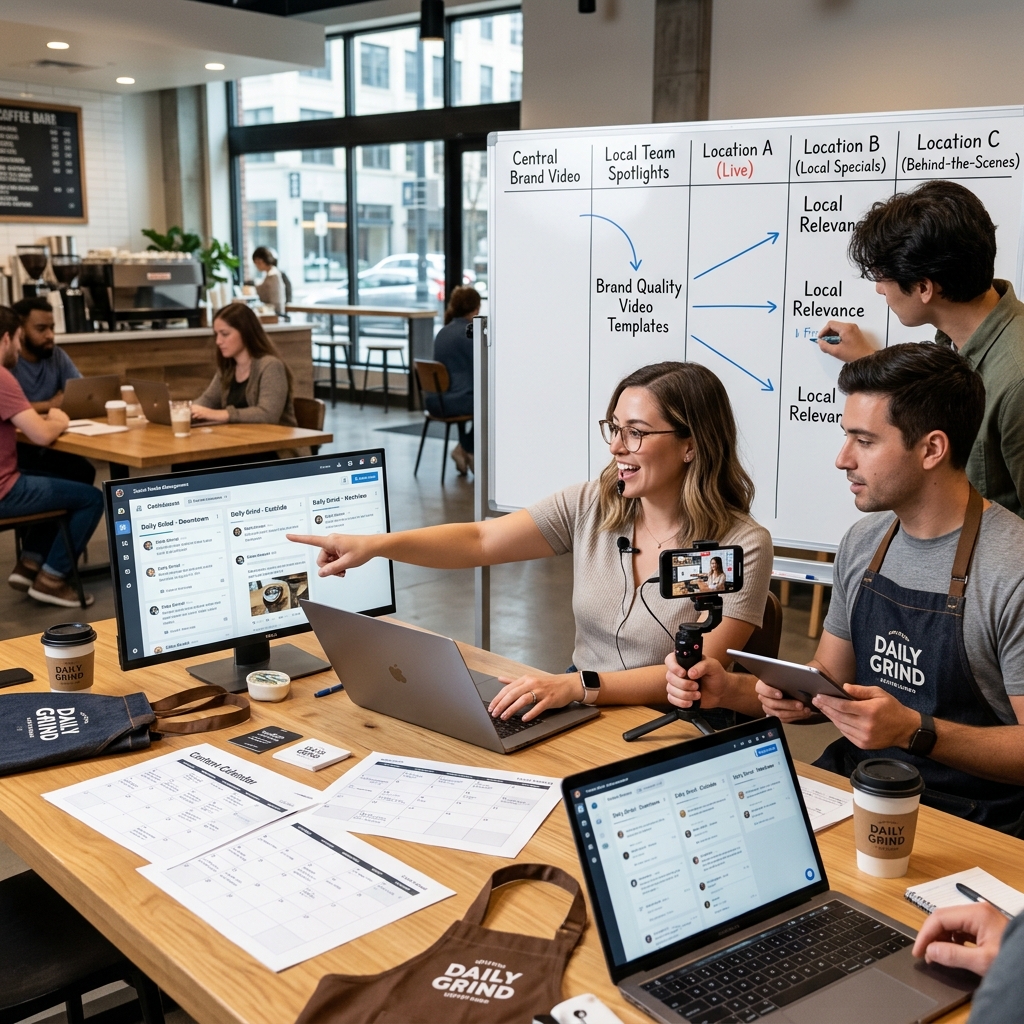
Instead of creating one master video and hoping it lands everywhere, create video story templates. A “Meet Your Local Team” video might follow the same structure, transitions, and music across all locations, but feature each location’s unique staff, workspace, and culture. The consistency makes it recognizable as part of your brand. The local variation makes it genuine.
This approach also scales production efficiently. Rather than creating entirely custom videos for each location, you’re creating one structural template and shooting location-specific footage to fill it. Production costs and timelines shrink significantly while quality remains high.
Creating Location-Specific Video Content That Drives Real Engagement
Video content that drives engagement speaks directly to what matters to that specific community. A pet grooming franchise’s Austin location might create a video about “Hot weather coat care for Texas dogs.” The Seattle location creates “Rainy season mat prevention.” Same brand, same production quality, completely different relevance.
Start by researching what questions each location’s customers actually ask. What search terms do people use? What problems appear in customer reviews? What are local competitors talking about? This research becomes the foundation for video topics.
Each location-specific video should follow this structure:
- Local hook – Open with a problem or question unique to that area
- Expert solution – Show how your team solves it
- Local proof – Feature a customer from that community
- Simple next step – Make it easy to book, call, or visit
Short-form videos (under 90 seconds) perform better on social than longer pieces. They’re easier to watch on mobile, they get consumed while people are scrolling, and they’re more likely to be shared. Platform-specific versions (Instagram Reels, TikTok, YouTube Shorts) maximize reach without requiring separate shoots.
Systems for Managing Content Approval and Publishing at Scale
Without clear approval workflows, you either create bottlenecks that slow posting, or you lose all oversight. Both problems damage results.
Implement a simple system based on content type and risk level. Use a shared platform (Monday.com, Asana, or similar) where locations submit content for review. Create approval rules: low-risk posts move straight to publishing, medium-risk posts get a quick review, high-risk posts trigger a longer approval cycle.
Build in a “holding period” for published content. Once something goes live, allow 24-48 hours before it’s locked. This gives someone the chance to catch mistakes or compliance issues early, before the post gains traction and becomes harder to modify.
Train location teams on what requires attention. Make sure they understand why certain posts need review. Context prevents resentment and helps teams become more thoughtful about what they’re publishing.
Track approval times. If posts are stuck in approval for days, you’ve created a system problem. Locations will stop using it and post directly, defeating the entire system. Most posts should move through approval in 4-8 hours maximum.
Measuring Performance by Location to Identify What Works
Raw engagement numbers (likes, shares, comments) tell you what content gets attention. They don’t tell you what actually matters: whether that attention converts to leads and revenue for each location.
Set up location-specific dashboards that track:
- Engagement rate – Comments, shares, saves divided by reach
- Click-through rate – How many people clicked the link or CTA
- Lead quality – Which content types send leads that actually convert to customers
- Revenue impact – Attribution data showing which social content influenced purchases
This data reveals patterns. You might discover that video content converts in your Denver location but text posts convert better in your Miami location. That Instagram Stories drive leads in one market but TikTok dominates in another. That your team spotlights consistently convert better than promotional posts, even though they generate lower raw engagement.
Use these insights to guide future content. Locations should double down on what works for their specific market, not what worked best company-wide. The data becomes the conversation starter: “Hey Miami team, we’re noticing that longer-form storytelling is converting 40% better for you. How should we adjust your Q2 strategy?”

Turning Local Social Momentum Into Qualified Leads for Each Branch
Social media engagement only matters if it converts to customers. The bridge between attention and leads is usually a clear, friction-free next step.
Every location-specific post should have a location-specific call-to-action. Instead of “Book now,” say “Schedule your free consultation at our Denver office” with a link to Denver’s booking page. Instead of “Shop today,” say “Pick up at our Nashville store” with hours and directions.
Create location-specific landing pages that match the content. If a video is about “Five signs you need a new HVAC system,” send viewers to a landing page about HVAC replacement, not your general services page. The relevance increases conversion rates substantially.
Consider location-specific incentives. “Book this week and get 20% off” works better than a generic discount, especially if you tie it to what that community cares about. Your beach location might offer “Free UV protection treatment with every window tint” while your mountain location offers “Free winter weatherproofing.”
Track which social posts send the most qualified leads. A piece of content that generates ten leads at 25% conversion rate is more valuable than something that generates 100 leads at 5% conversion. This measurement guides your content strategy more accurately than engagement metrics alone.
How We Solve Multi-Location Social Strategy for Growing Brands
Managing cohesive social content across multiple locations demands a strategy that respects both brand integrity and community relevance. It also requires production quality, approval systems, and performance measurement that most teams can’t handle alone.
At Canatos Media, we solve this for multi-location brands by combining cinematic short-form video production with integrated social media management systems. We build content frameworks that give each location breathing room while maintaining brand consistency. We handle video production at scale, using templates and local shooting days to create professional content efficiently. We manage approval workflows and posting schedules so content moves fast without losing oversight.
Most importantly, we measure what matters: which content actually drives qualified leads for each location, and we adjust strategy based on that data.
If you’re running social media for multiple locations and struggling to balance consistency with local relevance, that’s a sign your current approach needs to evolve. Our case studies show how we’ve helped similar brands scale content without sacrificing quality or local impact. The first step is clarifying your content framework and understanding which posts are actually converting to leads. From there, a structured system and quality production make the rest manageable.
Contact us today for a free consultation to see how we can help you grow your business.
Frequently Asked Questions (FAQ)
How do we help multi-location brands maintain consistent quality while keeping content locally relevant?
We build a centralized content framework that establishes your brand’s visual standards, messaging pillars, and cinematic style guidelines upfront. Then we equip each location with customization tools and approval workflows so they can adapt content to their local audience while staying true to your overall brand identity. Our process ensures every branch can tell authentic local stories without diluting what makes your brand recognizable across all channels.
What’s your approach to managing content approval and publishing across multiple locations?
We implement scalable systems that streamline approval processes without creating bottlenecks. Our teams work with you to establish clear workflows where local managers can customize content, submit for review, and publish on their own timelines while maintaining centralized oversight. This gives your locations autonomy while keeping brand consistency intact across all your branches.
How do you measure which content strategies actually work for each individual location?
We track performance metrics by location so you can see exactly which content types, posting times, and messaging drive engagement and leads at each branch. This data-driven approach reveals what resonates locally while identifying best practices we can scale across your entire network. We use these insights to continuously refine your multi-location strategy and connect social momentum directly to qualified leads for each location.