Why Local Businesses Struggle With Video Ad Performance
Short-form video dominates how people discover and engage with brands, yet most local businesses still treat video ads like static ads with motion. They upload content, set a budget, and wonder why views don’t translate to leads. The gap between attention and action is where most local video campaigns fail.
We’ve seen this pattern repeatedly: strong creative, decent reach, minimal qualified leads. The issue isn’t the video quality. It’s the strategy connecting that video to your business goals.
Local service businesses face a unique advertising challenge. You need customers within a specific geographic area, and your sales cycle often requires trust and consideration before conversion. Generic video ad approaches don’t account for how local buying decisions actually work.
Most local businesses either ignore video advertising entirely or copy tactics from national brands. National campaigns prioritize broad awareness. Your business needs the opposite: highly targeted video that reaches people ready to hire you soon.
Budget constraints compound the problem. A local HVAC company, plumber, or home contractor has a smaller ad spend than a nationwide brand, which means every dollar must work harder. Wasted clicks to irrelevant viewers cost money you don’t have to spare.
The platform algorithms also work against the unprepared. Meta and Google reward ads that drive specific actions (leads, calls, purchases). If your video ad doesn’t clearly direct viewers toward those actions, the algorithm deprioritizes it, pushing your CPM up and your ROAS down.
What to do next: Audit your current video ads. Track how many views convert to actual leads, not just clicks. This baseline reveals whether your struggle is creative, targeting, or structural.
The Core Challenge: Converting Views Into Qualified Leads
Watching a video and clicking to learn more are two different behaviors. A view is passive consumption. A lead requires active intent and commitment of contact information.
Many local businesses optimize for views or clicks. That’s the wrong metric. A video can get 5,000 views and generate zero leads if it doesn’t signal value clearly or direct viewers to a next step they’re willing to take.
Consider a roofing company running video ads. A 15-second video showing beautiful roof installations might get high view-through rates. But if viewers watch out of curiosity without understanding the company’s guarantee, pricing, or urgency, they won’t convert. They simply watched something visually interesting and moved on.
The conversion gap widens when video sends traffic to a generic landing page or outdated website. The viewer sees a compelling 6-second hook but lands on a page that doesn’t match the promise or feels slow to load. That friction kills conversion rates.
Time-sensitive service businesses have an additional layer of complexity. An emergency plumber needs leads from people with urgent problems right now. A general contractor can work with longer sales cycles. Your video and landing page structure must align with how fast your customer needs to act.
Actionable step: Map your customer journey from video view to lead submission. Identify friction points where viewers drop off. A simple friction audit (slow pages, unclear CTAs, irrelevant forms) often reveals more ROI gains than creative changes.
What Makes Short-Form Video Different From Traditional Ads
Short-form video operates on different psychology than traditional display ads or even long-form video. A 15-second or 30-second video viewed on mobile while someone scrolls isn’t the same as a 2-minute explainer or a TV commercial.
Short-form demands immediate relevance. You have 2-3 seconds to signal why this video matters to this specific person. A roofing company’s video for someone searching “roof replacement near me” needs to open with the problem or solution, not a company logo or talking head.
The platform context also shapes performance. A video native to Instagram Reels performs differently than the exact same video pushed to Facebook feed viewers. Aspect ratios, captions, pacing, and hooks must adjust for the platform and placement.
Short-form video also rewards authenticity and speed over polish. A slick 30-second production can underperform a faster, more direct 15-second video that gets to the point immediately. This works in favor of local businesses that can’t match national production budgets.
Mobile viewing dominates short-form consumption. Most viewers watch on phones, often without sound. Your video must communicate through visuals and on-screen text, not voiceover alone. This constraint actually simplifies messaging and often improves results.
Our Approach: Cinematic Content That Drives Local Results
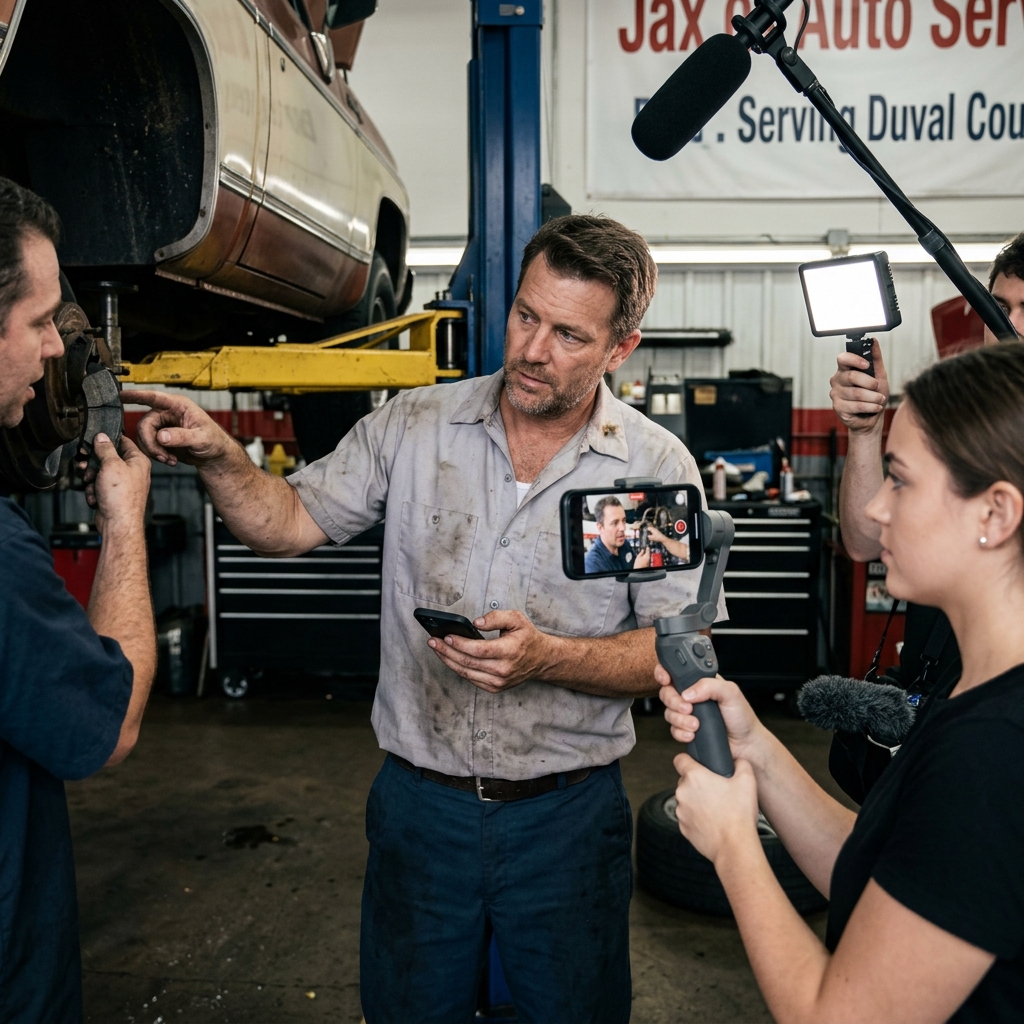
We build short-form video ads that look cinematic but function as sales tools. The two aren’t mutually exclusive, and local businesses benefit from both.
Cinematic storytelling creates emotional connection and brand recall. A homeowner considering a new roof doesn’t just want a functional service. They want confidence that the work will be done well, on time, and with professionalism. A cinematic video showing the transformation of a home alongside customer testimonial builds that confidence faster than listing features.
We structure each video with a specific conversion goal in mind, not just awareness. If your video drives 10,000 views but the targeting and messaging don’t align with lead quality, those views waste budget. We reverse-engineer from your lead requirements: who needs to convert, when do they need to act, and what objection must the video overcome?
Our short-form video production process includes testing. We don’t rely on assumptions about what your audience responds to. We produce variations on hooks, pacing, and CTAs, then measure which version drives the highest-quality leads at the lowest cost.
We also integrate these videos into your broader digital strategy rather than treating them as standalone assets. Your video ads feed into social media management, landing page optimization, retargeting campaigns, and email follow-up. A lead generated by video performs better when the next touchpoint is already prepared to convert them.
Strategic Video Targeting for Your Service Area
Geographic targeting is the lever that separates local video advertising from national campaigns. You can target people within 5 miles of your address, by zip code, by neighborhood, or by custom radius.
But geography alone isn’t enough. A plumber targeting all people within 5 miles of their office will waste money on people who don’t currently need service or can’t afford the price point. Smart targeting layers in behavior, demographics, and intent signals.
On Meta, we combine location with audience interests and behaviors. A contractor targeting “kitchen remodeling” and “home improvement” interests, within a specific radius, reaches people actively researching that category. We exclude past customers and people who’ve already converted to lower wasted spend.
Google Ads offers different targeting strength through search intent. People typing “emergency plumber near me” have immediate need. That intent-based targeting often outperforms demographic targeting alone because it reaches people actively looking for your service right now.
Income and homeownership targeting also matter for local service businesses. A luxury landscaper serves different homeowners than a general maintenance company. We use platform data to filter for properties and demographics aligned with your ideal customer.
Testing different geographic radiuses reveals efficiency. A 3-mile radius might deliver higher-quality leads than 10 miles, even if it reduces total volume. Quality leads matter more than quantity when your conversion cost is high.
Next step: Define your true service area realistically. Many local businesses overestimate how far they can profitably serve. Use past customer data to identify your geographic sweet spot, then build targeting around that.
Structuring Your Video Ads for Maximum Lead Capture
The video structure itself determines conversion probability. We follow a tested framework for local lead generation.
Open with the problem or desired outcome in the first 2 seconds. A homeowner watching a roofing ad should immediately recognize their situation. “Your roof leaks and you need it fixed this month” hits faster and more effectively than “Welcome to ABC Roofing.”
Build urgency or credibility within seconds 3-8. Show a customer transformation, a before/after, a customer testimonial, or a specific guarantee. This section proves why they should hire you specifically.
Close with a single, clear call-to-action in seconds 9-15. “Call now for a free inspection” or “Book your consultation with one tap.” Make the next step obvious and frictionless.
Text overlays should highlight the most important information. Your service area, phone number, or offer appear on screen so viewers watching without sound still understand the action. Many mobile viewers have sound off by default.
Pacing and cuts matter more in short-form than in long-form. Faster cuts (new visual every 2-3 seconds) hold attention. Slower, lingering shots often bore short-form viewers accustomed to rapid cuts on social platforms.
A 15-second video often outperforms 30-second for local lead generation because it forces clearer messaging and costs less to produce and test.
Platform-Specific Optimization: Meta and Google Strategies
Meta (Facebook/Instagram) and Google Ads require different video optimization approaches because users come with different intent and context.
Meta thrives on visual storytelling and emotional resonance. Viewers scroll through feeds for entertainment and social connection, so your video competes against personal content, not just ads. The hook matters more on Meta. We often test multiple opening visuals or text overlays to find which grabs attention first.
Facebook and Instagram feed placements perform well for local service businesses because the visual dominance lets cinematic content shine. Reels placement requires faster pacing. Audience Network placements can expand reach but often reduce lead quality, so we typically exclude them for local service campaigns.
Google allows video ads on YouTube and in Search and Display placements. YouTube viewers are often more intent-focused than Meta users, so we can use slightly longer, more detailed videos. Google also lets us layer in search keywords, so a video ad can appear when someone searches “plumber” + your city. That keyword context improves conversion dramatically.
Google’s lead form extension lets people submit their information without leaving YouTube, reducing friction. We always enable this for local lead generation campaigns.
Meta’s lead form ads work similarly. A viewer doesn’t leave the platform. They fill out a form right inside the app, then your system captures the lead immediately. This format consistently delivers lower lead cost than sending traffic to external landing pages.
Custom audiences on Meta let us retarget people who watched our video without converting. A second video with different messaging often converts viewers who ignored the first video, so we always build retargeting into multi-video campaigns.
Building Landing Page Integration With Your Video Ads
Where your video sends traffic determines conversion rate as much as the video itself. A compelling video sending traffic to a slow, unclear landing page wastes the video’s potential.
When we run video ads directly to your website, we ensure the landing page matches the video message and loads fast on mobile. If the video promises a “free consultation,” the landing page should make booking a consultation frictionless, ideally within two clicks.
Form fields should ask only for essential information. An HVAC lead doesn’t need to answer 10 questions to schedule a service call. Name, phone, and maybe address suffice. Each extra field drops completion rate.
Load time below 3 seconds is non-negotiable on mobile. Even a 2-second delay increases bounce rate. We test landing pages on actual mobile connections (not just fast wifi) to catch speed issues.
If you don’t have a high-converting landing page, we can guide you toward building one. A cinematic website video that auto-plays above the fold often increases landing page engagement and time on page, signaling quality to search engines and improving overall conversion rate.
Dynamic landing pages that personalize based on traffic source also improve conversion. A viewer who clicked a video about “kitchen remodeling” lands on a kitchen remodeling page, not a generic homepage. This relevance reduces friction.
Measuring Video Ad Performance and Lead Quality
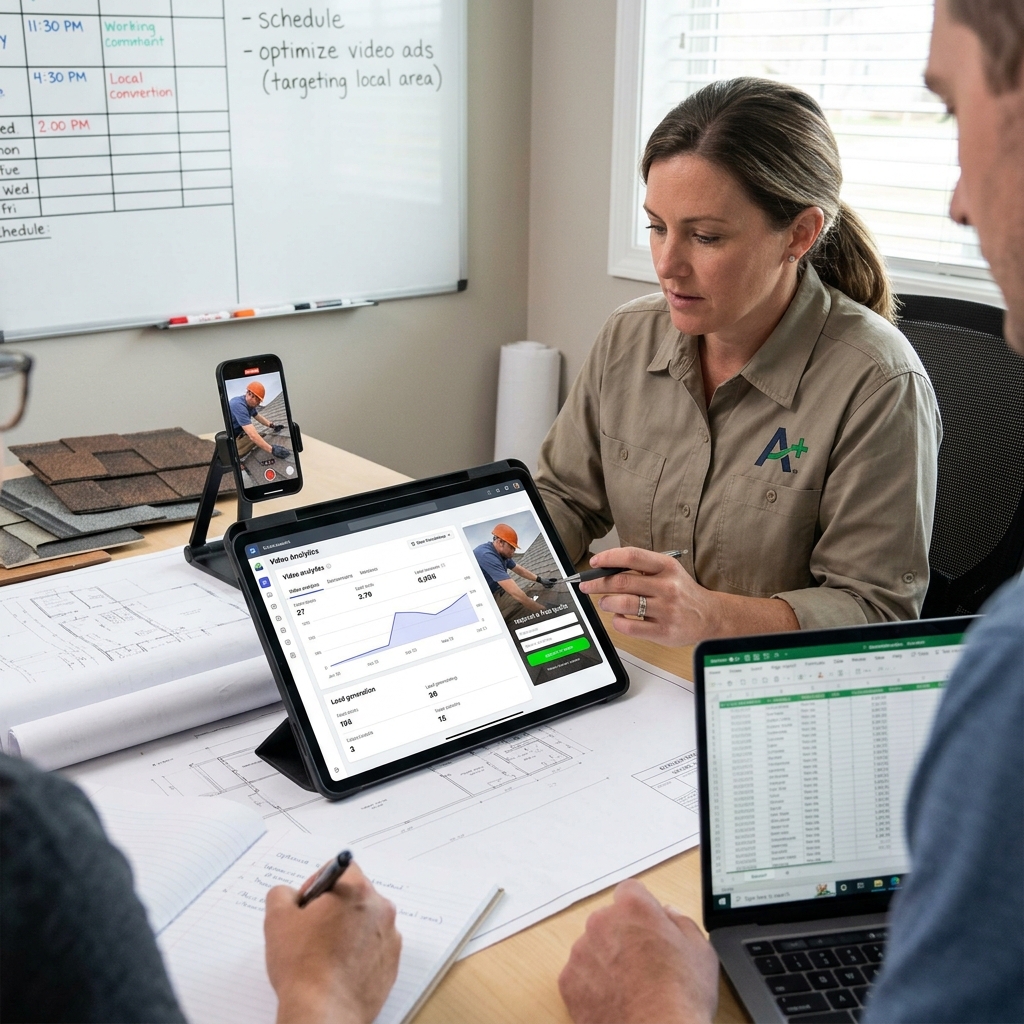
Not all leads are equal. A video ad might generate 50 leads at $10 cost per lead, but if only 3 convert to customers, your actual customer acquisition cost is $167. We measure both volume metrics and quality metrics.
View-through rate and engagement tell part of the story. A 50% view-through rate indicates the video holds attention. But this metric alone means nothing without conversion data.
Lead volume and lead cost per platform show efficiency. Meta might generate leads at $8 while Google costs $15. This difference could reflect audience overlap or intent differences, not necessarily platform quality. We track both to optimize budget allocation.
Lead quality metrics matter most. How many leads call you versus submit a form? How many schedule appointments versus just request information? How many become paying customers? We work with you to define what a “qualified lead” actually is, then measure conversion rates from video ad to that definition.
Cost per acquisition (the video ad cost divided by customers it generated) is your true bottom-line metric. A video driving 100 low-quality leads at low cost underperforms a video driving 10 high-quality leads if the 10 eventually become customers.
We establish benchmarks early, then test variations to beat them. A 2% conversion rate from video view to lead might improve to 3% through messaging changes, or to 2.5% through better targeting. Small improvements compound into significant ROI increases.
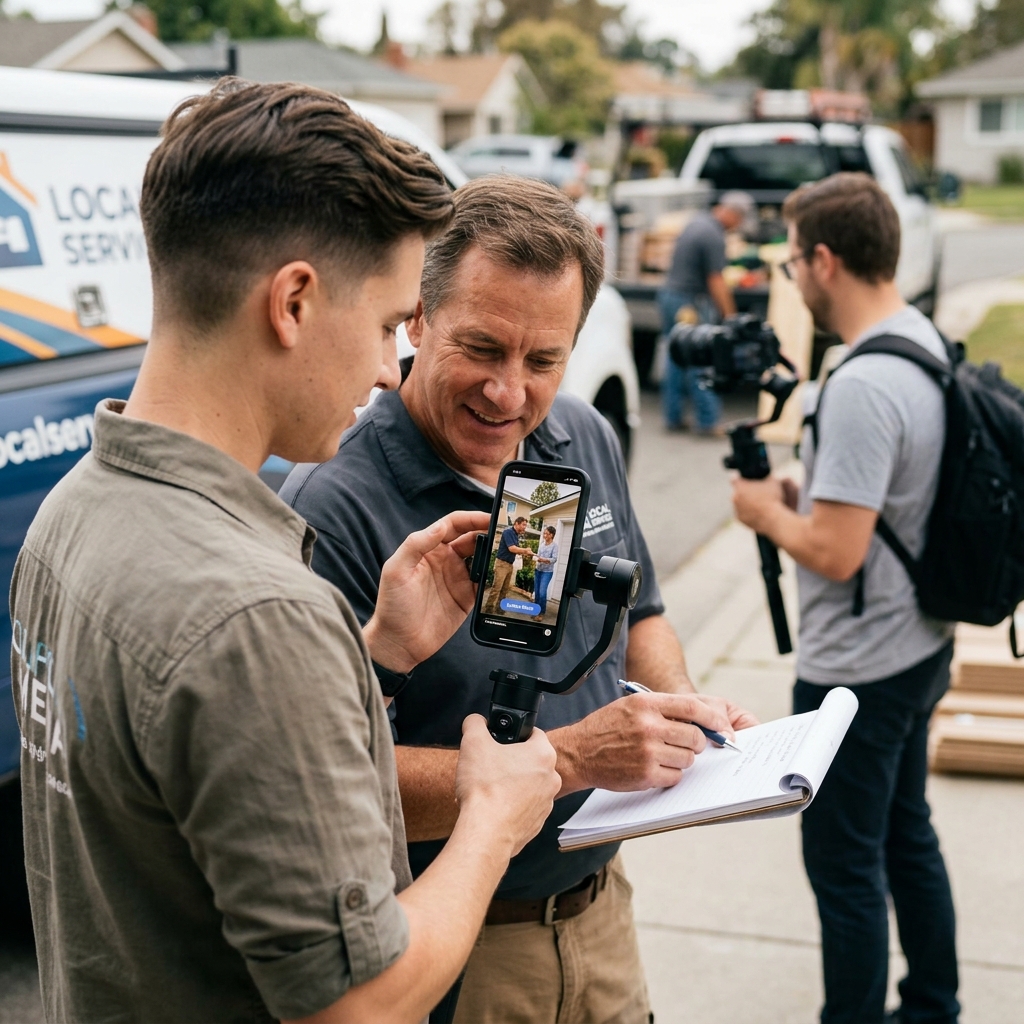
How We Integrate Video Ads Into Your Complete Marketing System
Video ads work best as one component of a coordinated strategy, not as standalone campaigns.
When we manage your social media, we use video ads to drive awareness and leads, then nurture those leads through content and retargeting. A viewer who watches your video but doesn’t convert might see organic content from your social media the next day, improving brand recall and later conversion.
Paid advertising across Meta and Google often work together in our approach. A prospect might first see your video ad on Instagram, then retarget on Google Search when they’re actively searching for your service. This multi-touch attribution shows that both channels contributed to the lead.
Our SEO optimization ensures your website already ranks for local searches. Video ads then speed up the awareness and lead generation for competitive keywords. Combined, organic search and video ads create a more complete funnel.
Landing page design and website support integrate directly with video campaigns. Fast, clear pages built to convert specific traffic aren’t an afterthought. They’re built in parallel with video production and are part of the success equation.
Lead generation systems we implement capture leads from video ads, then automatically trigger follow-up email sequences or CRM notifications. The lead doesn’t just arrive in your inbox forgotten. It enters a system designed to contact and nurture it toward conversion.
Getting Started With Your Local Video Ad Strategy
Start by identifying your clearest opportunity. Which service or offer generates your highest-margin business? Which customer type has the shortest sales cycle? Which geographic area has the most underserved demand? Focusing your first campaign on this sweet spot increases the chance of early success and builds momentum.
Define your conversion metric. Not views, not clicks, not leads by themselves. How do you define a qualified lead or a successful outcome? This definition shapes everything from targeting to ad structure.
Conduct competitor reconnaissance. Search your local service area on Google and Meta. What ads are your competitors running? How are they structured? This reveals what’s already working in your market without copying it directly.
Audit your landing page or website. Does it load fast on mobile? Can someone schedule an appointment or request information in fewer than three clicks? If not, this becomes your first priority before launching video ads.
Connect with us to discuss your specific situation. We’ll assess your current position, identify your biggest opportunity, and propose a video ad strategy tailored to your business. We work with growth-focused business owners across service industries to turn video attention into measured leads and customers.
Your local market is ready. The businesses generating consistent leads from video ads aren’t waiting for perfect conditions. They’re testing, learning, and optimizing. The question is whether you’ll start this quarter or let another season pass.
Contact us today for a free consultation to see how we can help you grow your business.
Frequently Asked Questions (FAQ)
How long does it typically take to see leads from short-form video ads?
We usually see meaningful lead volume within 2-4 weeks of launching optimized campaigns, though this depends on your service area size and competition level. Our process involves testing different video angles and targeting parameters during the first two weeks, then scaling what works. Most of our clients report their best ROI kicks in after 6-8 weeks once we’ve refined audience targeting and landing page alignment based on actual performance data.
Why do our existing video ads get views but not conversions?
The gap typically comes down to three things we fix: your videos aren’t addressing the specific problem your local customers have, your targeting reaches people outside your service area, or there’s friction between what the ad promises and what happens on your landing page. We restructure videos to lead with the outcome your customers actually want, tighten geographic targeting to your real service zones, and ensure every click lands on a page built to capture that specific lead type rather than a generic homepage.
Can short-form video ads work for service businesses, or just e-commerce?
Service businesses actually perform better with short-form video ads than most industries because we can showcase results and build trust quickly. We focus on before-and-after transformations, customer testimonials, and process clarity rather than product shots. Your local customers need to see that you understand their specific problem and can deliver, and cinematic short-form content is the fastest way to prove that across Meta and Google.