The Lead Generation Problem with Generic Social Content
Most brands treat social media ads like billboards. They post a product shot with a discount code, cross their fingers, and wonder why engagement stays flat while spending climbs. The problem isn’t that short-form video doesn’t work—it’s that forgettable, low-effort content floods the feed so relentlessly that viewers have learned to ignore it entirely.
Generic content creates a vicious cycle. Your audience scrolls past because they’ve seen the same format a hundred times before. Your click-through rates drop. Your cost per lead rises. You end up cutting budgets or abandoning the channel altogether, which means you never get to see what actually resonates.
What gets missed in this approach is that the most successful campaigns don’t separate lead generation from storytelling. They’re inseparable. When you lead with a compelling narrative instead of an immediate ask, you earn attention first. That attention becomes trust. Trust converts into action.
The shift requires more than just swapping out static images for video. You need production quality that matches viewer expectations, messaging that speaks to real pain points, and a strategic framework that guides people from discovery to conversion without losing them in the journey.
Why Storytelling Matters More Than Ever in Short-Form Ads
Short attention spans are real, but they’re not what people think they are. Viewers don’t have short attention spans for content that hooks them immediately. They have low tolerance for irrelevant noise. A well-told story in six seconds outperforms a generic message in 30 seconds every time.
The mechanics of effective short-form storytelling follow a clear pattern: establish context in the first second, create tension or curiosity, then resolve with your offer or call to action. A dental practice might open with “We see this problem three times a day,” show a patient’s expression of relief during treatment, then reveal their pain-free recovery plan. That’s story. That’s why it works.
Storytelling also builds emotional connection, which directly impacts lead quality. Someone who clicks because they felt something is more likely to actually book a consultation or request information. They’re pre-qualified by emotion and relatability, not just curiosity about a price.
We’ve found that the brands pulling the highest engagement and conversion rates aren’t the ones with the slickest production budgets. They’re the ones who figured out what their audience actually cares about and told that truth compellingly. A home services company’s story about how they solved a customer’s worst nightmare drives more leads than ten ads showing their team waving at the camera.
The Strategic Advantage of Cinematic Production Quality
There’s a meaningful difference between “video quality” and “cinematic quality.” Most video content looks like it was filmed on a phone in an office. Cinematic quality means intentional color grading, deliberate camera movement, professional lighting setups, and sound design that works as hard as the visuals.
This matters for credibility and differentiation. When your ad looks cinematic, viewers make an unconscious assumption: this is a company that invests in excellence. That assumption converts. It also means your content won’t look dated in three months because you cut corners on production values.
Cinematic production also solves a platform problem. Social feeds are visually chaotic. Low-quality video gets buried. Professional video stops the scroll. It commands attention through pure visual craft, giving your story the stage it deserves. Learn more about how cinematic short-form content improves platform performance.
Another practical advantage: cinematic production scales. Once you’ve invested in a quality shoot with professional crew, lighting, and color grading, you can extract dozens of ad variations from the same content. Different crops, different music, different headlines—each tailored to specific audience segments or platforms. That multiplier effect on investment is what separates efficient ad spending from wasteful spending.

Integrating Lead Capture Directly Into Your Story
The moment your story ends, you lose momentum if the next step isn’t obvious and frictionless. This is where many campaigns fail. They tell a great story then point viewers to a generic landing page or ask them to “learn more.”
We build lead capture into the narrative itself. Instead of treating the call to action as an afterthought, we design it as the natural resolution of the story. If your story establishes a problem and shows a solution, the CTA is the viewer deciding “I want that solution.” The button they click should feel like the obvious next step, not an interruption.
This approach uses platform-native tools strategically. Meta lead forms work best when viewers stay within the app. Google forms let you segment traffic based on intent. SMS opt-ins can work if the story creates urgency. The format depends on your audience and offer, but the principle stays constant: the path to lead capture should be as smooth as the story itself.
We also test messaging extensively. “Book a consultation” and “Schedule a free audit” produce different response rates even when they’re the same offer. The language has to match the tone and story you’ve established, or it creates cognitive friction that stops conversions.
Our End-to-End Approach to Cinematic Ad Production
We treat cinematic short-form ad production as a complete system, not isolated deliverables. The process starts with strategy: we identify your actual customer, understand their specific pain points, and determine what story will resonate most powerfully with them.
From there, we move into creative development. We write scripts that hook within the first second and resolve with clear intent. We create storyboards that plan every shot, movement, and transition. This preparation means your actual shoot is efficient, focused, and produces exactly what the campaign needs.
On set, we use professional lighting, camera equipment, and crew experienced in short-form production. We shoot cinematic elements—establishing shots, B-roll, character moments, detail work—that we can repurpose across multiple ad variants. We also capture behind-the-scenes and user-generated style content because variety in creative prevents ad fatigue.
Post-production includes color grading that creates a distinct visual signature, sound design that reinforces emotion, and motion graphics that clarify your offer. Everything is optimized for the specific platforms where your ads will run, whether that’s vertical video for Instagram Stories or 16:9 for YouTube.
We don’t hand off final files and disappear. We set up the ad accounts, segment audiences, configure targeting, and establish baseline metrics. Discover how we structure lead generation through video production systems.
Optimizing Placement and Platform Strategy for Maximum ROI
Not every platform suits every story, and not every audience segment responds to the same creative. We develop platform-specific strategies that acknowledge these differences without forcing you to remake content for each channel.
Meta platforms (Facebook and Instagram) reward video with strong early engagement. Your cinematic short-form ad needs to earn attention within the first three seconds or it gets buried. Google Search and YouTube work differently—audiences are already in problem-solving mode, so your story can be more direct and solution-focused. TikTok and Instagram Reels favor entertainment and authenticity, so cinematic quality might be slightly less important than raw relatability.
Audience segmentation is equally critical. Your message to a warm audience (people who’ve visited your site or engaged with previous content) can be more specific and assumptive. Cold audiences need broader storytelling that establishes credibility first. We build this tiering into the campaign structure so you’re not running the same ad to everyone.

Budget allocation follows performance data. We start with balanced distribution across your target platforms, then systematically shift budget toward channels and segments that deliver the lowest cost per lead. This requires real-time monitoring and willingness to adjust, not a set-it-and-forget-it approach.
Real Results: How Our Clients Convert Viewers Into Leads
The metrics tell a consistent story. Brands running cinematic short-form ads see lower cost-per-click because quality creative gets better organic reach before ad spend even kicks in. They also see lower cost-per-lead because engaged viewers (the ones who stopped scrolling for your story) are more likely to convert than people who clicked out of idle curiosity.
A multi-location home services company reduced their cost per qualified lead by 38% within 60 days by moving from static image ads to cinematic testimonial videos. Their story focused on customer relief after a major repair. The emotional hook meant their audience was pre-qualified by relevance before they ever submitted a form.
A B2B professional services firm generated 47 qualified consultations in their first month of cinematic video ads by positioning their service as the solution to a specific, recurring client problem. The story showed that problem in context, explained why it was costly to ignore, then positioned their approach as the antidote. No sales pitch. Just narrative clarity.
These results happen because cinematic storytelling attracts intent-driven viewers. Your ad isn’t generating random clicks. It’s generating qualified interest from people who recognize themselves in your story and want to know more.
Building Consistent Brand Identity Across Your Ad Library
As you accumulate cinematic ads over time, consistency becomes a competitive advantage. Your audience starts recognizing your brand by its visual language before they even read the headline. That recognition builds trust and accelerates conversion.
Consistency doesn’t mean repetition. It means your color palette, camera movement style, music choices, and narrative voice remain recognizable even as the specific stories change. One ad might feature customer testimonials. Another might show your process. A third might address a specific objection. Each tells a different story, but each one is unmistakably yours.
We develop brand guidelines for video production that specify these elements. What color grade do we apply? What camera movements feel native to your brand? What tone of voice works across scripts? These guidelines make it possible to produce new ads over time without losing the visual coherence that makes long-term campaigns effective.
Consistency also simplifies testing and optimization. When your audience recognizes your brand by sight, they’re more willing to engage with multiple ads. You can test different messages, different CTAs, and different audience segments without worrying that each new creative will confuse your audience about who you are.
Measuring What Matters: Attribution and Performance Tracking
You can measure a lot of metrics: impressions, clicks, engagement rate, reach. Most of them don’t matter if they don’t connect to actual leads and sales. We focus on measurement that directly tracks conversion.
Cost per lead is the foundational metric. If your cinematic ad campaign costs 40% less per lead than your previous approach, that’s real data showing improvement. We track this alongside lead quality metrics. Are the leads converting to customers? What’s the average deal value? A cheaper lead that never converts is worthless.
We also measure time to conversion. Do leads from your cinematic video ads book a consultation faster than leads from other sources? Do they show up better prepared, with fewer basic questions? These behavioral indicators matter because they predict lifetime customer value.
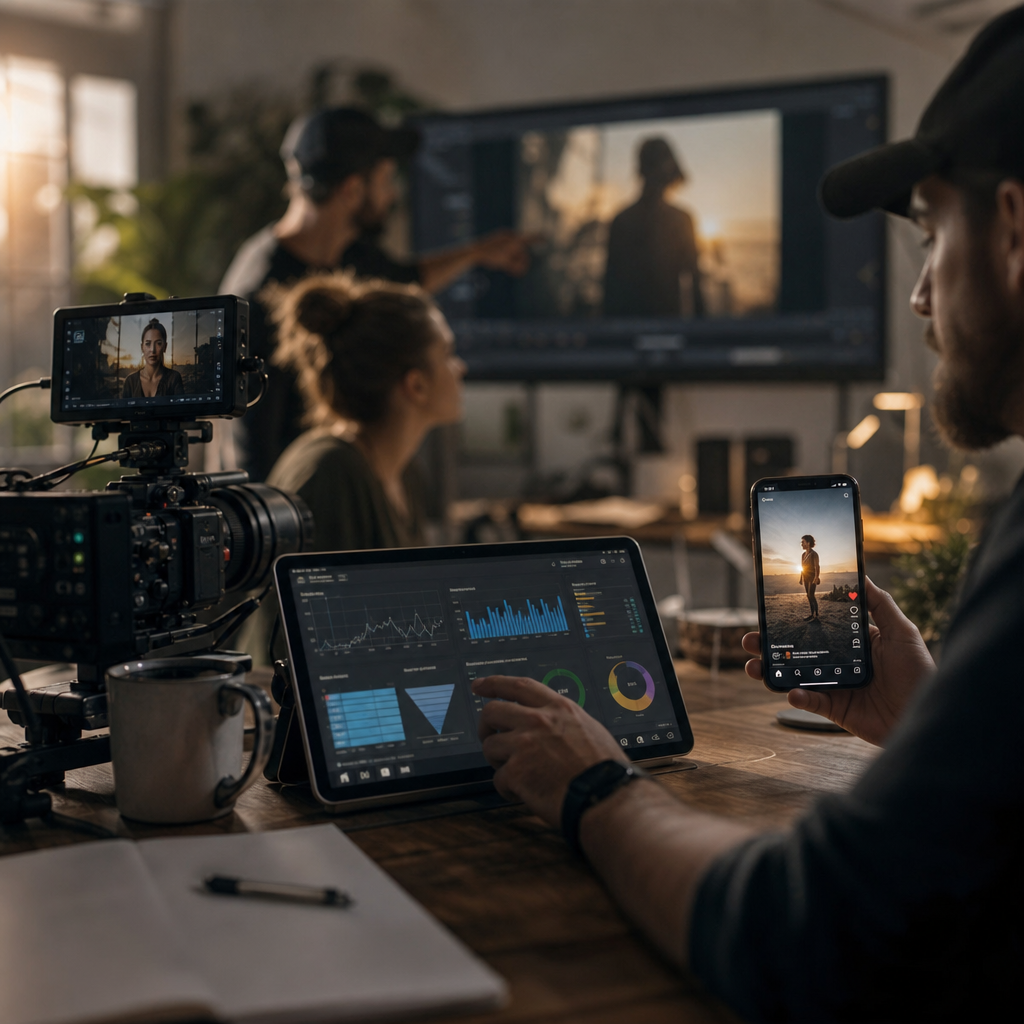
Platform analytics show what’s working within each channel. Which creative assets get the most engagement? Which messaging performs best with which audience segment? We use this data to inform what we shoot next. If testimonial stories outperform product-focused stories with your audience, we build more testimonials into the content calendar.
Attribution modeling matters too, especially for longer sales cycles. A prospect might see your cinematic ad, not convert immediately, then return to your site a week later and finally book. Single-touch attribution would miss the ad’s role in that conversion. We set up tracking that captures the full path so you understand how your ads contribute to actual sales.
Getting Started With Your Cinematic Ad Strategy
The first step is honest assessment: are your current ads generating the quality and volume of leads you need? If the answer is no, the problem likely isn’t your ad budget. It’s creative quality, message clarity, or platform strategy. Cinematic short-form ads address all three.
Start by identifying your best customer story. What transformation or outcome do your most satisfied customers experience? What problem were they facing before they found you? This becomes your first script. You don’t need perfect polish on attempt one. You need real story that resonates.
From there, build a production timeline and budget that aligns with your growth goals. If leads are your primary constraint, invest in quality production. The return on that investment comes quickly when your creative is strong and your targeting is precise.
We’re here to guide you through this process. We handle strategy development, production, platform setup, and ongoing optimization. Our goal is straightforward: generate measurable leads without sacrificing the storytelling that makes people care enough to convert.
Ready to see how cinematic short-form ads perform for your specific business? Let’s discuss your current lead generation challenges and map out a concrete path forward.
Contact us today for a free consultation to see how we can help you grow your business.
Frequently Asked Questions (FAQ)
How do we integrate lead capture into cinematic storytelling without interrupting the viewer experience?
We build lead capture mechanics directly into the narrative flow of our ads rather than treating them as separate elements. Our team designs call-to-action moments that feel natural within the story itself, whether through product reveals, service demonstrations, or character-driven transitions. This approach keeps viewers engaged with your brand story while making conversion feel like the logical next step rather than a jarring interruption.
What makes cinematic production quality actually drive more leads than standard short-form content?
We’ve found that higher production values build trust and perceived brand authority, which directly impacts lead quality and conversion willingness. When your ad looks professionally crafted, potential customers are more likely to believe in your product or service and take the action you’re asking for. Beyond psychology, cinematic content also performs better in platform algorithms because it encourages longer watch times and higher engagement rates.
How do we measure whether our cinematic ads are actually generating leads and not just views?
We set up comprehensive attribution tracking across all platforms where your ads run, connecting video performance directly to lead submissions, form fills, and sales pipeline data. Our reporting shows you exactly which creative elements, placements, and audience segments drive the best-performing leads, so we can continuously optimize your investment toward the conversions that matter to your business.