Why Most Businesses Fail at Converting Social Attention Into Leads
You’ve posted consistently. Your videos look polished. Your Instagram feed is cohesive. Yet your inbox isn’t filling with qualified leads.
The problem isn’t content creation. It’s that most businesses treat social media, websites, and email as separate worlds instead of connected parts of one system. A prospect watches your video on TikTok, enjoys it, and then has nowhere clear to go next. They click to your website and find generic information with no clear call-to-action. By the time they might consider reaching out, they’ve forgotten who you are.
This fragmentation costs you leads at every stage. Without a designed funnel, social attention evaporates into vanity metrics: views, likes, comments that don’t convert to actual customers.
The businesses winning right now have one thing in common: they’ve built integrated lead generation systems that move prospects from awareness to decision in a predictable way.
The Three Pillars of High-Converting Lead Generation Systems
High-performing lead generation rests on three connected pillars: magnetic content, clear conversion pathways, and persistent follow-up.
Magnetic content stops scrollers and makes them care about your offer. For service-based and multi-location businesses, this typically means video that shows transformation, client results, or the problem you solve (not just your credentials).
Clear conversion pathways guide interested prospects to the next step without friction. This includes obvious CTAs on social posts, dedicated landing pages, simple lead forms, and messaging that matches where someone is in their awareness journey.
Persistent follow-up means staying connected after that first interaction. Most prospects aren’t ready to buy after one touchpoint. Email sequences, retargeting ads, and nurture messaging keep your business top-of-mind while they evaluate their options.
When these three work together, you’re not hoping for leads. You’re generating them systematically.
How Cinematic Video Content Drives Qualified Leads at Scale
Video is the most effective medium for qualifying leads before they ever contact you. A short-form video showing a client’s before-and-after result does more qualifying work than a paragraph of copy.
Here’s why: video lets prospects see your work in action and feel the emotional shift. A roofing contractor’s video of a completed home renovation speaks louder than “we install quality roofs.” A healthcare clinic’s short-form video of patient testimonials immediately attracts people actually interested in your services.
Cinematic production quality also matters. Polished, well-lit, professionally edited videos signal competence and legitimacy. Prospects assume if your marketing video is excellent, your actual service matches that standard.
We focus on short-form video (15-90 seconds) specifically because it performs better on social platforms and respects the attention span of busy business owners and decision-makers. Each video should have one core message and one clear action.
What to do next: Identify your top three results or transformations clients experience. Create one short-form video for each, showing the before-state, the work, and the outcome. Distribute across Instagram, TikTok, LinkedIn, and Facebook.

Designing Websites That Actually Close Sales, Not Just Attract Visitors
Your website serves one primary purpose in a lead generation system: converting interested visitors into qualified leads.
Most business websites fail here because they’re designed like digital brochures. Beautiful, informative, but with no clear reason to take action. Visitors learn about your company and then… nothing. No compelling reason to pick up the phone or fill out a form.
High-converting websites do three things:
- Match the visitor’s intent: If someone clicked from a video about “commercial HVAC repair,” your landing page should address that specific need, not your entire service menu.
- Reduce friction: The path from landing page to lead form should take under 60 seconds. Fewer form fields, faster load times, mobile-optimized design all matter.
- Use social proof strategically: Client logos, testimonial videos, case study results, and review snippets build trust quickly for someone still evaluating whether to reach out.
Beyond design, your website should integrate with your video content through website design and video integration. Videos embedded on service pages hold visitor attention longer and increase conversion rates compared to text alone.
Connecting Your Social Media Strategy to Your Lead Funnel
Social media drives awareness and consideration. Your job is making sure that consideration converts to action.
This means your social strategy shouldn’t aim for maximum reach. It should aim for reaching the right people and giving them a clear reason to engage. A healthcare clinic’s Instagram post should attract people interested in the specific services you offer, not just anyone in your city.
Each piece of social content should serve a purpose in your funnel:
- Awareness posts introduce your business and the problems you solve
- Education posts show your expertise and build trust
- Offer posts give a specific reason to take action (free consultation, discount, webinar)
- Retargeting posts remind warm leads who’ve visited your site but haven’t converted
The connection between social and your funnel happens through consistent CTAs. Every Instagram post doesn’t need a call-to-action, but posts designed to drive leads should have one: “Click the link in bio,” “Book a consultation,” “Download our guide.” Make it obvious what the next step is.
Creating Lead Capture Mechanisms That Work Across All Channels
A lead capture mechanism is whatever you use to collect contact information from interested prospects. Common options include forms, quiz funnels, downloadable guides, and calendar booking systems.
The right mechanism depends on your business and where prospects are in their journey. Someone watching your short-form video for the first time might not be ready for a consultation call, but they’d download a guide or take a quiz. Someone who’s already visited your site multiple times is closer to ready for a consultation.
Successful lead capture works across all your channels. A prospect might discover you on Instagram, land on your website, see an email form pop-up, and enter their information. Another prospect might click a lead form directly from a Facebook ad. A third might book a call through your website calendar.

The key is making the capture process feel easy, not intrusive. An email form with two fields (name and email) converts better than seven fields. A calendar booking system removes the back-and-forth of “when are you available?” Use the format that requires the least friction for your specific audience.
Automating Your Follow-Up and Nurture Sequences for Maximum ROI
Here’s the hard truth: most leads won’t be ready to buy on their first contact. They’ll sit in your funnel for weeks or months, comparing options, checking references, building confidence.
Automation keeps you in front of them without manual effort. When someone submits a form on your website, an automated sequence begins. Email one arrives immediately, thanking them and offering to answer questions. Email two, sent three days later, shares a relevant case study. Email three, sent a week later, addresses common objections.
This sequence runs the same way for every lead, but feels personal. It’s efficient at scale and ensures no lead falls through the cracks because you forgot to follow up.
For service-based businesses, nurture sequences typically span two to four weeks before a lead is “warm” enough to call directly. During that time, video content, testimonials, and educational information do most of the convincing work.
Automation also applies to SMS and retargeting ads. A prospect who enters their phone number can receive text reminders about upcoming events or special offers. A prospect who visits your site but doesn’t convert sees your ads again across Instagram and Google, keeping your business top-of-mind.
Integrating Paid Advertising Into Your Complete Lead System
Paid advertising amplifies what’s already working in your organic lead generation system.
If your website converts visitors to leads at 8%, and organic social brings 100 visitors per month, you’re generating around 8 leads monthly. Running paid ads to the same landing page with the same conversion rate, but reaching 500 monthly visitors, generates 40 leads. Paid advertising scales what works.
The most effective paid strategies for lead generation target different funnel stages:
- Awareness campaigns on Meta and Google reach people who don’t yet know you exist
- Retargeting campaigns reach people who’ve already visited your site or engaged with your content
- Lead magnet campaigns promote free resources (guides, webinars, consultations) to build your email list
We typically see the highest ROI from retargeting campaigns because these prospects already know you exist and are reconsidering their decision. A simple ad reminding them of your offer often closes the gap to a lead.
Paid advertising also provides data. You learn which messages resonate, which landing pages convert best, and which audience segments are most likely to become customers. This information improves your organic strategy over time.
Measuring What Matters: Tracking Lead Quality and Conversion Rates
Not all leads are equal. A lead from a competitor’s website, researching your pricing, is different from a lead who watched three of your videos and filled out a consultation request.
Tracking lead quality means measuring conversion rate (how many visitors become leads) and lead-to-customer rate (how many leads actually become paying clients). If you’re getting 50 leads per month but only converting 2 into customers, your issue isn’t lead volume. It’s lead quality or your sales process.
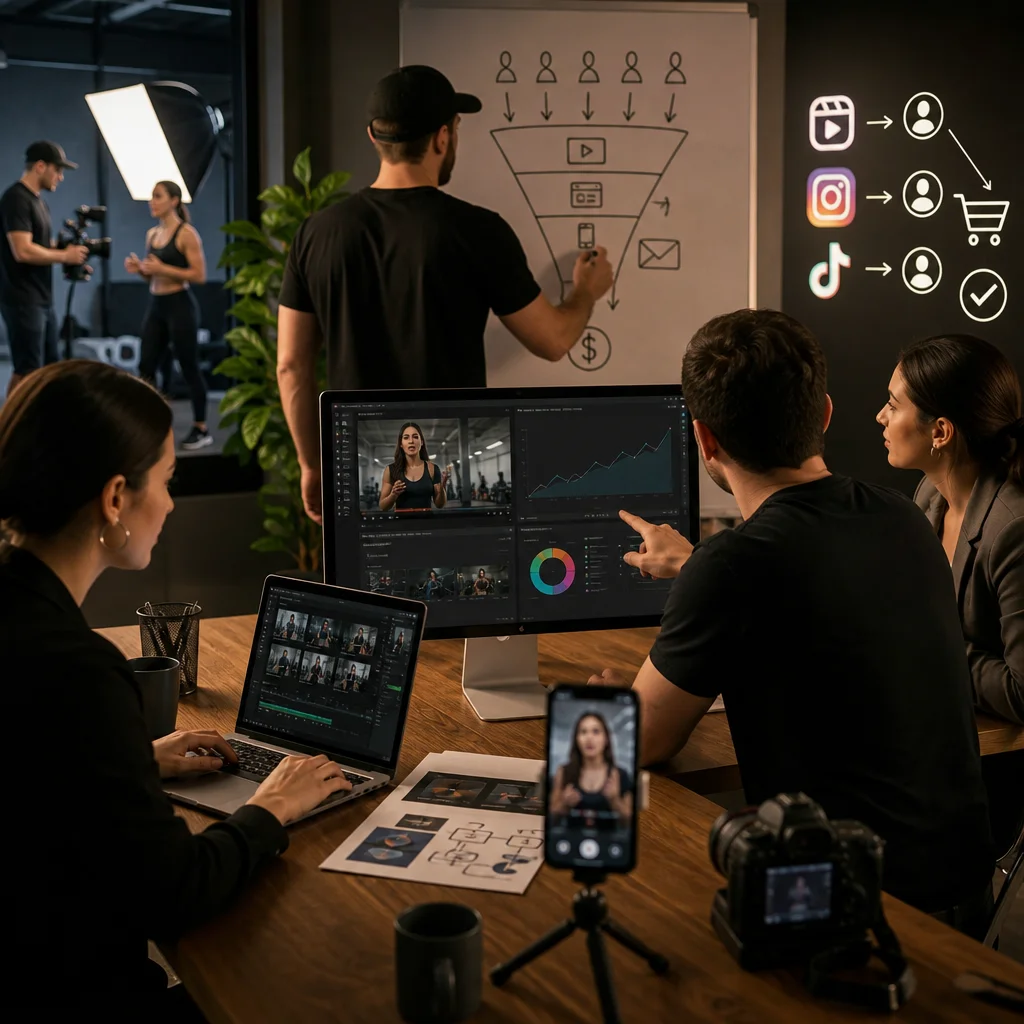
Key metrics to monitor:
- Cost per lead: How much you spend on ads or content creation divided by leads generated
- Lead-to-customer conversion rate: Percentage of leads that close
- Customer acquisition cost: Total marketing spend divided by new customers
- Time from lead to customer: How long your sales cycle typically takes
Tracking these metrics reveals which channels, content types, and landing pages generate the best quality leads. Maybe video content on Instagram produces higher-quality leads than search ads, even if search brings more volume. This insight should guide where you invest next.
Use UTM parameters on all your links to track which posts, ads, and pages drive leads. Connect your email platform to your CRM so you can see which sequences lead to customer conversations. This data transforms lead generation from guesswork into a measured system.
How We Build These Systems for Growth-Focused Business Owners
We’ve built these integrated lead generation systems for service-based and multi-location businesses across healthcare, home services, professional services, and more. Our process combines cinematic short-form video production with full-service digital strategy.
We start by mapping your ideal customer’s journey: where they discover you, what messages resonate at each stage, and what barriers prevent them from becoming customers. Then we design the system: the videos that stop scrollers, the landing pages that convert interest into contact, the email sequences that nurture warm leads, and the paid campaigns that amplify what works.
Our approach ties everything together. Your short-form videos don’t just live on Instagram. They appear on your website, in email sequences, and in retargeting ads. Your landing pages reflect the exact message from the video that brought someone there. Your follow-up sequences reference the content they engaged with, making every communication feel relevant and connected.
The result is predictable, measurable lead generation. Growth-focused owners get clarity on where leads come from, which ones become customers, and exactly how much each customer costs to acquire. That clarity lets you scale confidently.
Next step: Audit your current system. Map where prospects discover you, what happens next, and where you lose them. Identify the biggest gap between attention and leads. Then, reach out to discuss how we can connect those dots with a strategy designed for your specific business.
Contact us today for a free consultation to see how we can help you grow your business.
Frequently Asked Questions (FAQ)
How do you help businesses turn social media views into actual leads and sales?
We build integrated lead generation systems that connect your social content directly to conversion channels. Our approach combines cinematic short-form video that stops the scroll, landing pages optimized to capture contact information, and automated follow-up sequences that nurture prospects into customers. We handle the entire chain from content creation through paid promotion to lead tracking, so nothing falls through the cracks.
What makes your lead generation websites different from standard web design?
We design websites specifically to close sales, not just look polished. Every element we create serves a conversion purpose – from clear value propositions and strategic call-to-action placement to forms optimized for completion rates. We integrate these sites directly with your lead capture mechanisms and advertising campaigns, meaning visitors who land on your site are already primed to take action based on the video and messaging they saw first.
How do you measure whether a lead generation system is actually working?
We track lead quality and conversion rates across every stage of your funnel, not just vanity metrics like views or clicks. We measure which video content drives the most qualified prospects, which channels produce the highest-value leads, and where people drop off in your sales process. This data guides our optimization so we’re continuously improving your return on marketing investment.