The Limitation of Traditional Disruptive Advertising Tactics
For years, the advertising playbook relied on interruption. Pop-ups, banner ads, sudden video overlays—the idea was simple: grab attention by breaking into what people were doing. It worked when audiences had fewer options and less control.
That model has fractured. Today’s business decision-makers scroll past ads constantly. They skip video ads at three seconds. They’ve built mental filters around interruptive formats because they’re everywhere and rarely relevant.
The real problem isn’t creativity or reach. It’s that disruptive ads create friction before building trust. You’re asking someone to pay attention to your message when they didn’t ask for it. Conversion rates suffer, cost-per-lead climbs, and you’re competing on noise rather than substance.
We see this repeatedly with service-based and multi-location brands that pour budget into standard search ads or broad social campaigns without a supporting content strategy. The ads work at first, but diminishing returns arrive fast.
Why Video and PPC Integration Outperforms Single-Channel Approaches
A single channel carries a single job. Search ads catch someone actively looking. Social video builds awareness. Email nurtures. Each works best when it doesn’t stand alone.
Video and PPC integration uses paid channels strategically as amplification, not the whole story. Here’s why it wins:
- Video builds narrative and trust while PPC drives urgency and measurable action
- Pixel-tracked audiences from video views become your highest-intent search and retargeting segments
- Consistent creative across channels means less friction when prospects move from awareness to consideration
- Data flows both ways, letting you optimize video content based on which angles drive the highest-intent clicks
A prospect seeing your cinematic brand story on Instagram develops context. When they later see your Google search ad, they recognize you. When they land on your site, the messaging aligns. The conversion probability jumps.
Single-channel approaches miss this momentum. Video-only misses the moment when intent peaks. PPC-only misses the chance to build recognizable brand presence before the buying moment arrives.
How We Combine Cinematic Content with Paid Performance
We produce short-form video content designed specifically for paid distribution, not just organic reach. That distinction matters more than most agencies acknowledge.
Cinematic brand storytelling tells the “why” behind your business. It shows process, customer transformation, and values. But it also needs to work within 15 to 60 seconds and capture engagement in the first frame. We build that cinematic quality while optimizing for platform behavior and audience attention spans.
Then, we structure these videos as assets for paid campaigns. A single hero video often generates 4-6 distinct variations for A/B testing across Meta and Google platforms. We test hook angles, pacing, and calls-to-action systematically.
The data from which variations convert highest informs both creative direction and targeting. If one angle consistently drives higher-intent clicks, we scale that story and adapt it for the next production cycle. Content becomes data. Strategy becomes adaptive.
Building Lead Generation Systems That Convert Viewers to Customers
Video draws attention. Conversion systems convert that attention into leads and customers.
Our approach attaches a conversion mechanic to every paid video campaign: a dedicated landing page matching the video message, retargeting sequences for viewers who don’t convert immediately, and email workflows that nurture prospects based on how they engaged with your content.
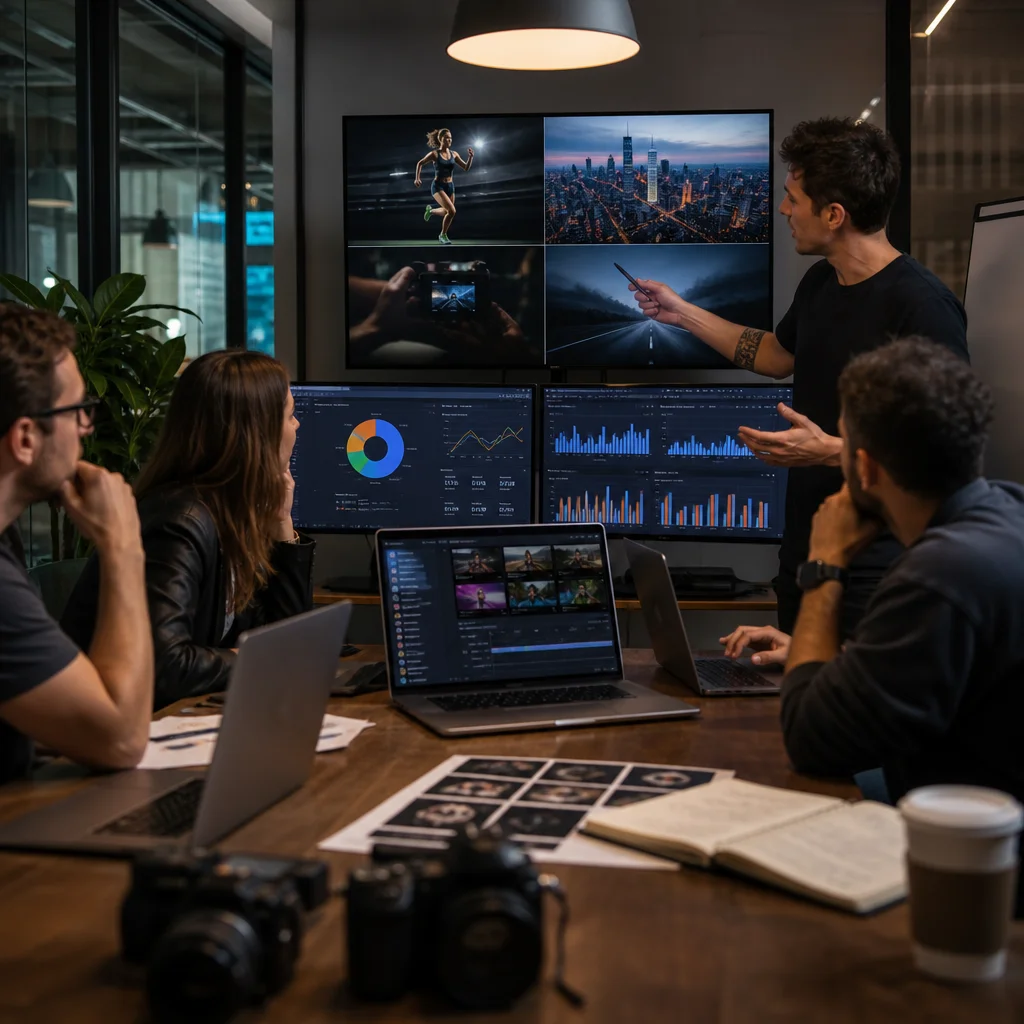
For multi-location or service businesses, this means location-specific landing pages that speak to local audience context while maintaining brand consistency. It means phone-tracking numbers that show which video campaigns drive calls and which drive form submissions.
The system also captures audience segments for future campaigns. Viewers of your service explanation video become the audience for a follow-up offer. People who watched 75% of your testimonial video become the segment you retarget with case studies. Over time, you build owned audience pools that don’t rely on platform algorithm changes.
Meta and Google Advertising Aligned with Your Video Strategy
Meta and Google require different approaches, but alignment matters more than platform-specific tactics.
On Meta, short-form video performs best with quick value hooks, authentic production styles, and community-feel creative. We test story-driven ads that feel native to Instagram and Facebook feeds. Retargeting on Meta captures warm audiences at lower cost, making it ideal for nurturing prospects already familiar with your brand.
Google’s ecosystem centers on search intent and intent-based keywords. We use video ads on YouTube to reach people searching for problems your service solves. We retarget these video viewers with search ads when they later search relevant terms. The combination is powerful because Google’s intent data syncs with the audience familiarity your video content builds.
The strategic layer ties these together: Are you using Meta primarily for awareness and YouTube for consideration? Are your search keywords pulling from the messaging tested in video? Are your landing pages reflecting what viewers saw in the ad?
Misalignment happens when platforms are managed separately. We treat them as one integrated system where video insights inform paid search strategy and vice versa.
Measuring ROI Across Video and PPC Channels
Attribution across video and PPC is complex because the customer journey doesn’t follow a straight line.
We track three measurement layers:
Direct attribution shows which channels drove immediate conversions. If someone watches a video and fills a form within 24 hours, that’s direct.
Assisted conversion tracking reveals which channels supported the final conversion. Someone might watch a video, see a search ad a week later, and convert on the search click. That video gets credit as an assist.
Incrementality analysis measures what happens when you pause certain campaigns. If you stop video spend and search conversions drop 20%, video was driving qualified traffic to search. Standard analytics might miss this.
We also track video-specific metrics: completion rates (which creative angles hold attention), engagement (comments, shares, clicks), and cost-per-video-view. These inform creative direction even if they’re not the final conversion metric.
For service businesses, we separate qualified leads (someone actually interested in your service) from total leads. A campaign might generate 50 leads and 12 qualified ones. The second number determines ROI. We’ve worked with brands who confused volume with quality for years.
Real Results: Integrated Video and PPC Case Studies
A regional HVAC service company came to us with strong search spend but plateauing lead volume. Their ads were generic service ads. Their organic social presence was minimal.
We produced short-form video showing their technicians solving common problems: why systems break, how they diagnose issues, what maintenance prevents emergencies. We distributed these through Meta ads to build brand awareness in their service areas.

Within two months, branded search volume increased 35%. More importantly, qualified lead cost dropped 22% because prospects arriving through search already recognized the brand. We then scaled search spend knowing the quality supported higher acquisition costs.
A multi-location dental practice faced similar challenges across 7 locations. Centralized marketing created generic campaigns that didn’t resonate locally. We produced a core brand video plus location-specific content for each office showing team members and local community involvement.
By pairing location-targeted video with local search ads, each office got both brand presence and intent-based lead traffic. The practice reduced cost-per-new-patient-appointment by 31% in the first quarter and increased appointment show-rates because patients felt connection to the local team.
Common Mistakes When Trying to Implement Video and Paid Ads Together
Most brands make one of five errors:
Treating video as awareness-only. Video can drive immediate conversions if positioned right. Awareness-focused video is cheaper and scales easier, but it shouldn’t exclude conversion-focused video assets.
Inconsistent messaging across channels. Your Facebook video and Google search ad tell different stories. Prospects get confused about what you actually offer.
No retargeting infrastructure. You spend on video views but never show follow-up paid ads to those viewers. You’re paying for attention with no system to convert it.
Ignoring landing page experience. The video builds interest, the ad drives the click, but the landing page doesn’t match the promise. Conversion rates collapse.
Weak creative fundamentals. You expect platform optimization to overcome poor video quality or unclear value propositions. Platforms can’t fix bad creative, only distribute it.
We’ve built processes specifically to avoid these traps.
Our End-to-End Video and PPC Management Process
Our process starts before production. We audit your current performance data to understand which messaging angles resonate and which customer segments matter most.
Then we produce video assets tailored to these insights, not generic brand videos. Each asset has a clear conversion objective from day one.
Next comes paid setup. We build the landing pages, retargeting audiences, and campaign structures that turn video viewers into leads. We configure pixel tracking to measure which videos drive conversions.
From there, we run continuous optimization cycles. We test creative variations, audience combinations, and bidding strategies weekly. We measure not just cost-per-click but quality-of-lead metrics that matter to your business.
Finally, we report through a dashboard showing video performance, PPC performance, and integrated metrics like “how many search conversions came from video-influenced audience segments.” This reveals the true value of integration.
Why Most Agencies Fail at Video-to-PPC Conversion
Integration requires operational discipline most agencies lack.

Video and PPC typically live in different departments with different tools and incentives. The video team cares about creative metrics. The PPC team cares about conversion metrics. Neither owns the integration layer.
Integration also requires that teams believe in it. Many agencies still see video as a nice-to-have brand play and PPC as the real conversion work. This belief shapes budgets and attention.
We structure our team differently. Video producers understand PPC objectives. Paid specialists understand creative testing. We share dashboards that show how video and PPC influence each other, aligning incentives around integrated results.
The other barrier is technical. Linking video performance to paid campaign results requires clean pixel implementation, proper audience segmentation, and reporting infrastructure. Most agencies don’t invest in this because it’s invisible to clients who don’t know to ask for it.
Getting Started with Integrated Video Marketing Today
Start with an audit of your current paid performance. Which campaigns drive the highest-quality leads? What’s the customer journey that leads to conversion? Where do prospects get confused or drop off?
Use these insights to plan video production. Don’t make generic brand videos. Make videos that address the specific points in your customer journey where prospects hesitate or need reassurance.
Then build the paid infrastructure around those videos. Set up landing pages, retargeting audiences, and tracking before the videos go live.
Finally, commit to optimization as a process. Treat initial results as baseline data. Test creative variations, audience segments, and messaging angles systematically. Let data guide decisions, not assumptions.
If you’re serious about scaling leads through paid channels, integrated video and PPC isn’t optional anymore. It’s where the opportunity is. We help growth-focused business owners build these systems at scale. If you’d like to explore how we’d approach your specific situation, we’re ready to discuss.
For further reading: End-to-end video marketing.
Contact us today for a free consultation to see how we can help you grow your business.
Frequently Asked Questions (FAQ)
How does integrating video with PPC advertising actually improve lead generation?
We’ve found that combining these channels creates a natural progression for prospects. When we run cinematic short-form video on social platforms, we’re building awareness and trust through storytelling. Then we layer in PPC campaigns that capture high-intent searchers on Google, creating multiple touchpoints that guide viewers toward conversion. This dual approach typically increases our clients’ lead quality and volume compared to relying on either channel alone.
What’s the main reason most agencies struggle to connect video content with paid advertising campaigns?
Most agencies treat video production and paid advertising as separate departments with different goals and metrics. We’ve built our process around alignment from the beginning, meaning our video content is engineered specifically to perform in paid channels while our paid strategy amplifies the cinematic narratives we create. This requires constant collaboration between our creative and performance teams, which most traditional agencies simply don’t structure.
How do we measure the actual ROI when video and paid ads work together?
We track the full customer journey across both channels using integrated attribution systems that connect Meta and Google data with your lead generation platform. This lets us show you exactly which videos drove awareness, which paid ads captured intent, and ultimately which combinations produced your highest-quality customers. We report on cost per lead, conversion rates, and revenue impact so you see the true value of the integrated approach, not just vanity metrics.