Day: May 12, 2026

  • Social media marketing agency small business matches made in heaven

    Social media marketing agency small business matches made in heaven

    Social media marketing agency small business matches made in heaven

    The Rise of the Social Media Marketing Agency for Small Business

    A social media marketing agency small business partnership might be the single most impactful decision you make for your brand this year. Here’s a quick look at common pricing tiers and what they offer:

    Service Level Starting Price Best For
    Basic Maintenance $99/month Ultra-budget, basic posting
    Starter Package $199/month Small business essentials
    Growth Plan $500/month Organic growth and strategy
    Full Service $2,000/month Lead generation, data-driven growth

    The bottom line: Most small businesses will find a solid fit somewhere between $500 and $2,000/month, depending on how many platforms, posts, and paid ad services they need.

    Running a small business is already a full-time job. Now add consistent posting, video editing, algorithm changes, and community management on top of that — and it’s easy to see why so many owners fall behind on social media.

    The stakes are real. The creator economy was valued at $250 billion in 2025 according to Statista and is projected to double before 2027. Social media isn’t a nice-to-have anymore. It’s where your customers are deciding whether to trust you — or your competitor.

    Yet most small business owners don’t have the time, team, or tools to show up consistently. That’s exactly where a social media agency comes in.

    I’m Nic Canobbio, founder of Canatos Media, and with over two decades in media production and content strategy — including social content that has reached over 60 million views — I’ve seen how the right social media marketing agency small business partnership can transform a brand’s visibility and growth. In this roundup, I’ll break down the agencies, pricing models, and services worth your attention in 2026.
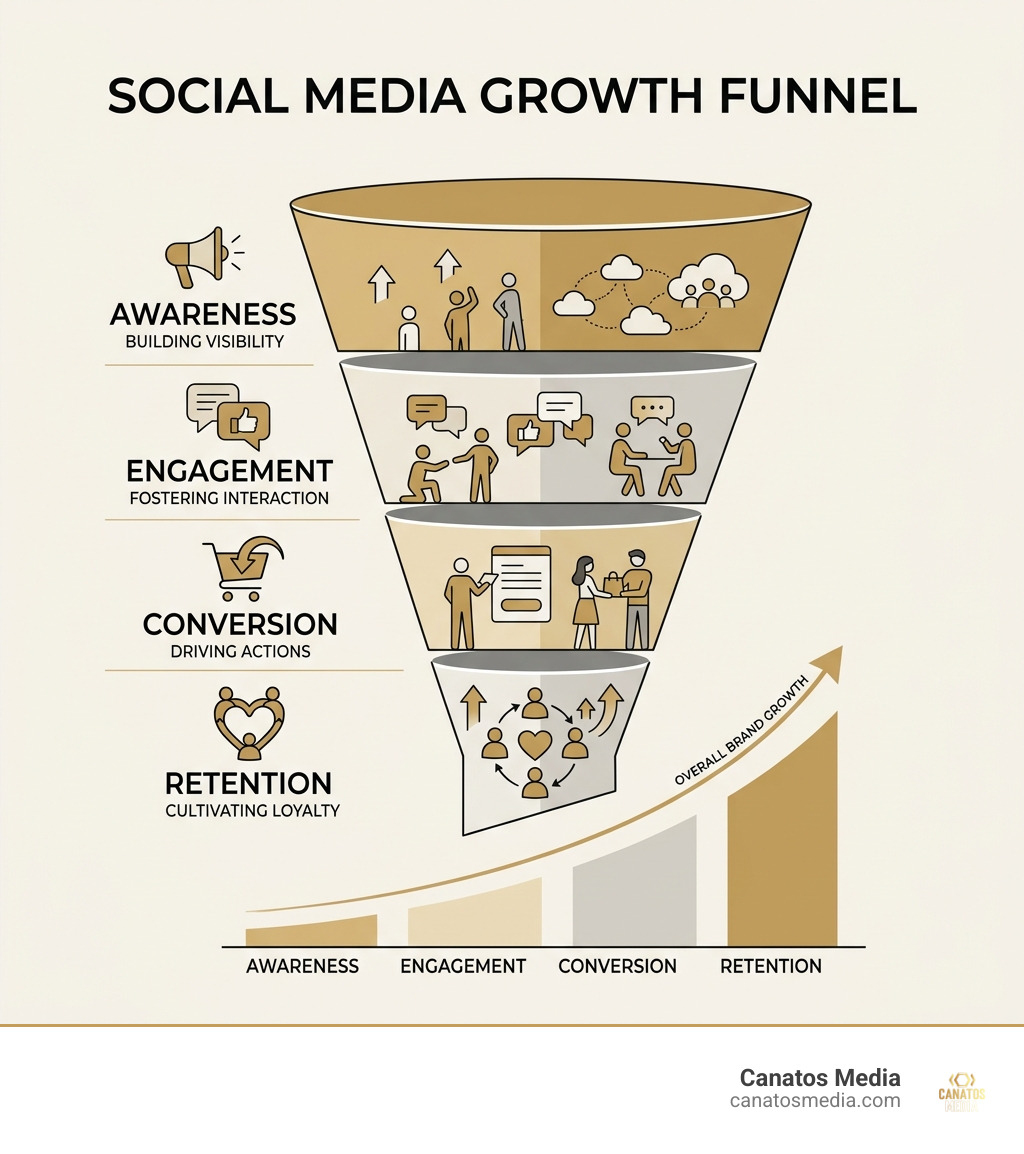
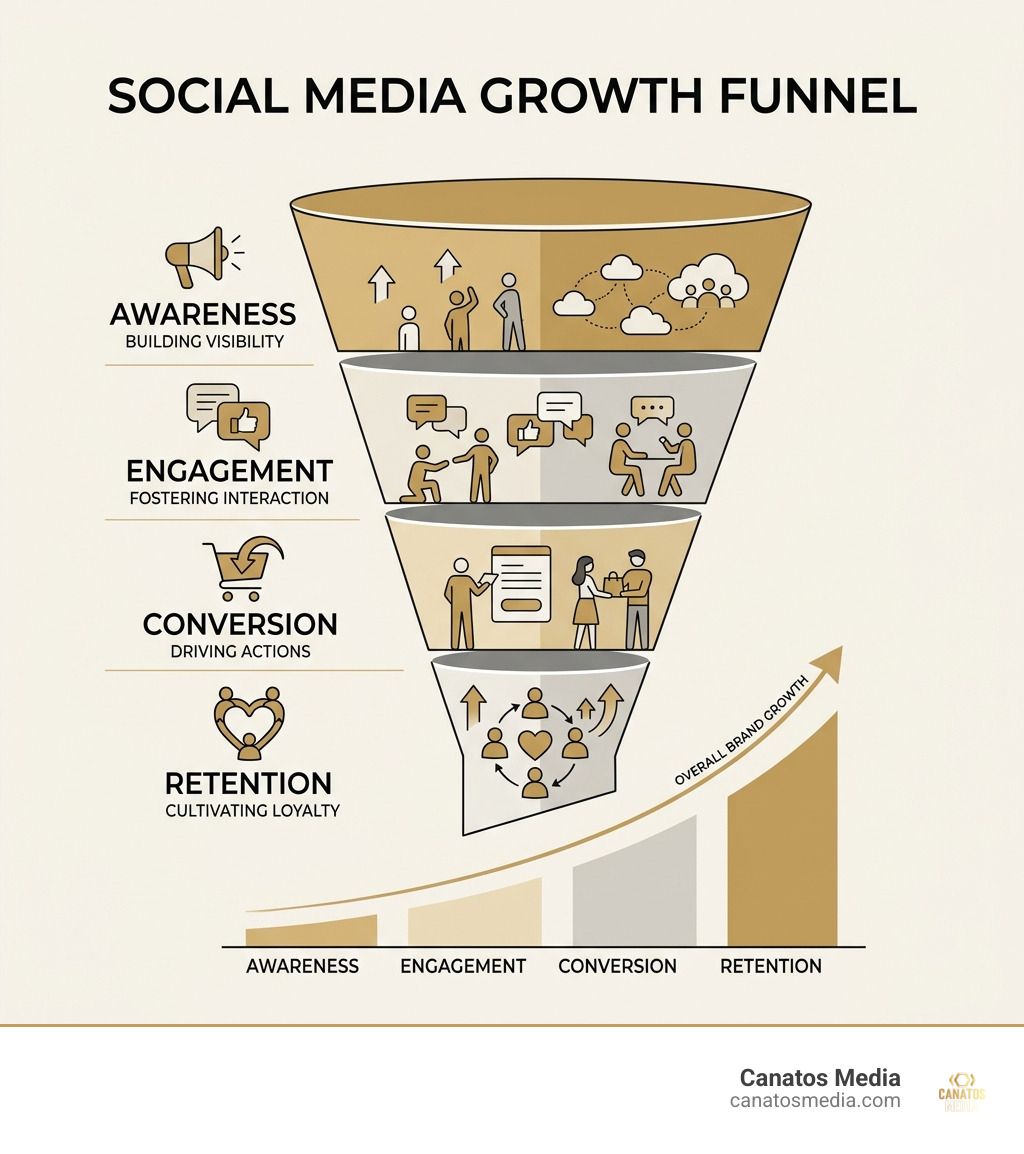
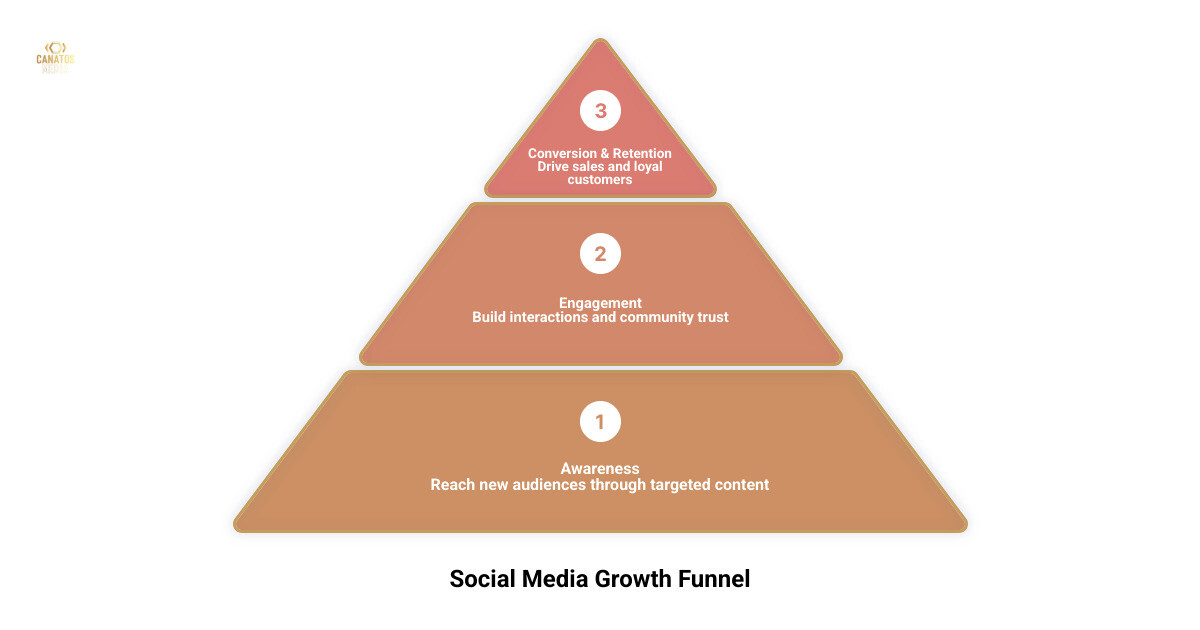
    Social media growth funnel showing awareness, engagement, conversion, and retention stages - social media marketing agency

    Why Your Brand Needs a Social Media Marketing Agency for Small Business

    If you’ve ever sat staring at a blank screen wondering what to post, you aren’t alone. For many family-owned businesses in the tri-state area or local shops on Long Island, social media feels like a “huge mental load.” You know you need to be there, but the day-to-day operations of your business—whether it’s running a restaurant or managing a construction crew—always take priority.
    Professional content calendar showing scheduled posts and platform icons - social media marketing agency small business

    Beating the Algorithm

    Social media trends change faster than you can say “TikTok.” What worked six months ago might be getting zero reach today. A dedicated social media marketing agency small business focuses solely on these shifts so you don’t have to. They understand that Instagram is shifting toward its own SEO processes and that vertical video is the king of 2026. By staying ahead of algorithm changes, an agency ensures your content actually gets seen instead of vanishing into the digital void.

    Reclaiming Your Time

    Think about the hours you spend filming, editing, writing captions, and researching hashtags. Research suggests the average small business owner can save over 11 hours per month by outsourcing these tasks, a trend highlighted in recent marketing productivity studies. That is time you could spend on product development or customer service. When you partner with experts for All-in-One Social Content and Management, you’re buying back your freedom.

    Building Trust and Authority

    In 2026, your social media profile is your digital storefront. If a potential customer on Long Island looks you up and sees your last post was from 2023, they might wonder if you’re still in business. Consistent, high-quality posting builds brand awareness and trust. It shows you are active, professional, and ready to serve. Beyond just “looking good,” professional management fosters community engagement, turning casual followers into loyal brand advocates.

    The Competitive Edge

    Let’s be honest: your competitors are likely already using a social media marketing agency small business. If they are appearing in your target audience’s feed every day with polished, cinematic content and you aren’t, you’re leaving money on the table. An integrated strategy that connects your social presence to your website and sales funnel is no longer optional—it’s the standard for growth.

    Comparing Service Tiers: Budget vs. Premium Agency Models

    Choosing the right partner depends heavily on your goals and your bank account. Not every business needs a $10,000-a-month retainer, but “cheap” can sometimes be expensive if it doesn’t produce results.
    Infographic comparing budget social media plans vs premium full-service agencies - social media marketing agency small

    The Budget Tier ($75 – $300/Month)

    Budget-focused agencies focus on “keeping the lights on.”

    • What you get: Typically 10 to 20 posts per month on one or two platforms.
    • The Pros: It’s incredibly affordable and ensures your accounts stay active. Most offer month-to-month contracts, meaning you aren’t locked in long-term.
    • The Cons: The content is often more generic. You likely won’t get custom-filmed video or deep strategic consulting. It’s great for visibility, but don’t expect a massive surge in leads.

    The Growth Tier ($500 – $1,500/Month)

    This is the “sweet spot” for many successful small businesses in the tri-state area.

    • What you get: Custom content creation, strategy audits, and often a mix of organic and paid social strategies.
    • The Pros: You get a dedicated account manager and content that feels much more like your brand’s unique voice. Agencies in this tier often start around $650/month and provide much better reporting transparency.
    • The Cons: While more robust, you may still need to provide some of your own raw footage or images unless the agency is local.

    The Premium & Boutique Tier ($2,000 – $10,000+/Month)

    For businesses ready to scale aggressively, premium agencies or boutique firms offer hyper-specialization.

    • What you get: High-end cinematic video production, influencer partnerships, and full-funnel integration.
    • The Pros: This is where you see the “big agency” ROI. You’re not just getting posts; you’re getting a comprehensive digital strategy that links social ads to SEO and website conversions.
    • The Cons: The higher price point and often longer contract lengths (3-6 months minimum) require a significant commitment.

    What to Look for in a Contract

    When evaluating a social media marketing agency small business, pay close attention to the fine print.

    1. Ownership: Ensure you own the content and the accounts.
    2. Approval Process: Do you get to see posts before they go live? (You should!)
    3. Cancellation: Look for agencies that offer flexibility. Many modern firms offer 30-day notice periods rather than year-long lock-ins.

    Essential Services Included in Modern Social Media Packages

    A modern social media marketing agency small business does much more than just “post to Facebook.” To stand out in 2026, your package should be comprehensive.
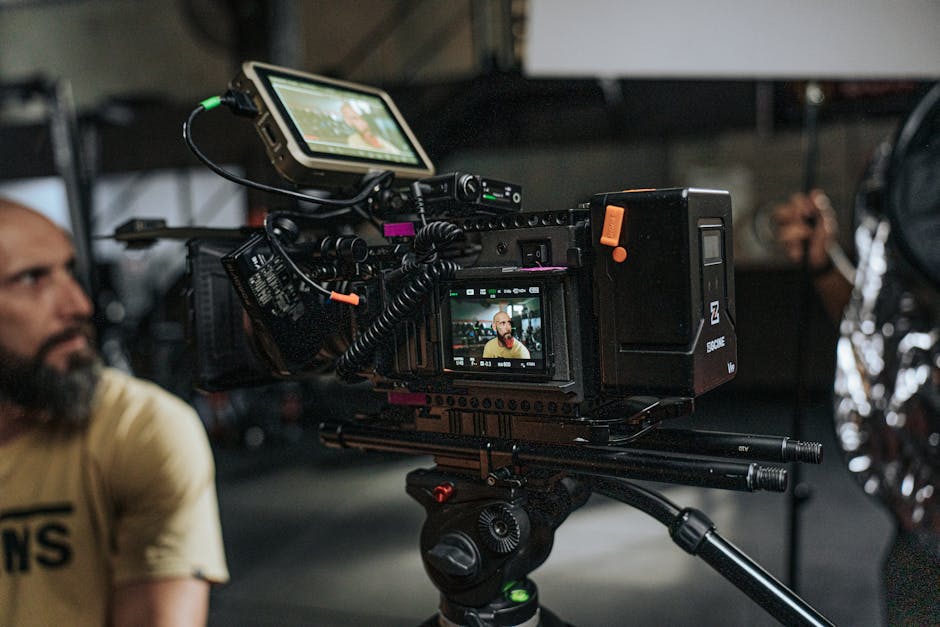
    Behind the scenes of a cinematic short-form video shoot for a local business - social media marketing agency small business

    Cinematic Content Production

    Static images are no longer enough. The most successful brands use short-form video (Reels, TikToks, Shorts) to stop the scroll. High-quality agencies now include scriptwriting and professional editing as part of their core offering. If an agency doesn’t mention video, they are living in 2015.

    Bio Optimization and Brand Identity

    Your “link in bio” is a vital piece of real estate. Agencies will optimize your profiles with clear calls-to-action (CTAs), branded highlights, and SEO-friendly keywords so you show up in social search results.

    Organic reach is great, but Paid Social Media Advertising is how you scale. A good agency will manage your Meta or Google ad spend, using retargeting to bring back people who visited your website but didn’t buy. This “full-funnel” approach ensures that for every dollar you spend, you’re moving closer to a measurable ROI.

    Community Management and Social Listening

    Social media is a two-way street. Agencies often handle the daily monitoring of comments and messages, a practice known as social listening. This not only improves your customer service but also signals to the algorithm that your page is active and engaging.

    Reporting and Analytics

    You can’t manage what you can’t measure. You should receive monthly reports that break down:

    • Reach and Impressions: How many people saw your content.
    • Engagement Rate: How many people actually interacted with it.
    • Conversion Tracking: How many social clicks turned into actual leads or sales.

    Frequently Asked Questions about Small Business Social Media

    How much does a social media marketing agency for small business cost?

    As we’ve seen, the range is wide. For basic “maintenance” posting, expect to pay $99 to $300 per month. For a more strategic, growth-oriented approach that includes original content and strategy, most small businesses spend between $600 and $2,500 per month. That “ad spend” (the money you pay directly to Facebook or Google) is usually a separate cost from the agency’s management fee. You can view various pricing structures here to see what fits your budget.

    How long does it take to see results from a social media marketing agency for small business?

    Social media is an endurance race, not a sprint. While you might see a spike in engagement and “likes” within the first 30 days, real business growth—like increased sales and brand authority—typically takes 3 to 6 months. This time allows the agency to test different content styles, “train” the algorithm to find your audience, and build the trust necessary for followers to become customers.

    Which platforms are best for my specific industry?

    It depends on where your customers hang out:

    • Restaurants & E-commerce: Instagram and TikTok are essential for visual storytelling.
    • B2B & Professional Services: LinkedIn is the gold standard for lead generation and networking, as noted in LinkedIn’s own business guides.
    • Local Home Services (Plumbers, Landscapers): Facebook and Google Business Profiles remain the most effective for local tri-state area searches.
    • Creatives & Lifestyle Brands: Pinterest can drive massive traffic to key website pages.

    Conclusion: Finding Your Perfect Marketing Partner

    Finding the right social media marketing agency small business match is about finding a partner that understands your specific goals and your local market. Whether you’re a boutique on Long Island or a tech startup in the tri-state area, your social media should be a growth engine, not a headache.

    At Canatos Media, we believe in an integrated approach. We don’t just “post content”; we create cinematic short-form videos that capture your brand’s soul and back them up with targeted ads and SEO to ensure they drive measurable growth. We bridge the gap between “looking good” and “doing good business.”

    Stop struggling with the algorithm and start telling your story. If you’re ready to see what a professional, integrated strategy can do for your brand, we’re here to help.

    Ready to elevate your brand? Contact Us today for a consultation, or explore our All-in-One Marketing Services to find the perfect fit for your business.

    Business growth chart showing a steady upward trend in social engagement and revenue - social media marketing agency small

  • How to Scale Short-Form Ad Creative Across Meta and Google Ads

    How to Scale Short-Form Ad Creative Across Meta and Google Ads

    The Growth Problem Multi-Location Brands Face with Ad Creative

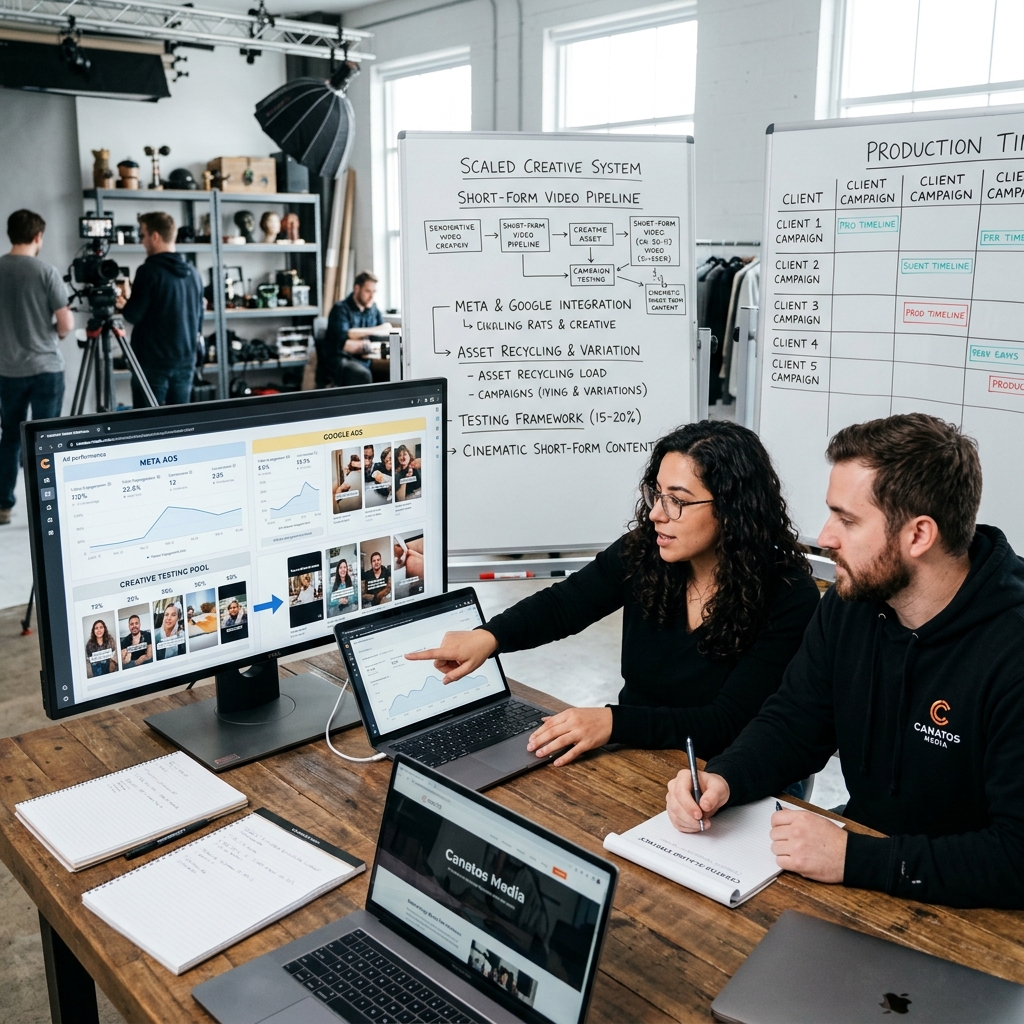
    The ability to produce and deploy high-quality video ads at scale has become a competitive advantage. Yet most growth-focused business owners struggle with a fundamental problem: creating enough fresh creative to feed Meta and Google’s appetite for new content without burning through budgets or sacrificing quality. This article walks you through a proven framework for scaling short-form ad creative across paid platforms.

    When you operate multiple locations or manage a service-based brand, your ad performance hinges on fresh creative. Meta and Google algorithms reward novelty. Run the same ad to the same audience for too long, and you’ll watch your cost-per-result climb while engagement drops. The problem intensifies across multiple locations: a single creative piece that works in New York may not resonate the same way in Los Angeles.

    Multi-location brands often find themselves trapped between two bad options. Either they invest enormous time and money producing dozens of unique ads monthly (which feels impossible), or they recycle the same three to five creative assets until performance tanks. Both approaches slow growth.

    The real bottleneck isn’t your marketing skill or budget—it’s your creative production capacity. You need a system that lets you produce quality video content consistently without scaling headcount proportionally.

    Why Static and Repetitive Ads Underperform on Meta and Google

    Static images and stale video ads lose effectiveness quickly. Meta’s algorithm specifically penalizes ads with high frequency, and Google’s smart bidding system learns fast when creative becomes stale. After two to three weeks of consistent delivery, your cost-per-click typically rises 20-40% without creative rotation.

    Repetitive messaging compounds the problem. When viewers see the same headline, same benefit statement, and same visual treatment week after week, they develop ad blindness. They scroll past without thinking. Your impression count stays high, but your conversion rate sinks.

    Here’s what we typically observe: brands that rely on 3-4 ad variations across a month will spend 15-25% more per conversion than brands running 15-20 variations. The math gets worse for multi-location operations, where geographic and demographic nuances demand localized creative angles.

    Static ads also waste your audience insights. You can’t test whether your audience responds better to emotional storytelling versus benefit-driven copy, or whether a 15-second format beats a 6-second format, when you’re running the same assets repeatedly.

    How Cinematic Short-Form Content Changes Your Ad Performance

    Cinematic short-form video hits differently than static images. Movement, sound design, and narrative structure grab attention in the first second, when most people are scrolling. This matters because Meta and Google prioritize content that earns viewer attention naturally, not through massive reach.

    Short-form video also gives you room for variety without massive production overhead. A single filmed scene can be cut three different ways: one focusing on the emotional payoff, one emphasizing the product benefit, and one highlighting social proof. You get three distinct ads from one shoot day.

    Platforms favor video engagement. On Meta, video assets typically see 2-3x higher completion rates than image carousels. Google rewards long dwell time on search results, and video ads drive that engagement. The platform algorithms essentially reward you for using video by giving your ads better positioning and lower costs.

    Beyond platform mechanics, cinematic content builds trust. A polished, well-lit product demonstration or customer testimonial video conveys professionalism and care that a phone-camera snapshot can’t match. This translates directly to higher conversion rates. Brands we work with using high-production-value video see 25-40% lift in conversion rates compared to their previous image-only approach.

    Building a Sustainable System for Scaled Creative Production

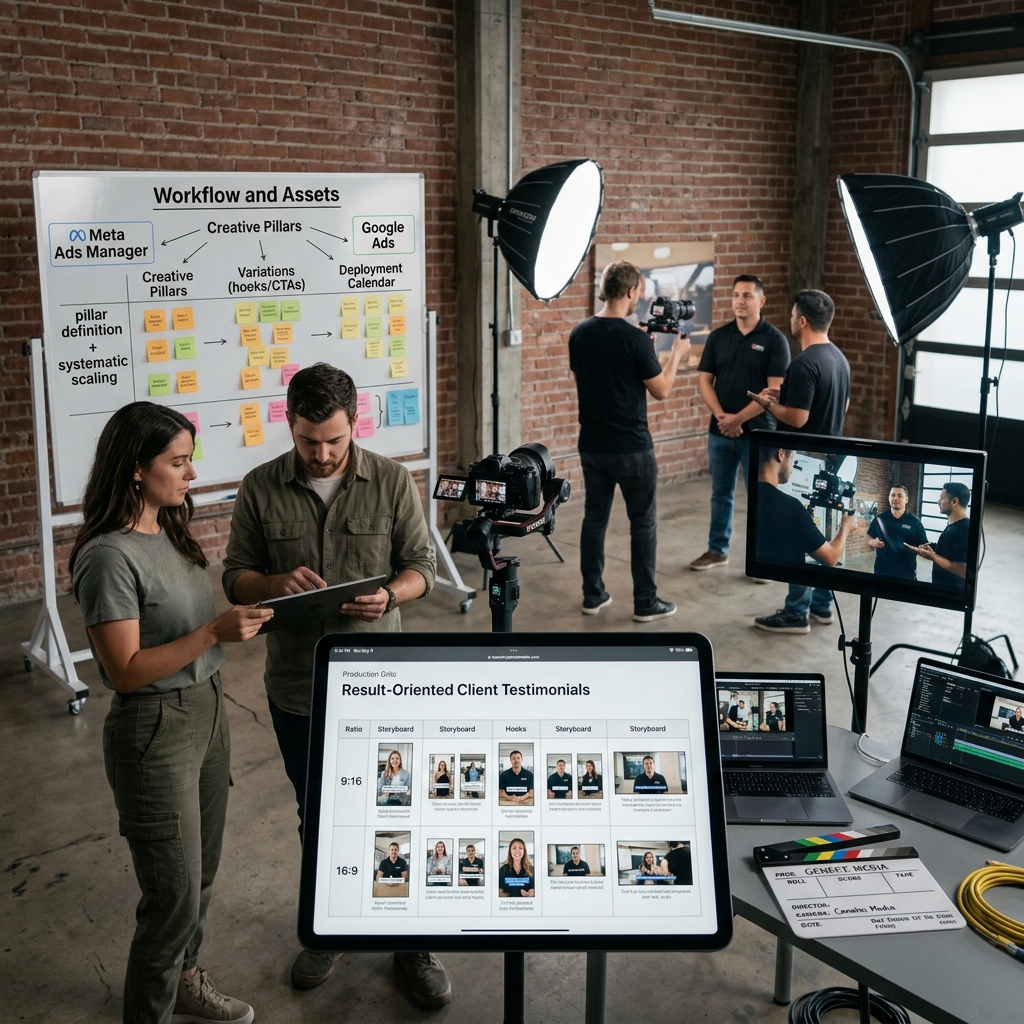
    Sustainable creative scaling requires structure, not just hustle. Start by defining your creative pillars: the core themes or messages that align with your brand and resonate across your audience. These might be “results,” “transformation,” “social proof,” or “product quality.”

    Next, establish a production calendar. Rather than scrambling to create ads on demand, plan shoots quarterly or monthly. A single production day might yield footage for 20-30 different ad variations. This batching approach reduces per-unit production cost and keeps your team focused.

    Build a clear brief template. Before any shoot, document:

    • The message or benefit being highlighted
    • The audience segment this creative targets
    • The platform and format (6-second, 15-second, vertical, landscape)
    • The call-to-action or conversion event
    • Any legal or brand guidelines

    A simple one-page brief prevents scope creep and keeps production moving efficiently.

    Our Video-First Approach to Ad Creative Development

    At Canatos Media, we approach ad creative from the platform backward. Rather than shooting beautiful brand content and hoping it converts, we start with platform requirements and audience behavior. What does Meta’s algorithm reward? What does Google’s search user actually want to see?

    We then build a creative strategy that generates multiple variations from fewer shoots. A single customer testimonial shoot might produce:

    • A 15-second emotional arc (highlight the transformation)
    • A 6-second benefit-focused cut (feature the core result)
    • A carousel version (break the testimonial into 3-5 key points)
    • A longer form version for YouTube or website (full 60-second story)

    This approach maximizes production value while distributing cost across many ad variations. We also build a documented production process so your team (or our team) can execute consistently across multiple shoots and locations.

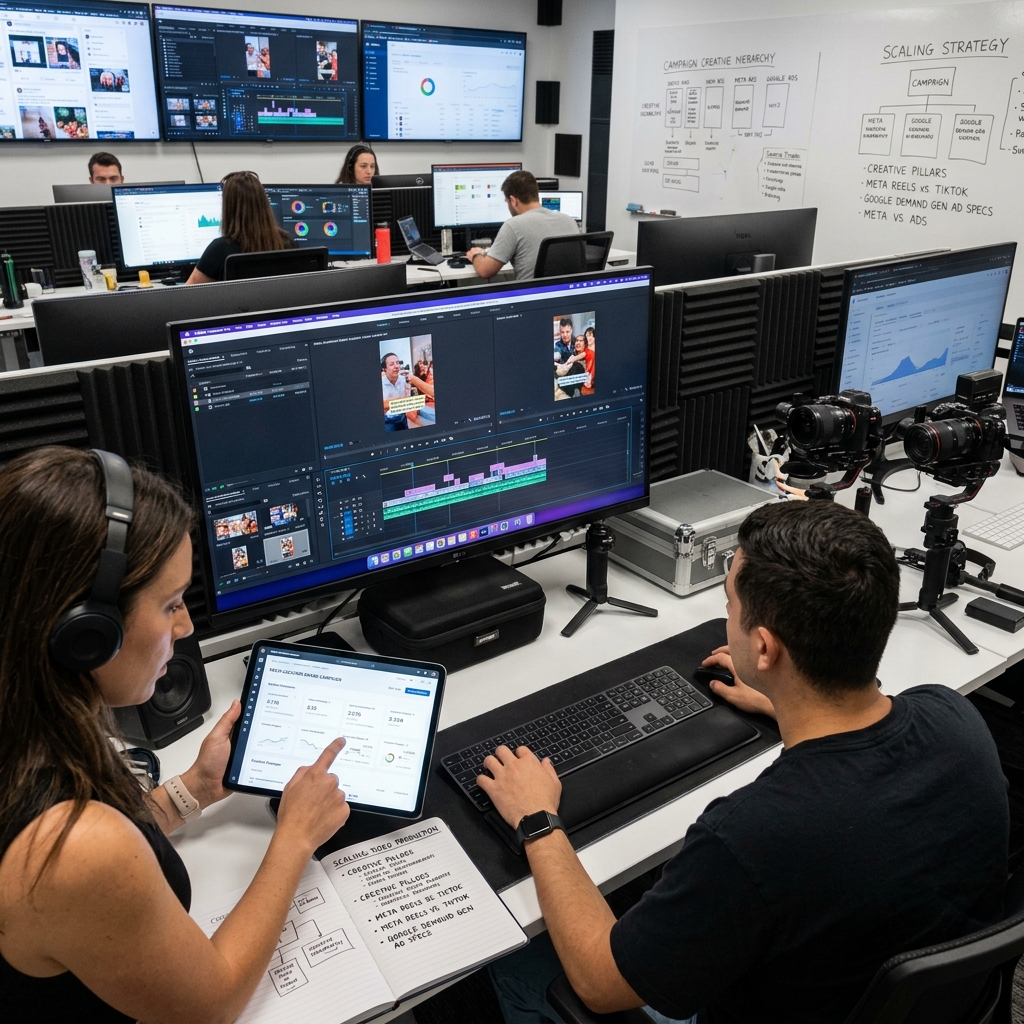
    Our short-form video production process includes strategy consultation, location scouting, professional filming, editing, platform optimization, and a structured handoff of assets organized by pillar, format, and platform.

    Integrating Short-Form Ads Into Your Paid Campaign Strategy

    Producing great video creative is half the battle. Integration into your paid strategy determines actual performance gains.

    Start with a testing structure. Designate 15-20% of your ad budget as your testing pool. This is where you run new creative, new messaging angles, and new formats. The remaining 80% funds your proven winners. As new creative proves itself, it graduates into the winning pool.

    Organize your ad sets by creative type or angle, not just by platform. Create separate ad sets for “testimonial videos,” “product demo videos,” “educational content,” and so on. This structure lets you see which creative categories drive best results for your business.

    Layer your video ads with audience targeting refinement. Pair your best-performing cinematic creative with custom audiences built from past customers, email subscribers, or website visitors. This combination of strong creative plus precise targeting multiplies your return on ad spend.

    Measuring and Optimizing Your Scaled Creative Performance

    You can’t improve what you don’t measure. Set up a tracking system that tags each creative asset with metadata: the creative pillar, format, production date, and any testing variables.

    Track these metrics at the creative level:

    • Completion rate (what percentage watch the whole thing?)
    • Cost-per-result (what’s this specific creative costing you?)
    • Click-through rate (how many people engage with it?)
    • Conversion rate from click to customer

    Run every new creative for at least 5-7 days before declaring it a winner or loser. Platforms need time to learn. Video ads typically show their true performance potential by day 10-14.

    Create a weekly creative performance report. Which production themes outperform? Which formats work best on which platforms? Which audience segments respond to specific message angles? This data informs your next production cycle.

    From Single Videos to a Continuous Content Engine

    Scale creative production by building a continuous system, not one-off shoots. Schedule regular production days—monthly or every six weeks—where you film multiple creative pieces across different themes and formats.

    Document your successful formulas. If customer testimonial videos consistently outperform product demos, plan more testimonial shoots. If vertical format videos beat landscape on Instagram, adjust your shooting approach. Let performance data guide your production strategy.

    Empower your team to spot-produce supporting creative between major shoots. Quick, lower-production-value content (team member tips, behind-the-scenes footage, customer success moments) can be filmed on a phone and still drive engagement. Not every ad needs cinema-grade production.

    Create an asset library. Archive all your produced content with clear metadata so you can easily pull proven winners for retargeting campaigns or long-tail placements.

    How We Handle Production at Scale Without Losing Quality

    Scaling production without sacrificing quality requires clear systems and realistic timelines. We build detailed shot lists before filming, which keeps shoots focused and efficient. A well-planned six-hour shoot often yields footage for 30-40 distinct ad variations.

    We use location, talent, and equipment strategically. Rather than booking a new location for every shoot, we’ll shoot multiple themes in a single location across one day. We also work with consistent talent (either your team members, employees, or trained brand representatives), which creates visual consistency across your ad library.

    Post-production is where templates and standardization save time without sacrificing polish. We develop editing templates that reflect your brand style guide, then apply them consistently across videos. This keeps production time short while maintaining quality.

    Communication and feedback loops matter hugely at scale. We establish clear review cycles with your team upfront so we’re not revising endlessly. One round of comprehensive feedback beats five rounds of small tweaks.

    Getting Your Team Aligned on Creative Testing and Iteration

    Creative testing works only if your team understands the strategy. Bring your internal team (or your agency partner’s team) into the testing logic. Explain why you’re running multiple versions. Show them the performance data. When everyone understands the “why,” creative decisions stop feeling arbitrary.

    Establish decision-making authority upfront. Who approves new creative directions? Who decides which tests run and for how long? Who has the final say on messaging? Clear authority prevents bottlenecks and keeps testing moving.

    Create feedback guidelines that distinguish brand fit from performance. A creative asset might feel outside your typical brand aesthetic but drive outstanding results. Don’t kill it based on personal taste alone. Test it with your audience, measure, and decide based on data.

    Next Steps to Launch Your Scaled Ad Creative Program

    Start small and systematic. Identify one core message or creative pillar you want to test at scale. Plan a single production day focused on that pillar. From that one day, produce at least 10-15 distinct ad variations across formats and platforms.

    Run these variations for two weeks, tracking performance carefully. Let the data tell you what resonates. Once you see winners, invest in the next production cycle informed by these learnings.

    Partner with a team that understands both production craft and platform optimization. Creative and strategy need to work together. If you’re building this internally, ensure your production lead and your media buyer are talking constantly.

    Our team at Canatos Media specializes in exactly this: building sustainable creative systems for growth-focused businesses. We handle the production complexity so you can focus on strategy and results. If you’re ready to move beyond static ads and repetitive creative, let’s talk about how we can structure your scaled creative program.

    For further reading: short-form video production.

    Contact us today for a free consultation to see how we can help you grow your business.

    Frequently Asked Questions (FAQ)

    How do we scale short-form video ads without compromising quality across multiple campaigns?

    We’ve built our production process to handle volume by standardizing our workflow while keeping each video cinematic and brand-specific. Our team creates modular content that adapts across Meta and Google without requiring complete re-shoots, and we maintain strict quality gates at each production stage. This means you get consistent, high-performing creative assets rather than stretched budgets or diluted visual standards.

    What’s the difference between how we approach short-form ad creative versus static or longer-form content?

    We design every short-form video specifically for paid platforms, which means we optimize for scroll-stopping visuals, fast hooks, and platform-specific formats from the start. Static ads and longer content don’t capture attention the same way on social feeds, and we’ve seen how cinematic short-form consistently outperforms them in both CTR and conversion metrics. Our approach treats these ads as a continuous system rather than one-off assets, so you’re always testing and refining what works for your audience.

    How do we measure whether our scaled creative strategy is actually driving leads and sales for your business?

    We track performance across your paid campaigns using conversion data from Meta and Google, then connect that back to our creative testing framework so we know which visual styles, messaging angles, and formats drive your actual customers. We don’t just report video views or engagement—we measure cost per lead, cost per acquisition, and ROI so you see exactly what the scaled creative production is generating for your bottom line.