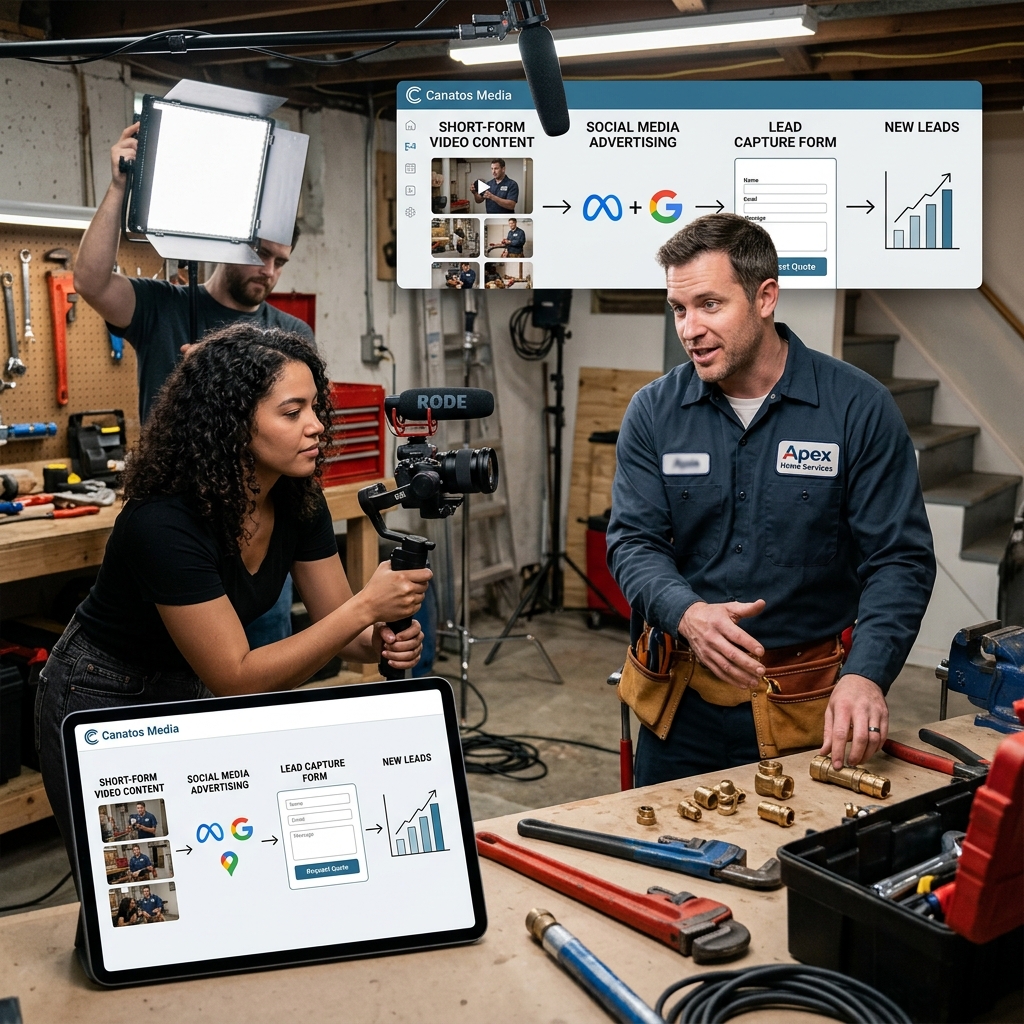
The Growth Problem Multi-Location Brands Face with Ad Creative
The ability to produce and deploy high-quality video ads at scale has become a competitive advantage. Yet most growth-focused business owners struggle with a fundamental problem: creating enough fresh creative to feed Meta and Google’s appetite for new content without burning through budgets or sacrificing quality. This article walks you through a proven framework for scaling short-form ad creative across paid platforms.
When you operate multiple locations or manage a service-based brand, your ad performance hinges on fresh creative. Meta and Google algorithms reward novelty. Run the same ad to the same audience for too long, and you’ll watch your cost-per-result climb while engagement drops. The problem intensifies across multiple locations: a single creative piece that works in New York may not resonate the same way in Los Angeles.
Multi-location brands often find themselves trapped between two bad options. Either they invest enormous time and money producing dozens of unique ads monthly (which feels impossible), or they recycle the same three to five creative assets until performance tanks. Both approaches slow growth.
The real bottleneck isn’t your marketing skill or budget—it’s your creative production capacity. You need a system that lets you produce quality video content consistently without scaling headcount proportionally.
Why Static and Repetitive Ads Underperform on Meta and Google
Static images and stale video ads lose effectiveness quickly. Meta’s algorithm specifically penalizes ads with high frequency, and Google’s smart bidding system learns fast when creative becomes stale. After two to three weeks of consistent delivery, your cost-per-click typically rises 20-40% without creative rotation.
Repetitive messaging compounds the problem. When viewers see the same headline, same benefit statement, and same visual treatment week after week, they develop ad blindness. They scroll past without thinking. Your impression count stays high, but your conversion rate sinks.
Here’s what we typically observe: brands that rely on 3-4 ad variations across a month will spend 15-25% more per conversion than brands running 15-20 variations. The math gets worse for multi-location operations, where geographic and demographic nuances demand localized creative angles.
Static ads also waste your audience insights. You can’t test whether your audience responds better to emotional storytelling versus benefit-driven copy, or whether a 15-second format beats a 6-second format, when you’re running the same assets repeatedly.
How Cinematic Short-Form Content Changes Your Ad Performance
Cinematic short-form video hits differently than static images. Movement, sound design, and narrative structure grab attention in the first second, when most people are scrolling. This matters because Meta and Google prioritize content that earns viewer attention naturally, not through massive reach.
Short-form video also gives you room for variety without massive production overhead. A single filmed scene can be cut three different ways: one focusing on the emotional payoff, one emphasizing the product benefit, and one highlighting social proof. You get three distinct ads from one shoot day.
Platforms favor video engagement. On Meta, video assets typically see 2-3x higher completion rates than image carousels. Google rewards long dwell time on search results, and video ads drive that engagement. The platform algorithms essentially reward you for using video by giving your ads better positioning and lower costs.
Beyond platform mechanics, cinematic content builds trust. A polished, well-lit product demonstration or customer testimonial video conveys professionalism and care that a phone-camera snapshot can’t match. This translates directly to higher conversion rates. Brands we work with using high-production-value video see 25-40% lift in conversion rates compared to their previous image-only approach.
Building a Sustainable System for Scaled Creative Production
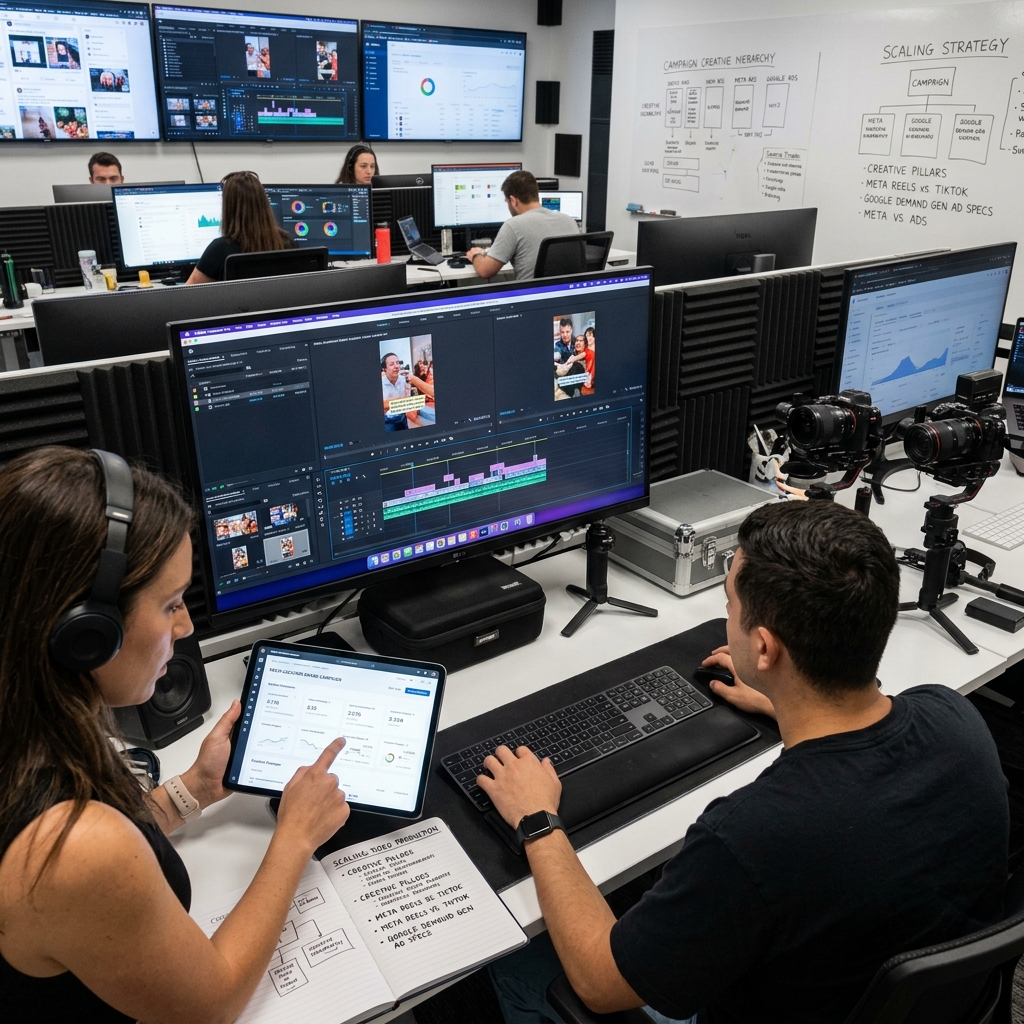
Sustainable creative scaling requires structure, not just hustle. Start by defining your creative pillars: the core themes or messages that align with your brand and resonate across your audience. These might be “results,” “transformation,” “social proof,” or “product quality.”
Next, establish a production calendar. Rather than scrambling to create ads on demand, plan shoots quarterly or monthly. A single production day might yield footage for 20-30 different ad variations. This batching approach reduces per-unit production cost and keeps your team focused.
Build a clear brief template. Before any shoot, document:
- The message or benefit being highlighted
- The audience segment this creative targets
- The platform and format (6-second, 15-second, vertical, landscape)
- The call-to-action or conversion event
- Any legal or brand guidelines
A simple one-page brief prevents scope creep and keeps production moving efficiently.
Our Video-First Approach to Ad Creative Development
At Canatos Media, we approach ad creative from the platform backward. Rather than shooting beautiful brand content and hoping it converts, we start with platform requirements and audience behavior. What does Meta’s algorithm reward? What does Google’s search user actually want to see?
We then build a creative strategy that generates multiple variations from fewer shoots. A single customer testimonial shoot might produce:
- A 15-second emotional arc (highlight the transformation)
- A 6-second benefit-focused cut (feature the core result)
- A carousel version (break the testimonial into 3-5 key points)
- A longer form version for YouTube or website (full 60-second story)
This approach maximizes production value while distributing cost across many ad variations. We also build a documented production process so your team (or our team) can execute consistently across multiple shoots and locations.
Our short-form video production process includes strategy consultation, location scouting, professional filming, editing, platform optimization, and a structured handoff of assets organized by pillar, format, and platform.
Integrating Short-Form Ads Into Your Paid Campaign Strategy
Producing great video creative is half the battle. Integration into your paid strategy determines actual performance gains.
Start with a testing structure. Designate 15-20% of your ad budget as your testing pool. This is where you run new creative, new messaging angles, and new formats. The remaining 80% funds your proven winners. As new creative proves itself, it graduates into the winning pool.
Organize your ad sets by creative type or angle, not just by platform. Create separate ad sets for “testimonial videos,” “product demo videos,” “educational content,” and so on. This structure lets you see which creative categories drive best results for your business.
Layer your video ads with audience targeting refinement. Pair your best-performing cinematic creative with custom audiences built from past customers, email subscribers, or website visitors. This combination of strong creative plus precise targeting multiplies your return on ad spend.
Measuring and Optimizing Your Scaled Creative Performance
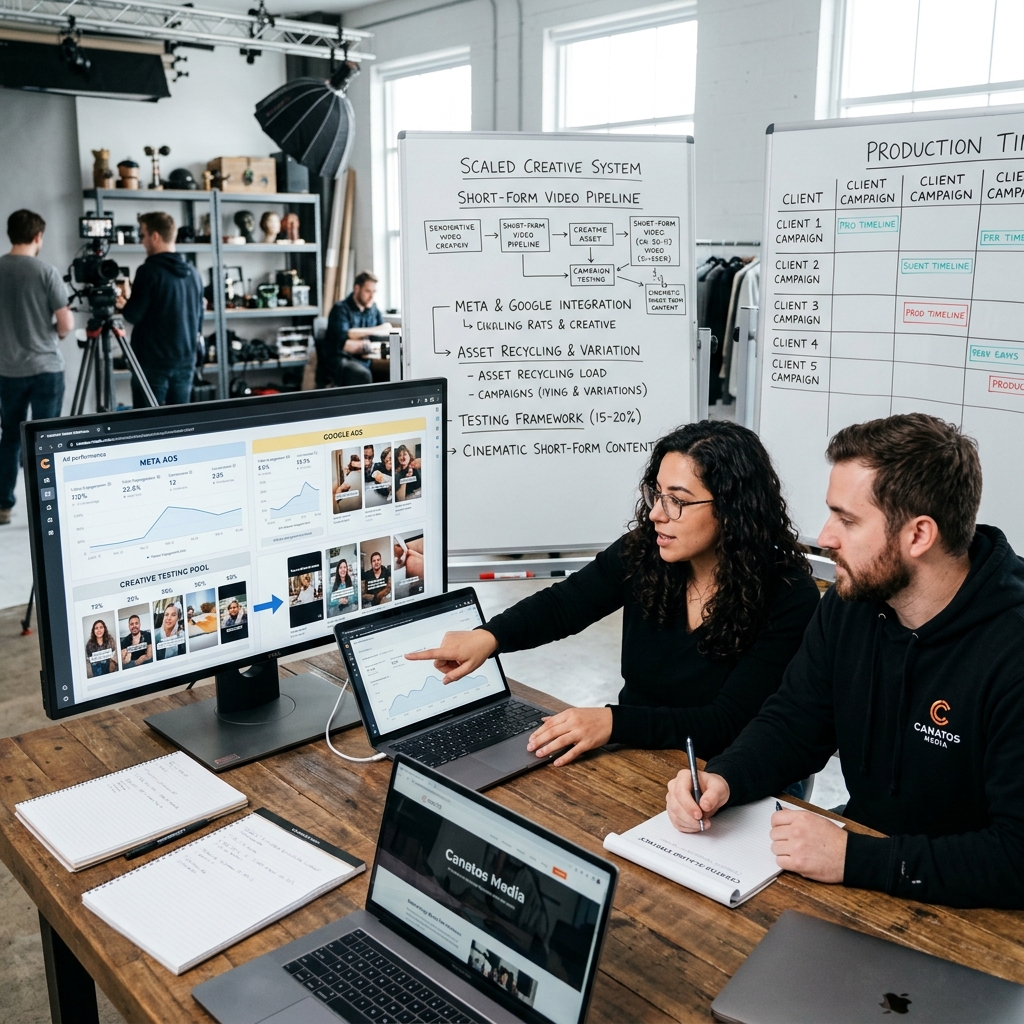
You can’t improve what you don’t measure. Set up a tracking system that tags each creative asset with metadata: the creative pillar, format, production date, and any testing variables.
Track these metrics at the creative level:
- Completion rate (what percentage watch the whole thing?)
- Cost-per-result (what’s this specific creative costing you?)
- Click-through rate (how many people engage with it?)
- Conversion rate from click to customer
Run every new creative for at least 5-7 days before declaring it a winner or loser. Platforms need time to learn. Video ads typically show their true performance potential by day 10-14.
Create a weekly creative performance report. Which production themes outperform? Which formats work best on which platforms? Which audience segments respond to specific message angles? This data informs your next production cycle.
From Single Videos to a Continuous Content Engine
Scale creative production by building a continuous system, not one-off shoots. Schedule regular production days—monthly or every six weeks—where you film multiple creative pieces across different themes and formats.
Document your successful formulas. If customer testimonial videos consistently outperform product demos, plan more testimonial shoots. If vertical format videos beat landscape on Instagram, adjust your shooting approach. Let performance data guide your production strategy.
Empower your team to spot-produce supporting creative between major shoots. Quick, lower-production-value content (team member tips, behind-the-scenes footage, customer success moments) can be filmed on a phone and still drive engagement. Not every ad needs cinema-grade production.
Create an asset library. Archive all your produced content with clear metadata so you can easily pull proven winners for retargeting campaigns or long-tail placements.
How We Handle Production at Scale Without Losing Quality
Scaling production without sacrificing quality requires clear systems and realistic timelines. We build detailed shot lists before filming, which keeps shoots focused and efficient. A well-planned six-hour shoot often yields footage for 30-40 distinct ad variations.
We use location, talent, and equipment strategically. Rather than booking a new location for every shoot, we’ll shoot multiple themes in a single location across one day. We also work with consistent talent (either your team members, employees, or trained brand representatives), which creates visual consistency across your ad library.
Post-production is where templates and standardization save time without sacrificing polish. We develop editing templates that reflect your brand style guide, then apply them consistently across videos. This keeps production time short while maintaining quality.
Communication and feedback loops matter hugely at scale. We establish clear review cycles with your team upfront so we’re not revising endlessly. One round of comprehensive feedback beats five rounds of small tweaks.
Getting Your Team Aligned on Creative Testing and Iteration
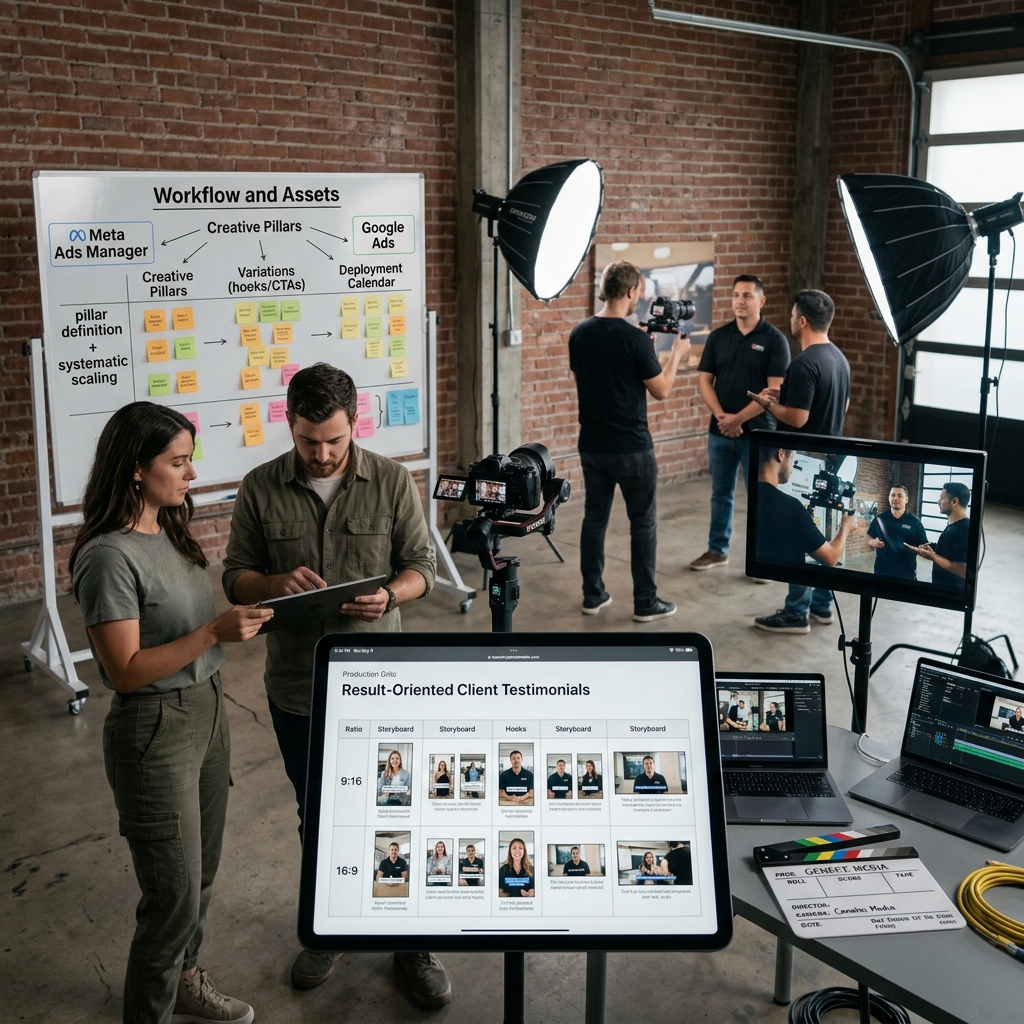
Creative testing works only if your team understands the strategy. Bring your internal team (or your agency partner’s team) into the testing logic. Explain why you’re running multiple versions. Show them the performance data. When everyone understands the “why,” creative decisions stop feeling arbitrary.
Establish decision-making authority upfront. Who approves new creative directions? Who decides which tests run and for how long? Who has the final say on messaging? Clear authority prevents bottlenecks and keeps testing moving.
Create feedback guidelines that distinguish brand fit from performance. A creative asset might feel outside your typical brand aesthetic but drive outstanding results. Don’t kill it based on personal taste alone. Test it with your audience, measure, and decide based on data.
Next Steps to Launch Your Scaled Ad Creative Program
Start small and systematic. Identify one core message or creative pillar you want to test at scale. Plan a single production day focused on that pillar. From that one day, produce at least 10-15 distinct ad variations across formats and platforms.
Run these variations for two weeks, tracking performance carefully. Let the data tell you what resonates. Once you see winners, invest in the next production cycle informed by these learnings.
Partner with a team that understands both production craft and platform optimization. Creative and strategy need to work together. If you’re building this internally, ensure your production lead and your media buyer are talking constantly.
Our team at Canatos Media specializes in exactly this: building sustainable creative systems for growth-focused businesses. We handle the production complexity so you can focus on strategy and results. If you’re ready to move beyond static ads and repetitive creative, let’s talk about how we can structure your scaled creative program.
For further reading: short-form video production.
Contact us today for a free consultation to see how we can help you grow your business.
Frequently Asked Questions (FAQ)
How do we scale short-form video ads without compromising quality across multiple campaigns?
We’ve built our production process to handle volume by standardizing our workflow while keeping each video cinematic and brand-specific. Our team creates modular content that adapts across Meta and Google without requiring complete re-shoots, and we maintain strict quality gates at each production stage. This means you get consistent, high-performing creative assets rather than stretched budgets or diluted visual standards.
What’s the difference between how we approach short-form ad creative versus static or longer-form content?
We design every short-form video specifically for paid platforms, which means we optimize for scroll-stopping visuals, fast hooks, and platform-specific formats from the start. Static ads and longer content don’t capture attention the same way on social feeds, and we’ve seen how cinematic short-form consistently outperforms them in both CTR and conversion metrics. Our approach treats these ads as a continuous system rather than one-off assets, so you’re always testing and refining what works for your audience.
How do we measure whether our scaled creative strategy is actually driving leads and sales for your business?
We track performance across your paid campaigns using conversion data from Meta and Google, then connect that back to our creative testing framework so we know which visual styles, messaging angles, and formats drive your actual customers. We don’t just report video views or engagement—we measure cost per lead, cost per acquisition, and ROI so you see exactly what the scaled creative production is generating for your bottom line.