Day: June 4, 2026

  • Why Multi-Location Brands Choose Canatos Over Shootsta for Video

    Why Multi-Location Brands Choose Canatos Over Shootsta for Video

    The Challenge: Scaling Visual Content Across Multiple Locations

    Running a multi-location or service-based business means you need consistent, high-quality visual content across every branch, market, and campaign. Yet most content creation workflows weren’t built for scale. You’re juggling location managers who may lack creative direction, inconsistent quality standards, and the constant pressure to produce fresh social content while maintaining brand cohesion.

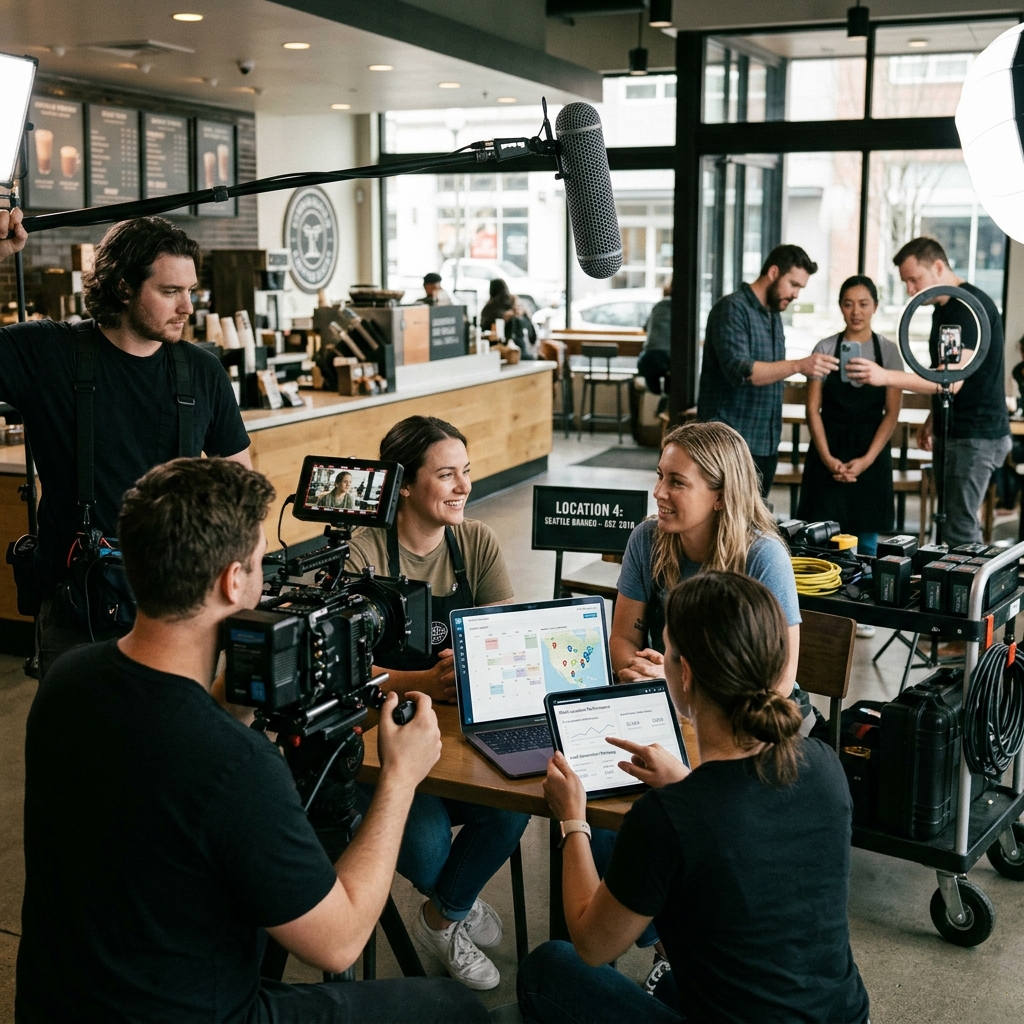
    When you’re managing three dental offices, five HVAC service territories, or ten spa locations, shooting video becomes complicated. Each location has different aesthetics, staff dynamics, and local audiences. A generic platform that just helps you record clips won’t solve this. You need a partner who understands how to systematize cinematic quality at scale and then strategically deploy that content to drive leads.

    This is where most businesses hit a wall. They adopt a DIY video tool, realize the content lacks strategic direction, and end up with unused footage sitting on drives while their competitors are converting leads from polished, purpose-built videos.

    Why Generic Video Platforms Fall Short

    Tools built primarily for recording and basic editing miss a fundamental truth: video without distribution strategy is just expensive content nobody sees. Many platforms focus on making it “easy” to shoot video but ignore the entire ecosystem needed to turn views into leads.

    Here’s what typically goes wrong:

    • Platform-native editing creates average-looking content that blends into the noise of social feeds
    • No integrated paid advertising capabilities mean your videos get zero amplification beyond organic reach
    • Disconnected analytics leave you guessing whether video is actually driving business results
    • Limited social media management features require juggling multiple tools
    • No SEO or website integration strategy, so video assets don’t build long-term organic visibility
    • Lead capture systems are either nonexistent or bolted on as an afterthought

    We’ve worked with brands who spent months producing videos on these platforms only to realize they had no systematic way to turn watchers into qualified leads. The technology was there, but the strategy wasn’t. That’s the gap we built Canatos Media to fill.

    How We Approach Scalable Video Differently

    We start with your business goals, not with production timelines. Our process revolves around understanding which videos actually move your needle: lead generation assets, trust-building brand stories, location-specific service videos, or customer testimonials.

    From there, we build a scalable production and distribution system. This means:

    • Developing repeatable templates and workflows so you’re not reinventing the wheel for each location
    • Shooting cinematic content that stands out in algorithm-driven feeds
    • Creating variations of key videos optimized for different platforms, audiences, and campaign phases
    • Integrating video production with paid advertising and lead capture from day one

    For a multi-location plumbing company, this might mean shooting hero content at one location, then efficiently capturing location-specific variations. A service brand can have branded story templates that work whether you’re in New York or Nashville. The scalability doesn’t come from automation alone; it comes from strategic planning upfront.

    Cinematic Quality Meets Strategic Distribution

    There’s a gap between “professional looking” and “cinematic.” We close it. Our cinematic website videos aren’t just well-lit and edited; they’re crafted to communicate your brand’s unique value within 15 seconds to three minutes, depending on where they appear.

    This matters because algorithmic feeds reward completion and engagement. A cinematic video with intentional pacing, thoughtful color grading, and clear storytelling performs measurably better than standard corporate video. Your audience feels the difference, even if they can’t articulate it.

    We also recognize that a single video asset shouldn’t live in one place. A 60-second brand story becomes a 15-second reel, a 30-second paid ad, a 90-second website feature, and multiple social snippets. Strategic distribution multiplies your return on production investment.

    Integrated Marketing: Beyond Just Video Production

    Video is powerful, but isolated video is limited. We approach this as part of a broader marketing system. That’s why we built our all-in-one marketing funnel to connect video content, paid advertising, lead capture, and follow-up.

    Your video strategy should feed into paid advertising, which directs traffic to optimized landing pages, which captures leads through integrated forms. Those leads then flow into your email or CRM system for nurturing. Without this integration, you’re producing content in a vacuum.

    We handle the connective tissue. Video production becomes part of a coordinated effort across social media, search, and paid channels, all designed to move prospects toward becoming customers.

    Lead Generation Through Video-First Storytelling

    Service businesses live and die by leads. Video is one of the highest-converting content formats, but only when it’s paired with clear intent and strategic placement.

    We build videos specifically designed to generate leads: service explainers that answer the question “Why should I trust you?” Customer success stories that mirror your prospect’s situation. Location-specific content that speaks to local audiences. These aren’t vanity videos; they’re conversion assets embedded in paid campaigns and landing pages.

    When a homeowner searches for “emergency plumber” and sees a 45-second video of your team solving a real problem, followed by a simple CTA and lead form, the conversion rate changes dramatically compared to text or static images alone.

    Social Media Management Paired With Video Content

    Producing excellent video without a distribution strategy is like building a storefront nobody visits. We manage the social channels where your audience actually spends time, posting consistently, engaging with comments, and building momentum around video content.

    This includes:
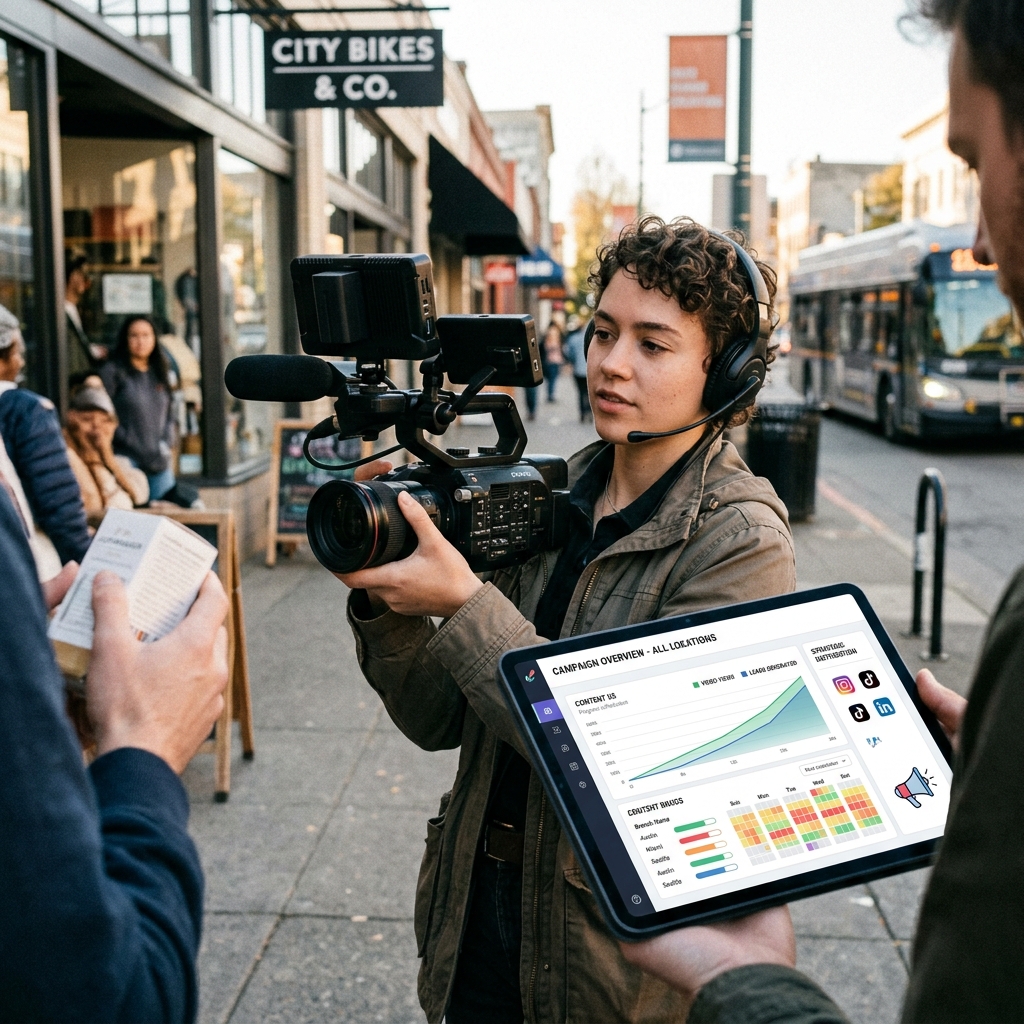
    • Strategic posting calendars aligned with your seasonal business cycles
    • Community management that builds trust and relationships
    • Cross-platform optimization so your video content looks and performs best on each platform
    • Analytics reporting that ties social activity back to actual leads and sales

    Video content performs best when it’s part of an ongoing conversation, not a one-off post. Our social management ensures your videos land in a healthy, engaged community.

    Organic reach has limits. Paid advertising is how you scale. We manage Meta and Google advertising directly, meaning your videos don’t just sit on your social feeds hoping for engagement; they’re actively promoted to your target audience.

    Our approach:

    • Building audience segments based on your service area and customer profile
    • Testing video variations to find what resonates and converts
    • Optimizing budget toward highest-performing assets
    • Retargeting people who’ve watched your videos but haven’t converted yet
    • Integrating video ads with landing pages that capture contact information

    Video ads consistently outperform static image ads in conversion metrics. The investment in production is leveraged across multiple paid channels to justify and amplify the cost.

    Website Design and Video Integration

    Your website is often where prospects make their final decision. Video should be central to that experience, not an afterthought. We design and build websites with video as a core storytelling tool, not decoration.

    A service-based website with strategic video placements (homepage hero, service pages, about section, testimonials) converts substantially higher than text-only sites. Video reduces friction by answering questions visually and building immediate trust.

    AEO Optimization for Your Video Assets

    Video content builds long-term organic visibility when it’s properly optimized. AEO (Answer Engine Optimization) ensures your video assets are discoverable in search results and AI-powered answers.

    This includes:

    • Keyword-rich titles, descriptions, and transcripts for each video
    • Structured data markup so search engines understand your video content
    • Strategic linking between video assets and relevant pages
    • Hosting videos on platforms that rank well in search results

    A well-optimized video library becomes a perpetual source of organic traffic, not just a short-term social asset.
    Results-Driven Video Systems for Service Brands

    We measure success by leads and revenue, not views and likes. Every video we produce is tied to a specific business outcome: contact form submissions, phone calls, appointment bookings, or sales.

    This means our entire process is built around performance. We analyze which videos drive leads. We refine based on data. We scale what works and adjust what doesn’t. Your video strategy becomes an accountable, measurable business system rather than a creative exercise.

    Ready to Scale Your Brand With Strategic Video

    Choosing a video partner isn’t about picking the cheapest option or the fanciest camera work. It’s about finding a team that understands your specific business model, can produce at the scale you need, and has integrated systems to turn content into measurable results.

    We work exclusively with growth-focused business owners who are serious about video as a lead generation tool. If you’re managing multiple locations or a service-based business that needs consistency, quality, and strategic distribution, let’s talk about how we approach scalable video differently.

    Reach out to discuss your brand’s video strategy and how we can build a system that actually converts.

    Contact us today for a free consultation to see how we can help you grow your business.

    Frequently Asked Questions (FAQ)

    How do we handle video production consistency across multiple locations?

    We develop a centralized brand framework that ensures every location maintains your visual identity while staying relevant to local audiences. Our team manages the production workflow, from initial strategy through final delivery, so you get broadcast-quality cinematic content without the operational burden of coordinating shoots across different sites. This approach lets us produce scalable content that drives consistent results regardless of how many locations you operate.

    What makes our video strategy different from basic video platforms?

    We don’t just produce videos and hand them off. We integrate video into your entire marketing system, including social media management, paid advertising campaigns, and website optimization. Our short-form content is strategically designed for lead generation and audience engagement, not just vanity metrics. We measure performance through actual conversions and business outcomes, which means every video we create serves a specific purpose in your growth strategy.

    How does video content actually convert into leads for service-based businesses?

    We combine cinematic storytelling with strategic distribution across the channels where your customers actually spend time. Our team handles paid advertising placement, social media amplification, and website integration so your content reaches qualified prospects at the right moment in their buying journey. We also optimize video assets for search and discovery through AEO, ensuring your content generates visibility and attracts inbound interest organically.

  • The Complete Guide to Video Marketing

    The Complete Guide to Video Marketing

    Video Marketing: What It Is and Why It’s Dominating in 2026

    Video marketing is the use of video content to promote your business, attract new customers, and drive real sales — across platforms like YouTube, Instagram, TikTok, and your own website.

    Quick answer:

    • What it is: Creating and sharing videos to grow brand awareness, generate leads, and convert viewers into customers
    • Why it works: Video is the format people prefer — 66% choose video over reading text to learn about a product
    • Where it runs: Social media, landing pages, email, paid ads, YouTube, and more
    • Who it’s for: Any business that wants more visibility, trust, and revenue online
    • The result: 88% of video marketers report a positive ROI — and 87% of consumers say a brand video directly influenced a purchase

    The numbers are hard to ignore. Nearly 9 in 10 businesses now use video as a marketing tool. Social videos generate 1,200% more shares than text and images combined. And 91% of marketers say video helps them get more website traffic.

    Yet most local businesses still treat video as an afterthought — a single promotional clip posted once and forgotten.

    That’s a missed opportunity.

    Video is no longer a “nice to have.” It’s the engine behind awareness, trust, and conversions at every stage of the customer journey. Whether you’re a multi-location business trying to stand out in a crowded market or a founder building your brand from scratch, video gives you a way to show — not just tell — why customers should choose you.

    I’m Nic Canobbio, founder of Canatos Media, and I’ve spent over two decades in media production, generating more than 60 million views across social platforms through video marketing strategies built on both creative storytelling and hard data. In this guide, I’ll walk you through everything you need to build a video strategy that actually moves the needle.

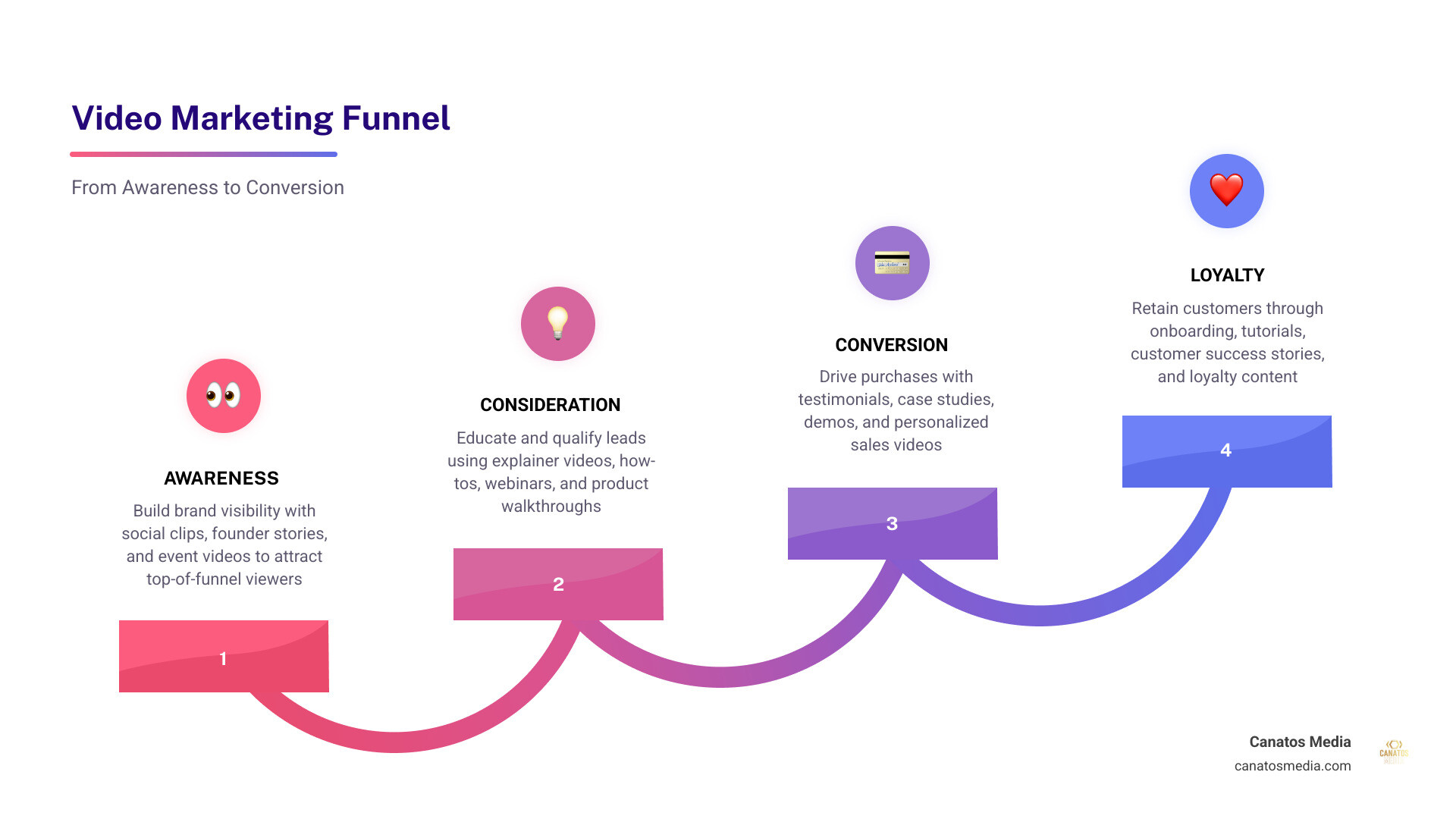
    Video marketing funnel from awareness to conversion with key stats and video types at each stage infographic

    What Is Video Marketing and Why It Matters in 2026

    At its core, video marketing is a forward-facing digital strategy that leverages the power of sight, sound, and motion to achieve specific business objectives. In 2026, it has moved far beyond the “commercial” phase. It is now the primary way we consume information, learn new skills, and decide where to spend our money.

    What video marketing means for modern businesses

    For businesses in the Tri-State area and Long Island, video marketing serves as a bridge between your brand and your local community. It isn’t just one thing; it’s a multi-faceted tool used for:

    • Promotion: Highlighting new products or services.
    • Education: Explaining complex topics or providing “how-to” value.
    • Persuasion: Using testimonials and case studies to build social proof.

    We categorize these efforts into three main buckets: Owned media (videos on your website), Paid media (YouTube or Meta ads), and Earned media (when people share your content because it’s just that good).

    Why video marketing is so powerful right now

    Buyer behavior has shifted permanently toward visual learning. We are 5x more likely to pay attention to a video than static text. This emotional connection builds trust faster than any other medium. When you see a local business owner’s face and hear their voice, the “know, like, and trust” factor skyrockets. Furthermore, search engines like Google and social algorithms prioritize video, giving you significantly better search visibility and social reach.

    Key video marketing statistics marketers should know

    The data supporting video marketing is staggering:

    • 92% of marketers say video is an important part of their strategy, a massive jump from 78% in 2015.
    • 88% of marketers report a positive ROI, compared to just 33% a decade ago.
    • 87% of consumers have been convinced to buy a product after watching a brand’s video.
    • 80% increase in conversions can be achieved just by placing a video on a landing page.
    • 1200% more shares are generated by social video than text and image posts combined.

    The Benefits of Video Marketing for Business Growth

    If you want to grow your business in 2026, you need to be where your customers’ eyes are. Video doesn’t just look pretty; it works hard to improve your bottom line.

    How video marketing improves awareness, trust, and conversions

    Landing pages with embedded videos keep people on the page longer, which we call “dwell time.” This signals to search engines that your content is valuable. By using video marketing tools like customer testimonials and product demos, you provide the social proof needed to push a prospect over the finish line.

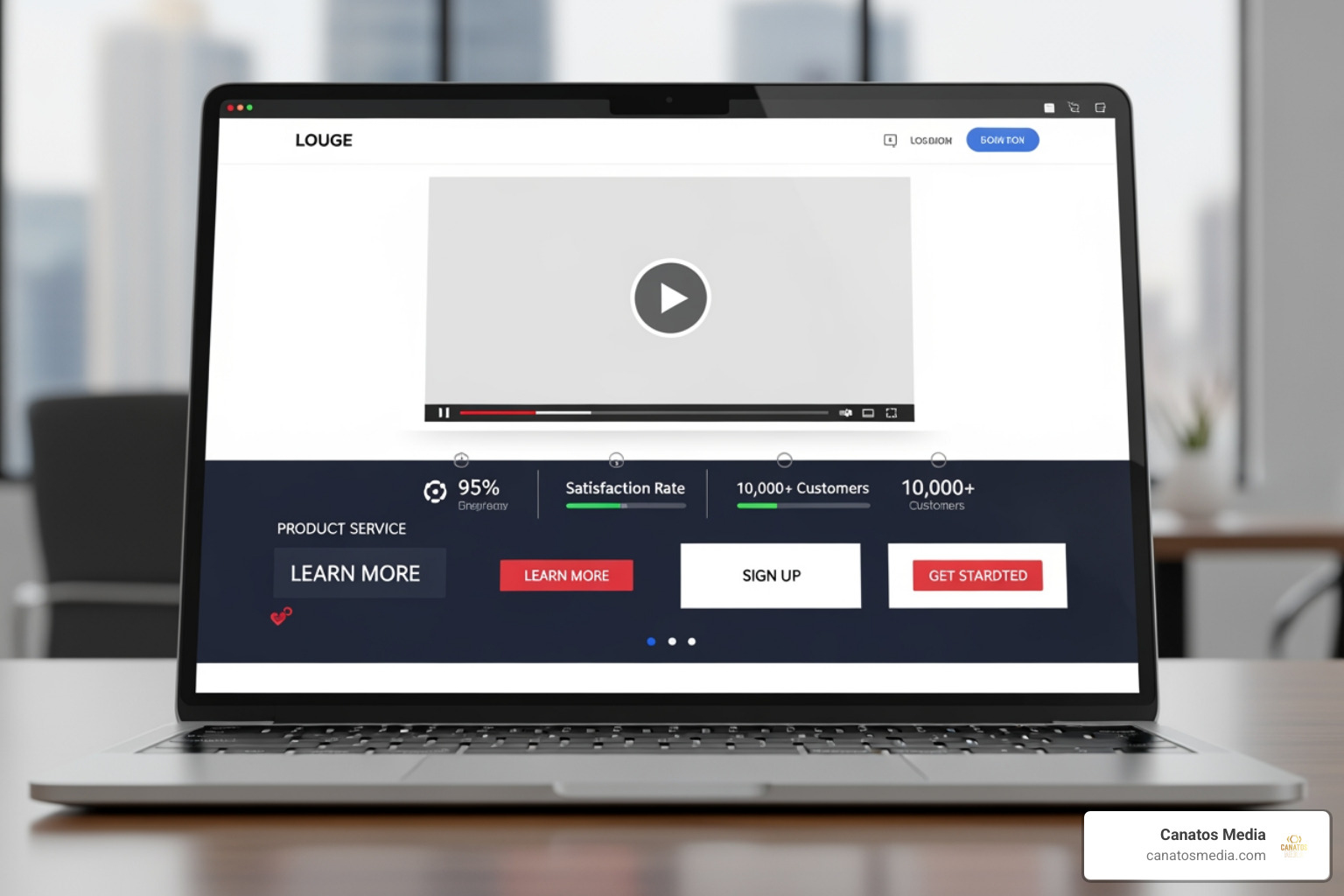
    A business landing page featuring a prominent video player that increases conversion rates by 80%

    How video supports SEO, content marketing, and sales

    Video is a “rich medium” that search algorithms love. By including transcripts and keyword-rich metadata, you can dominate search results. According to Semrush, video is essential for any modern SEO strategy because it earns more backlinks and captures organic traffic that text-only pages miss. In sales, personalized video pitches can see a 20% higher response rate than traditional cold emails.

    How video lowers friction across the customer journey

    Video is the ultimate “friction remover.” Instead of a customer calling your support line to ask how a product works, they can watch a 60-second tutorial. This reduces support tickets by up to 40% and creates a smoother onboarding experience. From FAQ videos to advanced “how-to” guides, video educates your audience at scale, 24/7.

    Types of Video Marketing Content for Every Funnel Stage

    To be successful, you can’t just make “a video.” You need to make the right video for where your customer is in their journey.

    Awareness video marketing formats

    At the Top of the Funnel (TOFU), your goal is to get noticed.

    • Brand Videos: High-level films that share your mission and values.
    • Social Clips: Short, punchy vertical videos for Reels or TikTok.
    • Founder Stories: Humanizing your brand by showing the person behind the business.
    • Expert Interviews: Positioning yourself as a thought leader in the Long Island or Tri-State market.

    Consideration-stage videos that educate and qualify

    Once they know you, they need to know why you’re the best choice.

    • Explainer Videos: Breaking down how your service solves a specific problem.
    • Webinars: Deep-dive educational sessions that build massive authority.
    • Product Walkthroughs: Showing the “ins and outs” of what you sell.
    • Filmed Podcasts: Repurposing audio content into a visual format to build deeper connections.

    Conversion and retention videos that drive action

    This is where the sale happens.

    • Testimonials: Real customers sharing real results.
    • Case Studies: Data-driven proof of your success.
    • Personalized Videos: Sending a quick “thank you” or “follow up” video to a specific lead.
    • Onboarding Videos: Ensuring your new customers feel supported immediately after purchase.

    Choosing the right format by goal, audience, and platform

    Mapping your format to the platform is crucial. You wouldn’t put a 15-minute webinar on TikTok, nor would you put a 15-second “meme” video as your main website explainer. For a deeper look at specific content types, check out our video content tag for more examples.

    Funnel Stage Goal Video Type Recommended Length
    Awareness Get Noticed Social Clips, Brand Films 15 – 60 seconds
    Consideration Build Trust Explainers, How-to, Webinars 2 – 10 minutes
    Conversion Close Sale Testimonials, Demos 1 – 3 minutes
    Loyalty Retain Onboarding, FAQ, Updates 1 – 5 minutes

    How to Build a Video Marketing Strategy That Delivers ROI

    Many businesses fail because they treat video as a creative project rather than a business tool. A real video marketing strategy requires a framework.

    Set business goals and define success before production

    Don’t pick up a camera until you know what “winning” looks like. Are you looking for brand awareness (views and reach), lead generation (clicks and sign-ups), or sales (conversions)? Define your KPIs early. We look at “pipeline contribution” — how much revenue can be directly traced back to a video view.

    Build a full-funnel video marketing plan

    A full-funnel approach ensures you aren’t just attracting people and then letting them go. You need content for every stage: Awareness (TOFU), Consideration (MOFU), and Conversion (BOFU). As Adobe suggests, integrating video across every touchpoint of the customer journey is the only way to maximize your impact in 2026.

    Plan budget, resources, and publishing cadence

    We recommend allocating 12-15% of your total marketing budget to video. You also need to decide on your cadence. Consistency beats frequency every time. It is better to post one high-quality video a week than five low-quality clips that hurt your brand.

    Integrate video with SEO, email, paid media, and sales

    Video shouldn’t live on an island. Embed it in your blogs to boost SEO. Include it in your email nurture sequences to increase click-through rates. Use it in your retargeting ads to remind prospects why they liked you in the first place.

    How to Plan, Produce, Distribute, and Measure Marketing Videos

    Production doesn’t have to be a headache. Whether you’re doing it yourself or hiring an agency like Canatos Media, the workflow remains the same.

    Pre-production: research, hooks, scripts, and storyboards

    The first three seconds of your video are the most important. You need a “hook” that stops the scroll. We start with keyword research to see what your audience is actually searching for, then write a script that follows the “Problem-Solution-Result” framework.

    Production and post-production best practices

    You don’t need a Hollywood budget. A modern smartphone, a tripod to avoid shaky footage, and a simple lavalier microphone for clear audio go a long way. In post-production, always add captions — many people watch videos on mute in public places.

    Where to publish and promote your videos

    Distribution is just as important as production.

    • YouTube: Great for long-form educational content and SEO.
    • Social Media: Instagram Reels, TikTok, and LinkedIn are perfect for short-form video production.
    • Website: Place your best videos on high-traffic landing pages.
    • Email: Use video thumbnails to drive traffic from your newsletter.

    For a breakdown of which platform fits your brand best, see our guide on the most popular short-form content platforms.

    How to measure video marketing success and ROI

    Stop looking at “vanity metrics” like views. Instead, focus on:

    • Watch Time: Are people actually finishing the video?
    • Click-Through Rate (CTR): Is the video driving traffic?
    • Conversion Rate: Are viewers becoming customers?
    • Customer Acquisition Cost (CAC): Is video lowering your cost to get a new lead?

    To dive deeper into the math, read our post on measuring short-form video ROI.

    The landscape of video marketing is constantly evolving. Staying ahead means embracing new technologies while sticking to timeless storytelling.

    Best practices for better performance on every platform

    • Hook them early: You have 3 seconds. Use them.
    • One story per video: Don’t confuse your audience by trying to say too much.
    • Vertical first: Most video is consumed on mobile. Shoot for the phone.
    • Clear CTA: Tell them exactly what to do next (e.g., “Click the link,” “Book a call”).

    We are seeing a massive shift toward AI-driven personalization. AI tools can now help us create hundreds of personalized video messages for customers based on their data. Shoppable video is also exploding, allowing viewers to click a product inside the video and buy it instantly. Furthermore, vertical video has moved from an “experiment” to the industry standard for all social commerce.

    Examples of successful video marketing in action

    We’ve seen local Tri-State businesses transform their results through video. A local service provider might use a “behind-the-scenes” video to show their process, which builds more trust than any static photo ever could. A Long Island retailer might use a “how-to” series to show customers how to get the most out of their products, leading to higher customer satisfaction and fewer returns.

    Common mistakes to avoid

    • Ignoring Audio: People will watch a slightly blurry video, but they will turn off a video with bad sound immediately.
    • No Strategy: Making videos “just because” is a waste of money.
    • Forgetting the CTA: Every video should have a purpose.
    • Vanity Metrics: Don’t get discouraged by low view counts if those few viewers are actually buying.

    Frequently Asked Questions About Video Marketing

    What equipment and tools do you need to get started with video marketing?

    You can start with just a smartphone and a window for natural light. As you grow, we recommend investing in a dedicated microphone (shotgun or lavalier), a sturdy tripod, and basic LED lighting. For editing, tools like CapCut or Adobe Premiere are industry standards.

    How long should marketing videos be?

    Context is everything.

    • Social Awareness: Under 60 seconds.
    • Product Explainers: 1 to 2 minutes.
    • Educational/Webinars: 7 to 15 minutes (or longer if the value is there).

    Can small businesses succeed with video marketing on a budget?

    Absolutely. In fact, “authentic” and “raw” video often performs better on social media than over-produced corporate films. By focusing on your niche expertise and using budget-friendly video production techniques, you can out-compete much larger brands.

    Conclusion

    Video marketing is no longer a futuristic concept — it is the heartbeat of modern business growth. In 2026, your customers aren’t just looking for your products; they are looking for a connection. They want to see the faces behind the brand, hear the stories of success, and learn in the format that is easiest for them to consume.

    At Canatos Media, we specialize in an integrated strategy that connects cinematic content with hard-hitting data. We don’t just make videos that look good; we build engines that drive measurable growth for businesses across the Tri-State area and Long Island.

    If you’re ready to stop guessing and start growing, explore our end-to-end video marketing services and see how we can turn your brand into a visual powerhouse. The future is moving fast — make sure your business is in the frame.