Day: July 24, 2026

  • X Reasons Why You Will Love Video Production Agencies

    X Reasons Why You Will Love Video Production Agencies

    Why a Video Production Agency Is Worth Every Dollar for Growing Brands

    A video production agency is a team of creative and technical professionals who handle everything from concept to final video — so you don’t have to figure it out alone.

    Here’s what a video production agency typically does:

    • Develops the concept — strategy, scripting, and storyboarding
    • Handles production — filming, directing, casting, and location management
    • Delivers post-production — editing, color grading, sound design, and VFX
    • Creates multiple formats — commercials, branded content, social clips, animation, and documentaries
    • Aligns content with goals — targeting the right audience with the right message

    If you’re a local business owner trying to stand out online, a professional agency can turn your brand story into content that actually drives leads — not just likes.

    Video is no longer optional. It’s one of the fastest ways to build brand awareness, educate buyers, and spark real engagement. The challenge is doing it well enough to compete.

    That’s where the right agency partner makes all the difference.

    I’m Nic Canobbio, founder of Canatos Media, with over two decades of experience in media production and content strategy — including overseeing live production and social video content that has generated over 60 million views — giving me a front-row seat to what separates forgettable videos from ones that grow businesses. In this guide, I’ll break down exactly why partnering with a video production agency could be the smartest move your brand makes in 2026.
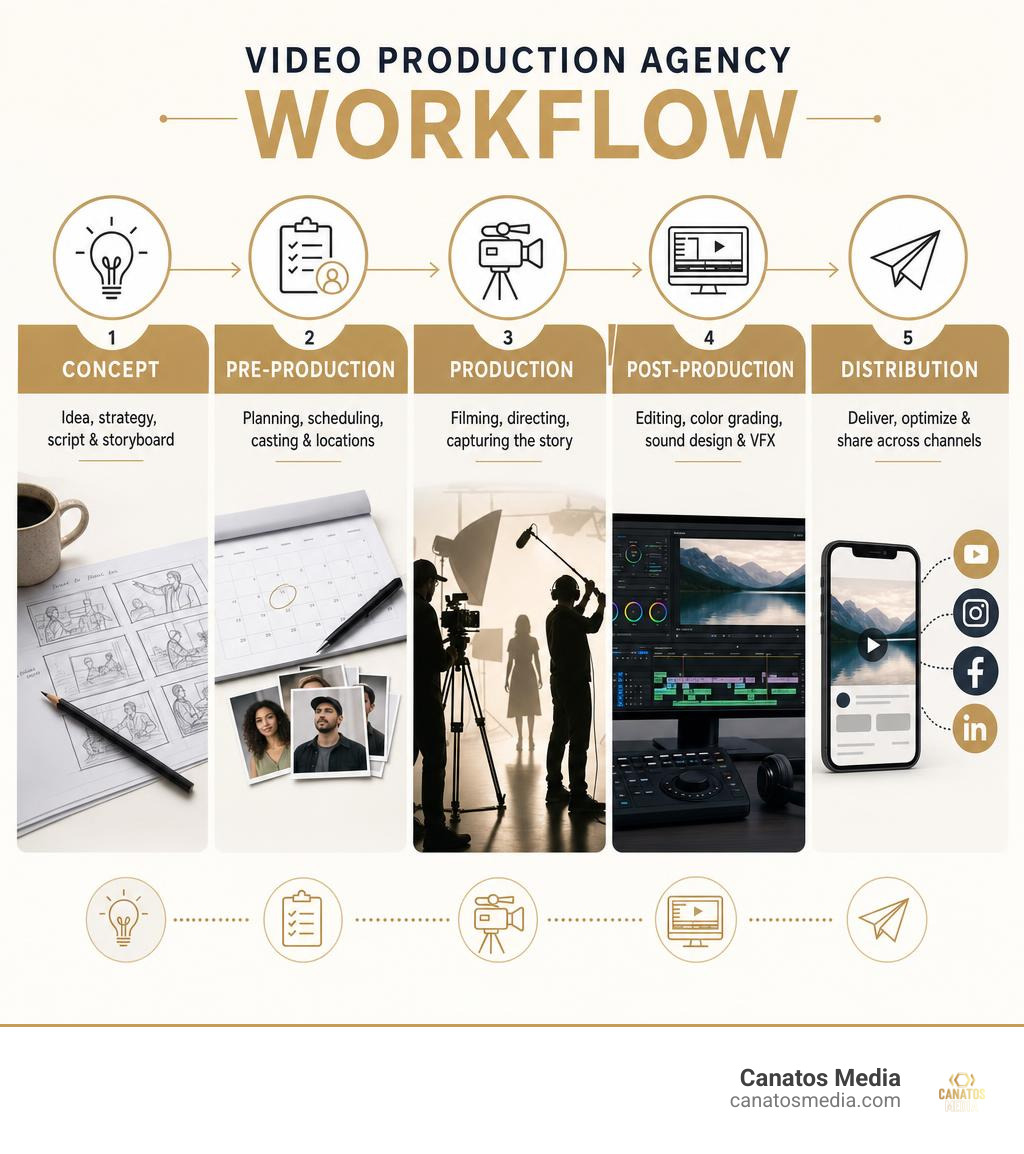
    Video production agency workflow infographic: concept, pre-production, production, post-production, distribution infographic

    1. They Turn Complex Brand Stories into High-Converting Visual Assets

    Many businesses struggle to explain what they do in a way that captures attention in seconds. You might offer a highly technical software-as-a-service (SaaS) platform, a specialized medical procedure, or a premium home service. If your target audience has to read through paragraphs of dry text to understand your value proposition, you are losing sales.

    A professional video production agency specializes in distilling complex ideas into engaging, easy-to-digest visual formats. Whether it is high-impact TV commercials, cinematic branded content, stunning 2D/3D animation, or documentary-style customer stories, agencies possess the unique ability to turn abstract brand values into emotional connections.

    For example, industry data reveals that strategic product and feature videos can generate over 680,000 views for tech companies, dramatically shortening sales cycles. When you introduce a human element through doc-style storytelling, the impact is even more profound: studies show that up to 87% of clients report a stronger brand perception after watching a professionally produced brand documentary.

    To maximize your reach across modern marketing channels, agencies do not just shoot one long video and call it a day. They build comprehensive content systems. They can take a single high-production shoot and carve it into dozens of native social media assets. For more details on building a system like this, check out our insights on Short-Form Video Production and find More info about short-form video production to see how these bite-sized assets drive continuous customer acquisition.

    2. A Video Production Agency Streamlines the Entire Creative Process

    If you have ever tried to manage a video project internally, you know how quickly it can devolve into logistical chaos. Between writing scripts, scouting locations, hiring actors, renting gear, managing feedback loops, and handling technical exports, video production is a massive undertaking.

    An experienced video production agency eliminates this stress by providing a single point of accountability. They divide the journey into three highly organized phases:

    1. Pre-Production: This is where the foundation is built. The agency collaborates with your team on creative direction, scriptwriting, storyboarding, casting, and scheduling. Every detail is planned down to the minute to ensure maximum efficiency on shoot day.
    2. Production: The physical filming process. The agency brings in specialized directors, directors of photography, audio engineers, and lighting technicians. They handle the pressure of the set so you can sit back and watch your vision come to life.
    3. Post-Production: The magic phase. Editors, colorists, sound designers, and visual effects artists assemble the footage, polish the audio, and format the final deliverables for your exact distribution channels.

    Post-production suite with professional editing software, color grading panel, and high-resolution monitors

    By keeping all these moving parts under one roof, agencies save you time and protect your budget from costly coordination mistakes. To explore how we maintain this level of cinematic excellence at scale, Learn how to scale cinematic content.

    How a Video Production Agency Aligns Content with Brand Messaging

    A beautiful video is useless if it does not speak to your target audience or match your brand voice. Agencies do not just start filming; they begin with a deep dive into your business, your competition, and your buyer personas.

    They establish a clear creative direction that ensures every aesthetic choice—from the casting of the actors to the color palette and background music—reinforces your core brand values. If you want to dive deeper into this alignment process, read our guide on How to Align Video Content with Your Brand Voice.

    3. They Deliver Premium Quality That Outshines DIY Content

    While smartphone cameras have improved dramatically, there is a massive gulf between a quick social media selfie and a high-end commercial asset. Professional video production is both an art and a science, requiring a level of technical mastery that cannot be replicated with consumer-grade gear.

    Agencies utilize state-of-the-art cinematic tools, including 4K and 8K cinema cameras, advanced aerial drones, steadicams, and precision cranes. More importantly, they understand the crucial elements that separate amateur videos from professional ones:

    • Cinematography: The deliberate composition of shots, lens selection, and camera movement to guide the viewer’s eye and evoke specific emotions.
    • Lighting: Using professional grip and lighting packages to create depth, texture, and mood, transforming a flat office space into a cinematic environment.
    • Sound Design: Crystal-clear voiceovers, custom sound effects, and professional audio mixing. Viewers will tolerate mediocre video quality, but they will immediately click away from poor audio.
    • VFX and Motion Graphics: Sleek, custom-designed animations and visual effects that elevate your brand’s authority and simplify technical explanations.
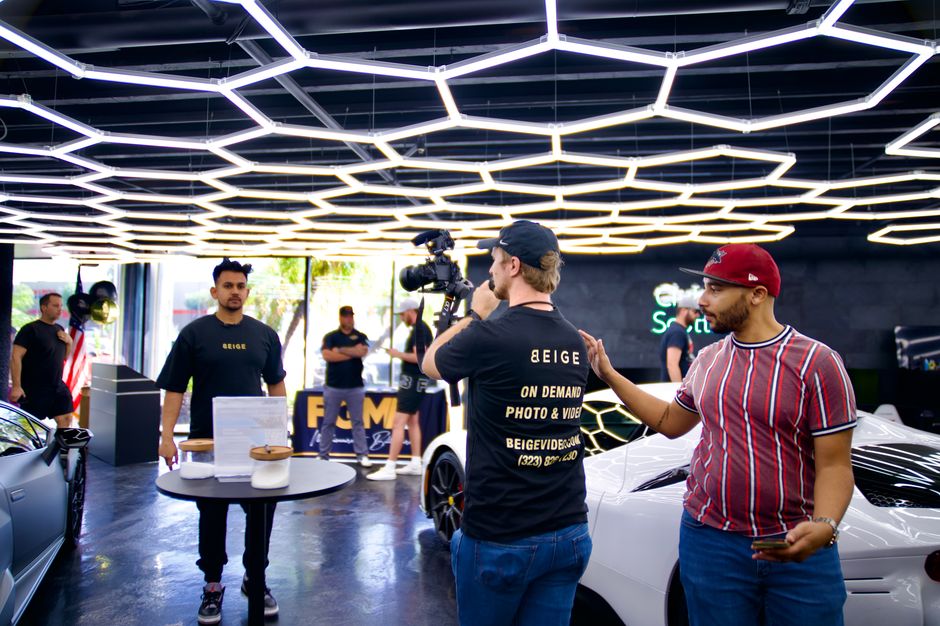
    Professional camera gear on a commercial set, including cinema lenses, matte box, and wireless follow-focus system

    If you are operating in highly competitive markets like New York or New Jersey, having polished, professional content is non-negotiable. Utilizing advanced techniques like green screen production allows businesses to place their brand in highly customized, premium virtual environments, maximizing visual impact. To understand why these investments consistently outperform internal efforts, read our breakdown of Why Professional Video Production Outperforms DIY.

    4. They Scale Production Globally and Across Multiple Locations

    For multi-location brands and growing enterprises, consistency is one of the greatest marketing challenges. If you have locations scattered across the tri-state area, from Manhattan to Montauk, you cannot rely on different local freelancers and expect your brand voice to remain unified.

    A sophisticated video production agency solves this by offering scalable solutions and streamlined coordination. Whether you need a corporate video filmed in an office in Manhattan, a customer testimonial captured in New Jersey, or a series of promotional shoots across Long Island, a full-service agency manages the entire network of local crews, logistics, and scheduling.

    For brands operating in the local market, partnering with specialized regional experts who understand the local landscape is key. Having a partner with local expertise ensures your production runs smoothly and captures the authentic essence of each location, maintaining high standards across all your regional campaigns.

    To help you decide how to structure your production strategy, here is a quick comparison of scaling models:

    Feature Local Freelancers Scalable Production Agency
    Brand Consistency Low (variable styles, gear, and quality) High (centralized creative direction & standards)
    Logistics Management You must coordinate schedules, contracts, and files The agency handles all travel, crew, and files
    Scalability Hard to scale across multiple cities simultaneously Seamless multi-location and regional coordination
    Post-Production Often fragmented or outsourced again Unified, in-house editing for a cohesive look

    By centralizing your video strategy with a single agency partner, you ensure that your brand looks just as premium on Long Island as it does in the heart of NYC. To learn more about executing this successfully, read our Top practices for scalable video production.

    5. They Maximize ROI and Drive Measurable GTM Outcomes

    Beautiful visuals are fantastic, but at the end of the day, marketing must drive business results. A performance-driven video production agency does not just focus on “vanity metrics” like views or likes. Instead, they engineer video content to support your go-to-market (GTM) outcomes, pipeline growth, and conversion rates.

    Agencies understand how to optimize videos for every stage of your sales funnel:

    • Top of Funnel: Engaging social ads and educational YouTube content designed to capture attention. Implementing proper YouTube SEO and paid distribution can scale your organic reach dramatically, with some campaigns achieving a 350% YoY growth in video views.
    • Middle of Funnel: In-depth product demos, customer stories, and explainer videos that build trust and address customer objections.
    • Bottom of Funnel: High-converting landing page videos. Integrating video with your website design can directly boost conversion rates and turn casual visitors into paying customers.

    For brands that want a broader benchmark for how video supports business growth, industry research from Wyzowl’s video marketing statistics is a useful external resource alongside your own campaign data.

    By tracking metrics like watch time, click-through rates, and direct conversions, an agency helps you treat video as a measurable revenue engine rather than a pure expense. To explore how we build these high-impact systems, Discover end-to-end video marketing strategies.

    6. They Offer Flexible Pricing Models to Fit Your Budget

    One of the most common misconceptions is that professional video production is only accessible to Fortune 500 companies with six-figure budgets. In reality, modern agencies offer highly flexible pricing structures tailored to different business sizes and project scopes.

    Pricing is typically influenced by several key factors:

    • Pre-production complexity (scripting, casting, and location scouting)
    • The scale of the shoot (number of shoot days, crew size, and gear requirements)
    • Post-production demands (advanced motion graphics, VFX, and licensing)

    While high-end commercial campaigns can range from $20,000 to $85,000 per day, agencies also provide highly efficient models for growing businesses. For example, smaller social media edits, testimonial packages, or recurring monthly content retainers often start around $12,000 per day or offer predictable flat-rate monthly pricing.

    By working with an agency that understands how to maximize a single shoot day, you can walk away with dozens of platform-optimized deliverables, dramatically reducing your cost-per-video. To see how we make high-quality production accessible for expanding brands, read about Budget-friendly production for multi-location brands.

    7. They Act as Your Strategic Creative Co-Pilot

    The best client-agency relationships are not transactional; they are collaborative partnerships. A true creative co-pilot does not just take orders—they bring strategic ideas to the table, challenge your assumptions, and help you navigate the constantly evolving digital landscape.

    Instead of trying to keep up with changing social media algorithms, trending video formats, and video ad best practices on your own, you gain access to an entire team of specialists dedicated to your growth. This collaborative approach allows you to build a long-term content engine that consistently engages your audience and keeps your brand top-of-mind.

    To find the perfect structural fit for your business, Explore the best agency models for monthly video.

    What to Look For When Choosing a Video Production Agency

    When searching for the right partner, don’t just look at who has the fanciest camera gear. Focus on these three pillars:

    • The Portfolio: Does their previous work demonstrate strong storytelling, high production value, and creative diversity?
    • Client Reviews: Look for verified testimonials and case studies that highlight their professionalism, communication, and ability to hit deadlines.
    • Strategic Alignment: Do they ask deep questions about your business goals, or are they only focused on making things look pretty?

    For a complete breakdown of the vetting process, check out The essential guide to hiring a video production agency.

    Frequently Asked Questions about Video Production

    How much does professional video production cost?

    Professional video production costs vary widely based on the project’s scope, creative complexity, and required crew. High-end commercial shoots often range from $20,000 to $85,000 per day, while smaller-scale social media assets, localized promos, or customer testimonials typically start around $12,000 per day.

    What is the typical timeline for a video project?

    A standard video project takes anywhere from 4 to 8 weeks from the initial kickoff meeting to final delivery. This timeline includes 2–3 weeks of pre-production (scripting and planning), 1–3 days of physical filming, and 2–3 weeks of post-production (editing, sound design, and revisions).

    How do agencies measure the success of video content?

    Agencies measure success based on your specific campaign goals. For brand awareness, we track views, impressions, and watch time. For performance marketing and GTM campaigns, we focus on click-through rates, lead generation, pipeline growth, and direct conversion rates.

    Conclusion

    Investing in professional video is one of the most powerful decisions you can make for your brand’s growth in May 2026. A great video production agency bridges the gap between raw creative vision and measurable business results, giving you the high-quality assets you need to dominate your market.

    At Canatos Media, we believe that stunning video is only half the battle. To drive real growth, your content must be integrated into a complete digital strategy. We combine cinematic short-form video production with expert social media management, targeted paid ads (Meta and Google), advanced SEO, and robust website support. Our integrated approach ensures that your videos don’t just look spectacular—they reach the right audience, capture leads, and drive measurable sales.

    Ready to elevate your brand’s digital presence? Partner with Canatos Media for End-to-End Video Production and Ads Management and let’s start filming your success story today.
  • Coordinating Multi-Location Video Shoots Without Blowing Your Marketing Budget

    Coordinating Multi-Location Video Shoots Without Blowing Your Marketing Budget

    Why Multi-Location Video Shoots Drain Marketing Budgets

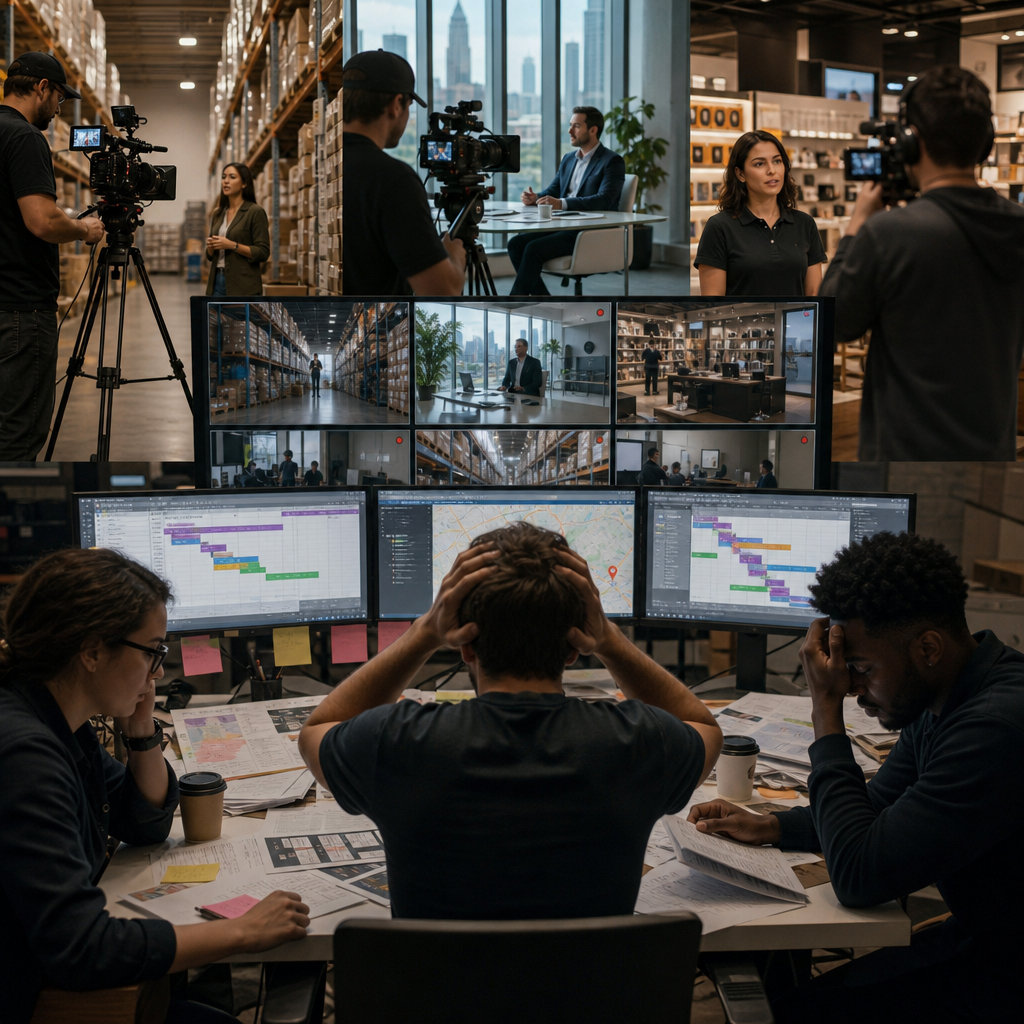
    Multi-location video production sounds efficient on paper. You film at three branch offices in one week, capture authentic customer testimonials across regions, and build a library of content that represents your entire brand footprint. In reality, uncoordinated distributed shoots become logistical nightmares that drain budgets faster than you can approve invoices.

    We’ve managed hundreds of video shoots across multiple locations, and the pattern is clear: teams that lack centralized planning end up paying for duplicate equipment rentals, delayed production timelines, inconsistent visual quality, and footage that never makes it into finished campaigns. The good news is that deliberate coordination and structured processes can cut these costs significantly while improving the quality and usability of your content.

    Scaling video production across multiple locations multiplies complexity in ways single-location shoots never require. When you’re coordinating crews, equipment, talent, and logistics across different cities or regions, each additional location introduces new variables that inflate costs if not carefully managed.

    The primary budget drain comes from treating each location as an isolated project rather than a unified production. Individual location managers negotiate separate vendor contracts, rent equipment independently, and hire crews without centralizing purchasing power. A production company working with a plumbing service business might rent cameras and lighting in three different cities at three different rates, when bulk equipment rental through a single provider could save thousands.

    Travel and downtime represent another significant expense. When crews move between locations without tight scheduling, you’re paying for dead time between shoots. A two-day per location plan with poor sequencing can stretch into a week of crew payments, accommodation, and vehicle costs. Poorly timed coordination also means equipment sits idle or gets transported inefficiently.

    Beyond direct costs, inconsistent creative direction across locations wastes your entire production investment. If your Dallas location shoots cinematic brand storytelling while your Austin location captures casual phone-quality footage, your editing team faces expensive reshoots or produces disjointed content that doesn’t serve your marketing goals. That inconsistency undermines the trust-building potential of video content before it ever reaches your audience.

    The Hidden Costs of Uncoordinated Production Across Locations

    Many growing service-based businesses underestimate what coordination failures actually cost. The visible expenses (crew rates, equipment rental, travel) are only part of the story.

    Reshoots represent your largest hidden expense. When creative briefs aren’t specific enough, different locations interpret your brand differently. A healthcare client’s three locations might all film patient testimonials, but one location uses natural lighting while another uses harsh studio setup, and a third films outdoors. Your editor now faces three entirely different looks and must either labor-intensively color-correct to consistency or request reshoots that double your production costs.

    Communication overhead kills efficiency and introduces costly mistakes. Without a centralized system, information travels through email chains and unclear conversations. A location manager misses that all b-roll should showcase customer interactions, so they film empty offices instead. That footage is unusable, and the crew has already moved on.

    Post-production delays cascade from uncoordinated shoots. If locations deliver footage on different timelines, in different file formats, with inconsistent metadata, your editing and management workflow becomes chaotic. What should be a three-week turnaround stretches to six weeks because you’re waiting for missing footage, troubleshooting technical issues, or making creative decisions that should have been locked before filming began.

    Finally, footage that doesn’t ladder into your broader marketing strategy is pure waste. Multi-location shoots generate enormous volumes of content, but if that content isn’t planned to support your social media calendar, email campaigns, and paid advertising strategy, you’re paying for assets that never generate ROI.

    Establishing a Clear Shot List and Creative Brief Framework

    The foundation of cost-effective multi-location production is a detailed creative brief and shot list that every location follows. This isn’t bureaucratic overhead; it’s insurance against expensive rework and waste.

    Start by defining your creative parameters clearly. What’s the emotional tone of your brand story? Is this cinematic and aspirational, or authentic and relatable? What specific visual elements must appear at every location to maintain brand consistency? Document these in writing so there’s no ambiguity when a crew is on the ground three states away.

    Next, build a shot-by-shot list that specifies exactly what needs to be captured at each location. Rather than writing “film customer testimonials,” specify shot type, duration, framing, and context. For example: “Medium close-up testimonials, 60-90 seconds each, customer standing in their work environment, natural lighting preferred, capture 3-4 testimonials minimum per location.” This level of specificity prevents crews from improvising in ways that create unusable footage.

    Include a detailed equipment and technical specification sheet. Specify camera, lens requirements, audio quality standards, and file formats. When every location knows they’re shooting at 4K 24fps with specific color profiles, your post-production workflow becomes streamlined and your final assets maintain consistent visual quality.

    Create a pre-shoot validation checklist. Two days before each location’s shoot, have the on-site coordinator confirm they understand the brief, have secured all necessary locations and permissions, have confirmed talent availability, and have tested all equipment. This catches problems early when you can still adjust, rather than discovering issues during post-production.

    Leveraging Our Centralized Coordination System for Distributed Shoots

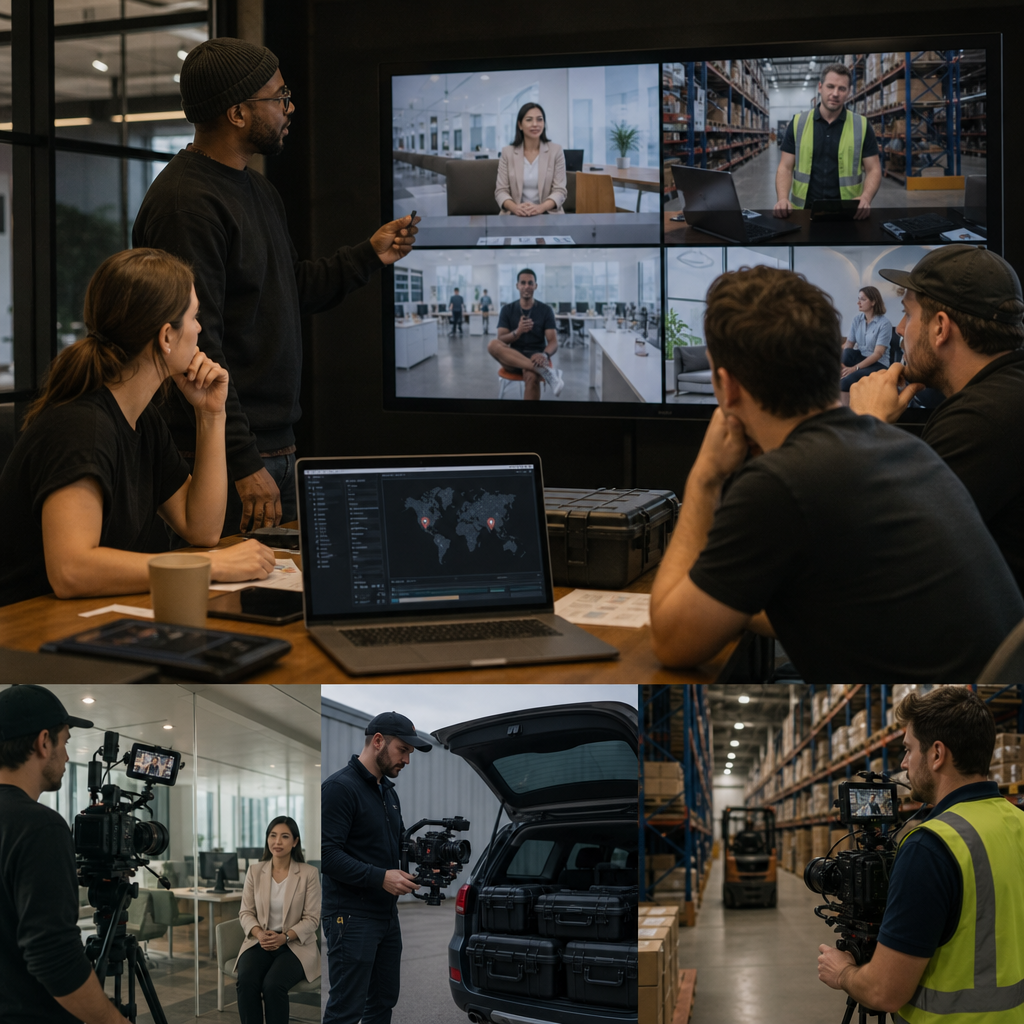
    This is where our approach differs fundamentally from treating multi-location production as a collection of separate projects. We use a centralized coordination system that maintains creative control, timing alignment, and cost efficiency across all locations simultaneously.

    Our system works through a dedicated production coordinator who owns the entire project timeline and serves as the single point of contact for all locations. That coordinator manages equipment logistics, ensures crews understand the creative brief, validates readiness before each shoot, and tracks deliverables so you always know what’s being captured and when you’ll receive it.

    We consolidate vendor relationships through pre-negotiated contracts with equipment rental partners, crew agencies, and location scouts. This purchasing power means your three-location shoot gets better rates on camera packages and crew than if each location negotiated independently. We’ve negotiated volume discounts that typically reduce multi-location production costs by 15-25% compared to fragmented procurement.

    Our system also sequences shoots strategically to minimize crew downtime and travel costs. Rather than sending a crew to one location, waiting for post-production before moving to the next, we design shoot schedules that move crews efficiently through a geographic route while equipment and materials are staged appropriately at each stop.

    Most importantly, we maintain real-time visibility into what’s being captured. Location managers upload footage and metadata to a centralized system daily, so our team identifies any deviations from the creative brief immediately and can course-correct before the crew moves to the next location.

    Streamlining Equipment, Crew, and Logistics Across Locations

    Operational efficiency directly impacts your bottom line. We approach logistics as a strategic lever to reduce waste and accelerate timelines.

    For equipment, we avoid redundancy through centralized management. Rather than three separate equipment rental orders, we arrange for a base kit to travel with the crew and location-specific supplemental equipment to be rented locally only when necessary. This reduces transportation costs and ensures consistent core equipment quality across locations.

    Crew continuity matters more than most brands realize. We assign core crew members to move with the production across locations whenever possible. Your cinematographer understands the creative vision by location two, not location three. Your audio engineer knows exactly how each location sounds and can adjust accordingly. This consistency dramatically improves output quality.

    We also batch travel logistics efficiently. If your locations are within driving distance, we consolidate travel into efficient routes. If they require flying, we negotiate package rates with travel vendors and time flights to minimize dead days. Small details compound into significant savings across a multi-week production schedule.

    Pre-staging is another critical efficiency factor. We arrange for equipment and materials to arrive at each location the day before the shoot, with backup equipment pre-positioned if anything fails. There’s no scrambling to rent emergency replacement gear at premium rates because something broke on day two.

    How We Integrate Multi-Location Footage Into Your Broader Digital Strategy

    Coordinated production only creates value if the resulting content serves your actual marketing goals. We design multi-location shoots to feed directly into your digital strategy, not exist as a separate content silo.

    During the creative brief phase, we map which footage will serve which marketing channels and campaigns. Some shots are designed specifically for short-form social content that drives awareness and engagement. Other captures specifically support paid advertising campaigns where we need hero messaging from authentic locations. Testimonial footage is framed to work in email campaigns and on your website. This strategic alignment ensures virtually every piece of footage you pay for has a home in your marketing ecosystem.

    We also ensure multi-location content maintains the multi-location content consistency that your brand requires, while allowing for location-specific nuance. Your national brand’s visual identity remains constant across locations, but each location’s unique customer base and local character comes through authentically. That balance builds trust with both national audiences and local customers.

    Integration extends to our social media management and paid advertising services. We work with your content calendar to schedule multi-location footage releases in patterns that sustain audience engagement without overwhelming followers. Your paid advertising campaigns use location-specific content to drive relevance and conversion in each region, because we designed the shoots knowing how each piece would be deployed.

    Measuring ROI From Your Coordinated Video Production Investment

    Understanding the return on your multi-location production investment requires measuring both efficiency metrics and marketing impact.

    On the efficiency side, track your cost per usable minute of final video content. Compare this against your previous single-location production costs or industry benchmarks. Well-coordinated multi-location shoots typically reduce cost per usable minute by 20-35% because waste is eliminated and crew efficiency is optimized. If your multi-location shoot cost $45,000 and produced 90 minutes of final video content, your cost per minute is $500. Single-location shoots often run $700-900 per minute due to coordination inefficiencies.

    Measure your footage utilization rate. What percentage of shot material actually makes it into finished content? Poorly coordinated shoots often see 30-40% of footage discarded as unusable. Well-coordinated productions achieve 70-85% utilization rates because every shot was planned and executed with intention.

    On the marketing impact side, track engagement metrics for multi-location content across your social platforms. Are location-specific videos generating stronger engagement or conversion in their respective regions? For your paid advertising, measure cost-per-lead and cost-per-conversion by campaign, comparing multi-location content performance against previous content types. We’ve seen clients reduce advertising costs by 15-25% when switching to coordinated multi-location video content because authentic, consistent visual storytelling improves ad relevance and viewer response.

    Website analytics matter as well. If multi-location footage is embedded in location pages or featured prominently on your site, track how that content impacts session duration, bounce rate, and conversion rate compared to pages without video.

    Converting Multi-Location Video Content Into Lead-Generating Assets

    The highest-performing brands don’t just create video content; they orchestrate that content into systems that drive measurable business outcomes.

    Short-form social content from multi-location shoots should feed your sales funnel strategically. We create 15-60 second clips that build awareness and trust, then sequence them in social campaigns designed to move viewers toward lead capture. A home services company might release location-specific customer testimonials across their social channels over four weeks, with each testimonial optimized for the platform it serves. Those same testimonials also get embedded in paid social campaigns targeted to the geographic regions they represent.

    We integrate multi-location video into your broader lead generation systems. Website landing pages feature location-specific video content that increases conversion rates. Email campaigns open with short-form video previews that improve click-through rates. Your sales team gets access to location-specific video collateral they can send to prospects as trust-building assets.

    We also optimize multi-location content for search visibility. Through AEO optimization, we ensure that your video content appears in search results when prospects in each location are actively searching for your services. This captures intent-driven traffic and feeds your lead pipeline.

    The conversion layer is where our approach differs fundamentally from one-off video projects. We design every piece of multi-location footage with a conversion goal in mind. Does this testimonial serve a specific pain point that a prospect experiences? Does this location showcase address common objections? Does this product demonstration prepare a prospect to make a buying decision? When content is purpose-built this way, it transforms from creative asset into revenue-generating tool.

    If your brand operates across multiple locations and currently treats video production as isolated projects rather than coordinated systems, your marketing budget is likely leaking value. Reach out to discuss how we coordinate multi-location production to reduce costs while amplifying your digital marketing impact.

    Contact us today for a free consultation to see how we can help you grow your business.

    Frequently Asked Questions (FAQ)

    How do we keep multi-location video production costs from spiraling out of control?

    We handle this by establishing a centralized coordination system that manages equipment, crew, and scheduling across all your locations simultaneously. This approach eliminates redundant costs like duplicate equipment rentals and unnecessary crew travel, and our detailed shot lists ensure every filming day captures exactly what we need without expensive reshoots or extended production timelines.

    What’s included in your coordination process for distributed video shoots?

    We develop a comprehensive creative brief that outlines your brand messaging, visual style, and specific shots needed at each location before any cameras roll. Our team then manages logistics including equipment allocation, crew assignments, timeline synchronization, and on-site supervision to ensure consistency in quality and storytelling across multiple locations.

    How do you turn multi-location footage into actual leads and sales?

    We integrate your filmed content into a broader digital strategy that includes short-form video optimization for social platforms, paid advertising campaigns targeting your service areas, and SEO-backed landing pages designed to convert viewers into qualified leads. Rather than producing video for its own sake, we structure the entire production around specific conversion goals tied to your sales funnel.