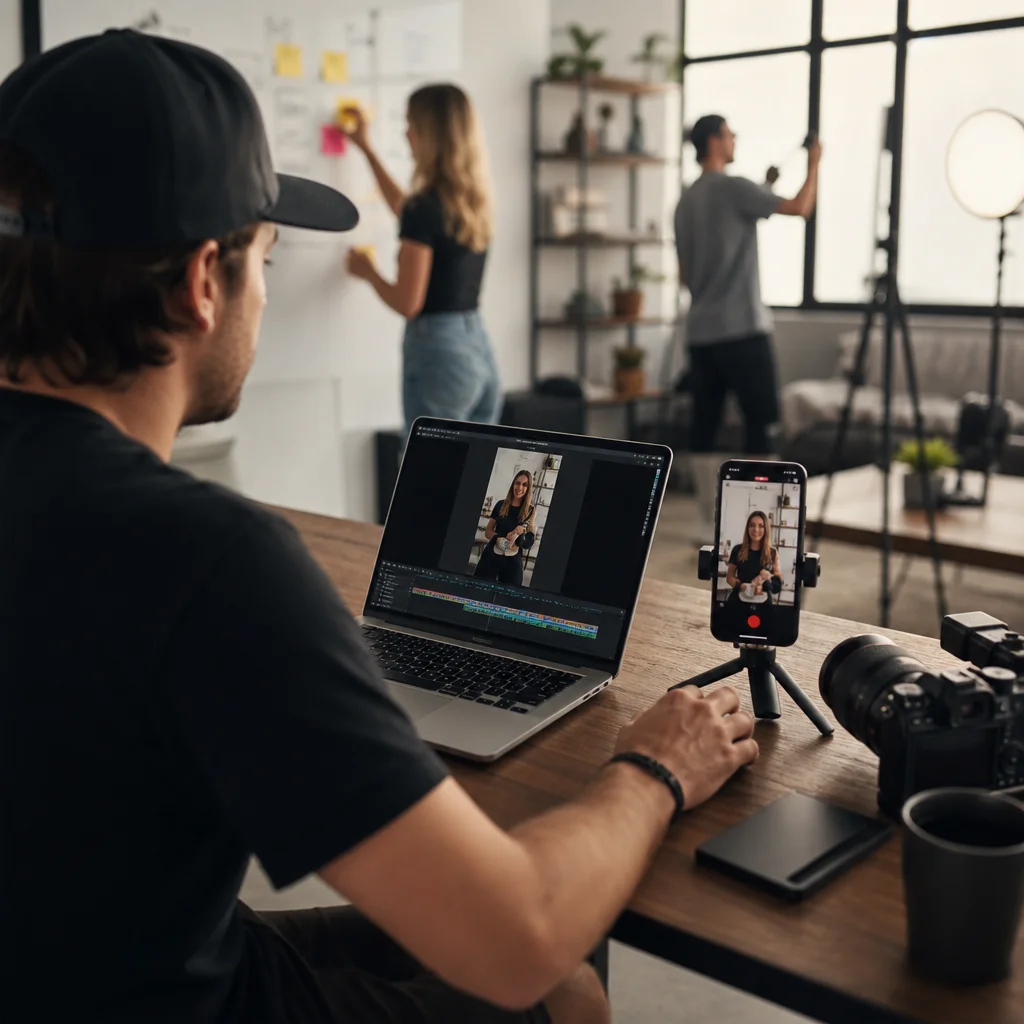
Why Service Businesses Are Losing Leads Without Video Content
Your competitors are already using video, and their potential customers are watching it. Service businesses that rely solely on text, static images, or outdated website copy are falling behind because consumer behavior has fundamentally shifted toward visual storytelling.
People don’t read service descriptions anymore. They want to see the work, understand the process, and feel confident in your team before they ever pick up the phone. Video fills that gap in seconds. When a plumber, contractor, HVAC specialist, or home service provider shows their process on camera, they immediately stand out from competitors who rely on generic website text.
The stakes are high: studies consistently show that businesses using video marketing see higher conversion rates, longer time-on-site metrics, and measurably more qualified inquiries than those without it. For service businesses operating on thin margins with competitive local markets, video isn’t a nice-to-have anymore. It’s the difference between scaling and stalling.
The Hidden Cost of Static Marketing in a Video-First World
Static content has become invisible. A beautifully written service page on your website gets scrolled past in seconds. A high-quality photo of your team might generate a few clicks, but it won’t build the trust or emotional connection that video creates in just 15 seconds.
The real cost isn’t what you’re spending on static content. It’s what you’re not earning: lost leads, lower conversion rates, and diminished brand recall. When your marketing doesn’t showcase personality, expertise, and results, prospects default to price-based comparison shopping. That erodes your margins and forces you to compete on cost rather than value.
Video changes the economics. It gives people a reason to pay attention and a reason to trust your business over the next option. Additionally, search engines and social platforms actively prioritize video content in their algorithms. A single video post can generate three times more engagement than a text post on the same platform, which means your marketing budget stretches further and reaches more qualified prospects.
How Cinematic Short-Form Video Transforms Service Business Growth
Short-form video isn’t about production budget or Hollywood polish. It’s about clarity, speed, and emotion. A 30-second video showing the transformation of a kitchen renovation, a before-and-after of a lawn treatment, or a walk-through of your service process does more for your credibility than any written testimonial.
Cinematic quality matters, though. It signals professionalism and care. When your video looks like it was made by a pro, people assume your service work was too. This is where production quality directly impacts your bottom line: viewers make snap judgments about your business within the first two seconds of a video. Poor lighting, shaky camera work, or unprofessional audio creates doubt that’s hard to recover from.
The transformation happens when service businesses shift from showing what they do to showing why prospects should care. A cinematic video about a kitchen remodel isn’t just project documentation. It’s a story about a family’s dream home, stress relief, and expertise coming together. That emotional connection drives inquiries.
Building Your Video Marketing Foundation
Start by identifying which moments of your service delivery matter most to your prospects. What do they worry about? What do they want to see? A plumbing company might need to show diagnostic expertise and cleanliness. A contractor needs to demonstrate project organization and craftsmanship. A medical spa needs to convey safety, results, and a welcoming environment.
Build your video strategy around these core anxieties and desires:
- Transformation content (before/after of your work)
- Process videos (walk-through of how you solve a problem)
- Team introductions (builds trust and personalizes your brand)
- Client testimonials (video testimonials outperform written ones)
- Educational content (answer the questions your prospects are searching for)
- Behind-the-scenes (shows your team and work culture)
Next, audit your current digital presence. Where do your prospects spend time? Are they on Instagram, TikTok, LinkedIn, or YouTube? Different platforms require different video formats and lengths, so understanding where your audience gathers helps you allocate production resources wisely.
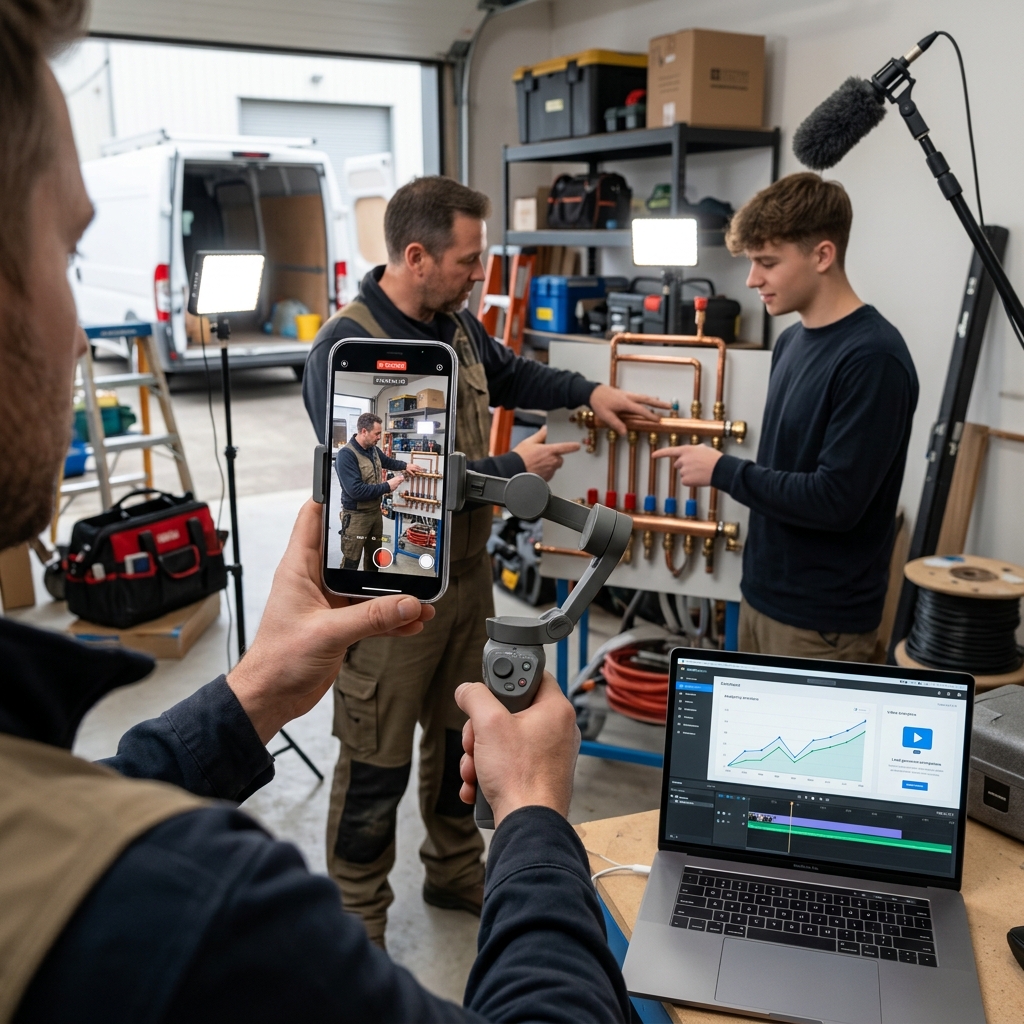
Creating High-Impact Short-Form Content That Drives Service Inquiries
The best short-form content for service businesses follows a simple structure: hook, value, call-to-action. You have two seconds to grab attention, 10-20 seconds to deliver something useful or surprising, and the last few seconds to direct people toward the next step.
Examples that work for service businesses:
- A roofer filming a storm-damage inspection, then explaining what homeowners should look for
- A personal trainer showing a common mistake their clients make, then the correct form
- A tax accountant revealing one deduction business owners miss
- A dental office filming a patient’s anxiety-free experience
The hook is everything. Scrolling users won’t stop for generic content. They stop for transformation, surprise, emotion, or immediate utility. Don’t bury the interesting part. Lead with it.
Keep your messaging specific to your service and local market. A 30-second video about “why we’re the best” doesn’t work. But a 30-second video showing exactly how you solve a specific problem that your target customers actually have? That works. This is where short-form video production NYC services can ensure your message resonates with your actual audience rather than generic viewers.
Integrating Video Across Your Social Media Channels
Video only works when it’s distributed strategically. A single video should be adapted and repurposed across platforms. A 60-second cinematic video might become a 30-second Instagram Reel, a 15-second TikTok, a YouTube short, and a 90-second LinkedIn post. Each format serves a different audience behavior and algorithm.
Consistency matters more than volume. Posting one quality video every week across your main platforms will generate better results than sporadic, inconsistent posting. Create a simple calendar that maps which videos go where and when.
Use platform-specific features to your advantage. Instagram’s Reels algorithm rewards early engagement, so post when your audience is most active. TikTok rewards completion rate, so shorter hooks and faster cuts perform better. YouTube Shorts and YouTube’s full-length format have different audience expectations entirely.
Most importantly: always include a clear call-to-action. Whether it’s “message us,” “call this number,” “book a free consultation,” or “link in bio,” guide viewers toward your next conversion step.
Converting Video Views Into Qualified Service Leads
Viewing is step one. Conversion is the goal. The gap between views and leads happens because most businesses don’t build a proper funnel around their video content.
Create a system where video viewers can easily take the next step. This means:
- Link in bio that goes to a landing page or booking form
- Direct message option enabled on your social profiles
- Phone number prominently displayed
- Retargeting ads that show your video to people who watched but didn’t convert
- Email capture through lead magnets (free guides, checklists, discount offers)
Video content performs best when it’s part of a larger sequence. Someone who watches your video but doesn’t act immediately might still convert if they see your ads again or receive a follow-up email. Most service businesses convert on the third or fourth touch, not the first one.
A critical insight: qualified leads come from relevance. A roofing contractor in Dallas should target viewers in Dallas, not nationally. Service businesses succeed when they’re hyper-specific about geography and customer type, then use video to connect with those exact people.
Measuring Video Marketing Performance and ROI
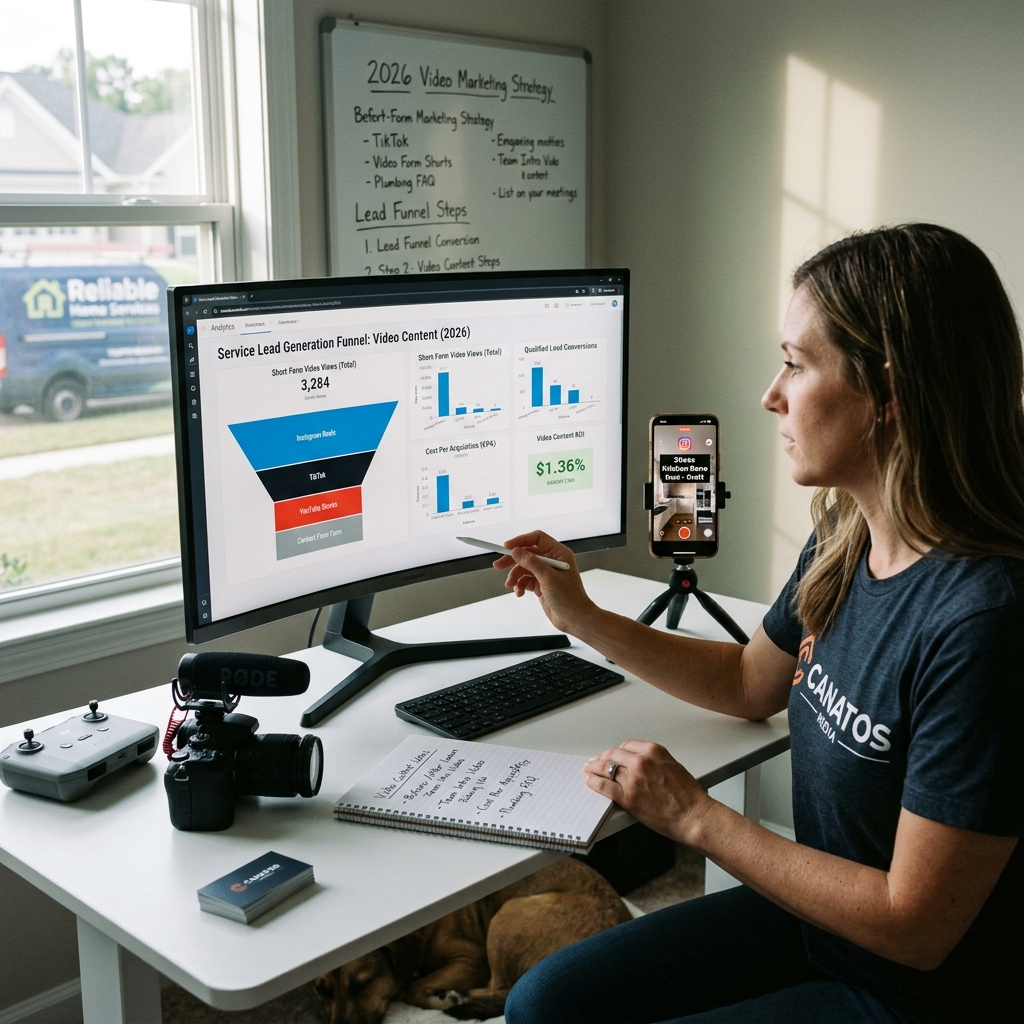
You can’t improve what you don’t measure. Set up basic tracking on day one so you have baseline data to compare against.
Track these metrics:
- View count and average watch duration (which videos hold attention)
- Click-through rate to your website or booking page
- Cost per lead (how much you spend on ads to get an inquiry)
- Conversion rate (how many video leads become paying customers)
- Customer acquisition cost (total spend divided by new customers)
Use platform analytics natively. YouTube Studio, Instagram Insights, and TikTok Analytics give you free data about viewer behavior. For paid video ads, set up conversion tracking through Meta Pixel or Google Analytics so you can trace leads back to specific videos.
The ROI calculation is straightforward: revenue from customers acquired through video, minus production and advertising costs. Most service businesses see positive ROI within 6-8 weeks if they’re targeting the right audience and optimizing based on performance data.
Scaling Your Video Strategy Across Multiple Locations
Multi-location service businesses face a specific challenge: how do you create video content that scales without losing local relevance?
The answer is systematic variation. Create core video templates that work for any location (team introduction, service process, testimonial format), then adapt each one with location-specific elements. A home services company with five locations shoots the same video five times with different teams and different homes, then uses the same script and visual style across all locations.
This approach gives you:
- Consistency in branding across all locations
- Efficiency in production (shoot multiple locations in one day)
- Scalable ad spend (same videos run in different markets simultaneously)
- Local relevance (customers see people and places they recognize)
Local keywords matter too. A video about kitchen remodeling performs better when you include location-specific keywords in the title and description (“kitchen remodeling in Austin” rather than just “kitchen remodeling”).
Bringing Video Production In-House vs. Partnering With Specialists
The build-versus-buy decision depends on your budget, bandwidth, and consistency needs. In-house production gives you speed and flexibility but requires hiring skilled videographers, editors, and equipment investment. For most growing service businesses, that’s a distraction from core operations.
Partnering with specialists means predictable quality, faster turnaround, and strategic guidance. The tradeoff is cost and relinquishing direct control.
Consider your realistic needs: Can you produce one new video per week sustainably in-house? If not, outsourcing makes financial sense. One polished professional video per week beats four amateurish in-house videos every single time.
Many service businesses find the hybrid approach works best: handle simple content (testimonials, behind-the-scenes, quick tips) in-house with a smartphone and basic lighting, then invest in professional production for hero content that showcases your transformations. When you’re ready for cinematic website videos or strategic video campaigns, partnering with experts ensures your investment actually drives results.
The Complete Video Marketing System We’ve Built for Service Businesses
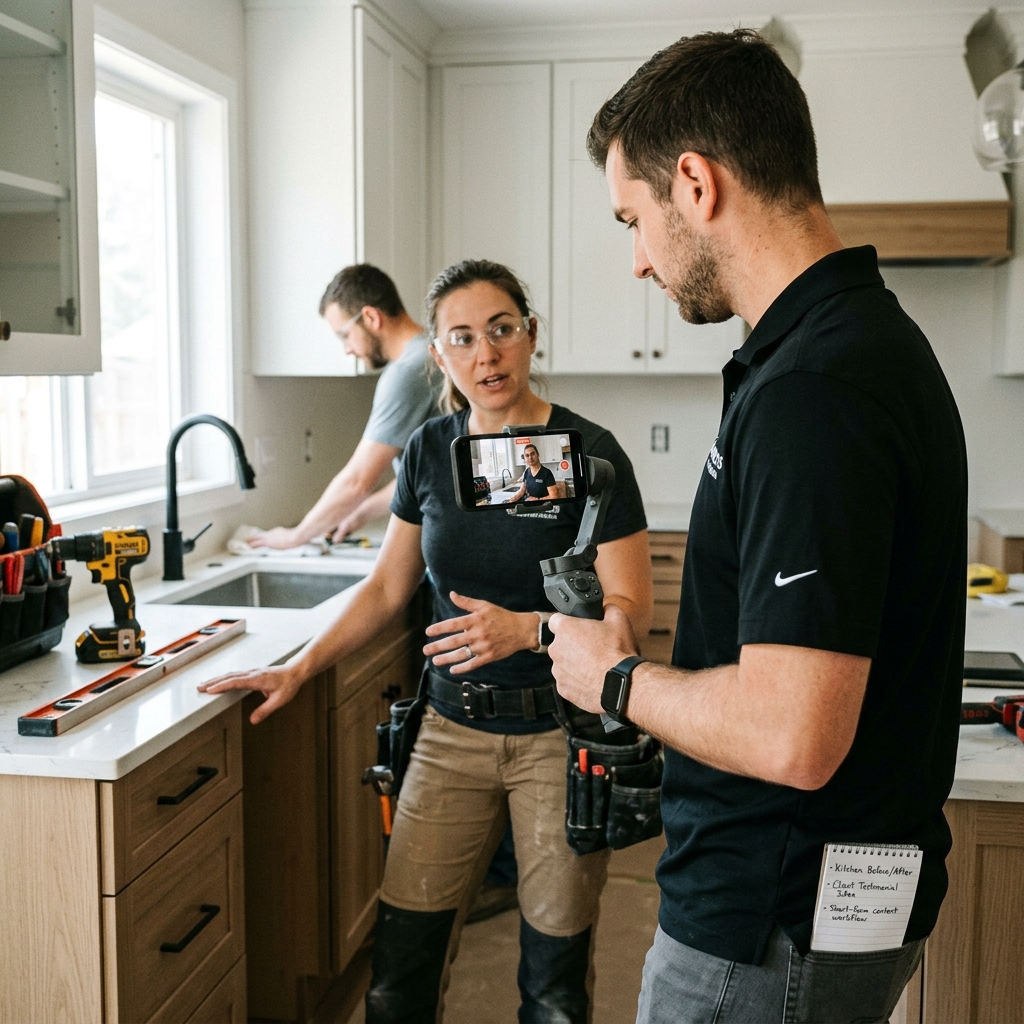
We work with service businesses to build video-first marketing systems that function like a machine. This means coordinating video production with paid advertising, social media management, SEO optimization, and lead nurturing sequences.
Our approach combines short-form cinematic content optimized for each platform with integrated paid advertising, so videos reach the right prospects at the right time. We handle platform strategy, content calendars, and performance optimization so you focus on serving clients.
The system includes production (we shoot your transformations, testimonials, and educational content), distribution strategy (which videos go where and when), paid amplification (advertising budgets allocated based on performance), and lead tracking (so you always know which videos drive qualified inquiries).
Service businesses using this integrated approach typically see 40-60% increases in qualified leads within the first quarter, lower customer acquisition costs, and more consistent booking flow.
Getting Started With Your Video-First Marketing Transformation
Start this week with a single video. Shoot your next successful project, client testimonial, or service process explanation using your smartphone. Post it to your main social platform and monitor engagement. This teaches you what works for your specific audience without requiring a big budget.
Once you have baseline performance data and confidence in the concept, invest in either training your team or partnering with a video production specialist. The second option moves faster and typically delivers better results.
Define your first 90-day video content calendar. Pick your five core video types that align with your service and audience. Commit to consistent posting. Track results. Adjust based on performance.
The competitive advantage of video is narrowing. Service businesses who haven’t started yet are falling further behind every week. But those who commit to consistent, strategic video content are seeing measurable business growth in 2026.
Ready to start? Identify your first video project this week, outline the story you want to tell, and commit to one post per week for the next month. That foundation will teach you more than any guide could.
Contact us today for a free consultation to see how we can help you grow your business.
Frequently Asked Questions (FAQ)
How do we help service businesses convert video views into actual leads?
We combine cinematic short-form video content with integrated lead generation systems across your social channels. Our approach captures attention through compelling visual storytelling, then uses strategic call-to-actions, landing page optimization, and direct messaging workflows to turn viewers into qualified inquiries for your service team.
What’s the difference between handling video production in-house versus working with us?
We understand that building an in-house team requires significant investment in equipment, talent, and ongoing training. Our specialists handle the entire production pipeline while we also manage your paid advertising and social strategy, which means your team stays focused on service delivery while we handle the technical complexity of creating and distributing content that actually converts.
How do we measure whether our video marketing is actually driving ROI for multi-location service businesses?
We track specific metrics that matter to your bottom line: lead volume by location, cost per qualified inquiry, conversion rates from video engagement to booked services, and customer acquisition cost. We provide transparent reporting that connects video performance directly to your sales pipeline so you can see exactly how content investment translates to revenue growth across your locations.