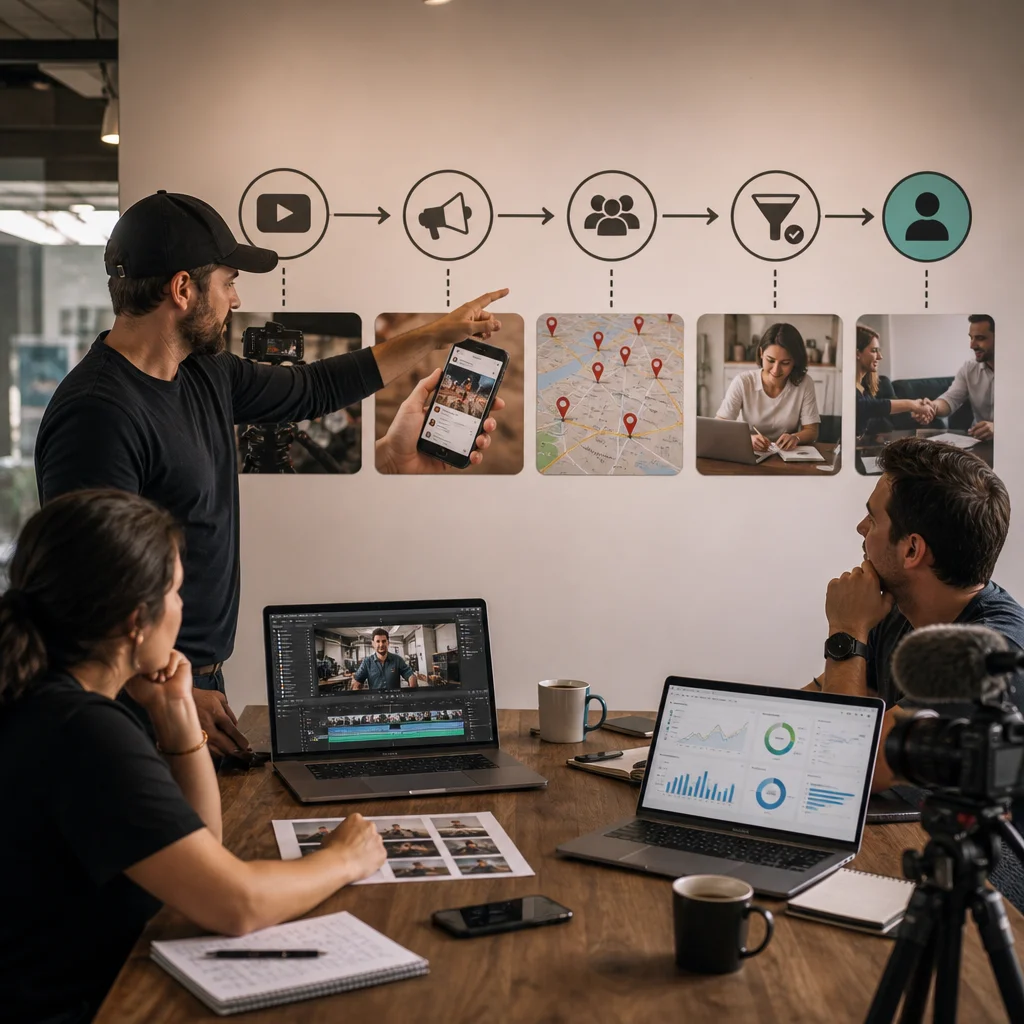
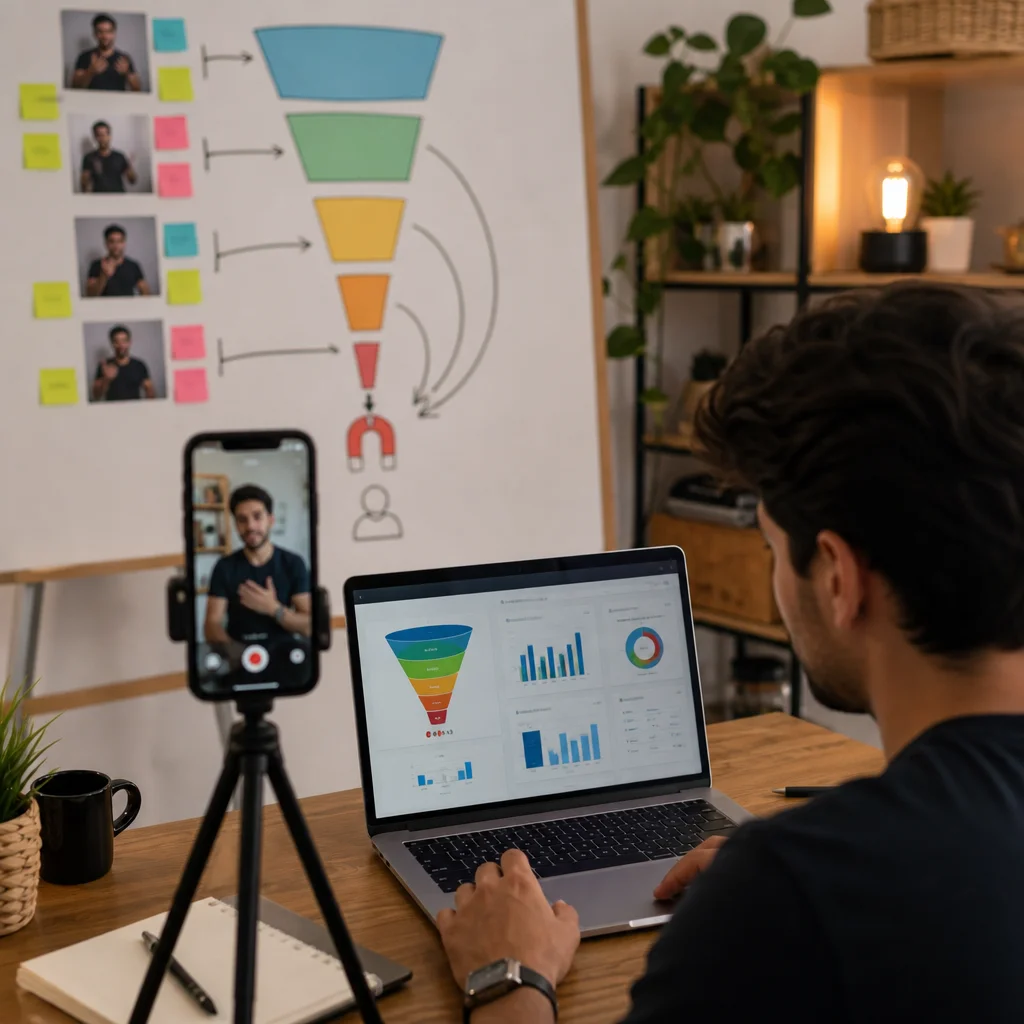
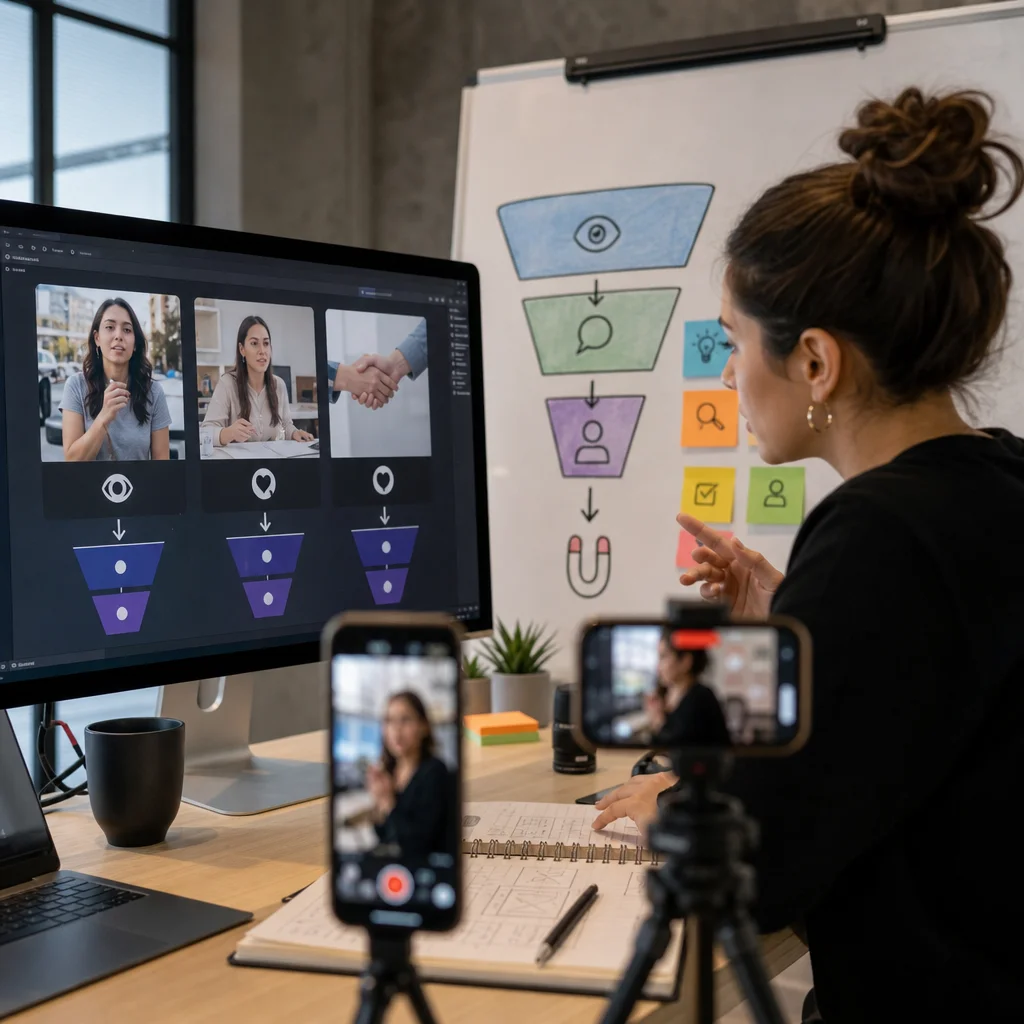
Author: canatosmedia

  • Lead Generation Video Agencies: Converting Attention Into Measurable Sales

    Lead Generation Video Agencies: Converting Attention Into Measurable Sales

    Why Traditional Lead Generation Falls Short Without Video

    The gap between attracting attention and generating qualified leads has never been wider. Thousands of businesses invest heavily in driving traffic to their websites and social profiles, only to watch those views disappear without a single meaningful conversion. The problem isn’t the traffic itself. It’s what happens next.

    Video-first marketing agencies exist to close that gap. We’ve found that businesses which pair high-quality cinematic video content with structured lead generation systems see conversion rates 3-5x higher than those relying on text and static imagery alone. The reason is simple: video tells a story that builds trust, while strategic distribution and follow-up systems turn that trust into action.

    Traditional lead generation tactics like form submissions, email captures, and cold outreach still work, but their effectiveness has eroded significantly. The average response rate to cold email sits around 1-3%, and form abandonment on landing pages commonly exceeds 70%. People scroll past text-heavy ads in seconds without retaining a single claim about your product or service.

    The deeper issue is attention itself. In 2026, the average person receives hundreds of marketing messages weekly. Static content blends into the noise. Video stands out because our brains process visual information 60,000 times faster than text. A 15-second video can communicate what a paragraph of copy struggles to convey, and it does so in a way that feels personal rather than transactional.

    Traditional approaches also create false assumptions about your audience. You might know how many people clicked an ad, but you rarely understand what emotion or question prompted that click. Video lets you listen and respond. You see what resonates through watch time, engagement patterns, and viewer feedback. That data directly improves your next piece of content.

    What to do: Audit your current lead sources. If more than 70% of your leads come from forms, email, or text-based ads, video content should be your next investment priority.

    The Hidden Cost of Generic Marketing Content

    Cheap video and generic stock footage carry a cost that doesn’t show up in production invoices. Viewers can immediately sense when content feels like it was made for everyone rather than for them. That perception erodes trust before your message even lands.

    Generic content also fails to differentiate your business. If your video looks like dozens of competitors’ videos, it reinforces the perception that you’re interchangeable. Service-based businesses especially suffer here, because clients are buying confidence and capability alongside the actual service. A polished, story-driven video proves both.

    There’s also a compounding effect on ad spend. If your video creative underperforms, you’ll spend more to achieve the same conversion rate. We’ve seen clients waste 40-50% of their advertising budget simply because their video wasn’t compelling enough to hold attention through the first three seconds. Better content reduces cost-per-lead directly.

    Production shortcuts create another problem: they signal lower quality to viewers. If your lighting is flat, your audio muddy, or your editing choppy, those technical details suggest something about your actual service quality, regardless of whether that connection is fair. Cinematic production removes doubt.

    What to do: Review your last three video ads or social posts. Ask yourself: would I remember this in an hour? If the answer is no, production quality is likely your constraint.

    How Video Changes the Lead Generation Equation

    Video shifts the entire funnel because it operates at every stage. At awareness, video creates curiosity and emotional connection. At consideration, it builds authority and trust. At decision, it answers objections and demonstrates real results.

    The lead generation equation changes because video shortens decision timelines. Instead of requiring five interactions across different touchpoints, many prospects convert after two or three video encounters. They’ve already developed confidence in your capabilities and approach.

    Video also creates natural segmentation. Someone who watches your entire five-minute case study video is fundamentally different from someone who scrolled past your ad in two seconds. That viewer has self-selected as genuinely interested. Your follow-up messaging can be more direct and personalized because you know what problem they’re contemplating.

    Distribution patterns matter equally. A single well-produced video can live across Instagram Reels, TikTok, LinkedIn, YouTube, and email. You’re not creating five different assets; you’re creating one asset optimized for multiple channels. This efficiency multiplies your return on production investment.

    What to do: Identify one of your best-converting customer segments. Create a single video that speaks directly to their primary objection or question, then test it across three different platforms and measure where engagement is highest.

    Our Cinematic Approach to Short-Form Video Production

    We produce short-form video differently than most agencies because we start with your business story, not with trending formats. That means every video we create is built specifically for your customers’ decision process and your sales cycle.

    Our process begins with strategy. Before any camera rolls, we map your ideal customer journey and identify exactly which moments need cinematic storytelling. For a HVAC service business, that might be a video showing a technician’s attention to detail during diagnosis. For a dental practice, it could be a patient testimony about anxiety relief. The focus is always on what moves your specific prospect closer to a decision.

    Production quality is non-negotiable. We use professional cinema cameras, multi-camera setups when needed, and lighting that makes your business or service look exceptional without looking artificial. Color grading and sound design are treated with the same care as the core footage because those details are what separate a forgettable video from one that resonates.

    Pacing and editing follow psychological principles rather than arbitrary trends. We hold important moments long enough for them to register emotionally, but never so long that attention drops. Transitions are purposeful. Every cut serves the story, not distraction.

    The final element is strategic brevity. While we produce longer-form content as well, our short-form pieces are engineered for social feeds and pre-roll ads where you have 1-3 seconds to prove relevance. That constraint actually improves storytelling because it forces us to eliminate anything that doesn’t serve the core message.

    What to do: Collect three videos from your industry that you find memorable. Note what makes them stick: Is it the opening? The emotional moment? The call-to-action? These observations shape what we prioritize for your brand.

    Integrating Video with Paid Advertising and Social Media Strategy

    Video sitting alone on YouTube accomplishes nothing. We integrate video production with paid advertising and social media management because those connections are what convert views into leads.

    Paid advertising is where we scale what works. Once we identify video creative that generates strong engagement and cost-per-view efficiency, we test it across Meta, Google, and other platforms with strategic audience targeting. For multi-location service businesses, this might mean running variations of the same core video to different geographic markets or customer segments with customized messaging in captions or overlays.

    Social media management amplifies the effect. Consistent posting schedules, strategic hashtags, and community engagement extend the reach of your video content beyond paid spend alone. We coordinate timing so that organic posts prime audiences before they see paid versions. This repetition builds recognition and recall.

    The integration also improves targeting accuracy. Social media engagement tells us which audiences interact with your content. Paid advertising lets us reach similar audiences at scale. Together, they create a feedback loop where each channel informs the next, improving efficiency over time.

    One critical element is retargeting. Viewers who watch 50% of your video but don’t convert immediately are still prospects. Retargeting campaigns follow them across the web with complementary video content or direct conversion offers. This persistence converts browsers into leads at a fraction of the cost of acquiring a brand new prospect.

    What to do: If you’re currently running video ads without retargeting, that’s your biggest immediate opportunity. Set up a retargeting campaign for anyone who watched 50% or more of your primary video.

    Building Lead Generation Systems That Actually Convert

    A conversion system is the structure that turns video attention into qualified leads. Without it, your best video content still underperforms.

    The system typically includes four elements. First, strategic video placement across platforms where your customers actually spend time. Second, clear calls-to-action that invite the next step without being pushy. Third, a landing page or contact flow optimized for conversion rather than information density. Fourth, a follow-up sequence that nurtures prospects who didn’t convert on first contact.

    For service businesses especially, the follow-up sequence determines final conversion rates. A prospect might watch your plumbing video, feel convinced of your quality, but not call immediately because they’re still comparing options. An automated email sequence that arrives the next morning, featuring a customer testimonial, can be the nudge that moves them toward decision.

    We also use interactive elements strategically. Sometimes this means a simple form asking the right qualifying questions. Other times it’s a booking link for a consultation call. The form itself becomes part of your lead qualification, so your sales team isn’t chasing unqualified prospects.

    The integrated lead generation systems we build are unique because they treat video as the primary trust-builder, but rely on backend infrastructure to deliver conversion. Great video gets someone 80% of the way there. Great systems close the remaining 20%.

    What to do: Map out your current post-click experience. What happens immediately after someone views your video? If the answer is “nothing structured,” that’s your biggest conversion leak.

    Real-World Results: From Views to Qualified Leads

    Numbers matter less than patterns. We’ve worked with dental practices that increased consultation bookings by 180% after launching a video testimonial campaign. We’ve supported HVAC contractors who cut customer acquisition cost by 40% through cinematic before-and-after video case studies. We’ve partnered with medical service providers who went from 12 leads monthly to 40+ after deploying integrated video and paid advertising.

    These results share common threads. First, every successful case involved video production specifically designed for that business’s customer journey. Second, video was never standalone; it was always integrated with paid distribution and retargeting. Third, the follow-up system was as important as the video itself. Clients who ignored backend conversion optimization rarely saw the full potential of their video investment.

    The timeline also matters. Most of our clients see meaningful improvement within 30-45 days of launching a new video campaign. That’s enough time to generate data, optimize performance, and begin scaling what works. Some see results faster; others require 60-90 days for a particular niche or market. The key is starting with realistic expectations and measuring consistently.

    What to do: If you’ve never tracked video-to-lead performance specifically, start now. Implement UTM parameters on all video links so you can distinguish video-sourced leads from other traffic. Even 30 days of clean data will reveal whether video should be a priority for your business.

    Why Multi-Location and Service Businesses Need This Strategy

    Multi-location service businesses face a unique challenge: you need local relevance across multiple markets, but you lack the budget to produce completely custom content for each location. Video-first marketing solves this problem elegantly.

    A single cinematic video showcasing your service quality, technician expertise, or customer care can be adapted for local markets through strategic retargeting, geotargeted paid advertising, and localized social media messaging. The core production investment is spread across all locations, dramatically improving efficiency compared to creating separate campaigns for each territory.

    Service businesses also benefit uniquely from cinematic storytelling because clients are buying confidence and capability. A visually polished video that demonstrates your process, attention to detail, or problem-solving approach builds trust faster than any sales pitch. For HVAC, plumbing, electrical, and similar trades, a well-produced video often represents the difference between being perceived as professional versus generic.

    The lead generation imperative is also stronger for service businesses. You can’t rely on viral growth or brand recognition the way product companies sometimes do. You need consistent, predictable lead flow from local customers actively searching for what you offer. Video integrated with paid advertising and social media management delivers exactly that.

    What to do: Audit your current lead sources by location. Which markets are underperforming? Video testing in those specific markets often unlocks growth surprisingly quickly.

    Our End-to-End Digital Marketing Integration

    We approach lead generation as an integrated system, not a collection of separate services. Your video production doesn’t exist in isolation from your social media strategy, paid advertising, or website optimization. They all work together.

    This integration begins with strategy alignment. Before we produce a single frame of video, we understand your sales cycle, your customer objections, your competitive positioning, and your lead volume goals. That foundation shapes every creative and strategic decision that follows.

    Production, distribution, and optimization are coordinated. Your video goes live with paid campaigns already planned and creative variations ready to test. Social media posting schedules align with paid spend to maximize frequency without budget waste. Website updates and landing pages are ready to convert traffic before it ever arrives.

    End-to-End Video Marketing also includes ongoing optimization. We monitor video performance, audience engagement, conversion rates, and cost-per-lead. When something isn’t working, we refine it. When something works exceptionally, we scale it. Most clients see continuous improvement through their first six months of partnership as we learn what resonates with their specific audience.

    The broader point is this: a video without distribution is a forgotten asset. Distribution without conversion optimization is wasted budget. We treat your entire customer journey as a single system, which is why integrated clients consistently outperform those managing video, ads, and social separately.

    What to do: Write down every platform and service you currently use for marketing. Are they coordinated toward a single lead generation goal, or are they operating independently? If it’s the latter, integration should be your next focus.

    Getting Started With Your Lead Generation Video Strategy

    Starting doesn’t require overhauling everything. Most businesses begin with a single, high-impact video that addresses their biggest customer objection or showcases their core differentiator. That single asset then informs everything else: paid advertising strategy, social media messaging, email follow-up, and website positioning.

    Choose a format that matches your customer journey. A case study video works well when prospects need proof that you deliver results. A service walkthrough builds confidence when customers wonder how you actually work. A founder or team video humanizes your brand when trust is the primary barrier to conversion.

    Budget realistically. Professional production for short-form video typically ranges from $3,000-$8,000 per finished minute, depending on complexity and location shooting. Paid advertising to test that video optimally requires $2,000-$5,000 monthly for meaningful volume. For most service businesses, this investment pays back within 3-4 months through improved lead volume and conversion.

    The timeline from strategy to live campaign is typically 4-6 weeks. We recommend scheduling a conversation about your specific lead generation goals, current conversion metrics, and growth targets. From there, we can outline exactly which video assets would have the highest impact and what integrated marketing support makes sense for your business.

    Growth through video-first marketing is real and measurable, but it requires commitment to the system, not just the creative. Businesses that treat video as one experiment among many rarely see dramatic results. Businesses that commit to video as their primary trust-building tool, integrated with strategic distribution and follow-up systems, consistently unlock lead generation at new levels.

    Contact us today for a free consultation to see how we can help you grow your business.

    Frequently Asked Questions (FAQ)

    How do we turn video views into actual leads and sales?

    We combine cinematic short-form video with integrated paid advertising and lead capture systems. Our videos are designed to stop the scroll and build trust, while our Meta and Google ad strategies place them in front of qualified audiences. We then connect video engagement to landing pages, forms, and CRM systems that track conversions so you see exactly which videos drive your best leads.

    Why does generic video content fail at generating leads for service and multi-location businesses?

    Generic content doesn’t communicate your specific value or build the trust that service buyers need before reaching out. We create cinematic brand storytelling that highlights what makes your business different, speaks directly to your ideal customer’s pain points, and positions you as the clear choice. Our approach also includes SEO and website integration so your video presence reinforces your credibility across every touchpoint potential customers see.

    What’s included in your end-to-end video lead generation strategy?

    We handle short-form video production, social media management across all your platforms, paid advertising campaigns on Meta and Google, website design and optimization, and lead generation system setup. Our AEO optimization ensures your content gets discovered by the right audience, and we measure everything through analytics so you understand your return on investment at every stage.

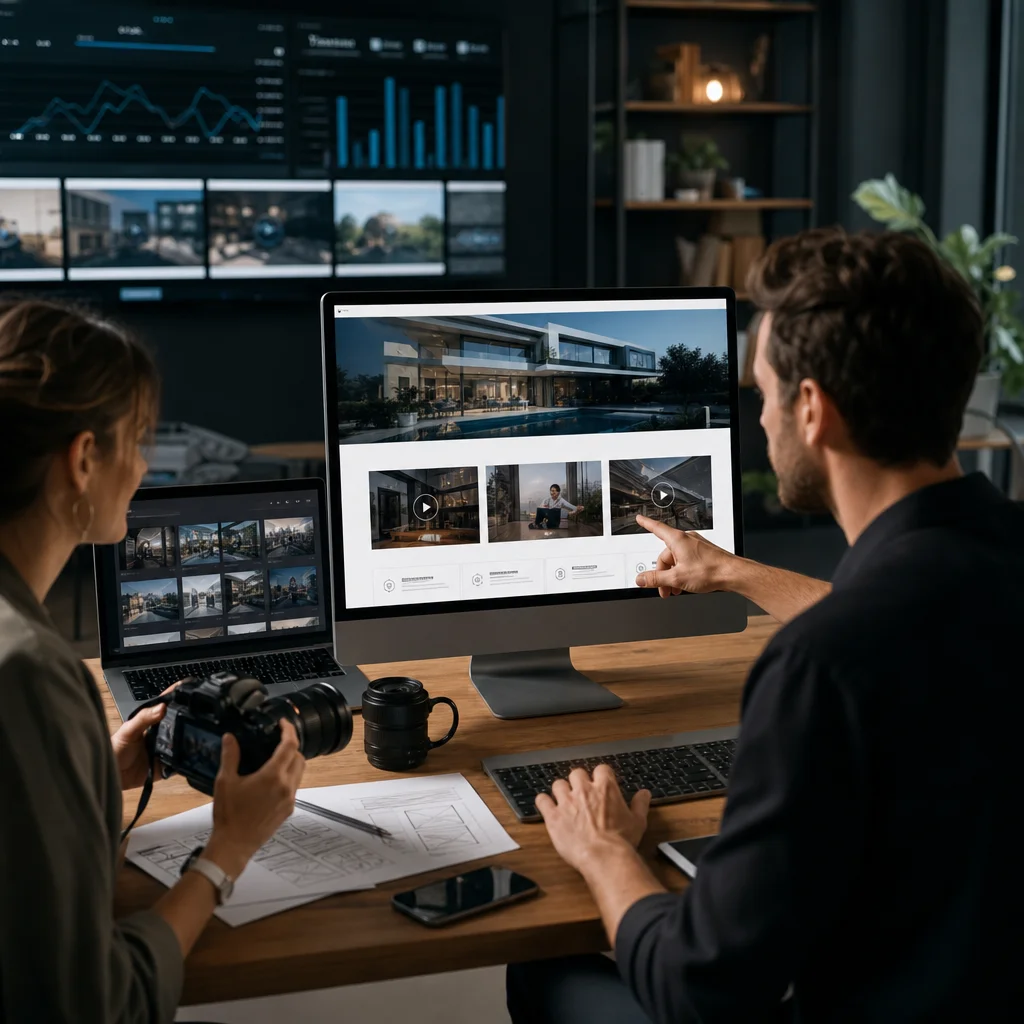
  • How Integrated Website Design and Video Production Drive Growth for Service Businesses

    How Integrated Website Design and Video Production Drive Growth for Service Businesses

    Why Fragmented Digital Marketing Fails Your Business

    Most service businesses operate with disconnected teams handling different channels. Your social media manager posts videos that don’t align with your website messaging. Your web designer builds landing pages without considering video content placement. Your video production team creates content in isolation, unaware of how it feeds into your overall customer journey.

    This fragmentation costs you in two critical ways. First, prospects experience conflicting brand messaging across touchpoints, which erodes trust and slows decision-making. Second, you miss the compounding effect of integrated systems where each channel amplifies the others. A video that drives traffic to your website should lead visitors to a page specifically designed to convert them, not a generic homepage.

    The best-performing service businesses we work with treat website design and video production as interconnected parts of one lead generation machine. When they’re aligned, your cost per lead drops, your conversion rates climb, and your content works harder across every platform.

    The Problem: Disconnected Design and Video Strategies

    Separation between video and web design creates specific friction points. Your website might have a professional aesthetic, but no video content to build emotional connection. Your videos generate engagement on social platforms, but no clear pathway guides viewers to your actual business site. Landing pages exist as isolated destinations rather than natural extensions of your video storytelling.

    We’ve seen service businesses spend significantly on cinematic video content only to send traffic to basic website templates that don’t reinforce the brand story. The video creates interest, but the landing experience fails to deepen it. Conversely, some businesses invest heavily in website design without video content, making their pages feel static and corporate compared to competitors who show their service in action.

    These gaps typically stem from working with separate vendors or teams. Each delivers solid work independently, but without a unified strategy connecting them, the overall system underperforms.

    How We Combine Website Design and Video Production

    At Canatos Media, we start with a single strategic framework that encompasses both video production and website design. Rather than treating them as separate deliverables, we plan how video content flows through your website architecture, where it sits in your customer journey, and how it supports your lead generation funnel.

    This integrated approach means your video assets are created with specific web placements in mind. We produce cinematic short-form content optimized not just for social platforms, but for embedding on your homepage, landing pages, and service pages. Your website design simultaneously incorporates video strategically, with calls-to-action timed to moments when prospects are most likely to convert.

    We also coordinate messaging across both mediums. Your video storytelling reinforces the value propositions highlighted on your pages. Your website copy expands on concepts introduced visually in your video content. This redundancy strengthens retention and makes your brand positioning unmistakable.

    Creating a Cohesive Visual Brand Identity

    Video and web design must speak the same visual language. Color palette, typography, motion style, and imagery aesthetic should feel intentional and consistent. When they don’t, prospects notice the disconnect and question whether you’re a unified organization.

    We establish a visual identity system upfront that governs both mediums. This includes brand guidelines for video cinematography, color grading, and animation style. These same principles guide website design decisions around layout, imagery, and interactive elements. The result is a seamless experience whether someone encounters your brand on Instagram, arrives at your website, or watches a testimonial video.

    Cohesion also builds recognition. Service businesses benefit enormously from visual consistency because it builds authority and professionalism. When every touchpoint reinforces the same visual identity, you appear more established and trustworthy than competitors with scattered brand presentation.

    Driving Lead Generation Through Integrated Systems

    The core purpose of integrating website design and video is lead generation. Video attracts and engages. Websites convert and qualify. Together, they form a lead capture system.

    We design your website with video-driven traffic in mind. If your video content generates 500 social clicks monthly, those visitors need landing pages optimized for conversion. We create dedicated pages that reference or feature the exact videos that brought them there, reinforcing the reason they clicked. Forms are placed strategically after video content has built enough interest.

    Your website also hosts integrated lead generation systems that track which content generates the highest-quality leads. This data informs future video production. If video testimonials from your HVAC clients generate more qualified leads than behind-the-scenes content, we know to produce more testimonials. If service explainer videos convert better than brand awareness content, we adjust your video mix accordingly.

    Website Design That Converts Social Media Traffic

    Your website is where social attention becomes business value. If your video content drives traffic but your website doesn’t convert visitors, you’re wasting the engagement you’ve earned.

    Conversion-focused website design incorporates several key elements. First, clear navigation that guides visitors from video content to relevant service pages or lead capture forms. Second, strategic video placement on high-traffic pages like your homepage and service pages. Third, mobile optimization that ensures video plays smoothly and pages load quickly on devices where most viewers arrive from social platforms. Fourth, trust signals like client testimonials, case studies, and social proof positioned near conversion points.

    We also optimize page speed specifically for video-heavy sites. Large video files can slow load times if not properly compressed and hosted. We handle this technical side so your design looks premium without sacrificing performance. Fast pages convert better, and they rank better in search results too.

    Video Production That Tells Your Brand Story

    Cinematic brand storytelling goes beyond standard corporate video. It shows your service in action, captures client transformations, and communicates your values through narrative rather than listing features.

    For service businesses, the most effective video production balances several content types. Testimonial videos from satisfied clients build credibility and emotional connection. Service explainer videos show how your process works and set expectations. Behind-the-scenes content humanizes your team and builds familiarity. Educational videos position you as an expert and drive organic discovery through search.

    We produce short-form video content optimized for social distribution while ensuring each piece works equally well embedded on your website. This dual-purpose approach maximizes the value of your video investment. One video asset works across TikTok, Instagram Reels, YouTube Shorts, and your website homepage.

    Measuring Results Across All Channels

    Integration enables measurement that fragmented approaches can’t provide. You can track how video content on social platforms drives website traffic, how that traffic converts, which types of prospects become paying clients, and ultimately, which video content generates the highest customer lifetime value.

    We implement tracking across your full funnel. Video platform analytics show engagement and click-through rates. Website analytics reveal which pages receive the most video-driven traffic and where those visitors go. Conversion tracking connects form submissions to source content. CRM integration lets you follow leads from click to close, showing which video content influences your best customers.

    Monthly reporting connects these dots. You’ll see patterns like “testimonial videos drive 40% more qualified leads than product demos” or “visitors who watch the homepage video have a 30% higher conversion rate.” This data becomes your content strategy roadmap.

    Our Process for Building Your Integrated Strategy

    We begin with strategy. Before creating anything, we understand your target customers, their decision journey, and what messaging resonates most. This informs both video production and website design.

    Next, we map where video and web content intersect in your customer journey. Which pages need video? What stories should video tell? How does each content piece support the next? This creates a unified content roadmap.

    Then we execute simultaneously. As our web designers build your site architecture, our video production team is shooting and editing content with specific placement in mind. We coordinate regularly to ensure visual alignment and functional integration. Finally, we launch integrated and optimize based on real performance data.

    Your involvement matters throughout. We involve you in strategy conversations, approval checkpoints for video content, and regular performance reviews so you understand how the system is working.

    Real Results from Integrated Marketing Approaches

    Service businesses using integrated website and video strategies consistently see measurable improvements. One HVAC contractor we worked with launched integrated video and website simultaneously. Within three months, their qualified lead volume increased 65% while their cost per lead dropped 40%. The video content on their homepage and service pages created multiple conversion opportunities rather than single-purpose pages.

    A home remodeling company used video testimonials integrated throughout their website portfolio pages. Visitors who watched video testimonials converted at 2.8x the rate of those viewing static before-and-after photos alone. The video didn’t just attract attention; it deepened trust at the conversion moment.

    These results don’t come from video alone or website design alone. They come from systems where both elements work toward a unified outcome. Your website becomes a showcase for your video content. Your videos guide visitors toward your website conversion points. Together, they create a lead generation engine that compounds over time.

    We build these systems for growth-focused service businesses ready to treat video and web presence as interconnected parts of one strategy. If you’re experiencing scattered results from separate vendors, it’s worth exploring how integration could change your outcomes. Learn more about how we integrate website design and video to drive sales, or reach out to discuss your specific situation.

    Contact us today for a free consultation to see how we can help you grow your business.

    Frequently Asked Questions (FAQ)

    How do you ensure our website and video content work together instead of operating separately?

    We build your digital presence around a unified visual identity and messaging strategy from the start. Our team coordinates website design, video production, and social media content so that each piece reinforces your brand story and guides visitors toward the same conversion goals. Rather than treating video and web design as separate projects, we integrate them into one cohesive system that turns attention into leads.

    What’s the difference between how you approach video production versus typical marketing agencies?

    We prioritize cinematic storytelling that actually converts, not just content that looks pretty. Our videos are designed to work across your website, social channels, and ads while maintaining a consistent brand narrative. We also measure performance directly against your lead generation and sales outcomes, so we know which content actually drives results for your business.

    How do we know if integrated website and video strategies are worth the investment?

    We track measurable outcomes across every channel, from website conversion rates to social media engagement to qualified leads generated. You’ll see how video content drives traffic to your site, how website design captures that traffic, and how both systems work together to reduce your customer acquisition cost. We provide regular reporting so you understand exactly what’s working and why.

  • Scaling Multi-Location Video Shoots on a Small Business Budget

    Scaling Multi-Location Video Shoots on a Small Business Budget

    The Challenge of Producing Video Content Across Multiple Locations

    Growing businesses with multiple locations face a unique problem: they need consistent, high-quality video content across dispersed sites, but the production costs balloon quickly. A shoot in Denver, another in Austin, a third in Miami. Equipment rental, crew travel, permits, location coordination. The math stops making sense fast.

    We work with multi-location brands every quarter, and the pattern is clear. Most owners either abandon video content entirely or settle for inconsistent, low-quality footage that doesn’t reflect their brand. Neither option moves the needle on lead generation or brand perception.

    The good news: scaling video production across multiple locations is possible without doubling your budget. It requires smarter planning, lean operational systems, and strategic use of tools that already exist in your workflow. We’ve helped service-based and retail brands cut their per-location production costs by 40% while improving output quality.

    This guide covers the systems and strategies we use to help growth-focused businesses produce professional video content at scale without overspending.

    Producing video at scale across multiple sites introduces friction at every stage. You’re managing different stakeholders at each location, coordinating logistics across time zones, ensuring brand consistency while adapting to local contexts, and consolidating footage from dispersed teams.

    A dental practice with five locations wants to showcase patient testimonials, procedures, and team culture. Doing this well means scheduling shoots at each office, managing patient privacy and consent, coordinating with staff who have limited availability, and ensuring the visual style matches across all locations. One location might have great natural light. Another might be cramped and poorly lit. A third might have scheduled patients all day, making crew coordination a nightmare.

    The production overhead multiplies. Travel costs for crew, equipment shipping, setup time at unfamiliar spaces, and location-specific problem solving all add up. Many teams end up splitting the work across internal resources and freelancers, which creates consistency gaps and communication breakdowns.

    Your audience doesn’t care about the logistical difficulty behind the scenes. They notice when your brand looks polished at one location and amateurish at another. Consistency signals trust and competence. Inconsistency signals disorganization.

    The real cost isn’t just the crew and equipment. It’s the time spent managing production across dispersed teams and the missed opportunity to create content that converts.

    Why Traditional Video Production Doesn’t Work for Growing Brands

    Traditional video production operates on a project basis. You hire a production company, they shoot for a day or two, hand you finished videos weeks later, and you pay a premium for custom work that takes time to scale.

    This approach breaks down when you need regular output across multiple sites. You’re paying full production rates for each location. You’re dependent on a specific crew’s availability. You’re waiting weeks between concept and delivery. And you’re producing expensive, long-form content when short-form video is what actually drives engagement and conversions on social platforms.

    Most traditional production workflows also assume you’re making one or two hero videos per quarter. They’re not designed for brands that need dozens of short-form pieces monthly. The cost per piece stays high. The turnaround time stays slow.

    Growing brands need a different model: one built on systems rather than projects. You need repeatable processes, lean crews who understand your brand and locations, efficient production schedules, and fast turnaround on short-form content optimized for social and paid channels.

    That shift in approach changes everything. Instead of hiring a new production company for each location, you build a sustainable system that your internal team or a dedicated partner can execute repeatedly.

    How Strategic Planning Reduces Production Costs

    The biggest opportunity to cut costs happens before anyone picks up a camera: planning.

    Most teams jump into production without a clear content strategy. They shoot whatever seems interesting, create longer-form pieces that take time to edit, and end up with content that doesn’t fit their distribution channels. Inefficiency baked in from the start.

    Strategic planning starts with defining exactly what content you need. For a multi-location brand, this means mapping out:

    • What stories need to be told at every location (team culture, service overview, customer results) vs. location-specific stories
    • Which short-form formats work best for your audience and paid channels (15-30 second testimonials, 60-second process breakdowns, etc.)
    • How many pieces you need monthly and how those break down across locations
    • What equipment and crew capabilities are truly necessary vs. nice-to-have

    This clarity lets you consolidate production days. Instead of scheduling separate shoots at each location, you might batch them: fly a core crew to three locations over five days, then handle the remaining two locations with local freelancers or internal teams using standardized guidelines.

    You also shift from building hero content to building a content library. You’re not producing ten 5-minute videos. You’re producing 50-60 short-form pieces that can be repurposed, recut, and distributed strategically. The per-piece cost drops dramatically when you’re thinking in volume.

    What to do next: Audit your current content needs location by location. Identify the 3-4 core story types that work across all sites, then build a production calendar that batches shoots strategically rather than treating each location as an isolated project.

    Streamlining Equipment and Crew for Efficiency

    Lean equipment lists beat comprehensive gear collections when scaling across locations. You need tools that are reliable, portable, and capable of producing cinematic quality without requiring expert-level technical knowledge.

    A focused kit might include:

    • Two camera bodies with interchangeable lenses (covering wide, standard, and telephoto focal lengths)
    • Wireless audio systems (critical for interviews and testimonials)
    • Portable lighting kits that work in any environment
    • Tripods and stabilization tools
    • Editing and color-grading laptops
    • Portable power and backup batteries

    This setup handles 95% of what you’ll shoot without excess baggage or unnecessary complexity. More gear means more weight, more setup time, more variables to troubleshoot on location.

    Crew composition matters equally. Instead of large teams with specialized roles, consider smaller units of 2-4 people who can adapt. One person handles camera and lighting decisions. Another manages audio and interviews. A third handles logistics and second-camera work if needed. This setup is flexible enough to scale from a single location shoot to managing three simultaneous shoots in different offices.

    Cross-training is essential. Everyone on the team should understand the core workflow: how to frame shots that work for your brand, how to capture clean audio, how to manage time on a tight schedule. This redundancy saves you when someone’s unavailable and speeds up production overall.

    Action item: Document your essential equipment list and get it dialed in. That becomes your standard kit for all multi-location shoots, reducing setup variability and training time.

    Maximizing Production Value Through Cinematic Techniques

    Budget doesn’t determine visual quality. Technique does.

    Cinematic production relies on fundamentals that cost nothing: camera movement, framing, lighting direction, and color consistency. Master these and your footage looks intentional and professional regardless of budget constraints.

    Movement draws attention and creates energy. Rather than static talking-head interviews, use slow push-ins, subtle dolly moves, or handheld follow shots to create dynamism. These techniques don’t require expensive equipment. A basic slider or handheld stabilization with deliberate movement technique elevates the visual impact significantly.

    Framing and composition are about intentionality. Shoot with depth. Position your subject in foreground, middle ground, and background layers. Use negative space meaningfully. Vary your shot sizes across a sequence: wide establishing shots, medium shots for context, tight shots for emotion and detail. This variety creates visual interest and tells a more complete story.

    Lighting direction is transformative. Three-point lighting sounds formal, but the principle is simple: key light from one side, fill light to prevent harsh shadows, accent light to separate your subject from the background. You can achieve this with basic LED panels and diffusion. The look goes from “we shot this on a phone” to “this was intentionally lit.”

    Color consistency across locations is critical for brand cohesion. Shoot with a color reference card at each location, apply matching color grades in post-production, and maintain consistent color palettes. This ensures your footage looks like it belongs to the same brand even when shot in completely different environments.

    These techniques work at scale because they’re process-based, not equipment-dependent. Train your crew on them and they apply at every location.

    Leveraging Technology to Automate Post-Production Workflows

    Post-production is where many teams waste time and money. Inefficient editing workflows, manual color grading of every shot, and piecemeal delivery of finished content stretch timelines and budgets.

    Modern software handles the repetitive work. Proxies and transcoding speed up editing performance on standard computers. Automated color matching tools reduce the time spent color-grading across multiple shoots. Template-based editing systems let one person produce multiple cut variations from the same raw footage in hours instead of days.

    Cloud-based collaboration keeps remote teams aligned. Your crew in Denver can upload footage directly to a shared workspace. An editor in your main office starts working on cuts immediately. You review and provide feedback remotely. Revisions happen in real-time without shipping hard drives or waiting for uploads.

    AI-powered tools are becoming practical too. Automated transcription saves hours of manual logging. AI-powered background removal lets you create custom branded environments in post. Automated color correction applies consistent grades across batches of footage.

    The key is building a workflow stack that handles your specific volume and format needs. If you’re producing 40-50 short-form videos monthly, your workflow needs to support rapid turnaround and batch processing. If you’re managing multiple editors across locations, your tools need strong collaboration features.

    Next step: Map your current editing workflow from footage ingest to final delivery. Identify bottlenecks where automation or better tools could save time, then test solutions on a pilot project.

    Building Reusable Systems for Consistent Output

    Scaling requires repeatable systems that don’t depend on specific people or one-off solutions.

    Document everything. Create shot lists that travel with your crew. These lists define the essential shots needed at every location: interviews with staff or clients, facility tours, service demonstrations, environmental shots. A standardized shot list ensures consistency without micromanaging. Your crew knows what needs to happen. They have flexibility in how they capture it.

    Build brand guidelines specific to video production. Define acceptable camera movements, focal length preferences, audio quality standards, color palette ranges, and graphics treatments. These guidelines aren’t restrictive. They create a framework that feels cohesive across locations while allowing creative flexibility.

    Create templates for common content types. A testimonial interview has a predictable structure: wide establishing shot, medium interview shot, close-up detail shots, B-roll of the service or product. Codify this template. Every location follows it. Every editor knows how to cut it. Production becomes faster and more consistent.

    Establish a content calendar that balances consistency with flexibility. You might require every location to produce two testimonials and one team culture piece monthly. How they approach those is flexible. The output targets are predictable. This rhythm keeps content flowing without requiring constant production planning.

    Train your teams to this system. When everyone understands the framework, production decisions get faster and quality stays consistent across locations.

    Integrating Video Content Into Your Overall Digital Strategy

    Production efficiency means nothing if your content doesn’t reach the right people or drive measurable business results.

    Video is one component of a larger digital system. Short-form content works best when integrated with social media management, paid advertising, and search optimization. A testimonial video shot at your Austin location becomes:

    • An organic post on Instagram and TikTok
    • An ad variant for Meta Ads Manager targeting local audiences
    • A carousel ad on Google highlighting customer results
    • A website element supporting your services pages
    • A lead magnet gated behind an email form

    This repurposing multiplies the value of your production investment. You’re not making one piece of content. You’re making ten variations of the same core asset.

    Paid advertising amplifies what works. Not every piece of content will convert equally. Test short-form videos across different audience segments and ad placements. Double down on winners. Pause underperformers. This iterative approach requires good attribution tracking and honest performance measurement.

    Social media strategy shapes what you shoot. If Instagram Reels drive more engagement and conversions than TikTok for your audience, prioritize that format. If testimonials outperform behind-the-scenes content, shoot more testimonials. Let performance data inform your production priorities.

    Efficient multi-location video production works best when your video strategy aligns with your broader digital marketing goals: lead generation, brand awareness, customer retention, or sales acceleration.

    Measuring ROI and Optimizing Your Video Investment

    You’re spending money on production. You need evidence that it’s working.

    Set clear benchmarks before you shoot. Define what success looks like: cost per lead, engagement rate on social content, conversion rate on video ads, growth in qualified prospects month-over-month. These metrics shape your production priorities and help you make smarter decisions about where to invest.

    Track performance at every stage. Monitor organic video engagement on social platforms. Measure click-through rates and conversion rates on video ads. Track how many leads came directly from video content vs. other channels. Use UTM parameters to attribute leads back to specific videos and locations.

    The data often surprises teams. A short testimonial might outperform a polished 2-minute brand story. A casual behind-the-scenes clip might drive more engagement than a carefully scripted piece. Let results guide production decisions rather than assumptions about what should work.

    Calculate cost per lead for video content and compare it to other marketing channels. If video production is costing you $2,000 per location per month and generating leads at $40 each, that’s valuable information. If it’s generating leads at $200 each, you need to adjust either production approach or distribution strategy.

    Return to your production planning quarterly. Which content types deliver results? Which locations produce better content? What’s working and what isn’t? Use this data to refine your system, double down on what works, and adjust what doesn’t.

    How We Help Growth-Focused Businesses Scale Video Production

    We work with multi-location brands and service-based businesses that need consistent, high-quality video content without the premium agency budget. Our approach combines strategic planning for multi-location video campaigns with lean production workflows and integrated digital strategy.

    We handle the production planning, crew coordination, and post-production so your team focuses on running your locations. We build systems that scale with your business, not production costs that grow linearly. We optimize your content for social platforms and paid channels, ensuring every shot serves a purpose in your larger marketing system.

    Most importantly, we connect production to results. Our focus isn’t making beautiful videos. It’s making videos that generate leads, build brand trust, and drive measurable business growth.

    If you’re managing multiple locations and struggling with video production costs or consistency, we can help. Reach out to discuss your situation and how we approach scaling video for growing brands.

    Contact us today for a free consultation to see how we can help you grow your business.

    Frequently Asked Questions (FAQ)

    How do we keep multi-location video shoots affordable without sacrificing quality?

    We use strategic planning and streamlined crew structures to reduce costs while maintaining cinematic production value. Our approach combines careful location scouting, consolidated shooting schedules, and proven cinematic techniques that deliver premium-looking content without expensive equipment or bloated crews. We’ve found that intelligent planning upfront eliminates wasteful expenses during production while keeping your final content visually compelling.

    What makes our video production systems different from traditional agencies?

    We build reusable frameworks and automation into our workflows so you’re not paying premium rates for custom work every single time. Our post-production systems, equipment standardization, and repeatable processes let us scale your video content efficiently while maintaining consistent output across all your locations. This means you get professional results faster and more affordably as your brand grows.

    How do we measure whether our video investment is actually generating leads and sales?

    We integrate your video content into a complete digital strategy that tracks performance across social media, paid advertising, and your website. We don’t just produce videos in isolation; we connect them to your lead generation systems and measure actual conversions from awareness through sales. This way you see exactly which content and distribution channels are driving real business results.

  • 7 Best Affordable Video Ad Agency Services for Growing SMBs in 2026

    7 Best Affordable Video Ad Agency Services for Growing SMBs in 2026

    1. Short-Form Video Production That Drives Conversions

    The shift to short-form video isn’t optional anymore—it’s where attention lives. Instagram Reels, TikTok, YouTube Shorts, and Meta feeds demand content under 60 seconds that hooks viewers in the first frame and delivers a clear message.

    The catch: short-form production at scale requires systematic workflow, not artisanal one-off shoots. You need templates for consistency, rapid turnaround for trend relevance, and enough volume to test what resonates. Most affordable services offer slow timelines or repetitive styling. We’ve moved past that by automating production logistics while keeping creative direction personalized to your brand.

    Our process prioritizes conversion intent from day one. A 30-second product demo, a customer testimonial, or an educational snippet each follow different composition rules. We script with hooks, frame for mobile-first viewing, and edit with pacing that maintains retention through the end. For a multi-location service business or retail brand, this means 15-20 pieces monthly across different angles, all coordinating with paid ad spend.

    What to do next: Audit your current video content. If most pieces are longer than 60 seconds or lack a hook in the first three seconds, you’re losing 70% of potential views before the message lands.

    2. Social Media Management Integrated With Paid Advertising

    Organic social reach is shrinking. Platforms prioritize paid content, and most affordable agencies treat organic posting and paid campaigns as separate silos. That’s a missed opportunity.

    When social management and paid advertising coordinate, something shifts. Organic posts test messaging and creative angles at zero cost. High-performing posts then scale through paid promotion. Paid campaigns inform organic calendar planning. Ad audiences feed social listening insights. Brands that operate this way spend less overall while getting more precision.

    The disconnect happens when one team manages posting schedules while another team runs ads with no strategic overlap. We integrated our social and advertising workflow so that every post has paid amplification potential, and every ad campaign feeds organic strategy. Your content calendar accounts for paid promotion windows. Your ads recycle top organic performers. Audience data flows both directions.

    For a service-based business with seasonal demand or a retail brand with location-specific promotions, this coordination means tighter customer acquisition cost (CAC) and faster response to market shifts. You’re not guessing which angles convert—data tells you.

    What to do next: Review your last 30 days of social posts and paid ads. How many of your top-performing posts became paid campaigns? If fewer than 30%, you have untapped conversion potential.

    3. Meta and Google Ads Optimization for Maximum ROI

    Spending $1,000 monthly on Meta and Google ads feels affordable until you realize half of it’s wasted on irrelevant targeting or unoptimized creatives. Platform algorithms have become more powerful, but they also demand precision in creative and audience setup or they default to broad, inefficient targeting.

    Most budget-conscious brands choose one platform (usually Meta) and hope broad targeting finds their audience. This leaves money on the table because Meta and Google serve different intent stages and user behaviors. Someone searching “plumbing near me” on Google is intent-ready. Someone scrolling Instagram is in awareness. Both convert, but they need different ad structures and creative approaches.

    We run coordinated campaigns across both platforms with audience segmentation, creative testing, and real-time bid optimization. On Meta, we test multiple creative formats—video, carousel, collection—simultaneously and scale winners. On Google, we align search ads with video content that reinforces messaging at the consideration stage. Retargeting audiences from both platforms feed each other, reducing overall spend while improving conversion rates.

    The result isn’t just lower CAC—it’s predictability. When both platforms operate under unified conversion goals and audience rules, you can forecast monthly lead volume and adjust budget accordingly.

    What to do next: Check your Google and Meta ad account conversions. Are they tracked to the same conversion event? If not, you can’t optimize across platforms effectively. Start there.

    4. Cinematic Storytelling on a Realistic Budget

    Cinematic doesn’t mean expensive. It means intentional color grading, purposeful camera movement, and narrative structure that holds attention. Most budget video services skip these elements to save on production time and editing hours.

    Here’s the cost reality: cinematic production requires planning, not money. A script that builds tension, location scouting that uses natural light, and editing that paces for emotion add minimal cost but deliver massive quality lift. Many affordable services deliver flat, over-lit footage that screams “budget production.” We prioritize pre-production planning, which reduces time on set and in editing while raising visual quality.

    Generic video ads underperform on Meta platforms because they lack visual differentiation. Your audience sees dozens of ads daily. Cinematic elements—even subtle ones like color consistency, intentional framing, and audio design—register as premium and hold attention longer.

    For brand storytelling pieces (founder stories, customer success videos, culture content), cinematic approach feels earned and authentic. For conversion-focused ads, it stands out in feed without feeling overstyled.

    What to do next: Watch three ads from brands in your space. Grade them on visual consistency, framing, and audio quality. Note which ones hold your attention longest. That’s your benchmark.

    5. Lead Generation Systems Built Into Video Content

    A beautiful video that doesn’t generate leads is brand entertainment, not business growth. The gap between views and leads happens when video strategy isn’t connected to a clear conversion path.

    We design every video with lead generation intent baked in. A testimonial video includes a specific next step in the caption and link. An educational series has lead magnets (guides, templates, free audits) tied to each episode. Product demos include interactive elements or unique offer codes. Most brands fail to convert social attention into leads because they treat video as content, not conversion asset.

    The system requires coordination: video messaging aligns with landing page copy, CTAs are consistent across platforms, and follow-up sequences (email, SMS, retargeting) activate immediately after click. Most affordable services stop at video delivery. We embed the entire funnel.

    For multi-location service businesses especially, this means location-specific landing pages that video drives to, inventory links for retail, and booking systems that activate from video clicks. Lead quality improves because messaging clarity removes friction.

    What to do next: Pick one video you’re currently running. Document its full conversion path from view to lead. Are there gaps in messaging, broken CTAs, or missing follow-up steps? Fix those first.

    6. SEO Optimization Combined With Video Strategy

    Video and SEO are increasingly intertwined. Google prioritizes pages with video content, video transcripts improve keyword ranking, and embedded videos reduce bounce rate. Yet most affordable video agencies treat SEO as separate from video production.

    We optimize video content for search from scriptwriting forward. Keywords inform messaging. Titles and descriptions are written for both human viewers and search algorithms. Transcripts become content assets themselves, expanding keyword coverage. Video sitemap markup ensures search engines index your content properly. Landing pages that host video are optimized for related search intent.

    For service-based businesses, video-optimized content captures high-intent search queries that text alone might miss. A “how to” video on a technical service topic ranks for educational searches, builds authority, and feeds bottom-funnel retargeting.

    This creates a compound effect: organic video traffic improves SEO metrics, which improves paid ad quality scores, which lowers cost per click. Each system reinforces the others.

    What to do next: Search your primary keyword in Google. How many of the top 10 results include embedded video? If fewer than four, video content is still underutilized in your niche—opportunity exists.

    7. AEO Optimization to Dominate Voice Search Results

    Voice search through smart speakers, mobile assistants, and hands-free devices is reshaping how people discover services. By 2026, voice queries drive meaningful traffic for local and service-based businesses, yet most video and digital marketing strategies ignore this channel.

    AEO (Answer Engine Optimization) focuses on providing direct answers to voice queries. When someone asks their smart speaker “best plumber near me” or “how do I fix a leaky faucet,” the answer engine pulls from structured data, local optimization, and concise answer blocks. Video content contributes here—featured video snippets now appear in voice search results.

    We optimize video metadata, transcript structure, and local business information to appear in voice search results. For local service businesses, this means voice queries about your service category or location increasingly route to your content. The integration with video matters because video answers rank favorably in voice-assisted visual displays and recommended follow-up content.

    Smart speaker adoption is mainstream, and voice search is driving real traffic. Brands that ignore it lose visibility in an increasingly important channel.

    What to do next: Ask your smart speaker a query related to your business category. What results appear? If you don’t see yourself in the top three, AEO work is overdue.

    For further reading: Lead generation systems.

    Contact us today for a free consultation to see how we can help you grow your business.

    Frequently Asked Questions (FAQ)

    How do we keep video production costs low without sacrificing quality?

    We’ve built our production process around short-form content that requires less time in post-production and fewer location shoots than traditional cinematic video. Our team uses efficient workflows and strategic planning to eliminate waste, passing those savings directly to our clients. We focus on what actually drives conversions for your business rather than creating expensive vanity content.

    What makes our approach different from hiring a freelancer or in-house videographer?

    We don’t just produce videos in isolation. We integrate our short-form content directly into your paid advertising campaigns, social media strategy, and lead generation systems so every piece of content serves a measurable business goal. Our team handles Meta and Google optimization, SEO, and AEO simultaneously, meaning your videos are built to perform across every channel where your customers actually spend time.

    Can we handle video production for multi-location or service-based businesses at scale?

    Yes, that’s exactly who we serve. We’ve developed systems that allow us to produce consistent, branded short-form content across multiple locations or service categories without multiplying your costs proportionally. Our approach lets us shoot efficiently in batches and adapt messaging by location while maintaining the cinematic quality that sets your brand apart.

  • 7 Best Ways to Measure Short-Form Content ROI and Drive Real Business Results

    7 Best Ways to Measure Short-Form Content ROI and Drive Real Business Results

    1. View-Through Rates and Completion Metrics

    Short-form video has become the dominant way audiences consume content, but most business owners struggle to connect views, likes, and shares back to actual revenue. You can produce hundreds of thousands of impressions and still walk away wondering whether your investment in video production is paying off.

    The gap between content activity and measurable business results isn’t a mystery—it’s a measurement problem. Without the right metrics in place, you’re essentially flying blind. We’ve helped dozens of growth-focused business owners solve this exact challenge by implementing a structured approach to short-form content ROI tracking.

    Here’s what separates brands that scale their video efforts from those that abandon them: clarity on what to measure and how to act on those insights.

    Most platforms will show you raw view counts, but that number tells you almost nothing about content quality or audience interest. The real signal lives in how much of your video people actually watch before scrolling away.

    View-through rate (VTR) measures what percentage of viewers watched your entire video or reached a specific threshold (often 50% or 75%). A 60% VTR on a 15-second reel means six out of ten people stuck around for the full story. Compare that to a 20% VTR, and you’ve identified a content problem that needs fixing.

    Completion metrics become even more valuable when you segment by platform. Instagram Reels may show strong completion while TikTok underperforms for the same content, signaling audience or format misalignment. This tells you where to invest more production resources and where to pause spending.

    Here’s the actionable framework: set platform-specific VTR benchmarks based on your industry, then track weekly trends. If completion drops below your baseline, audit the opening three seconds—that’s where most drop-off happens. Test faster hooks, stronger value propositions, or different visual styles until completion climbs.

    Your next move: Pull VTR data for your last 10 videos across each platform. If any fall below 40% completion, those are candidates for a creative refresh rather than more ad spend.

    2. Click-Through Rate and Landing Page Traffic

    Views and completion are engagement signals, but clicks are intent signals. Someone who watches your 15-second video about a service and then taps the link is making a deliberate choice to learn more.

    Click-through rate (CTR) directly connects your video content to website traffic. A video with 10,000 views and a 2% CTR sends 200 people to your landing page. A video with the same views but 0.5% CTR sends only 50. Over a month of ad spend, that difference compounds into vastly different traffic volumes.

    What matters most is tracking which videos drive clicks at the highest rate, then understanding why. Is it the call-to-action placement? The value prop in the headline? The audience segment being targeted? This becomes your baseline for future creative decisions.

    When measuring CTR, separate organic views from paid views. Organic videos on your own followers may show lower CTR simply because they’re not as targeted, while paid videos reach cold audiences who’ve never heard of your brand. Both metrics are useful, but they answer different questions.

    One critical but often-overlooked step is ensuring your landing pages match the promise made in the video. Landing pages with video ads need alignment to convert effectively for that CTR to translate into meaningful results.

    Your next move: Compare CTR across your five highest-performing videos. Identify the common elements in the top performers, then apply those patterns to your next batch of creative.

    3. Conversion Tracking Across All Platforms

    Clicks are worthless if they don’t lead to actions that matter to your business. A conversion could be a form submission, a phone call, a product purchase, or a qualified lead depending on your model.

    The challenge most brands face is platform-specific tracking. Meta Ads Manager tracks conversions on Facebook and Instagram differently than Google Ads tracks them. TikTok’s conversion pixel works separately from both. Without proper setup, conversions get lost in the noise or counted twice.

    We implement proper tracking by installing conversion pixels on landing pages and ensuring every traffic source can be traced back to its original video. This means setting up UTM parameters on every link so Google Analytics knows which video, platform, and campaign drove each visitor. It also means using platform-native conversion pixels (Meta Conversion API, Google Conversion Tracking) to close the loop between ad platform and backend business systems.

    The setup is technical, but the payoff is immediate: you finally know which videos actually convert prospects into leads or customers. A video with 50,000 views might convert at 1%, while another with 5,000 views converts at 8%. The second video is your money maker, even though it has a fraction of the reach.

    For service-based businesses with longer sales cycles, use event tracking rather than just final purchases. Track form submissions, phone call clicks, or email signups as interim conversions. This tells you which content is actually moving prospects through the funnel, not just which content gets watched.

    Your next move: Audit your conversion tracking setup across Meta, Google, and any other paid platforms you’re using. Ensure UTM parameters are consistent and conversion pixels are properly installed on your primary landing pages.

    4. Cost Per Lead and Lead Quality Analysis

    Cost per lead (CPL) is where video ROI becomes financially tangible. It answers the question every business owner cares about: how much does it cost to get one qualified prospect?

    If you’re spending $2,000 per month on short-form video ads and generating 50 leads, your CPL is $40. But that number is only useful in context. If your average customer lifetime value is $500, a $40 CPL is excellent. If it’s $150, that CPL is unsustainable.

    The deeper insight comes from comparing CPL across different content types, audiences, or platforms. You might discover that videos focused on problem awareness cost $35 per lead, while solution-focused videos cost $65. The cheaper source might close at lower rates, making the more expensive leads ultimately more profitable. This is why CPL alone doesn’t tell the full story.

    This is also where lead quality enters the equation. Not all leads are created equal. A lead generated from a video targeting CEOs at enterprise companies has different characteristics than a lead from a consumer-focused video. One might have a 40% sales conversion rate while the other converts at 10%. Effective ROI analysis requires tracking both volume and quality.

    We typically recommend monitoring CPL alongside lead quality scores (based on your sales team’s feedback), close rate, and average deal size. A video that generates higher-quality leads at a slightly higher CPL often outperforms cheaper lead sources.

    Your next move: Calculate your current CPL by dividing total ad spend on video content by total leads generated. Then ask your sales team to score the quality of those leads on a scale of 1-10. Compare quality scores to CPL to find your most profitable acquisition source.

    5. Engagement Rate and Audience Growth Velocity

    Engagement rate measures how many people interact with your content through likes, comments, shares, and saves. It’s a strong indicator of content relevance and audience connection.

    The formula is simple: (likes + comments + shares + saves) divided by total views, expressed as a percentage. A 5% engagement rate on a branded video is exceptional and signals your content resonates emotionally or provides clear value. A 0.5% engagement rate suggests the content isn’t landing with your audience.

    What makes engagement valuable for ROI is that higher engagement typically correlates with better algorithm performance. Instagram, TikTok, and Meta’s platforms prioritize content with strong engagement, which means your reach expands at lower cost. A highly engaging video can achieve viral reach that paid reach alone couldn’t buy.

    Audience growth velocity takes this a step further by measuring how quickly your following is expanding. If your monthly follower growth jumped 40% after launching a new video series, that’s a sign of content-market fit. Those new followers become a sustainable audience for future content without additional ad spend.

    For growth-focused business owners, this is critical: your audience is an asset. Short-form video that builds authentic followers creates a compounding advantage. Each month you have more people seeing your content organically, reducing your reliance on paid reach.

    Your next move: Track engagement rate and monthly follower growth alongside your CPL metrics. If either metric is declining, your content strategy needs adjustment before you scale ad spend further.

    6. Attribution Modeling for Multi-Touch Sales Funnels

    Most short-form video campaigns don’t convert on first touch. A prospect might see your video, leave, think about it, return to your website weeks later, then finally book a call. Which touchpoint gets credit for the conversion?

    Attribution modeling answers this question by assigning credit across the entire customer journey. Last-click attribution gives all credit to the final touchpoint (like a Google search that led to booking). First-click attribution credits the initial awareness video. Multi-touch models split credit across all interactions.

    For video-first marketing strategies, multi-touch attribution makes the most sense because short-form content typically plays an awareness or consideration role rather than a final conversion driver. A prospect might see your video on Instagram, then search for you on Google, then click a retargeting ad, then book a call. The video created the initial awareness that started the entire chain.

    Without proper attribution modeling, you’ll likely undervalue your video content. It looks like your paid search campaigns are doing all the work, while video sits in the background looking expensive. In reality, video created the demand that search campaigns are capitalizing on.

    We use platform analytics (Meta, Google Analytics 4) and CRM integration to track the full journey from video view to conversion. This requires clean data flow between ad platforms, website, and business systems, but it reveals which content types drive the most valuable customers.

    Your next move: Set up Google Analytics 4 with proper audience segmentation to track how traffic sources combine in multi-touch customer journeys. Identify which videos appear earliest in the funnel and correlate them with final conversions.

    7. Revenue Impact and Customer Lifetime Value

    At the highest level, the only ROI metric that matters is revenue. Short-form video production and ad spend should directly increase your top-line revenue or reduce your customer acquisition cost.

    Understanding how to measure video campaign ROI from social views to business outcomes requires connecting every metric we’ve covered so far into a coherent financial model.

    Here’s the framework: total revenue generated from video sources minus total video production and advertising costs equals net revenue impact. If you spent $10,000 on a video campaign and it generated $50,000 in revenue, your ROI is 400%. That’s straightforward. But most campaigns span multiple months and interleave with other marketing efforts, making attribution complex.

    Customer lifetime value (CLV) is where short-form video shows its real power. Customers acquired through high-engagement video content often have higher CLV than customers from other sources. They’ve developed familiarity with your brand through repeated video exposure before converting, creating stronger brand loyalty. This means they spend more over time and refer others more readily.

    Track CLV by acquisition source to understand which marketing channels attract customers who stay longest and spend most. You might find that video-sourced customers have 2x the lifetime value of paid search customers, which justifies higher acquisition costs upfront.

    For multi-location or service-based businesses, also track revenue by location or service line. Short-form content can be highly localized, allowing you to measure which videos drive revenue in specific markets. This granularity shows you where to expand content investment and where to adjust strategy.

    Your next move: Calculate total revenue attributed to your short-form video campaigns over the last 90 days and subtract all associated production and ad costs. Divide by total revenue to understand your video marketing’s percentage contribution to business growth. Use this as your benchmark for future investment decisions.

    Short-form content ROI measurement isn’t theoretical or complicated when you have the right framework. It starts with understanding which metrics matter for your specific business model, then implementing tracking systems that capture the data reliably.

    The brands we work with that scale fastest are the ones who commit to measuring all seven metrics consistently. They don’t just look at views and hope. They connect content performance directly to leads, customers, and revenue.

    At Canatos Media, we build this measurement infrastructure alongside content production. We produce cinematic short-form content that drives engagement, then ensure every click and conversion is tracked properly so you can see exactly what’s working. We handle the technical setup of conversion pixels, attribution modeling, and analytics integration so you get clear visibility into video ROI without the complexity.

    If you’re serious about scaling short-form video as a revenue driver rather than just an awareness tactic, the first step is auditing your current measurement setup against the seven frameworks above. Identify the gaps, plug them, then watch your understanding of what’s working transform completely.

    Contact us today for a free consultation to see how we can help you grow your business.

    Frequently Asked Questions (FAQ)

    How do we help you track short-form video ROI across different platforms?

    We implement comprehensive conversion tracking and attribution modeling that connects your short-form videos directly to leads and sales, regardless of which platform they originate from. Our approach combines platform-native analytics with custom UTM parameters and pixel tracking so you can see the exact revenue impact of each video campaign. We also analyze cost per lead and customer lifetime value to ensure you’re investing in content that actually moves your business forward.

    What metrics should we be monitoring to know if our short-form videos are actually working?

    We recommend tracking view-through rates, click-through rates, and engagement velocity as leading indicators, but the metrics that matter most are conversion rate and cost per qualified lead. We focus on connecting video performance to your bottom line by measuring how many viewers take action (clicking to your website, filling out a form, or making a purchase) rather than just counting views or likes. This gives you a clear picture of whether your content investment is generating real business results.

    Why is engagement rate alone not enough to measure short-form video success?

    We’ve found that high engagement can feel good but won’t pay your bills if those engaged viewers never convert into customers or leads. We measure engagement alongside conversion data because a video with lower views but higher-quality traffic to your sales funnel outperforms viral content that generates no actual revenue. This is why we build multi-touch attribution into our tracking so you see the complete customer journey from video view to paying customer.

  • End-to-End Video Marketing Systems for Health, Home Services, and Franchises

    End-to-End Video Marketing Systems for Health, Home Services, and Franchises

    Why Traditional Marketing Fails Service-Based and Franchise Businesses

    Service-based businesses and franchise networks face a unique marketing challenge: your success depends on trust, location-specific relevance, and converting foot traffic or phone inquiries into actual appointments. Traditional advertising channels struggle to deliver this combination. We’ve built integrated video marketing systems specifically designed for these complexities, combining cinematic short-form content with strategic digital infrastructure to turn attention into measurable leads.

    Service-based brands operate differently from product companies. A plumber in Denver can’t rely on national brand awareness. A dental practice with three locations needs localized messaging that still maintains consistent branding. Franchises face the compounding problem of scaling messaging across dozens or hundreds of independently operated locations while maintaining brand cohesion.

    Traditional advertising channels like print, radio, and generic digital ads don’t address these realities. They’re expensive, unmeasurable for individual locations, and they don’t showcase the actual service experience. A potential patient scrolling social media doesn’t want another generic ad. They want to see real people, real results, real environments. They want proof that the business understands their specific need.

    This is where most service businesses default to outdated strategies: Yellow Pages listings, word-of-mouth hoping, and crossing fingers that local SEO picks up the slack. None of these approaches scales reliably, and none of them tell a compelling story about who you are and what you deliver.

    The Visual Content Gap: Why Video Matters More Than Ever

    Video fills the trust gap that text and static images cannot. When a prospective client sees a genuine video of your team, your space, and your process, they’re experiencing what it’s actually like to work with you. This visual proof reduces decision hesitation and increases conversion rates.

    The data supports this. Video content on social platforms generates significantly higher engagement than photos or text alone, and viewers retain more information from video than from any other format. For service businesses, this isn’t abstract. A short video showing a dental hygienist’s gentle technique or a contractor’s attention to detail during a renovation directly addresses the anxieties that hold prospects back from booking an appointment.

    The gap exists because most service business owners lack the resources to produce professional video at the frequency social algorithms now demand. We produce cinematic short-form content specifically for this: brief, high-quality videos that perform on social platforms while maintaining the production value that builds credibility and trust with your audience.

    How We Build Integrated Video-First Marketing Systems

    Our approach isn’t just about making pretty videos. We build systems that connect video production to the rest of your marketing infrastructure so nothing sits in isolation.

    Here’s how the pieces connect:

    We start by understanding your customer journey. Where do your prospects currently find you? What questions are they asking before they contact you? What objections stop them from booking? From there, we develop a content strategy that places video at the center, but surrounds it with social media management, paid amplification, SEO optimization, and lead capture systems.

    Your cinematic videos feed into multiple channels simultaneously. They become social media assets. They power paid advertising campaigns. They improve your SEO through rich media optimization. They populate your website to reduce friction during the conversion moment. A single production shoot can generate eight to twelve weeks of strategic content that works across all these channels.

    This integration is what separates effective video marketing from expensive video projects that sit unused on YouTube.

    Cinematic Short-Form Content That Converts Attention to Leads

    Short-form video is the dominant format for social discovery. Platforms like Instagram, TikTok, and YouTube Shorts have trained audiences to consume content in fifteen to sixty second windows. For service businesses, this constraint is actually an advantage: you have limited time to make an impression, which forces clarity and focus.

    Our production process centers on narrative clarity. Rather than generic testimonials or process videos, we tell stories that demonstrate your value: a before-and-after home renovation that showcases precision and design sensibility, a patient testimonial that captures the relief and comfort of professional dental care, a team member explaining their specialty in a way that builds confidence.

    Each video is shot with genuine cinematic techniques: thoughtful lighting, camera movement, color grading, and sound design. These aren’t phone videos. They’re professional enough to build credibility, but authentic enough to feel real rather than corporate.

    The goal is always the same: stop the scroll, hold attention, and create enough interest that a prospect takes the next step, whether that’s visiting your website, clicking a call-to-action, or sending an inquiry message.

    Connecting Video Content to Your Sales Funnel

    Video awareness isn’t the same as video conversion. A beautiful video might generate views but fail to produce leads if it’s not connected to your actual sales mechanism.

    We design videos with specific funnel stages in mind. Awareness videos build familiarity and address broad questions your market has. Consideration videos showcase your specific strengths and differentiation. Decision videos remove final objections: client testimonials, behind-the-scenes team profiles, process explanations, quality guarantees.

    Each video includes a clear call-to-action matched to that stage. An awareness video might direct viewers to a free consultation or estimate request. A decision video might include a direct booking link or phone number overlay. This specificity means video doesn’t just entertain; it actively moves people toward the appointment or sale.

    On your website and landing pages, video placement matters. A homepage video reduces bounce rate and increases the likelihood that a visitor explores further. An intake form preceded by a patient testimonial video increases completion rates. These aren’t coincidences. They’re the result of strategic funnel design.

    Social Media Management Powered by Strategic Video

    Social platforms demand consistent posting and genuine engagement. Many service businesses treat social media as a checkbox: post occasionally, hope something goes viral, wonder why growth stalls.

    Our social media management integrates your video content with a broader content calendar that builds community and maintains visibility. Video posts anchor each week, but they’re supplemented with carousel content, community engagement, team spotlights, customer highlights, and educational posts that answer common questions your audience has.

    For multi-location franchises, we manage location-specific social profiles while maintaining central brand messaging. This means each location gets customized content relevant to their community while still reflecting the broader brand identity.

    Consistency, strategic posting times, and authentic engagement with your audience community create momentum that makes each piece of content perform better than if it existed in isolation.

    Organic reach has limits. Paid advertising multiplies the impact of your content by placing it in front of people actively searching for your services or matching your target audience demographics.

    We manage Meta (Facebook and Instagram) and Google advertising campaigns specifically designed to convert. For Meta, we use video ads that leverage the content we’ve produced, targeting by location, demographics, and interest. These campaigns work particularly well for service businesses because we can retarget engaged social viewers and new prospect audiences simultaneously.

    Google Search and Performance Max campaigns capture high-intent traffic: people actively typing “dentist near me” or “home repair contractor in my area.” Video assets enhance these campaigns by increasing engagement rates and conversion likelihood when prospects land on your website or contact pages.

    The key is integration. The videos feeding your organic social strategy also power your paid campaigns, which means your production investment works across channels. A single month of video production supports three months of paid amplification.

    SEO Optimization That Drives Organic Discovery

    Video improves SEO in multiple ways. Google’s algorithm now heavily weights page engagement metrics like time-on-page and scroll depth, both of which increase when video is present. Video also creates backlink opportunities: published videos are shared, embedded, and linked to more frequently than text or images alone.

    For service businesses, local SEO is especially critical. We optimize video metadata, titles, and descriptions with location-specific keywords. A physical therapy video titled “ACL Recovery Protocol for Runners in Austin” targets both informational search intent and location-based discovery.

    We also ensure your video content feeds your website’s overall SEO strategy. Videos are embedded on location pages, service pages, and blog content that targets the keywords your prospects are searching. This layered approach means your video investment strengthens your entire organic presence, not just social performance.

    Real Results: Video Marketing Across Multiple Locations

    Multi-location franchises see compounding benefits from centralized video production and decentralized implementation. One production shoot can generate location-specific content for fifteen different branch locations. Each location gets professional video assets showcasing their team and space without the expense of individual production.

    This approach reduces per-location marketing cost while increasing the quality and consistency of what prospects encounter. A franchise with ten locations using video consistently across their social and local pages outperforms competitors with sporadic, lower-quality content by substantial margins.

    We track specific metrics: lead volume by location, cost per lead, conversion rates from video viewers to appointments. These numbers inform optimization: we know which video styles, messaging angles, and posting schedules perform best for your specific market.

    Implementation: Getting Your Video Marketing System Live

    Getting started requires three foundational steps:

    First, audit your current marketing. Where are leads actually coming from? What’s working and what’s wasting budget? This baseline informs what needs to change.

    Second, develop your content strategy and production plan. We determine how frequently video should be produced, what topics and formats perform best for your audience, and how each piece connects to your sales process.

    Third, establish your operational infrastructure: social media management setup, advertising account configuration, analytics tracking, and lead assignment systems. Technology only matters if humans act on the data it generates.

    Most service businesses see noticeable lead generation lift within eight to twelve weeks of consistent video implementation. This isn’t overnight, but it’s measurable and scalable.

    Why Choosing the Right Partner Makes All the Difference

    Not all video production agencies understand the specific needs of service businesses. Many operate like creative studios: they make beautiful content and hand it off, leaving you to figure out how to turn attention into appointments.

    At Canatos Media, we build end-to-end video marketing systems that integrate production, distribution, amplification, and lead capture. We’re accountable to lead generation and sales impact, not just view counts or engagement vanity metrics.

    We work with healthcare, home services, and franchise networks because we understand your conversion challenges. Your marketing partner should understand your business model, measure what actually matters, and take responsibility for results.

    Next step: Schedule a brief consultation where we audit your current marketing, identify the highest-impact changes, and outline a video-first strategy specific to your business model and goals.

    Contact us today for a free consultation to see how we can help you grow your business.

    Frequently Asked Questions (FAQ)

    How do we ensure video content actually drives leads instead of just views?

    We build every video around your sales funnel, not vanity metrics. Our team connects cinematic short-form content directly to landing pages, lead capture forms, and conversion tracking across Meta and Google so we can measure exactly which videos generate qualified leads. We continuously test messaging, calls-to-action, and audience segments to optimize performance, then scale what works while cutting what doesn’t.

    What makes your approach different for multi-location or franchise businesses?

    We understand that franchise and multi-location brands need consistency across locations while maintaining local relevance. We create scalable video templates and content systems that your local teams can adapt without starting from scratch, then amplify everything through paid advertising and SEO strategies that work across all your markets simultaneously. This means you get professional brand storytelling at scale without the production cost of filming every location independently.

    How long does it typically take to see results from a video marketing system?

    Lead generation systems usually show measurable traction within 30 to 60 days once we launch paid amplification, though organic reach through social and search takes longer to compound. We prioritize quick wins in paid channels to prove ROI early, while simultaneously building your organic foundations so you reduce advertising dependency over time.

  • Why Content and Paid Advertising Should Live Under One Agency

    Why Content and Paid Advertising Should Live Under One Agency

    The Disconnect Between Content Teams and Ad Spend

    When you run a growing business, your marketing budget gets split across vendors. One team creates your social content. Another manages your ad spend. A third handles your website. On paper, specialization sounds efficient. In practice, it creates friction, waste, and missed opportunities.

    We’ve worked with dozens of multi-location and service-based brands, and the pattern is consistent: companies with fragmented marketing setups leave 30-40% of their revenue potential on the table. The real cost isn’t just the extra vendor fees. It’s the misalignment that happens when your creative strategy and paid media strategy don’t speak the same language.

    Most businesses operate with a structural gap. Your content creator focuses on storytelling, brand voice, and organic reach. Your paid media team focuses on conversion metrics, audience targeting, and cost-per-click. They’re optimizing for different goals using different data.

    Here’s what this looks like in practice: your content team produces a polished brand story that resonates with your audience. It gets decent organic traction. Then your ads team takes a different angle entirely, optimizing for immediate clicks rather than the narrative your audience already understands. The two approaches contradict each other, confusing your prospect and diluting your message.

    This disconnect happens because each vendor works in isolation. Your content team doesn’t see your ad performance data. Your ads team doesn’t understand the creative nuances behind your content. There’s no mechanism forcing them to align. The result is wasted ad spend on creative that wasn’t built with paid amplification in mind, and organic content that never gets the media budget to reach scale.

    What to do next: Audit your current marketing setup. Pull performance data from both your organic content and your paid campaigns over the last three months. Look for contradictions in messaging, audience, or creative approach.

    Why Separate Agencies Cost You More Than Money

    The financial impact extends beyond duplicate fees. When content and advertising operate separately, you incur hidden costs that compound over time.

    First, there’s the coordination tax. Your internal team spends time playing liaison between vendors, translating briefs, explaining context, chasing approvals. This administrative overhead steals hours from strategic work. Someone is managing multiple vendor relationships instead of focusing on your business goals.

    Second, there’s creative rework. Your content team creates assets optimized for one platform or purpose. Your ads team realizes those assets aren’t formatted, paced, or tested for paid performance, so they either work with suboptimal creative or commission new work. You’ve essentially paid twice for similar assets.

    Third, there’s the testing deficit. Integrated teams can rapidly test message variations across organic and paid channels, learning what resonates and scaling winners quickly. Separate teams either don’t test at all or run siloed experiments that don’t compound insight. You miss the compounding value of shared learning.

    Finally, there’s opportunity cost. When your content and ads aren’t aligned, you can’t build on momentum. A piece of content that’s gaining organic traction can’t be rapidly amplified with paid media because the ads team wasn’t involved in the creative process. By the time you coordinate a paid push, the window has closed.

    For a service business spending $5,000 to $20,000 monthly on marketing, this inefficiency typically costs 25-40% of budget value. For larger budgets, the percentage is similar but the dollar impact is dramatic.

    How Misaligned Content and Ads Leave Revenue on the Table

    Revenue leaks happen at three critical junctures when content and advertising don’t align.

    The first leak is in message clarity. Your prospect sees your organic content and forms an impression of your brand. When they encounter your ads, the message or tone shifts. This inconsistency creates friction. They’re less likely to click because the ad feels disconnected from what drew them to your brand in the first place. In conversion terms, this shows up as higher cost-per-lead and lower landing page conversion rates.

    The second leak is in audience targeting precision. Your content team learns which audience segments engage most deeply with your story. But if that insight doesn’t inform your ads team’s audience setup, you’re running ads to loose, expensive targeting while ignoring the high-intent segments you’ve already identified. You pay more to reach less relevant people.

    The third leak is in creative velocity. Winning creators know that the best advertising comes from authentic content that was designed to perform, not repurposed organic material. When your ads team and content team operate separately, you miss the chance to rapidly iterate on message and creative based on real audience feedback. You run a campaign, wait for results, then brief a new vendor on what you learned. By then, market attention has shifted.

    Consider a home services company running ads for their emergency plumbing service. Their organic content tells stories about families’ stress during pipe failures and how quickly the team resolved it. But their ads team is running cost-per-click focused messaging around “24/7 availability” and “licensed technicians.” The ads don’t capture the emotional truth that drives decision-making. Cost per lead climbs. Conversion rates stagnate.

    The Case for One Unified Strategy

    The alternative model is straightforward: one team, one strategy, one source of truth for both content and paid media.

    When content creation and paid advertising live under one roof, your creative strategy becomes the foundation for all marketing. Your team develops a single narrative framework and tests it across channels. The content team understands that every piece might be amplified with paid media, so production and pacing are optimized for both organic and paid performance. The ads team shapes content strategy with media insights, ensuring the creative actually solves for what drives conversions.

    This approach eliminates handoffs and rework. Your strategy moves from concept to launch faster. Testing becomes cumulative. A winning message variation in paid ads informs organic content direction. Organic reach informs paid audience strategy. The two channels amplify each other instead of competing for attention.

    More importantly, unified strategy lets you build narrative momentum. You’re not running disconnected campaigns. You’re running connected series where content builds awareness, ads amplify reach, and both channels reinforce your core message.

    What We Do Differently: Content-First Advertising

    At Canatos Media, we build marketing systems that start with cinematic content strategy, then layer paid media to amplify what works.

    Our process begins with one question: what story will move your prospect to action? We develop that story through original video content designed to perform across social platforms. But unlike content-only shops, we’re simultaneously architecting how that content performs when paid media is behind it. Pacing, length, framing, and call-to-action are all built with both organic reach and paid amplification in mind.

    We then run end-to-end video marketing that treats your content as the core asset for your entire digital strategy. That video becomes the hero of your social media presence. It gets organic reach across your channels. We test variations in paid ads, analyzing performance across Meta and Google platforms. The insights from paid performance inform content direction for your next series. Your social media management reflects the narrative you’re testing in ads. Your website showcases the video content that’s driving conversions.

    This integrated approach means your marketing budget compounds. Instead of paying three vendors to operate independently, you’re investing in one system where each element strengthens the others.

    How Our Integrated Approach Works in Practice

    Real example: a multi-location HVAC company was spending $8,000 monthly across three separate vendors: a content creator, a paid ads manager, and a social media coordinator. Their ads and content told different stories. Organic reach was flat. Ad cost-per-lead was climbing. They came to us fragmented.

    We consolidated into one unified strategy. We produced a series of short-form videos showing real customer testimonials and problem-solution scenarios. These weren’t generic “call us today” ads. They were authentic stories about comfort, reliability, and peace of mind. We released these across their social channels with organic-first optimization. Then we amplified the top performers with paid media across Meta and Google, targeting homeowners in their service areas based on intent signals.

    Within 60 days, their cost-per-lead dropped 35%. Their organic reach increased 4x. Why? Because the content was built for paid amplification. The ads team knew exactly how the creative performed. The social team understood why certain videos resonated and could plan future content accordingly. One strategy. Three channels. Compounding returns.

    Measuring True ROI When Content and Ads Align

    ROI calculation changes when content and advertising align. Traditional siloed metrics miss the full picture.

    When agencies operate separately, you measure success narrowly. Content success is likes and comments. Ads success is cost-per-click. These metrics don’t connect to revenue. You can’t see that the video content building brand awareness is actually responsible for lower cost-per-lead in your ads because you paid one vendor to build the video and another to run ads.

    In an integrated system, you measure the full funnel. You track content performance metrics alongside conversion metrics. You see correlation between organic engagement and paid performance. You measure cost-per-lead across the entire system, not just paid channels. You can attribute revenue to the original content creator and the paid amplifier together because they’re operating from one strategy.

    For service businesses specifically, this means you can trace a lead back to the video that influenced the decision, whether that video was seen organically or through paid ads. You know which content drives highest-quality leads. You scale what works. Cost-per-acquisition drops. Lifetime value increases because you’re qualifying better prospects earlier in the journey.

    The metrics that matter: cost-per-qualified-lead, lead-to-customer conversion rate, average customer value, and payback period. In unified systems, all four improve measurably.

    Getting Started With a Unified Marketing System

    If you’re currently split across multiple vendors, consolidation doesn’t require starting from scratch.

    Start by defining your core story. What is the narrative that will move your prospect from awareness to action? This becomes your creative north star. If you can’t articulate it in two sentences, you need to develop it first.

    Next, audit what you’re currently paying across vendors. Add up content creation, paid media management, social media coordination, any other marketing services. This is your current spend baseline. A unified partner should deliver more performance for comparable or modest additional investment, because efficiency gains compound.

    Then evaluate potential partners based on one criterion: do they have demonstrated expertise in both content creation and paid media management? Not two separate teams that happen to work at the same company. One team that lives and breathes integrated strategy. Choosing an end-to-end video partner that understands your business model matters more than choosing the cheapest option.

    When you’re ready to move forward, start with a three-month pilot. Define what success looks like: lead volume, cost-per-lead, conversion rate, or revenue target. Give the integrated approach time to compound. Most teams see meaningful improvement within 60-90 days once the system is running.

    The businesses that win in 2026 won’t be the ones optimizing a single channel. They’ll be the ones running coordinated systems where content and paid media reinforce each other. If you’re ready to stop paying three vendors to work against each other, we’re here to help.

    Contact us today for a free consultation to see how we can help you grow your business.

    Frequently Asked Questions (FAQ)

    Why should we combine content creation and paid advertising instead of using separate agencies?

    We combine these functions because they directly influence each other’s performance. When our team creates content and manages your ad spend together, we optimize video assets based on real engagement data, adjust messaging based on audience response, and scale what actually converts rather than guessing. Separate agencies often create content in a vacuum and buy ads without the creative team knowing what’s performing, which wastes budget and leaves revenue on the table.

    How does your unified approach actually improve our ROI?

    We measure success by tracking which specific videos and messaging drive leads and sales, then reinvest advertising budget into the creative angles that work. Because we control both content production and ad strategy, we can quickly test variations, identify winning angles within days rather than weeks, and scale profitably. Your ad spend becomes smarter because it’s informed by the creative performance data we’re actively monitoring.

    What’s the first step if we want to move to one integrated agency?

    We start by understanding your current content performance, ad spending patterns, and where you’re losing conversions between awareness and sales. From there, we build a unified strategy that maps your best-performing content to paid channels and identifies gaps where new creative could fill revenue opportunities. We’ll show you exactly where misalignment is costing you before we commit to anything.

  • How to Choose a Marketing Partner for Multi-Location Lead Generation in 2026

    How to Choose a Marketing Partner for Multi-Location Lead Generation in 2026

    Why Multi-Location Businesses Struggle with Consistent Lead Generation

    Running multiple locations means juggling competing priorities across teams, budgets, and brand messaging. Each location has slightly different customer needs, inventory, or service capabilities. Yet corporate expects a unified brand presence.

    The real challenge emerges when you try to generate leads consistently across all locations. A dental practice with three offices faces this directly: patients search for “dentist near me,” not your corporate brand name. A plumbing service with five service areas can’t rely on one-size-fits-all messaging. Each location needs visibility in its local market, yet each also needs to reinforce the parent brand.

    Most multi-location owners attempt to solve this with scattered tools: a social media manager handling Instagram, an SEO firm optimizing Google listings, maybe a paid ads specialist running campaigns. Nobody owns the full picture. One team doesn’t know what the other is doing. Lead quality drops because messaging isn’t aligned. Budget gets wasted on overlapping efforts or blind spots.

    The breakdown happens because traditional agencies specialize in one channel (social, paid ads, or SEO). They optimize their piece without understanding how leads actually move through your funnel. A location gets traffic from three different sources with three different messages, and the prospect gets confused.

    What to do next: Audit your current marketing setup. List every platform, tool, and person managing your lead generation. If you have more than three separate vendors, fragmentation is almost certainly costing you qualified leads.

    The Hidden Costs of Fragmented Marketing Approaches

    Fragmentation costs far more than most owners realize. It’s not just wasted ad spend, though that’s part of it.

    When your social media strategy doesn’t align with your paid ads targeting, your budget fights itself. Your social content builds awareness on a different audience segment than your Google Ads are targeting. One team creates content optimized for engagement; another optimizes only for clicks. The result: higher cost per qualified lead and more wasted impressions.

    Location-specific inconsistency creates its own drag. Imagine a prospect sees your Instagram reel about your top service, but when they visit your website or call a location, the staff isn’t prepared for that specific service inquiry. Trust erodes fast.

    Data silos make scaling nearly impossible. One vendor reports on social engagement metrics. Another tracks ad spend and conversions. Your internal team tracks phone calls. Nobody has a single source of truth about which marketing activities actually generate leads and revenue. You can’t see which locations are responding, which offers are working, or where to double down next quarter.

    The time cost adds up too. Coordinating between vendors, consolidating reports, and explaining brand requirements repeatedly drains hours each month that could go toward growth.

    What to do next: Calculate the cost of your current approach. Add up all vendor fees, plus your internal management time (at your hourly rate). Compare that to the qualified leads you’re actually generating. Most owners find they’re paying 40-60% more than necessary for weaker results.

    What Sets Apart Effective Marketing Partnerships

    The best marketing partnerships operate as an extension of your team, not as separate vendors you manage. They own outcomes, not just deliverables.

    A true partner asks about your revenue targets, not just the marketing budget you’ve allocated. They understand your sales cycle, your typical customer lifetime value, and the specific actions that turn a lead into a customer. They build strategy backward from your revenue goals, not forward from “what we’re good at.”

    Effective partners also integrate across channels intentionally. They don’t just run ads and social separately; they design the customer journey so that a person who sees your video on Instagram lands on a website optimized to convert them. They ensure that organic content, paid campaigns, and lead capture systems speak the same language about who you are and what you solve.

    Transparency in reporting matters enormously. You should see, in near-real-time, which marketing channels are driving leads, which locations are getting traction, and how much each qualified lead actually costs. Most agencies hide behind jargon or complexity. Strong partners make this simple and actionable.

    Another hallmark: they specialize in your business type. A partner experienced with multi-location service businesses understands your specific challenges. They’ve solved these problems before and can move faster than a generalist.

    What to do next: When evaluating a potential partner, ask them to explain their approach to multi-location lead generation without using industry jargon. If they can’t explain it clearly to a non-marketer, they likely can’t execute it either.

    How We Combine Video Content with Lead Generation Systems

    We’ve found that the most successful multi-location businesses use video as the core of their content strategy, not as an afterthought. Video builds trust faster than text or static images, especially for service businesses where customers need to visualize what you do.

    Our approach starts with cinematic short-form content designed for social platforms. A 15-second video showing a specific service in action, or a team member explaining your unique process, performs dramatically better than generic promotional posts. This content sits at the top of the funnel, building awareness and trust.

    But awareness without a capture mechanism is just entertainment. We tie that video content directly to integrated lead generation systems that actually convert viewers into leads. Every video includes clear calls-to-action, often paired with a landing page specific to that location or service. When someone watches your video and feels curiosity, the next step is obvious and frictionless.

    We also create location-specific variations. A plumbing service’s video about “emergency drain cleaning” gets different local details for each service area, so viewers see their own neighborhoods and feel that personal connection. The core message stays consistent with your brand; the local relevance changes.

    The integration means your video content feeds into paid ads, social strategy, and email nurturing simultaneously. One piece of content works harder across more channels.

    What to do next: Identify your top three services or service areas. Film one cinematic short-form video for each, showing the process or result in a way that builds trust. Track which one generates the most qualified leads.

    Social Media and Advertising Integration for Measurable Results

    Social media alone doesn’t generate leads at scale for multi-location businesses. Engagement and reach feel good, but they’re vanity metrics if they don’t connect to lead capture.

    We integrate Meta and Google advertising directly with social content strategy. Here’s how it works: organic social content identifies which messages and visuals resonate most with your audience. The best-performing content becomes the template for paid campaigns, which we scale to reach people actively searching for your services (Google) and people who match your ideal customer profile but may not know you exist yet (Meta).

    The key difference is intent targeting. Someone searching “emergency plumber near me” on Google has immediate need. Someone scrolling Instagram with your video might not need you today but will remember your name when they do. Both deserve to see your message, but with different landing pages, different copy, and different conversion goals.

    We track every conversion back to its source. You’ll see exactly which ad spend generated which leads, which location got attention, and what the cost-per-qualified-lead actually was across all channels. This transparency means we can optimize spending weekly, not quarterly.

    Most importantly, we set this up so that no lead falls through cracks. A person who clicks your ad goes to a page that captures their information, triggers an immediate follow-up, and enters your sales nurture sequence. They don’t just bounce around your website hoping for the best.

    What to do next: Pull your last three months of ad spend data. If you can’t easily see how many qualified leads each location received from each ad platform, your current setup needs integration.

    From Attention to Qualified Leads: Our Process

    The journey from a video view to a qualified lead follows a specific system we’ve built for multi-location businesses.

    First, we generate attention through organic and paid social. A potential customer sees your content, trusts what they see, and feels curiosity about your service. At that moment, we make the next step obvious: a click to learn more, a phone number to call, or a form to request a quote.

    Second, we capture information. This happens through location-specific landing pages, forms, or even SMS opt-ins depending on your audience. We collect enough data to qualify the lead (location, service needed, urgency) without creating friction that causes abandonment.

    Third, we segment and route. A qualified lead goes to the right team member at the right location. Someone requesting emergency service gets priority. Someone browsing gets scheduled into nurture emails that continue the conversation and move them toward a decision.

    Finally, we measure. Every lead is tracked back to its original source: which video, which ad, which platform, which location, and which offer. This data becomes the feedback loop for next month’s strategy. We know what works and double down on it.

    The entire system is designed so that you only see qualified leads. We filter out tire-kickers and curiosity-seekers upstream, before they reach your sales team.

    What to do next: Map your current lead flow. Where do prospects enter your system? How many steps does it take to get their information? If it’s more than three clicks or requires a phone call to figure out what comes next, you’re losing leads to friction.

    Why Cinematic Storytelling Drives Multi-Location Brand Recognition

    Multi-location businesses face a unique branding challenge: each location needs local relevance, but all locations need to feel like part of one brand family. Cinematic storytelling solves this.

    When we produce cinematic content showing your team, your process, or your impact on real customers, it does two things simultaneously. First, it humanizes your brand. Potential customers see actual people solving actual problems, not stock photos. Second, it establishes consistent visual identity across all locations. Whether someone encounters your brand in Chicago or Dallas, the production quality and storytelling approach feels professional and intentional.

    This consistency builds recognition faster. A prospect who sees three pieces of your cinematic content from three different locations begins to trust the brand as a whole. They think “this company is professional, they invest in quality, they care about their reputation.” That perception affects both lead quality and conversion rates.

    Cinematic content also performs better in algorithmic feeds. Social platforms reward video with high production value and clear narratives because it keeps people watching. Your low-budget, phone-recorded content loses out. We produce content that looks premium, feels authentic, and moves people to take action.

    Location-specific storytelling also builds local loyalty. When a customer from your Denver location sees their own neighborhood in your content, when they recognize the local team, they feel a personal connection that generic corporate messaging can never achieve.

    What to do next: Audit your current content library. Does it look professional and intentional, or does it look like you filmed it on a Tuesday between client appointments? If the latter, you’re losing leads to perception alone.

    Evaluating Marketing Partners: Key Questions to Ask

    Choosing the right partner is about asking the right questions before you commit.

    Start here: “How do you measure success for multi-location businesses?” Listen carefully. If they answer with vanity metrics like impressions or reach, they’re not thinking like a growth partner. The right answer focuses on qualified leads, conversion rates, and cost-per-acquisition.

    Ask how they handle location-specific strategy. Do they create entirely different strategies per location, or do they adapt one core strategy with location variables? The second approach is usually better because it maintains brand consistency while allowing local relevance.

    Inquire about their reporting and transparency. How often will you see data? What metrics will you see? Can you access dashboards in real-time or are you waiting for monthly reports? Real-time visibility matters because it allows rapid optimization.

    Ask about their experience with your specific business type. Have they successfully generated leads for service businesses or other multi-location operations? Ask for case studies or references. Their experience with your exact challenges means they’ll move faster and avoid costly mistakes.

    Finally, ask about their process for integration. How do they ensure social, paid ads, SEO, and lead capture work together rather than against each other? If they’re vague or say each channel is separate, move on.

    What to do next: Create a scorecard with these questions and your must-haves. Rate potential partners on each dimension. The highest score isn’t necessarily the right choice, but patterns will emerge about which partners truly understand your business.

    How We Support Long-Term Growth and Scalability

    We don’t think of partnerships as one-year engagements. We build systems designed to scale with you.

    As your business grows and adds locations, your marketing systems scale without starting from scratch. The core video content strategy, lead capture systems, and reporting infrastructure all expand. A new location gets integrated into your existing lead generation funnel within weeks, not months.

    We also invest in your long-term SEO and organic visibility. While paid ads deliver leads immediately, SEO compounds over time. Your website, your location pages, and your content all improve in search rankings so that organic traffic grows year over year. A partner focused only on paid ads leaves money on the table because they’re not building your owned assets.

    We support your team’s growth too. As you hire salespeople or service coordinators, we can optimize your lead quality and routing to match your expanded capacity. We help you train new teams on your process and message consistency. Strong partnerships grow with you operationally, not just tactically.

    We also stay current with platform changes. Social algorithms, paid advertising policies, and search ranking factors shift constantly. Our team monitors these changes and adjusts your strategy so that your results stay strong even as the landscape moves.

    What to do next: Ask any potential partner: “What’s your roadmap for helping me scale from three locations to ten?” Their answer will reveal whether they’re thinking about partnership depth or just current contract value.

    Getting Started with a Proven Marketing Partner

    The first step is honest assessment. Where are you today with lead generation? How many qualified leads are you getting each month? What’s your cost per lead? What’s your conversion rate from lead to customer?

    If those numbers are unclear, that’s usually a sign you need better integration. Start by scheduling a consultation with a partner who can audit your current approach and identify the gaps.

    During that consultation, share your growth targets for the next 12 months. A good partner will outline how they’d approach your multi-location challenge specifically, not pitch a generic service package.

    Look for a partner willing to invest time in understanding your business model. They should ask about your sales process, your team structure, and your current technology stack. This groundwork matters because it shapes strategy.

    Finally, establish clear expectations from day one. Define what success looks like, which metrics matter most, how often you’ll review performance, and what changes you’ll make based on data. Clarity on these points prevents disappointment later.

    We’ve spent years refining our approach to video marketing that converts leads for service businesses, specifically because multi-location owners deserve a partner who understands their complexity. If your current approach feels fragmented or your lead generation has plateaued, it’s worth exploring whether integrated strategy could change your trajectory.

    The right partnership doesn’t just deliver leads today. It builds systems that scale with your ambition, create competitive advantage through consistent brand presence, and give you the data clarity to invest confidently in growth.

    Contact us today for a free consultation to see how we can help you grow your business.

    Frequently Asked Questions (FAQ)

    How do we ensure lead generation actually happens instead of just getting views and engagement?

    We build complete systems that connect your social media attention directly to qualified leads. Our process combines cinematic video content designed to capture interest with integrated Meta and Google advertising that targets specific audience segments, paired with lead capture mechanisms and CRM workflows that turn prospects into actionable opportunities for your sales team.

    What’s the advantage of working with one agency versus splitting video production, social media, and advertising across different vendors?

    When we manage your video content, social media strategy, and paid advertising together, we eliminate gaps that typically exist between departments. We control messaging consistency, optimize ad spend based on actual social performance data, and adjust our creative approach based on what’s generating real leads in your market, rather than having separate teams working with incomplete information.

    How do we handle marketing for businesses with multiple locations?

    We develop a unified brand storytelling approach across all locations while allowing flexibility for local market differences. Our video content and advertising strategies maintain consistent brand recognition across your entire network, yet we segment our lead generation and audience targeting by geography so each location receives qualified prospects from their specific service area.

  • Strategic Budgeting: How to Allocate Spend Between Video Production and Ads Effectively

    Strategic Budgeting: How to Allocate Spend Between Video Production and Ads Effectively

    Why Most Brands Get Their Video Marketing Budget Wrong

    The typical business owner treats video production and paid advertising as separate line items. You allocate 60% of your marketing budget to ads, throw the remaining 40% at video creation, and hope the content performs well enough to justify the spend. The reality is messier: most brands either overfund production without sufficient amplification or underfund creative quality and wonder why their ads flop.

    The root issue is treating production and advertising as distinct channels rather than interdependent systems. A $5,000 video that reaches 500 people performs differently than a $5,000 video that reaches 50,000 people. The production cost is identical, but the business outcome depends entirely on how you distribute and advertise that asset. We see this mistake constantly: brands invest heavily in beautiful long-form content that sits on a dusty YouTube channel, or they pour money into ads promoting mediocre footage that tanks conversion rates.

    Getting your budget allocation right means understanding that production and advertising are locked together. One without the other wastes money.

    Understanding the True Cost of Video Production vs Paid Advertising

    Production costs vary wildly depending on scope. A single short-form video (15-60 seconds) typically ranges from $800 to $3,500 when you include scripting, shooting, and editing. A full campaign of 4-8 short-form assets might cost $3,200 to $12,000. Long-form content (3-5 minutes) can easily double that. These numbers assume professional quality that actually converts viewers into leads.

    Advertising costs are more predictable but scale based on your industry and platform. On Meta (Facebook and Instagram), you’re typically looking at $0.50 to $3.00 per click, depending on your audience and competition. Google Ads run higher: $1.00 to $5.00 per click for many service-based businesses. A modest testing budget for paid campaigns is usually $500-$1,500 per week. Scale that to sustainable growth, and you’re operating at $2,000-$5,000 monthly in ad spend.

    The hidden cost nobody mentions: production and ads both require ongoing testing and refinement. A single perfect video doesn’t exist. You need 3-5 variations of the same message to find what actually resonates with your audience. That means your production budget should always account for iteration, not just initial creation.

    The Problem With Underinvesting in Either Channel

    Underinvesting in production creates a bottleneck. You can’t scale ads effectively without fresh creative. The same three videos running across your campaigns get stale fast. Audiences tune out, click-through rates decline, and your cost per lead climbs. We’ve worked with clients spending $2,000 monthly on ads but only $1,000 quarterly on video. They hit a ceiling around month four: their ads stopped converting because they’d exhausted their creative supply.

    Underinvesting in ads is equally damaging. A world-class cinematic video that reaches 200 people generates no leads. Production without distribution is content marketing for vanity metrics. If your budget skews 90% toward production and 10% toward amplification, you’re essentially creating assets for your own team to admire.

    The sweet spot requires both channels to have real budget. When production is starved, ads run on weak creative. When ads are starved, production has no audience. Your growth stalls either way.

    How We Structure Budget Allocation for Maximum ROI

    We typically recommend a 40/60 split between production and advertising, but that’s a starting point, not a rule. Here’s how we think about it:

    Dedicate 40% of your video marketing budget to production (including iteration and testing). This buys you a reliable stream of new assets monthly. For a $5,000 monthly budget, that’s $2,000 toward creating and refining video content.

    Allocate 60% to paid advertising and distribution. That’s $3,000 monthly to actually get your videos in front of people who can hire you or buy from you. This includes Meta ads, Google ads, YouTube advertising, and any platform where your audience congregates.

    Within production, split your budget roughly:

    • 60% toward short-form video (15-90 seconds) optimized for social ads
    • 25% toward testing variations of proven concepts
    • 15% toward longer-form or evergreen educational content

    Within advertising, prioritize performance channels first:

    • 50% to Meta (the highest-ROI platform for most service businesses)
    • 30% to Google (search ads and YouTube)
    • 20% to testing new platforms or audience segments

    This structure forces you to have both quality creative and sufficient reach. Neither channel starves the other.

    Short-Form Video as Your Advertising Foundation

    Short-form video is the engine of modern paid advertising. When we say “short-form,” we mean 15-90 seconds, highly visual, and optimized for mobile-first viewing. These videos perform better in paid campaigns than longer content because they demand less attention while delivering maximum impact.

    Short-form also costs less per asset. A 30-second cinematic testimonial or product demo might cost $1,200. That same concept as a 5-minute documentary costs $4,000. But here’s what matters: the short-form version runs better in ads and costs less. The ROI on short-form production is measurably higher.

    Cinematic short-form content boosts ads because it stops the scroll. A generic product shot doesn’t. High production value, intentional pacing, and authentic messaging create videos that viewers actually watch through. That watch-through rate directly impacts your ad cost and conversion rate.

    In your budget, short-form video should dominate production spending because it drives your ads. You need a steady supply of these assets: client testimonials, before-and-after transformations, quick product demonstrations, team introductions, and customer stories.

    Scaling Paid Campaigns With Quality Creative Assets

    Once you have a library of strong short-form videos, scaling becomes systematic. You’re not guessing what ad creative works. You’re testing variations within a proven format.

    A typical scaling strategy looks like this: identify your 2-3 best-performing videos from the last 60 days. Use these as templates. Create 3-5 variations of each by changing the opening hook, testimonial subject, or specific benefit highlighted. Test these variations at low spend ($5-$15 per day) for one week. Keep the winners, pause the losers, and increase budget on winners to $50-$150 per day.

    This process is impossible without a healthy production budget feeding you new creative regularly. If you’re making one video per month, you’ll never have enough variations to scale effectively. Scale short-form ad creative by building production capacity that matches your ad ambitions.

    Your ad budget should always have runway for experimentation. We recommend keeping 20% of your advertising spend as “testing budget” for new creatives, audiences, and platforms. The remaining 80% goes to campaigns and audiences you’ve already validated.

    Setting Benchmarks and Performance Metrics That Matter

    Not all metrics matter equally. Video view rate, likes, and shares feel good but don’t drive business. Focus instead on cost per click, click-through rate, cost per lead, and lead-to-customer conversion.

    For short-form video ads, healthy benchmarks look like:

    • Click-through rate: 2-4% (depends on industry)
    • Cost per click: $0.75-$2.50
    • Cost per lead: $15-$50 (varies by industry and complexity)
    • Lead-to-customer conversion: 20-40%

    If your cost per click is $5.00 and the average customer spends $2,000 with you, that’s a healthy channel. If your cost per click is $0.50 but no one converts, you have a creative problem, not an ad problem.

    Track these metrics consistently. Set up conversion tracking on your website and CRM so you can connect ad spend to actual business outcomes. This data tells you whether your production budget is generating ads that convert or just content that entertains.

    Common Budget Mistakes We Help Clients Avoid

    Seasonal budget dumps are common and ineffective. A client allocates $10,000 for “holiday marketing” all at once, creates a bunch of videos, runs them hard for six weeks, then goes silent. That approach burns budget inefficiently. Consistent, smaller budgets ($1,500-$2,500 monthly) outperform sporadic large spends because you’re building audience familiarity and testing continuously.

    Confusing views with value is another trap. A video with 100,000 views but zero leads cost you money, not profit. We push clients away from “viral” goals and toward “conversion” goals. A video with 5,000 views and 50 leads is worth infinitely more than a video with 50,000 views and 5 leads.

    Neglecting mobile optimization is surprisingly common. Over 80% of your ad views happen on mobile. If your video isn’t optimized for vertical or square aspect ratios, smaller text, and sound-off viewing, you’re wasting ad spend. Always produce with mobile-first viewing in mind.

    Finally, underfunding testing guarantees mediocre returns. If you allocate your entire budget to “proven winners,” you’ll never discover what actually works best for your specific audience. Reserve 15-20% for experimentation. That budget often delivers your highest ROI once you scale winners.

    Creating a Sustainable Long-Term Video and Ads Strategy

    Sustainable budgeting means planning quarterly, not monthly. Here’s a realistic framework:

    Establish a baseline monthly budget. This is the minimum you can spend consistently without breaking rhythm. For most growth-focused service businesses, that’s $3,000-$5,000 monthly ($2,000 production, $3,000 ads, roughly).

    Build a reserve for scaling. When a campaign or video performs exceptionally well, you have additional budget ready to accelerate growth. We recommend keeping 10-20% of revenue from successful campaigns aside as scaling capital.

    Review performance quarterly and adjust. If a channel (like Google Ads) is underperforming, redirect budget to higher-performers. If production costs are climbing because of failed experiments, tighten your testing process.

    Create a content calendar that maps to your ad strategy. Don’t produce videos in a vacuum. Produce videos specifically for upcoming ad campaigns. This alignment dramatically improves ROI because the creative directly supports your advertising objectives.

    Document what works. Every dollar spent teaches you something about your audience. Keep records of which videos, offers, and audiences convert. Use those insights to inform next quarter’s production and advertising strategy.

    Real-World Budget Allocation Examples Across Industries

    A multi-location fitness brand with $10,000 monthly budget: $4,000 to production (member transformations, class highlights, facility tours), $6,000 to ads ($3,500 Meta, $1,500 Google, $1,000 testing). Focus on local targeting and community storytelling.

    A B2B service company (HVAC, plumbing, electrical) with $5,000 monthly budget: $2,000 to production (technician testimonials, problem-solution videos, customer success stories), $3,000 to ads ($2,000 Google, $800 Meta, $200 testing). Lead generation is the metric; budget follows conversion, not impression volume.

    An e-commerce brand with $7,500 monthly budget: $3,500 to production (product demos, unboxing, customer reviews, behind-the-scenes), $4,000 to ads ($2,500 Meta, $1,000 Google Shopping, $500 testing). High-frequency testing matters because shopping audiences are competitive.

    In each example, production and advertising receive real budget. Neither is an afterthought. The split adjusts based on industry, but the principle holds: both channels require investment to drive growth.

    Your budget allocation directly impacts your growth ceiling. If you’ve been wondering why your video marketing isn’t delivering, audit your spending split. Chances are, one channel is starving while the other overeats. We help our clients find that balance and build systems that turn consistent investment into predictable leads and revenue.

    Next steps: Review your current video and advertising spend over the last three months. Calculate the ratio. If it’s not close to 40/60, start shifting budget this quarter. Track one key metric: cost per lead. That single number will tell you whether your allocation is working.

    Contact us today for a free consultation to see how we can help you grow your business.

    Frequently Asked Questions (FAQ)

    What’s the ideal budget split between video production and paid advertising?

    We typically recommend allocating 40-60% of your total video marketing budget toward production and 40-60% toward paid promotion, though this varies based on your existing content library and campaign goals. If you’re starting fresh, we often lean toward higher production investment upfront to build quality assets that perform well across multiple ad placements. The key is having enough high-performing creative to sustain consistent paid campaigns without exhausting your ad spend on weak content.

    How do we know if we’re underinvesting in either video or ads?

    We look at two signals: if your ads are underperforming despite solid creative, you likely need more production budget to test different angles and formats; if you have great videos but they’re not generating leads, your paid budget is probably too thin. We also monitor your cost-per-lead and return on ad spend against industry benchmarks for your specific business type. When either metric stalls or climbs, it’s usually a sign that your budget allocation needs adjustment.

    How often should we recalibrate our video and advertising budget?

    We recommend reviewing your allocation quarterly based on performance data, though we shift spending monthly as campaigns provide new insights about what’s working. If a particular video format or audience segment dramatically outperforms expectations, we’ll reallocate budget toward those winners while testing new approaches with a smaller portion. Your budget strategy should evolve as you gather more data about your customers and market conditions.

  • Building a Repeatable Instagram Reels Funnel for Service Lead Generation

    Building a Repeatable Instagram Reels Funnel for Service Lead Generation

    Why Service Businesses Struggle to Convert Instagram Attention Into Leads

    Instagram Reels have become essential for service businesses, but most operators face a frustrating reality: high view counts don’t translate to qualified leads. We’ve worked with hundreds of service-based brands, and the pattern is clear. They post consistently, hit decent engagement, and still wonder why their phone doesn’t ring more often.

    The problem isn’t the content quality or the platform. It’s the missing bridge between viral moments and actual business outcomes. This guide walks you through building a structured Instagram Reels funnel that actually converts viewers into prospects.

    Service businesses (think contractors, consultants, agencies, healthcare providers, salons) operate differently than product companies. Your customer doesn’t impulse-buy. They research, compare, build trust, and often take weeks or months to decide. Meanwhile, Instagram Reels are designed for fast-paced entertainment and rapid scrolling.

    That mismatch creates a conversion desert. Your roofing company posts a satisfying before-and-after video that gets 50,000 views. But those viewers aren’t ready to call a contractor today. They’re scrolling between watching a recipe and a pet video. Your content entertained them, but didn’t capture intent or contact information when they were actually watching.

    The core issue is that most service businesses treat Reels as a broadcast channel instead of a funnel. Each video sits alone, disconnected from lead capture mechanisms, nurture sequences, or any system designed to move someone from casual viewer to qualified prospect. You’re filling a bucket with a hole in the bottom.

    The Gap Between Views and Qualified Prospects

    Views and engagement create a false sense of progress. A Reel with 10,000 views feels successful until you realize only two people filled out a contact form. That’s a 0.02% conversion rate.

    The gap exists because viewers encounter your content in three different mindsets:

    Passive consumption: They’re scrolling, not shopping. They might find your video interesting or educational, but they’re not problem-aware.

    Problem-aware but uninformed: They know they need a service but don’t know who to call or how to evaluate options. They’re watching but not clicking.

    Ready to decide: They’re comparing vendors and making a choice. This audience is tiny compared to the first two groups, yet most service businesses focus their entire strategy here.

    Instagram’s algorithm rewards entertainment and engagement, not conversion. A funny, surprising, or emotionally resonant Reel gets boosted regardless of whether it moves the needle on lead generation. That’s why you can hit your best engagement numbers while lead volume stays flat. The platform optimizes for watch time, not for your business goals.

    How a Structured Reels Funnel Closes the Conversion Gap

    A repeatable Reels funnel maps your content to where your audience actually is in their buying journey. Instead of hoping each video converts, you build a system where different content types work together to move prospects forward.

    Here’s the basic structure:

    Awareness stage: Reels that attract attention and introduce your brand. These prioritize entertainment, education, or inspiration over direct sales messaging.

    Consideration stage: Content that builds credibility, showcases expertise, and gives viewers a reason to stay engaged with your account. These Reels typically address specific pain points or questions your audience is asking.

    Decision stage: Reels that make your offer clear, remove objections, and include direct calls-to-action. These convert curious viewers into leads.

    Nurture and retention: Reels that keep former prospects or customers engaged, reducing the friction if they need your service again.

    The funnel only works if each stage feeds into the next. Awareness content drives traffic to your profile. Consideration content keeps engaged viewers subscribed. Decision content includes lead capture mechanisms. Without this structure, you’re just posting individual videos that compete for attention without working together.

    Designing Your Content Architecture for Lead Capture

    Your content architecture is the skeleton of your funnel. It’s the framework that determines which Reel types you create, in what order, and how they connect.

    Start by listing the questions your prospects ask before hiring you. A dental practice might focus on: “Does this dentist work with anxious patients?” “Do they offer cosmetic services?” “What’s the process for a first visit?” A commercial cleaning company might focus on: “Can they handle my size facility?” “Are they insured?” “How responsive are they?”

    These questions become your content pillars. Each pillar gets multiple Reels across your funnel stages. A pillar about anxiety-friendly dentistry could include:

    • Awareness Reel: “4 signs you’re a good candidate for sedation dentistry”
    • Consideration Reel: “Here’s how we prep anxious patients for their first visit”
    • Decision Reel: “Book your anxiety-free consultation in the link in bio”

    When you repeat this process across 4-6 core pillars, you build a library of interconnected content that serves multiple purposes. Viewers see your brand address their specific concerns repeatedly, building trust and authority without hard-selling.

    Mapping Awareness, Consideration, and Decision-Stage Reels

    Each funnel stage requires different storytelling techniques.

    Awareness Reels should feel effortless. They might be tips, quick how-tos, surprising facts, behind-the-scenes moments, or even light humor related to your industry. The goal is views and profile visits, not immediate leads. A fitness trainer might post “3 deadlift mistakes that are destroying your lower back.” A financial advisor might post “The one number on your credit card statement you should never ignore.” These don’t mention services; they provide value.

    Consideration Reels build specificity and trust. They address objections, show your process, feature client testimonials, or showcase your team. The content is more direct but still educational. The fitness trainer now posts “Here’s exactly how I program deadlifts for clients with lower back pain.” The financial advisor posts “Why I always recommend THIS move before investing.” These signal expertise and relevance to people actively thinking about hiring.

    Decision Reels are conversion-focused. They include clear CTAs like “Link in bio to book,” “DM us to get started,” or “Click the link to claim your free audit.” The format might be a direct offer, a client success story with results, or a FAQ addressing final objections. These convert engaged viewers into leads.

    The ratio matters. We recommend roughly 60% awareness, 30% consideration, and 10% decision content. Most service businesses flip this upside down, leading to high friction and low conversion.

    Building the Lead Magnet Into Your Reel Strategy

    A lead magnet is a small, valuable offer that viewers exchange for contact information. For Reels, it needs to be simple enough to claim in 30 seconds.

    Effective lead magnets for service businesses include:

    • Free assessment or audit (real estate agents offer property evaluations, marketers offer marketing audits)
    • Checklist or downloadable guide (contractors offer home inspection checklists, consultants offer strategic planning templates)
    • Video tutorial or case study (accessible via email)
    • Discount or limited-time offer (first appointment 20% off, first month 50% off)
    • Consultation call (free strategy session, free discovery call)

    The Reel itself hints at the lead magnet without fully explaining it. A Reel might show three common mistakes in your industry, then say: “Grab our free checklist to see which ones you’re making. Link in bio.” The checklist becomes the incentive to click.

    Your lead magnet should solve a micro-problem or answer a specific question. It shouldn’t require a long form or survey. Email capture, yes. Lengthy questionnaire, no. Friction kills conversion.

    When someone claims your lead magnet, they enter your CRM where nurture sequences can begin. This is where the real funnel work happens, but Reels are the traffic driver.

    Integrating Your Website and CRM Into the Funnel

    Reels drive traffic, but your website and CRM close the loop. Without integration, you lose 80% of the opportunity.

    Every Reel link should go somewhere specific:

    • Awareness Reels direct to a blog post or resource page relevant to the video topic
    • Consideration Reels direct to a service page or case study page
    • Decision Reels direct to a lead capture page or booking calendar
    • Lead magnet Reels direct to a dedicated landing page with a simple form

    Your CRM should automatically trigger responses. When someone fills out a lead form, they receive an immediate email confirmation plus your lead magnet. Within hours, a nurture sequence begins. If they fill out a consultation booking form, your team gets a notification to confirm the appointment.

    The website and CRM are where viewers become leads, and leads become customers. Reels are the attention layer. Without solid conversion infrastructure on the back end, Reels become a vanity metric engine.

    We often find that service businesses have strong social media but weak website conversion funnels. The two must work together. A Reel that drives 500 clicks to a confusing website wastes that effort.

    Optimizing Reels for Algorithm Performance and Engagement

    Instagram’s algorithm prioritizes watch time, completion rate, engagement, and shares. A Reel that gets watched fully, saves, and comments performs better than one that gets views but doesn’t hold attention.

    Structure matters. Hook viewers in the first second. A freeze frame of a surprising moment, a provocative question, or an unexpected visual shift makes people stop scrolling. Service businesses often waste the first 2-3 seconds on logos or introductions. Stop. Your hook should make viewers lean in.

    Pacing affects completion. Faster-paced Reels (with scene changes, text overlays, and dynamic cuts) perform better than static videos. Even if your content is inherently slow (like a consultation), add visual variation to maintain attention.

    Text overlays should match your voice without overselling. Instead of “You NEED This!!!” try “Most people get this wrong.” Curiosity works better than urgency for awareness and consideration content.

    Call out your audience specifically. “If you’re a service business owner…” or “For anyone who’s dealt with this problem…” makes viewers feel seen. Generic content underperforms.

    Respond to comments quickly. The algorithm tracks engagement velocity in the first hours after posting. Meaningful responses increase interaction and boost distribution.

    Measuring What Actually Matters: Conversions Over Vanity Metrics

    Stop measuring Reels by likes and views alone. These numbers feel good but don’t indicate business impact.

    Track these instead:

    • Click-through rate: How many viewers actually clicked your link? (Aim for 1-3% for awareness content, 3-8% for decision content)
    • Lead volume from Reels: How many qualified prospects came through your lead capture from Instagram?
    • Cost per lead: Divide your content production cost by leads generated to understand efficiency
    • Lead-to-customer conversion rate: What percentage of Reel-sourced leads become paying customers?
    • Customer lifetime value from Reel leads: Are these leads as valuable as leads from other channels?

    These metrics connect Reels to revenue. A Reel with 100,000 views but zero leads is a content failure, regardless of how good it feels. A Reel with 5,000 views that generates 50 qualified leads is performing well.

    We recommend tracking these metrics in a simple spreadsheet or dashboard. Over time, you’ll identify which content pillars generate the best leads and which Reel formats resonate most with your audience. This data guides your content strategy.

    How We Build and Scale Repeatable Reels Funnels

    At Canatos Media, we start by mapping out your customer’s complete buying journey. We interview your sales team, review past client conversations, and identify the exact questions and objections your prospects encounter.

    From there, we design a content architecture with specific pillars and a mix of awareness, consideration, and decision-stage Reels. We then film and edit a library of content designed to work together, not as individual viral moments.

    The key to scaling is having systems in place before you post. We integrate your Reels strategy with your website, landing pages, and CRM so that traffic immediately converts into trackable leads. We also set up performance tracking from day one so you know exactly which content is working.

    We recommend posting consistently (3-5 times weekly for most service businesses) and testing different formats, hooks, and CTAs. Over 8-12 weeks, patterns emerge. You discover which topics generate the most leads, which Reel lengths perform best, and which audience segments are most valuable. Then you double down on what works.

    The best part: once a repeatable system is in place, you can scale without reinventing the wheel. New Reels follow proven templates, lead capture works automatically, and your team focuses on converting warm prospects instead of chasing engagement metrics.

    Getting Started With Your First High-Converting Reel Campaign

    Pick one content pillar (one core question your prospects ask) and create three Reels: one awareness, one consideration, one decision. Make them intentionally connected so that viewers progress through the funnel as they engage.

    Set up a simple landing page with a lead magnet related to that pillar. Connect your Reels to this page. Make sure your CRM is ready to capture and nurture leads.

    Post the Reels over a week, spacing them out so awareness content runs first, consideration runs midweek, and decision content runs toward the end of the week. Track what happens: clicks, leads, and conversions.

    This single campaign teaches you more about your audience than months of guessing. You’ll see which hooks work, which CTAs resonate, and which lead magnets actually attract qualified prospects.

    From there, add a second pillar, then a third. Each pillar becomes a repeatable funnel that drives consistent leads. Within 2-3 months of focused effort, you’ll have a library of content that works for your business, not against it.

    If you’re ready to accelerate this process with professional strategy, filming, and CRM integration, we’re here to help. We specialize in building video-first lead generation systems for service businesses. Contact us to discuss your specific goals.

    For further reading: Measure video campaign ROI.

    Contact us today for a free consultation to see how we can help you grow your business.

    Frequently Asked Questions (FAQ)

    How do we help service businesses turn Instagram Reels views into actual leads?

    We build structured funnels that connect your Reels content directly to lead capture systems. Our approach maps awareness-stage Reels that grab attention, consideration-stage content that builds trust, and decision-stage videos that drive action, then we integrate landing pages and CRM systems so every viewer has a clear path to becoming a qualified prospect.

    What’s the difference between the Reels funnels we create versus just posting content regularly?

    Most service businesses post Reels without a conversion strategy, which is why they get views but few leads. We design your content architecture around specific business goals, optimize each Reel for algorithm performance while directing viewers to lead magnets or booking pages, and measure actual conversions instead of vanity metrics like follower count.

    How do we integrate Reels into your existing website and sales process?

    We connect your Reels funnel to your website, landing pages, and CRM so leads move seamlessly from video to your sales team. This means we’re not just creating content in isolation; we’re building a complete system where social media attention converts into qualified prospects you can actually close.