Why Brands Struggle With Short-Form Video Quality
Most business owners assume short-form video is simple. Quick shot, quick edit, post it. The reality is different. Brands we work with typically fall into one of two camps: they’re either publishing content that feels amateurish and fails to convert, or they’ve stopped trying altogether because the ROI hasn’t justified the effort.
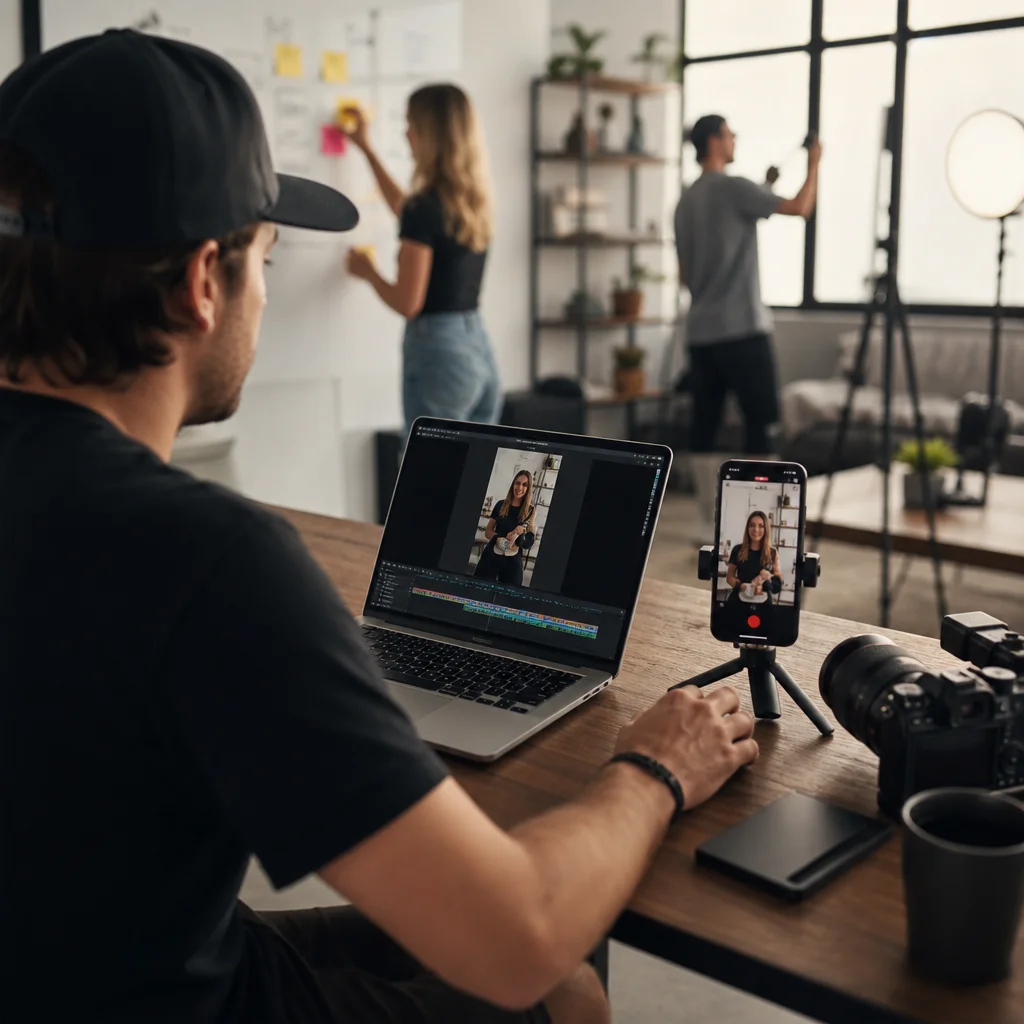
The core problem isn’t access to cameras or editing software. It’s that short-form video requires a different production mindset than long-form or traditional advertising. A 15-second reel must grab attention in the first frame, tell a coherent story, and compel action all within the time it takes someone to scroll past. Most in-house teams treat it as a secondary content type, shooting it with leftover time and budget after “real” projects are done.
Cinematic quality compounds this challenge. Clients see polished brand videos on YouTube or TikTok and want that look, but they don’t understand the production infrastructure required. Lighting, sound, color grading, and pacing all demand intentional choices. Skip these, and your content blends into the noise rather than standing out.
The consequence: brands invest in content creation but see minimal engagement or lead flow. They’re competing against studios and influencers without the production capabilities to win that competition.
The Content Gap Between Platforms and Performance
There’s a disconnect between what platforms reward and what actually moves sales. Instagram Reels favor entertainment value and watch time. TikTok’s algorithm gravitates toward relatability and trend adoption. LinkedIn prioritizes educational and thought-leadership content. Yet most brands produce one style of video and distribute it everywhere, expecting the same results.
This platform gap is where many short-form strategies fail. A snappy product demo might crush on TikTok but fall flat on LinkedIn. Conversely, a customer testimonial optimized for LinkedIn may feel too formal for Instagram.
We’ve also seen the performance gap widen. Posting video alone doesn’t drive conversions anymore. Organic reach has declined across every major platform. Without paid amplification, your content reaches only a small fraction of your followers, regardless of quality. Brands notice views flatline and assume their content isn’t good enough, when the real issue is distribution strategy.
The bridge between these gaps requires understanding your audience on each platform, adapting your video assets accordingly, and pairing organic content with strategic paid campaigns to ensure qualified prospects actually see your work.
How We Build Cinematic Stories Into Short-Form Formats
Cinematic storytelling in 15 to 60 seconds means every frame serves the narrative. We start by identifying the emotional hook and the conversion goal. Are we building brand awareness, showcasing a service benefit, or driving a specific action? The goal shapes everything downstream.
Our approach layers visual quality with narrative simplicity. We use:
- Professional lighting setups that create depth and mood, not generic flat lighting
- Intentional color grading that reinforces brand identity and viewer emotion
- Sound design and music that guide pacing and emotional arc
- Composition and framing that direct the viewer’s eye through the story
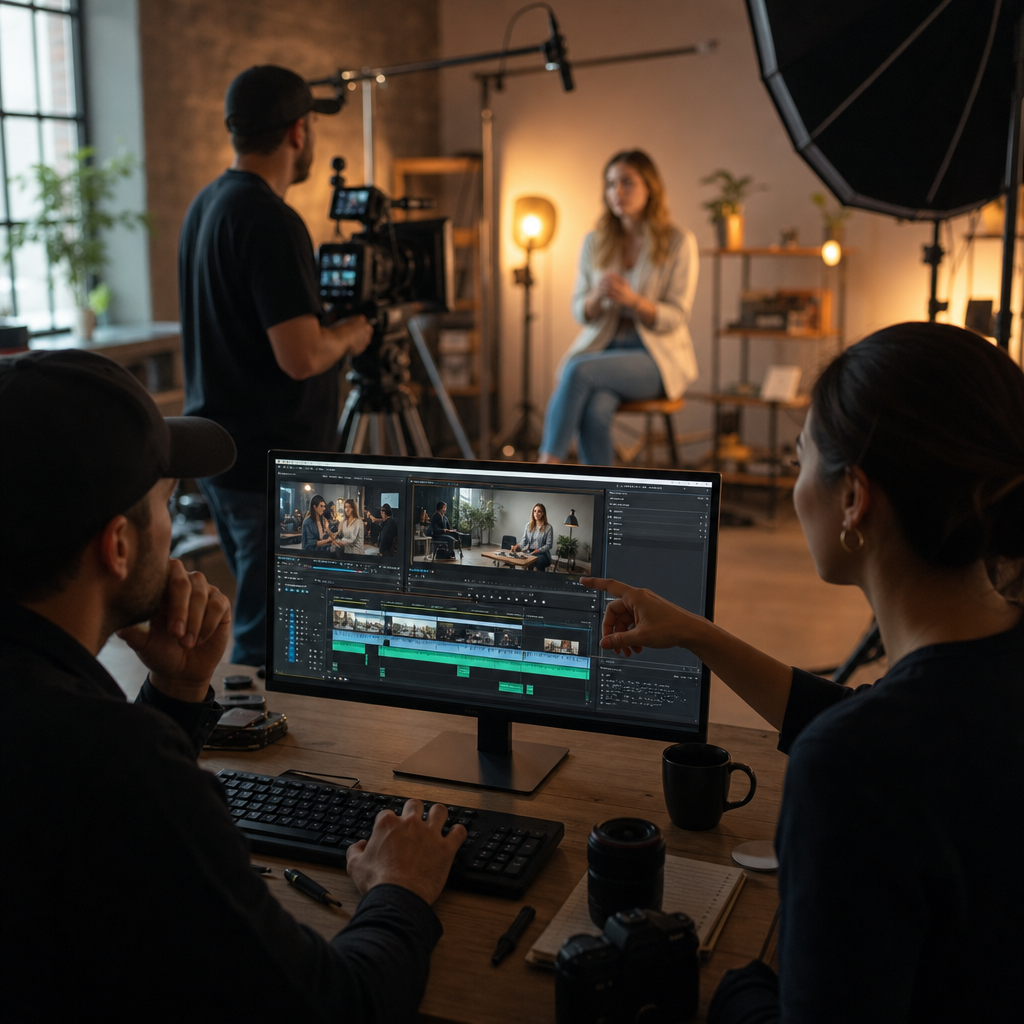
Where many studios lose cinematic quality in short-form is by compressing professional production into faster timelines. We don’t do this. Instead, we write tighter scripts, shoot with more purposeful takes, and edit for maximum impact per second rather than maximum footage per day.
One concrete example: a service-based brand selling high-ticket consulting. Instead of a talking-head explaining their process, we showed the client’s client in their environment, facing a problem, then showed the transformation. Same information, exponentially more engaging. The video drove 3x higher click-through rates than their previous self-produced content.
Our Studio Process: From Concept to Conversion
We begin with strategy, not production. Before a single frame is shot, we map out the content roadmap: which platforms, which formats, what audience segments, and what business outcome each video addresses. This prevents the common trap of producing content first and figuring out how to use it later.
The production workflow looks like this:
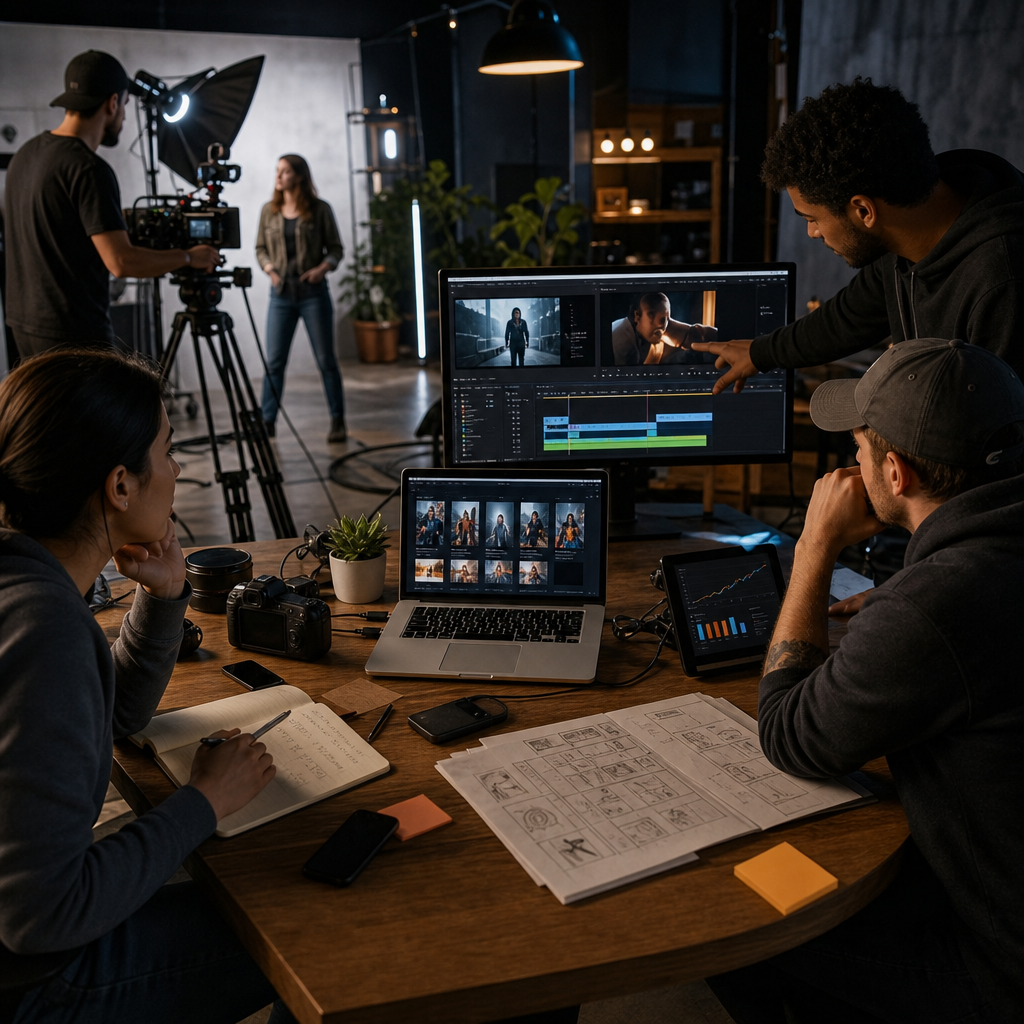
- Script and storyboard development – We write lean scripts optimized for the format and platform, with visual treatments that signal quality and cinematic value.
- Pre-production planning – Location scouting, talent briefing, equipment checklist, and shot list. Detailed planning reduces on-set friction and wasted takes.
- Shoot day – Cinematic cameras, professional lighting rigs, and multi-angle coverage. We capture far more than the final 30 seconds because editorial choices in post are what create the final story.
- Post-production – Color grading, sound design, motion graphics, and platform-specific exports. Each platform gets optimized dimensions, caption positioning, and pacing.
- Performance integration – We embed calls-to-action, lead magnets, or product links directly into the video file or caption strategy, connecting content to conversion systems.
This process takes longer than DIY content production. It’s intentional. The difference shows in engagement metrics and, more importantly, qualified lead volume.
Integrating Video With Your Paid Advertising Strategy
Short-form video’s real power emerges when paired with paid media. Organic reach alone rarely justifies production investment. Paid amplification is the multiplier.
We structure this by matching video creative to the campaign objective. Awareness campaigns feature brand storytelling and product benefits. Consideration campaigns highlight customer outcomes and case studies. Conversion campaigns emphasize offers, scarcity, or social proof.
The video itself is the asset, but the paid strategy determines reach. We manage campaigns across Meta platforms (Facebook, Instagram, Reels) and YouTube, where budget allocation, audience targeting, and bidding strategy amplify your best-performing content to the right prospects at the right time in their buyer journey.
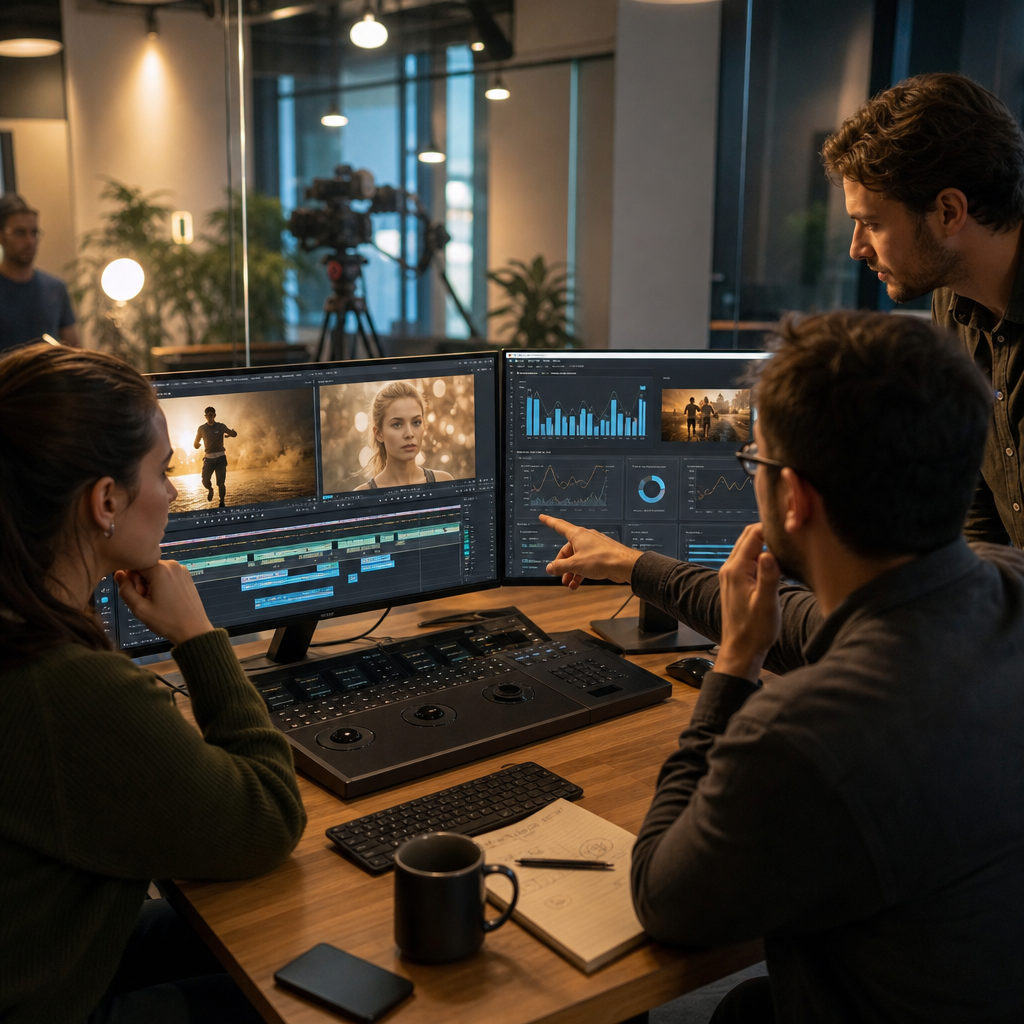
One critical detail: video performance in paid campaigns often surprises brands. A 6-second intro that seemed risky in organic performs well in ads because the audience is expecting short attention spans. A testimonial that underperformed organically might convert beautifully when paired with a specific audience segment and offer. We test, measure, and optimize toward these insights.
Turning Viewers Into Qualified Leads
Video views are vanity metrics without conversion infrastructure. We design our content to funnel viewers toward lead capture or sales actions based on your business model.
For service-based brands, this typically means a lead form or consultation booking link in the video caption or landing page. For e-commerce, it’s a product link or special offer code. The video builds credibility and desire; the conversion mechanism completes the transaction.
We also layer in platform-native features. Instagram Reels can use the “Shop” tab. YouTube video cards promote related products or links. LinkedIn videos can drive to a landing page. Each platform has mechanics we leverage to reduce friction between viewing and conversion.
The data matters more than vanity metrics. We track click-through rate, form submission rate, and cost per lead alongside video views. A video with fewer views but higher conversion rate is more valuable than the opposite. Optimizing toward this reality shifts production and distribution decisions significantly.
Technology and Tools We Use in Our Studio
Our studio runs on professional-grade equipment paired with workflow software that connects production to performance tracking.
Cameras include cinema-focused bodies that capture high-quality color and dynamic range. Lighting systems provide directional, fill, and accent light rather than relying on natural light alone. Audio gear ensures clean dialog and room tone. Color grading workstations with reference monitors ensure consistent, professional finishes.
On the software side, we use editing platforms that support high-resolution timelines and efficient collaboration. Analytics dashboards track video performance across platforms in real time, feeding insights back into production decisions. CRM and marketing automation systems connect video views to lead data, showing which content drives actual business results.
The technology enables speed without sacrificing quality. Professional tools reduce render times, enable rapid iteration, and provide the precision that separates polished content from rushed content.
Real Results: How Our Video Approach Drives Growth
The measurable impact varies by business model, but patterns emerge. Multi-location service brands typically see 25-40% increases in qualified lead volume within the first three to four months of consistent video production and paid amplification. E-commerce brands report 15-30% improvements in cost-per-acquisition when video is integrated into their advertising mix.
One client, a fitness franchise, invested in short-form video production across Instagram and TikTok paired with Meta ad campaigns. Within two months, membership inquiries increased by 35%, and the cost per inquiry dropped by 20% because video testimonials and transformation content proved more persuasive than static ads. They’ve since scaled production to a consistent weekly cadence.
Another client, a B2B consulting firm, shifted from LinkedIn article publishing to cinematic case study videos. Watch time increased 3x, and inbound leads from video grew from near zero to 30% of their monthly pipeline. The video content positioned them as premium and results-driven versus competitors still using slide decks.
View our case studies to see specific examples and the metrics behind them.
Getting Started With Professional Short-Form Content
If your brand is producing content but not seeing results, the issue is likely one of three: quality that doesn’t stop the scroll, distribution without paid amplification, or conversion infrastructure that doesn’t exist.
Start by auditing your current content. Which videos drive actual clicks or leads? What do they have in common? Usually, it’s production quality, clear storytelling, or an obvious next step. Double down on those patterns.
Next, commit to a content rhythm. One or two pieces of cinematic short-form video per week across your main platforms, supported by paid budget, will show measurable results within 60 to 90 days. Consistency matters more than sporadic hero content.
Finally, link content to business outcomes. Track which videos drive leads, inquiries, or sales. This data guides your next production cycle and proves ROI to stakeholders.
We’re here to handle production, strategy, and integration so your team can focus on converting prospects into customers. Reach out to discuss your brand’s short-form video roadmap and how we can accelerate your growth.
Contact us today for a free consultation to see how we can help you grow your business.
Frequently Asked Questions (FAQ)
How do we ensure our short-form videos perform on multiple platforms?
We build every video with platform-specific requirements in mind, whether that’s Instagram Reels, TikTok, YouTube Shorts, or LinkedIn. Our studio process includes testing different aspect ratios, caption placements, and pacing strategies before we finalize content. Then we integrate performance data from your paid advertising campaigns to refine what works for your specific audience.
What’s included when we handle video production and paid advertising together?
We create the cinematic content first, then strategically place it across Meta and Google platforms with targeting built around your ideal customer profile. This integration means we’re not just producing videos in isolation—we’re designing them to perform within a paid strategy that converts viewers into qualified leads. We monitor both the creative performance and the conversion metrics so we can continuously improve results.
How quickly can we start producing videos for our brand?
We typically begin with a strategy session to understand your business goals and audience, which takes about a week. Production timelines depend on scope, but most short-form video projects are completed within 2-3 weeks from concept approval. We can discuss your timeline and deadlines during our initial consultation to set realistic expectations.