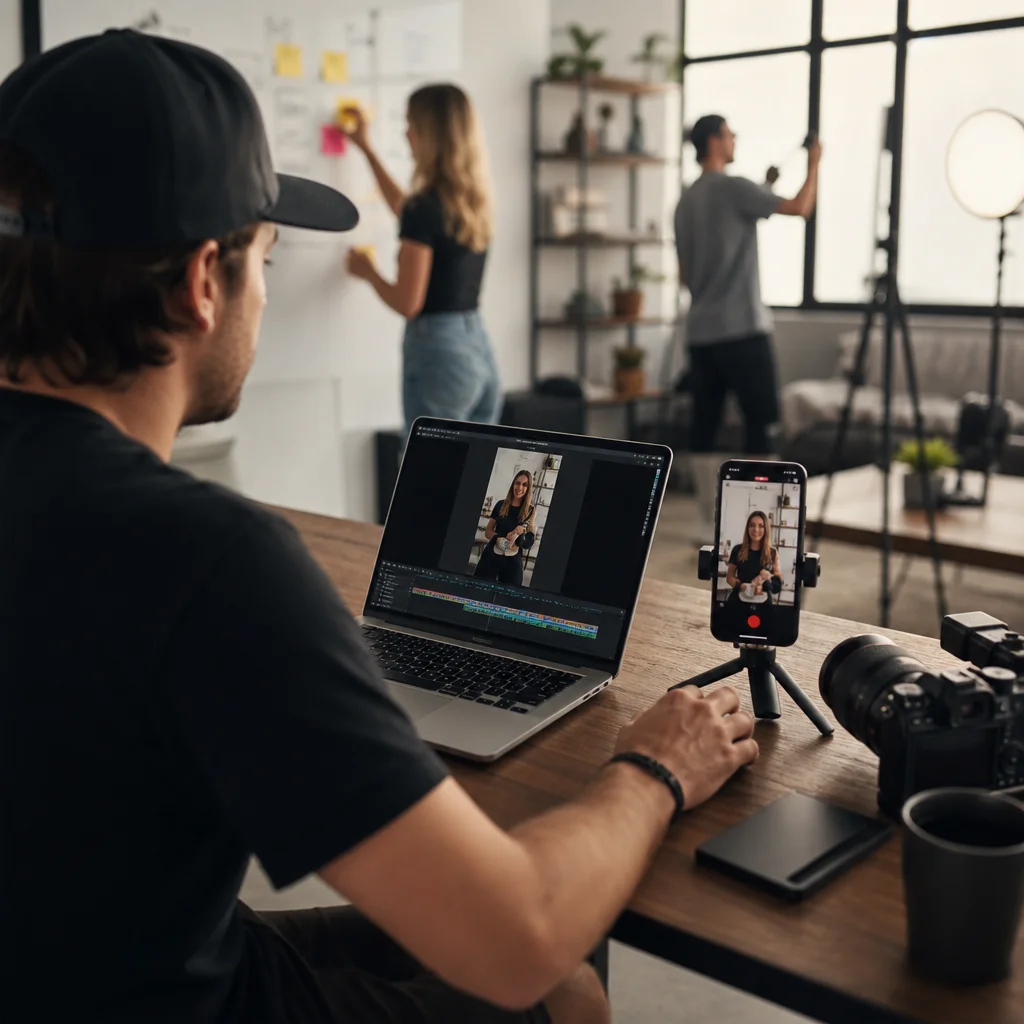
The Multi-Location Brand Challenge: Why Video Production Becomes Unmanageable
Running a multi-location business means you’re juggling dozens of moving parts. Each location has its own manager, its own audience nuances, and its own content needs. When you try to produce video content without a system, you end up with a scattered mess: one location shoots phone videos, another hires a local videographer, a third goes quiet on social media entirely.
The real problem isn’t the number of locations. It’s the absence of a repeatable process. Without standardized guidelines, consistent quality suffers, messaging fragments, and your brand doesn’t feel cohesive. Worse, each location wastes time figuring out what to film, how to film it, and where to post it. That’s resources and energy spent on logistics instead of strategy.
We’ve seen this firsthand with service-based brands and multi-unit operators. The owners we work with often tell us their biggest frustration is that video content takes forever to produce, feels expensive to manage across locations, and doesn’t deliver the lead volume they expected. They’re not wrong. Without the right framework, scaling video production becomes a bottleneck that actually slows growth.
How Fragmented Content Systems Cost You Time and Revenue
When your content production lives in silos, you pay a hidden tax across several dimensions.
Time waste multiplies. Each location restarts from zero. They debate what to film, negotiate with local vendors, re-learn platform best practices, and miss posting schedules. A manager might spend 5 hours on content tasks that could take 30 minutes with clear direction.
Quality becomes inconsistent. One location produces polished, on-brand short-form content. Another posts blurry clips or off-brand messaging. Customers notice. Trust erodes. Your brand positioning weakens across markets.
Lead generation stalls. Fragmented content doesn’t amplify; it dilutes. You’re spending on paid advertising and social management, but content doesn’t align with your ad strategy or SEO foundation. Viewers see disconnected messages. Conversions drop.
Budget confusion spreads. Without visibility into what works where, you can’t optimize spend. You might pour money into underperforming content while underfunding high-converting creatives. Marketing becomes reactive instead of strategic.
Scaling becomes impossible. Adding a new location means retraining, re-explaining, and essentially starting your content problems over again. Growth literally gets harder the bigger you get.
The cost isn’t just financial. It’s the opportunity cost of not having a steady stream of qualified leads, and the management bandwidth consumed by coordination chaos.
Our Integrated Short-Form Video Approach for Distributed Brands
We’ve built our practice around the reality that multi-location brands need both consistency and local relevance. Our approach starts with a centralized video production strategy paired with distributed execution support.
Here’s what that means in practice. We develop a content framework specific to your business model. For a service brand, that might be “location spotlight” videos showing your team in action, local customer testimonials, and educational content answering common questions. For a retail or franchise operation, it could include product showcases, behind-the-scenes clips, and location-specific promotions.
We then provide locations with templates and workflows. Each location knows exactly what types of videos to shoot, how long they should be, what messaging to include, and how to film on a smartphone or simple camera without needing to hire a production crew. The bar for “good enough” becomes achievable for a local manager with a smartphone.
Our team handles the heavy lifting: we shoot anchor content, edit all submitted footage into cinematic short-form videos, and optimize them for each platform. Locations contribute raw material and direction; we ensure professional quality and brand consistency across the board.
This hybrid model lets you leverage local knowledge while maintaining the cinematic, polished look that builds trust and stops scrolls. Locations stay engaged in the process without becoming bottlenecks.

Building a Repeatable Video Production Framework Across Locations
A repeatable framework does four core things: it defines what to film, shows how to film it, establishes a submission process, and creates accountability.
Content themes by week or month. Map out your annual content calendar at the corporate level. Define what you want to showcase: customer stories in January, new service launches in Q2, seasonal promotions, team spotlights, educational content. Give each location a simple brief for each week or month. They don’t have to be creative; they follow a template.
Shot lists and style guides. Provide a one-page guide showing the types of shots that work for your brand. Close-ups of product or service delivery, wide shots of the location, talking-head testimonials, process videos. Show examples. Explain lighting preferences and audio basics. Make it simple enough that a manager with a phone can execute it.
Submission and workflow process. Create a simple system (Google Drive folder, Asana, or similar) where locations upload raw footage with metadata: location name, date, what was filmed, any relevant context. You review submissions weekly and incorporate them into your editing workflow.
Feedback and iteration. Track which content performs best. Share wins with locations so they understand what resonates. This creates positive reinforcement and continuous improvement without extra overhead.
We see the biggest wins when locations know their submission deadline (like Thursday at 5 PM) and receive edited videos back by the following Monday. That rhythm makes it a habit, not a burden.
Social Media Management and Content Distribution at Scale
Once you have a steady flow of quality video content, distribution becomes strategic rather than scrambled.
A centralized social media management approach lets you coordinate posting across locations while maintaining their local presence. You might post brand-wide content on Monday mornings, location-specific content on Wednesdays, and user-generated or customer content on Fridays. Consistency builds audience trust and improves algorithm performance.
We handle community management, responses, and engagement across all location accounts. That means faster response times to customer questions, consistent messaging, and a unified brand voice. Local managers don’t feel like they’re managing social media; they’re contributing content while we manage the platform strategy.
Paid amplification becomes more efficient too. Instead of each location running small, fragmented ad campaigns, we can test creative variations, identify top performers, and scale winners across multiple locations or markets. A testimonial video that drives conversions in Denver can run in Austin with minimal adjustment. You’re not reinventing campaigns; you’re leveraging what works.
Turning Video Content Into Qualified Leads and Sales
Video content is only valuable if it moves people toward a decision. Our approach ties short-form video directly to your lead generation and sales process.
Every video has a purpose. Some build brand awareness and stop scrolls. Others educate and build trust. Still others have a direct call to action: book a consultation, visit the location, call for a quote. We make sure the content mix supports your funnel.
Short-form videos work best when they’re distributed across platforms and paired with targeted advertising. A 15-second testimonial video on TikTok and Instagram Reels builds awareness. The same testimonial, extended to 30 seconds with a clear CTA, becomes a Facebook or Google ad driving form submissions. That’s the same content, strategically deployed.
We also ensure video content supports your website conversion funnel. Landing pages with embedded video typically see higher engagement and form submission rates than text or static images alone. A video introduction from your team or location builds credibility and reduces friction at the consideration stage.
The key is alignment: content strategy, paid advertising strategy, and lead capture systems all working in concert.
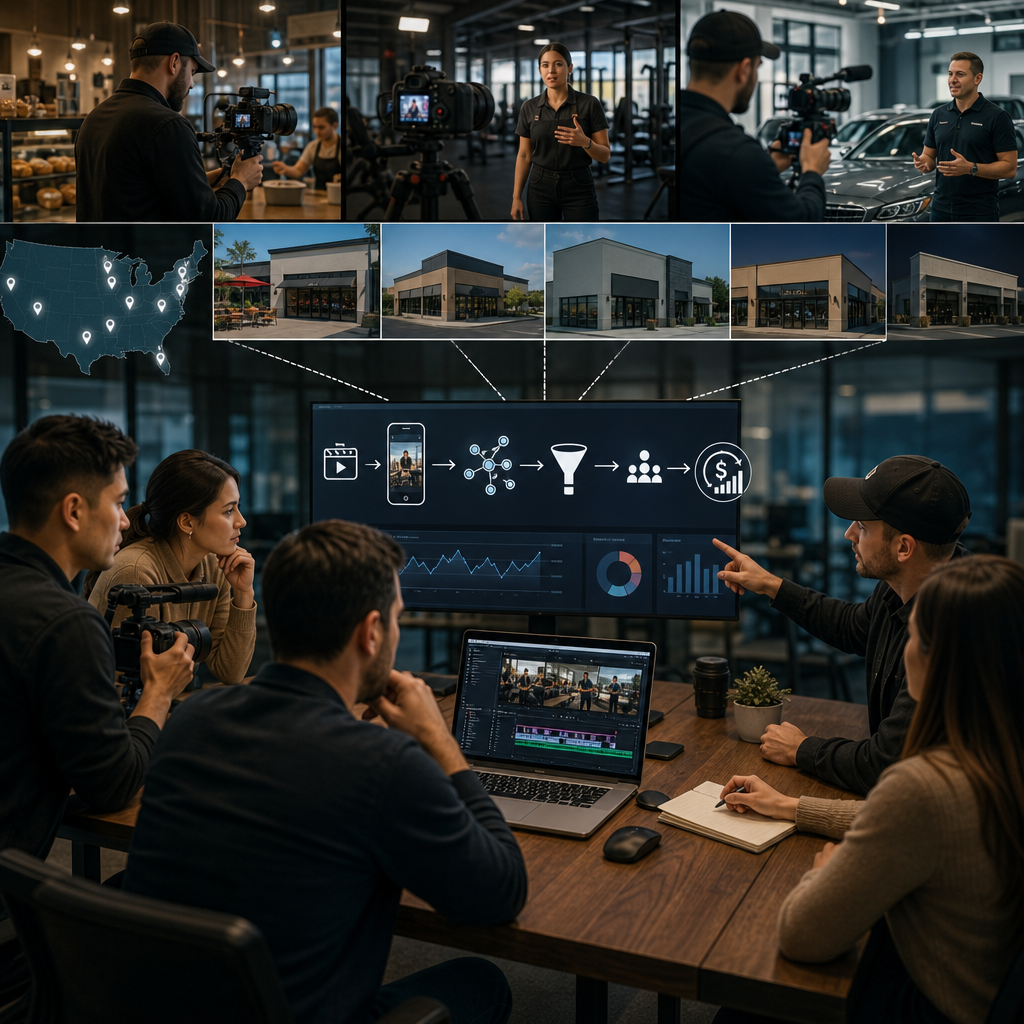
AEO and SEO Optimization for Multi-Location Video Content
Search visibility matters for multi-location brands, and video is a powerful signal. We optimize for both traditional search and AI-powered search results.
Video SEO basics. Each video gets a strategic title, description, and transcript. We include location keywords where relevant (like “plumbing service in Denver”) without forcing it. Video transcripts help search engines understand your content and improve accessibility. Closed captions serve both functions.
Platform-specific optimization. YouTube videos get playlists, cards linking to related content, and metadata that helps YouTube recommend them to relevant viewers. TikTok and Instagram videos get hashtags and captions that improve discoverability. Each platform has its own rules; we follow them systematically.
Local SEO for multi-location brands. Video content featuring specific locations can reinforce local SEO signals. A video introduction from your Chicago office, optimized with Chicago keywords and posted from the Chicago location, signals to Google that you have an active presence there. Multiply this across 10 or 20 locations and your local search visibility compounds.
AI-powered search readiness. As search tools increasingly pull information from video content, having high-quality, well-transcribed video makes your brand visible in these emerging channels. This is already happening with Google Search and will only grow more important.
Case Study: Streamlining Content Production Across Multiple Markets
One of our clients operates a service business across eight locations. They were spending roughly 40 hours per week on content-related tasks: managers filming, editing, debating what to post, coordinating with a part-time social media person. Despite the effort, they weren’t generating consistent leads from social media.
We implemented a simplified workflow. Each location submits 3-4 pieces of raw footage per week following a shot list we provided. That took maybe 2-3 hours per location per week. We handle all editing, posting, paid amplification, and community management from our end.
Within three months, they had a steady stream of polished short-form content across all platforms, optimized for both organic reach and paid advertising. Lead volume from digital channels increased 60% within six months. More importantly, the time burden on location managers dropped to roughly 2 hours per week per location, freeing them to focus on customer service and sales.
Total cost was lower than their previous scattered approach because they eliminated waste and inefficiency. Quality improved dramatically because consistent execution and professional editing replaced amateur efforts.
Measuring ROI from Your Scaled Video Production Efforts
You can’t optimize what you don’t measure. We track video performance across several dimensions.
Content performance metrics. View count, engagement rate, click-through rate, and watch time. Which videos drive the most engagement? Which types of content get shared? This reveals what resonates with your audience and informs future production.
Lead generation attribution. Which videos appear in the customer journey before a form submission or phone call? We track this through UTM parameters, landing page analytics, and direct customer feedback. You’ll see which content drives actual leads.
Paid advertising ROI. Cost per lead and cost per acquisition from video-based ad campaigns. This is the most concrete measure: are your video ads driving profitable customer acquisition? If not, we adjust creative, audience, or placement.
Brand lift metrics. Website traffic, social media growth, and search visibility trends. These indicate whether your video strategy is building long-term brand presence, not just short-term clicks.
Location-level performance. Which locations are submitting content consistently and engaging their local audiences? This identifies both best practices and locations that need support.
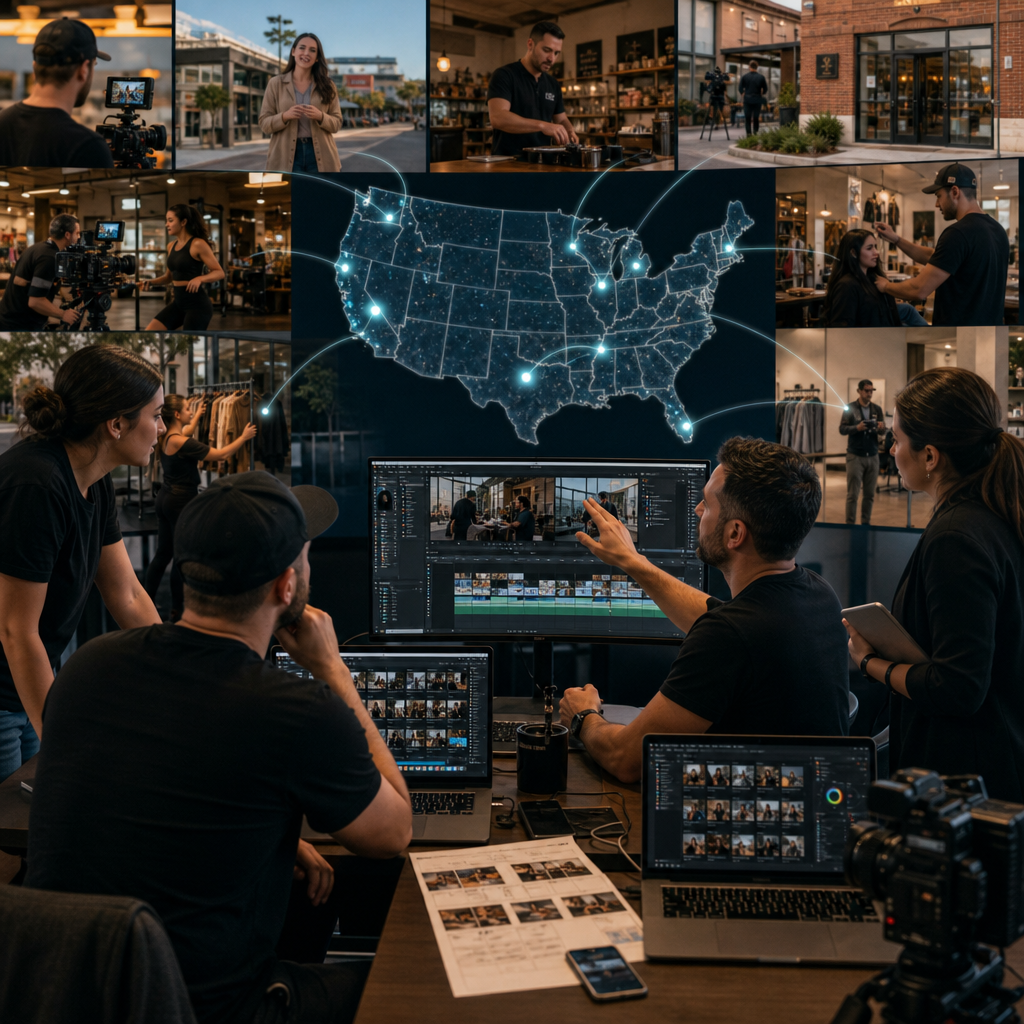
We provide dashboards showing these metrics by location, by content type, and by marketing channel. You can see exactly where video investment is working and where adjustments are needed.
Getting Started With Your Efficient Video Blueprint
The first step is clarity: understanding your content needs, current capability, and target audience across locations.
Start with an audit. What content are your locations currently producing? How much time does content take per location per week? What types of videos drive the most engagement? What’s missing?
Next, draft a simple content calendar for the next 90 days. Define 3-4 content themes (testimonials, educational, location spotlight, promotional). Assign one theme per week. Make it repeatable.
Then build your submission process. Create a simple form or folder where locations upload raw footage. Keep the bar low: phone video is fine, natural lighting is fine. Your job is to make it easy for locations to contribute.
Finally, establish your posting and amplification rhythm. Decide which content goes to which platforms and when. Map out which videos get paid amplification and what your ad spend allocation looks like.
We’re here to help you design this blueprint and execute it. We’ve done this for dozens of multi-location brands, and the pattern is consistent: clear systems, professional production, strategic distribution, and consistent measurement drive both leads and efficiency.
If your multi-location brand is ready to build a scalable video content engine, let’s talk about what this could look like for your specific business.
For further reading: Social content consistency.
Contact us today for a free consultation to see how we can help you grow your business.
Frequently Asked Questions (FAQ)
How do we handle video production across multiple locations without creating operational chaos?
We build a repeatable production framework that standardizes your creative direction while allowing each location to execute efficiently. Our team creates detailed production templates, brand guidelines, and approval workflows that let your locations shoot locally while maintaining consistent cinematic quality. This approach cuts production time in half compared to centralizing everything, and we manage the entire post-production and distribution pipeline from one hub.
What’s the difference between just posting videos and actually turning them into leads and sales?
We don’t stop at creating great content. We connect your short-form videos to lead generation systems through strategic meta descriptions, landing page optimization, and audience segmentation that guides viewers toward actual conversion points. Our AEO optimization ensures search engines surface your video content to people actively looking for what you offer, and we track exactly which videos drive qualified leads so we know what’s working.
Can we measure whether our scaled video production investment is actually paying off?
Yes, and we track this from day one. We set up conversion tracking across your social channels and website so we can show you exactly how many leads and sales came directly from video content at each location. We report on cost per lead, conversion rates, and ROI so you see the real business impact, not just vanity metrics like views or likes.