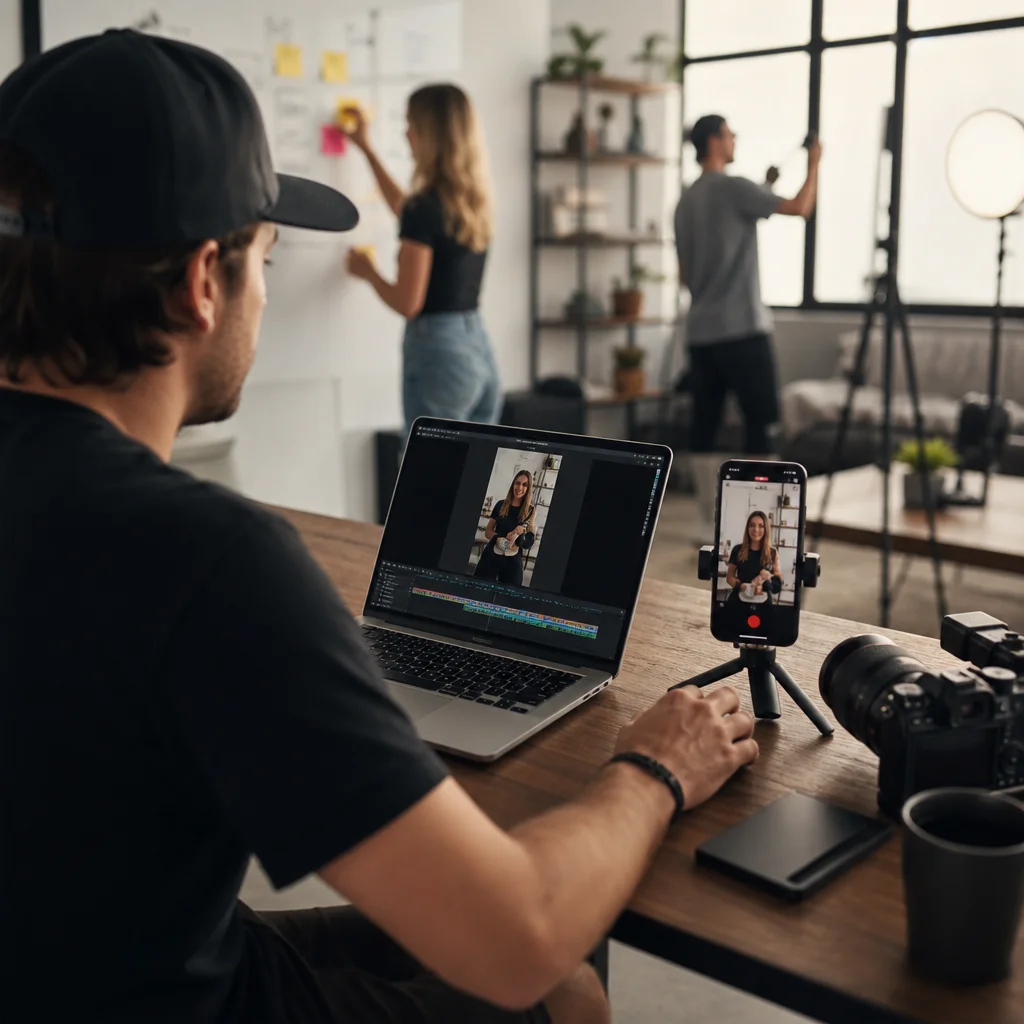
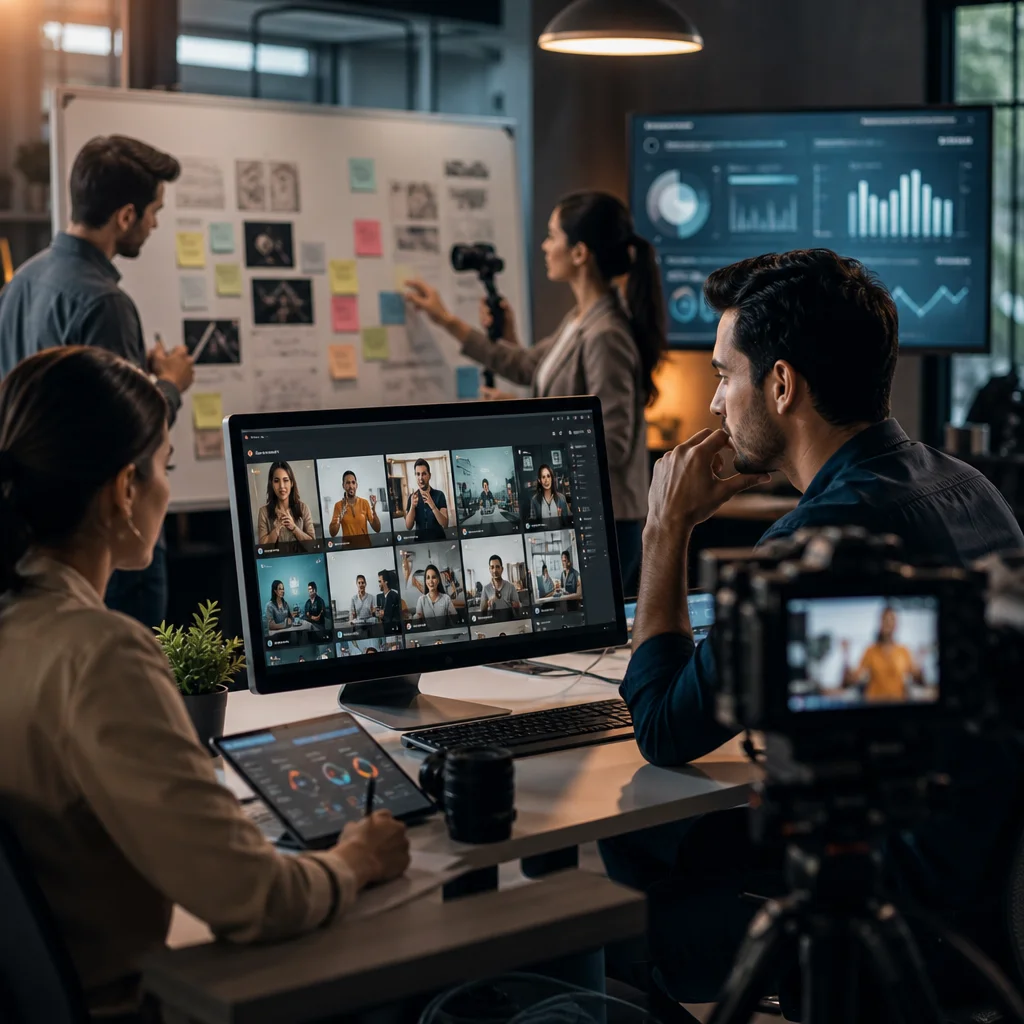
Why Short-Form Video Dominates Modern Marketing
Video consumption has fundamentally shifted. Users scroll past static images without a second thought, but cinematic short-form content stops them mid-feed. On platforms like Instagram Reels, TikTok, and YouTube Shorts, video now accounts for over 80% of all internet traffic, and that number continues climbing.
Here’s what makes short-form video different from traditional content: it combines narrative tension, visual storytelling, and brand messaging into a compact window where you have roughly two seconds to prove your content is worth watching. That constraint forces intentionality. Every frame serves a purpose.
We’ve observed that brands using professional short-form video see engagement rates 3-5x higher than static posts, and more importantly, they generate qualified leads at a significantly lower cost per acquisition. The reason isn’t magic; it’s psychology. Motion captures attention. Quality cinematography builds trust. Strategic messaging converts interest into action.
What to do next: Audit your current content mix. If less than 30% of your posts are video, you’re likely missing the attention economy entirely.
The Problem With Generic Video Content
Not all video content performs equally. We consistently see brands invest in video production only to watch those videos underperform across their marketing channels. The culprit is almost always the same: generic execution.
Generic video looks like a standard talking-head interview shot on a phone camera, or low-effort B-roll assembled hastily in editing software. Generic video treats cinematic short-form production as though it’s just “filming something.” It misses the production fundamentals that separate content people stop to watch from content they scroll past.
The specific problems we identify in most generic videos include poor lighting that makes subjects appear washed out or unflattering; shaky or unmotivated camera movement; weak audio that forces viewers to increase volume or move on; and worst of all, no clear narrative arc or emotional hook. A five-second product demo without storytelling context doesn’t compel action; it just occupies screen space.
When video doesn’t convert, brands blame the platform or their audience. The actual issue was in the production. [Cinematic short-form content performs differently across paid advertising systems], and that difference starts long before the ad runs.
What to do next: Watch your three best-performing videos and your three worst-performing videos side-by-side. Document what changed between them: lighting, pacing, sound design, or story structure.
Our Creative Strategy Framework
We approach every project by starting with strategy, not equipment. Strategy determines what we shoot, how we shoot it, and where it runs.
Our framework begins with clear business outcomes. Are we driving brand awareness? Generating qualified leads? Promoting a specific product or service? The goal shapes every decision downstream. A lead-generation video uses different pacing, calls-to-action, and emotional triggers than a brand-awareness piece.
Next, we define the target viewer at a granular level. Age, platform preference, pain point, and stage in the buying journey all matter. A video resonating with a 28-year-old Instagram user on a mobile device may completely miss a 45-year-old LinkedIn viewer.
From there, we map the narrative structure. Every professional short-form video we produce follows a proven arc: hook (the first 1-2 seconds that stop the scroll), tension or curiosity (why keep watching), demonstration or story (the core message), and resolution (the action we want viewers to take). Without this arc, you’re just filming.
Finally, we identify the production elements required to execute that narrative: locations, props, talent, lighting setups, and camera movements. This is where cinematic quality enters. Professional equipment combined with intentional technique elevates the entire piece.
What to do next: Identify one key business outcome you want video to deliver this quarter. Write it down in one sentence. That becomes your north star for all production decisions.
Pre-Production: Planning Your Cinematic Vision
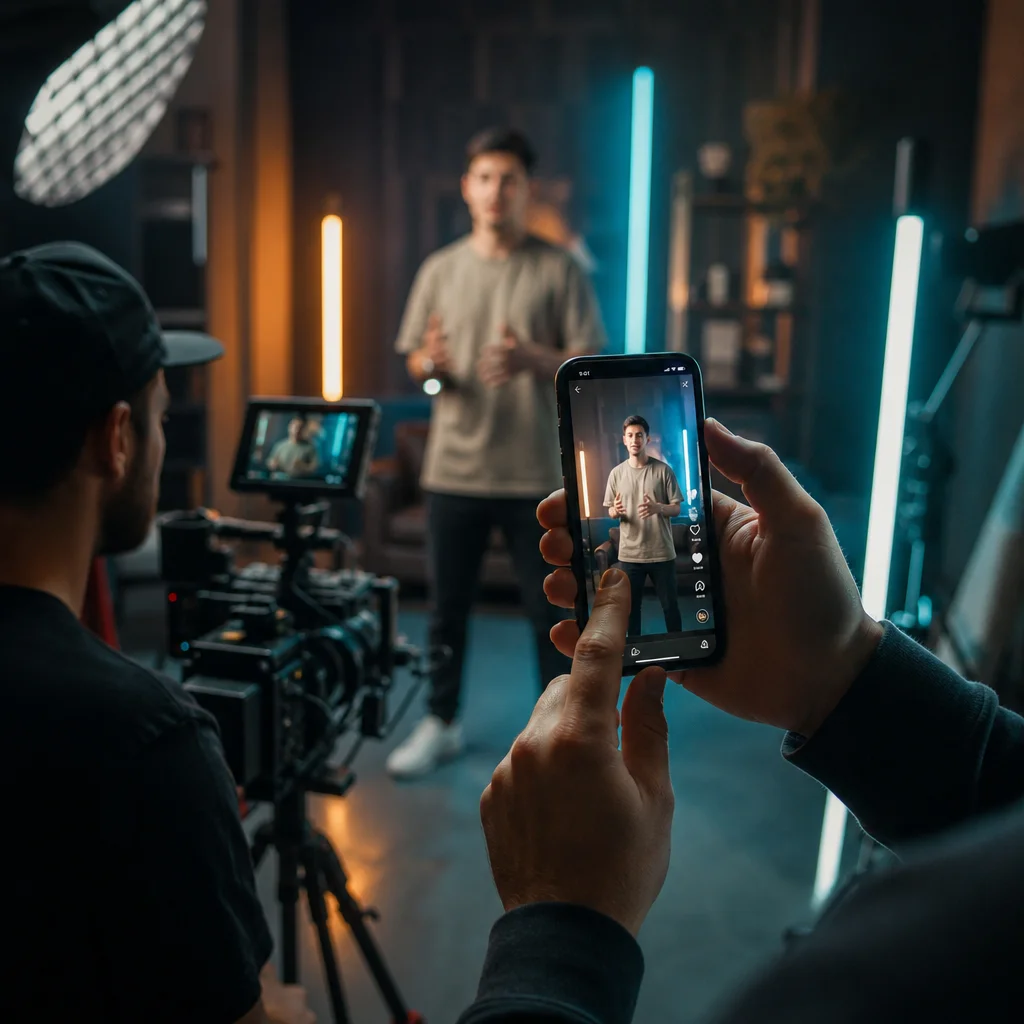
Pre-production is where exceptional videos are actually built, even though most people think the magic happens during filming.
We create detailed shot lists and storyboards before anyone touches a camera. This planning reduces on-set confusion, saves production time, and ensures we capture every element needed in editing. A storyboard is simply sketches or rough descriptions of each shot in sequence. It doesn’t need to be artistic; it needs to be clear.
Location scouting matters more than most brands realize. Cinematic quality relies heavily on environment. We evaluate natural light availability, background depth, spatial dimensions, and whether the location reinforces or distracts from your brand message. A service-based business shot in a bright, professional office reads differently than the same business filmed outdoors in natural light.
Talent preparation is equally critical. Whether you’re featuring your founder, a team member, or a professional actor, we walk through the script, discuss the emotional tone, and practice on-camera delivery before rolling. Authentic delivery is taught; it doesn’t usually happen by accident during take one.
We also plan the technical requirements: camera settings, lens choices, lighting kit needed, and audio capture method. Cinematic short-form video typically requires external microphones (onboard camera audio is almost always insufficient), intentional lighting rigs, and cameras capable of capturing in high resolution with good color science.
What to do next: If you’re planning a video shoot, invest 2-3 hours in storyboarding before production day. Map out 8-12 key shots you absolutely need to capture. You’ll cut production time in half.
Filming Techniques That Capture Attention
Execution transforms planning into reality, and cinematic execution relies on several foundational techniques.
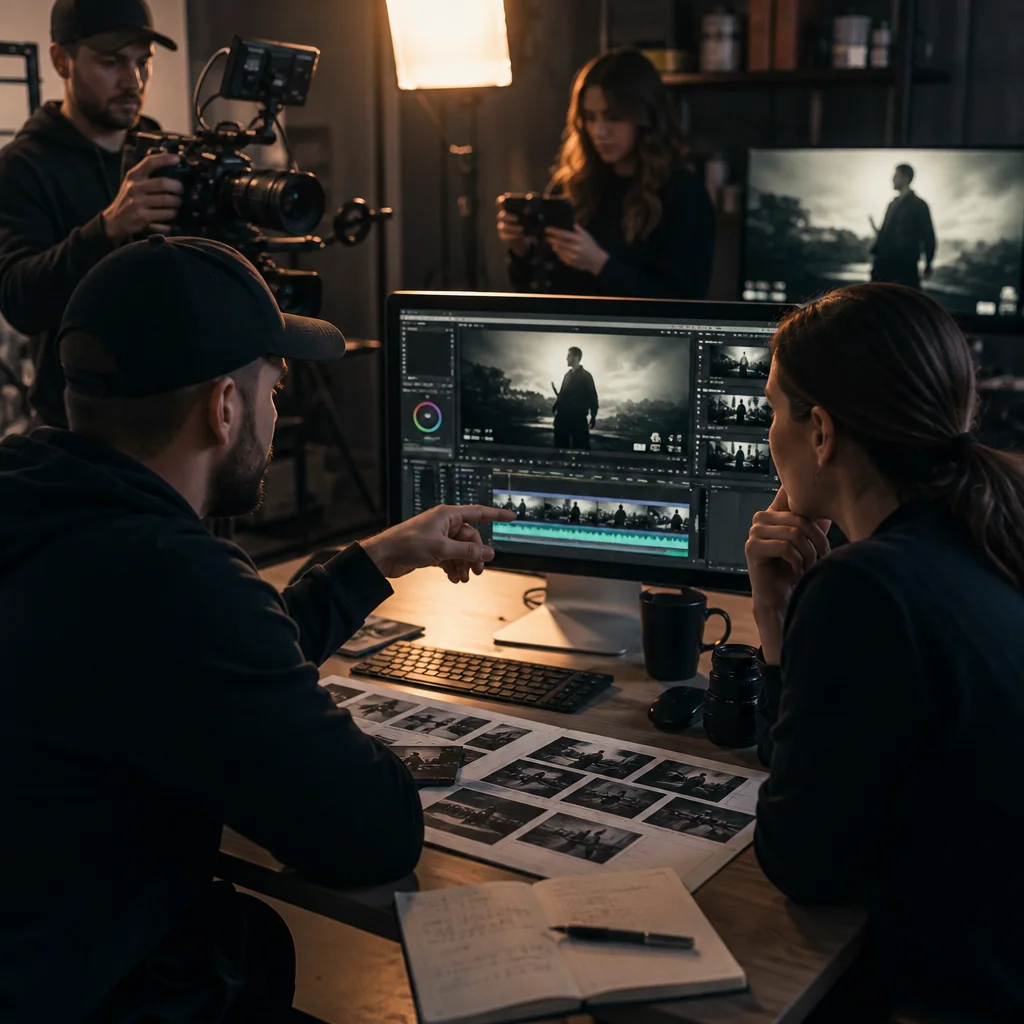
Lighting is non-negotiable. Professional short-form video uses motivated lighting, meaning light placement serves the narrative. We typically employ a three-point lighting setup: key light (the primary light source defining the subject), fill light (reducing harsh shadows), and back light (separating the subject from the background). This doesn’t require expensive cinema lighting; it requires understanding how light behaves and intentional placement.
Camera movement should be purposeful, never random. A slow push-in focuses viewer attention and increases emotional intensity. A pull-back reveals context and environment. A pan follows action or reveals information sequentially. Static shots are powerful when used strategically. The mistake most videographers make is moving the camera simply because they can.
Depth of field (the area in sharp focus) is another hallmark of cinematic production. By using longer focal lengths and wider apertures, we create shallow depth of field where the subject is tack-sharp and the background is beautifully blurred. This draw foreground attention and communicates quality.
Audio capture is genuinely the most overlooked element. We always use lavalier microphones or directional mics placed close to the talent. Wind protection, room tone recording, and backup audio tracks prevent problems in post-production. Poor audio kills otherwise beautiful footage.
What to do next: If you’re filming your next video, rent or borrow an external wireless microphone. The audio improvement alone will make your production feel substantially more professional.
Post-Production Excellence and Brand Storytelling
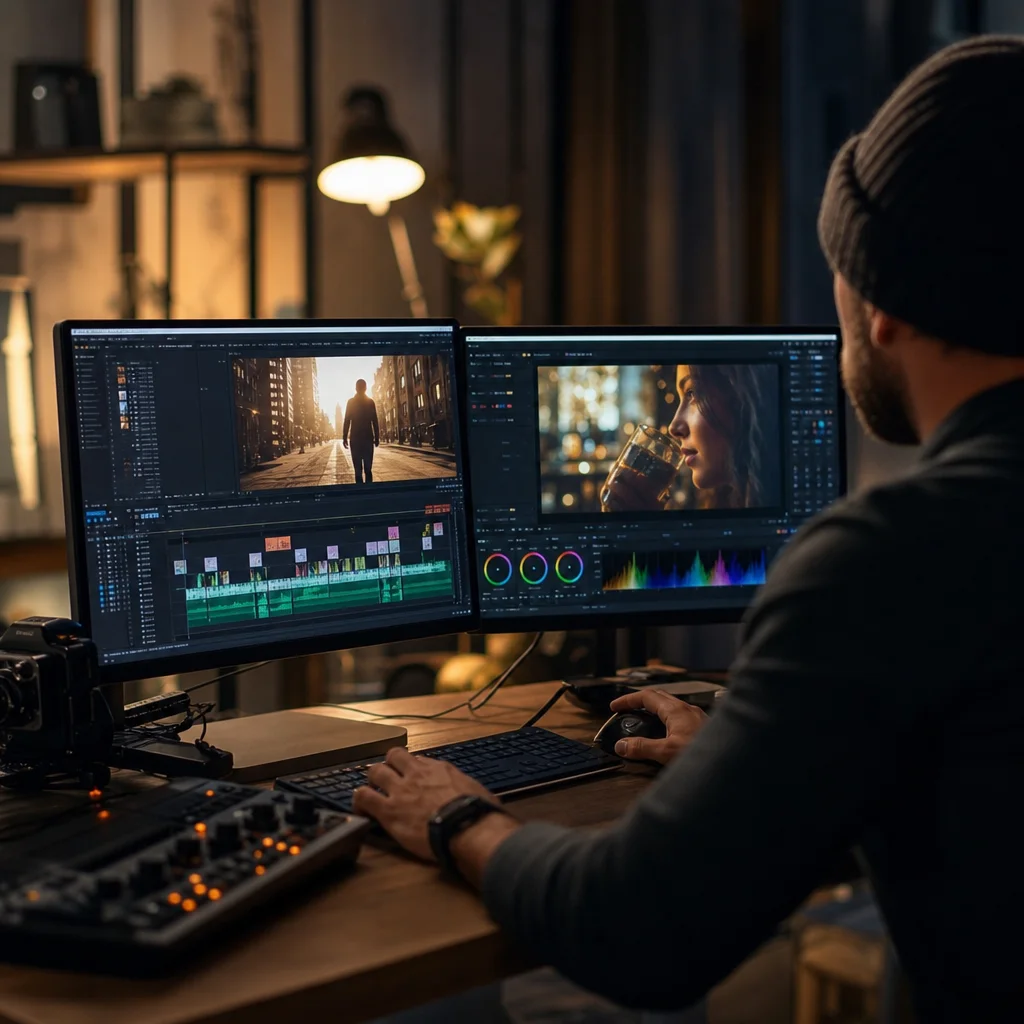
The edit is where footage becomes a story. We don’t simply arrange clips; we sculpt pacing, sound design, color, and emotional arc.
Color grading is part of brand storytelling. We apply consistent color grades across all videos so your audience learns to recognize your visual language instantly. A warm, golden grade feels different than a cool, desaturated one; both communicate brand personality.
Sound design extends beyond dialogue or voiceover. We layer in music, sound effects, and ambient audio to reinforce emotion and maintain engagement. Silence or dialogue alone typically feels flat. Strategic sound design turns competent footage into cinematic footage.
Pacing in the edit determines whether viewers stay engaged. For short-form content destined for social feeds, we usually cut tighter, with faster transitions and quicker scene changes. For longer-form content on YouTube, pacing can breathe slightly more.
Text overlays, graphics, and on-screen elements add clarity and reinforce key messages. We integrate these thoughtfully, never allowing them to distract from the core visual story. Most brands over-use text; we use it purposefully.
The final element is the call-to-action. Whether we direct viewers to your website, ask them to message you, or encourage them to visit a landing page, the CTA is clear and placed where viewers naturally expect it (usually at or near the video end).
What to do next: Before your next edit, define the emotional tone you want the video to convey in one word (inspiring, urgent, trustworthy, funny). Let that tone guide every color, music, and pacing decision.
Integrating Video With Paid Advertising Systems
Creating cinematic short-form video is just the first step. Integration with paid advertising amplifies results exponentially.
We design videos with platform-specific requirements in mind. Instagram Reels need vertical aspect ratios, TikTok thrives with native trends and sounds, YouTube Shorts performs with stronger text overlays and clear hooks, and LinkedIn favors professional context and business-relevant messaging. The same core footage can be recut for different platforms, but understanding each platform’s strengths matters.
Paid advertising systems like Meta and Google reward watch time, engagement rate, and completion rate. This means our videos are deliberately paced and hook-driven to achieve these metrics. A video that performs organically may underperform in a paid context if the hook isn’t immediate enough.
We coordinate video creative with landing page experience. If a video promises a specific outcome, the landing page must deliver on that promise within two clicks. Misalignment between video messaging and landing page experience tanks conversion rates.
[Our approach to cinematic short-form content improves Meta paid ad performance] by building native platform understanding into production from day one, not retrofitting content after creation.
What to do next: Before spending budget on video ads, test organic performance first. If a video doesn’t perform organically, paid promotion usually won’t fix it.
Lead Generation Through Visual Content
Cinematic short-form video excels at lead generation when designed specifically for that purpose. The key is embedding lead-generation strategy into the video itself, not just attaching a form to it afterward.
Lead-generation videos typically follow this structure: hook with a specific pain point your audience faces, demonstrate how your solution addresses it, build urgency or desire to learn more, then present a clear offer (free consultation, downloadable resource, demo access). This narrative arc moves viewers from awareness to action within seconds.
We strategically place clickable elements, text overlays directing to landing pages, and calls-to-action that feel natural rather than salesy. A video that feels like it’s selling aggressively triggers scroll-past behavior. A video that acknowledges a real problem and offers genuine help generates engagement.
The systems connecting video to lead capture matter equally. We ensure every video links to a properly configured landing page, tracking is set up to measure lead volume and quality, and follow-up sequences are automated. Video generates the initial interest; your system converts that interest to sales.
[Most brands fail to convert social attention into leads] precisely because they don’t integrate video content with lead-capture systems. Video alone generates awareness; video plus systems generates revenue.
What to do next: Map out the specific lead offers you want your video content to promote. For each offer, define what action you want viewers to take and where that action should happen.
How We Measure Video Performance
Measurement determines whether you’re investing in video effectively or wasting budget. We track multiple metrics depending on campaign goals.
For brand awareness campaigns, we monitor views, reach, impressions, and audience retention (how long viewers watch before dropping off). A retention curve showing 70% of viewers watching to video completion indicates strong creative resonance.
For lead-generation campaigns, we track click-through rate to the landing page, form completion rate, and cost per lead. A video generating leads at $15 per lead is dramatically more valuable than a video generating views at $0.02 per view.
For sales-focused campaigns, we connect video performance to actual revenue when possible. This requires proper tracking setup and CRM integration, but it’s the ultimate measurement of effectiveness.
We avoid vanity metrics like likes or comments unless they’re tied to business outcomes. A video with 50 genuine lead inquiries outperforms a video with 5,000 likes every single time.
Our reporting provides clear visibility into what’s working, what needs adjustment, and which elements drive the best results. From there, we optimize: pausing underperforming variations, doubling down on high-performers, and applying lessons learned to future productions.
What to do next: Identify your three most important business metrics. Ensure your video tracking setup measures these metrics, not just engagement vanity metrics.
Real Results From Our Client Campaigns
The difference between theory and practice emerges in real client outcomes. We work with multi-location service businesses and growth-focused owners across industries, and the results are consistent.
A home services company producing cinematic before-and-after videos increased qualified lead volume 240% within three months while reducing cost per lead by 35%. The videos showcased transformation quality and built trust through professional visual storytelling.
A B2B professional services firm created educational short-form videos addressing common client pain points. These videos generated 180+ qualified leads per month at a cost per lead 60% below their previous paid advertising average.
A retail brand produced product-focused cinematic videos highlighting craftsmanship and quality. Initial organic performance was strong, but paid advertising amplification drove 3.2x ROI within the first month.
These results aren’t accidents. They come from cinematic production quality combined with strategic integration into paid advertising systems and lead-generation workflows. The video itself generates attention. The system converts that attention to leads. The business model converts leads to revenue.
Your situation is likely unique, but the framework applies universally: professional cinematic production, strategic placement, integrated systems, and continuous measurement.
What to do next: Schedule a conversation about your specific business goals. We’ll evaluate whether short-form video fits your current strategy and outline the exact steps to integrate cinematic content into your marketing system. Ready to turn attention into results? Let’s connect.
For further reading: Cinematic Meta ad performance.
Contact us today for a free consultation to see how we can help you grow your business.
Frequently Asked Questions (FAQ)
How do we ensure our cinematic videos actually generate leads and sales?
We integrate our video production directly with paid advertising systems and lead generation infrastructure. Rather than creating standalone content, we design each video to work within a complete funnel that captures attention, builds trust through storytelling, and converts viewers into qualified leads through strategic calls-to-action and landing page optimization.
What makes our short-form video approach different from generic social media content?
We apply cinematic production techniques—professional lighting, color grading, sound design, and intentional pacing—to short-form formats instead of treating them as quick throwaway clips. This means your brand stands out in crowded feeds while maintaining the scroll-stopping quality viewers actually stop to watch.
Can we customize the production process for our specific business needs?
Absolutely. Our creative strategy framework starts with understanding your target customer, sales cycle, and business goals before we ever touch a camera. Whether you need product demonstrations, customer testimonials, or brand narrative content, we tailor our pre-production planning, filming approach, and post-production strategy to deliver videos that align with your actual business objectives.