What Video Production Really Is (And Why It Matters for Your Business)
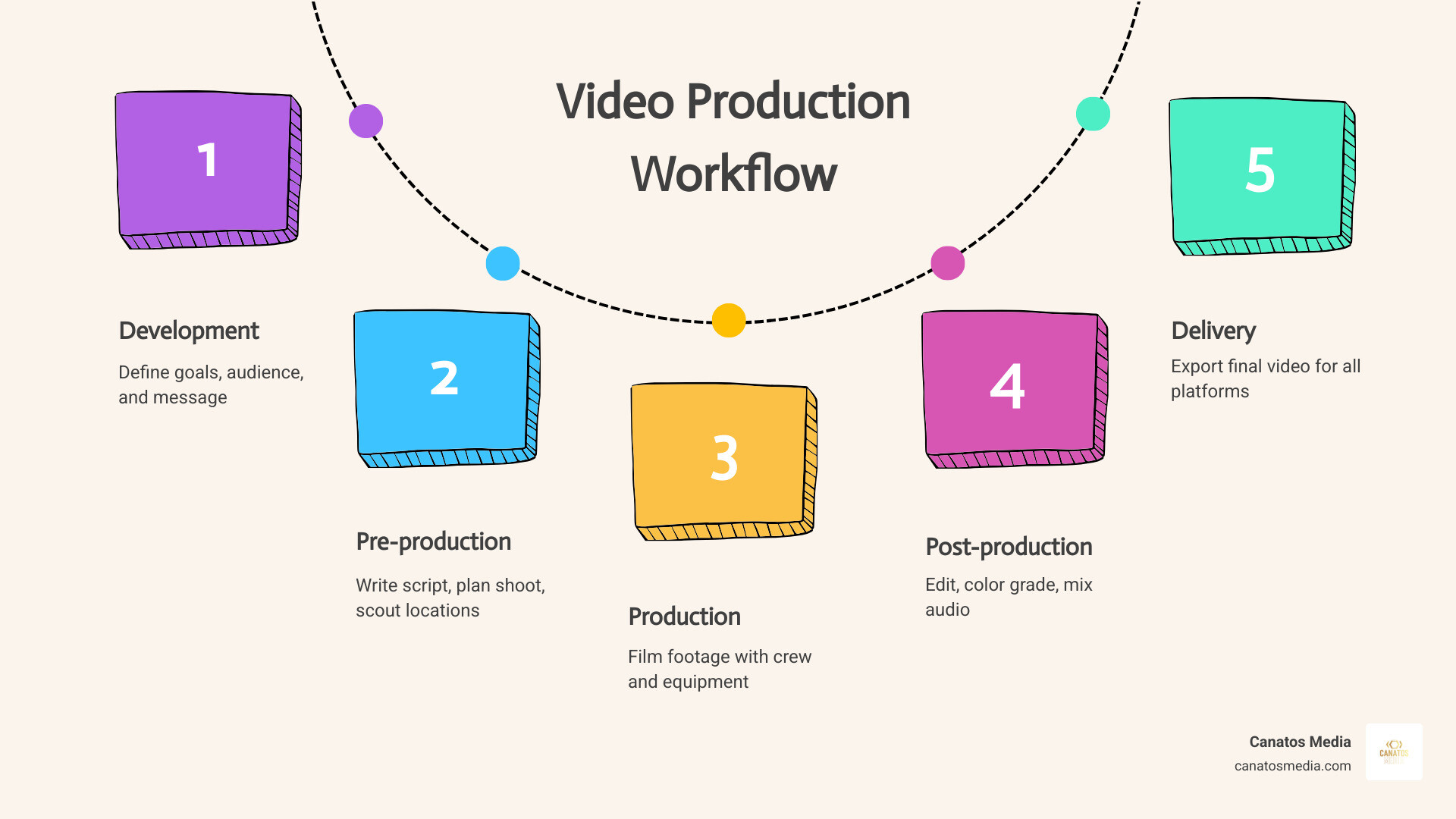
Video production is the process of creating a video from scratch — from the initial idea all the way through filming and final editing.
Here’s a quick breakdown of what it involves:
- Development — Define your goal, audience, and message
- Pre-production — Write the script, plan the shoot, scout locations
- Production — Film the footage with your crew and equipment
- Post-production — Edit, color grade, mix audio, and deliver the final video
Whether you’re a local business trying to generate leads or a growing brand building awareness, video is one of the most powerful tools you have. It builds trust faster than text, holds attention longer than images, and works across every platform your customers use.
But “just making a video” isn’t enough. The difference between a video that drives results and one that gets ignored almost always comes down to how well it was planned and executed — not just how expensive the camera was.
This guide walks you through every stage of the process in plain language, so you know exactly what to expect and how to get it right.
I’m Nic Canobbio, founder of Canatos Media, and I’ve spent over two decades in media production — overseeing live video production, content editing, and social campaigns that have generated over 60 million views. I’ll share what actually works, based on real experience.
What Is Video Production and How Is It Different From Filmmaking?
At its core, video production means planning, capturing, and finishing video content for a specific purpose. That purpose might be marketing, training, education, internal communication, recruiting, social media, product education, or broadcast.
What video production means today
Today, video production usually includes:
- concept development
- creative strategy
- scripting
- filming
- audio recording
- editing
- motion graphics
- captions
- formatting for different platforms
- final delivery
Most business video is created with digital cameras and delivered as digital files for websites, social media, ads, sales funnels, email campaigns, or internal systems.
Video production vs filmmaking
Video production and filmmaking overlap, but they are not the same thing.
In simple terms, filmmaking is usually associated with movies and longer-form narrative projects. Video production is usually tied to shorter, goal-driven content made for brands, organizations, educators, or publishers.
Here is the practical difference:
| Video Production | Filmmaking |
|---|---|
| Usually shorter format | Often feature-length or episodic |
| Common in marketing, corporate, education, and web content | Common in cinema and scripted entertainment |
| Smaller crews are common | Larger crews are common |
| Faster timelines | Longer timelines |
| Digital-first delivery | Theatrical, streaming, festival, or broadcast release |
| Often focused on business results or communication | Often focused on narrative storytelling as the primary outcome |
That said, good video production still uses storytelling. We just apply it with a clear goal in mind: get attention, explain something, build trust, or drive action.
The role of video production in marketing, education, and communication
Video is useful because it can do several jobs at once:
- explain a service clearly
- show a product in action
- help customers trust a business
- train employees consistently
- teach students remotely
- support sales conversations
- create reusable content across channels
That is why businesses use corporate videos, explainers, testimonials, demos, onboarding videos, webinars, social clips, and recruiting content.
If your main goal is growth, our guide on video marketing services goes deeper into how strategy and distribution connect to results.
The Main Stages of the Video Production Process

Every solid video project moves through four stages: development, pre-production, production, and post-production. Some teams treat approvals as a separate phase, but in real life they happen throughout.
Development and creative strategy
Development is where the project starts making sense.
Before anyone grabs a camera, we need answers to questions like:
- Who is this for?
- What should they think, feel, or do after watching?
- Where will the video live?
- What business goal does it support?
- What metrics matter: leads, watch time, clicks, booked calls, sales, or retention?
This stage usually includes a creative brief, audience definition, message framework, concept direction, and success metrics. Without this, even a beautiful video can end up being a very polished shrug.
Why pre-production planning is critical
Pre-production is where most expensive mistakes are prevented.
Strong planning helps with:
- budget control
- realistic scheduling
- clear crew responsibilities
- efficient shot planning
- location readiness
- better on-camera performance
- fewer surprises on shoot day
This matters because problems solved before the shoot are cheap. Problems discovered during the shoot are stressful. Problems discovered in editing are usually the most expensive.
Production: what happens on shoot day
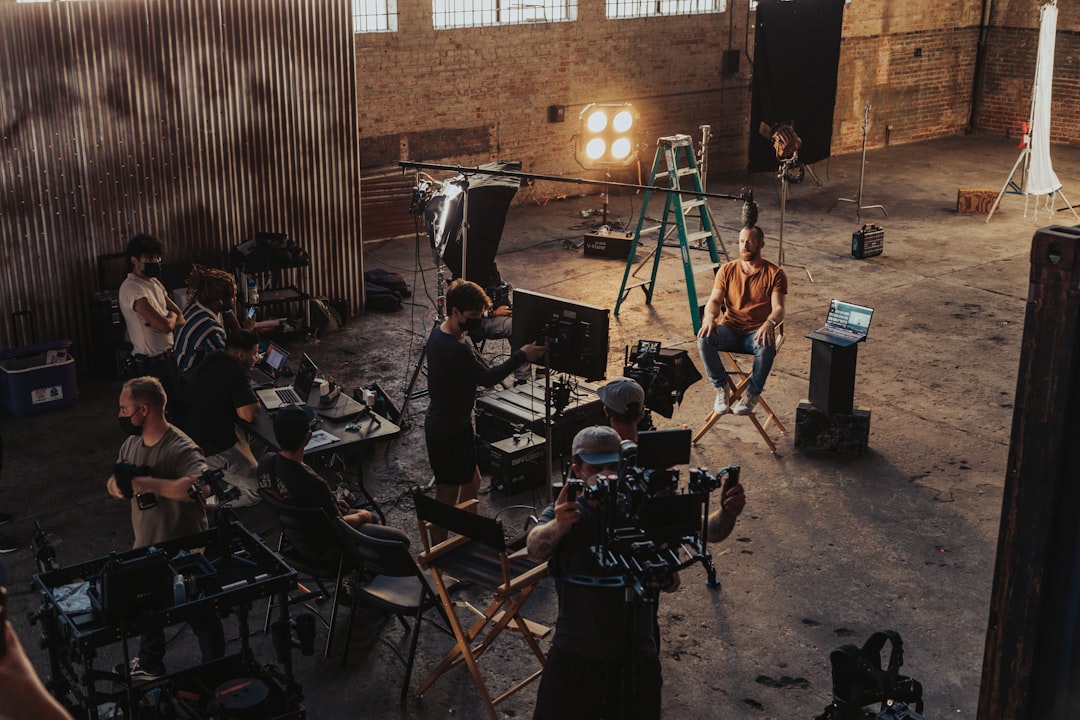
Production is the filming phase, often called principal photography. This is when the crew captures interviews, b-roll, product shots, scenes, voiceover reads, and any other planned footage.
A good shoot day usually includes:
- set preparation
- camera setup
- lighting setup
- audio checks
- directing talent
- recording primary footage
- capturing extra b-roll
- checking continuity and file backups
Post-production: how raw footage becomes a finished video
Post-production is where the story becomes clear.
This phase usually includes:
- organizing footage
- selecting the best takes
- editing a rough cut
- refining pacing
- color correction
- color grading
- audio cleanup and mixing
- music and sound design
- motion graphics
- captions
- exports for different platforms
A raw interview might be 20 minutes. The finished video might be 60 seconds, 3 minutes, or several versions. Editing is where clarity, emotion, and polish show up.
Pre-Production Planning: The Step That Determines Success

If we had to name the one stage beginners underestimate most, it would be pre-production.
Building the brief, script, storyboard, and shot list
The basic planning package often includes:
- creative brief
- script or interview outline
- storyboard
- shot list
- call sheet
- question list for interviews
The brief defines the objective and audience. The script shapes the message. The storyboard helps everyone picture the final piece. The shot list keeps the crew efficient. The call sheet tells people where to be and when.
For interview-driven videos, we often work from prompts and talking points instead of a word-for-word script. That usually sounds more natural, especially for founders, staff, and customers.
Budgeting, scheduling, and logistics
A realistic plan also covers logistics, including:
- budget range
- production timeline
- crew booking
- equipment list
- location confirmation
- talent coordination
- wardrobe notes
- props
- permits if needed
- talent releases
- music and usage rights
- backup plans for weather or delays
Many projects can move quickly. Some business videos are completed in a few weeks, while bigger campaigns need longer because of scheduling, approvals, and deliverable volume.
Location scouting, rehearsals, and technical prep
Location matters more than people think.
A room may look great in person and be terrible on camera because of:
- echo
- HVAC noise
- poor natural light
- ugly backgrounds
- limited power
- tight space for gear
That is why scouting helps. We want to know where interviews will happen, where b-roll will be captured, and whether the environment supports clean audio.
A few practical best practices:
- keep backgrounds simple and not distracting
- test audio before filming
- rehearse key lines or interview flow
- use stand-ins while lighting and framing are dialed in
- capture an establishing shot to orient the viewer
- use three-point lighting or soft light when possible
Legal, accessibility, and approval essentials
This part is not glamorous, but it saves headaches.
Make sure you account for:
- talent release forms
- location permissions
- music licensing
- logo and brand guideline compliance
- content approvals
- revision process
- file delivery expectations
- captions for accessibility
- readability on mobile
- usage rights for paid ads, web, and social
A simple checklist helps:
- Goal defined
- Audience defined
- Script or outline approved
- Shot list completed
- Location confirmed
- Crew booked
- Gear confirmed
- Audio plan ready
- Rights and releases handled
- Captions planned
- Review timeline agreed on
Production and Post-Production: Roles, Gear, and Core Skills
Who is involved during production
The exact crew depends on budget and scope, but common roles include:
- producer
- director
- director of photography or cinematographer
- camera operator
- gaffer
- grip
- sound recordist or mixer
- production assistant
- editor
- motion graphics designer
- on-screen talent or voiceover talent
On smaller shoots, one person may handle several roles. On larger shoots, roles are more specialized.
Equipment needed to start in video production
You do not need a truck full of cinema gear to begin. A practical starter setup includes:
- camera
- one or two versatile lenses
- tripod
- basic gimbal or stabilization option
- LED lights
- lavalier microphone
- shotgun microphone
- headphones
- memory cards and backup drives
- teleprompter if needed
- editing software
The basic research-backed answer is still true: camera, lighting, audio gear, editing tools, and people who know how to use them.
Skills that matter more than expensive gear
Gear matters, but skill matters more.
The core skills we value most are:
- storytelling
- framing and composition
- lighting
- clean audio capture
- interviewing
- directing non-actors
- pacing in editing
- file organization
- consistency across formats
Many beginners obsess over camera specs and ignore audio. Viewers will forgive imperfect visuals faster than muddy sound. A gorgeous 4K shot with bad audio is still bad video. It is the salad with no dressing of media production.
How post-production improves clarity, pacing, and brand polish
Post-production does far more than trim clips.
It improves:
- structure
- pacing
- clarity
- brand consistency
- visual energy
- retention
- usability across channels
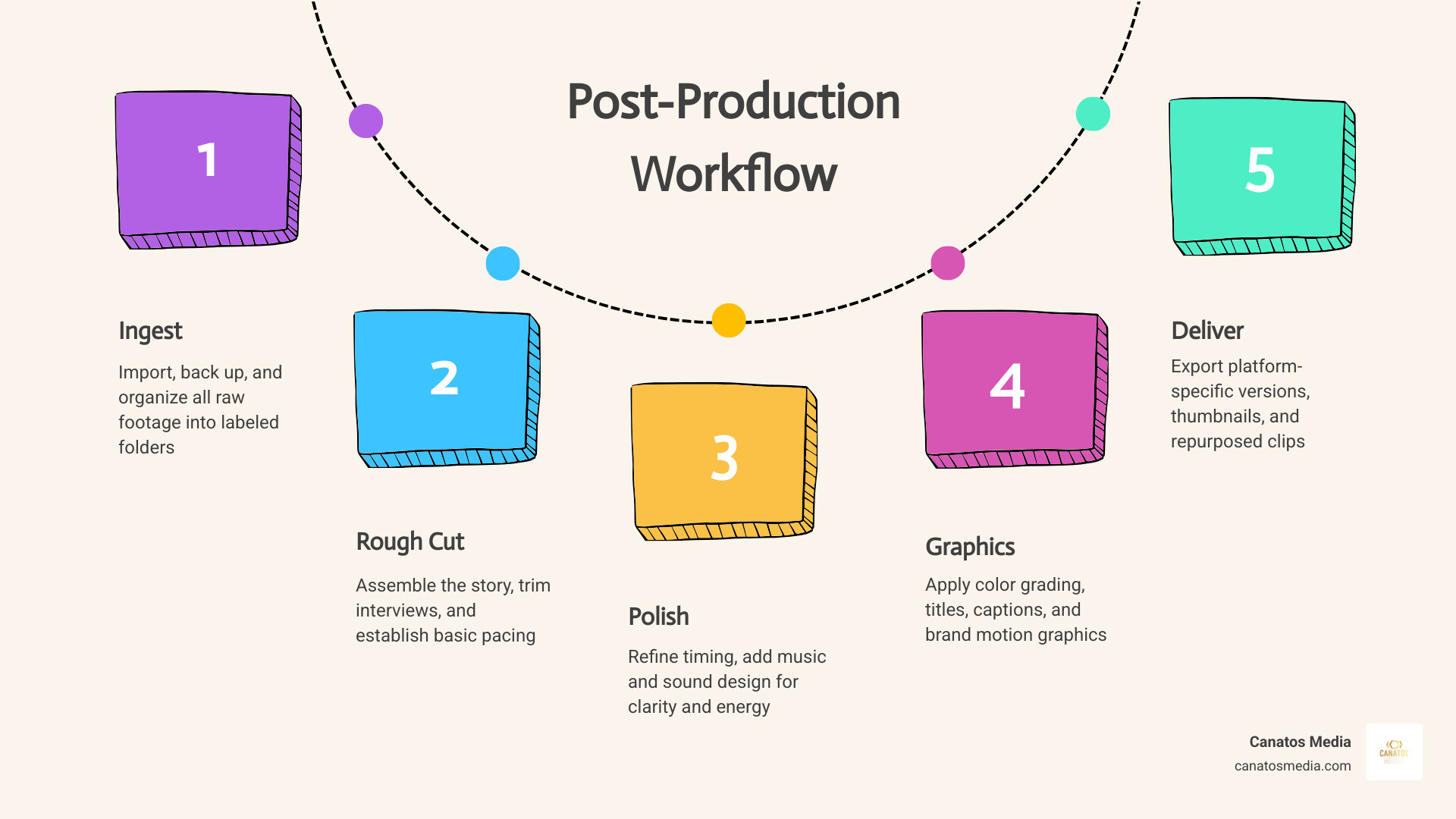
A typical workflow might look like this:
- ingest and organize footage
- build a rough cut
- tighten for clarity and pacing
- add music and sound design
- correct and grade color
- add titles, lower thirds, and graphics
- create captions
- export platform-specific versions
- generate thumbnails and cutdowns
This is also where repurposing happens. One interview shoot can become a hero brand video, vertical social clips, testimonial edits, website sections, and ad creative. For more on that style of output, see our page on short-form video production.
Video Production Approaches by Format and Distribution Channel
Not all videos should be produced the same way. The format should match the audience, channel, and goal.
Marketing, corporate, and educational video production
Different use cases need different production choices.
Marketing video often focuses on:
- lead generation
- product demos
- service explainers
- testimonial content
- paid social ads
- landing page videos
Corporate video often focuses on:
- brand messaging
- recruiting
- internal communication
- event recaps
- executive interviews
- company culture
Educational video often focuses on:
- tutorials
- onboarding
- webinar clips
- training modules
- distance learning content
- process walkthroughs
If lead generation is the priority, our guide on choosing the right lead generation video production agency in 2026 breaks down what matters most.
Broadcast styles: ENG vs EFP vs internet video production
These terms come up less in casual marketing conversations, but they are useful.
ENG stands for electronic news gathering. Think fast, lightweight field capture for news-style coverage, quick interviews, and live events.
EFP stands for electronic field production. It is usually more planned than ENG and often used for commercials, interviews, events, political spots, or multi-camera field shoots.
Internet video production is built mainly for online distribution. It is often optimized for speed, platform fit, multiple versions, and digital collaboration. In 2026, that can include cloud-based review, remote approvals, and content built specifically for YouTube, paid social, Reels, Shorts, or website embeds.
How one shoot can create multiple deliverables
This is one of the smartest ways to stretch budget.
A single shoot can produce:
- one hero video
- 3 to 10 short social cuts
- vertical versions for Reels and Shorts
- website header video
- YouTube version
- paid ad variants
- product clips
- still frames for thumbnails
This approach is especially useful for service businesses and multi-location brands trying to create more content without multiplying production days. We talk more about that in our post on scalable short-form video production across locations.
Choosing the right production approach for your goals
The right setup depends on your needs.
An in-house approach may work if:
- you need frequent low-lift content
- your team can film consistently
- quality requirements are modest
- turnaround speed matters most
A freelancer may work if:
- the project is small and clearly defined
- you already have strategy and scripting handled
- you only need a shooter or editor
An agency partner may be best if:
- you need strategy and execution together
- the video must connect to ads, SEO, social, or website conversion
- multiple deliverables are required
- approvals and project management matter
- ROI is a real priority
How to Choose the Right Video Production Partner
Choosing a partner is not just about the prettiest reel. It is about whether they can solve the right problem.
Questions to ask before hiring
Ask questions like:
- Have you worked on projects like ours?
- How do you handle strategy before filming?
- What does your process look like from kickoff to delivery?
- Who handles editing?
- How many revisions are included?
- What rights do we receive?
- What is the timeline?
- Will you help with multiple versions and distribution needs?
- How do you plan for audio, lighting, and location issues?
- How do you measure success?
Red flags and green flags in proposals
Red flags:
- vague deliverables
- no strategy section
- no audio plan
- unclear ownership rights
- unrealistic timelines
- no revision process
- no mention of platform formatting
- heavy focus on gear, little focus on goals
Green flags:
- clear scope and milestones
- solid discovery process
- thoughtful creative brief
- strong production planning
- platform-aware deliverables
- transparent review process
- clear ownership and usage terms
- post-launch thinking
Best practices for successful video production from kickoff to delivery
Across formats, a few best practices almost always help:
- align on goals before scripting
- keep the message simple
- prioritize clean audio
- choose simple, controlled backgrounds
- gather more b-roll than you think you need
- plan feedback rounds in advance
- optimize edits for each platform
- capture enough footage for future reuse
- make captions part of the workflow, not an afterthought
We also believe the best results happen when production is connected to a larger marketing system. That means creative, targeting, landing pages, and follow-up all work together. If that is your focus, see how we integrate website design and video to drive sales.
Matching the partner to your business type
Different businesses need different levels of support.
A local business may need:
- testimonial videos
- service explainers
- social clips
- website videos
A multi-location brand may need:
- repeatable production systems
- location-to-location consistency
- scalable short-form content
- ad-ready edits
A B2B or service business may need:
- lead generation videos
- educational content
- founder-led messaging
- sales enablement clips
A nonprofit or internal communications team may need:
- mission stories
- training videos
- event recaps
- donor messaging
For growing brands with multiple locations, our post on budget-friendly video production for multi-location businesses can help frame the options.
Frequently Asked Questions about Video Production
What are the four parts of video production?
The four parts are:
- development
- pre-production
- production
- post-production
Development defines the goal and concept. Pre-production plans the shoot. Production captures the footage. Post-production turns it into the final video.
Is video production the same as video editing?
No. Editing is one part of video production. The full process also includes planning, scripting, filming, audio, graphics, revisions, and delivery.
What is needed to start in video production?
At minimum, you need:
- a camera
- lighting
- audio equipment
- editing software
- storage and backup
- basic production skills
If you want results, you also need planning, storytelling ability, and a clear purpose for the video.
Conclusion
Good video production is not just about filming something that looks nice. It is about building a clear message, planning carefully, capturing strong footage, and shaping it into content that actually does a job.
For businesses in the tri-state area and on Long Island, the best approach usually is not “make one nice video and hope.” It is building a system where content supports awareness, trust, leads, and conversions across channels.
That is how we think about it at Canatos Media. We connect video with social media, paid ads, SEO, and website performance so the final product does more than sit on a page looking handsome.
If you are planning your next project, start with the goal, not the camera. Then build the process around that.
For a practical next step, explore our short-form video production service to see how we turn cinematic content into measurable growth.