The Hidden Costs of Fragmented Freelance Solutions
The shift toward short-form video has been seismic. What started as a TikTok novelty has become the dominant format across Instagram Reels, YouTube Shorts, and LinkedIn. For growth-focused business owners, the temptation is obvious: hire individual freelancers from marketplaces to handle production, editing, and posting. It’s cheaper upfront, seems faster, and feels like a straightforward solution.
But by the time you’ve coordinated with three different creators, revised briefs because no one understood your brand voice, and watched your posting schedule slip because freelancers are juggling multiple clients, you’ll understand why integrated agencies deliver measurably better outcomes.
When you work with freelancers from global marketplaces, you’re buying labor in isolation. One person shoots, another edits, a third handles captions, and a fourth manages posting. Each transaction feels affordable individually. Yet the total cost burden extends far beyond hourly rates.
The real expense comes from your time investment. You become the project manager, creative director, and quality control officer across disconnected workflows. A freelancer misses your brand guidelines and you’re rebranding assets mid-production. A script doesn’t resonate because no one validated it against your messaging strategy. A posting schedule derails because the freelancer has ten other clients with tighter deadlines.
Consider a typical scenario: you hire a videographer for $2,000, an editor for $1,500, and a social media manager for $1,200 monthly. Sounds reasonable at $4,700. But now you’ve spent four hours writing detailed briefs that could have been conversations with a team that already knows your business. You’ve had two rounds of revisions because the creative output didn’t align with your sales funnel. You’ve missed two weeks of posting because freelancers weren’t coordinated.
The hidden costs aren’t just financial. They’re strategic. Fragmented teams can’t see the bigger picture of your brand narrative or how each piece of content fits into a lead generation system.
Why Freelance Marketplaces Fall Short for Brand Consistency
Consistency across platforms is how audiences recognize and trust your brand. When you work with different freelancers for different projects, you’re essentially working with different interpretations of who you are.
One creator produces cinematic, slow-paced brand stories. Another delivers fast-cut, energetic promotional clips. A third focuses on educational content with a completely different visual language. To your audience, these don’t feel like variations of the same brand. They feel like different brands with similar logos.
This inconsistency gets worse across platforms. Your Instagram Reels have a specific color grade and pacing. Your TikTok content shifts to trending audio and quicker cuts. Your YouTube Shorts follow yet another structure. Platforms vary, absolutely, but your core brand identity should be unmistakable across all of them.
Freelancers optimize for individual projects and individual platforms. They don’t sit in strategy meetings where you discuss how brand voice should evolve. They don’t see the quarterly roadmap or understand which audience segments need which messages. They deliver what was requested, not what serves your business growth.
The consequence is a fragmented visual identity that confuses your audience instead of building recognition and trust. When audiences see your content, they should immediately know it’s you.

The Integration Problem: Content Without Strategy
Many business owners treat content creation and marketing strategy as separate functions. Content is the “creative” side. Strategy is the “business” side. This split is a fundamental mistake that freelance marketplaces naturally encourage.
A freelancer produces a beautiful four-minute brand film. It’s cinematic, well-shot, and genuinely engaging. But it wasn’t built around your customer’s actual decision-making journey. It doesn’t move someone from awareness to consideration. It doesn’t address the specific objections your mid-market clients have. It doesn’t connect to a landing page, email sequence, or retargeting campaign. It’s content for content’s sake.
Strategic content works backward from your business goals. If you need qualified leads from small business owners in the service industry, every piece of content should serve that mission. Your short-form videos should highlight results your existing clients achieved, not just showcase your capabilities. Your social media calendar should build narrative momentum across weeks, not jump randomly between topics. Your paid advertising should amplify the specific content that actually converts.
Freelancers don’t know your conversion metrics, your sales cycle, or your customer acquisition cost targets. They can’t. They’re hired for production, not strategy. Agencies exist to bridge this gap, combining creative execution with business-focused planning.
How Unified Agency Teams Drive Better Results
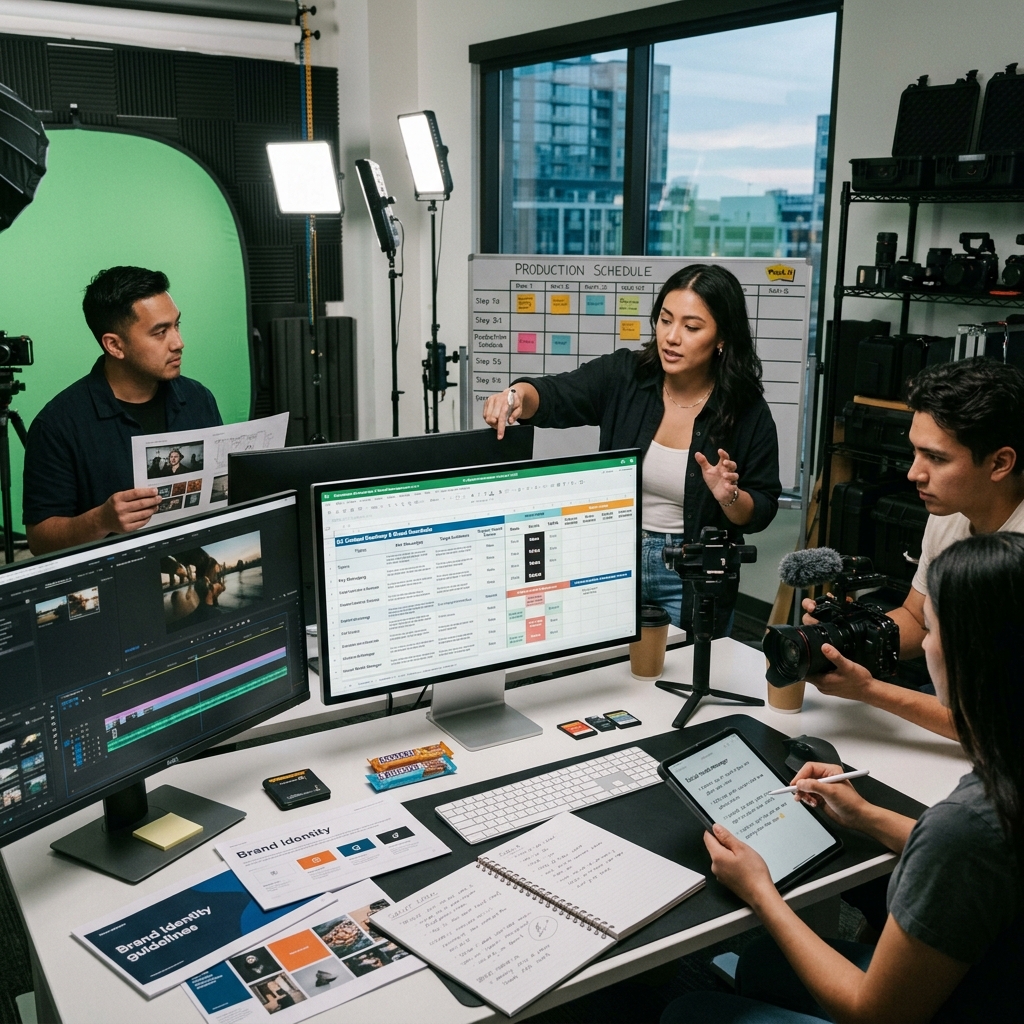
A genuine agency functions as an extension of your marketing leadership. The same strategist who plans your quarterly content roadmap also reviews every script, brief, and edit. The same videographer who captured your brand film understands the visual system you’re building across all channels. The same social media manager who posts your content is also analyzing engagement and refining the message based on what’s working.
This continuity creates exponential returns. When your team has context, they make smarter creative decisions. A videographer shoots bonus b-roll because they understand it will support future content pillars. An editor structures a piece differently because they know which format drives the most saves and shares on your primary platform. A strategist spots an emerging narrative that can be amplified across three upcoming campaigns.
Unified teams also compress timelines. There’s no waiting for a freelancer’s availability across time zones. There’s no communication lag through asynchronous briefs. When you need to iterate or pivot, it happens in days, not weeks.
The financial model shifts too. Instead of paying per project, you’re investing in dedicated capacity. That $7,000 you spent on three separate freelance projects becomes $5,500 monthly for a team focused entirely on your growth. The cost per deliverable drops. The quality per deliverable rises. The strategic alignment becomes real.
Our Approach to Cinematic Short-Form Content
We build every short-form video around three principles: strategic intent, cinematic quality, and platform optimization.
Strategic intent means every 15 to 60-second video serves a specific purpose in your customer journey. We’re not making content that looks good in a portfolio. We’re making content that moves someone closer to becoming a client. That might mean showcasing a transformation, addressing a specific pain point, or demonstrating how your process works. The creative expression serves the business outcome, not the other way around.
Cinematic quality is our differentiator. Most short-form content relies on quick cuts, trending audio, and visual trends that fade fast. We invest in production value: thoughtful color grading, intentional pacing, professional sound design, and short-form video content that looks expensive because we treat it as such. This approach ages better, builds stronger brand perception, and typically converts at higher rates than trend-driven alternatives.

Platform optimization means we understand the nuances of each platform’s algorithm and audience behavior. Instagram Reels reward a different editing rhythm than TikTok. YouTube Shorts require different storytelling structures than LinkedIn. We adapt our approach strategically, never formulaically.
Building Sustainable Lead Generation Systems
Content and advertising work together. Brilliant content without distribution strategy generates awareness but not leads. Paid advertising without authentic, valuable content burns budget on low-quality traffic.
We build integrated systems where content and paid campaigns reinforce each other. A short-form video tells a transformation story. That video becomes an organic post, then a retargeting asset, then a paid campaign targeting your ideal customer profile. Email sequences nurture viewers who aren’t ready to convert. Landing pages capture information from those ready to move forward.
This systematic approach creates compounding returns. As we produce more content, our paid advertising becomes more efficient because we’re testing real assets your audience has already engaged with organically. Our email lists grow richer because we’re nurturing specific audience segments based on content consumption. Our understanding of what messaging resonates deepens with every campaign, making future strategy smarter.
Sustainable lead generation isn’t a tactic. It’s a system built on consistent content production, strategic paid amplification, and continuous optimization based on real performance data.
Measuring Performance Across All Channels
Fragmented freelance work creates fragmented metrics. You see video completion rates here, social engagement there, landing page traffic somewhere else. No one connects these dots.
We report on metrics that matter to your business: cost per lead, lead quality by source, conversion rate by campaign, and content performance against benchmarks. We track which content themes generate the most high-intent engagement. We measure how your brand perception shifts across social platforms. We understand exactly which paid channels are driving profitable customer acquisition.
This measurement framework guides everything we do. If a particular content pillar isn’t converting, we adjust. If a platform is generating leads at double the cost, we rebalance budget. If audience feedback suggests a messaging shift, we evolve. Performance data becomes our creative compass.
Why Growth-Focused Brands Choose Full-Service Agencies
Growth-focused business owners have simple criteria: does this investment drive measurable business outcomes? Freelance marketplaces feel cheaper until you factor in time, inconsistency, and missed strategic opportunities. Agencies cost more but operate as a marketing function that compounds.
The brands we work with typically juggle multiple locations, complex sales cycles, and sophisticated customers. They can’t afford disjointed content strategy. They need their visual identity to feel professional and intentional. They need their content to feed actual sales pipelines.
As your business scales, the cost of fragmentation becomes unbearable. You need integrated strategy, consistent execution, and accountable results. You need to trust your marketing partner with your brand voice and your growth targets.
Getting Started With Integrated Content Strategy
If you’re currently working with freelancers and sensing the friction we’ve described, starting with an agency doesn’t require ripping everything out and starting over. It means moving toward strategic integration.
Begin with a content strategy audit. Map your current content against your customer journey. Identify gaps where strategic content could move people toward conversion. Define the key narratives you want your brand to own.
From there, plan a content production roadmap for the next quarter. Define the primary themes, audience segments, and platforms you’ll prioritize. This roadmap becomes your blueprint for consistent, strategic content production.
We’ve built this process specifically for growth-focused business owners who are ready to move beyond freelance coordination toward integrated marketing. If you’re ready to explore how unified strategy and cinematic quality could serve your brand, let’s talk about your specific goals and how we could support them.
Contact us today for a free consultation to see how we can help you grow your business.
Frequently Asked Questions (FAQ)
How does working with us differ from hiring individual freelancers for video production and marketing?
We provide integrated strategy across content creation, paid advertising, social media management, and lead generation all from one team. With us, your short-form videos connect directly to your Meta and Google ad campaigns, your SEO strategy aligns with your content calendar, and your lead systems capture the attention we generate. Freelancers typically work in silos, leaving gaps between what gets produced and how it performs in your actual marketing funnel.
What makes your approach to short-form content different than other agencies?
We focus specifically on cinematic quality in short-form formats designed for platforms like Instagram, TikTok, and YouTube Shorts. Our content isn’t just visually compelling; we structure every video to support your lead generation and sales goals by understanding your customer journey and where that content actually needs to work. We measure and optimize based on conversions and qualified leads, not just engagement vanity metrics.
How do you ensure consistency across our brand while managing multiple marketing channels?
We own your entire strategy, so whether we’re creating content, managing your social accounts, running your paid campaigns, or optimizing your website, everything reflects the same brand voice and business objectives. Our team coordinates all touchpoints rather than requiring you to brief different vendors separately, which means your message stays aligned across platforms and your marketing compounds rather than conflicts.