Category: SEO

  • How We Integrate Website Design and Video to Drive Sales

    How We Integrate Website Design and Video to Drive Sales

    Why Most Brands Fail When They Separate Website Design from Video

    Your website and your video content serve different purposes on the surface, but they’re actually part of one customer journey. When we see brands struggle, it’s usually because they treat these two channels as separate projects managed by different teams with different goals.

    A video creator focuses on engagement and views. A web designer focuses on aesthetics and user flow. Neither is wrong, but when these worlds don’t talk to each other, you end up with a beautiful website that doesn’t leverage your best content, or viral videos that send traffic to a site that doesn’t convert.

    The real cost shows up in your metrics: high video engagement with flat website traffic, or steady site visitors who never take action because there’s no compelling visual narrative guiding them forward. Your audience sees fragments instead of a cohesive brand story.

    The Disconnect Costing You Leads and Sales

    Here’s the specific breakdown of what happens when design and video operate independently:

    Videos exist in isolation. A well-produced video might live on YouTube or social media, but your website doesn’t know how to use it. Visitors land on your homepage and see static copy and generic stock images instead of the cinematic storytelling you’ve already invested in.

    Website design ignores your video assets. Your web designer picks stock footage or relies on text-heavy sections when you already have premium content sitting in your library. This duplication wastes budget and confuses your messaging.

    Traffic sources don’t align. Video drives visitors to your site, but those visitors encounter pages that don’t reflect the tone, energy, or offer they just saw in the video. The friction kills conversions.

    Lead capture drops. When visitors aren’t emotionally invested by visual storytelling before they see your CTA, they’re less likely to fill out forms or request demos. Video primes the psychological pump; a disconnected website deflates it.

    For a multi-location service business or growth-focused brand, this gap translates to 20-40% lower conversion rates than an integrated approach typically delivers.

    How Unified Design and Video Strategy Works Together

    Integrated web design and video strategy means building your website architecture around your video content from the start, and creating videos with your website user journey in mind.

    It looks like this:

    • Your homepage features a hero video that establishes brand voice and captures attention in the first three seconds.
    • Service or product pages use short-form videos to demonstrate value before someone reads a single paragraph.
    • Landing pages pair video testimonials with trust signals in the design layout so both work together.
    • Your call-to-action appears after video content has warmed the visitor, not before.

    The result is a website that feels cinematic and moves visitors toward conversion through narrative momentum, not just button placement.

    Our Integrated Approach to Web and Video

    At Canatos Media, we don’t treat website design and video production as separate deliverables. We start with your customer journey and work backward.

    First, we map where video adds the most value: above the fold, in explainer sections, during objection-handling, and at conversion moments. Next, we design your website architecture to make room for these assets. Finally, we produce video content that matches both your visual brand and the specific function it needs to serve on that page.

    Our team includes cinematographers, web designers, and conversion specialists who collaborate throughout the entire project. A video isn’t approved until we’ve tested how it performs within the actual page layout. A design element isn’t finalized until we know what video will sit beside it.

    We also integrate your video assets with your broader digital ecosystem: social media, paid advertising, and email marketing all pull from the same narrative foundation. When someone sees your Facebook video, lands on your site, and receives a follow-up email, they experience one coherent brand story across three channels.

    Building Websites That Showcase Your Video Content

    Your website design should create frames and focal points for your cinematic website videos rather than compete with them.

    This means:

    • Homepage hero sections with video autoplay, minimal text overlay, and clear directional flow.
    • Full-width video players on core service or product pages, positioned before lengthy copy.
    • Testimonial pages that lead with client success videos rather than quotes.
    • About pages that use brand story videos to create emotional connection before diving into company history.
    • Landing pages with video thumbnails that change dynamically based on visitor source or behavior.

    The design itself should support video viewing: adequate white space around players, fast page load times optimized for video assets, mobile-responsive layouts that don’t shrink videos down to unwatchable dimensions, and clear next steps positioned after the video ends.

    We typically recommend placing video content in the top 60% of pages where scrolling isn’t required for initial viewing. This respects user behavior while maximizing the impact of your cinematic content.

    Creating Videos That Drive Website Traffic and Conversions

    Video content created in isolation often performs well on social platforms but doesn’t convert when it lands on your website. The gap exists because social videos are built for stopping the scroll; website videos are built for closing deals.

    We create videos with your website’s conversion goals baked in from the scripting phase. An explainer video on your homepage needs a clear transition into the next section. A demo video on a pricing page needs to address the specific objection that prevents purchase at that moment. A testimonial video needs to include outcome metrics, not just enthusiasm.

    Video length matters too. A 60-second hero video supports fast homepage scanning. A 90-second explainer video holds attention without causing tab abandonment. Anything longer than two minutes should be segmented into chapters with interactive navigation so visitors can jump to relevant sections.

    We also design visual consistency between your video style and website design language. When your video uses the same color palette, typography treatment, and visual effects as your website, viewers experience seamlessness. The transition from watching to reading to acting feels natural rather than disjointed.

    Lead Generation Through Seamless Design and Video Integration

    The magic of integration shows up in lead capture. When video and design work together, visitors move through your site with psychological momentum building toward your offer.

    Here’s the actual sequence:

    1. Video establishes credibility and emotional connection in the first 10 seconds.
    2. Design narrative guides the visitor’s eye toward supporting information.
    3. Objection-handling content (often video-based) removes friction.
    4. Social proof (testimonials, case studies, metrics) confirms the decision.
    5. Clear CTA appears when the visitor is warmest.

    This flow works because you’re not asking for a lead from a cold visitor. You’re asking for a lead from someone who’s experienced your brand story visually and felt its relevance to their situation.

    Form completion rates increase when video precedes the form. Conversion time decreases when visitors understand their path forward before they commit. And qualified lead volume grows because you’re filtering for engaged visitors who’ve already seen what you offer.

    Real Results: How Our Clients Accelerated Growth

    Our case studies document the specific outcomes of integrated design and video strategy. What we consistently observe:

    • Service-based brands see 35-50% improvement in contact form submission rates after redesigning their website around video content.
    • Multi-location businesses reduce sales cycle length by 2-3 weeks when their website guides prospects through video-supported discovery.
    • Product brands increase average order value by 20-30% when website design and video testimonials combine to build confidence before checkout.

    These aren’t marginal improvements. They’re the difference between a marketing budget producing steady activity and a marketing budget driving measurable revenue growth.

    The common thread in every successful integration: the team that designed the website worked directly with the team that produced the video.

    Getting Started With Your Integrated Strategy

    Start by auditing your current website against a simple question: if a visitor mutes their audio and watches only your video content, do they understand your core value proposition?

    If the answer is no, your integration work needs to begin. Map where video would change the visitor experience most significantly: usually your homepage, primary service pages, and main landing pages.

    Next, evaluate your existing video content. What do you have that’s already performing well? That’s your foundation. What gaps exist between your video storytelling and your website copy? Those are your production priorities.

    Finally, involve both your designer and video creator in the same planning session. Walk through your website page by page. Discuss where each video lives, how it’s positioned, what text supports it, and what action follows it.

    The best integration starts with alignment, not with production. When your team shares a vision for how website design and video work together, the execution follows naturally. We’re here to guide that process and handle the cinematic production side.

    Contact us today for a free consultation to see how we can help you grow your business.

    Frequently Asked Questions (FAQ)

    How do we integrate website design with video production to maximize conversions?

    We build your website as the anchor for your video content, ensuring every page layout, navigation flow, and call-to-action aligns with your video assets. Our team creates custom video placements that guide visitors toward lead capture forms and sales pages, while designing your site structure to drive traffic back to your most effective video content. This two-way integration means your website doesn’t just display videos—it uses them strategically to move prospects from awareness to decision.

    What’s the difference between how we approach web and video versus handling them separately?

    When websites and videos operate independently, you lose the opportunity to amplify each other’s impact. We treat them as one system where your site architecture supports your video distribution strategy, and your video content is optimized to convert the traffic your site generates. This unified approach eliminates the gaps that typically cause leads to drop off between discovering your brand and taking action.

    Can you help us if we already have a website and video content that aren’t working together?

    Absolutely. We audit your existing website and video assets to identify missed opportunities, then restructure your site to leverage the content you have while filling gaps with new productions that support your conversion goals. Many of our clients start this way, and integrating their separate efforts typically doubles their lead generation within the first quarter.

  • Budget-Friendly Video Production for Multi-Location Businesses

    Budget-Friendly Video Production for Multi-Location Businesses

    Why Multi-Location Businesses Struggle with Video Content Costs

    Running video production across multiple locations feels like solving a math problem with no solution. You need fresh, professional content at each branch, but shooting, editing, and distributing separate videos for each location multiplies both your timeline and budget. A single cinematic shoot might cost $5,000 to $15,000. Multiply that by three, five, or ten locations, and you’re looking at a six-figure spend before you’ve even measured results.

    The real expense isn’t just the cameras and crew. It’s the coordination overhead. Scheduling shoots across different time zones, managing multiple editing projects, maintaining brand consistency when different vendors handle different locations, and then distributing content through fragmented channels. Each layer adds cost and complexity.

    Many multi-location businesses respond by either stopping video production entirely or settling for low-quality internal content that doesn’t match their brand standards. Neither approach serves your growth.

    The Real Problem: Fragmented Marketing Across Multiple Locations

    Video content isn’t expensive because cameras are expensive. It’s expensive because most production workflows treat each location as a separate project.

    Consider a typical scenario: Your Denver office needs promotional content, so you hire a local production team. Your Austin location has different needs, so you hire another vendor. Your Chicago team does their own thing with a smartphone. Within months, you have inconsistent messaging, different visual styles, and no cohesive brand story. Your customer sees three different versions of your company depending on which location they interact with.

    This fragmentation kills your lead generation. When someone researches your multi-location business, they expect consistency. A professional video from one location followed by a low-quality clip from another signals that you’re either disorganized or that quality varies by location. Neither impression builds trust.

    The cost problem and the brand consistency problem are actually the same problem: siloed production workflows.

    How Efficient Production Scales Without Scaling Expenses

    Scaling production doesn’t require scaling your budget linearly. The breakthrough comes from building a repeatable system where one shoot produces content for multiple locations and channels.

    Here’s how it works: Instead of treating each location as a separate project, we structure shoots to capture content that serves your entire portfolio. A single production day might film testimonials, process demonstrations, team introductions, and facility tours that get customized and repurposed for each branch. One shoot yields 15 to 20 short-form videos instead of one.

    The production cost stays roughly the same. The output multiplies.

    You also reduce coordination overhead by batching shoots. Instead of scheduling separate production days across multiple locations, you plan quarterly or bi-annual production cycles where you visit 2 to 3 locations in one trip. This concentrates travel costs and maximizes crew efficiency.

    Your next step: Audit which content types work across all your locations (testimonials, behind-the-scenes, process videos, team introductions) and which need location-specific treatment. This audit immediately shows you where you can batch content and where efficiency gains are highest.

    Our Streamlined Video Production Process for Growing Brands

    We’ve built our production workflow specifically for multi-location businesses. The process eliminates waste without cutting corners on quality.

    Here’s our approach:

    Planning phase: We identify core content themes that apply across all locations, then customize them by location. A “day in the life” video works everywhere, but each location’s version highlights local team members and specific facilities.

    Batched production: We consolidate shoots to visit multiple locations in a single cycle. This means coordinating with your teams once rather than multiple times, and maximizing our crew’s efficiency.

    Modular filming: We capture footage that adapts to different formats and channels. A single interview becomes a 60-second social clip, a 15-second reel, a testimonial tile, and a long-form case study. One shoot, multiple assets.

    Centralized editing and quality control: All content flows through one team, ensuring consistent color grading, sound design, and messaging.

    This structure cuts typical production costs by 30 to 40 percent compared to location-by-location shoots while improving consistency. You can see our flexible production pricing to understand how this scales with your business.

    Creating Consistent Brand Storytelling Across All Locations

    Consistency doesn’t mean every video is identical. It means every video tells a recognizable version of your brand story.

    Multi-location businesses often struggle because each location develops its own culture and approach. That’s healthy. But when it extends to completely different visual styles and messaging, it fragments your brand. A customer in Denver shouldn’t see a fundamentally different brand experience than a customer in Austin.

    We solve this with a brand framework that works across locations. This includes:

    • A shared visual language (color palette, typography, motion style, music choices)
    • Core brand values articulated in a way each location can apply locally
    • Recurring video formats that feel familiar to your audience
    • Messaging pillars that every location reinforces

    So your Denver team might feature a different team member in a “expert tips” video than your Austin location, but both videos look and feel like they came from the same company. The messaging about reliability, expertise, or customer care stays consistent even as the specific examples change.

    This approach also makes content production faster. Once the framework is set, each location’s team can brief the production crew in 20 minutes instead of 2 hours, because the vision is already clear.

    Integrating Video Content with Social Media Management

    Video is expensive to produce but cheap to distribute. Most multi-location businesses under-leverage their video by treating each piece as a standalone asset instead of the centerpiece of a distribution strategy.

    We integrate video production with social media management so that each video drives results across channels. A single production deliverable becomes:

    • 3 to 5 short-form reels optimized for Instagram, TikTok, and Facebook
    • Carousel posts with video clips and captions for LinkedIn
    • Email campaign assets with embedded video
    • Website homepage video and location-specific pages
    • Paid advertising creative

    This multi-channel approach means your production investment works harder. The $3,000 you spend on video production generates 15 to 20 content pieces that get distributed over 8 to 12 weeks across platforms.

    Social media management also informs what you shoot. We track which content types, lengths, and messaging generate engagement at each location, then adjust future production briefs. So each shoot gets more targeted and productive than the last.

    Maximizing ROI Through Strategic Video and Paid Advertising

    Video content performs well organically, but the real ROI multiplier is combining video with paid advertising. Organic reach on social platforms continues to decline, and paid amplification is now essential for driving measurable results.

    We treat video production and paid advertising as one system. After production, we immediately test the highest-performing clips in paid campaigns across Meta (Facebook and Instagram) and Google platforms. This means:

    • Using A/B testing to identify which video angles, messaging, and formats drive the lowest cost-per-lead
    • Scaling proven assets with paid spend instead of constantly producing new content
    • Attributing lead and sales results back to specific videos and locations
    • Adjusting production strategy based on what paid testing reveals

    For a typical multi-location business, a $5,000 production investment combined with a $2,000 to $3,000 monthly paid advertising budget generates 15 to 40 qualified leads per month, depending on your industry and service type. The video production cost amortizes across multiple months of paid campaigns.

    This integrated approach is why we track ROI rather than just video metrics. Views and engagement matter, but leads and sales matter more.

    Why Short-Form Video Drives Better Results Than Traditional Production

    Many business owners still think “professional video” means longer formats: 3 to 5 minute brand films, testimonial videos, or educational content. Those have a place, but short-form video consistently outperforms traditional production for lead generation.

    Short-form videos (15 to 60 seconds) work better for multi-location businesses because they:

    • Generate higher completion rates (people watch more of a 30-second video than a 3-minute one)
    • Perform better in paid advertising (lower cost-per-view)
    • Adapt easily across channels and devices
    • Require less viewer context (you don’t need background to understand a 30-second tip)
    • Compress time-to-value (your message lands in seconds, not minutes)

    This doesn’t mean you should only produce short-form content. But if your budget is limited, short-form drives better results. A single production day yielding 15 short-form videos outperforms one polished 4-minute brand film from a lead generation perspective.

    We structure our shoots around short-form as the primary format, with longer pieces emerging as compositions of short-form assets rather than the reverse.

    Turning Video Content into Measurable Leads and Sales

    Production quality doesn’t matter if the content doesn’t convert to leads. We’ve seen beautiful videos that generated zero pipeline and simple testimonials that drove consistent leads.

    The difference is conversion architecture. Every video we produce includes:

    • A clear next step (book a demo, request a consultation, download a guide)
    • A reason to take that step (solve a specific pain point, answer a common question)
    • Minimal friction (one-click links, simple forms, clear CTAs)
    • Lead capture mechanisms (landing pages, scheduling tools, email capture)

    For multi-location businesses, we track which locations’ content converts best, then double down on what works. Maybe Austin’s team generates leads more effectively through “day in the life” videos, while Denver performs better with educational content. We’ll adjust both production and paid strategy based on location-level performance.

    We also measure the full customer journey. A video might not drive immediate leads, but it builds awareness that converts later. Our ROI case studies show how brands track this impact across the full sales funnel, from awareness to close.

    Getting Started with Scalable Video Production Today

    If you’re managing multiple locations and feeling squeezed by video production costs, here’s what we recommend:

    Start with a content audit: Identify which content works across all locations and which is location-specific. This takes 2 to 3 hours and immediately shows where you can batch shoots and reduce costs.

    Plan a pilot production cycle: Rather than overcommitting, produce content for 2 to 3 locations in one cycle. This gives you a baseline for cost, timeline, and results without large upfront spend.

    Integrate with social and paid: The moment you have video assets, start testing them in paid advertising. Even a modest $500 to $1,000 monthly test reveals which content drives leads.

    Build a quarterly rhythm: Most multi-location businesses thrive with production every quarter. This keeps content fresh, distributes investment across the year, and gives you time to learn from results between cycles.

    The goal is sustainable growth, not a one-time video project. Budget-friendly video production means building a system where you produce professional content consistently without straining your budget or your team.

    We work with multi-location service and product businesses to design exactly this system. If you’re ready to explore how this works for your business, we’d like to help.

    Contact us today for a free consultation to see how we can help you grow your business.

    Frequently Asked Questions (FAQ)

    How do we keep video production costs down for businesses with multiple locations?

    We streamline our production process by shooting multiple location videos in concentrated timeframes and repurposing content across platforms, which eliminates the inefficiency of scheduling separate shoots for each branch. Our team develops a unified brand strategy upfront so we can create modular content that works for all your locations while maintaining consistent visual storytelling. This approach lets us produce high-quality cinematic videos without the inflated costs typical agencies charge for location-by-location campaigns.

    Can we produce video content that works across different locations without it looking generic?

    Yes. We create a customized brand framework for your business, then adapt the core narrative and visual style to reflect each location’s unique characteristics while keeping everything cohesive. Our process includes location-specific messaging layered over consistent cinematic production quality, so customers see your brand identity everywhere while feeling the local relevance. We’ve found this balance between consistency and personalization actually drives higher engagement than truly generic content.

    How does video production connect to generating actual leads and sales for our business?

    We integrate every video we produce directly into our paid advertising and social media management strategies, which means your content goes beyond views and gets positioned in front of people actively interested in your services. We track performance through conversion metrics tied to lead capture and sales pipeline activity, not just vanity metrics like views. This integrated approach ensures that your investment in quality video translates into measurable business results.

  • Top 7 Ways to Measure Short-Form Video ROI and Maximize Content Performance

    Top 7 Ways to Measure Short-Form Video ROI and Maximize Content Performance

    1. Track Conversion Rates from Video Clicks and Views

    Short-form video is no longer optional for growth-focused business owners. The format dominates social platforms, captures attention faster than text, and when tracked properly, delivers measurable returns on your marketing investment. Yet many brands still struggle to connect video performance to actual business outcomes. They see high view counts but have no idea if those views translate to leads or sales.

    The gap between views and revenue is where most video strategies fail. Without intentional measurement systems, you’re essentially shooting content in the dark and hoping something sticks. We’ve worked with hundreds of multi-location and service-based brands, and the ones that scale fastest are the ones that measure everything. They know exactly which videos drive leads, which platforms convert best, and which campaigns deserve more budget.

    In this guide, we’ll walk you through seven proven methods to measure short-form video ROI and optimize your content performance. Each approach gives you a different lens into what’s working, so you can make data-driven decisions instead of guessing.

    Conversion rate is the most direct measure of how well your video content motivates action. It answers the core question: of all the people who see your video, how many click through or complete a desired action?

    Start by setting clear conversion goals within your platform analytics. On Meta, this means defining whether a conversion is a website click, form submission, or app install. On YouTube, it’s typically watch time and click-through rate to your linked resource. The goal is to isolate the percentage of viewers who move from passive watching to active engagement.

    Here’s a practical scenario: a plumbing service posts a 15-second video showing a common pipe issue and the fix. Of 5,000 views, 240 people click the link to schedule a consultation. That’s a 4.8% conversion rate. Compare that to their previous educational static posts, which generated 0.6% clicks. The difference reveals that short-form video drives significantly higher conversion intent.

    To implement this effectively:

    • Set up conversion tracking at the platform level (Meta Ads Manager, YouTube Analytics, Instagram Insights)
    • Create a unique landing page or tracked link for each video so clicks don’t get lumped into general traffic
    • Test different calls-to-action in video and note which wording drives higher conversion rates
    • Compare conversion rates across video lengths, topics, and posting times to identify patterns

    Your benchmark should be industry-specific. Service businesses typically see 2-6% conversion rates on short-form video, while ecommerce can range from 3-12% depending on product category. If your videos aren’t hitting these ranges, the content angle or call-to-action likely needs adjustment.

    2. Monitor Engagement Metrics Across Social Platforms

    Engagement metrics (likes, comments, shares, saves) don’t directly equal revenue, but they signal whether your content resonates with your audience. High engagement also increases platform algorithm preference, meaning your videos get shown to more people without additional paid spend.

    Different metrics indicate different audience behaviors. Saves suggest someone found the content valuable enough to reference later. Shares indicate they found it shareable or relevant to their network. Comments show people are willing to talk about your brand openly. Each tells you something distinct about content quality and relevance.

    Track these metrics consistently across platforms, since engagement patterns differ. A LinkedIn short-form video might get high comment rates but fewer shares, while the same concept on TikTok could deliver massive share volume but fewer comments. The platforms attract different audience behaviors.

    Watch for engagement rate specifically: calculate total engagements divided by total reach for each video. An engagement rate of 3-5% on organic content is strong; above 5% is exceptional. If most of your videos sit below 2%, your content either doesn’t match your audience’s interests or your hooks aren’t strong enough.

    Use this insight to double down on what works:

    • Identify your top 5 highest-engagement videos and extract patterns (was it the topic, format, length, music, or hook?)
    • Replicate those patterns in 3-5 follow-up videos before moving to new concepts
    • Test content improvements based on engagement: if captions increase engagement, add them to everything; if certain camera angles perform better, use them more
    • Monitor comment sentiment to understand what drives positive vs. negative reactions

    Engagement trends also help you spot emerging topics your audience cares about before they become oversaturated. That’s your competitive edge.

    3. Measure Cost Per Lead Generated from Video Content

    Cost per lead (CPL) tells you how efficiently your video content attracts potential customers. For service-based businesses, this is often the most meaningful ROI metric because leads directly convert to service appointments and revenue.

    Calculate CPL by dividing your total video marketing spend by the number of leads generated from that content. If you spent $2,000 on video production and paid promotion and generated 40 leads, your CPL is $50 per lead. Compare that to your sales team’s typical lead close rate and average deal value to understand true ROI.

    Here’s where many brands make mistakes: they attribute all leads to organic video reach when, realistically, paid amplification drives most measurable leads. Separate these tracking streams. Create one lead capture system for organic video clicks and another for paid video ads so you can calculate CPL independently for each.

    Different lead sources have different CPLs, and that’s okay. Organic video might generate a $75 CPL while paid video ads hit $35 CPL. Both can be profitable if your leads convert at the right rate. The key is knowing which channel is most efficient so you can allocate budget strategically.

    To measure accurately:

    • Use UTM parameters or platform-specific lead source tracking to tag every lead’s origin
    • Create separate landing pages for organic vs. paid video campaigns
    • Log all video production and promotion costs in one place so you can calculate blended CPL
    • Track which leads actually convert to customers, then back-calculate your real cost per customer (not just cost per lead)

    Many brands discover they’re generating cheap leads that don’t convert. A $20 CPL means nothing if only 10% of those leads become paying customers. That’s why lead quality matters as much as lead quantity.

    4. Analyze Website Traffic Attribution from Social Videos

    Not every video viewer who clicks through will convert immediately. Many land on your website and browse before deciding. To capture this behavior, you need to understand how much traffic your videos actually drive to your site and which pages they send visitors to.

    Website analytics tools like Google Analytics 4 can attribute traffic back to social video sources if you properly tag your links. Set up a dedicated tracking parameter structure so you can see: traffic from video clicks, which video generated the traffic, what page the visitor landed on, and how long they stayed.

    A service business might post a video about “5 signs you need HVAC maintenance.” Fifteen people click the link. Google Analytics shows all 15 landed on the HVAC services page, 8 of them spent more than 2 minutes on that page, and 3 of those 8 filled out a consultation form. That video didn’t generate 15 leads, but it did drive qualified traffic and contributed to 3 conversions. That’s valuable insight.

    Look for drop-off patterns too. If your videos consistently drive traffic to a page where visitors immediately leave, the landing page experience is the problem, not the video. Fix the page, then rerun the video and measure the improvement.

    Key actions to take:

    • Set up UTM parameters for every video link you share (we detail this in the UTM section below)
    • Create landing pages specific to video content (don’t send all video traffic to your homepage)
    • Review Google Analytics 4 source/medium reports to see social video performance alongside other channels
    • Calculate average session duration and conversion rate for video-sourced traffic specifically
    • Compare these metrics to traffic from other sources to see where video sits in your overall marketing mix

    Video traffic often has longer average session duration and higher engagement than some other channels, which signals interested, qualified visitors.

    5. Calculate Customer Acquisition Cost by Video Campaign

    This is where video ROI becomes undeniable. Customer acquisition cost (CAC) shows you what it actually costs to win a paying customer through video marketing, accounting for production, promotion, and the full funnel from video view to closed sale.

    CAC is more complex than CPL because you need data from your sales system, not just your marketing platform. You need to know: which leads came from which videos, which of those leads converted to customers, and the total value of each customer over their lifetime. Only then can you calculate true CAC.

    Here’s a concrete example: an interior design firm produces and promotes a 30-second before-and-after video. Production costs $800, paid promotion costs $1,200. The video generates 30 leads. Of those 30, 4 become paying customers with an average project value of $8,000 each. The CAC is ($800 + $1,200) / 4 customers = $500 per customer acquired. Given that they’re spending $500 to acquire a $8,000 customer, the ROI is strong.

    Track CAC by campaign so you can see which types of videos produce lower acquisition costs. A testimonial video might have a $350 CAC while a product feature video has $650 CAC. Double your investment in testimonial content.

    To implement this properly:

    • Tag leads in your CRM with their video source so you can trace them through the sales cycle
    • Train your sales team to log which customers came from which video campaigns
    • Calculate average customer lifetime value, not just first-transaction value
    • Review CAC trends over time to spot improving and declining campaigns
    • Set target CAC benchmarks based on your industry and product price point (lower CAC is better, but it varies widely)

    Many brands find that well-produced video content eventually lowers CAC because repeat views from organic sharing extend the campaign lifespan without additional spend.

    6. Use UTM Parameters to Track Video Source Performance

    UTM parameters are simple tags you add to links that tell your analytics platform exactly where traffic came from. Without them, you’re missing critical attribution data.

    Build your UTM structure like this: every link in your video description, comment, or call-to-action should include utm_source (where the traffic comes from), utm_medium (the channel type), and utm_campaign (the specific video campaign name). For example: `?utm_source=instagram&utm_medium=video&utm_campaign=bathroom_remodel_tips_jan26`

    When someone clicks that link and lands on your site, Google Analytics captures those parameters and attributes the visit to Instagram > Video > Bathroom Remodel Tips. Over time, you see exact performance metrics for each video across all platforms.

    This matters because platform analytics often undercount clicks. Instagram might show 150 clicks, but Google Analytics reveals 200 people actually came to your site from that video. The UTM tags give you the real number and let you compare apples-to-apples across different platforms and campaigns.

    Don’t skip this. We’ve seen brands with no UTM structure waste thousands on video campaigns they couldn’t properly measure. They thought videos weren’t working when, in reality, they just couldn’t see the impact.

    Quick setup guide:

    • Use a UTM generator tool (Google’s Campaign URL Builder is free) to create links
    • Build a consistent naming convention (lowercase, hyphens instead of spaces, specific campaign names)
    • Add the same UTM-tagged link to every video across all platforms (not different links per platform unless you specifically want to compare platform performance)
    • Check Google Analytics 4 under “Source / Medium” reports to see aggregated video performance
    • Export the data monthly and compare campaigns to identify top performers

    After a few weeks, patterns emerge. You’ll see which video topics, lengths, and messaging drive the most qualified traffic. That’s when you optimize budget allocation.

    7. Establish Brand Awareness Lift Through Video Analytics

    Short-form video doesn’t always drive immediate conversions. Sometimes its role is building brand awareness so that when someone is ready to buy, they think of you first. Measuring this requires a different approach than conversion tracking.

    Brand awareness lift is typically measured through surveys or by comparing search volume, web traffic, or social follower growth before and after video campaigns. If your brand searches spike after launching a video campaign, that’s awareness lift in action.

    Set up a simple tracking system: record your baseline metrics (branded search volume, website traffic, social followers) before running a video campaign. Run the campaign for 2-4 weeks. Then measure the same metrics again and look for positive changes. A 15-20% increase in branded searches within 30 days of launching video content suggests real awareness lift.

    You can also monitor brand mentions across social platforms and internet mentions through tools like Google Alerts or social listening platforms. An uptick in unpaid mentions of your brand often correlates with successful awareness-building content.

    Long-term brand awareness campaigns typically have lower short-term ROI numbers but pay dividends later when leads mention, “I’ve seen your videos” or “I follow you on Instagram.” These people convert at higher rates because they’ve already been warmed up to your brand.

    Actionable steps:

    • Establish baseline metrics for branded search volume, website traffic, and social growth before launching video content
    • Re-measure these metrics monthly to spot awareness trends
    • Set up Google Alerts for your brand name and key service terms to track mentions
    • Ask new customers in your sales process, “How did you hear about us?” and track video mentions
    • Plan awareness-focused content separately from conversion-focused content, measuring each with appropriate KPIs

    The brands that dominate their markets don’t just focus on conversion metrics. They invest in both immediate lead generation and longer-term brand building through strategic video content.

    Measuring short-form video ROI requires discipline and a multi-layered approach. No single metric tells the full story. Conversion rates show immediate impact. Engagement metrics reveal content quality. CPL and CAC expose real business efficiency. Attribution systems prove traffic value. Awareness lift shows long-term brand strength.

    At Canatos Media, we build integrated systems that track all these metrics simultaneously so you don’t have to piece together data from a dozen different sources. Our all-in-one marketing funnel connects video production, social management, paid advertising, and lead capture into one cohesive system where every metric flows back to your business growth.

    We produce cinematic short-form content designed specifically for conversion, manage your social platforms to maximize engagement, run targeted ads with proper tracking, and optimize your landing pages so traffic becomes leads. When you use an integrated approach instead of juggling freelancers and disconnected tools, your measurement becomes clean, your optimization becomes fast, and your ROI becomes undeniable.

    If you’re ready to move beyond vanity metrics and start measuring what actually matters, we’d like to show you how. Review our client case studies to see how we’ve helped service-based brands and multi-location businesses turn video content into measurable growth. The data is there. You just need the right system to capture it.

    Contact us today for a free consultation to see how we can help you grow your business.

    Frequently Asked Questions (FAQ)

    How do we help you track which videos actually generate leads and sales?

    We use UTM parameters on all video links and integrate our tracking directly into your social platforms and website analytics. This lets us see exactly which videos drive clicks, which visitors convert to leads, and what your cost per acquisition is for each piece of content. We also connect your CRM data to the video metrics so you can trace a lead back to the specific video that brought them in.

    What metrics should we focus on if we care about ROI, not just views?

    We prioritize conversion rate, cost per lead, and customer acquisition cost over vanity metrics like view counts. While engagement shows your content resonates, these conversion-focused metrics tell us whether your videos are actually moving people toward a sale. We establish baseline costs for your industry and track improvement month over month so you can see real business impact from your video investment.

    How does AEO optimization connect to measuring video performance?

    We optimize your website and content structure so that video traffic converts at higher rates once people land on your site. By combining strong video metrics with AEO improvements like clear calls-to-action, fast load times, and conversion-focused page design, we capture the full picture of how video drives both traffic and results. This integrated approach means your ROI improves not just from better videos, but from ensuring those viewers take action when they arrive.

  • End-to-End Video Marketing: How We Drive Real Results for Growing Businesses

    End-to-End Video Marketing: How We Drive Real Results for Growing Businesses

    Why Most Businesses Struggle With Fragmented Video Marketing

    Growing businesses typically piece together their marketing from different vendors. A freelancer handles video production. A social media manager posts content. A paid ads specialist runs campaigns. An SEO consultant optimizes the website. Each team member works in isolation, and critical information gets lost in translation.

    This fragmentation creates real problems. Video content produced without understanding your paid advertising strategy doesn’t drive the right conversions. Social media posts don’t align with your website’s messaging. Ads promote content that wasn’t designed to capture qualified leads. Teams spend more time coordinating than actually executing, and your marketing budget gets stretched thin across disconnected efforts.

    The result is predictable: You end up with decent content that underperforms because it wasn’t built to work as part of a larger system. Businesses see modest engagement but struggle to trace that engagement back to actual business results.
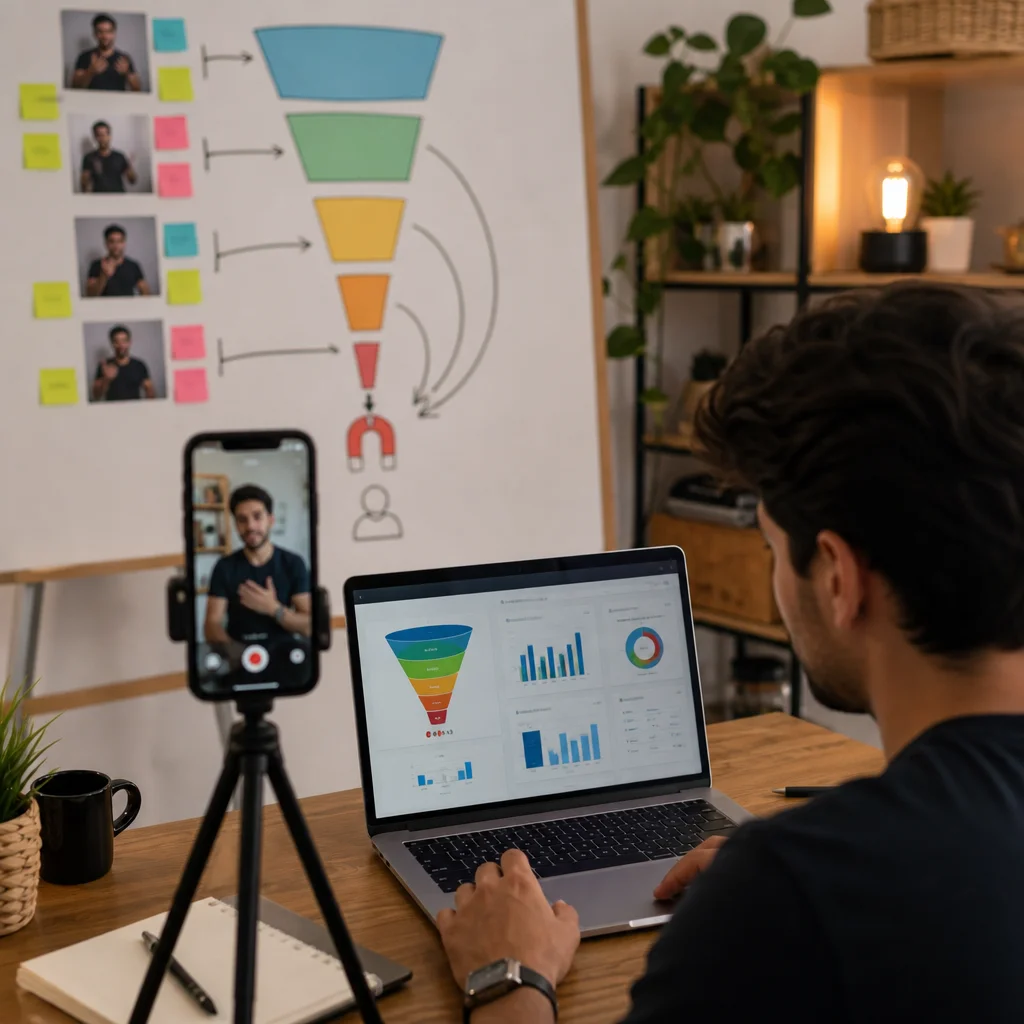
    Actionable takeaway: Before hiring your next vendor, map out your entire customer journey. Where do prospects see you first? What content moves them forward? Where do they convert? If your answer involves multiple vendors working independently, you’ve identified your gap.

    The Hidden Costs of Managing Video Separately From Your Digital Strategy

    When video production operates separately from your digital strategy, you’re paying a steep price that doesn’t always show up in your budget spreadsheet. First, there’s the inefficiency cost. A video producer creates content based on their understanding of what “looks good.” Meanwhile, your paid ads specialist knows exactly which messaging angle drives conversions. These insights never connect.

    Second, you waste production resources. Shooting multiple videos for different platforms or purposes often means recreating similar content instead of maximizing what you’ve already produced. A 30-second video could work across TikTok, Instagram Reels, YouTube Shorts, and paid ads with smart adaptation, but that only happens when production and distribution strategy overlap.

    Third, there’s the intelligence gap. Your social media manager sees what content gets engagement. Your ads team sees what generates conversions. Your website analytics show where visitors drop off. But nobody sees the complete picture. Each vendor optimizes their piece without understanding how it affects the whole system.

    The financial impact compounds quickly. You’re paying for separate consultations, separate strategy sessions, and separate revisions. More critically, you’re losing opportunities because your marketing isn’t orchestrated.

    Actionable takeaway: Calculate the total cost of your current marketing vendors. Then identify which insights each one has that the others are missing. That gap represents money you’re leaving on the table.

    What End-to-End Video Marketing Actually Means

    End-to-end video marketing means every piece of your video strategy connects to your business goals. It starts with your core message and target audience, then extends through production, distribution, advertising, and measurement.

    In practice, this means:

    • Your video content is created specifically to feed your marketing funnel, not just to look cinematic
    • Short-form content is produced in ways that work across multiple platforms and ad formats
    • Messaging in your videos aligns with what your paid ads team is testing and what your website is communicating
    • Distribution strategy is determined before production even begins, not as an afterthought
    • Analytics from video performance inform future production decisions
    • Every video serves a clear business purpose: building awareness, generating leads, or driving conversions

    The key difference from traditional video production: We don’t make videos and then figure out where to use them. We determine where they need to go and what they need to accomplish, then design production around those requirements.

    This approach eliminates the waste of fragmented marketing while giving you a cohesive brand voice across every platform your customers use.

    How We Combine Short-Form Content With Complete Digital Systems

    We build short-form video as the engine of your digital strategy, not as an isolated content type. Here’s how the system works together.

    Video production becomes the source material for multiple channels. A single shoot day might produce content for organic social posts, paid ad variations, website heroes, email sequences, and even lead magnets. This efficiency doesn’t sacrifice quality because we plan for multiple uses during production.

    Social media management uses video as the primary content format because it outperforms text and static images dramatically. But posting video isn’t enough. We schedule, respond to comments, and test different posting times based on when your audience is active. Video gets amplified through consistent, strategic posting.

    Paid advertising then takes your best-performing organic video and distributes it to cold audiences at scale. We test different cuts, captions, and calls-to-action based on the platform. Meta ads work differently than Google ads, and both require format variations we’ve already accounted for during production.

    Lead generation systems capture the attention video creates. Forms, landing pages, and email sequences are ready to convert viewers into prospects the moment they’re interested.

    SEO and website optimization ensures your video content supports your search rankings and keeps visitors on your site longer, which search engines reward.

    These pieces move in coordination rather than in parallel. That coordination is where real results happen.

    The Role of Cinematic Storytelling in Your Marketing Funnel

    Storytelling is the bridge between awareness and conversion. Generic product videos or talking-head testimonials don’t create emotional connection. Cinematic storytelling does.

    When we produce your short-form video content, we’re not just explaining what you do. We’re showing how your solution changes someone’s life or business. We craft narratives that make viewers want what you’re offering before you ever ask them to buy.

    This works across your entire funnel:

    • Awareness stage: Cinematic videos that tell brand stories or demonstrate problems your audience faces, making them stop scrolling
    • Consideration stage: Narrative videos showing how similar customers benefited from your solution
    • Decision stage: Testimonials and case study videos that build trust and lower barriers to conversion

    The production quality matters here because it signals credibility. Poorly produced video says you don’t care about details. Cinematic video says you’re a professional, established business worth trusting with their money.

    Actionable takeaway: Review your top three performing videos. Are they cinematic stories that create emotion, or are they functional explanations? If they’re functional, there’s room to improve performance by adding narrative and polish.

    Turning Video Viewers Into Qualified Leads

    Views are vanity metrics if they don’t convert. Our approach ensures every video viewer has a clear path to becoming a lead.

    This starts with intentional video placement. Organic videos on your social feeds build awareness and nurture existing followers. Paid videos reach cold audiences who’ve never heard of you. Each serves a different purpose, and the messaging shifts accordingly.

    Then we embed conversion mechanics directly into the video experience. Captions direct viewers to click a link. End screens provide immediate paths to your website. Comment strategies encourage questions that let us reach out directly. Email sequences follow up with viewers who engaged but didn’t convert immediately.

    For viewers who are ready to convert, we have landing pages, contact forms, and offer pages optimized specifically for video traffic. The copy and design match the message they just saw, reducing friction.

    We also segment your audience. Someone who watched your testimonial video is closer to buying than someone who watched your brand awareness content. They get different follow-up messages and offers because they’re at different stages.

    Actionable takeaway: Look at your current video content. When someone finishes watching, what are they supposed to do next? If the answer isn’t clear, you’re losing conversions.

    Integrating Video Across Your Social Media and Paid Advertising

    Social media and paid ads work best when they’re coordinated, not competitive. We see them as two parts of one system.

    Organic video on social media serves multiple purposes. It builds your audience, tests messaging ideas, and creates content you can repurpose into paid ads. Your organic content strategy directly informs what we promote with paid dollars.

    When we move to paid advertising, we’re taking your best organic performers and distributing them to larger audiences. But paid ads aren’t just amplified organic content. We test different cuts, different captions, different calls-to-action. Meta ads get a specific format and message. Google ads get another. LinkedIn ads get another. Platform specificity matters because users behave differently on each platform.

    The feedback loop runs both directions. What works in paid ads informs your organic strategy. Messaging angles that drive conversions on Meta get highlighted in your organic posts. We’re constantly learning from paid performance to improve organic content.

    This integration also extends to your brand voice and visual identity. Every video, organic or paid, reinforces your brand standards so your audience sees consistent messaging everywhere they encounter you.

    Measuring What Actually Matters: ROI From Video Content

    Video ROI isn’t measured in views. It’s measured in leads, customers, and revenue. We track metrics that connect directly to business results.

    Early in the funnel, we monitor engagement rates, completion rates, and reach. These show whether your video is stopping the scroll and keeping attention. But we don’t stop there.

    As viewers move through your funnel, we track click-through rates to your website, form submissions, and email signups. These metrics show whether video is moving people toward conversion. We segment this data by video type, topic, and platform so we understand what actually resonates with your audience.

    For paid video, we track cost per lead and cost per conversion. This tells us exactly how much you’re spending to acquire a qualified prospect or customer. We use this data to continuously optimize campaigns, turning off underperforming variations and doubling down on what works.

    We also track revenue when possible, connecting video campaigns directly to sales. This is the ultimate metric because it shows net business impact.

    Actionable takeaway: If you can’t connect your video marketing to at least one of these metrics (views, clicks, leads, revenue), the video isn’t part of a complete strategy. Demand metrics and optimization.

    How We Scale Video Production Without Compromising Quality

    Growing your video marketing typically requires producing more content more frequently. That scale can degrade quality if you’re not strategic about production workflows.

    We handle scale through a combination of repeatable production systems and strategic variation. Your brand style guide creates guardrails so every video looks like it came from your business. Template-based workflows for certain video types (testimonials, quick tips, product demos) let us produce at volume without starting from scratch each time.

    We also differentiate production effort based on each video’s purpose. Your hero brand story gets full cinematic treatment because it serves awareness and positions your business. Quick social media tips get produced efficiently without losing quality because they serve a different purpose.

    Shooting schedules matter too. Batching production days means we’re shooting multiple videos in single sessions, which is more efficient and consistent. We plan the full month or quarter of content upfront so editing and post-production flow smoothly.

    Technology helps here. We use templates, asset libraries, and organized workflows so production and editing happen faster without cutting corners on the final product.

    Getting Started With a Comprehensive Video Marketing Strategy

    If your marketing currently lives in silos, the first step is mapping your customer journey. Where do prospects first learn about you? What content moves them forward? Where do they currently convert or drop off?

    From there, we develop a strategy that coordinates video production, social distribution, paid advertising, and lead capture. This strategy document becomes your roadmap, guiding which videos to produce, when, where they’ll live, and what success looks like.

    Then we move into production. We typically start with your core brand story and top-performing video types based on your research, then expand to other content categories over time.

    The entire process is measurement-focused. We’re constantly learning what works, optimizing production and distribution accordingly.

    If you’re ready to move beyond fragmented video marketing and build a system that actually drives leads and sales, let’s talk about what an integrated strategy looks like for your business. We’ll show you how coordinated video marketing outperforms the vendor-by-vendor approach.

    For further reading: End-to-end video marketing.

    Contact us today for a free consultation to see how we can help you grow your business.

    Frequently Asked Questions (FAQ)

    How does combining video production with digital strategy actually improve our lead generation?

    We handle both the creative and the conversion side, which eliminates the gap where most video campaigns lose momentum. Our short-form content drives attention on social platforms, while our simultaneous paid advertising and lead capture systems ensure that viewers convert into qualified prospects. When video production and digital strategy operate as one system rather than separate services, we typically see 3-4x higher lead quality because the messaging, timing, and audience targeting all reinforce each other.

    What makes your approach different from just outsourcing video production?

    We don’t hand off videos and walk away. Our team manages the entire journey from concept through performance tracking, which means we optimize based on real conversion data rather than vanity metrics like views. We also integrate our cinematic content directly into your Meta and Google campaigns, AEO strategy, and social media calendar so nothing sits unused. This integration is what transforms video from a content asset into a revenue-generating part of your marketing system.

    How do we handle the workload of producing multiple videos without sacrificing quality?

    We’ve built repeatable production workflows and cinematic templates that let us scale efficiently while maintaining the storytelling standard your brand needs. Our process balances efficiency with creativity, so we can deliver consistent output across your social channels, landing pages, and ad sets without cutting corners on the visual quality that actually converts viewers into leads.

  • Short-Form Content Strategy: Why Agencies Outperform Freelance Marketplaces

    Short-Form Content Strategy: Why Agencies Outperform Freelance Marketplaces

    The Hidden Costs of Fragmented Freelance Solutions

    The shift toward short-form video has been seismic. What started as a TikTok novelty has become the dominant format across Instagram Reels, YouTube Shorts, and LinkedIn. For growth-focused business owners, the temptation is obvious: hire individual freelancers from marketplaces to handle production, editing, and posting. It’s cheaper upfront, seems faster, and feels like a straightforward solution.

    But by the time you’ve coordinated with three different creators, revised briefs because no one understood your brand voice, and watched your posting schedule slip because freelancers are juggling multiple clients, you’ll understand why integrated agencies deliver measurably better outcomes.

    When you work with freelancers from global marketplaces, you’re buying labor in isolation. One person shoots, another edits, a third handles captions, and a fourth manages posting. Each transaction feels affordable individually. Yet the total cost burden extends far beyond hourly rates.

    The real expense comes from your time investment. You become the project manager, creative director, and quality control officer across disconnected workflows. A freelancer misses your brand guidelines and you’re rebranding assets mid-production. A script doesn’t resonate because no one validated it against your messaging strategy. A posting schedule derails because the freelancer has ten other clients with tighter deadlines.

    Consider a typical scenario: you hire a videographer for $2,000, an editor for $1,500, and a social media manager for $1,200 monthly. Sounds reasonable at $4,700. But now you’ve spent four hours writing detailed briefs that could have been conversations with a team that already knows your business. You’ve had two rounds of revisions because the creative output didn’t align with your sales funnel. You’ve missed two weeks of posting because freelancers weren’t coordinated.

    The hidden costs aren’t just financial. They’re strategic. Fragmented teams can’t see the bigger picture of your brand narrative or how each piece of content fits into a lead generation system.

    Why Freelance Marketplaces Fall Short for Brand Consistency

    Consistency across platforms is how audiences recognize and trust your brand. When you work with different freelancers for different projects, you’re essentially working with different interpretations of who you are.

    One creator produces cinematic, slow-paced brand stories. Another delivers fast-cut, energetic promotional clips. A third focuses on educational content with a completely different visual language. To your audience, these don’t feel like variations of the same brand. They feel like different brands with similar logos.

    This inconsistency gets worse across platforms. Your Instagram Reels have a specific color grade and pacing. Your TikTok content shifts to trending audio and quicker cuts. Your YouTube Shorts follow yet another structure. Platforms vary, absolutely, but your core brand identity should be unmistakable across all of them.

    Freelancers optimize for individual projects and individual platforms. They don’t sit in strategy meetings where you discuss how brand voice should evolve. They don’t see the quarterly roadmap or understand which audience segments need which messages. They deliver what was requested, not what serves your business growth.

    The consequence is a fragmented visual identity that confuses your audience instead of building recognition and trust. When audiences see your content, they should immediately know it’s you.

    The Integration Problem: Content Without Strategy

    Many business owners treat content creation and marketing strategy as separate functions. Content is the “creative” side. Strategy is the “business” side. This split is a fundamental mistake that freelance marketplaces naturally encourage.

    A freelancer produces a beautiful four-minute brand film. It’s cinematic, well-shot, and genuinely engaging. But it wasn’t built around your customer’s actual decision-making journey. It doesn’t move someone from awareness to consideration. It doesn’t address the specific objections your mid-market clients have. It doesn’t connect to a landing page, email sequence, or retargeting campaign. It’s content for content’s sake.

    Strategic content works backward from your business goals. If you need qualified leads from small business owners in the service industry, every piece of content should serve that mission. Your short-form videos should highlight results your existing clients achieved, not just showcase your capabilities. Your social media calendar should build narrative momentum across weeks, not jump randomly between topics. Your paid advertising should amplify the specific content that actually converts.

    Freelancers don’t know your conversion metrics, your sales cycle, or your customer acquisition cost targets. They can’t. They’re hired for production, not strategy. Agencies exist to bridge this gap, combining creative execution with business-focused planning.

    How Unified Agency Teams Drive Better Results

    A genuine agency functions as an extension of your marketing leadership. The same strategist who plans your quarterly content roadmap also reviews every script, brief, and edit. The same videographer who captured your brand film understands the visual system you’re building across all channels. The same social media manager who posts your content is also analyzing engagement and refining the message based on what’s working.

    This continuity creates exponential returns. When your team has context, they make smarter creative decisions. A videographer shoots bonus b-roll because they understand it will support future content pillars. An editor structures a piece differently because they know which format drives the most saves and shares on your primary platform. A strategist spots an emerging narrative that can be amplified across three upcoming campaigns.

    Unified teams also compress timelines. There’s no waiting for a freelancer’s availability across time zones. There’s no communication lag through asynchronous briefs. When you need to iterate or pivot, it happens in days, not weeks.

    The financial model shifts too. Instead of paying per project, you’re investing in dedicated capacity. That $7,000 you spent on three separate freelance projects becomes $5,500 monthly for a team focused entirely on your growth. The cost per deliverable drops. The quality per deliverable rises. The strategic alignment becomes real.

    Our Approach to Cinematic Short-Form Content

    We build every short-form video around three principles: strategic intent, cinematic quality, and platform optimization.

    Strategic intent means every 15 to 60-second video serves a specific purpose in your customer journey. We’re not making content that looks good in a portfolio. We’re making content that moves someone closer to becoming a client. That might mean showcasing a transformation, addressing a specific pain point, or demonstrating how your process works. The creative expression serves the business outcome, not the other way around.

    Cinematic quality is our differentiator. Most short-form content relies on quick cuts, trending audio, and visual trends that fade fast. We invest in production value: thoughtful color grading, intentional pacing, professional sound design, and short-form video content that looks expensive because we treat it as such. This approach ages better, builds stronger brand perception, and typically converts at higher rates than trend-driven alternatives.

    Platform optimization means we understand the nuances of each platform’s algorithm and audience behavior. Instagram Reels reward a different editing rhythm than TikTok. YouTube Shorts require different storytelling structures than LinkedIn. We adapt our approach strategically, never formulaically.

    Building Sustainable Lead Generation Systems

    Content and advertising work together. Brilliant content without distribution strategy generates awareness but not leads. Paid advertising without authentic, valuable content burns budget on low-quality traffic.

    We build integrated systems where content and paid campaigns reinforce each other. A short-form video tells a transformation story. That video becomes an organic post, then a retargeting asset, then a paid campaign targeting your ideal customer profile. Email sequences nurture viewers who aren’t ready to convert. Landing pages capture information from those ready to move forward.

    This systematic approach creates compounding returns. As we produce more content, our paid advertising becomes more efficient because we’re testing real assets your audience has already engaged with organically. Our email lists grow richer because we’re nurturing specific audience segments based on content consumption. Our understanding of what messaging resonates deepens with every campaign, making future strategy smarter.

    Sustainable lead generation isn’t a tactic. It’s a system built on consistent content production, strategic paid amplification, and continuous optimization based on real performance data.

    Measuring Performance Across All Channels

    Fragmented freelance work creates fragmented metrics. You see video completion rates here, social engagement there, landing page traffic somewhere else. No one connects these dots.

    We report on metrics that matter to your business: cost per lead, lead quality by source, conversion rate by campaign, and content performance against benchmarks. We track which content themes generate the most high-intent engagement. We measure how your brand perception shifts across social platforms. We understand exactly which paid channels are driving profitable customer acquisition.

    This measurement framework guides everything we do. If a particular content pillar isn’t converting, we adjust. If a platform is generating leads at double the cost, we rebalance budget. If audience feedback suggests a messaging shift, we evolve. Performance data becomes our creative compass.

    Why Growth-Focused Brands Choose Full-Service Agencies

    Growth-focused business owners have simple criteria: does this investment drive measurable business outcomes? Freelance marketplaces feel cheaper until you factor in time, inconsistency, and missed strategic opportunities. Agencies cost more but operate as a marketing function that compounds.

    The brands we work with typically juggle multiple locations, complex sales cycles, and sophisticated customers. They can’t afford disjointed content strategy. They need their visual identity to feel professional and intentional. They need their content to feed actual sales pipelines.

    As your business scales, the cost of fragmentation becomes unbearable. You need integrated strategy, consistent execution, and accountable results. You need to trust your marketing partner with your brand voice and your growth targets.

    Getting Started With Integrated Content Strategy

    If you’re currently working with freelancers and sensing the friction we’ve described, starting with an agency doesn’t require ripping everything out and starting over. It means moving toward strategic integration.

    Begin with a content strategy audit. Map your current content against your customer journey. Identify gaps where strategic content could move people toward conversion. Define the key narratives you want your brand to own.

    From there, plan a content production roadmap for the next quarter. Define the primary themes, audience segments, and platforms you’ll prioritize. This roadmap becomes your blueprint for consistent, strategic content production.

    We’ve built this process specifically for growth-focused business owners who are ready to move beyond freelance coordination toward integrated marketing. If you’re ready to explore how unified strategy and cinematic quality could serve your brand, let’s talk about your specific goals and how we could support them.

    Contact us today for a free consultation to see how we can help you grow your business.

    Frequently Asked Questions (FAQ)

    How does working with us differ from hiring individual freelancers for video production and marketing?

    We provide integrated strategy across content creation, paid advertising, social media management, and lead generation all from one team. With us, your short-form videos connect directly to your Meta and Google ad campaigns, your SEO strategy aligns with your content calendar, and your lead systems capture the attention we generate. Freelancers typically work in silos, leaving gaps between what gets produced and how it performs in your actual marketing funnel.

    What makes your approach to short-form content different than other agencies?

    We focus specifically on cinematic quality in short-form formats designed for platforms like Instagram, TikTok, and YouTube Shorts. Our content isn’t just visually compelling; we structure every video to support your lead generation and sales goals by understanding your customer journey and where that content actually needs to work. We measure and optimize based on conversions and qualified leads, not just engagement vanity metrics.

    How do you ensure consistency across our brand while managing multiple marketing channels?

    We own your entire strategy, so whether we’re creating content, managing your social accounts, running your paid campaigns, or optimizing your website, everything reflects the same brand voice and business objectives. Our team coordinates all touchpoints rather than requiring you to brief different vendors separately, which means your message stays aligned across platforms and your marketing compounds rather than conflicts.

  • Why Your Store Needs Ecommerce Website SEO to Survive

    Why Your Store Needs Ecommerce Website SEO to Survive

    Why Your Store Needs Ecommerce Website SEO to Survive

    Why Most Online Stores Struggle to Survive Without SEO

    Ecommerce website SEO is the practice of optimizing your online store so that product pages, category pages, and content appear in Google search results — without paying for ads.

    Here’s a quick breakdown of what it involves:

    What It Is What It Does
    Keyword optimization Connects your products to what buyers are searching for
    Technical SEO Helps Google crawl and index your store efficiently
    On-page content Convinces both search engines and shoppers to choose you
    Schema markup Displays prices, ratings, and stock info directly in results
    Link building Builds authority so Google ranks you over competitors

    The stakes are high. 75% of people never scroll past page one of search results. If your store isn’t there, you’re essentially invisible.

    And visibility matters more than most store owners realize. Organic search drives an average of 43% of ecommerce revenue — yet most small stores invest nothing in it. Every day without SEO is a day your competitors are capturing customers you could have had.

    The good news? SEO compounds. Traffic earned today keeps paying off for months and years — unlike paid ads, which stop the moment your budget runs out.

    I’m Nic Canobbio, founder of Canatos Media, and with over two decades of experience in media strategy and content production — including building digital-first brands with millions of views — I’ve seen how ecommerce website SEO separates stores that scale from ones that stall. Let’s walk through exactly how to build that foundation.

    Ecommerce SEO lifecycle infographic showing stages from keyword research to organic revenue growth - ecommerce website seo

    Defining Ecommerce Website SEO and Its Strategic Value

    When we talk about ecommerce website seo, we are describing a specialized branch of search engine optimization. Unlike a blog or a standard business site, an online store has “transactional intent.” This means the people searching aren’t just looking for information; they are looking to pull out their credit cards and buy something.

    In 2026, the search engine results pages (SERPs) have evolved. Google doesn’t just show blue links anymore. For ecommerce queries, you’ll see product carousels, rich images, and price comparisons. If you aren’t optimized, you won’t appear in these high-converting visual sections.

    The strategic value of SEO lies in its ability to drive organic revenue. While paid ads are great for a quick spike, they are a variable cost that eats into your margins. SEO, on the other hand, is an investment in an asset you own. According to research, organic traffic for ecommerce can have a 15x ROI compared to paid ads over a 24-month period.

    Beyond just sales, ecommerce website seo builds brand authority. When you consistently rank for “best dog halloween costumes” (a keyword that gets 1.3K searches monthly) or specific product names, shoppers begin to trust you as a leader in your niche. This trust makes customer acquisition significantly cheaper over time.

    For those looking to stay ahead of the curve, we also focus on AI Search Optimization, ensuring your products are the ones recommended by AI assistants and LLMs. For a deeper dive into the mechanics of ranking, check out this Ecommerce SEO Guide: Boost Rankings & Sales in 2026.

    Building a Scalable Site Architecture and Category Framework

    One of the biggest mistakes we see in Long Island ecommerce shops is a messy site structure. If Google’s “crawlers” get lost in your site, they won’t index your products. We advocate for a “flat” site architecture.

    flat site architecture diagram showing homepage to categories to products - ecommerce website seo

    The 3-Click Rule

    A golden rule for ecommerce website seo is that a user (and a search engine) should be able to reach any product on your site within three clicks from the homepage. The structure usually looks like this:

    • Homepage -> Category Page -> Subcategory Page -> Product Page

    Category Hierarchy and Faceted Navigation

    Your category pages are your “landing pages” for broad search terms. If you sell shoes, your “Men’s Running Shoes” category page is a vital SEO asset. However, large stores often use “faceted navigation” (filters for size, color, price). If not managed correctly, these filters can create thousands of duplicate URLs, wasting your “crawl budget.” We use canonical tags to tell Google which version of the page is the “master” copy.

    URL Structure and Breadcrumbs

    Clean URLs are essential. Instead of a URL like mystore.com/p?id=12345, we want mystore.com/shoes/mens/nike-air-max. This tells both the user and Google exactly what is on the page. We also implement breadcrumb navigation, which provides a clear path back to the homepage and helps Google understand the relationship between pages.

    At Canatos Media, our services include auditing these structural elements to ensure your site is built for growth. Proper internal linking—connecting your blog posts to your products—further distributes “link equity” across your site, boosting the rankings of your most important pages.

    On-Page Excellence: Product Pages and Content Strategy

    Your product pages are where the “magic” happens—it’s where browsers become buyers. To rank well, you cannot simply copy and paste the manufacturer’s description. Google views that as “duplicate content” and will often hide your page in favor of the original source.

    The 300-Word Rule

    We recommend at least 300 words of unique content for every product page. This content should cover:

    1. Features and Benefits: What does it do, and why does the customer need it?
    2. Specifications: Size, weight, material, etc.
    3. Use Cases: How and where should the product be used?

    Product Page Essentials

    To maximize ecommerce website seo, every product page must include:

    • Unique Title Tags: Include the Brand + Product Name + Key Attribute (e.g., “Sony WH-1000XM5 Wireless Headphones – Black”). Keep these under 60 characters.
    • Compelling Meta Descriptions: These are your “ad copy” in the search results. Include perks like “Free Shipping” or “30-Day Returns” to boost your click-through rate.
    • Image Alt Text: Google can’t “see” images, so we use alt text to describe them (e.g., alt="mens-black-nike-running-shoe-side-view").
    • User Reviews: Reviews provide fresh, unique content that Google loves. They also act as social proof for Conversion Rate Optimization (CRO).

    For small businesses in the Tri-State area, understanding SEO for Small Businesses UK: What Actually Works (2026) provides great parallel insights into how localized competition works, even if the geography is different.

    Buying Guides and Content Marketing

    Don’t just sell; educate. Creating buying guides (e.g., “The Ultimate Guide to Choosing a Hiking Tent”) allows you to rank for “informational” keywords. You can then link these guides directly to your product pages, moving customers through the sales funnel.

    The Role of Structured Data in Ecommerce Website SEO

    Structured data, or “Schema markup,” is a piece of code you add to your site to help search engines understand your content. For ecommerce, this is non-negotiable.

    When you implement Product Schema, Google can display “Rich Snippets” in the search results. This means a shopper can see your product’s price, whether it’s in stock, and its star rating without even clicking on your site.

    • AggregateRating: Shows the average star rating and number of reviews.
    • Offer Schema: Displays the price and currency.
    • Availability: Shows “In Stock” or “Out of Stock” status.

    Rich snippets can increase your organic click-through rate by up to 30%. It provides price transparency and availability signals that build immediate trust with the shopper.

    Technical Foundations and Performance Benchmarks

    Technical SEO is the “engine” of your website. If the engine is broken, the car won’t move, no matter how pretty the paint job (content) is.

    Core Web Vitals dashboard showing LCP, CLS, and INP metrics - ecommerce website seo

    Page Speed and Core Web Vitals

    In 2026, page speed is a confirmed ranking factor. Google uses “Core Web Vitals” to measure user experience:

    • LCP (Largest Contentful Paint): How fast the main content loads. Target: Under 2.5 seconds.
    • CLS (Cumulative Layout Shift): Does the page jump around as it loads? Target: Under 0.1.
    • INP (Interaction to Next Paint): How responsive is the site when a user clicks something? Target: Under 200ms.

    Slow sites lose money. Every 1-second delay in page load can result in a 7% drop in conversions. We help clients optimize these metrics through image compression, minifying code, and using Content Delivery Networks (CDNs). You can learn more about how we package these technical fixes in our pricing section.

    Mobile-First Indexing

    Google primarily uses the mobile version of your site for ranking and indexing. If your store looks great on a desktop but is hard to use on a phone, your rankings will suffer. Ensure your buttons are easy to click and your text is readable on small screens.

    Essential Technical Files

    • HTTPS: An SSL certificate is mandatory for security and ranking.
    • XML Sitemaps: A map of your site that you submit to Google Search Console to ensure every product is found.
    • Robots.txt: A file that tells Google which pages not to crawl (like your checkout page or admin login).
    • Canonical Tags: These prevent duplicate content issues by pointing Google to the “main” version of a page.

    Prioritizing Keywords for Ecommerce Website SEO Success

    Keyword research for ecommerce is different from blogging. We aren’t just looking for high volume; we are looking for commercial intent.

    We categorize keywords into two main buckets:

    1. Informational: “How to clean leather boots” (Good for blogs).
    2. Transactional: “Buy men’s timberland leather boots size 10” (Good for product pages).

    Using Transactional Modifiers

    To capture buyers, we target keywords with “modifiers” like:

    • Buy
    • Price
    • Sale
    • Best
    • Discount
    • Free Shipping

    The Power of Long-Tail Keywords

    While “shoes” is a high-volume keyword, it is nearly impossible to rank for. However, “waterproof trail running shoes for wide feet” is a long-tail keyword. It has lower search volume but much higher conversion rates because the user knows exactly what they want.

    Query Type Example Query Intent Difficulty
    Informational “What are the best running shoes?” Researching High
    Commercial “Nike vs Adidas running shoes” Comparing Medium
    Transactional “Buy Nike Air Max 270 size 11” Ready to Buy Low/Specific

    We often use Amazon’s autocomplete and Google’s “People Also Ask” sections to find these specific phrases that shoppers are actually typing.

    Frequently Asked Questions about Ecommerce SEO

    How long does it take to see results from ecommerce SEO?

    SEO is a marathon, not a sprint. Typically, you will start to see initial ranking movements within 3 to 6 months. However, the real “compounding growth” usually kicks in around the 12-month mark. This is when the ROI becomes significantly more attractive than paid advertising.

    Can I build a successful store using only SEO?

    While it is possible—especially in “restricted industries” (like vape or CBD) where you can’t run traditional ads—we generally recommend a multi-channel approach. SEO provides the sustainable, long-term foundation, while paid ads (SEM) can provide immediate traction while you wait for your organic rankings to climb.

    How do I handle out-of-stock products for SEO?

    Never just delete a page! If a product is temporarily out of stock, keep the page live, update the schema to “OutOfStock,” and add a “Notify me when back” button. If a product is permanently discontinued, use a 301 redirect to send users (and search equity) to the most relevant current product or the parent category page.

    Conclusion

    In the competitive landscape of 2026, ecommerce website seo is no longer an optional “extra”—it is a survival requirement. Without a clear strategy for site architecture, technical health, and high-intent keyword targeting, your store is leaving money on the table for competitors to grab.

    At Canatos Media, we specialize in an integrated strategy that connects cinematic content, precise targeting, and technical SEO to drive measurable growth for businesses in the Tri-State area and Long Island. We don’t just want you to rank; we want you to sell.

    Ready to stop being invisible and start scaling your organic revenue? Contact Us to scale your ecommerce store and let’s build a storefront that works as hard as you do.