Why Creative Ideation and Ad Optimization Matter for Your Business
The businesses growing fastest in 2026 aren’t just running ads. They’re running strategic ads backed by creative that captures attention and compels action. Creative ideation and ad optimization are two sides of the same coin: one generates the ideas that resonate with your audience, and the other ensures those ideas reach the right people at the right cost.
Most business owners treat these as separate functions. A creative team builds assets. A performance marketer tweaks targeting and budgets. The result? Mediocre content pushing mediocre results. When ideation and optimization work together, you unlock exponential growth. Better creative performs better at lower cost. Better targeting makes creative perform harder. The compounding effect shows up directly in your bottom line.
For service-based and multi-location brands, this partnership is non-negotiable. You’re competing for attention in saturated markets. Your growth depends on standing out and converting efficiently. We’ve seen businesses double their lead volume and cut cost-per-lead by 40% simply by aligning creative development with performance data from day one.
Action: Audit your current workflow. Ask your team: does your creative department talk to your paid ads team? If the answer is no or “not regularly,” that’s your first gap to close.
The Challenge of Balancing Creative Vision with Performance Metrics
Creative professionals often cringe at spreadsheets. Performance marketers sometimes dismiss creative as a “soft” input. This tension is real, and it kills results.
The core problem: creative excellence and marketing metrics can feel like opposing forces. A stunning 30-second brand film might underperform on ad spend. A bare-bones offer graphic might crush conversion rates but damage brand perception. So which do you choose?
You don’t. Both matter, and the answer lies in building frameworks where both perspectives inform every decision. Creative vision without performance data is art. Performance optimization without creative storytelling is algorithm chasing. Neither scales sustainably.
Here’s what we’ve learned working with dozens of growing brands: the tension dissolves when you establish shared metrics from the start. Instead of debating “is this creative good,” teams should be asking “does this creative move the needle on leads within our cost target?” That single question reframes the entire conversation and forces collaboration.
Action: Define your non-negotiables before creative development begins. What’s your target cost-per-lead? What conversion rate must video content hit? Share these with your creative team as constraints, not restrictions. Creative people rise to constraints.
What Makes a True Creative and Advertising Partner
Not every agency or consultant can hold both responsibilities. It requires a specific skill set and organizational structure. A true creative and advertising partner combines:
Deep creative storytelling capability. This means understanding cinematic principles, narrative arcs, and emotional resonance. It’s not just having a camera or design software. It’s knowing how to tell a story that makes someone stop scrolling.
Advanced advertising platform expertise. Meta, Google, TikTok, YouTube, LinkedIn each have unique mechanics, audience behaviors, and optimization levers. Your partner needs hands-on mastery across channels relevant to your business.
Data literacy across the entire funnel. From ad impressions to click-through rates to conversion tracking to lead quality, your partner must understand how to measure and interpret performance. They connect creative choices to revenue impact.
Lead generation systems thinking. Growing businesses don’t just need traffic. You need qualified leads at predictable cost. This requires integrating ad strategy, landing page design, follow-up sequences, and CRM workflows into one system.
Many agencies claim to do this. Few actually do. Most are either great at creative or great at performance, not both. The gap exists because these disciplines developed separately and require ongoing integration to maintain excellence.
When evaluating potential partners, ask to see examples where they clearly improved both creative quality and performance metrics simultaneously. Not creative wins and performance wins in separate campaigns. Both in the same work.

How Cinematic Content Drives Better Ad Performance
Cinematic content is not a luxury add-on. It’s a performance multiplier. Here’s why:
Attention is the constraint. Your audience scrolls through dozens of ads daily. Cinematic production techniques stop the scroll. Lighting, color grading, composition, and sound design create presence on screen that cheap production simply cannot match. In the first 1.5 seconds, cinematic quality triggers a psychological response: “this is worth my attention.”
Once you have attention, premium production builds trust. Service-based buyers are risk-averse. They’re considering spending thousands with your business. A polished brand film signals professionalism and stability. A low-quality phone video signals the opposite, regardless of your actual capabilities.
But cinematic doesn’t mean expensive for its own sake. Cinematic means intentional. It means every frame serves the message. It means understanding lighting and camera movement enough to guide viewer focus precisely where you want it.
We’ve measured the impact across hundreds of campaigns. Video content with cinematic production values consistently outperforms standard production by 3-5x on engagement metrics and drives 2-3x lower cost-per-click. The performance advantage compounds across retargeting, lookalike audiences, and long-term brand lift.
The technical reality: premium content performs better in algorithmic feeds. Platforms reward engagement. Cinematic content generates more engagement. It’s a straightforward relationship.
Action: Your next campaign should include at least one hero video shot with professional lighting and color grading. Measure engagement and cost-per-result against your baseline. You’ll likely shift your entire production budget after seeing the data.
Our Integrated Approach to Ideation and Campaign Optimization
We structure creative ideation and ad optimization as a single, iterative process rather than sequential stages. Here’s how we work:
Phase 1: Strategic Ideation We start by mapping your audience segments, key conversion drivers, and competitive landscape. What problems do your customers face? What objections do they voice? What specific outcomes matter most? This informs every creative concept we develop. Ideas aren’t random. They’re rooted in customer psychology and business metrics.
Phase 2: Creative Development with Built-In Testing We produce creative assets in batches, building variations intentionally. Different hooks, different emotional angles, different calls-to-action. This isn’t guessing which works. It’s systematic creative testing. We document which elements drive engagement and conversion, and that data feeds back into ideation for the next round.
Phase 3: Campaign Deployment and Real-Time Optimization Once creative launches, we don’t “set it and forget it.” We monitor performance hourly. Which audiences respond best? Which placements drive the lowest cost-per-lead? Which creative variations win? We shift budget to winners and pause underperformers within days, not weeks.
Phase 4: Continuous Refinement We build feedback loops. Performance data informs new creative directions. New creative improves campaign performance. The cycle accelerates. By month two or three of a campaign, you’re running ads that started from data-driven ideation and have been optimized hundreds of times.
This integrated approach is why clients typically see 30-60% improvement in cost-per-result within the first 90 days of partnership.
Social Media Advertising Through a Creative Lens
Social platforms are different from search or display. The user mindset is entertainment, not intent. Your ad isn’t answering a question they searched for. It’s interrupting their feed. This requires creative thinking about how to make interruption welcome.
Our approach: treat every social ad as a piece of content first, and a sales message second. The content job is to entertain, educate, or emotionally resonate. Once you own that attention, the sales message lands. Reverse the order and fail.
On Instagram and TikTok, this means short-form video that hooks viewers in the first frame and maintains momentum. On LinkedIn, it means articulate, relatable storytelling that speaks to professional pain points. On Facebook, it often means testimonial-based content that builds social proof.
We also think differently about ad creative across the customer journey. Early-stage awareness campaigns benefit from brand storytelling and problem-recognition content. Mid-funnel campaigns should showcase specific solutions and differentiation. Retargeting campaigns can be more direct about offers and urgency.
Many agencies run the same creative across all stages. It’s simpler. It’s also ineffective. Each funnel stage requires creative that matches how people think at that moment.
Action: Map your next campaign across three funnel stages and write one creative brief for each stage. Then produce variations of creative for each. Test which approach moves the needle.
Data-Driven Creative Refinement for Continuous Improvement
The best creative partnerships treat performance data as creative feedback. Every metric tells a story about what resonates and what doesn’t.
We analyze engagement metrics like watch time, click-through rate, and audience retention. High retention on a 15-second video segment tells us people are invested in that idea. Low retention signals lost interest, and we know where. We examine demographic and interest-based breakdowns to understand which audience segments engage most. This informs both targeting and future creative direction.
Most importantly, we track the metrics that matter: cost-per-lead and lead quality. A video might get 1,000 views but generate zero qualified leads. Another video might get 300 views and generate 10 leads. The second one wins, and we’d scale it. But many teams celebrate the first because views look better in a presentation.
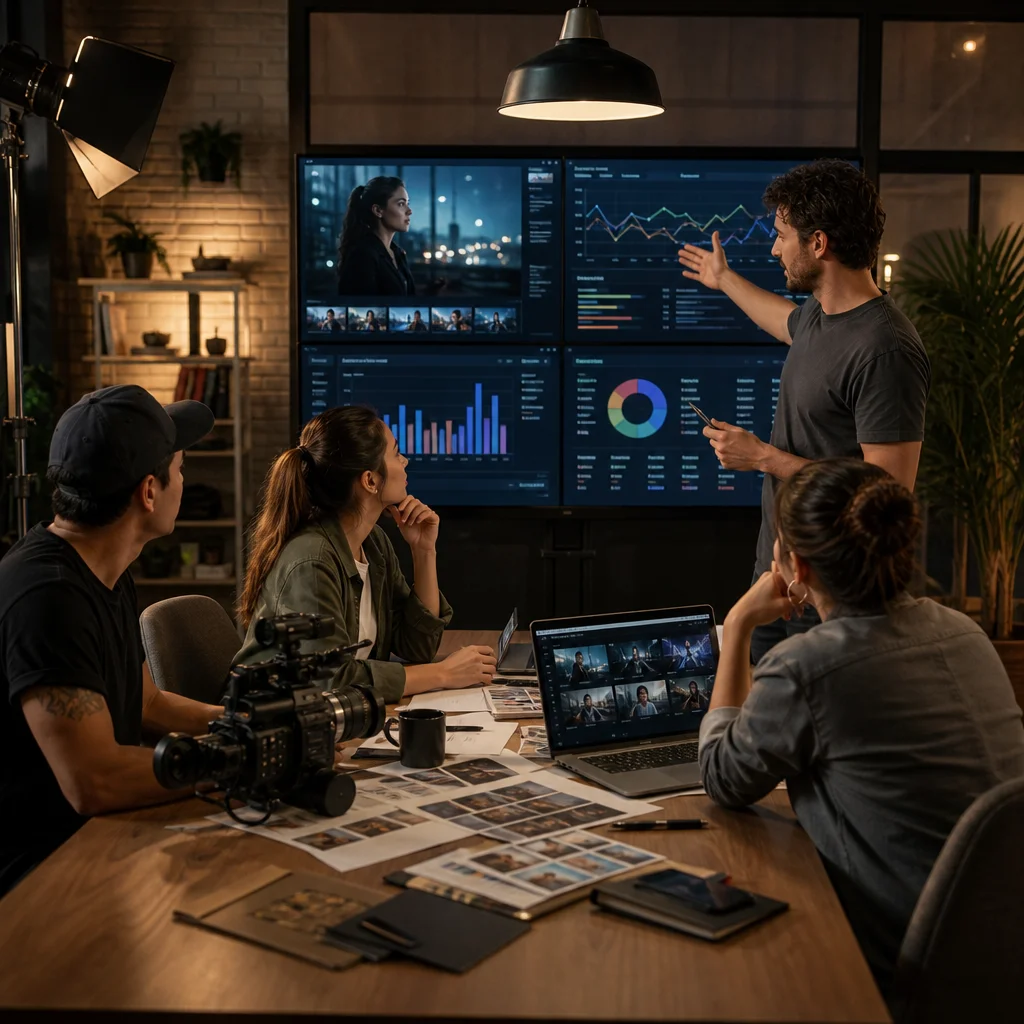
We build dashboards that combine creative performance (engagement metrics) with business performance (leads, cost-per-lead, conversion rate). This shared view forces honest assessment. It also creates natural alignment between creative and performance teams. Everyone’s looking at the same numbers.
Refinement happens continuously. Week one might reveal that longer-form content (60+ seconds) outperforms short-form by 40% for your audience. We immediately shift production strategy. Week three might show that testimonial content beats brand storytelling by 2x. Creative direction evolves. By month two, you’re running campaigns that bear little resemblance to month one, and that’s exactly correct.
Building Lead Generation Systems with Creative Excellence
Lead generation isn’t just about the ad. It’s about the entire system from ad click to qualified lead in your CRM.
Creative plays a role at every stage. The ad creative determines who clicks. The landing page creative (copy, design, video) determines who converts. The thank-you page and follow-up email sequences determine lead quality and engagement.
We approach this holistically. A prospect sees a cinematic brand video ad on Instagram. They click. They land on a page that reinforces the same message and visual language. The page includes another short video walking through your service or customer story. They fill out a form. They receive an email sequence that educates them and builds trust before your sales team connects.
Each touchpoint reinforces the others. The creative storytelling doesn’t end at the ad. It continues through the entire funnel. This consistency multiplies conversion rates.
For multi-location service businesses, this system also needs to adapt by location or service line. A prospect in Boston landing on a page about Boston services with local testimonials converts faster than a generic national page. Our lead generation systems account for this customization while maintaining efficient production and deployment.
Learn more about how end-to-end video marketing drives lead conversion when every touchpoint works together.
From Concept to Conversion: Our Process
We’ve developed a structured process that moves from initial concept to optimized, conversion-driving campaigns:
Week 1-2: Discovery and Strategy We audit your current marketing efforts, analyze your audience, review competitive landscape, and define success metrics. We identify 3-4 core customer pain points that will anchor creative ideation.

Week 3-4: Creative Ideation and Development Our creative team generates 5-10 concept directions addressing identified pain points. We present storyboards, scripts, and creative rationales. You approve direction. We produce hero content and 2-3 variations for testing.
Week 5-6: Campaign Setup and Launch We build ad accounts, set up landing pages, integrate CRM tracking, and deploy creative across relevant platforms. We establish reporting dashboards showing real-time performance metrics.
Week 7+: Optimization and Iteration We monitor daily performance, identify winners, pause underperformers, and generate new creative variations based on what’s working. We schedule weekly strategy calls to review data and adjust direction.
By week 8-12, most clients see clear performance improvement. By month 4, we’ve typically built a repeatable system that generates qualified leads at predictable cost.
Real Results Through Strategic Partnership
The alignment between creative ideation and ad optimization doesn’t just sound good in theory. It shows up in results.
One multi-location home services client came to us running ads with 15-20% landing page conversion rates and high cost-per-lead. Their creative was generic and their targeting unfocused. Over 90 days, through strategic ideation informed by audience data and continuous optimization, we improved landing page conversion to 35%, reduced cost-per-lead by 45%, and increased lead quality score by 30% (measured by their sales team’s close rate).
Another B2B services company was generating leads but struggling with quality. The ads were effective, but they weren’t attracting serious buyers. We refined creative messaging to focus on specific outcomes and decision-maker pain points rather than generic value propositions. Lead quality improved 60%. Their sales team’s close rate doubled.
These results aren’t flukes. They’re consistent because they stem from systematic alignment between creative thinking and performance measurement.
The partnership works when both sides understand they serve the same mission: growing your business profitably. Creative excellence and marketing metrics aren’t in tension. They’re collaborators.
Next Step: If you’re ready to build a growth marketing partnership that combines cinematic creativity with rigorous optimization, we’re here to help. We start with a strategy session to understand your current situation, goals, and challenges. From there, we’ll recommend the right approach for your business and timeline.
Contact us today for a free consultation to see how we can help you grow your business.
Frequently Asked Questions (FAQ)
How do we balance creative storytelling with advertising performance metrics?
We believe the best creative work performs better when it’s grounded in data from day one. Our approach involves testing cinematic storytelling angles against your specific conversion goals, then refining which narrative themes and visual styles actually resonate with your audience. We don’t choose between beautiful content and measurable results—we build both simultaneously by analyzing performance metrics throughout production and optimization phases.
What’s included in our creative ideation and optimization partnership?
We provide full-service creative development starting with strategic brainstorming sessions aligned to your growth targets, followed by short-form video production with multiple variations optimized for different platforms and audiences. Our team then manages ongoing ad optimization across Meta and Google, continuously testing new creative angles while refining existing campaigns based on lead generation data and audience behavior.
Why does cinematic content perform better in our ad campaigns?
We’ve found that higher production quality signals credibility and captures attention in crowded social feeds, which translates to lower cost-per-click and higher engagement rates. Cinematic storytelling also allows us to communicate your brand’s unique value proposition more effectively, which means the leads we generate tend to be more qualified and conversion-ready.