
What Are Paid Ads (and Why They Matter for Your Business in 2026)
Paid ads are a form of digital marketing where you pay a platform — like Google, Meta, or YouTube — to show your message to a specific audience. Unlike organic content, paid ads deliver immediate visibility the moment your campaign goes live.
Here’s a quick breakdown:
- What they are: Ads you pay to place in front of targeted users on search engines, social platforms, and websites
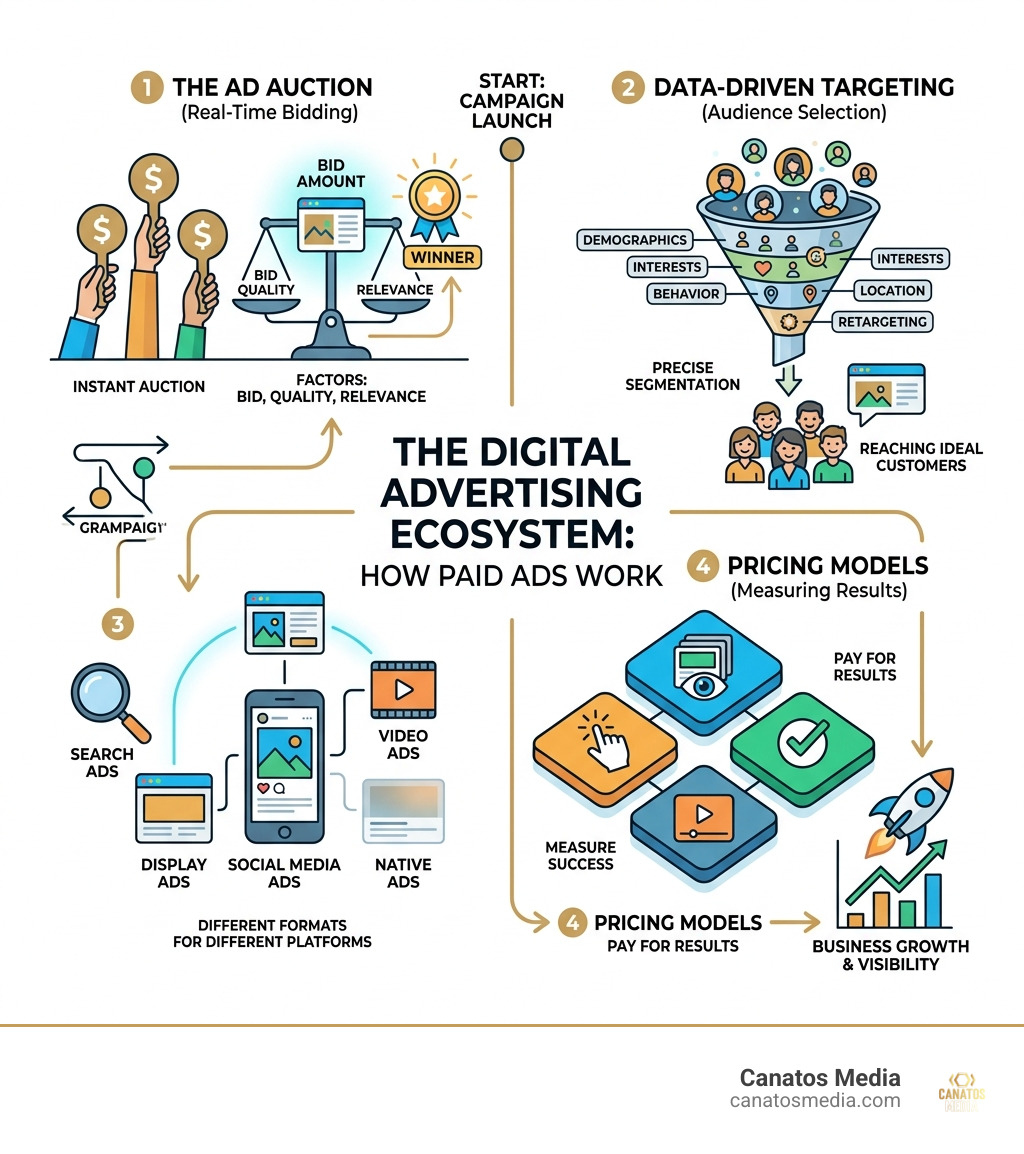
- How they work: You bid in a real-time auction; the platform shows your ad based on your bid, ad quality, and relevance
- Common formats: Search ads, display ads, social media ads, video ads, and native ads
- Pricing models: Pay-per-click (PPC), cost-per-thousand impressions (CPM), cost-per-action (CPA), cost-per-view (CPV)
- Who uses them: Businesses of any size looking to drive traffic, generate leads, or boost sales — fast
Organic marketing like SEO takes months to gain traction. Paid ads can put your business in front of ready-to-buy customers today.
For local businesses especially, that speed matters. Every day without visibility is a day a competitor is capturing your potential customers.
I’m Nic Canobbio, founder of Canatos Media, and with over two decades in media production and business strategy, I’ve helped brands scale through smart paid ads that combine data-driven targeting with compelling creative. This guide walks you through everything I’ve learned — step by step.
Understanding the Mechanics of Paid Advertising
To master paid ads, you first need to understand the “engine” under the hood. It isn’t just about throwing money at a screen; it’s a sophisticated, automated marketplace that operates in milliseconds.

At its core, most modern advertising platforms use an auction system. Every time a user opens a webpage or performs a search, an auction happens behind the scenes. Algorithms determine which ads appear based on several factors: your bid amount, the quality of your ad, and how relevant that ad is to the user’s current intent.
For businesses in the tri-state area and Long Island, this means you aren’t just competing on price. You are competing on how well you understand your local customer. If your ad is highly relevant and provides a great landing page experience, you can often “win” the auction even if a competitor bids more than you.
If you are ready to stop guessing and start growing, you can Start your growth journey with our professional services.
| Feature | Paid Media | Organic Media | Earned Media |
|---|---|---|---|
| Speed | Immediate | Slow/Long-term | Variable |
| Control | High (Budget/Targeting) | Medium (Content) | Low (Third-party) |
| Cost | Direct payment per result | Time and resource heavy | Indirect (PR/Relations) |
| Longevity | Stops when budget ends | Lasts indefinitely | Lasts as long as the buzz |
Paid vs. Organic Media
We often get asked: “If I’m doing SEO, do I really need paid ads?” The answer is almost always yes. Organic media (SEO and organic social) is your long-term foundation. It builds trust and authority. However, search engine results pages (SERPs) are increasingly crowded with sponsored content.
Even if you rank #1 organically for “custom suits in Long Island,” there might be three or four ads appearing above you. Paid ads allow you to “jump the line” and gain immediate reach. By combining the two, you create a All-in-One Marketing Funnel where paid traffic fuels immediate sales while organic traffic lowers your average customer acquisition cost over time.
How the Ad Auction Works
When you set up a campaign, you don’t just “buy” a spot like a traditional billboard. You participate in real-time bidding. The platform’s algorithm looks at your:
- Bid: The maximum you’re willing to pay for a click or impression.
- Ad Quality: How engaging your ad is (measured by click-through rate).
- Relevance: How well your ad matches what the user is looking for.
- Landing Page Experience: Does the link lead to a helpful, fast-loading site?
This system ensures that users see ads they actually care about, which keeps them using the platform. To learn how to navigate these settings for social platforms, check out our guide on Paid Social Media Advertising From Zero to Hero in One Hour.
Major Platforms and Types of Paid Ads
Choosing where to run your paid ads depends entirely on where your customers hang out. In May 2026, the digital landscape is more fragmented than ever, but several giants still dominate the reach.

Search and Display Advertising
Google Ads remains the heavyweight champion of “intent-based” marketing. When someone searches for a service, they are actively looking for a solution. The Google Display Network is equally massive, covering over 2 million sites and reaching over 90% of people on the internet. In fact, it includes over 35 million websites and apps where your visual ads can appear.
Microsoft Advertising (formerly Bing) is also a significant player, often offering a lower cost-per-click for B2B industries. Whether you want to Drive sales, Stand out, Be found, Show up, with Google Ads, the goal is to be there the moment the customer needs you.
Social Media and Video Placements
Social media ads allow for incredible “persona-based” targeting. You can target people based on their interests, job titles, or even life events.
- X (formerly Twitter): With 535 million global monetizable monthly active users (mMAU), X has become a primary platform for discovery. Users spend an average of 30.9 minutes daily on the platform, and it ranks as the #1 platform for discovery compared to competitors.
- YouTube: Reaching over 2.7 billion monthly active users, YouTube is the king of video ads. It’s perfect for the cinematic storytelling we specialize in at Canatos Media.
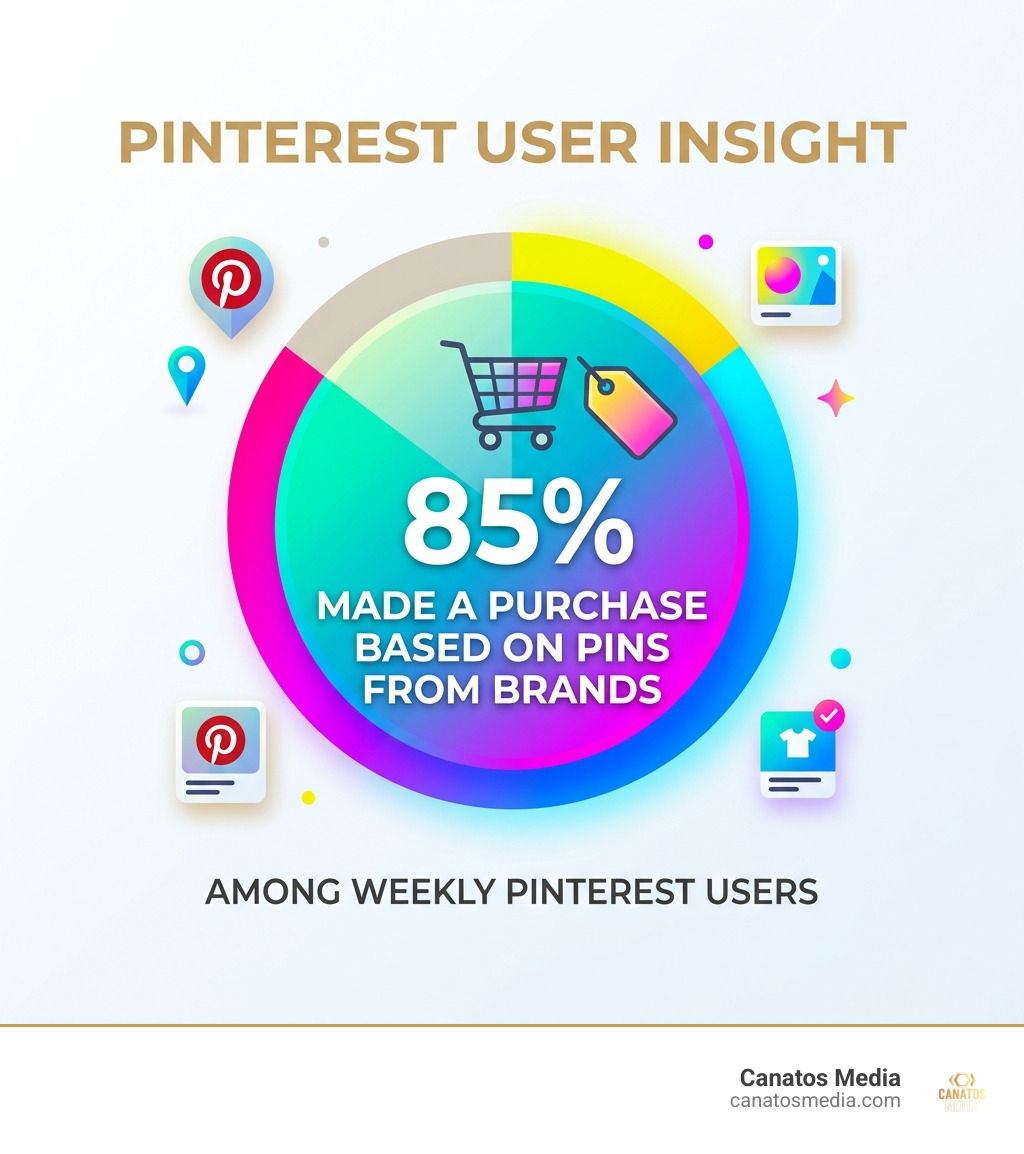
- Pinterest: This is a sleeper hit for e-commerce. 85% of weekly Pinterest users have made a purchase based on Pins they saw from brands.
- Meta (Facebook/Instagram): Despite being the “older” platforms, they remain essential for reach. The average Facebook CPM (cost per 1,000 impressions) in late 2024 was around $13.75, making it a cost-effective way to build awareness.
To see how we’ve applied these platforms for local success, take a look at our Karako Suits Campaign case study. Our Services are designed to help you navigate these choices effortlessly.
Building a High-ROI Advertising Strategy
A successful paid ads strategy isn’t built on a whim; it’s built on data and clear objectives. We always recommend starting with the SMART framework: Specific, Measurable, Actionable, Relevant, and Time-bound goals.
Selecting Pricing Models
Understanding how you are charged is vital for budget management. The most common models include:
- PPC (Pay-Per-Click): You only pay when someone actually clicks your ad. This is the gold standard for search advertising.
- CPM (Cost-Per-Mille): You pay for every 1,000 times your ad is shown. This is best for brand awareness and “top of funnel” visibility.
- CPA (Cost-Per-Action): You pay only when a specific action is completed, such as a sale or a sign-up.
- CPV (Cost-Per-View): Common for video platforms like YouTube, where you pay when someone watches a certain amount of your video.
Leveraging AI and Automation
By May 2026, AI has completely transformed how we run paid ads. Tools like Google’s Performance Max and Meta’s Advantage+ use machine learning to automatically find the best-performing ad formats and audiences for your goals.
AI can help with:
- Smart Bidding: Adjusting your bids in real-time to maximize conversions.
- Automated Creative: Testing different combinations of headlines and images to see what resonates.
- Audience Expansion: Finding “lookalike” audiences who behave just like your best customers.
We integrate these advanced tools into our All-in-One Marketing Funnel to ensure your budget is never wasted on low-performing segments. For a deeper dive into these tactics, check out Paid Social Media Advertising From Zero to Hero in One Hour.
Optimization and Performance Measurement
The “set it and forget it” approach is the fastest way to lose money in advertising. Continuous optimization is the secret to high Return on Ad Spend (ROAS).
Key Metrics to Track
To know if your paid ads are working, you must look beyond “vanity metrics” like likes or impressions. Focus on:
- ROAS (Return on Ad Spend): If you spend $1 and make $5, your ROAS is 5:1. For example, some brands using Shopify Audiences have reported a ROAS as high as 3x using targeted lists.
- CTR (Click-Through Rate): The percentage of people who saw your ad and clicked it. A low CTR usually means your creative or targeting is off.
- CPA (Cost Per Acquisition): How much it costs you to get one new customer.
- Conversion Rate: The percentage of visitors who complete the desired action on your landing page.
We track these metrics religiously for our clients, as seen in the Karako Suits Campaign.
Common Mistakes to Avoid
In our experience working across the tri-state area, we see the same mistakes repeated:
- Broad Targeting: Trying to reach “everyone” usually means reaching no one. Be specific.
- Poor Landing Pages: If your ad is great but your website is slow or confusing, people will leave immediately.
- Ignoring Negative Keywords: In search ads, you should tell the platform what you don’t want to show up for (e.g., if you sell luxury cars, you might add “used” or “cheap” as negative keywords).
- Ad Fatigue: Showing the same image to the same audience for too long leads to them tuning it out.
Avoid these pitfalls and Start your growth journey with our professional services.
Conclusion and Frequently Asked Questions
Paid ads are the most powerful tool in your marketing arsenal for generating immediate results. However, they work best when integrated into a larger strategy. At Canatos Media, we don’t just “run ads.” We create the cinematic video content that stops the scroll, manage the social presence that builds trust, and use data-driven targeting to ensure your message hits the right eyes in Long Island and the tri-state area.
If you’re ready to see measurable growth, let’s talk about how we can build your All-in-One Marketing Funnel.
How much do paid ads typically cost?
The beauty of paid ads is that you are in total control. You can start with as little as $5 or $10 a day. However, costs vary by industry and competition. For instance, the average Facebook CPM is roughly $13.75, but a highly competitive keyword in Google Ads (like “lawyer” or “insurance”) can cost much more per click. We help you set a budget that aligns with your profit margins so your advertising remains a profitable investment, not an expense.
What are the key benefits of paid ads for businesses?
The primary benefits are speed and precision. You get instant traffic the moment you launch. You can target users with surgical precision based on their location, interests, search history, and even the device they are using. Most importantly, everything is measurable. You know exactly which dollar produced which lead, allowing you to scale what works and cut what doesn’t.
How can AI improve my advertising performance?
AI acts as a 24/7 data analyst for your campaigns. It uses predictive analytics to determine which users are most likely to convert and adjusts your bids accordingly. It can also help with creative optimization by automatically serving the best combination of images and text to each individual user. By using AI-powered tools like Performance Max, businesses can reach customers across Search, YouTube, and Display from a single campaign, ensuring no opportunity is missed.
Ready to take the next step? Start your growth journey with our professional services today.