Day: May 28, 2026

  • How We Connect Cinematic Brand Stories to Qualified Leads

    How We Connect Cinematic Brand Stories to Qualified Leads

    Why Visual Storytelling Alone Doesn’t Drive Conversions

    Stunning video content attracts eyeballs. A well-shot brand story can accumulate thousands of views, generate comments, and boost engagement metrics across every platform. Yet we’ve seen countless growth-focused business owners hit a frustrating ceiling: impressive view counts that somehow don’t translate into meaningful leads or revenue.

    The problem isn’t the quality of the storytelling. It’s the assumption that awareness and engagement are the same as conversion. A viewer who loves your cinematic content may never become a customer if there’s no clear path from emotional connection to action. They watch, they feel something, and then they scroll to the next video. Without a system designed to capture that interest and move it toward a purchase decision, even brilliant storytelling becomes expensive brand-building with limited ROI.

    This gap exists because traditional video production focuses on the creative execution while leaving the business mechanics to someone else (or no one at all). Your audience doesn’t convert because the story ends where the engagement begins.

    The Gap Between Engaging Content and Qualified Leads

    Most brands produce content and social media management in isolation from their lead generation and sales infrastructure. Your production team creates the video. Your social media manager posts it. Your sales team waits for inquiries that rarely arrive in predictable volume. Each piece operates independently, and the entire system leaks potential customers at every handoff.

    Consider a multi-location service business that runs a cinematic brand video showing their team in action. The video gets 8,000 views and 120 likes. But those 8,000 people have no reason to provide their contact information because the content doesn’t ask them to. There’s no landing page waiting for their email. No retargeting campaign following them across their next browsing session. The video was created to be watched, not to be monetized.

    The qualified leads you need require intent capture at the moment of highest interest. That window closes fast. If your audience finishes your video and has no next step, they’ve forgotten about you by the time they’re ready to buy.

    Real conversion happens when storytelling combines with a deliberate lead capture system that recognizes where each viewer sits in their buying journey.

    How We Blend Cinematic Production with Lead Capture Systems

    At Canatos Media, we build video-first marketing strategies that treat storytelling and lead generation as a single system, not two separate projects. We start by understanding what defines a qualified lead for your business: what information do you need, what behavior signals buying intent, and where in the customer journey do they become valuable to your sales team?

    From there, we architect the entire experience backward. The cinematic content becomes the hook that draws attention. But the landing page, email sequence, retargeting ads, and sales funnel are built simultaneously with the video production. When someone watches your story, they’re guided toward a specific next step: downloading a resource, scheduling a consultation, or entering a webinar.

    Our approach connects:
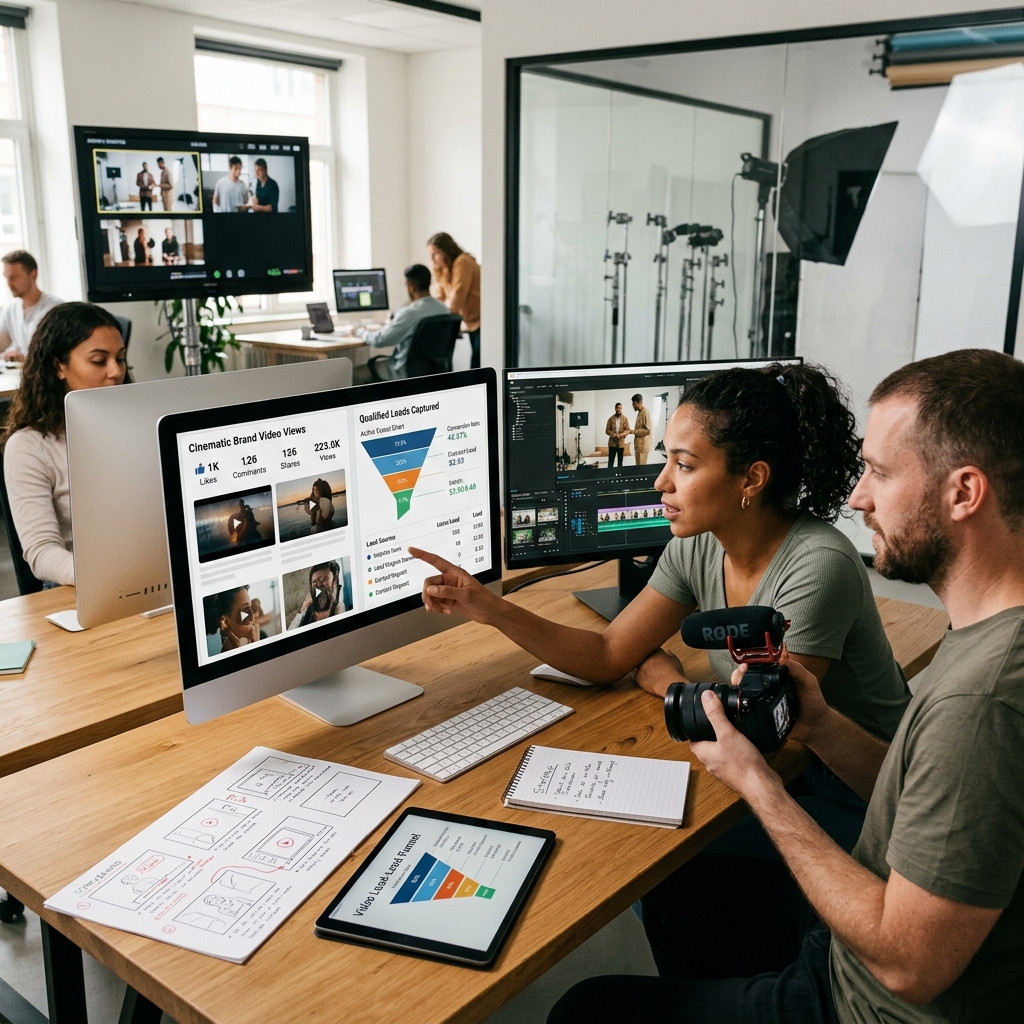
    • Short-form cinematic content optimized for platform algorithms and emotional impact
    • Lead capture pages designed for conversion, not just information
    • Meta and Google advertising that puts your story in front of high-intent audiences
    • Follow-up systems that nurture early-stage interest into qualified opportunities
    • SEO and AEO optimization so potential customers find your story when they’re actively searching

    This isn’t content creation followed by marketing. It’s a unified system where every element reinforces the others.

    Our Integrated Video-First Approach to Revenue Growth

    We’ve learned that growth-focused business owners need more than beautiful content. They need a measurable path from awareness to revenue. That’s why our video-first strategy begins with your revenue targets and works backward to identify what content, channels, and conversion systems will actually get you there.

    A typical engagement might look like this: we produce three to five cinematic short-form videos per month, each designed for different stages of the buyer journey. Awareness videos tell your brand story. Consideration videos demonstrate your unique value. Decision videos address common objections or show social proof. Each video serves a purpose in the funnel, and we track which content resonates with which audience segments.

    We pair video production with full-service digital management that includes paid advertising on Meta and Google, organic social media strategy, and landing page optimization. When someone engages with your content, they’re not left to wander. They’re directed into a system designed to qualify them, nurture their interest, and ultimately connect them with your sales team at the right moment.

    The result isn’t a spike in views followed by silence. It’s a consistent flow of qualified leads, month after month, with measurable attribution back to the content that started the conversation.

    Building Trust Through Authentic Brand Narratives

    Lead generation at scale requires trust. A viewer converts when they believe your brand understands their problem and has the credibility to solve it. Cinematic storytelling creates that belief faster than any sales pitch because it shows rather than tells.

    When we develop your brand narrative, we look for the authentic details that make your story memorable: how your team solved a customer’s real problem, what drives your founders, where your competitive advantage comes from. These become the centerpiece of our cinematic content. We shoot in your locations, with your people, demonstrating your actual work.

    This authentic approach doesn’t just generate leads. It generates higher-quality leads because people who connect with your genuine story are more likely to become loyal customers. They’ve already experienced a preview of your values and competence through the content before they ever speak with your sales team.

    Trust built through storytelling converts faster and at higher margins than trust built through ads alone.

    Converting Viewers Into Leads with Optimized Landing Systems

    The moment someone is emotionally engaged with your brand story, the next interaction is critical. We design landing pages that feel like a natural continuation of your cinematic content rather than a disconnect. The visual style, messaging, and value proposition carry forward from the video into the page.
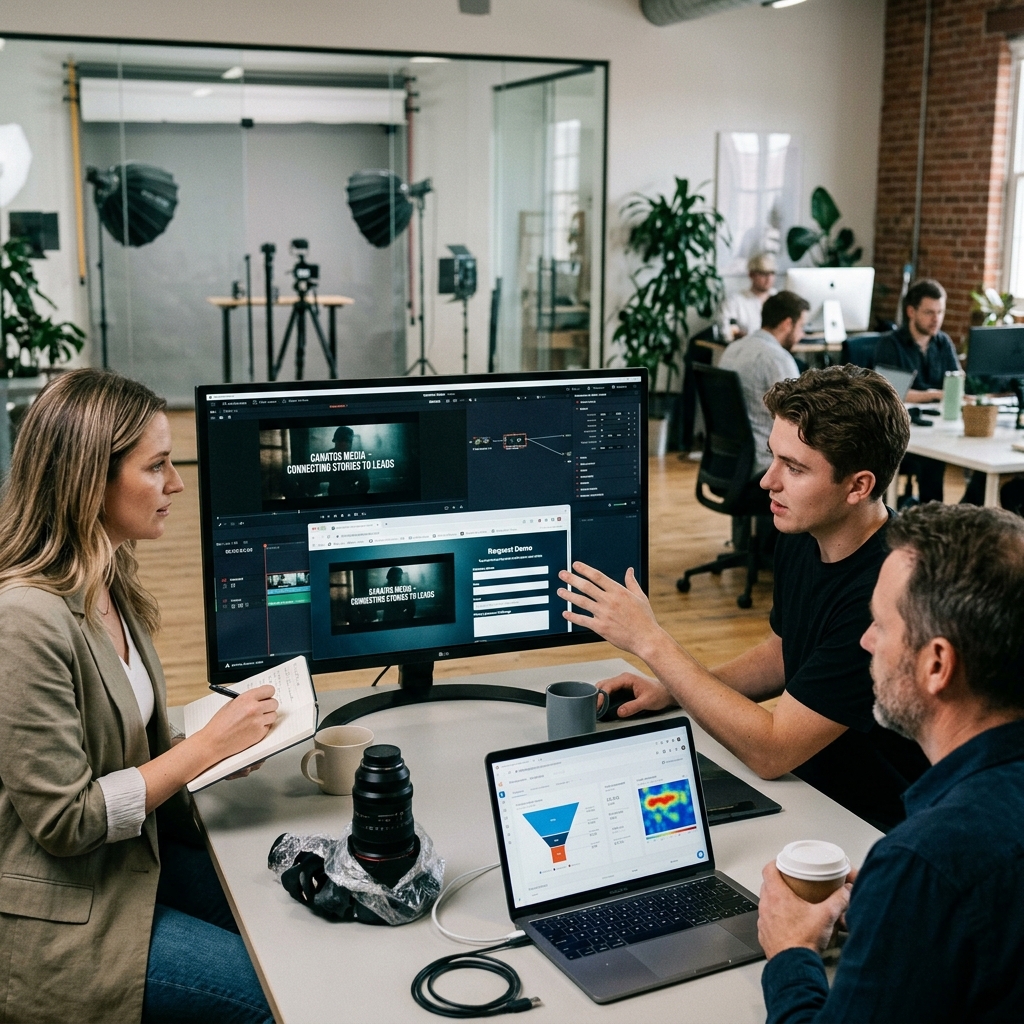
    Every landing page we create has a single primary goal: move the visitor toward the specific next action they’re ready for. That might be entering their email address for a downloadable guide, booking a consultation call, or registering for a webinar. We A/B test headlines, benefit statements, form length, and call-to-action buttons to identify what converts highest for your audience.

    Retargeting campaigns then follow viewers who didn’t convert on the first landing page, keeping your story and offer in front of them across their browsing sessions. By the time they’re truly ready to engage, your brand feels familiar and credible.

    This combination of engaging storytelling plus optimized conversion pages turns 5 to 10 percent of viewers into leads, compared to less than 1 percent from video content alone.

    Measuring Impact: From View-Through to Sales

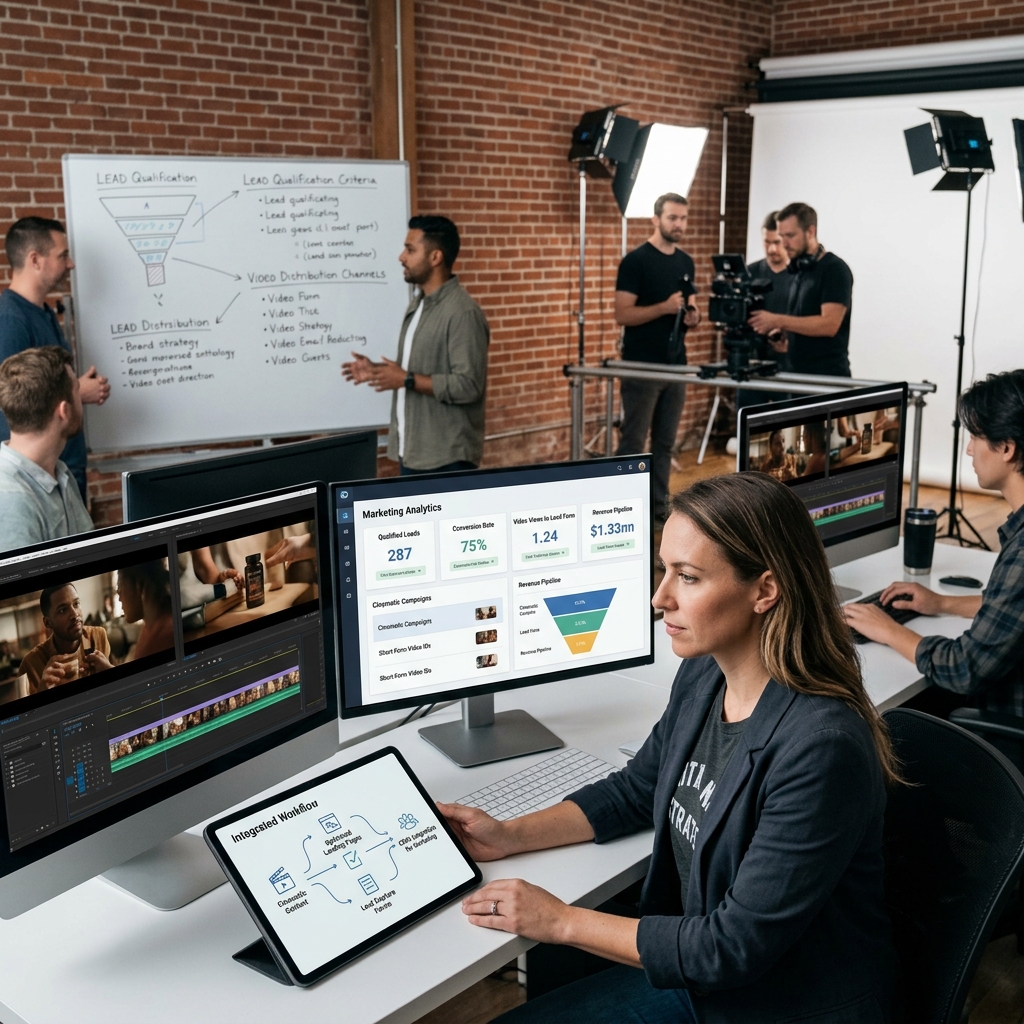
    We treat lead generation like the revenue driver it is, which means every piece of the system is measured and optimized. We track video view-through rates, landing page conversion rates, cost per lead, lead quality scores, and ultimately, which leads become paying customers.

    Our reporting shows you not just what happened, but why. We identify which videos generate the highest-intent viewers, which landing page variations convert best, and which audience segments become your most valuable customers. This data then informs our next round of content production and audience targeting.

    Most importantly, we connect video metrics to actual sales outcomes. You’ll know how many leads came from the cinematic content we produced, how much you spent to acquire each lead, and what percentage become customers. That attribution clarity is what separates video as a vanity metric from video as a core revenue driver.

    Real-World Results: Multi-Location Brands Growing Revenue

    We’ve worked with service-based and multi-location brands across home services, fitness, healthcare, and professional services. One client, a regional HVAC company, had a strong reputation but struggled to drive consistent lead flow to their multiple service territories. They were producing some content, but without a cohesive strategy connecting storytelling to lead capture.

    Over six months, we developed a series of cinematic videos showing their technicians solving real customer problems, built a landing page strategy that captured leads by service area, and ran targeted Meta and Google campaigns. Result: 340 percent increase in qualified leads month-over-month, with a 22 percent close rate from those leads.

    Another client, a multi-location fitness brand, needed to fill their new studio openings with memberships. We created brand storytelling content around member transformations and studio community, paired it with location-specific landing pages and retargeting campaigns. They went from 12 qualified inquiries per month to 85, with measurable attribution back to the cinematic content strategy.

    These results aren’t anomalies. They’re what happens when storytelling has a business system behind it.

    Why Traditional Video Agencies Miss the Lead Generation Mark

    Many video production companies excel at the creative work but stop there. They deliver beautiful content and consider their job complete. The business outcomes that follow are someone else’s responsibility. This creates a fundamental misalignment between what you need (qualified leads and revenue growth) and what you’re paying for (video production).
    We’re different because we’re built as a marketing agency that happens to specialize in video, not a video production company that dabbles in marketing. We care about your lead flow and revenue because that’s how we measure our own success. Our compensation is ideally tied to results, not just deliverables, which means we’re incentivized to think beyond creative execution toward actual conversion.

    This orientation changes everything. It means we’re asking whether the video serves your sales funnel, not just whether it’s beautiful. It means we’re building landing pages, managing retargeting campaigns, and optimizing for cost per qualified lead.

    Getting Started with End-to-End Digital Marketing Systems

    If you’re ready to connect cinematic storytelling to qualified leads, start by clarifying what a qualified lead looks like for your business. What information do you need from them? What buying stage are they in when they’re ready to talk to your sales team? What’s the lifetime value of a customer so you know how much you can spend to acquire them?

    From there, we can audit your current content and marketing stack to identify gaps. You might already have some video content, some social media activity, and some landing pages. The question is whether they’re connected as a system or operating independently. We help growth-focused business owners build or optimize all-in-one marketing funnels that turn attention into action.

    Ready to see how cinematic storytelling performs when paired with lead generation systems? Let’s discuss your goals. We’ve helped brands across industries transform their video investment from a content expense into a measurable revenue driver. Check out our case studies to see what’s possible, then reach out to discuss your strategy.

    Contact us today for a free consultation to see how we can help you grow your business.

    Frequently Asked Questions (FAQ)

    How do you ensure our cinematic videos actually convert viewers into leads?

    We don’t treat video production and lead generation as separate services. When we develop your cinematic content, we build conversion pathways directly into the storytelling through strategic calls-to-action, optimized landing pages, and tracking systems that connect each piece of content to measurable lead capture. Our approach means the stunning visuals your audience engages with on social media funnel directly into our lead capture systems where we can nurture prospects toward a sale.

    What’s the difference between what we do versus traditional video production agencies?

    Most video agencies stop after delivering beautiful content, leaving you to figure out how to turn views into actual business outcomes. We handle the entire system: cinematic production, paid media strategy across Meta and Google, landing page optimization, and lead nurturing sequences that work together. We’re accountable to your revenue goals, not just video quality metrics.

    How do we measure whether our cinematic storytelling is actually driving revenue growth?

    We track the entire customer journey from initial video view through lead capture to final sale, giving you clear visibility into which stories perform best and how much revenue each content pillar generates. This means we can continuously refine your cinematic narrative strategy based on what’s actually converting for your business, rather than relying on vanity metrics like view counts.
  • Lights, Camera, Action: A Deep Dive into the Three Stages of Film

    Lights, Camera, Action: A Deep Dive into the Three Stages of Film

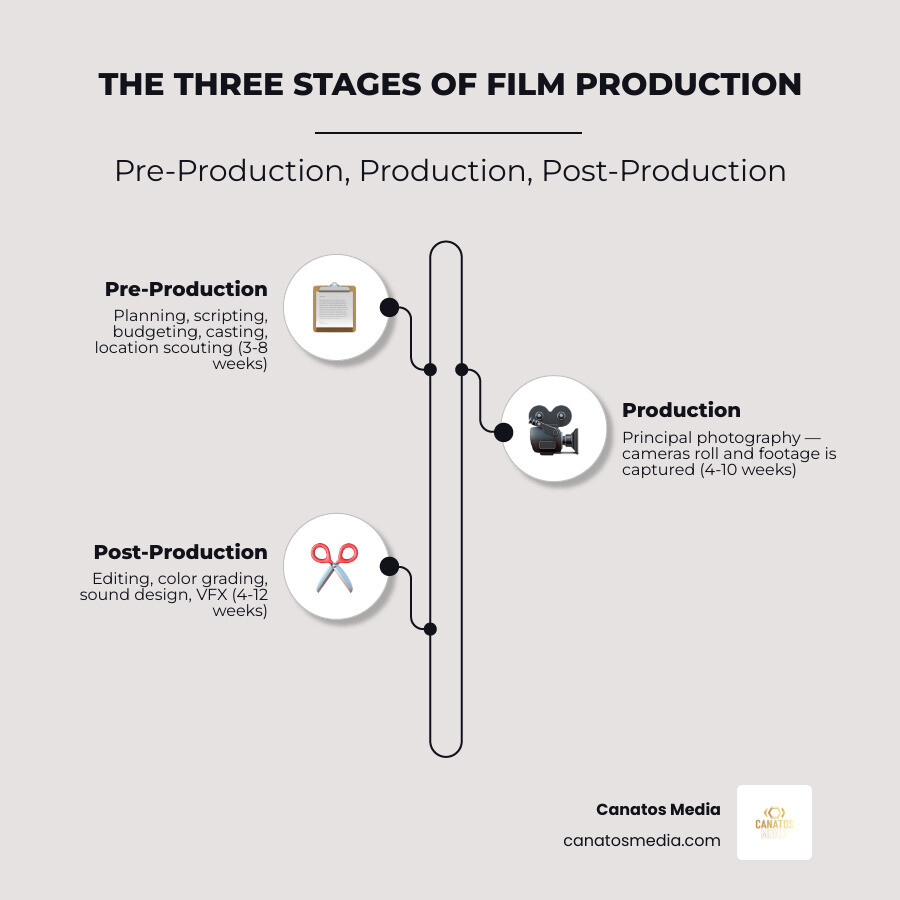
    What Are Pre-Production, Production, and Post-Production?

    Understanding pre production production post production is the foundation of every successful film or video project — whether you’re making a Hollywood feature or a short-form ad for your business.

    Here’s a quick breakdown:

    Stage What Happens Typical Duration
    Pre-Production Planning, scripting, budgeting, casting, location scouting 3-8 weeks
    Production Principal photography — cameras roll, footage is captured 4-10 weeks
    Post-Production Editing, color grading, sound design, visual effects 4-12 weeks

    Think of it like building a house. Pre-production is the blueprint. Production is the construction. Post-production is the finishing work that makes it livable — and beautiful.

    Every stage depends on the one before it. Skip or rush any phase, and the cracks show up in the final product.

    Most people think filmmaking is mostly about the shoot. It’s not. The shoot is actually the shortest part of the journey. The real work happens before the cameras roll and after they stop.

    In 2026, this is true whether you’re producing a feature film or a 60-second video ad designed to convert leads for your local business. The principles don’t change — only the scale does.

    I’m Nic Canobbio, founder of Canatos Media, and with over two decades of experience overseeing live production, content editing, and social media content that has reached over 60 million views, I’ve guided the full pre production production post production cycle across countless projects. In this guide, I’ll walk you through every stage so you know exactly what to expect — and how to get the most out of each one.

    Infographic showing the 3-stage pre production production post production workflow with timelines and key tasks infographic

    The Blueprint: Mastering Pre-Production

    Pre-production is the planning and preparation stage where the vision for the project is solidified. It begins immediately after the “development” phase—where the initial idea is hatched and the script is finalized—and ends when the cameras are ready to roll. In the industry, we often say that for every hour spent in pre-production, you save five hours on set.

    This phase is about logistics. It involves breaking down the script to identify every single requirement: how many actors do we need? What kind of locations? Is there a scene that requires a specific prop, like a vintage 1950s telephone or a high-end sports car? We tackle these questions now so we aren’t scratching our heads while a 20-person crew sits idle on the clock.

    Key activities during this stage include:

    • Script Breakdown: Identifying every character, prop, and location mentioned in the script.
    • Budgeting: Allocating funds for crew, equipment, locations, and insurance. Pre-production typically accounts for 20-30% of a film’s total budget.
    • Casting: Finding the right talent to bring the characters to life.
    • Location Scouting: Finding and securing the perfect spots to film, which often involves getting permits and insurance in the Tri-State area or Long Island.
    • Pre-Visualization: Creating storyboards and shot lists to map out exactly how each scene will look.

    At Canatos Media, we believe that Short Form Video Production lives or dies in the planning phase. Without a clear map, you’re just capturing “content” rather than telling a story. For a deeper look at industry standards, check out The Essential Guide to Pre-Production Planning.

    Why Pre-Production is Critical for Success

    The primary goal of pre-production is risk mitigation. Filmmaking is expensive, and mistakes on set can lead to massive budget overruns. By planning meticulously, we ensure creative alignment between the director, the client, and the crew.

    When we look at How We Scale Cinematic Short-Form Content Without Sacrificing Quality, the secret is always in the preparation. Thorough planning allows us to handle the “sprint” of production without losing sight of the brand’s goals. It prevents last-minute problems, such as showing up to a location only to realize there’s no power outlet for the lights, or hiring an actor who isn’t available for the necessary reshoot dates.

    Essential Checklists and Tools

    To keep things organized, we rely on several industry-standard tools and checklists. One of the most important is the storyboard, which is a frame-by-frame drawing of the script. This allows the director and cinematographer to agree on the visual style before a single light is plugged in.

    Detailed storyboard sequence showing camera angles and character movement

    Another vital tool is the shot list. This is a detailed list of every camera setup needed for a scene. We often group these shots by color or location to make the shooting day more efficient. For example, if we have three different scenes that take place in a kitchen, we’ll shoot all those “kitchen shots” at once, regardless of where they appear in the script. This is known as “shooting out” a location.

    The Sprint: Navigating the Production Stage

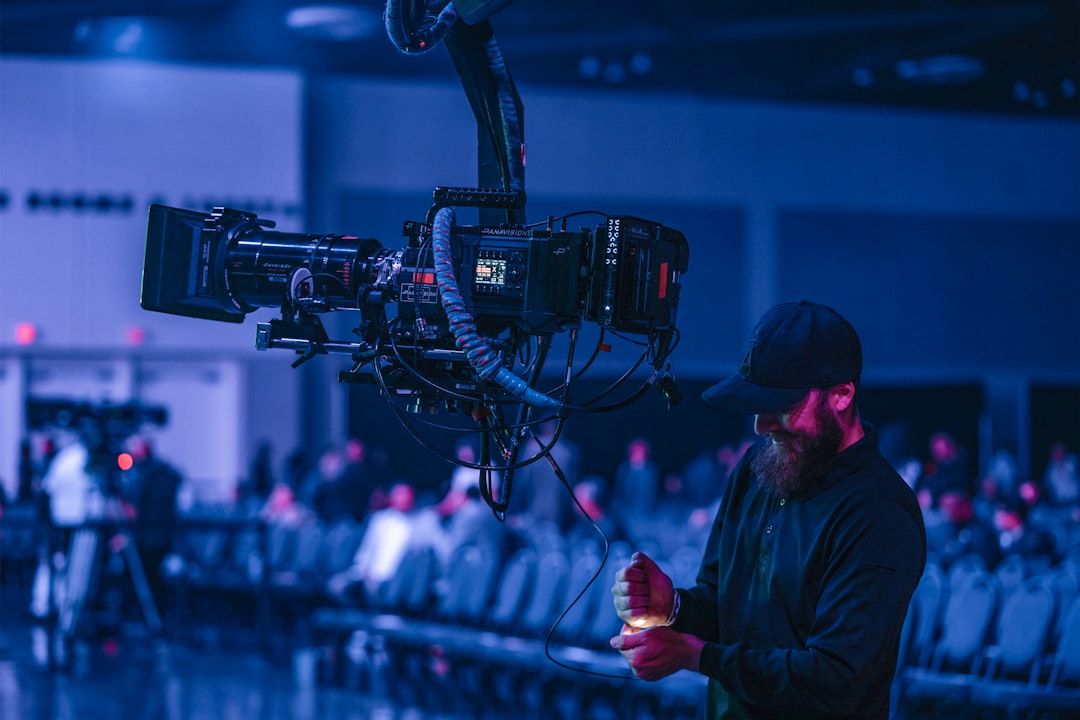
    Production, also known as principal photography, is the phase where the actual filming happens. If pre-production is the marathon of planning, production is the high-intensity sprint. For most feature films, this lasts between 4 to 10 weeks, though for a half-hour TV episode, it can be as short as 4 days.

    This is the most expensive stage because you are paying for the entire crew, the talent, the equipment rentals, and the locations all at once. Every minute counts. The day usually starts with the “call sheet,” a document that tells everyone exactly where to be and when.

    Executing the Pre Production Production Post Production Workflow

    On a professional set, there is a very specific rhythm to the day. It usually follows a sequence:

    1. Block: The director and actors walk through the scene’s movement.
    2. Light: The crew sets up the lighting and camera while the actors go to hair and makeup.
    3. Rehearse: A final run-through with the full crew to ensure the camera movement matches the actors.
    4. Shoot: The actual recording.

    The standard command sequence on set is a classic for a reason: “Sound?” (Sound mixer confirms they are recording), “Camera?” (Cinematographer confirms), “Marker!” (The slate is snapped), and finally, “Action!”

    For businesses looking for Short Form Video Production, this stage is where we capture the high-quality raw footage that will eventually be polished into a final product. We always aim for multiple angles to give our editors plenty of options in the next phase.

    Roles and Responsibilities on Set

    A film set is a hierarchy designed for maximum efficiency. Understanding who does what is key to a smooth pre production production post production workflow:

    • The Director: The creative lead who oversees the acting and visual style.
    • The Producer: The “business” lead who manages the budget and schedule.
    • The Assistant Director (AD): The drill sergeant of the set who keeps everyone on schedule and coordinates the different departments.
    • The Cinematographer (DP): The person in charge of the camera and lighting.
    • Gaffer and Grips: The lighting and rigging technicians.
    • Sound Mixer: The person responsible for capturing clean dialogue.

    In the Tri-State area, we work with highly specialized crews who understand that on-set logistics are just as important as creative genius. Everyone has a job, and when everyone does that job well, the production stays on track.

    Director and camera crew filming a scene on a professional set

    The Final Polish: Post-Production Processes

    Once the director yells “Wrap!” on the final day of shooting, the project enters post-production. This is where the “bunch of files” we captured during production are assembled into a cohesive story. Many people think post-production is just “editing,” but it is actually a massive undertaking involving several distinct disciplines. For a deeper dive, see The Post-Production Process: A Step-by-Step Guide to the Final Cut.

    Post-production can last anywhere from 4 to 12 weeks. It’s the stage where we fix the things we couldn’t control on set and add the layers of emotion—music, sound effects, and color—that make a video feel “cinematic.”

    Achieving Picture Lock in Pre Production Production Post Production

    The editing process typically moves through three main stages:

    1. The Assembly Cut: The editor puts all the “best takes” in order according to the script. It’s usually very long and lacks flow.
    2. The Rough Cut: The first real version of the film. The timing is tightened, and the story structure is refined.
    3. The Fine Cut/Picture Lock: This is the final version of the visual edit. Once we hit “Picture Lock,” no more changes are made to the timing of the shots. This is a critical milestone because it allows the sound and color departments to start their work without the “ground moving” under their feet.

    Our approach to End-to-End Video Marketing ensures that the edit isn’t just “pretty”—it’s designed to drive real results for your business by keeping the viewer engaged until the final call to action.

    Sound Design and Color Grading

    After picture lock, the project moves into the “finishing” stages.

    • Sound Design: This involves dialogue cleanup, adding “Walla” (background crowd noise), and Foley (recording sound effects like footsteps or doors slamming). It also includes the musical score and the final audio mix.
    • Color Grading: This is the process of adjusting the colors to create a specific mood. Want the scene to feel cold and lonely? We’ll lean into the blues. Want it to feel like a warm summer memory? We’ll bring out the oranges and yellows.

    Connecting the Dots: How the Stages Depend on Each Other

    It is a mistake to view pre production production post production as three isolated boxes. They are deeply interconnected. If you have a poor script in pre-production, no amount of fancy editing in post-production can save the story. Conversely, if you capture beautiful footage but rush the sound design, the final video will feel “cheap” to the audience.

    The budget often dictates where the emphasis goes. A high-concept sci-fi film might spend a massive chunk of its budget in post-production for visual effects (VFX), while a character-driven drama might put more resources into pre-production casting and rehearsals.

    Focus Area Pre-Production Heavy Post-Production Heavy
    Project Type Live Events, Interviews, Dramas Sci-Fi, Music Videos, Animation
    Main Goal Accuracy and efficiency Visual flair and “magic”
    Risk Lack of creative flexibility “Fixing it in post” costs more

    For businesses, understanding these dependencies is vital. As we discuss in The Ultimate Guide to Video Marketing for Service Businesses in 2026, a balanced approach across all three stages is the most cost-effective way to produce high-quality content.

    Common Pitfalls and How to Avoid Them

    The most common mistake we see is “fixing it in post.” While modern software is powerful, it cannot fix a blurry image or a poorly recorded interview. It is always cheaper to do it right the first time on set than to pay a VFX artist to “clean it up” later.

    Another pitfall is rushing the pre-production phase. When you don’t have a clear storyboard or shot list, you end up “searching” for the scene on set, which wastes time and exhausts the crew.

    By Integrating Website Design and Video, we help businesses avoid these technical errors by ensuring the video content is planned with the final destination—your website or social media feed—in mind from day one.

    Frequently Asked Questions about Pre Production Production Post Production

    What is the most important stage of film production?

    While every stage is vital, pre-production is arguably the most important. It is the foundation upon which everything else is built. A project with a solid plan can survive a difficult shoot, but a project with no plan will almost certainly fail, no matter how good the crew is.

    How long does the average post-production phase last in 2026?

    In 2026, post-production typically lasts between 4 to 12 weeks for professional projects. However, with the rise of AI-assisted editing and cloud collaboration tools, we are seeing these timelines compress for short-form content, often allowing for a “fine cut” within just a few weeks of shooting.

    Can you fix production mistakes during the post-production stage?

    To an extent, yes. We can use color grading to fix minor lighting issues or “digital makeup” to hide a blemish. However, you cannot fix fundamental issues like bad acting, out-of-focus shots, or distorted audio. The mantra should always be: “Get it right in the camera.”

    Conclusion

    The journey of pre production production post production is a meticulous progression from a simple idea to a polished, professional film. Each stage requires a different set of skills—from the logistical precision of pre-production to the high-energy execution of production and the creative artistry of post-production.

    At Canatos Media, we specialize in navigating this entire lifecycle for our clients in the Tri-State area and Long Island. We don’t just “film videos”—we build integrated strategies that connect content, targeting, and conversions for measurable growth. Whether you need a cinematic short-form video for social media or a full-scale commercial production, we have the expertise to guide you through every step of the process.

    Ready to bring your vision to life? Elevate your brand with professional short-form video production and let’s make something great together.