Why Franchises Struggle With Consistent Brand Messaging Across Locations
Franchise owners face a unique challenge: maintaining a cohesive brand identity while managing multiple locations, each with its own audience, competitive landscape, and growth objectives. The stakes are high. A disjointed brand message across locations confuses customers, dilutes marketing spend, and makes it nearly impossible to scale growth predictably.
This is where video-first marketing becomes essential.
We’ve worked with multi-location and franchise brands that discovered a critical truth: short-form video content, paired with integrated digital systems, transforms how franchises acquire customers and build brand recognition. Rather than treating each location as an isolated marketing unit, a coordinated video and digital strategy positions your entire franchise network for sustainable growth.
Franchise systems inherently create friction around brand consistency. You have a corporate vision, but you also have franchisees with varying resources, priorities, and local market knowledge. Some locations are fully staffed with marketing support; others are run lean by an owner juggling operations and customer service.
The result is fragmented marketing. Location A launches one social media campaign while Location B uses outdated messaging. Some franchisees invest in digital advertising; others skip it entirely. Customers in different markets see conflicting brand narratives, and the corporation struggles to measure what’s actually working across the network.
Add budget constraints into the equation, and many franchises default to static graphics or repurposed old videos. These assets feel generic and don’t capture attention in crowded social feeds. Prospects scroll past without engaging, and franchisees become frustrated because their local marketing isn’t generating leads.
The core problem: franchises lack a scalable system that delivers consistent, high-quality content while allowing for local customization.
The Competitive Advantage of Video-First Marketing for Multi-Location Brands
Video content outperforms every other content format on social platforms. Posts with video generate 1200% more shares than text and images combined, and video drives higher click-through rates on paid campaigns. For franchises, this advantage compounds across your network.
When you build your franchise marketing around short-form video, you create a unified content engine that every location can leverage. A single cinematic video shoot produces content assets that work across Instagram Reels, TikTok, YouTube Shorts, and Meta platforms. Each location gets professional, on-brand content without duplicating production costs.
This matters because franchisees typically lack in-house production capability. They’re not equipped to shoot, edit, and optimize video on their own. By providing professionally produced, location-branded content as part of your franchise marketing system, you remove the friction and empower every location to compete effectively in their local market.
Beyond content itself, video builds trust faster than any other medium. Prospects see your team, your facility, your service delivery in motion. They understand what they’re getting before they call or visit. This compression of the sales cycle directly impacts customer acquisition costs and conversion rates.
How Cinematic Short-Form Content Drives Franchise Customer Acquisition
Short-form video works because it respects attention spans while delivering narrative impact. A 15-to-30-second cinematic clip can showcase your service, build emotional connection, and drive a specific action—all within the thumb-stop window of a mobile feed.
For franchises, this translates to location-specific customer acquisition. A dental franchise might produce videos showing the patient experience at individual locations. A home services franchise creates shorts highlighting before-and-after transformations in real neighborhood contexts. A fitness franchise films member testimonials and class highlights with local coaches and community members.
The cinematic approach matters. Polished production, intentional music and sound design, and strategic pacing create content that feels premium and trustworthy. Your brand doesn’t compete on being relatable or DIY; it competes on delivering a clear, professional promise of what customers will experience.
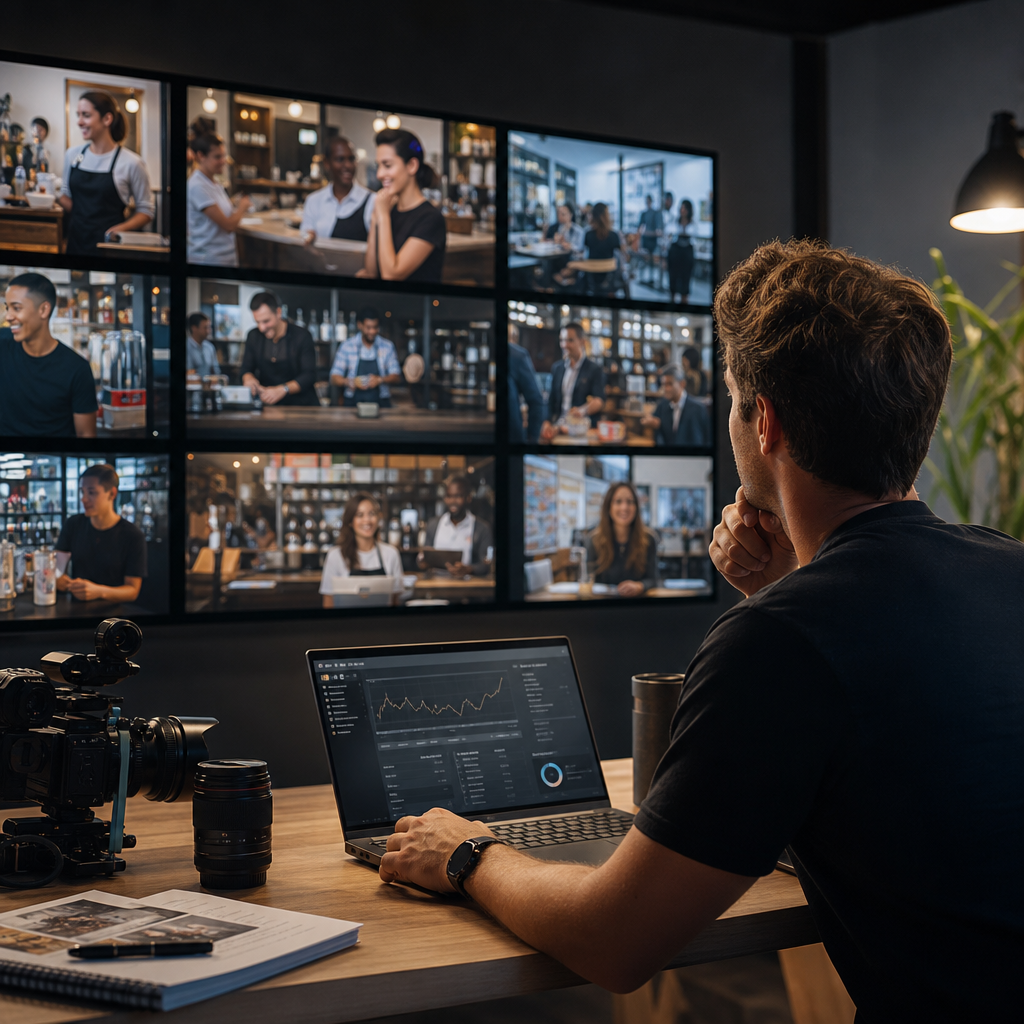
Each video should ladder back to a clear business objective: appointment bookings, lead form submissions, phone calls, or in-location visits. A franchise owner in Seattle and another in Austin both need content that converts viewers into actual customers, not just impressions.
What to do next: Map your top 3-5 customer actions you want to drive (consultation bookings, membership signups, service inquiries), then brief your content team on short-form video concepts that speak directly to each action.
Building Integrated Digital Systems That Connect Video to Sales
Video is only as valuable as the system that converts viewers into customers.
We design franchise digital systems where video sits at the center of a coordinated funnel. When a prospect sees your short-form content on Instagram, they don’t just watch and leave. A strategic CTA (call-to-action) directs them to a landing page, a lead form, a booking calendar, or your website. That interaction is tracked, segmented, and fed into follow-up sequences that nurture them toward a sale.
This requires integration across multiple platforms: social media accounts, your website, email systems, and your CRM. A franchise owner in Denver shouldn’t have to manually input leads from different sources. The system captures everything, attributes it to the right location, and provides clarity on what’s driving revenue.
For franchises, this integration also enables corporate visibility. You can see which locations are generating leads, which content performs best in which markets, and where marketing budget should shift. Franchisees get dashboards showing their own performance, creating transparency and accountability.
A professional approach uses a branded landing page for each location, fed by video ads and organic social promotion. The landing page is optimized for conversion (fast load, clear CTA, minimal friction), and every submission feeds into a lead management workflow that your team works immediately.
Social Media Management and Paid Advertising for Franchise Growth
Social media management for franchises requires both centralized strategy and localized execution.
At the corporate level, you maintain brand voice, posting cadence, and content calendar guidelines. Each location manages its own community, responds to local comments, and handles customer service inquiries. Centralized production provides the video assets; local teams distribute them strategically.
Paid advertising amplifies this reach. A franchise network benefits from running location-specific paid campaigns on Meta and Google. You can target prospects by geography, interest, and behavior, directing them to the nearest franchisee. A home repair franchise in a multi-state network can run hyperlocal Google ads in Dallas, Denver, and Detroit simultaneously, with creative and landing pages tailored to each market.
The budget efficiency is significant. Rather than franchisees managing small individual ad spends, a coordinated approach pools resources where it matters most. You identify which locations have the highest customer acquisition cost and redirect budget to higher-performing areas or test new creative.
Video performs exceptionally well in paid formats. A 15-second cinematic video clip turns into a scroll-stopping ad that drives direct response. Paired with a clear landing page and tracked conversion, you get measurable ROI that justifies ongoing investment.
Scaling Video Production While Maintaining Brand Consistency
Many franchise owners worry that scaling video production means losing quality or control. The opposite is true if you build the right system.
We produce video content in batches. Rather than shooting one location at a time, we might film three to five franchise locations in a single production sprint. This reduces per-location costs, ensures consistent visual style (same equipment, same crew, same color grading), and accelerates your content timeline.
The key is building modular video templates. Your core brand footage (cinematic establishment shots, service demonstrations, testimonial structures) gets produced once with professional quality. Then, location-specific elements (local team members, neighborhood details, specific offerings) get inserted into that framework.
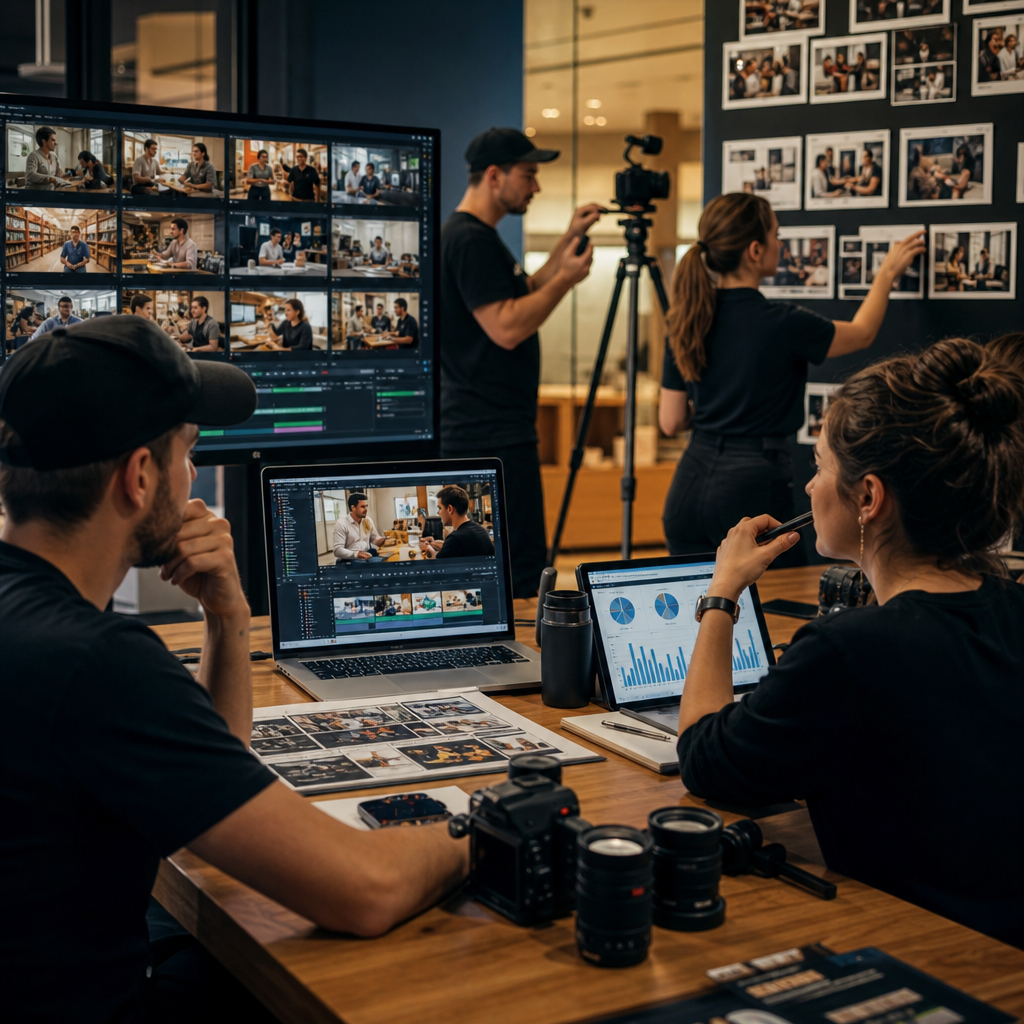
For example, a tax preparation franchise produces a core “how we help” video once. Then each location gets a 30-second custom intro with their local team and a geo-specific CTA. The cost per location is a fraction of producing unique content from scratch, but the quality and consistency remain premium.
This approach also solves the franchisee capability problem. Your franchisees don’t need in-house production skills. They provide access to their location, their team, and customer testimonials. We handle the rest, delivering finished assets ready to deploy.
Lead Generation Workflows That Convert Social Engagement Into Customers
Not every video viewer becomes a customer. Your system needs to capture interest at multiple stages and nurture prospects through a defined workflow.
A typical franchise lead workflow looks like this: A prospect watches your video on Instagram and clicks the link to your location’s landing page. They fill out a contact form with their name, number, and service interest. That lead immediately triggers a sequence: an automated text or email acknowledgment, a calendar invite to book a consultation, and an assignment to your local team for follow-up within 24 hours.
The workflow should account for different prospect types. Someone watching a video about financing might need different messaging than someone inquiring about basic services. Segmentation in your email and CRM systems ensures each prospect receives relevant follow-up content and offers.
For franchises, location-based lead routing is essential. When a prospect in Phoenix completes your form, the lead automatically goes to your Phoenix franchisee, not some generic inbox. Franchisees see leads immediately and can act while interest is warm.
We also layer in retargeting. Prospects who watch your video but don’t convert see follow-up ads over the next week, reminding them to take action. A simple frequency of three to five ads, spaced strategically, reminds fence-sitters without feeling aggressive.
Actionable step: Audit your current lead flow from social engagement to customer conversation. Identify bottlenecks where prospects drop off and fix them systematically.
SEO and AEO Optimization for Franchise Online Visibility
Prospects searching for your service locally need to find you. This is where SEO and AEO (Answer Engine Optimization) become critical for franchise networks.
At the corporate level, you own domain authority and brand authority. Your main domain ranks for competitive national keywords. At the location level, you build individual location pages with geo-specific keywords, local testimonials, and service details. A pizza franchise in Chicago owns the page for “Chicago pizza delivery,” complete with local reviews and operational details.
Videos significantly boost SEO. Google prioritizes pages with embedded video, and video sitemaps improve crawlability. When you produce short-form video content, embed clips on your location pages and create transcripts. This signals to search engines that your content is substantive and relevant.
AEO optimization prepares your content for AI-powered search results. Answer Engine Optimization focuses on structured data, clear question-and-answer formatting, and direct, concise answers. When an AI searches for “best dental practice in Miami,” having clear, well-structured content about your Miami location increases the chance you appear in AI-generated summaries.
For franchises, this strategy compounds. Fifty locations with optimized local pages, each ranking for geo-specific keywords, creates a network effect. Together, they generate consistent organic traffic that franchisees don’t have to pay for.
Measuring Video Campaign Performance Across Your Franchise Network
Measurement is where many franchise marketing programs fall apart. Without clear metrics, it’s impossible to know what’s working and where to invest next.
We track metrics at three levels: content performance, campaign performance, and revenue impact.
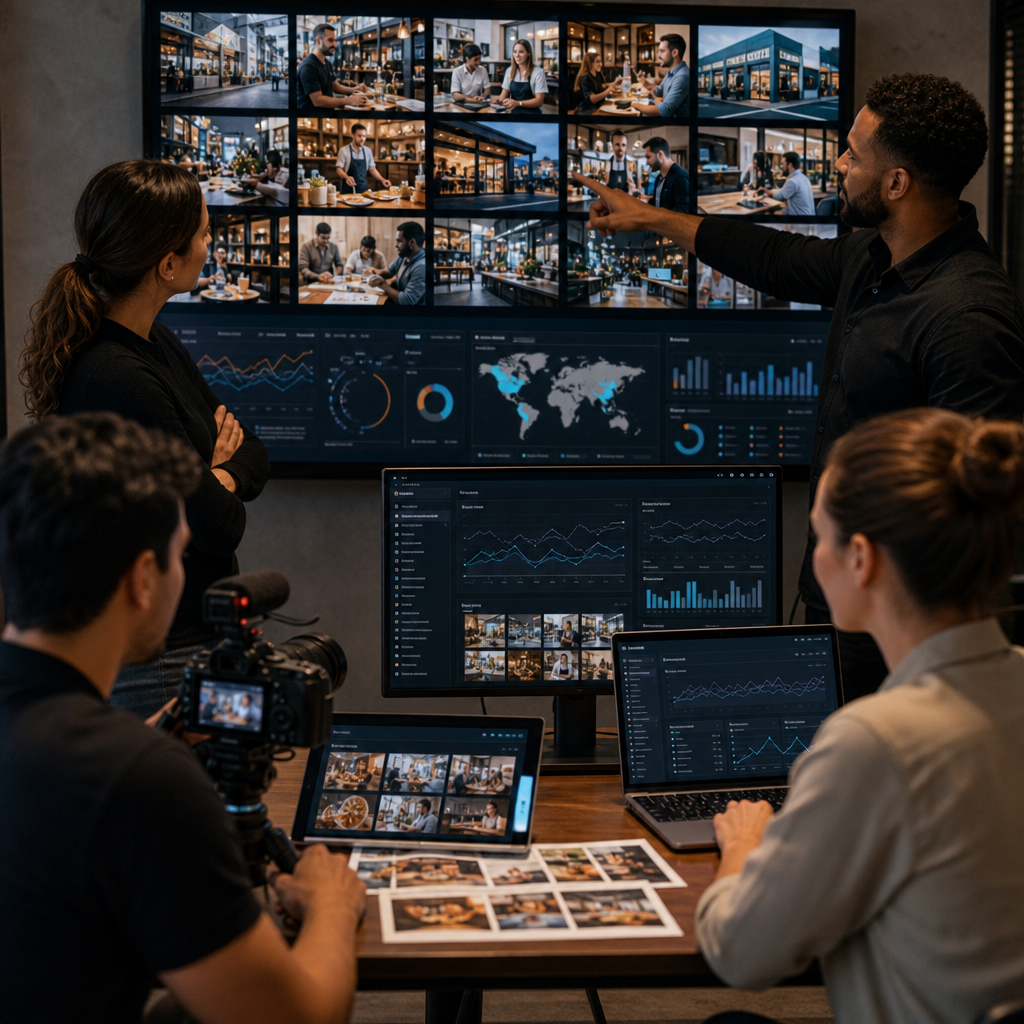
Content performance tells you which videos your audience engages with. How many views? What’s the average watch time? How many clicks to your landing page? This informs what creative concepts resonate in different markets.
Campaign performance measures the effectiveness of paid spend. Cost per click, cost per lead form submission, and cost per qualified lead show whether your ad spend is efficient. If one location’s video ads cost $8 per lead and another’s costs $22, you investigate why and optimize accordingly.
Revenue impact is the ultimate metric: how many of your video-generated leads convert to paying customers? What’s the average customer value per location? Is the marketing ROI positive? For a franchise system, this clarity allows corporate to set clear expectations for franchisees and guide investment decisions.
We implement dashboards that franchisees can access in real time. They see their own lead volume, ad spend, and ROI. This transparency builds confidence and encourages franchisees to invest in the system because they see the direct return.
Why Our Video-First Approach Delivers Results for Franchise Owners
We built our video-first approach specifically for multi-location brands because we recognized that franchises need solutions that are both scalable and locally relevant. A franchise owner can’t afford generic content anymore, and they can’t afford to manage complex in-house production either.
Our process combines cinematic production quality with strategic distribution and lead conversion systems. We don’t just make pretty videos; we engineer content that drives measurable customer acquisition for each location in your network.
We manage the complexity so franchisees can focus on operations and customer service. We handle video production, social media management, paid advertising strategy, and lead conversion optimization. Your franchisees get professional, location-branded content and clear visibility into marketing performance.
The result is consistent, professional brand presence across your entire franchise network. New franchisees launch with proven content and systems already in place. Established locations see lead volume and quality improve predictably. And corporate gains the visibility and control necessary to scale confidently.
If your franchise is ready to compete with unified branding and professional video marketing, we’re here to build the system that makes it work across every location. Reach out to discuss how we tailor our video-first approach to your specific franchise model and growth objectives.
Contact us today for a free consultation to see how we can help you grow your business.
Frequently Asked Questions (FAQ)
How do we maintain consistent brand messaging across multiple franchise locations?
We build centralized content systems that provide each location with pre-approved video assets, templates, and messaging frameworks. Our team creates cinematic brand videos that establish your core identity, then we empower local franchises with social media management tools and guidelines that let them customize content while staying on-brand. This approach keeps your franchise network unified visually and strategically while allowing local flexibility where it matters most.
What’s the timeline for seeing lead generation results from video marketing?
We typically see our franchise clients gain meaningful engagement within 4-6 weeks of launching integrated video campaigns across their locations. However, converting that engagement into qualified leads depends on the strength of your underlying systems – which is why we pair video production with lead generation workflows, paid advertising optimization, and sales funnel setup. Most clients see measurable sales impact within 3-4 months once all components are working together.
Can we scale video production without losing quality across our entire franchise network?
Yes – we’ve designed our process specifically for this challenge. We produce high-quality cinematic hero content centrally, then create templates and guidelines that local teams use to generate supporting short-form videos consistently. Our production systems, combined with our social media management support, let us maintain cinematic quality while scaling efficiently across as many locations as you operate.