Day: June 6, 2026

  • Website Design and Cinematic Video Production: A Unified Approach to Brand Growth

    Website Design and Cinematic Video Production: A Unified Approach to Brand Growth

    Why Your Website Needs Cinematic Video Integration

    Your website is often the first real interaction a prospect has with your brand. Yet most businesses treat their website as a separate entity from their video content, social media, and broader marketing strategy. They optimize one channel at a time, hoping the pieces eventually fit together. They rarely do.

    At Canatos Media, we’ve seen firsthand how this fragmentation costs businesses leads, credibility, and conversion momentum. When your website design, video content, and overall brand narrative work together instead of in silos, something different happens: visitors don’t just browse. They stay longer, trust faster, and convert at measurable rates.

    This article walks through why that unified approach matters, how to build it, and the specific results we’ve helped our clients achieve.

    Video changes how people engage with your website. It’s not about adding a play button for decoration. Cinematic video serves a functional purpose: it communicates your value proposition, shows your expertise in action, and builds emotional connection faster than text or static images alone.

    When someone lands on your website, they have seconds to decide whether you’re worth their time. A well-produced cinematic video positioned strategically on your homepage or service pages compresses months of relationship-building into minutes. The prospect sees your brand in motion, understands what you do, and grasps why you’re different before they scroll.

    Beyond the homepage, video reduces friction throughout the buyer’s journey. A service-based business might embed a client testimonial video on their pricing page. An e-commerce brand might showcase their product manufacturing process. A B2B software company might feature a quick explainer video on their features section. In each case, the video answers the question the visitor is asking at that exact moment.

    Search engines reward this behavior too. Pages with embedded video tend to rank better and keep visitors on the page longer, which signals relevance to Google and other search algorithms.

    Action item: Audit your top five landing pages. Note which ones have no video content. Those are your immediate candidates for integration.

    The Problem with Disconnected Design and Video Strategies

    Most businesses operate with separate teams or vendors handling website design and video production. The designer builds the site with one aesthetic in mind. The videographer produces content with a different visual language. The result feels disjointed, even when each piece is high-quality on its own.

    We’ve observed several common patterns in how this fragmentation shows up:

    • Video color grading doesn’t match the website’s color palette
    • The video style (cinematic, animated, testimonial) clashes with the overall design tone
    • The website layout forces video to feel awkwardly inserted rather than integrated
    • Brand messaging differs between video copy and website copy
    • Video and web strategy target different audience segments or conversion goals

    This inconsistency erodes trust. Your prospect sees beautiful cinematic video, then lands on a website that feels like it was designed by a different company. They notice the disconnect, consciously or not, and it introduces friction into their decision-making process.

    Beyond aesthetic concerns, disconnected strategies waste budget. You might invest heavily in short-form video production for social media, but that video content never makes it to your website where it could drive conversions. Or your website design looks premium, but your video quality doesn’t match that investment level, making the whole package feel untrustworthy.

    Action item: Compare your website’s visual style with your most recent video content. Do the colors, pacing, typography, and overall tone feel like they belong to the same brand?

    How We Unify Website Design with Cinematic Production

    Our approach starts before we build or produce anything. We develop a unified visual and strategic framework that guides both the website design and the video production process simultaneously. This framework includes:
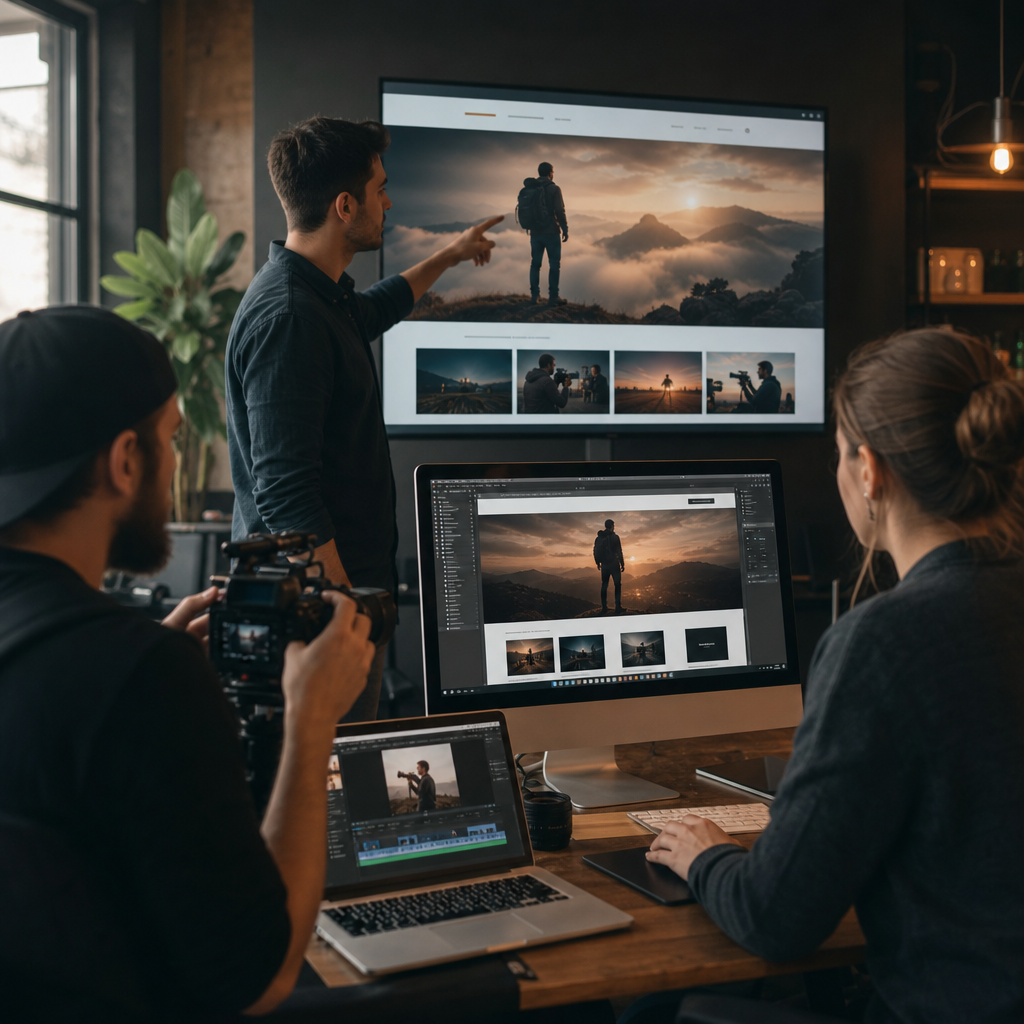
    Color palette and visual language: We establish a consistent color scheme, typography system, and design aesthetic that both the website designer and video production team follow. This extends to motion design elements, transitions, and how we frame people and products on camera.

    Brand narrative structure: We define the key messages, emotional beats, and visual storytelling approach that will flow through both mediums. Your website tells a story with page hierarchy and content flow. Your cinematic videos tell a story with pacing, music, and cinematography. When these align, they reinforce each other.

    Audience segments and conversion goals: Rather than treating website and video as separate channels, we map out which videos serve which audience at which stage of the buyer journey. A decision-maker needs different content than an awareness-stage prospect. Your website and video strategy should reflect that distinction consistently.

    Technical integration planning: We determine where video lives on your site, how it performs, and what happens after someone watches it. Does the video button link to a contact form? Does it auto-play on mobile or require a click? These technical decisions affect both user experience and conversion rates.

    Once this framework is locked, the design and production work becomes aligned execution rather than parallel guessing.

    Creating Visual Consistency Across Your Digital Properties

    Visual consistency extends beyond your website and video content into every digital touchpoint: social media, email, paid advertising, and beyond. When a prospect sees your brand on Instagram, clicks through to your website, and watches your video, they should experience the same visual identity throughout.

    This consistency builds what we call “brand recognition momentum.” Each touchpoint reinforces the others. The more consistently someone sees your visual language, the faster they recognize you, remember you, and trust you.

    Practically, this means:

    • Using the same font families across website and video motion graphics
    • Maintaining consistent aspect ratios and framing when showing products or team members
    • Applying the same color palette to video graphics, website backgrounds, and CTA buttons
    • Ensuring your brand’s personality (premium, approachable, cutting-edge, etc.) comes through in both visual design and video tone

    We often find that multi-location or service-based brands struggle with this because each location or team might have created their own promotional materials. A unified video-first website design gives you a standardized foundation that ensures every piece of branded content feels intentional and cohesive.

    Action item: Create a simple brand asset document that captures your primary colors, fonts, and logo usage. Share it with anyone creating content for your brand, whether in-house or through vendors.

    Turning Website Visitors into Qualified Leads with Video

    Video on your website serves conversion purposes if it’s positioned and structured strategically. Not all video placement is equal.

    A homepage video that builds emotional connection and establishes credibility works differently than a service explainer video that answers technical questions. A client testimonial video builds social proof. A founder story video builds founder-based authority. Each serves a conversion purpose at different moments in the buyer journey.

    We structure video on your website with conversion funnels in mind:

    Awareness and trust building: Cinematic brand videos, founder stories, and company culture videos positioned on your homepage or “about” page help visitors understand who you are and why they should trust you.

    Consideration and education: Product demos, service explanations, and process videos help prospects understand exactly what you offer and how it works.

    Decision and social proof: Client testimonial videos and case study videos help prospects feel confident about making a purchase or scheduling a call.
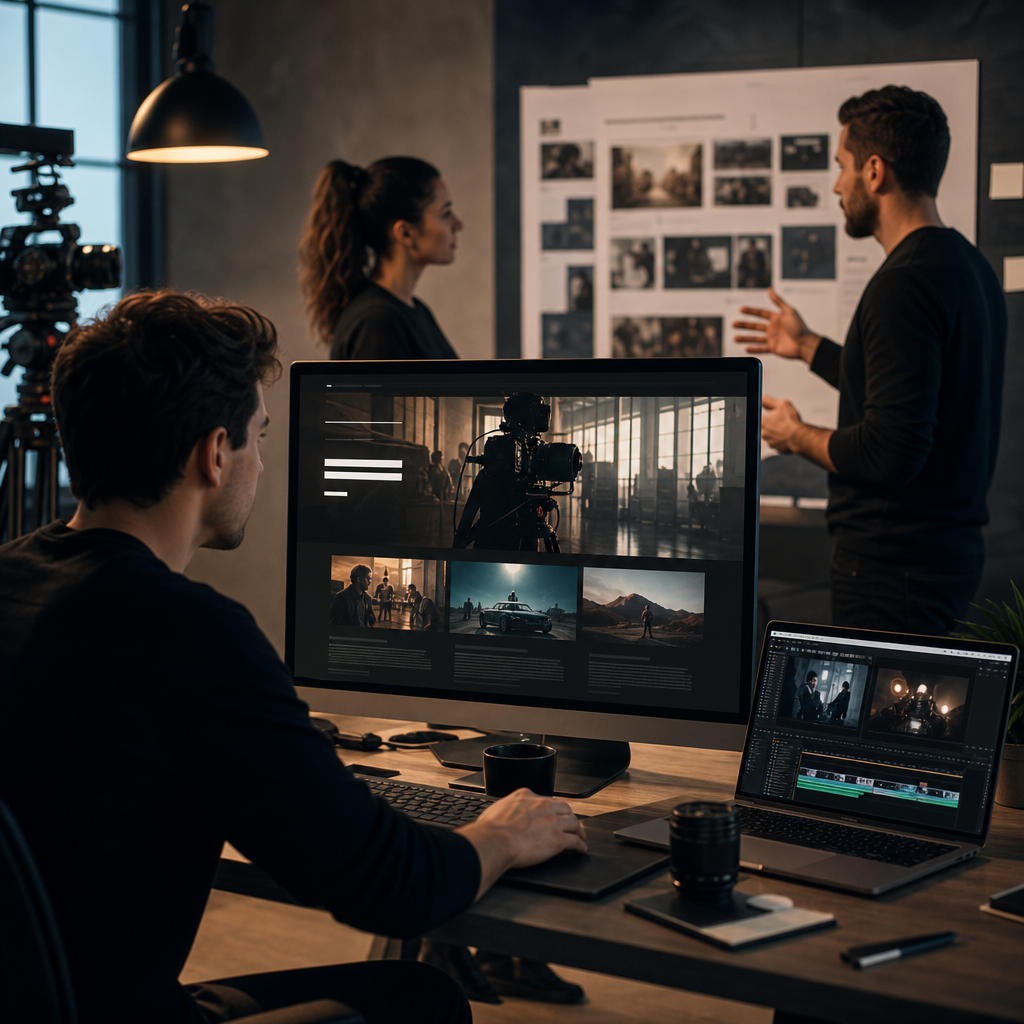
    Each video type answers a different question the visitor is asking. When properly positioned, that video becomes the reason they convert from visitor to lead.

    We also optimize video for form completion. A lead generation form that appears after someone watches a relevant video has higher completion rates than an out-of-context form. The video primes them emotionally and educationally for the ask.

    Our Integrated Approach to Website and Video Development

    Here’s how we structure the work:

    We start by understanding your current digital presence, target audience, and conversion goals. We interview your sales team about common prospect objections. We audit your current website and any existing video content. This discovery phase informs everything that follows.

    Next, we develop a unified strategy document that outlines the website architecture, video types needed, messaging hierarchy, and how these pieces connect. We create a visual direction that guides both the design and production work.

    The website design phase and video production phase happen in parallel, not sequentially. Our designers and video producers collaborate regularly to ensure alignment. When the website designer makes decisions about layout and color, the video producer understands those choices and reflects them in the cinematic work.

    Once both are built, we integrate video into your website technically and strategically. We optimize page load speeds so video doesn’t slow your site. We set up analytics tracking so you can measure which videos drive the most engaged visits and conversions. We ensure video is mobile-responsive and accessible.

    Throughout this process, we’re also building out your broader digital marketing infrastructure: social media management, paid advertising strategy, and search optimization. Your website and video become the centerpiece of a coordinated digital presence.

    Real Results: How Unified Strategies Drive Measurable Growth

    Our clients see measurable outcomes when website design and cinematic video work together.

    Service-based businesses typically see increases in qualified lead volume within the first 60 days. One HVAC service company increased their contact form submissions by 34% after integrating cinematic service videos on their homepage and service pages. The video let prospects see the team in action and understand the quality of work before deciding to call.

    E-commerce and product-based businesses see improvements in average order value and repeat purchase rates. One client’s product videos showing real-world usage and materials increased their average cart value by 18% because prospects felt more confident about their purchase decision.

    Multi-location service brands see faster scaling because they have a unified visual and narrative framework they can apply across locations. Rather than each location developing its own messaging, they use the core website and video strategy as a template, saving months of work and ensuring consistency.

    Beyond conversion metrics, clients report faster sales cycles and higher close rates. Prospects who’ve watched relevant video content are more informed and committed before they have a conversation with your sales team.

    You can explore how this looks in practice in our case studies, which detail specific results and the strategies behind them.

    Getting Started with Video-First Website Design

    Start by answering these questions for your business:
    1. What’s your biggest bottleneck right now? Is it website traffic, conversion rate from traffic, or something else?
    2. What are your top three visitor questions that your current website doesn’t answer quickly enough?
    3. What video content exists within your organization that you’re not currently using on your website?
    4. What’s your timeline for needing measurable improvement?

    Your answers clarify where to focus first. If your website gets traffic but doesn’t convert well, your priority is videos that address prospect objections and build trust. If your website gets minimal traffic, your priority is social-first video content that brings people to your site.

    We recommend starting with one strategic video integrated into your highest-traffic pages, measuring the impact, then scaling from there. This lets you see the conversion impact before investing in a full website redesign.

    The key is beginning with a unified perspective rather than treating video and web design as separate projects. That mindset shift alone changes the outcomes you’ll see.

    Common Questions About Integrating Video into Your Website

    How much does adding video to my website cost? It depends on the scope. Integrating existing video costs far less than producing new cinematic content. We work with businesses at different budget levels and recommend starting with a strategic video or two rather than overhauling everything at once.

    Will video slow down my website? Not if it’s properly optimized. We host video files on CDN infrastructure that ensures fast delivery regardless of visitor location. We also offer adaptive bitrate streaming so video quality adjusts based on connection speed.

    What type of video performs best on websites? It depends on your goal and audience. Founder or team videos build trust quickly. Product demos or service explainers answer questions. Client testimonials build social proof. We recommend a mix that covers different stages of the buyer journey.

    Can I use social media video on my website? Usually, but we often find that social-first video (short, fast-paced) performs differently on websites than purpose-built web video. Social video is designed for the Facebook or TikTok algorithm. Website video is designed for conversion. They serve different functions, though sometimes one piece can work for both.

    How do I measure if website video is actually working? Through analytics. We set up tracking that shows you how many people watch each video, how long they watch, whether they take action afterward, and which videos correlate with the highest conversion rates. This data guides what type of video you produce next.

    Start exploring how cinematic website videos can transform your digital presence. The combination of thoughtful design and high-quality visual storytelling creates momentum that individual channels alone simply cannot achieve.

    Contact us today for a free consultation to see how we can help you grow your business.

    Frequently Asked Questions (FAQ)

    How do we integrate video into website design to improve lead generation?

    We embed strategic short-form video content throughout your website to capture attention and guide visitors toward conversion points. Our approach positions video on key pages like homepages, service pages, and landing pages to increase engagement time and communicate your value proposition faster than text alone. We pair this with optimized call-to-action elements that connect video engagement directly to our lead capture systems.

    What’s the difference between creating cinematic video for social media versus for your website?

    While both use cinematic production quality, we tailor each for its platform’s unique behavior. Our social videos are shorter, hook viewers immediately, and drive traffic to your website. On your website, we create longer-form content that builds trust, demonstrates expertise, and supports the visitor’s decision-making journey through your sales funnel.

    How do we ensure visual consistency between our video production and website design?

    We develop your brand’s visual language upfront, including color palettes, typography, motion styles, and storytelling approaches that apply across both mediums. Our team works collaboratively so your website design and video production follow the same aesthetic standards, creating a cohesive experience that reinforces brand recognition at every touchpoint.
  • Stop Scrolling and Start Selling: The Secrets of Most Effective Instagram Ads

    Stop Scrolling and Start Selling: The Secrets of Most Effective Instagram Ads

    Why the Most Effective Instagram Ads Are Your Fastest Path to More Local Customers

    The most effective Instagram ads in 2026 share a few things in common — and once you know what they are, you can start replicating them for your own business.

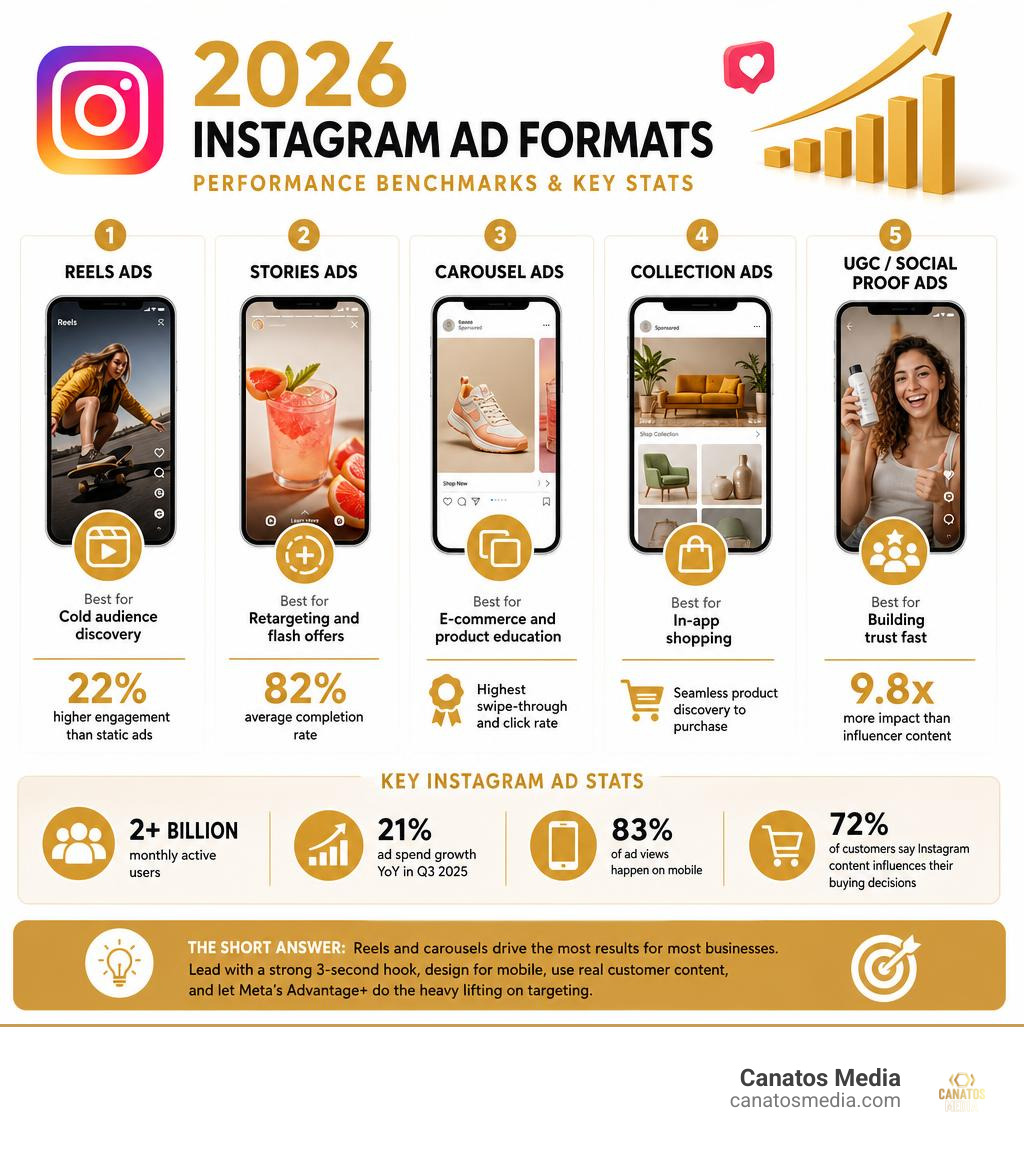
    Here’s a quick breakdown of what works best, right now:

    Ad Format Best For Key Strength
    Reels Ads Cold audience discovery 22% higher engagement than static ads
    Stories Ads Retargeting and flash offers 82% average completion rate
    Carousel Ads E-commerce and product education Highest swipe-through and click rate
    Collection Ads In-app shopping Seamless product discovery to purchase
    UGC / Social Proof Ads Building trust fast 9.8x more impact than influencer content

    The short answer: Reels and carousels drive the most results for most businesses. Lead with a strong 3-second hook, design for mobile, use real customer content, and let Meta’s Advantage+ do the heavy lifting on targeting.

    Instagram now reaches over 2 billion monthly active users — and ad spend on the platform grew 21% year-over-year in Q3 2025. That growth isn’t slowing down. But more spend doesn’t mean better results. Most local businesses waste their budget on weak creative, wrong formats, and zero measurement strategy.

    The competition for attention is real. A user scrolls past hundreds of posts every session. If your ad doesn’t stop them in the first three seconds, it’s invisible. And with 83% of all Instagram ad views happening on mobile, the stakes for getting your creative right have never been higher.

    Up to 72% of customers say Instagram content directly influences their buying decisions. That’s not a small number — that’s most of your potential customers being shaped by what they see in their feed before they ever visit your website.

    This guide breaks down exactly what separates forgettable ads from ones that drive real sales.

    I’m Nic Canobbio, founder of Canatos Media — with over two decades in media production, live content, and paid social strategy, I’ve spent years studying and producing the most effective Instagram ads for brands that need real growth, not just vanity metrics. Let’s get into what actually works.

    2026 Instagram ad formats, performance benchmarks, and key stats infographic infographic

    Decoding the Most Effective Instagram Ads Formats in 2026

    To build a high-converting campaign, you must first understand where your ads live. Too many advertisers make the mistake of treating Instagram as a simple extension of their Facebook campaigns. As we discuss in our breakdown of Facebook Ads vs Instagram Ads (2026), user behavior, platform culture, and creative language are fundamentally different on these two networks.

    While Facebook users are highly accustomed to clicking outbound links, Instagram users prefer to consume content and make discoveries directly inside the app. This means the most effective Instagram ads are designed to feel native to their specific placement.

    Let’s look at the benchmarks for the primary placements on Instagram:

    • Instagram Reels: The undisputed king of organic reach and low-cost attention. Reels ads feature a 30-40% lower Cost Per Thousand Impressions (CPM) compared to the standard feed because Meta aggressively subsidizes this inventory to keep users engaged.
    • Instagram Stories: Ideal for direct response, quick promotions, and retargeting campaigns. Stories have an incredible 82% average completion rate when designed correctly.
    • Instagram Feed: The traditional home of high-resolution imagery. While feed CPMs are higher ($10–$16 on average), they still command excellent conversion rates for high-intent buyers.
    • Explore Page: A highly underutilized, high-Click-Through-Rate (CTR) placement. Users on the Explore page are actively looking to discover something new, making it the perfect spot for cold-traffic prospecting.

    For local companies in Long Island and the Tri-State area, understanding how these placements interact is the key to running successful campaigns. Whether you are partnering with a top Long Island social media marketing company or building your campaigns in-house, matching your creative format to the user’s mindset is non-negotiable.

    Why Reels and Stories Dominate the Most Effective Instagram Ads Landscape

    If you want to build campaigns that convert in 2026, you must prioritize vertical video. Reels now absorb nearly 50% of the total time spent on Instagram. Because of this massive shift in user behavior, Reels ads lead engagement by 22% over static image ads. Furthermore, Instagram Stories are viewed daily by 70% of Gen Z users, making vertical formats the primary language of the platform.

    To dominate this space, your creative needs to look like organic content. This is where we emphasize the shift from high-production commercial styles to authentic, vertical storytelling. In our guide on How to Create High-Impact Short Form Content That Converts on Facebook and Instagram Reels, we highlight that native-looking, phone-shot vertical video consistently outperforms polished corporate commercials.

    When you design for Reels and Stories:

    1. Use a 9:16 vertical ratio (1080 x 1920 pixels) to occupy the user’s entire screen.
    2. Incorporate native platform signals, such as Instagram-style fonts, stickers, and interactive elements.
    3. Build your creative around trending audio or clear, voiceover-led hooks to ensure immediate engagement.

    The Power of Carousels and Collection Ads for E-Commerce

    While video is crucial, static and mixed-media formats still have a powerful role to play—specifically in e-commerce and product education. Carousels continue to outperform other formats for pure view counts on Instagram, regardless of account size. They allow you to showcase multiple angles of a product, tell a sequential story, or present a step-by-step tutorial that users can swipe through at their own pace.

    Collection ads take this a step further by pairing a primary video or image with a grid of smaller product shots underneath. When a user taps the ad, they are taken to a fast-loading, immersive storefront within the Instagram app. This minimizes post-click friction and prevents drop-offs.

    Here is how Carousel and Collection ads stack up in performance metrics:

    Metric Carousel Ads Collection Ads
    Average Engagement Rate 0.55% (Highest on Instagram) 0.42%
    Primary Advantage Ideal for storytelling & multi-benefit education Perfect for instant, in-app catalog browsing
    Best Creative Combo A video on card 1, followed by static detail cards A lifestyle video header with clean product grids
    Average ROAS Lift 1.5x compared to single static images Up to 1.8x when using creator-generated assets

    By leveraging these formats, local e-commerce brands in the Tri-State area can transform casual browsers into active buyers without forcing them to wait for a slow external website to load.

    The Anatomy of a Scroll-Stopping Creative Strategy

    The auction algorithm on Meta has changed. In 2026, targeting is no longer the main lever for ad performance. Meta’s AI is incredibly smart; it reads your video hooks, analyzes your visual frames, and decodes your captions to find your buyers. This means creative is 70% of your performance, while targeting is only 30%.

    To win the auction and earn lower CPMs, you must build “scroll-stopping” creative. If you want to dive deeper into how Meta’s auction rewards engaging creative, check out our insights on how to Stop the Scroll and Start the Toll with Meta Paid Ads.

    The absolute secret to a scroll-stopping ad is the first 3 seconds. This is your hook. If you fail to capture attention here, the rest of your video does not matter. You can use pattern interrupts to grab eyes instantly:

    • Visual Interrupts: A split-screen comparison, a dramatic before-and-after contrast, or an unexpected motion in the first frame.
    • Text Hooks: A bold, polarizing statement or a question that addresses a specific pain point (e.g., “Stop wasting money on paper notebooks”).
    • ASMR / Audio Hooks: Satisfying sounds, like a product unboxing or a crisp voiceover, to draw users in immediately.

    How to Design the Most Effective Instagram Ads for Mobile-First Audiences

    With 83% of all Instagram ad views occurring on mobile devices, your creative must be designed mobile-first. This goes beyond just choosing the right aspect ratio. You must respect the platform’s layout and user habits.

    First, you must design for sound-off viewing. Up to 80% of users scroll through their feeds with their phones muted. If your video relies entirely on spoken words without text support, your message is lost. Always include clear, dynamic captions or text overlays that explain the core benefit of your product.

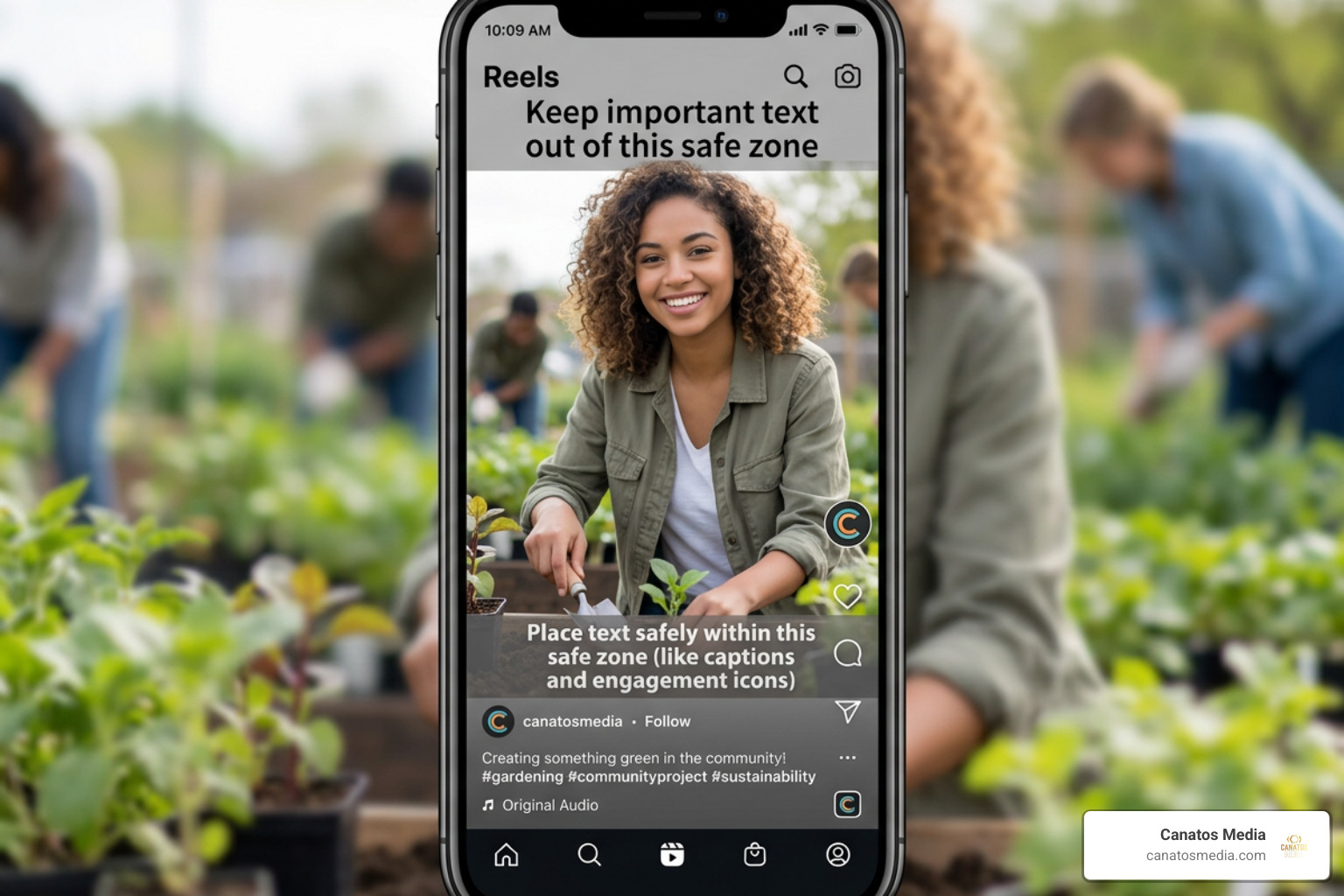
    Second, you must respect ad safe zones. When running ads on Reels or Stories, Instagram overlays profile icons, usernames, captions, and Call-to-Action (CTA) buttons on the top and bottom of the screen. Keep your text, logos, and critical visual elements within the central 1080 x 1420 pixel safe zone to prevent them from being covered by the platform’s user interface.

    Diagram showing Instagram Reels safe zones for text and logo placement

    Finally, consider the visual style. High-end, cinematic production can work beautifully when it feels authentic and narrative-driven. To see how this works in practice, read our guide on How Cinematic Short Form Content Improves Meta Paid Ad Performance. The goal is to balance professional visual quality with the raw, personal feel that Instagram users expect.

    Leveraging UGC and Social Proof to Build Trust

    People do not trust corporate promises; they trust other people. In fact, 83% of consumers trust reviews and recommendations from peers over traditional ads. Furthermore, users find User-Generated Content (UGC) to be 9.8 times more impactful than polished influencer content.

    The most effective Instagram ads leverage this psychological trigger by placing real customer experiences at the center of the creative.

    To successfully use UGC and social proof in your campaigns:

    • Use “Lo-Fi” Phone Footage: Ask your customers or creators to film simple, authentic selfie-style videos explaining how your product solved their problem. Avoid overly polished scripts.
    • Screenshot Real Reviews: Place a screenshot of a five-star review directly over a lifestyle photo of your product. This simple visual combination builds instant credibility.
    • Focus on the “Before and After”: Show the real, unedited transition from a pain point to a solution.

    Example of an authentic, high-converting user-generated content (UGC) ad layout

    For local service businesses in Long Island, showcasing real local testimonials in your ads is the fastest way to build community trust. If you want to explore advanced localized tactics, check out these Advanced Instagram Ad Strategies for Long Island Businesses to see how local social proof drives real-world bookings.

    Structuring Campaigns for Maximum ROAS and Minimum Fatigue

    You can have the most beautiful creative in the world, but if your campaign structure is messy, you will burn through your budget. To prevent this, you need to understand how to build campaigns that maximize your Return on Ad Spend (ROAS). If your current campaigns are showing high activity but flat revenue, you are likely falling into common structural traps. We highly recommend reviewing our guide to help you Stop Burning Cash on Bad Meta Ads.

    To build a modern, high-performing campaign structure, follow these three rules:

    1. Implement the Meta Conversions API (CAPI): Relying solely on the standard browser pixel is a recipe for failure in 2026. Browser-based tracking can miss 20% to 40% of your conversions due to privacy updates and ad blockers. Setting up CAPI alongside your pixel ensures server-side tracking, capturing crucial platform actions like story link taps and direct message initiations.
    2. Embrace Broad Targeting: Stop micro-segmenting your audiences into tiny interest stacks. This limits Meta’s AI and drives up your CPMs. Instead, use broad targeting (audiences of 10 million+) and let the creative do the targeting. To learn how to transition your account to this modern workflow, read our comprehensive playbook on Instagram Ads in 2026: A Practical ROI Playbook.
    3. Use Advantage+ Creative: Enable Meta’s automated creative optimizations. This allows the algorithm to automatically adjust image brightness, add subtle background music to silent videos, and swap headlines based on what a specific user is most likely to engage with.

    Creative Testing Frameworks and the 70/20/10 Rule

    To keep your ad costs low and prevent creative fatigue (which typically starts when your ad frequency hits 5+), you must establish a structured creative testing framework. You cannot simply launch one ad and let it run for months. You need a system that regularly identifies new winning creatives.

    We recommend allocating your budget using the 70/20/10 Rule:

    • 70% of your budget goes to your Proven Winners. These are your stable, high-converting ads that drive consistent sales.
    • 20% of your budget goes to Optimization Tests. Here, you test minor variations of your winning ads—such as testing three new hooks on your best-performing video.
    • 10% of your budget goes to Experimental Swings. This is reserved for testing wild, completely new creative angles or formats that you have never tried before.

    When running these tests, Meta’s algorithm requires approximately 50 optimization events per ad set per week to exit the learning phase. Keep your testing structured, isolate your variables, and give the algorithm enough budget and time (at least 7 to 10 days) to find statistically significant data.

    For a detailed look at how to scale these test assets across different platforms, read our guide on How to Scale Short Form Ad Creative Across Meta and Google Ads.

    Frequently Asked Questions about Instagram Advertising

    Running paid social campaigns can feel overwhelming. To help you navigate the platform, we have compiled and answered the most common questions and strategic rules of thumb used by top digital agencies.

    What is the 3-3-3 rule in marketing?

    The 3-3-3 rule is a strategic framework designed to reduce campaign complexity and keep your messaging clear. It dictates that your marketing strategy should focus on:

    • Three Core Messages: Do not try to explain ten different benefits in one ad. Focus on your three strongest selling points.
    • Three Audience Segments: Define three distinct customer personas (e.g., the busy parent, the budget-conscious shopper, the high-end enthusiast).
    • Three Primary Channels: Avoid spreading your budget across ten different social networks. Master three core channels (like Instagram, Google, and email) before expanding.

    What is the 3-2-1 rule on Instagram?

    The 3-2-1 rule is an organic engagement strategy that brands use to build community trust and boost their algorithmic reach. Every day, your brand should:

    • Interact with 3 Accounts: Leave genuine comments on three relevant accounts in your industry or local area.
    • Respond to 2 Comments: Reply to at least two comments left on your own posts to spark conversation.
    • Ask 1 Question: Post one interactive element (like a poll sticker in Stories or a question in a caption) to encourage your audience to engage with you.

    What are the most common mistakes to avoid in Instagram ads?

    Even experienced media buyers make mistakes that drain their ad budgets. Here are the top four pitfalls to avoid:

    1. Over-Targeting: Creating highly narrow interest groups. This restricts the algorithm and increases your cost per click.
    2. Ignoring the Conversions API (CAPI): Relying solely on the Meta pixel, which results in lost data and poor attribution.
    3. Using Weak Hooks: Failing to capture attention in the first 1.5 to 3 seconds of your video ads.
    4. Allowing Creative Fatigue: Running the exact same image or video for weeks without refreshing the hook, copy, or visual format.

    Conclusion

    Building the most effective Instagram ads is not about having the largest production budget or finding a secret targeting hack. It is about understanding the platform’s culture, designing native vertical content, leveraging authentic human proof, and structuring your campaigns to let Meta’s AI do its job.

    At Canatos Media, we specialize in connecting these pieces. We create cinematic, short-form videos that capture attention in the first second, and we back them up with technical Meta Ads management to ensure your creative translates directly into sales. Based right here in the Tri-State area and Long Island, we know exactly what it takes to help local businesses stop the scroll and start converting.

    If you are ready to take full control of your advertising, read our Meta Ads Management Ultimate Guide to master the platform, or reach out to us today to start building campaigns that scale.