The Challenge Multi-Location Brands Face With Generic Video Content
Multi-location and service-based brands operate in a unique position. Your customers span different neighborhoods, cities, or regions. Your team operates across several physical locations. Yet most video content circulating on social platforms treats every business the same way.
Generic video templates don’t reflect the nuance of your brand or the specific needs of customers in different markets. A dental practice in Denver faces different competition and seasonal patterns than one in Austin. A home services company managing five locations can’t use the same messaging across all of them.
What happens next is predictable. The video gets produced, posted, and quietly disappears into the feed. No leads. No phone calls. Just wasted budget and creative effort.
The real issue isn’t the video quality itself. It’s that most video production workflows don’t account for the sales systems that actually convert viewers into customers. They produce beautiful content in a vacuum, disconnected from your advertising platforms, your lead capture processes, and the specific markets where you operate.
What to do next: Audit your current video content library. Note which videos generated actual leads or calls, and which ones didn’t. You’ll likely spot a pattern: the ones that worked were specific to a location, service, or customer pain point.
Why Standard Video Agencies Miss the Mark for Service-Based Businesses
Traditional video production agencies excel at creative storytelling, but they typically operate in isolation from your marketing strategy. They hand off a finished video and move on. They don’t own the distribution, the ad spend, or the results.
For service-based businesses and multi-location operators, this creates friction. Your brand needs video content that works across Meta, Google, TikTok, and your website simultaneously. Standard agencies rarely optimize for platform-specific requirements. A 60-second YouTube video doesn’t work the same way on Instagram Reels. A testimonial that lands on Meta ads might bomb on Search.
Additionally, service-based businesses need video content tied directly to lead generation. You’re not selling a product people discover on impulse. You’re building trust, demonstrating expertise, and creating urgency for services like HVAC repair, legal counsel, landscaping, or fitness coaching. That requires a different video strategy entirely.
Most agencies also underestimate the production volume required for real growth. Running five locations means you need 5-10x more localized content than a single-location business. Generic agencies treat this as a scaling problem (more shoots, more budget). We treat it as a workflow and template problem.
What to do next: Ask any video agency how they handle platform optimization and lead integration. If the answer is vague or if they hand off files and disappear, that’s a red flag.
Our Approach to Cinematic Short-Form Video Ads That Convert
We start by understanding your customer journey in detail. What problem brings someone to search for your service? What objection holds them back from calling? What proof point makes them confident in your brand?
Our short-form video production strategy builds cinematic storytelling around these moments. We create 15-60 second videos that feel premium but perform like ads. Think customer testimonials that show transformation, service walkthroughs that build expertise, or location-specific content that resonates with neighborhood markets.
The creative approach differs from typical social content. We’re not chasing viral moments. We’re designing hooks that stop scrolling, messaging that speaks to specific pain points, and calls-to-action that drive viewers to a lead form or phone number.
Practically speaking, this means we produce multiple asset variations from each shoot. One testimonial might become a 30-second Meta ad, a 15-second TikTok version, a website hero video, and a 45-second YouTube pre-roll. Platform optimization happens at production, not as an afterthought.
Each video includes strategic visual branding, text overlays that work with sound off, and pacing optimized for mobile viewing. We test multiple headline variations alongside video variations to find winning combinations.
What to do next: Identify three customer objections or pain points your prospects mention most often. These become your next video topics.
How We Integrate Video With Your Full Digital Marketing Strategy
Video doesn’t live in a silo at our agency. Every video we produce connects to a larger marketing system.
On the paid side, we layer video content into Meta and Google advertising with cohesive creative sequences. Early-awareness videos introduce your brand. Mid-funnel videos address specific objections. Bottom-funnel videos drive conversions with strong offers and CTAs.
On the organic side, video gets distributed across your social accounts, website, email, and partner channels in coordinated waves. We build content calendars that reinforce messaging across platforms.
We also tie video performance back to your lead generation tracking. If a video generates qualified leads, we scale the ad spend behind it. If it underperforms, we diagnostic whether the issue is creative, audience targeting, or platform selection.
Our approach treats video as one piece of an all-in-one marketing funnel. Social media management, paid advertising, SEO optimization, and website support all work together to amplify video’s impact.
What to do next: List all the marketing channels where your content currently lives (Instagram, Google Business, website, etc.). Identify where video is missing and where it could have the biggest impact.
Building Lead Generation Systems Around Your Video Content
Video drives attention, but attention without a clear conversion path is wasted potential.
We build lead capture systems directly into your video strategy. This might mean adding a clickable link card to Meta ads that takes viewers to a booking page. It could be a form embed on your website where videos live above the fold. For service businesses, it often means a prominent phone number and “call now” messaging in the video itself.
We also create landing pages optimized specifically for video ad traffic. When someone clicks your ad, they arrive at a page featuring the same offer, testimonial, or service shown in the video. This consistency dramatically improves conversion rates.
For multi-location brands, we build location-specific landing pages. Someone watching a video about plumbing in Austin gets routed to your Austin service page, not a generic homepage.
Lead tracking is equally important. We set up UTM parameters, conversion pixels, and CRM integrations so you understand exactly which videos generated which leads. This data drives our optimization decisions week over week.
What to do next: Audit your current lead capture process for video traffic. Is there a clear path from ad click to form submission or phone call? If not, that’s your next build.
Meta and Google Video Ad Optimization We Handle End-to-End
We manage both the creative and the media buying side of your video campaigns.
On Meta (Facebook and Instagram), we test different audience segments, placement combinations, and bid strategies to find your most efficient CPC and CPA. We run creative tests systematically, rotating new video variations alongside proven performers to continuously refresh your ads.
Meta’s advantage is granular audience targeting. We build audiences based on location, interests, behaviors, and lookalike models seeded from your best customers. Video ads perform exceptionally well to these warm audiences.
Google provides a different opportunity. Video ads on YouTube, Google Search, and the Google Display Network reach high-intent users at different moments. Someone searching for “HVAC repair near me” is further along in the buying journey than someone watching a YouTube video about home maintenance.
We optimize Google campaigns by keyword relevance, geographic targeting, and bid adjustments. Video ads on Search can outperform text ads significantly for service businesses because they communicate expertise and build trust faster.
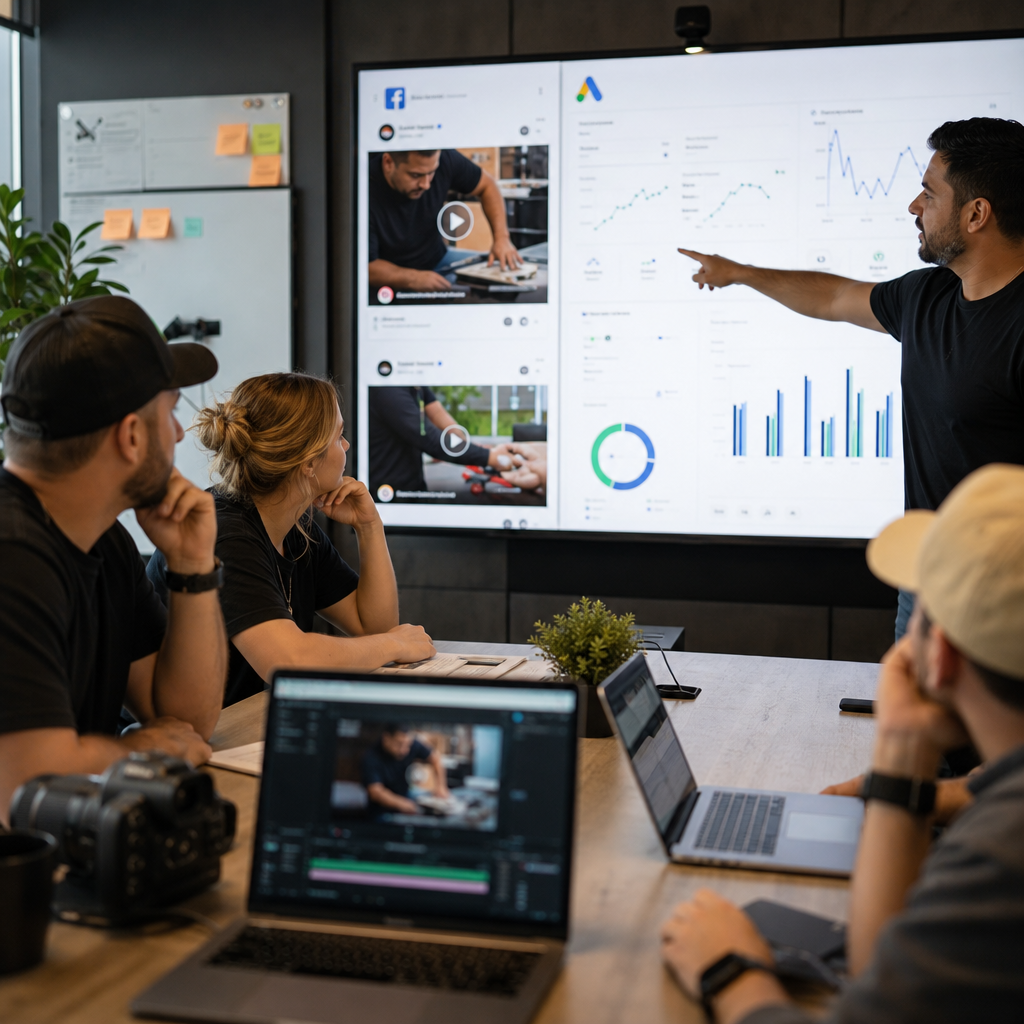
Both platforms require ongoing monitoring and optimization. We track metrics like video completion rate, click-through rate, cost per lead, and cost per acquisition. Poor performance triggers diagnostic analysis and creative or audience iteration.
What to do next: Review your current ad spend across Meta and Google. Note which channels consistently deliver leads and which don’t. That tells us where optimization effort should focus first.
Scaling Video Production Across Multiple Locations Without Quality Loss
One of the biggest challenges multi-location brands face is producing consistent, high-quality video content across all their markets without multiplying costs and timelines.
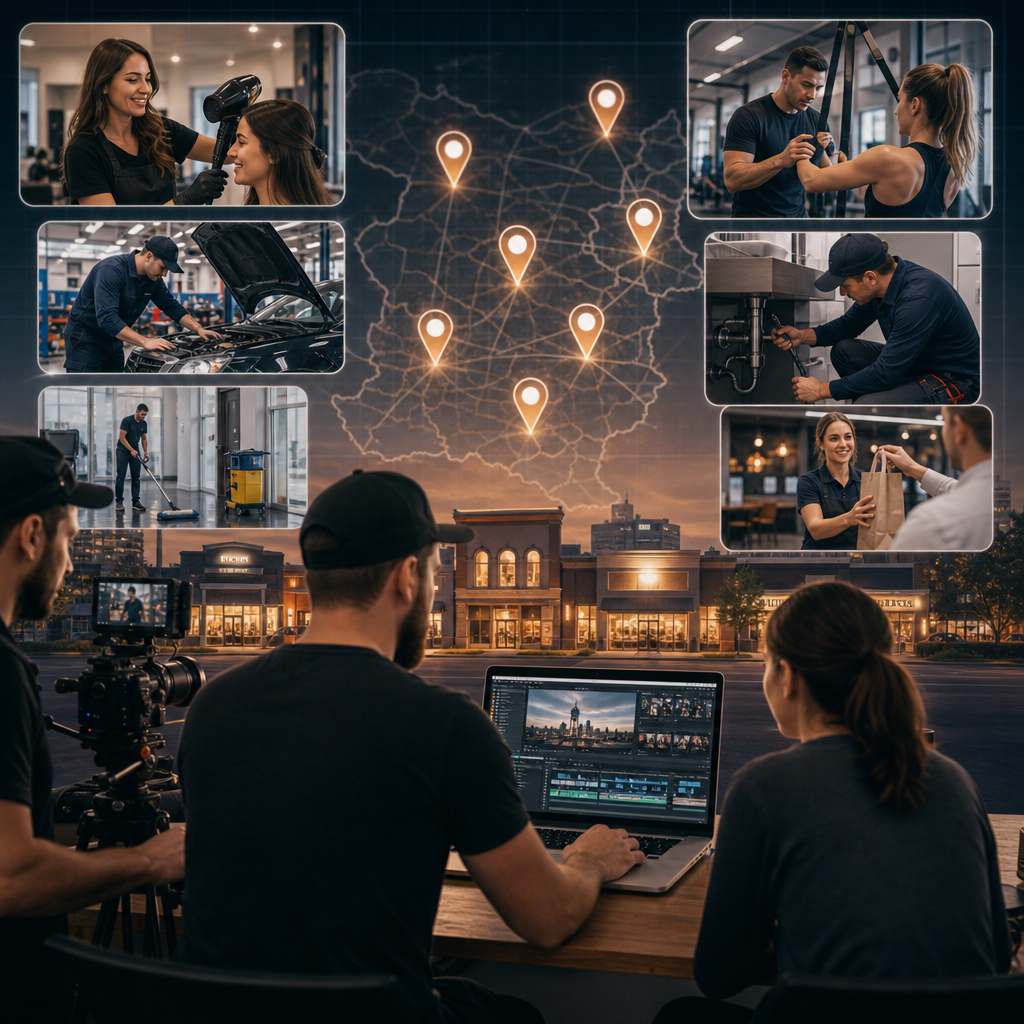
We solve this through template-based production systems. We shoot core content pieces once (founder interviews, process walkthroughs, core value propositions) and reuse that footage across variations. We create customizable graphics, text overlays, and location-specific inserts that allow us to produce 10-15 location variations from a single shoot day.
Our process also includes local content capture. We train your team at each location to film short video clips using smartphones and simple lighting setups. These raw clips feed into our editing workflow, becoming polished promotional content without requiring expensive production crews at every location.
This hybrid approach means a five-location brand can maintain a consistent, cinematic look while still having location-specific messaging. You’re not spending 5x the production budget to serve 5 locations.
Production efficiency also scales through our systems. We maintain templates, stock footage libraries, color grades, and music selections that ensure every video feels on-brand despite being produced in batches.
What to do next: Count how many locations you operate. Then calculate the video production volume you’d need monthly to support them all. That number is likely higher than your current budget allows. Let’s talk about scaling it efficiently.
Case Study Results From Our Video-First Marketing Campaigns
Our approach consistently delivers measurable results for multi-location service businesses.
One home services franchise increased lead volume by 240% within six months by switching to location-specific video ads paired with optimized landing pages. We produced 15-20 short testimonial videos, tested them across Meta and Google, and scaled spend behind winners.
A dental practice group managing four offices generated 180 new patient acquisitions per month (up from 45) by running video ads showcasing their team and specific procedures. Patient testimonials performed best. We rotated fresh testimonial videos monthly to prevent ad fatigue.
A fitness chain used before-and-after video transformations paired with limited-time membership offers. Video ads drove membership inquiries at $12 per lead, well below their previous digital cost per lead of $28. Volume increased 65% while cost per acquisition dropped significantly.
The pattern across these is consistent: video content paired with clear conversion systems, platform-specific optimization, and continuous creative iteration compounds results over time.
What to do next: Identify a similar business in your industry. Research their social presence. Note whether they’re running video ads. If they are, you’re behind.
Why Your Next Video Campaign Needs Strategic Platform Placement
Platform selection dramatically impacts video performance, yet many brands treat all platforms the same way.
Instagram and Facebook prioritize completion rate and engagement. Short, punchy videos with hooks in the first second perform best. Testimonial videos and before-and-afters thrive here.
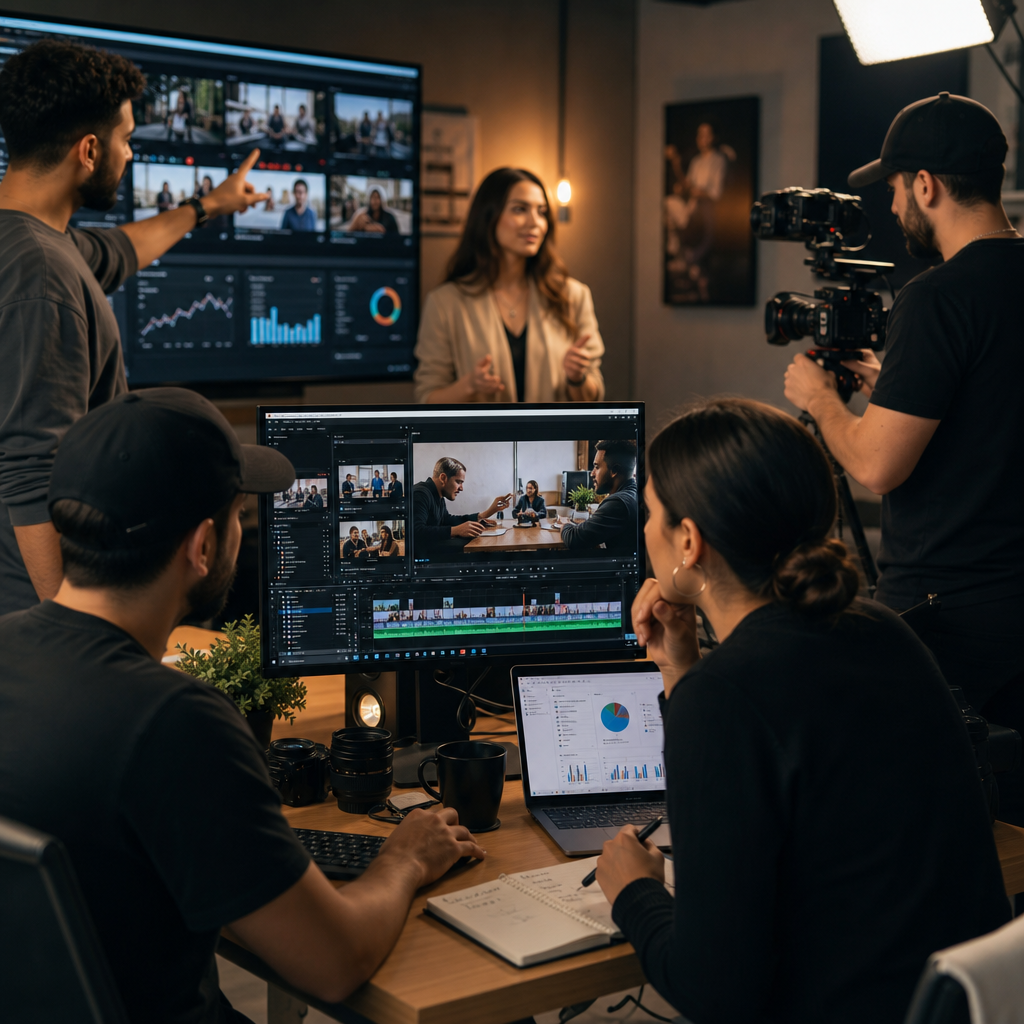
YouTube and Google Search reach different user intent. Someone searching for “best dermatologist near me” is primed to convert. Video ads on Search capture that intent with messaging around expertise and location.
TikTok and Reels require different creative conventions. The audience expects authentic, less polished content. Branded videos often underperform. User-generated testimonials and behind-the-scenes content work better.
Your website and email deserve video attention too. Homepage videos with clear CTAs convert better than static images. Email videos increase click-through rates by 25-35% compared to image-based emails.
We develop a placement strategy that aligns video creative to each platform’s unique strengths and audience expectations. A single video concept becomes multiple platform-optimized variations, each tailored to user behavior and algorithm preferences.
What to do next: Audit where your customers actually spend time. Don’t assume Facebook works best for you because you’ve heard that before. Look at your analytics. Where are your actual leads coming from?
Getting Started With a Video Marketing System That Works
Starting your video-driven growth doesn’t require a massive upfront investment or months of planning paralysis.
We typically recommend beginning with a discovery call where we audit your current marketing setup, understand your lead generation goals, and identify your top three audience segments. From there, we propose a focused first campaign: 4-6 high-performing video concepts, platform-specific optimization, and paid media seeding across Meta and Google.
The first campaign runs for 60 days with weekly optimization. We track performance against your cost per lead and volume targets. Winning videos get scaled. Underperformers get replaced with new concepts.
Most brands see measurable lead increases within 30 days, with significant improvements by day 60. The key is committing to iteration rather than expecting a single perfect video.
Our process integrates all your marketing channels so video doesn’t exist in isolation. You get social media management, paid advertising, SEO optimization, and website support working cohesively toward lead generation and growth.
The best time to start was probably last year. The second-best time is this week. If your multi-location brand isn’t running video ads yet, your competitors probably are. Reach out and let’s build a system that works.
Contact us today for a free consultation to see how we can help you grow your business.
Frequently Asked Questions (FAQ)
How do we handle video production quality across multiple locations?
We build standardized cinematic templates and brand guidelines that our production team applies consistently at each location. Our process includes on-site coordination with local teams, centralized editing and color grading, and quality review checkpoints before any content goes live. This approach keeps your brand visually cohesive while scaling production efficiently across all your service areas.
What makes your video ads actually convert into leads for service businesses?
We design each video around your specific customer journey rather than just creating entertaining content. Our ads directly address the problems your target customers face, include clear calls-to-action tied to your lead capture system, and we continuously optimize based on conversion data from Meta and Google platforms. We’ve found that service businesses see the biggest ROI when video content is integrated with landing pages, email sequences, and follow-up systems that we manage together.
How long does it typically take to see results from a video-first marketing campaign?
We usually see meaningful engagement data within 2-3 weeks once ads are live, but lead volume and sales impact typically develop over 6-8 weeks as we refine targeting and messaging based on performance. The timeline depends on your industry, budget level, and how quickly we can optimize based on what the data tells us about your audience.