Day: July 3, 2026

  • Lead Generation Video Production: Converting Social Viewers into Qualified Leads

    Lead Generation Video Production: Converting Social Viewers into Qualified Leads

    Why Traditional Video Isn’t Driving Your Consultation Bookings

    Video content isn’t optional anymore. It’s the primary way your prospects discover, evaluate, and decide whether to contact you. But most video strategies miss the critical connection between what you produce and what actually converts viewers into consultation bookings. We’ve built our entire approach around closing that gap.

    Your team likely has plenty of video content out there. Brand reels, testimonials, product demos, company culture clips. They’re polished. They look professional. But they’re not generating the consultation calls you expected.

    The problem is simple: beautiful video without a conversion strategy is just entertainment. Traditional video production prioritizes storytelling and aesthetics without tying those elements to the specific actions you need prospects to take next. A stunning two-minute brand film might rack up thousands of views and zero qualified leads.

    We often see service-based businesses and multi-location brands invest heavily in production quality while leaving conversion mechanics on the table. The video performs well in the algorithm, but viewers don’t know what to do, where to book, or why they should act now rather than tomorrow. Friction kills leads.

    Your next step: audit your last five video posts. For each one, track how many people clicked your booking link or sent an inquiry. That gap between views and conversions is exactly what we’re solving.

    The Lead Generation Problem Most Agencies Miss

    Most video agencies separate content creation from conversion strategy. They hand you finished video, then your marketing team figures out how to use it. That handoff costs you leads.

    Lead generation requires video that works backward from your sales process. What does a qualified prospect actually need to see, hear, and feel before they’re ready to book a consultation with you? That insight determines every creative choice in production.

    We approach it differently. We start by understanding your ideal client profile, the specific objections they have, the trust signals that matter to them, and the precise call-to-action that moves them forward. Then we craft cinematic content that directly addresses those conversion points.

    When video is built with lead generation in mind from day one, you get higher-intent engagement, faster decision cycles, and more booked consultations per piece of content.

    How Strategic Video Content Captures Qualified Prospects

    Strategic lead generation video does three things simultaneously: it builds authority, it removes objections, and it creates urgency.

    Authority comes through cinematic quality and client success proof. When your video looks premium and features real client results, prospects perceive you as the established choice in your market. They’re more likely to trust your pricing and process.

    Objection removal is tactical. Identify the three to five biggest hesitations your leads have before booking (cost, time commitment, lack of experience, fear of wasting money) and address them directly in your content. A 45-second video showing your onboarding process removes the mystery. A client testimonial specifically addressing “Will this actually work for my situation?” converts skeptics.

    Urgency comes from clear CTAs and scarcity signals. “Book a free 20-minute strategy call this week” performs better than generic “learn more” buttons. Limited-time offers and time-specific messaging move fence-sitters.

    The result is video that doesn’t just inform or entertain. It qualifies prospects and moves them closer to a booking decision.

    Building Your Video Sales Funnel From Awareness to Action

    Your lead generation video strategy needs different content for different stages of prospect readiness.

    Awareness stage videos introduce your expertise without asking for commitment. These are short educational clips, industry insights, or quick wins that solve a small problem. You can run these broadly on social and search to reach people who don’t yet know you exist.

    Consideration stage content shows why your specific approach matters. Case studies, before-and-afters, client testimonials, and methodology breakdowns belong here. These videos target engaged audiences and warm leads who’ve already seen your awareness content.

    Decision stage content removes final objections. Pricing transparency videos, detailed process walkthroughs, and direct calls to action push qualified leads toward booking. These perform best when retargeted to people who’ve interacted with your previous content.

    Building this funnel means producing varied content consistently. We’ve found that businesses booking 20+ consultations per month typically run 8-12 pieces of video content weekly across multiple platforms and stages.

    Our Process: From Concept to Conversion-Focused Production

    We structure every project around conversion first, quality second.

    We start with strategy. You tell us about your ideal client, your sales process, and your lead goals. We map where video fits and what each piece needs to accomplish. A consultation booking system is completely different from a webinar registration or a product purchase, and the video approach changes accordingly.

    Then we design content specifically for those conversion points. Our team develops creative briefs that outline not just the visual story, but the psychological triggers and specific CTAs that drive action. Are you trying to build urgency? We emphasize limited availability. Trying to address skepticism? We feature third-party credibility and results.

    Production brings that strategy to life with cinematic quality. We focus on short-form formats that perform across platforms because that’s where your prospects spend time and where the algorithm favors engagement. Short-form video production allows us to create multiple conversion assets from single shooting days, maximizing your content volume and testing different approaches.

    Finally, we optimize each video for its platform and purpose. A YouTube thumbnail works differently than a TikTok frame. A LinkedIn CTAssociate is different from a Meta one. We handle all those details.

    Integrating Video With Your Digital Marketing Ecosystem

    Video that sits alone underperforms. Video integrated into your broader marketing system compounds.

    When we produce lead generation video, we’re simultaneously building it into your all-in-one marketing funnel. That means coordinating with your paid advertising, email sequences, landing pages, and sales follow-up.

    A prospect might see your awareness video on Instagram, get retargeted with consideration content on Google, land on a custom page with decision-stage video, and receive a series of emails containing clips from your process walkthroughs. Each touchpoint reinforces the previous one.
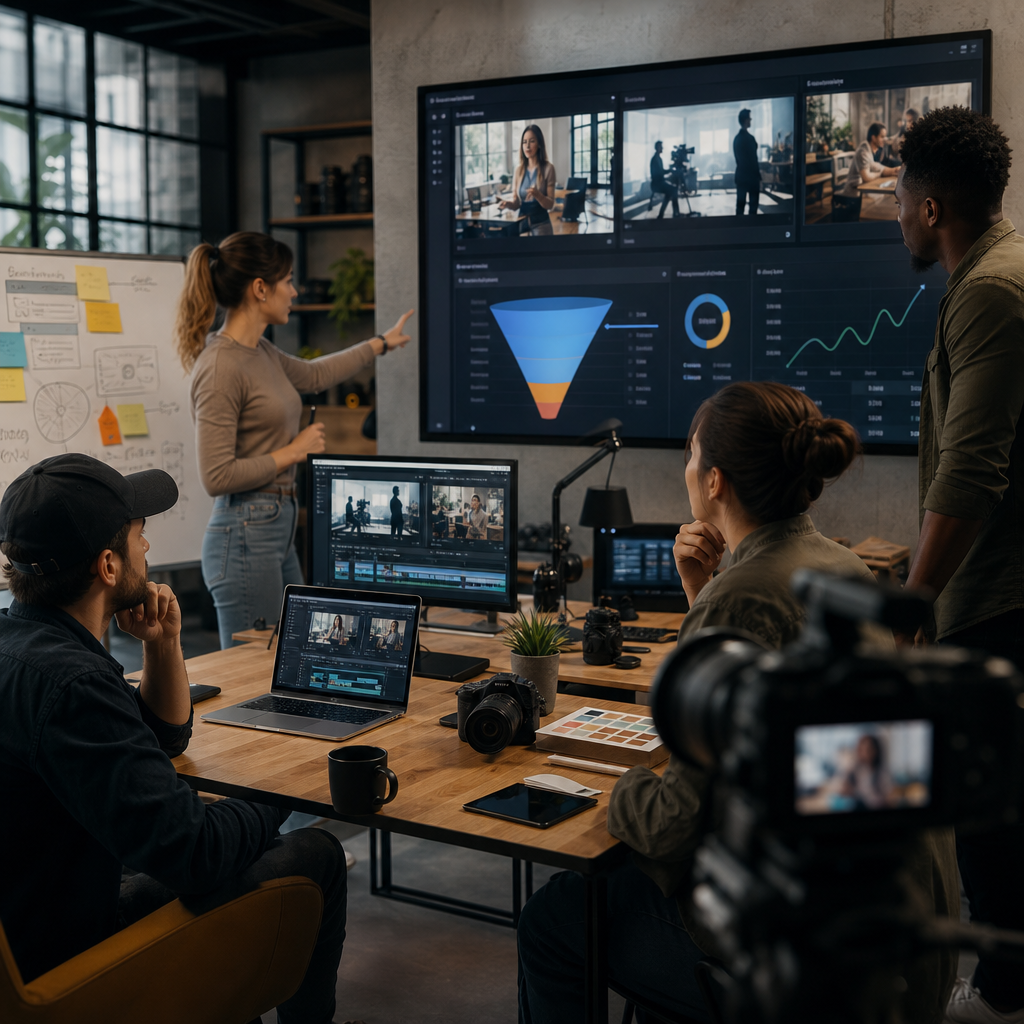
    We also optimize for SEO and audience algorithms. The same script and footage might become a YouTube video optimized for search intent, a series of carousel posts for LinkedIn, and short clips for TikTok discovery. One production creates assets across channels.

    This integrated approach turns casual viewers into consistently qualified prospects because they encounter your message across platforms in a logical sequence that moves them toward booking.

    Measuring ROI: Tracking Video Performance to Booked Calls

    You can’t optimize what you don’t measure. We implement tracking on every piece of video content we produce.

    We monitor views, engagement, and click-through rates, but those are starting points. The metrics that matter are lower-funnel ones: how many viewers clicked your booking link, how many landing page visits came from video traffic, and ultimately how many qualified consultations were booked from people who engaged with video.

    We use UTM parameters to track video sources through your booking system. We set up conversion pixels on your consultation confirmation pages. We often add simple surveys asking new callers how they found you, specifically asking about video content they remember seeing.

    Most of our clients discover that their highest-performing video pieces are driving 40-60% of their booked consultations within three months of consistent distribution. Once you identify which styles and topics convert best, you double down on that format.

    Monthly reporting shows exactly which videos are working and why, so we’re continuously improving both creative and strategy.

    Common Mistakes Brands Make With Lead Generation Video

    The biggest mistake is treating video like content instead of a conversion tool. You produce one video, post it once, and expect it to work. Lead generation video needs frequency and distribution strategy.

    Another common error is optimizing for views instead of conversions. A viral video that gets 100,000 views but zero bookings has failed its purpose. We always prioritize quality engagement and conversion over vanity metrics.

    Many businesses also underestimate the power of repetition. The same core message, presented slightly differently across multiple videos, actually converts better than constantly switching topics. Repetition builds authority and removes doubt.

    Finally, we see brands skip the CTA entirely or make it too soft. “Check our link in bio” is weaker than “Book your free 20-minute strategy call this week. Link in the comments.” Specificity drives action.

    Scaling Your Consultation Pipeline With Consistent Content

    Single videos don’t scale. Systems do.

    We typically recommend businesses aiming for consistent lead generation commit to producing 2-3 pieces of new video content per week. This sounds like a lot until you realize that with efficient production, one shooting day creates enough footage for 4-6 finished videos.
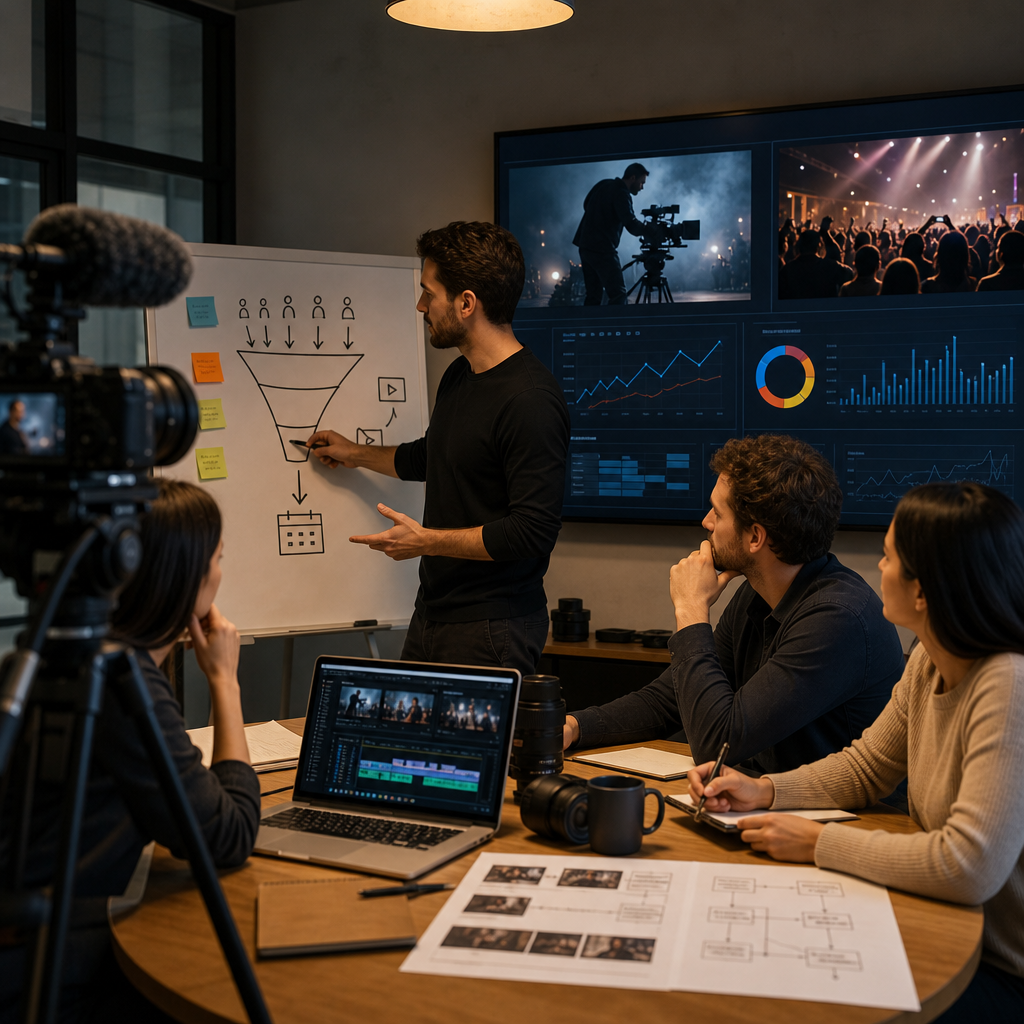
    Consistency serves two purposes. First, the platform algorithms favor regular publishers. Second, your prospects need repeated exposure before most will book. Publishing consistently means more of your audience sees your message multiple times.

    We’ve found that scaling consultation pipelines follows a predictable pattern. In month one, you establish the production system and baseline performance. Month two shows early results as content accumulates. By month three and four, you’re typically seeing 3-4x more booked consultations than you started with, assuming proper distribution and conversion optimization.

    The businesses that hit 30+ consultations per month maintain this consistency. They stop treating video as a project and start treating it as a standard business system.

    Getting Started With Your Lead Generation Video Strategy

    Start by documenting your current lead generation reality. How many consultations are you booking monthly? How long does the sales cycle take from first contact to signed client? What percentage of prospects who book actually move forward?

    Next, identify your top three objections prospects raise before booking. These become your primary content topics for the first quarter.

    Then choose your primary distribution platform. If your ideal clients are on LinkedIn, focus there first. If they’re on Instagram or TikTok, prioritize those platforms. Consistency on one platform beats scattered presence across many.

    Finally, commit to a small production test. Produce 4-6 pieces of lead-generation focused video content, distribute them strategically over two months, and measure which content drives booking interest. Let data guide your next investments.

    Lead generation video isn’t a nice-to-have. It’s become the primary way prospects evaluate whether to book with you. Building it with conversion strategy, cinematic quality, and integrated distribution turns it from a content expense into your highest-ROI marketing channel.

    Contact us today for a free consultation to see how we can help you grow your business.

    Frequently Asked Questions (FAQ)

    How do we ensure video content actually converts viewers into qualified leads?

    We build conversion mechanics directly into our video production process, starting with strategic calls-to-action tailored to your specific service offerings. Our team integrates these videos with landing pages, contact forms, and lead capture systems during the production phase, rather than treating video as standalone content. We then track which video elements and messaging drive the highest-quality inquiries, allowing us to refine future content based on actual consultation bookings rather than vanity metrics.

    What’s the difference between our lead generation videos and standard short-form content?

    Our videos are designed with your sales funnel in mind from the first frame, incorporating specific pain points your prospects face and positioning your solution as the clear answer. We combine cinematic production quality with data-driven messaging strategies, then connect that content to your broader digital ecosystem including paid advertising, email sequences, and website optimization. Standard short-form content prioritizes views and engagement, but we prioritize qualified inquiries that convert into consultations and revenue.

    How long does it typically take to see measurable results from a lead generation video strategy?

    We usually begin tracking meaningful metrics within 4 to 6 weeks once videos are deployed across your channels and integrated with our advertising and optimization efforts. However, the timeline depends heavily on your sales cycle length and how quickly we can gather enough lead data to identify winning patterns and scale what works. We recommend committing to at least 3 months of consistent content and measurement before making major strategy adjustments.
  • Small Business Video Advertising: Big Impact on a Tiny Budget

    Small Business Video Advertising: Big Impact on a Tiny Budget

    Video Advertising for Small Business: What You Need to Know Right Now

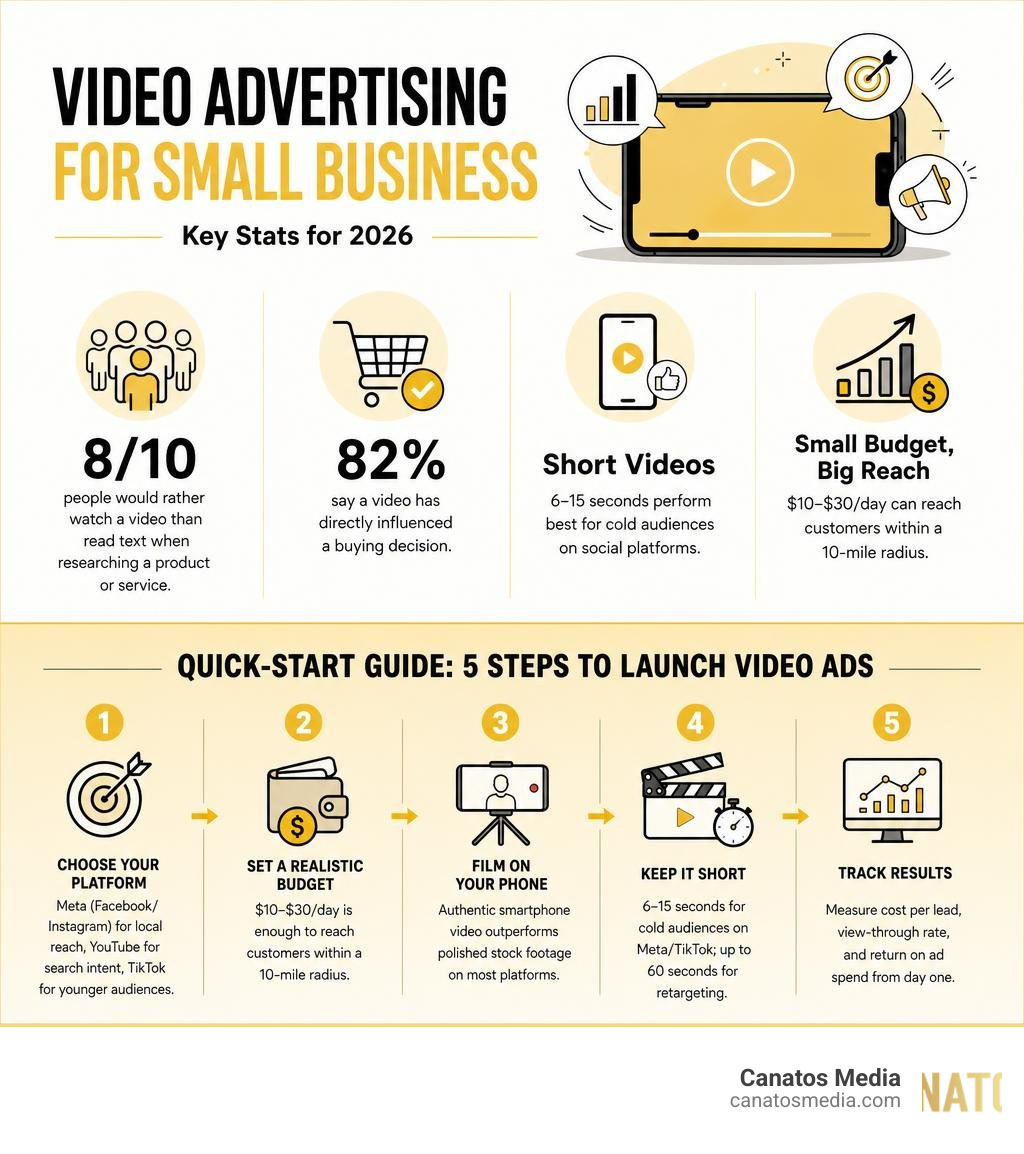
    Video advertising for small business is one of the most cost-effective ways to generate leads, build trust, and convert attention into sales in 2026. Here’s a quick snapshot of what works:

    Quick-start guide:

    1. Choose your platform – Meta (Facebook/Instagram) for local reach, YouTube for search intent, TikTok for younger audiences
    2. Set a realistic budget – $10-$30/day is enough to reach customers within a 10-mile radius
    3. Film on your phone – Authentic smartphone video outperforms polished stock footage on most platforms
    4. Keep it short – 6-15 seconds for cold audiences on Meta/TikTok; up to 60 seconds for retargeting
    5. Track results – Measure cost per lead, view-through rate, and return on ad spend from day one

    Most small business owners know they should be running video ads. But between the cost of agencies, the confusion around platforms, and the fear of being on camera, it never quite happens.

    That gap is expensive. Consider this: 8 out of 10 people would rather watch a video than read text when researching a product or service. And 82% say a video has directly influenced a buying decision. Meanwhile, competitors who are showing up on video are capturing that attention — and those leads.

    The good news? The barrier to entry has never been lower. AI tools, smartphone cameras, and self-serve ad platforms have made it possible for any local business to run professional-quality video ads without a big budget or a production crew.

    This guide walks you through everything — formats, platforms, budgets, production, and measurement — so you can stop leaving leads on the table.

    I’m Nic Canobbio, founder of Canatos Media, and with over two decades in media production I’ve watched video advertising for small business evolve from a luxury into a necessity — our campaigns have generated more than 60 million social media views for brands of every size. I’ll share exactly what we’ve learned so you can apply it to your business today.

    infographic showing key video advertising stats and quick-start steps for small businesses in 2026 infographic

    Key video advertising for small business vocabulary:

    Why Video Advertising for Small Business Is Essential in 2026

    digital ad metrics showing high ROI

    In 2026, the digital landscape is noisier than ever. Static images and text-heavy posts are easily ignored by consumers scrolling through their feeds. If you want your business to be seen, video is no longer optional — it is the single highest-leverage channel a local or growing brand can use.

    This shift is driven by changes in consumer behavior and search platform algorithms. According to recent research, 83% of people want brands to use more video in their communications. Furthermore, 76% of consumers say they are more likely to buy from brands they feel connected with instead of competitors. Video allows you to build that human connection instantly. When potential customers see your face, hear your voice, and watch your team in action, the digital wall crumbles, replaced by immediate trust.

    This trust translates directly into dollars. Small business advertisers see up to 2x higher ROI from digital ads compared to traditional channels like print, radio, or physical mailers. Why? Because social media and search algorithms actively reward video content. Platforms like Meta (Facebook and Instagram), TikTok, and Google give video ads broader reach and lower costs per thousand impressions (CPMs) because video keeps users on their platforms longer.

    For local service businesses in the Tri-state area and Long Island, this is a game-changer. Whether you run a plumbing company in Nassau County, a boutique salon in Brooklyn, or an HVAC service in New Jersey, video ads show your local community that you are real, reliable, and ready to help. To understand how these dynamics fit into a broader strategy, check out The Complete Guide to Video Marketing.

    Choosing Your Strategy: Formats, Budgets, and Platforms

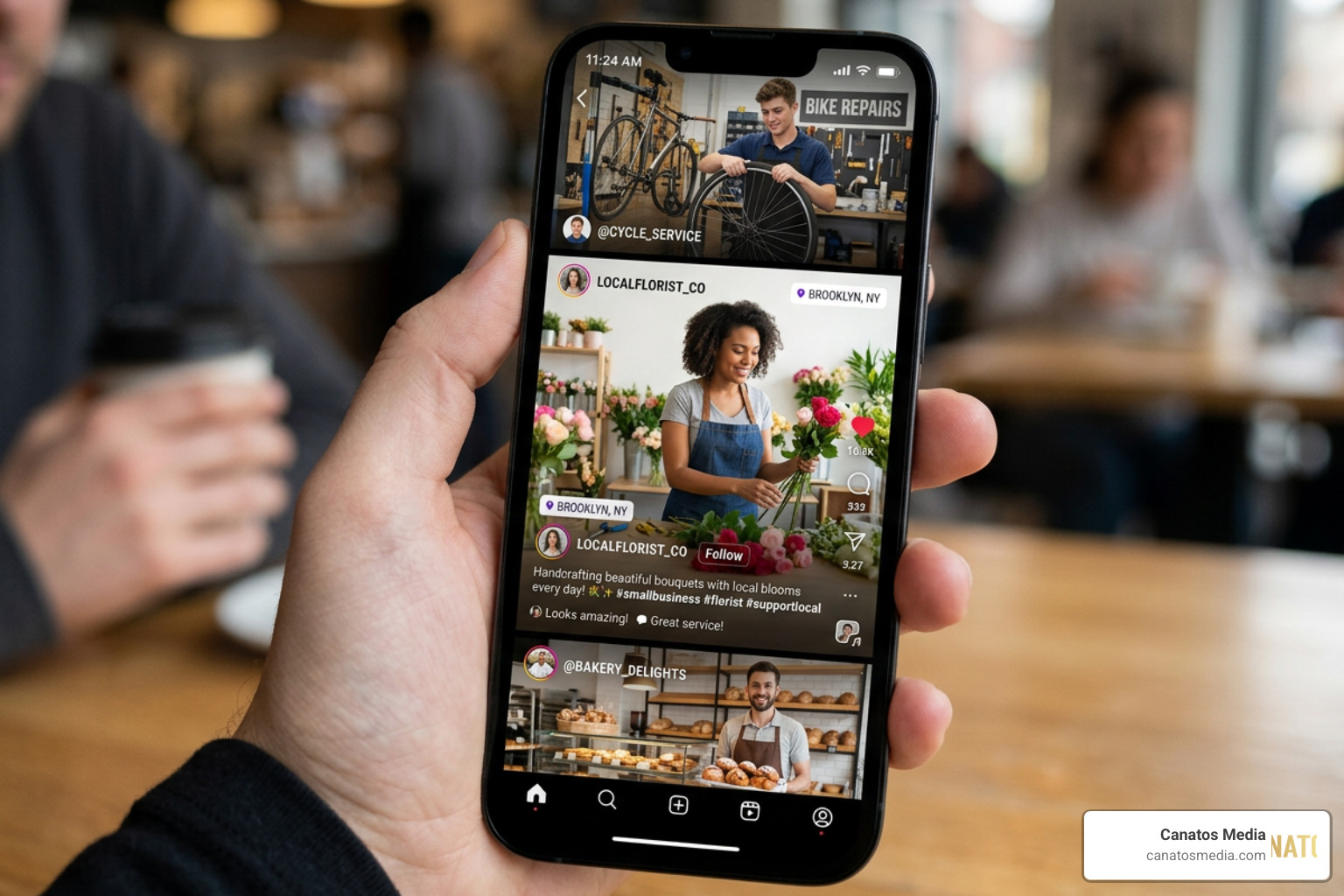
    social media feed showing vertical video ads

    The biggest mistake we see small businesses make is trying to be everywhere at once. Spreading a $500 monthly budget across Meta, YouTube, TikTok, LinkedIn, and Connected TV (CTV) is a recipe for zero results. Instead, you must align your platform selection with your target audience and budget.

    • Meta (Facebook & Instagram): Excellent for “interrupt-and-convert” campaigns. If you have a highly visual product, a compelling local service offer, or want to target specific demographics in the Tri-state area, Meta is your best starting point.
    • YouTube: Ideal for capturing high-intent searchers. Because YouTube is the second-largest search engine in the world, it is the perfect place to run ads targeting people who are actively researching how to solve a problem.
    • TikTok: Perfect for reaching a younger demographic (under 35) with highly authentic, user-generated style content.

    To make sure you are capturing attention where it matters most, you need to understand how to design creatives that hook viewers instantly. You can learn how to structure these campaigns in our guide to Stop the Scroll and Start the Toll with Meta Paid Ads.

    Affordable Formats for Video Advertising for Small Business

    You do not need a Hollywood budget to create high-performing video ads. In fact, some of the most effective and affordable video formats can be produced in a single afternoon:

    • Social Video & Vertical Reels: Shot in a 9:16 vertical format, these feel native to Instagram Reels, TikTok, and YouTube Shorts. They are highly engaging and cost-effective to produce.
    • Customer Testimonials: Video ads featuring real people enjoy 3x higher engagement than those using stock imagery. Grab your smartphone, visit a happy customer, and film them talking about how you solved their problem.
    • Explainer Videos & Product Demos: Show your product or service in action. If you are an organizer, show a before-and-after. If you sell a physical product, show someone unboxing and using it.
    • FAQ Videos: Answer the top three questions you get during sales calls. This builds authority, saves your team time, and qualifies leads before they ever contact you.

    Geo-Targeting and Local Service Video Ads

    For local service businesses, general marketing is a waste of money. You do not care if someone in California sees your ad if you only service Suffolk County, Long Island. This is where hyper-local geo-targeting comes in.

    Using Meta and Google Ads, you can set a tight radius (e.g., 5 to 15 miles) around your business location or target specific zip codes. To maximize the ROI of these campaigns, your video creative must match your targeting. Mentioning local landmarks, referencing neighborhood-specific issues (like local winter weather or beach-town summer rushes), and showing your trucks on recognizable local streets builds instant credibility.

    In fact, 73% of consumers are more likely to hire a local business they have seen on video. If you are ready to dial in your local reach, explore our actionable tips on How to Optimize Short-Form Video Ads for Local Lead Generation.

    From Views to Revenue: Distribution and Measurement

    Getting views is great for the ego, but views do not pay the bills. To turn video views into actual revenue, you need a robust distribution and tracking system.

    First, install tracking pixels (like the Meta Pixel and Google Tag) on your website. Because of modern privacy changes, browser-only pixels can lose 30% to 60% of attribution data. We highly recommend setting up server-side tracking (such as the Meta Conversions API) to ensure you are accurately tracking every lead.

    This setup allows you to build retargeting audiences. Roughly 95% of first-time viewers will not convert. However, retargeted visitors are 70% more likely to convert than first-time viewers. You can build a custom audience of people who watched at least 50% of your initial video ad and serve them a secondary “social proof” ad featuring a customer testimonial.

    Platform Average CPM (Cost per 1k views) Primary Intent Best Video Aspect Ratio
    Meta (FB/IG) $8 – $22 Social Discovery / Interrupt 9:16 (Reels), 4:5 (Feed)
    YouTube $0.03 – $0.10 (per view) Search Intent / Educational 16:9 (Horizontal), 9:16 (Shorts)
    TikTok $6 – $15 Entertainment / Trends 9:16 (Vertical)

    To see how we map out this entire journey, read about How We Turn Video Views into Real Revenue for Service Businesses.

    How to Produce Professional Video Ads on a Budget

    Many small business owners hold back because they think they need a professional camera, expensive lighting, and a soundproof studio. The truth? Your smartphone is more than capable of shooting a high-converting video ad. Audiences in 2026 crave authenticity over polished, corporate-style productions.

    To get started, follow these simple production rules:

    1. Lighting is Key: You do not need expensive lights. Stand in front of a large window to use soft, natural daylight. If you must shoot indoors without natural light, a budget-friendly ring light will keep your face clear and shadow-free.
    2. Prioritize Audio Quality: People will watch a video with average picture quality, but they will instantly swipe away if the audio is scratchy or echoey. Invest $20 to $40 in a clip-on lavalier microphone that plugs directly into your smartphone.
    3. Keep It Steady: Use a cheap tripod or prop your phone up against a stable surface to avoid shaky, handheld footage.
    4. Speak Naturally: Write a loose outline instead of reading a script word-for-word. Speak as if you are talking to a single customer sitting across from you.

    For a deeper dive into why authentic, high-quality video production drives modern leads, check out our guide on Why Video Production is the Key to Modern Lead Generation for Service Businesses.

    Leveraging AI Tools for Video Advertising for Small Business

    If you are short on time, artificial intelligence can speed up your production workflow. Today’s AI tools can help you write, edit, and optimize your video ads in minutes:

    • AI Scriptwriting: Tools like ChatGPT or Claude can draft highly engaging ad scripts based on your specific business details, target audience, and offer.
    • Automated Captioning: Since up to 85% of social media videos are watched with the sound turned off, captions are mandatory. AI editing tools can automatically generate highly accurate, stylized captions in seconds.
    • Smart Video Editors: Platforms can take your raw smartphone footage, trim out the “umms” and pauses, apply color correction, and balance your audio levels automatically.
    • B-Roll and Image Generators: If you need a quick visual element but do not have the footage, AI tools can generate realistic product showcases or motion graphics from a simple text prompt or product photo.

    Measuring Video Campaign ROI

    To know if your video ads are actually working, you must look past “vanity metrics” like likes or shares. Instead, focus on these three critical performance indicators:

    • Hook Rate (3-Second Video View Rate): The percentage of people who watched the first 3 seconds of your video. If this is low (under 30%), your intro hook is not interesting enough.
    • Hold Rate (Average View Duration): How long people stay tuned. This tells you if your core message is engaging.
    • Cost Per Lead (CPL) & Booked Appointments: The actual marketing dollar amount spent to acquire a qualified lead or a booked service call.

    To set up a reliable tracking framework for your business, read our step-by-step guide on How to Measure Video Campaign ROI from Social Views to Booked Appointments.

    Frequently Asked Questions about Video Advertising

    What is the minimum monthly budget for small business video ads?

    You do not need thousands of dollars to start. We recommend these two realistic budget tiers:

    • Local Awareness: $150 to $500 per month. This is perfect for reaching a tight local service area (5 to 10 miles) to keep your brand top-of-mind.
    • Direct Lead Generation: $1,500 to $4,000 per month. This budget level gives platform algorithms enough data to optimize your campaigns, find high-intent prospects, and consistently generate 20 to 80 qualified leads per month.

    Do I need to hire a professional agency to create video ads?

    Not always. If you are just starting out and have a very tight budget, DIY is a great way to learn. You can write your own scripts, film on your phone, and boost posts directly from your social media pages.

    However, as your business grows and your ad spend increases, managing campaigns, designing high-converting creative, and setting up advanced tracking APIs becomes a full-time job. Hiring a specialized partner makes sense when you want to scale your spend efficiently without wasting money on unoptimized ads. To see how professional short-form videos compare in driving real results, read How Cinematic Short-Form Video Drives Meta and Google Lead Generation.

    How do I prevent my video ads from causing ad fatigue?

    Ad fatigue happens when your target audience sees the exact same video ad too many times, causing your conversion rates to drop and your costs to rise. You can easily prevent this by:

    • Capping Frequency: Set frequency caps in your ad platforms so users only see your ad 3 to 4 times per week maximum.
    • Rotating Creatives: Produce 3 to 4 slight variations of your video ad (e.g., testing different 3-second hooks or different background music) and let the platform rotate them.
    • Updating Offers Seasonally: Swap out your creative assets every 4 to 6 weeks to keep your brand looking fresh and active.

    For real-world examples of how creative rotation keeps lead generation consistent, explore How Video-First Campaigns Drive Booked Appointments and Measurable ROI.

    Conclusion

    Video advertising for small business is the single fastest way to build trust, command attention, and grow your revenue in 2026. By combining authentic smartphone footage, clear local targeting, and strategic retargeting, you can compete directly with massive national brands — and win.

    At Canatos Media, we specialize in building integrated, video-first digital marketing strategies for growing businesses across Long Island and the Tri-state area. We handle everything from cinematic short-form video production and automated lead tracking to paid Meta and Google campaigns.

    Ready to stop wasting your ad spend and start turning video views into booked appointments? End-to-End Video Marketing: How We Drive Real Results for Growing Businesses and let’s build your custom video engine today.