Why YouTube PPC Ads Are One of the Most Powerful Tools for Local Business Growth
YouTube PPC ads are a pay-per-click advertising model that lets businesses run video promotions on YouTube — and only pay when someone watches or clicks. Here’s the quick version:
| What You Need to Know | The Short Answer |
|---|---|
| What is YouTube PPC? | Video ads on YouTube where you pay per view or click |
| How much does it cost? | Typically $0.10–$0.30 per view; $5–$15 CPM |
| Who sees your ads? | Targeted audiences by age, interest, location, behavior, and more |
| Where do ads appear? | YouTube, Google TV, and Google Display Network partner sites |
| What formats are available? | Skippable, non-skippable, bumper, Shorts, in-feed, masthead |
| How do you measure success? | View rate, CTR, CPA, ROAS, and watch time |
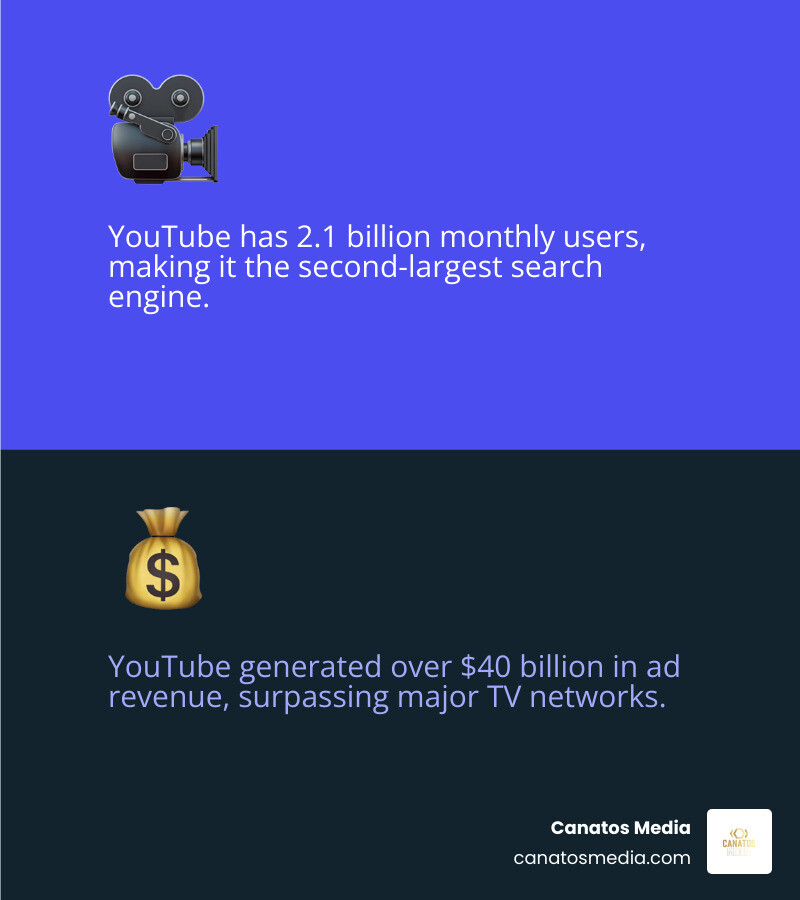
YouTube is the second-largest search engine on the planet. It pulls in over 2.1 billion monthly users and generated more than $40 billion in ad revenue — outearning major TV networks like Disney, Paramount, and Warner Bros. Discovery combined. For local businesses trying to cut through the noise, that reach is hard to ignore.
Here’s what makes YouTube PPC different from a billboard or a Facebook post: you only pay when someone actually engages. And because it runs through Google Ads, the targeting is backed by the most detailed user data on the internet — search history, viewing habits, purchase intent, and more.
87% of users who discover a brand on YouTube or Google say they took some kind of action afterward. That’s not passive scrolling — that’s a platform built for decisions.
I’m Nic Canobbio, founder of Canatos Media, and with over two decades in media production and content strategy — including building campaigns that have driven over 60 million social views — I’ve seen how YouTube PPC ads can transform a local business’s visibility and lead flow. This guide walks you through everything you need to run them the right way.
Understanding the Mechanics of YouTube PPC Ads
At a basic level, YouTube PPC is Google Ads for video. You upload or connect a video hosted on YouTube, choose an objective, define your audience, set a budget, and enter an auction every time a potential viewer becomes available.
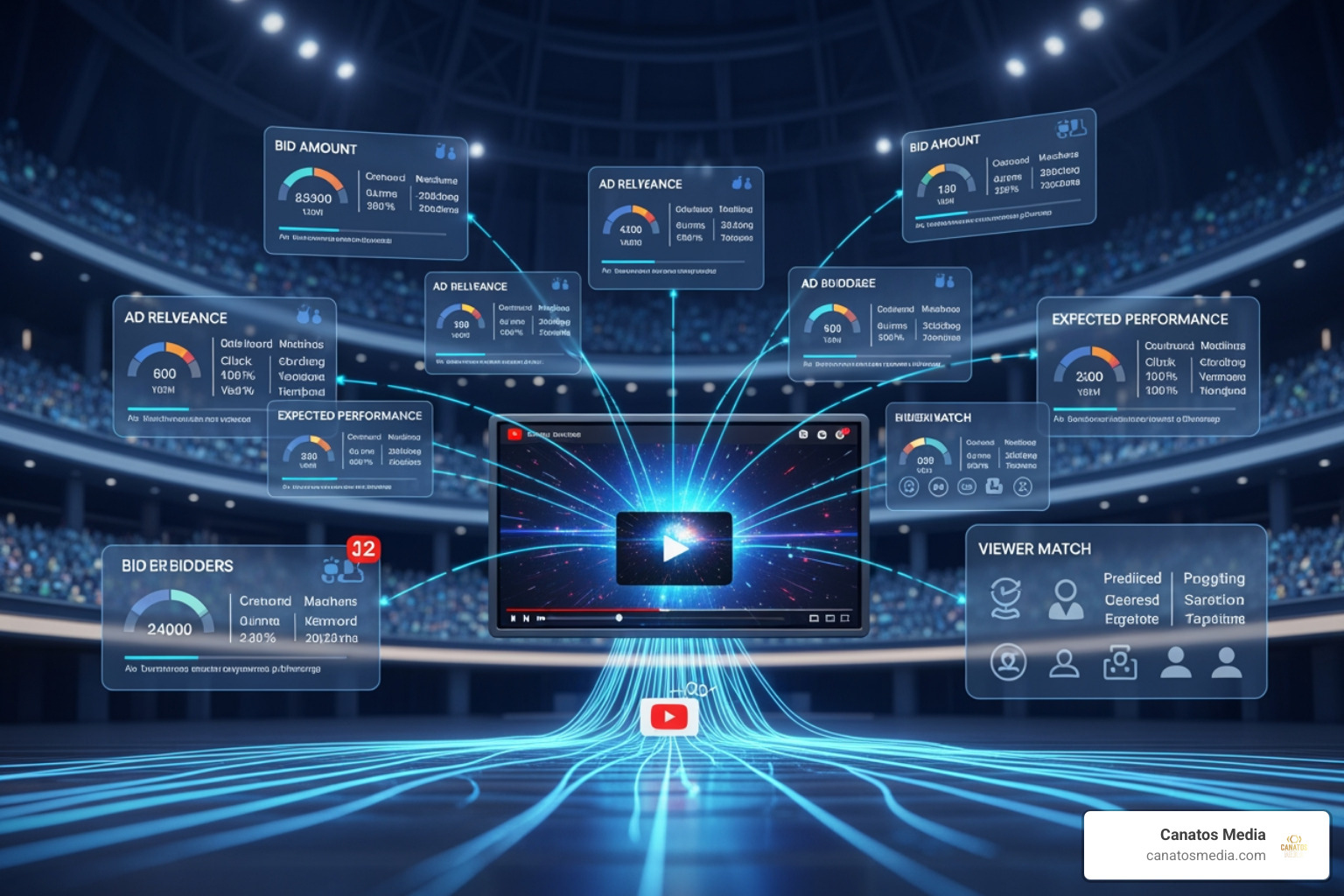
That auction is the part many businesses overcomplicate. It is not just “highest bid wins.” Google also looks at relevance, expected performance, and how well your ad matches the viewer and the placement. So yes, money matters, but so do good creative and smart targeting.
Compared with other ad models:
- PPC means you pay when someone engages, such as a qualifying view or click
- CPM means you pay per 1,000 impressions
- vCPM focuses on viewable impressions
- CPA or ROAS-based bidding tells Google to optimize for conversions or conversion value
Because YouTube runs inside Google Ads, it works nicely with broader paid media efforts. If you want a primer on the big picture, our Step-by-Step Guide to Paid Ads pairs well with Google’s own overview on how to Drive the results you care about with YouTube Ads.
Core Components of YouTube PPC Ads
There are four moving parts we pay the most attention to:
- Bidding strategy
- Ad relevance
- Audience intent
- Creative quality
Bidding strategy controls how aggressively Google pursues views, impressions, clicks, or conversions. Ad relevance affects whether the platform sees your message as a good fit. Audience intent determines how close the viewer is to taking action. Creative quality decides whether anyone cares after the ad starts.
A quick example: if someone has recently searched for “best apartment in Long Island” or “dentist near me” and then watches a related video, that viewer is much more valuable than random cold traffic. That is why intent-based targeting often beats broad reach when lead quality matters.
Setting Up Your First Campaign
If you are launching your first campaign, keep it simple.
- Link your Google Ads account to your YouTube channel.
- Choose a campaign objective such as Sales, Leads, Website traffic, or Awareness and consideration.
- Select a video campaign type and subtype.
- Set your budget and bidding strategy.
- Build ad groups around audience themes.
- Add targeting, exclusions, and devices.
- Create your ad with headline, CTA, final URL, and video.
- Launch, then give the campaign a few days to stabilize.
Google’s official walkthrough is here: Create a Video campaign – YouTube Help.
A few practical setup tips:
- Start with one clear goal per campaign
- Use conversion tracking before spending real money
- Group audiences by intent, not by chaos
- Upload videos as Unlisted if you do not want them on your public channel feed
- Create multiple ads per campaign for testing
If you want more paid media resources after launch, our Tag: Paid Ads page is a useful next stop.
High-Performance YouTube Ad Formats for 2026
Not every format is right for every goal. Some are built for awareness, some for clicks, some for conversions, and some for “please remember us when you are ready.”
The main YouTube ad formats for PPC campaigns in 2026 are:
- Skippable in-stream ads
- Non-skippable in-stream ads
- Bumper ads
- In-feed video ads
- Shorts ads
- Masthead and other premium awareness options
| Format | Best For | Billing Model | Typical Length |
|---|---|---|---|
| Skippable in-stream | Traffic, leads, sales, awareness | CPV, CPA, ROAS | 7 seconds to several minutes |
| Non-skippable in-stream | Strong awareness | CPM | Up to 15-30 seconds |
| Bumper | Fast recall and frequency | CPM | Up to 6 seconds |
| In-feed video | Intent-driven discovery | Clicks, views | Flexible |
| Shorts ads | Mobile-first reach and efficient acquisition | Varies by goal | 5-30 seconds |
| Masthead | Massive reach | Reservation/CPM | Premium placement |
If we had to pick the most versatile format for most local businesses, it is still skippable in-stream. You only pay after a qualifying engagement, and it gives you enough time to explain the offer without trapping the viewer in a hostage situation.
Optimizing YouTube PPC Ads for Mobile Users
More than 70% of YouTube watch time happens on mobile devices. That means your ad should be built for a thumb, not a theater screen.
What that looks like in practice:
- Use large text that can be read on a phone
- Favor 9:16 vertical or mobile-safe compositions when running Shorts
- Add captions because many users watch with low or no sound
- Show the product, service, or benefit immediately
- Keep landing pages fast and mobile-friendly
A lot of this overlaps with social creative best practices too. Our take on thumb-stopping ad design over on Stop the Scroll and Start the Toll with Meta Paid Ads applies here as well.
The 5-Second Rule for Creative Success
The skip button appears fast. Your ad needs to work faster.
We often use a simple structure:
- Hook
- Amplify
- Bridge
- CTA
Here is what that means:
- Hook: grab attention in the first 2-5 seconds
- Amplify: make the pain point, benefit, or curiosity stronger
- Bridge: explain why your business is the solution
- CTA: tell viewers exactly what to do next
Strong YouTube creative also follows Google’s ABCD framework:
- Attract attention
- Brand early
- Connect emotionally or practically
- Direct the viewer to act
A few creative rules we live by:
- Do not open with a slow logo animation
- Put the brand or offer in early
- Use real visuals, not generic filler
- Match the message to the audience’s awareness level
- End with one clear CTA, not five
Strategic Targeting and Bidding for Maximum ROI
The targeting is where YouTube becomes more than “TV, but internet.”
Inside Google Ads, you can target by:
- Location
- Language
- Age, gender, household income, parental status
- Affinity audiences
- In-market audiences
- Custom intent or custom segments
- Keywords
- Topics
- Placements such as specific channels or videos
- Customer Match
- Remarketing
For local businesses in the tri-state area and Long Island, layering matters. Instead of targeting “everyone,” we can narrow to likely buyers in your service area who are showing purchase intent right now.
A few useful examples:
- A multifamily property can target renters in-market, by ZIP radius, plus people researching moving or local neighborhoods
- A medical practice can target by service area, age bracket, relevant interests, and intent signals tied to treatment research
- A B2B company can use custom segments based on search behavior and placement targeting on industry-specific channels
This is also where YouTube supports the rest of your Google strategy. Search captures existing demand. Display expands visibility. YouTube creates demand and warms the audience before they search your name later. Our Meta & Google Advertising page covers that multi-channel view in more detail.
Scaling Your Business with YouTube PPC Ads
YouTube works especially well in categories where people want to see, feel, and trust before they convert.
For multifamily marketing:
- Video tours, neighborhood lifestyle clips, and amenity highlights help renters picture themselves there
- YouTube can reach people early in the research phase, before they book a tour
- It is especially useful when vacancy pressure makes every qualified lead count
For medical practices:
- Video can build trust faster than static ads
- Doctors, clinics, and specialists can explain services, process, or patient experience clearly
- Retargeting website visitors with educational video often improves conversion rates later
For B2B lead generation:
- Explainer videos, demos, screen recordings, and proof-based case content can pre-qualify prospects
- Placement targeting on relevant channels can work surprisingly well
- Longer-form skippable ads often outperform ultra-short creative when the service is complex
Advanced AI and Automated Bidding
Google AI is now deeply baked into YouTube campaign setup and optimization. Used well, it helps. Used blindly, it can also spend your budget in very creative ways.
The main bidding strategies to know are:
- Target CPV for efficient views
- CPM or target CPM for awareness
- Maximize conversions for lead generation
- Target CPA when you have stable conversion data
- Maximize conversion value or Target ROAS for revenue-focused campaigns
Our rule of thumb:
- Use CPV or controlled bidding when gathering early data
- Shift toward conversion-based bidding once tracking is reliable
- Do not ask Smart Bidding to optimize around broken conversion tracking and then act surprised
AI can also assist with:
- Audience expansion
- Creative recommendations
- Asset variations
- Forecasting and optimization signals
That same paid media discipline shows up across channels, not just YouTube. For a broader look at campaign automation and social strategy, see Paid Social Media Advertising: From Zero to Hero in One Hour.
Measuring Success: Key Metrics and Common Pitfalls
A campaign is not successful because it got views. It is successful because it moved the business.
The key metrics we track depend on the goal, but usually include:
- View rate
- Click-through rate
- Cost per view
- Cost per click
- Conversion rate
- Cost per acquisition
- Return on ad spend
- Watch time
- Audience retention
- View-through conversions
General benchmarks vary by industry and campaign type, but research commonly shows:
- CPV often falls between $0.10 and $0.30, though some campaigns land lower
- CPM often ranges from $5 to $15
- Cold-traffic CTR is often modest
- Healthy skippable ad view rates are commonly around 30% or higher
For awareness campaigns, view rate and watch time matter. For lead generation, CPA and qualified conversion volume matter more. For ecommerce, ROAS and conversion value take center stage.
To keep optimization grounded in reality, we recommend connecting YouTube performance to broader ad management and reporting frameworks like the ones discussed in our Category: Ad Management.
Top Mistakes to Avoid in YouTube PPC
The biggest mistakes are usually not technical. They are strategic.
Common issues we see:
- Ignoring mobile-first creative
- Weak hooks in the first 5 seconds
- Targeting too broad, too early
- Using unrealistic budgets
- Sending traffic to weak landing pages
- Letting the same ad repeat until people mentally file a restraining order
How to fix them:
- Build mobile-safe creative with captions
- Test multiple openings, not just multiple edits
- Narrow targeting around intent and geography
- Give campaigns enough budget to learn
- Match the landing page message to the ad
- Watch frequency and rotate fresh creative regularly
A/B Testing and Optimization Tactics
Good YouTube performance usually comes from testing, not guessing.
What we test most often:
- Different hooks in the first 5 seconds
- Different CTAs
- Short vs long versions
- Vertical vs horizontal edits
- Audience segments
- Placement exclusions
- Landing page variations
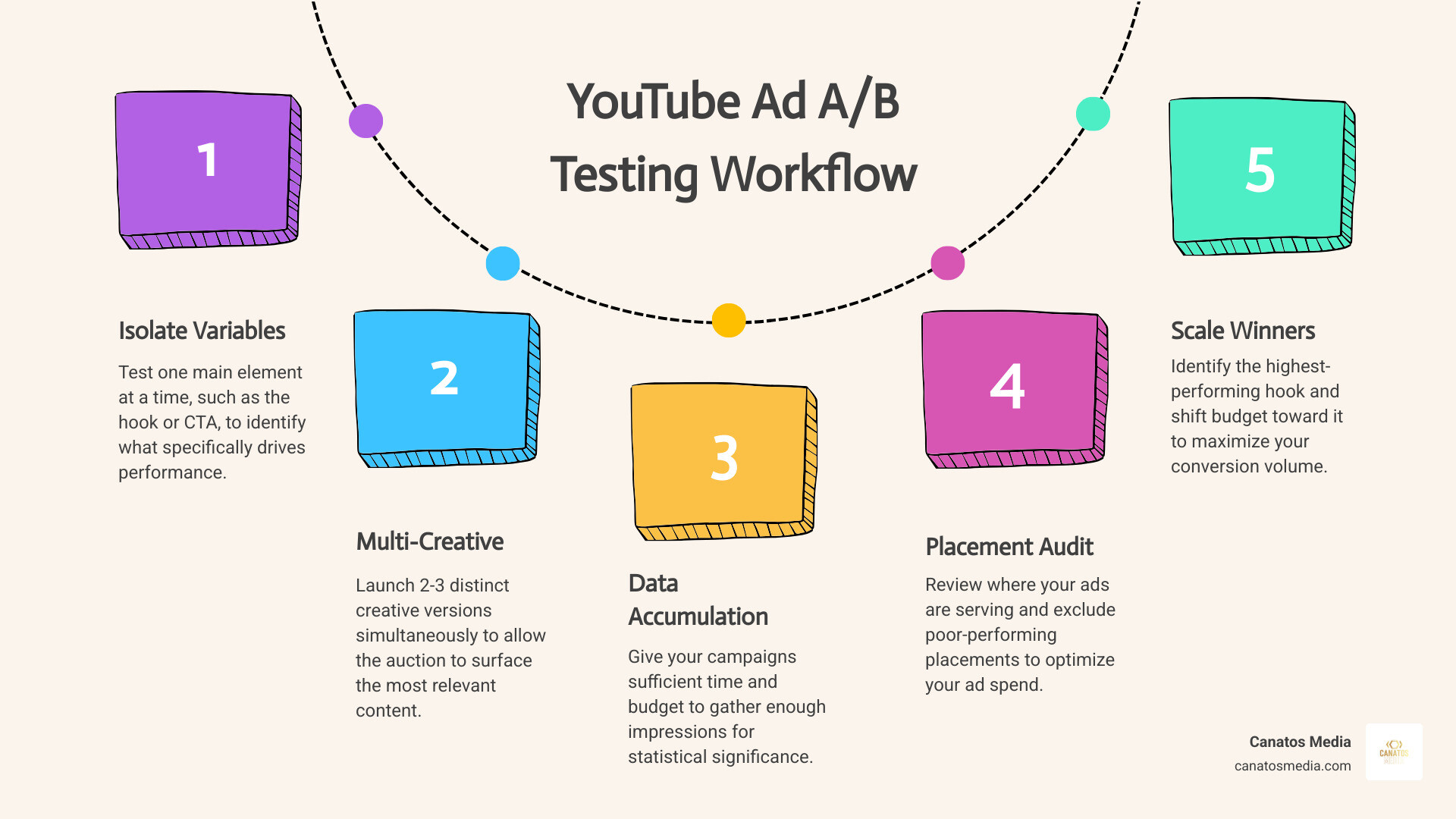
A simple testing plan:
- Keep one main variable different at a time
- Launch at least 2-3 creative versions
- Let data accumulate before making changes
- Exclude poor placements weekly
- Double down on the best hook, not just the cheapest view
Also make sure conversion tracking is correct. If the platform cannot see the result, it cannot optimize toward the result. That sounds obvious, yet it breaks an amazing number of campaigns.
Frequently Asked Questions about YouTube PPC
What is the average cost of YouTube PPC ads?
Typical YouTube PPC costs often land around $0.10 to $0.30 per view or click for many campaigns, while CPMs often range from $5 to $15. Some skippable campaigns can run lower on CPV depending on audience and creative. A practical starting budget is often at least $30 to $50 per day if you want enough data to optimize.
How do YouTube PPC ads differ from Search ads?
Search ads capture demand that already exists. Someone types a query and wants an answer now. YouTube ads work more in a discovery mindset. People are watching, learning, comparing, and researching. Search is more pull. YouTube is more push-meets-intent. That makes YouTube great for storytelling, trust building, and warming up future searchers.
Can I target my competitors’ audiences on YouTube?
Yes, indirectly. You can build custom segments using competitor-related search behavior or relevant keywords, and you can use placement targeting on specific channels or videos where your audience spends time. The key is to target intent and relevance, not just names.
Conclusion
YouTube PPC ads are not magic. They are better than magic, honestly, because they can be measured.
When strategy, creative, targeting, and landing pages work together, YouTube becomes a serious growth channel for local businesses in the tri-state area and Long Island. It can build awareness, generate qualified leads, support Search and Display, and give your audience a reason to trust you before they ever click.
That is how we approach it at Canatos Media. We do not treat video as a nice extra and ads as a separate department. We connect cinematic short-form content, paid targeting, and conversion-focused strategy into one system built for measurable growth.
If you want help building that system, explore how we Partner with experts for end-to-end video marketing.