Day: July 15, 2026

  • 5 Best Local Lead Generation Strategies: Why Canatos Media Outperforms Common Thread Collective

    5 Best Local Lead Generation Strategies: Why Canatos Media Outperforms Common Thread Collective

    1. Cinematic Short-Form Video as Your Lead Magnet

    Local lead generation requires more than scattered tactics. Growth-focused business owners need a unified system that turns attention into qualified prospects and customers. The difference between agencies often comes down to whether they operate as separate departments or as an integrated machine built for conversion.

    Short-form video dominates how local audiences discover and evaluate service-based brands. Yet most agencies treat video as a standalone creative asset rather than a lead-generation tool designed for conversion.

    We produce cinematic short-form content that doesn’t just grab attention; it positions your brand as the premium choice while directly addressing your prospect’s pain point. When a plumbing company showcases a time-lapse repair with cinematic production quality, it signals professionalism. When a dental practice shows a patient’s genuine smile transformation with intentional color grading and sound design, trust builds immediately.

    The key difference is intent. Our video production focuses on converting viewers into qualified leads by embedding clear calls-to-action, benefit statements, and social proof directly into the creative. This isn’t vanity content; it’s a lead-generation asset.

    For multi-location brands, we create content templates that maintain cinematic quality while scaling across multiple locations, service types, and regional campaigns. A single shoot can produce 12-15 short-form assets optimized for different audience segments and platforms.

    What to do next: Audit your current video content. Does it showcase transformations or results? Does it include a specific next step for viewers? If not, repurposing existing footage through a lead-generation lens will immediately improve conversion rates.

    2. Integrated Social Media Management vs. Fragmented Services

    Many businesses hire separate teams for content creation, community management, paid ads, and strategy. Each team optimizes for their own metrics, creating disconnects. One team pushes brand awareness while another manages ad spend; neither owns lead conversion.

    We operate differently. Our social media management integrates directly with your paid advertising strategy and sales funnel. When we manage your Meta and Instagram presence, we’re not posting for engagement vanity metrics. We’re building authority, nurturing warm leads, and directly feeding qualified prospects into your sales system.

    This means your content calendar aligns with your ad campaigns. Your community responses reinforce messaging from paid creatives. Your bio links and call-to-action buttons point to lead capture forms connected to your CRM. Every element amplifies the others.

    Consider a HVAC company managing 8 service locations. Fragmented agencies might post the same content across all locations, missing regional relevance. We customize messaging by service area, align posting schedules with seasonal demand peaks, and ensure all responses include a location-specific booking link. The result is higher-quality leads arriving at the right service location at the right time.

    What to do next: Identify one breakdown in your current marketing chain. Does your social content connect to your paid ads? Do your ads funnel to a proper lead capture system? Fix that one link before adding new channels or increasing budget.

    3. Meta and Google Advertising Expertise for Qualified Leads

    Paid advertising budgets grow quickly when campaigns lack strategic direction. We’ve seen multi-location brands waste 40-60% of ad spend targeting the wrong audience or promoting the wrong message.

    Our Meta and Google advertising approach starts with audience clarity. Rather than broad demographic targeting, we build custom audiences based on buyer intent, service area, previous engagement, and competitor research. A personal injury attorney doesn’t benefit from impressions among people living in a different state. A roofing contractor wastes money showing ads to renters.

    We then match audience precision with message precision. Different audience segments receive different creative, different benefit claims, and different offers. A prospect researching emergency water damage gets different messaging than someone planning a basement remodel, even though both might be homeowners.

    Our approach to scaling short-form ad creative across both platforms ensures your cinematic videos perform equally well on Instagram Reels, TikTok Shop, and Google Performance Max campaigns. This unified approach reduces production costs while improving ROAS because the message remains consistent across platforms.

    We also build conversion tracking that measures what actually matters: phone calls booked, consultation requests, or qualified leads reaching your sales team. Vanity metrics like clicks disappear from our reporting.

    What to do next: Pull your last 30 days of ad spend and categorize it by audience segment. Where are you getting the lowest cost-per-lead? Double down there. Where are you bleeding budget? Pause or restructure those campaigns immediately.

    4. SEO Optimization That Actually Drives Local Traffic

    Local SEO generates leads that are cheaper and more qualified than paid advertising over time. But many agencies treat SEO as an afterthought, checking boxes with generic optimizations that don’t move the needle.

    We approach SEO with the same conversion focus as paid advertising. Your service area pages aren’t just optimized for local keywords; they’re designed to capture high-intent searches and guide prospects toward booking. Your content strategy targets questions your sales team actually hears from prospects.

    For multi-location brands, location-specific optimization is non-negotiable. Each service area gets dedicated keyword research, content, and citation building. A dental practice in three neighborhoods needs three distinct local SEO strategies, not one generic strategy applied three times.

    We also integrate SEO with your paid and social strategies. Keywords that drive traffic organically inform the messaging we use in ads. Content that ranks well informs the topics we cover in short-form video. The systems reinforce each other.

    What to do next: Search your primary service keyword plus your city name. How many competitor results appear in the top 5? If it’s fewer than two direct competitors, your opportunity for ranking is high. If it’s more than four, you’ll need sustained SEO effort or a paid strategy while building organic visibility.

    5. Lead Generation Systems Built Into Your Marketing Stack

    Attention without conversion is wasted budget. Many agencies drive traffic and leads but don’t own the systems that convert those leads into customers.

    We build lead generation systems that capture, score, and nurture prospects automatically. This means your website forms feed directly into your CRM. Prospects who download a guide automatically receive an email sequence. Warm leads get scored for sales readiness. Your sales team receives alerts for high-intent activity.

    For service-based businesses, we integrate calendar booking systems, SMS nurture sequences, and retargeting campaigns into one cohesive funnel. A prospect who visits your site, views your video, and leaves without converting gets a retargeting ad the next day. Another prospect who downloaded your guide gets a phone call from sales within 2 hours.

    This systematic approach increases lead-to-customer conversion by 25-40% because prospects move through a predictable journey rather than getting lost after initial contact.

    What to do next: Map your current prospect journey from first awareness to sale. Where do you lose prospects? Is it after they click an ad? After they reach your site? After the first sales call? Fix that bottleneck before expanding your top-of-funnel spending.

    6. Real-Time Performance Tracking and Optimization

    Data without action is just information. We track campaigns in real-time and optimize continuously rather than reviewing performance quarterly.

    Our dashboard shows you exactly which channels, campaigns, content types, and audience segments drive qualified leads and sales. We see when a Facebook audience segment stops performing and pause it before budget bleeds. We notice when a short-form video drives 3x higher conversion rates and immediately increase spend behind that creative.

    This isn’t set-and-forget advertising. Every week includes optimization cycles. Every month includes strategic reviews. Every quarter includes fundamental strategy adjustments based on what the market is showing us.

    What to do next: Set up conversion tracking for your three most important business metrics (phone calls, form submissions, or sales). If you can’t measure it, you can’t optimize it.

    7. Why Agency Cohesion Matters for Multi-Location Brands

    Most agencies operate as committees. Strategy works independently from creative. Creative works independently from paid ads. Paid ads work independently from social management. Each team optimizes for their own KPIs, creating friction and missed opportunities.

    We operate as a unified growth team. Your lead generation goal is shared across our video producers, social managers, paid specialists, and SEO strategists. When we build a campaign, every element serves the same objective.

    This cohesion matters most for multi-location brands managing complex regional strategies, varying service offerings, and multiple decision-makers. A coordinated approach ensures consistency while allowing regional customization. Your brand voice stays unified. Your conversion systems stay aligned. Your budget moves efficiently toward results.

    The difference between fragmented services and integrated systems shows most clearly in the bottom line: qualified leads and sales. When all your marketing channels push in the same direction with aligned messaging and unified conversion systems, leads flow more consistently, sales cycles shorten, and your marketing budget generates measurable ROI.

    We’ve built Canatos Media specifically to serve growth-focused business owners who need more than tactics scattered across different vendors. We deliver integrated video-first marketing that turns audience attention into qualified, trackable leads. If your current approach involves managing multiple agencies or handling pieces internally, consider consolidating with a partner built for conversion, not just traffic.

    Contact us today for a free consultation to see how we can help you grow your business.

    Frequently Asked Questions (FAQ)

    How does our video-first approach actually generate leads for local service businesses?

    We create cinematic short-form content that stops the scroll and compels action, then pair it with integrated Meta and Google advertising to reach qualified prospects in your service area. Our videos don’t just build brand awareness—we structure them as lead magnets that drive viewers directly into your sales funnel through optimized landing pages and lead capture systems. This combination of compelling visual storytelling and strategic paid placement consistently outperforms traditional social media posting because we’re converting attention into measurable inquiries from the right audience.

    What’s the difference between our agency model and working with multiple separate vendors?

    When you work with us, your video production, social media management, paid advertising, and SEO optimization all operate as one coordinated system rather than isolated services. We control the entire strategy, meaning your messaging stays consistent across platforms, your budget is allocated to what actually drives results, and we can rapidly optimize based on real-time performance data. With fragmented vendors, you’re managing different teams with different priorities, which creates gaps where leads fall through the cracks.

    How do we handle lead generation for multi-location brands specifically?

    We build scalable lead generation systems that maintain brand consistency while allowing location-specific targeting and messaging. Our approach uses localized video content, geo-targeted advertising, and location-based SEO optimization so each branch attracts qualified leads in their market. We then track performance by location so you see which strategies are driving the highest-quality leads for each service area.
  • To Degree or Not to Degree: Navigating Film and Video Production Programs

    To Degree or Not to Degree: Navigating Film and Video Production Programs

    Is a Film Degree Worth It in 2026?

    Film and video production sits at the intersection of art, technology, and business — and right now, it’s one of the most in-demand skill sets on the planet.

    Here’s a quick snapshot of what you need to know:

    • What it is: The process of creating moving image content, from scripted films to branded videos to live streams
    • Who it’s for: Aspiring directors, editors, camera operators, producers, and content creators across every industry
    • Degree options: B.A., B.S., B.F.A., Associate degrees, and professional certificates
    • Career outlook: Producers and directors earn a median of $79,692/year, with some markets like Washington state projecting 23.9% job growth through 2034
    • The big question: Whether formal education or a self-taught path better fits your goals — and that depends on where you want to work and what you want to make

    The digital revolution changed everything. Professional-quality cameras now fit in a backpack. Streaming platforms have created insatiable demand for content. And every organization — from Fortune 500 brands to local nonprofits — now uses video to communicate, sell, and connect.

    That’s opened up enormous opportunity. But it’s also made the question of how to break in more complicated than ever. Do you need a film school degree? A certificate? Or just a great reel and the right network?

    This guide breaks it all down.

    I’m Nic Canobbio, founder of Canatos Media, with over two decades of hands-on experience spanning live film and video production, national podcast development, and social content that has reached more than 60 million views. I’ll share what I’ve seen work — and what I’ve seen fail — so you can make a smarter decision about your path.

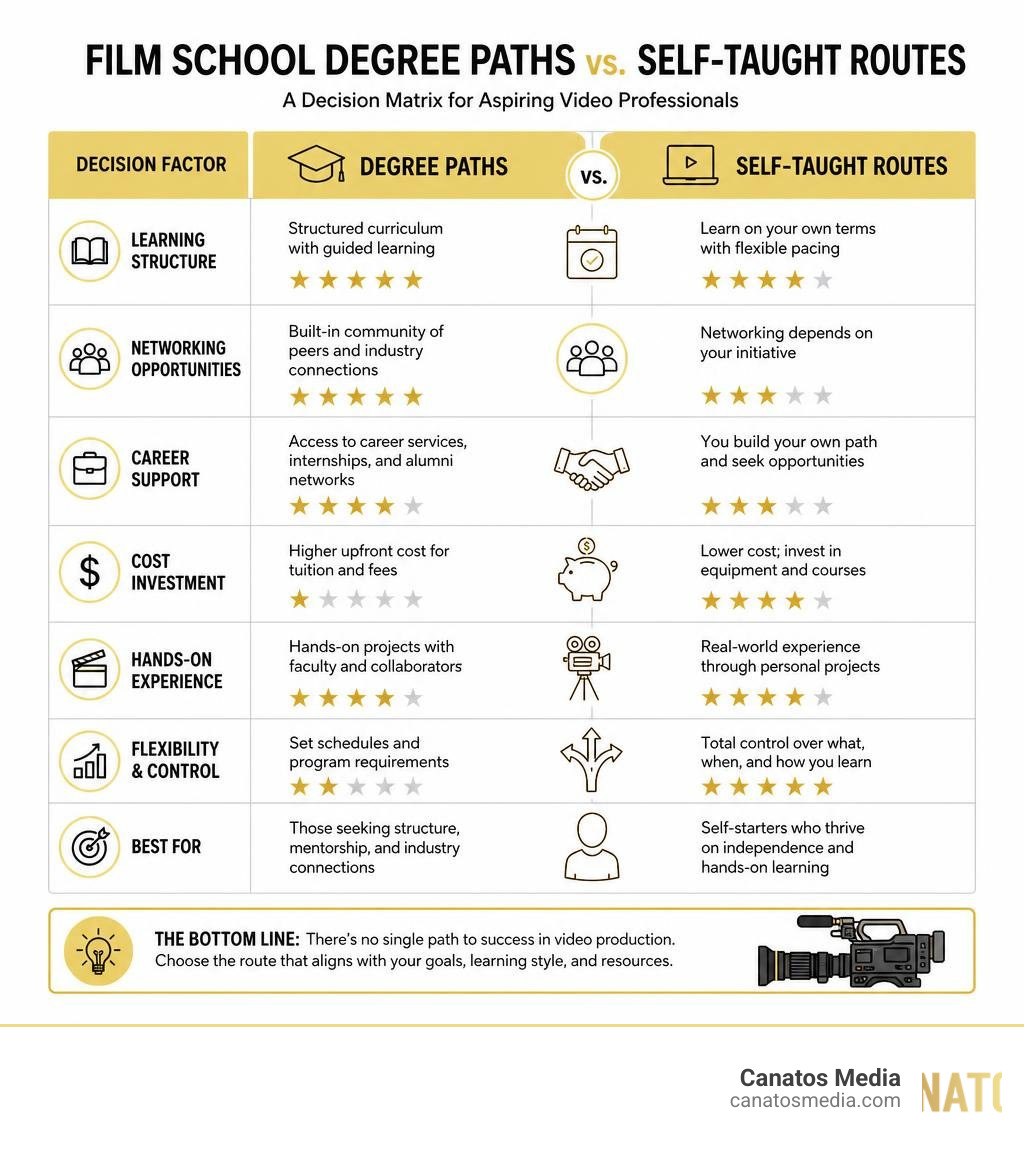
    Decision matrix comparing film school degree paths vs self-taught routes in video production infographic

    Know your film and video production terms:

    Defining the Medium in the Digital Age

    To understand whether a degree is right for you, we first need to define what film and video production actually means in July 2026. The terminology has shifted dramatically over the last decade, and the tools we use have completely transformed how we create.

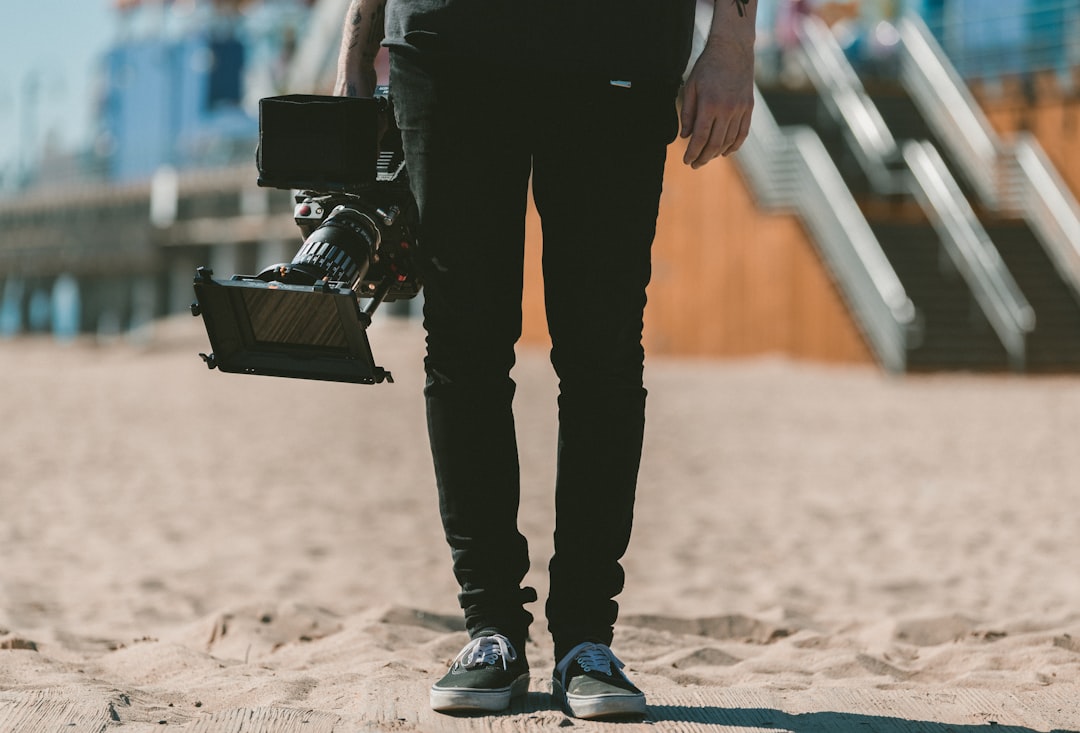
    A modern hybrid mirrorless camera rig set up on a gimbal for cinematic shooting

    The Blurring Lines of Film and Video Production

    Historically, “film production” and “video production” were two entirely different worlds.

    Film production was an elite, expensive, and highly technical craft. It involved physical celluloid film stock, massive cameras, chemistry labs, and enormous crews. Video production, on the other hand, was associated with magnetic tape, television broadcasts, corporate training videos, and home movies. It was cheaper, faster, and visually distinct from the warm, textured “cinematic look” of celluloid.

    Today, digital cinema technology has completely shattered those boundaries.

    We now shoot Hollywood blockbusters, Netflix dramas, and local commercial campaigns on the exact same digital sensor technologies. High-definition digital video, advanced color science, and hybrid mirrorless cameras allow even small crews to capture breathtaking, cinematic imagery.

    Because of this digital convergence, the distinction between “film” and “video” is no longer about the medium we use to capture the image. Instead, it is about the intention behind the camera.

    • Film Production is focused on narrative depth, artistic expression, and cinematic storytelling. Every frame, cut, and sound is crafted to evoke a specific emotional response, whether it is for a feature-length film, a documentary, or a high-end music video.
    • Video Production is typically more functional, strategic, and direct. It encompasses everything from corporate communications and social media campaigns to event coverage and product explainers.

    If you want to dive deeper into how these commercial services work, check out our Beginner’s Guide to Video Production Services.

    The Power of Storytelling Across Modern Formats

    No matter the format — whether it is a 90-minute indie documentary, a 30-second TikTok ad, or a branded mini-doc — storytelling remains the absolute core of the industry.

    Every screen needs content, and audiences are smarter than ever. They can spot a lazy sales pitch from a mile away. That is why modern production techniques must elevate brand storytelling by treating commercial and branded content with the same artistic care as a narrative film.

    When we produce branded content, we are not just filming a product; we are capturing a human experience. We use lighting to set a mood, sound design to build tension, and editing pacing to create a satisfying narrative arc. By applying high-end cinematic techniques to everyday digital formats, we help brands build genuine authority and emotional connections with their audiences.

    Educational Pathways in Film and Video Production

    If you decide that a formal education is the right path for you, you will quickly realize that the options are vast. Academic institutions offer several different types of credentials, each with its own focus, balance of theory versus practice, and career preparation.

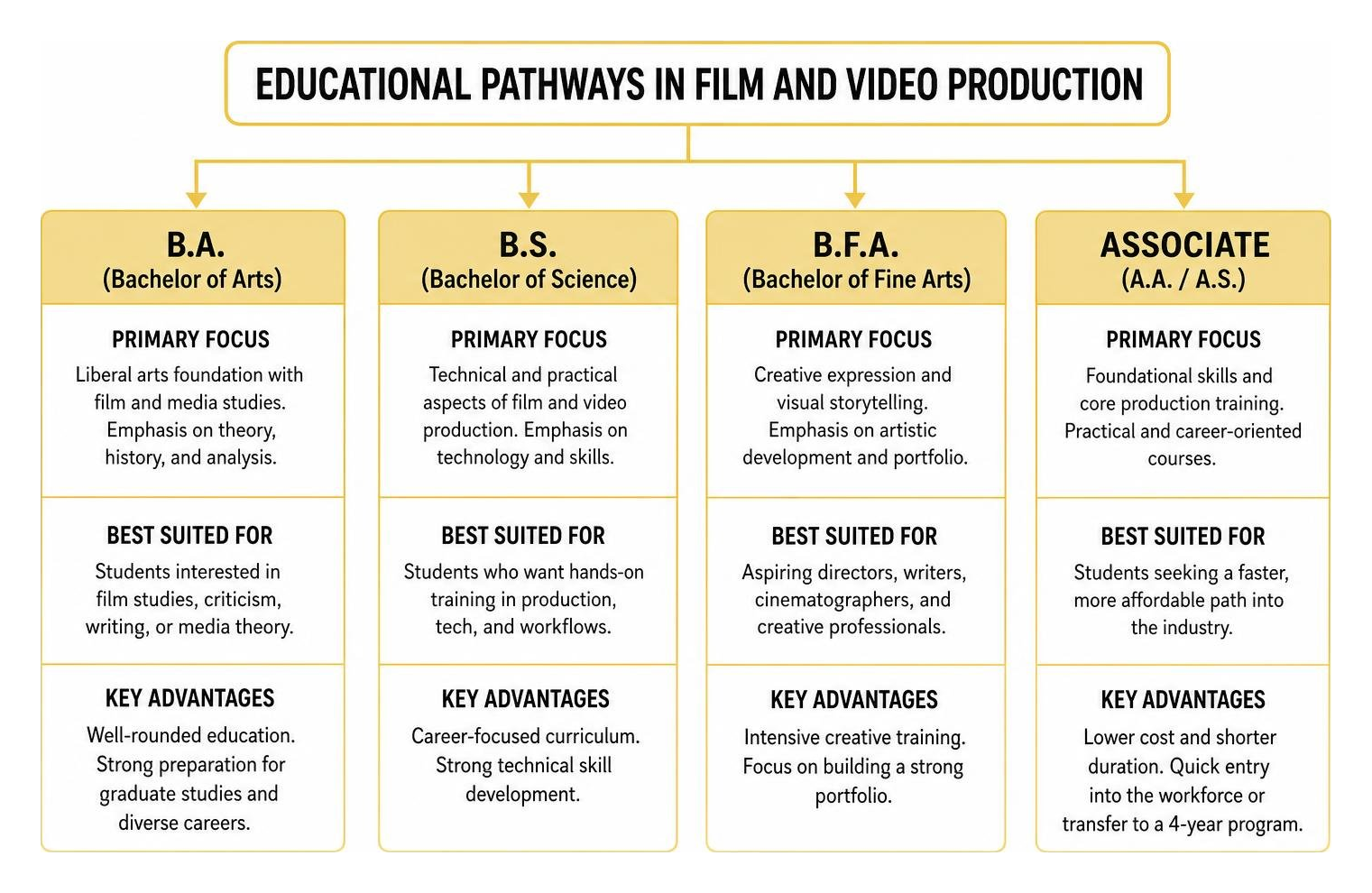
    A comparative diagram of educational pathways in film and video production

    Comparing Degrees: B.A., B.S., B.F.A., and Associate Programs

    When researching colleges, you will encounter four primary pathways. Understanding the structural differences between them is crucial to choosing a program that aligns with your personal learning style and career goals.

    Degree Type Primary Focus Best Suited For Key Advantages
    Bachelor of Arts (B.A.) Liberal arts, film theory, history, and analytical writing mixed with introductory production. Aspiring film critics, academics, screenwriters, and versatile media generalists. Highly flexible; easy to double-major; provides a broad, well-rounded education.
    Bachelor of Science (B.S.) Technical production, media technology, engineering, and the business/management side of the industry. Technical directors, camera technicians, sound engineers, and production managers. Strong focus on industry-standard software, equipment, and practical business skills.
    Bachelor of Fine Arts (B.F.A.) Intensive, hands-on, conservatory-style creative practice and portfolio development. Aspiring directors, cinematographers, editors, and hands-on creative specialists. Deep focus on creating a professional portfolio; high volume of collaborative production work.
    Associate of Science (A.S.) / Certificates Fast-paced technical training, set etiquette, and fundamental software skills. Independent filmmakers, crew technicians, and career-changers looking for fast entry. Affordable; highly practical; shorter time commitment (1 to 2 years).

    A B.F.A. or B.S. program is generally ideal if you want to be on set operating cameras, mixing sound, or editing footage on day one. A B.A. program is excellent if you want to understand the cultural impact of cinema, write scripts, and keep your career options broad. For those looking to gain immediate technical skills without the four-year commitment, an Associate of Science (A.S.) degree or a professional certificate program offers a direct pipeline to entry-level crew positions.

    Choosing the Right Concentration in Film and Video Production

    Within these degree programs, you will often be asked to choose a concentration or specialization. This allows you to tailor your coursework to the specific area of the industry you find most exciting.

    • Filmmaking / Directing: Focuses on narrative development, working with actors, visual style, and managing the creative team on set.
    • Live Production: Prepares you for the world of live television, sports broadcasting, concerts, and corporate event streaming.
    • Cinematography: Deepens your understanding of camera technology, lenses, lighting design, and the art of visual composition.
    • Motion Design and Animation: Focuses on title sequences, visual effects (VFX), 2D/3D graphics, and digital assets. To see how these skills apply to modern marketing, read our Animation Station: The Ultimate Guide to Digital Marketing Animation Videos.

    The Reality of Film School: Facilities, Equipment, and Workflows

    One of the strongest arguments for attending a formal program is the access it provides to professional infrastructure. Unless you have hundreds of thousands of dollars in capital, it is incredibly difficult to gain hands-on experience with industry-standard gear on your own.

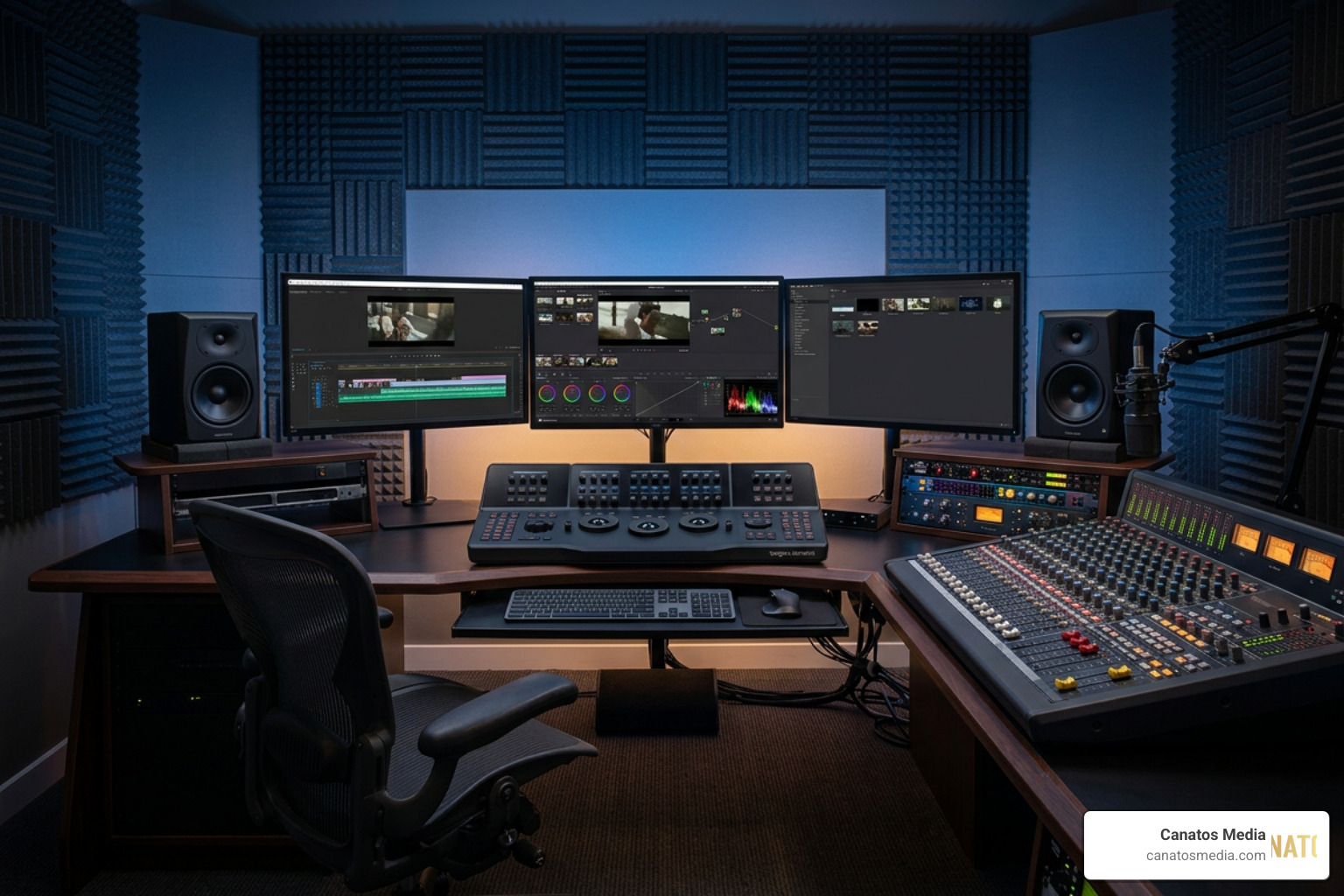
    A professional post-production editing suite with color grading monitors and audio mixing boards

    Hands-On Facilities and Industry-Standard Gear

    Top-tier programs provide students with facilities that rival professional production companies. When evaluating schools, look closely at their physical resources:

    • Soundstages: Large, soundproofed spaces with overhead lighting grids, allowing you to build sets and control your shooting environment completely.
    • Cyc Walls (Cycloramas): Infinite green or white curved walls used for visual effects, green screen compositing, and commercial product shoots.
    • Post-Production Suites: Dedicated editing bays equipped with professional software (such as DaVinci Resolve, Avid Media Composer, and Adobe Premiere Pro), professional color-grading monitors, and surround-sound mixing capabilities.
    • Camera Packages: Access to high-end digital cinema cameras from brands like RED and ARRI, along with professional cinema lenses, wireless follow-focus systems, and advanced camera stabilization rigs (gimbals, Steadicams, and dollies).

    Learning on this gear is invaluable because it removes the intimidation factor when you transition to a professional set.

    Mastering the Three-Stage Production Workflow

    A great program doesn’t just teach you how to push buttons on a camera; it teaches you how to manage a highly structured professional workflow. Every successful project, regardless of budget, moves through three distinct phases.

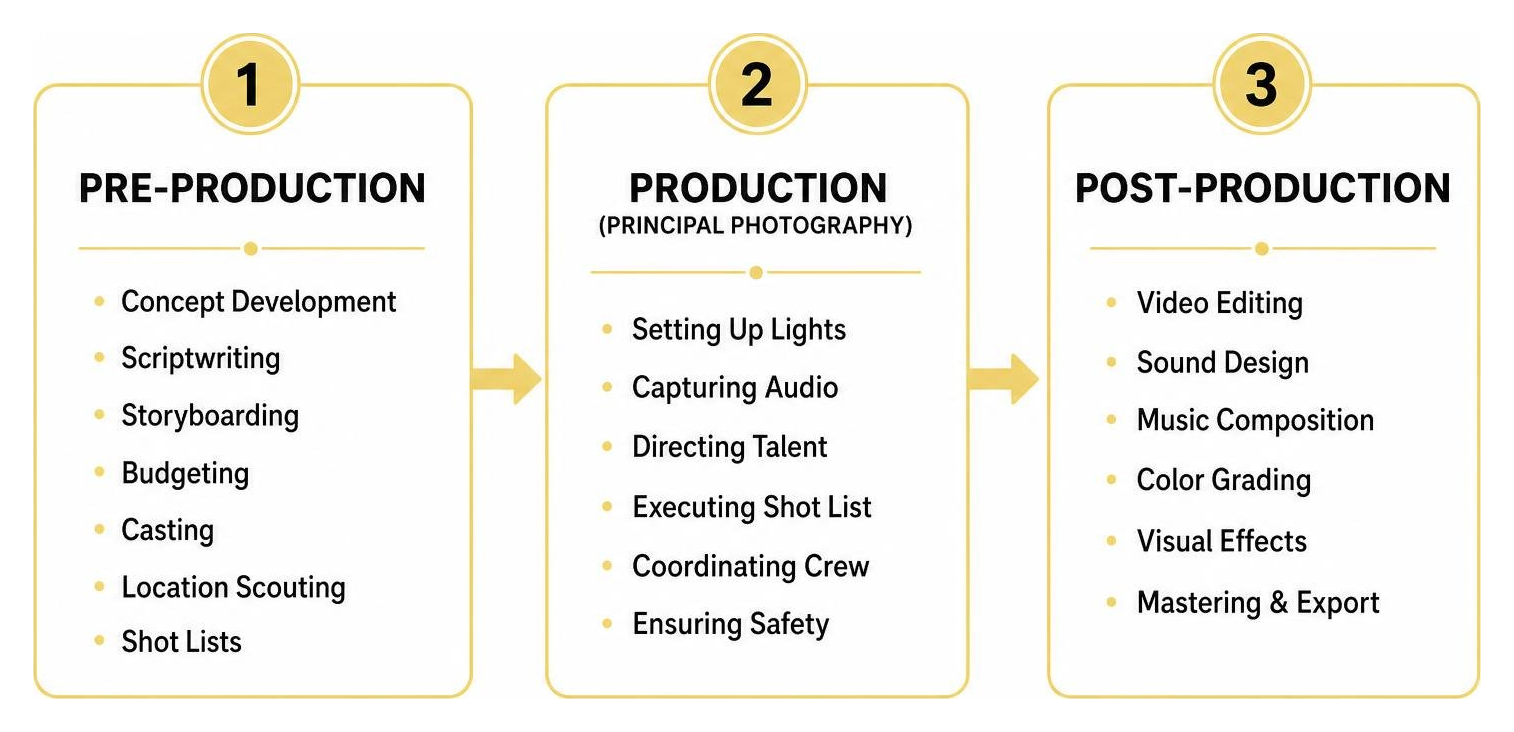
    The three-stage film and video production workflow from pre-production to post-production

    1. Pre-Production: This is the planning phase. It includes concept development, scriptwriting, storyboarding, budgeting, casting, location scouting, and building shot lists. This phase is where the foundation of your project is built.
    2. Production (Principal Photography): This is the actual shoot. It involves setting up lights, capturing pristine audio, directing talent, and executing the shot list. It requires immense coordination, set etiquette, and safety standards.
    3. Post-Production: This is where the story is truly put together. It includes video editing, sound design, music composition, color grading, visual effects, and mastering the final files for distribution.

    To master these phases in detail, we highly recommend reading our guide, Lights, Camera, Action: A Deep Dive into the Three Stages of Film, as well as our breakdown of Music Video Production 101: From Script to Screen.

    Career Outlook: Salaries, Job Growth, and Major Employers

    Whether you choose the academic route or the self-taught path, you need to know what the job market actually looks like. The good news is that because video is now a fundamental requirement for every business, the career opportunities extend far beyond Hollywood. For broader national labor-market context, the U.S. Bureau of Labor Statistics maintains an overview for film and video editors and camera operators, including typical duties, work environments, and employment trends.

    Industry Job Roles and Projected Growth Rates

    The industry supports a wide variety of specialized roles. Here is a look at the median yearly incomes and projected job growth rates for key positions nationally:

    • Producers and Directors: Median yearly income of $79,692, with a projected national job growth rate of +4.76%.
    • Film and Video Editors: Median yearly income of $64,759, with a projected national job growth rate of +6.77%.
    • Camera Operators (Television, Video, and Film): Median yearly income of $63,230.
    • General Film and Video Crew / Editors: Median yearly income of $59,040.

    In major media hubs like the New York Tri-State area and Long Island, these numbers can skew significantly higher due to the concentration of commercial, television, and corporate production headquarters.

    To understand why businesses are willing to invest heavily in professional talent for these roles, read Don’t Wing It: Why Professional Production Services Video Matter.

    Who is Hiring Film and Video Graduates?

    When you graduate with a degree or build a competitive portfolio, where do you actually apply? The employer landscape is highly diverse:

    • Corporate Marketing Departments: From tech startups to financial institutions, internal marketing teams hire in-house video producers to create social media content, internal communications, and product videos.
    • Advertising and Digital Marketing Agencies: Agencies hire directors, editors, and motion designers to produce high-end commercial campaigns and social media ads for their clients.
    • Independent Production Companies: These studios handle everything from local commercials to feature-length documentaries and indie films.
    • Broadcast and News Stations: Local and national news networks require camera operators, technical directors, and fast-turnaround editors.

    For those looking to break into the local market or businesses looking to partner with professionals, understanding the local landscape is key. From boutique creative teams to established agencies in the New York Tri-State area and Long Island, there is a wealth of talent producing high-caliber work right in our backyard.

    To learn more about what to look for in a local partner, check out our guide on How to Find the Best Local Video Production Studio for Your Business.

    Frequently Asked Questions

    Do I need a degree to work in film and video production?

    The short answer is no. In the creative industries, your portfolio (your “showreel”) and your professional network are your most valuable assets. Employers and clients rarely ask to see a physical diploma; they want to see what you have actually made and hear from people who have worked with you on set.

    However, a degree program provides a structured environment to build that portfolio, fail safely, gain hands-on experience with equipment you couldn’t otherwise afford, and build a lifelong network of creative collaborators. If you are highly self-disciplined, you can absolutely build a successful career without a degree, but you will need to work twice as hard to build your own professional network.

    What is the average salary for film and video production professionals?

    As of 2026, the median income across the board sits between $59,000 and $80,000 per year, depending on your specialization. Editors earn a median of $64,759, while producers and directors earn a median of $79,692. It is important to note that many professionals in this industry work as freelancers, meaning their income can fluctuate based on the volume of projects they secure, their geographic location, and their level of experience.

    How are AI and emerging technologies changing the production workflow?

    AI and new technologies are rapidly reshaping our industry, but they are not replacing human creativity. Instead, they are automating tedious tasks.

    AI tools are now used to speed up pre-production by generating shot lists, organizing scripts, and automating transcribing or rough-cut assemblies in post-production. Drones have made sweeping aerial cinematography accessible to low-budget productions. Meanwhile, 3D VFX and virtual production environments (like LED volumes) allow filmmakers to shoot complex backgrounds without leaving the studio. These technologies are making production faster and more cost-effective, allowing creators to focus more of their energy on high-level storytelling.

    Conclusion

    The decision to pursue a formal degree or build your skills independently comes down to your personal learning style, financial situation, and long-term career goals.

    If you thrive in structured environments, want immediate access to top-tier equipment, and value a built-in network of peers and mentors, a film program can be an incredible launchpad. If you are entrepreneurial, eager to start working immediately, and prefer to learn by doing, the self-taught path with a focus on real-world client work might be your perfect match.

    At Canatos Media, we believe that the best education is a mix of both: mastering the fundamental rules of cinematic storytelling and immediately applying them to real-world, high-impact projects. We focus on building integrated strategies that connect beautiful, high-end video content with smart targeting and measurable business growth.

    Whether you are looking to launch your own career or need a strategic partner to elevate your brand’s visual content, we are here to help. Explore our Short-Form Video Production Services to see how we can bring your story to life.