Why Short-Form Video Dominates Your Facebook and Instagram Feed
Your customers are scrolling. Fast. Between coffee and their morning commute, they’re consuming dozens of videos in mere minutes. Short-form content on Facebook and Instagram isn’t a trend anymore—it’s the dominant format that platforms actively prioritize in their feeds.
Meta’s algorithm heavily favors video content because it keeps users engaged longer. A three-second clip can stop a scroll mid-swipe, while text posts struggle to compete. For service-based businesses and multi-location brands, this shift means the old playbook of static imagery and lengthy captions no longer moves the needle.
The numbers support this shift. Video accounts for approximately 80% of internet traffic, and short-form specifically drives measurably higher engagement rates than any other content type on Facebook Reels and Instagram Reels. Platforms are deliberately burying traditional content to promote video. If you’re not creating it, you’re essentially invisible to your audience.
The practical implication: your competitors who’ve already moved to short-form content are capturing audience attention that used to be distributed more evenly. You’re not just competing against other brands in your industry—you’re competing for milliseconds of attention in a feed designed to reward video.
The Real Problem: Creating Content That Converts, Not Just Entertains
Here’s what we see most often: businesses create short-form videos that get views, shares, and comments—but generate zero leads or sales. The content is entertaining. It’s well-shot. It performs. And it accomplishes nothing for the business.
The gap between viral content and converting content is massive. A funny, trending-audio video might reach 50,000 people. But if it doesn’t include a clear call-to-action, doesn’t build trust in your brand’s specific value, or doesn’t drive people to a lead capture point, those views are wasted effort.
Many businesses fall into the entertainment trap because metrics feel good in the moment. High view counts create a dopamine hit that makes teams feel productive. But vanity metrics obscure the real question: did this content move someone closer to buying?
Converting content solves a specific problem your customer has. It demonstrates your expertise or shows how your service works. It includes a reason to engage beyond passive consumption. That’s fundamentally different from content that simply exists to be entertaining.
Your short-form strategy must answer this: what should a viewer do after watching? If you can’t articulate that, the content isn’t serving your business.
How Platform Algorithms Reward Strategic Short-Form Video
Meta’s algorithm operates on predictable signals. When you understand what the platform rewards, you can work with it instead of guessing.
The platform prioritizes content based on several factors:
- Watch time: How long people watch before scrolling. Platforms measure this in fractions of a second, so pacing and hook matter enormously.
- Shares and saves: These actions signal that content is valuable enough to come back to, which carries more weight than likes.
- Profile visits: When viewers click to your profile after watching, the algorithm treats it as a strong engagement signal.
- Messaging and conversation: Direct messages in response to content indicate genuine interest.
- Retention rate: What percentage of viewers watch until the end of your video.
Strategic short-form content leverages these signals intentionally. A hook in the first frame keeps people watching. A clear value proposition makes people want to save it. A direct call-to-action drives profile visits or messages.
The algorithm is also context-aware. It learns what your audience engages with and serves similar content to similar people. If your core audience comprises service-based business owners aged 35-55, the platform will distribute your content preferentially to lookalike audiences with similar behaviors.
Testing and iteration accelerate this learning. By creating multiple versions of similar content and measuring which hooks and calls-to-action drive stronger engagement, you essentially train the algorithm to favor your content.
The Canatos Approach: Cinematic Content Meets Digital Strategy
We’ve built our practice around a simple premise: short-form video should look professional and serve a strategic business purpose simultaneously. That’s where most creators miss.
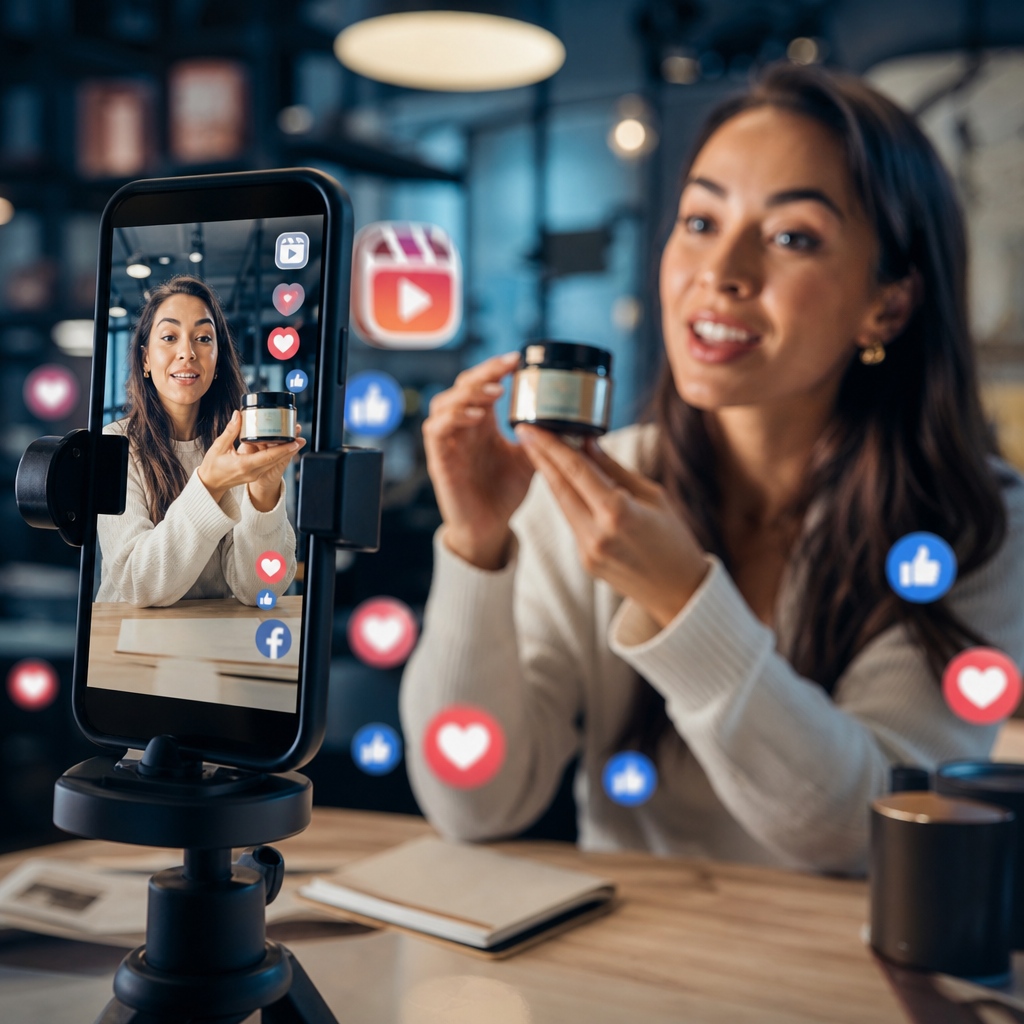
Our approach combines cinematic production quality with strategic thinking about your customer’s actual journey. We don’t create content in isolation. Every piece of video we produce connects to your broader digital strategy—your paid advertising, your email sequences, your lead capture systems.
When we produce short-form video production for clients, we’re thinking about where that content lives in your funnel. Is it a top-of-funnel awareness piece designed to reach new audiences? A mid-funnel piece that builds credibility with people already interested? A conversion piece that drives immediate action?
The cinematic element matters more than many realize. Viewers make split-second judgments about brand quality based on production value. A shaky, poorly-lit video damages brand perception even if the message is solid. Professional production signals that you take your business seriously, which builds trust with high-value customers.
We also integrate your video content with the rest of your digital marketing. A great short-form video performs better when paired with strategic paid advertising that amplifies it to your target audience. It converts better when paired with a clear landing page and lead capture system. It builds authority when supported by SEO and website optimization.
Building Your Short-Form Video Strategy for Maximum Impact
Strategy precedes production. Before you shoot anything, map out what you’re actually trying to accomplish.
Start with your customer’s journey. At what point do they first learn about businesses like yours? What problems are they trying to solve? What objections do they have? What proof would convince them to buy? Your short-form content should address these moments.
Next, identify three to five core content themes that support your business goals. For a pest control company, these might be: pest identification, prevention tips, before-and-after treatments, customer testimonials, and seasonal warnings. For a fitness studio, they might be: workout demos, nutrition tips, member transformations, class highlights, and community events.
Create a content calendar that rotates through these themes. Consistency matters to the algorithm, and batching content production is far more efficient than shooting ad-hoc videos. Plan to produce 2-4 short-form videos weekly if you’re serious about moving the needle.
Each video should have a distinct purpose:
- Educational content (tips, how-tos, explanations) builds authority
- Behind-the-scenes content builds connection and transparency
- Testimonial and case study content builds trust
- Promotional content with clear CTAs drives immediate action
- Trending audio and trending formats keep content fresh and increase reach
Test different hooks, calls-to-action, and value propositions. Measure what works. Double down on what drives engagement and conversions, not just views.
Integrating Video Content with Paid Advertising
Organic reach has limits. To scale results, pair your short-form content with strategic paid advertising.
Paid advertising allows you to reach audiences beyond your current followers. It also lets you target with precision. Instead of hoping the right people see your content, you’re placing it directly in front of specific demographics, interests, and behaviors.
The most effective approach: create your organic short-form content first, then amplify top-performing pieces with paid campaigns. This avoids wasting budget on content that underperforms organically. You already know people engage with it.
When running paid campaigns, you can optimize for different objectives. Awareness campaigns maximize reach to new audiences. Engagement campaigns reward shares, saves, and comments. Traffic campaigns drive people to your website or landing page. Conversion campaigns target people most likely to complete a desired action.
Match your video content to your campaign objective. An educational video works well for awareness and engagement. A testimonial video works well for conversion campaigns. A product demo works well for traffic campaigns.
Budget allocation matters too. Most businesses underestimate the budget required for meaningful results. Facebook and Instagram advertising requires enough spend to accumulate data and let the algorithm optimize. We typically recommend minimum daily budgets of $15-20 per campaign to get meaningful results.
From Views to Leads: Our Lead Generation System
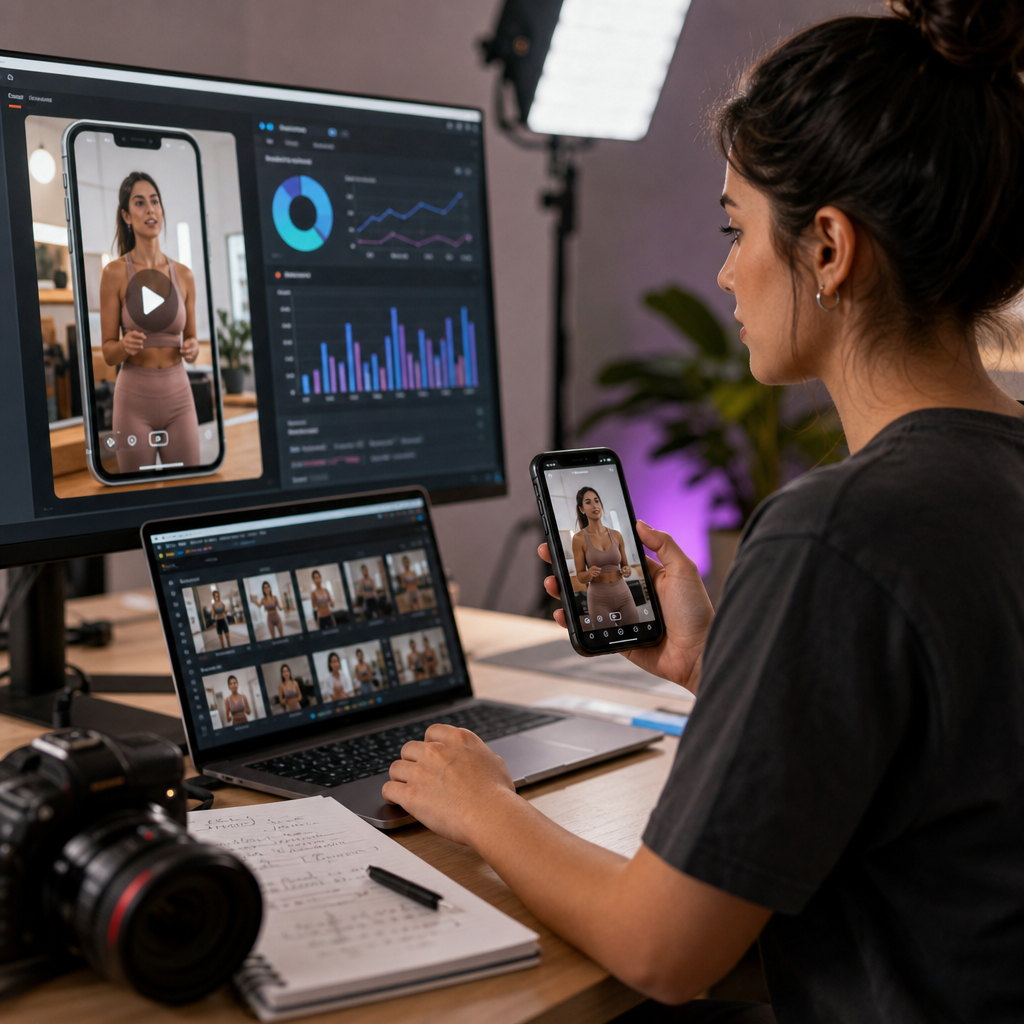
The bridge between content and conversion is your lead generation system. Without one, even great content fails to translate views into actionable business results.
We build systems that capture viewer interest and move people into your sales funnel. This typically includes:
- A clear, valuable call-to-action in your video (visit link in bio, message us, sign up for a guide)
- A landing page designed to convert viewers into leads (email signup, phone call, demo booking, free consultation)
- An email sequence that nurtures leads and moves them toward purchase
- Retargeting ads that remind people about your offer as they continue scrolling
The system works because it reduces friction. A viewer interested in your offer shouldn’t have to search for the next step. Make it obvious and easy.
For example, a home remodeling company might use short-form videos showing before-and-after transformations. Each video includes a call-to-action: “Message us for a free design consultation.” That message goes to a team member who responds with information about booking a consultation. People who book become leads.
Without this system, those viewers might engage with the content and move on. With the system, you’ve captured their contact information and started a conversation.
Track which videos drive the most leads. Double down on that content theme and refine your approach. Over time, you’ll build a reliable, repeatable system that turns social attention into business results.
Measuring Success: Metrics That Actually Matter
Vanity metrics feel good. Actionable metrics drive decisions. Know the difference.
Metrics that often mislead:
- View count alone
- Likes and comments without context
- Reach divorced from conversion
- Viral moments that don’t align with your business
Metrics that actually matter:
- Click-through rate to your landing page or website
- Cost per lead generated
- Lead to customer conversion rate
- Customer acquisition cost
- Return on ad spend
Set specific targets for these metrics before you launch campaigns. If your customer acquisition cost should be under $150, track what your actual CAC is. If your conversion rate from lead to customer typically runs 25%, measure whether video-sourced leads convert at that rate.
Create a simple dashboard that shows these metrics weekly. Share it with your team. Let it guide decisions about content themes, budget allocation, and strategy refinement.
Most importantly, connect video metrics back to revenue. A video that costs $100 to produce and generate $500 in profit is a success, regardless of view count. A viral video that cost $500 to produce and generated zero profit is a failure.
Scaling Your Content Across Multiple Locations
Multi-location businesses face a unique challenge: how do you create content that feels locally relevant while maintaining brand consistency?
The solution is systematic variation. Create a core content template that works across locations, then customize elements for each market.
For example, a home services company with five locations could create this core template: testimonial from a local customer, showing their problem before your service, the transformation after, and the customer talking about their experience. The template is consistent. The customer, the specific project, and the location details change for each branch.

This approach scales production. You’re not creating entirely different content strategies for each location. You’re producing variations efficiently.
Assign ownership for local content creation. A manager at each location can source local testimonials and coordinate with your production team. This distributes the work and ensures content feels authentically local rather than centrally forced.
Cross-promote content across locations. A customer testimonial from Location A should still appear on the pages and feeds for Locations B, C, D, and E. This builds social proof that applies company-wide.
Consider also creating location-specific landing pages that correspond to location-specific paid campaigns. This improves both relevance and conversion rates.
Getting Started with Professional Short-Form Production
You don’t need to overhaul everything immediately. Start with a clear first step.
Audit your current content. What short-form videos have you already created? Which performed best? What themes resonated? You likely have insights already; they’re just scattered across platforms.
Define your three core content themes based on what your customers actually want to know about your business.
Produce 4-6 videos around one theme. Keep them simple initially. A phone camera, good lighting (natural light works well), clear audio, and a focused message are enough to start. Professional production quality becomes more important as you scale.
Publish consistently. Two to four videos per week is a reasonable starting cadence. Use scheduling tools to spread them throughout the week.
Measure everything from day one. Track which hooks, content themes, and calls-to-action drive engagement and conversions. Let data guide your next round of production.
If production feels overwhelming, that’s a signal to bring in professional help. We specialize in translating business goals into short-form video strategies that move the needle. Our team handles the production, testing, and optimization so you can focus on running your business.
The brands winning with short-form content on Facebook and Instagram aren’t necessarily the ones with the biggest budgets. They’re the ones who combined strategic thinking with consistent execution. That’s something every business can do.
Contact us today for a free consultation to see how we can help you grow your business.
Frequently Asked Questions (FAQ)
What’s the difference between entertaining short-form content and content that actually generates leads?
We’ve found that most brands create videos designed purely for entertainment or vanity metrics like views and likes. Our approach flips this: we craft cinematic short-form content with a specific conversion goal built in from the script stage. Every video we produce includes a clear call-to-action, a hook that speaks to your ideal customer’s pain point, and strategic placement within a broader lead generation system that connects social engagement to your sales pipeline.
How do we know if our short-form video strategy is actually working?
We track metrics that matter to your bottom line: click-through rates, qualified lead volume, cost per lead, and ultimately, how many leads convert to customers. Rather than celebrating high view counts, we measure whether the people watching your content are the right people for your business and whether they’re taking action. We integrate our video analytics with your advertising data and CRM to show you exactly how social content feeds into revenue.
Can we manage short-form content across multiple locations without looking disjointed?
Yes. We develop a unified brand voice and content framework that works across all your locations while allowing flexibility for local relevance. We handle everything from production to scheduling across your accounts, ensuring consistency in messaging, visual style, and posting cadence so your multi-location brand appears as a cohesive operation rather than disconnected individual branches.