The Gap Between Static Websites and Modern Video-First Expectations
Your website is no longer just a digital brochure. Today’s visitors land on your site expecting dynamic, engaging content that tells your brand story in seconds. Yet most business websites still rely heavily on text, static images, and the occasional stock photo.
This disconnect is costing you conversions. Research consistently shows that visitors spend more time on pages with video, scroll deeper into your content, and are significantly more likely to take action. When someone arrives at a static landing page and sees only text and images, they’re already comparing you to competitors who are investing in visual storytelling.
The expectation gap exists because attention spans have shifted. Your audience consumes short-form video on social platforms daily. They’ve learned to trust visual proof over written claims. A two-minute cinematic explainer video about your service carries more weight than a paragraph describing it. Your website needs to meet them where their expectations have moved.
The solution isn’t replacing your website. It’s integrating video strategically so your site functions as both a conversion tool and a storytelling platform.
Why Your Website Needs Cinematic Video Content to Convert
Visitors form their first impression of your business in under two seconds. Video accelerates that process by giving them something to connect with immediately. A well-produced cinematic video on your homepage doesn’t just look professional; it demonstrates confidence in what you offer.
Consider the practical impact: visitors who watch a product or service video are 64% more likely to make a purchase. For service-based businesses, this effect is even stronger because video removes uncertainty. When someone watches a real example of your work, they can envision themselves as your client. Text descriptions create doubt; video builds trust.
Cinematic quality matters more than you might think. Polished, intentional production signals that your business invests in quality across everything you do. A poorly lit, amateurish video has the opposite effect. When your website showcases professional-grade content, visitors assume your actual service delivery matches that standard.
Beyond trust, video on your website extends session length, which directly impacts your search rankings. Google’s algorithm favors pages where visitors spend more time engaging with content. Every minute someone watches your cinematic brand story instead of bouncing is a signal to search engines that your page deserves visibility.
What to do next: Audit your current homepage and key service pages. Which pages have the highest bounce rate? Those are your strongest candidates for video integration.
How Integrated Video Strategy Strengthens Your Website Performance
Integration means more than uploading a video to YouTube and embedding it on your homepage. True integration aligns your video content with your website’s conversion goals, SEO strategy, and user journey.
A cohesive video and website strategy works like this: someone discovers your brand through a social media ad or organic search. They click through to a landing page featuring a cinematic video explaining your core value proposition. Below that video, they encounter supporting content, testimonials, or case studies that reinforce what they just watched. Then a clear call-to-action guides them to the next step, whether that’s booking a consultation, requesting a quote, or signing up for your email list.
This structure serves multiple purposes simultaneously. The video captures attention. The supporting content answers objections. The strategic layout moves the visitor toward conversion. Your entire website becomes a funnel, not a collection of disconnected pages.
Video also strengthens the connection between your paid advertising and website experience. When a prospect clicks your ad after seeing a video preview, landing on a page with that same cinematic content creates consistency and reinforces your message. This coherence dramatically improves conversion rates because the visitor’s expectation matches what they find.
Multi-location and service-based businesses benefit especially from integrated strategies because video can showcase your work across different contexts. A roofing company can show projects in different neighborhoods. A fitness brand can feature different class experiences. A consulting firm can demonstrate how their process works across various industries.
Technical SEO Foundations for Video-Heavy Websites
Adding video to your website introduces technical considerations that directly affect your search visibility. Google can crawl and index video content, but only if you structure it correctly.
Start with proper video hosting. Hosting video on your own server consumes significant bandwidth and slows page load times, which harms SEO. Instead, use a reliable video platform and embed it on your pages. This approach keeps your site fast while ensuring Google can still discover and understand your video content.
Schema markup is your technical foundation for video SEO. This structured data tells Google what your video is about, how long it runs, and where it appears on your site. Without proper schema markup, you’re missing an opportunity for enhanced search results that display video thumbnails and details. This small technical investment can increase click-through rates from search results by 30% or more.
Page speed matters more with video than ever. A cinematic video that takes 10 seconds to load will kill your bounce rate. Use efficient compression, lazy loading for off-screen videos, and a content delivery network (CDN) to ensure your video loads quickly regardless of visitor location. Tools like Google PageSpeed Insights will flag video-related performance issues.
Mobile optimization is non-negotiable. Over 70% of your website traffic likely comes from mobile devices, and video performance on mobile differs significantly from desktop. Responsive video players that adapt to screen size are essential. Your cinematic content won’t convert anyone if it’s unwatchable on a phone.
Action item: Check your site’s Core Web Vitals using Google Search Console. If video is dragging down your scores, address hosting and compression before publishing more video content.
Creating Cinematic Content That Drives Website Traffic
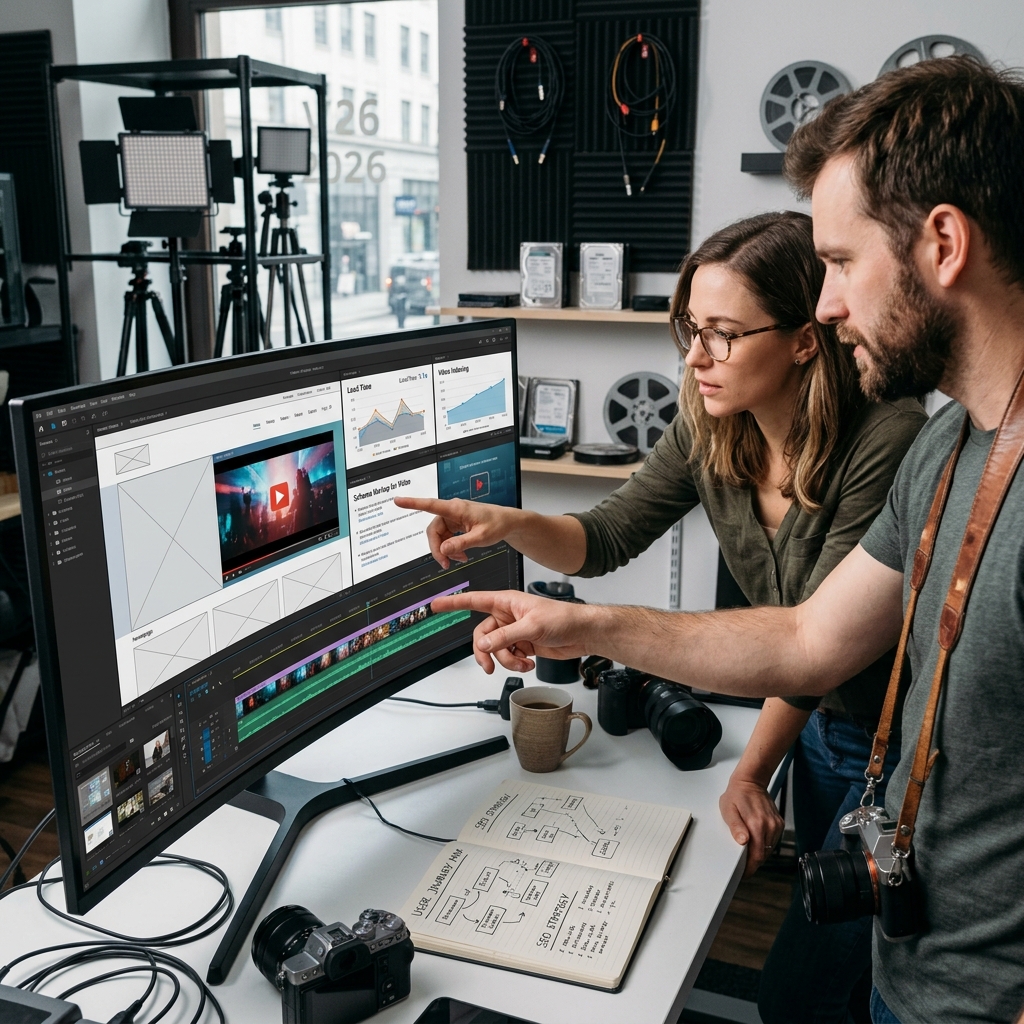
Cinematic video production is an intentional process that differs from simple talking-head recordings. Cinematic approach means thoughtful camera work, deliberate pacing, professional lighting, and sound design that reinforces your message.
This level of production serves your website conversion goals because it eliminates friction. Visitors don’t have to work hard to understand your message. The visuals guide their attention. The pacing respects their time. The overall experience feels premium, which elevates their perception of your brand.
Your video content should answer specific questions your website visitors actually ask. “What does your service include?” “How does your process work?” “Who else has benefited from your product?” “What makes you different?” These aren’t creative prompts; they’re the conversational gaps where video fits naturally into your sales process.
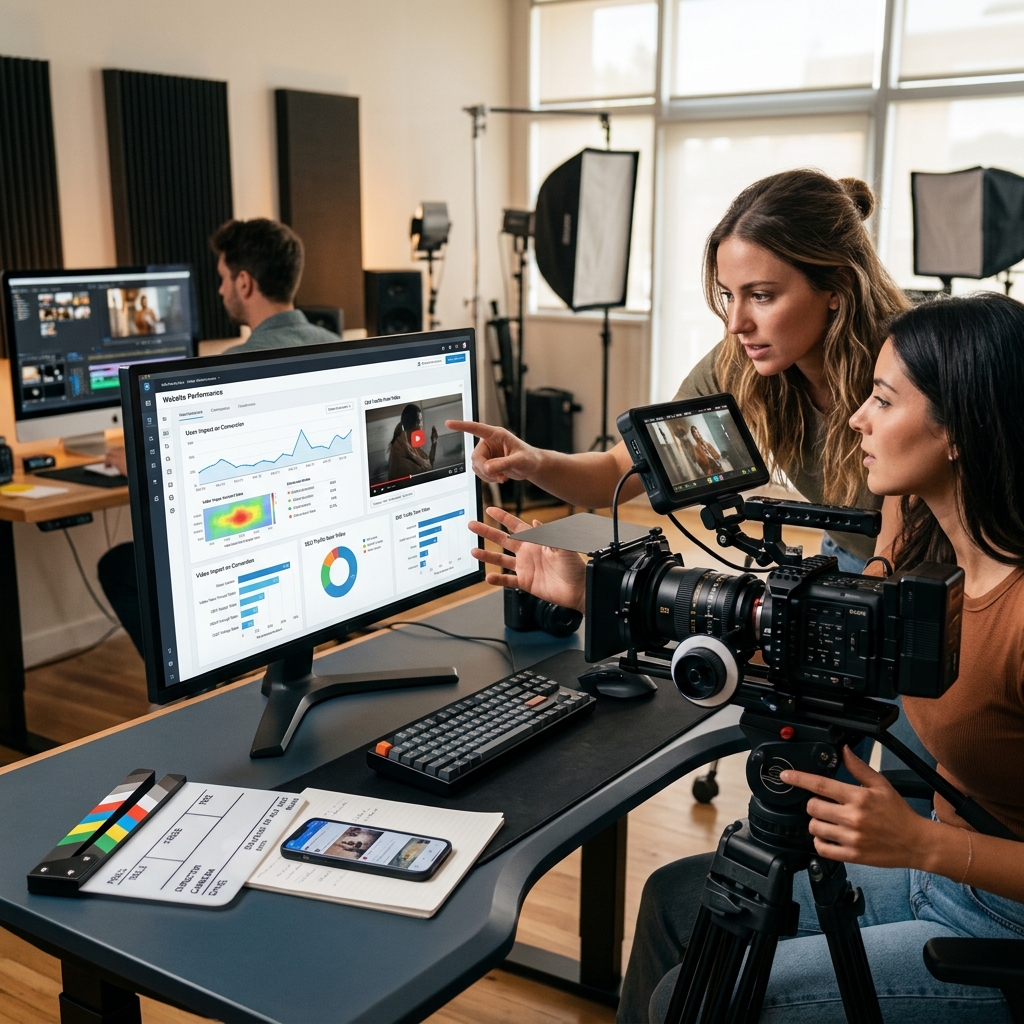
We’ve found that the most effective website videos are 60 to 120 seconds long. This length is short enough to maintain attention but long enough to communicate real value. Anything longer than three minutes, and you risk losing a significant portion of your audience. Save extended storytelling for case studies or dedicated resources rather than your homepage.
Production quality directly impacts ROI. A $2,000 video produced with intentional framing, professional audio, and thoughtful editing will convert better than a $10,000 video shot without clear direction. The investment matters most when it’s matched with strategic thinking about what your website visitor needs to see and when.
Measuring the Impact of Video on Website Conversions
You can’t improve what you don’t measure. When you integrate video into your website, tracking its specific impact on conversions becomes essential for understanding ROI.
Set up video interaction tracking in Google Analytics 4. You can see how many visitors watch your videos, how far they watch, and whether they take action afterward. This data shows whether your video is actually engaging people or sitting unwatched. If a video on your homepage has a 95% drop-off rate at five seconds, that’s telling you something about either the video quality, the placement, or the audience fit.
Compare conversion rates between pages with video and comparable pages without it. If your homepage with a cinematic video converts at 8% and your secondary services page without video converts at 2%, that difference has real meaning. Over 1,000 monthly visitors, that’s 60 additional conversions each month.
Attribution modeling helps you understand which videos influence conversion decisions. A visitor might watch three different videos before making a decision. Modern analytics can show you which content pieces work together to drive action. This insight helps you prioritize which pages and videos deserve your production budget.
Track engagement metrics alongside conversion metrics. How much time do people spend watching your videos? Do they watch to completion? Do they watch multiple videos in one session? These behaviors predict conversion likelihood even before someone fills out a form.
Practical approach: Create a simple spreadsheet tracking video performance alongside page performance. Monthly check-ins take 20 minutes but reveal patterns that guide your next production priorities.
Our Approach to Seamless Video and Website Integration
At Canatos Media, we’ve built our process around the specific challenge of merging cinematic video production with website optimization. We don’t produce videos in isolation and hope they fit your website. We design them alongside your website strategy from the beginning.
Our team starts by understanding your conversion goals, your website architecture, and your audience. We map where video makes the biggest impact in your user journey. Maybe it’s your homepage, maybe it’s your service pages, maybe it’s your checkout process. This strategic clarity ensures every production dollar serves a conversion purpose.
We handle the full integration, which means your website is optimized to showcase video effectively. We manage technical SEO for video, ensure fast loading, and structure your content so videos and supporting text work together as a system. We also handle your social media advertising strategy, which means the videos driving traffic from paid ads match the experience on your website.
This integrated approach reflects our core belief: video production isolated from your digital marketing strategy underperforms. Your website, your social content, your paid advertising, and your video production need to work as one system rather than separate initiatives.

We’ve worked with growth-focused brands across service industries, multi-location businesses, and product companies. The pattern holds consistently: when video and website optimization are genuinely integrated, not just stacked together, conversion rates improve measurably.
Getting Started With Your Video-Optimized Website Strategy
The most common mistake we see is businesses treating website video as a luxury rather than a conversion tool. They add a video because competitors have one or because video is trending. That approach wastes money because the video isn’t solving a specific problem.
Start instead by identifying your highest-traffic pages with the lowest conversion rates. These are your opportunities. A page receiving 500 visitors monthly but converting at 1% is converting only five people. If strategic video could double that conversion rate, you’re now converting 10 people. That improvement matters.
Next, clarify what your website visitor needs to understand in order to say yes. Don’t overthink this. Write down three to five core objections or questions your prospects have. These become your video prompts. Each one might be a 90-second video, a section within a longer video, or multiple videos across different pages.
Finally, commit to measuring results. Before you invest in production, confirm your current baseline conversion rates and engagement metrics. After launching video content, check those numbers monthly. You’ll quickly see which videos are worth repeating and which approaches aren’t working.
Website optimization with video production isn’t complicated when you approach it strategically. The businesses seeing the biggest gains treat it as integrated system design, not content creation in a vacuum. Your website and your video production serve the same outcome: turning audience attention into measurable business growth.
Contact us today for a free consultation to see how we can help you grow your business.
Frequently Asked Questions (FAQ)
How do we integrate video content into websites without slowing down performance?
We build video-heavy websites on optimized infrastructure that prioritizes fast loading times. We use adaptive bitrate streaming, lazy loading techniques, and strategic video placement so your cinematic content enhances rather than hinders user experience. Our technical approach ensures visitors engage with your videos while maintaining the page speed that search engines and users demand.
What’s the difference between adding videos to a website and building a true video-first strategy?
Simply uploading videos to your site misses the opportunity to leverage them for SEO, conversion optimization, and audience retention. We design our approach around video as the primary storytelling vehicle, strategically placing cinematic content to guide visitors toward specific actions while simultaneously strengthening your search rankings through proper video optimization and metadata.
How do we measure whether our video and website integration is actually generating leads?
We set up conversion tracking across your entire digital ecosystem, connecting video engagement metrics directly to form submissions, phone calls, and sales inquiries. This data shows us which video placements, types of content, and website pathways drive the highest-quality leads so we can continuously refine your strategy for better results.