Why Music Video Production Is the Most Powerful Tool for Artist Visibility
Music video production is the process of creating a visual companion to a song — from the initial creative concept all the way through filming, editing, and delivering a platform-ready final cut.
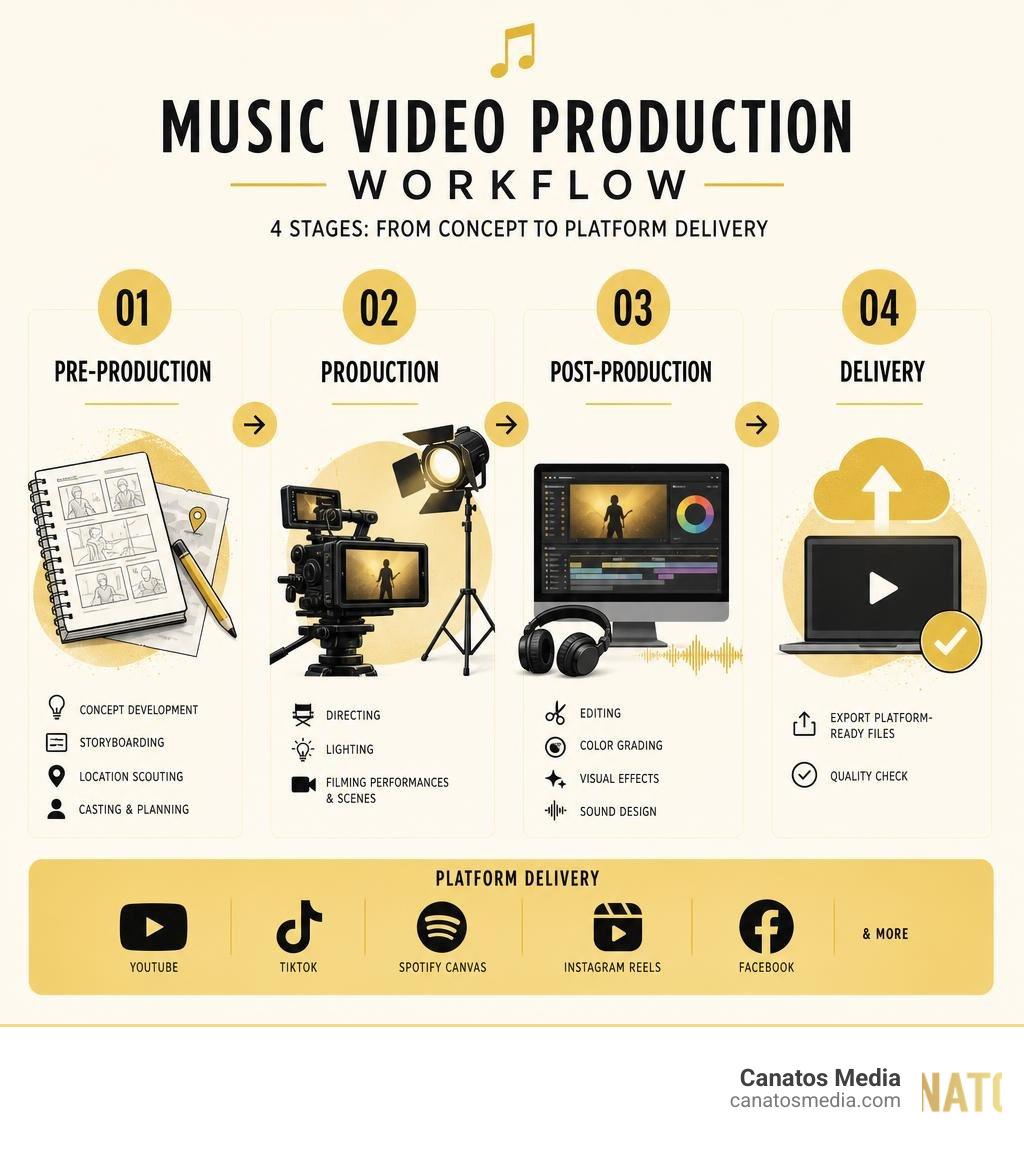
Here’s a quick breakdown of what it involves:
- Pre-Production — Concept development, storyboarding, location scouting, casting, and planning
- Production — Directing, lighting, filming performances and narrative scenes
- Post-Production — Editing, color grading, visual effects, and sound design
- Delivery — Exporting platform-ready files for YouTube, TikTok, Spotify Canvas, and more
Music videos account for over 25% of all YouTube views worldwide. A well-executed video can reach an audience 10 times the size of an artist’s existing listener base — driving streams, playlist placements, and real revenue.
The format has been a cultural force for decades. Many credit Queen’s 1975 hit Bohemian Rhapsody as the video that first popularized the format, and the medium has only grown more essential since. Today, a single video isn’t just a creative statement — it’s a growth engine.
Whether you’re an independent artist or releasing through a major label, the quality of your visual content directly impacts how seriously the industry and your audience take you. A strong concept with cinematic execution can go viral with little to no marketing budget. A weak video can undercut even a great song.
I’m Nic Canobbio, founder of Canatos Media, and with over two decades of experience in media production — including social content that has reached more than 60 million views — music video production is one of the core disciplines I’ve built my career around. In this guide, I’ll walk you through everything you need to know to make smart, informed decisions about your next video.
Music video production vocabulary:
The 4 Stages of Professional Music Video Production
To the untrained eye, a music video looks like a seamless flow of beautiful imagery synchronized perfectly to a beat. Behind the scenes, however, it is a highly structured process. Professional music video production relies on a clear, four-stage pipeline to transform an abstract musical idea into a polished marketing asset.
By understanding how we move from a blank page to a finished file, artists and labels can better collaborate with directors to protect both their creative vision and their budgets. For a deeper look at how these phases mirror traditional filmmaking, check out our guide on Lights Camera Action: A Deep Dive into the Three Stages of Film.
Pre-Production: Concept, Storyboarding, and Planning
Pre-production is where the foundation of your video is built. If you wing it here, your shoot will fall apart on set. During this phase, we work closely with the artist or record label to establish the visual identity of the track.
First, we draft a visual treatment—a document outlining the narrative theme, color palette, and camera style. We then translate this treatment into mood boards and detailed storyboards. Mapping each shot to specific timestamps in the song ensures that the narrative pacing matches the musical structure.
Once the creative direction is locked, the logistical heavy lifting begins. This includes:
- Location Scouting: Finding the perfect settings around the Tri-State area or Long Island that fit the visual tone.
- Shot Lists: Detailing every single camera setup, angle, and lens requirement.
- Casting: Auditioning actors, dancers, or extras.
- Scheduling and Call Sheets: Structuring the shoot day down to the minute so the crew and talent know exactly where to be.
Production: Directing, Lighting, and Capturing the Performance
Production is the actual shoot day (or days). This is where the director, cinematographer, and crew execute the plan. A typical music video relies on two primary visual elements: performance footage (the artist singing or playing their instrument) and narrative footage (story-driven scenes).
Directing actors and musicians requires a unique touch. Musicians must be coached on playback miming—performing the song with high energy to a sped-up or slowed-down audio track to capture specific visual effects, while maintaining perfect lip-sync.
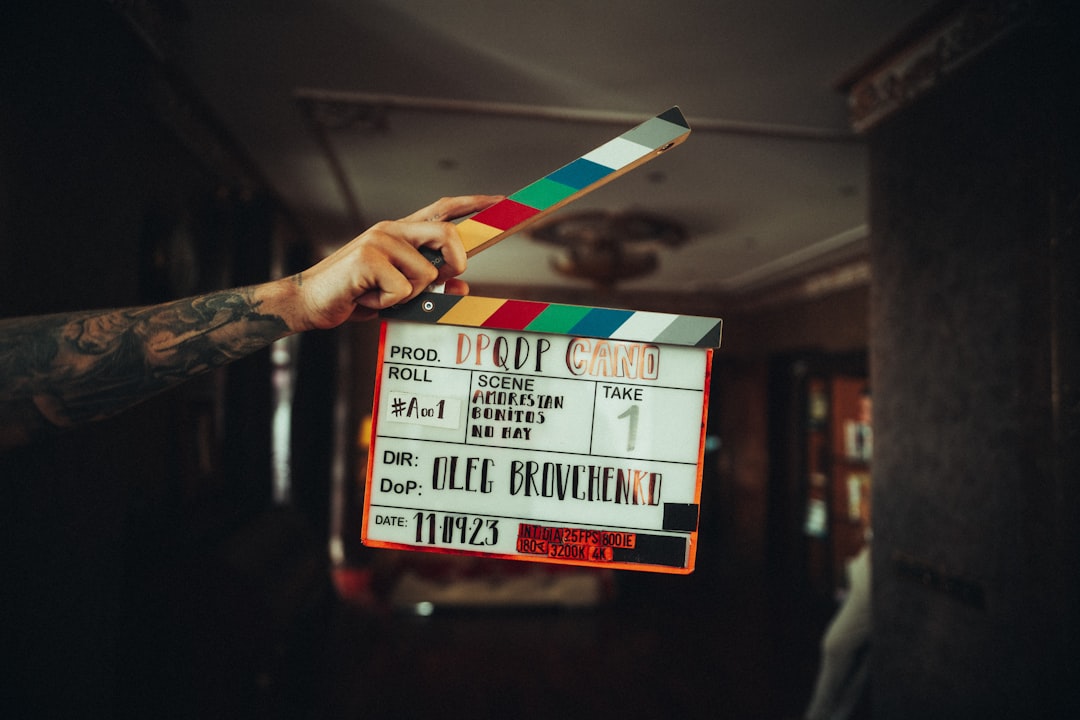
Lighting is configured to establish depth and mood, while camera movements are carefully choreographed to match the song’s energy. We also pay strict attention to continuity and proper slating of takes to make the editor’s life easier in the next stage.
Post-Production: Editing, Color Grading, and Visual Effects
Once the cameras stop rolling, the project moves into post-production. This is where the raw footage is shaped into a final story.
- The Rough Cut: The editor syncs the performance footage to the master audio track and selects the best narrative takes, building a loose timeline.
- The Fine Cut: The edit is tightened, focusing on cutting to match the emotional flow of the music rather than just cutting on every beat.
- Color Grading: A colorist adjusts the tones, contrast, and saturation to give the video a cinematic look that matches the mood board.
- Visual Effects (VFX): Any green-screen composites, 3D elements, or digital cleanups are integrated. If you want to explore how stylized digital visuals can elevate a campaign, read our Animation Station: The Ultimate Guide to Digital Marketing Animation Videos.
- Sound Design: Adding subtle environmental sound effects (like a car door closing or rain falling) during breaks in the music to ground the narrative.
Essential Gear and Crew Roles in Music Video Production
To achieve a high-end, commercial look, you need the right tools and the right hands operating them. While consumer cameras have become incredibly advanced in 2026, the gap between DIY and professional work lies in the specialized gear and the expertise of a dedicated crew.
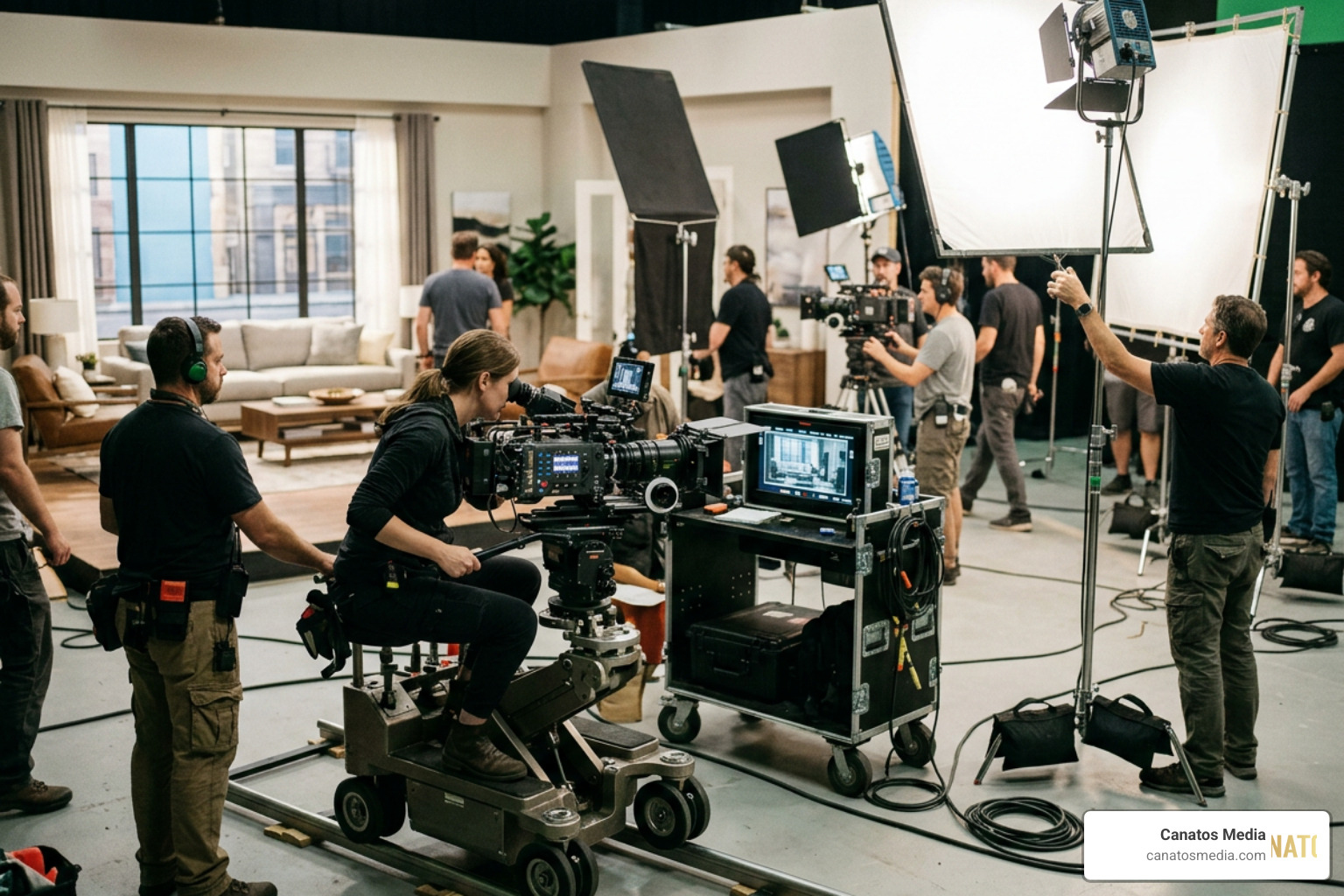
Understanding these tools and roles will help you navigate a professional set with confidence. For a broader overview of how these services fit together, see our Beginners Guide to Video Production Services.
Camera and Lighting Equipment for Cinematic Visuals
Professional music video production relies on tools designed to manipulate light and movement. Here is the essential gear package we bring to a high-end shoot:
- Cinema Cameras: We shoot on industry-standard systems from RED or ARRI, capable of capturing up to 8K resolution with wide dynamic range. This ensures the footage holds up under intense color grading.
- Prime Lenses: Unlike zoom lenses, prime lenses have fixed focal lengths. They offer superior sharpness, beautiful background blur (bokeh), and exceptional low-light performance.
- Three-Point Lighting Setup: A standard configuration using a Key Light (main light on the subject), Fill Light (softens shadows), and Backlight (separates the subject from the background). We also utilize customizable RGB LED panels to introduce stylized color washes.
- Camera Stabilizers: Gimbals, Steadicams, and dollies allow for smooth, sweeping movements that follow the artist dynamically.
Key Crew Roles on a Professional Set
A great director is nothing without a skilled crew. On a professional set, roles are clearly defined to ensure maximum efficiency:
- The Director: The creative lead who guides the performance of the artist and actors, ensuring the visual narrative aligns with the song’s emotional core.
- The Producer: The logistical mastermind who handles budgeting, scheduling, permits, catering, and crew hiring.
- The Cinematographer (Director of Photography): The camera and lighting expert who works with the director to frame shots, choose lenses, and design the lighting look.
- The Gaffer: The head of the lighting department who physically sets up and shapes the light fixtures.
- The Editor: The post-production specialist who cuts the footage, syncs the audio, and manages the visual pacing.
Budgeting and Costs: What Does a Music Video Cost in 2026?
One of the most common questions artists ask is: “How much does a music video cost?” In 2026, the answer depends entirely on your creative scope, location, and production value.
While simple, single-location performance videos can be produced on modest budgets, cinematic multi-day productions require a much larger investment.
Cost Factors: Locations, Talent, and Post-Production
When budgeting for a music video production, several variable costs must be balanced:
- Location Permits & Fees: Shooting on location in New York or Long Island requires official permits and liability insurance. Renting dedicated soundstages or unique narrative sets (like vintage rooms or black-box studios) adds to the baseline cost.
- Talent Fees: Hiring professional actors, background dancers, and choreographers requires fair compensation.
- Post-Production Complexity: Complex visual effects, extensive color grading, and rapid turnaround times increase the editing hours.
- Crew and Catering: A professional crew expects standard day rates, and keeping everyone fed and energized is a non-negotiable part of a smooth shoot.
DIY vs. Professional Music Video Production
Many emerging artists start with a DIY approach. While this is a great way to experiment, there comes a point where professional quality is required to compete on a global scale.
| Feature | DIY Music Video Production | Professional Music Video Production |
|---|---|---|
| Creative Control | High, but limited by technical execution | Collaborative, guided by experienced directors |
| Technical Quality | Consumer-grade; limited lighting and framing | Cinematic 4K/8K; professional lighting and grading |
| Pre-Production | Often rushed or skipped | Meticulous storyboarding, permitting, and planning |
| Distribution Reach | Limited to existing social circles | Optimized for major streaming, VEVO, and social platforms |
| Asset Delivery | Typically just one horizontal video file | Full suite: horizontal master, vertical cuts, Canvas loop |
Choosing a professional team means you aren’t just paying for someone to press “record.” You are investing in a strategic visual asset designed to grow your brand. If you are still on the fence about whether to hire a team, read our breakdown on Dont Wing It: Why Professional Production Services Video Matter.
Modern Trends Reshaping Music Video Production
The landscape of music video production is evolving rapidly in 2026. Technology has democratized high-end visual effects, while the rise of short-form mobile platforms has fundamentally changed how audiences consume video content.

AI Tools and Virtual Production in Music Video Production
Artificial intelligence and virtual production are no longer futuristic concepts—they are active parts of our daily pipeline. Modern AI tools help editors automate tedious tasks like syncing multicam footage, isolating subjects for rotoscoping, and generating initial color-match passes.
Additionally, we use AI to help storyboard surreal concepts that would have otherwise cost hundreds of thousands of dollars to scout and build.
For projects requiring fantastical environments, virtual production—using green screens, CGI, and LED volume walls—allows us to place artists in custom digital worlds without leaving our Tri-State area studios.
To see how these visual techniques translate to digital marketing campaigns, explore our insights on Short Form Video Production.
Vertical Formats and Social Media Optimization in Music Video Production
A music video launch in 2026 rarely lives only on YouTube. To maximize your investment, your video must be optimized for the platforms where your audience spends their time.
This means planning for vertical formats (9:16 aspect ratio) right from the start. During pre-production, we frame our shots to ensure they can be cropped cleanly for TikTok, Instagram Reels, and YouTube Shorts without losing key visual information.
By capturing high-quality behind-the-scenes (BTS) content and short-form teasers alongside the main shoot, we generate a complete visual campaign that feeds the social media algorithm for weeks.
Legal, Rights, and Distribution Strategies for Artists
A beautiful music video is useless if it gets taken down due to copyright strikes or legal disputes. Protecting your intellectual property and establishing clear distribution rights is a vital part of the production process.
For a comprehensive look at how to build an audience around your visual assets, read The Complete Guide to Video Marketing.
Copyright, Talent Releases, and Location Permits
Before we roll cameras, we ensure all legal boxes are checked:
- Music Licensing: If you are an independent artist, you must hold the rights to both the composition and the master recording of the track. If you are working with a label, we coordinate with their legal team to secure the necessary clearances.
- Talent Releases: Every actor, dancer, and extra appearing on screen must sign a talent release form. This grants us and the artist the permanent right to use their likeness in the video and promotional materials.
- Location Permits & Liability Insurance: Shooting on public or private property in New York or Long Island requires official permits and production insurance to protect against accidental damage or injury.
Platform-Specific Delivery: YouTube, TikTok, and Spotify Canvas
When the final edit is approved, we don’t just hand you a single video file. We deliver an organized suite of assets tailored to different platforms:
- YouTube Master: The high-bitrate, horizontal 4K version designed for the big screen and official VEVO channels.
- TikTok & Instagram Cuts: 15-to-30-second vertical teasers designed to hook viewers in the first three seconds and drive them to streaming platforms.
- Spotify Canvas: An 8-second, looping, vertical video with no sound that plays on mobile devices while the song streams. This format has been proven to increase track shares and playlist adds.
By connecting your production directly to a distribution strategy, we turn your creative vision into a performance marketing machine. Learn more about this integrated approach in Cinematic Storytelling Meets Performance Marketing: A Complete Guide.
Frequently Asked Questions about Music Video Production
How long does it take to produce a professional music video?
The typical timeline for a professional music video is 2 to 4 weeks from initial concept to final delivery. Pre-production usually takes 1 to 2 weeks to lock down locations, permits, and casting.
The physical shoot typically takes 1 to 2 days. Post-production—including editing, color grading, and revision rounds—takes another 1 to 2 weeks depending on the complexity of the visual effects.
What is the typical budget range for a music video?
In the professional industry, budgets vary widely based on scope:
- $5,000 to $15,000: Great for high-quality, single-location performance videos, stylized studio shoots, or simple narrative concepts with a lean crew.
- $15,000 to $50,000: Allows for multi-location shoots, professional actors, custom set designs, and more advanced lighting setups.
- $50,000 to $150,000+: Cinematic, multi-day productions with large crews, specialized camera rigs, extensive visual effects, and high-profile talent.
Do I need a record label to hire a professional production company?
Not at all. While we frequently work with major and independent labels, we also work directly with independent artists.
If you have a clear vision, a dedicated budget, and a song you believe in, a professional production company can help you bridge the gap between “indie artist” and “industry professional.”
Conclusion
At Canatos Media, we believe that music video production is the ultimate intersection of art and strategy. A great music video doesn’t just decorate a song – it defines your brand, captivates your audience, and drives measurable growth across streaming and social platforms.
Whether you are looking to shoot a cinematic narrative on Long Island or need a suite of high-energy vertical assets for a digital campaign, we bring an integrated strategy that connects stunning cinematic storytelling with modern digital marketing.
Ready to bring your music to life? Let’s build your visual world together. Explore our Short Form Video Production services and contact us today to get started.
Industry Resources & Regional Partners
If you are researching the wider production landscape or looking for regional specialists outside our Tri-State area, you can explore:
- Local directory listings via THE BEST 10 VIDEO/FILM PRODUCTION IN LONG ISLAND, NY
- National production networks on Music Video Production Companies in United States
- General industry history and standards on Wikipedia’s history of music videos