What Is Search Engine Optimization — And Why It Matters for Your Business
Search engine optimization is the practice of improving your website so it shows up higher in search results — and attracts more of the right visitors, for free.
Here’s a quick summary before we dive in:
| Question | Quick Answer |
|---|---|
| What is SEO? | Improving your site so search engines rank it higher in results |
| How does it work? | Search engines crawl, index, and rank pages based on hundreds of signals |
| Main types | Technical, on-page, off-page, local |
| How long does it take? | Weeks to months — results build over time |
| Why does it matter? | Organic search drives 53% of all website traffic |
If you run a local business, the stakes are real. Google processes over 8.5 billion searches every day. Yet 91% of web pages get zero traffic from Google. The difference between those two groups is often SEO.
The good news? You don’t need to be a tech expert. You just need to understand the basics — and take consistent action.
This guide breaks it all down in plain language, step by step.
I’m Nic Canobbio, founder of Canatos Media, and over two decades of building media brands and driving digital growth have shown me how search engine optimization can be the difference between a business that gets found and one that stays invisible. I’ll be walking you through everything you need to know to start showing up where your customers are already looking.
Demystifying Search Engine Optimization: How Search Works
To understand What Is SEO – Search Engine Optimization? , we must first look at search through the eyes of the search engines. At its core, search is a matching game. A user types a query into a search box, expressing a specific need or “user intent.” The search engine’s job is to scan its massive library of web pages, find the most relevant, high-quality answers, and present them in order on the search engine results pages (SERPs).
Modern search algorithms do not just look for matching letters; they try to understand the meaning behind the query. When someone searches for “best pizza nearby,” the algorithm knows they are likely hungry right now and want physical locations, not a recipe for pizza dough. This shift toward understanding context and intent is what guides organic rankings today.
The History and Evolution of Search Engine Optimization
The history of Search engine optimization is a story of continuous refinement. In the mid-1990s, early search directories like ALIWEB required website owners to manually submit their index files to be included. The search engines of that era relied on simple, easily manipulated factors like how many times a word appeared on a page. This led to “keyword stuffing,” where webmasters packed hidden text with repetitive terms to trick the system.
Everything changed in 1998 when Google’s founders introduced the PageRank algorithm. Instead of just counting words, PageRank evaluated the quantity and quality of links pointing to a website. It treated these links as “votes” of confidence. Over the years, search engines have evolved from basic link analysis to sophisticated machine learning models. Today, search engines easily identify and penalize manipulative tactics, prioritizing genuine user value over technical shortcuts.
How Search Engines Crawl, Index, and Rank Web Pages
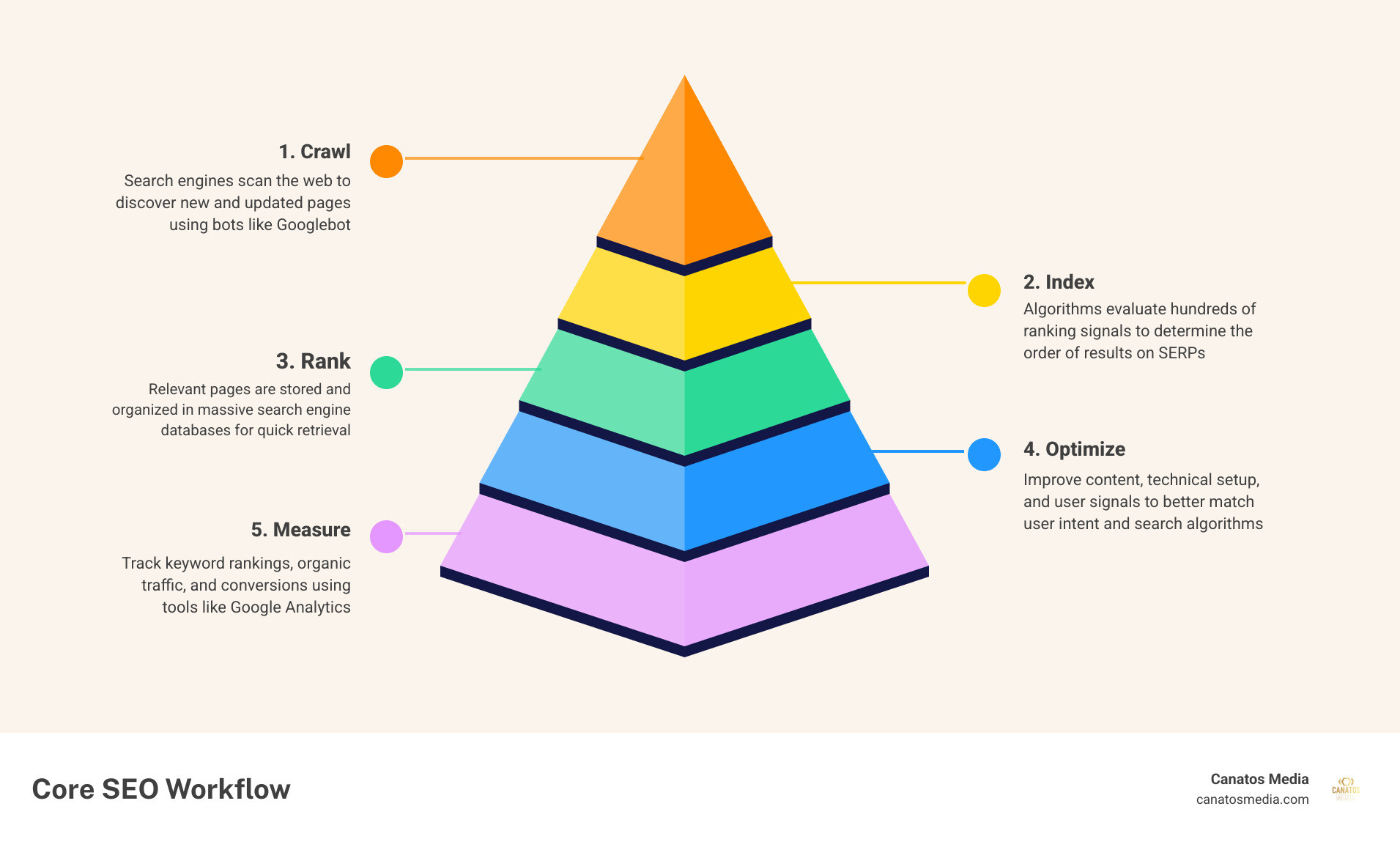
To earn a spot on the SERPs, your website must go through a three-step journey managed by search engines:
- Crawling: Search engines send out automated software programs, commonly referred to as “crawlers” or “bots” (such as Googlebot). These crawlers explore the web by following links from page to page.
- Indexing: When a crawler finds a page, it analyzes its content, code, images, and structure. It then stores this information in a massive database called the search index. If your page isn’t in this index, it cannot show up in search results.
- Ranking: When a user performs a search, the engine pulls the most relevant pages from its index and ranks them using hundreds of ranking signals, ranging from content depth to page speed.
According to the official SEO Starter Guide: The Basics | Google Search Central | Documentation | Google for Developers , Google is fully automated. While you can suggest where crawlers should look, the vast majority of sites are discovered naturally through links from other websites. Following Google’s Search Essentials is the best way to ensure your site remains eligible for indexing and ranking.
Helping Search Engines Find and Understand Your Content
If you want search engines to rank your content, you must make it easy for them to find and read. According to Google’s Technical SEO Techniques and Strategies | Google Search Central | Documentation | Google for Developers , several foundational technical elements help manage how crawlers interact with your site:
- XML Sitemaps: This is a map of your website designed specifically for search engines. It lists your most important pages, helping crawlers find and prioritize them.
- Robots.txt: This text file tells search engine bots which pages or folders they are allowed to crawl and which ones they should ignore.
- URL Structure: Clean, logical URLs (like
canatosmedia.com/seo-search-engine-optimization/) are easier for both users and crawlers to understand than messy strings of numbers. - 301 Redirects: If you permanently move a page, a 301 redirect passes the ranking power of the old URL to the new one.
- Canonical Tags: When you have similar or duplicate content across multiple pages, canonical tags tell search engines which version is the “master” page to index.
The Core Pillars of Modern SEO
Effective search engine optimization is not a single task; it is a combination of strategies. We can break these down into four core pillars: on-page optimization, off-page optimization, technical setup, and user experience.
Core Pillars of Search Engine Optimization
To build a sustainable digital presence, you must address both the visible and invisible parts of your website.
For online retailers, we often discuss Why Your Store Needs Ecommerce Website SEO to Survive, because organic search acts as a consistent source of free customer acquisition. If you are struggling to manage this on your own, working with an Ecommerce SEO Specialist can help align these pillars effectively.
- Keyword Research: Finding the exact phrases your target audience uses to search for your products or services.
- High-Quality Content: Creating helpful, accurate content that answers the user’s search intent.
- Meta Tags: Writing clear title tags and meta descriptions to entice users to click your link on the SERPs.
- Backlink Profiles: Earning links from other reputable websites to build your domain authority and trust.
Technical SEO, Mobile-First Design, and Accessibility
Technical SEO ensures that your website is secure, fast, and easy to navigate. Because Google uses mobile-first indexing, it evaluates the mobile version of your website to determine your search rankings.

Responsive web design ensures your site looks and works perfectly on any screen size. Along with responsiveness, page speed is a key ranking factor. Google’s Core Web Vitals measure how quickly your page loads and how stable it is as it loads.
Accessibility and SEO go hand-in-hand. When you optimize your site for users with disabilities—using descriptive alt text for images, clear heading hierarchies (H1 to H6), and accessible navigation—you also make it easier for search engine crawlers to understand your content.
Local SEO and Regional Targeting
If your business serves customers in a specific geographic area, local SEO is essential. For organizations looking to expand their local footprint, executing a targeted local strategy is the best way to earn visibility in the “Map Pack” and local search results.
At Canatos Media, we specialize in helping businesses in the tri-state area and Long Island capture local search traffic. Optimizing your local presence is critical to getting more calls and driving foot traffic.
By claiming and optimizing your Google Business Profile, building consistent local citations (your name, address, and phone number across the web), and targeting regional keywords, you can connect with customers in your immediate area. You can also explore our dedicated SEO (Search Engine Optimization) services to see how we help businesses win locally.
SEO vs. PPC: Integrating Search into Digital Marketing
A complete digital marketing strategy often combines organic search engine optimization and paid search (PPC). While both help you appear on the SERPs, they function differently:
| Feature | Organic SEO | Paid Search (PPC) |
|---|---|---|
| Cost | Free clicks (requires time/effort) | Pay-per-click (direct ad spend) |
| Speed | Takes weeks or months to build | Immediate visibility upon launch |
| Sustainability | Keeps driving traffic after you stop working | Traffic stops when ad budget runs out |
| Click-Through Rate | Higher trust and organic clicks | Lower CTR, but highly targeted |
| Long-Term ROI | High, compounding return over time | Linear return dependent on ad spend |
Rather than choosing one over the other, the most successful businesses integrate both. PPC can drive immediate sales and test keyword conversions, while SEO builds a sustainable, long-term asset that lowers your average customer acquisition cost over time.
The Future of Search: Generative AI, AEO, and GEO
The search landscape is changing rapidly. With the rise of generative AI and large language models, search engines are shifting from displaying simple lists of links to providing direct, conversational answers.
This evolution has introduced new optimization strategies:
- Answer Engine Optimization (AEO): Optimizing your content to be sourced directly by AI answer engines like ChatGPT, Claude, and Google Gemini.
- Generative Engine Optimization (GEO): Structuring your digital presence so generative search results cite your brand as the primary authority.
To succeed in this new environment, brands must provide clear, machine-readable signals. This includes implementing schema markup, answering questions directly, and building strong brand authority.
Additionally, search behavior is shifting toward rich media. Read our insights on How Video Content Drives Success in AI Search Results and AEO Optimization and explore how we approach AEO (AI Search Optimization) to keep your brand visible in AI-driven search environments.
Measuring Success: Timelines, Metrics, and Tools
To know if your search engine optimization efforts are working, you must track the right metrics over time. SEO is a long-term strategy, and changes can take weeks or months to show results.
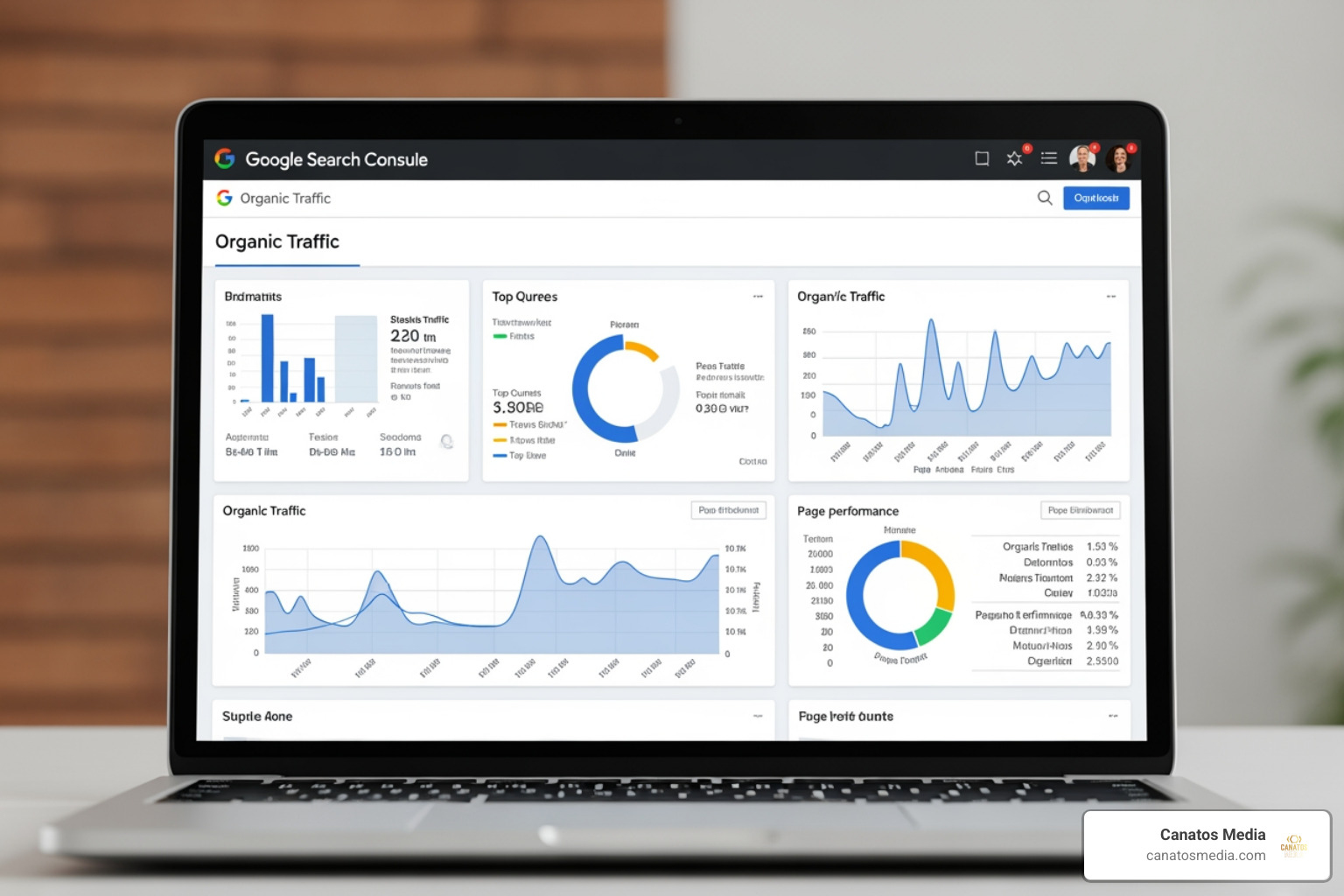
To monitor your performance, we recommend using these key tools and tracking these essential metrics:
- Google Search Console: The best tool for tracking organic impressions, click-through rates (CTR), and keyword rankings directly from Google.
- Google Analytics: Essential for measuring what users do once they land on your site, including conversion rates, bounce rates, and organic session duration.
- Keyword Rankings: Tracking whether your target keywords are moving up the search results pages.
- Organic Traffic: Monitoring the overall growth of unpaid visitors coming to your website.
Frequently Asked Questions About SEO Basics
How long does it take to see results from SEO?
Typically, it takes between 3 to 6 months to start seeing measurable improvements in rankings and traffic. This timeline depends on your website’s history, the competitiveness of your industry, and how consistently you publish high-quality content and build authority signals.
What is the difference between organic and paid search?
Organic search refers to the natural listings on search engines that earn their place based on relevance and quality. Clicking these links is free. Paid search (PPC) involves paying to display ads at the top of the search results, where you pay a fee every time a user clicks your ad.
Why is mobile optimization critical for search rankings?
Google uses mobile-first indexing, meaning it primarily crawls and indexes the mobile version of your website. If your site is difficult to navigate, slow, or poorly formatted on mobile devices, your rankings will suffer on both mobile and desktop searches.
Conclusion
Mastering search engine optimization is one of the most effective ways to build a reliable source of traffic, leads, and sales for your business. By focusing on crawlability, high-quality content, strong user experience, and local visibility, you can build a digital presence that stands out.
At Canatos Media, we believe the best results come from an integrated strategy. We connect high-end media creation, social media management, targeted paid ads, and technical web support to drive measurable growth.
Ready to grow your online visibility? Explore our SEO (Search Engine Optimization) services, browse our resources under Tag: SEO and Category: SEO, and let’s build a strategy that gets your business found.