Day: May 22, 2026

  • How to Navigate Meta Ad Manager Like a Pro

    How to Navigate Meta Ad Manager Like a Pro

    What Is Meta Ad Manager and Why It Matters for Your Business

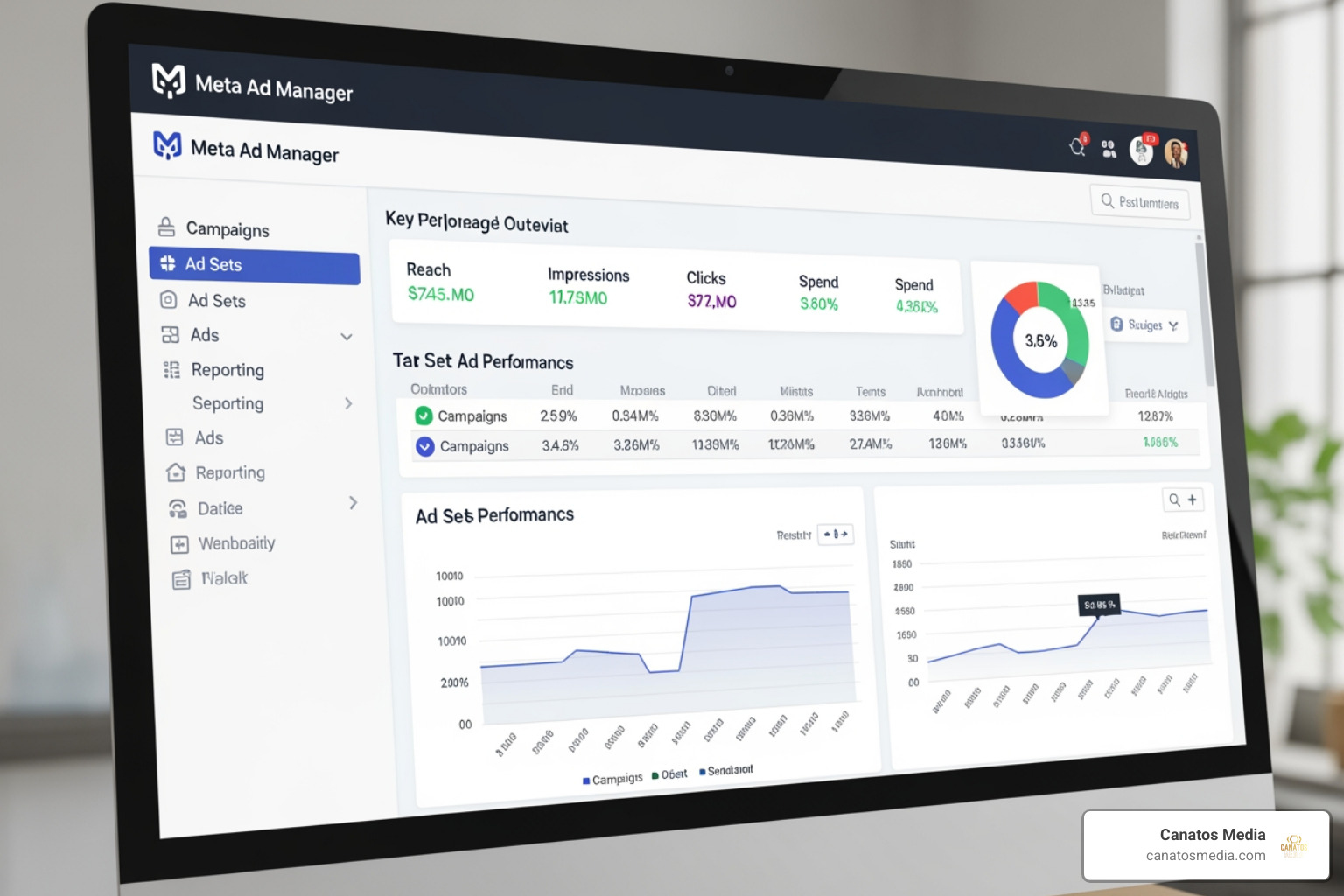
    Meta Ad Manager is the central platform for creating, running, and tracking paid ads across Facebook, Instagram, Messenger, and WhatsApp — all from one place.

    Here’s a quick snapshot of what it does:

    Feature What It Means for You
    Cross-platform ads Run one campaign across Facebook, Instagram, Messenger, and WhatsApp
    Audience targeting Define who sees your ads based on demographics, interests, and behavior
    Budget management Set daily or lifetime budgets and control your spend
    Real-time insights Track performance and adjust campaigns as they run
    AI tools (Advantage+) Automate targeting and creative optimization
    Mobile app Manage campaigns from your phone, anywhere

    It’s the most widely used paid social tool in the world — with the mobile app alone pulling 10M+ downloads on Google Play and a 4.3-star rating from over 508,000 reviews.

    But here’s the truth: it’s not always easy to use. Between confusing UI updates, AI features that don’t always deliver, and real risks like budget overruns and account issues, many business owners struggle to get results from it.

    This guide cuts through the noise and shows you exactly how to use it effectively.

    I’m Nic Canobbio, founder of Canatos Media, and I’ve spent years managing paid social strategies — including meta ad manager campaigns — for brands across multiple markets and locations. The insights in this guide come directly from real-world campaign experience, not just theory.
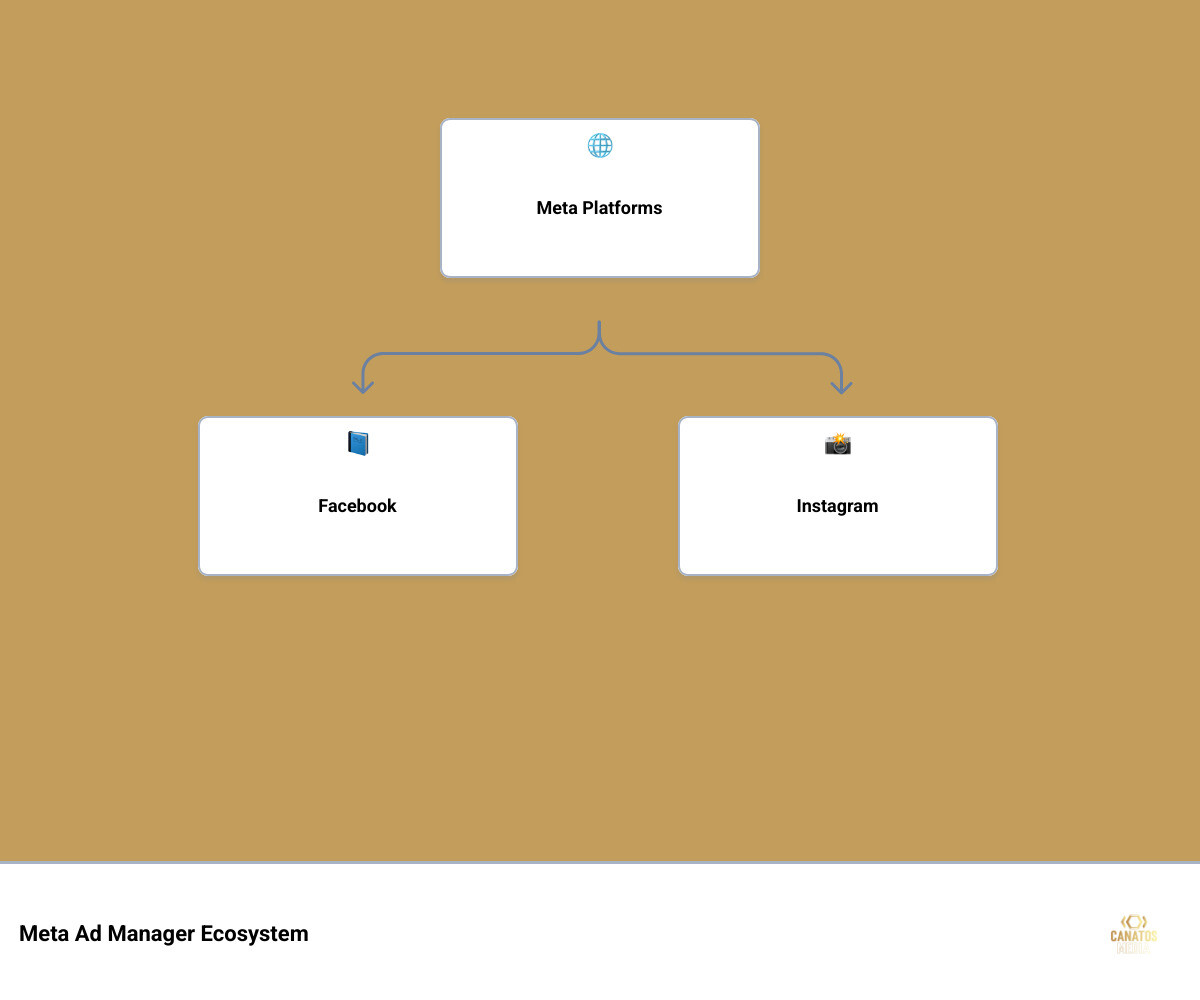
    Meta advertising ecosystem infographic showing campaign levels, platforms, and key features infographic

    Understanding the Meta Ad Manager Ecosystem

    Navigating digital advertising can feel like trying to fold a fitted sheet—frustrating and seemingly impossible until someone shows you the trick. The meta ad manager ecosystem is a massive, interconnected web that allows us to broadcast our brand’s message across some of the most frequented digital real estate on the planet.

    When we talk about About Meta Ads Manager, we aren’t just talking about Facebook. We are talking about a unified command center that pushes content to:

    • Facebook: The classic feed, Stories, and Reels.
    • Instagram: Where visual storytelling thrives in feeds, Stories, Explore, and Reels.
    • Messenger: Direct sponsored messages and inbox ads.
    • WhatsApp: Increasingly integrated for business-to-customer communication.
    • Audience Network: A collection of third-party mobile apps and websites where your ads can appear outside of Meta’s own platforms.
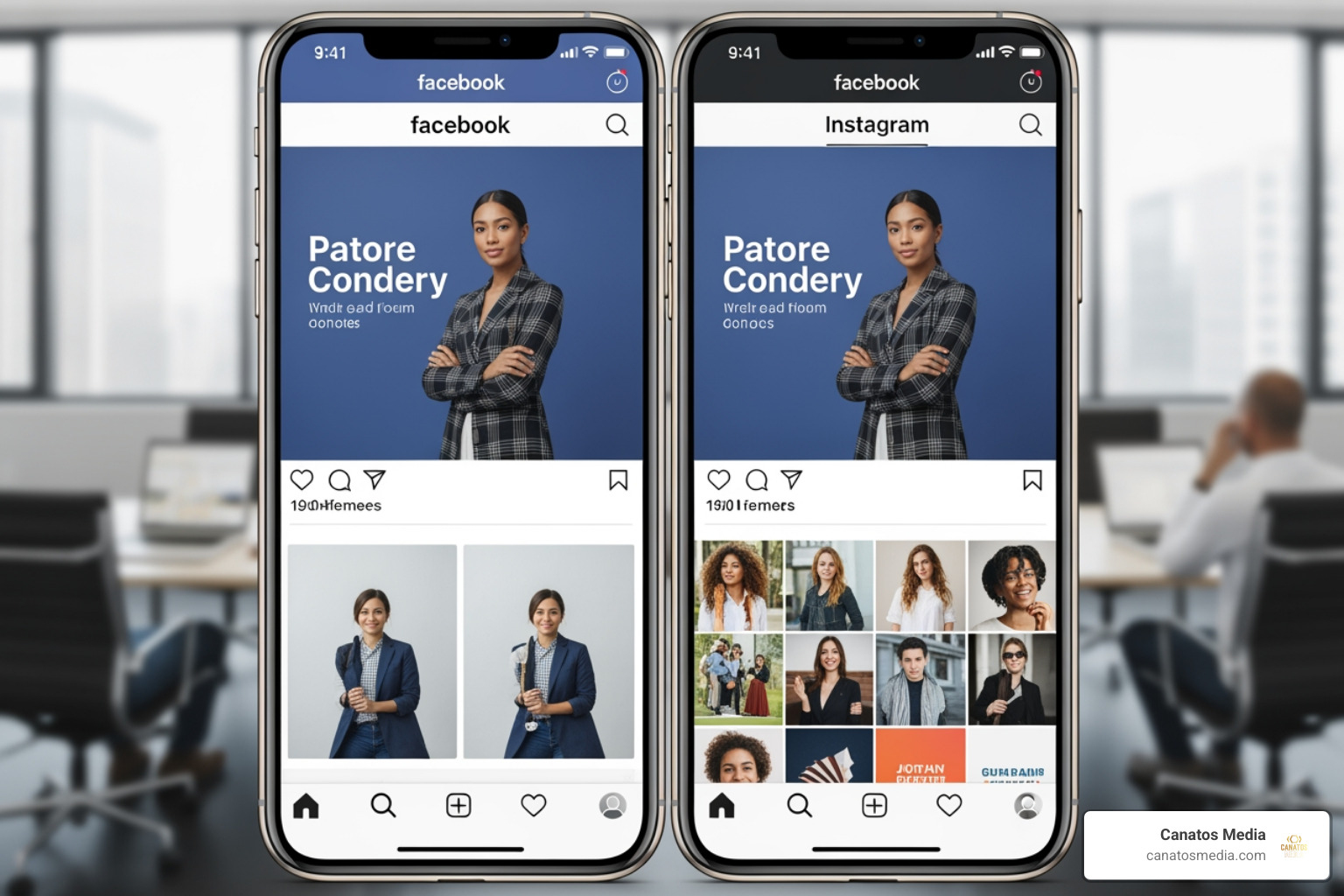
    cross-platform ad delivery across Facebook and Instagram

    The power of this ecosystem lies in its integration. You don’t have to build four different campaigns for four different apps. You build one, and Meta’s delivery system optimizes where those ads appear based on where your customers are actually hanging out.

    The Three Levels of Meta Ad Manager Structure

    To master meta ad manager, you have to understand the “Russian Nesting Doll” structure of a campaign. If you get one level wrong, the whole thing can fall apart.

    1. The Campaign Level (The “What”): This is where you choose your objective. Are you looking for brand awareness, traffic, engagement, leads, app promotion, or sales? This choice tells Meta’s algorithm what success looks like for you.
    2. The Ad Set Level (The “Who,” “Where,” and “How Much”): This is the engine room. Here, we define our audience targeting (demographics, interests, behaviors), choose our placements (automatic vs. manual), and set our budget and schedule. Create ad campaigns in Meta Ads Manager effectively by ensuring your ad set parameters are tight enough to be relevant but broad enough for the AI to learn.
    3. The Ad Level (The “Look”): This is what the user actually sees. It involves selecting your creative (single image, video, carousel, or collection), writing your copy, and adding your call-to-action (CTA) buttons.

    Setting Up Your Account for Success in 2026

    By mid-2026, the setup process has become more streamlined, yet more reliant on “Opportunity Scores.” When you first dive in, the Account Overview page is your best friend. It acts as a diagnostic dashboard, guiding you through the essential prerequisites like adding a valid payment method and verifying your business domain.
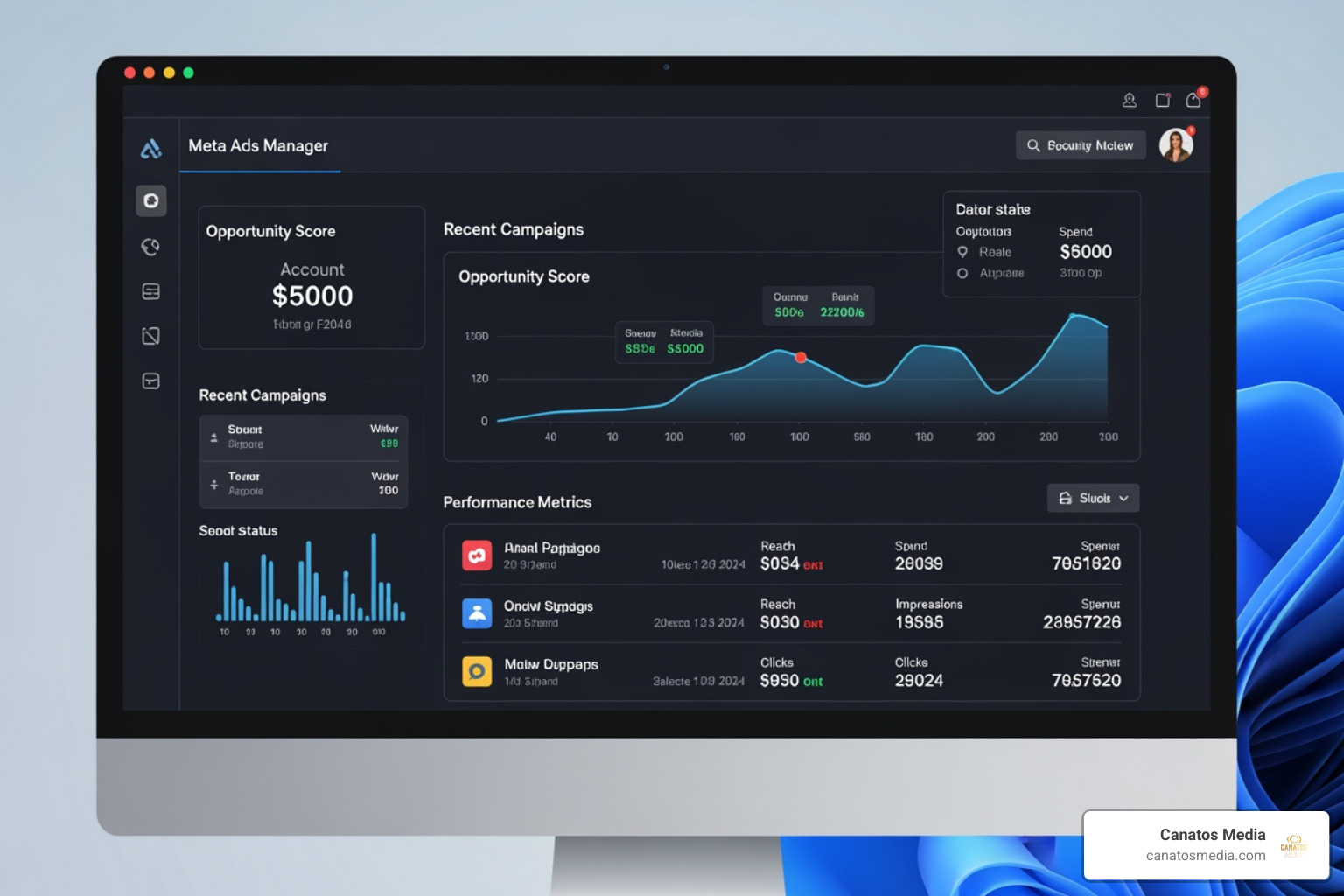
    meta ad manager account overview page

    One of the most critical steps in 2026 is monitoring your Opportunity Score. This is a 0-100 point scale that Meta uses to tell you how “optimized” your account is. While it’s a helpful guide, don’t let it bully you into making changes that don’t align with your specific business goals. If you’re looking for a deeper dive into the technicalities of getting started, our Step-by-Step Guide to Paid Ads is a great resource to have open in another tab.

    Managing Campaigns on the Meta Ad Manager Mobile App

    For business owners in the Tri-State area or Long Island who are constantly on the move, the mobile app is a lifesaver—with caveats. The Meta Ads Manager app (available on iOS and Android) allows for real-time insights and quick pivots.

    • The Stats: The app is roughly 104.1 MB and, as of May 2026, requires iOS 15.1 or later.
    • The Pros: You can turn campaigns on or off with a swipe, receive instant alerts if an ad is rejected, and perform side-by-side comparisons of ad performance while waiting for your coffee.
    • The Cons: It doesn’t have the full functionality of the desktop version. Complex audience building and deep-dive reporting are still best handled on a big screen.

    The biggest shift in meta ad manager over the last few years is the aggressive push toward AI-driven automation, specifically Advantage+. These tools are designed to take the guesswork out of creative and targeting by letting Meta’s AI decide who sees what.

    However, “automated” doesn’t always mean “better.” While Advantage+ Shopping campaigns can be incredibly efficient for e-commerce, we’ve seen manual campaigns often provide more control and better long-term stability.

    Campaign Type Best For ROAS Potential (User Tests)
    Manual Campaigns Precise targeting, niche audiences, testing specific variables 30-40% higher in specific user-tested scenarios
    Advantage+ Scaling quickly, broad reach, hands-off optimization High efficiency for broad-market retail

    At Canatos Media, we often find that a hybrid approach—using Advantage+ for broad reach while maintaining manual “control” groups—yields the best results. You can learn more about how we balance these technologies on our Meta & Google Advertising page.

    Troubleshooting Hacks, Payment Failures, and Overspending

    Let’s address the elephant in the room: meta ad manager can be glitchy. We’ve seen horror stories in the industry where budgets spiral out of control due to “glitches” or simple setting errors.

    The Overspend Danger:

    • In one documented case, a campaign with a $50/day budget spiked to $127 in 24 hours (154% over budget).
    • Even worse, a $125/day budget once ballooned to $1000 in a single day—an 800% overspend.

    To prevent this, we recommend setting Account Spending Limits. This is a hard cap that stops all ads once a certain dollar amount is reached, acting as a “kill switch” for runaway spending.

    Hacks and Security: Account security is a major pain point. Many users report “hacked” accounts that are subsequently disabled by Meta, often with little to no human support to resolve the issue. Always enable Two-Factor Authentication (2FA) and regularly audit who has “Admin” access to your Business Manager. If you find yourself in a pinch, our guide on Paid Social Media Advertising: From Zero to Hero covers some of the foundational safety checks you should have in place.

    Best Practices for Privacy and Performance

    In 2026, privacy isn’t just a legal requirement; it’s a performance factor. With evolving data collection rules, Meta uses encryption in transit and allows users to request data deletion. As advertisers, we must respect these boundaries while still gathering enough data to optimize.

    To “Stop the Scroll,” as we like to say, your creative needs to be high-impact. But to “Start the Toll” (the conversion), your data backend needs to be solid. This means properly installing the Meta Pixel and using the Conversions API (CAPI) to ensure your tracking is accurate even when browser cookies fail. For more on this philosophy, check out our article Stop the Scroll and Start the Toll.

    Maximizing ROI with Meta Ad Manager

    Return on Ad Spend (ROAS) is the metric that keeps us up at night. To maximize it, you need to look beyond the surface-level “Likes” and “Comments.”

    • Analyze Audience Behavior: Use the “Breakdowns” feature in meta ad manager to see which age groups, genders, and regions are actually converting.
    • Creative Refresh: Don’t let your ads go stale. If your frequency (how many times a single person sees your ad) gets too high, your ROAS will likely drop.
    • Performance Tracking: Schedule weekly reports to be emailed to your team so you never miss a dip in performance.

    For more tips on refining your strategy, browse our Category: Ad Management for the latest industry updates.

    Frequently Asked Questions about Meta Ad Manager

    Why is my Meta ad account disabled?

    Accounts are usually disabled for one of three reasons: violating Advertising Standards (e.g., misleading claims, prohibited content), payment failures that look like fraud, or suspicious login activity (hacking). If this happens, use the “Account Quality” page to appeal the decision. Be prepared—human support can be notoriously slow, so detailed appeals are your best bet.

    How do I prevent budget overspending?

    Always double-check if you have selected “Daily Budget” or “Lifetime Budget.” Additionally, set an Account Spending Limit in the Billing section. This ensures that even if a specific campaign glitches, your total credit card charge won’t exceed your comfort zone.

    Is the mobile app as effective as the desktop version?

    It is effective for monitoring, but not for building. Think of the mobile app as your “emergency kit” and the desktop version as your “construction site.” Use the app to pause underperforming ads or check stats on the go, but use the desktop for initial campaign setup and detailed audience research.

    Conclusion

    Mastering the meta ad manager is a journey, not a destination. The platform is constantly evolving, with new AI tools and UI changes rolling out every few months. For small businesses in Long Island and the Tri-State area, the complexity can be overwhelming, but the potential for growth is too large to ignore.

    At Canatos Media, we specialize in an integrated strategy that connects cinematic content with precision targeting. We don’t just “run ads”—we build systems that drive measurable growth. If you’re tired of fighting with the dashboard and want a team that knows how to navigate the technical hurdles of 2026, we’re here to help.
    More info about Meta advertising services

  • Top 6 Reasons Multi-Location Brands Need Cinematic Storytelling and Performance Marketing

    Top 6 Reasons Multi-Location Brands Need Cinematic Storytelling and Performance Marketing

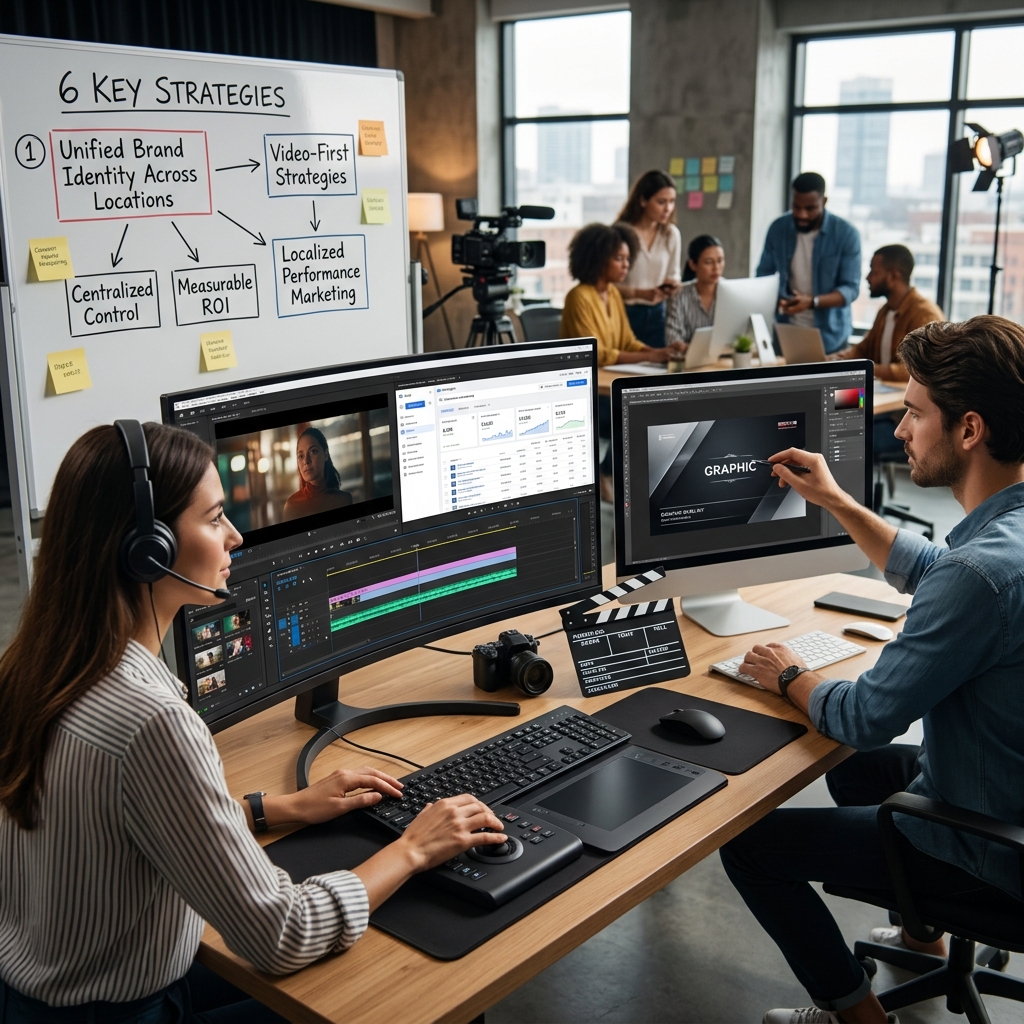
    1. Unified Brand Identity Across Multiple Locations

    Running multiple locations means juggling dozens of moving parts. Each branch needs to feel like part of one cohesive brand while also speaking to its local market. At the same time, you’re competing for customer attention on social platforms where cinematic, high-quality content wins—and generic templated posts get buried.

    The challenge: how do you maintain brand consistency across locations while simultaneously driving measurable leads from social media and paid advertising? This is where cinematic storytelling paired with integrated performance marketing becomes essential, not optional.

    We’ve worked with dozens of multi-location brands, and the ones that grow fastest combine professional visual storytelling with data-driven advertising systems. They’re not choosing between “build brand awareness” and “generate leads”—they’re doing both, strategically.

    Inconsistency kills trust. When customers see one location posting smartphone footage while another uses professional video, they question whether your brand is organized and trustworthy. Worse, they’re more likely to choose a competitor who looks polished across the board.

    Multi-location brands face a real structural problem: each location may have different management, budgets, and creative resources. Without centralized guidelines and templates, brand identity fractures.

    Here’s the solution: Cinematic brand storytelling creates a visual language that transcends individual locations. When you produce professional, narrative-driven video content—footage that tells a story about your brand values, your people, or your customer outcomes—that content becomes reusable across all locations. A well-crafted story about how your team delivers results feels equally authentic whether it’s posted from your downtown office or your suburban branch.

    We help brands establish one unified visual identity by:

    • Creating core cinematic templates and brand story assets that work across locations
    • Providing location teams with approved content libraries they can customize locally
    • Maintaining consistent color grading, pacing, and messaging in every video production
    • Building in flexibility so local teams can add location-specific details without breaking brand cohesion

    The practical takeaway: one strong cinematic brand story, produced once and deployed across all locations, costs far less than trying to manage separate creative for each branch—and it’s exponentially more powerful.

    2. Cost-Effective Scalability Through Video-First Strategies

    Budget is tight. Hiring creative teams in every location isn’t realistic. Paying agencies $10,000+ per video for each location is unsustainable.

    This is where video-first thinking changes the economics. Instead of treating video as an expensive add-on, we build strategy around it. One high-quality video production becomes the foundation for weeks or months of social media content.

    Here’s how we think about it: A single 90-second cinematic video can be broken into:

    • 15-30 second social clips for Instagram Reels, TikTok, and YouTube Shorts
    • 6-8 short testimonial or how-it-works snippets for carousel posts
    • Background footage for website hero sections
    • B-roll for paid advertising creatives
    • Audio for podcast or email marketing

    One production shoot gives you 8-12 weeks of content. Compare that to paying for new creative every week, or worse, posting low-quality user-generated content.

    For multi-location brands, this scales beautifully. Produce content quarterly or monthly featuring different locations, team members, or customer stories. Each production serves the entire brand network.

    We also optimize where content is distributed. Rather than posting uniformly to every platform, we use data to identify which channels drive the highest-quality leads for your specific audience. This means your production budget gets laser-focused on what actually works—not spread thin across 10 platforms.

    Action item: Audit your current content spend. If you’re paying for new creative more than twice a month, you’re overspending. Shift to a quarterly cinematic production model and watch your cost-per-piece drop by 60-70%.

    3. Cinematic Content That Converts Social Followers Into Leads

    Followers don’t pay your bills. Leads do.

    We see brands with 50,000 social followers generating maybe 2-3 leads per month because their content doesn’t move people to action. They’re building an audience instead of a business.

    Cinematic storytelling is specifically designed to move people emotionally and psychologically toward a decision. Unlike generic content, it works because it:

    • Creates emotional connection through narrative (not just product features)
    • Demonstrates outcome and transformation (what happens after they choose you)
    • Builds perceived value so price becomes less of an objection
    • Makes audiences remember you, not just scroll past you

    The difference is tangible. A typical product demo video might get 5-8% click-through to your website. A cinematic story about a customer’s transformation or a problem you solve can drive 15-25% click-through because people actually want to know more.

    Then we layer in strategic calls-to-action and landing page funnels. Content becomes the top of your lead funnel, not just awareness-building.

    For multi-location brands, this is critical. Each location becomes part of a larger conversion system. A customer in Miami watches a story about how your service transformed a business, clicks through, and books a consultation at your Miami location. Another customer in Denver does the same thing from your Denver angle. One storytelling approach, many conversion points.

    Cinematic website videos amplify this further by turning your website itself into a conversion tool—not just a directory.

    4. Localized Performance Marketing With Centralized Control

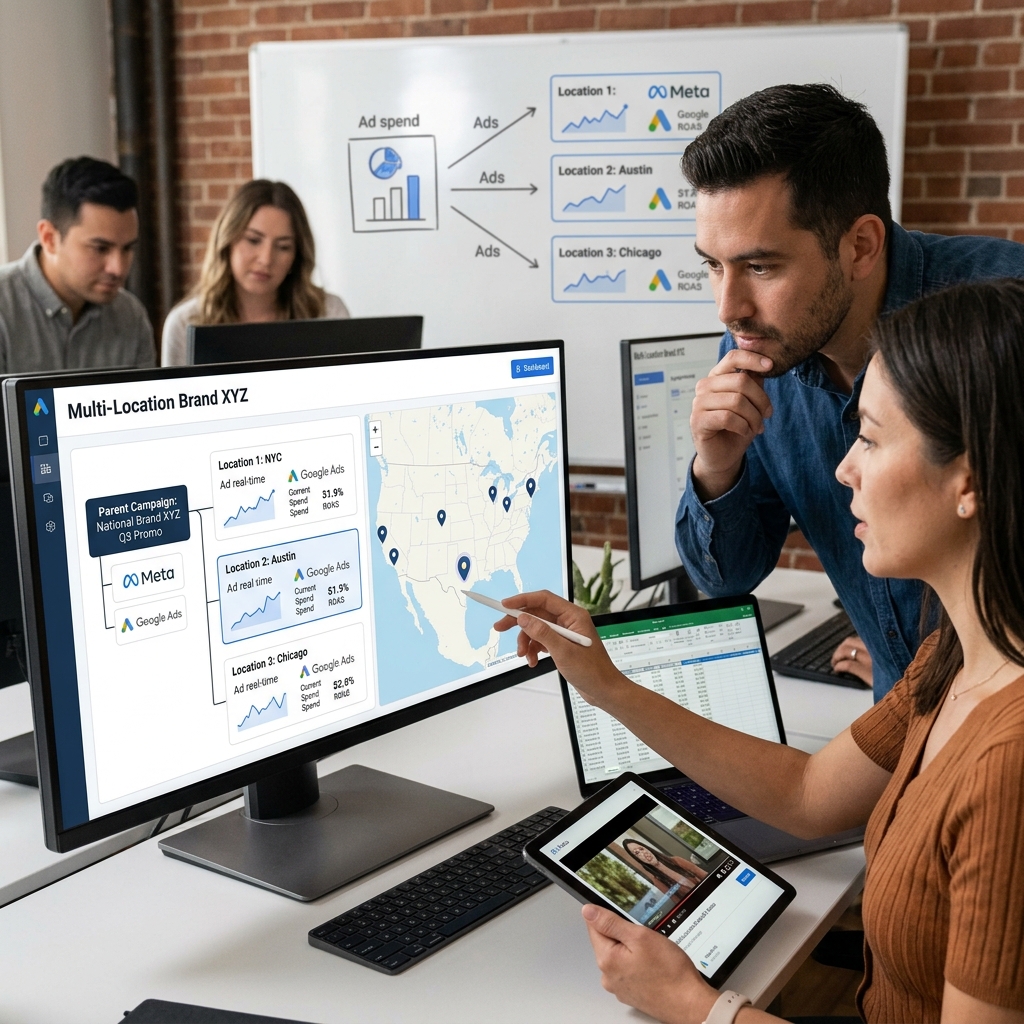
    This is where multi-location brands typically struggle: running Meta and Google ads across locations without completely fragmenting management.

    Some brands give each location total control. Result: inconsistent messaging, wasted ad spend, duplicated efforts.

    Other brands centralize everything. Result: ads that don’t resonate locally, location managers who feel disconnected from their marketing.

    We design systems that split the difference. Here’s what that looks like:

    Centralized strategy and creative: Core messaging, audience targeting strategy, and video creative come from the center. We build a unified approach.

    Location-level execution and optimization: Each location gets a dedicated ad manager or dashboard access to run their campaigns within approved parameters. They can adjust budget, target local neighborhoods, and monitor results specific to their area.

    Unified reporting: All location data feeds into one dashboard so you see total brand performance and individual location performance in one place.

    This approach lets you scale to 50 locations without 50 different marketing philosophies. A location manager in Atlanta isn’t guessing—they’re executing a proven system tailored to Atlanta’s market.

    The technical piece matters too. We set up conversion tracking so you’re not just counting ad impressions. You’re tracking which locations get the most qualified leads, which ad angles drive the lowest cost-per-lead, and which audience segments actually become customers.

    Next step: If you’re running location-based ads without centralized tracking, you’re likely overspending by 20-30% and don’t even know it. Set up conversion tracking by location immediately.

    5. Building Trust and Credibility Through Professional Storytelling

    Trust is everything for service-based and multi-location brands. If a customer doesn’t believe you’re legitimate, competent, and worth their money, they won’t convert—no matter how good your offer is.

    Generic content signals low credibility. Smartphone video, templated designs, and repetitive messaging say “we didn’t invest in this for you.” Cinematic, professionally produced content sends the opposite signal: “we take our brand seriously, we invest in quality, and we’re stable enough to be here long-term.”

    This perception directly impacts price negotiation. Brands that look polished can charge 15-25% more because customers perceive higher value and lower risk. They’re not comparing you on price alone—they’re buying confidence in your professionalism.

    For multi-location brands, this effect compounds. When every location reflects the same professional standard, customers don’t wonder “which location is the best one?” All locations look equally credible and well-managed.

    We build this through:

    • Consistent visual quality across all content (same color grading, same pacing, same production value)
    • Featuring your team and real stories, not stock footage (authenticity + professionalism combined)
    • Professional website integration where video-first marketing becomes part of your entire customer experience, not just a social media tactic
    • Testimonials and case studies told cinematically, not as text blocks

    The result is trust that translates to longer sales cycles and higher customer lifetime value. People aren’t just buying from you once—they’re becoming advocates.

    6. Measurable ROI From Integrated Social and Advertising Systems

    At the end of the day, marketing spend is business spend. It needs to return money.

    Many brands struggle to measure ROI because their marketing is fragmented. Social media is siloed from paid ads. Paid ads aren’t connected to sales. Website traffic isn’t tied back to specific content or campaigns.

    We build integrated systems where every piece of content, every ad dollar, and every location feeds data back into one reporting dashboard.

    Here’s what that means practically:

    • Video content drops on social Monday morning. We track engagement and save the top-performing clips.
    • Top clips get turned into paid ad creative by Thursday. We run them across Meta and Google with precise location and audience targeting.
    • Clicks flow to custom landing pages built for each location or offer.
    • Conversions (calls, form submissions, online bookings) get tracked back to the original content and ad that drove them.
    • We see: “this cinematic customer story drove 32 leads at an $18 cost-per-lead across three locations.”

    That’s not vanity metrics. That’s ROI.

    For multi-location brands, this integration is transformative because it reveals which locations are responding to which messages, which content performs across all markets vs. which performs only locally, and where your ad spend is most efficient.

    Most importantly, it proves the system works. When a location manager sees “we spent $4,000 on ads this month and generated 47 qualified leads at $85 each,” and those leads close at a typical rate, they understand their ROI instantly.

    What to do now: Stop measuring marketing by impressions and followers. Start measuring by leads and customer acquisition cost. If you’re not tracking at least one conversion metric per location, you don’t actually know if your marketing is working.

    Multi-location brands that grow fastest aren’t doing marketing the old way. They’re combining cinematic storytelling that builds trust and moves people to action with performance marketing systems that track every dollar and optimize relentlessly.

    The brands that struggle are the ones trying to manage scattered social posts, inconsistent creative, and disconnected ad campaigns across multiple locations.

    We help growth-focused business owners build the complete system: unified brand identity, scalable content production, conversion-focused storytelling, location-based ad execution with central oversight, and integrated reporting that shows exactly what’s working.

    If your multi-location brand is ready to move beyond generic content and fragmented marketing, let’s talk about building a system that actually grows your business. That’s what we do.

    Contact us today for a free consultation to see how we can help you grow your business.

    Frequently Asked Questions (FAQ)

    How do we help multi-location brands maintain consistent messaging while allowing local marketing customization?

    We build centralized brand systems that give you unified visual and messaging standards across all locations, then layer in location-specific social media and paid advertising campaigns. Our approach means your brand story stays consistent in your cinematic content while we optimize ad targeting, messaging, and offers for each geographic market. This lets you speak to local customers without sacrificing the professional brand identity that makes you recognizable everywhere.

    What’s included in our integrated digital marketing approach for franchises and service-based businesses?

    We combine short-form video production, social media management, Meta and Google paid advertising, SEO optimization, and lead generation systems into one coordinated strategy. Rather than managing separate vendors for each channel, we handle everything from creating your cinematic content to running your ads to capturing and qualifying leads. This integration means your video content feeds directly into your social strategy, which powers your paid campaigns, which all drive toward the same conversion goals we’re tracking for you.

    How do we measure the actual ROI of our video and marketing work?

    We set up tracking systems that connect your video content, social media activity, paid ads, and website conversions into one reporting dashboard so you see exactly which efforts drive leads and sales. We don’t just report vanity metrics like views or likes – we show you cost per lead, conversion rates, and revenue attributed to our work. This accountability is built into our process from the start so we’re always optimizing toward your actual business goals.