Why Generic Video Content Fails Your Lead Gen Strategy
Most brands treat video as just another asset to fill their content calendar. They shoot something, post it, and hope it converts. The reality is that generic video content rarely moves the needle on lead generation because it lacks a core purpose: turning viewers into prospects.
We’ve seen countless campaigns where a business invests in video production only to see minimal lead volume. The problem isn’t the camera quality or editing style. It’s that the video was created without a clear conversion path baked into its narrative. A well-shot video of your product sitting on a shelf tells viewers what you sell, but not why they should care or what to do next.
When video lacks strategic intent, viewers scroll past it. They may enjoy it momentarily, but they don’t take action. This is especially true on social platforms where attention spans are measured in seconds and competition for engagement is fierce. Your video needs to do more than entertain or inform; it needs to compel the viewer to click, fill out a form, or reply with their contact information.
Generic content also fails because it doesn’t align with platform-specific behaviors. A video optimized for YouTube’s longer watch time performs differently than one designed for the thumb-stopping friction of TikTok or Instagram Reels. Without this strategic alignment, your video reaches the right audience but misses the conversion entirely.
The Gap Between Attention and Conversions on Social Platforms
There’s a massive difference between getting views and generating leads. A video can rack up thousands of impressions while producing zero qualified leads if it doesn’t bridge the attention-to-action gap. This gap exists because social platforms reward engagement metrics that aren’t directly tied to business outcomes.
When you run a video ad on Meta or Google, the algorithm optimizes for metrics like watch time, clicks, and engagement. These are good indicators that your creative is working, but they’re not the same as lead quality. A user might pause on your video because it caught their eye, but without a clear next step, that moment of attention dissipates. They keep scrolling, and your marketing dollar is partially wasted.
The gap widens when brands focus only on vanity metrics. They celebrate a 50,000-view count while ignoring that only 12 of those viewers became leads. Conversely, some brands create content so focused on the hard sell that it alienates viewers before they’re ready to convert. The real skill is creating video that holds attention while planting seeds of desire that turn into action.
Social algorithms also compound this problem. They’re designed to keep users on the platform, not necessarily to send them to your landing page or contact form. Your video needs to be so compelling within the platform’s native environment that users are willing to leave it and take the next step. This requires both emotional pull and a crystal-clear call to action.
What Makes Cinematic Short-Form Content Different
Cinematic short-form video isn’t just about production value, though that matters. It’s about combining filmmaking techniques with conversion psychology to create content that stops the scroll and drives measurable action.
Cinematic storytelling uses lighting, composition, color grading, and narrative pacing to create an emotional response. When done well, it makes viewers feel something about your brand before you’ve made a single product claim. A well-framed shot of a client’s transformation or a problem being solved stays with viewers longer than a talking-head explanation ever could.
Short-form adds the critical element of respect for attention. Rather than asking viewers for five minutes, we deliver a complete story arc in 15 to 60 seconds. This constraint forces clarity. Every frame serves the conversion goal. There’s no filler, no tangential storytelling. The viewer gets in, feels the impact, and knows exactly what to do next.
When we combine these elements, we create content that performs across Meta and Google platforms without feeling like an ad. It looks like content users actually want to watch, which means the algorithm favors it, it gets better placement, and viewers engage authentically rather than out of obligation.
How We Combine Storytelling with Performance Metrics
We don’t treat video production and performance marketing as separate disciplines. From the moment we conceptualize a cinematic short-form video, we’re thinking about how it will perform in paid campaigns and what conversion actions we want to drive.
Our process starts with defining the lead stage. Are we building awareness among cold audiences who’ve never heard of you, or are we nurturing prospects who already know your brand? The story we tell and the metrics we optimize for change dramatically based on this answer. A top-of-funnel awareness video might optimize for watch time and engagement, while a bottom-funnel video optimizes for clicks to a form.
We build in performance hooks from the script stage. These are narrative moments that naturally lead viewers to take action. Maybe it’s revealing a solution to a pain point they’ve been sitting with, or showing a transformation that makes them want to learn more. These hooks feel organic because they’re part of the story, not bolted on as afterthoughts.
Our team measures success against lead metrics from day one. We track not just how many people watched the video, but how many of those viewers clicked through to your website, filled out a form, or replied with a message. We tie revenue data back to specific videos so you see exactly which creative drives bottom-line results.
Building Lead Gen Funnels with Visual-First Content
A single video rarely generates leads at scale. Instead, we build funnels where multiple pieces of video content work together to move prospects from awareness to decision.
At the top of the funnel, we use cinematic short-form video to identify and attract your ideal customer. This video tells a story about a problem they face or a result they’re after. It’s aspirational, visually rich, and designed to make viewers curious enough to engage.
In the middle, we deploy video that builds trust and credibility. This might be client testimonials told cinematically, case studies that show real transformations, or expert content that positions your team as knowledgeable. At this stage, the viewer is aware of you and considering whether you’re the right choice.
At the bottom of the funnel, we use video to overcome final objections and push toward the conversion. This is where direct calls to action become appropriate. A short video walking through your booking process, showcasing your pricing structure, or highlighting your guarantee removes friction at the critical moment.
Each video in the funnel serves a strategic purpose and uses different visual language and messaging. Together, they create a cohesive journey that educates, builds confidence, and converts.
Meta Ads Optimization for Cinematic Videos
Meta’s platform powers Facebook, Instagram, and Threads. It’s where most short-form video lead generation happens today, and optimizing your cinematic videos specifically for Meta increases performance dramatically.
Meta prioritizes native video over external links, which means a beautifully shot, in-feed cinematic video will get better placement and cheaper cost-per-result than a video that’s clearly trying to drive users away. We create videos knowing they’ll live in Meta’s feed environment first.
Hook optimization is critical on Meta. The first three seconds determine whether a user keeps watching or scrolls past. We use quick cuts, movement, text, and compelling visuals in the opening to stop the thumb. The rest of the video maintains interest through narrative pacing and emotional resonance.
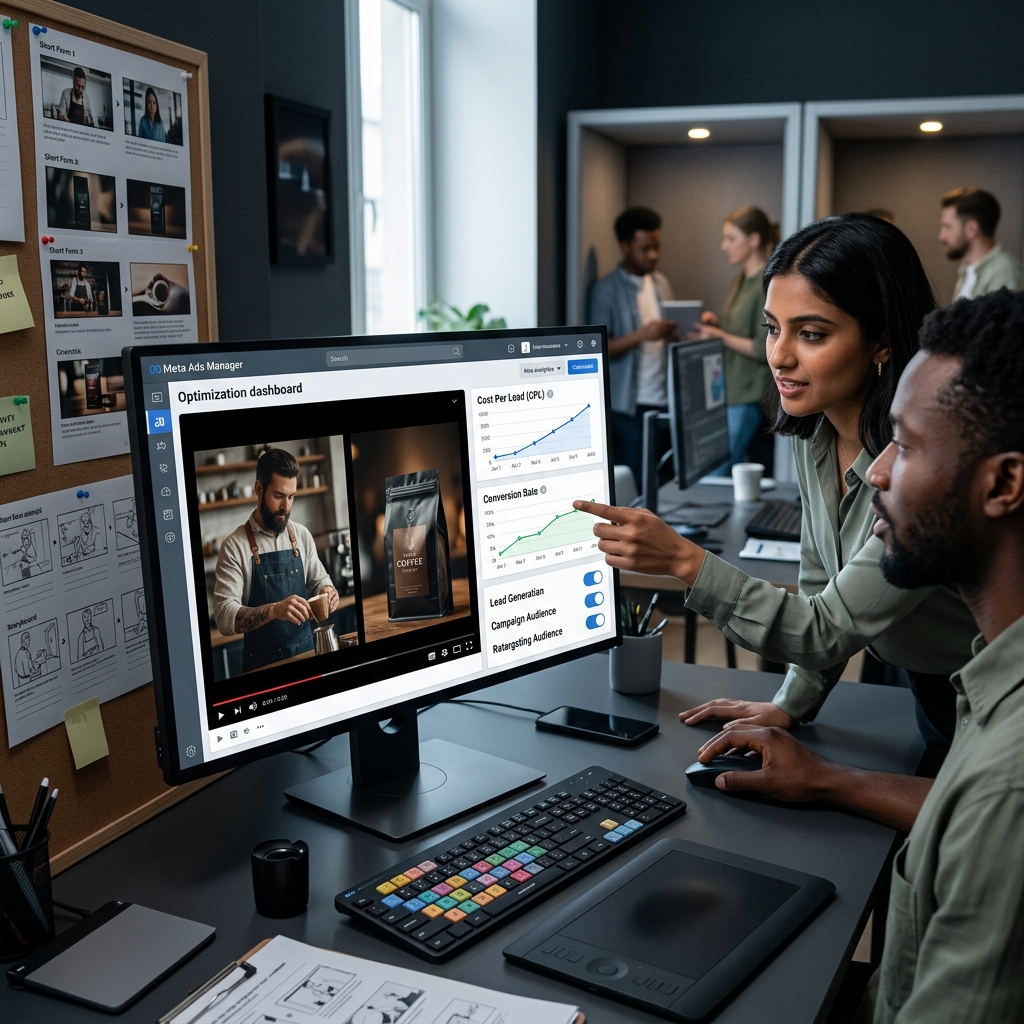
We also test multiple creative variations against the same audience. One video might use text overlay extensively, while another relies purely on visual storytelling. We measure which approach generates the lowest cost-per-lead and scale that winner. A small difference in creative approach can mean 30-40% improvement in lead volume at the same budget level.
Audience targeting on Meta becomes more powerful with video. Rather than showing your cinematic video to broad demographics, we use lookalike audiences built from your existing customers and website visitors. This ensures your high-production-value video reaches people most likely to convert.
Google Advertising Strategies for Short-Form Content
Google’s ecosystem includes YouTube, Google Search, and Display Network placements. Short-form cinematic video performs differently on each, and we adjust our strategy accordingly.
On YouTube, viewers have come to the platform with intent. They’re searching for tutorials, product reviews, and how-to content. Our cinematic short-form videos work well here because they deliver value quickly. We create videos that answer specific search queries (like “How do I choose a contractor?” or “What does physical therapy cost?”) and include clear CTAs that send interested viewers to your lead form.
Google Search ads using video are newer but powerful. We create short cinematic videos highlighting your unique value proposition and use them alongside text ads to capture users actively searching for solutions you provide. These videos interrupt the normal search results and significantly boost click-through rates.
On the Display Network, our cinematic videos appear across thousands of websites users visit. Here, we optimize for early engagement rather than immediate leads. We’re building familiarity and recall, knowing that viewers might see your video multiple times before they’re ready to convert.
We structure Google video campaigns to retarget viewers who watched your first video. If someone watched 75% of your awareness video but didn’t convert, we show them a nurturing video with more specific information. This sequential storytelling approach converts significantly better than random video placement.
Measuring ROI: From Views to Qualified Leads
We track the complete customer journey from first video impression to qualified lead. This means our reporting goes well beyond standard video metrics.
A view is the start, not the endpoint. We measure view-through rates (how much of the video someone watched), engagement rates (clicks, shares, replies), and most critically, conversion rates (how many viewers became leads). A video with fewer views but significantly higher conversion rate is more valuable than one with high vanity metrics.
We implement tracking pixels on your landing pages and form submissions so we can attribute leads back to specific videos and campaigns. This gives us concrete data on which creative drives the lowest cost-per-lead and which audiences convert most readily.
We also segment leads by quality. Not all leads are equal. Some are high-intent prospects ready to buy, while others are exploratory and might need months of nurturing. We measure both volume and quality, adjusting our video strategy to emphasize whichever better serves your business model.
Our dashboards show you real-time performance data: total video views, cost-per-view, total leads generated, cost-per-lead, and conversion rate from lead to customer. You see exactly how much revenue each video campaign is generating, not just how many impressions it received.
Common Mistakes Brands Make with Lead Gen Video
We’ve seen patterns emerge from working with hundreds of brands. Understanding these mistakes helps you avoid them.
The first mistake is starting production before defining the conversion goal. Too many brands shoot beautiful video without asking “What specific action do we want viewers to take?” This results in content that impresses but doesn’t convert. Know your goal before you roll cameras.

The second mistake is underestimating the importance of the first three seconds. On social platforms, the opening moment determines everything. Brands often bury their hook deep in the narrative or rely on slow cinematic reveals that lose viewers before the payoff. We frontload interest and grab attention immediately.
The third mistake is ignoring platform specifics. A video optimized for YouTube Shorts doesn’t automatically perform on Instagram Reels or TikTok. Aspect ratios, captions, and pacing all need adjustment. Using the same video across all platforms leaves performance on the table.
The fourth mistake is weak calls to action. Some brands create excellent cinematic video but then end with a generic “Learn more” or no CTA at all. At the end of your video, viewers should know exactly what to do next: click the link, call the number, or send a message. Make it impossible to miss.
Our Integrated Approach to Video and Digital Marketing
We’ve found that cinematic video performs best when integrated into a complete digital marketing system. Video alone is powerful; video combined with optimized landing pages, strategic paid media, social management, and SEO creates exponential results.
Our approach starts with your website. We ensure that when viewers click through from a video, they land on a page designed to convert them. This might mean cinematic website videos that maintain storytelling momentum or a dedicated landing page with form fields matching the video’s promise.
We manage your paid advertising across platforms so your video reaches the right audience at the right time with the right frequency. This includes Meta campaigns for awareness and engagement, Google Search for high-intent prospects, and YouTube for educational content.
On social channels, we layer organic content strategy with paid video distribution. Organic posts build community and trust while paid videos reach new prospects at scale. These work together rather than cannibalizing each other.
We optimize your website for search engines so prospects searching for solutions you provide find your content before they ever see your ads. This creates a marketing engine where multiple channels reinforce each other and compound results over time.
Getting Started with Your Lead Generation System
If you’re ready to move beyond generic video and build a lead generation system that actually converts, here’s what we recommend.
Start by auditing your current video content. Watch it as a prospect would. Does it grab attention in the first three seconds? Does it tell a clear story? Does it end with an obvious next step? Most brands find gaps in at least one of these areas.
Next, identify your highest-value lead sources. Are leads from certain audiences more likely to convert into customers? Do some customer segments have higher lifetime value? Focus your cinematic video strategy on attracting and converting your best-fit prospects rather than casting a wide net.
Then, work with our team to map out a lead gen funnel that tells a cohesive story across multiple videos. Rather than creating one standalone video, we’ll build a system where prospects move through awareness, consideration, and decision stages with carefully crafted cinematic content at each stage.
Finally, commit to measurement. Set up tracking, define your baseline metrics, and give your system 60 to 90 days to generate data. We’ll optimize based on real performance, improving cost-per-lead and conversion rates over time.
Our team at Canatos Media specializes in this exact work. We’ve built cinematic short-form video systems for service-based brands, multi-location businesses, and growth-focused companies across industries. Let’s talk about building your lead generation system from the ground up.
For further reading: Cinematic website videos.
Contact us today for a free consultation to see how we can help you grow your business.
Frequently Asked Questions (FAQ)
How do we ensure our cinematic videos actually convert to leads, not just get views?
We build performance metrics into our storytelling from day one. Our team creates visually compelling content that’s optimized for Meta and Google’s conversion objectives, meaning we’re tracking click-through rates, form submissions, and qualified lead data throughout the campaign. We don’t separate the art from the results—we measure both cinematography quality and actual sales pipeline impact so you know exactly what your investment is generating.
What’s the difference between the short-form videos we produce and generic video ads?
We approach each video as a cinematic brand story rather than a quick promotional clip. Our production captures your brand’s unique value through intentional framing, color grading, and narrative structure—elements that stop the scroll and hold attention. We then optimize these premium visuals for each platform’s specifications and your specific lead generation objective, so the production quality directly supports your conversion goal, not just your brand image.
How do we integrate video with the rest of our digital marketing strategy?
Video is the foundation, but we connect it to paid advertising, SEO, social media management, and our lead capture systems so every piece of content works toward your sales pipeline. When we run cinematic videos on Meta or Google, we’re simultaneously supporting your website’s visibility, managing your social presence, and ensuring the leads we drive land on optimized landing pages. We see ourselves as responsible for the full conversion path, not just the video production.