Category: SEO

  • Website Design and Cinematic Video Production: A Unified Approach to Brand Growth

    Website Design and Cinematic Video Production: A Unified Approach to Brand Growth

    Why Your Website Needs Cinematic Video Integration

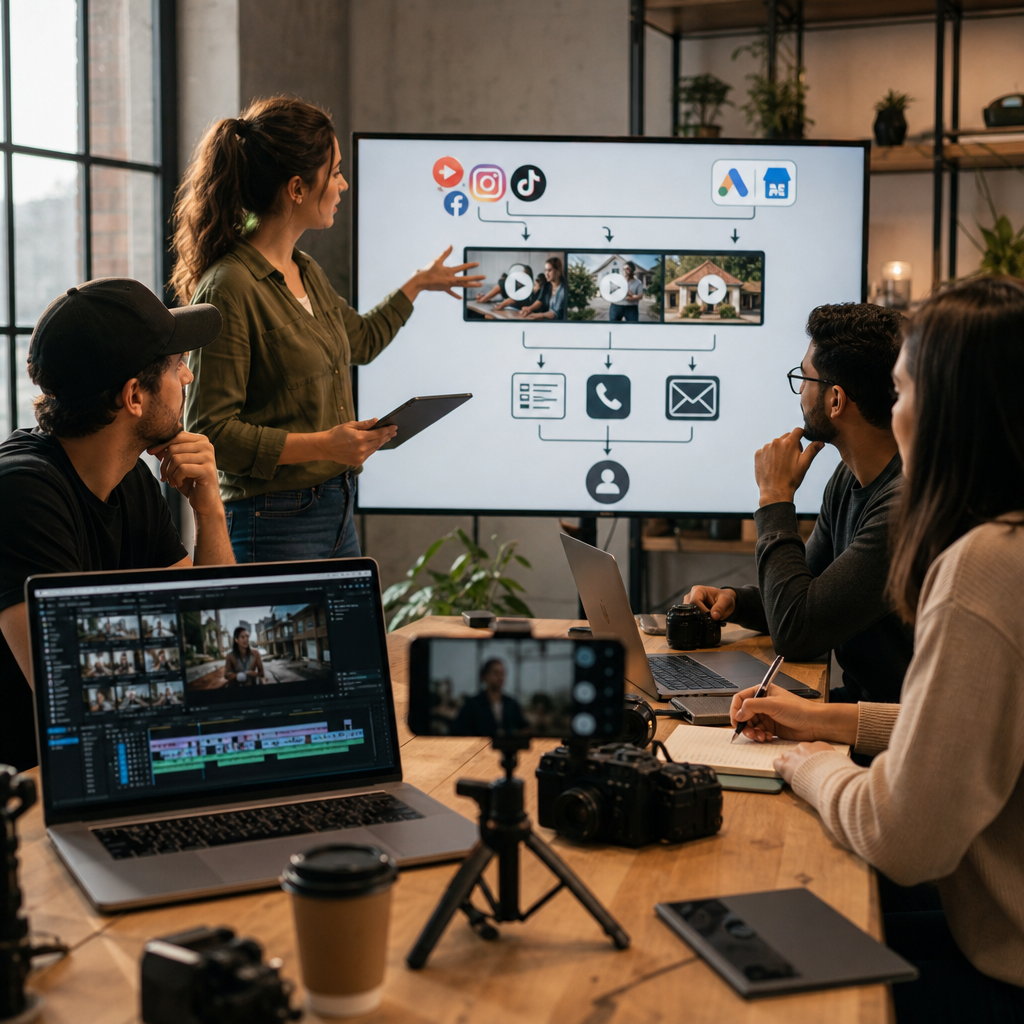
    Your website is often the first real interaction a prospect has with your brand. Yet most businesses treat their website as a separate entity from their video content, social media, and broader marketing strategy. They optimize one channel at a time, hoping the pieces eventually fit together. They rarely do.

    At Canatos Media, we’ve seen firsthand how this fragmentation costs businesses leads, credibility, and conversion momentum. When your website design, video content, and overall brand narrative work together instead of in silos, something different happens: visitors don’t just browse. They stay longer, trust faster, and convert at measurable rates.

    This article walks through why that unified approach matters, how to build it, and the specific results we’ve helped our clients achieve.

    Video changes how people engage with your website. It’s not about adding a play button for decoration. Cinematic video serves a functional purpose: it communicates your value proposition, shows your expertise in action, and builds emotional connection faster than text or static images alone.

    When someone lands on your website, they have seconds to decide whether you’re worth their time. A well-produced cinematic video positioned strategically on your homepage or service pages compresses months of relationship-building into minutes. The prospect sees your brand in motion, understands what you do, and grasps why you’re different before they scroll.

    Beyond the homepage, video reduces friction throughout the buyer’s journey. A service-based business might embed a client testimonial video on their pricing page. An e-commerce brand might showcase their product manufacturing process. A B2B software company might feature a quick explainer video on their features section. In each case, the video answers the question the visitor is asking at that exact moment.

    Search engines reward this behavior too. Pages with embedded video tend to rank better and keep visitors on the page longer, which signals relevance to Google and other search algorithms.

    Action item: Audit your top five landing pages. Note which ones have no video content. Those are your immediate candidates for integration.

    The Problem with Disconnected Design and Video Strategies

    Most businesses operate with separate teams or vendors handling website design and video production. The designer builds the site with one aesthetic in mind. The videographer produces content with a different visual language. The result feels disjointed, even when each piece is high-quality on its own.

    We’ve observed several common patterns in how this fragmentation shows up:

    • Video color grading doesn’t match the website’s color palette
    • The video style (cinematic, animated, testimonial) clashes with the overall design tone
    • The website layout forces video to feel awkwardly inserted rather than integrated
    • Brand messaging differs between video copy and website copy
    • Video and web strategy target different audience segments or conversion goals

    This inconsistency erodes trust. Your prospect sees beautiful cinematic video, then lands on a website that feels like it was designed by a different company. They notice the disconnect, consciously or not, and it introduces friction into their decision-making process.

    Beyond aesthetic concerns, disconnected strategies waste budget. You might invest heavily in short-form video production for social media, but that video content never makes it to your website where it could drive conversions. Or your website design looks premium, but your video quality doesn’t match that investment level, making the whole package feel untrustworthy.

    Action item: Compare your website’s visual style with your most recent video content. Do the colors, pacing, typography, and overall tone feel like they belong to the same brand?

    How We Unify Website Design with Cinematic Production

    Our approach starts before we build or produce anything. We develop a unified visual and strategic framework that guides both the website design and the video production process simultaneously. This framework includes:

    Color palette and visual language: We establish a consistent color scheme, typography system, and design aesthetic that both the website designer and video production team follow. This extends to motion design elements, transitions, and how we frame people and products on camera.

    Brand narrative structure: We define the key messages, emotional beats, and visual storytelling approach that will flow through both mediums. Your website tells a story with page hierarchy and content flow. Your cinematic videos tell a story with pacing, music, and cinematography. When these align, they reinforce each other.

    Audience segments and conversion goals: Rather than treating website and video as separate channels, we map out which videos serve which audience at which stage of the buyer journey. A decision-maker needs different content than an awareness-stage prospect. Your website and video strategy should reflect that distinction consistently.

    Technical integration planning: We determine where video lives on your site, how it performs, and what happens after someone watches it. Does the video button link to a contact form? Does it auto-play on mobile or require a click? These technical decisions affect both user experience and conversion rates.

    Once this framework is locked, the design and production work becomes aligned execution rather than parallel guessing.

    Creating Visual Consistency Across Your Digital Properties

    Visual consistency extends beyond your website and video content into every digital touchpoint: social media, email, paid advertising, and beyond. When a prospect sees your brand on Instagram, clicks through to your website, and watches your video, they should experience the same visual identity throughout.

    This consistency builds what we call “brand recognition momentum.” Each touchpoint reinforces the others. The more consistently someone sees your visual language, the faster they recognize you, remember you, and trust you.

    Practically, this means:

    • Using the same font families across website and video motion graphics
    • Maintaining consistent aspect ratios and framing when showing products or team members
    • Applying the same color palette to video graphics, website backgrounds, and CTA buttons
    • Ensuring your brand’s personality (premium, approachable, cutting-edge, etc.) comes through in both visual design and video tone

    We often find that multi-location or service-based brands struggle with this because each location or team might have created their own promotional materials. A unified video-first website design gives you a standardized foundation that ensures every piece of branded content feels intentional and cohesive.

    Action item: Create a simple brand asset document that captures your primary colors, fonts, and logo usage. Share it with anyone creating content for your brand, whether in-house or through vendors.

    Turning Website Visitors into Qualified Leads with Video

    Video on your website serves conversion purposes if it’s positioned and structured strategically. Not all video placement is equal.

    A homepage video that builds emotional connection and establishes credibility works differently than a service explainer video that answers technical questions. A client testimonial video builds social proof. A founder story video builds founder-based authority. Each serves a conversion purpose at different moments in the buyer journey.

    We structure video on your website with conversion funnels in mind:

    Awareness and trust building: Cinematic brand videos, founder stories, and company culture videos positioned on your homepage or “about” page help visitors understand who you are and why they should trust you.

    Consideration and education: Product demos, service explanations, and process videos help prospects understand exactly what you offer and how it works.

    Decision and social proof: Client testimonial videos and case study videos help prospects feel confident about making a purchase or scheduling a call.

    Each video type answers a different question the visitor is asking. When properly positioned, that video becomes the reason they convert from visitor to lead.

    We also optimize video for form completion. A lead generation form that appears after someone watches a relevant video has higher completion rates than an out-of-context form. The video primes them emotionally and educationally for the ask.

    Our Integrated Approach to Website and Video Development

    Here’s how we structure the work:

    We start by understanding your current digital presence, target audience, and conversion goals. We interview your sales team about common prospect objections. We audit your current website and any existing video content. This discovery phase informs everything that follows.

    Next, we develop a unified strategy document that outlines the website architecture, video types needed, messaging hierarchy, and how these pieces connect. We create a visual direction that guides both the design and production work.

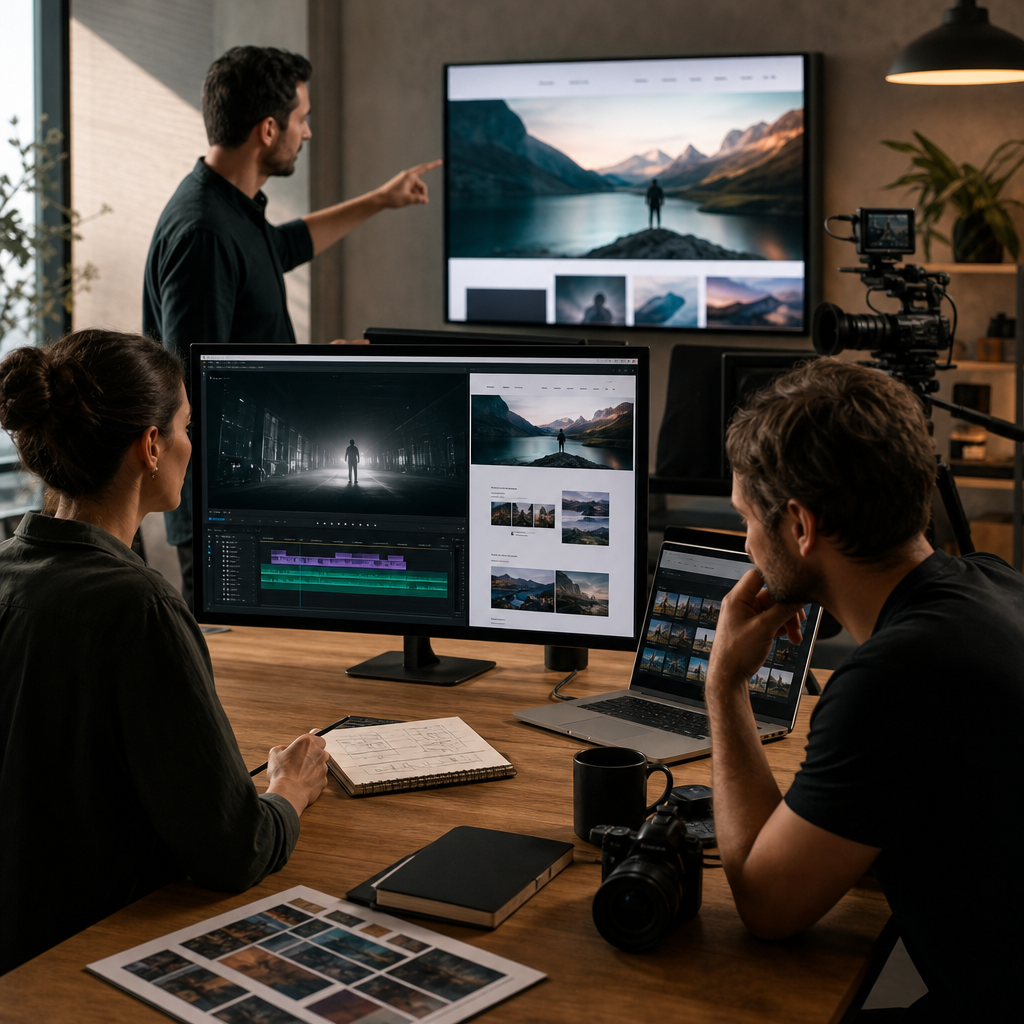
    The website design phase and video production phase happen in parallel, not sequentially. Our designers and video producers collaborate regularly to ensure alignment. When the website designer makes decisions about layout and color, the video producer understands those choices and reflects them in the cinematic work.

    Once both are built, we integrate video into your website technically and strategically. We optimize page load speeds so video doesn’t slow your site. We set up analytics tracking so you can measure which videos drive the most engaged visits and conversions. We ensure video is mobile-responsive and accessible.

    Throughout this process, we’re also building out your broader digital marketing infrastructure: social media management, paid advertising strategy, and search optimization. Your website and video become the centerpiece of a coordinated digital presence.

    Real Results: How Unified Strategies Drive Measurable Growth

    Our clients see measurable outcomes when website design and cinematic video work together.

    Service-based businesses typically see increases in qualified lead volume within the first 60 days. One HVAC service company increased their contact form submissions by 34% after integrating cinematic service videos on their homepage and service pages. The video let prospects see the team in action and understand the quality of work before deciding to call.

    E-commerce and product-based businesses see improvements in average order value and repeat purchase rates. One client’s product videos showing real-world usage and materials increased their average cart value by 18% because prospects felt more confident about their purchase decision.

    Multi-location service brands see faster scaling because they have a unified visual and narrative framework they can apply across locations. Rather than each location developing its own messaging, they use the core website and video strategy as a template, saving months of work and ensuring consistency.
    Beyond conversion metrics, clients report faster sales cycles and higher close rates. Prospects who’ve watched relevant video content are more informed and committed before they have a conversation with your sales team.

    You can explore how this looks in practice in our case studies, which detail specific results and the strategies behind them.

    Getting Started with Video-First Website Design

    Start by answering these questions for your business:

    1. What’s your biggest bottleneck right now? Is it website traffic, conversion rate from traffic, or something else?
    2. What are your top three visitor questions that your current website doesn’t answer quickly enough?
    3. What video content exists within your organization that you’re not currently using on your website?
    4. What’s your timeline for needing measurable improvement?

    Your answers clarify where to focus first. If your website gets traffic but doesn’t convert well, your priority is videos that address prospect objections and build trust. If your website gets minimal traffic, your priority is social-first video content that brings people to your site.

    We recommend starting with one strategic video integrated into your highest-traffic pages, measuring the impact, then scaling from there. This lets you see the conversion impact before investing in a full website redesign.

    The key is beginning with a unified perspective rather than treating video and web design as separate projects. That mindset shift alone changes the outcomes you’ll see.

    Common Questions About Integrating Video into Your Website

    How much does adding video to my website cost? It depends on the scope. Integrating existing video costs far less than producing new cinematic content. We work with businesses at different budget levels and recommend starting with a strategic video or two rather than overhauling everything at once.

    Will video slow down my website? Not if it’s properly optimized. We host video files on CDN infrastructure that ensures fast delivery regardless of visitor location. We also offer adaptive bitrate streaming so video quality adjusts based on connection speed.

    What type of video performs best on websites? It depends on your goal and audience. Founder or team videos build trust quickly. Product demos or service explainers answer questions. Client testimonials build social proof. We recommend a mix that covers different stages of the buyer journey.

    Can I use social media video on my website? Usually, but we often find that social-first video (short, fast-paced) performs differently on websites than purpose-built web video. Social video is designed for the Facebook or TikTok algorithm. Website video is designed for conversion. They serve different functions, though sometimes one piece can work for both.

    How do I measure if website video is actually working? Through analytics. We set up tracking that shows you how many people watch each video, how long they watch, whether they take action afterward, and which videos correlate with the highest conversion rates. This data guides what type of video you produce next.

    Start exploring how cinematic website videos can transform your digital presence. The combination of thoughtful design and high-quality visual storytelling creates momentum that individual channels alone simply cannot achieve.

    Contact us today for a free consultation to see how we can help you grow your business.

    Frequently Asked Questions (FAQ)

    How do we integrate video into website design to improve lead generation?

    We embed strategic short-form video content throughout your website to capture attention and guide visitors toward conversion points. Our approach positions video on key pages like homepages, service pages, and landing pages to increase engagement time and communicate your value proposition faster than text alone. We pair this with optimized call-to-action elements that connect video engagement directly to our lead capture systems.

    What’s the difference between creating cinematic video for social media versus for your website?

    While both use cinematic production quality, we tailor each for its platform’s unique behavior. Our social videos are shorter, hook viewers immediately, and drive traffic to your website. On your website, we create longer-form content that builds trust, demonstrates expertise, and supports the visitor’s decision-making journey through your sales funnel.

    How do we ensure visual consistency between our video production and website design?

    We develop your brand’s visual language upfront, including color palettes, typography, motion styles, and storytelling approaches that apply across both mediums. Our team works collaboratively so your website design and video production follow the same aesthetic standards, creating a cohesive experience that reinforces brand recognition at every touchpoint.

  • Video-First Marketing for Franchises: How to Scale Brand Growth Across Locations

    Video-First Marketing for Franchises: How to Scale Brand Growth Across Locations

    Why Franchises Struggle With Consistent Brand Messaging Across Locations

    Franchise owners face a unique challenge: maintaining a cohesive brand identity while managing multiple locations, each with its own audience, competitive landscape, and growth objectives. The stakes are high. A disjointed brand message across locations confuses customers, dilutes marketing spend, and makes it nearly impossible to scale growth predictably.

    This is where video-first marketing becomes essential.

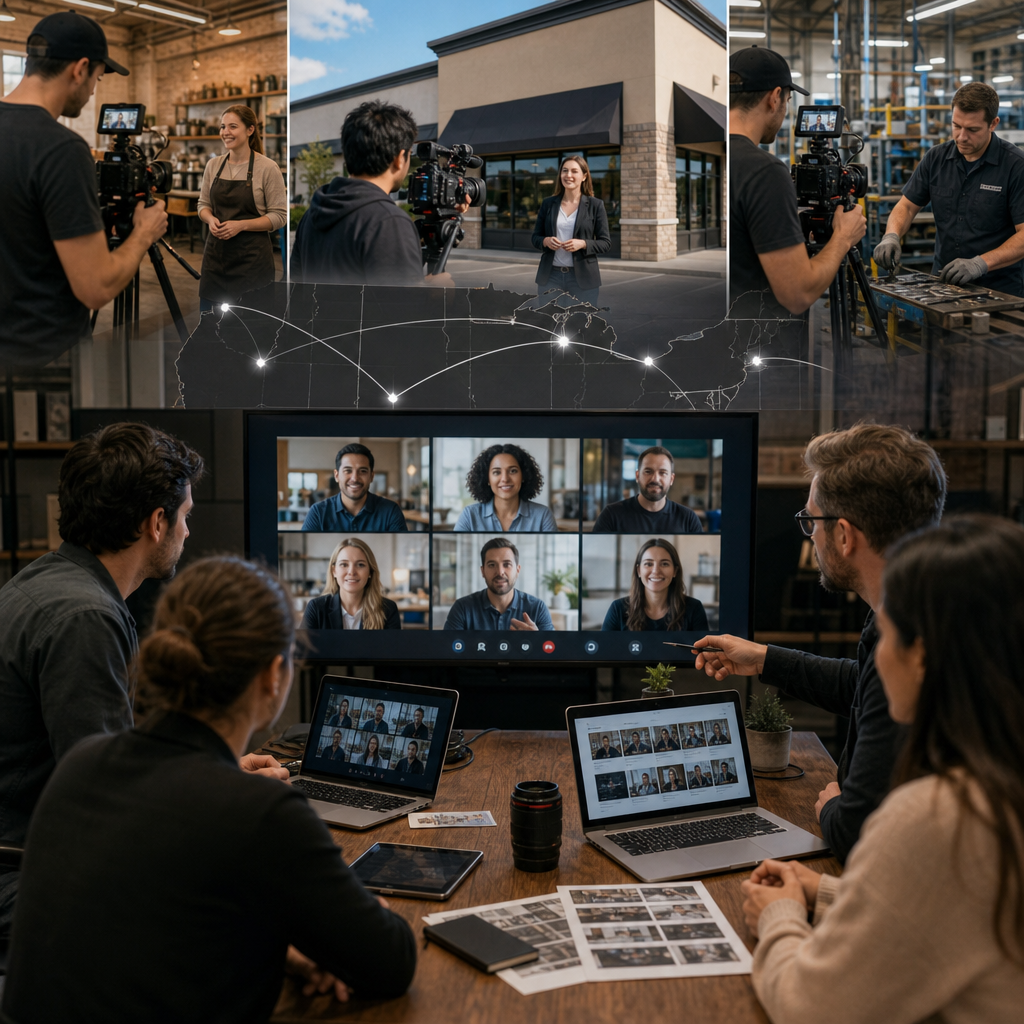
    We’ve worked with multi-location and franchise brands that discovered a critical truth: short-form video content, paired with integrated digital systems, transforms how franchises acquire customers and build brand recognition. Rather than treating each location as an isolated marketing unit, a coordinated video and digital strategy positions your entire franchise network for sustainable growth.

    Franchise systems inherently create friction around brand consistency. You have a corporate vision, but you also have franchisees with varying resources, priorities, and local market knowledge. Some locations are fully staffed with marketing support; others are run lean by an owner juggling operations and customer service.

    The result is fragmented marketing. Location A launches one social media campaign while Location B uses outdated messaging. Some franchisees invest in digital advertising; others skip it entirely. Customers in different markets see conflicting brand narratives, and the corporation struggles to measure what’s actually working across the network.

    Add budget constraints into the equation, and many franchises default to static graphics or repurposed old videos. These assets feel generic and don’t capture attention in crowded social feeds. Prospects scroll past without engaging, and franchisees become frustrated because their local marketing isn’t generating leads.

    The core problem: franchises lack a scalable system that delivers consistent, high-quality content while allowing for local customization.

    The Competitive Advantage of Video-First Marketing for Multi-Location Brands

    Video content outperforms every other content format on social platforms. Posts with video generate 1200% more shares than text and images combined, and video drives higher click-through rates on paid campaigns. For franchises, this advantage compounds across your network.

    When you build your franchise marketing around short-form video, you create a unified content engine that every location can leverage. A single cinematic video shoot produces content assets that work across Instagram Reels, TikTok, YouTube Shorts, and Meta platforms. Each location gets professional, on-brand content without duplicating production costs.

    This matters because franchisees typically lack in-house production capability. They’re not equipped to shoot, edit, and optimize video on their own. By providing professionally produced, location-branded content as part of your franchise marketing system, you remove the friction and empower every location to compete effectively in their local market.

    Beyond content itself, video builds trust faster than any other medium. Prospects see your team, your facility, your service delivery in motion. They understand what they’re getting before they call or visit. This compression of the sales cycle directly impacts customer acquisition costs and conversion rates.

    How Cinematic Short-Form Content Drives Franchise Customer Acquisition

    Short-form video works because it respects attention spans while delivering narrative impact. A 15-to-30-second cinematic clip can showcase your service, build emotional connection, and drive a specific action—all within the thumb-stop window of a mobile feed.

    For franchises, this translates to location-specific customer acquisition. A dental franchise might produce videos showing the patient experience at individual locations. A home services franchise creates shorts highlighting before-and-after transformations in real neighborhood contexts. A fitness franchise films member testimonials and class highlights with local coaches and community members.

    The cinematic approach matters. Polished production, intentional music and sound design, and strategic pacing create content that feels premium and trustworthy. Your brand doesn’t compete on being relatable or DIY; it competes on delivering a clear, professional promise of what customers will experience.

    Each video should ladder back to a clear business objective: appointment bookings, lead form submissions, phone calls, or in-location visits. A franchise owner in Seattle and another in Austin both need content that converts viewers into actual customers, not just impressions.

    What to do next: Map your top 3-5 customer actions you want to drive (consultation bookings, membership signups, service inquiries), then brief your content team on short-form video concepts that speak directly to each action.

    Building Integrated Digital Systems That Connect Video to Sales

    Video is only as valuable as the system that converts viewers into customers.

    We design franchise digital systems where video sits at the center of a coordinated funnel. When a prospect sees your short-form content on Instagram, they don’t just watch and leave. A strategic CTA (call-to-action) directs them to a landing page, a lead form, a booking calendar, or your website. That interaction is tracked, segmented, and fed into follow-up sequences that nurture them toward a sale.

    This requires integration across multiple platforms: social media accounts, your website, email systems, and your CRM. A franchise owner in Denver shouldn’t have to manually input leads from different sources. The system captures everything, attributes it to the right location, and provides clarity on what’s driving revenue.

    For franchises, this integration also enables corporate visibility. You can see which locations are generating leads, which content performs best in which markets, and where marketing budget should shift. Franchisees get dashboards showing their own performance, creating transparency and accountability.

    A professional approach uses a branded landing page for each location, fed by video ads and organic social promotion. The landing page is optimized for conversion (fast load, clear CTA, minimal friction), and every submission feeds into a lead management workflow that your team works immediately.

    Social Media Management and Paid Advertising for Franchise Growth

    Social media management for franchises requires both centralized strategy and localized execution.

    At the corporate level, you maintain brand voice, posting cadence, and content calendar guidelines. Each location manages its own community, responds to local comments, and handles customer service inquiries. Centralized production provides the video assets; local teams distribute them strategically.

    Paid advertising amplifies this reach. A franchise network benefits from running location-specific paid campaigns on Meta and Google. You can target prospects by geography, interest, and behavior, directing them to the nearest franchisee. A home repair franchise in a multi-state network can run hyperlocal Google ads in Dallas, Denver, and Detroit simultaneously, with creative and landing pages tailored to each market.

    The budget efficiency is significant. Rather than franchisees managing small individual ad spends, a coordinated approach pools resources where it matters most. You identify which locations have the highest customer acquisition cost and redirect budget to higher-performing areas or test new creative.

    Video performs exceptionally well in paid formats. A 15-second cinematic video clip turns into a scroll-stopping ad that drives direct response. Paired with a clear landing page and tracked conversion, you get measurable ROI that justifies ongoing investment.

    Scaling Video Production While Maintaining Brand Consistency

    Many franchise owners worry that scaling video production means losing quality or control. The opposite is true if you build the right system.

    We produce video content in batches. Rather than shooting one location at a time, we might film three to five franchise locations in a single production sprint. This reduces per-location costs, ensures consistent visual style (same equipment, same crew, same color grading), and accelerates your content timeline.

    The key is building modular video templates. Your core brand footage (cinematic establishment shots, service demonstrations, testimonial structures) gets produced once with professional quality. Then, location-specific elements (local team members, neighborhood details, specific offerings) get inserted into that framework.

    For example, a tax preparation franchise produces a core “how we help” video once. Then each location gets a 30-second custom intro with their local team and a geo-specific CTA. The cost per location is a fraction of producing unique content from scratch, but the quality and consistency remain premium.

    This approach also solves the franchisee capability problem. Your franchisees don’t need in-house production skills. They provide access to their location, their team, and customer testimonials. We handle the rest, delivering finished assets ready to deploy.

    Lead Generation Workflows That Convert Social Engagement Into Customers

    Not every video viewer becomes a customer. Your system needs to capture interest at multiple stages and nurture prospects through a defined workflow.

    A typical franchise lead workflow looks like this: A prospect watches your video on Instagram and clicks the link to your location’s landing page. They fill out a contact form with their name, number, and service interest. That lead immediately triggers a sequence: an automated text or email acknowledgment, a calendar invite to book a consultation, and an assignment to your local team for follow-up within 24 hours.

    The workflow should account for different prospect types. Someone watching a video about financing might need different messaging than someone inquiring about basic services. Segmentation in your email and CRM systems ensures each prospect receives relevant follow-up content and offers.

    For franchises, location-based lead routing is essential. When a prospect in Phoenix completes your form, the lead automatically goes to your Phoenix franchisee, not some generic inbox. Franchisees see leads immediately and can act while interest is warm.

    We also layer in retargeting. Prospects who watch your video but don’t convert see follow-up ads over the next week, reminding them to take action. A simple frequency of three to five ads, spaced strategically, reminds fence-sitters without feeling aggressive.

    Actionable step: Audit your current lead flow from social engagement to customer conversation. Identify bottlenecks where prospects drop off and fix them systematically.

    SEO and AEO Optimization for Franchise Online Visibility

    Prospects searching for your service locally need to find you. This is where SEO and AEO (Answer Engine Optimization) become critical for franchise networks.

    At the corporate level, you own domain authority and brand authority. Your main domain ranks for competitive national keywords. At the location level, you build individual location pages with geo-specific keywords, local testimonials, and service details. A pizza franchise in Chicago owns the page for “Chicago pizza delivery,” complete with local reviews and operational details.

    Videos significantly boost SEO. Google prioritizes pages with embedded video, and video sitemaps improve crawlability. When you produce short-form video content, embed clips on your location pages and create transcripts. This signals to search engines that your content is substantive and relevant.

    AEO optimization prepares your content for AI-powered search results. Answer Engine Optimization focuses on structured data, clear question-and-answer formatting, and direct, concise answers. When an AI searches for “best dental practice in Miami,” having clear, well-structured content about your Miami location increases the chance you appear in AI-generated summaries.

    For franchises, this strategy compounds. Fifty locations with optimized local pages, each ranking for geo-specific keywords, creates a network effect. Together, they generate consistent organic traffic that franchisees don’t have to pay for.

    Measuring Video Campaign Performance Across Your Franchise Network

    Measurement is where many franchise marketing programs fall apart. Without clear metrics, it’s impossible to know what’s working and where to invest next.

    We track metrics at three levels: content performance, campaign performance, and revenue impact.

    Content performance tells you which videos your audience engages with. How many views? What’s the average watch time? How many clicks to your landing page? This informs what creative concepts resonate in different markets.

    Campaign performance measures the effectiveness of paid spend. Cost per click, cost per lead form submission, and cost per qualified lead show whether your ad spend is efficient. If one location’s video ads cost $8 per lead and another’s costs $22, you investigate why and optimize accordingly.

    Revenue impact is the ultimate metric: how many of your video-generated leads convert to paying customers? What’s the average customer value per location? Is the marketing ROI positive? For a franchise system, this clarity allows corporate to set clear expectations for franchisees and guide investment decisions.

    We implement dashboards that franchisees can access in real time. They see their own lead volume, ad spend, and ROI. This transparency builds confidence and encourages franchisees to invest in the system because they see the direct return.

    Why Our Video-First Approach Delivers Results for Franchise Owners

    We built our video-first approach specifically for multi-location brands because we recognized that franchises need solutions that are both scalable and locally relevant. A franchise owner can’t afford generic content anymore, and they can’t afford to manage complex in-house production either.

    Our process combines cinematic production quality with strategic distribution and lead conversion systems. We don’t just make pretty videos; we engineer content that drives measurable customer acquisition for each location in your network.

    We manage the complexity so franchisees can focus on operations and customer service. We handle video production, social media management, paid advertising strategy, and lead conversion optimization. Your franchisees get professional, location-branded content and clear visibility into marketing performance.

    The result is consistent, professional brand presence across your entire franchise network. New franchisees launch with proven content and systems already in place. Established locations see lead volume and quality improve predictably. And corporate gains the visibility and control necessary to scale confidently.

    If your franchise is ready to compete with unified branding and professional video marketing, we’re here to build the system that makes it work across every location. Reach out to discuss how we tailor our video-first approach to your specific franchise model and growth objectives.

    Contact us today for a free consultation to see how we can help you grow your business.

    Frequently Asked Questions (FAQ)

    How do we maintain consistent brand messaging across multiple franchise locations?

    We build centralized content systems that provide each location with pre-approved video assets, templates, and messaging frameworks. Our team creates cinematic brand videos that establish your core identity, then we empower local franchises with social media management tools and guidelines that let them customize content while staying on-brand. This approach keeps your franchise network unified visually and strategically while allowing local flexibility where it matters most.

    What’s the timeline for seeing lead generation results from video marketing?

    We typically see our franchise clients gain meaningful engagement within 4-6 weeks of launching integrated video campaigns across their locations. However, converting that engagement into qualified leads depends on the strength of your underlying systems – which is why we pair video production with lead generation workflows, paid advertising optimization, and sales funnel setup. Most clients see measurable sales impact within 3-4 months once all components are working together.

    Can we scale video production without losing quality across our entire franchise network?

    Yes – we’ve designed our process specifically for this challenge. We produce high-quality cinematic hero content centrally, then create templates and guidelines that local teams use to generate supporting short-form videos consistently. Our production systems, combined with our social media management support, let us maintain cinematic quality while scaling efficiently across as many locations as you operate.

  • Stop Overpaying for Your Ecommerce SEO Packages

    Stop Overpaying for Your Ecommerce SEO Packages

    Are You Overpaying for Ecommerce SEO? Here’s What Packages Actually Cost in 2026

    Ecommerce SEO packages range widely in price and quality — here’s a quick breakdown so you can compare at a glance:

    Tier Monthly Cost Best For
    Starter / Basic $400 – $1,500 Small stores, 10-50 products
    Growth / Standard $1,500 – $3,000 Mid-size stores, scaling traffic
    Professional $2,500 – $5,000 Competitive niches, larger catalogs
    Enterprise $5,000 – $7,500+ High-SKU stores, multi-market

    What’s typically included:

    • Technical SEO audit and fixes
    • Keyword research and on-page optimization
    • Product and category page optimization
    • Link building and content creation
    • Monthly reporting and analytics

    Most stores start seeing ranking improvements within 3 to 6 months, with meaningful revenue impact arriving closer to the 6 to 12 month mark.

    Running an ecommerce store in 2026 means competing on two fronts at once: traditional Google search and a new wave of AI-powered discovery tools like ChatGPT, Perplexity, and Google’s AI Overviews. The rules are shifting fast. And the SEO agency landscape hasn’t always kept up.

    Most “Top 10 package” lists look identical. Half the agencies on them are still using strategies built for a world before generative search existed. Meanwhile, you’re being quoted anywhere from $400 to $7,500 a month — with little clarity on what you’re actually getting for that spend.

    That’s a real problem when your organic traffic is the one channel that compounds over time instead of draining your budget the moment you stop paying.

    I’m Nic Canobbio, founder of Canatos Media, and I’ve spent over two decades building and scaling content and digital strategies across media, sports, and ecommerce — including leveraging AI-driven approaches to help businesses grow their organic presence through smart ecommerce SEO packages. In this guide, I’ll cut through the noise and show you exactly how to compare your options without overpaying.

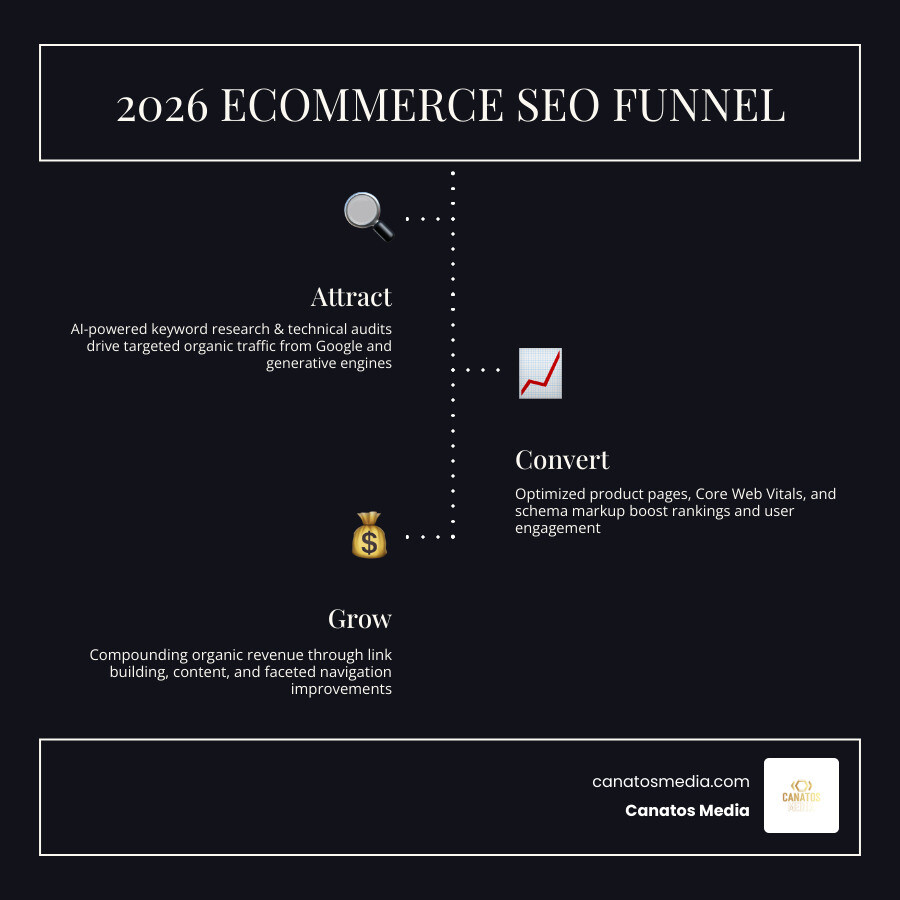
    2026 ecommerce SEO funnel showing traffic to conversions to organic revenue growth infographic

    What Should Modern Ecommerce SEO Packages Include?

    In 2026, a high-quality SEO plan isn’t just about stuffing keywords into a blog post. It’s about building a technical foundation that search engines—and AI agents—can actually understand. If your current package doesn’t address the “under the hood” elements of your site, you’re essentially building a house on sand.

    We believe that the best ecommerce SEO packages must start with a rigorous technical audit. This includes fixing 404 errors, ensuring 301 redirects are handled correctly, and optimizing your XML sitemaps. Beyond the basics, modern packages must prioritize Core Web Vitals. Since nearly 40% of users will abandon a site if it takes more than three seconds to load, site speed isn’t just a ranking factor; it’s a conversion factor.

    Another non-negotiable is Schema markup (structured data). This is the “language” that tells Google and AI platforms exactly what your product is, how much it costs, and whether it’s in stock. Without it, you’re missing out on rich snippets—those eye-catching star ratings and price tags that appear directly in search results.

    Finally, your package needs to address faceted navigation. Ecommerce sites often suffer from “index bloat,” where filters for size, color, and price create thousands of duplicate URLs that confuse search engines. A pro-level plan will manage these through canonical tags and robots.txt configurations to ensure your crawl budget is spent on pages that actually drive sales.

    View Our Ecommerce SEO Solutions | Canatos Media

    Key Features of High-Performance ecommerce seo packages

    When you’re comparing services, look for these specific deliverables that target the “shopping funnel”:

    1. Unique Product Descriptions: Say goodbye to manufacturer-provided text. High-performance packages include original, benefit-driven copy for your top-performing SKUs.
    2. Category Page Optimization: Most high-intent traffic actually lands on category pages, not the homepage. These pages need their own keyword strategy and internal linking structure.
    3. Image SEO: Search engines can’t “see” your photos. Your agency should be optimizing filenames and alt text so your products show up in Google Images.
    4. Internal Linking: A smart strategy uses breadcrumbs and related product links to distribute “link juice” across your site, making it easier for Google to find every product.

    More info about SEO services

    The Rise of Generative Engine Optimization (GEO)

    The biggest shift in 2026 is the move from “blue links” to conversational answers. We are now in the era of Generative Engine Optimization (GEO). Modern ecommerce SEO packages must optimize your content so it gets cited by AI platforms like ChatGPT, Gemini, and Perplexity.

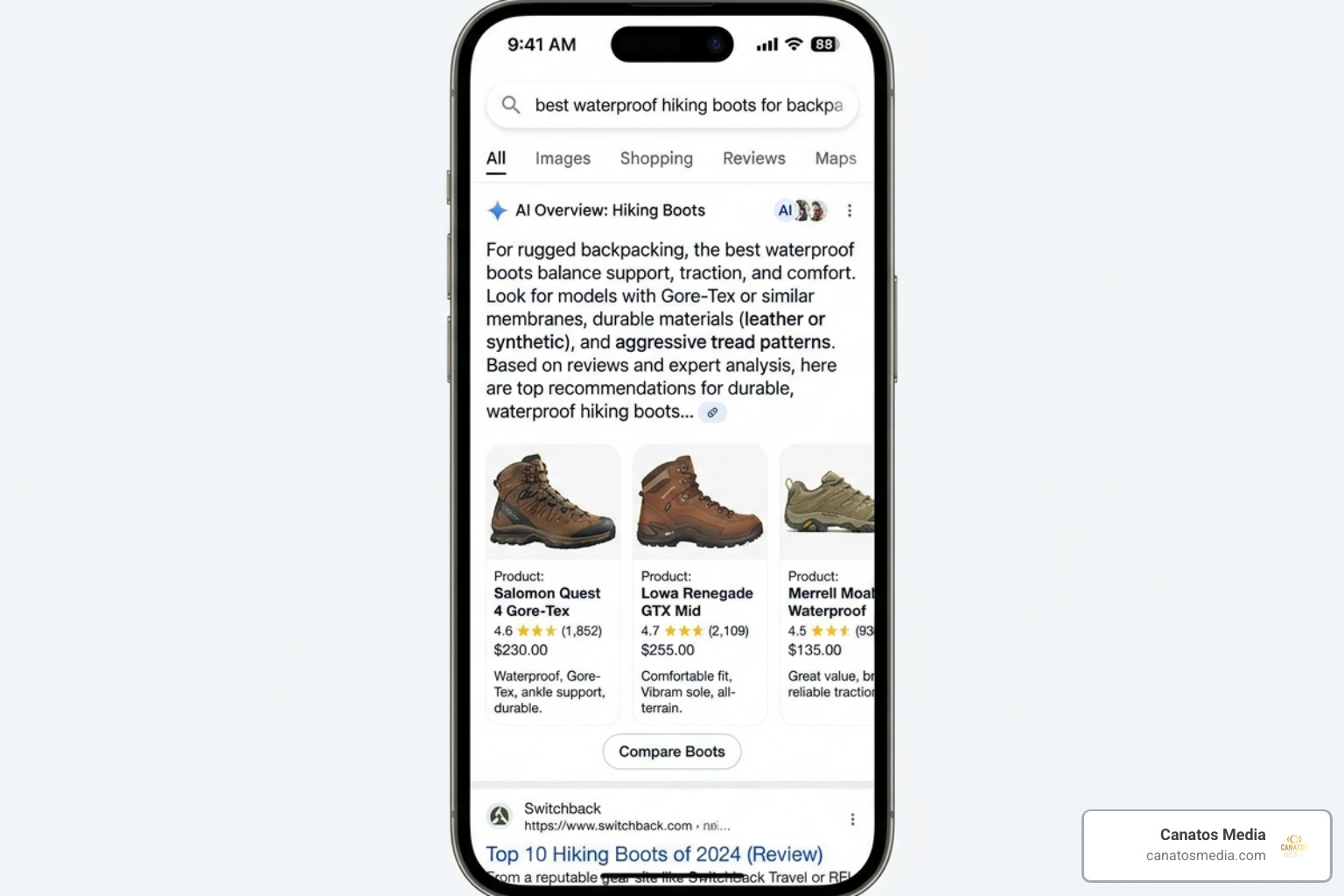
    This involves Answer Engine Optimization (AEO)—creating content that directly answers the “how,” “why,” and “which one” questions shoppers ask their AI assistants. If a user asks, “What is the best waterproof hiking boot for wide feet?”, your product should be the one the AI recommends. This is achieved by creating authoritative content clusters and using specific structured data that AI models prioritize when generating responses.

    AI-driven search results showing product recommendations and conversational answers

    Decoding the Cost of ecommerce seo packages in 2026

    Pricing for ecommerce seo packages can feel like the Wild West, but it generally follows the complexity of your catalog. A small boutique store in Long Island with 20 products has very different needs than a national retailer with 20,000 SKUs.

    Tier Typical Deliverables Ideal Revenue Bracket
    Starter Tech audit, 10-15 pages optimized, basic reporting $100k – $500k / year
    Growth 50+ pages, content creation, safe link building $500k – $2M / year
    Enterprise Programmatic SEO, AI optimization, international support $2M – $10M+ / year

    Request a Custom SEO Audit & Pricing | Canatos Media

    Factors Influencing Your Monthly Investment

    Why the big price gap? It usually comes down to four main factors:

    • Platform Complexity: Optimizing a custom Magento or Adobe Commerce build is significantly more labor-intensive than a standard Shopify store.
    • Content Frequency: High-tier packages often include multiple blog posts, buying guides, and even short-form video scripts each month.
    • Backlink Quality: Building high-authority, “white-hat” links through PR outreach is expensive and time-consuming but essential for ranking in competitive niches.
    • Technical Debt: If your site hasn’t been updated since 2018, the first few months of your package will likely cost more as the agency works to fix years of accumulated errors.

    Measuring ROI and Success Metrics

    The most important thing to remember is that SEO is an investment, not an expense. Unlike paid ads, where the traffic stops the second you stop paying, SEO compounds.

    We focus on revenue-driven metrics rather than “vanity” metrics like impressions. Success should be measured by:

    • Organic Revenue: How much money did people who found you through search actually spend?
    • Conversion Rate: Is the traffic we’re bringing in actually buying, or just browsing?
    • Average Order Value (AOV): Are we attracting customers who buy more?
    • Customer Acquisition Cost (CAC): Over 6-12 months, your SEO-driven CAC should be significantly lower than your PPC costs.

    Ecommerce SEO vs. General SEO: Why Specialized Plans Matter

    General SEO is often about information; ecommerce SEO is about transactions. If an agency tries to sell you a “standard” SEO package for your online store, run the other way.

    Specialized ecommerce seo packages understand the nuance of transactional intent. For example, a general SEO might target “how to clean leather boots,” but an ecommerce expert will target “best leather boot cleaner for salt stains.” One attracts a reader; the other attracts a buyer.

    Furthermore, ecommerce sites face unique technical challenges like handling out-of-stock products without losing ranking power and managing complex product feeds for Google Merchant Center.

    Why Your Store Needs eCommerce Website SEO to Survive

    Platform-Specific Optimization Requirements

    Your choice of platform dictates your SEO strategy:

    • Shopify: Great for speed and ease, but requires specific apps or custom coding to fix URL structure issues.
    • Magento: Powerful and scalable, but prone to technical bloat and slow load times if not managed by an expert.
    • WooCommerce: Highly customizable but requires careful plugin management to maintain security and speed.

    A good agency will have specialists who understand the “quirks” of each platform.

    The Compounding Value of Organic Traffic

    Think of paid ads like a “tap”—you turn it on, and traffic flows. You turn it off, and it dries up. SEO is more like a “river.” It takes time to carve the path, but once it’s flowing, it keeps moving on its own.

    By investing in ecommerce seo packages, you are building a sustainable asset. Over time, this reduces your dependence on expensive Meta and Google ads, increasing your overall profit margins. It also builds brand authority; shoppers tend to trust organic results more than the “Sponsored” labels at the top of the page.

    Explore more in our SEO category

    How to Choose the Best Plan for Your Store

    Choosing an agency in the Tri-state area or Long Island can be overwhelming. To find the right partner, prioritize transparency. You should receive a clear roadmap of what will be done in the first 30, 60, and 90 days.

    Ask about their reporting frequency. We believe in regular strategy calls to align our SEO efforts with your current inventory and sales goals. If you’re running a big sale on “blue widgets” next month, your SEO team should be optimizing for that today.

    A technical SEO site audit showing a health score and list of prioritized fixes

    Avoiding Common Pitfalls in ecommerce seo packages

    Be wary of these red flags:

    • Guaranteed Rankings: No one can guarantee the #1 spot on Google. If they say they can, they’re likely using “black-hat” techniques that will eventually get your site penalized.
    • Cookie-Cutter Strategies: Your store is unique. A “one-size-fits-all” checklist won’t help you beat established competitors.
    • Neglecting Mobile UX: With the majority of ecommerce transactions now happening on mobile, any package that doesn’t prioritize the mobile shopping experience is obsolete.

    Integrating SEO with Your Broader Marketing Mix

    At Canatos Media, our USP is an integrated strategy. SEO shouldn’t live in a silo. Your organic search data should inform your paid ads (PPC), and your cinematic short-form videos should be optimized to appear in both social feeds and Google’s video search.

    When your content, targeting, and technical SEO work together, you create a “flywheel effect” where every marketing dollar works harder. For instance, using SEO data to identify high-converting keywords can help you lower your CPC in Google Ads.

    Check out our SEO tags

    Frequently Asked Questions about Ecommerce SEO

    How long does it take to see results from ecommerce SEO?

    While every store is different, you will generally see “early wins” (improvements in rankings for long-tail keywords) within 3 to 4 months. Significant increases in organic traffic and revenue typically take 6 to 12 months of consistent effort.

    Do these packages include Conversion Rate Optimization (CRO)?

    While SEO brings people to the store, CRO makes sure they buy. Many high-end ecommerce seo packages include CRO audits or consulting hours to improve your checkout flow and product page layouts.

    How does AI search impact my store’s visibility in 2026?

    AI search (GEO) means your content needs to be more authoritative and better structured than ever. If your site is optimized for AI agents, you’ll appear in conversational recommendations, which often have a higher click-through rate than traditional search results.

    Conclusion

    The ecommerce landscape in 2026 is faster and more competitive than ever, but the opportunity for organic growth has never been higher for those who play by the new rules. Don’t settle for “cookie-cutter” ecommerce seo packages that ignore the shift toward AI and generative search.

    At Canatos Media, we don’t just “do SEO.” We provide an integrated growth engine. From cinematic short-form video that stops the scroll to technical SEO that satisfies both Google and AI agents, we connect the dots between content and conversions. Whether you are a growing brand in Long Island or a national retailer, we are here to help you scale sustainably.

    Talk With Our eCommerce SEO Experts and let’s build a strategy that drives measurable growth for your store.

    https://canatosmedia.com/services/

  • Why Multi-Location Brands Choose Canatos Over Shootsta for Video

    Why Multi-Location Brands Choose Canatos Over Shootsta for Video

    The Challenge: Scaling Visual Content Across Multiple Locations

    Running a multi-location or service-based business means you need consistent, high-quality visual content across every branch, market, and campaign. Yet most content creation workflows weren’t built for scale. You’re juggling location managers who may lack creative direction, inconsistent quality standards, and the constant pressure to produce fresh social content while maintaining brand cohesion.

    When you’re managing three dental offices, five HVAC service territories, or ten spa locations, shooting video becomes complicated. Each location has different aesthetics, staff dynamics, and local audiences. A generic platform that just helps you record clips won’t solve this. You need a partner who understands how to systematize cinematic quality at scale and then strategically deploy that content to drive leads.

    This is where most businesses hit a wall. They adopt a DIY video tool, realize the content lacks strategic direction, and end up with unused footage sitting on drives while their competitors are converting leads from polished, purpose-built videos.

    Why Generic Video Platforms Fall Short

    Tools built primarily for recording and basic editing miss a fundamental truth: video without distribution strategy is just expensive content nobody sees. Many platforms focus on making it “easy” to shoot video but ignore the entire ecosystem needed to turn views into leads.

    Here’s what typically goes wrong:

    • Platform-native editing creates average-looking content that blends into the noise of social feeds
    • No integrated paid advertising capabilities mean your videos get zero amplification beyond organic reach
    • Disconnected analytics leave you guessing whether video is actually driving business results
    • Limited social media management features require juggling multiple tools
    • No SEO or website integration strategy, so video assets don’t build long-term organic visibility
    • Lead capture systems are either nonexistent or bolted on as an afterthought

    We’ve worked with brands who spent months producing videos on these platforms only to realize they had no systematic way to turn watchers into qualified leads. The technology was there, but the strategy wasn’t. That’s the gap we built Canatos Media to fill.

    How We Approach Scalable Video Differently

    We start with your business goals, not with production timelines. Our process revolves around understanding which videos actually move your needle: lead generation assets, trust-building brand stories, location-specific service videos, or customer testimonials.

    From there, we build a scalable production and distribution system. This means:

    • Developing repeatable templates and workflows so you’re not reinventing the wheel for each location
    • Shooting cinematic content that stands out in algorithm-driven feeds
    • Creating variations of key videos optimized for different platforms, audiences, and campaign phases
    • Integrating video production with paid advertising and lead capture from day one

    For a multi-location plumbing company, this might mean shooting hero content at one location, then efficiently capturing location-specific variations. A service brand can have branded story templates that work whether you’re in New York or Nashville. The scalability doesn’t come from automation alone; it comes from strategic planning upfront.

    Cinematic Quality Meets Strategic Distribution

    There’s a gap between “professional looking” and “cinematic.” We close it. Our cinematic website videos aren’t just well-lit and edited; they’re crafted to communicate your brand’s unique value within 15 seconds to three minutes, depending on where they appear.

    This matters because algorithmic feeds reward completion and engagement. A cinematic video with intentional pacing, thoughtful color grading, and clear storytelling performs measurably better than standard corporate video. Your audience feels the difference, even if they can’t articulate it.

    We also recognize that a single video asset shouldn’t live in one place. A 60-second brand story becomes a 15-second reel, a 30-second paid ad, a 90-second website feature, and multiple social snippets. Strategic distribution multiplies your return on production investment.

    Integrated Marketing: Beyond Just Video Production

    Video is powerful, but isolated video is limited. We approach this as part of a broader marketing system. That’s why we built our all-in-one marketing funnel to connect video content, paid advertising, lead capture, and follow-up.

    Your video strategy should feed into paid advertising, which directs traffic to optimized landing pages, which captures leads through integrated forms. Those leads then flow into your email or CRM system for nurturing. Without this integration, you’re producing content in a vacuum.

    We handle the connective tissue. Video production becomes part of a coordinated effort across social media, search, and paid channels, all designed to move prospects toward becoming customers.

    Lead Generation Through Video-First Storytelling

    Service businesses live and die by leads. Video is one of the highest-converting content formats, but only when it’s paired with clear intent and strategic placement.

    We build videos specifically designed to generate leads: service explainers that answer the question “Why should I trust you?” Customer success stories that mirror your prospect’s situation. Location-specific content that speaks to local audiences. These aren’t vanity videos; they’re conversion assets embedded in paid campaigns and landing pages.

    When a homeowner searches for “emergency plumber” and sees a 45-second video of your team solving a real problem, followed by a simple CTA and lead form, the conversion rate changes dramatically compared to text or static images alone.

    Social Media Management Paired With Video Content

    Producing excellent video without a distribution strategy is like building a storefront nobody visits. We manage the social channels where your audience actually spends time, posting consistently, engaging with comments, and building momentum around video content.

    This includes:

    • Strategic posting calendars aligned with your seasonal business cycles
    • Community management that builds trust and relationships
    • Cross-platform optimization so your video content looks and performs best on each platform
    • Analytics reporting that ties social activity back to actual leads and sales

    Video content performs best when it’s part of an ongoing conversation, not a one-off post. Our social management ensures your videos land in a healthy, engaged community.

    Organic reach has limits. Paid advertising is how you scale. We manage Meta and Google advertising directly, meaning your videos don’t just sit on your social feeds hoping for engagement; they’re actively promoted to your target audience.

    Our approach:

    • Building audience segments based on your service area and customer profile
    • Testing video variations to find what resonates and converts
    • Optimizing budget toward highest-performing assets
    • Retargeting people who’ve watched your videos but haven’t converted yet
    • Integrating video ads with landing pages that capture contact information

    Video ads consistently outperform static image ads in conversion metrics. The investment in production is leveraged across multiple paid channels to justify and amplify the cost.

    Website Design and Video Integration

    Your website is often where prospects make their final decision. Video should be central to that experience, not an afterthought. We design and build websites with video as a core storytelling tool, not decoration.

    A service-based website with strategic video placements (homepage hero, service pages, about section, testimonials) converts substantially higher than text-only sites. Video reduces friction by answering questions visually and building immediate trust.

    AEO Optimization for Your Video Assets

    Video content builds long-term organic visibility when it’s properly optimized. AEO (Answer Engine Optimization) ensures your video assets are discoverable in search results and AI-powered answers.

    This includes:

    • Keyword-rich titles, descriptions, and transcripts for each video
    • Structured data markup so search engines understand your video content
    • Strategic linking between video assets and relevant pages
    • Hosting videos on platforms that rank well in search results

    A well-optimized video library becomes a perpetual source of organic traffic, not just a short-term social asset.

    Results-Driven Video Systems for Service Brands

    We measure success by leads and revenue, not views and likes. Every video we produce is tied to a specific business outcome: contact form submissions, phone calls, appointment bookings, or sales.

    This means our entire process is built around performance. We analyze which videos drive leads. We refine based on data. We scale what works and adjust what doesn’t. Your video strategy becomes an accountable, measurable business system rather than a creative exercise.

    Ready to Scale Your Brand With Strategic Video

    Choosing a video partner isn’t about picking the cheapest option or the fanciest camera work. It’s about finding a team that understands your specific business model, can produce at the scale you need, and has integrated systems to turn content into measurable results.

    We work exclusively with growth-focused business owners who are serious about video as a lead generation tool. If you’re managing multiple locations or a service-based business that needs consistency, quality, and strategic distribution, let’s talk about how we approach scalable video differently.

    Reach out to discuss your brand’s video strategy and how we can build a system that actually converts.

    Contact us today for a free consultation to see how we can help you grow your business.

    Frequently Asked Questions (FAQ)

    How do we handle video production consistency across multiple locations?

    We develop a centralized brand framework that ensures every location maintains your visual identity while staying relevant to local audiences. Our team manages the production workflow, from initial strategy through final delivery, so you get broadcast-quality cinematic content without the operational burden of coordinating shoots across different sites. This approach lets us produce scalable content that drives consistent results regardless of how many locations you operate.

    What makes our video strategy different from basic video platforms?

    We don’t just produce videos and hand them off. We integrate video into your entire marketing system, including social media management, paid advertising campaigns, and website optimization. Our short-form content is strategically designed for lead generation and audience engagement, not just vanity metrics. We measure performance through actual conversions and business outcomes, which means every video we create serves a specific purpose in your growth strategy.

    How does video content actually convert into leads for service-based businesses?

    We combine cinematic storytelling with strategic distribution across the channels where your customers actually spend time. Our team handles paid advertising placement, social media amplification, and website integration so your content reaches qualified prospects at the right moment in their buying journey. We also optimize video assets for search and discovery through AEO, ensuring your content generates visibility and attracts inbound interest organically.

  • How We Turn Video Views Into Real Revenue for Service Businesses

    How We Turn Video Views Into Real Revenue for Service Businesses

    The Problem: Views Don’t Automatically Convert to Revenue

    A plumbing service gets 50,000 video views on social media. A dental practice posts a polished patient testimonial that reaches 15,000 people. A home services company’s latest content performs better than anything they’ve posted before. Yet weeks later, the phone isn’t ringing any louder and the lead pipeline remains flat.

    This is the gap most service businesses face: viral metrics don’t equal business results. Views, likes, and shares feel like progress, but they’re vanity metrics if they don’t move the needle on actual leads and revenue. We’ve worked with dozens of multi-location and service-based brands who discovered this painful truth the hard way. They invested heavily in video content only to watch engagement metrics climb while their sales stayed stagnant.

    The fundamental issue is that most video strategies measure the wrong things. They optimize for watch time and audience size rather than for the actions that matter: booking calls, filling out lead forms, or driving store visits. Without intentional design connecting content to conversion, video becomes entertainment instead of a revenue driver.

    Actionable takeaway: Before creating your next piece of video content, define what conversion action you want to happen next. Not “get more views,” but “get 10 qualified consultation requests” or “drive 25 store visits.”

    Why Traditional Video Content Falls Short

    Traditional video marketing typically follows a broadcast mindset: create quality content and push it out to as many people as possible. Production values matter, storytelling matters, and reach matters. What often gets missed is the architecture underneath that turns attention into action.

    Many agencies focus exclusively on the creative side. They produce beautiful videos, optimize them for platform algorithms, and call it done. But without clear call-to-action placement, landing page alignment, or lead capture systems, those videos sit alone in the funnel. They entertain but don’t convert.

    Another common failure is treating video in isolation. A 30-second social clip goes live, but there’s no follow-up email sequence, no retargeting ads, no system to nurture people who engaged but didn’t convert immediately. One piece of content should be part of a larger ecosystem.

    Platform dependency is another risk. Building your lead generation strategy entirely around organic social reach is gambling. Algorithm changes, shifting user behavior, and declining organic reach mean that relying solely on free social distribution leaves your business vulnerable. You need paid channels backing your content.

    The most successful video content we’ve created doesn’t look radically different from what other agencies produce. The difference is in the surrounding infrastructure: conversion paths, audience targeting, lead nurturing, and integration with other marketing channels.

    Our Video-First Approach to Lead Generation

    We structure every video project with a single objective: convert viewers into qualified leads for your business. That means every creative decision, from scripting to distribution, serves that purpose.

    Our process starts with your conversion goal, not your budget. Are you trying to book consultations? Fill a demo request? Get email signups? Drive foot traffic? Once we know what success looks like, we design content that directly supports that goal.

    We combine video-first marketing with paid and owned-channel strategies. A piece of cinematic short-form content isn’t just posted organically; it becomes the hero asset in a multi-channel campaign. It runs as paid ads on Meta platforms, gets repurposed for email sequences, drives traffic to SEO-optimized landing pages, and gets cut into micro-clips for retargeting audiences who watched but didn’t convert.

    Our video production focuses on what converts: authentic storytelling that demonstrates value, removes objections, and gives prospects a reason to take the next step. This isn’t about flashy effects or viral hooks. It’s about clarity, relatability, and a direct line to action.

    For service businesses specifically, we produce videos that address the questions and hesitations your prospects actually have. Why should they choose your company? What makes you different? What does the experience feel like? These aren’t dramatic questions, but they’re conversion questions.

    How Cinematic Storytelling Builds Trust and Authority

    Trust is the currency of service-based businesses. Prospects can’t inspect your work before hiring you, so they’re evaluating whether to trust you based on limited information. Video fills that gap faster than any other medium.

    Cinematic storytelling doesn’t mean big budgets or elaborate sets. It means production quality high enough to reflect your professionalism, combined with genuine narratives that show, not just tell, why your service matters. When a landscaping company shows the actual transformation of a neglected yard while the owner talks about what it means to them, that’s cinematic storytelling. It’s real, it’s visual, and it builds credibility.

    We focus on narrative structures that work for service businesses: the problem-solution-result arc. Typically, this involves real customers (or composite narratives if privacy is a concern), their specific challenges, how your service addressed them, and the tangible outcomes. People don’t remember features; they remember stories about people like themselves achieving their goals.

    Authority comes from consistency and depth. Single videos help, but a library of cinematic website videos and recurring content that demonstrates expertise compounds your credibility. When a prospect encounters your brand across multiple touchpoints and sees consistent production quality and clear expertise, trust accelerates.

    The technical aspects matter too. Professional lighting, clear audio, and intentional framing signal that your business operates at a certain standard. Prospects unconsciously match your production quality to your service quality.

    Integrating Video With Paid Advertising for Maximum ROI

    Organic reach on social platforms continues to decline. Platforms reward paid activity, and your audience is increasingly unlikely to see your content without paid amplification. We integrate video into paid campaigns from day one.

    The structure we use is simple: awareness videos run to cold audiences, engagement videos go to people who’ve shown interest, and conversion-focused videos target warm audiences ready to act. Each stage of this progression uses different creative, different messaging, and different platform targeting.

    A typical campaign might launch with a 30-second awareness video reaching your local service area on Meta. People who watch 50% of that video get retargeted with a longer-form version that includes customer testimonials. Those who engage with that get shown a conversion-focused ad with a direct booking link or lead form. This progressive approach to audience warming significantly improves conversion rates while lowering cost per lead.

    We optimize paid campaigns around conversion metrics, not vanity metrics. Instead of measuring CPM or even cost per view, we track cost per qualified lead and cost per acquisition. That’s what determines whether to scale a campaign or pause it.

    Video ads also perform better on paid platforms than static content. Meta and Google’s algorithms favor video, which means your ad spend goes further. A 15-second video ad often delivers leads at a lower cost than a carousel or static image ad promoting identical offers.

    Social Media Management That Drives Action

    Social media is often treated as a content distribution channel when it should be treated as a sales channel. We manage social accounts with that distinction in mind.

    Posting good content consistently matters, but it’s table stakes. Beyond that, strategy focuses on engagement, community building, and conversion infrastructure. That means responding quickly to comments and DMs, creating conversation-starting captions, and building systems to capture leads who interact with your content.

    For service businesses, social media content serves multiple purposes simultaneously. Educational content establishes authority. Behind-the-scenes content builds relatability. Customer transformation content builds desire. Testimonial and case study content builds trust. We balance these elements across your content calendar.

    We also build lead capture directly into your social presence. Lead forms on Meta platforms, landing page links in bios, and retargeting audiences built from social engagement create multiple pathways for interested prospects to enter your funnel. Every post is an opportunity to move someone closer to conversion.

    Community management isn’t just about being friendly. It’s about identifying warm leads in your comments and DMs and moving them toward conversion with helpful, non-pushy follow-up. Many service businesses miss opportunities because they treat social engagement as entertainment rather than as genuine sales conversations.

    The Role of SEO and AEO in Video Content Strategy

    Video is increasingly important for SEO, especially for service businesses competing locally. Search engines prioritize video content, and video results often get premium placement in SERPs. We optimize for both traditional SEO and AEO (answer engine optimization).

    When we produce video content, we optimize the surrounding elements: titles, descriptions, transcripts, and metadata. A video titled “How to Fix a Leaky Faucet” ranks differently than one titled “Local Plumber Explains Leaky Faucet Repair.” One is generic; the other targets local service search intent.

    For service businesses, local SEO combined with video creates significant competitive advantage. A plumber producing videos that answer common questions people search for locally can rank in both traditional and video search results while outcompeting competitors relying only on static content.

    Video transcripts matter more than most realize. Search engines can’t watch video, but they can read transcripts. Detailed transcripts with natural keyword inclusion help video content rank for relevant searches. Transcripts also improve accessibility and allow people to search for specific moments within your videos.

    AEO optimization means structuring content to answer direct questions in formats that appear in AI-powered search results. Short-form video is excellent for this. A one-minute video answering a specific question your service prospects are asking increases chances of being featured in both traditional search and AI-powered answer snippets.

    Our Lead Generation Systems: From Content to Conversion

    Individual videos generate attention. Lead generation systems turn that attention into customers. We build systems that capture interested prospects at multiple stages and move them toward conversion efficiently.

    The system starts with awareness content reaching cold audiences, progresses through engagement and nurturing stages, and culminates in conversion-focused messaging. Between each stage, data tells us who’s interested and who’s qualified.

    Lead forms, email sequences, retargeting audiences, and SMS flows work together. Someone watches a social video, clicks through to a landing page, fills out a form to learn more. That triggers an automated email series answering common questions. If they don’t convert from email, they get retargeted with different messaging. If they open emails and click links, they get marked as high-intent and might qualify for a direct sales outreach.

    For service businesses, we build systems that capture leads 24/7. A prospect filling out a form at 11 PM should get an automated response immediately, appointment booking options presented, and a follow-up sequence initiated. The system works while your team sleeps.

    We also measure and optimize every component. Which videos drive the most leads? Which landing pages convert at the highest rate? Which audiences have the lowest cost per acquisition? These data points guide continuous improvement, ensuring your lead generation cost decreases over time.

    Why Multi-Location Brands Choose Our Integrated Approach

    Multi-location service businesses face unique challenges. National or regional reach, multiple service areas, varying local competition, and complex brand guidelines across locations require strategies that scale and adapt simultaneously.

    Integrated video-first marketing works particularly well for multi-location brands because video content can be produced centrally then distributed and localized across many markets. A video showcasing your service quality can run nationally while location-specific ads drive prospects in each market to the nearest branch.

    Centralized lead generation systems connected to location-specific CRMs ensure that prospects get routed to the right office and that all locations have visibility into how video and advertising are performing in their area. This creates accountability and allows underperforming locations to see what top performers are doing differently.

    Standardized but flexible video content allows consistent brand messaging while adapting to regional preferences. A dental chain can use the same core testimonials and brand story nationally while running location-specific ads that mention proximity, hours, or local specialties.

    We also manage the technical complexity that comes with serving multiple locations. Tracking which video campaign drove leads to which location, which audiences convert best in each market, and how to allocate budgets across territories becomes data-driven rather than guesswork.

    Measuring Success: Tracking Views to Revenue

    We measure video success through a revenue lens, not a viral metrics lens. That means connecting video performance to actual business outcomes.

    Our baseline metrics for any video campaign include cost per lead, conversion rate from lead to customer, and customer acquisition cost by channel. We track where leads come from, which videos generate the highest-quality leads, and which audiences have the best lifetime value.

    For service businesses, we also track location-specific metrics. A contractor with multiple offices can see exactly which video campaigns are driving appointments in each service area. A dental practice can measure which videos convert best for cosmetic services versus routine cleanings.

    We use UTM parameters, audience tracking, and CRM integration to connect video viewership to actual revenue. If a video generates 1,000 views, 50 leads, 10 conversions, and $15,000 in revenue, we know the true ROI. Then we can confidently scale that campaign.

    Monthly reporting shows not just what happened but why. Which elements worked? What can we improve? Where should we invest more? This analysis drives next month’s strategy.

    Getting Started With Our Lead Generation Video Services

    If your service business has plateaued despite decent social media engagement, video-first lead generation strategy is worth exploring. The gap between views and revenue typically comes from missing infrastructure, not missing content.

    Start by auditing where your current video content sits in your funnel. Does it have clear calls-to-action? Does it connect to landing pages or lead forms? Does it get paid amplification? Does it retarget people who engaged but didn’t convert? Most service businesses find multiple gaps.

    We recommend starting with one clear conversion objective. Choose the lead type that matters most to your business right now, then build a video content and paid strategy specifically designed to capture and convert those leads. Start small, measure carefully, then scale what works.

    Let’s talk about your specific business and where video can drive the most immediate impact. We work with service businesses and multi-location brands across industries, and we’ve learned what separates video that generates views from video that generates revenue.

    For further reading: Video-first marketing.

    Contact us today for a free consultation to see how we can help you grow your business.

    Frequently Asked Questions (FAQ)

    How do you actually convert video views into leads and sales?

    We combine cinematic short-form content with a complete digital ecosystem that moves viewers toward action. Our process starts with video storytelling that builds trust, then uses paid advertising to reach qualified audiences, social media management to nurture engagement, and lead capture systems to convert interest into contacts. We track everything from view metrics back to actual revenue so you see exactly which content and channels drive real business results.

    What makes your approach different from just posting videos on social media?

    We treat video as the entry point, not the entire strategy. Most agencies create content and hope it converts, but we layer in Meta and Google advertising to put your best videos in front of the right people, SEO and AEO optimization to ensure discoverability, and built-in lead generation systems that capture contact information. For service-based and multi-location brands, this integrated approach typically generates 3-5x more qualified leads than organic posting alone.

    How do we measure whether this is actually working for our business?

    We establish clear metrics before we start and track them throughout. We measure video performance (views, engagement, click-through rates), advertising efficiency (cost per lead, conversion rates), and ultimately revenue impact (which leads convert to paying customers and at what value). You’ll have access to our reporting dashboard that connects all these data points so you can see exactly how video views become revenue.

  • How to Merge Website Optimization with Cinematic Video Marketing in 2026

    How to Merge Website Optimization with Cinematic Video Marketing in 2026

    The Gap Between Static Websites and Modern Video-First Expectations

    Your website is no longer just a digital brochure. Today’s visitors land on your site expecting dynamic, engaging content that tells your brand story in seconds. Yet most business websites still rely heavily on text, static images, and the occasional stock photo.

    This disconnect is costing you conversions. Research consistently shows that visitors spend more time on pages with video, scroll deeper into your content, and are significantly more likely to take action. When someone arrives at a static landing page and sees only text and images, they’re already comparing you to competitors who are investing in visual storytelling.

    The expectation gap exists because attention spans have shifted. Your audience consumes short-form video on social platforms daily. They’ve learned to trust visual proof over written claims. A two-minute cinematic explainer video about your service carries more weight than a paragraph describing it. Your website needs to meet them where their expectations have moved.

    The solution isn’t replacing your website. It’s integrating video strategically so your site functions as both a conversion tool and a storytelling platform.

    Why Your Website Needs Cinematic Video Content to Convert

    Visitors form their first impression of your business in under two seconds. Video accelerates that process by giving them something to connect with immediately. A well-produced cinematic video on your homepage doesn’t just look professional; it demonstrates confidence in what you offer.

    Consider the practical impact: visitors who watch a product or service video are 64% more likely to make a purchase. For service-based businesses, this effect is even stronger because video removes uncertainty. When someone watches a real example of your work, they can envision themselves as your client. Text descriptions create doubt; video builds trust.

    Cinematic quality matters more than you might think. Polished, intentional production signals that your business invests in quality across everything you do. A poorly lit, amateurish video has the opposite effect. When your website showcases professional-grade content, visitors assume your actual service delivery matches that standard.

    Beyond trust, video on your website extends session length, which directly impacts your search rankings. Google’s algorithm favors pages where visitors spend more time engaging with content. Every minute someone watches your cinematic brand story instead of bouncing is a signal to search engines that your page deserves visibility.

    What to do next: Audit your current homepage and key service pages. Which pages have the highest bounce rate? Those are your strongest candidates for video integration.

    How Integrated Video Strategy Strengthens Your Website Performance

    Integration means more than uploading a video to YouTube and embedding it on your homepage. True integration aligns your video content with your website’s conversion goals, SEO strategy, and user journey.

    A cohesive video and website strategy works like this: someone discovers your brand through a social media ad or organic search. They click through to a landing page featuring a cinematic video explaining your core value proposition. Below that video, they encounter supporting content, testimonials, or case studies that reinforce what they just watched. Then a clear call-to-action guides them to the next step, whether that’s booking a consultation, requesting a quote, or signing up for your email list.

    This structure serves multiple purposes simultaneously. The video captures attention. The supporting content answers objections. The strategic layout moves the visitor toward conversion. Your entire website becomes a funnel, not a collection of disconnected pages.

    Video also strengthens the connection between your paid advertising and website experience. When a prospect clicks your ad after seeing a video preview, landing on a page with that same cinematic content creates consistency and reinforces your message. This coherence dramatically improves conversion rates because the visitor’s expectation matches what they find.

    Multi-location and service-based businesses benefit especially from integrated strategies because video can showcase your work across different contexts. A roofing company can show projects in different neighborhoods. A fitness brand can feature different class experiences. A consulting firm can demonstrate how their process works across various industries.

    Technical SEO Foundations for Video-Heavy Websites

    Adding video to your website introduces technical considerations that directly affect your search visibility. Google can crawl and index video content, but only if you structure it correctly.

    Start with proper video hosting. Hosting video on your own server consumes significant bandwidth and slows page load times, which harms SEO. Instead, use a reliable video platform and embed it on your pages. This approach keeps your site fast while ensuring Google can still discover and understand your video content.

    Schema markup is your technical foundation for video SEO. This structured data tells Google what your video is about, how long it runs, and where it appears on your site. Without proper schema markup, you’re missing an opportunity for enhanced search results that display video thumbnails and details. This small technical investment can increase click-through rates from search results by 30% or more.

    Page speed matters more with video than ever. A cinematic video that takes 10 seconds to load will kill your bounce rate. Use efficient compression, lazy loading for off-screen videos, and a content delivery network (CDN) to ensure your video loads quickly regardless of visitor location. Tools like Google PageSpeed Insights will flag video-related performance issues.

    Mobile optimization is non-negotiable. Over 70% of your website traffic likely comes from mobile devices, and video performance on mobile differs significantly from desktop. Responsive video players that adapt to screen size are essential. Your cinematic content won’t convert anyone if it’s unwatchable on a phone.

    Action item: Check your site’s Core Web Vitals using Google Search Console. If video is dragging down your scores, address hosting and compression before publishing more video content.

    Creating Cinematic Content That Drives Website Traffic

    Cinematic video production is an intentional process that differs from simple talking-head recordings. Cinematic approach means thoughtful camera work, deliberate pacing, professional lighting, and sound design that reinforces your message.

    This level of production serves your website conversion goals because it eliminates friction. Visitors don’t have to work hard to understand your message. The visuals guide their attention. The pacing respects their time. The overall experience feels premium, which elevates their perception of your brand.

    Your video content should answer specific questions your website visitors actually ask. “What does your service include?” “How does your process work?” “Who else has benefited from your product?” “What makes you different?” These aren’t creative prompts; they’re the conversational gaps where video fits naturally into your sales process.

    We’ve found that the most effective website videos are 60 to 120 seconds long. This length is short enough to maintain attention but long enough to communicate real value. Anything longer than three minutes, and you risk losing a significant portion of your audience. Save extended storytelling for case studies or dedicated resources rather than your homepage.

    Production quality directly impacts ROI. A $2,000 video produced with intentional framing, professional audio, and thoughtful editing will convert better than a $10,000 video shot without clear direction. The investment matters most when it’s matched with strategic thinking about what your website visitor needs to see and when.

    Measuring the Impact of Video on Website Conversions

    You can’t improve what you don’t measure. When you integrate video into your website, tracking its specific impact on conversions becomes essential for understanding ROI.

    Set up video interaction tracking in Google Analytics 4. You can see how many visitors watch your videos, how far they watch, and whether they take action afterward. This data shows whether your video is actually engaging people or sitting unwatched. If a video on your homepage has a 95% drop-off rate at five seconds, that’s telling you something about either the video quality, the placement, or the audience fit.

    Compare conversion rates between pages with video and comparable pages without it. If your homepage with a cinematic video converts at 8% and your secondary services page without video converts at 2%, that difference has real meaning. Over 1,000 monthly visitors, that’s 60 additional conversions each month.

    Attribution modeling helps you understand which videos influence conversion decisions. A visitor might watch three different videos before making a decision. Modern analytics can show you which content pieces work together to drive action. This insight helps you prioritize which pages and videos deserve your production budget.

    Track engagement metrics alongside conversion metrics. How much time do people spend watching your videos? Do they watch to completion? Do they watch multiple videos in one session? These behaviors predict conversion likelihood even before someone fills out a form.

    Practical approach: Create a simple spreadsheet tracking video performance alongside page performance. Monthly check-ins take 20 minutes but reveal patterns that guide your next production priorities.

    Our Approach to Seamless Video and Website Integration

    At Canatos Media, we’ve built our process around the specific challenge of merging cinematic video production with website optimization. We don’t produce videos in isolation and hope they fit your website. We design them alongside your website strategy from the beginning.

    Our team starts by understanding your conversion goals, your website architecture, and your audience. We map where video makes the biggest impact in your user journey. Maybe it’s your homepage, maybe it’s your service pages, maybe it’s your checkout process. This strategic clarity ensures every production dollar serves a conversion purpose.

    We handle the full integration, which means your website is optimized to showcase video effectively. We manage technical SEO for video, ensure fast loading, and structure your content so videos and supporting text work together as a system. We also handle your social media advertising strategy, which means the videos driving traffic from paid ads match the experience on your website.

    This integrated approach reflects our core belief: video production isolated from your digital marketing strategy underperforms. Your website, your social content, your paid advertising, and your video production need to work as one system rather than separate initiatives.

    We’ve worked with growth-focused brands across service industries, multi-location businesses, and product companies. The pattern holds consistently: when video and website optimization are genuinely integrated, not just stacked together, conversion rates improve measurably.

    Getting Started With Your Video-Optimized Website Strategy

    The most common mistake we see is businesses treating website video as a luxury rather than a conversion tool. They add a video because competitors have one or because video is trending. That approach wastes money because the video isn’t solving a specific problem.

    Start instead by identifying your highest-traffic pages with the lowest conversion rates. These are your opportunities. A page receiving 500 visitors monthly but converting at 1% is converting only five people. If strategic video could double that conversion rate, you’re now converting 10 people. That improvement matters.

    Next, clarify what your website visitor needs to understand in order to say yes. Don’t overthink this. Write down three to five core objections or questions your prospects have. These become your video prompts. Each one might be a 90-second video, a section within a longer video, or multiple videos across different pages.

    Finally, commit to measuring results. Before you invest in production, confirm your current baseline conversion rates and engagement metrics. After launching video content, check those numbers monthly. You’ll quickly see which videos are worth repeating and which approaches aren’t working.

    Website optimization with video production isn’t complicated when you approach it strategically. The businesses seeing the biggest gains treat it as integrated system design, not content creation in a vacuum. Your website and your video production serve the same outcome: turning audience attention into measurable business growth.

    Contact us today for a free consultation to see how we can help you grow your business.

    Frequently Asked Questions (FAQ)

    How do we integrate video content into websites without slowing down performance?

    We build video-heavy websites on optimized infrastructure that prioritizes fast loading times. We use adaptive bitrate streaming, lazy loading techniques, and strategic video placement so your cinematic content enhances rather than hinders user experience. Our technical approach ensures visitors engage with your videos while maintaining the page speed that search engines and users demand.

    What’s the difference between adding videos to a website and building a true video-first strategy?

    Simply uploading videos to your site misses the opportunity to leverage them for SEO, conversion optimization, and audience retention. We design our approach around video as the primary storytelling vehicle, strategically placing cinematic content to guide visitors toward specific actions while simultaneously strengthening your search rankings through proper video optimization and metadata.

    How do we measure whether our video and website integration is actually generating leads?

    We set up conversion tracking across your entire digital ecosystem, connecting video engagement metrics directly to form submissions, phone calls, and sales inquiries. This data shows us which video placements, types of content, and website pathways drive the highest-quality leads so we can continuously refine your strategy for better results.

  • Stop Searching and Start Growing with the Best Local Marketing Companies

    Stop Searching and Start Growing with the Best Local Marketing Companies

    You’re Losing Customers Right Now — Here’s What a Digital Marketing Service Near Me Can Do About It

    If you’re looking for a digital marketing service near me, here’s a quick answer to get you started:

    Top local digital marketing services to look for:

    1. Local SEO — Get found on Google Maps and in local search results
    2. Google Ads (PPC) — Capture high-intent buyers actively searching for your service
    3. Meta Ads — Reach local audiences on Facebook and Instagram
    4. Social media management — Build trust and stay visible in your community
    5. Short-form video production — Drive engagement and conversions across platforms
    6. Web design and conversion optimization — Turn visitors into paying customers

    Every day, potential customers in your area search Google for exactly what you sell. If your business doesn’t show up, a competitor takes that sale. It’s that simple.

    The problem isn’t that people don’t want what you offer. The problem is they can’t find you — or they find you and aren’t convinced. A strong local digital marketing partner fixes both.

    Local agencies bring something national firms often can’t: they know your market, your community, and your competition from the inside. We believe local businesses deserve partners who are just as passionate about the community as the business owners themselves. That shared investment changes everything about how a strategy gets built.

    I’m Nic Canobbio, founder of Canatos Media, and with over two decades in media production and content strategy — including building national-reach campaigns with over 60 million views — I know what it takes to find the right digital marketing service near me that actually moves the needle for local businesses. In this guide, I’ll walk you through everything you need to make a smart, confident decision.

    2026 local marketing funnel: Awareness via SEO and video, Consideration via ads and social, Conversion via web design and

    Why Proximity Matters for Your Digital Marketing Service Near Me

    local marketing team meeting with a business owner - digital marketing service near me

    When you search for a digital marketing service near me, you aren’t just looking for a vendor; you’re looking for a partner who understands the specific “vibe” of the Tri-state area or the unique demographics of Long Island. Proximity isn’t just about physical distance; it’s about cultural alignment and the ability to meet face-to-face to discuss high-level strategy.

    Local SEO and the Google Business Profile

    For local businesses, the most valuable real estate on the internet is the “Local Pack”—the top three results on Google Maps. Research shows that securing a spot in the top 3 can happen within 90 days with the right optimization. This involves more than just picking keywords; it requires a deep dive into SEO Search Engine Optimization that includes managing citations, gathering local reviews, and ensuring your name, address, and phone number (NAP) are consistent across the web, as recommended by Google’s local search guidelines.

    Community Roots and In-Person Strategy

    National firms often treat your business like a line item on a spreadsheet. In contrast, a local agency understands regional nuances—like knowing which neighborhoods in Long Island are booming or how to speak to the specific needs of Tri-state homeowners. We believe in high-touch communication. Monthly in-person reviews allow us to pivot quickly based on real-world feedback that a dashboard might miss.

    Feature Local Agency (e.g., Canatos Media) National “Big Box” Firm
    Market Knowledge Hyper-local (neighborhood level) General/National trends only
    Communication In-person meetings & direct access Ticket systems & call centers
    Strategy Custom-built for local competition Cookie-cutter templates
    Accountability Community-reputation based Volume-based

    Essential Strategies for Local Business Growth

    high-quality video production for a local brand - digital marketing service near me

    In May 2026, simply “being online” is no longer enough. To truly scale, you need an integrated strategy that connects your content directly to targeting and conversions. It’s about creating brand resonance rather than just brand reach.

    Integrated Strategy and Authenticity

    The most successful local brands today are moving away from “polished perfection” and toward “real and raw” content. This shift toward authenticity helps a brand not just reach an audience, but actually resonate with them. By using an All-in-One Marketing Funnel, we ensure that every piece of content—from a 15-second Reel to a 5-star Google review—serves the singular purpose of moving a lead closer to a sale.

    Lead Generation That Works

    We’ve seen local service businesses achieve massive growth by focusing on high-intent channels. For example, some firms have helped clients see a +664% increase in organic traffic and a +360% increase in online leads by simply fixing the “leaks” in their digital presence. Whether you are in Home Services or professional consulting, the goal is to build a “growth engine” that compounds over time.

    Essential Services Offered by a Digital Marketing Service Near Me

    To dominate your local market, you need a balanced “stack” of services. This usually starts with Paid Ads to generate immediate traffic while your SEO builds long-term equity.

    • Google Ads (PPC): This is about “Demand Capture.” When someone in your town searches for “emergency plumber” or “best lawyer near me,” you need to be the first name they see.
    • Meta Ads (Facebook & Instagram): This is about “Demand Generation.” You can Stop the Scroll and Start the Toll with Meta Paid Ads by showing beautiful, cinematic video of your work to people who didn’t even know they needed you yet.
    • Hyper-Local Targeting: Modern ad platforms allow us to “geo-fence” specific areas, ensuring your budget isn’t wasted on people who live too far away to become customers.

    Modern Content and AI Search Optimization

    The digital landscape of 2026 has introduced a new player: AI Search. People are no longer just using Google; they are asking ChatGPT, Claude, and Perplexity for recommendations.

    • AEO (Answer Engine Optimization): We now optimize your content for AEO AI Search Optimization. This ensures that when an AI assistant is asked, “Who is the best digital marketing service near me in Long Island?”, your business is the one it cites as the authority.
    • Short-Form Video: Attention spans are shorter than ever. Short Form Video Production—specifically cinematic, high-quality clips—is the most effective way to tell your story quickly and drive conversions.

    How to Evaluate and Choose the Best Local Partner

    Choosing the wrong agency can be an expensive mistake. I’ve spoken to many business owners who felt “burned” by previous teams that overpromised and underdelivered. To avoid this, you need to look past the sales pitch and look at the data.

    How do I find and evaluate the best digital marketing agency near my location?

    1. Check the Reviews: Look for agencies with a high volume of 5-star reviews. For example, top-tier firms often boast hundreds of reviews and high ratings on platforms like Clutch or UpCity.
    2. Examine the Case Studies: Don’t just take their word for it. Review their Case Studies to see if they have achieved results for businesses similar to yours. Look for specific metrics like “X% increase in leads” or “9X ROI.”
    3. Technical Audits: A good agency will offer a “Marketing Clarity Audit” or a website health check before asking for a dime. This shows they are interested in fixing your specific problems, not just selling a package.
    4. Ownership: Ensure you maintain 100% ownership of your ad accounts and website. Some agencies try to “lock” you in by holding your assets hostage; this is a major red flag.

    Red Flags to Avoid in Local Marketing

    • Guaranteed Rankings: No one can guarantee the #1 spot on Google. If they say they can, they are likely using “black hat” techniques that will eventually get your site penalized.
    • Long-Term Contract Traps: In 2026, the best agencies work on a month-to-month basis. They should earn your business every single month through performance, not a legal loophole.
    • Lack of Transparency: If you can’t see your Ad Management data in real-time via a live dashboard, what are they hiding? You should always know exactly where every dollar of your ad spend is going.

    Realistic Timelines, Costs, and ROI Expectations

    Marketing is an investment, not an expense. However, you need to have realistic expectations about how much it costs and how long it takes to see a return.

    How much do digital marketing services near me typically cost?

    Pricing for a digital marketing service near me can vary wildly based on your industry and goals.

    • Small Business Entry: Basic local SEO and social management often start around $800 to $1,500 per month.
    • Growth Phase: For businesses looking to scale aggressively with Paid Social Media Advertising, budgets typically range from $2,500 to $5,000+ per month.
    • Ad Spend: Most experts recommend a minimum ad budget of $500/month just to gather enough data for the AI algorithms to learn who your best customers are.

    How long does it take to see results?

    Digital marketing isn’t a light switch; it’s more like a flywheel.

    • 1–14 Days: You can start seeing leads from Google and Meta Ads almost immediately after launch.
    • 90 Days: This is usually when the “Learning Phase” for ad algorithms completes, and you start seeing a more stable cost-per-lead.
    • 6 Months: This is the “Gold Standard” for SEO. By the six-month mark, your organic rankings should be significantly higher, providing “free” traffic that lowers your overall customer acquisition cost.

    Typical Growth Timeline: Month 1 (Setup & Initial Leads), Month 3 (Optimization & Scaling), Month 6 (Dominance & High ROI)

    Frequently Asked Questions about Local Marketing

    What questions should I ask during a consultation?

    When you sit down for a strategy session, don’t be afraid to get technical. Ask:

    • “How do you measure success? Is it traffic, or is it actual revenue?”
    • “Will I own all the content and ad accounts if we stop working together?”
    • “How do you integrate Short Form Video Production into my paid ad funnel?”
    • “What is your process for Social Media Management and community engagement?”

    How can I measure the ROI of my local investment?

    Stop looking at “likes” and “followers.” Those are vanity metrics. Instead, focus on:

    • Cost Per Lead (CPL): How much does it cost to get a phone call or form fill?
    • Media Efficiency Ratio (MER): Total Revenue divided by Total Ad Spend.
    • Conversion Rate: What percentage of website visitors actually take action? Check our Blog for deeper dives into how we track these metrics for our clients.

    Why is short-form video essential for local brands in 2026?

    By 2026, social algorithms have pivoted almost entirely toward video. If you aren’t using All-in-One Social Content and Management, you are invisible to a huge portion of your market. Video improves information retention by 52% and allows you to build a Unique brand voice that people recognize and trust.

    Conclusion

    Finding a digital marketing service near me shouldn’t feel like a gamble. Whether you’re a local shop in Long Island or a service provider in the Tri-state area, the goal is the same: to be seen, to be heard, and to be chosen.

    At Canatos Media, we don’t just “run ads.” We build integrated growth engines. We combine cinematic short-form video that stops the scroll with data-driven SEO and paid search strategies that capture intent. Our USP is simple: we connect content, targeting, and conversions for measurable growth.

    Stop settling for mediocre growth and start dominating your local “digital jungle.” If you’re ready to see what a professional, integrated strategy can do for your bottom line, let’s talk.

    Start Growing with Professional Digital Marketing Services

  • How We Build Integrated Lead Generation Systems for Service-Based Brands

    How We Build Integrated Lead Generation Systems for Service-Based Brands

    Why Service-Based Brands Struggle with Disconnected Marketing

    Service-based businesses often face a critical problem: their marketing operates in silos. Social media content sits separate from email campaigns. Paid ads run independently of website lead forms. Video production happens without connection to sales follow-up. The result is wasted budget, confused prospects, and leads that slip away because no one’s managing the handoff between departments.

    At Canatos Media, we’ve worked with hundreds of multi-location and service-based brands, and we’ve learned that the highest-performing lead generation systems aren’t about individual tactics. They’re about creating seamless workflows where every piece of marketing reinforces the others. This article explains how integrated systems work and how to build one that actually converts prospects into clients.

    Most service-based brands grow organically. A plumber gets referrals. A home services company relies on repeat customers. But when growth plateaus, many owners patch together tools: a Facebook page here, Google Ads there, a website form somewhere else. Each channel operates independently, with no clear connection between discovery and conversion.

    The problem becomes obvious once you trace a prospect’s journey. Someone watches your Instagram video, gets interested, clicks to your website, but the landing page doesn’t match the story from the video. They fill out a form, but no one follows up for three days. By then, they’ve called a competitor. Or they download a guide but never hear from you again because your email system isn’t connected to your CRM.

    Disconnected systems force your team to do manual work. Your social media manager doesn’t know which posts generate leads. Your sales rep doesn’t know which ads are bringing qualified prospects. No one can answer the question: “Where did this customer come from, and what can we do more of?”

    Next step: Audit where your leads actually come from right now. Most businesses can’t answer this clearly, which signals fragmentation.

    The Cost of Fragmented Lead Generation Workflows

    Fragmentation has real financial consequences. When marketing channels don’t talk to each other, you pay for visibility multiple times. A prospect sees your ad, then you retarget them, then they land on a page that doesn’t mention your offer, so they leave. You’ve spent three dollars to reach them twice and converted zero of it.

    Your team also suffers. Sales reps waste time qualifying leads that marketing doesn’t properly screened. Marketing doesn’t get feedback on which leads actually close, so they keep running the same campaigns even when conversion rates are dropping. Customer service handles questions that a better onboarding process could prevent. Everyone’s busy, but nothing’s optimized.

    The data itself becomes unreliable. You’ll see that Google Ads generated 50 leads last month, but you won’t know if those leads were warm prospects who saw your video first, or cold clicks from people who had no context. That makes budget allocation nearly impossible. Do you increase Google spend or shift to social? You’re guessing.

    For a service-based business generating $500k in annual revenue, fragmentation often costs 20-30% in missed opportunities. That’s $100k to $150k left on the table. For larger multi-location brands, the number is exponentially higher.

    What an Integrated Lead Generation System Actually Does

    An integrated system connects four core functions: content creation, lead capture, lead qualification, and conversion tracking. Each function feeds data to the next.

    Content creation generates awareness and builds trust. For service businesses, this usually means short-form video that shows your process, results, or team. That content lives on social platforms where your audience actually spends time.

    Lead capture happens through multiple touchpoints: a form on your website, a link in your video description, a call-to-action in an email. But instead of each channel operating independently, they all feed the same database. A prospect might discover you on Instagram, click to your website, and fill out a form there. The system records all three touchpoints.

    Lead qualification automatically separates promising prospects from tire-kickers. If someone downloads a guide but doesn’t match your ideal customer profile, they get a different email sequence than someone who booked a consultation call. Qualification rules are based on behavior: pages visited, content downloaded, how recently they engaged.

    Conversion tracking ties revenue back to each channel. When a qualified lead becomes a paying customer, the system logs which video, ad, or email sequence brought them in. This data becomes your roadmap for scaling.

    Our all-in-one marketing funnel approach is built on this framework. We connect video content to lead capture forms, link lead qualification to your CRM, and track revenue back to source.

    How We Connect Video Content to Lead Capture

    Video is the entry point for most service businesses in 2026. A well-crafted short-form video showing your team solving a customer’s problem builds more trust in 60 seconds than a written case study does in five minutes.

    The mistake most brands make is treating video as standalone content. They produce a great clip, post it to Instagram, and hope people engage. But integration means every video has a purpose in your funnel. An awareness video introduces your process. An education video answers a common objection. A proof video shows results.

    Each video needs a lead magnet or call-to-action attached. This might be a landing page link in the description, a calendar link to book a consultation, or a form to download a resource related to the video topic. The key is making the next step obvious and low-friction.

    When someone engages with your video, they enter the system. The platform tracks which video they watched, how long they watched it, and whether they clicked your CTA. If they click and convert to a lead, you now know this specific video is driving qualified prospects. Scale it.

    For service-based brands, cinematic website videos also work as conversion tools. A video on your services page showing your team or past projects increases form completion rates by 25-40% on average. It’s the bridge between awareness content on social and the decision-making stage.

    Building Your Sales Funnel Across Multiple Channels

    Your sales funnel should meet prospects where they are, not force them into one channel. Most service-based prospects have a journey that looks like: discover on social, research on your website, explore on Google, then decide.

    Build dedicated landing pages for different audiences or campaigns. A prospect who found you through a paid ad to accountants shouldn’t land on the same page as someone who found you through organic search for tax preparation. Customized messaging increases conversion rates.

    Each channel feeds into the next. Social media drives awareness and directs traffic to your website. Your website captures email addresses and qualification data. Email nurtures cold leads and segments warm ones. Paid advertising retargets people who visited your site but didn’t convert.

    The channels create multiple exposures to your brand. A prospect might see your ad three times, watch one of your videos, read an email, and visit your website once before booking a call. That wasn’t one channel working. That was integration working. They were exposed through five different touchpoints.

    Segment your audience at each stage. Top-of-funnel prospects get educational content. Mid-funnel prospects see case studies and comparisons. Bottom-funnel prospects get pricing, guarantees, and social proof. Without segmentation, you’re sending the wrong message to the wrong people.

    Our Approach to Social Media and Paid Advertising Integration

    Social media and paid advertising are most effective when they work together, not separately. Social builds audience and brand trust over time. Paid advertising accelerates that process for specific offers.

    We structure it this way: organic social content performs the awareness role. We post consistently, build community, and establish your voice. Paid social amplifies the best-performing organic content and targets specific customer segments. Someone who engaged with an organic post gets retargeted with a paid version asking them to book a call.

    Google Ads capture high-intent search traffic. Someone searching “tax preparation near me” is further along the decision journey than someone casually scrolling Instagram. So Google Ads get more aggressive conversion messaging, while Instagram gets educational content.

    Cross-channel remarketing ties it together. Someone who clicked your Google Ad but didn’t convert gets served a Facebook ad later. Someone who watched your Instagram video but didn’t click the link gets shown a different angle of your offer on Google. Prospects see consistent messaging across platforms, which increases conversion rates.

    Attribution becomes clearer with this structure. You can trace a conversion back to a specific campaign and channel. “This customer saw our Instagram video, then clicked a Google Ad, then booked a call.” That clarity shows which investments are working.

    Automating Lead Qualification and Follow-Up

    Manual lead follow-up is where most service businesses leak revenue. A lead comes in, sits in an inbox for two days while someone’s busy, and by then the prospect has moved on.

    Automation fixes this. When someone fills out a form or downloads a resource, they immediately get a confirmation email with the resource attached. Thirty minutes later, they get a second email with more information. Two days later, a third email presents a specific offer or next step. None of this requires human intervention.

    The system also qualifies leads based on behavior. If someone visits your pricing page five times, they’re probably further along than someone who only read your blog. The system knows this and flags hot prospects for immediate sales attention.

    Automation rules should match your business model. A service business with a long sales cycle might have a 30-day nurture sequence that gradually builds case and handles objections. A business with quick turnaround might move qualified leads to sales in 48 hours.

    Lead scoring is the backbone here. Assign points based on actions: downloading a guide (5 points), visiting pricing (10 points), watching a video twice (3 points), opening three emails (2 points). When a lead hits 25 points, they’re sales-ready. Automation routes them there.

    Measuring System Performance and ROI

    Without clear metrics, you can’t optimize. We track: cost per lead (how much you spend to generate one), cost per customer acquisition (how much you spend for a paying customer), lead-to-customer conversion rate (what percentage of leads close), and customer lifetime value (how much a customer is worth over their relationship with you).

    These metrics connect directly to profitability. If your cost per customer acquisition is $500, and your average customer is worth $3000 in revenue, you have a 6x return. Scale that. If it costs $1500 per acquisition, you need to improve your conversion funnel before spending more.

    We measure channel performance too. “Google Ads generated 30 leads at $25 per lead” is useful. But “those 30 leads had a 20% close rate, while Facebook-generated leads had a 28% close rate” is actionable. It tells you Facebook leads are higher quality, so you shift budget there.

    Website behavior metrics matter as much as conversion metrics. How long do prospects spend on your site? Which pages do they visit? Do they watch your videos? If visitors are bouncing from your homepage, no amount of traffic increase will help. Fix the page first.

    The ROI calculation becomes simple once you have these pieces. Revenue from customers attributed to your integrated system, minus the cost of the system and your team’s time, gives you true ROI. Most integrated systems show 3-5x ROI within the first six months for service businesses.

    Common Mistakes That Break Lead Generation Systems

    The first mistake is treating lead generation as a one-time setup. You build the system, launch it, and expect it to work forever. Reality: markets change, customer behavior evolves, and what worked last year needs adjustment. Dedicate someone to review metrics monthly and test improvements.

    The second mistake is poor list management. When leads come in but don’t convert, they often stay in generic nurture sequences forever. They should either get re-qualified, moved to a long-term nurture track for future campaigns, or removed. Dead leads clutter your database and make metrics unreliable.

    The third is misalignment between marketing and sales. Marketing generates leads. Sales qualifies and closes them. If there’s no conversation between teams about what “qualified” means, marketing will send unqualified leads to sales, and sales will complain that marketing isn’t generating quality. Define your ideal prospect profile together.

    The fourth is insufficient follow-up. Most service businesses give up after one or two attempts to reach a prospect. Studies show it takes 8-12 touches to convert a cold lead. Your system should have consistent touchpoints across email, social, and ads.

    The fifth is poor video quality or relevance. You can’t fake authenticity. If your video looks amateurish or doesn’t address your audience’s actual problem, it won’t drive engagement or leads. Invest in production quality and script messaging tightly around customer pain points.

    The sixth is ignoring mobile. Most of your leads will come from mobile devices. If your forms take three minutes to fill out on a phone, if your website doesn’t load fast, if your videos aren’t optimized for vertical viewing, you’re creating friction that kills conversion rates.

    Getting Started with Your Integrated Strategy

    Start where you are. If you currently have scattered marketing efforts, pick the biggest leak first. Is it that you generate leads but can’t follow up quickly? Build automation. Is it that you generate traffic but your website doesn’t convert? Improve that. Is it that you’re invisible on social? Create a content strategy.

    Document your current customer journey. How does a prospect actually discover you today? How long does it take from discovery to sale? Where do they drop off? This baseline helps you measure improvement.

    Choose your core platforms. Most service businesses succeed with three to four channels: organic social (usually Instagram or LinkedIn), one paid channel (Google or Meta), email, and your website. Master those before adding complexity.

    Get clear on your lead qualification criteria. What does a qualified prospect look like for your business? How many employees do they have? What’s their budget? How soon do they need your service? Build your automation rules around these specifics.

    Invest in the infrastructure: a CRM to track leads, an email platform for automation, and analytics tools to measure attribution. These don’t need to be expensive. Most service businesses can start with mid-tier tools and scale up.

    Start with one campaign. Test your messaging, video content, and funnel with 100 leads before scaling. Does the video perform? Does the follow-up sequence convert? Does the landing page work? Once you have proof of concept, scale what works.

    We work with service-based brands every day building these systems from the ground up. The brands that see the biggest growth aren’t necessarily the ones with the biggest budgets. They’re the ones with integrated systems where every piece of marketing supports the others. That’s where we can help.

    Contact us today for a free consultation to see how we can help you grow your business.

    Frequently Asked Questions (FAQ)

    How do we connect video content to actual lead generation instead of just views?

    We build cinematic short-form videos designed specifically for conversion, not just engagement. Each video sits within a lead capture system where we strategically place calls-to-action, landing pages, and follow-up sequences that turn viewers into qualified prospects. Our process ties video performance metrics directly to lead quality and cost-per-acquisition, so we can continuously optimize what actually drives results for your business.

    What makes an integrated lead generation system different from managing social media and ads separately?

    When we integrate your channels, we create a unified workflow where video content flows from social platforms into paid advertising, then into lead capture, and finally into your sales follow-up process. Rather than operating in silos, each component feeds data back into the others. This means we can identify which content types generate the highest-quality leads and reinvest accordingly, eliminating the guesswork that typically wastes budget across disconnected platforms.

    How do we measure whether our integrated system is actually working for our clients?

    We track specific metrics that matter to your bottom line: cost per lead, lead quality score, conversion rate through your sales funnel, and revenue generated per marketing dollar spent. We provide transparent reporting that connects every video we produce and every ad we run directly to measurable business outcomes, so you always know exactly what’s driving growth.

  • Why Your Multi-Location Brand Needs a Local Video Production Studio

    Why Your Multi-Location Brand Needs a Local Video Production Studio

    The Scaling Problem Every Multi-Location Brand Faces

    Multi-location brands face a unique challenge in 2026: maintaining consistent brand identity while speaking authentically to each local market. A single generic video rarely performs across franchise locations, regional branches, or distributed service teams. When we work with growth-focused business owners managing multiple locations, we see the same pattern: corporate headquarters creates content that falls flat with local audiences, leads dry up, and teams across locations feel disconnected from the brand story.

    The solution isn’t creating separate content systems for every location. Instead, it’s partnering with a local video production studio that understands how to scale cinematic, location-specific content while keeping your brand message unified. We’ve built our approach around this exact problem, and the results speak for themselves: higher engagement, more qualified leads, and stronger local market presence.

    Growing a multi-location business means juggling competing priorities across different markets. Each location has its own local audience, unique competitive landscape, and customer demographics. Yet most multi-location brands try to solve this with a one-size-fits-all content strategy: a corporate video library that gets reused everywhere.

    This approach breaks down quickly. A video that resonates in your Denver office may fall flat in Miami. Generic “thank you” videos lack the authenticity that drives engagement on social platforms. Worse, when local teams feel disconnected from the marketing materials representing them, they’re less likely to promote content or engage with customers authentically.

    The real problem isn’t the idea of scaling. It’s that scaling usually means uniformity rather than flexibility. Your customers want to see the actual people, places, and stories from their local market, not a corporate template.

    What to do next: Audit your current video content. Note which videos perform well at specific locations and which ones get ignored. That data reveals where your audience wants local relevance.

    Why Generic Content Fails Across Your Locations

    Generic content fails because it doesn’t acknowledge what makes each location special. A video shot at your headquarters assumes every location has the same team dynamic, customer base, and visual identity. It treats your locations as interchangeable, which signals to local audiences that you don’t really understand them.

    Consider a real scenario: a home services franchise in Florida creates a testimonial video with customers and staff from their corporate office in North Carolina. The video is polished, well-produced, and brand-aligned. But Florida customers watch it and think, “These aren’t my neighbors. I don’t know these people.” The conversion rate stays flat because emotional connection requires familiarity.

    Another issue: generic content doesn’t capture local storytelling. Your Denver market might care about sustainability and outdoor lifestyle. Your Austin location attracts tech-savvy professionals. Your Midwest branches value community trust and family-owned credibility. One script can’t speak to all three.

    When content feels corporate or distant, engagement metrics suffer across the board. Social platforms reward authentic, location-specific posts with higher reach and better targeting options. Generic content gets lower engagement signals, which means fewer impressions and fewer leads.

    What to do next: Identify 2-3 pieces of content currently underperforming. Ask yourself whether a more locally-relevant version might perform better. This insight becomes your baseline for measuring improvement.

    How Local Video Production Drives Consistent Brand Messaging

    Consistent brand messaging doesn’t mean identical content everywhere. It means your core brand values, visual language, and voice remain recognizable while adapting to local contexts.

    We approach this by establishing a flexible brand framework. Your logo, color palette, and brand voice stay constant across every location. But the people, settings, and stories in your videos come from the actual community each location serves. A local video production studio works on-site, capturing real team members, local customer stories, and location-specific details that corporate teams miss.

    This builds trust faster. When customers see people from their neighborhood, in familiar settings, telling authentic stories, they’re much more likely to engage and convert. The cinematic quality keeps your brand feeling professional and premium, while the local element makes it feel accessible and real.

    The technical side matters too. Professional production standards (lighting, audio, color grading) create a cohesive visual identity across all locations. Even though each video is locally-produced, they all feel like they belong to the same brand family.

    What to do next: Document your core brand values and visual guidelines. This becomes the foundation for any local production team, ensuring consistency while allowing local flexibility.

    The Connection Between Quality Video and Lead Generation

    Video is the fastest way to build authority and credibility with potential customers. But not all video drives leads equally. Generic or low-quality video can actually hurt your brand perception and lead generation efforts.

    High-quality, location-specific video serves multiple purposes in your lead generation funnel. At the awareness stage, cinematic brand storytelling pulls people in and makes them want to learn more. At the consideration stage, location-specific testimonials and service videos build confidence in your local team’s expertise. At the decision stage, professional presentation signals that you’re a legitimate, trustworthy business worth paying for.

    We’ve seen multi-location brands double their lead volume within 90 days of implementing location-specific video content across social platforms and paid advertising. The improvement comes because video works harder across your entire marketing system: it performs better on social feeds, improves engagement in paid ads, boosts email click-through rates, and increases trust on your website.

    Quality matters because your video is often the first impression potential customers have of your brand. A poorly-shot video suggests you cut corners on quality. A professionally-produced video suggests you take your work seriously.

    What to do next: Identify which stage of your sales funnel currently has the lowest conversion rate. Video content tailored to that stage (awareness, consideration, or decision) will typically show the fastest ROI improvement.

    Our Approach to Location-Specific Video Strategy

    We start every engagement by understanding your specific business model, customer journey, and what makes each location unique. This means working with location managers, front-line teams, and your corporate leadership to identify the stories that matter most.

    From there, we build a location-specific production plan that includes:

    • Site-specific scouting and planning: We visit each location to identify the best shooting locations, lighting conditions, and background settings that feel authentic to that community.
    • Local talent and testimonials: We cast team members and customers from the actual location, capturing genuine reactions and stories that resonate locally.
    • Flexible production scheduling: We coordinate shoots across multiple locations efficiently, minimizing disruption to daily operations while maintaining high production standards.
    • Consistent post-production and optimization: Every video goes through the same professional color grading, sound design, and editing process, ensuring visual consistency across locations.
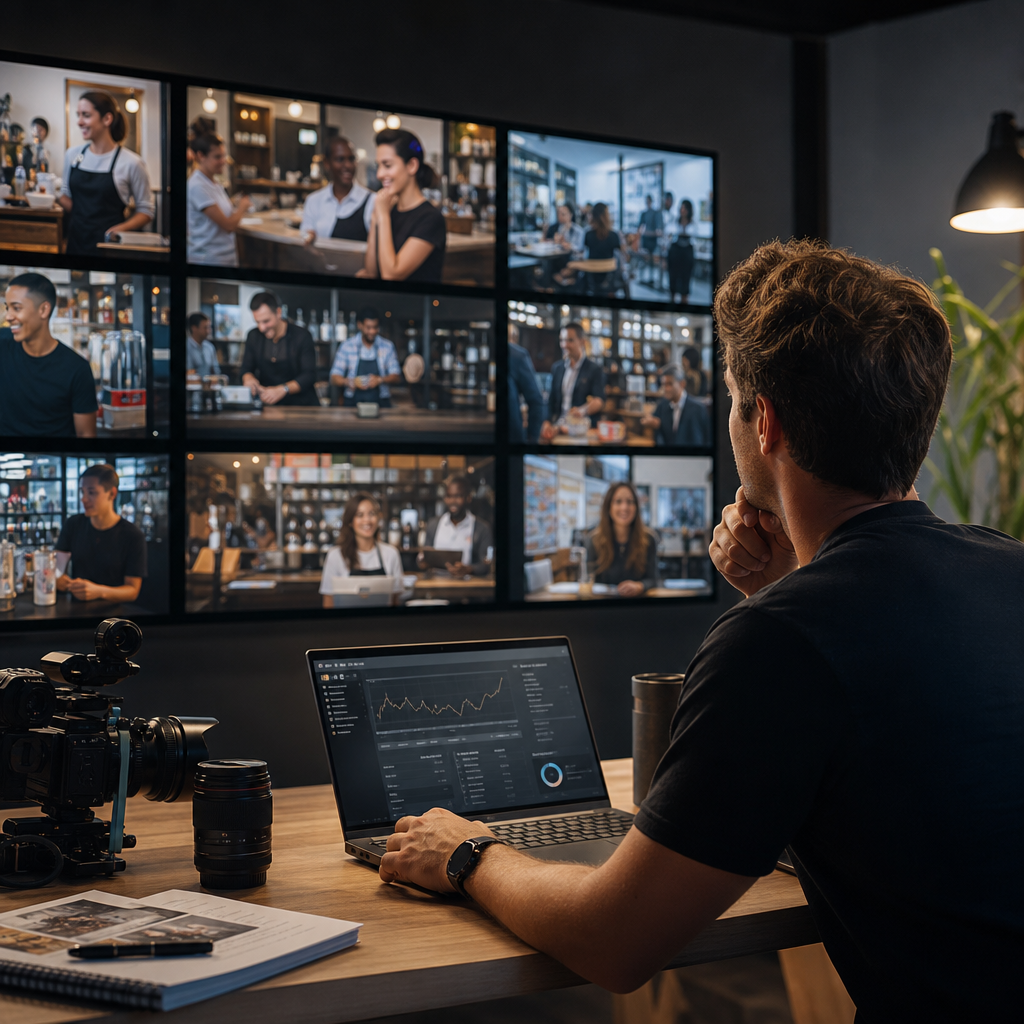
    • Platform-specific delivery: We optimize each video for the platforms where your audience spends time, whether that’s social media, email, or your website.

    Beyond production, we integrate video into your broader marketing strategy. That means pairing location-specific videos with social media management, paid advertising on Meta and Google, and SEO optimization so your content reaches the right people at the right time.

    What to do next: Schedule a brief conversation with your team about which locations have the strongest stories to tell. Start there, and expand to other locations as you see results.

    Building a Content Calendar That Works for All Locations

    A content calendar is the difference between scattered videos and a cohesive content strategy. For multi-location brands, the calendar needs flexibility for local storytelling while maintaining predictable publishing schedules.

    We build location-specific content calendars that include:

    • Monthly themes: A unifying theme (like “Meet Our Team” or “Customer Success Stories”) gives direction while allowing each location to interpret it locally.
    • Local events and milestones: Seasonal promotions, local sponsorships, and location anniversary content tied to when customers are actually paying attention.
    • Consistent publishing rhythm: A regular cadence across platforms (usually 2-4 short-form videos per location per month) trains audiences to expect and engage with your content.
    • Paid and organic integration: Videos scheduled for organic reach on specific days, with paid amplification on the same content to extend reach beyond your current followers.

    A realistic calendar accounts for production time, post-production, and approval workflows. It doesn’t overcommit: producing one high-quality video per location per month is better than producing four mediocre ones.

    What to do next: Choose a 3-month window and outline the themes, events, and holidays most relevant to your business. This becomes the foundation for your content calendar.

    Measuring ROI Across Your Video Marketing Efforts

    Video ROI is measurable when you track the right metrics. We don’t just count views. We track the metrics that connect to your business goals: leads generated, sales influenced, and customer acquisition cost.

    Key metrics to monitor include:

    • Engagement rate: Comments, shares, and saves on each video reveal which stories resonate most with local audiences.
    • Click-through rate: How many viewers go from video to your website or landing page? This shows intent to learn more.
    • Lead volume and quality: How many video viewers convert to leads? How do video-generated leads compare to other marketing channels?
    • Customer acquisition cost: What’s the average cost to acquire a customer from video traffic versus other channels?
    • Location-specific performance: Which locations generate the most leads from video? Use this to refine strategy for underperforming locations.
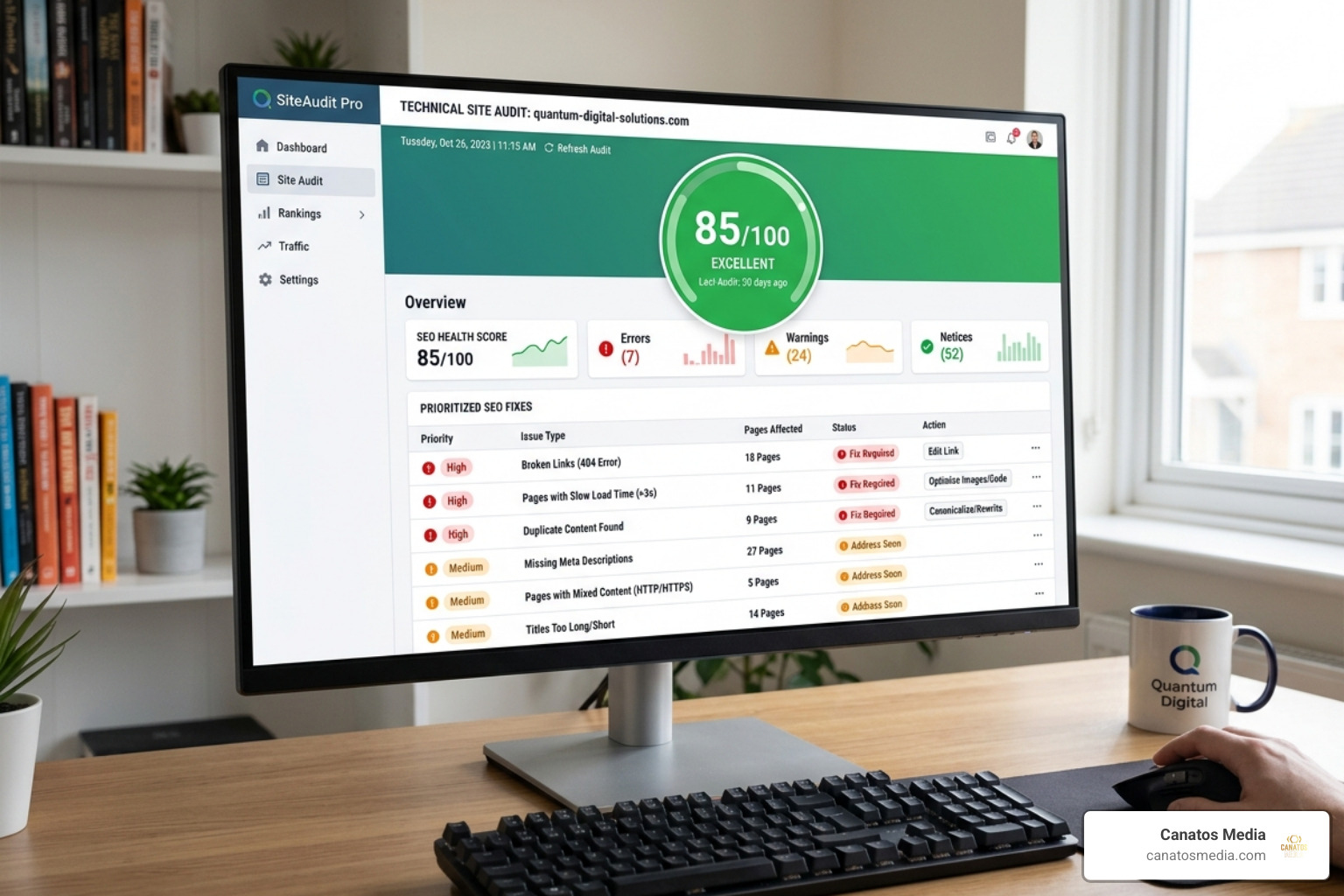
    We review these metrics monthly and adjust content strategy based on what’s working. If a particular video format drives leads, we produce more of that type. If one location’s videos outperform others, we analyze what makes them different and replicate those elements elsewhere.

    What to do next: Establish a baseline. Pick two weeks of your current marketing performance and measure. Then implement location-specific video and re-measure after 60 days to see the difference.

    Getting Started With Professional Video Production

    Starting your local video production journey doesn’t require a huge commitment. Most brands see meaningful results by producing location-specific content for 2-3 locations first, measuring what works, then expanding.

    Here’s how we typically structure a first engagement:

    1. Discovery and strategy session: We spend time understanding your business, visiting locations, and identifying your strongest stories.
    2. Production plan development: We create a detailed plan covering locations to film, types of videos to produce, and timeline for delivery.
    3. Initial production and testing: We film location-specific content (testimonials, team introductions, service explanations) and deploy it across your marketing channels.
    4. Measurement and optimization: We track results and adjust based on what drives the most leads and engagement.
    5. Scaling: Once we understand what works, we expand production to additional locations and refine the process.

    Throughout this process, video becomes part of your broader marketing system. We integrate it with social media management, paid advertising on Meta and Google, and SEO optimization so your content reaches more people and drives more leads.

    The investment in professional production pays back quickly when you’re reaching the right audience with authentic, location-specific content. Most of our multi-location clients see lead volume improvements within 60-90 days.

    Ready to transform how your multi-location brand connects with local audiences? We work with growth-focused business owners who understand that authentic, high-quality content drives measurable results. Let’s talk about your specific situation and build a video strategy that actually scales.

    For further reading: Live production services.

    Contact us today for a free consultation to see how we can help you grow your business.

    Frequently Asked Questions (FAQ)

    How do we handle video production for brands with multiple locations?

    We develop location-specific video strategies that maintain your core brand identity while reflecting the unique characteristics of each location. Our team works with you to create a master content calendar and production schedule that ensures consistent cinematic quality across all your sites, then we customize messaging, testimonials, and local details for each market to maximize relevance and engagement.

    Why does generic content underperform for multi-location service businesses?

    Generic content ignores the fact that customers in different markets have different pain points, local competitors, and community expectations. We’ve found that location-specific videos featuring local team members, client testimonials from your area, and region-relevant messaging drive significantly higher conversion rates because they speak directly to the audiences you’re trying to reach.

    What’s the connection between our video production and actual lead generation results?

    We don’t just create beautiful videos—we integrate them into paid advertising campaigns, social media funnels, and SEO strategies that push qualified prospects toward your conversion points. Every video we produce includes clear calls-to-action and is tracked through our measurement systems so you can see exactly how many leads and sales each piece of content generates across your locations.

  • How to Optimize Short-Form Video Ads for Local Lead Generation

    How to Optimize Short-Form Video Ads for Local Lead Generation

    Why Local Businesses Struggle With Video Ad Performance

    Short-form video dominates how people discover and engage with brands, yet most local businesses still treat video ads like static ads with motion. They upload content, set a budget, and wonder why views don’t translate to leads. The gap between attention and action is where most local video campaigns fail.

    We’ve seen this pattern repeatedly: strong creative, decent reach, minimal qualified leads. The issue isn’t the video quality. It’s the strategy connecting that video to your business goals.

    Local service businesses face a unique advertising challenge. You need customers within a specific geographic area, and your sales cycle often requires trust and consideration before conversion. Generic video ad approaches don’t account for how local buying decisions actually work.

    Most local businesses either ignore video advertising entirely or copy tactics from national brands. National campaigns prioritize broad awareness. Your business needs the opposite: highly targeted video that reaches people ready to hire you soon.

    Budget constraints compound the problem. A local HVAC company, plumber, or home contractor has a smaller ad spend than a nationwide brand, which means every dollar must work harder. Wasted clicks to irrelevant viewers cost money you don’t have to spare.

    The platform algorithms also work against the unprepared. Meta and Google reward ads that drive specific actions (leads, calls, purchases). If your video ad doesn’t clearly direct viewers toward those actions, the algorithm deprioritizes it, pushing your CPM up and your ROAS down.

    What to do next: Audit your current video ads. Track how many views convert to actual leads, not just clicks. This baseline reveals whether your struggle is creative, targeting, or structural.

    The Core Challenge: Converting Views Into Qualified Leads

    Watching a video and clicking to learn more are two different behaviors. A view is passive consumption. A lead requires active intent and commitment of contact information.

    Many local businesses optimize for views or clicks. That’s the wrong metric. A video can get 5,000 views and generate zero leads if it doesn’t signal value clearly or direct viewers to a next step they’re willing to take.

    Consider a roofing company running video ads. A 15-second video showing beautiful roof installations might get high view-through rates. But if viewers watch out of curiosity without understanding the company’s guarantee, pricing, or urgency, they won’t convert. They simply watched something visually interesting and moved on.

    The conversion gap widens when video sends traffic to a generic landing page or outdated website. The viewer sees a compelling 6-second hook but lands on a page that doesn’t match the promise or feels slow to load. That friction kills conversion rates.

    Time-sensitive service businesses have an additional layer of complexity. An emergency plumber needs leads from people with urgent problems right now. A general contractor can work with longer sales cycles. Your video and landing page structure must align with how fast your customer needs to act.

    Actionable step: Map your customer journey from video view to lead submission. Identify friction points where viewers drop off. A simple friction audit (slow pages, unclear CTAs, irrelevant forms) often reveals more ROI gains than creative changes.

    What Makes Short-Form Video Different From Traditional Ads

    Short-form video operates on different psychology than traditional display ads or even long-form video. A 15-second or 30-second video viewed on mobile while someone scrolls isn’t the same as a 2-minute explainer or a TV commercial.

    Short-form demands immediate relevance. You have 2-3 seconds to signal why this video matters to this specific person. A roofing company’s video for someone searching “roof replacement near me” needs to open with the problem or solution, not a company logo or talking head.

    The platform context also shapes performance. A video native to Instagram Reels performs differently than the exact same video pushed to Facebook feed viewers. Aspect ratios, captions, pacing, and hooks must adjust for the platform and placement.

    Short-form video also rewards authenticity and speed over polish. A slick 30-second production can underperform a faster, more direct 15-second video that gets to the point immediately. This works in favor of local businesses that can’t match national production budgets.

    Mobile viewing dominates short-form consumption. Most viewers watch on phones, often without sound. Your video must communicate through visuals and on-screen text, not voiceover alone. This constraint actually simplifies messaging and often improves results.

    Our Approach: Cinematic Content That Drives Local Results

    We build short-form video ads that look cinematic but function as sales tools. The two aren’t mutually exclusive, and local businesses benefit from both.

    Cinematic storytelling creates emotional connection and brand recall. A homeowner considering a new roof doesn’t just want a functional service. They want confidence that the work will be done well, on time, and with professionalism. A cinematic video showing the transformation of a home alongside customer testimonial builds that confidence faster than listing features.

    We structure each video with a specific conversion goal in mind, not just awareness. If your video drives 10,000 views but the targeting and messaging don’t align with lead quality, those views waste budget. We reverse-engineer from your lead requirements: who needs to convert, when do they need to act, and what objection must the video overcome?

    Our short-form video production process includes testing. We don’t rely on assumptions about what your audience responds to. We produce variations on hooks, pacing, and CTAs, then measure which version drives the highest-quality leads at the lowest cost.

    We also integrate these videos into your broader digital strategy rather than treating them as standalone assets. Your video ads feed into social media management, landing page optimization, retargeting campaigns, and email follow-up. A lead generated by video performs better when the next touchpoint is already prepared to convert them.

    Strategic Video Targeting for Your Service Area

    Geographic targeting is the lever that separates local video advertising from national campaigns. You can target people within 5 miles of your address, by zip code, by neighborhood, or by custom radius.

    But geography alone isn’t enough. A plumber targeting all people within 5 miles of their office will waste money on people who don’t currently need service or can’t afford the price point. Smart targeting layers in behavior, demographics, and intent signals.

    On Meta, we combine location with audience interests and behaviors. A contractor targeting “kitchen remodeling” and “home improvement” interests, within a specific radius, reaches people actively researching that category. We exclude past customers and people who’ve already converted to lower wasted spend.

    Google Ads offers different targeting strength through search intent. People typing “emergency plumber near me” have immediate need. That intent-based targeting often outperforms demographic targeting alone because it reaches people actively looking for your service right now.

    Income and homeownership targeting also matter for local service businesses. A luxury landscaper serves different homeowners than a general maintenance company. We use platform data to filter for properties and demographics aligned with your ideal customer.

    Testing different geographic radiuses reveals efficiency. A 3-mile radius might deliver higher-quality leads than 10 miles, even if it reduces total volume. Quality leads matter more than quantity when your conversion cost is high.

    Next step: Define your true service area realistically. Many local businesses overestimate how far they can profitably serve. Use past customer data to identify your geographic sweet spot, then build targeting around that.

    Structuring Your Video Ads for Maximum Lead Capture

    The video structure itself determines conversion probability. We follow a tested framework for local lead generation.

    Open with the problem or desired outcome in the first 2 seconds. A homeowner watching a roofing ad should immediately recognize their situation. “Your roof leaks and you need it fixed this month” hits faster and more effectively than “Welcome to ABC Roofing.”

    Build urgency or credibility within seconds 3-8. Show a customer transformation, a before/after, a customer testimonial, or a specific guarantee. This section proves why they should hire you specifically.

    Close with a single, clear call-to-action in seconds 9-15. “Call now for a free inspection” or “Book your consultation with one tap.” Make the next step obvious and frictionless.

    Text overlays should highlight the most important information. Your service area, phone number, or offer appear on screen so viewers watching without sound still understand the action. Many mobile viewers have sound off by default.

    Pacing and cuts matter more in short-form than in long-form. Faster cuts (new visual every 2-3 seconds) hold attention. Slower, lingering shots often bore short-form viewers accustomed to rapid cuts on social platforms.

    A 15-second video often outperforms 30-second for local lead generation because it forces clearer messaging and costs less to produce and test.

    Platform-Specific Optimization: Meta and Google Strategies

    Meta (Facebook/Instagram) and Google Ads require different video optimization approaches because users come with different intent and context.

    Meta thrives on visual storytelling and emotional resonance. Viewers scroll through feeds for entertainment and social connection, so your video competes against personal content, not just ads. The hook matters more on Meta. We often test multiple opening visuals or text overlays to find which grabs attention first.

    Facebook and Instagram feed placements perform well for local service businesses because the visual dominance lets cinematic content shine. Reels placement requires faster pacing. Audience Network placements can expand reach but often reduce lead quality, so we typically exclude them for local service campaigns.

    Google allows video ads on YouTube and in Search and Display placements. YouTube viewers are often more intent-focused than Meta users, so we can use slightly longer, more detailed videos. Google also lets us layer in search keywords, so a video ad can appear when someone searches “plumber” + your city. That keyword context improves conversion dramatically.

    Google’s lead form extension lets people submit their information without leaving YouTube, reducing friction. We always enable this for local lead generation campaigns.

    Meta’s lead form ads work similarly. A viewer doesn’t leave the platform. They fill out a form right inside the app, then your system captures the lead immediately. This format consistently delivers lower lead cost than sending traffic to external landing pages.

    Custom audiences on Meta let us retarget people who watched our video without converting. A second video with different messaging often converts viewers who ignored the first video, so we always build retargeting into multi-video campaigns.

    Building Landing Page Integration With Your Video Ads

    Where your video sends traffic determines conversion rate as much as the video itself. A compelling video sending traffic to a slow, unclear landing page wastes the video’s potential.

    When we run video ads directly to your website, we ensure the landing page matches the video message and loads fast on mobile. If the video promises a “free consultation,” the landing page should make booking a consultation frictionless, ideally within two clicks.

    Form fields should ask only for essential information. An HVAC lead doesn’t need to answer 10 questions to schedule a service call. Name, phone, and maybe address suffice. Each extra field drops completion rate.

    Load time below 3 seconds is non-negotiable on mobile. Even a 2-second delay increases bounce rate. We test landing pages on actual mobile connections (not just fast wifi) to catch speed issues.

    If you don’t have a high-converting landing page, we can guide you toward building one. A cinematic website video that auto-plays above the fold often increases landing page engagement and time on page, signaling quality to search engines and improving overall conversion rate.

    Dynamic landing pages that personalize based on traffic source also improve conversion. A viewer who clicked a video about “kitchen remodeling” lands on a kitchen remodeling page, not a generic homepage. This relevance reduces friction.

    Measuring Video Ad Performance and Lead Quality

    Not all leads are equal. A video ad might generate 50 leads at $10 cost per lead, but if only 3 convert to customers, your actual customer acquisition cost is $167. We measure both volume metrics and quality metrics.

    View-through rate and engagement tell part of the story. A 50% view-through rate indicates the video holds attention. But this metric alone means nothing without conversion data.

    Lead volume and lead cost per platform show efficiency. Meta might generate leads at $8 while Google costs $15. This difference could reflect audience overlap or intent differences, not necessarily platform quality. We track both to optimize budget allocation.

    Lead quality metrics matter most. How many leads call you versus submit a form? How many schedule appointments versus just request information? How many become paying customers? We work with you to define what a “qualified lead” actually is, then measure conversion rates from video ad to that definition.

    Cost per acquisition (the video ad cost divided by customers it generated) is your true bottom-line metric. A video driving 100 low-quality leads at low cost underperforms a video driving 10 high-quality leads if the 10 eventually become customers.

    We establish benchmarks early, then test variations to beat them. A 2% conversion rate from video view to lead might improve to 3% through messaging changes, or to 2.5% through better targeting. Small improvements compound into significant ROI increases.

    How We Integrate Video Ads Into Your Complete Marketing System

    Video ads work best as one component of a coordinated strategy, not as standalone campaigns.

    When we manage your social media, we use video ads to drive awareness and leads, then nurture those leads through content and retargeting. A viewer who watches your video but doesn’t convert might see organic content from your social media the next day, improving brand recall and later conversion.

    Paid advertising across Meta and Google often work together in our approach. A prospect might first see your video ad on Instagram, then retarget on Google Search when they’re actively searching for your service. This multi-touch attribution shows that both channels contributed to the lead.

    Our SEO optimization ensures your website already ranks for local searches. Video ads then speed up the awareness and lead generation for competitive keywords. Combined, organic search and video ads create a more complete funnel.

    Landing page design and website support integrate directly with video campaigns. Fast, clear pages built to convert specific traffic aren’t an afterthought. They’re built in parallel with video production and are part of the success equation.

    Lead generation systems we implement capture leads from video ads, then automatically trigger follow-up email sequences or CRM notifications. The lead doesn’t just arrive in your inbox forgotten. It enters a system designed to contact and nurture it toward conversion.

    Getting Started With Your Local Video Ad Strategy

    Start by identifying your clearest opportunity. Which service or offer generates your highest-margin business? Which customer type has the shortest sales cycle? Which geographic area has the most underserved demand? Focusing your first campaign on this sweet spot increases the chance of early success and builds momentum.

    Define your conversion metric. Not views, not clicks, not leads by themselves. How do you define a qualified lead or a successful outcome? This definition shapes everything from targeting to ad structure.

    Conduct competitor reconnaissance. Search your local service area on Google and Meta. What ads are your competitors running? How are they structured? This reveals what’s already working in your market without copying it directly.

    Audit your landing page or website. Does it load fast on mobile? Can someone schedule an appointment or request information in fewer than three clicks? If not, this becomes your first priority before launching video ads.

    Connect with us to discuss your specific situation. We’ll assess your current position, identify your biggest opportunity, and propose a video ad strategy tailored to your business. We work with growth-focused business owners across service industries to turn video attention into measured leads and customers.

    Your local market is ready. The businesses generating consistent leads from video ads aren’t waiting for perfect conditions. They’re testing, learning, and optimizing. The question is whether you’ll start this quarter or let another season pass.

    Contact us today for a free consultation to see how we can help you grow your business.

    Frequently Asked Questions (FAQ)

    How long does it typically take to see leads from short-form video ads?

    We usually see meaningful lead volume within 2-4 weeks of launching optimized campaigns, though this depends on your service area size and competition level. Our process involves testing different video angles and targeting parameters during the first two weeks, then scaling what works. Most of our clients report their best ROI kicks in after 6-8 weeks once we’ve refined audience targeting and landing page alignment based on actual performance data.

    Why do our existing video ads get views but not conversions?

    The gap typically comes down to three things we fix: your videos aren’t addressing the specific problem your local customers have, your targeting reaches people outside your service area, or there’s friction between what the ad promises and what happens on your landing page. We restructure videos to lead with the outcome your customers actually want, tighten geographic targeting to your real service zones, and ensure every click lands on a page built to capture that specific lead type rather than a generic homepage.

    Can short-form video ads work for service businesses, or just e-commerce?

    Service businesses actually perform better with short-form video ads than most industries because we can showcase results and build trust quickly. We focus on before-and-after transformations, customer testimonials, and process clarity rather than product shots. Your local customers need to see that you understand their specific problem and can deliver, and cinematic short-form content is the fastest way to prove that across Meta and Google.