The Challenge: Scaling Visual Content Across Multiple Locations
Running a multi-location or service-based business means you need consistent, high-quality visual content across every branch, market, and campaign. Yet most content creation workflows weren’t built for scale. You’re juggling location managers who may lack creative direction, inconsistent quality standards, and the constant pressure to produce fresh social content while maintaining brand cohesion.
When you’re managing three dental offices, five HVAC service territories, or ten spa locations, shooting video becomes complicated. Each location has different aesthetics, staff dynamics, and local audiences. A generic platform that just helps you record clips won’t solve this. You need a partner who understands how to systematize cinematic quality at scale and then strategically deploy that content to drive leads.
This is where most businesses hit a wall. They adopt a DIY video tool, realize the content lacks strategic direction, and end up with unused footage sitting on drives while their competitors are converting leads from polished, purpose-built videos.
Why Generic Video Platforms Fall Short
Tools built primarily for recording and basic editing miss a fundamental truth: video without distribution strategy is just expensive content nobody sees. Many platforms focus on making it “easy” to shoot video but ignore the entire ecosystem needed to turn views into leads.
Here’s what typically goes wrong:
- Platform-native editing creates average-looking content that blends into the noise of social feeds
- No integrated paid advertising capabilities mean your videos get zero amplification beyond organic reach
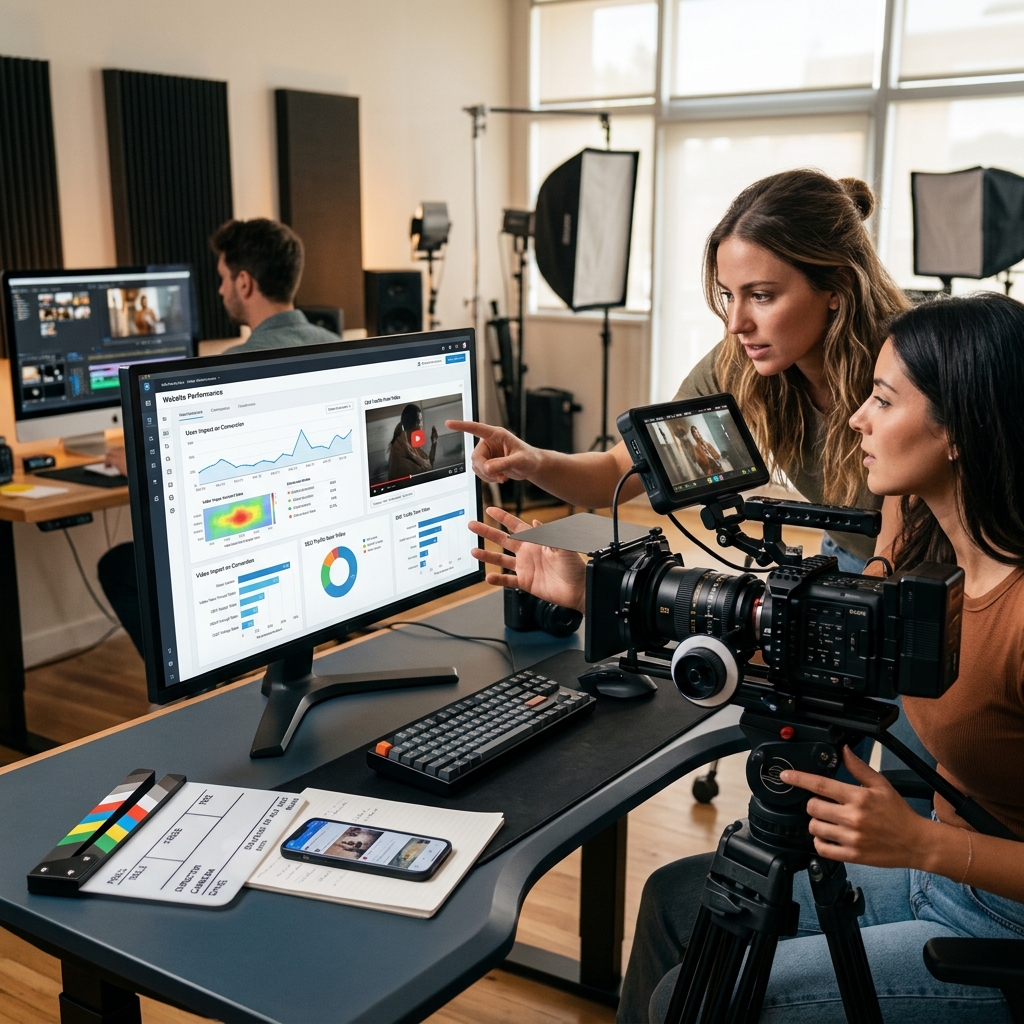
- Disconnected analytics leave you guessing whether video is actually driving business results
- Limited social media management features require juggling multiple tools
- No SEO or website integration strategy, so video assets don’t build long-term organic visibility
- Lead capture systems are either nonexistent or bolted on as an afterthought
We’ve worked with brands who spent months producing videos on these platforms only to realize they had no systematic way to turn watchers into qualified leads. The technology was there, but the strategy wasn’t. That’s the gap we built Canatos Media to fill.
How We Approach Scalable Video Differently
We start with your business goals, not with production timelines. Our process revolves around understanding which videos actually move your needle: lead generation assets, trust-building brand stories, location-specific service videos, or customer testimonials.
From there, we build a scalable production and distribution system. This means:
- Developing repeatable templates and workflows so you’re not reinventing the wheel for each location
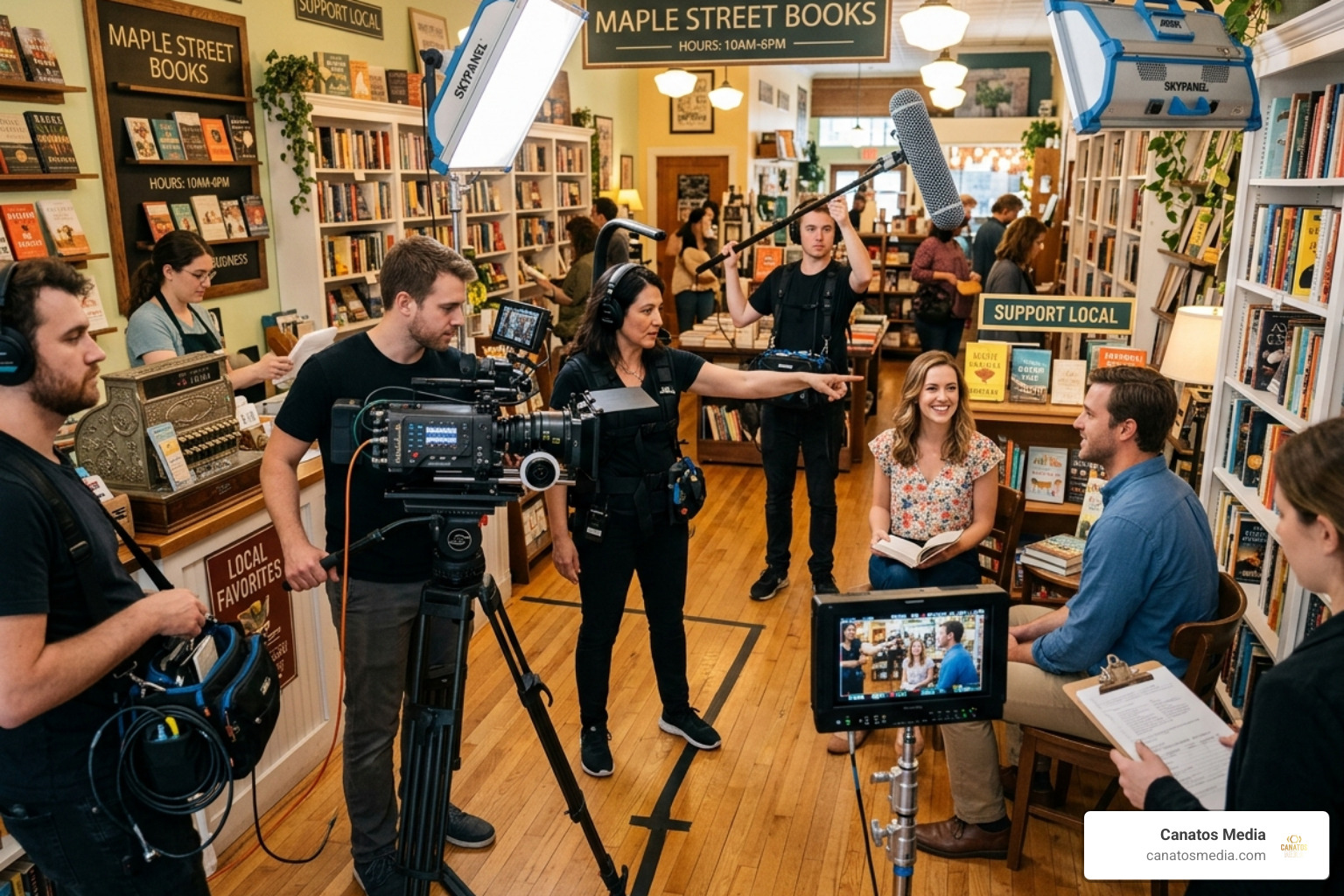
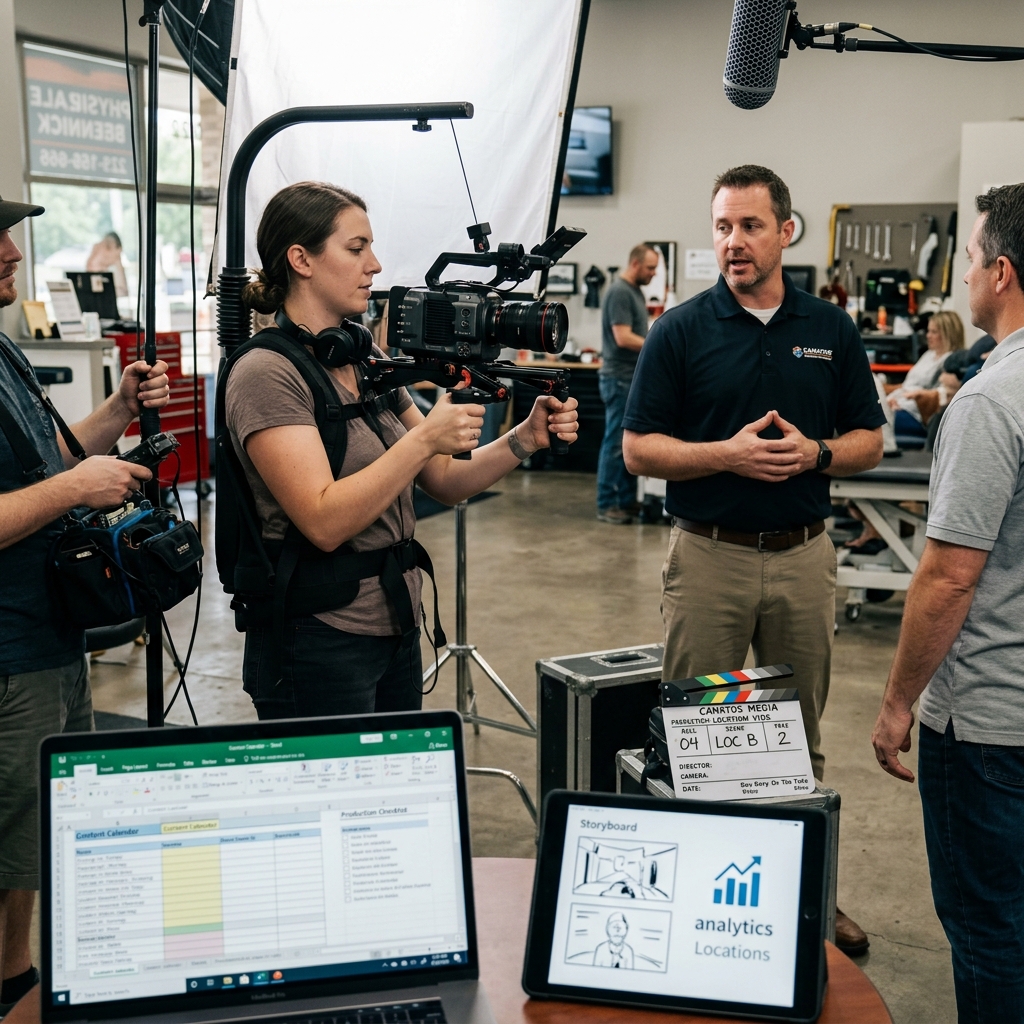
- Shooting cinematic content that stands out in algorithm-driven feeds
- Creating variations of key videos optimized for different platforms, audiences, and campaign phases
- Integrating video production with paid advertising and lead capture from day one
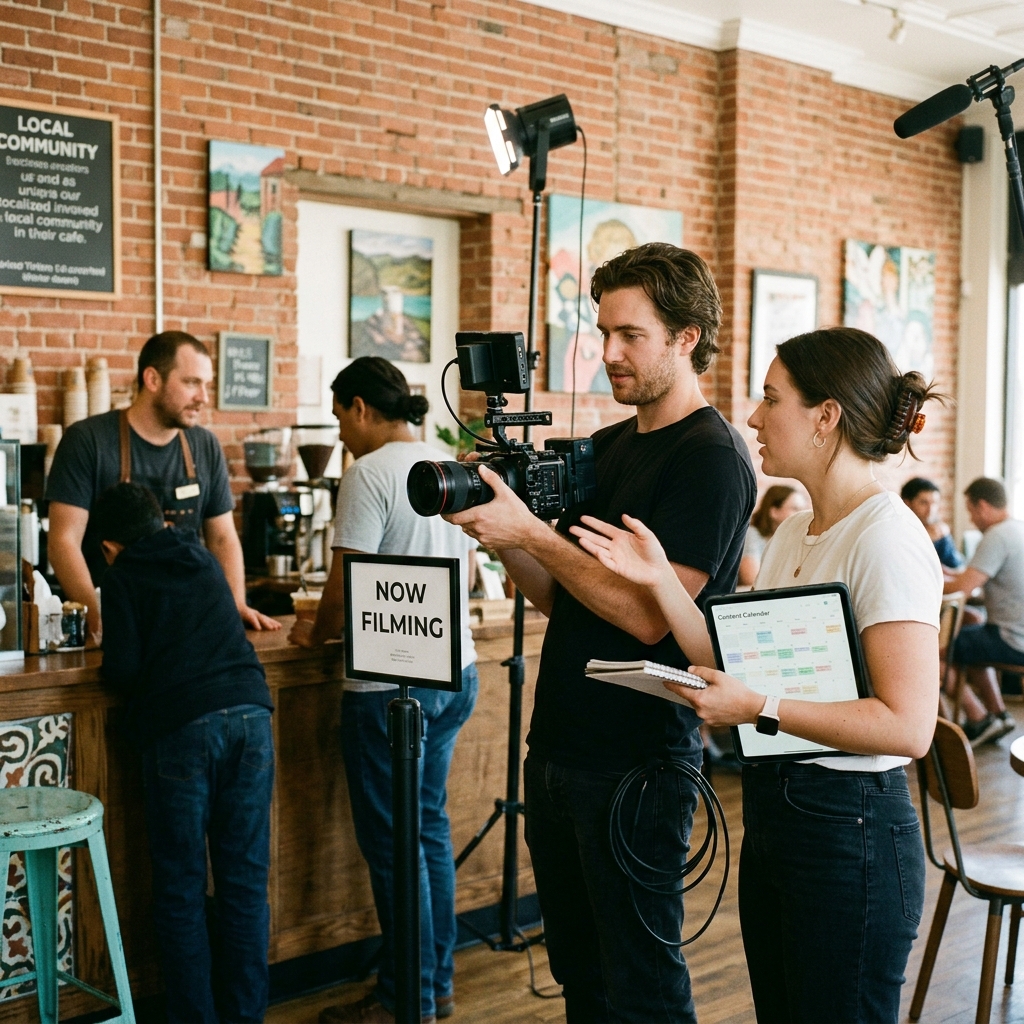
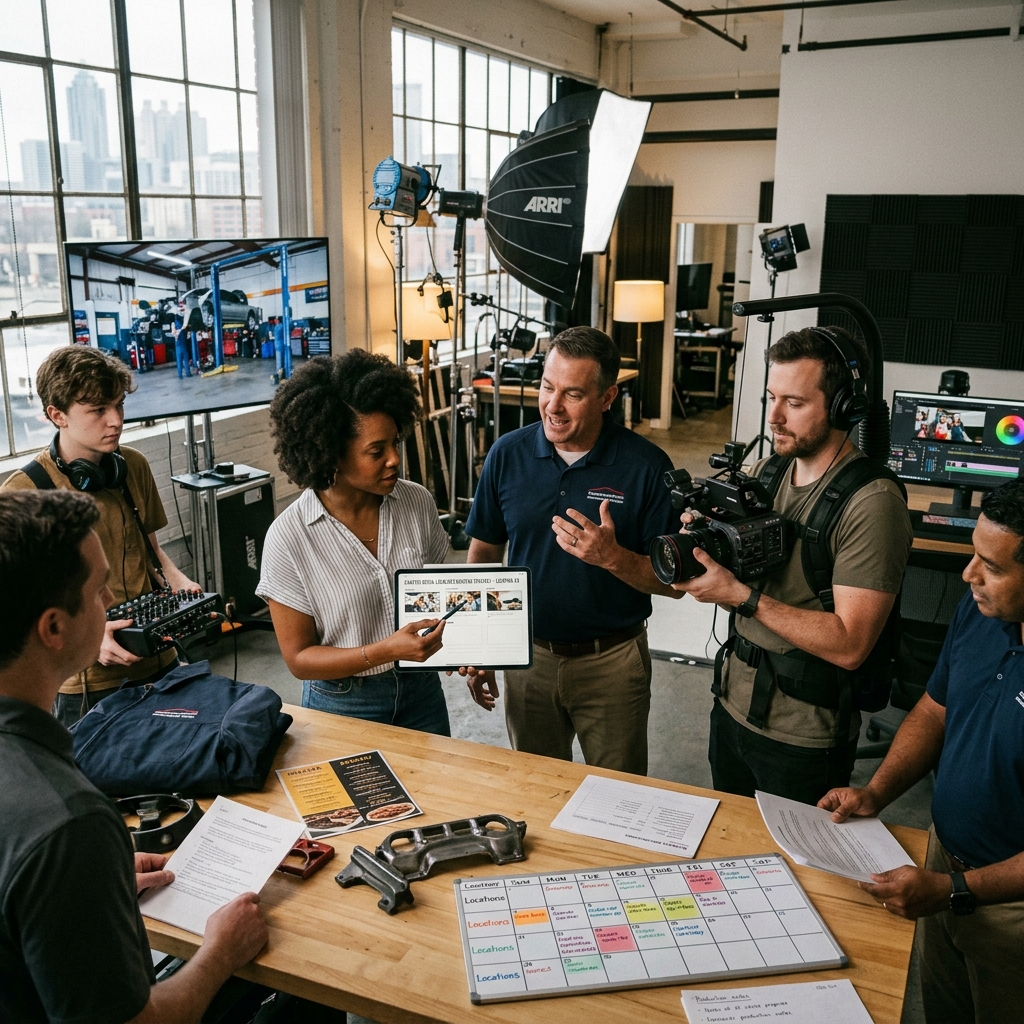
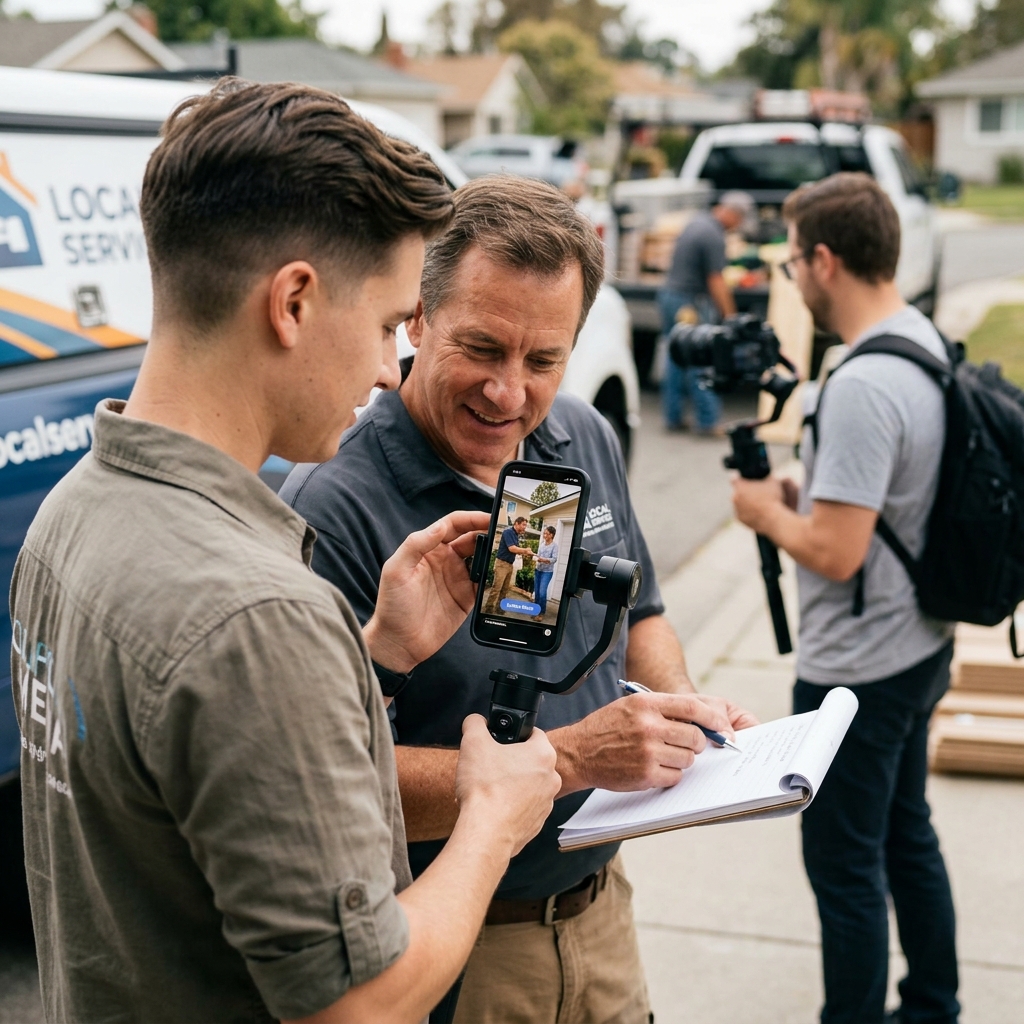
For a multi-location plumbing company, this might mean shooting hero content at one location, then efficiently capturing location-specific variations. A service brand can have branded story templates that work whether you’re in New York or Nashville. The scalability doesn’t come from automation alone; it comes from strategic planning upfront.
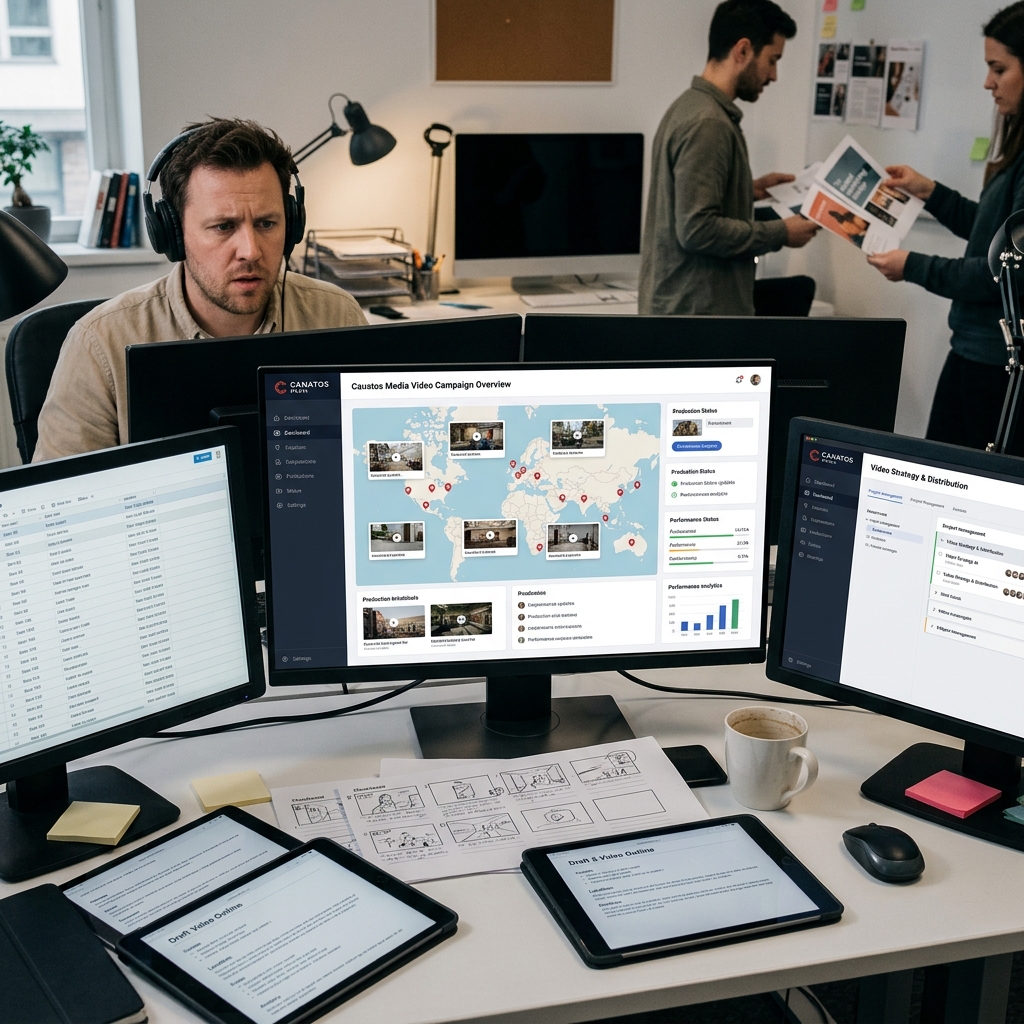
Cinematic Quality Meets Strategic Distribution
There’s a gap between “professional looking” and “cinematic.” We close it. Our cinematic website videos aren’t just well-lit and edited; they’re crafted to communicate your brand’s unique value within 15 seconds to three minutes, depending on where they appear.
This matters because algorithmic feeds reward completion and engagement. A cinematic video with intentional pacing, thoughtful color grading, and clear storytelling performs measurably better than standard corporate video. Your audience feels the difference, even if they can’t articulate it.
We also recognize that a single video asset shouldn’t live in one place. A 60-second brand story becomes a 15-second reel, a 30-second paid ad, a 90-second website feature, and multiple social snippets. Strategic distribution multiplies your return on production investment.
Integrated Marketing: Beyond Just Video Production
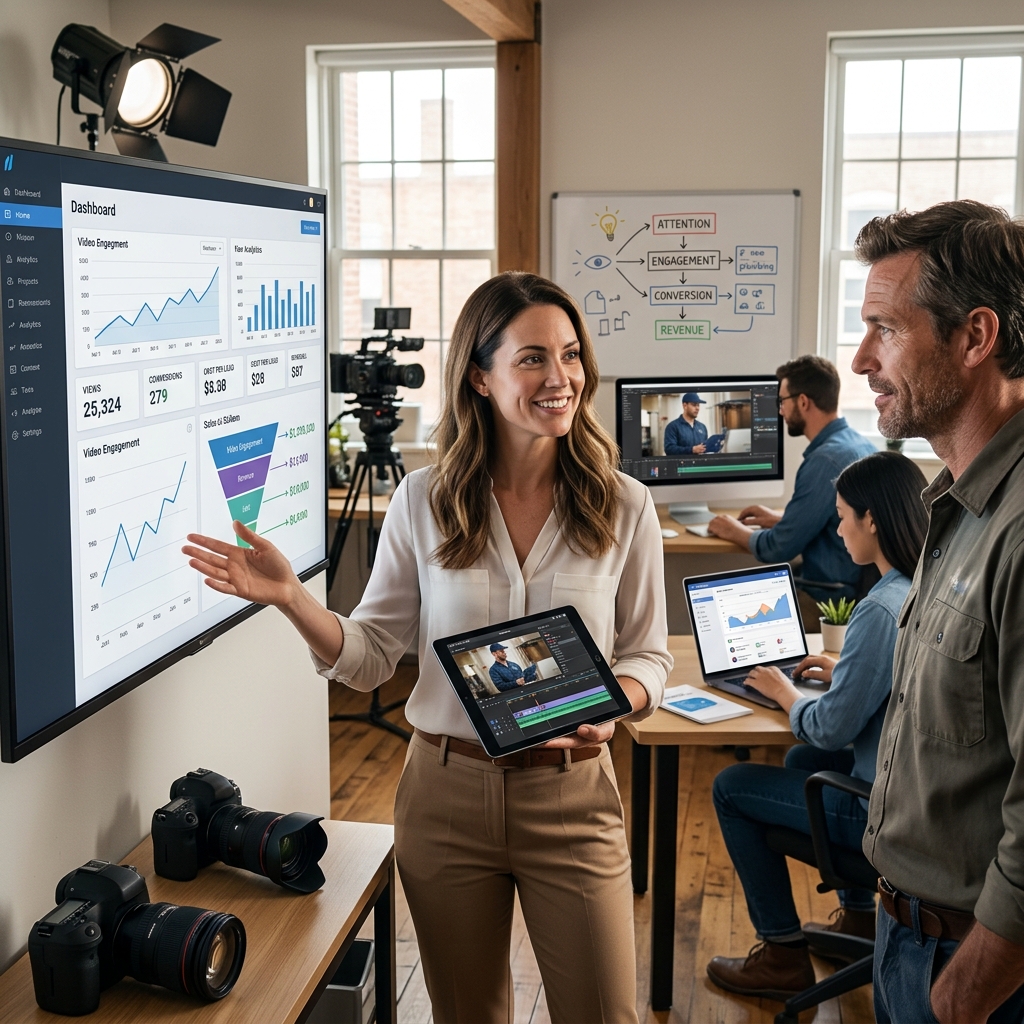
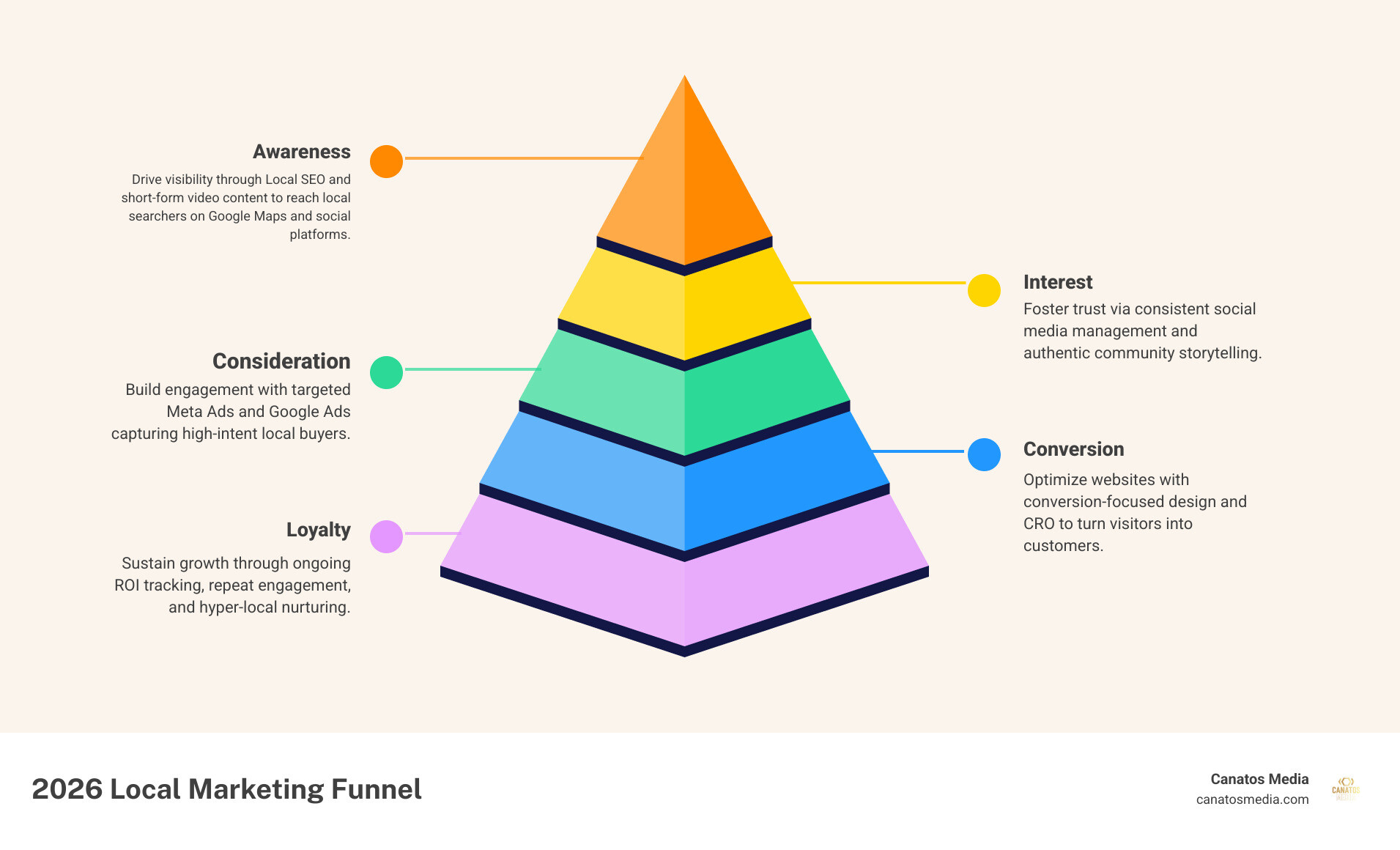
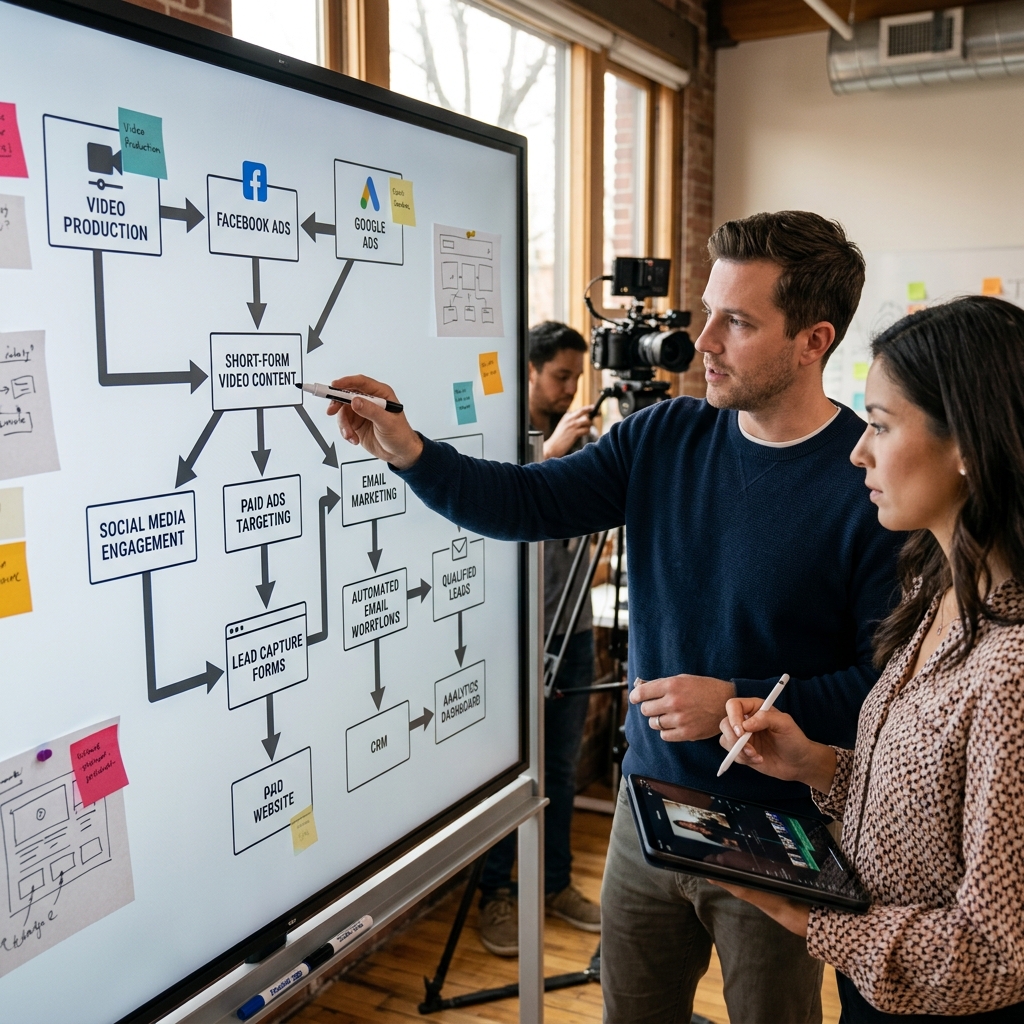
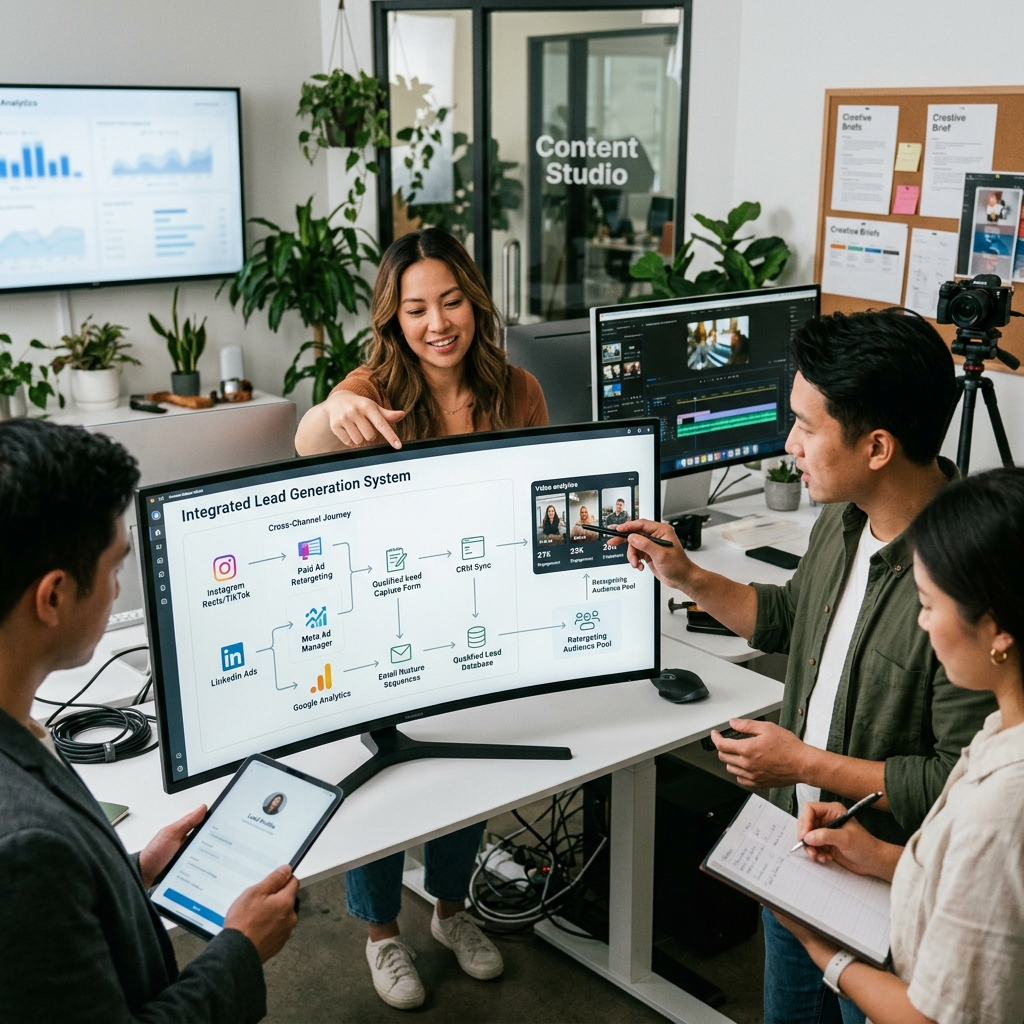
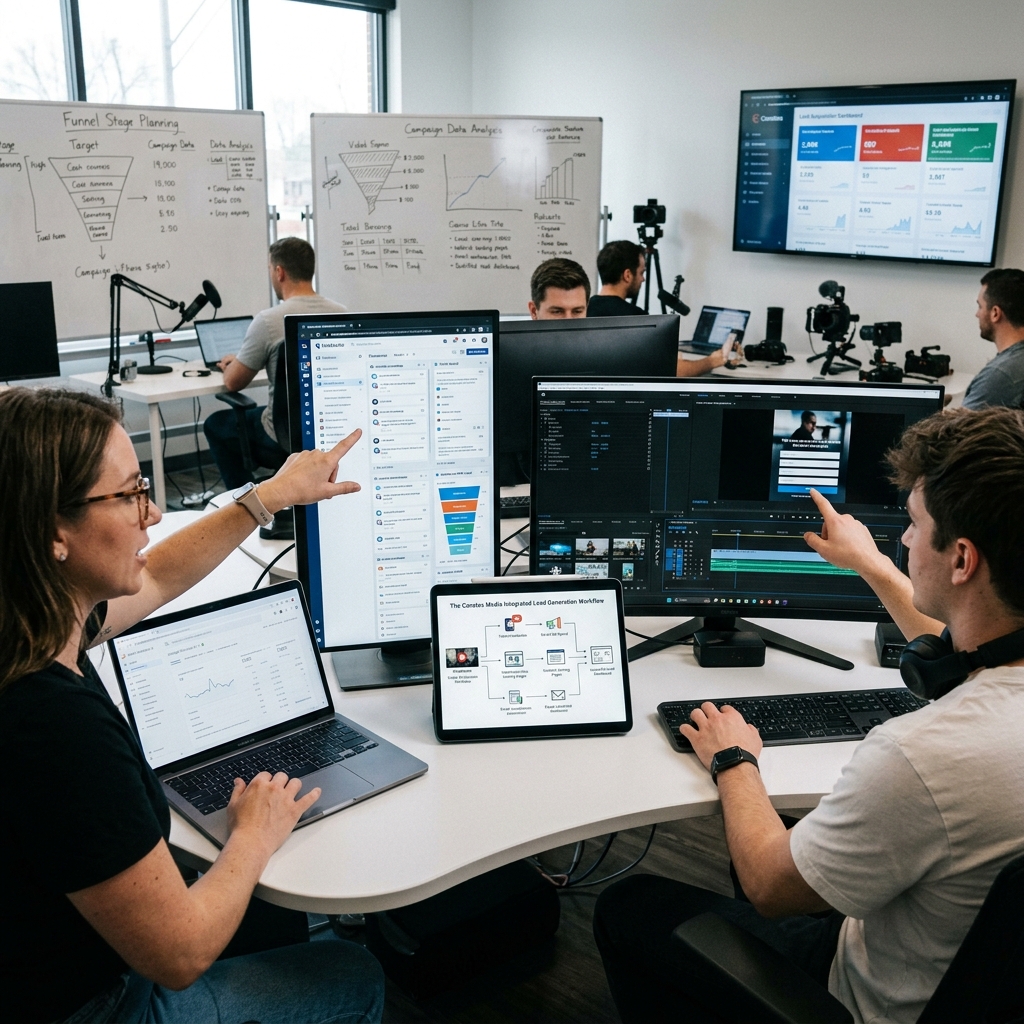
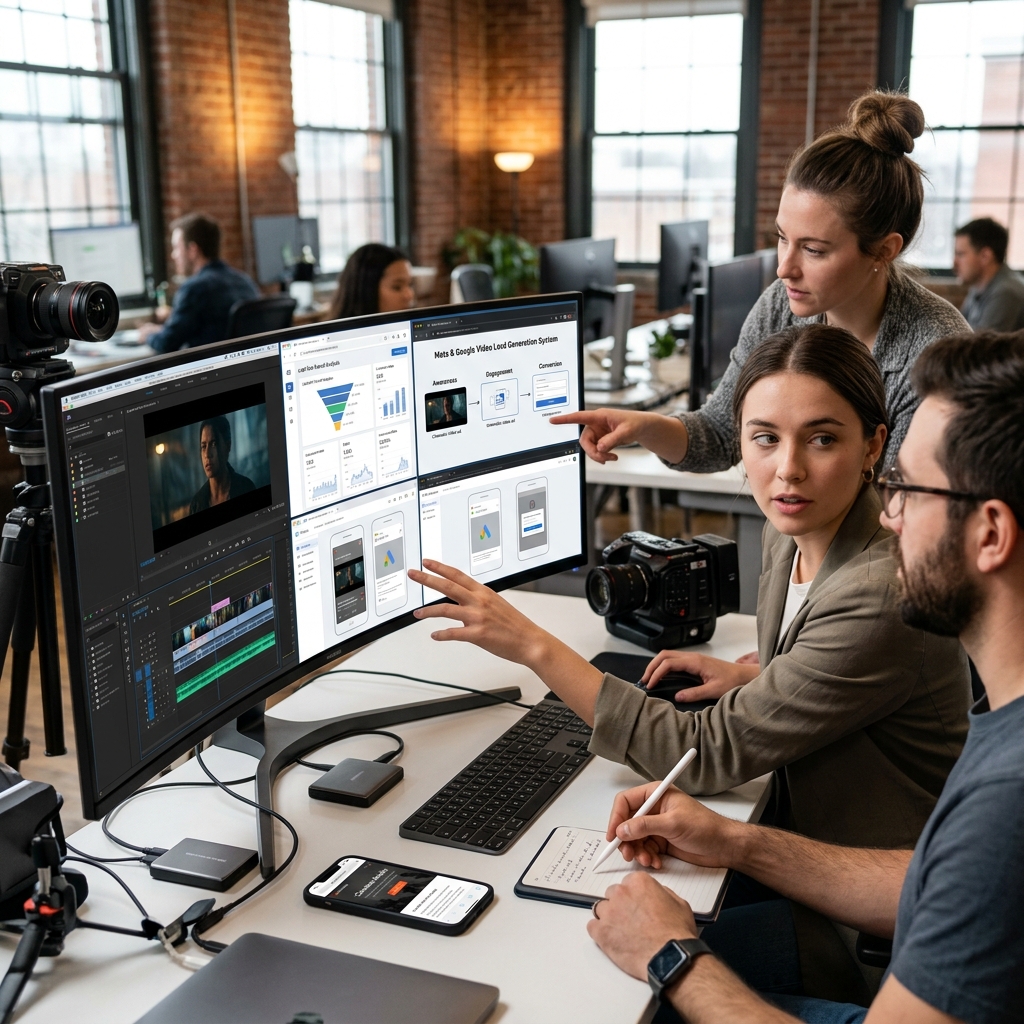
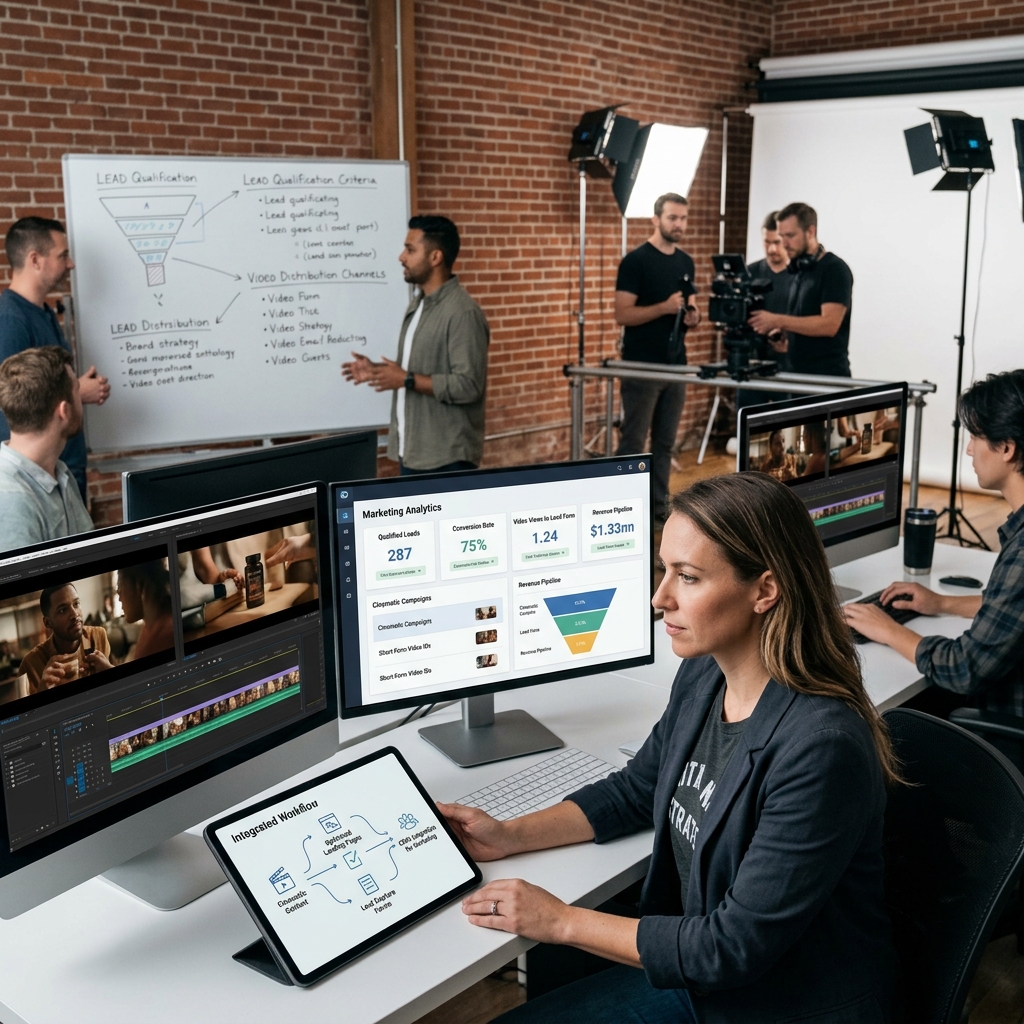
Video is powerful, but isolated video is limited. We approach this as part of a broader marketing system. That’s why we built our all-in-one marketing funnel to connect video content, paid advertising, lead capture, and follow-up.
Your video strategy should feed into paid advertising, which directs traffic to optimized landing pages, which captures leads through integrated forms. Those leads then flow into your email or CRM system for nurturing. Without this integration, you’re producing content in a vacuum.
We handle the connective tissue. Video production becomes part of a coordinated effort across social media, search, and paid channels, all designed to move prospects toward becoming customers.
Lead Generation Through Video-First Storytelling
Service businesses live and die by leads. Video is one of the highest-converting content formats, but only when it’s paired with clear intent and strategic placement.
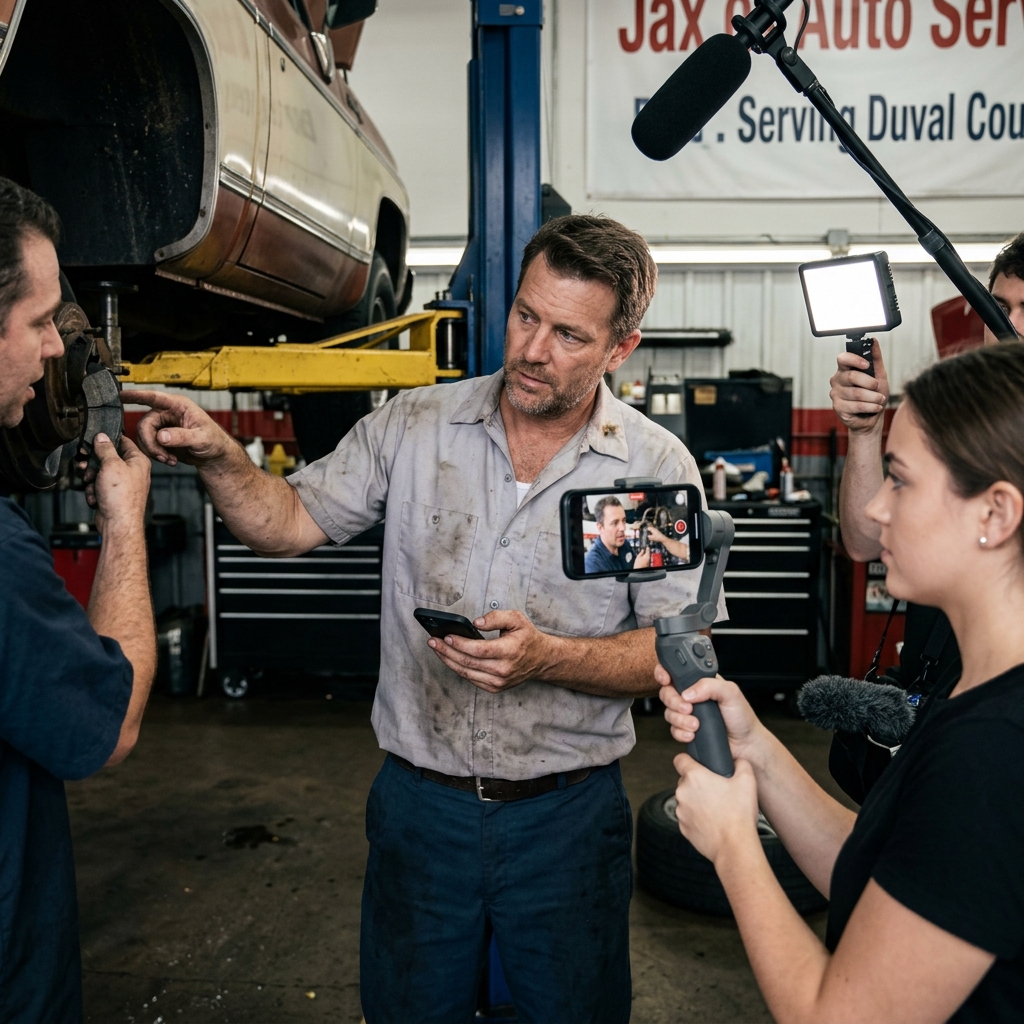
We build videos specifically designed to generate leads: service explainers that answer the question “Why should I trust you?” Customer success stories that mirror your prospect’s situation. Location-specific content that speaks to local audiences. These aren’t vanity videos; they’re conversion assets embedded in paid campaigns and landing pages.
When a homeowner searches for “emergency plumber” and sees a 45-second video of your team solving a real problem, followed by a simple CTA and lead form, the conversion rate changes dramatically compared to text or static images alone.
Social Media Management Paired With Video Content
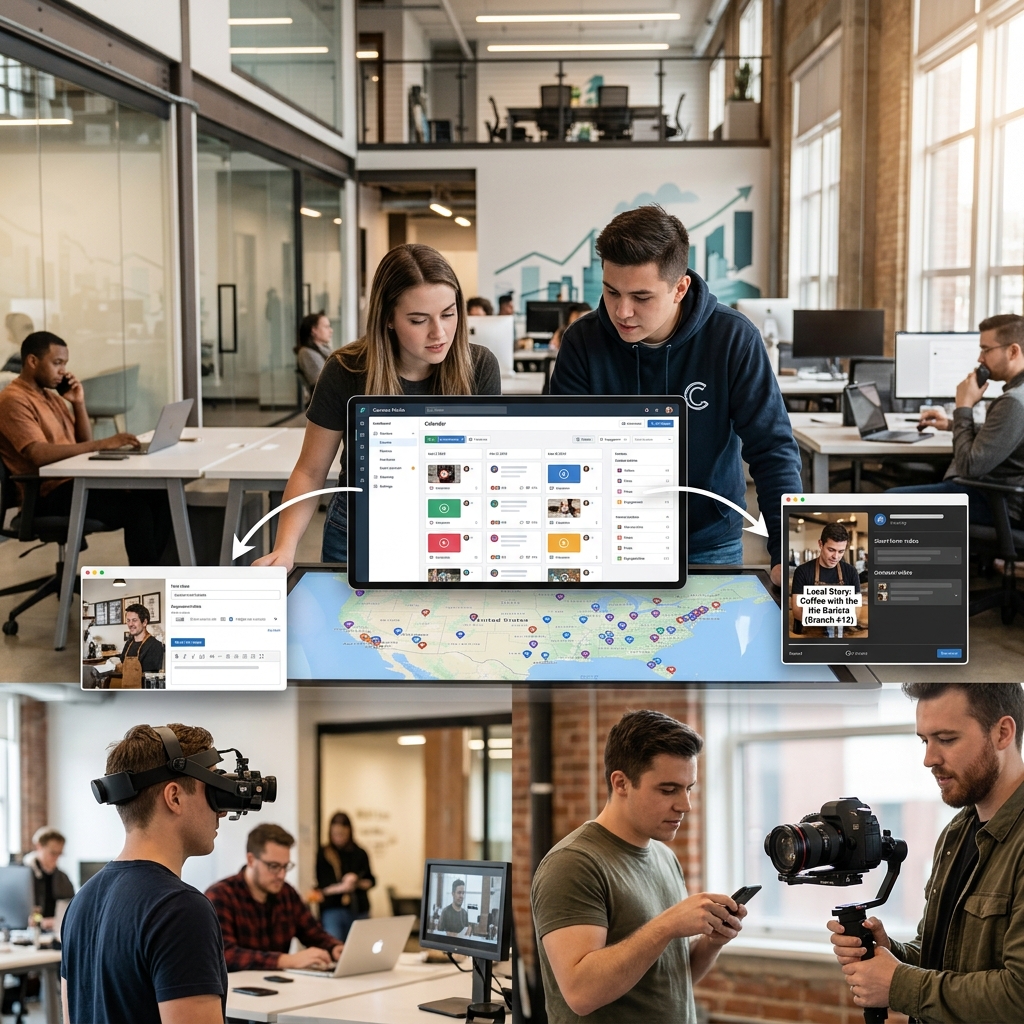
Producing excellent video without a distribution strategy is like building a storefront nobody visits. We manage the social channels where your audience actually spends time, posting consistently, engaging with comments, and building momentum around video content.
This includes:
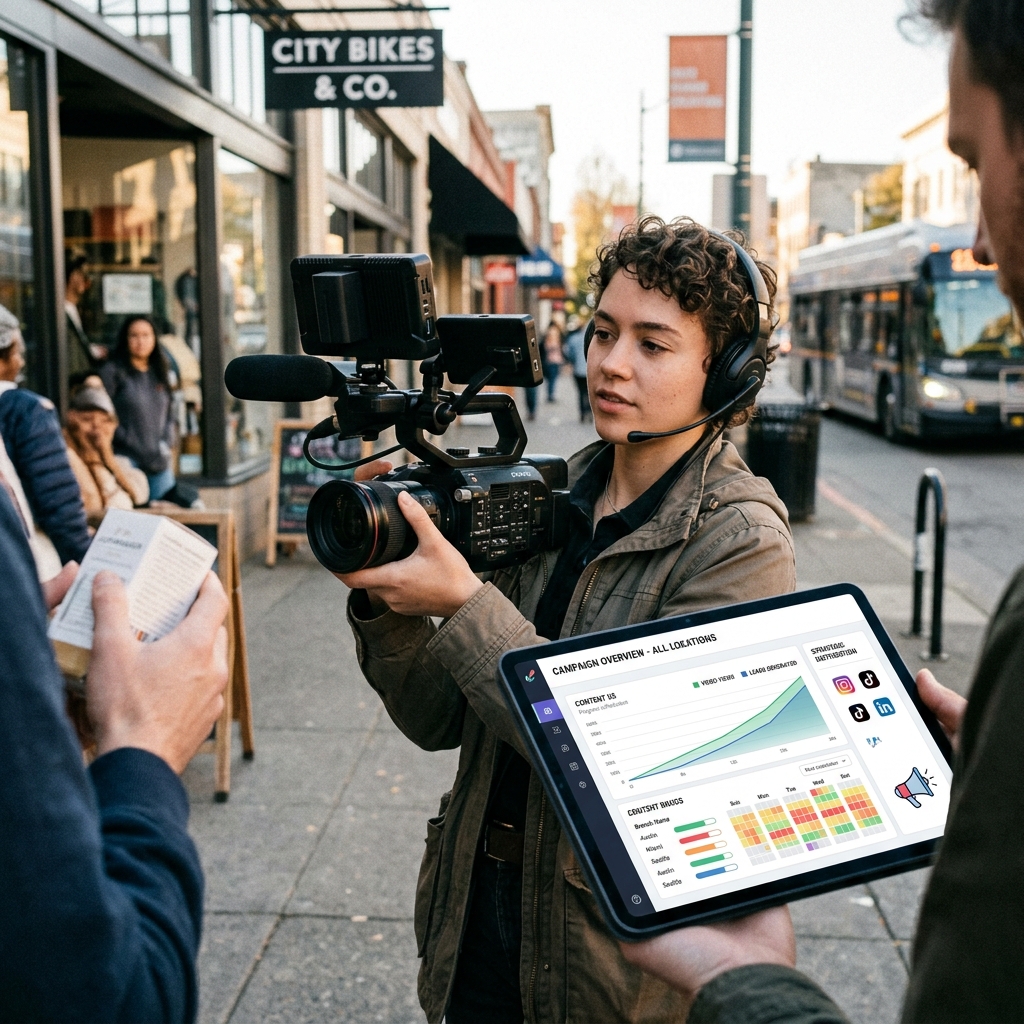
- Strategic posting calendars aligned with your seasonal business cycles
- Community management that builds trust and relationships
- Cross-platform optimization so your video content looks and performs best on each platform
- Analytics reporting that ties social activity back to actual leads and sales
Video content performs best when it’s part of an ongoing conversation, not a one-off post. Our social management ensures your videos land in a healthy, engaged community.
Paid Advertising That Amplifies Your Video Content
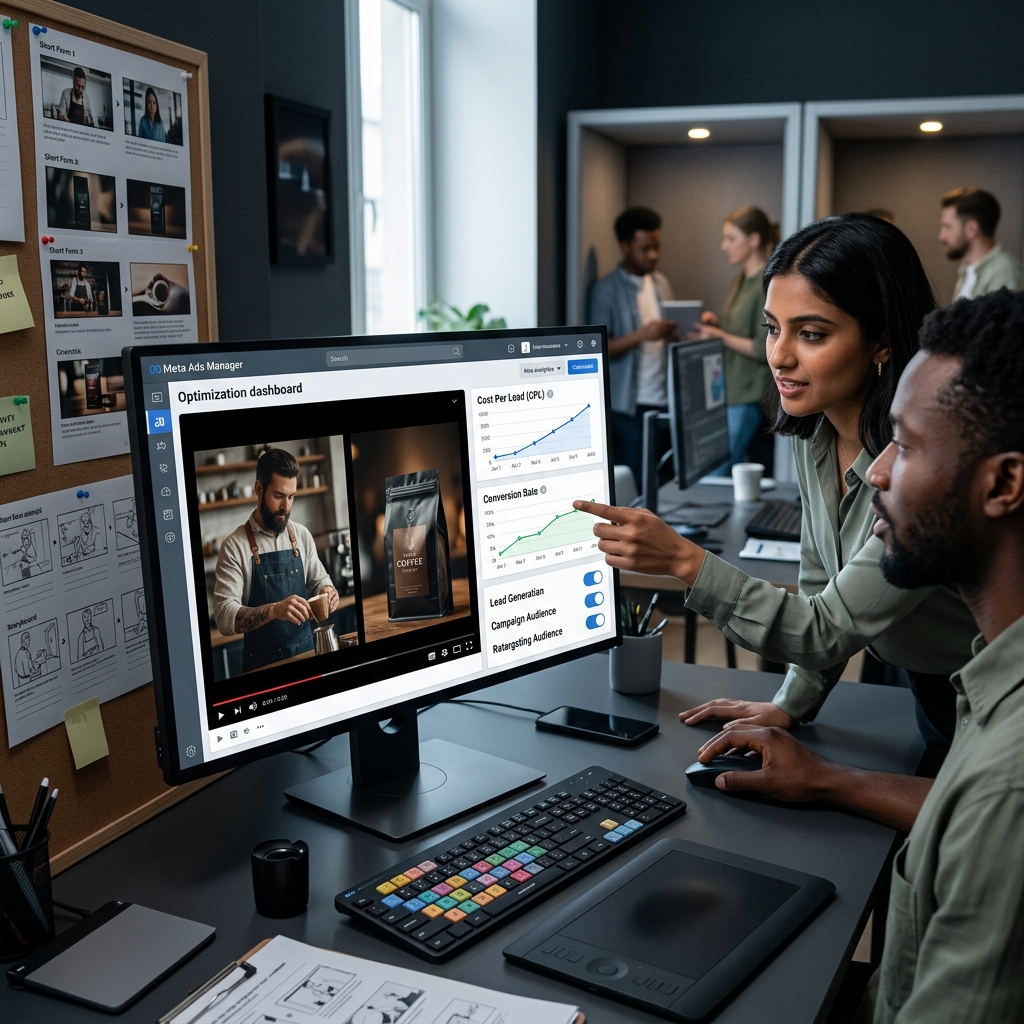
Organic reach has limits. Paid advertising is how you scale. We manage Meta and Google advertising directly, meaning your videos don’t just sit on your social feeds hoping for engagement; they’re actively promoted to your target audience.
Our approach:
- Building audience segments based on your service area and customer profile
- Testing video variations to find what resonates and converts
- Optimizing budget toward highest-performing assets
- Retargeting people who’ve watched your videos but haven’t converted yet
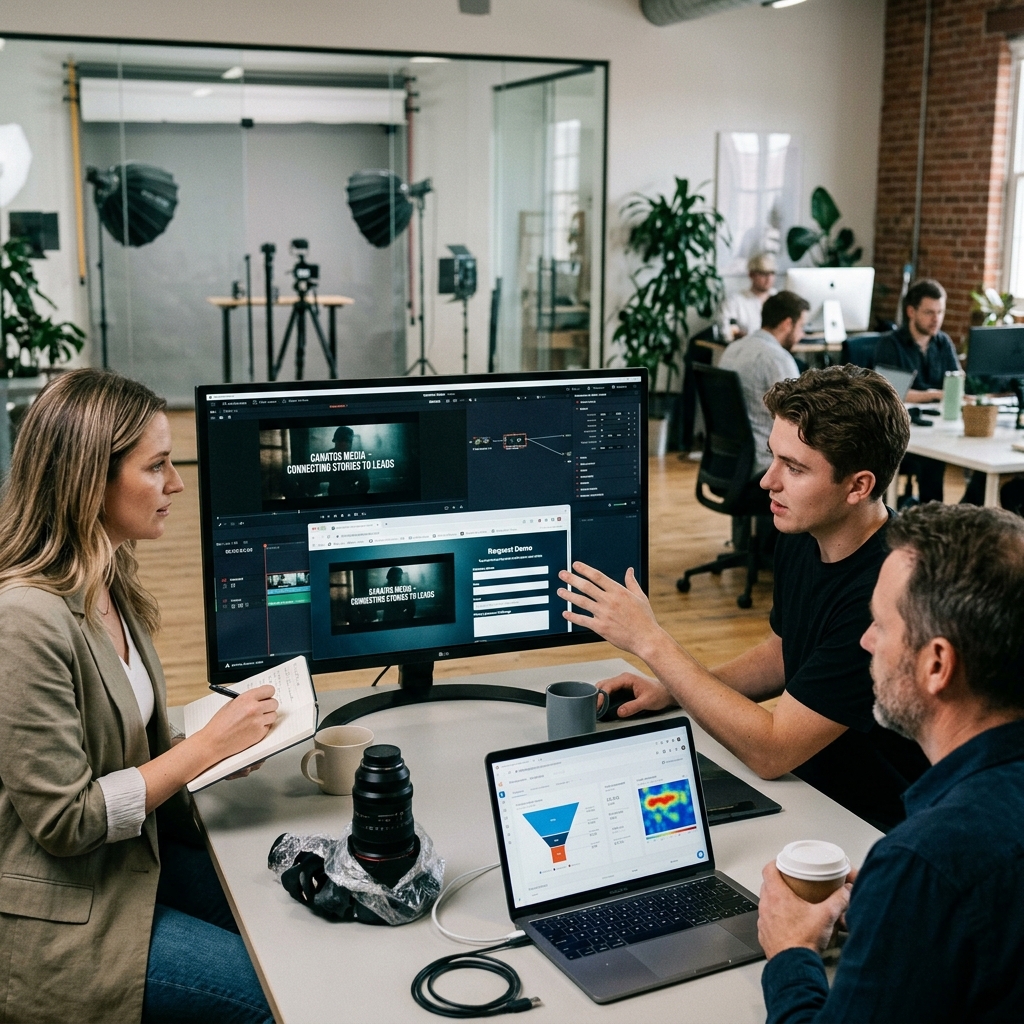
- Integrating video ads with landing pages that capture contact information
Video ads consistently outperform static image ads in conversion metrics. The investment in production is leveraged across multiple paid channels to justify and amplify the cost.
Website Design and Video Integration
Your website is often where prospects make their final decision. Video should be central to that experience, not an afterthought. We design and build websites with video as a core storytelling tool, not decoration.
A service-based website with strategic video placements (homepage hero, service pages, about section, testimonials) converts substantially higher than text-only sites. Video reduces friction by answering questions visually and building immediate trust.
AEO Optimization for Your Video Assets
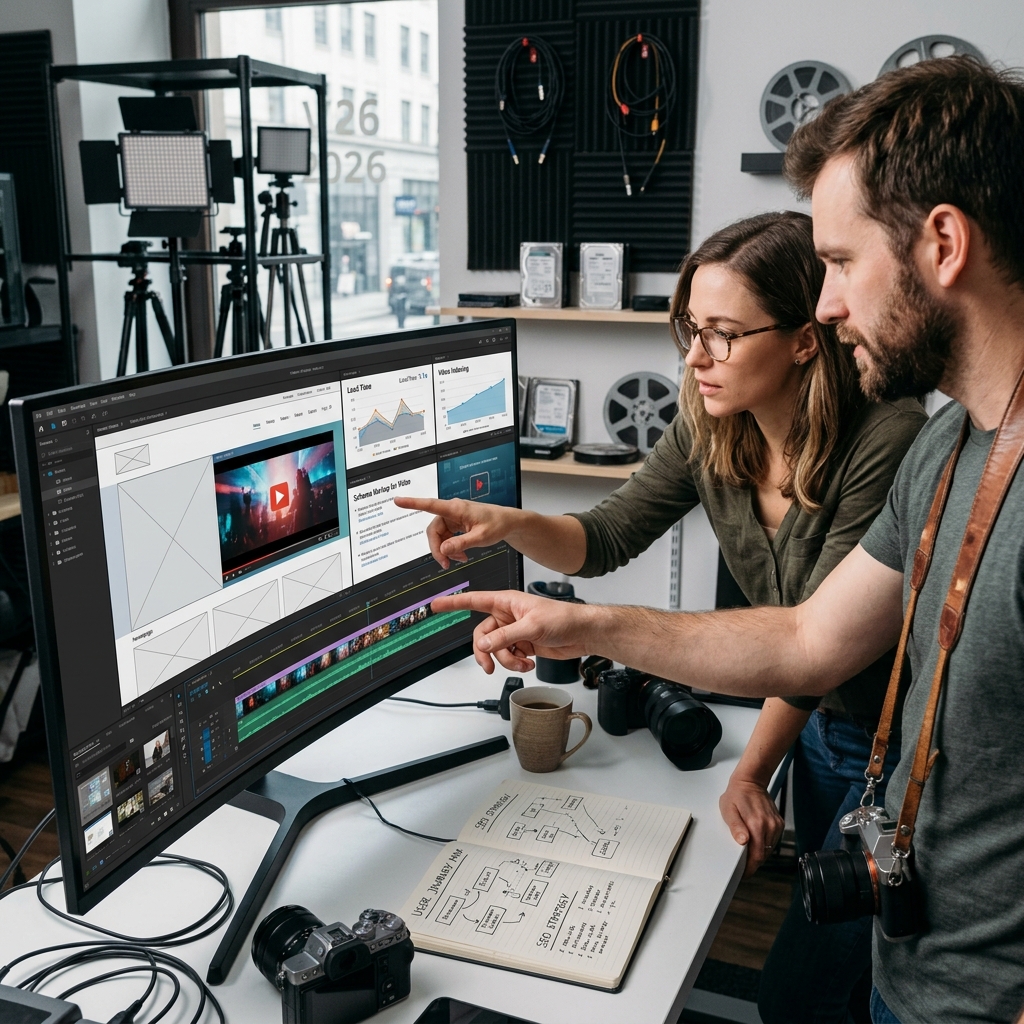
Video content builds long-term organic visibility when it’s properly optimized. AEO (Answer Engine Optimization) ensures your video assets are discoverable in search results and AI-powered answers.
This includes:
- Keyword-rich titles, descriptions, and transcripts for each video
- Structured data markup so search engines understand your video content
- Strategic linking between video assets and relevant pages
- Hosting videos on platforms that rank well in search results
A well-optimized video library becomes a perpetual source of organic traffic, not just a short-term social asset.
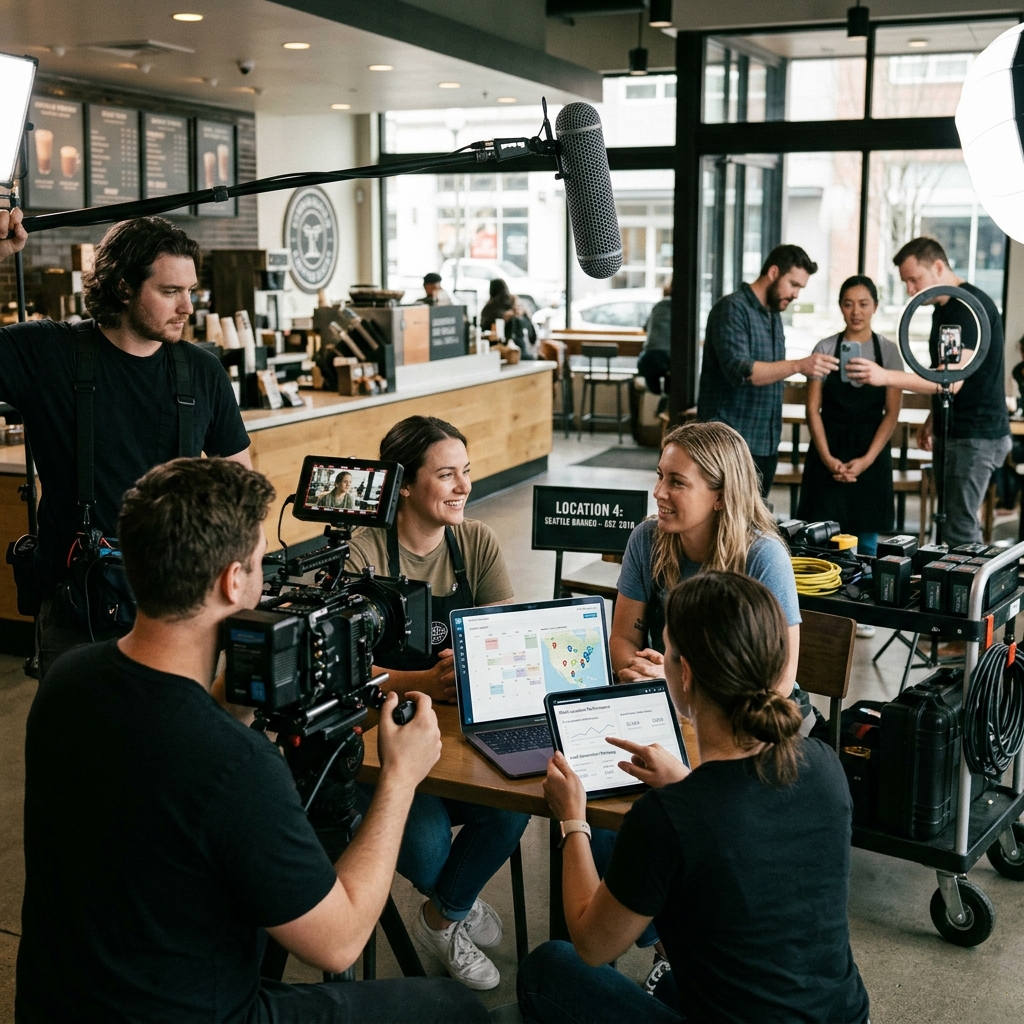
Results-Driven Video Systems for Service Brands
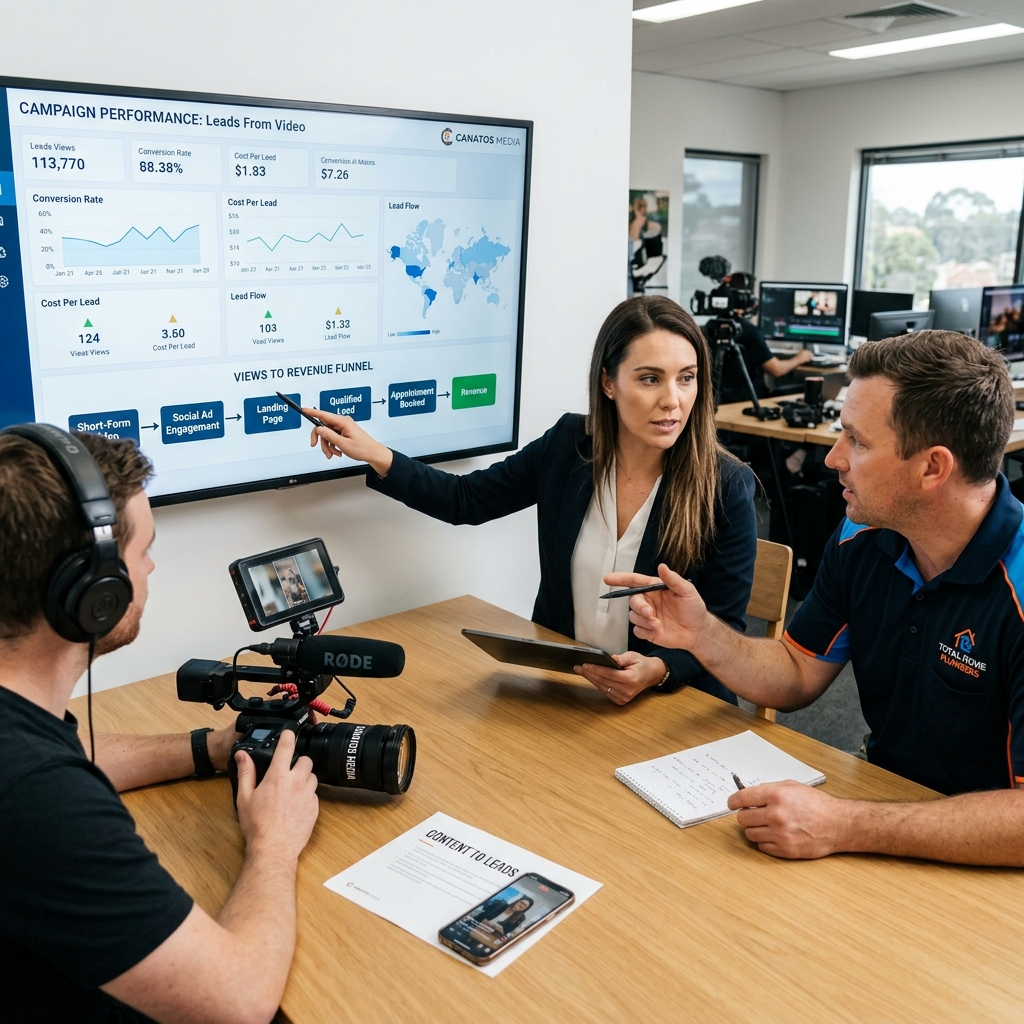
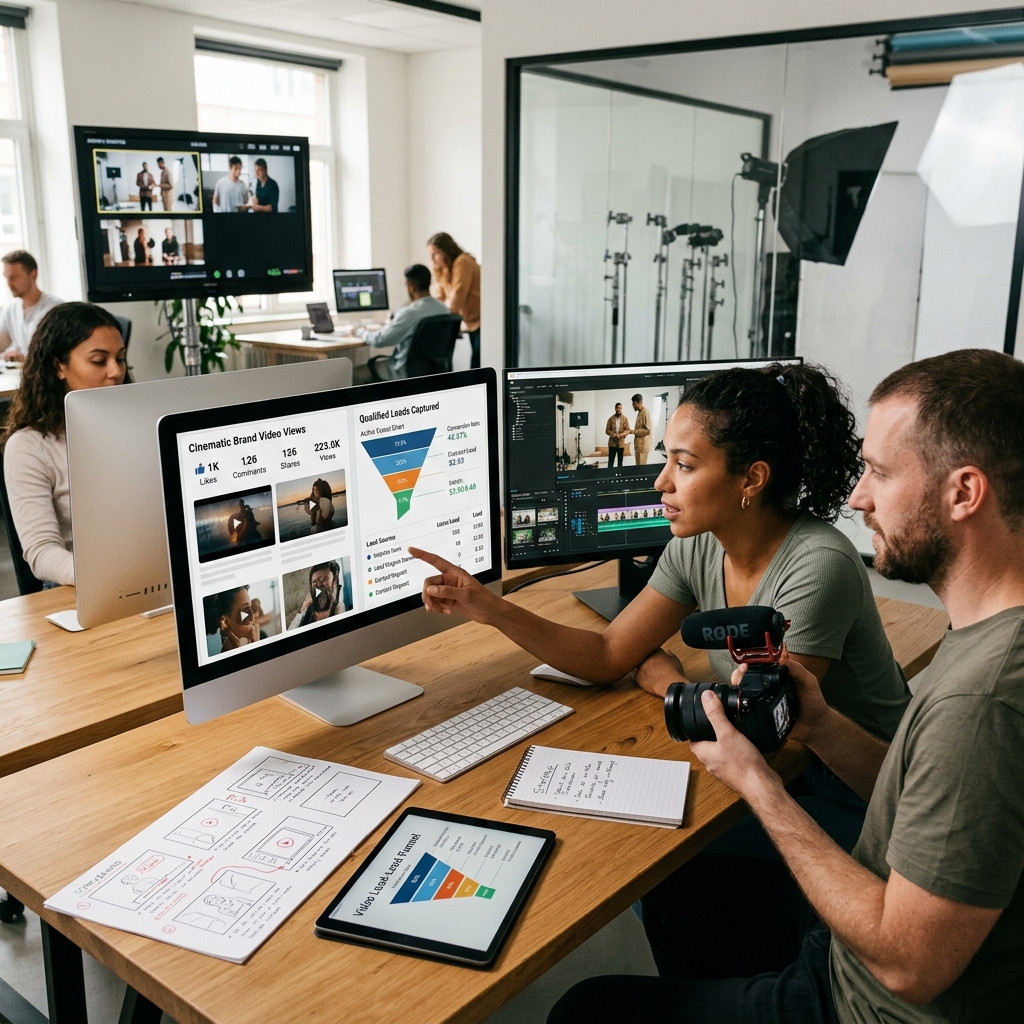
We measure success by leads and revenue, not views and likes. Every video we produce is tied to a specific business outcome: contact form submissions, phone calls, appointment bookings, or sales.
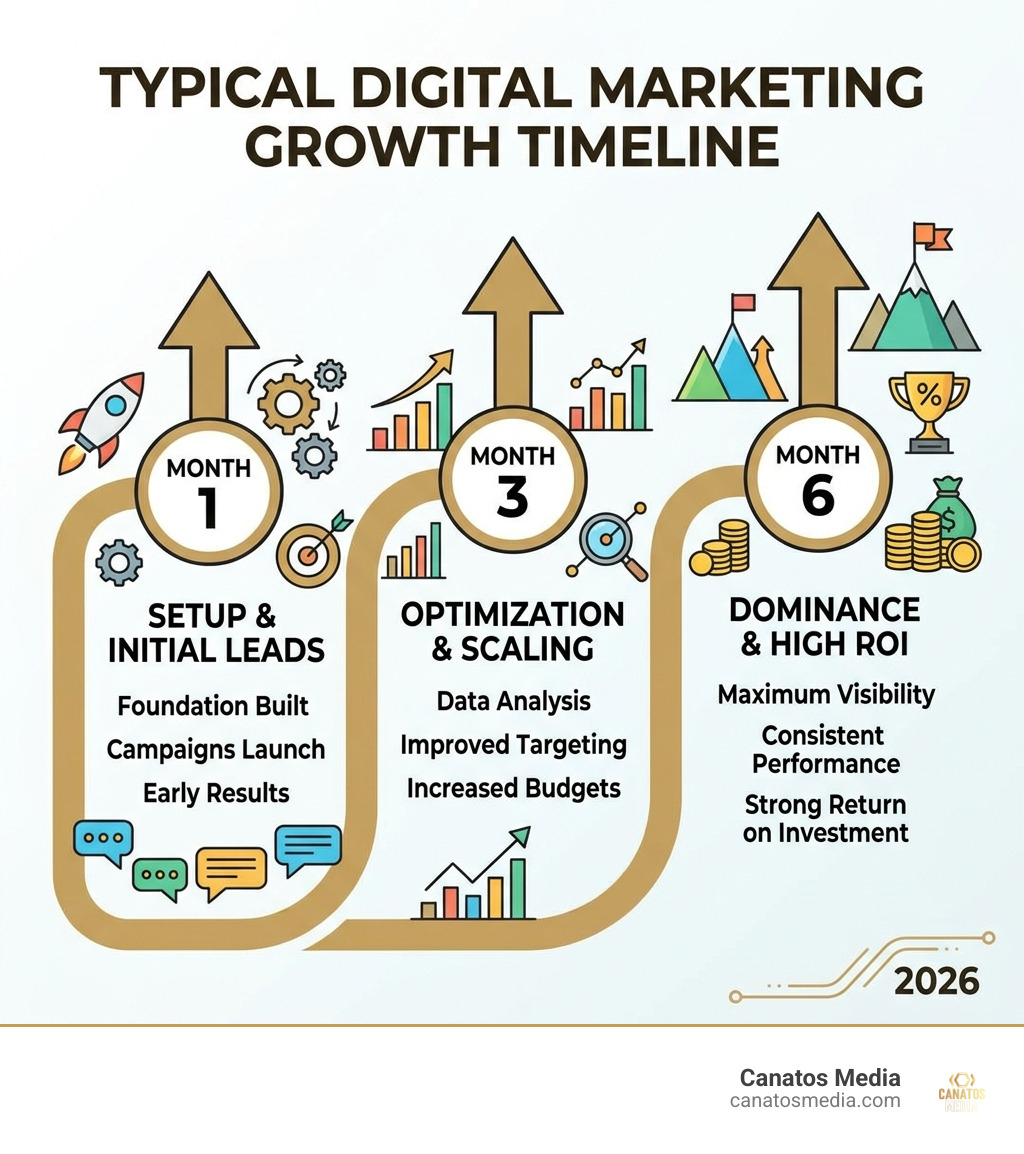
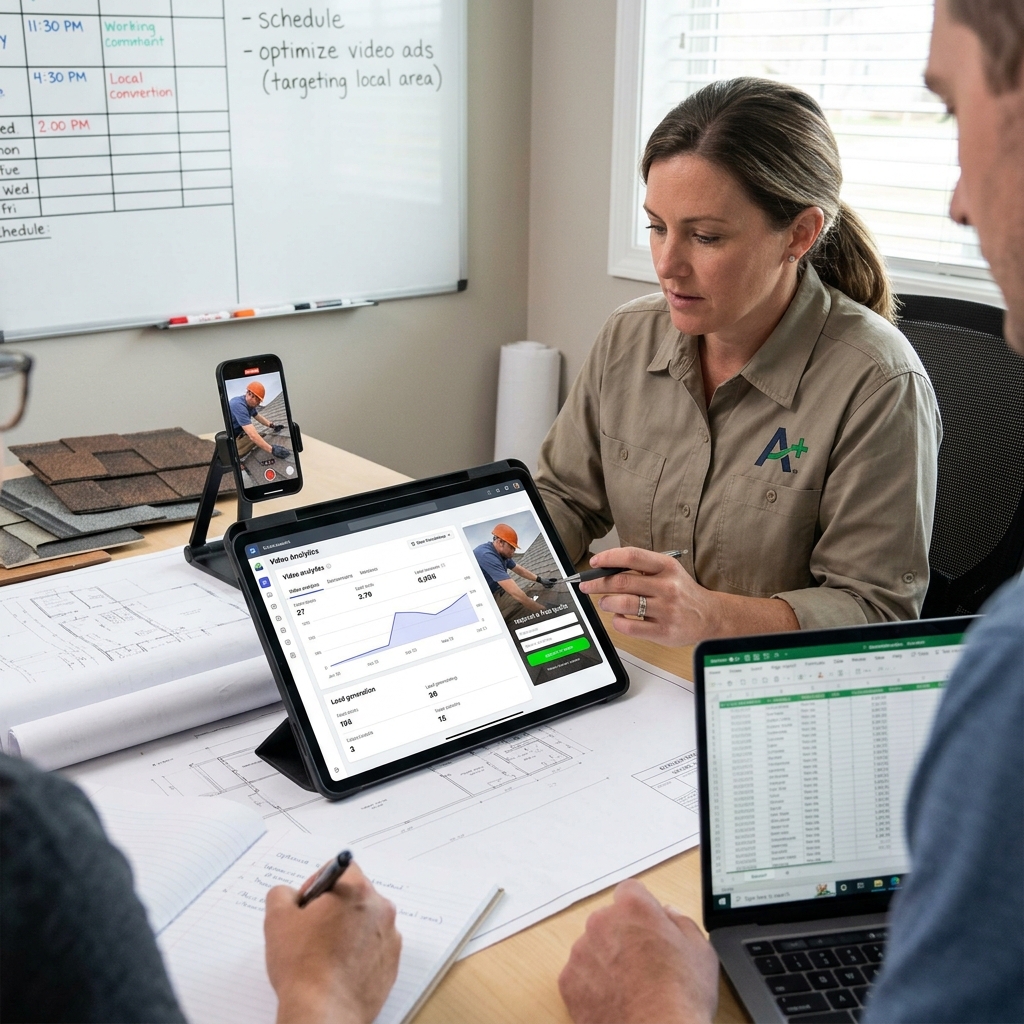
This means our entire process is built around performance. We analyze which videos drive leads. We refine based on data. We scale what works and adjust what doesn’t. Your video strategy becomes an accountable, measurable business system rather than a creative exercise.
Ready to Scale Your Brand With Strategic Video
Choosing a video partner isn’t about picking the cheapest option or the fanciest camera work. It’s about finding a team that understands your specific business model, can produce at the scale you need, and has integrated systems to turn content into measurable results.
We work exclusively with growth-focused business owners who are serious about video as a lead generation tool. If you’re managing multiple locations or a service-based business that needs consistency, quality, and strategic distribution, let’s talk about how we approach scalable video differently.
Reach out to discuss your brand’s video strategy and how we can build a system that actually converts.
Contact us today for a free consultation to see how we can help you grow your business.
Frequently Asked Questions (FAQ)
How do we handle video production consistency across multiple locations?
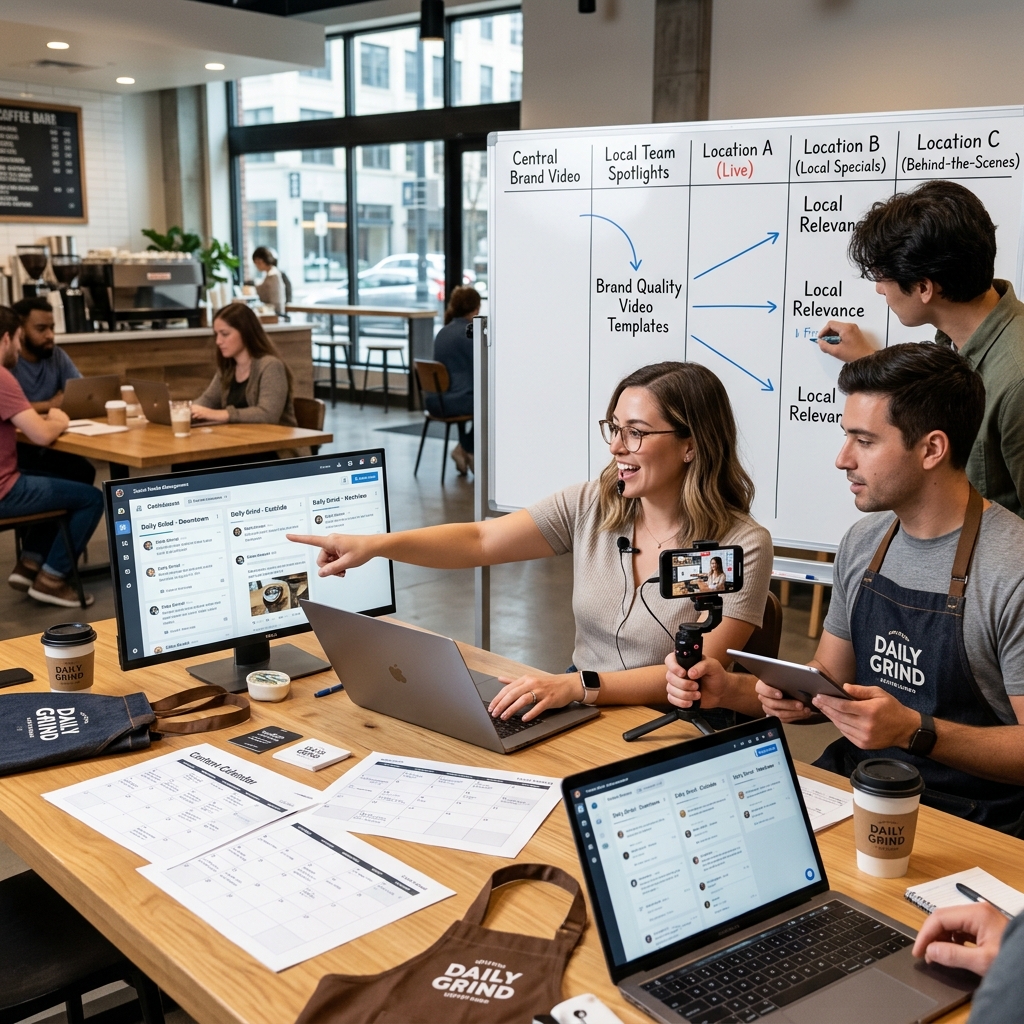
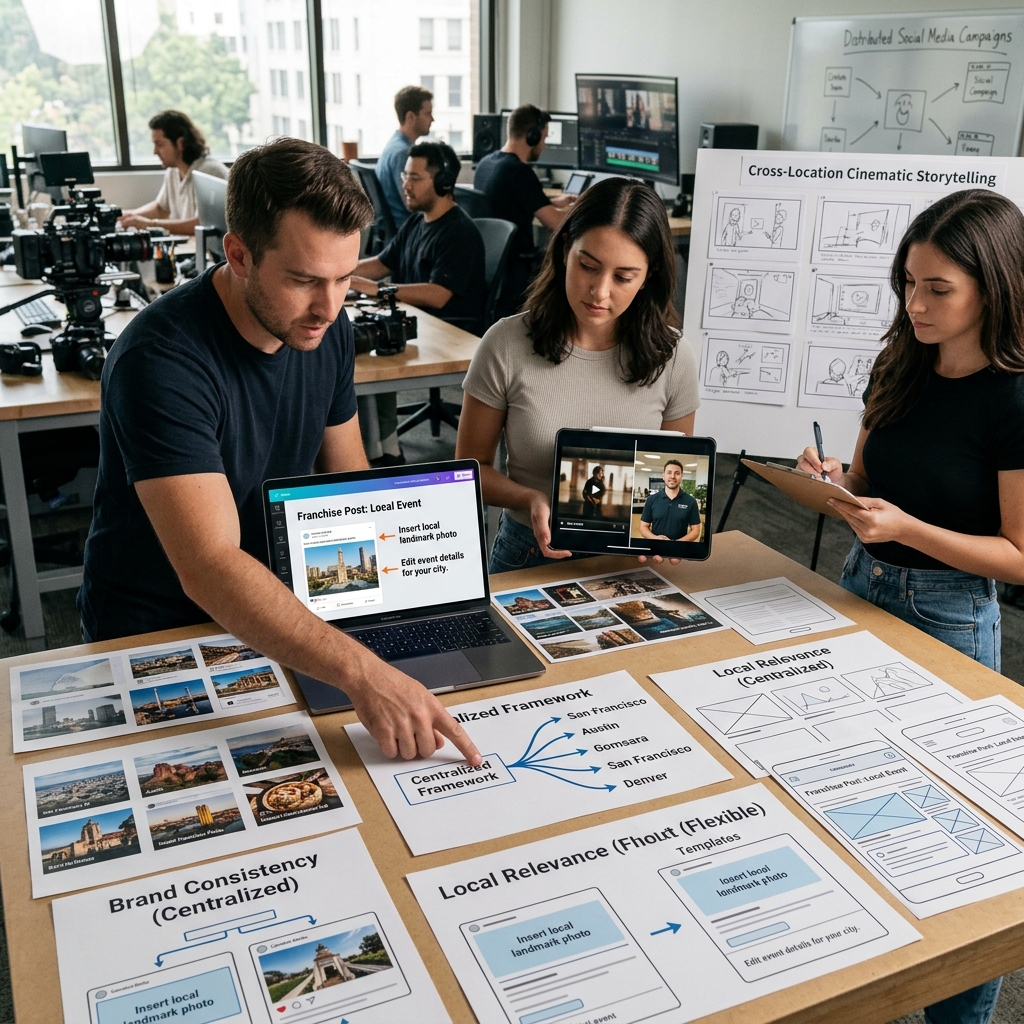
We develop a centralized brand framework that ensures every location maintains your visual identity while staying relevant to local audiences. Our team manages the production workflow, from initial strategy through final delivery, so you get broadcast-quality cinematic content without the operational burden of coordinating shoots across different sites. This approach lets us produce scalable content that drives consistent results regardless of how many locations you operate.
What makes our video strategy different from basic video platforms?
We don’t just produce videos and hand them off. We integrate video into your entire marketing system, including social media management, paid advertising campaigns, and website optimization. Our short-form content is strategically designed for lead generation and audience engagement, not just vanity metrics. We measure performance through actual conversions and business outcomes, which means every video we create serves a specific purpose in your growth strategy.
How does video content actually convert into leads for service-based businesses?
We combine cinematic storytelling with strategic distribution across the channels where your customers actually spend time. Our team handles paid advertising placement, social media amplification, and website integration so your content reaches qualified prospects at the right moment in their buying journey. We also optimize video assets for search and discovery through AEO, ensuring your content generates visibility and attracts inbound interest organically.