Tag: Video Content

  • How to Make Cinematic Short Form Video Without Breaking the Bank

    How to Make Cinematic Short Form Video Without Breaking the Bank

    Why Professional Video Production Is the Fastest Way to Stand Out in 2026

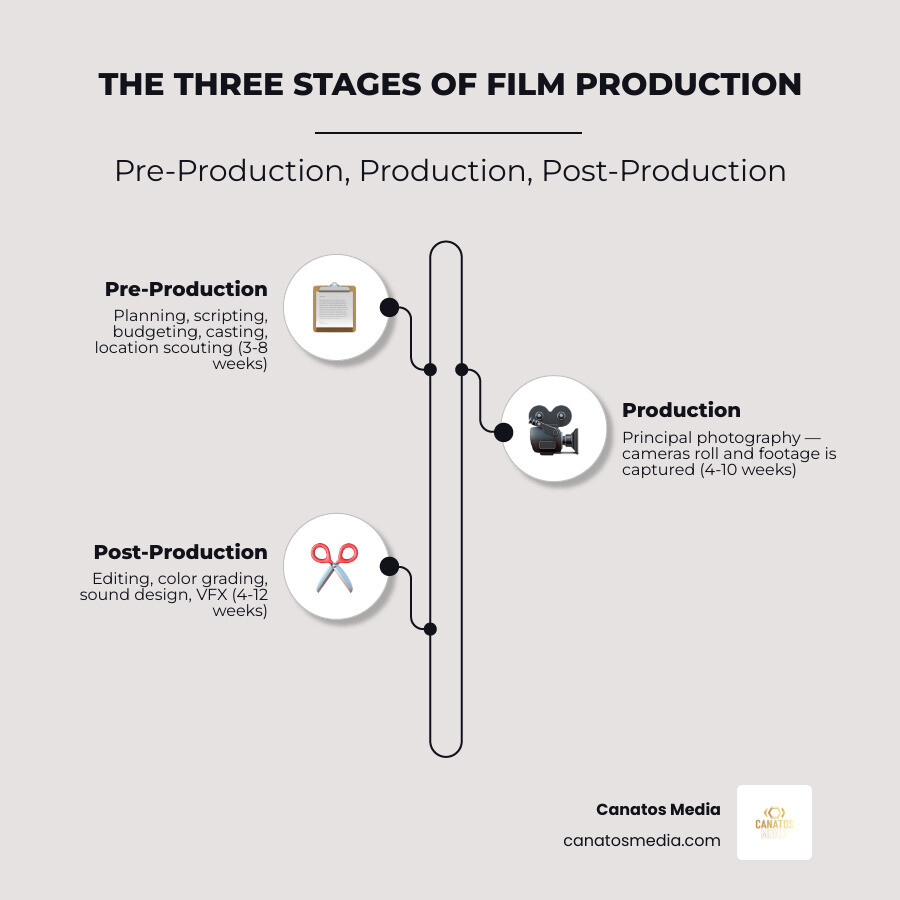
    Professional video production is the process of creating high-quality video content using skilled crews, broadcast-grade equipment, and a structured workflow — covering everything from planning and scripting to filming, editing, and final delivery.

    Quick answer: What is professional video production?

    Stage What Happens
    Pre-Production Goal setting, scripting, storyboarding, location scouting
    Production Filming with professional crew and broadcast-grade gear
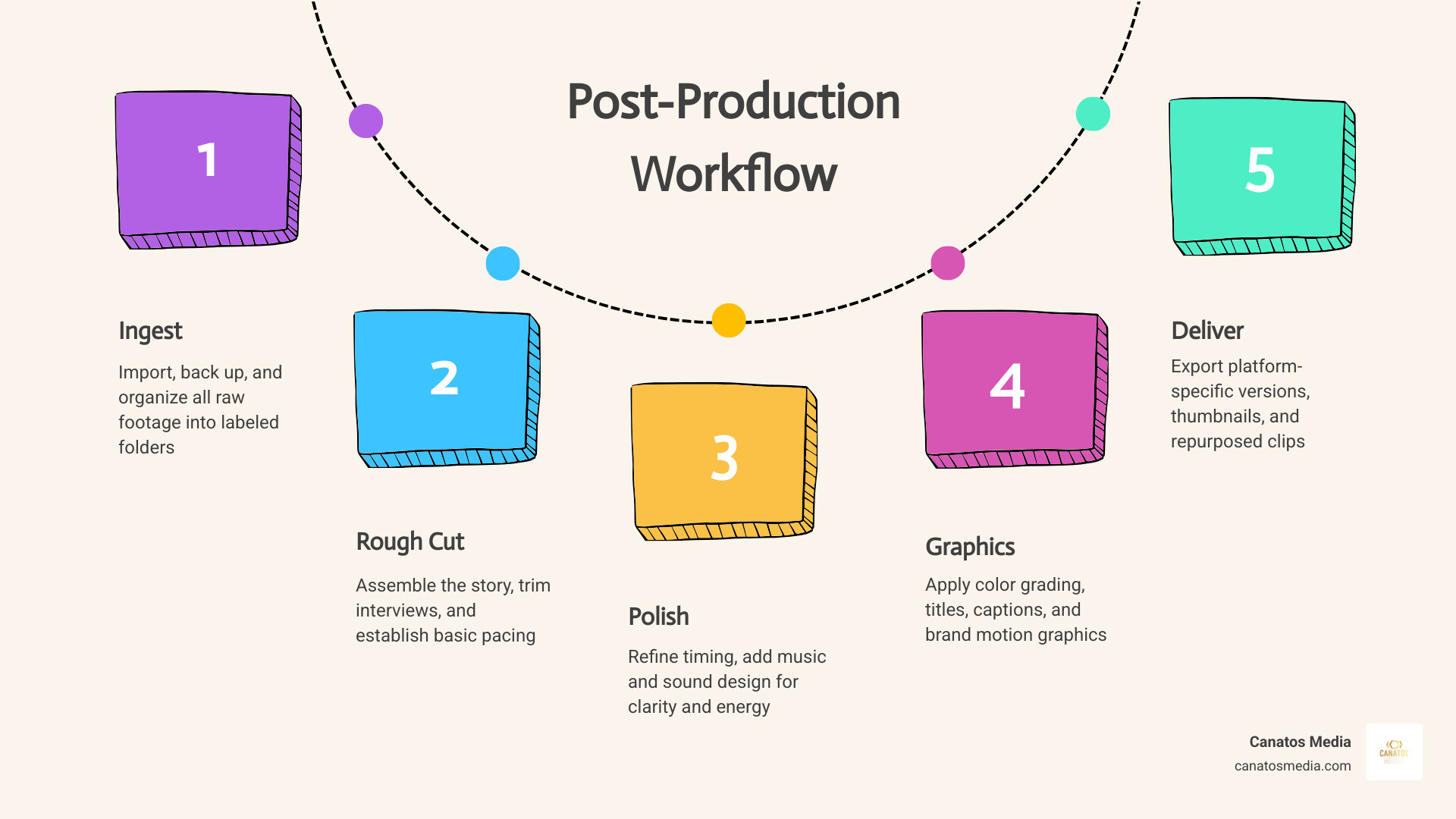
    Post-Production Editing, color grading, audio mixing, graphics
    Distribution Optimized cuts for social media, web, and broadcast

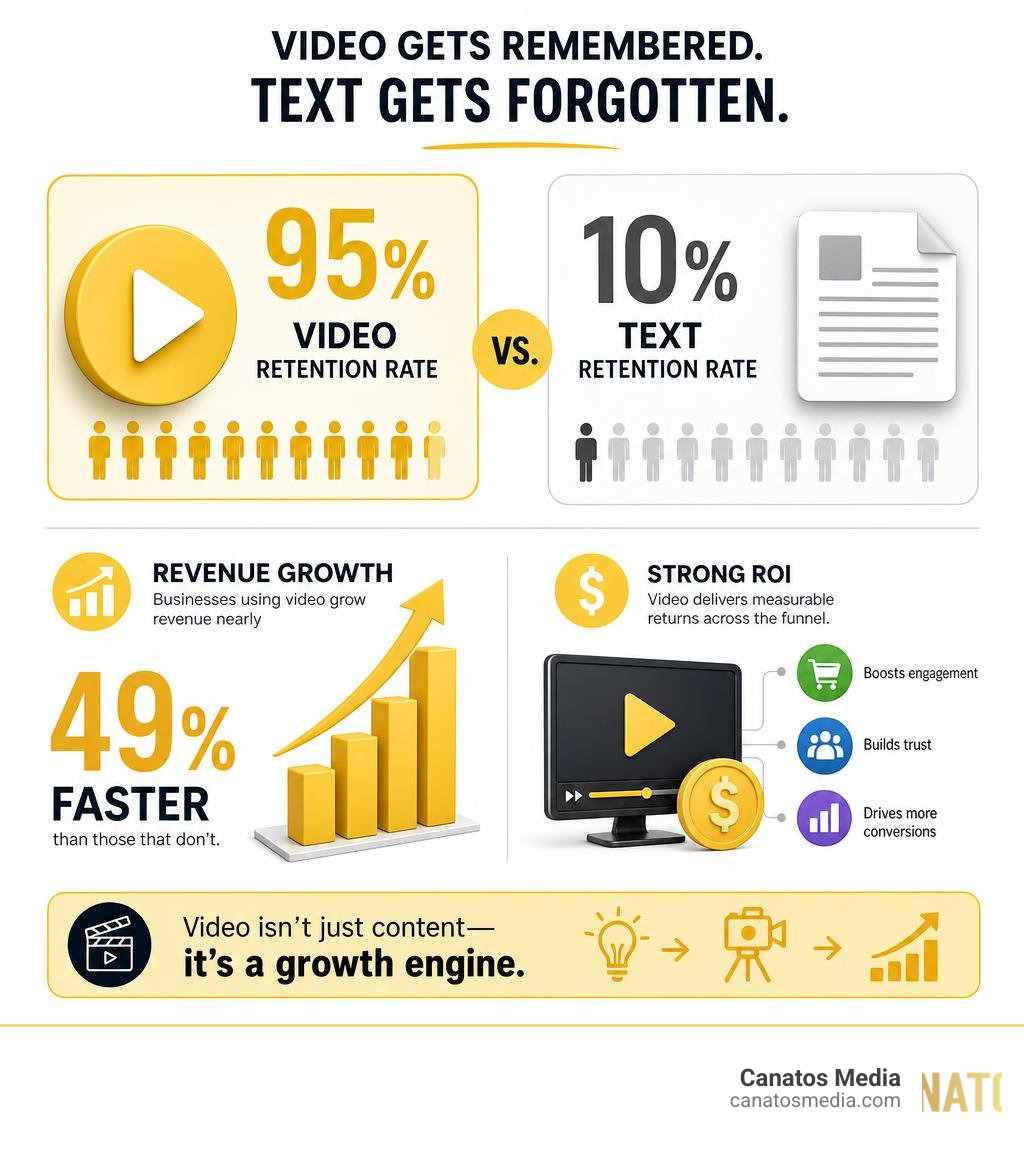
    Video is now 82% of all internet traffic, according to Cisco. And viewers retain 95% of a video’s message compared to just 10% from reading text. In 2026, that gap matters more than ever — especially for local businesses trying to compete for attention online.

    But here’s the problem most business owners run into: great video looks expensive. The gear, the crew, the editing — it all adds up fast. And the DIY route? A shaky iPhone clip with bad audio doesn’t build trust. It quietly damages it.

    This guide breaks down how to get cinematic short-form video that actually converts — without blowing your entire marketing budget.

    I’m Nic Canobbio, founder of Canatos Media, and with over two decades of experience in professional video production — overseeing live productions, building content strategies, and generating over 60 million views across social platforms — I’ll walk you through exactly how to make this work. Let’s get into it.
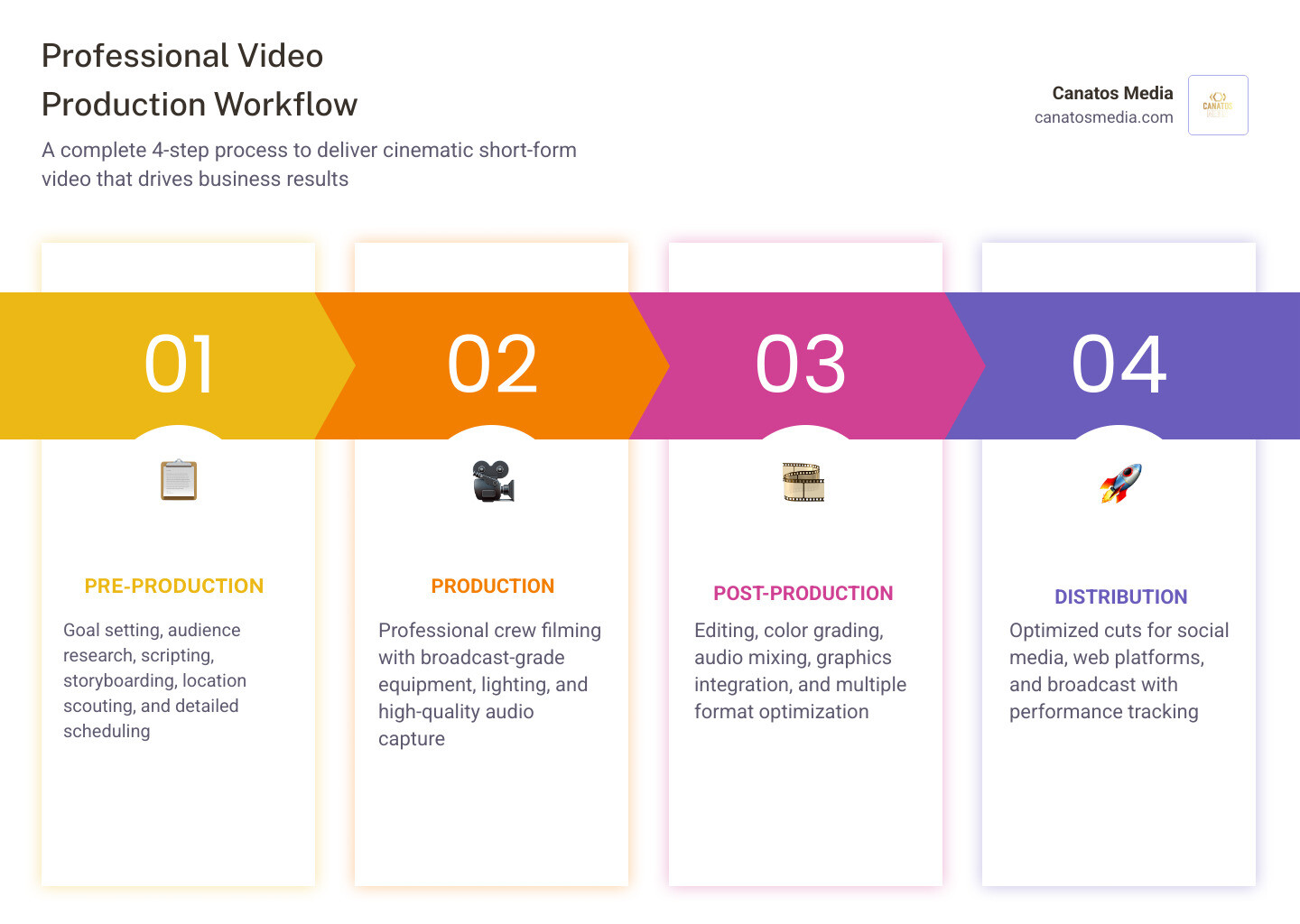
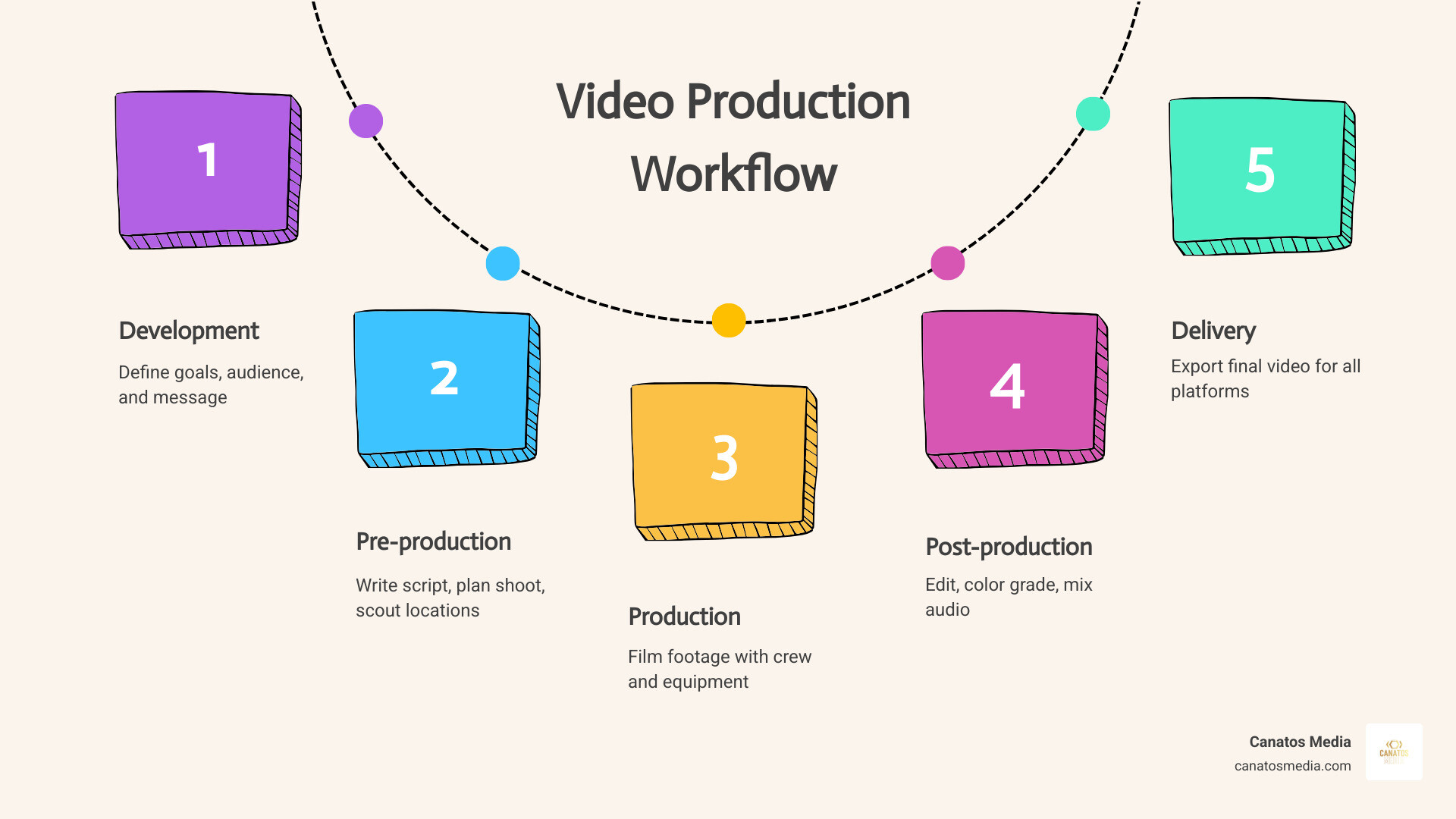
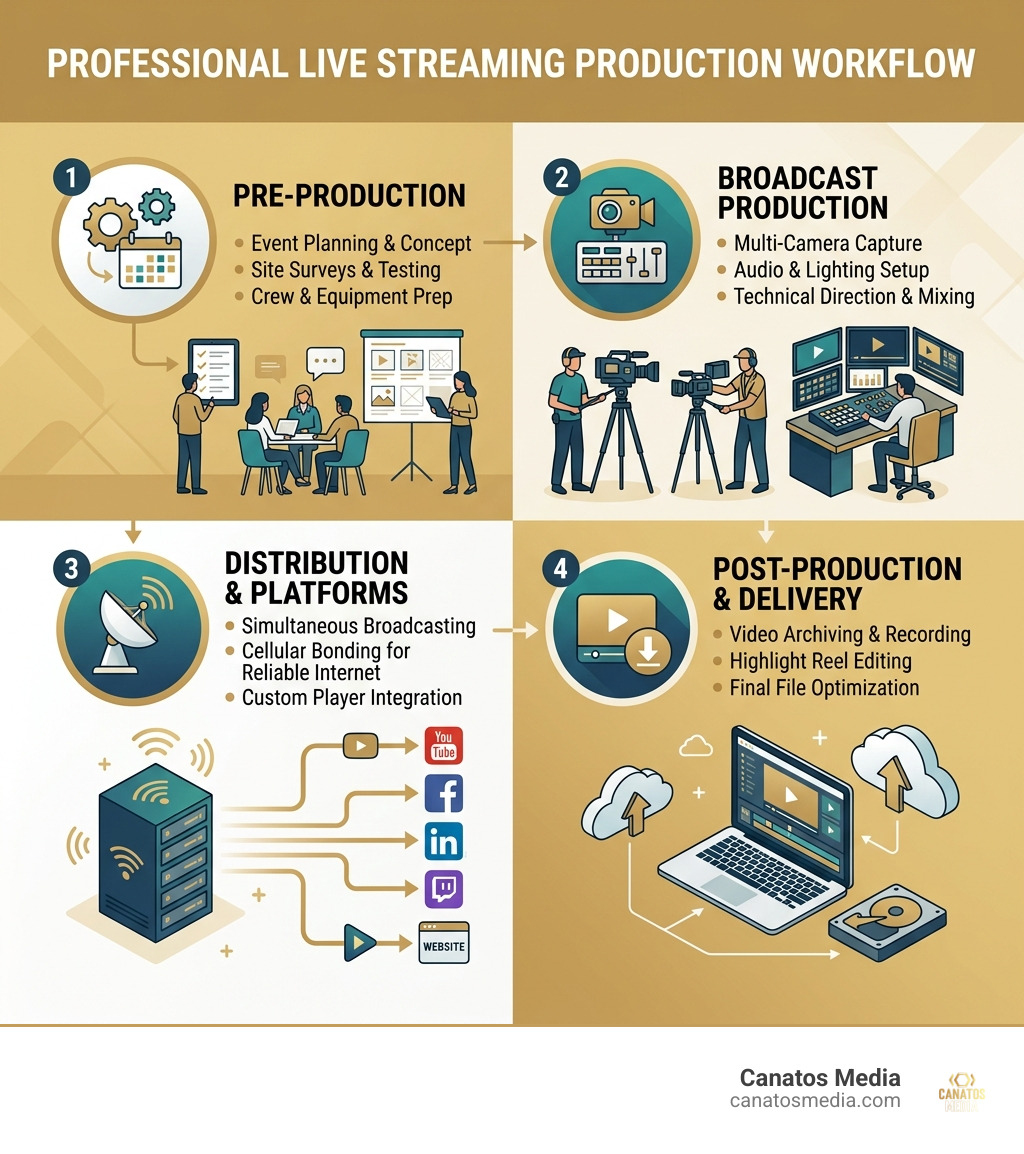
    Professional video production workflow infographic showing pre-production, production, post-production stages infographic

    Defining Professional Video Production in 2026

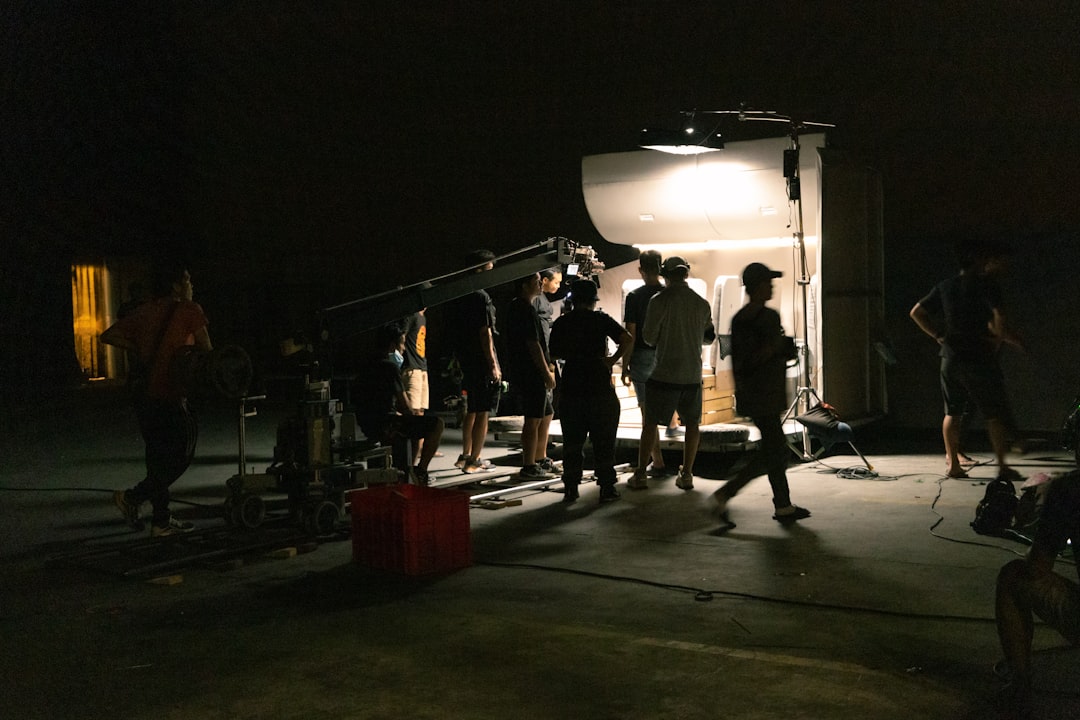
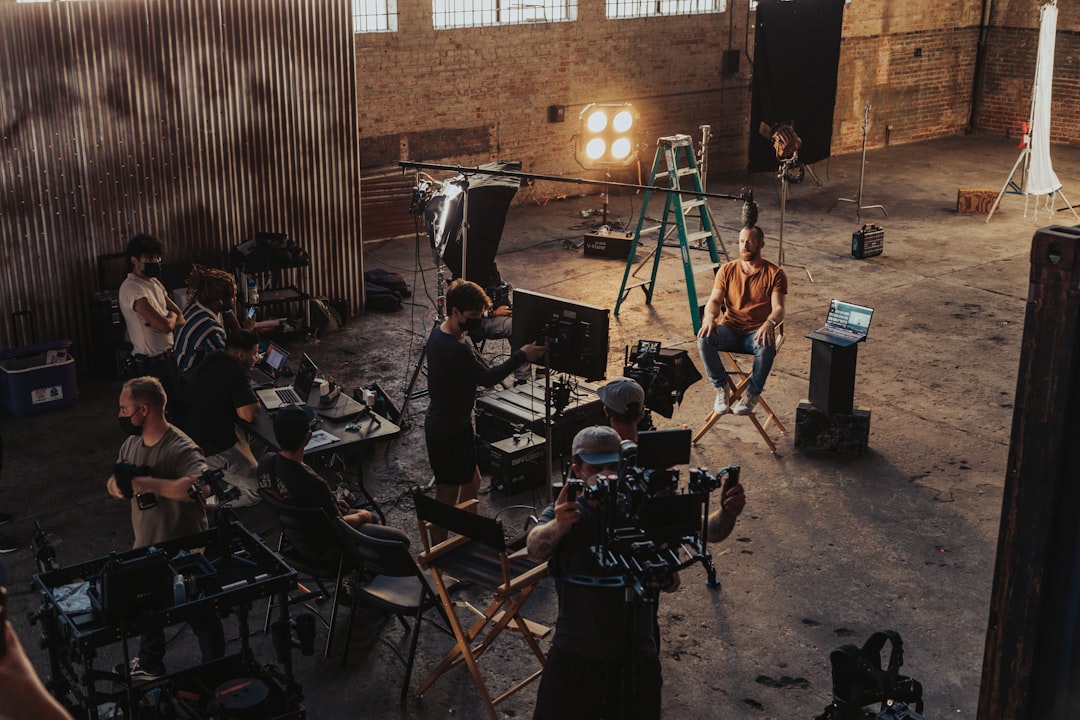
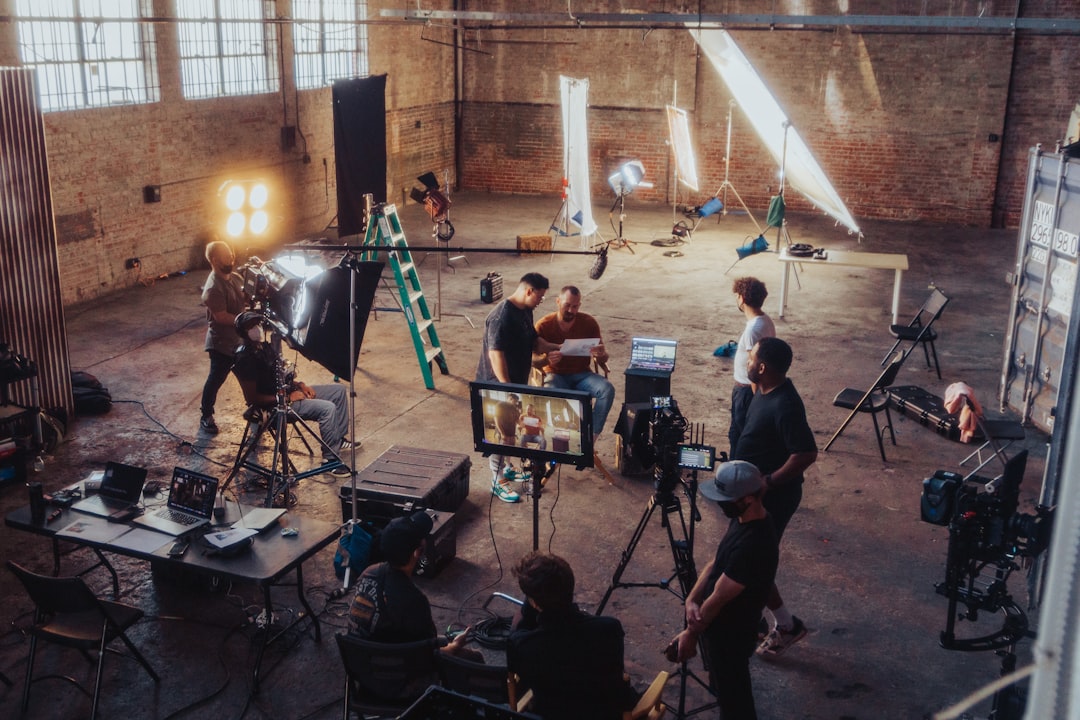
    Professional film crew on set for a commercial shoot

    In 2026, the line between “content” and “professional media” has become a chasm. While everyone has a smartphone in their pocket, Professional video production is defined by its ability to tell a story that drives a specific business result. It isn’t just about “filming”; it’s about the strategic application of light, sound, and narrative structure to establish brand authority.

    DIY vs. Professional: The First Impression Gap

    We often hear the question: “Can’t our intern just shoot this on their phone?” While user-generated content (UGC) has its place in social engagement, it rarely carries the weight needed for brand awareness or high-ticket conversions. Professional services provide broadcast-grade quality that signals to your audience that you are a serious, established player in the market.

    When you invest in Professional Video Production Services, you aren’t just paying for someone to press “record.” You are hiring a team that understands technical expertise—from 4K sensor dynamics to the nuances of color science. Research shows that 70% of buyers turn to video content during their decision-making process; if that video looks amateurish, the decision often becomes a “no.”

    Technical Expertise and Verified Talent

    The industry has evolved to a point where finding the right crew is easier than ever, with platforms now hosting over 150,000 verified profiles for specialized roles like gaffers, sound mixers, and editors. However, the magic happens when these professionals work under a unified creative process. High-quality results come from the synergy between the director’s vision and the technical execution of the crew. For a deeper dive into how this fits into your broader growth plan, check out The Ultimate Guide to Video Marketing for Service Businesses in 2026.

    Pre-Production: Planning for Professional Video Production Success

    If you want to save money without sacrificing quality, the secret is in the pre-production. This is where we “fix it in prep” so we don’t have to “fix it in post” (which is always more expensive).

    • Goal Setting & Audience Identification: Who are we talking to, and what do we want them to do? A video without a goal is just an expensive home movie.
    • Scriptwriting & Storyboarding: We visualize every shot before the camera even leaves the bag. This ensures we don’t waste time on set.
    • Location Scouting & Scheduling: In the Tri-State area and Long Island, location is everything. Whether it’s a sleek office in Manhattan or a coastal backdrop on the Island, we scout for light and noise levels in advance.
    • Budgeting: By following Our Strategic Video Production Process, we allocate resources where they matter most—like high-quality audio and lighting—rather than on unnecessary “bells and whistles.”

    Achieving Cinematic Quality in Professional Video Production

    What makes a video look “cinematic”? It’s rarely just the camera. It’s the intentionality of the image.

    1. Lighting Techniques: We use soft lighting to avoid harsh shadows, creating a “wrapped” look that is flattering for testimonials and brand films.
    2. Audio Quality: People will tolerate “okay” video, but they will click away instantly if the audio is scratchy. We use professional field-audio kits to ensure every word is crisp.
    3. Color Grading: This is the “secret sauce.” Professional grading gives your footage a consistent, high-end look that matches your brand’s vibe.
    4. 4K Resolution & B-Roll: Shooting in 4K allows us to “punch in” during the edit, giving us two shots for the price of one. We also capture extensive B-roll—supplemental footage—to keep the visual variety high and the viewer engaged.

    To see how we maintain these standards at scale, read How We Scale Cinematic Short-Form Content Without Sacrificing Quality.

    The Three Pillars of the Video Production Process
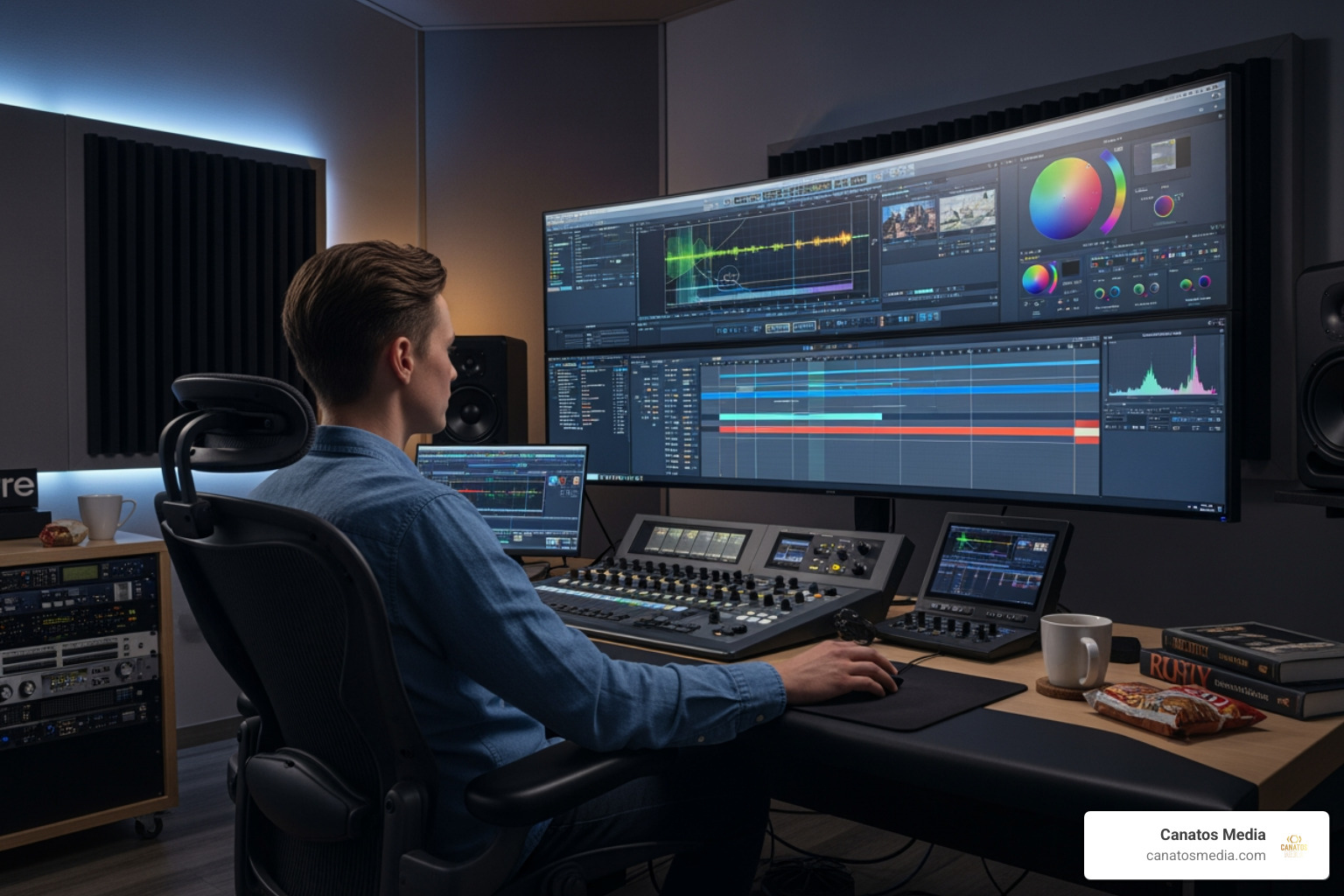
    Video editor working on a cinematic timeline with color grading tools

    Every successful project we undertake at Canatos Media follows a rigorous three-pillar structure. This is the only way to ensure turnkey services that don’t result in “sticker shock” or missed deadlines.

    1. Pre-Production (The Foundation)

    This is the “brain” of the operation. Beyond just scripts, this involves narrative development. We don’t just talk about your company; we make your customer the hero of the story. We identify the “pain points” and position your service as the solution.

    2. Production (The Execution)

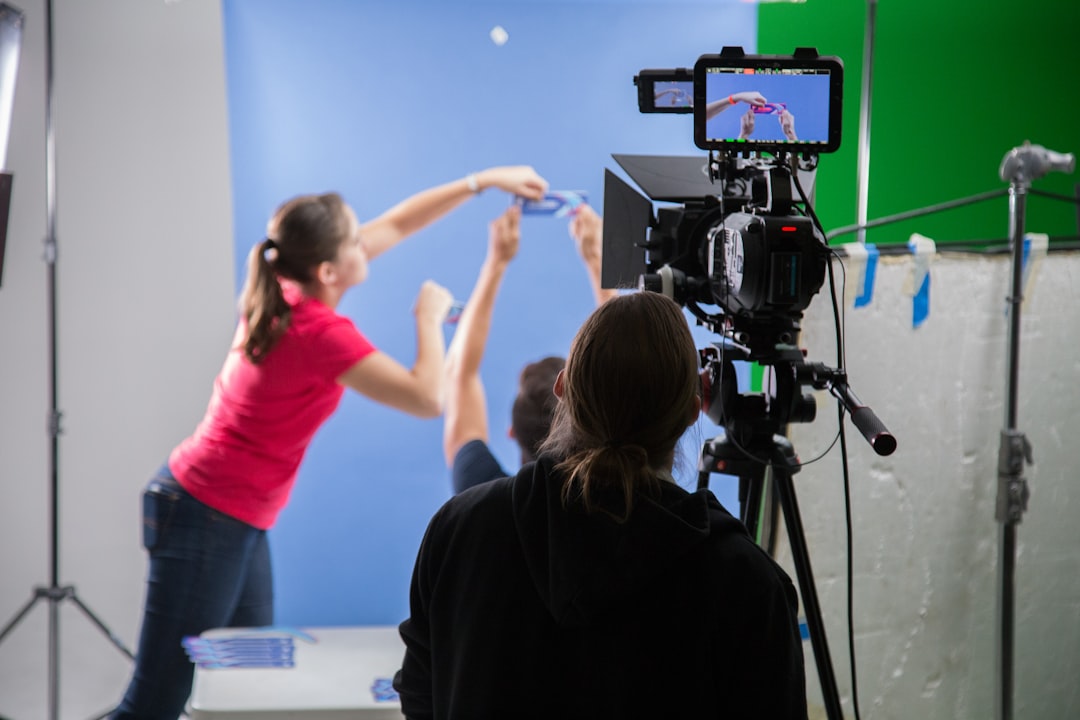
    This is “principal photography.” This is when the crew is on-site, the lights are up, and the cameras are rolling. In professional video production, this stage is a choreographed dance. We manage the crew coordination, equipment management, and sound effects capture to ensure every second of the shoot day is productive.

    3. Post-Production (The Polish)

    Short Form Video Production lives or dies in the edit. This is where we take the raw footage and transform it into a compelling narrative. This stage includes:

    • Editing & Pacing: Ensuring the video moves quickly enough to hold attention on social media.
    • Sound Mixing: Balancing music, voiceovers, and environmental sounds.
    • Graphics & Branding: Adding text overlays and calls to action (CTAs) that guide the viewer toward a conversion.

    Maximizing ROI: Why Businesses Invest in Professional Content

    Investing in video isn’t a cost; it’s an asset that works for you 24/7. Companies that invest in video see 49% faster revenue growth than those that don’t.
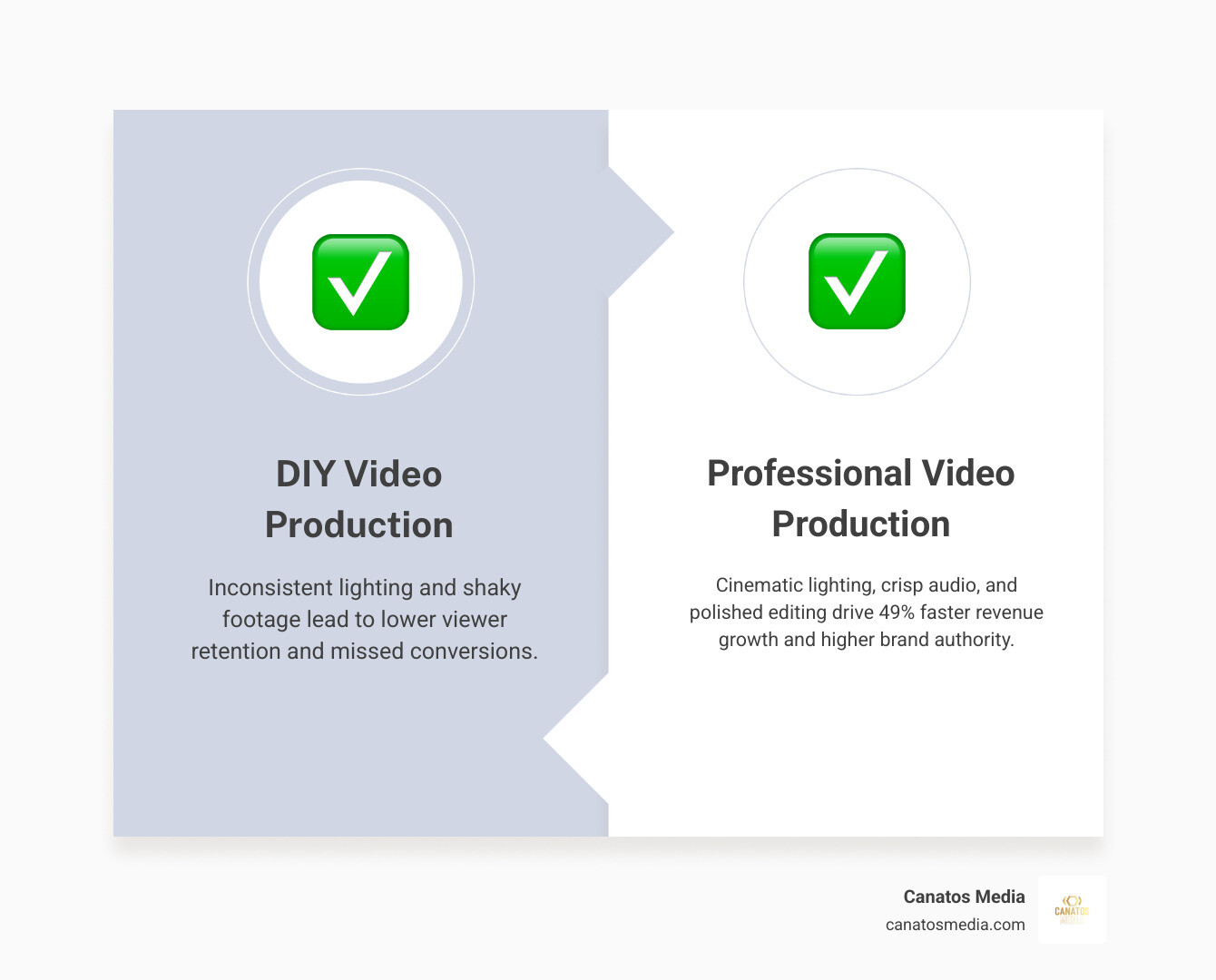
    Infographic comparing DIY vs Professional Video ROI metrics infographic

    The Numbers Don’t Lie

    • 87% of B2B marketers now use video as a core part of their branding strategy, according to HubSpot.
    • 78% of people watch videos weekly, and 55% watch daily.
    • 6 million+ searches occur every year for production professionals, proving that the demand for high-end content is at an all-time high.

    Whether you need brand videos to live on your homepage, customer testimonials to build trust, or explainer videos to simplify complex services, the ROI is measurable. For those in the decision-making phase, our guide on Lead Generation Video Production: How to Choose the Right Agency in 2026 can help you navigate the landscape.

    Frequently Asked Questions about Video Production

    How long does a typical professional video project take?

    From the initial “kick-off” meeting to the final delivery, most professional video production projects take between 6 to 12 weeks.

    • Weeks 1-3: Pre-production and planning.
    • Week 4: Filming (usually 1-3 days).
    • Weeks 5-10: Post-production, including multiple rounds of revisions.
    • Weeks 11-12: Final delivery and distribution setup.

    Of course, short-form social content can often be turned around much faster if we are working on a recurring monthly retainer.

    What are the typical costs for professional video services?

    Every project is custom, but in the current market, a professional full-production video typically ranges from $5,000 to $50,000.

    • Small Projects ($5k – $10k): Usually a single-day shoot with a small crew, perfect for a high-end brand film or a series of social clips.
    • Mid-Range ($10k – $25k): Multi-day shoots, professional actors, or more complex editing and motion graphics.
    • Enterprise ($25k+): Large-scale commercials, national campaigns, or high-end 3D animation. At Canatos Media, we believe in transparent, line-item budgets so you know exactly where every dollar of your resource allocation is going.

    How do I choose the right professional video production company?

    Don’t just look at the price tag. Look for:

    1. Portfolio Review: Does their previous work have the “vibe” and quality you want for your brand?
    2. Marketing Knowledge: Do they understand SEO, social algorithms, and conversion rates, or do they just make “pretty” pictures?
    3. Teamwork & Communication: You want a partner, not just a vendor. Look for a team that over-communicates and has a structured creative process.
    4. Local Expertise: If you’re in Long Island or the Tri-State area, hiring a team that knows the local landscape (and the local permits!) is a massive advantage.

    Conclusion

    At Canatos Media, we don’t believe you should have to choose between “cinematic” and “affordable.” By integrating our strategy—connecting content, targeting, and conversions—we help businesses in the Tri-State area and Long Island achieve measurable growth.

    From professional video production and cinematic short-form content to social media management, paid Meta/Google ads, SEO, and website support, we provide the full stack of digital marketing tools needed to win in 2026.

    Ready to stop making “videos” and start making “assets”? Start your social media growth today and let’s build something that actually moves the needle for your business.
  • Animation Station: The Ultimate Guide to Digital Marketing Animation Videos

    Animation Station: The Ultimate Guide to Digital Marketing Animation Videos

    Why Animated Video Is Now the Engine of Digital Marketing

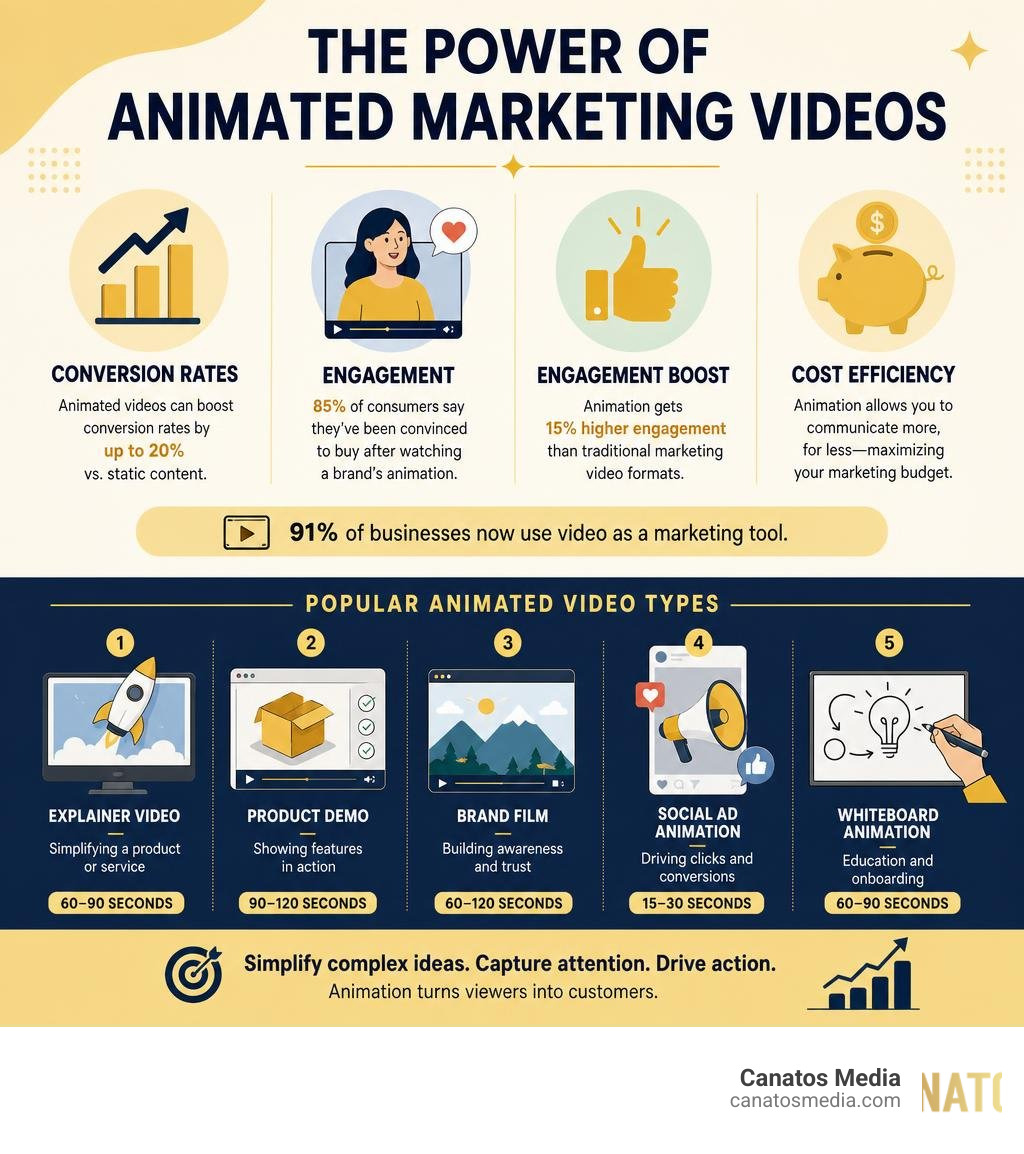
    A digital marketing animation video is one of the fastest ways to grab attention, explain your offer, and turn viewers into customers — all in under two minutes.

    If you’re looking for the key types and benefits at a glance:

    Type Best For Avg. Length
    Explainer Video Simplifying a product or service 60-90 seconds
    Product Demo Showing features in action 90-120 seconds
    Brand Film Building awareness and trust 60-120 seconds
    Social Ad Animation Driving clicks and conversions 15-30 seconds
    Whiteboard Animation Education and onboarding 60-90 seconds

    Why animation works:

    • Animated videos can boost conversion rates by up to 20% vs. static content
    • 85% of consumers say they’ve been convinced to buy after watching a brand’s animation
    • Animation gets 15% higher engagement than traditional marketing video formats
    • 91% of businesses now use video as a marketing tool

    Animation isn’t just a creative choice anymore. It’s a growth strategy. Brands from Starbucks to Amazon use animated video to cut through the noise, simplify complex ideas, and move people to act — at a fraction of the cost of live-action production.

    But here’s the thing most guides miss: a beautiful animation that wins internal applause won’t always win customers. The difference is strategy — the right style, the right message, and the right platform.

    That’s exactly what this guide covers.

    I’m Nic Canobbio, founder of Canatos Media, where I’ve spent over two decades driving results through media production and content strategy — including building social content that has surpassed 60 million views, and integrating digital marketing animation video into high-performing paid and organic campaigns. In the sections ahead, I’ll walk you through everything you need to know to make animation work as a real business asset, not just a visual upgrade.

    Benefits of animated marketing videos: conversion rates, engagement, cost efficiency, and video types infographic

    Essential digital marketing animation video terms:

    Why Every Brand Needs a Digital Marketing Animation Video

    In today’s digital environment, capturing a prospect’s attention is harder than ever. Static images and text-heavy landing pages are no longer enough to keep users engaged. That is where a digital marketing animation video changes the game. By blending dynamic visuals, sound design, and clear storytelling, animations make your brand memorable and highly shareable.

    Beyond visual appeal, there are three primary reasons why animation has become an essential pillar of modern digital marketing:

    1. Massive Boost in Brand Awareness: Animation allows you to build a completely custom world that perfectly matches your brand guidelines. You are not limited by the physical constraints of live-action video—no actors to hire, no locations to scout, and no weather delays. You can create unique characters and visual metaphors that instantly stick in the minds of your audience.
    2. Direct Conversion Growth: According to industry data, incorporating an animated video on a landing page can increase conversion rates by up to 20% compared to static content. Because animations can hold attention longer, they give you the perfect opportunity to deliver a compelling call to action (CTA) to a highly engaged viewer.
    3. Unmatched Cost Efficiency: Traditional live-action shoots require directors, actors, equipment, location permits, and extensive post-production. If your product updates next month, you have to reshoot. With a digital marketing animation video, updating your message is as simple as modifying the design files and rendering a new version. This makes animation an incredibly sustainable, long-term asset that compounds in value.

    Animated marketing metrics showing conversion rate lifts

    To explore how animation fits into a broader, comprehensive video strategy, check out our resource on The Complete Guide to Video Marketing.

    Core Types of Animated Marketing Videos

    Not all animated videos serve the same purpose. To build a campaign that actually converts, you must match the style of animation to your specific marketing goals.

    Animation Style Best Marketing Goal Key Channels
    2D Motion Graphics Explaining complex data & tech SaaS Landing Pages, LinkedIn Ads
    2D Character Animation Building emotional connection Social Media, Brand Awareness Campaigns
    3D Animation High-end product showcases Product Launch Pages, Meta Ads
    Whiteboard Animation Educational content & tutorials Email Marketing, Help Centers, YouTube

    For instance, if your goal is to introduce your company’s core values, a character-driven brand film can establish a powerful emotional connection. A great example of this approach is the Animated Brand Video – SHFT – The Animation Guys, which blends 2D character movement with real-world urban backgrounds to position a brand as modern, tech-savvy, and highly approachable.

    On the other hand, if you need to explain a complex software feature, a technical motion graphics video is the superior choice. Let’s dive deeper into how these different styles function in practice.

    Explainer Videos and Product Demos

    If you run a SaaS company, a fintech platform, or a business with a complex service model, you know how difficult it can be to explain what you do in under a minute. This is where explainer videos and product demos shine. They excel at taking abstract, technical, or multi-step processes and turning them into simple, digestible visual narratives.

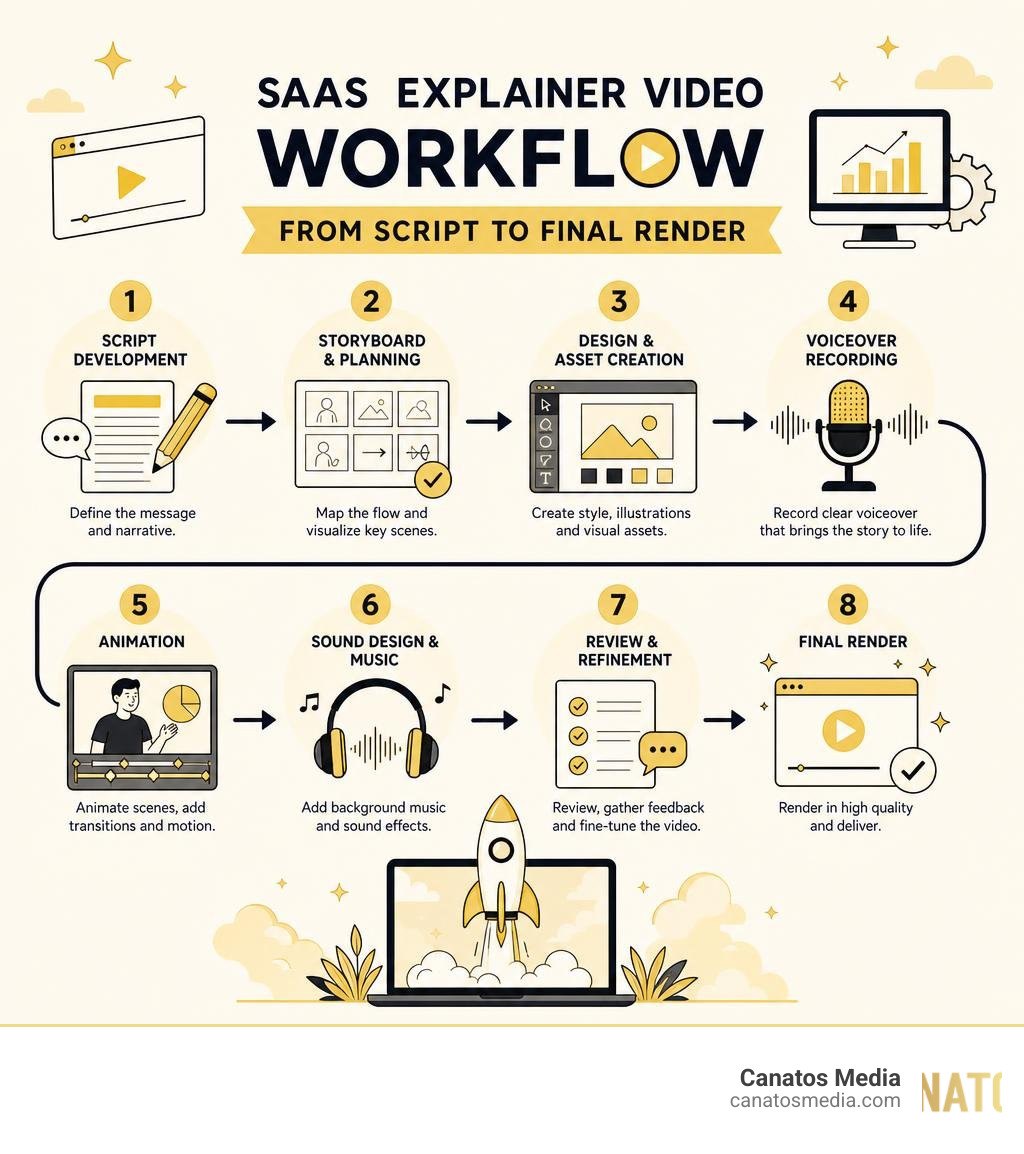
    SaaS explainer video workflow from script to final render infographic

    Instead of forcing prospects to read a 30-page whitepaper or sit through a dry, text-heavy slideshow, a 90-second animated explainer video can walk them through the problem, the solution, and the exact steps to get started.

    For example, creator platforms like Teachable have used animation to drive massive event registrations. Their summit campaign, highlighted in the Summit Animation Video for Teachable | VID, generated over 152,000 leads and nearly 70,000 registrations by using clean, modern motion graphics to communicate the value of their event.

    Whether you use cutting-edge AI tools like the Make AI Animated Explainer Video Maker in Minutes | Pexo to quickly prototype ideas, or work with a professional production agency to build custom assets, simplifying your offer is the fastest way to shorten your sales cycle.

    Choosing the Right Style for Your Digital Marketing Animation Video

    Selecting the right visual style is critical because it dictates how your audience perceives your brand’s authority and personality.

    Examples of 2D motion graphics vs 3D animation styles

    • 2D Motion Graphics: This style focuses on kinetic typography, shapes, and iconographies. It is clean, professional, and perfect for B2B tech companies that want to look sleek and modern.
    • 3D Animation: Highly detailed and realistic, 3D is ideal for physical product launches, medical devices, or high-end consumer goods. It allows you to show internal mechanics and angles that are impossible to capture with a camera.
    • Whiteboard Animation: This style simulates a hand drawing on a whiteboard in real-time. It is highly effective for educational content because the step-by-step drawing process naturally keeps viewers curious about what will be drawn next.

    If you need a quick overlay asset or want to explore pre-made motion graphics templates, platforms like the Digital Marketing Strategy 4K Animation, Motion Graphics | VideoHive offer excellent stock resources to help get your project off the ground.

    Best Practices for Creating High-Converting Animations

    Creating a high-converting digital marketing animation video requires a careful balance of art and science. It is not just about beautiful illustrations; it is about guiding the viewer’s eye and mind toward a specific action.

    To ensure your animation drives real business results, we recommend following a structured production process that prioritizes your marketing funnel. For a deep dive into how short-form video content fits into modern lead generation, read our guide on How Cinematic Short-Form Video Drives Meta and Google Lead Generation.

    Scripting and Storyboarding for Maximum Impact

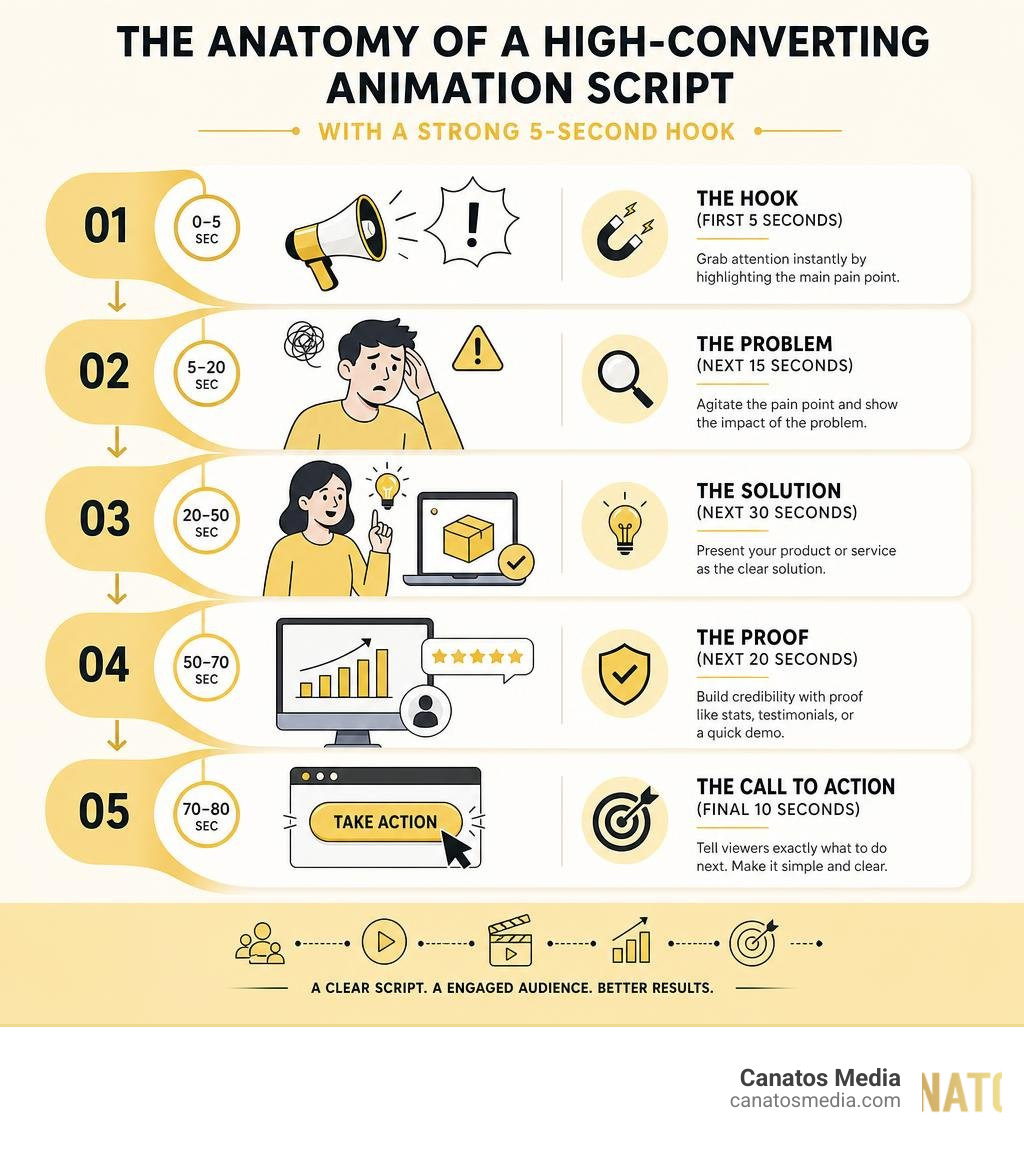
    The script is the foundation of your entire video. If the script is weak, even the most beautiful 3D animation will fail to convert. A high-converting script must follow a proven marketing structure:

    The anatomy of a high-converting animation script with a strong 5-second hook infographic

    1. The Hook (First 5 Seconds): Address your target audience’s primary pain point immediately. Do not start with a slow intro or a logo animation. Grab their attention right away.
    2. The Problem (Next 15 Seconds): Agitate the pain point. Show that you understand the frustration they are facing.
    3. The Solution (Next 30 Seconds): Introduce your product or service as the ultimate solution. Focus on the benefits of your offer, not just the features.
    4. The Proof (Next 20 Seconds): Briefly share a stat, a testimonial, or a visual demonstration that builds credibility.
    5. The Call to Action (Final 10 Seconds): Tell the viewer exactly what to do next, whether it is visiting a landing page, booking a call, or downloading an app.

    Once the script is locked, the storyboarding phase begins. This is where you map out the visual elements scene-by-scene to ensure the visual narrative perfectly supports the voiceover and keeps the viewer engaged.

    Optimizing Animations for Social Media and Paid Ads

    When you are running paid ads on platforms like Meta, Google, or TikTok, your animation has to be optimized for the user experience of those specific channels.

    • Design for Silent Autoplay: Up to 85% of social media users watch videos with the sound turned off. Your animation must make complete sense without audio. Use bold typography, kinetic text, and clear visual cues to deliver your message.
    • Use the Right Aspect Ratios: Do not rely on a single widescreen (16:9) video for every channel. Create square (1:1) cuts for feed ads and vertical (9:16) cuts for Reels, Shorts, and Stories.
    • Keep it Short and Punchy: For social ads, aim for 15 to 30 seconds. You need to deliver your value proposition and CTA before the user scrolls away.

    A great real-world example of this multi-format approach is detailed in the Shogun Animated Hype Video Case Study | Epipheo , where a 90-second core brand video was broken down into 15-second and 30-second ad cuts in both square and widescreen formats to maximize paid ad performance.

    For practical steps on optimizing your video campaigns for local audiences, see our guide on How to Optimize Short-Form Video Ads for Local Lead Generation.

    Measuring Campaign Success and Performance

    Investing in a digital marketing animation video is only half the battle. To maximize your return on investment, you must track how your target audience interacts with your content and measure its impact on your bottom line.

    To learn how to connect your top-of-funnel video views to real business appointments, explore our article on How to Measure Video Campaign ROI from Social Views to Booked Appointments.

    Key Metrics to Track

    When evaluating your video’s performance, look beyond “vanity metrics” like total views. Instead, focus on these actionable data points:

    • Play Rate: The percentage of landing page visitors who actually click play on your video. A low play rate usually means your video thumbnail or placement needs to be optimized.
    • Engagement / Retention Rate: This shows you exactly where viewers drop off. If 50% of your audience stops watching at the 10-second mark, your hook isn’t strong enough, or the video’s pacing is too slow.
    • Click-Through Rate (CTR): The percentage of viewers who click your call-to-action link during or after the video.
    • Conversion Rate: The percentage of video viewers who complete your desired goal (e.g., signing up for a trial or booking a consultation).

    By analyzing these metrics, you can make data-driven adjustments to your video placement, ad targeting, or even the video script itself. For more on how we turn these views into actual revenue, read about How We Turn Video Views into Real Revenue for Service Businesses.

    Additionally, high-quality video content plays an increasingly important role in modern search engine visibility. To understand how video assets can improve your organic reach, read How Video Content Drives Success in AI Search Results and AEO Optimization.

    Measuring the ROI of Your Digital Marketing Animation Video

    The success of your animated marketing campaign comes down to return on investment (ROI). To calculate this accurately, you need to look at your Customer Acquisition Cost (CAC) and compare it to the Lifetime Value (LTV) of the customers generated by your video campaigns.

    When an animated video successfully simplifies your value proposition, it pre-qualifies your leads. Prospects who watch your video before booking a call already understand what you do and how you can help them, which naturally leads to higher close rates and a lower overall CAC.

    To see how we align brand storytelling directly to lead generation, check out our insights on How We Connect Cinematic Brand Stories to Qualified Leads.

    Frequently Asked Questions about Animated Marketing Videos

    How much does a digital marketing animation video cost?

    The cost of producing an animated marketing video depends entirely on the style, complexity, and length of the project.

    • Basic Animations ($2,000 – $5,000): Typically includes clean, simple 2D motion graphics, basic character movements, or templated whiteboard animations. Great for startups or local service businesses on a budget.
    • Mid-Range Productions ($5,000 – $15,000): Custom-designed 2D animations, professional voiceovers, custom character designs, and highly polished motion graphics. This is the sweet spot for most growing brands.
    • Premium Animations ($15,000 – $30,000+): High-end 3D animations, complex character development, custom sound design, and multi-format ad packages.

    For businesses in the Tri-State area and Long Island, working with regional experts ensures your production budget is allocated efficiently. You can explore local services via resources like Video Production Services | Long Island Media Inc. or a dedicated Long Island Video Production Company | New York to get a sense of local market pricing.

    To learn more about video budgets and what to look for in a production partner, read our Beginner’s Guide to Video Production Services.

    Which industries benefit most from animated videos?

    While almost any business can benefit from video, animation is exceptionally powerful for industries with complex, abstract, or highly regulated offerings:

    • SaaS and Tech: Visualizes software interfaces, workflows, and cloud-based systems that cannot be captured with a traditional camera.
    • Fintech and Finance: Explains complex financial products, investment strategies, or security compliance in a way that feels safe, clear, and easy to understand.
    • Healthcare and Biotech: Animates cellular processes, medical devices, or patient treatment pathways with precision and clarity.
    • Service-Based Businesses: Local service providers use animation to make their booking and service processes feel incredibly straightforward and transparent.

    For a deeper look at how service-based businesses can leverage video to generate high-quality leads, check out our guide on Why Video Production is the Key to Modern Lead Generation for Service Businesses.

    Regional campaigns also show the power of local video storytelling. For example, local organizations frequently use video to build community trust, as seen in the Discover Long Island Launches Second Video Series in Award … campaign, which successfully boosted regional engagement.

    How long should a marketing animation video be?

    Your video’s length should be dictated by where it sits in your marketing funnel and where your audience will watch it:

    • Social Media Ads (Meta, TikTok, YouTube Shorts): 15 to 30 seconds. Focus on one clear message and a fast call to action.
    • Landing Pages & Website Homepages: 60 to 90 seconds. This is the ideal length for a standard product explainer video.
    • Deep-Dive Demos & Onboarding: 2 to 3 minutes. Perfect for prospects who are already in the consideration phase and want to see exactly how your product works.

    Conclusion

    A well-crafted digital marketing animation video is much more than a creative asset—it is a powerful conversion tool that simplifies your message, engages your audience, and drives measurable business growth. However, the most beautiful animation in the world will not deliver results without an integrated marketing strategy to back it up.

    At Canatos Media, we specialize in connecting high-quality video production with targeted digital marketing strategies. Serving businesses throughout the Tri-State area and Long Island, we build end-to-end campaigns that seamlessly integrate content creation, paid social advertising, SEO, and conversion optimization to turn casual viewers into loyal customers.

    Ready to elevate your brand’s digital presence and turn video views into real revenue? Explore our End-to-End Video Marketing: How We Drive Real Results for Growing Businesses services, and let’s build an animation strategy that actually converts.

  • Don’t Wing It: Why Professional Production Services Video Matter

    Don’t Wing It: Why Professional Production Services Video Matter

    Why Professional Production Services Video Can Make or Break Your Brand

    Production services video covers the entire process of creating professional video content — from the first planning call to the final edited file ready to publish.

    Here’s a quick breakdown of what that typically includes:

    Stage What Happens
    Pre-Production Scripting, storyboarding, location scouting, casting
    Production Filming, lighting, audio recording, directing
    Post-Production Editing, color grading, motion graphics, sound design
    Delivery Final export, platform formatting, raw footage options

    Common types of video production services:

    • Corporate brand and company overview videos
    • Customer testimonials and case study videos
    • Product demonstrations and explainers
    • Live event coverage and webinar production
    • Employee training and onboarding videos
    • Social media and short-form content

    Video is no longer a nice-to-have for businesses. It’s the default way people discover, evaluate, and trust brands online. Viewers retain 95% of a message when they watch it in a video — compared to just 10% when reading the same information as text. And companies that use video consistently grow revenue nearly 49% faster than those that don’t.

    But here’s the problem most local business owners run into: they know they need video, yet they’re not sure what “professional production” actually means, what it costs, or how to choose the right partner. So they either wing it with a smartphone or hire whoever seems cheapest — and the results rarely move the needle.

    This guide is here to change that.

    I’m Nic Canobbio, founder of Canatos Media, and with over two decades in media production — including overseeing live production, content editing, and production services video strategies that have generated over 60 million social media views — I’ve seen what separates forgettable video from content that actually drives growth. Let’s break down exactly what professional video production services look like, how they’re structured, and how to choose the right fit for your business.

    Infographic showing video retention rate 95 percent vs text 10 percent, revenue growth, ROI stats infographic

    Production services video basics:

    Professional Agency vs. DIY: The True Cost of Winging It

    It is incredibly tempting to think, “My new smartphone has a cinematic mode, so why can’t we just shoot this ourselves?” We get it. Modern phones are marvels of technology. But there is a massive difference between capturing high-resolution footage and executing a strategic video campaign that converts viewers into paying clients.

    When you wing your business videos, you aren’t just risking a shaky camera; you are risking your brand’s authority.

    high end cinema camera vs smartphone camera setup

    To help you understand the landscape, let’s look at how professional video production companies stack up against DIY efforts and solo freelancers:

    Feature Professional Production Company Solo Freelancer DIY (Smartphone/In-House)
    Primary Focus Strategic business growth & brand authority Technical execution of a single task Saving upfront budget
    Equipment Quality Cinema-grade cameras, professional lighting & audio Mid-tier gear, limited backup options Consumer-level smartphone or webcam
    Storytelling & Strategy In-depth scripting, marketing framework, and psychology Varies; often relies on your direction Unstructured; usually “winging it”
    Project Management Dedicated producers handling logistics & timelines You act as the project manager High internal time commitment
    Scalability Can scale from short social clips to multi-cam events Limited to what one person can physically do Highly limited

    When you partner with a professional agency, you aren’t just paying for someone to press “record.” You are paying for strategic storytelling power, technical expertise, and a polished final product that builds immediate trust with your prospective customers.

    Why DIY Falls Short of Professional Production Services Video

    The smartphone trap is real. While a phone can capture clean 4K video under perfect conditions, it struggles immensely when those conditions change.

    First, let’s talk about lighting. Professional video teams use high-end key lights, fill lights, and hair lights to create depth, separate the subject from the background, and flatter the speaker. DIY videos often suffer from harsh overhead office lighting or dark, muddy shadows that make your business look amateur.

    Second, and perhaps most importantly, is audio quality. Viewers will forgive mediocre visuals, but they will instantly click away from bad audio. Professional production services video teams use specialized lavalier and shotgun microphones, pre-amps, and sound-treatment techniques to capture crisp, clear voices. DIY setups usually rely on built-in phone mics or cheap wireless clips that pick up echo, air conditioning hums, and background rustle.

    If you are looking to understand the fundamentals of how professional setups operate, check out our Beginner’s Guide to Video Production Services.

    Full-Service Production Companies vs. Freelancers

    Hiring a solo freelancer can be a step up from DIY, but it introduces a different set of challenges: project management and scalability.

    A freelancer is typically a technician. They are great at running a camera or editing a timeline, but they rarely have the bandwidth to build an integrated marketing strategy. If the camera operator gets sick, your shoot is canceled. If you need 3D animation, social media cutdowns, and a website landing page to host the video, you have to find and manage additional specialists yourself.

    A full-service production company handles everything. We take care of the creative direction, scriptwriting, permitting, casting, filming, editing, and distribution strategy. We ensure your video aligns perfectly with your paid ads and SEO efforts to generate actual leads.

    To see how professional video drives real business outcomes, read about Why Video Production is the Key to Modern Lead Generation for Service Businesses.

    Not all videos serve the same purpose. To get the highest return on your investment, you need to choose the style of video that matches your specific business goals.

    corporate event live-streaming and video mapping setup

    Professional production teams bring specialized tools to the table — such as FPV drones for cinematic aerial videography, custom motion graphics, and even advanced video mapping — to elevate different types of projects.

    Corporate and Brand Storytelling

    Your brand story is the emotional bridge between your business and your customers. Corporate and brand storytelling videos aren’t dry lists of your services; they explain why you do what you do and how you solve your customers’ deepest pain points.

    Within this category, we typically produce:

    • Company Overviews: High-level introductions to your mission, culture, and team.
    • Customer Testimonials: Real clients sharing their success stories in their own words (which builds immense trust).
    • Product Demonstrations: Showing your product or service in action to remove buying friction.

    For businesses in the tri-state area and Long Island, standing out in a crowded market requires high production value and a clear message. To plan your overall approach, take a look at The Complete Guide to Video Marketing.

    Live Events, Webinars, and Virtual Productions

    Live events are powerful, but their reach is naturally limited by physical space. Professional event production services expand your audience globally. Whether you are hosting a local summit in New York or a hybrid corporate conference, professional teams manage the complex audio-visual (AV) logistics so you can focus on your guests.

    This involves multi-camera setups, live switching, real-time streaming, and digital signage management. If you are planning an upcoming event and want to ensure a flawless live stream, explore how we handle these dynamics at Canatos Media Video Production.

    Training, Onboarding, and Educational Content

    Internal communication is just as important as external marketing. Companies use video to streamline employee onboarding, maintain compliance training, and deliver software walkthroughs.

    By using professional green screen technology, teleprompters, and custom animations, we make educational content engaging rather than boring. This saves your HR and management teams hundreds of hours of repetitive training sessions. To see how we build high-impact internal communications, visit Canatos Media Corporate Video Production.

    The Lifecycle of a Professional Video Project

    A successful video doesn’t happen by accident on the day of the shoot. It is the result of a highly structured, collaborative process.

    When you work with a professional team in the tri-state area, your project moves through three distinct phases to ensure it stays on time, on budget, and on brand.

    The Three-Phase Process of a Production Services Video Project

    Every great production services video project follows this proven lifecycle:

    1. Pre-Production (The Planning Stage): This is where the magic begins. We collaborate with you to define your target audience, write the script, design storyboards, scout locations, and schedule the shoot. Planning everything down to the minute ensures that shoot day runs smoothly and efficiently.
    2. Production (The Filming Stage): This is the physical shoot. The director, camera operators, gaffers (lighting technicians), and sound engineers assemble to capture the footage. Using high-end cinema packages, we capture beautiful visuals and pristine audio.
    3. Post-Production (The Polishing Stage): Our editors take the raw footage and craft the story. This phase includes rough cuts, fine cuts, color grading (making the colors pop), sound design, and the addition of custom motion graphics. We typically build in two rounds of professional revisions so you can request adjustments before final delivery.

    To learn more about how we seamlessly guide businesses through this entire lifecycle, read about our process for End-to-End Video Marketing: How We Drive Real Results for Growing Businesses.

    Choosing the Right Video Production Package and Pricing Model

    When looking for a local production partner on Long Island or in the broader tri-state area, navigating pricing can feel overwhelming. Some companies charge by the hour, some offer flat day rates, and others package their services.

    To ensure you choose a partner that maximizes your budget, keep these key factors in mind:

    • Clear Deliverables: Ensure the quote specifies exactly how many final videos, social media cutdowns, and revision rounds are included.
    • Asset Ownership: Confirm if you will have access to raw footage or B-roll selects for future use.
    • Marketing Integration: Ask if the agency understands how to format videos for paid Meta/Google ads or SEO.

    For a deeper dive into choosing the right agency for your specific business goals, check out Lead Generation Video Production: How to Choose the Right Agency in 2026.

    Understanding Tiered Service Packages (Gold, Crimson, Pioneer)

    Many professional agencies and institutional media departments use tiered pricing packages to make budgeting simple and predictable. While custom quotes are always available for unique projects, these standard tiers help businesses understand what level of production fits their scale:

    • Pioneer (Small Scale): Best for simple, single-camera recordings, basic interviews, or local guest speaker presentations. This tier focuses on clean, straightforward documentation with minimal post-production editing.
    • Crimson (Mid-Scale): Ideal for mid-sized business marketing, standard brand stories, or events with under 100 guests. This typically includes a 1-to-2 camera setup, professional lighting, crisp audio, and standard brand motion graphics.
    • Gold (Enterprise/Large Scale): Designed for large-scale corporate events, high-end commercial campaigns, or events with over 100 guests. This tier features multi-camera setups, live switching, advanced post-production, and specialized gear like aerial drones.

    To see how we help businesses select the most cost-effective tier for their needs, explore our guide on Budget-Friendly Video Production for Multi-Location Businesses.

    Frequently Asked Questions about Video Production

    What is the typical timeline for a professional video project?

    For most standard corporate, brand story, or promotional projects, the timeline from the initial discovery call to final delivery is 2 to 4 weeks. This allows ample time for collaborative scripting, a 1-to-2 day shoot, professional editing, and client revision rounds. Larger, more complex campaigns may take 4 to 6 weeks.

    Do businesses get to keep the raw footage from a shoot?

    While we typically deliver polished, high-end final films, many businesses want access to the raw masters or “B-roll” selects for future social media content or archiving. We can easily provide these raw files as part of a custom licensing agreement. It is always best to let us know your archival needs during our initial discovery call!

    How do professional video production services measure ROI?

    We look far beyond simple “view counts.” True return on investment is measured by audience engagement, message retention, and conversion rates. For marketing campaigns, we track how many viewers take action after watching (such as filling out a contact form or purchasing a product). For internal videos, ROI is measured by reduced onboarding times and improved compliance rates.

    Conclusion

    Winging your video content might seem like an easy way to save a few dollars today, but it often costs you brand authority, customer trust, and potential revenue tomorrow. In a highly competitive market like Long Island and the tri-state area, your audience expects professional, engaging, and clear visual communication.

    At Canatos Media, we don’t just shoot pretty videos. We build integrated digital strategies that connect high-end cinematic content with targeted paid ads, SEO, and website support to drive measurable growth for your business.
    Ready to stop winging it and start growing? Explore our specialized Short Form Video Production services today, and let’s create something unforgettable together.

  • Top 10 Most Popular Short-Form Video Platforms 2026

    Top 10 Most Popular Short-Form Video Platforms 2026

    The short-form video landscape in 2026 is dominated by a few key players, each commanding massive user bases and significant engagement. These platforms are not just entertainment hubs; they are powerful engines for discovery, commerce, and community building. Understanding their scale is crucial for any creator or brand looking to make an impact.

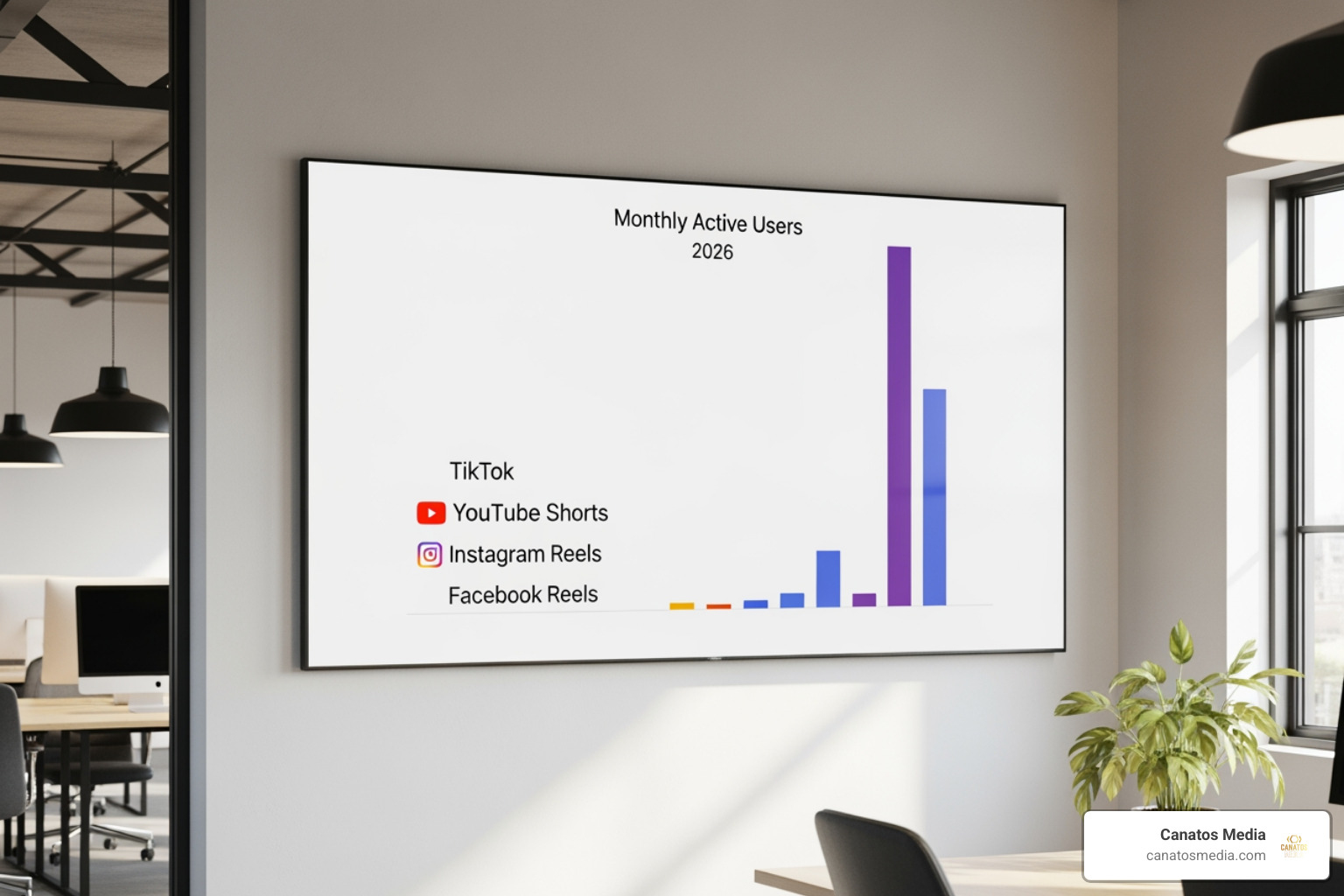
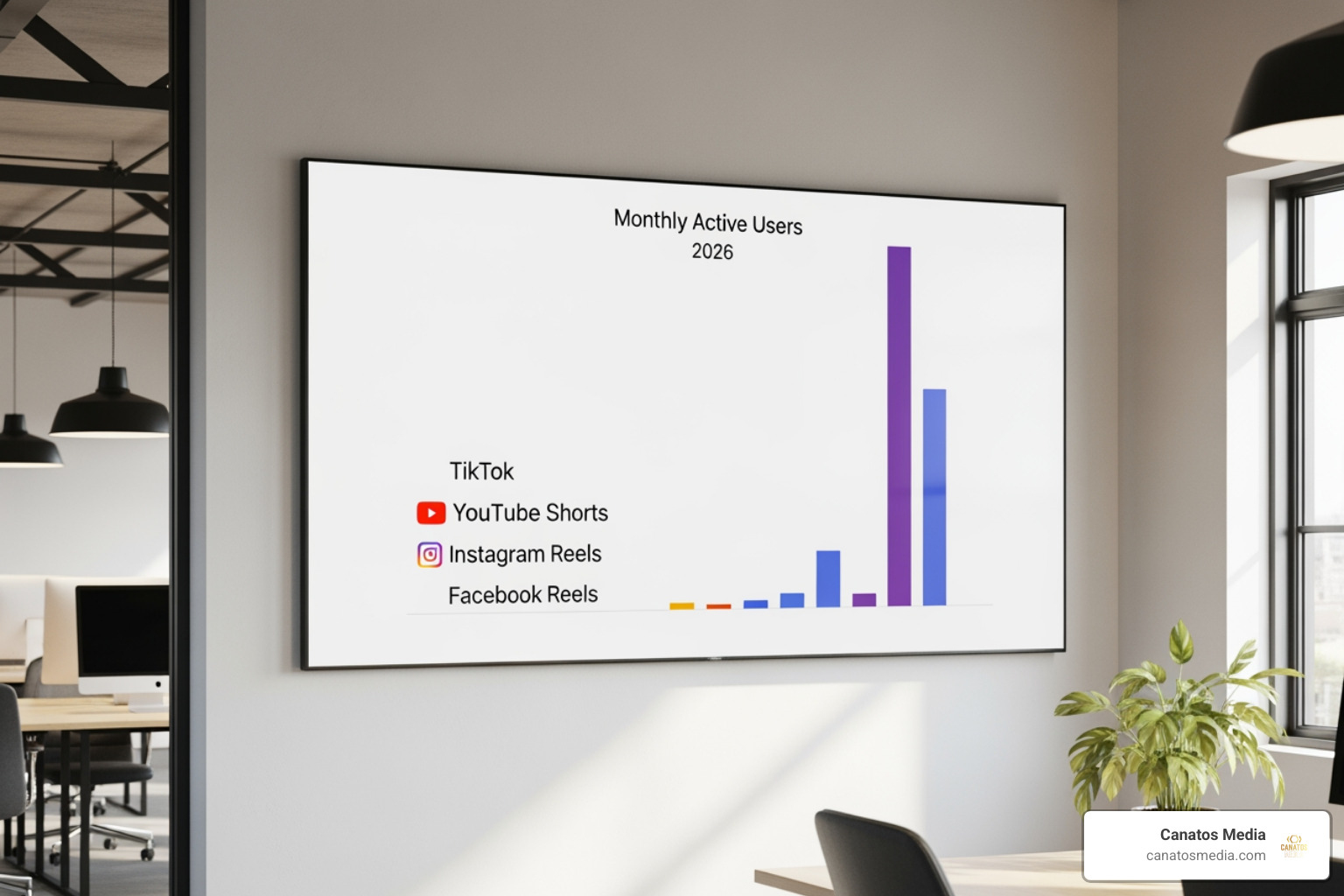
    Graph showing Monthly Active Users (MAU) for top short-form video platforms in 2026

    The Big Four: TikTok, YouTube Shorts, Instagram Reels, and Facebook Reels

    These four platforms collectively represent the pinnacle of short-form video popularity. While their overall user numbers might reflect their parent companies’ broader ecosystems, their dedicated short-form video features are where the real action is.

    • TikTok continues to be a cultural powerhouse, known for its highly engaging, content-first algorithm that drives rapid discovery.
    • YouTube Shorts leverages YouTube’s massive global reach and search capabilities, offering content a longer shelf life and acting as a powerful funnel to long-form video.
    • Instagram Reels integrates seamlessly into the Instagram ecosystem, making it a strong contender for community engagement and commerce.
    • Facebook Reels, often underestimated, provides unparalleled reach, especially among older demographics, and offers unique opportunities for local businesses and niche communities.

    The sheer volume of short-form video consumption highlights its importance. Globally, 1.6 billion people have actively engaged with short-form videos, accounting for a significant portion of the world’s population. This format isn’t just popular; it’s profoundly effective, consistently receiving 2.5 times more engagement than its long-form counterparts. This trend has not gone unnoticed by marketers, with ad spending on short-form videos projected to reach an astounding $1.04 trillion globally in 2026, marking a robust 5.1% year-over-year growth. For a deeper dive into these trends, you can explore the insights from Short-Form Video Statistics 2026 (TikTok, Reels & Shorts).

    Key Statistics Highlighting Popularity

    Let’s break down the numbers that underscore the dominance of these platforms in May 2026:

    • TikTok: With approximately 1.8 billion monthly active users, TikTok boasts the highest average session time among short-form platforms, clocking in at an impressive 95 minutes. In the United States, adults are spending an average of 58.4 hours monthly on the platform, indicating deep integration into daily routines.
    • YouTube Shorts: While YouTube’s overall user base stands at 2.7 billion, its Shorts feature is a massive contributor to engagement, generating 200 billion daily views. This scale underscores its role as a critical discovery engine within the broader YouTube ecosystem.
    • Instagram Reels: Part of Instagram’s 2 billion monthly active users, Reels commands significant attention, with users spending an average of 53 minutes per session. This engagement highlights its effectiveness for visual content and community interaction.
    • Facebook Reels: Backed by Facebook’s colossal 3.07 billion monthly active users, Reels offers an immense potential reach, particularly for audiences over 30, who are often overlooked by younger creators.

    These statistics paint a clear picture: short-form video is not just a passing fad; it’s the dominant mode of content consumption, engagement, and advertising in 2026.

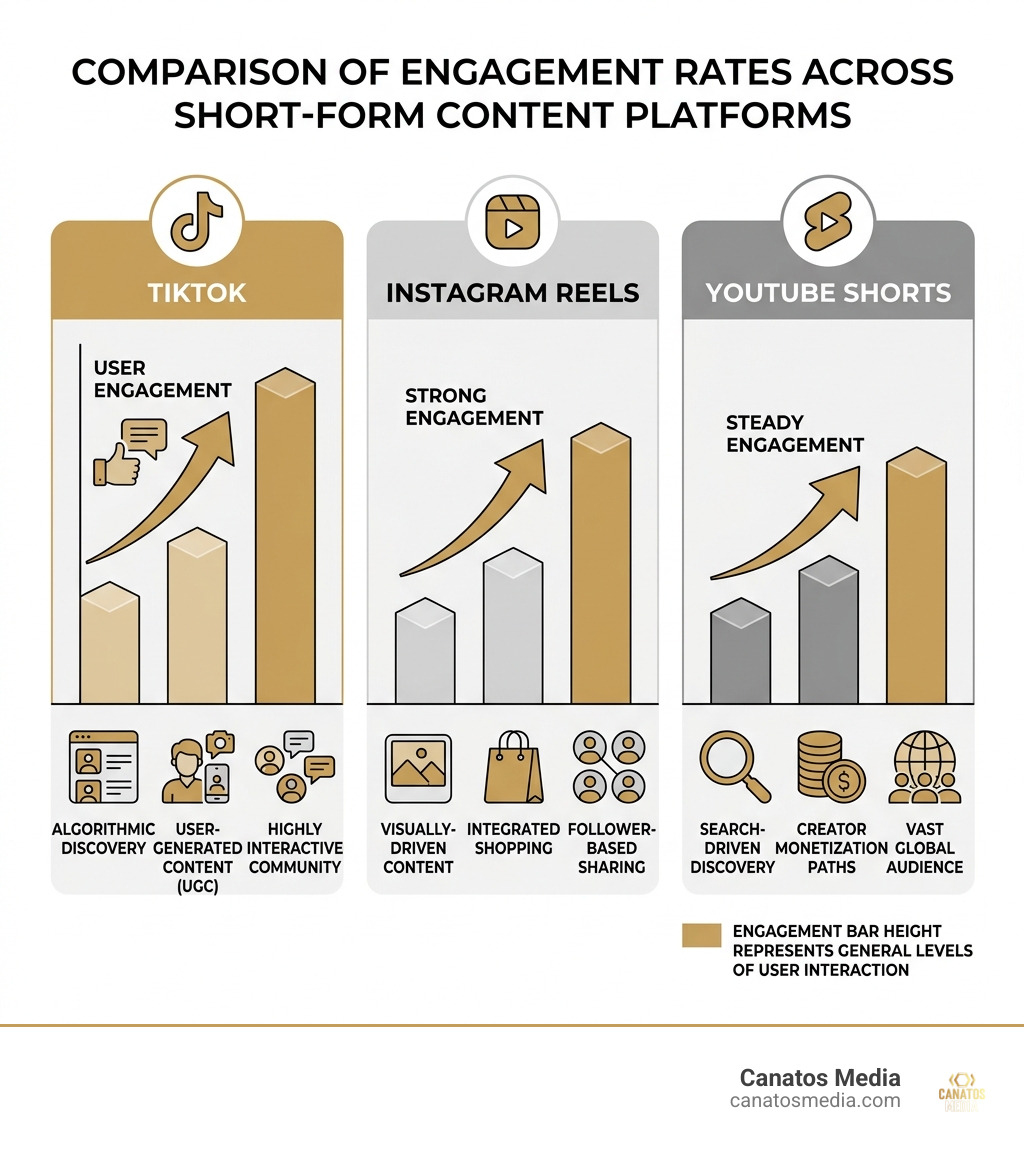
    How do the leading short-form video platforms compare in algorithms, discovery, and audience demographics?

    Understanding the distinct characteristics of each major short-form video platform is paramount for crafting an effective content strategy. While they all offer short-form video, their underlying algorithms, content discovery mechanisms, and primary audience demographics vary significantly. This diversity means a one-size-fits-all approach is rarely optimal. For a comprehensive comparison of these platforms, consider insights from What Are the Best Short-Form Video Apps?.

    Feature / Platform TikTok YouTube Shorts Instagram Reels Facebook Reels
    Algorithm Content-first (For You Page) Search & Subscriber-driven Follower-first (Social Graph) Relationship & Interest-based
    Discovery Rapid virality, interest graph Search, recommendations, browse Existing followers, explore page Groups, friends, recommendations
    Audience Gen Z (maturing to 35-49) Broad (all age groups) Younger adults (18-34) Older demographics (30+)
    Content Focus Trends, entertainment, authentic Educational, evergreen, tutorials Aesthetic, lifestyle, commerce Informative, local, community

    TikTok: The Discovery Engine

    TikTok remains the undisputed “king of discovery” due to its powerful, content-first algorithm, often referred to as the For You Page (FYP). This algorithm excels at pushing content to users based on their interests, regardless of whether they follow the creator. This means even accounts with zero followers can achieve rapid virality, making it an ideal platform for brand awareness and testing new content ideas.

    While initially known for its Gen Z dominance, TikTok’s audience has significantly matured. The fastest-growing segment in 2026 is the 35-49 age demographic, and it’s increasingly being used as a search engine for products and information. Content that thrives here is often trend-based, authentic, entertaining, and challenge-oriented, rewarding creativity and relatability over polished perfection.

    YouTube Shorts: The Search & Longevity Powerhouse

    YouTube Shorts leverages the immense power of YouTube’s search engine, making it a unique player in the short-form space. Its algorithm combines search intent with subscriber preferences and broader recommendations, giving content a much longer shelf life than on other platforms. A Short posted today can continue to accumulate views weeks or even months later, making it ideal for evergreen and educational content.

    The audience on YouTube Shorts is incredibly broad, mirroring YouTube’s diverse user base across all age groups. It’s a fantastic platform for creators who want to build a sustainable content business, as Shorts can act as a “flywheel effect,” driving new subscribers and viewers to their longer-form videos. Tutorials, how-to guides, and quick educational snippets perform exceptionally well here.

    Instagram Reels: Community & Commerce Hub

    Instagram Reels operates with a more follower-first algorithm, prioritizing content from accounts users already follow or frequently interact with. This makes it a strong platform for nurturing existing communities and deepening engagement. While discovery through the Explore page is possible, content tends to perform best within established social graphs.

    Instagram’s audience skews towards younger adults, often focused on aesthetics, lifestyle, and visual storytelling. Reels are deeply integrated with Instagram’s commerce features, including product tagging, in-app shopping, and direct messaging, making it a potent tool for direct-to-consumer (DTC) brands and creators focused on product showcases and affiliate marketing.

    Facebook Reels: The Underrated Giant

    Facebook Reels, often overlooked by younger creators, presents a significant untapped opportunity, especially for businesses targeting audiences over 30. With Facebook’s nearly 3 billion monthly active users, Reels offers a massive potential reach with relatively lower competition compared to other platforms.

    The algorithm here tends to favor content that resonates within established relationships and interest groups, making it excellent for local businesses, community-focused content, and informative videos. For creators and brands seeking to engage older demographics or leverage Facebook Groups for hyper-targeted distribution, Facebook Reels is an incredibly effective, yet often underestimated, platform.

    Canatos Media’s Expertise

    At Canatos Media, we understand that each platform demands a tailored approach. Our team specializes in crafting cinematic short-form videos that are not only visually compelling but also strategically optimized for each platform’s unique algorithm and audience. Whether you’re aiming for rapid virality on TikTok, evergreen searchability on YouTube Shorts, community engagement on Instagram Reels, or broad reach on Facebook Reels, our Short-Form Video Production services are designed to ensure your content achieves maximum discovery and engagement. We work closely with businesses in the Tri-state area and Long Island to ensure their video content speaks directly to their target audience, wherever they may be.

    Which short-form video platforms offer the best monetization opportunities for creators in 2026?

    Monetization is a critical consideration for creators and brands investing in short-form video. In 2026, platforms have evolved their revenue-sharing models, creator funds, and commerce features to provide diverse pathways for earning income. While direct ad revenue is one component, in-app shopping, brand deals, and affiliate marketing play increasingly significant roles.

    Infographic illustrating different monetization paths for short-form video creators

    YouTube Shorts: Transparent Revenue Sharing

    YouTube Shorts stands out with its transparent and scalable monetization model. Through the YouTube Partner Program, creators receive a 45% revenue share from ads shown in the Shorts feed. This makes it one of the most stable and predictable direct monetization options available. For creators focused on long-term income, Shorts can also act as a powerful funnel, driving viewers to their higher-CPM long-form content, significantly boosting overall earnings. The evergreen nature of content on YouTube also means videos can continue generating revenue months or years after being posted.

    TikTok: Commerce and Creator Rewards

    TikTok’s monetization landscape is diverse and rapidly expanding, especially with the growth of TikTok Shop. Creators can earn significant income through commissions on products sold directly within the app, either through their own storefronts or via affiliate links. The Creator Rewards Program, which replaced the Creator Fund, now structurally favors videos over 1 minute in length, offering payouts based on qualified views. Beyond direct platform programs, brand partnerships and live shopping events are major revenue streams, capitalizing on TikTok’s immense influence on consumer purchasing decisions. For more detailed statistics on TikTok’s monetization, refer to 31 TikTok Statistics to Know for 2026.

    Instagram Reels: Bonuses and Integrated Shopping

    Instagram Reels offers creators various monetization opportunities, primarily through performance-based bonuses and deeply integrated commerce features. Reels Play bonuses reward creators for achieving certain view milestones. More importantly, Instagram’s robust shopping ecosystem allows for direct product tagging, affiliate marketing, and seamless integration with Instagram Shop, making it highly effective for direct-to-consumer (DTC) brands and creators who showcase products. The platform’s emphasis on visual aesthetics and lifestyle content makes it ideal for driving sales through aspirational product placement.

    Facebook Reels: In-Stream Ads and Stars

    Facebook Reels provides monetization through in-stream ads that appear within or around video content, sharing revenue with eligible creators. Additionally, viewers can support their favorite creators by sending “Stars,” a virtual currency that translates into real earnings. While perhaps not as flashy as TikTok Shop or YouTube’s revenue share, Facebook’s vast user base and strong community features create opportunities for brand collaborations and sponsored content, particularly for creators targeting specific niche communities or local audiences in areas like the Tri-state area and Long Island.

    How have short-form video features evolved, and what role do emerging platforms play in 2026?

    The short-form video landscape is anything but static. In 2026, we’ve witnessed significant evolution in core platform features and the emergence of new players, all vying for creator and audience attention. These changes underscore the dynamic nature of the industry and the need for creators and brands to stay agile. For a comprehensive look at these shifts, check out Short-Form Video Trends 2026 — TikTok, Reels & Shorts.

    AI-powered video creation tools in action

    Evolution of Core Platform Features

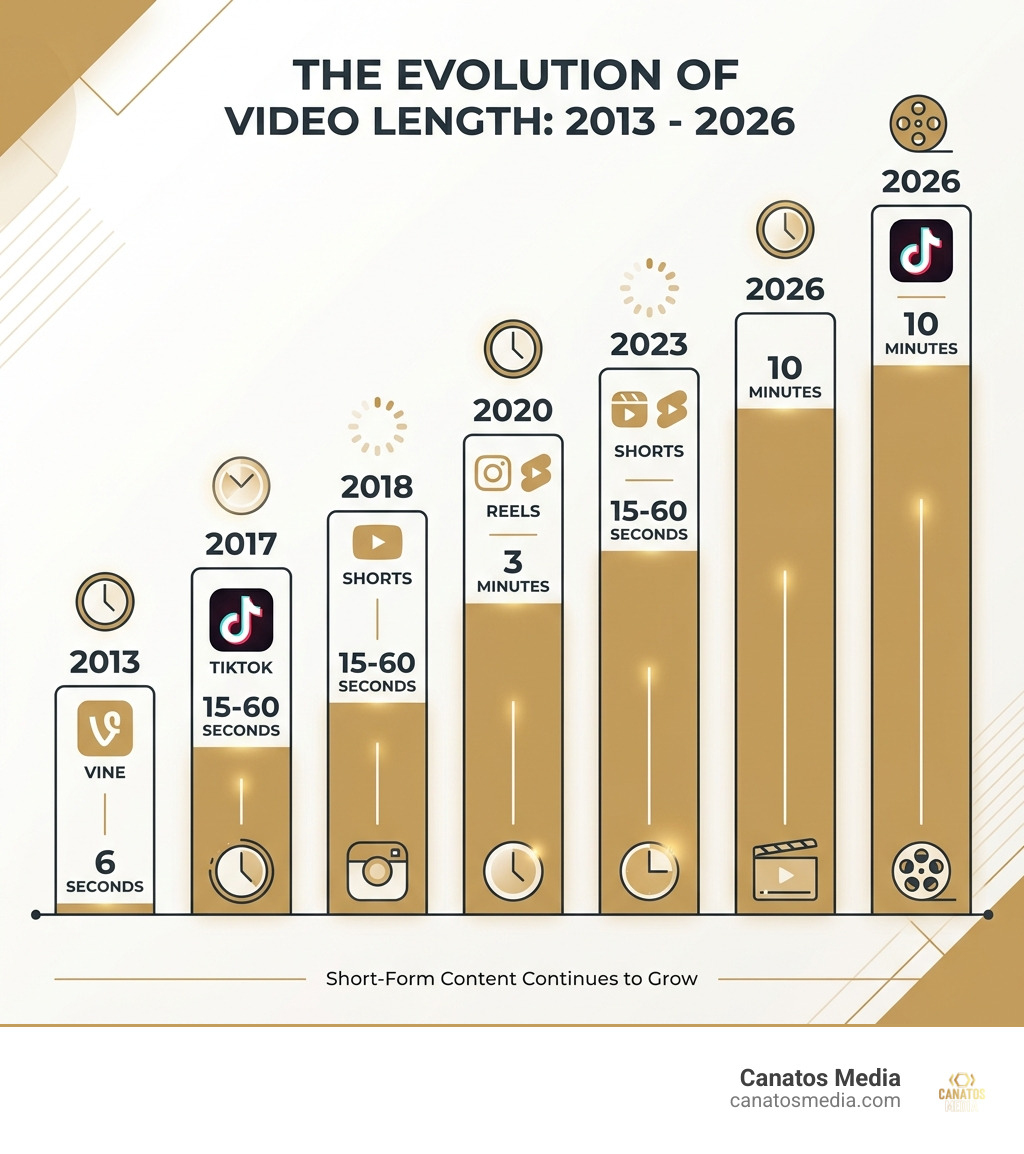
    • Longer Video Lengths: The definition of “short-form” has expanded considerably. Both YouTube Shorts and Instagram Reels have extended their maximum video length to 3 minutes, blurring the lines with mid-form content. TikTok has pushed even further, allowing videos up to 10 minutes. This shift reflects a growing demand for more in-depth storytelling and educational content within the vertical format.
    • AI Tools: Artificial intelligence has permeated every aspect of content creation. AI-powered editing, automatic captioning, script generation, and even full video creation tools are now commonplace, streamlining production workflows and making content creation more accessible. However, platforms are increasingly rewarding authentic, human-created content and penalizing what’s often referred to as “AI slop”—low-quality, generic AI-generated videos. This means AI is best utilized as an assistant, not a replacement for genuine creativity.
    • Cross-Posting Norm: Multi-platform distribution has become the standard. Creators understand that to maximize reach and diversify algorithmic risk, they must post content across multiple platforms. This has led to a best practice of customizing captions, hashtags, and calls-to-action for each platform’s unique audience and, crucially, removing watermarks from videos before cross-posting to avoid potential reach suppression.

    The Rise of Emerging Platforms

    While the “Big Four” dominate, several emerging platforms are carving out their niches and offering new opportunities for creators and brands:

    • Snapchat Spotlight: Continuing its focus on younger demographics (13-24), Snapchat Spotlight remains relevant with its unique augmented reality (AR) lenses and ephemeral content, providing a distinct space for playful and interactive videos.
    • LinkedIn Video: LinkedIn has introduced a vertical video feed, creating a high-engagement opportunity for B2B thought leaders and professionals. With relatively low competition, it’s an excellent platform for sharing industry insights, career advice, and professional development content.
    • Threads: Meta’s text-based platform has quickly gained traction, and its integration of short-form video, often combined with text commentary, offers a fresh space for authentic, conversational content.
    • Lemon8, WeAre8, RedNote: These platforms represent a new wave of niche social media. Lemon8 blends short-form video with lifestyle and commerce, WeAre8 focuses on ethical advertising and social impact, and RedNote is gaining significant traction for lifestyle and e-commerce videos, particularly in Asian markets, though its influence is expanding.

    These evolving features and emerging platforms highlight a dynamic and competitive landscape, where adaptability and strategic content deployment are key to staying ahead.

    In 2026, the question is no longer if you should be on short-form video, but how you effectively manage your presence across multiple platforms. The smartest creators and brands are not choosing just one platform; they are embracing a multi-platform strategy. This approach is essential for diversifying risk, maximizing reach, and tailoring content to resonate with distinct audiences on each channel. For more insights into this strategy, refer to Battle of the Bites: Most Popular Short-Form Content Platforms.

    Why a Multi-Platform Approach is Essential

    The core reason for a multi-platform strategy is simple: audiences and algorithms differ significantly. A video that might not gain traction on TikTok could unexpectedly go viral on Facebook Reels, or an educational clip that performs modestly on Instagram Reels might find a long-tail audience on YouTube Shorts. Relying on a single platform exposes you to the whims of one algorithm and limits your potential audience. By distributing content across multiple channels, you:

    • Diversify Algorithmic Risk: Protect yourself from algorithm changes that might suddenly reduce your reach on one platform.
    • Maximize Total Reach: Access different audience segments that prefer specific platforms. Creators posting to three or more platforms often achieve 4-5 times the total reach of single-platform creators.
    • Optimize Engagement: Tailor content to the native culture and expectations of each platform, leading to higher engagement.
    • Expand Monetization Opportunities: Leverage diverse revenue streams from various platforms.

    Actionable Steps for Multi-Platform Success

    Implementing a successful multi-platform strategy requires more than just reposting. It demands thoughtful adaptation and optimization:

    • Content Testing: We often recommend testing new content ideas on TikTok first. Its content-first algorithm allows for rapid discovery and quick feedback on what resonates. Once a concept proves successful, it can then be adapted and distributed to other platforms.
    • Customization is Key: Never simply re-upload the exact same video with the same caption. Customize captions, hashtags, and calls-to-action to match each platform’s unique culture and audience expectations. What works on TikTok might feel out of place on LinkedIn.
    • Watermark Removal: Always upload clean, watermark-free files. Platforms like Instagram and YouTube are known to suppress the reach of videos containing watermarks from competitors (e.g., TikTok’s logo). Invest in tools or editing processes to ensure your content is pristine for each upload.
    • Platform-Specific Optimization:
      • YouTube Shorts: Focus on creating evergreen content that answers searchable questions. Optimize titles and descriptions with relevant keywords to leverage YouTube’s search capabilities for long-tail traffic.
      • Instagram Reels: Prioritize aesthetic appeal, strong visuals, and direct calls-to-action for commerce. Leverage features like product tagging and interactive stickers.
      • Facebook Reels: Target specific Facebook Groups where your audience congregates. Create informative, community-focused content that encourages discussion and shares among older demographics.
    • Strategic Expansion: While it’s tempting to be everywhere, we advise mastering the “Big Four” (TikTok, YouTube Shorts, Instagram Reels, and Facebook Reels) before expanding into more niche or emerging platforms like Snapchat Spotlight or LinkedIn Video. Focus your efforts where your primary audience is most active.

    Canatos Media’s Integrated Strategy

    At Canatos Media, we specialize in helping brands implement a robust multi-platform short-form video strategy. We don’t just create compelling, cinematic content; we manage its strategic distribution across all relevant platforms, ensuring your message resonates with diverse audiences and drives measurable results. Our expertise in Short-Form Content Strategy: Why Agencies Outperform Freelance Marketplaces ensures a cohesive and effective approach that connects content, targeting, and conversions for businesses in the Tri-state area and Long Island. We provide the integrated strategy needed to navigate this complex ecosystem and achieve your marketing goals.

    Frequently Asked Questions about Short-Form Video Platforms in 2026

    Which platform is best for rapid growth from zero followers in 2026?

    TikTok remains the king for rapid discovery and growth from zero followers due to its powerful, content-first For You Page algorithm. This algorithm excels at pushing engaging content to users based on their interests, regardless of whether they follow the creator, allowing new accounts to achieve virality quickly.

    Does YouTube Shorts pay more than TikTok in 2026?

    Generally, YouTube Shorts offers a more stable and scalable direct ad revenue sharing path through its 45% revenue share model, often leading to higher and more consistent payouts compared to TikTok’s Creator Rewards Program. While TikTok offers significant earnings through TikTok Shop and brand deals, YouTube’s direct revenue share combined with the potential to funnel viewers to higher-CPM long-form content often provides a more reliable and substantial income stream for many creators.

    What is the optimal video length for short-form content in 2026?

    The definition of “short-form” has expanded significantly. While TikTok still thrives on 15-30 second clips for rapid virality, optimal lengths vary by platform and content type. For YouTube Shorts, 60-90 seconds is often ideal for educational or evergreen content. Instagram Reels typically sees strong engagement with videos between 30-60 seconds. TikTok itself now supports videos up to 10 minutes, with the Creator Rewards Program favoring content over 1 minute. The key metric to focus on is completion rate, not just arbitrary length. A shorter, highly engaging video that viewers watch to the end will outperform a longer video that viewers swipe past quickly.

    Conclusion

    The short-form video landscape in 2026 is dynamic, competitive, and ripe with opportunity. While TikTok, YouTube Shorts, Instagram Reels, and Facebook Reels continue to dominate, their algorithms, audience demographics, and monetization models are constantly evolving. For creators and brands, success hinges on a strategic, multi-platform approach, leveraging each platform’s unique strengths and adapting content to its specific demands. By understanding these nuances and embracing tools and strategies for efficient content creation and distribution, you can effectively capture attention, build communities, and drive conversions in the ever-expanding world of short-form video. To truly excel, consider partnering with experts like Canatos Media, who can provide comprehensive Short-Form Video Production and strategic guidance to navigate this complex ecosystem.

  • The Complete Guide to Video Marketing

    The Complete Guide to Video Marketing

    Video Marketing: What It Is and Why It’s Dominating in 2026

    Video marketing is the use of video content to promote your business, attract new customers, and drive real sales — across platforms like YouTube, Instagram, TikTok, and your own website.

    Quick answer:

    • What it is: Creating and sharing videos to grow brand awareness, generate leads, and convert viewers into customers
    • Why it works: Video is the format people prefer — 66% choose video over reading text to learn about a product
    • Where it runs: Social media, landing pages, email, paid ads, YouTube, and more
    • Who it’s for: Any business that wants more visibility, trust, and revenue online
    • The result: 88% of video marketers report a positive ROI — and 87% of consumers say a brand video directly influenced a purchase

    The numbers are hard to ignore. Nearly 9 in 10 businesses now use video as a marketing tool. Social videos generate 1,200% more shares than text and images combined. And 91% of marketers say video helps them get more website traffic.

    Yet most local businesses still treat video as an afterthought — a single promotional clip posted once and forgotten.

    That’s a missed opportunity.

    Video is no longer a “nice to have.” It’s the engine behind awareness, trust, and conversions at every stage of the customer journey. Whether you’re a multi-location business trying to stand out in a crowded market or a founder building your brand from scratch, video gives you a way to show — not just tell — why customers should choose you.

    I’m Nic Canobbio, founder of Canatos Media, and I’ve spent over two decades in media production, generating more than 60 million views across social platforms through video marketing strategies built on both creative storytelling and hard data. In this guide, I’ll walk you through everything you need to build a video strategy that actually moves the needle.

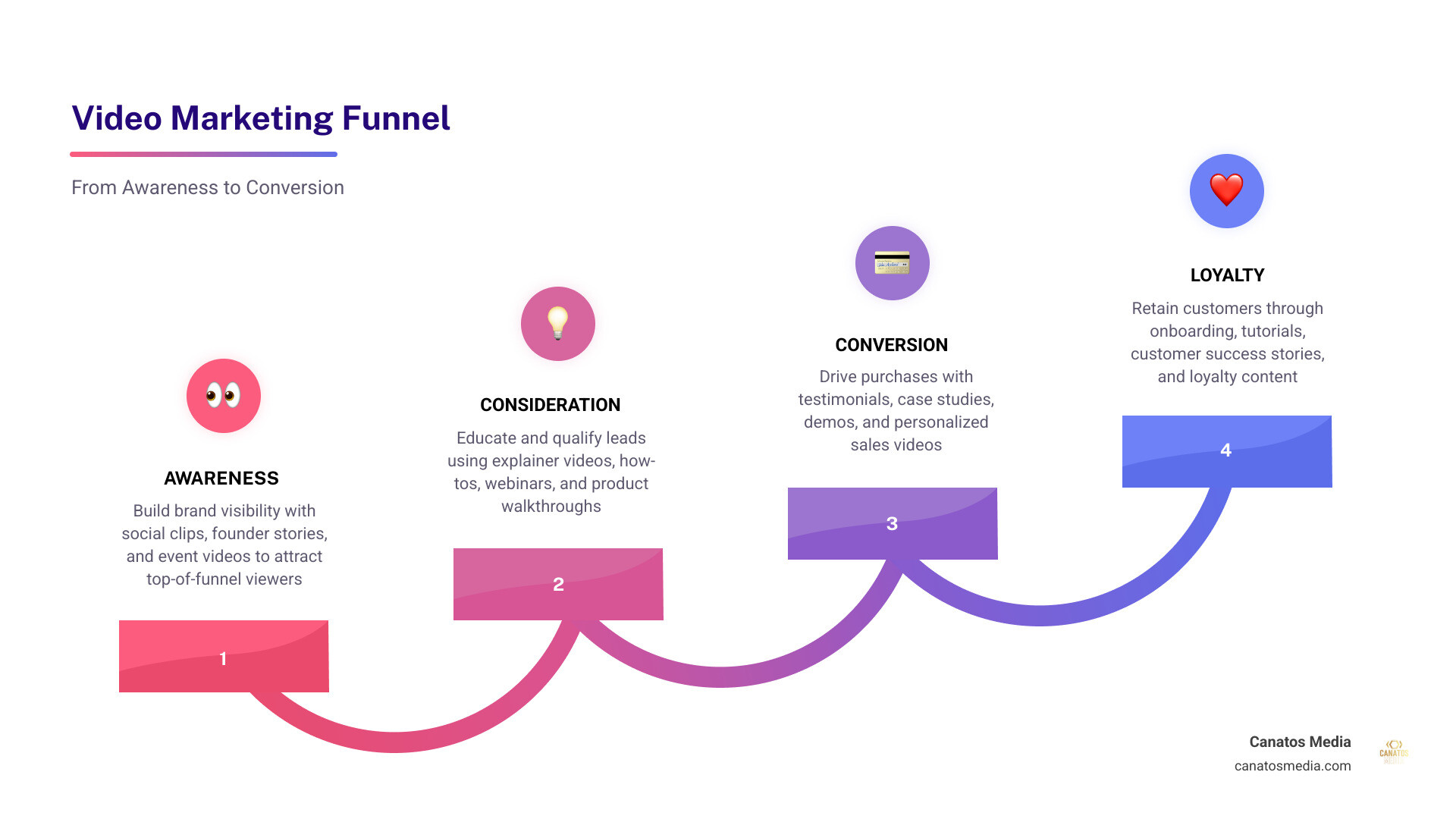
    Video marketing funnel from awareness to conversion with key stats and video types at each stage infographic

    What Is Video Marketing and Why It Matters in 2026

    At its core, video marketing is a forward-facing digital strategy that leverages the power of sight, sound, and motion to achieve specific business objectives. In 2026, it has moved far beyond the “commercial” phase. It is now the primary way we consume information, learn new skills, and decide where to spend our money.

    What video marketing means for modern businesses

    For businesses in the Tri-State area and Long Island, video marketing serves as a bridge between your brand and your local community. It isn’t just one thing; it’s a multi-faceted tool used for:

    • Promotion: Highlighting new products or services.
    • Education: Explaining complex topics or providing “how-to” value.
    • Persuasion: Using testimonials and case studies to build social proof.

    We categorize these efforts into three main buckets: Owned media (videos on your website), Paid media (YouTube or Meta ads), and Earned media (when people share your content because it’s just that good).

    Why video marketing is so powerful right now

    Buyer behavior has shifted permanently toward visual learning. We are 5x more likely to pay attention to a video than static text. This emotional connection builds trust faster than any other medium. When you see a local business owner’s face and hear their voice, the “know, like, and trust” factor skyrockets. Furthermore, search engines like Google and social algorithms prioritize video, giving you significantly better search visibility and social reach.

    Key video marketing statistics marketers should know

    The data supporting video marketing is staggering:

    • 92% of marketers say video is an important part of their strategy, a massive jump from 78% in 2015.
    • 88% of marketers report a positive ROI, compared to just 33% a decade ago.
    • 87% of consumers have been convinced to buy a product after watching a brand’s video.
    • 80% increase in conversions can be achieved just by placing a video on a landing page.
    • 1200% more shares are generated by social video than text and image posts combined.

    The Benefits of Video Marketing for Business Growth

    If you want to grow your business in 2026, you need to be where your customers’ eyes are. Video doesn’t just look pretty; it works hard to improve your bottom line.

    How video marketing improves awareness, trust, and conversions

    Landing pages with embedded videos keep people on the page longer, which we call “dwell time.” This signals to search engines that your content is valuable. By using video marketing tools like customer testimonials and product demos, you provide the social proof needed to push a prospect over the finish line.

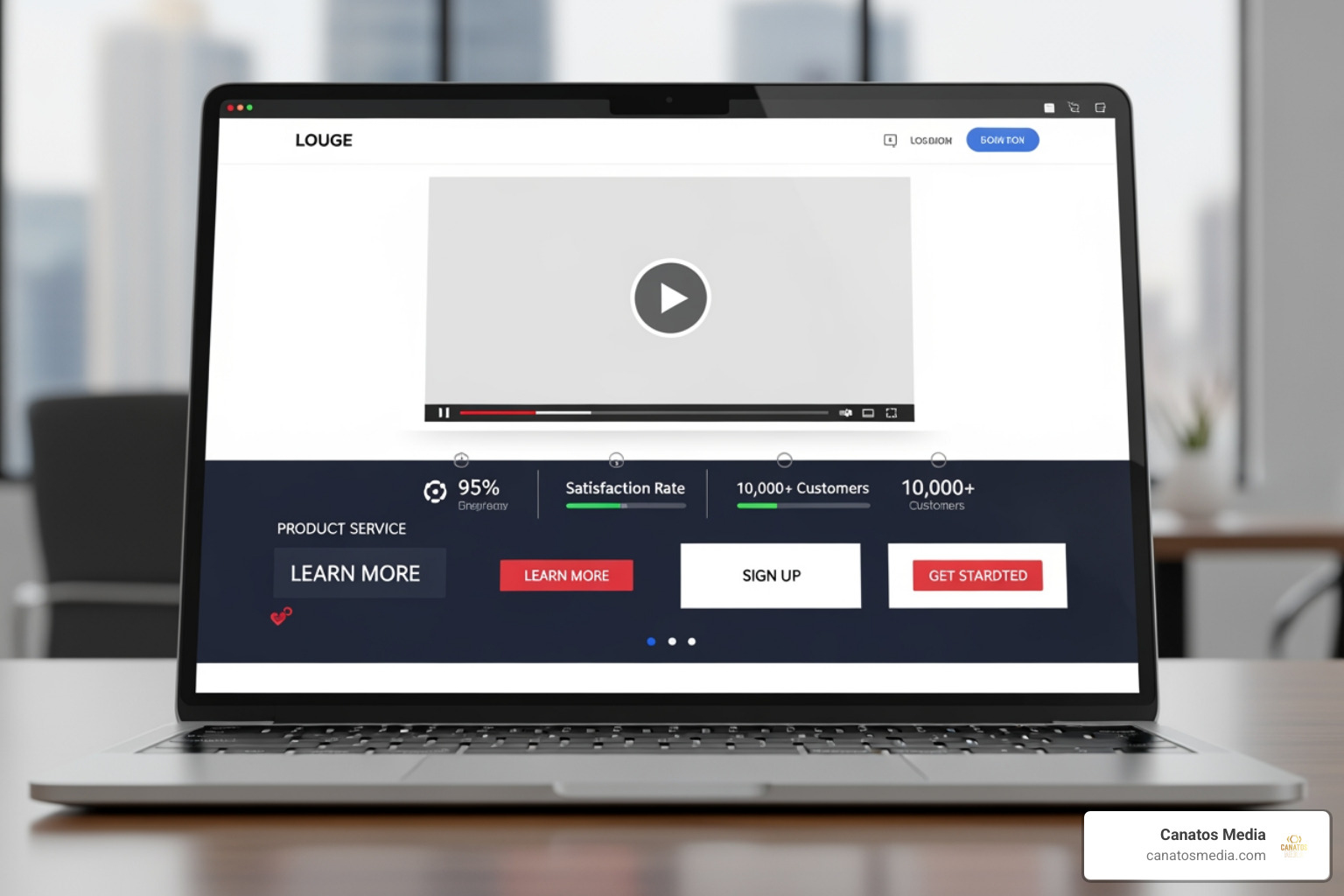
    A business landing page featuring a prominent video player that increases conversion rates by 80%

    How video supports SEO, content marketing, and sales

    Video is a “rich medium” that search algorithms love. By including transcripts and keyword-rich metadata, you can dominate search results. According to Semrush, video is essential for any modern SEO strategy because it earns more backlinks and captures organic traffic that text-only pages miss. In sales, personalized video pitches can see a 20% higher response rate than traditional cold emails.

    How video lowers friction across the customer journey

    Video is the ultimate “friction remover.” Instead of a customer calling your support line to ask how a product works, they can watch a 60-second tutorial. This reduces support tickets by up to 40% and creates a smoother onboarding experience. From FAQ videos to advanced “how-to” guides, video educates your audience at scale, 24/7.

    Types of Video Marketing Content for Every Funnel Stage

    To be successful, you can’t just make “a video.” You need to make the right video for where your customer is in their journey.

    Awareness video marketing formats

    At the Top of the Funnel (TOFU), your goal is to get noticed.

    • Brand Videos: High-level films that share your mission and values.
    • Social Clips: Short, punchy vertical videos for Reels or TikTok.
    • Founder Stories: Humanizing your brand by showing the person behind the business.
    • Expert Interviews: Positioning yourself as a thought leader in the Long Island or Tri-State market.

    Consideration-stage videos that educate and qualify

    Once they know you, they need to know why you’re the best choice.

    • Explainer Videos: Breaking down how your service solves a specific problem.
    • Webinars: Deep-dive educational sessions that build massive authority.
    • Product Walkthroughs: Showing the “ins and outs” of what you sell.
    • Filmed Podcasts: Repurposing audio content into a visual format to build deeper connections.

    Conversion and retention videos that drive action

    This is where the sale happens.

    • Testimonials: Real customers sharing real results.
    • Case Studies: Data-driven proof of your success.
    • Personalized Videos: Sending a quick “thank you” or “follow up” video to a specific lead.
    • Onboarding Videos: Ensuring your new customers feel supported immediately after purchase.

    Choosing the right format by goal, audience, and platform

    Mapping your format to the platform is crucial. You wouldn’t put a 15-minute webinar on TikTok, nor would you put a 15-second “meme” video as your main website explainer. For a deeper look at specific content types, check out our video content tag for more examples.

    Funnel Stage Goal Video Type Recommended Length
    Awareness Get Noticed Social Clips, Brand Films 15 – 60 seconds
    Consideration Build Trust Explainers, How-to, Webinars 2 – 10 minutes
    Conversion Close Sale Testimonials, Demos 1 – 3 minutes
    Loyalty Retain Onboarding, FAQ, Updates 1 – 5 minutes

    How to Build a Video Marketing Strategy That Delivers ROI

    Many businesses fail because they treat video as a creative project rather than a business tool. A real video marketing strategy requires a framework.

    Set business goals and define success before production

    Don’t pick up a camera until you know what “winning” looks like. Are you looking for brand awareness (views and reach), lead generation (clicks and sign-ups), or sales (conversions)? Define your KPIs early. We look at “pipeline contribution” — how much revenue can be directly traced back to a video view.

    Build a full-funnel video marketing plan

    A full-funnel approach ensures you aren’t just attracting people and then letting them go. You need content for every stage: Awareness (TOFU), Consideration (MOFU), and Conversion (BOFU). As Adobe suggests, integrating video across every touchpoint of the customer journey is the only way to maximize your impact in 2026.

    Plan budget, resources, and publishing cadence

    We recommend allocating 12-15% of your total marketing budget to video. You also need to decide on your cadence. Consistency beats frequency every time. It is better to post one high-quality video a week than five low-quality clips that hurt your brand.

    Integrate video with SEO, email, paid media, and sales

    Video shouldn’t live on an island. Embed it in your blogs to boost SEO. Include it in your email nurture sequences to increase click-through rates. Use it in your retargeting ads to remind prospects why they liked you in the first place.

    How to Plan, Produce, Distribute, and Measure Marketing Videos

    Production doesn’t have to be a headache. Whether you’re doing it yourself or hiring an agency like Canatos Media, the workflow remains the same.

    Pre-production: research, hooks, scripts, and storyboards

    The first three seconds of your video are the most important. You need a “hook” that stops the scroll. We start with keyword research to see what your audience is actually searching for, then write a script that follows the “Problem-Solution-Result” framework.

    Production and post-production best practices

    You don’t need a Hollywood budget. A modern smartphone, a tripod to avoid shaky footage, and a simple lavalier microphone for clear audio go a long way. In post-production, always add captions — many people watch videos on mute in public places.

    Where to publish and promote your videos

    Distribution is just as important as production.

    • YouTube: Great for long-form educational content and SEO.
    • Social Media: Instagram Reels, TikTok, and LinkedIn are perfect for short-form video production.
    • Website: Place your best videos on high-traffic landing pages.
    • Email: Use video thumbnails to drive traffic from your newsletter.

    For a breakdown of which platform fits your brand best, see our guide on the most popular short-form content platforms.

    How to measure video marketing success and ROI

    Stop looking at “vanity metrics” like views. Instead, focus on:

    • Watch Time: Are people actually finishing the video?
    • Click-Through Rate (CTR): Is the video driving traffic?
    • Conversion Rate: Are viewers becoming customers?
    • Customer Acquisition Cost (CAC): Is video lowering your cost to get a new lead?

    To dive deeper into the math, read our post on measuring short-form video ROI.

    The landscape of video marketing is constantly evolving. Staying ahead means embracing new technologies while sticking to timeless storytelling.

    Best practices for better performance on every platform

    • Hook them early: You have 3 seconds. Use them.
    • One story per video: Don’t confuse your audience by trying to say too much.
    • Vertical first: Most video is consumed on mobile. Shoot for the phone.
    • Clear CTA: Tell them exactly what to do next (e.g., “Click the link,” “Book a call”).

    We are seeing a massive shift toward AI-driven personalization. AI tools can now help us create hundreds of personalized video messages for customers based on their data. Shoppable video is also exploding, allowing viewers to click a product inside the video and buy it instantly. Furthermore, vertical video has moved from an “experiment” to the industry standard for all social commerce.

    Examples of successful video marketing in action

    We’ve seen local Tri-State businesses transform their results through video. A local service provider might use a “behind-the-scenes” video to show their process, which builds more trust than any static photo ever could. A Long Island retailer might use a “how-to” series to show customers how to get the most out of their products, leading to higher customer satisfaction and fewer returns.

    Common mistakes to avoid

    • Ignoring Audio: People will watch a slightly blurry video, but they will turn off a video with bad sound immediately.
    • No Strategy: Making videos “just because” is a waste of money.
    • Forgetting the CTA: Every video should have a purpose.
    • Vanity Metrics: Don’t get discouraged by low view counts if those few viewers are actually buying.

    Frequently Asked Questions About Video Marketing

    What equipment and tools do you need to get started with video marketing?

    You can start with just a smartphone and a window for natural light. As you grow, we recommend investing in a dedicated microphone (shotgun or lavalier), a sturdy tripod, and basic LED lighting. For editing, tools like CapCut or Adobe Premiere are industry standards.

    How long should marketing videos be?

    Context is everything.

    • Social Awareness: Under 60 seconds.
    • Product Explainers: 1 to 2 minutes.
    • Educational/Webinars: 7 to 15 minutes (or longer if the value is there).

    Can small businesses succeed with video marketing on a budget?

    Absolutely. In fact, “authentic” and “raw” video often performs better on social media than over-produced corporate films. By focusing on your niche expertise and using budget-friendly video production techniques, you can out-compete much larger brands.

    Conclusion

    Video marketing is no longer a futuristic concept — it is the heartbeat of modern business growth. In 2026, your customers aren’t just looking for your products; they are looking for a connection. They want to see the faces behind the brand, hear the stories of success, and learn in the format that is easiest for them to consume.

    At Canatos Media, we specialize in an integrated strategy that connects cinematic content with hard-hitting data. We don’t just make videos that look good; we build engines that drive measurable growth for businesses across the Tri-State area and Long Island.

    If you’re ready to stop guessing and start growing, explore our end-to-end video marketing services and see how we can turn your brand into a visual powerhouse. The future is moving fast — make sure your business is in the frame.

  • Beginner’s Guide to Video Production Services

    Beginner’s Guide to Video Production Services

    What Video Production Really Is (And Why It Matters for Your Business)

    Video production is the process of creating a video from scratch — from the initial idea all the way through filming and final editing.

    Here’s a quick breakdown of what it involves:

    1. Development — Define your goal, audience, and message
    2. Pre-production — Write the script, plan the shoot, scout locations
    3. Production — Film the footage with your crew and equipment
    4. Post-production — Edit, color grade, mix audio, and deliver the final video

    Whether you’re a local business trying to generate leads or a growing brand building awareness, video is one of the most powerful tools you have. It builds trust faster than text, holds attention longer than images, and works across every platform your customers use.

    But “just making a video” isn’t enough. The difference between a video that drives results and one that gets ignored almost always comes down to how well it was planned and executed — not just how expensive the camera was.

    This guide walks you through every stage of the process in plain language, so you know exactly what to expect and how to get it right.

    I’m Nic Canobbio, founder of Canatos Media, and I’ve spent over two decades in media production — overseeing live video production, content editing, and social campaigns that have generated over 60 million views. I’ll share what actually works, based on real experience.

    Video production workflow infographic: Development, Pre-production, Production, Post-production, Delivery infographic

    What Is Video Production and How Is It Different From Filmmaking?

    At its core, video production means planning, capturing, and finishing video content for a specific purpose. That purpose might be marketing, training, education, internal communication, recruiting, social media, product education, or broadcast.

    What video production means today

    Today, video production usually includes:

    • concept development
    • creative strategy
    • scripting
    • filming
    • audio recording
    • editing
    • motion graphics
    • captions
    • formatting for different platforms
    • final delivery

    Most business video is created with digital cameras and delivered as digital files for websites, social media, ads, sales funnels, email campaigns, or internal systems.

    Video production vs filmmaking

    Video production and filmmaking overlap, but they are not the same thing.

    In simple terms, filmmaking is usually associated with movies and longer-form narrative projects. Video production is usually tied to shorter, goal-driven content made for brands, organizations, educators, or publishers.

    Here is the practical difference:

    Video Production Filmmaking
    Usually shorter format Often feature-length or episodic
    Common in marketing, corporate, education, and web content Common in cinema and scripted entertainment
    Smaller crews are common Larger crews are common
    Faster timelines Longer timelines
    Digital-first delivery Theatrical, streaming, festival, or broadcast release
    Often focused on business results or communication Often focused on narrative storytelling as the primary outcome

    That said, good video production still uses storytelling. We just apply it with a clear goal in mind: get attention, explain something, build trust, or drive action.

    The role of video production in marketing, education, and communication

    Video is useful because it can do several jobs at once:

    • explain a service clearly
    • show a product in action
    • help customers trust a business
    • train employees consistently
    • teach students remotely
    • support sales conversations
    • create reusable content across channels

    That is why businesses use corporate videos, explainers, testimonials, demos, onboarding videos, webinars, social clips, and recruiting content.

    If your main goal is growth, our guide on video marketing services goes deeper into how strategy and distribution connect to results.

    The Main Stages of the Video Production Process

    production timeline

    Every solid video project moves through four stages: development, pre-production, production, and post-production. Some teams treat approvals as a separate phase, but in real life they happen throughout.

    Development and creative strategy

    Development is where the project starts making sense.

    Before anyone grabs a camera, we need answers to questions like:

    • Who is this for?
    • What should they think, feel, or do after watching?
    • Where will the video live?
    • What business goal does it support?
    • What metrics matter: leads, watch time, clicks, booked calls, sales, or retention?

    This stage usually includes a creative brief, audience definition, message framework, concept direction, and success metrics. Without this, even a beautiful video can end up being a very polished shrug.

    Why pre-production planning is critical

    Pre-production is where most expensive mistakes are prevented.

    Strong planning helps with:

    • budget control
    • realistic scheduling
    • clear crew responsibilities
    • efficient shot planning
    • location readiness
    • better on-camera performance
    • fewer surprises on shoot day

    This matters because problems solved before the shoot are cheap. Problems discovered during the shoot are stressful. Problems discovered in editing are usually the most expensive.

    Production: what happens on shoot day

    Production is the filming phase, often called principal photography. This is when the crew captures interviews, b-roll, product shots, scenes, voiceover reads, and any other planned footage.

    A good shoot day usually includes:

    • set preparation
    • camera setup
    • lighting setup
    • audio checks
    • directing talent
    • recording primary footage
    • capturing extra b-roll
    • checking continuity and file backups

    Post-production: how raw footage becomes a finished video

    Post-production is where the story becomes clear.

    This phase usually includes:

    • organizing footage
    • selecting the best takes
    • editing a rough cut
    • refining pacing
    • color correction
    • color grading
    • audio cleanup and mixing
    • music and sound design
    • motion graphics
    • captions
    • exports for different platforms

    A raw interview might be 20 minutes. The finished video might be 60 seconds, 3 minutes, or several versions. Editing is where clarity, emotion, and polish show up.

    Pre-Production Planning: The Step That Determines Success

    storyboard and shot list

    If we had to name the one stage beginners underestimate most, it would be pre-production.

    Building the brief, script, storyboard, and shot list

    The basic planning package often includes:

    • creative brief
    • script or interview outline
    • storyboard
    • shot list
    • call sheet
    • question list for interviews

    The brief defines the objective and audience. The script shapes the message. The storyboard helps everyone picture the final piece. The shot list keeps the crew efficient. The call sheet tells people where to be and when.

    For interview-driven videos, we often work from prompts and talking points instead of a word-for-word script. That usually sounds more natural, especially for founders, staff, and customers.

    Budgeting, scheduling, and logistics

    A realistic plan also covers logistics, including:

    • budget range
    • production timeline
    • crew booking
    • equipment list
    • location confirmation
    • talent coordination
    • wardrobe notes
    • props
    • permits if needed
    • talent releases
    • music and usage rights
    • backup plans for weather or delays

    Many projects can move quickly. Some business videos are completed in a few weeks, while bigger campaigns need longer because of scheduling, approvals, and deliverable volume.

    Location scouting, rehearsals, and technical prep

    Location matters more than people think.

    A room may look great in person and be terrible on camera because of:

    • echo
    • HVAC noise
    • poor natural light
    • ugly backgrounds
    • limited power
    • tight space for gear

    That is why scouting helps. We want to know where interviews will happen, where b-roll will be captured, and whether the environment supports clean audio.

    A few practical best practices:

    • keep backgrounds simple and not distracting
    • test audio before filming
    • rehearse key lines or interview flow
    • use stand-ins while lighting and framing are dialed in
    • capture an establishing shot to orient the viewer
    • use three-point lighting or soft light when possible

    This part is not glamorous, but it saves headaches.

    Make sure you account for:

    • talent release forms
    • location permissions
    • music licensing
    • logo and brand guideline compliance
    • content approvals
    • revision process
    • file delivery expectations
    • captions for accessibility
    • readability on mobile
    • usage rights for paid ads, web, and social

    A simple checklist helps:

    • Goal defined
    • Audience defined
    • Script or outline approved
    • Shot list completed
    • Location confirmed
    • Crew booked
    • Gear confirmed
    • Audio plan ready
    • Rights and releases handled
    • Captions planned
    • Review timeline agreed on

    Production and Post-Production: Roles, Gear, and Core Skills

    Who is involved during production

    The exact crew depends on budget and scope, but common roles include:

    • producer
    • director
    • director of photography or cinematographer
    • camera operator
    • gaffer
    • grip
    • sound recordist or mixer
    • production assistant
    • editor
    • motion graphics designer
    • on-screen talent or voiceover talent

    On smaller shoots, one person may handle several roles. On larger shoots, roles are more specialized.

    Equipment needed to start in video production

    You do not need a truck full of cinema gear to begin. A practical starter setup includes:

    • camera
    • one or two versatile lenses
    • tripod
    • basic gimbal or stabilization option
    • LED lights
    • lavalier microphone
    • shotgun microphone
    • headphones
    • memory cards and backup drives
    • teleprompter if needed
    • editing software

    The basic research-backed answer is still true: camera, lighting, audio gear, editing tools, and people who know how to use them.

    Skills that matter more than expensive gear

    Gear matters, but skill matters more.

    The core skills we value most are:

    • storytelling
    • framing and composition
    • lighting
    • clean audio capture
    • interviewing
    • directing non-actors
    • pacing in editing
    • file organization
    • consistency across formats

    Many beginners obsess over camera specs and ignore audio. Viewers will forgive imperfect visuals faster than muddy sound. A gorgeous 4K shot with bad audio is still bad video. It is the salad with no dressing of media production.

    How post-production improves clarity, pacing, and brand polish

    Post-production does far more than trim clips.

    It improves:

    • structure
    • pacing
    • clarity
    • brand consistency
    • visual energy
    • retention
    • usability across channels

    A typical workflow might look like this:

    1. ingest and organize footage
    2. build a rough cut
    3. tighten for clarity and pacing
    4. add music and sound design
    5. correct and grade color
    6. add titles, lower thirds, and graphics
    7. create captions
    8. export platform-specific versions
    9. generate thumbnails and cutdowns

    This is also where repurposing happens. One interview shoot can become a hero brand video, vertical social clips, testimonial edits, website sections, and ad creative. For more on that style of output, see our page on short-form video production.

    Video Production Approaches by Format and Distribution Channel

    video formats infographic infographic

    Not all videos should be produced the same way. The format should match the audience, channel, and goal.

    Marketing, corporate, and educational video production

    Different use cases need different production choices.

    Marketing video often focuses on:

    • lead generation
    • product demos
    • service explainers
    • testimonial content
    • paid social ads
    • landing page videos

    Corporate video often focuses on:

    • brand messaging
    • recruiting
    • internal communication
    • event recaps
    • executive interviews
    • company culture

    Educational video often focuses on:

    • tutorials
    • onboarding
    • webinar clips
    • training modules
    • distance learning content
    • process walkthroughs

    If lead generation is the priority, our guide on choosing the right lead generation video production agency in 2026 breaks down what matters most.

    Broadcast styles: ENG vs EFP vs internet video production

    These terms come up less in casual marketing conversations, but they are useful.

    ENG stands for electronic news gathering. Think fast, lightweight field capture for news-style coverage, quick interviews, and live events.

    EFP stands for electronic field production. It is usually more planned than ENG and often used for commercials, interviews, events, political spots, or multi-camera field shoots.

    Internet video production is built mainly for online distribution. It is often optimized for speed, platform fit, multiple versions, and digital collaboration. In 2026, that can include cloud-based review, remote approvals, and content built specifically for YouTube, paid social, Reels, Shorts, or website embeds.

    How one shoot can create multiple deliverables

    This is one of the smartest ways to stretch budget.

    A single shoot can produce:

    • one hero video
    • 3 to 10 short social cuts
    • vertical versions for Reels and Shorts
    • website header video
    • YouTube version
    • paid ad variants
    • product clips
    • still frames for thumbnails

    This approach is especially useful for service businesses and multi-location brands trying to create more content without multiplying production days. We talk more about that in our post on scalable short-form video production across locations.

    Choosing the right production approach for your goals

    The right setup depends on your needs.

    An in-house approach may work if:

    • you need frequent low-lift content
    • your team can film consistently
    • quality requirements are modest
    • turnaround speed matters most

    A freelancer may work if:

    • the project is small and clearly defined
    • you already have strategy and scripting handled
    • you only need a shooter or editor

    An agency partner may be best if:

    • you need strategy and execution together
    • the video must connect to ads, SEO, social, or website conversion
    • multiple deliverables are required
    • approvals and project management matter
    • ROI is a real priority

    How to Choose the Right Video Production Partner

    Choosing a partner is not just about the prettiest reel. It is about whether they can solve the right problem.

    Questions to ask before hiring

    Ask questions like:

    • Have you worked on projects like ours?
    • How do you handle strategy before filming?
    • What does your process look like from kickoff to delivery?
    • Who handles editing?
    • How many revisions are included?
    • What rights do we receive?
    • What is the timeline?
    • Will you help with multiple versions and distribution needs?
    • How do you plan for audio, lighting, and location issues?
    • How do you measure success?

    Red flags and green flags in proposals

    Red flags:

    • vague deliverables
    • no strategy section
    • no audio plan
    • unclear ownership rights
    • unrealistic timelines
    • no revision process
    • no mention of platform formatting
    • heavy focus on gear, little focus on goals

    Green flags:

    • clear scope and milestones
    • solid discovery process
    • thoughtful creative brief
    • strong production planning
    • platform-aware deliverables
    • transparent review process
    • clear ownership and usage terms
    • post-launch thinking

    Best practices for successful video production from kickoff to delivery

    Across formats, a few best practices almost always help:

    • align on goals before scripting
    • keep the message simple
    • prioritize clean audio
    • choose simple, controlled backgrounds
    • gather more b-roll than you think you need
    • plan feedback rounds in advance
    • optimize edits for each platform
    • capture enough footage for future reuse
    • make captions part of the workflow, not an afterthought

    We also believe the best results happen when production is connected to a larger marketing system. That means creative, targeting, landing pages, and follow-up all work together. If that is your focus, see how we integrate website design and video to drive sales.

    Matching the partner to your business type

    Different businesses need different levels of support.

    A local business may need:

    • testimonial videos
    • service explainers
    • social clips
    • website videos

    A multi-location brand may need:

    • repeatable production systems
    • location-to-location consistency
    • scalable short-form content
    • ad-ready edits

    A B2B or service business may need:

    • lead generation videos
    • educational content
    • founder-led messaging
    • sales enablement clips

    A nonprofit or internal communications team may need:

    • mission stories
    • training videos
    • event recaps
    • donor messaging

    For growing brands with multiple locations, our post on budget-friendly video production for multi-location businesses can help frame the options.

    Frequently Asked Questions about Video Production

    What are the four parts of video production?

    The four parts are:

    1. development
    2. pre-production
    3. production
    4. post-production

    Development defines the goal and concept. Pre-production plans the shoot. Production captures the footage. Post-production turns it into the final video.

    Is video production the same as video editing?

    No. Editing is one part of video production. The full process also includes planning, scripting, filming, audio, graphics, revisions, and delivery.

    What is needed to start in video production?

    At minimum, you need:

    • a camera
    • lighting
    • audio equipment
    • editing software
    • storage and backup
    • basic production skills

    If you want results, you also need planning, storytelling ability, and a clear purpose for the video.

    Conclusion

    Good video production is not just about filming something that looks nice. It is about building a clear message, planning carefully, capturing strong footage, and shaping it into content that actually does a job.

    For businesses in the tri-state area and on Long Island, the best approach usually is not “make one nice video and hope.” It is building a system where content supports awareness, trust, leads, and conversions across channels.

    That is how we think about it at Canatos Media. We connect video with social media, paid ads, SEO, and website performance so the final product does more than sit on a page looking handsome.

    If you are planning your next project, start with the goal, not the camera. Then build the process around that.

    For a practical next step, explore our short-form video production service to see how we turn cinematic content into measurable growth.

  • Lights, Camera, Action: A Deep Dive into the Three Stages of Film

    Lights, Camera, Action: A Deep Dive into the Three Stages of Film

    What Are Pre-Production, Production, and Post-Production?

    Understanding pre production production post production is the foundation of every successful film or video project — whether you’re making a Hollywood feature or a short-form ad for your business.
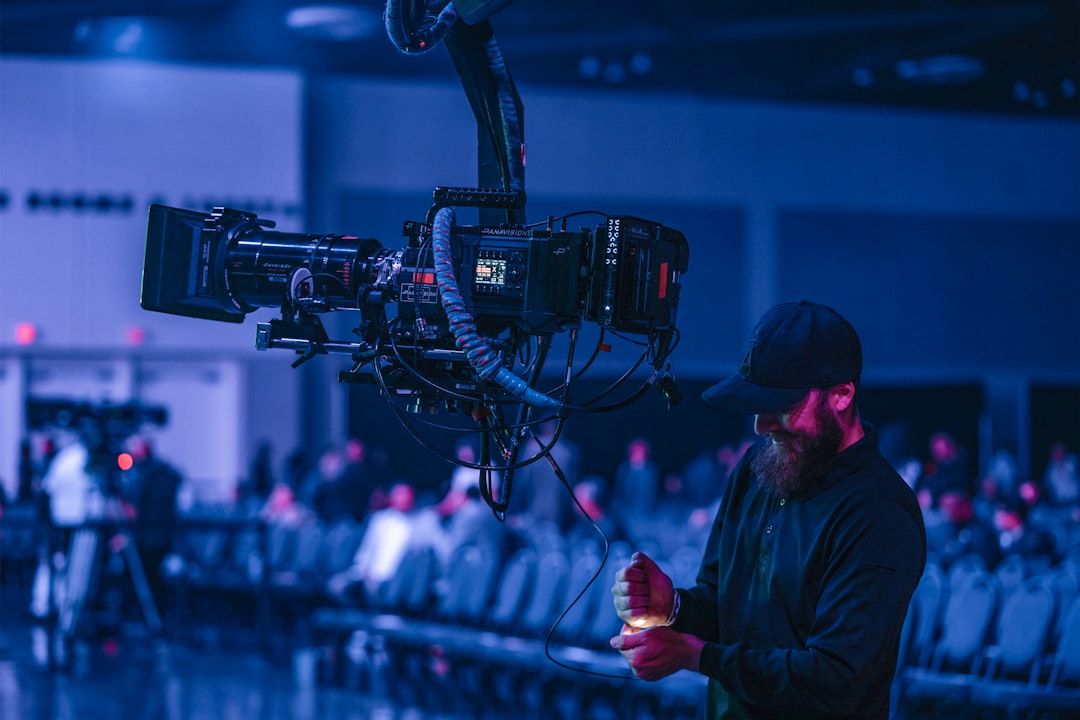
    Here’s a quick breakdown:

    Stage What Happens Typical Duration
    Pre-Production Planning, scripting, budgeting, casting, location scouting 3-8 weeks
    Production Principal photography — cameras roll, footage is captured 4-10 weeks
    Post-Production Editing, color grading, sound design, visual effects 4-12 weeks

    Think of it like building a house. Pre-production is the blueprint. Production is the construction. Post-production is the finishing work that makes it livable — and beautiful.

    Every stage depends on the one before it. Skip or rush any phase, and the cracks show up in the final product.

    Most people think filmmaking is mostly about the shoot. It’s not. The shoot is actually the shortest part of the journey. The real work happens before the cameras roll and after they stop.

    In 2026, this is true whether you’re producing a feature film or a 60-second video ad designed to convert leads for your local business. The principles don’t change — only the scale does.

    I’m Nic Canobbio, founder of Canatos Media, and with over two decades of experience overseeing live production, content editing, and social media content that has reached over 60 million views, I’ve guided the full pre production production post production cycle across countless projects. In this guide, I’ll walk you through every stage so you know exactly what to expect — and how to get the most out of each one.

    Infographic showing the 3-stage pre production production post production workflow with timelines and key tasks infographic

    The Blueprint: Mastering Pre-Production

    Pre-production is the planning and preparation stage where the vision for the project is solidified. It begins immediately after the “development” phase—where the initial idea is hatched and the script is finalized—and ends when the cameras are ready to roll. In the industry, we often say that for every hour spent in pre-production, you save five hours on set.

    This phase is about logistics. It involves breaking down the script to identify every single requirement: how many actors do we need? What kind of locations? Is there a scene that requires a specific prop, like a vintage 1950s telephone or a high-end sports car? We tackle these questions now so we aren’t scratching our heads while a 20-person crew sits idle on the clock.

    Key activities during this stage include:

    • Script Breakdown: Identifying every character, prop, and location mentioned in the script.
    • Budgeting: Allocating funds for crew, equipment, locations, and insurance. Pre-production typically accounts for 20-30% of a film’s total budget.
    • Casting: Finding the right talent to bring the characters to life.
    • Location Scouting: Finding and securing the perfect spots to film, which often involves getting permits and insurance in the Tri-State area or Long Island.
    • Pre-Visualization: Creating storyboards and shot lists to map out exactly how each scene will look.

    At Canatos Media, we believe that Short Form Video Production lives or dies in the planning phase. Without a clear map, you’re just capturing “content” rather than telling a story. For a deeper look at industry standards, check out The Essential Guide to Pre-Production Planning.

    Why Pre-Production is Critical for Success

    The primary goal of pre-production is risk mitigation. Filmmaking is expensive, and mistakes on set can lead to massive budget overruns. By planning meticulously, we ensure creative alignment between the director, the client, and the crew.

    When we look at How We Scale Cinematic Short-Form Content Without Sacrificing Quality, the secret is always in the preparation. Thorough planning allows us to handle the “sprint” of production without losing sight of the brand’s goals. It prevents last-minute problems, such as showing up to a location only to realize there’s no power outlet for the lights, or hiring an actor who isn’t available for the necessary reshoot dates.

    Essential Checklists and Tools

    To keep things organized, we rely on several industry-standard tools and checklists. One of the most important is the storyboard, which is a frame-by-frame drawing of the script. This allows the director and cinematographer to agree on the visual style before a single light is plugged in.

    Detailed storyboard sequence showing camera angles and character movement

    Another vital tool is the shot list. This is a detailed list of every camera setup needed for a scene. We often group these shots by color or location to make the shooting day more efficient. For example, if we have three different scenes that take place in a kitchen, we’ll shoot all those “kitchen shots” at once, regardless of where they appear in the script. This is known as “shooting out” a location.

    The Sprint: Navigating the Production Stage

    Production, also known as principal photography, is the phase where the actual filming happens. If pre-production is the marathon of planning, production is the high-intensity sprint. For most feature films, this lasts between 4 to 10 weeks, though for a half-hour TV episode, it can be as short as 4 days.

    This is the most expensive stage because you are paying for the entire crew, the talent, the equipment rentals, and the locations all at once. Every minute counts. The day usually starts with the “call sheet,” a document that tells everyone exactly where to be and when.

    Executing the Pre Production Production Post Production Workflow

    On a professional set, there is a very specific rhythm to the day. It usually follows a sequence:

    1. Block: The director and actors walk through the scene’s movement.
    2. Light: The crew sets up the lighting and camera while the actors go to hair and makeup.
    3. Rehearse: A final run-through with the full crew to ensure the camera movement matches the actors.
    4. Shoot: The actual recording.

    The standard command sequence on set is a classic for a reason: “Sound?” (Sound mixer confirms they are recording), “Camera?” (Cinematographer confirms), “Marker!” (The slate is snapped), and finally, “Action!”

    For businesses looking for Short Form Video Production, this stage is where we capture the high-quality raw footage that will eventually be polished into a final product. We always aim for multiple angles to give our editors plenty of options in the next phase.

    Roles and Responsibilities on Set

    A film set is a hierarchy designed for maximum efficiency. Understanding who does what is key to a smooth pre production production post production workflow:

    • The Director: The creative lead who oversees the acting and visual style.
    • The Producer: The “business” lead who manages the budget and schedule.
    • The Assistant Director (AD): The drill sergeant of the set who keeps everyone on schedule and coordinates the different departments.
    • The Cinematographer (DP): The person in charge of the camera and lighting.
    • Gaffer and Grips: The lighting and rigging technicians.
    • Sound Mixer: The person responsible for capturing clean dialogue.

    In the Tri-State area, we work with highly specialized crews who understand that on-set logistics are just as important as creative genius. Everyone has a job, and when everyone does that job well, the production stays on track.

    Director and camera crew filming a scene on a professional set

    The Final Polish: Post-Production Processes

    Once the director yells “Wrap!” on the final day of shooting, the project enters post-production. This is where the “bunch of files” we captured during production are assembled into a cohesive story. Many people think post-production is just “editing,” but it is actually a massive undertaking involving several distinct disciplines. For a deeper dive, see The Post-Production Process: A Step-by-Step Guide to the Final Cut.

    Post-production can last anywhere from 4 to 12 weeks. It’s the stage where we fix the things we couldn’t control on set and add the layers of emotion—music, sound effects, and color—that make a video feel “cinematic.”

    Achieving Picture Lock in Pre Production Production Post Production

    The editing process typically moves through three main stages:

    1. The Assembly Cut: The editor puts all the “best takes” in order according to the script. It’s usually very long and lacks flow.
    2. The Rough Cut: The first real version of the film. The timing is tightened, and the story structure is refined.
    3. The Fine Cut/Picture Lock: This is the final version of the visual edit. Once we hit “Picture Lock,” no more changes are made to the timing of the shots. This is a critical milestone because it allows the sound and color departments to start their work without the “ground moving” under their feet.

    Our approach to End-to-End Video Marketing ensures that the edit isn’t just “pretty”—it’s designed to drive real results for your business by keeping the viewer engaged until the final call to action.

    Sound Design and Color Grading

    After picture lock, the project moves into the “finishing” stages.

    • Sound Design: This involves dialogue cleanup, adding “Walla” (background crowd noise), and Foley (recording sound effects like footsteps or doors slamming). It also includes the musical score and the final audio mix.
    • Color Grading: This is the process of adjusting the colors to create a specific mood. Want the scene to feel cold and lonely? We’ll lean into the blues. Want it to feel like a warm summer memory? We’ll bring out the oranges and yellows.

    Connecting the Dots: How the Stages Depend on Each Other

    It is a mistake to view pre production production post production as three isolated boxes. They are deeply interconnected. If you have a poor script in pre-production, no amount of fancy editing in post-production can save the story. Conversely, if you capture beautiful footage but rush the sound design, the final video will feel “cheap” to the audience.

    The budget often dictates where the emphasis goes. A high-concept sci-fi film might spend a massive chunk of its budget in post-production for visual effects (VFX), while a character-driven drama might put more resources into pre-production casting and rehearsals.

    Focus Area Pre-Production Heavy Post-Production Heavy
    Project Type Live Events, Interviews, Dramas Sci-Fi, Music Videos, Animation
    Main Goal Accuracy and efficiency Visual flair and “magic”
    Risk Lack of creative flexibility “Fixing it in post” costs more

    For businesses, understanding these dependencies is vital. As we discuss in The Ultimate Guide to Video Marketing for Service Businesses in 2026, a balanced approach across all three stages is the most cost-effective way to produce high-quality content.

    Common Pitfalls and How to Avoid Them

    The most common mistake we see is “fixing it in post.” While modern software is powerful, it cannot fix a blurry image or a poorly recorded interview. It is always cheaper to do it right the first time on set than to pay a VFX artist to “clean it up” later.

    Another pitfall is rushing the pre-production phase. When you don’t have a clear storyboard or shot list, you end up “searching” for the scene on set, which wastes time and exhausts the crew.

    By Integrating Website Design and Video, we help businesses avoid these technical errors by ensuring the video content is planned with the final destination—your website or social media feed—in mind from day one.

    Frequently Asked Questions about Pre Production Production Post Production

    What is the most important stage of film production?

    While every stage is vital, pre-production is arguably the most important. It is the foundation upon which everything else is built. A project with a solid plan can survive a difficult shoot, but a project with no plan will almost certainly fail, no matter how good the crew is.

    How long does the average post-production phase last in 2026?

    In 2026, post-production typically lasts between 4 to 12 weeks for professional projects. However, with the rise of AI-assisted editing and cloud collaboration tools, we are seeing these timelines compress for short-form content, often allowing for a “fine cut” within just a few weeks of shooting.

    Can you fix production mistakes during the post-production stage?

    To an extent, yes. We can use color grading to fix minor lighting issues or “digital makeup” to hide a blemish. However, you cannot fix fundamental issues like bad acting, out-of-focus shots, or distorted audio. The mantra should always be: “Get it right in the camera.”

    Conclusion

    The journey of pre production production post production is a meticulous progression from a simple idea to a polished, professional film. Each stage requires a different set of skills—from the logistical precision of pre-production to the high-energy execution of production and the creative artistry of post-production.

    At Canatos Media, we specialize in navigating this entire lifecycle for our clients in the Tri-State area and Long Island. We don’t just “film videos”—we build integrated strategies that connect content, targeting, and conversions for measurable growth. Whether you need a cinematic short-form video for social media or a full-scale commercial production, we have the expertise to guide you through every step of the process.
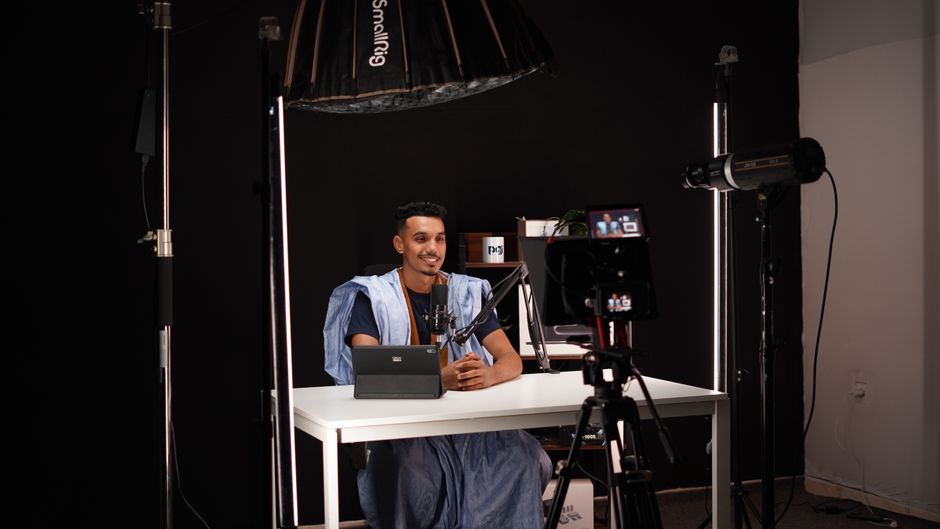
    Ready to bring your vision to life? Elevate your brand with professional short-form video production and let’s make something great together.

  • The Essential Guide to Hiring a Webcasting Production Company

    The Essential Guide to Hiring a Webcasting Production Company

    The Essential Guide to Hiring a Webcasting Production Company

    Why a Live Streaming Production Company Can Make or Break Your Event

    A live streaming production company is a professional team that plans, films, and broadcasts your event to online audiences in real time — using broadcast-grade cameras, audio, and internet technology.

    Here is a quick look at what these companies typically handle:

    • Multi-camera video capture — 2 to 4+ cameras depending on event size
    • Live switching and directing — a technical director manages the broadcast in real time
    • Audio and lighting — professional-grade sound and illumination for clean, watchable video
    • Platform distribution — streaming to YouTube, Facebook, Twitch, LinkedIn, and more simultaneously
    • Connectivity solutions — cellular bonding for locations with unreliable internet
    • Post-event delivery — web-ready video files after the broadcast ends

    Pricing typically starts around $1,750 per day for a single-camera setup and scales to $10,999 or more for premium multi-camera productions with a full crew.

    The live streaming industry has grown fast. Companies have been serving hybrid and virtual audiences for close to two decades now, and the technology — from bonded 4G uplinks to interactive Q&A tools — has matured significantly alongside that demand.

    I’m Nic Canobbio, founder of Canatos Media, and with over two decades overseeing live production and broadcast content — including events that have reached tens of millions of viewers — I know exactly what separates a reliable live streaming production company from one that leaves you scrambling on event day. In the sections below, I’ll walk you through everything you need to make a smart hiring decision.

    Live streaming production workflow infographic showing pre-production, broadcast, platforms, and post-delivery - live

    What Does a Professional Live Streaming Production Company Do?

    When you hire a live streaming production company, you aren’t just paying for someone to hold a camera. You are hiring a full-service broadcast partner that bridges the gap between a physical room and a global digital audience. At Canatos Media, our Live Production team focuses on creating an immersive experience that rivals traditional television.

    Technical director at a multi-camera switching console managing a live broadcast - live streaming production company

    The core of the work involves multi-camera switching. This is where a technical director sits at a console and chooses the best angle in real-time. If a speaker is talking on stage, we might have one wide shot of the room, one tight shot on the presenter, and a third camera capturing audience reactions. We switch between these seamlessly, ensuring the viewer never gets bored.

    Beyond the cameras, these companies handle the “packaging” of your content. This includes:

    • Real-time graphics: Lower-thirds (names of speakers), logos, and full-screen data slides.
    • Interactive Q&A: Integrating tools like Slido or social media comments directly into the stream.
    • Global distribution: Ensuring your feed reaches viewers in the Tri-State area and across the world simultaneously.
    • Hybrid integration: Connecting remote speakers via Zoom or Teams into a high-end physical stage production.

    Whether it is a corporate town hall in a Manhattan skyscraper or a large-scale Commercial Production for a product launch, the production company acts as the “nervous system” of the event, coordinating every technical pulse.

    Why Your Business Needs a Live Streaming Production Company

    You might be tempted to just prop up an iPhone and hit “Go Live.” Please, for the sake of your brand authority, don’t do that. A professional team brings technical reliability. If your internet drops or a microphone dies during a DIY stream, the event is over. A professional crew has redundancies for everything.

    High-quality Services ensure that your audio is crisp and your lighting is cinematic. In live video, viewers will forgive a slightly fuzzy picture, but they will leave immediately if the audio is scratchy or echoing. We ensure broadcast-grade sound through digital mixers and professional-grade wireless mics, providing a seamless execution that reflects the quality of your brand.

    Platforms Supported by a Live Streaming Production Company

    A major advantage of working with pros is the ability to “simulcast.” This means we can send your video feed to multiple destinations at once. Common platforms include:

    • YouTube Live & Facebook Live: Great for public-facing community events and reach.
    • LinkedIn Live: The gold standard for B2B corporate events and thought leadership.
    • Twitch: Ideal for gaming, tech talks, or highly interactive sessions.
    • Custom OTT Platforms: For companies that want their own branded “Netflix-style” experience with pay-per-view or subscription options.
    • Vertical Streaming: Modern crews can now stream to Instagram or TikTok in a native vertical format while simultaneously broadcasting a horizontal 1080p feed to YouTube.

    Essential Technology and Equipment for High-Value Broadcasts

    To get “TV quality,” you need “TV gear.” A professional live streaming production company arrives with a van full of specialized equipment designed for the rigors of live broadcast.

    4K cinema cameras on a production floor prepared for a high-end live stream - live streaming production company

    We often utilize 4K cinema cameras because they offer a shallow depth of field, making your speakers pop off the screen. For more discreet setups, we use PTZ (Pan-Tilt-Zoom) units, which can be controlled remotely by a single operator, saving space in tight Tri-State venues. Check out our Case Studies to see how we’ve deployed these technologies in real-world scenarios.

    Other essential tech includes:

    • Dante Audio: A digital networking protocol that allows us to send high-quality audio over standard internet cables without interference.
    • Wireless Intercoms: So the director can talk to camera operators without the audience hearing a word.
    • Hardware Switchers: Dedicated machines (like Blackmagic ATEM or vMix systems) that handle the heavy lifting of video processing, ensuring the stream doesn’t crash.

    Standard Equipment Used by a Live Streaming Production Company

    Aside from the cameras, there is a “supporting cast” of gear:

    • Tripod systems: Fluid-head tripods for smooth pans and tilts.
    • Lighting kits: 3-point LED lighting to ensure presenters don’t look washed out or shadowed.
    • Jib arms: For those sweeping, cinematic overhead shots of a crowd.
    • Teleprompters: To help your executives stay on script while looking directly into the lens.
    • Professional monitoring stations: Multiple screens so the crew can see every angle and the “return feed” (what the viewers actually see).

    Solving Connectivity Issues with Cellular Bonding

    The biggest fear in live streaming is a “dead” internet connection. Many venues on Long Island or in NYC have notoriously spotty Wi-Fi. This is where cellular bonding saves the day.

    Using devices like LiveU units, we can “bond” together multiple cellular signals (4G and 5G) from different carriers (Verizon, AT&T, T-Mobile) into one super-stable internet pipe. If one carrier drops out, the others pick up the slack instantly. This provides a fail-safe internet protocol that allows us to stream from a parade float, a park, or a basement with zero downtime and stable bitrates.

    Understanding Pricing and Packages for Your Live Event

    Pricing for a live streaming production company is generally tiered based on the number of cameras and the size of the crew. While every project is unique, having a baseline helps with budgeting.

    Infographic comparing basic, standard, and premium live streaming packages - live streaming production company infographic

    Package Tier Typical Starting Price Best For Included
    Basic $1,750 – $4,999 Simple Presentations 1-2 Cameras, 1 Tech, Basic Audio
    Standard $7,000 – $8,500 Company Meetings 3 Cameras, 2 Operators, Slide Integration
    Premium $10,999+ Large Conferences 4+ Cameras, Full Crew, High Production Value

    You can view more detailed Pricing information on our site, but factors like travel within the Tri-State area or specialized equipment rentals (like Steadicams) can influence the final quote.

    Basic vs. Standard Production Tiers

    A Basic setup is usually a single-camera stream. This is perfect for a lone speaker at a podium. It is a “set it and forget it” style that captures the presentation and audio clearly but lacks dynamic movement.

    The Standard tier is the “sweet spot” for most corporate clients. It usually involves a 2 or 3-camera configuration. This allows for a “wide” shot of the stage and a “tight” shot of the speaker. It also includes professional slide integration, so the online audience sees the PowerPoint clearly on their screen rather than a blurry shot of a projector screen in the room.

    Premium and Elite Production Packages

    When you move into Premium territory, you are hiring a small army of specialists. This includes:

    • Technical Directors: The “conductor” of the broadcast.
    • Video Engineers: Who ensure the colors match across all cameras (shading).
    • Audio Engineers: Dedicated to managing complex soundscapes, like panels with 8+ microphones.
    • Elite Add-ons: This might include 4K streaming, custom-built landing pages with paywalls, or even augmented reality (AR) elements integrated into the video.

    How a Live Streaming Production Company Ensures Reliability

    Reliability is the product we are actually selling. Anyone can buy a camera; not everyone can ensure a 3-hour broadcast goes off without a single glitch.

    We achieve this through signal redundancy. We often record the “clean” feed of every camera locally to hard drives while simultaneously streaming. If the internet fails globally, we still have a high-definition recording ready for immediate upload. We also use backup power systems (UPS) to ensure that a tripped circuit breaker at the venue doesn’t take the whole show offline.

    Before any event, we perform rigorous network testing. We don’t just check the speed; we check for “jitter” and “packet loss,” which are the real killers of video quality. If you’re planning an event, we recommend a Consultation Booking early in the process so we can scout your venue and test the infrastructure.

    Key Considerations When Selecting a Live Streaming Production Partner

    Choosing the right partner is about more than just the gear. You need a team that understands your specific geography and needs. If you are in the Tri-State area or Long Island, you want a crew that knows the local venues and the logistical hurdles of NYC production.

    Consider these factors:

    1. Crew Staffing: Does the company have their own regular crew, or do they hire random freelancers? Consistency matters.
    2. Scalability: Can they handle a small 10-person meeting and a 1,000-person hybrid conference?
    3. Client Portfolio: Look for a variety of work—from corporate keynotes to entertainment events.
    4. Technical Support: Do they offer pre-production planning and “speaker coaching” to ensure your presenters look and sound their best?

    If you’re ready to start the conversation, you can Contact Us to discuss your vision.

    Frequently Asked Questions about Live Streaming Production

    What is the difference between a webinar and a professional live stream?

    A webinar (like a standard Zoom call) is designed for two-way communication and is usually low-resolution. A professional live stream is a “one-to-many” broadcast. It uses high-end cameras, professional lighting, and cinematic switching to create a polished, “TV-like” experience for the viewer.

    How many crew members are needed for a standard corporate live stream?

    For a standard 3-camera setup, you typically need at least two or three people: a Technical Director (to switch the show) and one or two Camera Operators. Larger shows may add a dedicated Audio Engineer and a Graphics Operator.

    Can you live stream from a location with no hardwired internet?

    Yes! Thanks to cellular bonding technology (like LiveU or Teradek systems), we can combine multiple 5G signals to create a high-speed connection almost anywhere in the Tri-State area, even in parks or outdoor venues.

    Conclusion

    Hiring a live streaming production company is an investment in your brand’s digital presence. In an era where “hybrid” is the new standard, your online audience deserves the same high-quality experience as the people sitting in the front row.

    At Canatos Media, we don’t just provide cameras; we provide an integrated digital strategy. We combine cinematic content with expert targeting to ensure your live event reaches the right people and drives measurable growth. Whether you need a simple webcast or a complex multi-city hybrid production, we have the experience to make it happen.

    Ready to take your next event live? Visit our Home page or jump straight to our Live Production Services to learn more.

  • Battle of the Bites: Most Popular Short-Form Content Platforms

    Battle of the Bites: Most Popular Short-Form Content Platforms

    The Short-Form Video Race: Which Platforms Win in 2026?

    The most popular short-form content platforms right now are:

    Rank Platform Monthly Active Users Best For
    1 TikTok ~2 billion Discovery, Gen Z, shopping
    2 YouTube Shorts 2+ billion SEO, long-form funneling
    3 Instagram Reels ~1.8 billion Brands, Millennials, aesthetics
    4 Snapchat Spotlight Teen audiences, AR
    5 LinkedIn Video B2B, professional content

    Scroll is the new prime time. In 2026, short-form video is where attention lives — and where buying decisions get made fast.

    Think about this: nearly 1 in 4 people have made a purchase within three minutes of watching a short video. That’s not browsing. That’s impulse buying at digital speed.

    For local businesses trying to grow online, this shift is both an opportunity and a challenge. There are more platforms than ever. Each one has a different audience, a different algorithm, and a different set of rules.

    The question isn’t just “should I be on short-form video?” — it’s “which platform is actually worth your time and budget?”

    This guide breaks it all down.

    I’m Nic Canobbio, founder of Canatos Media, and with over two decades in media production and content strategy — including social content that has surpassed 60 million views — I’ve spent years studying what works across the most popular short-form content platforms. Let’s get into it.

    Infographic showing evolution of video length from Vine's 6 seconds in 2013 to TikTok's 10 minutes in 2026 - most popular

    Defining the Short-Form Video Revolution

    What exactly makes a video “short-form” in May 2026? While the definitions have stretched over the years, the core remains the same: it is vertical content (9:16 aspect ratio) designed for mobile-first consumption. These videos are typically under 60 seconds, though platforms now allow for longer durations to accommodate deeper storytelling.

    The appeal lies in “micro-moments.” We are living in a culture of instant gratification. Whether someone is waiting for a train in Manhattan or grabbing a coffee on Long Island, they are likely scrolling. This behavior has led to staggering engagement stats. For instance, Gen Z users now spend an average of 528 hours annually on TikTok—that is nearly 22 full days of their year spent inside a single app.

    This revolution has fundamentally changed how we shop. Short-form video is the king of impulse purchasing. Research shows that 51% of people cite TikTok’s content as their top influencer for unplanned buys. This is driven by User-Generated Content (UGC) and “sludge content”—multi-pane videos that keep the brain stimulated—alongside micro-storytelling that hooks the viewer within the first three seconds.

    When we look at the most popular short-form content platforms globally, three giants dominate the conversation. While they share the vertical format, their algorithms and monetization paths differ significantly.

    Comparison of engagement rates across TikTok, Reels, and YouTube Shorts - most popular short-form content platforms

    Successfully navigating these requires more than just posting; it requires All-in-One Social Content and Management to ensure your brand voice stays consistent while the algorithms do the heavy lifting.

    TikTok remains the heavyweight champion of discovery. With roughly 2 billion monthly active users, its “For You Page” (FYP) is the gold standard for algorithmic personalization. Unlike older social media that relied on who you followed, TikTok shows you what you actually like.

    For businesses, the TikTok Global Community offers a massive marketplace. In the US and Indonesia (the platform’s two largest markets), TikTok Shop has turned the app into a full-scale e-commerce engine. The demographics are slightly female-skewed (53%), with a massive 38.5% of the user base falling in the 18-24 age bracket. If you want to go viral through music remixing and fast-moving trend cycles, this is the place to be. You can find the app on the App Store or Google Play to see the latest trends in action.

    YouTube Shorts has exploded, reaching over 200 billion daily views. Its secret weapon? It is owned by the world’s second-largest search engine. This gives Shorts an SEO advantage that TikTok and Reels can’t match.

    YouTube Shorts are now allowed to be up to three minutes long, providing more room for “how-to” content and product demos. The audience here leans male (56%) and is particularly strong in India and the US. For brands, Shorts act as a “top-of-funnel” tool, driving viewers toward longer, high-conversion videos or Paid Social Media Advertising from Zero to Hero in One Hour strategies. It’s the perfect blend of quick entertainment and searchable information.

    Instagram Reels: The King of Aesthetic and Brand Integration

    Instagram Reels remains the preferred home for high-end aesthetic content and established brands. With 1.8 billion users, Reels benefits from a deep integration with Facebook, allowing for a combined reach of over 140 billion daily plays.

    While TikTok is about “raw” and “authentic,” Reels is often where professional editing and visual storytelling shine. It is the go-to for Millennial audiences and luxury brands in the tri-state area looking for influencer marketing partnerships. Through Instagram Shopping, the path from “seeing a beautiful product” to “checking out” is seamless. For businesses, it’s about maintaining that polished brand image while tapping into the viral nature of short-form video.

    Beyond the Giants: Niche and Emerging Platforms

    While the “Big Three” take up most of the oxygen, several other platforms offer unique opportunities for specific niches.

    • Snapchat Spotlight: Still a powerhouse for reaching younger Gen Z and Alpha demographics, particularly through AR (Augmented Reality) lenses.
    • LinkedIn Video: A rising star for B2B thought leaders. Short, professional videos here often see much higher engagement than text posts.
    • Pinterest Idea Pins: Unlike the nature of TikTok, Pinterest offers evergreen discovery. A video about home decor or DIY can continue to drive traffic for months.
    • Lemon8: A blend of Pinterest aesthetics and TikTok-style storytelling, popular in lifestyle and beauty niches.
    • Clapper: Often called the “TikTok for adults,” it targets a 30+ audience with a focus on community and less emphasis on high-energy trends.
    • Divine: A fascinating newcomer. Divine: Human-first AI-free social media is a six-second looping app that bans AI-generated “slop” and restores the spirit of the original Vine.

    Icons of emerging short-form platforms on a smartphone screen - most popular short-form content platforms

    Strategic Playbook: Choosing the Right Platform for Your Brand

    Choosing from the most popular short-form content platforms depends entirely on your goals. We always tell our clients at Canatos Media: don’t try to be everywhere at once if it means sacrificing quality.

    1. Identify Your Audience: Are you targeting Gen Z (TikTok), Millennials (Reels), or a professional B2B crowd (LinkedIn)?
    2. Master the 3-Second Hook: If you don’t grab them immediately, they will swipe. Use movement, a bold statement, or a visual “pattern interrupt.”
    3. Optimize for Mute Viewing: Many people watch videos without sound. Use captions and on-screen text to ensure your message gets across.
    4. Leverage AI Tools: Use AI for transcriptions and basic editing, but keep the “human” element front and center.
    5. Cross-Platform Repurposing: You can film once and post everywhere, but be sure to remove watermarks. A video with a TikTok logo doesn’t perform as well on Instagram Reels.

    For those looking for short-form video production best practices, focusing on lighting, clear audio, and a strong call-to-action (CTA) is non-negotiable.

    Frequently Asked Questions about Short-Form Content

    Which platform has the highest engagement for small businesses?

    Currently, TikTok holds the highest average video views for smaller accounts. Even an account with zero followers has the potential to reach thousands of people if the content is engaging. For local businesses in Long Island or the tri-state area, this “level playing field” is a massive advantage.

    How do short-form videos influence impulse buying?

    It’s all about the “three-minute window.” Because these videos are concise and often feature real people using products, they build a high level of “micro-trust” quickly. When combined with shoppable tags, the friction between “wanting” and “buying” is almost entirely removed.

    What is the ideal video length for maximum retention in 2026?

    While platforms allow longer videos, the “sweet spot” for retention remains 15 to 60 seconds. If you are creating educational content, you can push toward the 3-minute mark on YouTube Shorts, but for pure engagement, keep it snappy.

    Conclusion

    The future of the most popular short-form content platforms is leaning toward even deeper integration of AI and AR. We expect to see more “shoppable” experiences where you can buy an outfit directly from a dancer’s video with a single tap.

    At Canatos Media, we specialize in helping businesses navigate this fast-changing landscape. Whether you need cinematic video production or a full-scale social media management strategy, we focus on connecting content to measurable growth. The “Battle of the Bites” isn’t just about getting views—it’s about turning those views into a loyal community.

    Ready to level up your video game? Find more info about digital marketing services and let’s start filming.

    A creator in a studio setting filming a high-quality vertical video - most popular short-form content platforms