Why Most Businesses Waste Money Without a Meta Ads Agency
Hiring a Meta ads agency is one of the fastest ways to stop burning your ad budget and start getting real, measurable returns on Facebook and Instagram.
Quick answer — what a Meta ads agency does for you:
| Service | What to Expect |
|---|---|
| Campaign strategy | Full-funnel setup across prospecting and retargeting |
| Creative production | Scroll-stopping video and image ads tested at scale |
| Tracking & attribution | Server-side data via Conversions API for accurate reporting |
| Budget optimization | Gradual scaling with guardrails to protect ROAS |
| Reporting | Real-time dashboards tied to revenue, not just clicks |
Meta’s ad platform reaches billions of people across Facebook, Instagram, Messenger, and WhatsApp. That reach sounds like an opportunity. But without the right strategy, it’s just an expensive way to get ignored.
Most local business owners run ads, watch the budget disappear, and wonder what went wrong. The targeting was off. The creative didn’t stop the scroll. The tracking was broken. Or all three at once.
The numbers tell the story. Top-performing agencies report results like a 3.27x ROAS within 90 days and cost-per-acquisition reductions of nearly 50%. Businesses that get those results aren’t lucky — they have a system.
I’m Nic Canobbio, founder of Canatos Media, and my background in media production, live content, and AI-driven strategy gives me a unique lens on what actually works when evaluating a Meta ads agency for your business. In this guide, I’ll walk you through exactly what separates the agencies that scale brands from the ones that just spend your budget.
What Defines a Top-Tier Meta Ads Agency in 2026?

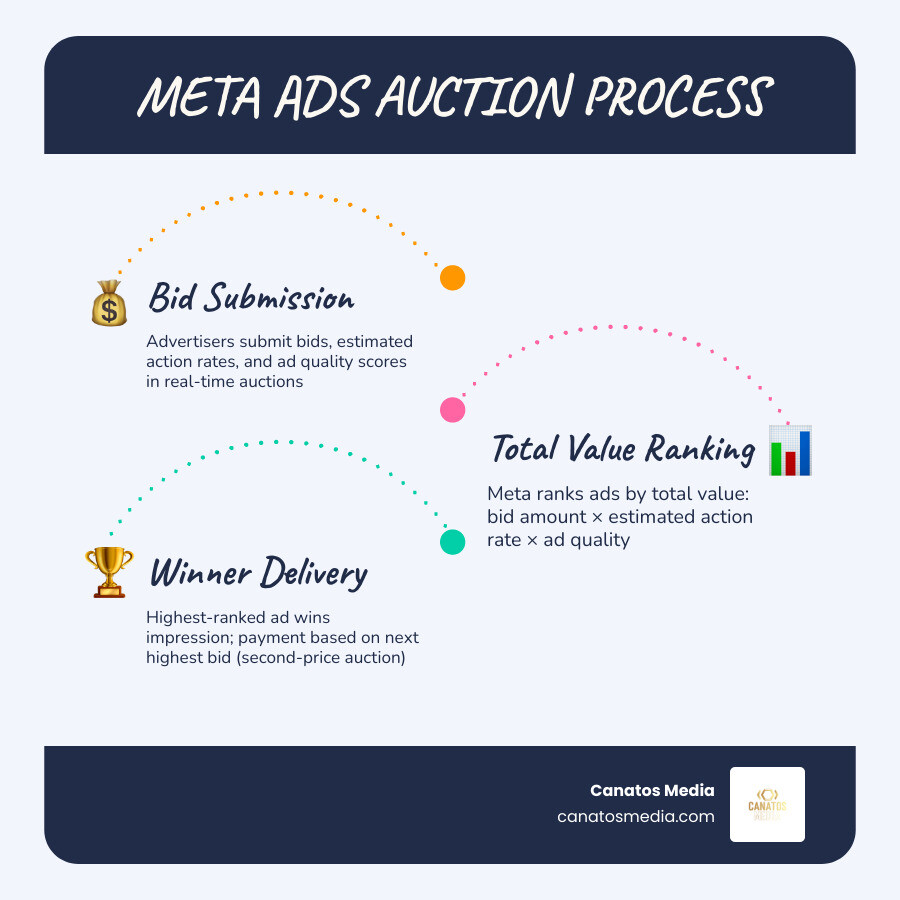
As we move through 2026, the definition of a “good” agency has shifted. It’s no longer enough to just know how to “boost a post” or set up a basic interest-based audience. Today, a top-tier Meta ads agency acts as a technical and creative powerhouse. We’ve seen the landscape evolve where Meta’s AI now does much of the heavy lifting regarding targeting, which means the agency’s value has moved toward strategy, data integrity, and high-level creative direction.
Leading agencies in the U.S. market are managing massive amounts of capital-some over $137 million in total spend-while maintaining impressive 91% yearly retention rates. Why do clients stay? Because these agencies focus on the metrics that actually pay the bills: revenue and pipeline growth, not just “likes” or “impressions.”
For businesses in the tri-state area and Long Island, working with a partner that understands the local nuances of the Meta ads agency in the tri-state area landscape is vital. You need a team that doesn’t just treat your account as a “set it and forget it” project. Instead, you want an agency that views Ad Management as a continuous cycle of testing and refinement. It also helps to understand how Meta Platforms structures its advertising ecosystem, because platform changes often affect campaign performance, tracking, and creative best practices.
How to Evaluate a Meta Ads Agency for Your Business
When you’re vetting a potential partner, don’t just look at their website design. Look at the “war stories.” Have their clients raised significant capital? Some top agencies have helped clients secure over $700M in funding by proving their business model is scalable through paid social.
Here are the non-negotiables you should look for:
- Industry Certifications: Are they a Meta Business Partner? This ensures they have a direct line to support and are up-to-date on the latest API changes.
- Niche Specialization: Do they understand your specific industry? A specialized Meta ads agency might focus on one area, while others focus on high-ticket lead gen or e-commerce.
- Pipeline Growth: Ask for data on how they’ve grown client pipelines. Look for figures like $284.6M in generated pipeline-this shows they understand the long-game of sales, not just the initial click.
- Technical Depth: Check their Tag: Paid Ads expertise. Can they explain how they handle the loss of third-party cookies? If they can’t talk about server-side tracking, keep walking.
Scaling Your Meta Ads Agency Partnership
Scaling is where most relationships break. You find a winning ad, you double the budget, and suddenly the ROAS (Return on Ad Spend) falls off a cliff. A sophisticated Meta ads agency prevents this by implementing budget guardrails and “learning phase” protections.
We’ve seen brands achieve 309% DTC growth in as little as 90 days by following a Step-by-Step Guide to Paid Ads that prioritizes incremental scaling. This involves weekly optimizations where the agency analyzes which creatives are “fatiguing” and replaces them before performance dips. One standout case in the industry saw a brand hit 21K new orders in 60 days simply by refining their scaling strategy to match Meta’s 2026 algorithmic preferences.
The Full-Funnel Blueprint for Maximum ROAS
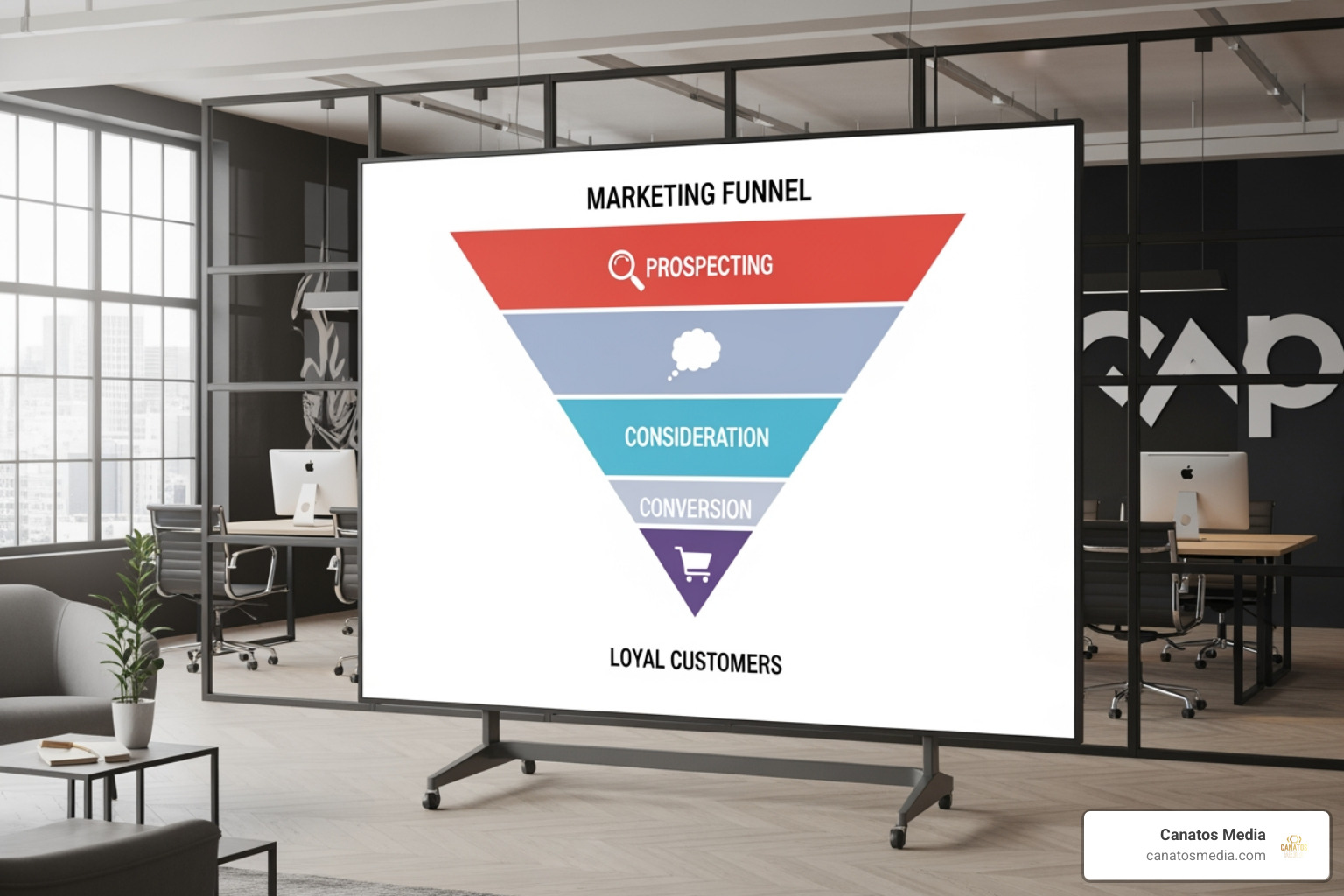
The “one-off ad” approach is dead. To win in 2026, you need a full-funnel blueprint. This means treating Meta as a complete ecosystem rather than just a billboard. A high-performing Meta ads agency structures campaigns to move a stranger to a customer in three distinct stages:
- Prospecting (Top of Funnel): Using Advantage+ campaigns to reach broad audiences. The goal here isn’t always an immediate sale; it’s about identifying intent and building an “audience of interest.”
- Consideration (Middle of Funnel): Retargeting people who engaged with your videos or visited your site but didn’t buy. This is where you overcome objections.
- Conversion (Bottom of Funnel): The “hard sell” or the “limited offer” that pushes the customer over the line.
Agencies using this structured approach often see a 3.27x ROAS across the board. In fact, many e-commerce brands are now seeing a 4–5× average ROAS by properly segmenting their spend. If you want to dive deeper into how this works, check out our guide on Paid Social Media Advertising: From Zero to Hero in One Hour.
Creative Velocity: The Secret to Scaling Without Performance Decay
In 2026, creative is the new targeting. Because Meta’s AI is so good at finding people based on how they interact with content, the actual video or image you use tells the algorithm who to show the ad to. This is why “creative velocity”—the speed at which you produce and test new ads—is the number one factor in success.
At Canatos Media, we specialize in cinematic short-form content because we know that “Reels-first” strategies are currently dominating the auction. You can’t just run one high-quality commercial for six months. You need a constant stream of:
- UGC (User Generated Content): Authentic-feeling videos from real customers or creators.
- Direct Response Video: Content designed to Stop the Scroll and Start the Toll with Meta Paid Ads.
- High-Volume Iteration: Testing 10 different “hooks” (the first 3 seconds) for every one video.
Top agencies now manage over 1,000+ creators to ensure they never run out of fresh assets. When you have high creative velocity, you prevent “ad fatigue,” which is when your target audience gets tired of seeing the same thing and stops clicking, causing your costs to skyrocket.
Technical Precision: Tracking, Attribution, and the Conversions API
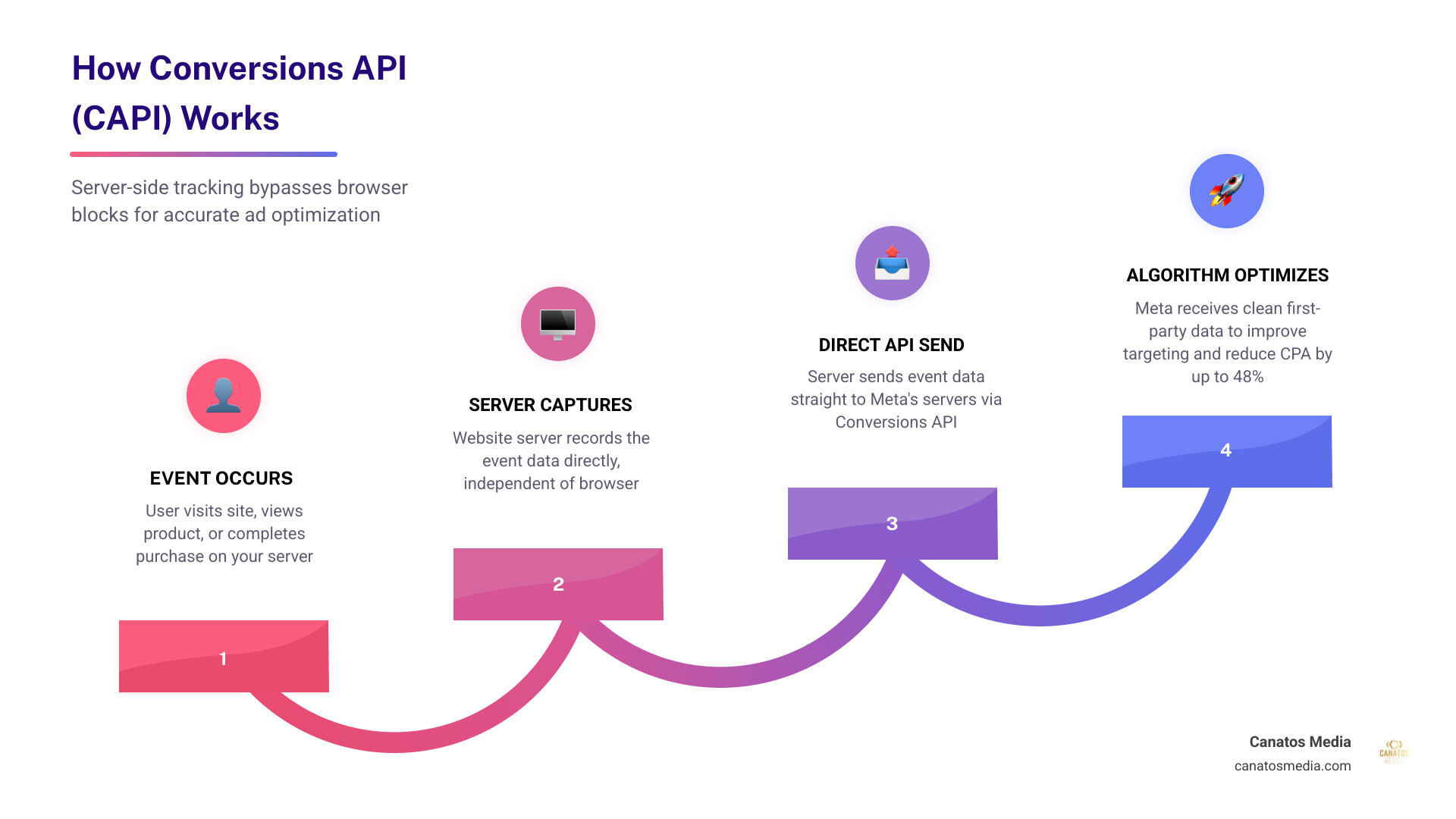
If your tracking is broken, your ads are blind. Since the privacy updates of the last few years, the standard “Meta Pixel” isn’t enough. A professional Meta ads agency must implement the Conversions API (CAPI).
CAPI allows your website’s server to talk directly to Meta’s server. This bypasses browser-based ad blockers and cookie restrictions, ensuring that when someone buys a product, Meta actually knows about it. This “clean data” allows the algorithm to optimize much faster.
The results of technical precision are staggering:
- -48% Cost per Acquisition: When the algorithm knows exactly who is converting, it stops wasting money on people who aren’t.
- 186.4K Client Leads: Accurate attribution allows agencies to scale lead generation with confidence.
- Better Event Match Quality: This is a technical score that tells you how well Meta can link a website action to a specific user.
We emphasize this technical setup in our Meta & Google Advertising strategies because without it, you’re essentially guessing which ads are working.
Choosing Your Partner: Performance-Based vs. Traditional Agencies
Not all agencies are built the same. In the tri-state area and Long Island, you’ll find everything from “boutique” shops to massive traditional firms. Here is how they typically stack up:
| Feature | Performance-Based Agency (The 2026 Model) | Traditional Agency (The 2021 Model) |
|---|---|---|
| Pricing | Often flat fee + performance bonus | Percentage of ad spend (incentivizes spending more) |
| Creative | High-velocity, UGC, and Reels-focused | High-production, slow-turnaround commercials |
| Focus | ROAS, CAC, and Revenue | Impressions, Reach, and “Awareness” |
| Integration | Includes CRO, SEO, and Lifecycle marketing | Often siloed only in social media |
A performance-based Meta ads agency understands that Meta is just one part of the puzzle. They will often look at your Meta ads management strategy and suggest improvements to your landing page (CRO) or your email follow-up (lifecycle marketing). They know that if your website converts at 1% instead of 2%, no amount of great ad targeting will save you.
Furthermore, these agencies often report a CAC (Cost Per Acquisition) of $40-100 per qualified call for their own services. They “eat their own dog food” by using Meta ads to find clients, proving the system works. Some even achieve intro call costs as low as $20 through hyper-optimized funnels.
Frequently Asked Questions about Meta Advertising
What results can I realistically expect in the first 90 days?
Most businesses partnering with a competent Meta ads agency can expect to see a 3.27x ROAS and a significant reduction in CPA within the first 90 days. The first 30 days are typically the “Learning Phase” where data is gathered. By day 60, the winners are identified, and by day 90, the account is usually in a stable scaling phase. Some brands have even seen a 27x ROI in 28 days, though that usually requires a very high-demand product and perfect market timing.
How do agencies handle audience overlap and ad fatigue?
Top agencies use sophisticated exclusion logic. For example, they ensure that people who have already purchased are excluded from “prospecting” ads so you aren’t paying to show a “buy now” ad to someone who bought yesterday. To fight fatigue, they use creative rotation—constantly swapping out images and videos to keep the feed fresh. They also leverage Advantage+ audience targeting, which allows Meta’s AI to find new pockets of people outside of traditional interest groups.
Do Meta agencies use their own ads to find clients?
Yes, the best ones do! It’s a red flag if a professional Meta advertising agency doesn’t run their own ads. Successful agencies use Meta to promote lead magnets (like a free audit or a PDF guide) and VSLs (Video Sales Letters) to demonstrate their expertise. Reported CAC for agencies usually ranges from $60-100 per qualified call, proving that even in the competitive B2B space, Meta is a goldmine for those who know how to use it.
Conclusion
The era of “guessing” with Facebook and Instagram ads is over. Whether you are a local business in Long Island or a growing brand in the tri-state area, the difference between burning cash and printing money comes down to three things: Technical Precision, Creative Velocity, and a Full-Funnel Strategy.
At Canatos Media, we don’t just “run ads.” We build integrated growth engines. By connecting cinematic content with advanced targeting and server-side tracking, we’ve helped clients generate over $126.3M in revenue and a staggering $284.6M in pipeline.
Stop settling for mediocre results and “set it and forget it” management. It’s time to leverage an integrated strategy that connects your content directly to your conversions.
Start your growth journey with Canatos Media and let’s build a Meta ads machine that actually moves the needle for your business.