Author: canatosmedia

  • How to Measure Video Marketing ROI and Drive Real Business Growth

    How to Measure Video Marketing ROI and Drive Real Business Growth

    Why Video Marketing ROI Matters More Than You Think

    Video content now dominates digital marketing, yet most business owners struggle to connect what they’re spending on video production to actual revenue. The reality is that video marketing ROI isn’t optional anymore—it’s the difference between campaigns that fuel growth and those that just consume budget.

    When you invest in video, you deserve to know exactly what return you’re getting. A piece of content might perform well on social media, but if it doesn’t move viewers closer to a sale, that performance is hollow. We’ve worked with dozens of multi-location and service-based brands, and the ones who win consistently are those who measure video impact against their business outcomes—not just vanity metrics.

    The stakes are high. Your competitors are already using video to capture attention and convert leads. If you can’t measure what your video efforts are actually delivering, you can’t optimize, scale, or justify continued investment.

    What to do next: Start documenting what you currently spend on video production and distribution each month. We’ll use this baseline later to calculate true ROI.

    The Real Problem: Vanity Metrics vs. Actual Business Results

    Millions of views sound impressive until you realize none of them converted into a qualified lead. This is the trap: video metrics that feel good are often disconnected from business metrics that matter.

    Vanity metrics include:

    • View count and watch time (without context)
    • Likes and shares alone
    • Follower growth
    • Impressions across channels
    • Click-through rate without conversion tracking

    These numbers can spike without your business seeing any real impact. A viral video that gets 500,000 views but zero leads is expensive entertainment, not marketing.

    Actual business results are measurable outcomes tied directly to revenue: leads generated, sales closed, customer acquisition cost, customer lifetime value, and return on ad spend (ROAS). The gap between these two categories is where most video marketing budgets disappear.

    We focus on connecting every piece of video content to a downstream business metric. A short-form social video isn’t successful just because people watch it—it’s successful when viewers who watched it take a specific action that moves them toward becoming a customer.

    Understanding the Customer Journey Through Video Content

    Video serves different purposes at different stages of a customer’s journey toward a purchase decision. Awareness-stage video attracts strangers. Consideration-stage video educates prospects about how you solve their problem. Decision-stage video removes objections and builds trust.

    This matters for ROI measurement because not every video is supposed to generate an immediate sale. A brand awareness video might not drive leads directly, but it influences someone who later lands on your website and converts.

    Map your customer journey first:

    • Where do prospects first encounter your brand?
    • What questions do they ask before committing?
    • What objections stop them from buying?
    • Who influences the final decision?

    Then assign video content strategically. An educational explainer video at the consideration stage will have a different success metric than a customer testimonial at the decision stage. Testimonials create urgency and credibility; explainers build understanding.

    Without mapping this journey, you’re creating video in a vacuum. With it, every piece of content has a clear role and measurable contribution to your pipeline.

    Key Performance Indicators That Actually Drive Revenue

    Not all metrics are created equal. The ones that matter for ROI measurement are the ones that connect directly to business outcomes.

    Revenue-focused KPIs include:

    • Conversion rate: What percentage of people who watched your video took the desired action (filled out a form, booked a consultation, made a purchase)?
    • Cost per lead: How much did you spend to generate each qualified lead from video campaigns?
    • Lead quality score: Are video-sourced leads more or less likely to close compared to leads from other channels?
    • Customer acquisition cost (CAC): What’s your total spend to acquire one customer through video marketing?
    • Return on ad spend (ROAS): For paid video campaigns, how much revenue came back for every dollar spent?
    • Customer lifetime value (LTV) from video: Are customers acquired through video worth more over time?

    Track these alongside engagement metrics, but don’t confuse engagement with results. High watch time is only valuable if those viewers then convert. A 10-second view of a high-converting video beats a 3-minute view of a video that leads nowhere.

    Setting Up Your Video Performance Measurement System

    You need the right infrastructure to collect and connect this data. Start by ensuring every piece of video has a trackable destination: a unique landing page, UTM parameters in links, or a defined call-to-action that funnels into your CRM.

    Build a measurement stack that includes:

    • Video hosting and analytics: Track performance on platforms where you publish (YouTube, TikTok, Instagram, your own website).
    • UTM tagging system: Tag every video link with source, medium, and campaign parameters so you can track traffic in Google Analytics.
    • CRM integration: Connect video engagement to your lead database so you can see which videos produced qualified prospects.
    • Conversion tracking: Use Facebook Pixel, Google Conversion Tracking, or your website analytics to measure actions taken after video viewing.
    • Attribution modeling: Decide whether you’ll credit the first touch, last touch, or multi-touch attribution for conversions.

    This infrastructure sounds technical, but it’s essential. Without it, you’re guessing about ROI instead of measuring it.

    Connecting Video Metrics to Lead Generation and Sales

    The bridge between video performance and business results is often where systems break down. A video might perform well on social media, but if your team doesn’t know that those viewers also visited your website or filled out a form, you’ve lost the connection.

    We approach this by mapping the viewer journey across channels. When someone watches a video, where do they go next? Do they click to your website? Do they search for your brand? Do they call your sales team directly? Do they visit a competitor?

    This requires:

    • Clear calls-to-action in every video
    • Tracking mechanisms that follow viewers across platforms
    • A sales team that reports back on lead quality
    • Regular analysis of which videos produced leads that actually closed
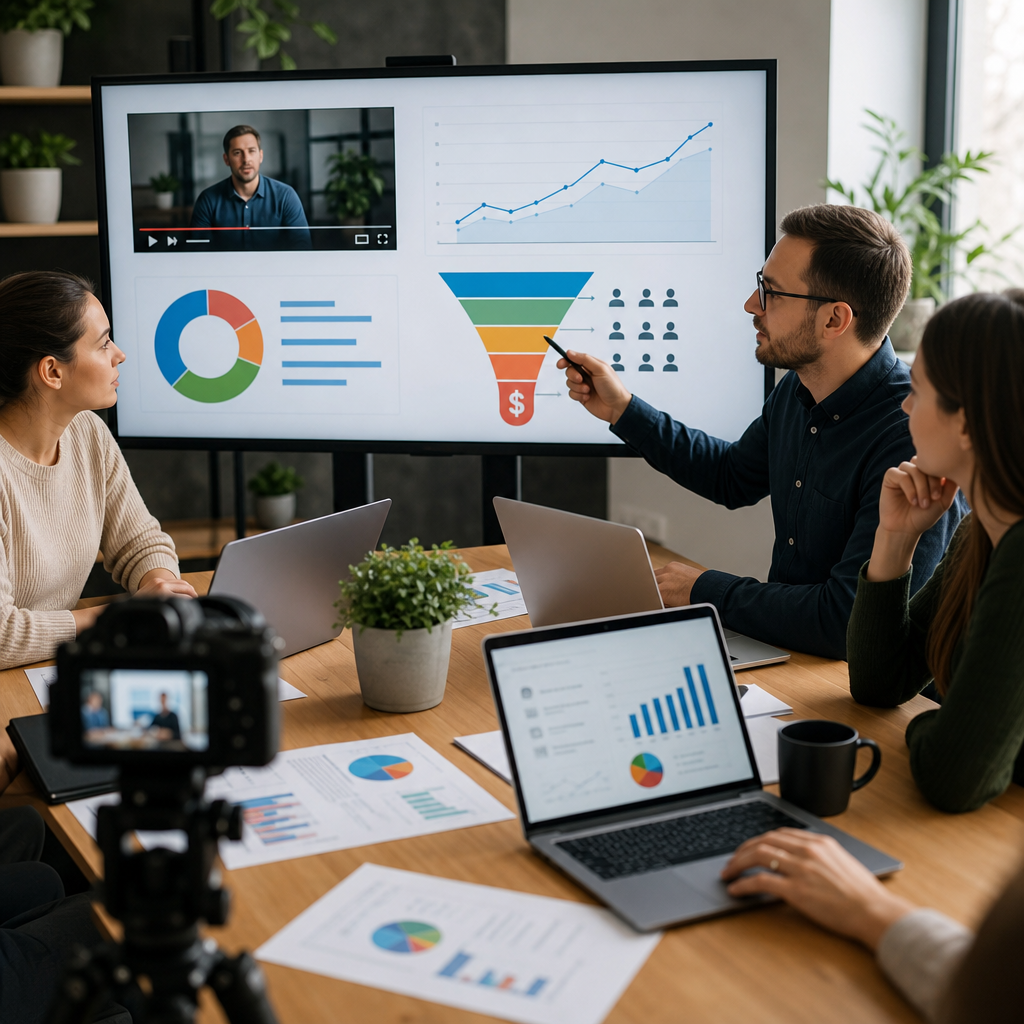
    Many businesses find that their highest-quality leads come from videos that weren’t the most-watched. A short educational video might generate fewer views but higher-intent viewers. Understanding this distinction changes how you allocate your video budget.

    Converting social viewers into leads requires intentional strategy at every stage.

    Optimizing Your Video Strategy Based on Data Insights

    Once you’re collecting data, the real work begins: using it to improve performance. Test different video formats, lengths, messaging, and calls-to-action. Measure each variant against your revenue-focused KPIs, not just view count.

    Optimization cycles should include:

    • Format testing: Does a cinematic brand story outperform a quick product demo? Test both.
    • Length optimization: Is a 15-second video more efficient for lead generation than a 60-second explainer?
    • Messaging variation: Which value proposition resonates most with viewers who convert?
    • Platform-specific adaptation: The same story needs different treatments for TikTok, Instagram Reels, and YouTube.
    • Audience targeting refinement: Are you reaching the right people, or are you wasting budget on viewers unlikely to become customers?

    The optimization never stops. What works this quarter might shift next quarter as market conditions change and your audience evolves.

    How We Build Transparent ROI Tracking Into Every Campaign

    At Canatos Media, every video campaign we produce includes a measurement strategy from day one. We don’t create content and hope it drives results—we build results tracking into the foundation.

    Here’s how we approach it:

    • Before production starts, we define the desired outcome and how we’ll measure it
    • Every video includes a strategic call-to-action aligned with your customer journey
    • We implement tracking technology across all platforms where your video lives
    • We provide monthly reporting that connects video performance to leads and revenue
    • We use insights from each campaign to refine the next one

    This approach removes guesswork. You see exactly what your video investment returns, and you can make confident decisions about where to invest next.

    Common Mistakes That Hide Your True Video Marketing Performance

    Several mistakes prevent businesses from accurately measuring video ROI. Recognizing them helps you avoid the same pitfalls.

    Mistake 1: No clear call-to-action. If viewers finish your video without knowing what to do next, they disappear. Every video needs a specific, trackable next step.

    Mistake 2: Tracking setup after the fact. When you launch a campaign without measurement infrastructure in place, you lose early data. By the time you add tracking, you’ve already spent thousands and can’t accurately attribute results.
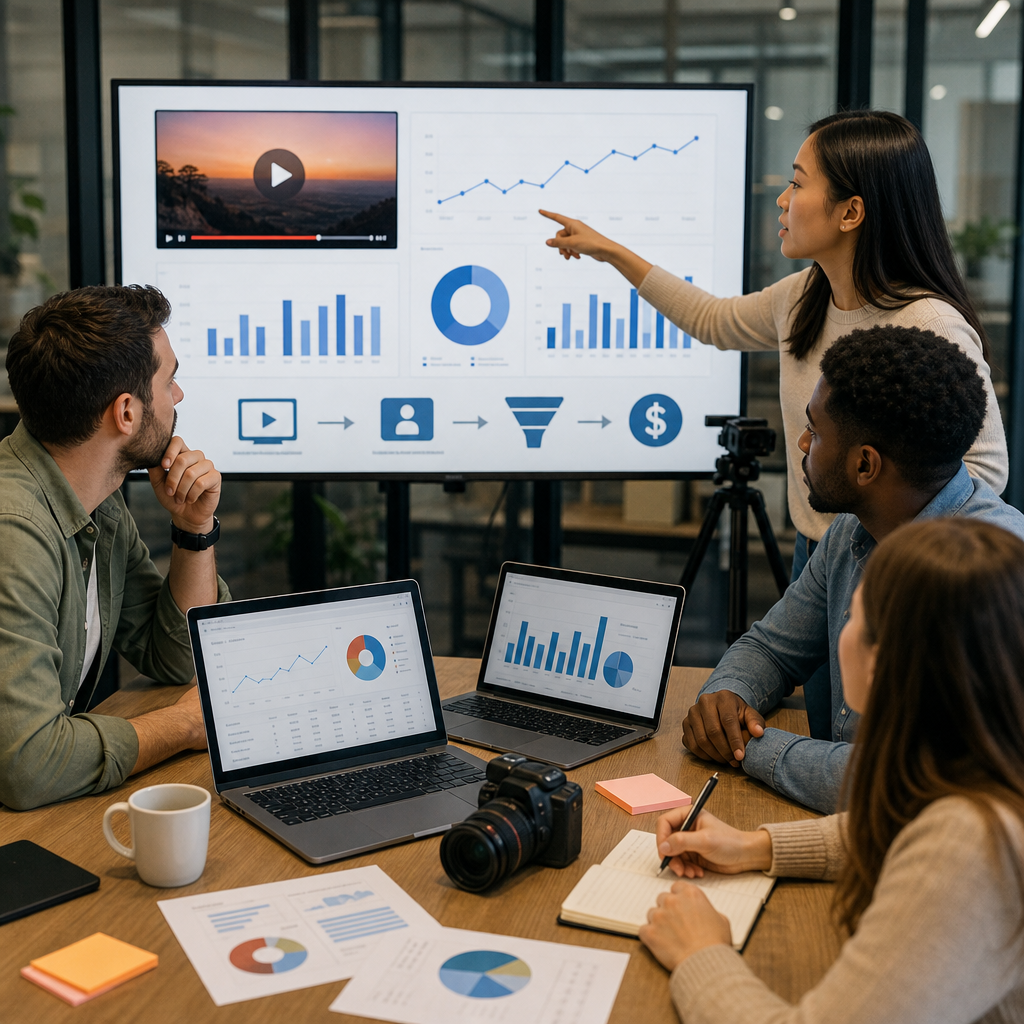
    Mistake 3: Only measuring immediate conversions. Video often plays a role in conversions that happen weeks later. If you only count direct conversions, you’ll undervalue your video investment.

    Mistake 4: Mixing attribution channels. If you run video ads plus organic social video plus email campaigns simultaneously, attributing revenue to one source is nearly impossible. Use proper attribution modeling or A/B testing to isolate video’s impact.

    Mistake 5: Ignoring lead quality. Twenty leads from video might look great until you realize fifteen of them don’t fit your ideal customer profile. Your sales team’s feedback on lead quality is as important as the lead count.

    Taking Action: Implementing Measurable Video Marketing Today

    Start here: Audit your current video marketing efforts. List every video you’ve produced in the last six months and what you spent on each. Then ask: Do we know how many leads or sales each one generated? If the answer is no, you’ve found the gap.

    Next, define your three most important business metrics. These might be consultations booked, qualified leads generated, or revenue from video-attributed sales. Everything else measures in support of these primary outcomes.

    Then, implement tracking for your next video campaign. Use UTM parameters, platform analytics, and CRM integration to follow viewers from content consumption to desired action.

    Finally, commit to reviewing performance monthly. Share results with your team, discuss what’s working, and adjust your strategy accordingly.

    We help growth-focused business owners build all-in-one marketing funnels where video content drives measurable leads and revenue. If you’re ready to stop guessing about video ROI and start measuring real results, let’s talk about what a transparent, data-driven video strategy looks like for your business.

    Contact us today for a free consultation to see how we can help you grow your business.

    Frequently Asked Questions (FAQ)

    How do we connect video content to actual lead generation and sales?

    We build tracking systems that follow your prospect’s journey from initial video view through conversion. Our approach combines video analytics with your CRM and sales data, so we can show you exactly which videos drive qualified leads and closed deals. We avoid vanity metrics and instead focus on metrics that directly impact your bottom line.

    What’s the difference between the metrics we should track versus the ones that look good but don’t matter?

    We focus on metrics tied to business outcomes: click-through rates to landing pages, lead form submissions, customer acquisition cost, and sales attributed to video content. Vanity metrics like view count or engagement rate might look impressive but don’t tell you if your videos are actually generating revenue. We build our measurement systems around the metrics that prove your video investment is working.

    Why do most businesses struggle to measure their video marketing ROI?

    Most teams track video performance separately from their lead generation and sales systems, which creates blind spots in their data. We’ve found that without connecting video analytics to your customer journey and sales pipeline, you can’t see which content is actually moving prospects toward a purchase. That’s why we integrate video performance tracking directly into your broader marketing and sales measurement system from day one.
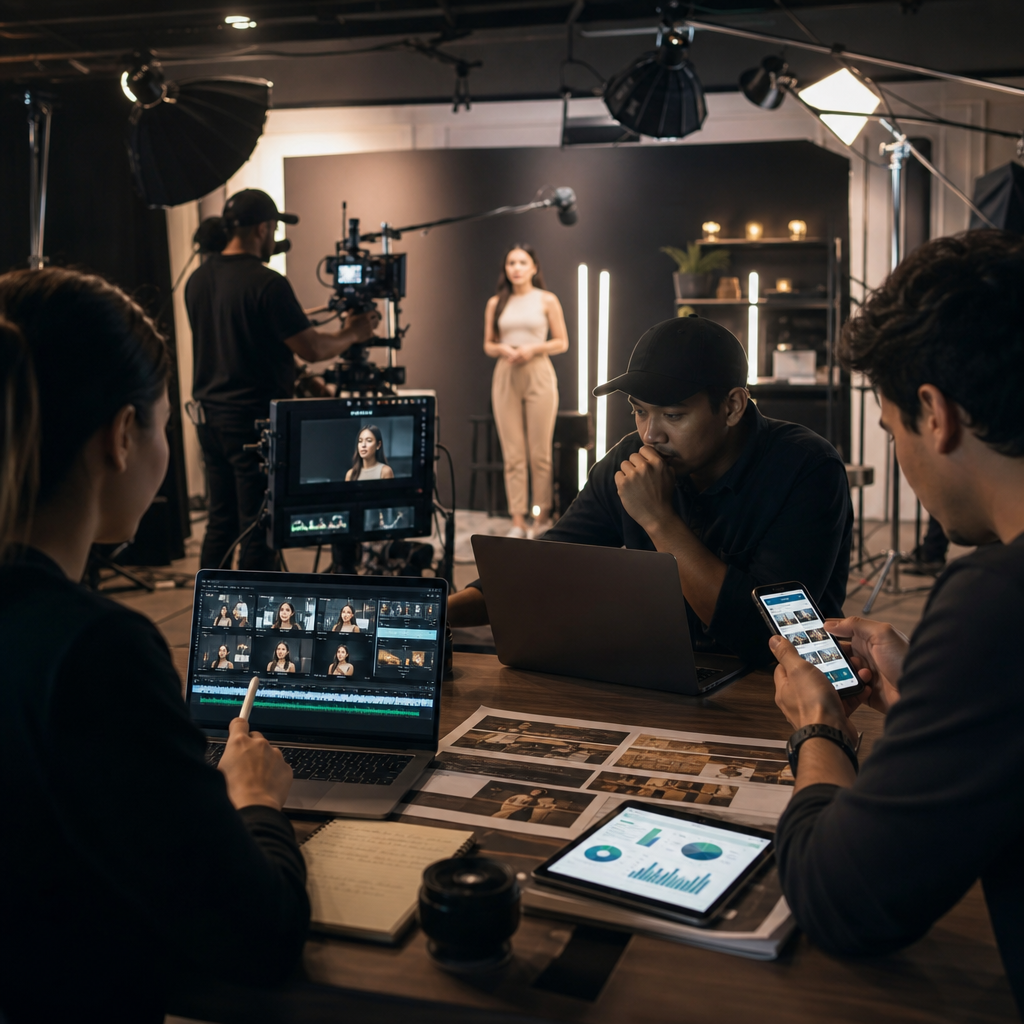
  • Inside Our Cinematic Short-Form Content Studio Experience

    Inside Our Cinematic Short-Form Content Studio Experience

    Why Growth-Focused Businesses Struggle With Standard Video Production

    Most growth-focused business owners come to us facing a familiar problem: they’ve tried hiring freelancers, partnering with generalist agencies, or outsourcing to budget production houses. The result is often inconsistent quality, missed deadlines, and content that doesn’t convert viewers into leads.

    Standard video production workflows weren’t built for speed or social media performance. Traditional studios optimize for broadcast timelines and one-off projects. They’re not equipped to handle the volume, velocity, and platform-specific requirements that drive real growth today. When you’re running a multi-location service business or a scaled brand, you need dozens of assets per month, not one polished spot every quarter.

    The gap widens further when content lands on paid platforms. A beautifully shot 30-second clip matters less than a video engineered to stop the scroll, hold attention, and nudge people toward your offer. Most production teams don’t think in those terms. They think in frames, lighting ratios, and narrative arcs. You think in conversions.

    That misalignment costs you. Either your content sits idle because it doesn’t fit your distribution strategy, or you have to rework it post-production, doubling costs and timelines.

    The Problem With Generic Short-Form Content Agencies

    The short-form video market has exploded, but not all studios operate the same way. Many agencies treat video as an add-on to broader social media or digital marketing services. They produce content with junior teams, minimal creative oversight, and limited technical infrastructure.

    Here’s what typically happens: You receive weekly or monthly videos that look “fine” but lack any distinctive visual language. They’re on-brand in theory but feel interchangeable with content from your competitors. More critically, they’re not optimized for the platform algorithm or your specific audience behavior.

    Generic agencies also struggle with turnaround and scalability. If you need 16 videos in a month instead of 4, they either hire temps (quality drops) or miss deadlines (growth stalls). There’s no middle ground because they lack dedicated studio space, standing equipment, and permanent creative teams.

    The cost structure adds another problem. Many shops charge by the project or by the day, incentivizing longer shoots and more revision rounds. Your budget disappears quickly without corresponding results, because nobody is accountable for whether the content actually performs.

    Our Studio Approach to Cinematic Short-Form Content

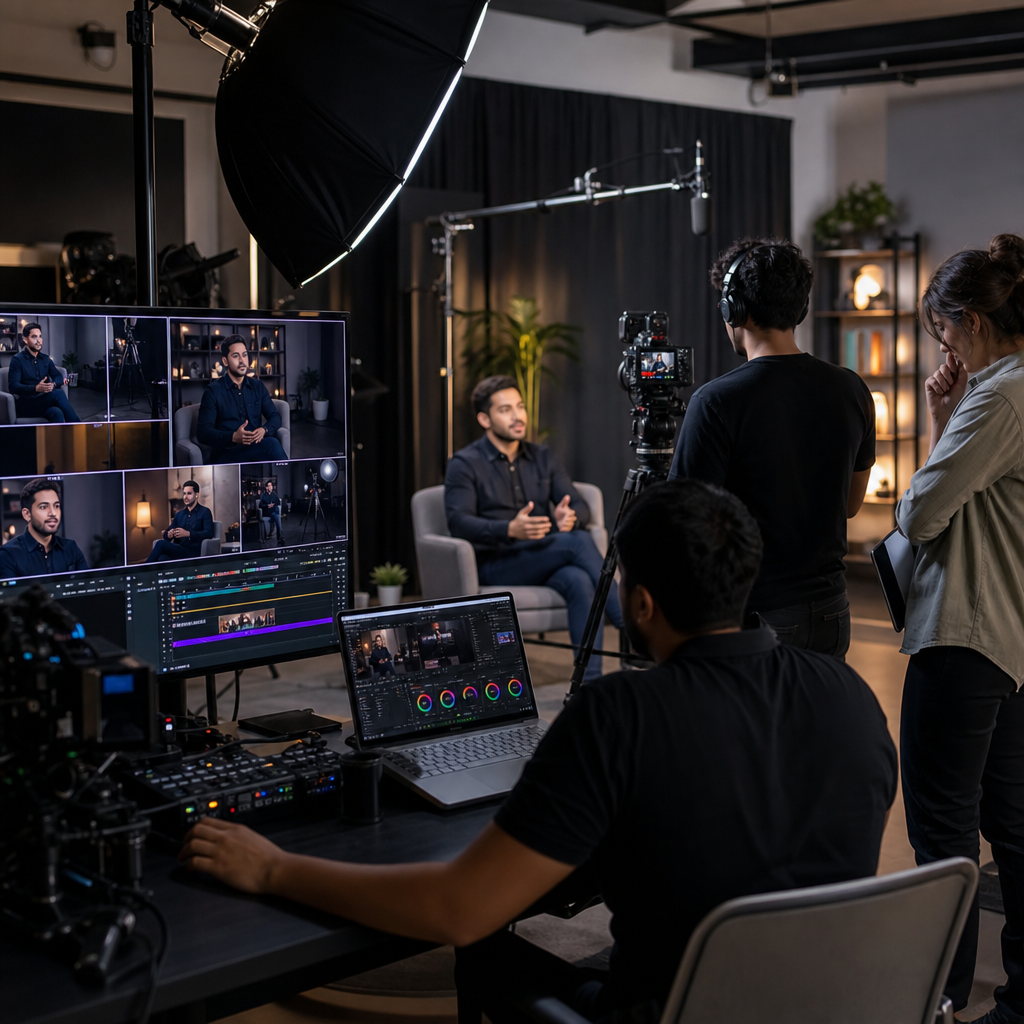
    We built our studio around a different philosophy: content production should be industrialized without sacrificing craft. We maintain dedicated studio space, permanent equipment, and a core creative team. This structure lets us deliver volume, speed, and consistent quality that generic agencies simply cannot match.

    Cinematic short-form content means we apply the visual language of filmmaking (color grading, camera movement, sound design, lighting) to platform-native video formats (Reels, TikToks, Shorts, paid ads). It’s not “filmmaking” in the traditional sense. It’s strategically cinematic storytelling built to perform.

    We treat your account like an ongoing production mandate, not a one-off project. When you partner with us, you’re not hiring an agency. You’re building a studio arm within your organization. Your campaigns have consistency, velocity, and measurable output because the infrastructure is already built.

    How We Structure the Content Creation Process

    Our workflow is deliberately streamlined to eliminate bottlenecks. Here’s how it works:

    Strategy and Script Development: We align on your month’s content pillars, key messages, and conversion goals. Not every video sells. Some build trust, educate, or showcase your team. We plan the mix upfront so your channel tells a coherent story.

    Production Days: We batch-shoot multiple videos in focused sessions. A typical day produces 12-20 finished assets by leveraging standing sets, quick gear changes, and efficient workflows. This batching approach cuts per-video production costs by 60-70% compared to one-off shoots.

    Post-Production and Editing: Our in-house editors begin assembly immediately after shoot wrap. Color grading, sound design, graphics, and platform-specific formatting happen in parallel, not sequentially. What takes other studios three weeks takes us five days.

    Performance Optimization: Before publishing, we A/B test hooks, captions, and thumbnail frames. We don’t guess which version will perform best. Data guides every platform deployment.

    Reporting and Iteration: Each video gets tracked against performance benchmarks (view rate, engagement, click-through rate, cost per lead). We adjust messaging, creative approach, and targeting based on what’s working.

    This systematic approach gives you predictability. You know when content ships, what quality to expect, and roughly what performance metrics to target. No surprises. No excuses.

    Equipment, Talent, and Technical Excellence in Our Studio

    Our studio houses camera packages ranging from cinema-grade mirrorless systems to compact mobile-optimized setups. We shoot with lenses that create recognizable visual signatures. The gear exists to serve the creative vision, not overshadow it.

    Lighting is permanent infrastructure. We have full-range LED systems, tungsten fixtures, and modifiers that let us control color temperature, contrast, and mood in any environment. Consistency across shoot days matters because your audience recognizes your visual language over time.

    Our sound recording is professional-grade. We use wireless lavalieres, shotgun mics, and quality preamps to capture clean dialogue and ambient sound. Poor audio destroys perceived production value faster than anything else. We refuse to let cheap audio tank an otherwise compelling video.

    Our team includes cinematographers who understand both traditional filming and platform-native content, editors trained in pacing for short attention spans, and color graders who create visual continuity across dozens of assets. Each role is permanent and specialized, not freelanced per-project.

    Integrating Video Content Into Your Digital Marketing Strategy

    Video is only valuable if it connects to your broader digital strategy. We integrate cinematic short-form content with your social media management, paid advertising, and SEO efforts.

    Every video we produce serves multiple channels. A customer testimonial works as a Reel, a paid ad on Meta, a YouTube Short, and a social proof asset on your website. We architect the content to be modular and platform-flexible.

    Cinematic short-form content performs exceptionally well in paid campaigns because it stops the scroll and feels native to the platform. Combined with strategic audience targeting and ad sequencing, your videos reach the right people at the right moment.

    We also embed video into your SEO strategy. Website landing pages with video see higher engagement and lower bounce rates. Tutorial or educational videos can rank for niche keywords and drive traffic to your site. Video diversifies your organic visibility.

    From Studio to Social Media: Distribution and Performance

    Production quality means nothing if distribution strategy is weak. We handle both. Every video gets a publication calendar, platform-specific formatting, caption strategy, and posting time optimized for your audience’s behavior.

    Your Instagram Reel gets a 9:16 vertical frame with burned-in captions for silent viewing. Your TikTok uses trending audio and hashtags to maximize algorithmic reach. Your paid ads get multiple versions (square, vertical, native) with different hooks and CTAs. This isn’t one video adapted four ways. It’s four strategic variants of one creative core.

    We monitor performance in real time. If a video is underperforming, we adjust targeting, creative, or messaging and relaunch. If a video crushes it, we analyze why and feed those learnings into next month’s production.

    Lead Generation Through High-Quality Visual Storytelling

    Ultimately, video drives leads. High production quality builds trust and authority. Cinematic brand storytelling makes you memorable. Together, they create demand.

    We structure videos around conversion mechanics. Some videos showcase transformation (before and after your service). Others demonstrate proof (customer success stories). Some videos build urgency (limited-time offers). We vary the hook, story, and CTA so your audience sees multiple persuasion angles.

    The most effective videos show your real customers or team members in authentic moments. People don’t buy from faceless brands. They buy from people they trust. Cinematic production makes your team and customers look like they belong in a story worth watching.

    Measuring Results and ROI From Cinematic Content

    We track every video’s performance against clear KPIs. View rate, engagement rate, click-through rate, cost per view, cost per lead, and cost per customer acquisition are all measured and reported.

    You’re not paying for creative feel-good. You’re paying for results. If a video doesn’t perform, we dig into why and adjust. If production method A outperforms method B, we scale method A. Everything is data-informed.

    Monthly performance reports show your dashboard of metrics, what worked, what didn’t, and what we’re changing next. You always know your video marketing ROI.

    Real-World Applications Across Multi-Location Brands

    Multi-location video campaigns face unique challenges. Each location needs some local relevance but benefits from brand consistency. Our studio handles this by shooting modular content (hero footage) and then adapting it with location-specific testimonials, team introductions, or local offers.

    A dental practice with five locations can run a cohesive paid campaign highlighting the brand promise while showing each clinic’s team. A home services company can feature real customer homes and transformations while maintaining visual and messaging consistency. The studio approach scales this without proportional cost increases.

    Why Choose a Dedicated Short-Form Content Partner

    Agencies that do everything often excel at nothing. We specialize in cinematic short-form production because that’s our entire focus. Your videos aren’t competing for attention with web design projects or email campaigns. They’re our priority.

    Dedicated partners also provide stability. Your core creative team doesn’t change. You build momentum and understanding over months, not restarting with new people each quarter. Your brand’s visual language gets stronger because consistency compounds.

    Getting Started With Our Studio Services

    Start by scheduling a studio consultation. We’ll discuss your growth goals, current content gaps, and campaign priorities. No sales pitch. Just an honest assessment of what we can produce and what results to expect.

    From there, we propose a production roadmap. How many videos per month? Which platforms? What content pillars? What’s the timeline? We lock in pricing and schedules because we operate with operational discipline.

    Your first month is typically a sprint. We schedule an intensive shoot day, rapid post-production, and strategic deployment. Within 30 days, you’ll see content in the market, early performance data, and a clear vision for scaling.

    Ready to move beyond generic video and start building content that actually drives growth? Let’s talk about your studio partnership. Visit us at https://canatosmedia.com to learn more about our cinematic short-form content services.

    Contact us today for a free consultation to see how we can help you grow your business.

    Frequently Asked Questions (FAQ)

    How does your cinematic approach to short-form content differ from standard video production?

    We focus on cinematic storytelling principles within the constraints of short-form content, which means we apply professional lighting, color grading, and narrative structure to every piece we create. Most agencies treat short-form as a quick-turnaround commodity, but we invest in pre-production strategy, talent direction, and post-production refinement to ensure your brand stands out on social platforms. This approach takes longer upfront but drives significantly higher engagement and lead quality because viewers recognize the production value immediately.

    What’s included in our studio experience, and how does the process work?

    We handle everything from initial brand storytelling sessions through final delivery and performance optimization. Our process begins with understanding your customer journey and ideal customer profile, then we move into concept development, professional studio shooting with our equipment and talent, cinematic post-production, and integration into your broader digital marketing strategy. We don’t hand off content and disappear; we monitor performance data and adjust distribution strategies to maximize how that content converts into leads for your business.

    Can you integrate video content with our existing social media and advertising efforts?

    Yes, integration is central to how we operate because video content alone doesn’t generate leads without the right distribution and paid acceleration strategy. We create content specifically designed to perform within Meta and Google advertising systems while coordinating organic social posting, AEO optimization, and lead capture sequences. Your cinematic content becomes the visual foundation for a complete digital marketing system rather than an isolated content project.

  • How We Help Seasonal Service Businesses Maximize Ad Creative Performance Year-Round

    How We Help Seasonal Service Businesses Maximize Ad Creative Performance Year-Round

    Why Seasonal Service Businesses Struggle With Ad Performance

    Seasonal service businesses face a unique challenge: demand doesn’t arrive in a straight line. A roofing contractor experiences surges after winter storms. A landscaping company sees their busiest months in spring and fall. Pool maintenance peaks in summer. Yet most businesses run the same ad creative all year, which means either overspending during slow periods or leaving money on the table when demand spikes.

    The real issue is that generic ad strategies don’t account for customer psychology around seasons. When someone searches for emergency roof repair during a hailstorm, their urgency and intent differ completely from someone casually browsing for spring lawn work. Your ads need to match that moment. Instead, many service business owners either pause ads entirely during slow months (losing momentum) or let flat-performing creative run indefinitely (wasting budget).

    Your marketing ROI collapses because your creative, targeting, and messaging aren’t synchronized with actual market conditions. We’ve worked with dozens of service businesses that discovered their ad spend was distributed wrong: too much budget hitting cold audiences in winter, not enough capturing high-intent searchers during their peak season.

    Action step: Audit your current ad performance by month over the past year. Note which months had the highest lead volume and lowest cost per lead. That pattern will guide your seasonal strategy.

    The Problem With One-Size-Fits-All Ad Creative Strategies

    Standard ad creative doesn’t adapt to seasonal context. A single video showcasing your service works for general awareness, but it doesn’t speak to the urgency someone feels during peak season. Worse, it doesn’t acknowledge the objections that emerge during slow periods.

    Consider this scenario: during summer, a pool service company’s ads should emphasize fast booking and availability. During winter, those same ads might mention maintenance plans or equipment repairs to generate off-season work. Using identical creative year-round means your messaging misses both opportunities.

    One-size-fits-all approaches also ignore the quality bar. We’ve seen service businesses recycle the same testimonial video for three years. Viewers stop noticing it. Your ads become wallpaper in someone’s feed. Fresh creative, refreshed regularly and tailored to seasonal moments, generates significantly higher engagement.

    There’s also the targeting trap. In winter, you might benefit from broader, lower-cost audiences and educational content. During peak season, you should narrow your targeting to high-intent signals and use urgency-driven creative. The same audience definition won’t work both times.

    Action step: Document what problem or need your customers experience in each season. Build separate creative briefs for peak, shoulder, and slow months. This becomes your creative roadmap.

    How Seasonal Demand Cycles Impact Your Marketing ROI

    When demand is naturally high, inefficient creative still converts because intent is strong. Customers are actively searching for your service. This masks poor ad performance. Then the slow season arrives, and suddenly your cost per lead doubles because the creative never had to work hard.

    The financial impact compounds over a year. Let’s say your peak season (three months) brings 60% of annual revenue but you’re only optimizing for that window. Your off-season creative underperforms, generating leads at 2-3x the cost. You might skip advertising entirely during slow months, which means zero lead generation and zero brand presence when competitors are still visible.

    Seasonal businesses also struggle with cash flow patterns. Revenue concentrates in specific months, but marketing budgets need to spread across the year to build consistent growth. We help clients align spending with lead velocity, not just revenue timing. You might spend heavier in the shoulder seasons to smooth out demand and fill gaps.

    Another factor: seasonal patterns shift year to year. Climate variations, economic conditions, and market saturation change when peak season actually peaks. Static strategies fail against dynamic reality. Dynamic creative systems catch those shifts and adjust.

    Action step: Map your revenue by month for the past three years. Identify any shifts in peak timing. Then plan your ad budget allocation to precede demand by 4-8 weeks (depending on your sales cycle).

    Our Approach to Cinematic Ad Creative That Converts

    We build ad creative around seasonal customer journeys, not generic brand messaging. Our process starts with understanding exactly what your customer needs during each season and what objections they face.

    For a roofing contractor, we create urgent, action-focused creative for storm season (damage-focused, quick response messaging) and educational content during slow months (roof maintenance, material options). The production value stays high in both cases, but the story and call-to-action change.

    We lean on cinematic storytelling because it cuts through the noise. Short-form video with clear value propositions performs 3-4x better than static images for service businesses. We focus on solving immediate problems, not brand vanity. Every frame should move someone closer to calling or booking.

    Our creative testing framework builds in flexibility from the start. We produce 3-5 core seasonal themes, then A/B test angles, messaging, and calls-to-action within each theme. This means you’re not starting from scratch each month; you’re refining proven concepts.

    Action step: Identify your top three seasonal customer pain points. Ask us for a seasonal creative audit that maps how your current ads address (or miss) those moments.

    Building Video Content Systems for Peak and Off-Season Periods

    Treating video as a production project instead of a system is where most service businesses fail. You produce a few videos once yearly, they perform okay, then you’re left running old content for months.

    We build content systems that generate fresh creative on a predictable schedule. During peak season, we might refresh creative every two weeks. During slow periods, we shift to longer-form educational content and behind-the-scenes material that builds trust without hard selling.

    The system works because we schedule shooting days around your actual availability, not some arbitrary calendar. A roofing company might film during winter when crews have capacity, producing content that launches in spring. We also batch-produce seasonal variations during single shoots, multiplying efficiency.

    We coordinate messaging across channels too. Your Meta ads, Google search ads, and website content all reflect the same seasonal theme. This consistency dramatically improves conversion rates because customers hear a cohesive story wherever they encounter your business.

    Storage and asset management matters more than people realize. We maintain organized libraries of seasonal creative, tested angles, and performance data so nothing gets lost and every new campaign builds on what worked before.

    Action step: Commit to producing fresh creative at least once per seasonal period. Budget both time (your team’s involvement) and production resources (filming, editing). We can handle the heavy lifting.

    Testing and Optimizing Ad Creative Across Seasonal Campaigns

    Ad creative testing during seasonal periods requires discipline because timing is tight. You can’t run a 30-day test right before your peak season ends; you need to start weeks earlier.

    We front-load testing into the shoulder season. If summer is your peak, we test variations in April and May to identify winners by June. This means your peak-season budget goes to proven creative, not experiments.

    Our testing framework isolates variables systematically. We test one element at a time: headline, video thumbnail, call-to-action, or value proposition. This reveals exactly what resonates with your seasonal audience. We avoid changing five things at once and then wondering what actually worked.

    We also test seasonally different angles against each other. Does emergency messaging outperform convenience messaging during your peak? We find out through controlled tests and apply that learning year to year.

    Seasonal data is messy because smaller sample sizes mean higher variance. We use statistical rigor to separate real winners from noise. If a test ran during peak season with high volume, the results are reliable. If it ran during slow months with sparse traffic, we validate before scaling.

    Action step: Designate a 2-3 week testing window before each seasonal peak. Allocate 20% of that period’s budget to testing new creative angles. Spend 80% on your best-performing proven creative.

    Integrating Meta and Google Advertising With Your Service Calendar

    Meta and Google reach customers at different moments in their decision journey. Google catches high-intent searchers actively looking for your service. Meta builds awareness and retargets people who’ve shown interest.

    We time your Meta spending differently than Google. Meta works best when you’re building awareness ahead of your peak season, so people recognize your brand and urgently trust you when they’re ready to buy. We often increase Meta spend 6-12 weeks before peak demand.

    Google search campaigns should intensify right at the peak season window. Bid aggressively on seasonal keywords when intent is highest and your cost per lead is lowest. During slow months, we lower bids and shift budget toward longer-tail keywords that service less urgent but still-valid needs.

    Remarketing ties these channels together. Website visitors from your peak-season campaigns get retargeted across Meta during the off-season, keeping your business top-of-mind for next season.

    We coordinate your ad calendar with your service calendar. If you operate in different regions with different seasons (multi-location service businesses often do), we geo-target creative and spending accordingly.

    Action step: Share your service calendar and booking lead time with us. We’ll build a seasonal channel strategy that times Meta awareness and Google capture to your actual customer buying patterns.

    Measuring What Actually Matters: Leads and Sales by Season

    Many service businesses track impressions and clicks, not leads and revenue. This creates blind spots. An ad campaign might look great on vanity metrics but fail to generate bookings.

    We measure backward from your bottom line: leads and sales by season. How many leads came from ads during each month? What was your cost per lead and conversion rate? Which seasonal campaigns yielded the highest-value customers?

    For service businesses with longer sales cycles, we track lead quality and follow-up conversion, not just initial inquiries. A March lead that converts in May tells a different story than a March lead that goes nowhere.

    We also measure seasonal customer lifetime value. An off-season customer might spend more across a year than a peak-season customer. Understanding this shapes your budget allocation.

    Dashboards should be seasonal, not annual. Year-over-year comparisons matter, but you also need month-by-month and season-by-season breakdowns to spot trends and adjust fast.

    Action step: Set up lead and revenue tracking by acquisition source and season. Connect your CRM data to your ad platforms so everything feeds one dashboard. We help with this integration.

    How We Structure Ad Spend for Maximum Seasonal Returns

    Budget allocation is where theory meets practice. We don’t spread spending evenly. We concentrate budget during peak season when your ROI is highest, with strategic off-season spending to keep momentum and qualify future customers.

    Typical allocation for seasonal service businesses: 50-60% of annual ad budget goes to the 3-4 month peak season, 25-30% to shoulder months, and 10-15% to the slow season. These numbers shift based on your specific patterns and cash flow.

    During peak season, we optimize for lead volume. You can afford higher costs per lead because conversion rates spike. Broad audience targeting and top-of-funnel messaging work.

    During slow seasons, we optimize for efficiency and brand maintenance. Lower budgets mean tighter targeting and more specificity. We focus on remarketing and long-term relationship building rather than aggressive acquisition.

    We also build flexibility into spend. If an unexpected event (unusual weather, economic shift, competitor activity) changes demand timing, we adjust budget allocation mid-season rather than rigidly following the plan.

    Action step: Calculate your ideal budget by season based on past revenue and lead patterns. Then work with us to allocate channel spend (Meta vs. Google vs. other channels) within each season’s budget.

    Real Results: Seasonal Service Businesses Getting Consistent Growth

    We’ve worked with a roofing company that cut their peak-season cost per lead by 35% by moving to seasonal creative testing. They started using urgency-driven video during storm season instead of generic brand messaging. Lead volume stayed the same but efficiency improved dramatically.

    A landscaping client reduced off-season ad waste by 60% through better creative alignment. Instead of running summer-focused creative year-round, they built educational and maintenance-focused campaigns for winter months. This kept them visible and generated qualified leads when other competitors went dark.

    A pool service company built a content system that produced fresh creative every six weeks. Engagement on their ads increased 45% compared to their previous yearly production cycle. More importantly, they used seasonal creative testing to identify that their “jump in and cool off” summer angle outperformed their “professional maintenance” angle by 2:1.

    These improvements came from systematic approaches: clear seasonal customer psychology, dedicated creative production, rigorous testing, and financial discipline around budget allocation. None of it required dramatic changes. It required intentional design aligned with how their customers actually behave.

    What changed for these businesses: They stopped treating ads as a constant expense and started treating them as a seasonal system with different goals, creative, and metrics for each period.

    Starting Your Seasonal Ad Creative Transformation With Us

    Your seasonal service business has natural demand cycles. The question is whether your marketing captures those cycles or ignores them. Smart allocation of creative, budget, and messaging can transform seasonal businesses from fighting cash flow volatility to expecting and maximizing it.

    We help you build video-first ad strategies that change with your seasons. That means fresh, tested creative tailored to what your customers actually need in each period. It means budget flowing toward moments of highest intent and efficiency. And it means measuring outcomes that matter: leads, sales, and growth.

    If you’re ready to align your ad performance with your seasonal reality, let’s talk about how we’d approach your business. We’ll audit your current ad performance by season, identify where creative and budget can improve, and outline a system that works year-round.

    Reach out to discuss your seasonal service business and how we can help you maximize ad creative performance. We’ll show you exactly where your current strategy is leaving money on the table and how to capture it.

    For further reading: Video content for service businesses.

    Contact us today for a free consultation to see how we can help you grow your business.

    Frequently Asked Questions (FAQ)

    How do we adjust ad creative performance when seasonal demand shifts?

    We build video content systems that prepare for both peak and off-season periods before they arrive. Our approach involves creating multiple cinematic ad variations that address the specific pain points customers have during each season, then testing which creatives perform best in your market. When we see demand cycles shifting, we shift ad spend allocation and creative rotation to match where your actual leads are coming from, rather than spending budget on outdated messaging.

    Why does our Meta and Google advertising need to sync with your service calendar?

    When we align your ad spend with your actual service availability and seasonal peaks, we eliminate wasted budget on periods when you can’t fulfill demand or when customer intent is lowest. We structure campaigns around your operational calendar so paid advertising dollars flow toward the months and weeks when your target customers are actively searching and ready to book. This synchronization typically reduces our cost per lead and improves conversion rates because we’re reaching people at the right time with the right capacity to serve them.

    What metrics do we actually track to measure seasonal ad performance?

    We focus on leads and sales by season rather than vanity metrics like impressions or clicks. Our reporting shows exactly which ad creatives and campaigns drove qualified leads during each seasonal period, what your cost per lead was, and how those leads converted into actual revenue. This data-driven approach lets us prove what’s working for your specific business model and make intelligent decisions about where to invest in the next seasonal cycle.

  • The Ultimate Guide to Video Marketing for Service-Based Brands in 2026

    The Ultimate Guide to Video Marketing for Service-Based Brands in 2026

    Why Service-Based Brands Are Losing Leads Without Video Content

    Your prospects make decisions based on what they see and feel, not spreadsheets. Without video, you’re asking them to imagine your service quality through text and static images. That’s a friction point competitors with strong video presence have already eliminated.

    Service-based brands lose qualified leads because they rely on outdated content formats. A roofing company posting before-and-after photos gets less engagement than one showing a cinematic transformation video. A dental practice with written testimonials underperforms against one featuring patient testimonial videos. The gap isn’t small.

    Here’s what happens: potential customers scroll through social media. They stop for video. They keep scrolling past text-heavy posts. When decision time arrives, they remember the brands they felt something for, not the ones they casually read about. Video creates that emotional connection.

    The platforms themselves reward video content with higher reach and visibility. Meta and Google’s algorithms prioritize video because it keeps users engaged longer. More engagement means your content reaches more people in your target market, naturally lowering your cost per qualified lead.

    Actionable takeaway: Audit your current content mix. If video makes up less than 30% of your social media posts, you’re underutilizing the format that drives highest engagement and conversion for service businesses.

    The Content Gap Between Competitors Who Use Video and Those Who Don’t

    Your competitors who invested in video marketing early now have a substantial advantage. They’ve built libraries of content that prospects discover repeatedly. Each video continues working, bringing in leads months or years after production.

    The gap grows wider over time because video compounds. One strong video builds brand familiarity. Five videos create a recognizable presence. Twenty videos establish authority in your market. A competitor with just five strategic videos already dominates search results and social feeds compared to businesses posting only text and images.

    Platforms are also getting better at surfacing video content. YouTube, Instagram Reels, and TikTok prioritize short-form video heavily. Google Search now surfaces video results more prominently. If you’re not producing video, you’re literally invisible in these spaces.

    There’s also a trust element. Service businesses live and die by reputation. Video lets prospects see who you are, how you work, and what results you deliver. It builds confidence before anyone picks up the phone. Competitors without this transparency lose deals to those with it.

    Actionable takeaway: Start with one high-quality video this month. You don’t need a massive budget. One genuinely useful or authentic video outperforms dozens of mediocre ones. Post it across all your social channels and measure how it performs compared to your typical content.

    How Cinematic Short-Form Video Drives Qualified Leads for Services

    Short-form video doesn’t just look better. It performs better at every stage of the customer journey, especially for service businesses where trust and credibility matter.

    Awareness stage: Someone sees your 30-second video showing a before-and-after of your service. They stop scrolling. The visual storytelling hooks them in ways text cannot. This is where cinematic production quality separates you from competitors. Professional production signals that you’re established and serious about your craft.

    Consideration stage: Prospects are now comparing you against alternatives. A video showing your process, team, or how clients describe working with you removes doubt. They can assess whether your business culture, communication style, and professionalism align with what they’re looking for.

    Decision stage: Video testimonials from past clients carry more weight than written reviews. Seeing someone genuinely discuss results they achieved accelerates the decision. Video removes the last objections preventing someone from calling or booking.

    We create short-form content specifically engineered for each platform and stage. The framing, length, pacing, and call-to-action differ between Instagram Reels, TikTok, YouTube Shorts, and paid ads. One video concept produces multiple versions, maximizing your content investment.

    Actionable takeaway: Identify your three biggest prospect objections. Create one short video addressing each. Use client testimonials for social proof, process videos for credibility, and results-focused videos for conversion.

    Integrating Video Into Your Social Media Strategy for Real Results

    Video integration means more than posting videos occasionally. It means treating video as your primary content format and building everything else around it.

    Your social media calendar should have video as the foundation. Aim for three to four videos per week across your main platforms. Supplement with written captions, carousel posts, and community engagement, but video is the star.

    The integration also includes repurposing. One longer-form video becomes multiple 15-30 second clips for different platforms. A client testimonial becomes a social post, a paid ad, and part of a longer success story piece. You’re maximizing production investment.

    Cross-platform strategy matters too. TikTok and Instagram Reels reward different content styles than YouTube. LinkedIn prefers educational or thought leadership video. Each platform has unique dynamics, but they all reward authentic, high-quality video content. We build strategies that speak to each audience while maintaining consistent messaging.

    Community engagement through video comments increases visibility further. Responding to comments on videos keeps your content active in feeds longer, boosting algorithmic performance.

    Actionable takeaway: This week, identify your three strongest-performing posts from the last month. Repurpose the best one into three different 15-30 second videos for different platforms. Track whether the repurposed versions outperform the original.

    Building a Video Content System That Scales With Your Business

    Consistency beats perfection in video marketing. A service business that publishes one solid video weekly outperforms one that produces three perfect videos annually.

    Creating a sustainable system requires batching. Dedicate one day per quarter to filming five to ten videos. You’ll move through content quickly, capture multiple angles and ideas, and create a backlog that sustains your calendar for months. This approach also reduces production costs significantly compared to filming sporadically throughout the year.

    Templates and frameworks accelerate production further. We develop specific video templates for your business: the client testimonial template, the process walkthrough template, the behind-the-scenes template, the educational tip template. Your team becomes trained to recognize content opportunities and understand what makes each format work.

    Automation tools help too. Scheduling software lets you plan your entire month of videos in advance. You film once but post strategically across weeks. This reduces daily friction and ensures consistency even during busy periods.

    Documentation is critical. Write down what works. If a certain video format gets 40% more engagement, do more of that format. If your audience engages more with testimonials than tips, shift your production toward more testimonials. The system evolves based on data.

    Actionable takeaway: Plan one filming session this quarter. Schedule 4-5 hours. Identify 8-10 simple video concepts you can shoot that day. Pre-write captions and plan your posting schedule for the next six weeks before you film.

    Video ads outperform static ads across every major platform. They generate higher click-through rates, lower cost-per-lead, and better qualified leads specifically.

    The reason is engagement. Someone watching a 15-second video ad becomes mentally involved in your message. They’re processing visuals, audio, and narrative. A static image ad gets a glance. A video ad gets attention.

    Platform algorithms also boost video ads naturally because viewers spending more time on the platform means more opportunities for additional ads. Meta and Google prioritize serving video ads because they work.

    For service businesses, video ads should focus on results and social proof. Show transformations. Feature happy clients. Demonstrate your process. Use captions for sound-off viewing, since most people watch video ads without audio in public settings.

    The cinematic short-form ads we produce are built for conversion. High production quality builds trust. Clear calls-to-action drive appointments. Targeted messaging reaches the right prospects at the right moment.

    Video ads also retarget effectively. Someone visited your website but didn’t book. A video ad reminding them of your value and offering an easy booking link brings them back.

    Actionable takeaway: Create three 15-second video ads this month. Test one focused on results, one on social proof, and one on your unique process. Spend $50-100 on each to identify which generates the lowest cost-per-lead.

    Optimizing Video for Search and Discovery Across Platforms

    Video optimization determines whether your content gets discovered or buried.

    YouTube is the second largest search engine globally. Optimizing your videos for YouTube search requires keyword-rich titles, detailed descriptions, and relevant tags. If someone searches “plumbing repair near me” and your video optimizes for that phrase, your content appears in results.

    Google Search also surfaces video results. A well-optimized video has better odds of appearing in search results alongside traditional web pages.

    Transcripts and captions improve discoverability significantly. Search engines can’t watch video, so they read captions and transcripts. More text means more opportunity to match search queries. Captions also improve accessibility and engagement for viewers watching without audio.

    Thumbnail quality affects click-through rates. A professional, eye-catching thumbnail with readable text performs dramatically better than a generic still frame.

    Platform-specific optimization matters too. Instagram Reels favor native uploads over links to external sites. TikTok rewards watch time and shares over clicks. Understanding these dynamics guides how we structure and optimize content for each platform.

    Actionable takeaway: Pull your last five most-viewed videos. Add transcripts to any missing them. Write new captions that include your primary keywords. Monitor whether search traffic increases over the next month.

    Creating a Consistent Brand Story Through Video

    Your brand story is the thread connecting all your content. It’s the reason someone chooses your service over a competitor’s.

    Video tells this story more effectively than any other medium. Through consistent visuals, tone, messaging, and style, prospects develop a clear picture of who you are and what you stand for.

    Brand consistency across videos matters. Your company colors, fonts, intro graphics, and visual style should be recognizable. Someone scrolling quickly should identify your content within a second. This familiarity builds brand recall.

    Authenticity strengthens the story. Prospects can spot manufactured content. Real team members, real clients, and real work environments build connection. Behind-the-scenes content showing your actual process resonates more than perfectly polished corporate videos.

    Your brand story also differentiates you. Many service providers offer similar services. Your story is why someone picks you. Maybe you prioritize customer communication. Perhaps you use innovative techniques. Your story might focus on decades of experience or a values-driven mission. Video showcases this consistently.

    Actionable takeaway: Write your brand story in three sentences. What’s your service? What makes you different? What outcome do clients achieve? Use this as the foundation for all video captions and messaging moving forward.

    Measuring Video Marketing Performance and ROI

    Video ROI gets measured through multiple metrics. Vanity metrics like views matter less than conversion-focused metrics like leads generated and sales closed.

    Track engagement: How many people watch your videos? How long do they watch? Higher watch time signals better content. Comments and shares indicate your content resonates emotionally. These metrics guide future content development.

    Track traffic and conversions: Do video viewers visit your website more than non-viewers? Do they convert to leads? Do leads from video convert to sales faster or at higher rates? These metrics prove business impact.

    Attribution matters. Tag your video traffic in analytics. Use custom URLs for different videos. Track which videos drive the most qualified leads and which ones waste budget.

    We recommend setting baseline metrics first. Measure your current state for three months. Then make intentional changes and measure again. The difference shows what’s working.

    Cost per lead and cost per sale provide the clearest ROI picture for service businesses. If video generates leads 40% cheaper than your previous tactics, that’s meaningful ROI.

    Actionable takeaway: Set up conversion tracking for your video traffic this week. Identify which videos generate leads and which generate engagement without conversion. Double down on the format that converts.

    Getting Started With Your Video Marketing System

    You don’t need expensive equipment or production companies to start. Start with smartphone video, natural lighting, and authentic content. Quality improves when you’ve proven the format works.

    Choose one platform first. If your audience lives on Instagram, start there. Master one platform before expanding to three. Consistent excellence beats scattered mediocrity.

    Plan your first eight weeks of content. Identify themes, concepts, and stories worth telling. Create a simple calendar. This removes decision fatigue and keeps you consistent.

    Batch film whenever possible. One filming day every two weeks is better than daily scrambling. You’ll maintain quality and momentum.

    Engage with your audience. Respond to comments. Watch what competitors and similar businesses do. Let feedback guide your next production cycle.

    The hardest part is starting. Your first video won’t be perfect. Your tenth will be better. Your fiftieth will show real mastery. Progress compounds.

    Actionable takeaway: Schedule your first video shoot this week. Just one. Pick a simple concept. Shoot for 30 minutes. Post it across all your channels. You’ve started.

    Common Mistakes Service Brands Make With Video Marketing

    Mistake one: Treating video like a luxury rather than a necessity. Video is no longer optional. It’s the primary communication format online. Service businesses without video lose leads to those with it. Prioritize it.

    Mistake two: Poor audio quality. People forgive grainy video but not bad audio. Invest in a microphone. This single improvement transforms your videos’ professionalism.

    Mistake three: No calls-to-action. Your video needs to tell viewers what to do next. “Call us,” “visit our website,” or “book a consultation.” Don’t assume people figure it out.

    Mistake four: Posting inconsistently. One video monthly generates minimal impact. Three weekly generates momentum. Commit to consistency or don’t bother starting.

    Mistake five: Ignoring platform differences. Instagram Reels and YouTube require different approaches. Posting identical content everywhere underperforms. Optimize for each platform’s unique dynamics.

    Mistake six: Measuring only vanity metrics. Thousands of views mean nothing if they don’t convert to leads. Track leads and sales, not just views and shares.

    Mistake seven: Creating content you think prospects want instead of content they actually engage with. Use your analytics. Double down on what works. Abandon what doesn’t, regardless of your assumptions.

    Actionable takeaway: Review your last five videos. Which one generated the most qualified leads? Which generated engagement without conversion? Create three more videos in the high-converting format this month.

    —

    Video marketing isn’t a trend. It’s how service businesses build trust, generate leads, and grow predictably. The brands winning in 2026 treat video as their primary marketing tool, not a secondary tactic.

    You have everything you need to start. A smartphone, authentic stories, and commitment to consistency will move the needle. As your strategy matures and results prove the investment, reinvest profits into higher-quality production.

    We help service-based brands build complete video marketing systems that integrate with paid advertising, social management, and lead generation systems. If you want to accelerate beyond DIY video and scale with professional production and strategic integration, explore how we work with growth-focused service businesses.

    Your first step is simple: make one video this week. Post it. Measure what happens. Then make it your system.

    Contact us today for a free consultation to see how we can help you grow your business.

    Frequently Asked Questions (FAQ)

    What types of service-based businesses does our video marketing approach work best for?

    We work with multi-location and service-based brands across industries like home services, professional services, healthcare, fitness, and real estate. Our approach is most effective for businesses where high-consideration decisions require trust-building and visual credibility. If your customers need to see your work, meet your team, or understand your process before committing, our cinematic short-form video strategy directly addresses that need.

    How long does it typically take to see leads and sales results from our video marketing system?

    We generally see our clients experiencing meaningful engagement shifts within 4 to 8 weeks once video content goes live across social platforms and paid channels. Qualified lead generation often follows within 8 to 12 weeks as we optimize targeting and messaging based on performance data. Results depend on your current audience size, ad spend, and how aggressively we integrate video into your broader digital strategy.

    Why do we emphasize short-form video instead of longer brand documentaries?

    Short-form video is where your audience actually spends time and where algorithms prioritize distribution, which means better reach for your budget. We combine short-form content with our paid advertising, social media management, and SEO systems to create touchpoints that move prospects toward appointments and sales. Longer cinematic pieces absolutely play a role in our strategy, but they work best alongside the short-form content that actually drives discovery and engagement at scale.

  • Beyond the Scroll and How to Craft Online Strategies That Actually Work

    Beyond the Scroll and How to Craft Online Strategies That Actually Work

    Why Digital Marketing, Social Media, and Online Strategies Define Business Growth Today

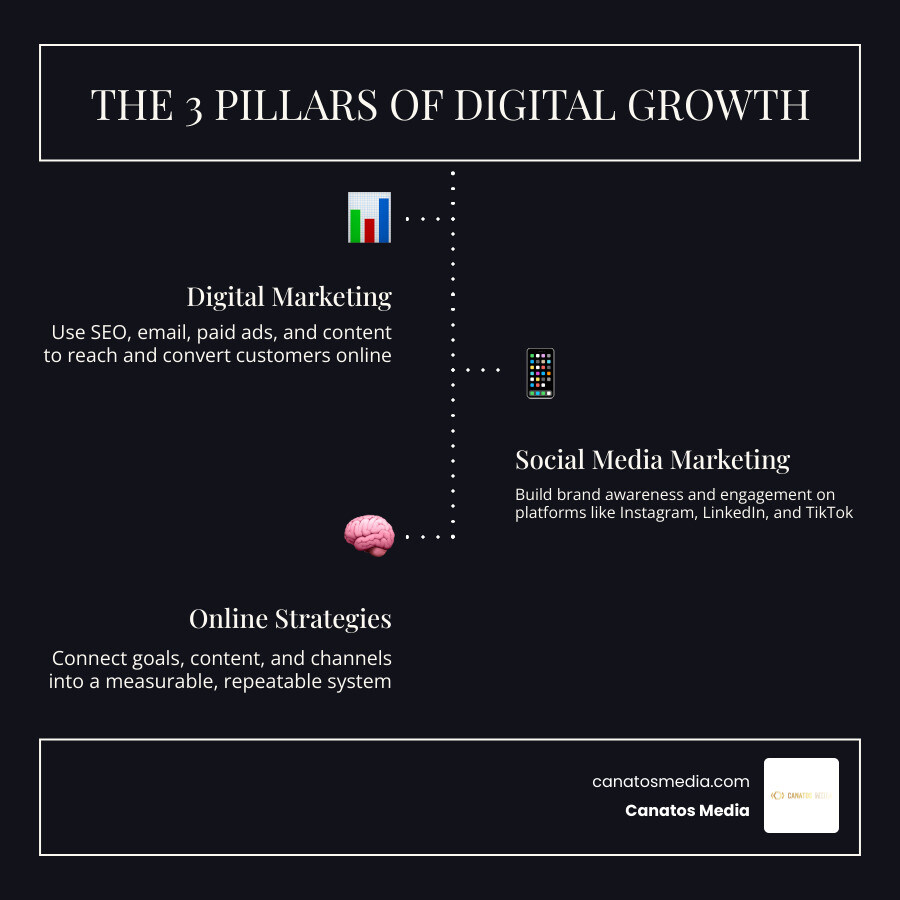
    Digital marketing, social media, and online strategies are the core tools modern businesses use to get found, build trust, and turn attention into sales. Here is a quick overview of what they involve:

    • Digital Marketing — Using online channels (SEO, email, paid ads, content) to reach and convert customers
    • Social Media Marketing — Building brand awareness and engagement on platforms like Instagram, Facebook, LinkedIn, and TikTok
    • Online Strategies — The structured plans that connect your goals, content, and channels into measurable results

    Together, these three pillars form a system. Each one supports the others.

    Think about this: as of October 2025, more than 6 billion people use social media worldwide. That is not a trend. That is where your customers already are.

    Yet most local businesses are still posting randomly, hoping something sticks. The result? Wasted time, invisible content, and no leads.

    The gap is not effort. It is strategy.

    Without a clear plan, even great content gets ignored. With one, a small business can compete with brands ten times its size.

    I’m Nic Canobbio, founder of Canatos Media, where I have spent over two decades helping brands cut through the noise with media production, social content, and data-driven digital marketing, social media, and online strategies — including content that has generated over 60 million views. In this guide, I will break down exactly what works, step by step, so you can stop guessing and start growing.

    Overview infographic of the digital marketing ecosystem: social media, SEO, paid ads, content, and email channels infographic

    Quick look at digital marketing social media and online strategies:

    What is Social Media Marketing and Its Role in Digital Marketing?

    To understand how to grow your business online, we have to look at the big picture. Many business owners we speak with in the Tri-State area and Long Island use the terms “digital marketing” and “social media marketing” interchangeably. However, they are not quite the same thing.

    Digital marketing is the umbrella. It includes everything from Search Engine Optimization (SEO) and email campaigns to pay-per-click (PPC) ads, mobile marketing, and even offline digital channels like interactive signs or rotating television screens in a bank lobby. Social media marketing (SMM) is a powerful, specialized subset under that umbrella.

    When we integrate SMM into a broader inbound marketing plan, we stop treating social media as a mere broadcasting megaphone. Instead, we use it to draw people in naturally. By sharing valuable content, building relationships, and utilizing professional systems, you turn cold scrollers into loyal advocates. If you want to see how to organize this on a daily basis, check out The Complete Guide to Social Media Management to learn how to keep your campaigns running smoothly.

    Defining the Core of Digital Marketing Social Media and Online Strategies

    Let’s break down how digital marketing social media and online strategies work together in simple terms:

    • Digital Marketing: This encompasses any marketing effort that uses the internet or digital technology—both online and offline—to connect with consumers.
    • Social Media Marketing: This is the practice of showing up on social networks to publish content, run targeted ads, and actively engage with your community.
    • Online Strategies: This is the master blueprint. It is the intentional plan that dictates which channels you use, how you position your brand, and how you measure success.

    The major shift from traditional media (like billboards, print ads, or local TV spots) to digital media is the power of targeting and two-way interaction. Traditional media casts a massive, expensive net over a broad area, hoping the right person sees it. Digital media allows us to target highly specific audiences based on precise data, ensuring your marketing dollars are spent on the people most likely to buy from you.

    Why Social Media is Critical for Modern Brands

    Social media is no longer just a place to share photos of your weekend; it has evolved into a primary discovery engine. Consumers use these platforms to research products, read reviews, and ask peers for recommendations before making a purchase. In fact, 63% of Gen Z and 49% of Millennials state that social media ads or recommendations directly influence their buying decisions.

    According to industry data, 86% of professionals reported that increased exposure was the leading benefit of social media marketing, while 76% pointed to a significant boost in website traffic. With over 6 billion active users globally, social media provides unprecedented access to your target market. It allows you to build trust through direct, human interaction. For a deeper look at how the landscape has shifted, you can read Your Complete Guide to Social Media Marketing in 2026 .

    Building the Foundation: SMART Goals and Audience Research

    Diving into social media without a strategy is like trying to drive across Long Island without a map or GPS. You might burn a lot of fuel, but you probably won’t end up where you want to be. Before you record a single video or write a caption, you need a solid foundation built on clear goals and deep audience research.

    Setting SMART Goals for Digital Marketing Social Media and Online Strategies

    Every successful campaign starts with goals that are Specific, Measurable, Attainable, Relevant, and Time-bound (SMART). Instead of saying, “We want to grow our Instagram,” a SMART goal sounds like: “We want to increase our inbound leads from Instagram Reels by 15% over the next three months.”

    Your goals should align directly with different stages of the marketing funnel:

    1. Top of Funnel (Awareness): Focus on metrics like reach, impressions, and follower growth to get your brand in front of new eyes.
    2. Middle of Funnel (Consideration): Track engagement rate, saves, shares, and website clicks to build relationships with interested prospects.
    3. Bottom of Funnel (Conversion): Measure lead form sign-ups, direct messages, and sales conversions.

    By mapping your objectives to these stages, you ensure your social media activity directly supports your bottom-line business growth.

    Researching and Defining Your Target Audience

    You cannot write content that resonates if you do not know exactly who you are talking to. To build accurate buyer personas, we look at several key factors:

    • Demographics: Age, location, job title, and income levels. For businesses in the Tri-State area, segmenting by specific neighborhoods or professional hubs can make your messaging incredibly relevant.
    • Behaviors: What time are they online? Do they prefer quick, high-energy videos, or do they read long-form professional articles?
    • Social Listening vs. Social Monitoring: Social monitoring tracks specific mentions of your brand or direct customer service queries. Social listening goes deeper—it involves analyzing the broader industry conversations, tracking what your target audience complains about, and discovering what solutions they are actively searching for.

    Choosing Platforms and Crafting Your Digital Marketing Social Media and Online Strategies

    A common mistake is trying to be everywhere at once. If you try to maintain active, high-quality profiles on ten different platforms with a small team, you will quickly burn out. It is far better to show up consistently and brilliantly on two or three channels where your audience actually spends their time. To see how to turn this attention into actual clients, check out our guide on Building a Repeatable Social Media Funnel from Reels to Booked Consultations.

    Selecting the Right Social Media Platforms

    Each social media platform has its own unique culture, demographic makeup, and content strengths. Here is a comparison of the major players in 2026:

    Platform Monthly Active Users Dominant Demographic Best Content Formats Primary Strength
    Facebook 3.07 Billion Ages 25–34 Images, local updates, link shares Local community building, event promotion
    Instagram 3.00 Billion Ages 18–34 Reels, Carousels, Stories Visual storytelling, brand discovery
    TikTok 1.90 Billion Ages 18–24 Short-form vertical video Rapid organic reach, viral trends
    LinkedIn ~1.00 Billion Professionals (25–54) Text posts, PDF documents, articles B2B marketing, thought leadership
    Pinterest ~500 Million Women (18–44) High-quality video pins, graphics Visual search engine, e-commerce traffic

    In 2026, we are also seeing the rise of decentralized platforms like Bluesky and Mastodon. These networks are not owned by a single corporation; instead, they are made up of smaller, community-led servers. Marketing here requires a shift away from highly polished, corporate broadcasting toward authentic, community-first conversations.

    Creating Engaging Content and Content Pillars

    To keep your brand consistent and prevent writer’s block, establish 3 to 5 “content pillars.” These are recurring themes or topics that your business will focus on. For example, a local home remodeling company on Long Island might use these pillars:

    • Educational: “How to prepare your home for a Tri-State winter.”
    • Behind-the-Scenes: Cinematic short-form videos showing the craftsmanship of a live renovation.
    • Social Proof: High-quality before-and-after photos and client video testimonials.
    • Company Culture: Spotlights on local team members and community involvement.

    When creating content, focus on making it “sticky”—meaning it grabs attention in the first two seconds, provides immediate value, and encourages the user to share it. Different formats serve different purposes on platforms like Instagram. Reels are designed for massive reach and discoverability via the explore algorithm, while Carousels (multi-slide image posts) are perfect for driving deeper engagement and keeping users on your post longer.

    The Role of Content Calendars and Scheduling

    Consistency is the secret weapon of social media. The algorithms favor accounts that post reliably. To keep your sanity, we highly recommend using a structured content calendar.

    By mapping out your posts a week or a month in advance, you can engage in content batching. Instead of scrambling every morning to figure out what to post, spend one dedicated day filming videos, taking photos, and writing captions for the next two weeks. You can then use scheduling tools to automate the publishing process, allowing you to focus your daily energy on replying to comments and building real relationships with your community.

    Measuring ROI, Competitive Analysis, and Evolving Your Strategy

    Your social media efforts should never exist in a vacuum. To justify the time and money spent, you must track your results, keep an eye on the market, and adjust your approach based on real data. To complement your organic efforts with highly targeted paid campaigns, refer to The Ultimate Guide to Social Media Ads.

    Tracking Key Metrics and Social Media ROI

    Tracking Return on Investment (ROI) can be tricky because social media often drives indirect conversions. A customer might watch your Instagram Reels for months, never click a link, but later type your website URL directly into their browser to book a consultation.

    To measure ROI accurately, we track a mix of direct and indirect key performance indicators (KPIs):

    • Engagement Rate: Are people actually interacting (liking, commenting, saving) with your content?
    • Reach and Impressions: How many unique eyes are seeing your brand?
    • Referral Traffic: How many visitors is your website receiving directly from social media links?
    • Conversion Rate: The percentage of social media visitors who take a desired action (like calling your business or filling out a contact form).

    To dive deeper into setting up paid tracking systems and maximizing your ad spend, read our quick-start guide: Paid Social Media Advertising: From Zero to Hero in One Hour.

    Conducting a Competitive Analysis

    You do not have to reinvent the wheel. By conducting a thorough competitive analysis, you can learn from your competitors’ successes and failures. Look at 3 to 5 local competitors in the Tri-State area:

    • Which platforms are they most active on?
    • What kind of content gets their highest engagement?
    • Are there gaps in their strategy? (e.g., Maybe they post great photos but completely ignore short-form video).

    Use these insights to refine your own content pillars and claim your unique space in the local market.

    Evaluating and Evolving Your Strategy Over Time

    The digital landscape changes fast. Algorithms update, new platforms emerge, and consumer behaviors shift. We recommend adopting a “fail fast” mentality. Set up a monthly or quarterly review process to look at your analytics. If a specific content format is performing poorly, cut it quickly and reallocate your resources to what is working. Continuous optimization is the only way to maintain a high-performing online presence.

    The Pros and Cons of Social Media Marketing for Businesses

    Before committing your hard-earned budget, it is important to weigh the benefits and challenges of social media marketing:

    The Pros:

    • Massive Brand Exposure: It is the fastest way to get your business in front of thousands of local Tri-State residents.
    • Direct Customer Connection: You can have real-time, two-way conversations with your customers, helping to resolve issues and build deep loyalty.
    • Rich Customer Data: Social platforms provide incredibly detailed analytics about who your audience is and how they behave.
    • Cost-Effective Organic Reach: Creating an account and posting organic content is entirely free, making it highly accessible for small businesses.

    The Cons:

    • Algorithm Volatility: Organic reach can drop overnight when platforms update their algorithms, making paid advertising a necessity for consistent visibility.
    • Time and Resource Intensive: Creating high-quality, cinematic video content and managing daily engagement requires consistent effort and expertise.
    • Public Reputation Risks: Negative reviews or customer complaints are highly visible and must be handled quickly and professionally to protect your brand.

    For many local business owners, partnering with a specialized team is the best way to maximize the pros while eliminating the cons. To see how this dynamic works, explore why a Social Media Marketing Agency & Small Business: Matches Made in Heaven is often the perfect growth formula.

    Frequently Asked Questions About Online Marketing Strategies

    FAQ concept graphic showing common questions about digital marketing

    What is the difference between digital marketing and social media marketing?

    Digital marketing is the overarching term for any marketing that uses digital technology. It includes online channels (SEO, email marketing, PPC, websites) as well as offline digital channels (digital billboards, TV screens). Social media marketing is a specific subset of digital marketing that focuses exclusively on social networking platforms like Instagram, Facebook, and LinkedIn.

    How do you measure social media ROI?

    We measure social media ROI by tracking both direct conversions (such as sales or lead forms filled out directly from a social link) and indirect value (such as brand awareness, customer retention, and referral traffic). Using tracking pixels and multi-touch attribution helps connect your social efforts to your actual revenue.

    How often should a business post on social media?

    Quality always beats quantity, but consistency is key. As a general rule of thumb for 2026:

    • Instagram: 3–5 times per week (mix of Reels and Carousels)
    • LinkedIn: 2–3 times per week
    • Facebook: 3–5 times per week
    • TikTok: 2–4 times per week

    Conclusion

    Building a powerful online presence requires an integrated approach. True success comes when your high-quality content, targeted paid ads, search engine visibility, and modern web design all work together to tell a cohesive brand story.

    At Canatos Media, we specialize in creating this exact synergy for businesses throughout the Tri-State area and Long Island. We produce cinematic, scroll-stopping short-form videos, manage your daily social media channels, run high-converting Meta and Google ad campaigns, optimize your SEO, and support your website. Our unique strength is our integrated strategy, designed to connect creative content with precise targeting to drive measurable business growth.

    Ready to take your brand beyond the scroll? Learn more about Meta Ads Management and let’s start building a strategy that actually works for your business.

  • Why Video-First Growth Requires More Than Production Alone

    Why Video-First Growth Requires More Than Production Alone

    The Real Problem With Video-Only Agencies

    Many businesses invest in video production hoping it will solve their growth problem. They commission beautiful content, post it across social media, and wait for results. Months pass. Views come and go. But leads and sales remain flat.

    The disconnect happens because production quality and business growth are two different challenges. A video-only agency excels at one thing: making your content look professional. They understand lighting, color grading, pacing, and storytelling technique. But they often stop there. They hand off the finished video and move to the next project.

    What gets left behind is everything that turns views into customers. Distribution strategy falls to you. Paid advertising setup becomes guesswork. Lead capture remains disconnected from your actual sales process. The result feels like a one-way broadcast rather than a strategic growth engine.

    We see this pattern repeatedly with brands that come to us after working with production-focused shops. They have galleries of stunning content sitting on their channels, underperforming against their potential. The videos aren’t the problem. The strategy around them is.

    Why Production Talent Isn’t Enough for Business Growth

    Cinematic quality and strategic effectiveness operate in different dimensions. A cinematographer can frame a shot perfectly while missing the conversion opportunity entirely. A brilliant editor can craft emotional pacing that never prompts viewers to take action.

    Growth requires bridging that gap. Your content needs to do two jobs at once: capture attention through visual excellence and guide viewers toward a measurable business outcome. Most video agencies optimize only for the first part.

    Consider a multi-location service business we worked with. Their previous agency produced beautiful brand stories about their company history and values. Objectively, the videos were well-made. But they didn’t address customer pain points, didn’t include clear calls to action, and weren’t distributed to their actual service areas. Views accumulated. Leads didn’t.

    The missing layer was strategy: understanding which messages resonate with your specific audience, where that audience spends time, what action you want them to take, and how to measure whether they take it. Production talent alone can’t answer these questions.

    What to do next: Audit your existing video content. Count how many videos have a clear conversion goal tied to them. If most are purely brand awareness plays without lead or sales tracking, you’ve identified the gap.

    How We Connect Visual Content to Revenue

    At Canatos Media, we work backwards from your business goal. Before we shoot a single frame, we define what success looks like: qualified leads from specific regions, email subscribers, consultation bookings, or e-commerce orders.

    That goal shapes every creative decision. Which audience segment gets which message. What pain points to emphasize. Where the call to action appears in the video and what it asks viewers to do. This is why our cinematic storytelling guide emphasizes connecting story with sales rather than treating them as separate objectives.

    Once content is produced, we own the distribution strategy. We don’t hand off a video and hope. We build paid advertising campaigns around it, manage the social platforms where your audience congregates, and optimize based on real performance data.

    Revenue connection means your content gets seen by the right people, at the right time, with the right message. A 30-second video about your service gets amplified to homeowners in your service areas searching for that exact solution. A product demo lands in front of prospects already considering competitors. A client testimonial reaches people in the consideration stage of buying.

    This requires integration. Your video content, paid advertising strategy, social media calendar, and lead capture system all work as one mechanism rather than disconnected pieces.

    Our Integrated Approach to Video-Driven Lead Generation

    We operate as a full-service video-first marketing agency because growth rarely happens through one channel alone. Your content needs support across multiple systems working in concert.

    Our integrated approach includes:

    • Short-form video production optimized for each platform (reels, stories, TikTok, YouTube Shorts)
    • Paid advertising campaigns across Meta and Google that amplify your best-performing content
    • Social media management that maintains consistent presence and engagement
    • Website design and support that converts traffic into leads
    • SEO and video optimization that helps content rank organically
    • Lead generation systems that nurture prospects from awareness through conversion

    Each component strengthens the others. A social media post drives traffic to your website. Paid ads amplify high-performing organic content. SEO brings qualified search traffic. Website lead forms capture names that feed your email nurturing. Together, these systems compound over time.

    Many brands treat these as separate line items: hire an editor, hire a social media manager, hire an SEO specialist. That fragmentation creates gaps and missed opportunities. We build them as interconnected parts of your growth engine.

    From Cinematic Storytelling to Paid Advertising Systems

    Beautiful storytelling and performance-driven advertising aren’t at odds. They’re complementary forces that multiply impact when aligned.

    Your brand story creates emotional connection and differentiation. Why your company exists. What makes your approach different. What results customers can expect. This narrative foundation becomes the backbone for all your advertising. It’s the “why” that turns interested viewers into committed customers.

    From that story, we derive advertising angles tailored to different audience stages. Cold audiences who don’t yet know you see brand awareness content. Warm audiences see product-focused demos. Hot audiences who’ve already engaged see testimonial-driven conversion ads. All of these flow from the same core story, just emphasized differently.

    We manage this across Meta’s platform (where most of your multi-location customer base lives) and Google’s ecosystem (where people actively search for solutions). Each platform has different strengths. Meta builds awareness and engagement. Google captures high-intent search traffic. Used together, they create a comprehensive reach strategy.

    The advertising systems feed data back to content creation. We see which story angles drive engagement. Which video lengths convert best. Which calls to action resonate. This becomes the input for your next content production cycle, continuously improving results.

    Content without distribution reaches almost nobody. Distribution without quality content wastes budget. The missing link most brands overlook is matching great content with a distribution strategy that reaches the right people.

    Many brands post organically to social media and hope the algorithm favors them. Posting matters, but it’s not a growth strategy. The algorithm prioritizes engagement and watch time, which helps, but it doesn’t target based on purchase intent or business fit.

    Strategic distribution means asking: Who exactly needs this content? Where do they spend time? How much are we willing to spend to reach them? What conversion value justifies that spending? These questions shape everything from audience targeting to ad spend allocation.

    A home service company might find that $5,000 in monthly Meta advertising targeting homeowners in their service areas generates 50 qualified leads, with a conversion rate high enough to make that profitable. Organic posting alone might reach 2,000 people per month, mostly outside their service area. The paid strategy dramatically improves targeting efficiency and business outcome.

    This doesn’t mean abandoning organic. Organic content builds community and provides free reach. But strategic paid distribution behind your best content is what turns a passive social media presence into an active lead generation engine.

    Our Social Media Management and Meta Advertising Integration

    Social media for most brands becomes reactive: post when you remember, respond to comments sporadically, wonder why reach is declining. We approach it as a growth channel with specific business objectives.

    Our social media management integrates directly with Meta advertising. We maintain a consistent content calendar that keeps your brand visible and engaged. Within that calendar, we identify high-performing organic content worthy of paid amplification. A post getting strong engagement gets promoted to a larger audience through ads.

    We also build social proof strategically. Testimonials, results, and client stories get prioritized and amplified. These become the ads themselves, leveraging authentic customer voices to build trust with cold audiences.

    Meta’s advertising platform handles sophisticated targeting. We reach business owners in specific locations, people interested in solutions your brand provides, and audiences similar to your best customers. Ad creative alternates between testimonial-driven content, educational content, and promotional offers, testing what resonates most.

    This requires constant monitoring and optimization. We check performance data weekly, pause underperforming ads, and increase investment in what works. Your best-performing video content gets more ad spend. Weak performers get revised or replaced.

    SEO and Video Optimization for Maximum Visibility

    Video content can dominate search results if optimized correctly. Most video creators miss this opportunity entirely.

    We optimize every video for search: choosing keywords that match how your target audience actually searches, crafting descriptions that tell search engines what the content is about, using transcripts that improve indexing and accessibility, and building internal links to relevant pages on your website.

    This means your short-form videos don’t just reach people on social platforms. They also appear in Google search results when prospects search for solutions you provide. A homeowner searching “emergency plumbing near me” or “how to fix a leaky faucet” might find your video in Google results, YouTube results, or both.

    We also ensure your website integrates video effectively. Videos on your pages increase time on site, lower bounce rates, and send positive signals to search engines. They improve conversion rates because prospects would rather watch a 60-second video demonstration than read paragraphs of text.

    Your entire content library becomes an SEO asset when built with search optimization in mind from day one.
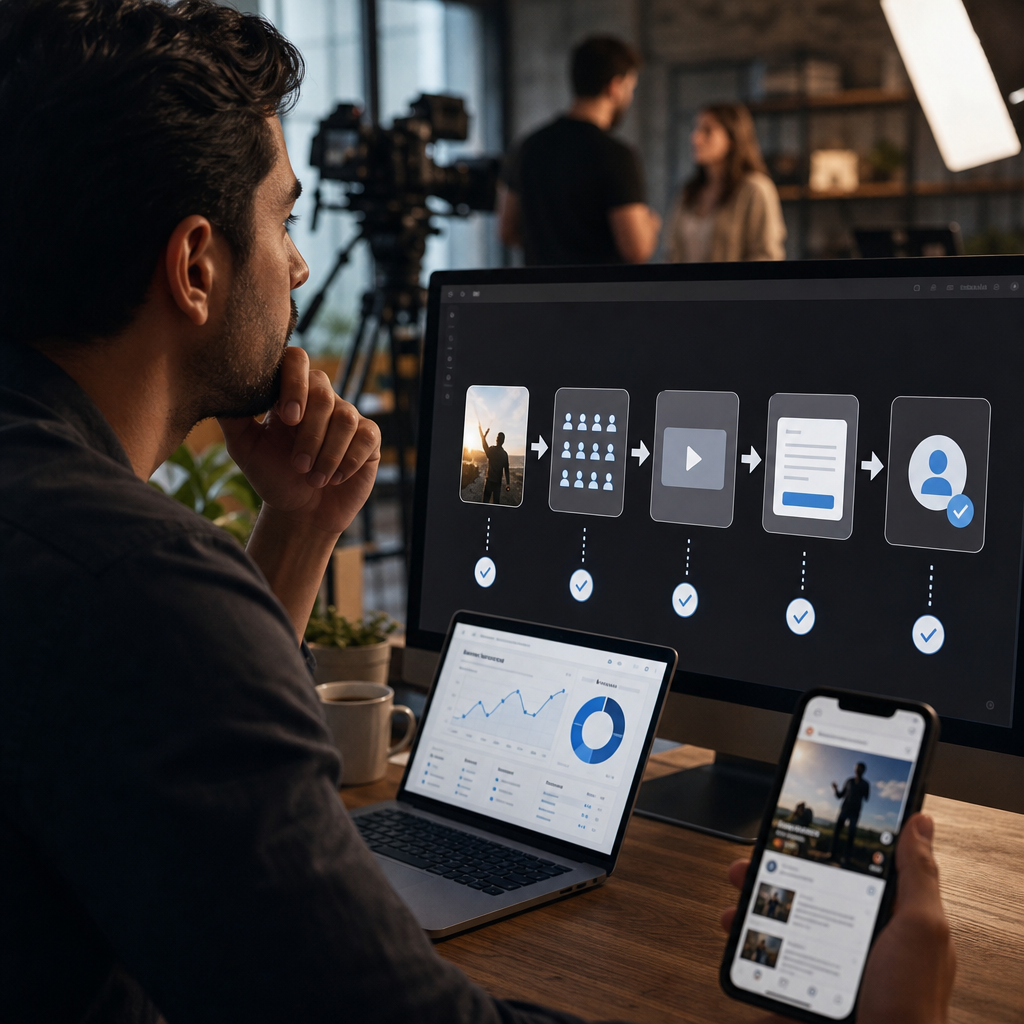
    Building Lead Generation Systems Around Your Content

    Content generates awareness and interest. Lead generation systems convert that interest into captured contact information and measurable sales opportunities.

    We build these systems to work alongside your video content. Every piece of content should have a clear next step. A social media video drives viewers to a landing page. The landing page offers something valuable in exchange for email address or phone number. An automated email sequence nurtures that lead with additional content and offers.

    For service-based brands, this might look like: video highlighting a common problem, landing page offering a free consultation or audit, email sequence educating about solutions, final email offering to schedule time.

    For e-commerce brands, it might be: product demo video, landing page with discount code, email nurturing with product recommendations, retargeting ads for abandoned carts.

    The key is tracking performance at every stage. How many people watched the video? How many clicked through to the landing page? How many submitted their information? How many converted to customers? This data shows us where to improve and how to allocate resources.

    How We Support Multi-Location and Service-Based Brands

    Multi-location and service-based businesses face a specific challenge: managing consistent brand presence while serving different local markets. National campaigns miss local context. Pure local campaigns miss economies of scale.

    We solve this by creating a core brand library that works everywhere, then localizing for specific markets. The same brand story and key messages appear in every location, but we customize targeting, calls to action, and occasionally specific creative elements for regional relevance.

    A dental practice with five locations can run a national awareness campaign about cosmetic dentistry, then layer location-specific ads targeting each market with different service offers. A home service company can showcase the same cinematic brand story across all regions, while allocating ad spend based on where leads are most likely to convert.

    We also help manage multiple service areas without spreading your ad budget too thin. Our data-driven approach identifies which locations and services generate the best leads, then concentrates resources there while maintaining presence elsewhere.

    For a deeper dive into this challenge, our [multi-location brand growth guide] covers how to build video campaigns that drive growth across markets.

    The Results Our Clients See With Integrated Strategy

    When production quality meets strategic distribution, the results compound quickly.

    A service-based client went from 3-4 monthly leads to 30+ within three months. The improvement wasn’t from better videos alone. Their previous agency’s videos were professionally made. The difference was adding paid advertising, social media consistency, and lead capture systems around that content.

    Another multi-location brand reduced cost per lead by 60% within six months. They had been running paid ads before, but without quality content. Better videos meant higher click-through rates on ads, lower cost per view, and ultimately lower cost per lead.

    E-commerce clients see similar impacts on conversion rate. Video on product pages increases average order value by 20-30% because prospects understand the product better before buying.

    These results don’t happen from video production alone. They happen when production meets strategy, distribution, and optimization.

    Taking Your Video Marketing From Content to Conversions

    The gap between producing video content and generating business growth is exactly what we solve. Most brands produce beautiful content that underperforms because the strategy, distribution, and conversion systems aren’t built around it.

    Start by auditing your current situation. What video content do you have? Where is it distributed? How many leads or sales does it generate? If views are high but conversions are low, the problem isn’t production quality. It’s strategy.

    We help growth-focused business owners bridge that gap. We produce cinematic short-form content built for performance, amplify it through integrated advertising, manage consistent presence across social platforms, optimize for search visibility, and build lead capture systems that turn attention into measurable results.

    If you’re ready to move beyond video-only agencies and build a truly integrated growth strategy, let’s talk about what’s possible for your brand.

    For further reading: Multi-location brand growth.

    Contact us today for a free consultation to see how we can help you grow your business.

    Frequently Asked Questions (FAQ)

    What makes your approach different from other video production companies?

    We don’t just create cinematic content and hand it off. Our entire process is built around connecting visual storytelling to measurable business outcomes through integrated advertising, social media management, and lead generation systems. We handle everything from production to paid distribution on Meta and Google, so your content actually drives leads instead of just getting views.

    How do you ensure video content converts to leads for service-based and multi-location businesses?

    We combine short-form video production with strategic paid advertising, SEO optimization, and lead capture systems tailored to how your customers actually search and buy. Our team works backward from your conversion goals, then builds the content and distribution strategy to hit those targets across all your locations.

    Do you manage the ongoing distribution of videos after production?

    Yes. We handle social media posting, Meta advertising campaigns, performance tracking, and content optimization. We also integrate our video content with AEO strategies to boost visibility when potential customers are actively searching for your services.

  • Winning the Screen: Your 2026 Video Marketing Strategy Guide

    Winning the Screen: Your 2026 Video Marketing Strategy Guide

    Video Marketing Strategy 2026: Why Video Is Now the Default — Not the Differentiator

    A strong video marketing strategy in 2026 starts with one uncomfortable truth: 91% of businesses now use video as a marketing tool. Video is no longer a way to stand out. It is the baseline.

    Here is what an effective 2026 video marketing strategy looks like at a glance:

    1. Set clear goals — map every video to a specific funnel stage (awareness, consideration, or decision)
    2. Choose your formats — short-form (under 60 seconds) for reach; long-form (10+ minutes) for SEO and leads
    3. Pick the right platforms — YouTube for search, LinkedIn for B2B, TikTok and Instagram Reels for discovery
    4. Optimize for conversion — embed video on landing pages (up to 86% higher conversion rates) and in email campaigns (65% higher click-through rates)
    5. Use AI wisely — reduce production costs without losing the human touch that drives emotional engagement
    6. Measure what matters — track completion rates, click-throughs, and pipeline impact — not just views

    The question is no longer whether to use video. It is how to use it more effectively than the 90% of competitors who are already doing the same thing.

    With over two decades of experience in media production and content strategy — including building social content that has earned over 60 million views — I’m Nic Canobbio, founder of Canatos Media, and I have spent years developing and refining video marketing strategy across industries where 2026’s AI-driven landscape is reshaping what works. In this guide, I’ll walk you through exactly how to build a strategy that turns video into measurable growth.

    2026 video marketing strategy key stats and funnel framework infographic infographic

    Video marketing strategy 2026 terms made easy:

    The Economics of Video: AI Cost Compression and the Volume Paradox

    If you produced professional video content two years ago, you likely remember the eye-watering invoices. But as we navigate July 2026, the financial landscape of video production has shifted dramatically. Generative AI tools have officially rewritten the rulebook on production economics.

    According to the Wistia 2026 State of Video Report, AI has cut average video production costs by 40%, reducing the median cost per finished minute of video from $4,200 down to a much more accessible $2,500. This massive drop is driven by the rapid adoption of AI video generation and editing tools. In fact, 34% of marketing teams are actively using AI video tools in 2026—an 89% year-over-year increase from just 18% in 2025.

    But this cost compression has introduced a fascinating economic anomaly: the volume paradox.

    Because making video is now 40% cheaper, you might assume marketing budgets are shrinking. Instead, the opposite is happening. Budget savings are being reinvested to produce three to four times the volume of content. This has flooded the digital landscape with average, AI-generated videos.

    To win the screen in the Tri-State area or on Long Island, your brand cannot rely solely on automated tools. Why? Because while AI-generated video achieves roughly 87% of the engagement of human-created video for basic social clips, that number drops to 61% for brand storytelling content that requires genuine emotional nuance.

    AI is fantastic for pre-production (ideation, scripting, and mapping) and post-production (adding captions, color correction, and audio cleanup). However, human oversight remains non-negotiable. To stand out in a crowded market, you must combine AI efficiency with human storytelling. For a deeper look at how we balance these elements, check out The Complete Guide to Video Marketing.

    Designing a High-Converting Video Marketing Strategy 2026

    A successful video marketing strategy in 2026 treats video not as a creative art project, but as a conversion-focused decision-making engine. Too many brands make the mistake of creating video in a vacuum, posting it to social media, and hoping it magically generates revenue.

    To drive actual business growth, your strategy must map directly to the customer journey.

    The Golden Rule: Separate Hosting from Distribution

    One of the most critical structural shifts in 2026 is separating your video hosting from your video distribution:

    • Distribution channels (YouTube, TikTok, Instagram, LinkedIn) are designed for top-of-funnel discovery. Their algorithms want to keep users on their platforms.
    • Hosting platforms (branded, ad-free players embedded on your website) are designed for conversions.

    If you embed a public YouTube link on your high-intent landing page, you are essentially giving viewers an off-ramp to go watch cat videos or, worse, a competitor’s ad. Keep social video on social media to build awareness, but host your business-critical videos (like product demos and customer testimonials) on your own website.

    Designing for the 2026 Viewer

    To ensure your videos actually get watched, you must design them for modern consumption habits:

    • Mobile-First is Mandatory: Over 78% of video content is consumed vertically on mobile devices. Shoot vertically by default rather than cropping horizontal footage as an afterthought.
    • The Silent Majority: Half of all video viewers watch without sound. If your video’s visual elements do not communicate the message when muted, your video is not ready to publish.
    • Captions and Accessibility: Always use highly readable, on-screen captions. AI tools make this incredibly easy, and it is vital for both user engagement and search engine indexing.

    For local service providers looking to scale, you can find a tailored blueprint in The Ultimate Guide to Video Marketing for Service Businesses in 2026.

    Mapping Content to the Funnel in Your Video Marketing Strategy 2026

    To guide a prospect from a casual scroller to a paying customer, your video content must align with their specific stage in the buying journey.

    • Top of Funnel (Awareness): At this stage, your audience doesn’t care about your product’s specific features—they care about their own problems. Use short-form vertical videos (under 60 seconds) to address common pain points, share quick industry insights, or introduce your brand’s personality. Keep these light, engaging, and highly visual.
    • Middle of Funnel (Consideration): Once prospects know who you are, they need to understand how you solve their problems. This is where longer educational videos, product demos, and webinars shine. A B2B company might host an on-demand webinar addressing industry shifts, while a local home services business on Long Island might showcase a step-by-step video of their process.
    • Bottom of Funnel (Decision): This is where most brands drop the ball. The prospect is on your pricing or contact page, ready to buy, but they have lingering hesitations. Use short, high-impact objection-handling videos. Address their concerns head-on—whether it is about contract lengths, implementation time, or pricing. Showing a real human explaining these details builds massive trust right at the finish line.

    Platform-Specific Execution for Your Video Marketing Strategy 2026

    Every platform has its own unique “language” and user expectations. Reposting the exact same video file across every channel without adjusting the formatting or tone is a recipe for low engagement.

    • YouTube (The Search Giant): YouTube remains the most widely used video platform, leveraged by 82% of marketers. It functions as the world’s second-largest search engine. Focus your YouTube strategy on search intent. Create high-quality, long-form educational content (10 to 15 minutes) with descriptive, keyword-rich titles and custom thumbnails.
    • TikTok & Instagram Reels (The Discovery Engines): These platforms are highly algorithmic and mobile-first. To succeed here, you must hook the viewer in the first 3 seconds. Use high-energy visuals, lead with tension or a major payoff, and keep the total runtime under 30 seconds.
    • LinkedIn Video (The B2B Powerhouse): LinkedIn has quietly become an absolute goldmine for B2B video marketing, with video posts earning 3x the engagement of text-only posts. B2B decision-makers in the Tri-State area respond incredibly well to raw, founder-led insights, quick industry opinion clips, and video case studies. Keep these professional, clear, and focused on business value.

    To dive deeper into the latest social media trends driving early-stage growth, read Short-Form Video Marketing Trends | July, 2026.

    Short-Form vs. Long-Form Video: Balancing Reach and Deep Conversions

    One of the most common questions we hear is: “Should we focus on short-form or long-form video?” The answer is both, but for completely different reasons. They serve entirely different functions in your marketing funnel.

    Short-form video (under 60 seconds) is the undisputed king of reach and engagement, generating 2.5x more engagement per impression than any other content type. It is ranked as the highest ROI-driving content format by 49% of marketers. However, while short-form is incredible for getting your foot in the door, it rarely closes complex sales on its own.

    Long-form video (such as 30-to-60-minute webinars or in-depth product walkthroughs) is where actual business conversions happen. While fewer people will watch a 45-minute video, those who do represent highly qualified, high-intent leads.

    The “Content Atoms” Workflow

    To balance both formats without burning out your creative team, adopt a batch-and-slice workflow:

    1. Record one high-quality, 20-minute long-form video (like a podcast episode, a webinar, or a detailed product walkthrough).
    2. Host that long-form video on your website or YouTube channel to capture high-intent search traffic and deep-funnel leads.
    3. Slice that single long-form recording into 10 to 15 “content atoms”—short, punchy vertical clips (15 to 45 seconds) highlighting a single insight, stat, or objection.
    4. Distribute those short clips across TikTok, Instagram Reels, and LinkedIn to drive top-of-funnel awareness back to your website.
    Metric Short-Form Video (<60s) Long-Form Video (10-60 mins)
    Primary Goal Awareness & Discovery Conversion & Education
    Engagement Rate Exceptionally High (2.5x average) Moderate (High Dwell Time)
    B2B Lead Gen Rate Low High (41% higher lead quality)
    Production Cost Low to Moderate Moderate to High
    Best Channels TikTok, Reels, YouTube Shorts, LinkedIn Website, YouTube, Email, Webinar Hubs

    To learn how to track these metrics and prove the real-world value of your campaigns, explore How to Measure Short-Form Video ROI and Prove Content Value.

    Maximizing ROI: Video SEO, Landing Pages, and Email Integration

    Once you have produced your video assets, the next step is maximizing their reach and conversion power across your entire digital marketing ecosystem.

    Video SEO: Ranking on the First Page of Google

    Search engines love video. In 2026, websites featuring embedded video are 53 times more likely to appear on the first page of Google search results. To unlock this search visibility:

    • Embed Above the Fold: Place your video near the top of your web pages to capture attention immediately.
    • Add Video Schema Markup: Use technical schema code to tell search engine crawlers exactly what your video is about, including its title, description, and thumbnail URL.
    • Include Transcripts: Paste a full text transcript below your video. This makes your page highly accessible and gives search engines rich text to index for long-tail keywords.

    Landing Page Conversions: The 86% Lift

    If you want to instantly boost your website’s performance, add a video. Landing pages with embedded video convert at 86% higher rates than text-only pages. Keep these landing page videos short (60 to 90 seconds), focus on the core benefit of your offering, and end with a single, crystal-clear Call to Action (CTA).

    Email Marketing: Cutting Through the Noise

    Email inbox competition is fierce. Simply adding the word “[VIDEO]” to your email subject line increases open rates by 19%. Furthermore, including a video link or a play-button GIF that links to a video on your website increases email click-through rates by a massive 65%. It is one of the easiest ways to re-engage cold leads and speed up your sales cycle.

    For a deeper dive into optimizing your content for modern search habits, check out How Video Content Drives Success in AI Search Results and AEO Optimization.

    Frequently Asked Questions about Video Marketing in 2026

    How do we balance authenticity with production value in 2026?

    In 2026, raw authenticity consistently outperforms high production polish. Audiences have developed a strong filter for overly produced, corporate-style videos that feel like traditional commercials.

    A simple, smartphone-recorded video of a founder sharing a genuine insight or a team showing behind-the-scenes footage often generates far higher engagement and trust than a $10,000 studio production. Focus on pristine audio quality and clear lighting, but let the content itself remain raw, honest, and human.

    Which video platforms deliver the best ROI for B2B brands?

    For B2B brands, LinkedIn and YouTube are the clear winners. LinkedIn is unmatched for professional networking, thought leadership, and reaching key decision-makers directly in their feeds. YouTube is essential for long-term search discoverability and building an educational content library that continues to generate organic leads for years.

    For a comprehensive strategic breakdown of corporate video distribution, see the Medium Video Marketing Guide 2026.

    What is the best workflow for scaling video production across multiple locations?

    Scaling video production across multiple locations—especially for franchises or regional service brands in the Tri-State area—requires a highly structured system.

    The most effective approach is to establish centralized brand templates, clear style guides, and pre-approved scripts. This allows local teams to record raw footage on their smartphones, which is then sent to a centralized creative team (or an agency partner) for professional editing, captioning, and optimization. To build this system for your business, read Top 7 Best Practices for Scalable Short-Form Video Production Across Locations.

    Conclusion

    Building a winning video marketing strategy in 2026 is no longer about having the biggest budget or the fanciest camera gear. It is about speed, consistency, and structural alignment. By using AI to streamline your editing workflows, mapping your video formats to the correct stages of the buyer’s journey, and optimizing your assets for search engines and landing pages, you can drive faster revenue growth and outpace your competition.

    At Canatos Media, we specialize in helping growth-focused businesses in the Tri-State area and Long Island turn visual content into measurable pipeline growth. We create cinematic short-form videos, manage high-performing social channels, run targeted paid ad campaigns (Meta and Google), and handle technical SEO and website support. Our integrated strategy connects your content directly to targeting and conversions to ensure every view drives real business value.

    Ready to dominate the screen and scale your brand? Let’s build a video strategy that actually moves the needle. Explore our End-to-End Video Marketing: How We Drive Real Results for Growing Businesses services today.

  • Scalable Short-Form Ad Creative: Production Packages for Meta and Google Ads

    Scalable Short-Form Ad Creative: Production Packages for Meta and Google Ads

    Why Brands Struggle With Ad Creative at Scale

    Most growth-focused business owners hit the same wall: they’ve nailed their core offer, built a solid funnel, and now they need creative that converts across paid channels. The problem isn’t strategy or audience targeting. It’s creative supply.

    Running ads on Meta and Google demands constant fresh content. What worked last month loses momentum. Your competitors are testing five new angles while you’re still producing the first two. If you’re managing multiple locations or service verticals, the demand multiplies. One brand might need 15-20 high-performing creatives monthly just to stay competitive. Scale that across a portfolio, and you’re looking at dozens of videos.

    Here’s where most brands stumble: they either underproduce (recycling weak creative until performance tanks) or overproduce (burning budget on flashy videos that don’t convert). The real gap is between having a creative and having a system that produces the right type of creative, fast enough, at a cost that doesn’t cannibalize ad spend itself.

    We see this constantly with multi-location service businesses. A plumbing company with 12 franchises can’t wait six weeks for a video production timeline. They need creative that speaks to local audiences, tests hypotheses about messaging, and feeds data back into the next production cycle. That requires a different approach than traditional film production.

    The Cost and Time Problem of Traditional Video Production

    Traditional video production wasn’t built for this velocity. A typical commercial shoot demands location scouting, talent casting, crew coordination, and post-production refinement. The timeline stretches to 4-8 weeks. The cost climbs to $5,000-$15,000+ per video. And that’s for one asset, one angle, one message.

    For paid advertising, this model breaks down economically. You spend months creating one beautiful hero video. Launch it. See mediocre engagement. Realize the creative angle missed the mark. By then, your budget for this quarter is half spent and you’re already pivoting to the next production cycle.

    The real inefficiency surfaces when you account for iteration. Ad creative testing requires speed. You need to launch version A, measure performance after 3-5 days, adjust the message or visual hook, and launch version B. In that window, traditional production simply can’t operate. You’re forced to choose between slow creative cycles or reusing weak assets.

    Newer brands often outsource to cheaper platforms, spinning up generic templates or AI-generated content. You get speed and low cost, but the creative lacks the polish, authenticity, and brand consistency that actually drives trust and conversions. Audiences can feel the difference between something cobbled together quickly and something intentionally crafted.

    How We Build Scalable Ad Creative Systems

    We approached this differently. Rather than treating ad creative as a one-off project, we built a system designed specifically for the velocity and variability that paid advertising demands.

    Our process combines three components: rapid intake and strategy briefing, streamlined production using proven templates and modular shooting techniques, and integrated measurement that directly informs the next creative sprint.

    The first step is understanding your conversion mechanics. We map which message angles and visual hooks historically drive leads or sales in your industry. A B2B service business, for example, typically converts on specificity and social proof. So our brief doesn’t ask for “something creative.” It specifies the visual frames, customer testimonial structure, and call-to-action placement that align with your conversion data.

    Next, we use modular production. Instead of building each video from scratch, we shoot in batches. One day, we’re capturing product demonstrations with multiple angles and lighting setups. Another, we’re filming customer interviews that can be repurposed across different message frames. A third day covers lifestyle and location footage. This approach reduces production days dramatically while increasing the volume of usable material.

    Then we structure post-production around quick iteration. We maintain template-based editing that allows us to remix footage, adjust messaging, and test variations without reshooting. If your ads perform better with shorter hooks or different music, we adapt the template and recut in hours, not weeks.

    Our Production Package Tiers Explained

    We offer three tiers structured around your output needs and testing velocity.

    Starter (4-6 videos monthly) is built for brands testing message angles or new platforms. You get two production days per month, access to a standard template library, and revisions included. Ideal budget: $1,500-$2,500 monthly. Use this for proof-of-concept campaigns or testing new audience segments.

    Growth (8-12 videos monthly) suits established brands with active paid campaigns and multiple ad accounts. You get four production days monthly, custom template development, A/B testing support, and priority revision turnaround. Typical investment: $3,500-$5,500 monthly. This tier covers ongoing creative needs for brands running $10K+ monthly ad spend where creative refresh is directly tied to performance.

    Scale (16-20+ videos monthly) is for multi-location brands, agencies managing multiple clients, or brands running aggressive testing matrices. You get dedicated production capacity, custom strategy sessions, unlimited revisions within scope, and integrated performance reporting. Investment: $6,000-$10,000+ monthly depending on complexity. This tier is built for brands where ad creative is a core driver of pipeline and you need predictable, continuous output.

    Each tier includes access to our short-form video production platform, which covers everything your brand needs.

    Short-Form Format Optimization Across Meta and Google

    Meta and Google ads demand different visual language, even when the message is identical.

    Meta (Facebook and Instagram) rewards thumb-stopping visuals in the first 1-2 seconds. The format favors close-ups, quick cuts, and text overlays. Vertical video (9:16) performs best on mobile feeds. Captions are essential since many users watch muted. The ideal length is 15-30 seconds, though longer-form (up to 2 minutes) works for engaged audiences. Customer testimonials and before-and-after formats outperform polished brand messaging on Meta.

    Google Ads (YouTube, Discovery, Performance Max) rewards longer narrative hooks and clearer value propositions. Horizontal (16:9) performs better. You have more breathing room to build tension and establish context before the ask. Length tolerance extends to 45-60 seconds. Google audiences expect slightly more production polish and professional framing compared to Meta’s raw authenticity preference.

    When we produce for both platforms simultaneously, we’re not repurposing identical assets. We’re shooting with both frame ratios in mind. A single interview might become a 15-second testimonial snippet for Meta and a 45-second narrative for Google, each with platform-specific pacing and text design.

    This distinction matters for performance. A creative optimized for Google’s audience and format will underperform on Meta and vice versa. Most brands miss this and wonder why their “great video” only converts on one platform.

    Turnaround Speed Without Quality Compromise

    The efficiency of scale short-form ad creative comes from two design choices: constraint and systematization.

    We work with constraints. Standard formats, proven templates, focused messaging briefs. This eliminates decision paralysis and endless revision cycles. You don’t get infinite customization; you get reliably high-quality output fast.

    Systematization means every production follows a documented workflow. Scripts are structured identically. Shot lists follow a repeatable order. Post-production uses modular templates. New team members accelerate quickly because they’re following a system, not reinventing process each time.

    The result: we deliver polished, on-brand ads in 1-2 weeks from brief to delivery. That timeline allows for actual testing velocity. Launch creative Monday. Measure by Thursday. Iterate and relaunch by the following Monday. Over three months, you’ve tested 10+ variations and identified which angles drive actual leads.

    Lead Generation Through Proven Creative Frameworks

    Not all short-form creative drives leads equally. The framework matters.

    We deploy several proven structures depending on your industry and funnel stage:

    The Problem-Solution Framework works for service businesses. Open with a customer pain point (clogged drain, tax confusion, unreliable staffing). Show how your solution resolves it. Close with a specific call-to-action (book inspection, request quote). This framework consistently delivers 15-25% higher conversion rates than generic brand storytelling.

    The Specificity Framework appeals to skeptical B2B audiences. Instead of claiming you’re “the best,” showcase exactly how you solve one specific problem. A bookkeeping service doesn’t say “we handle your finances.” It says “we catch tax deductions you’re missing, averaging $8,000+ annual savings per client.” Specificity builds credibility.

    The Social Proof Framework uses customer results and testimonials. Real customers explaining real outcomes outperform polished brand narration across nearly every industry. Keep the camera tight, let people speak naturally, and emphasize measurable results.

    The Demo Framework works for product companies. Show the product in action, highlight the key feature that matters to your audience, and close with the friction-free path to purchase. Short and direct.

    Our production process identifies which framework fits your audience, builds the creative around that structure, and ensures each video has clear performance attribution.

    Measuring Performance and Iterating Quickly

    Creating ads is half the work. The other half is learning which creative angles actually move the needle.

    Every video we produce includes built-in measurement markers. We tag which framework it uses, which message angle it tests, and which audience segment it targets. This metadata flows into your ad account and feeds back into performance reporting.

    After 3-5 days of ad delivery, patterns emerge. One testimonial format drives 40% lower cost-per-lead. A specific opening hook captures attention better on mobile. These insights immediately inform the next production cycle.

    This is where scalable systems outperform one-off creative. You’re not asking “did this video work?” after spending $500. You’re running systematic tests that compound learning across dozens of videos monthly. Over three months, you’re operating with 3-4x more data than brands relying on quarterly production cycles.

    Getting Started With Your Production Strategy

    Start by auditing your current creative supply and performance. How many ad variations do you run monthly? What’s your cost per new ad? Are you testing message angles or just recycling the same creative? How long is your production timeline today?

    These metrics establish your baseline and clarify which production tier makes sense for your business.

    Next, identify your highest-converting message angles from existing campaigns. If you’ve run ads before, you likely have data on which approaches resonate. We use this as the foundation for your production strategy.

    Then, commit to a testing cadence. Most brands benefit from weekly creative launches paired with mid-week performance analysis and iteration. This requires enough production capacity to support that pace, which is why our packages are built around predictable monthly output.

    Ready to build a scalable creative system? Reach out and we’ll map your specific needs to the right production approach for your business. We work with growth-focused brands that understand creative velocity drives competitive advantage.

    Contact us today for a free consultation to see how we can help you grow your business.

    Frequently Asked Questions (FAQ)

    How quickly can we produce short-form ad creative for our campaigns?

    We typically deliver finished ad creative within 5-7 business days from the time we receive your brief and any necessary assets. Our streamlined production process prioritizes speed without sacrificing quality, which means you can test new creative variations on Meta and Google faster than traditional video production timelines allow. We’ve built our workflow specifically to support rapid iteration, so you’re not waiting weeks between campaign adjustments.

    What’s included in your production packages, and how do we know which tier fits our needs?

    Our packages range from starter tiers designed for single-location businesses testing ad creative, up to enterprise-level systems that support multi-location brands running continuous campaigns across multiple platforms. Each tier includes a defined number of videos per month, revisions, format optimization for Meta and Google, and access to our performance tracking insights. We recommend starting with a consultation where we assess your current ad spend and campaign goals to match you with the right package rather than guessing.

    Can we use the same creative across Meta and Google, or do we need different versions?

    We optimize every video we produce specifically for both platforms because their audiences, aspect ratios, and engagement patterns differ significantly. Our production process includes creating native formats for each channel, which typically results in 15-25% better performance than repurposing single versions. You’re getting platform-specific creative from us, not a one-size-fits-all approach.

  • Freelance SEO Services 101: From Upwork Newbie to Agency Owner

    Freelance SEO Services 101: From Upwork Newbie to Agency Owner

    What Are Freelance SEO Services — and Do You Actually Need Them?

    Freelance SEO services are how thousands of local businesses finally start showing up on Google — without paying agency-level prices or getting lost in a bureaucratic account management shuffle.

    Here’s a quick snapshot of what you need to know:

    Question Quick Answer
    What are freelance SEO services? SEO work (audits, content, link building, technical fixes) done by an independent specialist, not an agency
    Who should hire a freelance SEO? Small to mid-sized businesses, startups, and local brands with specific growth goals
    What does it cost? $15-$35/hr for hourly work; $300-$800 for a basic audit; $1,000-$5,000/month for ongoing retainers
    How fast do results come? Most businesses see meaningful results in 3 to 6 months
    Where do you find them? Platforms like Upwork (rated 4.8/5 from nearly 100,000 client reviews), LinkedIn, or referrals

    If you run a local business and customers aren’t finding you online, the problem usually isn’t your product. It’s your visibility. A skilled freelance SEO expert can fix that — often faster and cheaper than a traditional agency.

    This guide covers everything: how to hire one, how to become one, what it costs, and how AI is reshaping the entire field in 2026.

    I’m Nic Canobbio, founder of Canatos Media, where I’ve spent years helping businesses grow through integrated digital strategies — including freelance SEO services — informed by my background in media production, content strategy, and high-stakes partnership building. Whether you’re looking to hire the right expert or build your own SEO practice, this guide cuts straight to what actually works.

    Freelance SEO services career path: from beginner to agency owner with key milestones infographic

    Glossary for freelance seo services:

    Freelancer vs. Agency: Making the Right Choice

    When you decide to invest in search engine optimization, you face a major crossroads: do you hire an independent freelance SEO expert, or do you sign a contract with a full-service digital marketing agency?

    To make the right choice, it helps to look at how these two options stack up across key business priorities:

    Feature Freelance SEO Expert SEO Agency
    Overhead Costs Low (you only pay for direct expertise and minimal tools) High (you pay for office space, account managers, and agency margins)
    Personalized Service Extremely high (you work directly with the person doing the execution) Variable (your account is often handed off to junior associates)
    Team Resources Limited to the freelancer’s direct skillset and network High (access to in-house developers, designers, and copywriters)
    Flexibility High agility; easy to pivot strategies on the fly Rigid; changes often require contract amendments or approvals
    Campaign Agility Fast execution without administrative bottlenecks Slower deployment due to multi-layered review processes

    For many local businesses across Long Island and the broader tri-state area, working with an independent expert is the most direct path to growth. You get to cut through the corporate jargon and collaborate with someone who behaves like a true partner in your business.

    Why Businesses Choose Freelance SEO Services Over Agencies

    The primary reason businesses opt for freelance seo services is direct communication. When you hire a freelancer, the person you speak with on your weekly strategy call is the exact same person writing your meta tags, auditing your schema markup, and optimizing your content.

    Additionally, freelancers offer unmatched cost-effectiveness. Agencies have to support executive salaries, sales commissions, and physical office footprints. Freelancers operate lean, meaning a much higher percentage of your budget goes directly toward active optimization. This specialized expertise is highly accessible, making it easier to secure a seasoned professional without paying a premium for agency-level overhead. If you want to know how to navigate this landscape safely, read our guide on SEO Services 101: Find Reliable Providers.

    When to Hire an Agency Instead of a Freelancer

    While freelancers are incredible for agile campaigns and targeted growth, there are times when an agency is the better fit. If you are a massive enterprise requiring a multi-channel campaign that integrates organic search with television buying, heavy programmatic display, and complex PR campaigns, an agency’s sheer scale is necessary.

    Agencies are also built to handle massive project management overhead. If your internal team does not have the bandwidth to manage a freelancer and needs a dedicated account director to coordinate multiple marketing channels simultaneously, a full-service agency is the logical choice.

    The Core Offerings of Modern Freelance SEO Services

    A professional SEO freelancer does not just “add keywords to your website.” Modern search engine optimization is a multi-disciplinary field requiring technical precision, creative content development, and strategic relationship building.

    Technical SEO audit dashboard showing site crawl health and core web vitals

    To build a solid foundation before diving into advanced strategies, you can check out our Step-by-Step Guide to SEO Basics. Here are the core pillars that high-quality freelance seo services typically cover:

    Technical SEO and Site Audits

    Think of technical SEO as the foundation of your house. If your foundation is cracked, it does not matter how beautiful your furniture is — the house is in trouble. A freelancer will use specialized crawling software like Screaming Frog to analyze your site’s structure, search engine crawlability, and indexing status.

    They will optimize your Core Web Vitals (which measure page speed, visual stability, and interactivity) and implement advanced schema markup. This structured data helps search engines understand the context of your pages, making your business eligible for rich snippets in search results. To master these technical elements without getting overwhelmed, take a look at our guide on Mastering Google Search Engine Optimisation Without Losing Your Mind.

    Content Strategy and On-Page Optimization

    Content is the vehicle that delivers your search rankings. A freelance SEO expert will conduct deep keyword research to uncover high-intent search terms that your ideal customers are using. They will then map these keywords to specific pages, aligning your content with search intent.

    In 2026, this process is heavily influenced by Google’s Helpful Content System and E-E-A-T guidelines (Experience, Expertise, Authoritativeness, and Trustworthiness). Freelancers will audit your existing pages to ensure your content is genuinely helpful, original, and written by credible authors. For a deeper look at how to align your content with search engine algorithms, check out our resource on SEO Search Engine Optimization.

    Links from other reputable websites act as votes of confidence in the eyes of search engines. However, spammy link-building tactics can get your site penalized. Modern freelancers focus on white-hat outreach and digital PR.

    When vetting link opportunities, top-tier freelancers look for websites with a Domain Rating (DR) of 50+, steady monthly organic traffic of at least 1,000 visitors, and zero history of search engine penalties. By securing high-quality backlinks, they drive both search engine authority and direct referral traffic to your business.

    Local SEO and E-commerce Specializations

    For businesses operating in the tri-state area — whether you are a contractor in Nassau County, a boutique in Suffolk County, or a professional service provider in Manhattan — local SEO is your lifeblood. Freelance specialists will optimize your Google Business Profile, clean up local citations across the web, and build geo-targeted content that attracts local customers. To get started on this, explore our actionable strategies in Stop Hiding From Customers With These Local SEO Services and Tips.

    If you run an online store, e-commerce SEO is a highly specialized discipline. It involves optimizing complex product category structures, managing faceted navigation, and implementing product schema. If you are selling online, you can read more about why this specialization is critical in our article Why Every Store Needs an Ecommerce SEO Specialist.

    Pricing Models and What to Expect to Pay

    The cost of freelance seo services varies widely based on the freelancer’s location, experience level, and the complexity of your project. Understanding these pricing models helps you budget effectively and avoid low-quality providers. For an in-depth breakdown of budget-friendly optimization, read our guide on Affordable SEO Services That Won’t Make Your Wallet Cry.

    How to Package Your Freelance SEO Services for Maximum Value

    If you are a freelancer, packaging your services correctly is the key to attracting high-value clients. Instead of selling hourly blocks, focus on value-based pricing and retainer structures.

    Clients prefer predictable monthly costs, and SEO is an ongoing process that benefits from consistent monthly attention. Packaging a basic audit as a standalone entry-point product allows clients to experience your work before committing to a larger retainer. To make sure you are not overpaying as a client or undercharging as a service provider, read our analysis on how to Stop Overpaying for Your Ecommerce SEO Packages.

    Typical Costs for Freelance SEO Projects in 2026

    To help you plan, here is what the pricing landscape looks like in 2026 based on industry data and platform statistics:

    • Hourly Rates: Independent SEO experts on platforms like Upwork typically charge $15 to $35 per hour for entry- to mid-level work. Senior-level freelancers with extensive experience often charge $50 to $100+ per hour. For example, a senior freelancer with 9+ years of experience might charge $60/hr and require a minimum monthly investment of $2,000+ for campaigns.
    • Basic SEO Audits: A comprehensive, one-time technical and content audit from a freelance expert generally ranges between $300 and $800 per project.
    • Monthly Retainers: For ongoing optimization, link building, and content creation, monthly retainers for mid- to senior-level freelancers range from $1,000 to $5,000 per month.
    • Comprehensive Campaigns: Large-scale, highly competitive campaigns managed by senior-level or specialist freelancers typically cost $5,000+ per project.

    How to Start and Scale Your Freelance SEO Business in 2026

    If you want to offer freelance seo services yourself, the market in 2026 is full of opportunity. However, the days of using basic keyword stuffing are long gone. You need a strategic plan to build your skills, establish your brand, and attract high-paying clients.

    Freelancer planning a business roadmap and client acquisition strategy

    Launching with Zero Experience

    If you are starting with no experience, the best way to prove your capabilities is to rank your own digital properties first. Build a personal blog or a niche website, apply modern SEO principles, and document your journey.

    If you do not have a portfolio of paying clients, offer to perform free SEO audits for local non-profit organizations or small family businesses in your neighborhood. This hands-on practice gives you real-world data, case studies, and testimonials that you can use to land your first paying clients.

    Building a Personal Brand Without Cold Outreach

    Cold calling is incredibly frustrating, and cold emailing often ends up straight in the spam folder. The most successful freelancers rely on inbound marketing to attract clients.

    • LinkedIn Networking: Share daily tips, case studies, and breakdowns of search algorithm updates on LinkedIn. This builds massive social proof and positions you as a helpful authority.
    • Blogging: Write detailed, educational guides on your own website. When prospective clients see that you rank highly for search terms related to SEO, you have already proven that your services work.
    • Industry Reciprocity: Support your peers, share their work, and participate in online SEO communities. Many high-earning freelancers get their best client referrals from other freelancers who are at capacity or specialize in different niches.

    Essential Skills and Tools for the Modern Freelancer

    To deliver professional results, you must master the industry-standard toolset. This includes:

    • Ahrefs & Semrush: For competitive analysis, keyword research, and backlink monitoring.
    • Google Analytics 4 (GA4) & Google Search Console (GSC): For tracking actual organic traffic, keyword impressions, and technical site health.
    • Communication Skills: The ability to explain complex technical issues in simple, business-friendly language is just as important as your technical optimization skills.

    The SEO landscape is undergoing its most significant shift in decades. In 2026, search optimization is no longer just about Google’s traditional ten blue links. It is also about AIO (Artificial Intelligence Optimization).

    Users are increasingly turning to conversational AI platforms like ChatGPT, Claude, Perplexity, and Gemini to find information and product recommendations. To keep your clients visible, you must optimize for these platforms as well.

    This requires:

    • Structured Data: Implementing flawless schema markup so AI crawlers can easily parse and understand your business details.
    • Knowledge Graph Integration: Ensuring your brand is mentioned across authoritative directories, news outlets, and industry publications to establish your place in digital knowledge bases.
    • Conversational Content: Writing content that directly answers natural, conversational queries.
    • WordPress and AI Integration: Many top-rated freelancers with over 12 years of experience now specialize in merging WordPress development with AI-enhanced SEO strategies to build fast, highly structured, and AI-friendly websites.

    How to Hire and Evaluate a Reliable Freelance SEO Expert

    Hiring the wrong freelancer can cost you thousands of dollars and set your organic growth back by months. You need a reliable process to filter out low-quality providers and find a true professional.

    When hiring on platforms like Upwork, look for high-quality indicators:

    • Job Success Score (JSS): Aim for freelancers with a JSS of 90% or higher.
    • Talent Badges: Look for “Top Rated,” “Top Rated Plus,” or “Expert Vetted” badges.
    • Proven Track Record: Some top-rated specialists have completed over 10,000 to 29,000 hours on the platform, proving long-term consistency and client satisfaction.

    Before making a decision, verify their portfolio. Ask for case studies showing real traffic and ranking growth, and make sure they can explain the strategy behind those results. For a complete blueprint on selecting the right partner, read our guide on How to Pick an Ecommerce SEO Firm That Actually Delivers.

    Common Mistakes to Avoid When Hiring

    The biggest mistake you can make is falling for providers who guarantee first-page rankings within a few weeks. Google’s algorithms are complex and constantly changing; no one can guarantee a specific ranking spot.

    Avoid freelancers who rely on cheap, automated link-building packages or software-generated content that lacks human editing. These shortcuts violate search engine guidelines and can lead to severe site penalties. Finally, make sure your freelancer is transparent about their methods and provides clear, monthly reports on actual business metrics like organic impressions, clicks, and conversions. To understand the long-term risks of poor optimization, see Why Your Store Needs Ecommerce Website SEO to Survive.

    Frequently Asked Questions about Freelance SEO

    How long does it take to see results from freelance SEO services?

    For most websites, it takes 3 to 6 months of consistent optimization to see meaningful improvements in rankings, organic traffic, and conversions. The exact timeline depends on the age of your website, the competitiveness of your industry, and the current technical state of your site.

    Is hiring a freelance SEO expert worth the investment?

    Yes. Unlike paid advertising, which stops generating leads the moment you stop paying for ads, SEO offers compounding returns. The high-quality content and technical authority built today will continue to attract organic visitors to your site for years to come, making it one of the most cost-effective long-term marketing channels available.

    What is the difference between SEO and AIO (AI Optimization)?

    Traditional SEO focuses on optimizing your website to rank at the top of search engine results pages on Google or Bing. AIO (AI Optimization) focuses on ensuring your brand is cited, referenced, and recommended by large language model search engines like ChatGPT, Claude, and Perplexity when users ask conversational questions.

    Conclusion

    Whether you are looking to hire high-quality freelance seo services to grow your local business or you are a digital marketer aiming to build your own successful independent practice, the key is focusing on real value, transparency, and modern optimization techniques.

    At Canatos Media, we specialize in helping businesses in the tri-state area and Long Island scale through integrated digital marketing strategies. We connect cinematic short-form video, strategic social media management, targeted paid ads (Meta and Google), website support, and advanced search engine optimization into a single, cohesive growth engine.

    If you are ready to stop piecing your marketing together and want a unified strategy that drives measurable growth, explore our Canatos Media Services today and let’s build something incredible together.

  • How We Transform Lead Generation for Service-Based Brands Through Video

    How We Transform Lead Generation for Service-Based Brands Through Video

    Why Service-Based Brands Struggle to Convert Social Media into Leads

    Service-based businesses face a unique challenge: social media platforms excel at driving attention, but that attention rarely translates into qualified leads or booked consultations. You might see solid follower growth and decent engagement metrics, yet your phone isn’t ringing and your lead forms sit empty.

    The disconnect happens because most service brands treat social media as a broadcast channel rather than a conversion tool. A plumber, HVAC contractor, or marketing agency posts content hoping someone sees it, remembers them, and eventually reaches out. That’s a lot of hope in a strategy.

    The real problem is deeper. Service buyers need to understand your process, see proof of quality, and feel confident enough to hand over their contact information. Generic posts and stock footage don’t accomplish that. Viewers scroll past because they don’t see themselves in the content. They don’t understand what makes your service different. They don’t trust you enough yet to take action.

    Start by auditing your current social content: does it show your actual work, your team, or your process? Or does it feel generic enough that any competitor could claim the same message?

    The Hidden Cost of Generic Video Content and Ineffective Marketing Tactics

    Creating video is no longer optional, but creating the wrong kind of video costs you more than time and budget. Generic videos waste impressions.

    When we watch a service business post footage that looks like it came from a stock library, what’s really happening is a missed conversion opportunity. That video might get 200 views, but zero leads because nothing in it was specific enough to your business or compelling enough to stop the scroll.

    The hidden costs include:

    • Wasted ad spend on content that doesn’t convert
    • Damaged brand perception when generic video makes you look like every other player in your space
    • Lost differentiation in a crowded marketplace
    • Team time spent creating content that doesn’t move the needle
    • Attribution confusion where you can’t track which content actually drives leads

    A home services contractor spending $500 per month on ads with generic before-and-after clips might see 50 clicks but zero conversions. That same $500 behind cinematic content that showcases their specific expertise, team personality, and guarantee could generate 8-12 qualified leads. The difference isn’t the budget. It’s the content itself.

    Beyond video, many service brands run isolated marketing tactics that don’t speak to each other. You post on social, run ads separately, try SEO independently, and hire someone for email. None of these channels reinforce the same message or lead the prospect through a connected journey.

    Audit your last 10 pieces of marketing spend: can you trace a single lead back to a specific piece of content or channel? If you can’t, your systems aren’t integrated.

    How Cinematic Short-Form Video Changes the Lead Generation Game

    Cinematic short-form video works because it combines storytelling with the brevity that platforms and audiences demand. We’re not talking about 30-second product demos. We’re talking about 45-90 second pieces that show your service in action, highlight customer results, or reveal your process in a way that builds trust and urgency.

    When a prospect watches a cinematic video of your team completing a project, solving a real problem, or explaining why your approach is different, something shifts. They see quality. They see professionalism. They see proof. That video does the heavy lifting that text and images alone cannot.

    Short-form video also performs better algorithmically. Platforms like Meta, TikTok, and YouTube Shorts reward video content with higher reach and engagement. Your cinematic video of an HVAC installation getting finished, moisture issues resolved, or a before-and-after transformation reaches more qualified prospects simply because the platform prioritizes it.

    The real advantage appears in conversion. Prospects who watch cinematic content about your service understand what they’re buying before they fill out a form. They’re pre-qualified, more likely to book a consultation, and less likely to waste your sales team’s time with poor-fit inquiries.

    We produce cinematic content specifically engineered for lead capture. Every video has a clear purpose: showcase your expertise, build confidence in your process, or create urgency around a specific offer. The production quality signals that you care about detail. The storytelling signals that you understand your customers’ pain points.

    Our Integrated Approach: Video Plus Strategic Digital Systems

    Video alone doesn’t generate leads. Video plus strategy does.

    We combine cinematic short-form video production with a complete digital ecosystem. Your video becomes the hero of your social media presence, but it’s supported by SEO work that makes sure prospects find you, paid advertising that amplifies your reach, and lead capture workflows that convert views into actual prospects.

    Here’s how the pieces fit together:

    • Video production creates the asset and the messaging
    • Social media management distributes it consistently and builds community
    • Paid advertising on Meta and Google puts it in front of qualified audiences
    • AEO (App Engine Optimization) and SEO ensures long-term organic discovery
    • Website systems and lead capture forms turn interest into action
    • Email and CRM workflows nurture leads until they’re sales-ready

    When these systems work together, something remarkable happens. A prospect might first discover you through an organic social post, then see your cinematic video in a Meta ad, then land on your website optimized around your service keywords, then fill out a form designed to qualify them, then receive a follow-up sequence that moves them toward booking.

    Each touchpoint reinforces the last. Each channel speaks the same message. The prospect doesn’t encounter conflicting information or brand confusion. They experience a cohesive journey from awareness to decision.

    We build this entire system around your video content because video is the most persuasive format for service-based businesses.

    The Role of Platform-Specific Optimization in Video Performance

    Not all platforms want the same video. Instagram Reels demand a different frame and pacing than YouTube Shorts, which differ from Facebook feed video and TikTok. Uploading the same video everywhere leaves performance on the table.

    We optimize your cinematic content for each platform’s unique specifications and audience behavior. This means aspect ratio adjustments, pacing tweaks, captions placed strategically, and sometimes even re-edited versions that emphasize different parts of the story depending on where it lives.

    On Meta platforms (Facebook and Instagram), we focus on stopping the scroll in the first three seconds and using captions because many viewers watch without sound. The framing is tighter. The call-to-action appears earlier.

    On YouTube, we have more breathing room. The video can be longer. We use cards and end screens to guide viewers toward your website or lead form. YouTube viewers expect slightly more education, so we include more explanation of process or results.

    Platform-specific optimization isn’t about creating completely different videos. It’s about smart adaptations of your core cinematic content that respect how each audience consumes video. The result is 20-40% higher engagement and conversion rates compared to one-size-fits-all distribution.

    Document your current video distribution: are you uploading the same file everywhere, or are you adapting for each platform’s demands?

    Building Lead Generation Workflows That Actually Convert Views to Sales

    A view is not a lead. A click is not a lead. A lead is a prospect who has given you their contact information and indicated genuine interest in your service.

    We design video-driven workflows that move prospects through clear conversion steps. It starts with awareness (they see your video), builds interest (they understand your service), and creates action (they enter your system).

    The workflow typically looks like this:

    1. Cinematic video on social media or ads introduces your expertise
    2. Video includes a clear call-to-action (“Book a free consultation,” “Get your estimate,” “See how we solve this problem”)
    3. Clicking the CTA leads to a landing page designed around your service offer
    4. The landing page reinforces the video message and includes a short form that qualifies the lead
    5. Form submission triggers an automated response and adds the prospect to a nurture sequence
    6. Email or SMS follow-ups continue the conversation and move toward a sales call or consultation

    Each step is intentional. We measure drop-off at every stage and optimize. If 40% of people watch the video but only 3% click the CTA, we test new call-to-action language or placement. If 50% of people land on your page but only 15% fill out the form, we redesign the form itself (shorter, fewer fields, clearer benefit statement).

    The metrics that matter aren’t vanity stats like views or likes. They’re leads generated, cost per lead, and conversion rate from lead to actual customer. We track these obsessively and adjust the workflow continuously.

    How We Structure Social Media Management Around Video Content

    Social media management that ignores video is marketing from 2015. We structure your entire social presence around consistent, high-quality video distribution.

    This means posting regular cinematic short-form content, building audience connection through behind-the-scenes video, showcasing customer results through case study videos, and using video testimonials to build social proof. Text posts and static images still have a place, but they’re secondary to the video strategy.

    We manage posting schedules, monitor community engagement, respond to comments and messages, and adjust content based on what resonates. We also use social insights to identify your best-performing videos, then amplify them with paid advertising budget.

    Consistency matters enormously. Prospects need to see your content regularly to stay top-of-mind. We create a posting calendar that delivers new video content 3-5 times per week, uses the platform’s native features (Reels, Stories, carousel posts), and includes strategic calls-to-action that guide followers toward your lead capture systems.

    One mistake many service businesses make is posting inconsistently or treating social media as an afterthought. The algorithm deprioritizes your account, your audience stops seeing your content in their feed, and engagement drops. Social media management requires a commitment to consistency and a clear strategy. We provide both.

    Meta and Google Advertising Strategies That Amplify Your Video ROI

    Organic social reach has limits, especially for service businesses competing in crowded markets. Paid advertising on Meta and Google extends your video’s reach far beyond your current followers and puts it in front of qualified audiences actively interested in your service.

    Our Meta advertising strategy uses cinematic short-form Meta ads that leverage audience targeting, lookalike audiences based on your best customers, and conversion tracking that ties every dollar spent to actual leads generated. We test creative variations, adjust targeting based on performance data, and reallocate budget toward the highest-performing combinations.

    Google advertising (Search, Display, and YouTube) targets different intent. Search ads capture prospects actively looking for your service right now. Display and YouTube ads reach prospects earlier in their research journey. We use video ads on YouTube to build awareness and consideration, then use search ads to capture the final-stage buyer intent.

    The synergy between Meta and Google advertising is powerful. A prospect might see your cinematic video on Instagram, then days later search for your service on Google and see your ad again. That repeated exposure builds trust and increases the likelihood they’ll click.

    Attribution across these platforms matters. We set up conversion tracking so you know which ad spend actually generates leads and which doesn’t. We also analyze the customer lifetime value of leads generated through different channels, because some sources might generate higher-quality prospects even at a higher cost-per-lead.

    Real-World Results: What Our Lead Generation System Delivers

    The proof is in results. A multi-location home services company we worked with was spending $3,000 monthly on social media ads with generic before-and-after content. They averaged 12 leads per month at a cost of $250 per lead.

    After we implemented our video-first approach with cinematic short-form content, optimized landing pages, and refined targeting, they generated 38 leads the first month, dropping cost-per-lead to $79. Three months in, they’d generated 112 qualified leads they could actually convert into customers.

    A commercial cleaning service was posting inconsistently and wondering if social media even worked for them. We built a consistent video content schedule, invested in paid amplification, and created a lead capture system that tracked every conversion. Within six weeks, they’d generated 24 qualified leads and booked $14,000 in new contracts.

    An accounting firm felt lost competing in a crowded market. We created cinematic videos showing their team, their client onboarding process, and specific expertise areas. Combined with Meta advertising and SEO work, they increased monthly leads from 3 to 18 and attracted clients willing to pay premium pricing because the cinematic content communicated their quality and professionalism.

    These results aren’t anomalies. They follow a predictable pattern: cinematic video plus integrated systems plus consistent optimization equals measurable lead growth.

    Getting Started with Our Video-First Marketing Model

    If your service-based business is ready to transform how you generate leads, the first step is clear: understand your current situation and what’s possible.

    Start by evaluating your current video content and lead generation systems. Do you have cinematic short-form videos showcasing your service? Is your social media presence consistent? Are your ads profitable? Can you trace leads back to specific marketing activities?

    From there, we recommend beginning with professional video production. Invest in 3-5 cinematic short-form videos that showcase your expertise, process, and results. These become the foundation of every other marketing channel.

    Next, optimize your lead capture systems. Audit your website, landing pages, and forms. Ensure they’re mobile-friendly, clearly communicate your offer, and make taking action obvious.

    Finally, amplify strategically. Combine organic social distribution with paid advertising on Meta and Google. Use data to identify what’s working and scale what converts.

    We guide service-based businesses through this entire process. We handle video production, manage your social media presence, run your advertising, optimize for search, and build the systems that turn views into leads into customers.

    If you’re ready to move beyond guessing at what works and start generating predictable, measurable leads through video and integrated digital systems, let’s talk about how we can help your business grow.

    Contact us today for a free consultation to see how we can help you grow your business.

    Frequently Asked Questions (FAQ)

    How do we ensure our video content actually generates leads rather than just getting views?

    We build every video with conversion intent from the start, structuring cinematic short-form content around your specific lead capture systems and audience journey. Our team integrates video production with platform-specific optimization, Meta and Google advertising strategies, and social media management workflows designed to move viewers toward your sales process. We track performance metrics throughout the entire funnel, adjusting content and distribution to prioritize leads and revenue rather than vanity metrics.

    What makes our approach different for multi-location or service-based businesses?

    We understand that service brands need consistent visual messaging across locations while still capturing local relevance and urgency. Our integrated system combines cinematic brand storytelling with localized lead generation workflows, allowing us to produce scalable video content that drives conversions in each market you serve. We also handle the digital infrastructure around the videos—paid advertising, SEO optimization, website support, and social media management—so your content reaches the right prospects at the right time.

    How quickly can we expect to see measurable results from a video-first marketing strategy?

    We typically see initial engagement and lead volume improvements within the first 30-45 days of launching optimized video content with proper paid amplification and platform strategy. Sustainable ROI and refined conversion metrics usually emerge over 60-90 days as we test, learn from performance data, and adjust our video themes, messaging, and distribution approach based on what resonates with your audience.