Author: canatosmedia

  • How Video Content Drives Success in AI Search Results and AEO Optimization

    How Video Content Drives Success in AI Search Results and AEO Optimization

    Why AI Search Results Are Reshaping Digital Marketing for Service Businesses

    Search behavior is fundamentally changing. Google’s AI Overviews, OpenAI’s SearchGPT, and similar platforms are shifting how people find answers, products, and services online. For service-based businesses like HVAC contractors, dentists, plumbers, and home improvement companies, this means the old playbook of ranking for keywords no longer tells the full story.

    AI-powered search engines prioritize different signals than traditional search. They value recency, relevance verification through multiple sources, and increasingly, visual proof of expertise. When someone asks “What does a professional roof inspection look like?” or “How do you install solar panels safely?”, AI systems pull from pages, videos, and images that demonstrate clear expertise and trustworthiness.

    The businesses winning in this shift understand that visibility in AI results requires a completely different approach. Static blog posts and keyword-stuffed pages aren’t enough anymore. You need content that shows, not just tells. Video content paired with proper optimization (what we call AEO, or Answer Engine Optimization) is becoming the fastest way to capture this emerging traffic stream.

    For multi-location service businesses especially, this is critical. Your competitors are already adapting. The question isn’t whether AI search will matter to your bottom line, but whether you’ll position your brand to capture leads from it.

    Traditional SEO focuses on keyword density, backlinks, and page structure optimized for Google’s classical ranking algorithm. That system worked well for years. But AI search engines operate differently.

    They don’t just read text. They process language semantically, understand context, and cross-reference information across multiple sources. They also heavily favor video and visual content because it provides verifiable proof of claims. A video of a plumber explaining a common pipe issue and showing the fix provides more credibility to an AI system than a 2,000-word blog post on the same topic.

    Here’s the gap: most SEO strategies still focus on getting your website to rank on page one of Google. That’s valuable, but it misses the entire channel of AI-generated responses that now appear above traditional search results. Users increasingly click on AI summaries that cite multiple sources rather than clicking through to individual websites.

    This creates a new problem. Your content might still rank well in classical search, but if it’s not optimized for AI extraction and citation, you won’t get traffic from AI results. And since these systems are growing faster than traditional search, that means lost leads.

    The fix requires rethinking how you create and structure content. Traditional SEO and AEO aren’t mutually exclusive. They work together. But without intentional AEO strategy, you’re leaving a significant portion of search traffic on the table.

    How AI-Powered Search Engines Prioritize Video and Visual Content

    AI systems learn from how humans interact with content. They’ve observed that when people see a video explanation, they trust it more. They click on it more. They convert from it more often. These systems are built to replicate and predict human behavior, so they reward content that humans consistently prefer.

    Video content offers AI engines several advantages:

    • Direct evidence of expertise: A contractor discussing roofing materials while showing them visually proves knowledge in a way text cannot.
    • Engagement signals: Videos receive higher watch time, comments, and shares, which AI systems track as quality signals.
    • Diverse content signals: AI indexes not just the video itself, but captions, descriptions, tags, and related structured data.
    • Multi-modal learning: Modern AI understands relationships between video, audio, and text. A well-produced video with accurate transcripts gives these systems multiple entry points.
    • Recency proof: Video content is inherently time-stamped. Current videos signal up-to-date information, which AI systems prioritize.

    We’ve observed that businesses producing consistent video content see their AI search visibility increase significantly faster than those relying solely on written content. This is because video content naturally includes many of the signals AI systems use to verify expertise and trust.

    The catch: it has to be good video content. Low-quality phone recordings or poorly framed content underperforms. AI systems are sophisticated enough to detect production quality and professionalism, which they treat as a signal of legitimacy.

    What AEO Optimization Really Means for Your Brand’s Visibility

    AEO stands for Answer Engine Optimization. It’s the practice of creating and structuring content specifically to be surfaced by AI-powered search engines and answer systems.

    Unlike traditional SEO, which optimizes for ranking position, AEO optimizes for being cited and extracted by AI systems. When someone asks an AI search engine a question, the system pulls from multiple sources to create a comprehensive answer. If your content is cited as a source, you get visibility and traffic.

    This distinction matters. You might not rank first in classical Google search, but if your content is cited as a credible source in three different AI responses per day, you’re driving significant qualified traffic.
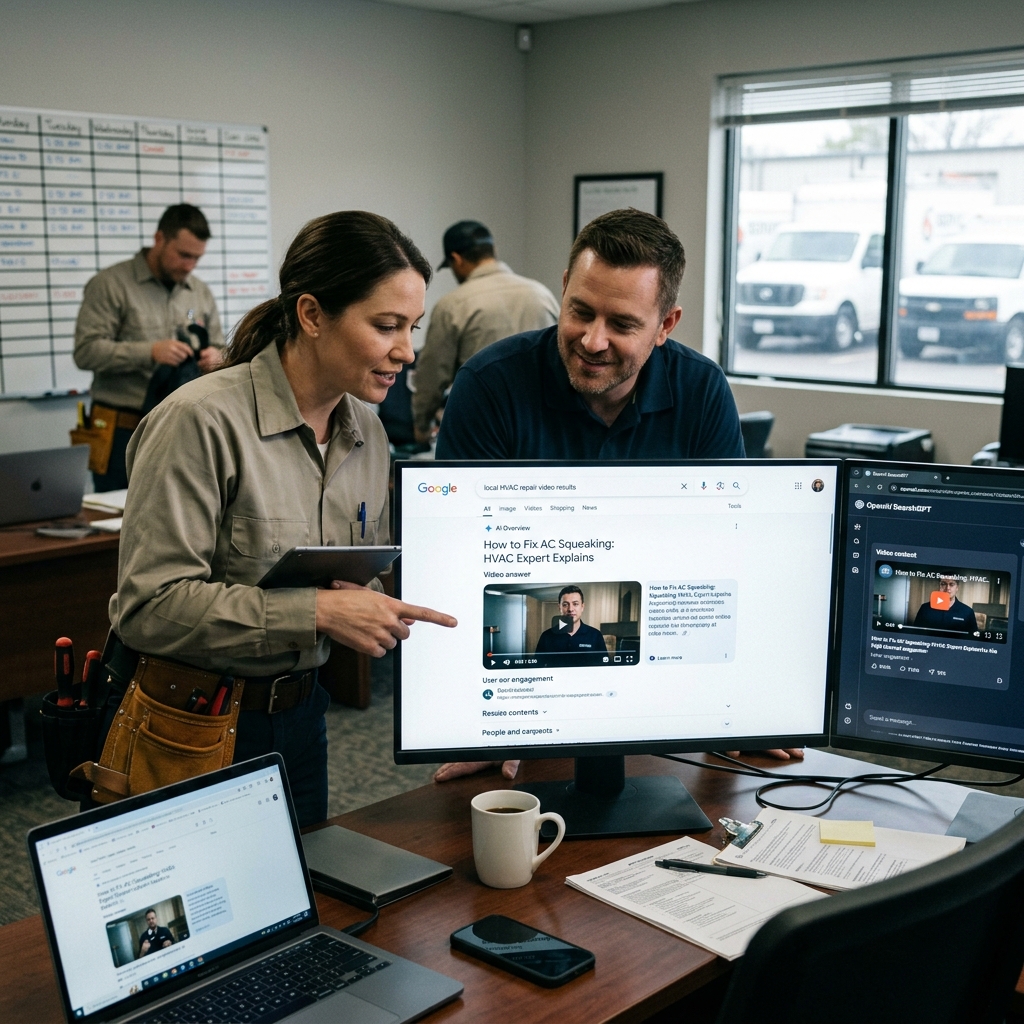
    AEO optimization involves:

    • Clear, concise answers: AI systems pull direct quotes. If your content answers the question directly and clearly in the opening sentences, it’s more likely to be cited.
    • Structured data markup: Schema markup (review schema, FAQ schema, video schema) helps AI systems understand what your content is about.
    • Multiple content formats: Text, video, images, and structured data together signal authority across multiple modalities.
    • Source verification: Links to credible sources, credentials, and business verification increase your likelihood of being cited.
    • Topical authority: AI systems reward websites that consistently produce content across related topics in a specific vertical.

    AI search optimization requires a different planning process than traditional content marketing. You’re thinking less about “What keywords should we rank for?” and more about “What questions does our audience ask, and how do we provide the most credible, verifiable answer?”

    We’ve worked with hundreds of service businesses, and the pattern is clear: cinematic, professional short-form video dramatically outperforms static content when it comes to AEO performance.

    There are several reasons:

    Production quality signals trust. A business that invests in professional video production signals that they take their brand seriously. AI systems detect this. Low-production content might still be cited occasionally, but professional video is cited more consistently and more prominently in AI responses.

    Cinematic storytelling increases engagement. A well-shot, well-edited video that tells a story (a contractor solving a specific problem, for example) receives higher engagement metrics. Longer watch time, more shares, more comments. AI systems track these signals and reward them.

    Short-form format matches user behavior. Short-form videos (30 seconds to 3 minutes) are what people actually consume. Long-form videos are watched less frequently, meaning fewer engagement signals for AI systems to reward.

    Transcripts provide multiple indexing points. A professional video includes accurate captions and transcripts. AI systems can index the video itself, the audio content via transcription, the visual elements, and the associated text. This redundancy increases the chances of citation.

    Here’s a concrete example: A plumbing company produces a 90-second cinematic video showing the step-by-step process of fixing a common drain issue. The video is properly captioned, uploaded with full descriptions, and shares on social platforms. When someone asks an AI search engine “How do I fix a slow drain?”, that video now appears as a cited source because it directly answers the question, provides visual proof, and has multiple signals of legitimacy and engagement.

    Compare that to a 2,000-word blog post on the same topic with no video. The blog post might still be cited, but less frequently and less prominently.

    Building an AEO Strategy That Turns AI Search Traffic into Leads

    AEO success requires strategy, not just content creation. You need to identify which questions your audience is asking, determine which of those questions have the highest commercial intent, and then produce content that answers those questions better than anyone else.

    Start by mapping your audience’s most critical questions:

    • What problems do service calls solve most frequently?
    • What questions do prospects ask before deciding to contact you?
    • What objections do sales teams encounter most often?
    • What educational content would a qualified prospect want to consume?

    Once you’ve identified these questions, create content around them. Each piece should directly answer the question, provide visual proof (video), include proper structured data, and be distributed across channels where your audience spends time.

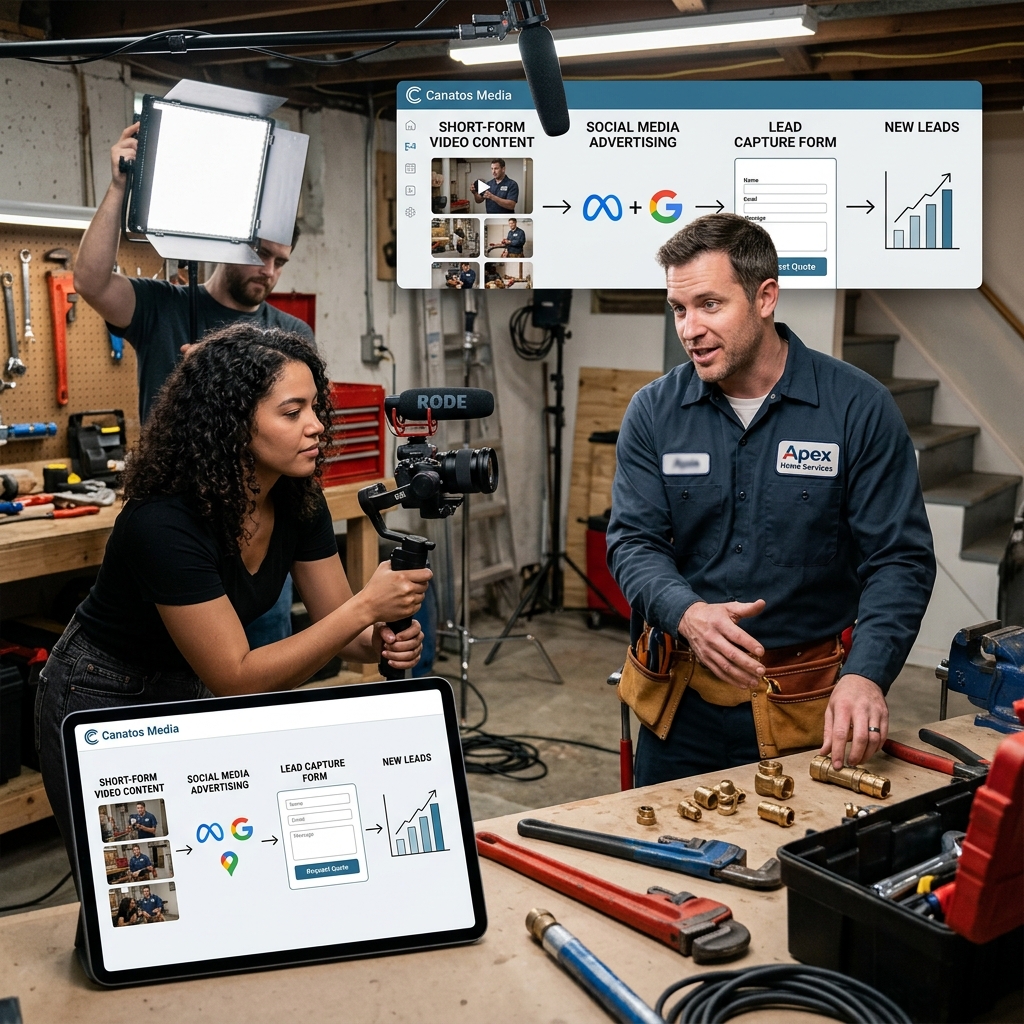
    The lead generation piece is crucial. You’re not just creating content for visibility. You’re creating content that positions your business as the solution. A video showing your team solving a specific problem should naturally lead viewers to want to contact you.

    This means every piece of AEO-optimized video content should include clear next steps: a call-to-action that guides viewers to a contact form, booking page, or consultation request. The conversion mechanism has to be built in from the planning stage, not bolted on after production.

    Distribution matters too. Content that lives on your website alone has limited reach. Successful AEO strategies use short form video production across social platforms, your website, and directly to email lists. Each platform reinforces the others, creating network effects that boost overall visibility.

    How We Integrate Video Production with AEO and Digital Marketing Systems

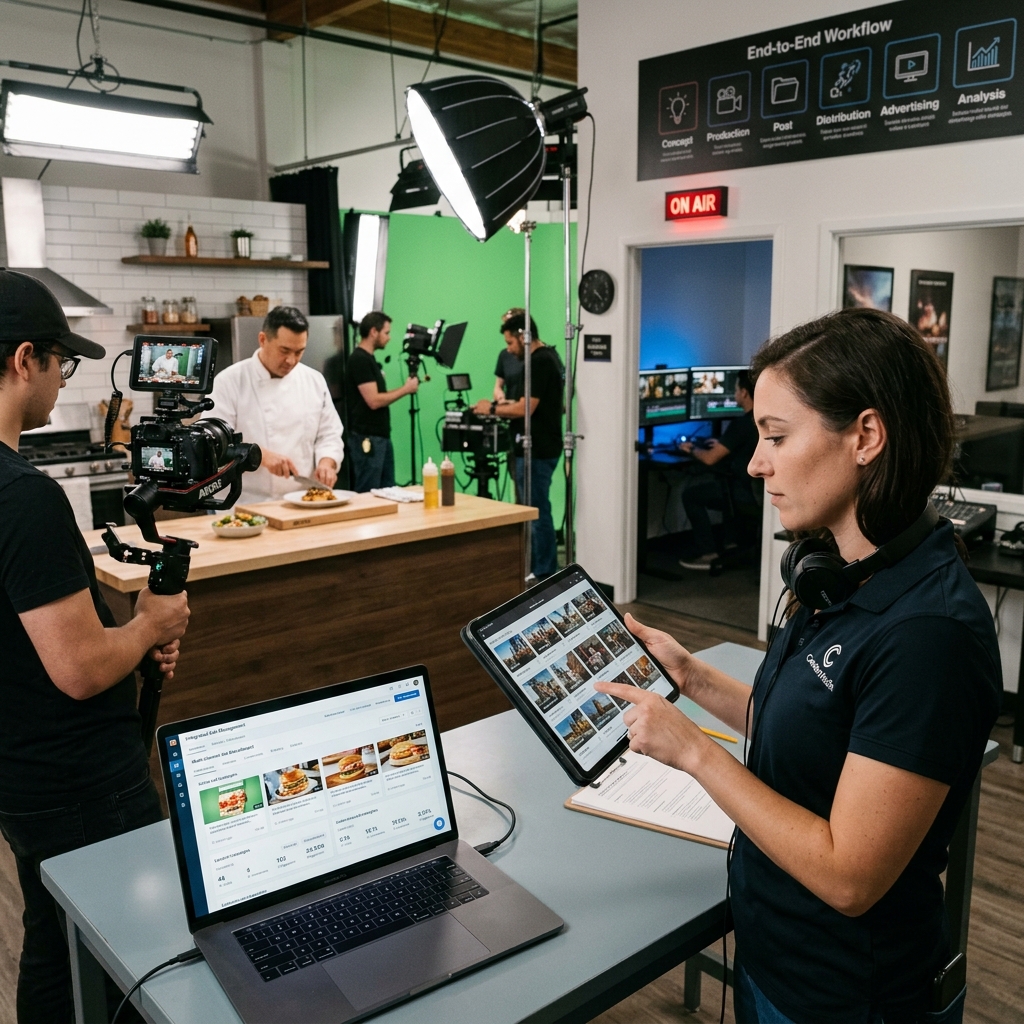
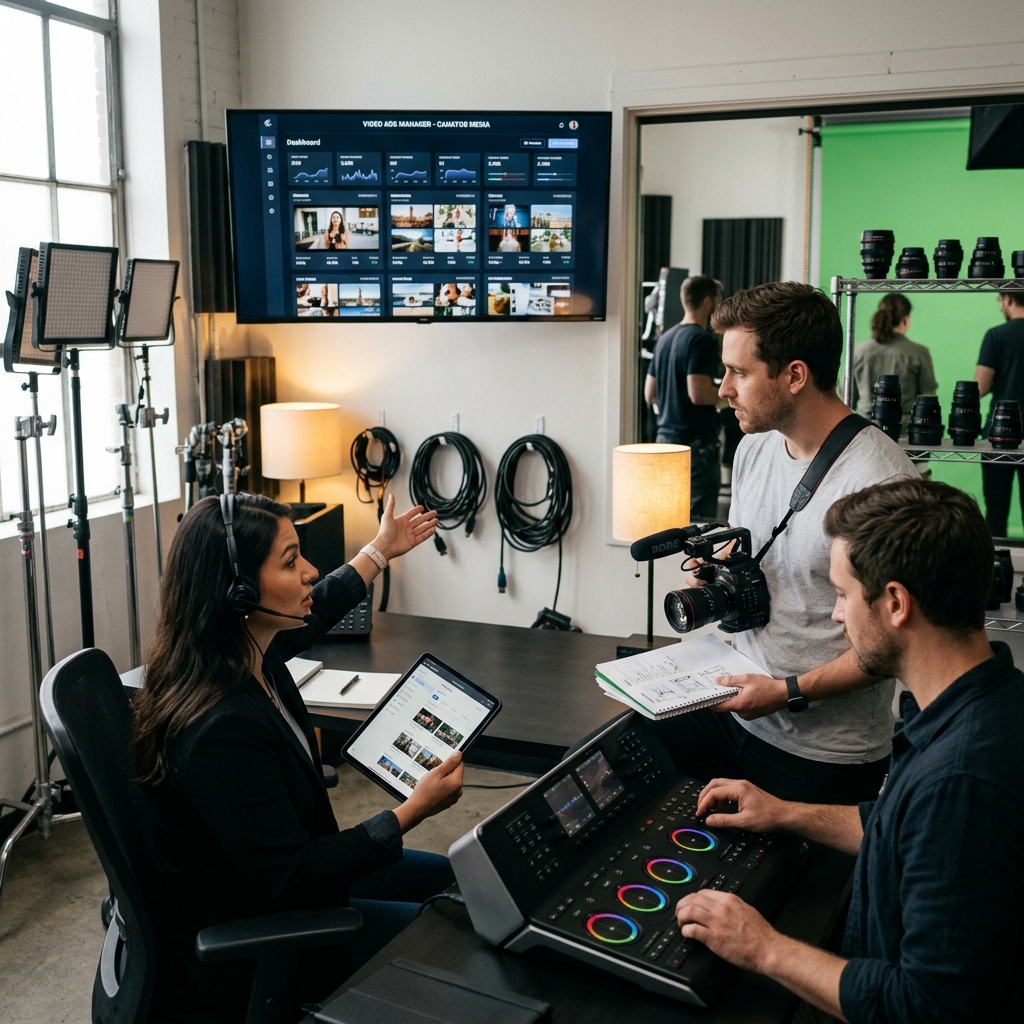
    At Canatos Media, we don’t treat video production as separate from AEO strategy. They’re integrated from the start.

    Our process begins with strategic planning. We work with your team to understand your audience, identify high-intent questions, and map the customer journey. Only then do we plan production. This ensures every video serves multiple purposes: it answers a real question, drives AEO visibility, and moves prospects toward conversion.

    Production itself follows AEO principles. We create cinematic, professional short-form content that looks and feels like a brand commercial, not a how-to video. But we structure it to answer specific questions. Proper framing, lighting, and storytelling make the content engaging. Accurate captions and descriptions make it AI-friendly.

    Distribution is systematized. We manage social posting, optimize video metadata, handle website integration, and coordinate with your existing digital strategy. This means your video content reinforces your paid advertising, social media management, and SEO efforts rather than operating in isolation.

    The result is content that performs across multiple channels simultaneously: it ranks in classical Google search, gets cited in AI results, drives social engagement, generates qualified leads, and reinforces your brand narrative consistently.

    Measuring AEO Success: Tracking Video Content Performance in AI Results

    The challenge with AEO is measurement. Traditional SEO has clear metrics: ranking position, organic traffic, conversion rate. AEO requires a more nuanced approach.

    Here’s what we track:

    AI search visibility: Monitor whether your content is being cited in AI-generated responses. This requires regular manual checking across platforms (Google AI Overviews, ChatGPT, Claude, etc.) and using tools designed to detect AI citations.

    Referral traffic: You’ll see traffic from AI search engines in your analytics. It often comes from sources like google.com (from AI Overviews) or direct sources (from ChatGPT and similar platforms). Track this separately from classical search traffic.

    Engagement metrics: Watch time, video completion rate, shares, and comments. These are signals that AI systems use to determine content quality. Longer watch times and higher shares correlate with stronger AEO performance.

    Lead quality: The ultimate metric is whether AEO traffic converts to qualified leads. Track which content sources generate the highest-quality prospects and adjust your strategy accordingly.

    Social amplification: Shares, mentions, and engagement across social platforms boost overall visibility. These metrics indicate whether your content is resonating broadly, not just in search.

    The challenge is that AEO is still new enough that attribution isn’t always clear. Some traffic from AI results gets bundled into classical search analytics. We recommend setting up dedicated tracking (separate UTM parameters for different content pieces, custom segments in analytics, and regular manual audits) to understand true AEO performance.

    Common AEO Mistakes That Hurt Your Video Content’s AI Visibility

    We see patterns in what derails AEO strategies. Avoiding these mistakes significantly improves results.

    Poor video production quality: Low-resolution, poorly lit, or badly framed videos underperform. AI systems detect production quality and treat it as a credibility signal. Invest in professional production.

    Missing or inaccurate captions: Captions are critical for accessibility and for AI systems to understand video content. Automatically generated captions often contain errors. Always review and correct them.

    Keyword stuffing masquerading as AEO: Cramming keywords into descriptions doesn’t work for AEO. AI systems prioritize natural language and clear answers. Focus on clarity and accuracy, not keyword density.

    No structured data markup: Many businesses produce good video but fail to implement schema markup. This makes it harder for AI systems to understand and cite your content.

    Single-format content: Relying only on video or only on text limits your reach. AI systems reward diverse content formats. Combine video, written content, images, and structured data.
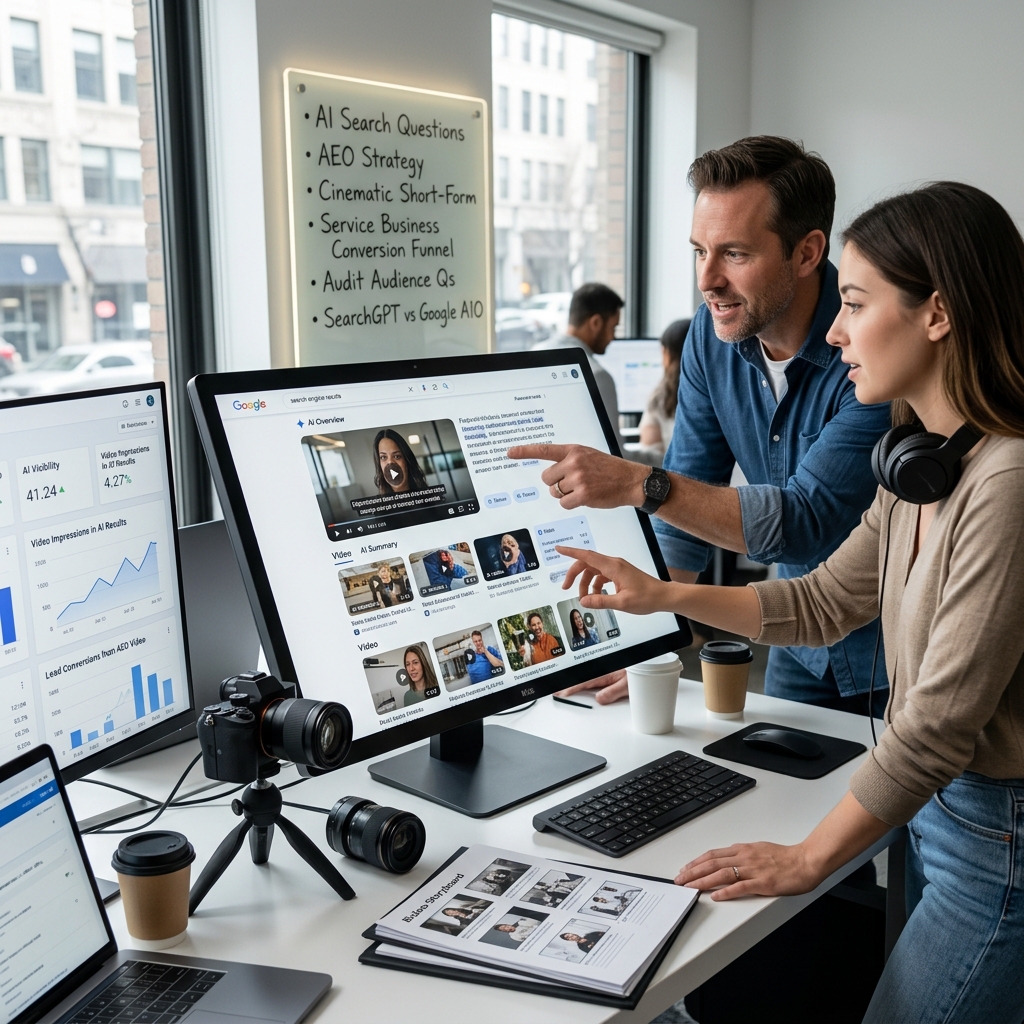
    Orphaned content: Creating great video but burying it on your website hurts visibility. Content needs strategic placement, proper linking, and distribution to perform.

    No lead capture mechanism: Beautiful, well-optimized content that doesn’t convert is wasted effort. Every piece needs a clear path to action.

    Getting Started: Your Roadmap to AEO-Optimized Video Content

    If you’re ready to capitalize on AI search visibility, here’s how to begin:

    Step 1: Audit your audience questions: What are the 10-15 most critical questions prospects ask before becoming customers? Document these.

    Step 2: Assess your current content: Which of these questions do you already address? Which gaps exist?

    Step 3: Prioritize high-intent topics: Focus on questions that indicate buying intent. A prospect asking “How much does this service cost?” is further along than someone asking general educational questions.

    Step 4: Plan your first three videos: Choose three high-impact questions to address with cinematic short-form video. Each should be 30 seconds to 3 minutes.

    Step 5: Produce with AEO in mind: Work with a production partner who understands both cinematic storytelling and AEO optimization. Every decision from framing to captions should serve both purposes.

    Step 6: Optimize metadata and distribution: Proper titles, descriptions, schema markup, and strategic distribution across platforms are as important as the content itself.

    Step 7: Measure and iterate: Track visibility, traffic, and conversions. Adjust your strategy based on what actually works for your audience.

    The businesses capturing the most value from AI search right now are those who started early and iterated quickly. If you wait for AI search to stabilize, you’ll be playing catch-up. The window for first-mover advantage is closing.

    We’re here to help service businesses like yours build AEO-optimized video content systems that turn search visibility into qualified leads. If you’re ready to explore how cinematic video production and integrated digital strategy can accelerate your growth, let’s talk about your specific situation and build a roadmap together.

    Contact us today for a free consultation to see how we can help you grow your business.

    Frequently Asked Questions (FAQ)

    What’s the difference between AEO optimization and traditional SEO for our video content?

    We’ve found that traditional SEO focuses on text-based ranking factors that AI search engines often overlook. Our AEO approach optimizes video content specifically for AI-powered search results by structuring cinematic footage, metadata, and complementary text in ways that AI systems recognize and prioritize. This means we’re building visibility in search results that are fundamentally different from Google’s traditional blue links.

    How do we measure whether our AEO video strategy is actually generating leads?

    We track several metrics beyond views: AI search result impressions, click-through rates from AI-generated summaries, landing page conversions from AI search traffic, and lead quality from each video asset. Our integrated systems connect video performance data directly to your CRM, so we can show you exactly which cinematic content pieces are converting into actual sales opportunities for your business.

    Why does our team focus on cinematic short-form video instead of other content formats for AEO?

    AI systems heavily weight visual and motion-based content because it demonstrates expertise and authenticity better than static images or text alone. We produce cinematic short-form videos because they capture attention across platforms while containing the depth and production quality that AI algorithms associate with credible, authoritative brands in service industries.


  • 6 Best Agency Models for Monthly Video and Social Ads in 2026

    6 Best Agency Models for Monthly Video and Social Ads in 2026

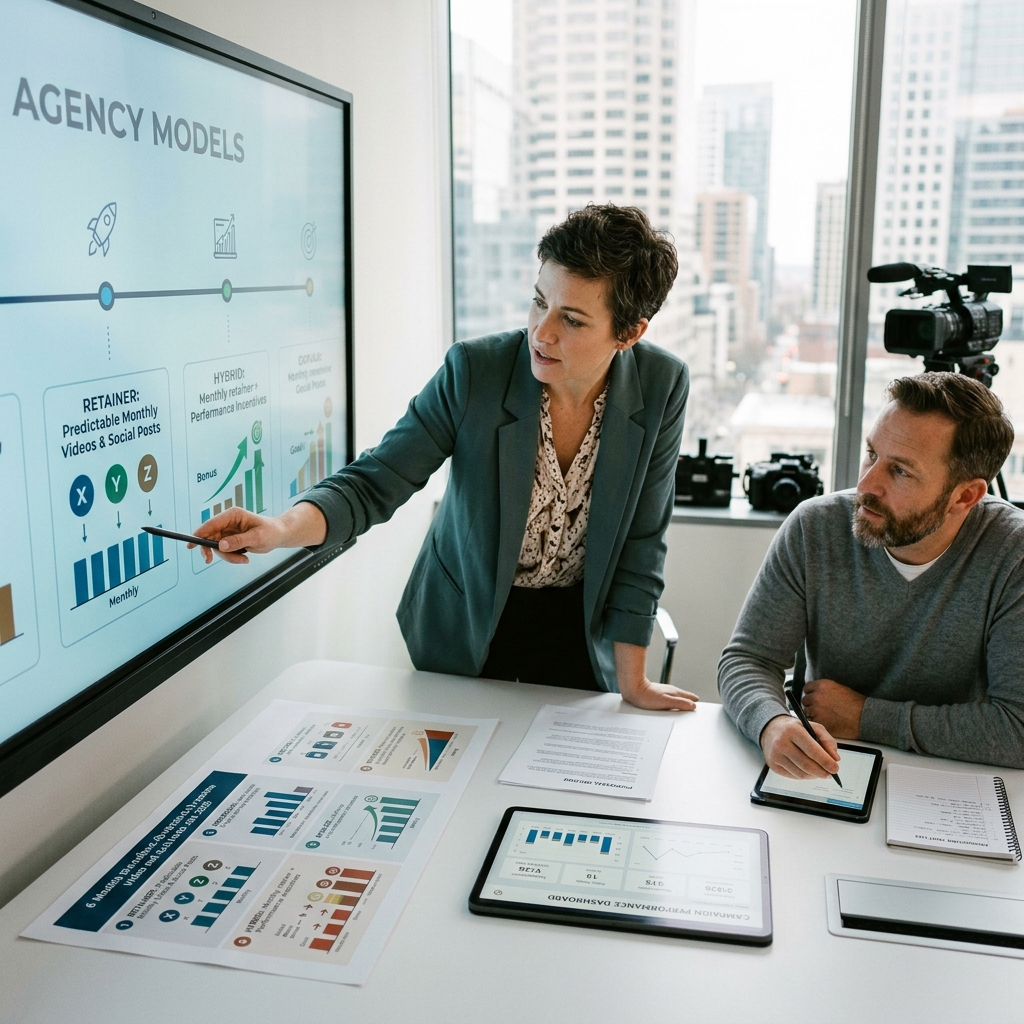
    1. Project-Based Agency Model: Understanding Pay-Per-Project Engagements

    Choosing how to work with a video and social advertising agency shapes everything about your content timeline, budget flexibility, and results. The model you select determines whether you’re locked into fixed monthly costs, paying only when leads arrive, or blending predictability with performance upside. Each structure serves different business needs, and picking the wrong one wastes money or leaves you scrambling when demand spikes.

    We work with growth-focused business owners across service industries and multi-location brands who need this clarity. The agencies themselves operate very differently depending on their pricing philosophy, and understanding those differences helps you avoid misaligned expectations.

    Project-based pricing works straightforwardly: you pay for a specific deliverable. One commercial shoot, three months of edited short-form content, a launch campaign for a new product line. The scope is defined upfront, the timeline is set, and you pay when the work ships.

    This model appeals to businesses with episodic content needs. A seasonal retailer launching a holiday campaign only needs video content for October through December. A service business rolling out a rebrand needs a one-time visual overhaul. You avoid ongoing costs when there’s no work happening.

    The catch is predictability. If your social strategy thrives and you need double the content next quarter, project-based agencies often reprice at market rates rather than honoring volume discounts. You’re also responsible for deciding what to request: if you miscalculate scope, you either overpay or under-deliver on your vision.

    What to do next: Use project-based models for discrete initiatives with clear endpoints. Seasonal campaigns, rebrand launches, and one-off video productions fit naturally here. If your business runs year-round and needs consistent content momentum, this structure creates budget uncertainty.

    2. Retainer-Based Agencies: Predictable Monthly Video and Social Strategies

    Retainer agreements lock in a fixed monthly fee for ongoing services. You receive X videos per month, Y social media posts, and Z hours of strategy work. The scope repeats, the cost stays the same, and both parties know what to expect.

    Retainers excel at building momentum. Consistent posting schedules compound on social platforms. Audiences recognize recurring cinematic quality and messaging. Your team has a reliable partner who understands your brand voice and audience deeply because they’re embedded in your account month after month.

    The downside emerges when your actual needs don’t match the retainer package. You might need 8 videos one month and 4 the next, but your contract locks you into the same fee regardless. Some retainer agencies also front-load their highest-value team members in month one, then shift less experienced staff to service the ongoing work. The relationship’s effectiveness quietly declines without formal communication.

    Our approach to retainers emphasizes flexibility within structure. You get predictable monthly costs but with the ability to shift scope based on your real-world campaigns and seasonality.

    What to do next: Choose retainer agencies that explicitly allow scope adjustments month-to-month. Avoid contracts longer than 6-12 months until you’ve confirmed the partnership actually fits your workflow and results.

    3. Performance-Based Agencies: Paying for Results and Lead Generation

    Performance-based models tie agency compensation directly to measurable outcomes: leads generated, sales attributed, demo bookings completed, or phone calls received. You pay less upfront, then additional fees or revenue shares when targets are hit.

    This alignment sounds ideal. The agency’s incentives match yours, and you’re not paying for mediocre work. In practice, performance-based arrangements require sophisticated tracking and unambiguous attribution. If a lead comes from organic social discovery rather than a paid ad your agency ran, who gets credit? If a customer watched three videos before converting, which touchpoint caused the sale?

    Agencies also become risk-averse under pure performance models. They gravitate toward proven, narrow tactics rather than experimenting with creative formats. They may focus on lower-funnel conversions because those are easier to measure than brand awareness or audience growth, limiting long-term brand building.

    Performance pricing works best for lead generation and direct response campaigns where attribution is clear. It’s harder to apply to brand-building or awareness work where ROI compounds over months.

    What to do next: Use performance-based pricing for campaigns with unambiguous conversion events (form submissions, demo signups, store visits with tracking). Pair it with retainer work if brand storytelling is equally important to your strategy.

    4. Hybrid Agency Models: Combining Retainers with Performance Incentives

    Hybrid models layer performance bonuses on top of monthly retainers. You pay a baseline monthly fee for core services, then earn credits or upcharges based on lead generation, sales, or audience growth targets.

    This structure balances stability with alignment. Your agency has predictable revenue from the retainer, removing the pressure to chase only easily attributable conversions. You have cost certainty on the base work. Shared upside from performance bonuses encourages both parties to optimize beyond the minimum contract obligations.

    The friction point is calculating fair performance thresholds. What growth rate qualifies for a bonus? How do you split credit when multiple campaigns drive the same lead? Setting targets too conservatively means the agency gets bonuses easily. Setting them too aggressively makes the bonus feel unachievable and demoralizing.

    Transparency and clear KPI definitions matter more in hybrid arrangements than any other model. Both parties need documented agreements about what counts as a qualified lead, how attribution is tracked, and what bonuses trigger.

    What to do next: If exploring a hybrid model, request the agency’s proposed KPI framework before negotiating terms. Ask for examples of how they’ve structured these incentives with comparable clients, and ensure tracking methodology is documented in writing.

    5. Full-Service Integrated Agencies: Video Production Plus Complete Digital Marketing

    Full-service agencies bundle video production with social media management, paid advertising, SEO optimization, and lead generation infrastructure. Rather than shopping across specialists, you work with one partner overseeing your entire digital presence.

    Integration creates compound advantages. Your video content feeds directly into paid social campaigns. Social content informs SEO strategy. Lead forms and tracking systems are built into your website from the start, not retrofitted later. Your messaging stays coherent across all channels because one strategic team owns the blueprint.

    Many “full-service” agencies are actually project coordinators who subcontract work to specialists. You get one contract but fragmented execution. Our model at Canatos Media is different: we handle video production, social media management, paid advertising, and website support directly. Your content strategy, video shoots, ad creative, campaign management, and lead nurturing all flow from unified planning. When a paid campaign performs unexpectedly well, we adjust organic content strategy the same week. When seasonal content needs spike, we ramp production without introducing new agencies or communication overhead.

    This integrated approach matters especially for service businesses and multi-location brands managing reputation, lead flow, and customer acquisition simultaneously. Fragmented agencies create version drift and missed optimization opportunities.

    What to do next: Vet whether “full-service” agencies actually produce video in-house or subcontract it. Ask about their internal team structure for video, ads, and social management. Integrated work requires integrated staffing. Check our case studies to see how unified strategy compounds results over time.

    6. In-House vs. Agency: Why Outsourcing Video Content Wins

    Some business owners opt to build in-house video teams instead of hiring agencies. You maintain total control and keep profits from production costs. Your team becomes deeply familiar with brand identity and can move fast.

    In-house video production requires sustained expertise: someone who understands lighting, color science, editing software, and storytelling. That person needs gear that costs $10,000 to $50,000 and ongoing training as tools evolve. They also work best as part of a team. A solo in-house videographer handles 2-4 shoots monthly at most, with editing bottlenecks and no peer review of creative decisions.

    Agencies distribute fixed overhead across multiple clients, meaning you access team depth (director, cinematographer, editor, color specialist, sound engineer) without employing them directly. You also get external perspective on your creative choices. Your audience gets fresher work because the creative team isn’t exhausted from managing your account alone.

    The strongest hybrid approach: we handle video production and strategic ad management while your in-house team manages day-to-day community engagement and customer service on social channels. You get cinema-quality content monthly without the equipment investment, while maintaining direct customer relationships.

    What to do next: Calculate the fully loaded cost of one full-time videographer (salary, benefits, equipment, software). Compare that to monthly agency retainers for 4-6 professional videos plus editing. Agencies win on per-video cost and quality consistency, especially if you need content across multiple formats (long-form, short-form, testimonials, educational pieces).

    7. Agency Specialization: Video-First vs. Traditional Marketing Approaches

    Agencies cluster into two camps: video-first specialists and traditional marketing firms adding video as an afterthought.

    Video-first agencies build around visual storytelling. Videography, cinematography, and editing inform every decision. Paid ads, social content, website design, and email campaigns all amplify video narratives. When a video-first agency recommends a TikTok strategy, it’s rooted in how short-form video functions on that platform, not generic social media advice.

    Traditional marketing agencies add video to their existing toolkit alongside copywriting, graphic design, and email marketing. Video often gets positioned as one tactic among many rather than the driving force. You might receive a “360-degree campaign” where video plays supporting role.

    For growth-focused brands in 2026, video-first wins. Social platforms prioritize video content over static images and text. Your customers expect cinematic quality. Video out-converts every other content format on owned channels. Pairing video-first production with integrated paid ads and social management creates the compounding effect: your video becomes the ad creative, which drives followers, which populate your email list, which converts customers.

    What to do next: Evaluate agencies based on their portfolio’s video quality first. Does it look like broadcast-quality work or functional stock footage? Do their case studies emphasize video’s role in results? Video-first specialists commit significant resources to production because that’s where they differentiate.

    8. Scalability and Flexibility: Growing Your Content Strategy Without Breaking Budget

    As your business grows, content needs accelerate. A successful campaign requires more volume. Seasonal fluctuations demand flexible capacity. New product launches need video support you didn’t plan for.

    Project-based pricing scales poorly: each new request means separate negotiation and pricing. Rigid retainers force you to overpay for low-volume months and under-invest during growth periods. Performance-based models can spiral in cost if you’re successful, since bonuses multiply alongside revenue.

    Scalable models build in flexibility. Monthly retainers with adjustable scope allow you to increase or decrease deliverables quarter-to-quarter. Hybrid arrangements let you access performance-based upside when growth accelerates without locking in permanently higher costs. Full-service integrations scale more efficiently than juggling multiple vendors: ramping production also strengthens your paid strategy and SEO because everything connects.

    We design our flexible pricing to grow with your business. Start with foundational services (monthly video production, social management, paid ads), then add website support, lead generation systems, or AEO optimization as results prove their value. You pay for what you need this quarter without committing to 24-month budgets.

    What to do next: Ask prospective agencies how they handle 20% volume increases with two weeks’ notice. Agencies without clear processes will either refuse the request, overpromise and under-deliver, or charge emergency premiums. Built-in scalability becomes your competitive advantage when markets shift fast.

    —

    The right agency model matches your growth stage, content consistency, and attribution clarity. Project-based work suits discrete campaigns. Retainers build momentum for ongoing brands. Performance pricing aligns incentives for lead generation. Hybrid structures balance stability and upside. Full-service integrations compound results across channels.

    For most growth-focused businesses managing multi-location operations or service-based lead generation, full-service integrated agencies with flexible monthly pricing win. You get professional video production, strategic paid advertising, social media management, and lead systems from one team, scaling up and down based on your real needs. No version drift between vendors. No attribution confusion. One partner invested in your long-term growth.

    That’s the foundation we’ve built at Canatos Media. Your video content, paid strategy, and digital infrastructure work as one system, not disconnected channels. Explore how integrated video-first strategy compounds results by checking out our case studies and pricing options.

    Contact us today for a free consultation to see how we can help you grow your business.

    Frequently Asked Questions (FAQ)

    What agency model works best for brands that need consistent video content without unpredictable costs?

    We recommend our retainer-based approach for businesses wanting predictable monthly expenses paired with steady content output. With a retainer, you get dedicated resources, ongoing social media management, and regular video production scheduled in advance—eliminating the budget surprises that come with project-by-project work. This model lets us build momentum with your audience while you maintain control over your marketing spend.

    How do we combine video production with paid advertising to actually drive leads?

    We integrate cinematic short-form content directly into your Meta and Google advertising campaigns, ensuring the videos we produce are optimized for conversions from day one. Rather than creating content separately from your ad strategy, we build lead generation systems where the creative and paid media work together—tracking which videos convert prospects into actual sales. This hybrid approach means you’re not just paying for content or ads in isolation; you’re investing in a connected system designed to move people from awareness to customers.

    Can we scale our video content strategy without doubling our budget each month?

    Yes, our model is built around flexibility and efficiency. We structure packages so you can add new content pillars, expand to additional platforms, or increase production frequency as your business grows—without forcing you into a completely new contract tier. We also optimize through AEO and SEO to extend the lifespan of each video, meaning older content continues driving value while we produce fresh pieces, so your growth doesn’t require proportional budget increases.

  • How to Navigate Meta Ad Manager Like a Pro

    How to Navigate Meta Ad Manager Like a Pro

    What Is Meta Ad Manager and Why It Matters for Your Business

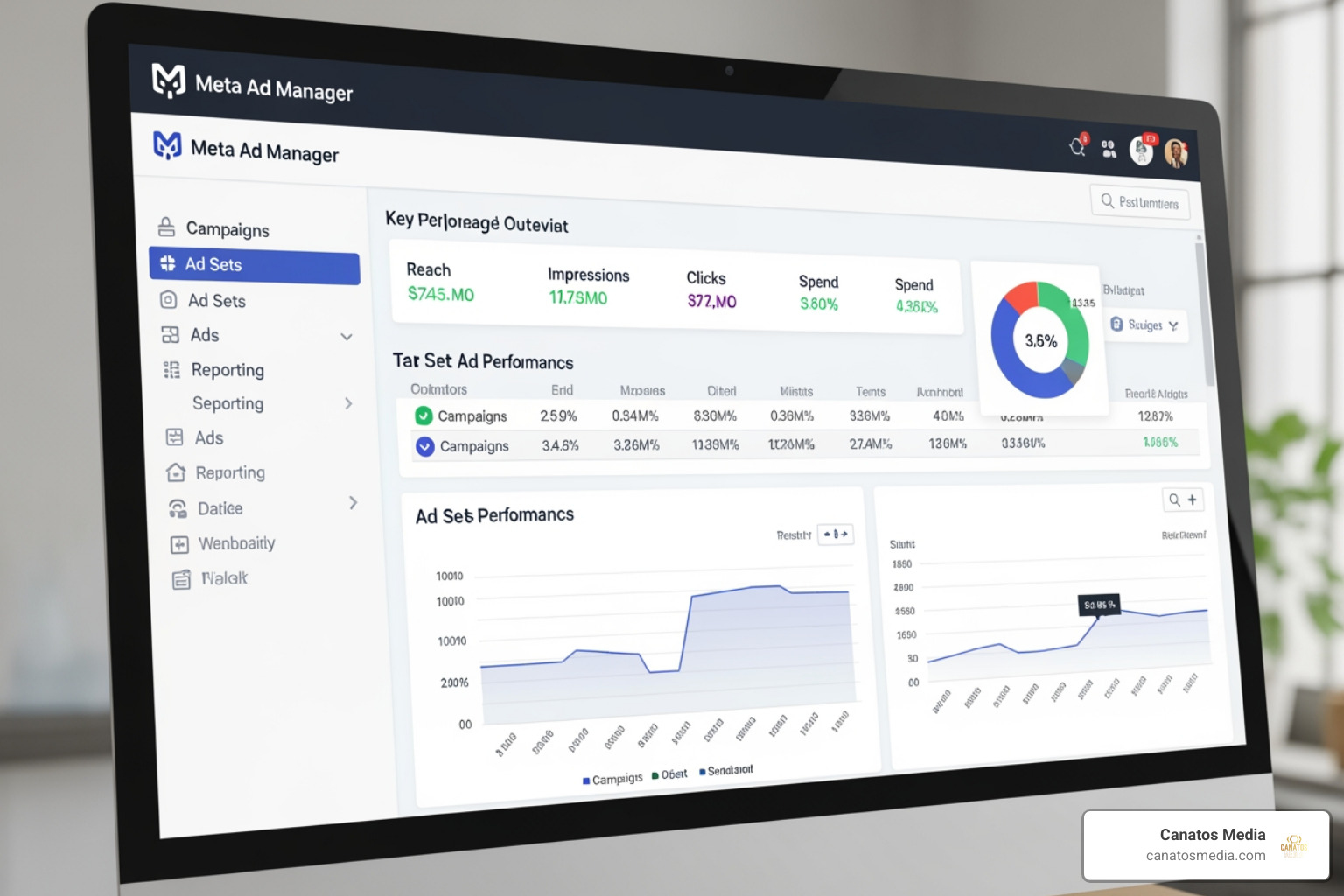
    Meta Ad Manager is the central platform for creating, running, and tracking paid ads across Facebook, Instagram, Messenger, and WhatsApp — all from one place.

    Here’s a quick snapshot of what it does:

    Feature What It Means for You
    Cross-platform ads Run one campaign across Facebook, Instagram, Messenger, and WhatsApp
    Audience targeting Define who sees your ads based on demographics, interests, and behavior
    Budget management Set daily or lifetime budgets and control your spend
    Real-time insights Track performance and adjust campaigns as they run
    AI tools (Advantage+) Automate targeting and creative optimization
    Mobile app Manage campaigns from your phone, anywhere

    It’s the most widely used paid social tool in the world — with the mobile app alone pulling 10M+ downloads on Google Play and a 4.3-star rating from over 508,000 reviews.

    But here’s the truth: it’s not always easy to use. Between confusing UI updates, AI features that don’t always deliver, and real risks like budget overruns and account issues, many business owners struggle to get results from it.

    This guide cuts through the noise and shows you exactly how to use it effectively.

    I’m Nic Canobbio, founder of Canatos Media, and I’ve spent years managing paid social strategies — including meta ad manager campaigns — for brands across multiple markets and locations. The insights in this guide come directly from real-world campaign experience, not just theory.

    Meta advertising ecosystem infographic showing campaign levels, platforms, and key features infographic

    Understanding the Meta Ad Manager Ecosystem

    Navigating digital advertising can feel like trying to fold a fitted sheet—frustrating and seemingly impossible until someone shows you the trick. The meta ad manager ecosystem is a massive, interconnected web that allows us to broadcast our brand’s message across some of the most frequented digital real estate on the planet.

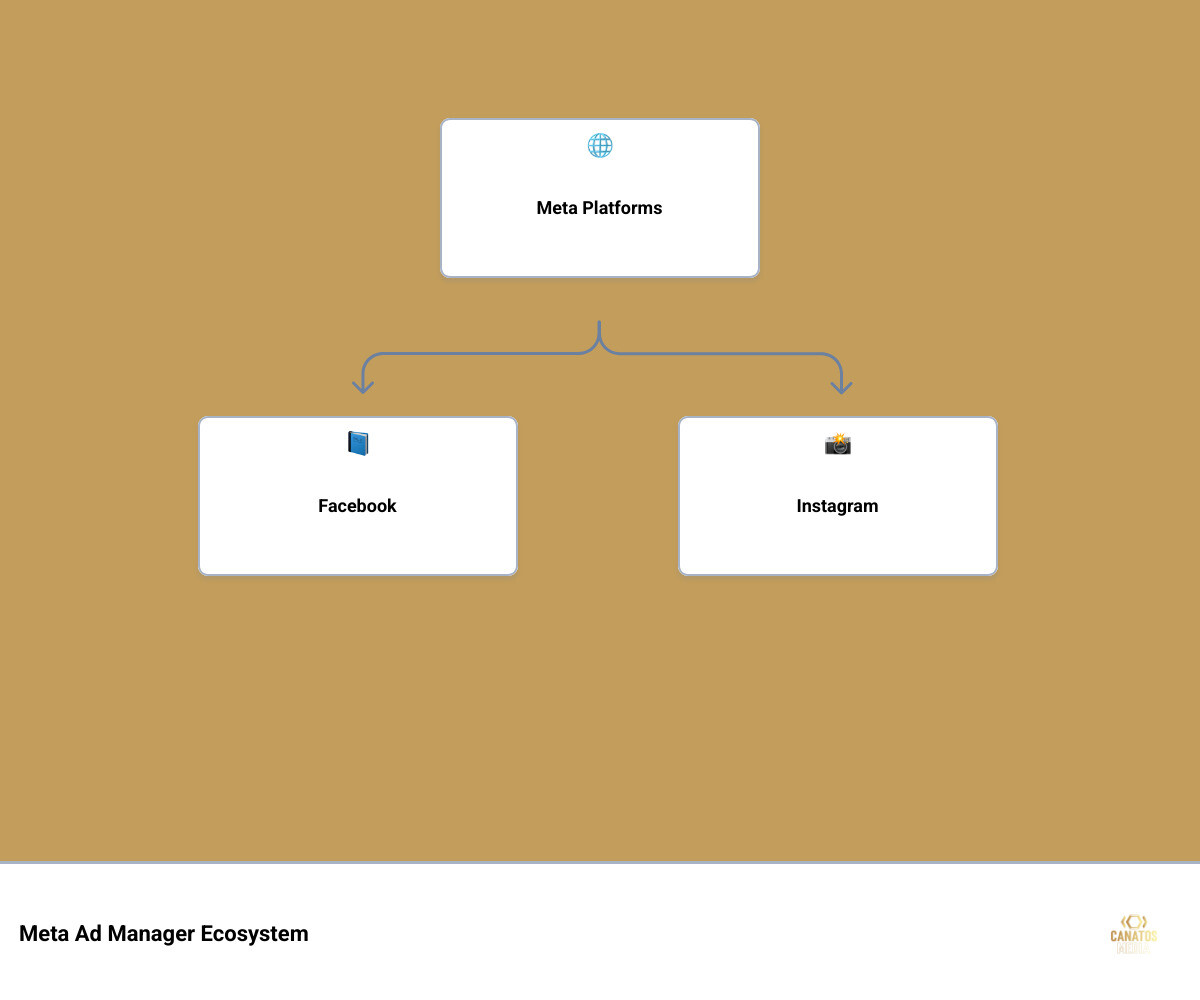
    When we talk about About Meta Ads Manager, we aren’t just talking about Facebook. We are talking about a unified command center that pushes content to:

    • Facebook: The classic feed, Stories, and Reels.
    • Instagram: Where visual storytelling thrives in feeds, Stories, Explore, and Reels.
    • Messenger: Direct sponsored messages and inbox ads.
    • WhatsApp: Increasingly integrated for business-to-customer communication.
    • Audience Network: A collection of third-party mobile apps and websites where your ads can appear outside of Meta’s own platforms.

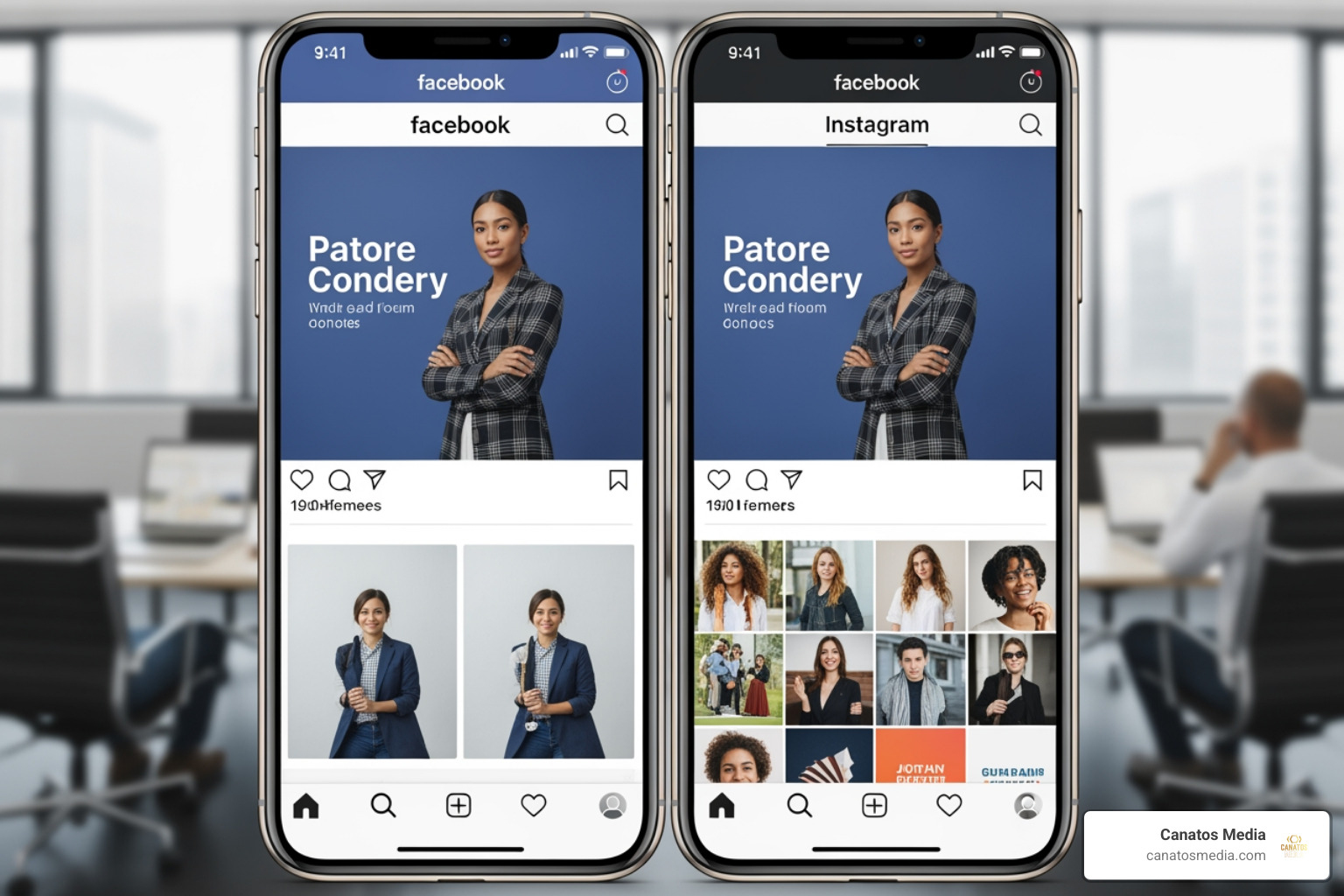
    cross-platform ad delivery across Facebook and Instagram

    The power of this ecosystem lies in its integration. You don’t have to build four different campaigns for four different apps. You build one, and Meta’s delivery system optimizes where those ads appear based on where your customers are actually hanging out.

    The Three Levels of Meta Ad Manager Structure

    To master meta ad manager, you have to understand the “Russian Nesting Doll” structure of a campaign. If you get one level wrong, the whole thing can fall apart.

    1. The Campaign Level (The “What”): This is where you choose your objective. Are you looking for brand awareness, traffic, engagement, leads, app promotion, or sales? This choice tells Meta’s algorithm what success looks like for you.
    2. The Ad Set Level (The “Who,” “Where,” and “How Much”): This is the engine room. Here, we define our audience targeting (demographics, interests, behaviors), choose our placements (automatic vs. manual), and set our budget and schedule. Create ad campaigns in Meta Ads Manager effectively by ensuring your ad set parameters are tight enough to be relevant but broad enough for the AI to learn.
    3. The Ad Level (The “Look”): This is what the user actually sees. It involves selecting your creative (single image, video, carousel, or collection), writing your copy, and adding your call-to-action (CTA) buttons.

    Setting Up Your Account for Success in 2026

    By mid-2026, the setup process has become more streamlined, yet more reliant on “Opportunity Scores.” When you first dive in, the Account Overview page is your best friend. It acts as a diagnostic dashboard, guiding you through the essential prerequisites like adding a valid payment method and verifying your business domain.

    meta ad manager account overview page

    One of the most critical steps in 2026 is monitoring your Opportunity Score. This is a 0-100 point scale that Meta uses to tell you how “optimized” your account is. While it’s a helpful guide, don’t let it bully you into making changes that don’t align with your specific business goals. If you’re looking for a deeper dive into the technicalities of getting started, our Step-by-Step Guide to Paid Ads is a great resource to have open in another tab.

    Managing Campaigns on the Meta Ad Manager Mobile App

    For business owners in the Tri-State area or Long Island who are constantly on the move, the mobile app is a lifesaver—with caveats. The Meta Ads Manager app (available on iOS and Android) allows for real-time insights and quick pivots.

    • The Stats: The app is roughly 104.1 MB and, as of May 2026, requires iOS 15.1 or later.
    • The Pros: You can turn campaigns on or off with a swipe, receive instant alerts if an ad is rejected, and perform side-by-side comparisons of ad performance while waiting for your coffee.
    • The Cons: It doesn’t have the full functionality of the desktop version. Complex audience building and deep-dive reporting are still best handled on a big screen.

    The biggest shift in meta ad manager over the last few years is the aggressive push toward AI-driven automation, specifically Advantage+. These tools are designed to take the guesswork out of creative and targeting by letting Meta’s AI decide who sees what.

    However, “automated” doesn’t always mean “better.” While Advantage+ Shopping campaigns can be incredibly efficient for e-commerce, we’ve seen manual campaigns often provide more control and better long-term stability.

    Campaign Type Best For ROAS Potential (User Tests)
    Manual Campaigns Precise targeting, niche audiences, testing specific variables 30-40% higher in specific user-tested scenarios
    Advantage+ Scaling quickly, broad reach, hands-off optimization High efficiency for broad-market retail

    At Canatos Media, we often find that a hybrid approach—using Advantage+ for broad reach while maintaining manual “control” groups—yields the best results. You can learn more about how we balance these technologies on our Meta & Google Advertising page.

    Troubleshooting Hacks, Payment Failures, and Overspending

    Let’s address the elephant in the room: meta ad manager can be glitchy. We’ve seen horror stories in the industry where budgets spiral out of control due to “glitches” or simple setting errors.

    The Overspend Danger:

    • In one documented case, a campaign with a $50/day budget spiked to $127 in 24 hours (154% over budget).
    • Even worse, a $125/day budget once ballooned to $1000 in a single day—an 800% overspend.

    To prevent this, we recommend setting Account Spending Limits. This is a hard cap that stops all ads once a certain dollar amount is reached, acting as a “kill switch” for runaway spending.

    Hacks and Security: Account security is a major pain point. Many users report “hacked” accounts that are subsequently disabled by Meta, often with little to no human support to resolve the issue. Always enable Two-Factor Authentication (2FA) and regularly audit who has “Admin” access to your Business Manager. If you find yourself in a pinch, our guide on Paid Social Media Advertising: From Zero to Hero covers some of the foundational safety checks you should have in place.

    Best Practices for Privacy and Performance

    In 2026, privacy isn’t just a legal requirement; it’s a performance factor. With evolving data collection rules, Meta uses encryption in transit and allows users to request data deletion. As advertisers, we must respect these boundaries while still gathering enough data to optimize.

    To “Stop the Scroll,” as we like to say, your creative needs to be high-impact. But to “Start the Toll” (the conversion), your data backend needs to be solid. This means properly installing the Meta Pixel and using the Conversions API (CAPI) to ensure your tracking is accurate even when browser cookies fail. For more on this philosophy, check out our article Stop the Scroll and Start the Toll.

    Maximizing ROI with Meta Ad Manager

    Return on Ad Spend (ROAS) is the metric that keeps us up at night. To maximize it, you need to look beyond the surface-level “Likes” and “Comments.”

    • Analyze Audience Behavior: Use the “Breakdowns” feature in meta ad manager to see which age groups, genders, and regions are actually converting.
    • Creative Refresh: Don’t let your ads go stale. If your frequency (how many times a single person sees your ad) gets too high, your ROAS will likely drop.
    • Performance Tracking: Schedule weekly reports to be emailed to your team so you never miss a dip in performance.

    For more tips on refining your strategy, browse our Category: Ad Management for the latest industry updates.

    Frequently Asked Questions about Meta Ad Manager

    Why is my Meta ad account disabled?

    Accounts are usually disabled for one of three reasons: violating Advertising Standards (e.g., misleading claims, prohibited content), payment failures that look like fraud, or suspicious login activity (hacking). If this happens, use the “Account Quality” page to appeal the decision. Be prepared—human support can be notoriously slow, so detailed appeals are your best bet.

    How do I prevent budget overspending?

    Always double-check if you have selected “Daily Budget” or “Lifetime Budget.” Additionally, set an Account Spending Limit in the Billing section. This ensures that even if a specific campaign glitches, your total credit card charge won’t exceed your comfort zone.

    Is the mobile app as effective as the desktop version?

    It is effective for monitoring, but not for building. Think of the mobile app as your “emergency kit” and the desktop version as your “construction site.” Use the app to pause underperforming ads or check stats on the go, but use the desktop for initial campaign setup and detailed audience research.

    Conclusion

    Mastering the meta ad manager is a journey, not a destination. The platform is constantly evolving, with new AI tools and UI changes rolling out every few months. For small businesses in Long Island and the Tri-State area, the complexity can be overwhelming, but the potential for growth is too large to ignore.

    At Canatos Media, we specialize in an integrated strategy that connects cinematic content with precision targeting. We don’t just “run ads”—we build systems that drive measurable growth. If you’re tired of fighting with the dashboard and want a team that knows how to navigate the technical hurdles of 2026, we’re here to help.

    More info about Meta advertising services

  • Top 6 Reasons Multi-Location Brands Need Cinematic Storytelling and Performance Marketing

    Top 6 Reasons Multi-Location Brands Need Cinematic Storytelling and Performance Marketing

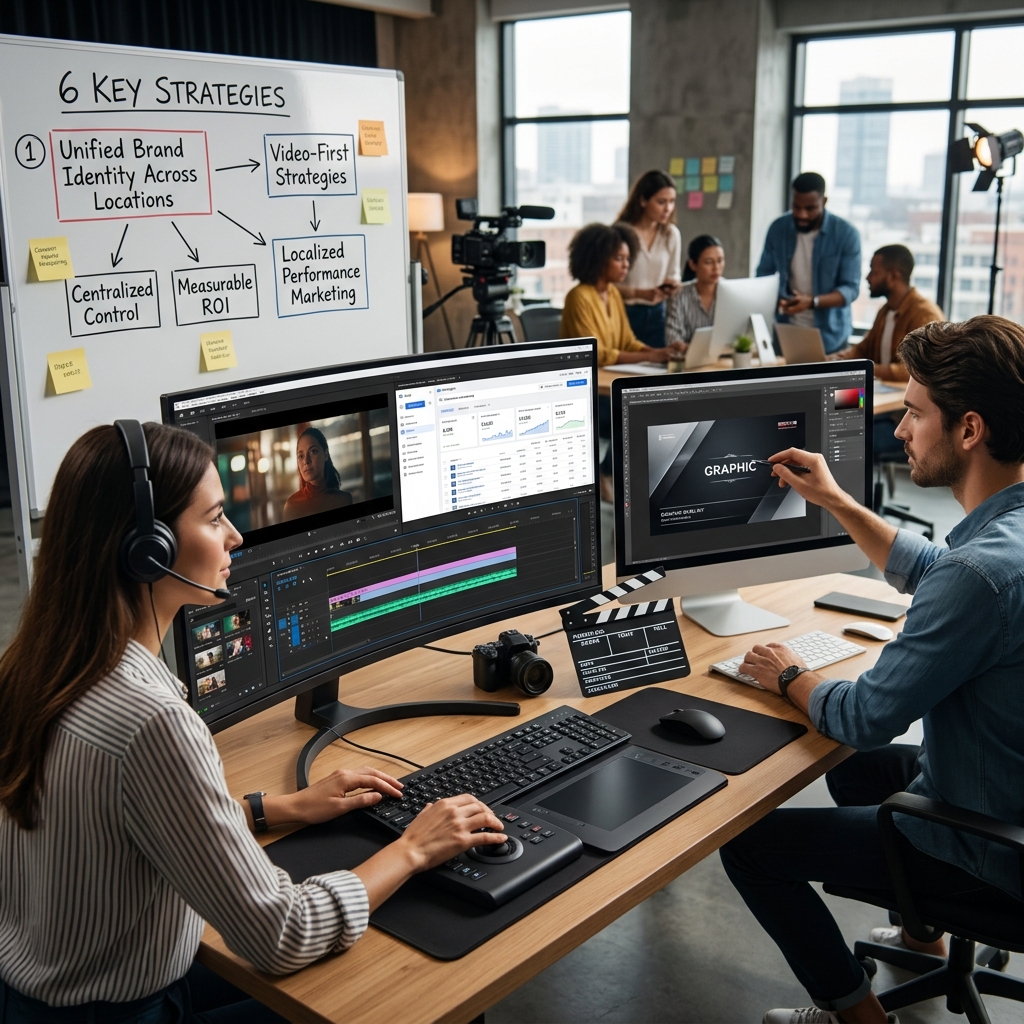
    1. Unified Brand Identity Across Multiple Locations

    Running multiple locations means juggling dozens of moving parts. Each branch needs to feel like part of one cohesive brand while also speaking to its local market. At the same time, you’re competing for customer attention on social platforms where cinematic, high-quality content wins—and generic templated posts get buried.

    The challenge: how do you maintain brand consistency across locations while simultaneously driving measurable leads from social media and paid advertising? This is where cinematic storytelling paired with integrated performance marketing becomes essential, not optional.

    We’ve worked with dozens of multi-location brands, and the ones that grow fastest combine professional visual storytelling with data-driven advertising systems. They’re not choosing between “build brand awareness” and “generate leads”—they’re doing both, strategically.

    Inconsistency kills trust. When customers see one location posting smartphone footage while another uses professional video, they question whether your brand is organized and trustworthy. Worse, they’re more likely to choose a competitor who looks polished across the board.

    Multi-location brands face a real structural problem: each location may have different management, budgets, and creative resources. Without centralized guidelines and templates, brand identity fractures.

    Here’s the solution: Cinematic brand storytelling creates a visual language that transcends individual locations. When you produce professional, narrative-driven video content—footage that tells a story about your brand values, your people, or your customer outcomes—that content becomes reusable across all locations. A well-crafted story about how your team delivers results feels equally authentic whether it’s posted from your downtown office or your suburban branch.

    We help brands establish one unified visual identity by:

    • Creating core cinematic templates and brand story assets that work across locations
    • Providing location teams with approved content libraries they can customize locally
    • Maintaining consistent color grading, pacing, and messaging in every video production
    • Building in flexibility so local teams can add location-specific details without breaking brand cohesion

    The practical takeaway: one strong cinematic brand story, produced once and deployed across all locations, costs far less than trying to manage separate creative for each branch—and it’s exponentially more powerful.

    2. Cost-Effective Scalability Through Video-First Strategies

    Budget is tight. Hiring creative teams in every location isn’t realistic. Paying agencies $10,000+ per video for each location is unsustainable.

    This is where video-first thinking changes the economics. Instead of treating video as an expensive add-on, we build strategy around it. One high-quality video production becomes the foundation for weeks or months of social media content.

    Here’s how we think about it: A single 90-second cinematic video can be broken into:

    • 15-30 second social clips for Instagram Reels, TikTok, and YouTube Shorts
    • 6-8 short testimonial or how-it-works snippets for carousel posts
    • Background footage for website hero sections
    • B-roll for paid advertising creatives
    • Audio for podcast or email marketing

    One production shoot gives you 8-12 weeks of content. Compare that to paying for new creative every week, or worse, posting low-quality user-generated content.

    For multi-location brands, this scales beautifully. Produce content quarterly or monthly featuring different locations, team members, or customer stories. Each production serves the entire brand network.

    We also optimize where content is distributed. Rather than posting uniformly to every platform, we use data to identify which channels drive the highest-quality leads for your specific audience. This means your production budget gets laser-focused on what actually works—not spread thin across 10 platforms.

    Action item: Audit your current content spend. If you’re paying for new creative more than twice a month, you’re overspending. Shift to a quarterly cinematic production model and watch your cost-per-piece drop by 60-70%.

    3. Cinematic Content That Converts Social Followers Into Leads

    Followers don’t pay your bills. Leads do.

    We see brands with 50,000 social followers generating maybe 2-3 leads per month because their content doesn’t move people to action. They’re building an audience instead of a business.

    Cinematic storytelling is specifically designed to move people emotionally and psychologically toward a decision. Unlike generic content, it works because it:

    • Creates emotional connection through narrative (not just product features)
    • Demonstrates outcome and transformation (what happens after they choose you)
    • Builds perceived value so price becomes less of an objection
    • Makes audiences remember you, not just scroll past you

    The difference is tangible. A typical product demo video might get 5-8% click-through to your website. A cinematic story about a customer’s transformation or a problem you solve can drive 15-25% click-through because people actually want to know more.

    Then we layer in strategic calls-to-action and landing page funnels. Content becomes the top of your lead funnel, not just awareness-building.

    For multi-location brands, this is critical. Each location becomes part of a larger conversion system. A customer in Miami watches a story about how your service transformed a business, clicks through, and books a consultation at your Miami location. Another customer in Denver does the same thing from your Denver angle. One storytelling approach, many conversion points.

    Cinematic website videos amplify this further by turning your website itself into a conversion tool—not just a directory.

    4. Localized Performance Marketing With Centralized Control

    This is where multi-location brands typically struggle: running Meta and Google ads across locations without completely fragmenting management.

    Some brands give each location total control. Result: inconsistent messaging, wasted ad spend, duplicated efforts.

    Other brands centralize everything. Result: ads that don’t resonate locally, location managers who feel disconnected from their marketing.

    We design systems that split the difference. Here’s what that looks like:

    Centralized strategy and creative: Core messaging, audience targeting strategy, and video creative come from the center. We build a unified approach.

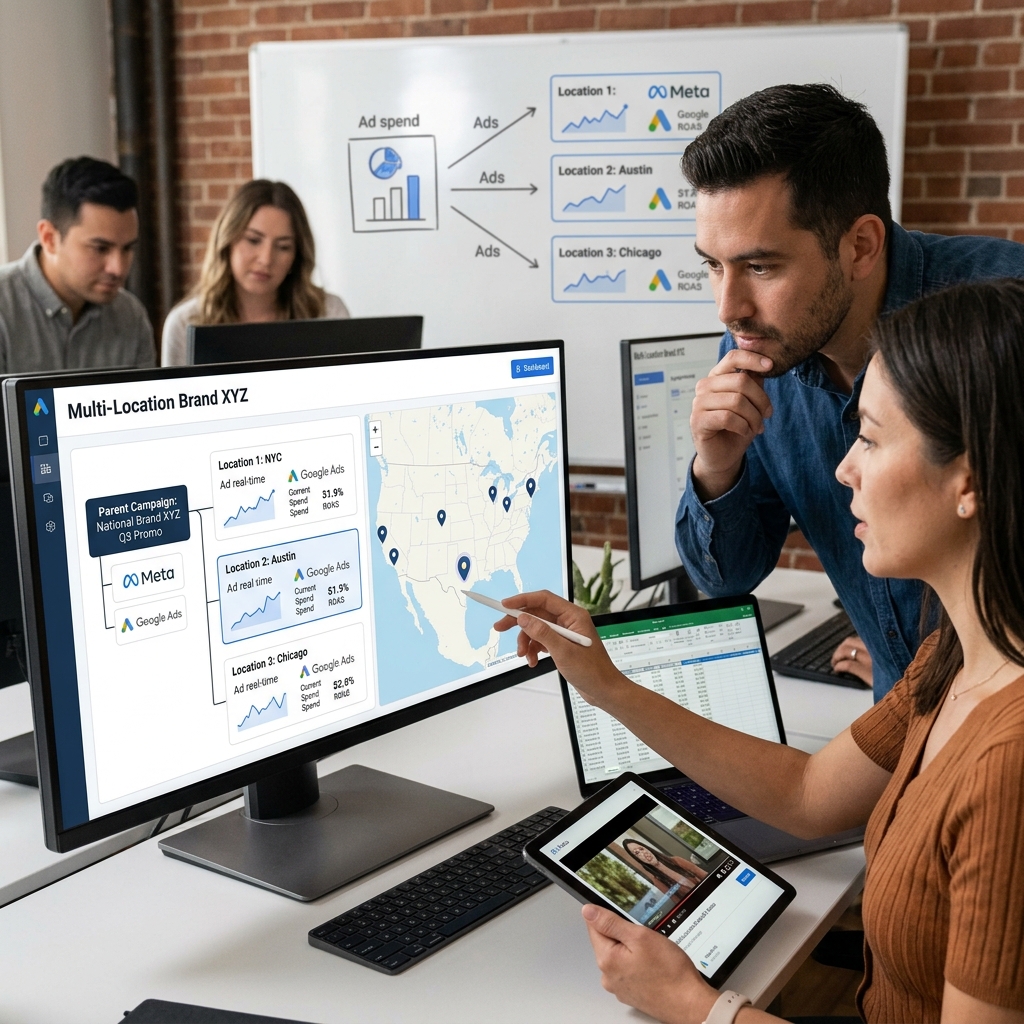
    Location-level execution and optimization: Each location gets a dedicated ad manager or dashboard access to run their campaigns within approved parameters. They can adjust budget, target local neighborhoods, and monitor results specific to their area.

    Unified reporting: All location data feeds into one dashboard so you see total brand performance and individual location performance in one place.

    This approach lets you scale to 50 locations without 50 different marketing philosophies. A location manager in Atlanta isn’t guessing—they’re executing a proven system tailored to Atlanta’s market.

    The technical piece matters too. We set up conversion tracking so you’re not just counting ad impressions. You’re tracking which locations get the most qualified leads, which ad angles drive the lowest cost-per-lead, and which audience segments actually become customers.

    Next step: If you’re running location-based ads without centralized tracking, you’re likely overspending by 20-30% and don’t even know it. Set up conversion tracking by location immediately.

    5. Building Trust and Credibility Through Professional Storytelling

    Trust is everything for service-based and multi-location brands. If a customer doesn’t believe you’re legitimate, competent, and worth their money, they won’t convert—no matter how good your offer is.

    Generic content signals low credibility. Smartphone video, templated designs, and repetitive messaging say “we didn’t invest in this for you.” Cinematic, professionally produced content sends the opposite signal: “we take our brand seriously, we invest in quality, and we’re stable enough to be here long-term.”

    This perception directly impacts price negotiation. Brands that look polished can charge 15-25% more because customers perceive higher value and lower risk. They’re not comparing you on price alone—they’re buying confidence in your professionalism.

    For multi-location brands, this effect compounds. When every location reflects the same professional standard, customers don’t wonder “which location is the best one?” All locations look equally credible and well-managed.

    We build this through:

    • Consistent visual quality across all content (same color grading, same pacing, same production value)
    • Featuring your team and real stories, not stock footage (authenticity + professionalism combined)
    • Professional website integration where video-first marketing becomes part of your entire customer experience, not just a social media tactic
    • Testimonials and case studies told cinematically, not as text blocks

    The result is trust that translates to longer sales cycles and higher customer lifetime value. People aren’t just buying from you once—they’re becoming advocates.

    6. Measurable ROI From Integrated Social and Advertising Systems

    At the end of the day, marketing spend is business spend. It needs to return money.

    Many brands struggle to measure ROI because their marketing is fragmented. Social media is siloed from paid ads. Paid ads aren’t connected to sales. Website traffic isn’t tied back to specific content or campaigns.

    We build integrated systems where every piece of content, every ad dollar, and every location feeds data back into one reporting dashboard.

    Here’s what that means practically:

    • Video content drops on social Monday morning. We track engagement and save the top-performing clips.
    • Top clips get turned into paid ad creative by Thursday. We run them across Meta and Google with precise location and audience targeting.
    • Clicks flow to custom landing pages built for each location or offer.
    • Conversions (calls, form submissions, online bookings) get tracked back to the original content and ad that drove them.
    • We see: “this cinematic customer story drove 32 leads at an $18 cost-per-lead across three locations.”

    That’s not vanity metrics. That’s ROI.

    For multi-location brands, this integration is transformative because it reveals which locations are responding to which messages, which content performs across all markets vs. which performs only locally, and where your ad spend is most efficient.

    Most importantly, it proves the system works. When a location manager sees “we spent $4,000 on ads this month and generated 47 qualified leads at $85 each,” and those leads close at a typical rate, they understand their ROI instantly.

    What to do now: Stop measuring marketing by impressions and followers. Start measuring by leads and customer acquisition cost. If you’re not tracking at least one conversion metric per location, you don’t actually know if your marketing is working.

    —

    Multi-location brands that grow fastest aren’t doing marketing the old way. They’re combining cinematic storytelling that builds trust and moves people to action with performance marketing systems that track every dollar and optimize relentlessly.

    The brands that struggle are the ones trying to manage scattered social posts, inconsistent creative, and disconnected ad campaigns across multiple locations.

    We help growth-focused business owners build the complete system: unified brand identity, scalable content production, conversion-focused storytelling, location-based ad execution with central oversight, and integrated reporting that shows exactly what’s working.

    If your multi-location brand is ready to move beyond generic content and fragmented marketing, let’s talk about building a system that actually grows your business. That’s what we do.

    Contact us today for a free consultation to see how we can help you grow your business.

    Frequently Asked Questions (FAQ)

    How do we help multi-location brands maintain consistent messaging while allowing local marketing customization?

    We build centralized brand systems that give you unified visual and messaging standards across all locations, then layer in location-specific social media and paid advertising campaigns. Our approach means your brand story stays consistent in your cinematic content while we optimize ad targeting, messaging, and offers for each geographic market. This lets you speak to local customers without sacrificing the professional brand identity that makes you recognizable everywhere.

    What’s included in our integrated digital marketing approach for franchises and service-based businesses?

    We combine short-form video production, social media management, Meta and Google paid advertising, SEO optimization, and lead generation systems into one coordinated strategy. Rather than managing separate vendors for each channel, we handle everything from creating your cinematic content to running your ads to capturing and qualifying leads. This integration means your video content feeds directly into your social strategy, which powers your paid campaigns, which all drive toward the same conversion goals we’re tracking for you.

    How do we measure the actual ROI of our video and marketing work?

    We set up tracking systems that connect your video content, social media activity, paid ads, and website conversions into one reporting dashboard so you see exactly which efforts drive leads and sales. We don’t just report vanity metrics like views or likes – we show you cost per lead, conversion rates, and revenue attributed to our work. This accountability is built into our process from the start so we’re always optimizing toward your actual business goals.

  • Stop Burning Cash on Bad Meta Ads

    Stop Burning Cash on Bad Meta Ads

    Why Most Businesses Waste Money Without a Meta Ads Agency

    Hiring a Meta ads agency is one of the fastest ways to stop burning your ad budget and start getting real, measurable returns on Facebook and Instagram.

    Quick answer — what a Meta ads agency does for you:

    Service What to Expect
    Campaign strategy Full-funnel setup across prospecting and retargeting
    Creative production Scroll-stopping video and image ads tested at scale
    Tracking & attribution Server-side data via Conversions API for accurate reporting
    Budget optimization Gradual scaling with guardrails to protect ROAS
    Reporting Real-time dashboards tied to revenue, not just clicks

    Meta’s ad platform reaches billions of people across Facebook, Instagram, Messenger, and WhatsApp. That reach sounds like an opportunity. But without the right strategy, it’s just an expensive way to get ignored.

    Most local business owners run ads, watch the budget disappear, and wonder what went wrong. The targeting was off. The creative didn’t stop the scroll. The tracking was broken. Or all three at once.

    The numbers tell the story. Top-performing agencies report results like a 3.27x ROAS within 90 days and cost-per-acquisition reductions of nearly 50%. Businesses that get those results aren’t lucky — they have a system.

    I’m Nic Canobbio, founder of Canatos Media, and my background in media production, live content, and AI-driven strategy gives me a unique lens on what actually works when evaluating a Meta ads agency for your business. In this guide, I’ll walk you through exactly what separates the agencies that scale brands from the ones that just spend your budget.

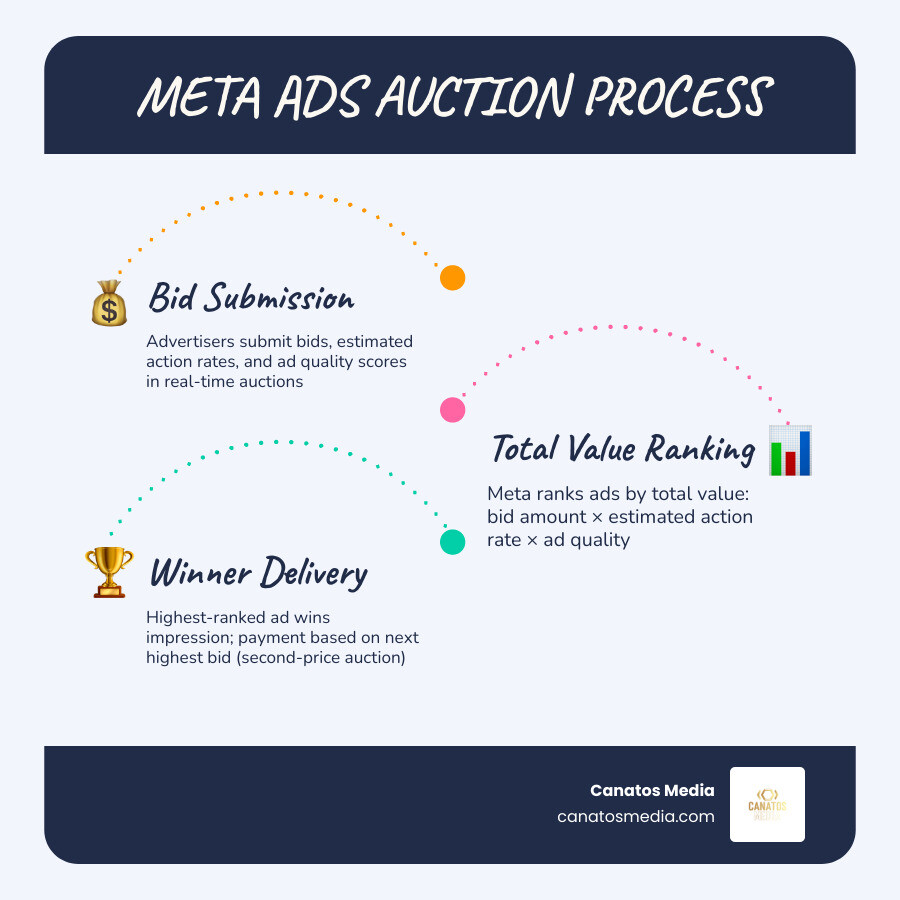
    Infographic showing Meta ads ecosystem: auction process, funnel stages, key metrics like ROAS and CAC infographic

    What Defines a Top-Tier Meta Ads Agency in 2026?

    Digital marketing strategy session with a team analyzing Meta campaign data

    As we move through 2026, the definition of a “good” agency has shifted. It’s no longer enough to just know how to “boost a post” or set up a basic interest-based audience. Today, a top-tier Meta ads agency acts as a technical and creative powerhouse. We’ve seen the landscape evolve where Meta’s AI now does much of the heavy lifting regarding targeting, which means the agency’s value has moved toward strategy, data integrity, and high-level creative direction.

    Leading agencies in the U.S. market are managing massive amounts of capital-some over $137 million in total spend-while maintaining impressive 91% yearly retention rates. Why do clients stay? Because these agencies focus on the metrics that actually pay the bills: revenue and pipeline growth, not just “likes” or “impressions.”

    For businesses in the tri-state area and Long Island, working with a partner that understands the local nuances of the Meta ads agency in the tri-state area landscape is vital. You need a team that doesn’t just treat your account as a “set it and forget it” project. Instead, you want an agency that views Ad Management as a continuous cycle of testing and refinement. It also helps to understand how Meta Platforms structures its advertising ecosystem, because platform changes often affect campaign performance, tracking, and creative best practices.

    How to Evaluate a Meta Ads Agency for Your Business

    When you’re vetting a potential partner, don’t just look at their website design. Look at the “war stories.” Have their clients raised significant capital? Some top agencies have helped clients secure over $700M in funding by proving their business model is scalable through paid social.

    Here are the non-negotiables you should look for:

    • Industry Certifications: Are they a Meta Business Partner? This ensures they have a direct line to support and are up-to-date on the latest API changes.
    • Niche Specialization: Do they understand your specific industry? A specialized Meta ads agency might focus on one area, while others focus on high-ticket lead gen or e-commerce.
    • Pipeline Growth: Ask for data on how they’ve grown client pipelines. Look for figures like $284.6M in generated pipeline-this shows they understand the long-game of sales, not just the initial click.
    • Technical Depth: Check their Tag: Paid Ads expertise. Can they explain how they handle the loss of third-party cookies? If they can’t talk about server-side tracking, keep walking.

    Scaling Your Meta Ads Agency Partnership

    Scaling is where most relationships break. You find a winning ad, you double the budget, and suddenly the ROAS (Return on Ad Spend) falls off a cliff. A sophisticated Meta ads agency prevents this by implementing budget guardrails and “learning phase” protections.

    We’ve seen brands achieve 309% DTC growth in as little as 90 days by following a Step-by-Step Guide to Paid Ads that prioritizes incremental scaling. This involves weekly optimizations where the agency analyzes which creatives are “fatiguing” and replaces them before performance dips. One standout case in the industry saw a brand hit 21K new orders in 60 days simply by refining their scaling strategy to match Meta’s 2026 algorithmic preferences.

    The Full-Funnel Blueprint for Maximum ROAS

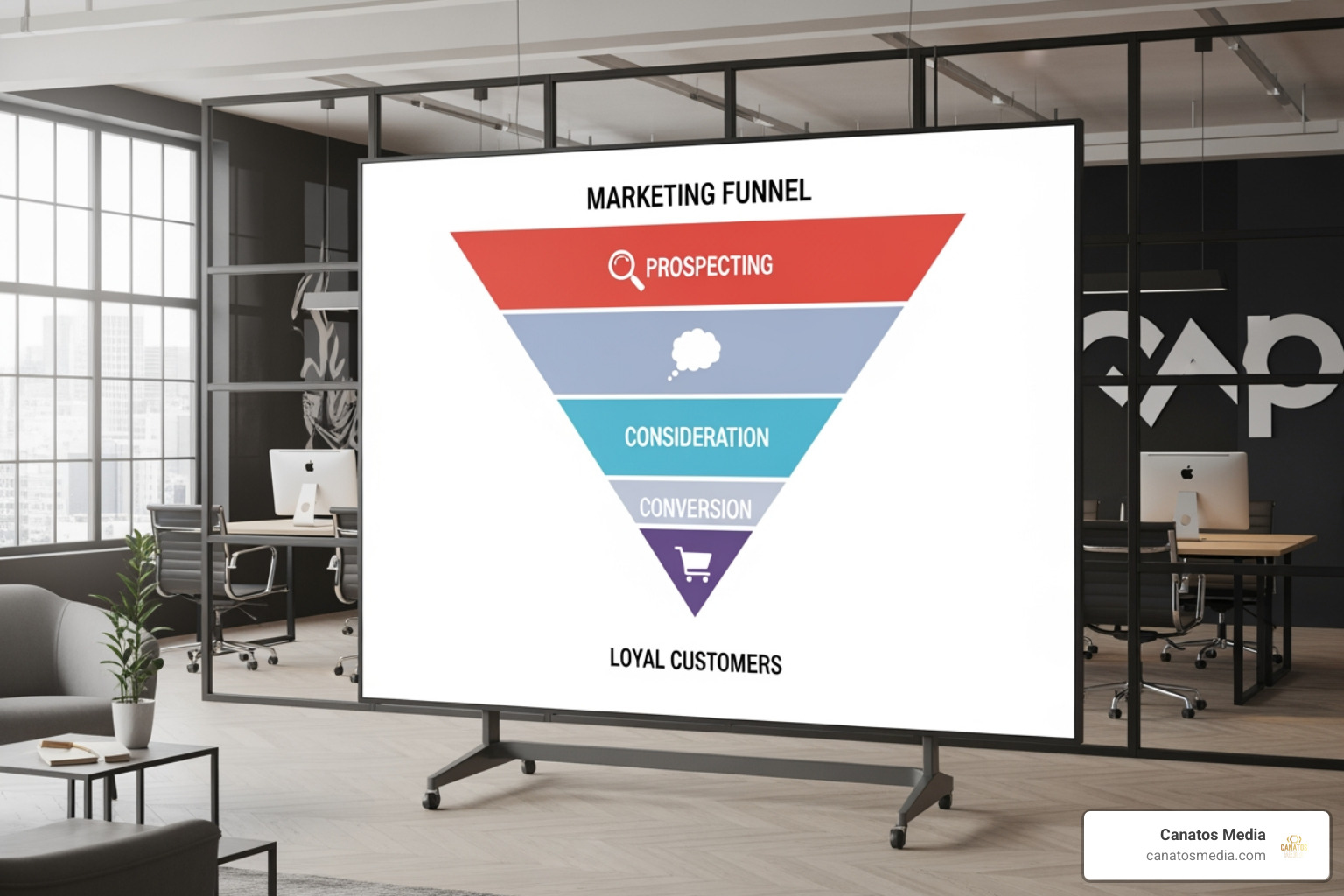
    Marketing funnel diagram showing the journey from cold prospect to loyal customer

    The “one-off ad” approach is dead. To win in 2026, you need a full-funnel blueprint. This means treating Meta as a complete ecosystem rather than just a billboard. A high-performing Meta ads agency structures campaigns to move a stranger to a customer in three distinct stages:

    1. Prospecting (Top of Funnel): Using Advantage+ campaigns to reach broad audiences. The goal here isn’t always an immediate sale; it’s about identifying intent and building an “audience of interest.”
    2. Consideration (Middle of Funnel): Retargeting people who engaged with your videos or visited your site but didn’t buy. This is where you overcome objections.
    3. Conversion (Bottom of Funnel): The “hard sell” or the “limited offer” that pushes the customer over the line.

    Agencies using this structured approach often see a 3.27x ROAS across the board. In fact, many e-commerce brands are now seeing a 4–5× average ROAS by properly segmenting their spend. If you want to dive deeper into how this works, check out our guide on Paid Social Media Advertising: From Zero to Hero in One Hour.

    Creative Velocity: The Secret to Scaling Without Performance Decay

    In 2026, creative is the new targeting. Because Meta’s AI is so good at finding people based on how they interact with content, the actual video or image you use tells the algorithm who to show the ad to. This is why “creative velocity”—the speed at which you produce and test new ads—is the number one factor in success.

    At Canatos Media, we specialize in cinematic short-form content because we know that “Reels-first” strategies are currently dominating the auction. You can’t just run one high-quality commercial for six months. You need a constant stream of:

    • UGC (User Generated Content): Authentic-feeling videos from real customers or creators.
    • Direct Response Video: Content designed to Stop the Scroll and Start the Toll with Meta Paid Ads.
    • High-Volume Iteration: Testing 10 different “hooks” (the first 3 seconds) for every one video.

    Top agencies now manage over 1,000+ creators to ensure they never run out of fresh assets. When you have high creative velocity, you prevent “ad fatigue,” which is when your target audience gets tired of seeing the same thing and stops clicking, causing your costs to skyrocket.

    Technical Precision: Tracking, Attribution, and the Conversions API

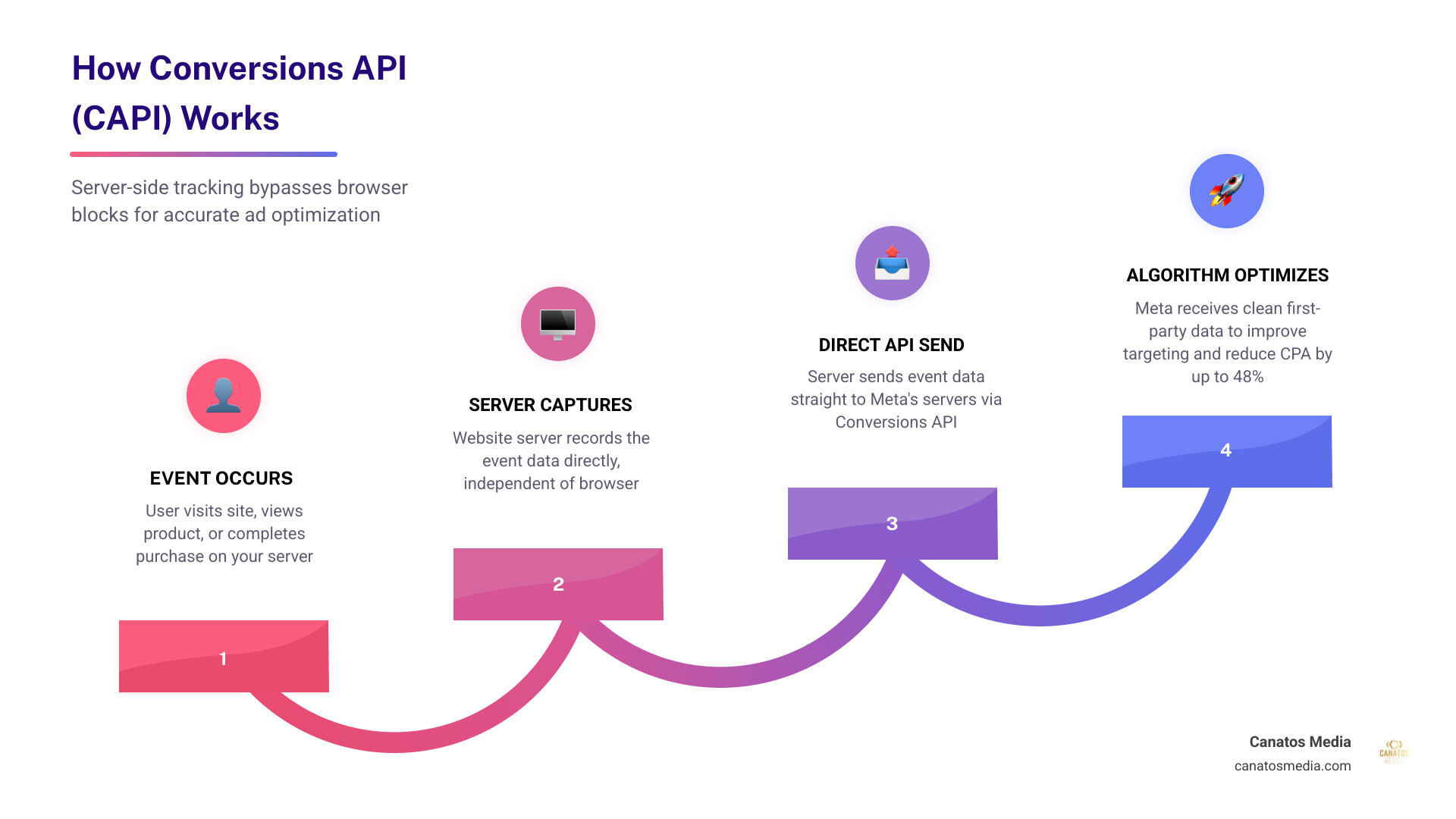
    Infographic showing how Conversions API (CAPI) sends data from the server to Meta, bypassing browser ad-blockers infographic

    If your tracking is broken, your ads are blind. Since the privacy updates of the last few years, the standard “Meta Pixel” isn’t enough. A professional Meta ads agency must implement the Conversions API (CAPI).

    CAPI allows your website’s server to talk directly to Meta’s server. This bypasses browser-based ad blockers and cookie restrictions, ensuring that when someone buys a product, Meta actually knows about it. This “clean data” allows the algorithm to optimize much faster.

    The results of technical precision are staggering:

    • -48% Cost per Acquisition: When the algorithm knows exactly who is converting, it stops wasting money on people who aren’t.
    • 186.4K Client Leads: Accurate attribution allows agencies to scale lead generation with confidence.
    • Better Event Match Quality: This is a technical score that tells you how well Meta can link a website action to a specific user.

    We emphasize this technical setup in our Meta & Google Advertising strategies because without it, you’re essentially guessing which ads are working.

    Choosing Your Partner: Performance-Based vs. Traditional Agencies

    Not all agencies are built the same. In the tri-state area and Long Island, you’ll find everything from “boutique” shops to massive traditional firms. Here is how they typically stack up:

    Feature Performance-Based Agency (The 2026 Model) Traditional Agency (The 2021 Model)
    Pricing Often flat fee + performance bonus Percentage of ad spend (incentivizes spending more)
    Creative High-velocity, UGC, and Reels-focused High-production, slow-turnaround commercials
    Focus ROAS, CAC, and Revenue Impressions, Reach, and “Awareness”
    Integration Includes CRO, SEO, and Lifecycle marketing Often siloed only in social media

    A performance-based Meta ads agency understands that Meta is just one part of the puzzle. They will often look at your Meta ads management strategy and suggest improvements to your landing page (CRO) or your email follow-up (lifecycle marketing). They know that if your website converts at 1% instead of 2%, no amount of great ad targeting will save you.

    Furthermore, these agencies often report a CAC (Cost Per Acquisition) of $40-100 per qualified call for their own services. They “eat their own dog food” by using Meta ads to find clients, proving the system works. Some even achieve intro call costs as low as $20 through hyper-optimized funnels.

    Frequently Asked Questions about Meta Advertising

    What results can I realistically expect in the first 90 days?

    Most businesses partnering with a competent Meta ads agency can expect to see a 3.27x ROAS and a significant reduction in CPA within the first 90 days. The first 30 days are typically the “Learning Phase” where data is gathered. By day 60, the winners are identified, and by day 90, the account is usually in a stable scaling phase. Some brands have even seen a 27x ROI in 28 days, though that usually requires a very high-demand product and perfect market timing.

    How do agencies handle audience overlap and ad fatigue?

    Top agencies use sophisticated exclusion logic. For example, they ensure that people who have already purchased are excluded from “prospecting” ads so you aren’t paying to show a “buy now” ad to someone who bought yesterday. To fight fatigue, they use creative rotation—constantly swapping out images and videos to keep the feed fresh. They also leverage Advantage+ audience targeting, which allows Meta’s AI to find new pockets of people outside of traditional interest groups.

    Do Meta agencies use their own ads to find clients?

    Yes, the best ones do! It’s a red flag if a professional Meta advertising agency doesn’t run their own ads. Successful agencies use Meta to promote lead magnets (like a free audit or a PDF guide) and VSLs (Video Sales Letters) to demonstrate their expertise. Reported CAC for agencies usually ranges from $60-100 per qualified call, proving that even in the competitive B2B space, Meta is a goldmine for those who know how to use it.

    Conclusion

    The era of “guessing” with Facebook and Instagram ads is over. Whether you are a local business in Long Island or a growing brand in the tri-state area, the difference between burning cash and printing money comes down to three things: Technical Precision, Creative Velocity, and a Full-Funnel Strategy.

    At Canatos Media, we don’t just “run ads.” We build integrated growth engines. By connecting cinematic content with advanced targeting and server-side tracking, we’ve helped clients generate over $126.3M in revenue and a staggering $284.6M in pipeline.

    Stop settling for mediocre results and “set it and forget it” management. It’s time to leverage an integrated strategy that connects your content directly to your conversions.

    Start your growth journey with Canatos Media and let’s build a Meta ads machine that actually moves the needle for your business.

  • Top 7 Best Practices for Scalable Short-Form Video Production Across Locations

    Top 7 Best Practices for Scalable Short-Form Video Production Across Locations

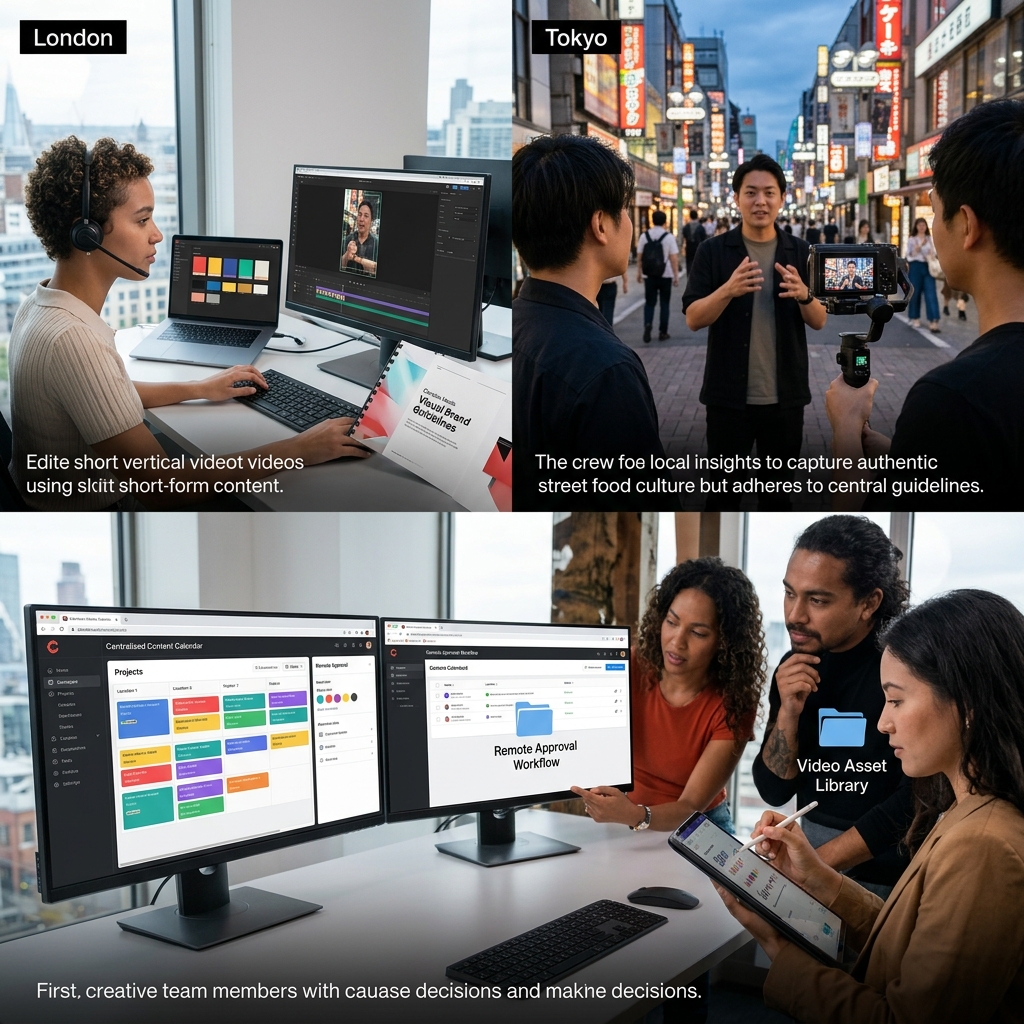
    1. Establishing Brand-Consistent Visual Guidelines Across All Locations

    Managing video production across multiple locations presents a unique challenge. You need consistency that reinforces your brand identity, but you also need flexibility to capture authentic local moments. When done poorly, you end up with fragmented content that dilutes your message. When done well, scalable short-form video production becomes your competitive edge, turning distributed teams into a unified content engine.

    We’ve helped multi-location service businesses and franchise owners solve this exact problem. Here’s what separates operations that scale smoothly from those that create bottlenecks, quality issues, and wasted resources.

    Brand consistency isn’t about rigid rules that stifle creativity. It’s about creating a framework that every location can work within confidently, knowing their output will feel authentically “your brand.”

    Start by documenting your visual language in one place. This means defining color palettes (specific hex codes, not just “blue”), approved fonts, logo usage, motion styles, and on-camera talent guidelines. If your brand uses quick cuts and energetic music, that’s a statement. If it uses longer shots and softer transitions, that’s equally important to lock down.

    The difference between a guideline that gets followed and one that gets ignored is specificity. Instead of saying “use our brand colors,” show examples of how those colors appear in different lighting conditions, on various backgrounds, and across different video formats. Include do’s and don’ts. If you have multiple locations with different aesthetics (a luxury salon in Manhattan versus a suburban wellness center), create location-specific sub-guidelines that honor both the local environment and the brand standard.

    Action step: Create a one-page visual brand sheet with five core rules and five actual video examples showing those rules in action. Share it with every location lead and make it part of your onboarding.

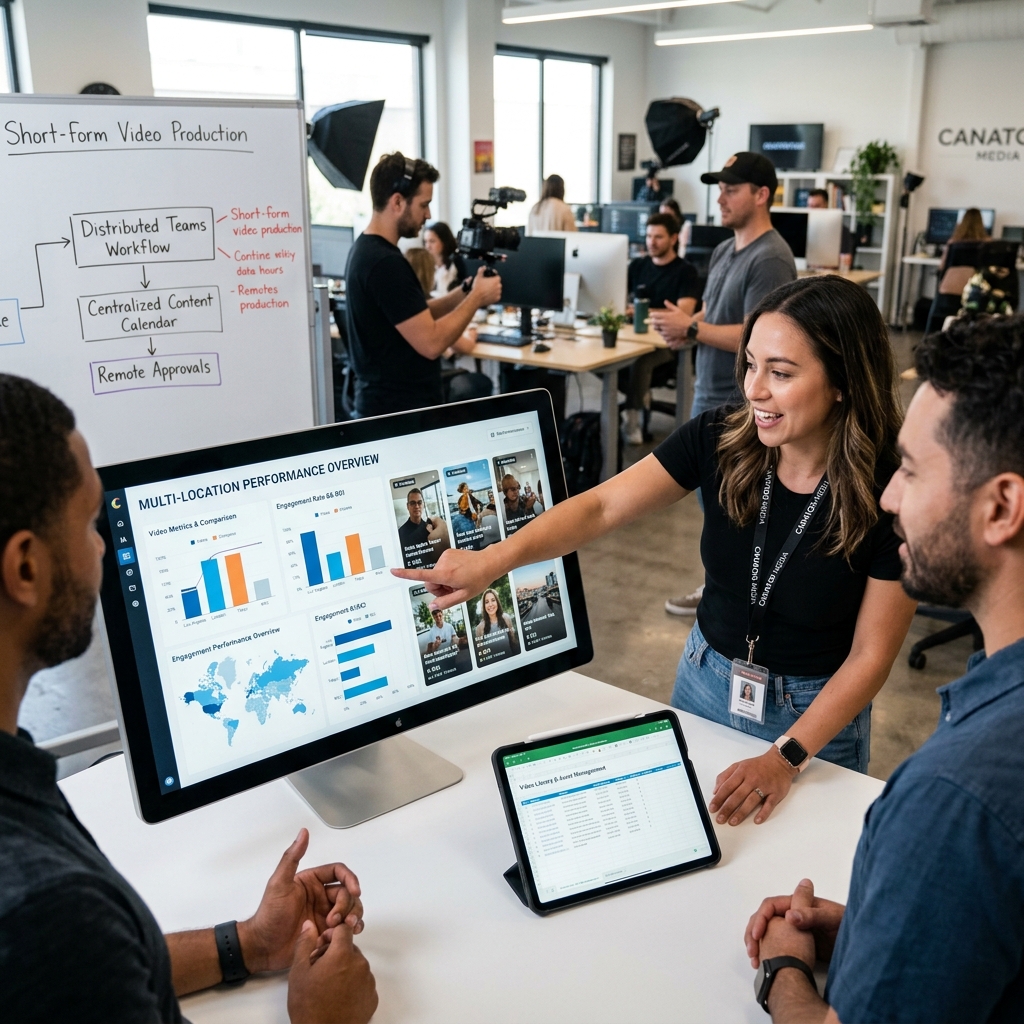
    2. Building a Centralized Content Calendar for Distributed Teams

    Without a shared content calendar, locations operate in silos. One team shoots product launches while another films customer testimonials, and nothing amplifies each other’s reach. A centralized calendar keeps everyone aligned on themes, posting days, and strategic objectives.

    Set up a calendar tool that shows what’s going out across all channels, on all dates. Include campaign themes for each month, key promotional periods, and seasonal angles. If you’re running a paid ad campaign in Q2, your locations need to know that their organic content should complement that message. If a new service launches, every location should be capturing related content within the same week.

    The calendar should include content type, location(s) involved, posting date, and the campaign it supports. Build in buffer time. A realistic timeline gives locations two to three weeks’ notice before a shoot date, which is enough time for crews to coordinate and enough lead time to adjust if something falls through.

    Assign one person (or a small team) to own the calendar. This person communicates deadline shifts, consolidates requests, and prevents scheduling conflicts. Without clear ownership, calendars become outdated and people stop trusting them.

    Action step: Audit your current posting schedule across locations. Identify one month where you’ll test a unified calendar theme (like “Team Spotlight Month”) and measure engagement lift.

    3. Implementing Efficient Remote Approval Workflows

    Long approval chains kill momentum. By the time a video gets signed off, the content feels stale and the team’s energy has moved to the next project.

    Build a tiered approval system. Draft content goes to a local lead for quality check. Approved drafts move to a brand manager or creative lead for consistency review. Only significant deviations or brand concerns trigger back-and-forth revision cycles. Most videos should clear in one or two rounds.

    Use a platform that keeps everything in one place. Dropbox, Frame.io, or similar tools let you embed approval directly into the video file, add timestamped comments, and track version history. This beats email chains and prevents confusion about which cut is the “final” one.

    Set clear approval timeframes. If local approval takes 48 hours and brand approval takes another 24 hours, the team knows the video will be ready to post on Thursday. Missing that window means waiting another cycle. Predictability removes friction.

    For routine content (weekly team updates, location features), consider pre-approval. The location submits a video that follows the established template and visual guidelines, and if it hits the checklist, it posts automatically. Save your critical review attention for campaign-critical content or new formats.

    Action step: Map out your current approval chain. Time how long each step actually takes. If it’s over five business days for standard content, you need to streamline.

    4. Leveraging Local Insights While Maintaining Brand Standards

    Your locations see things headquarters doesn’t. A location team understands their community, their competitors, and what resonates with their local audience. Centralizing production doesn’t mean centralizing ideas.

    Create a formal channel for location teams to pitch content ideas. This might be a monthly “content ideas” form where managers submit local angles that fit the brand calendar. Maybe a particular location has a unique event coming up, or a team member has a story that could resonate. Good ideas bubble up and get resourced.

    The key distinction: local insights shape the stories you tell, not the visual language or brand voice. A fitness franchise’s New Jersey location might pitch content around a local sports team partnership. That’s valuable. But the video still needs the same color grade, music style, and on-camera talent approach as every other location’s content.

    Establish approval criteria that encourage local ownership while protecting brand integrity. Ask: Does this idea serve our target customer? Does it fit our current campaign theme? Does it work within our visual guidelines? If yes to all three, resource it. If it’s outside the theme but the idea is strong, consider how it might shift next month’s calendar.

    Action step: Send a one-question survey to all location leads: “What’s one story or moment unique to your area that you think our customers would care about?” You’ll be surprised at what comes back.

    5. Optimizing Asset Management and Video Library Systems

    When you’re producing dozens of videos a month across multiple locations, files get lost. The edit bay can’t find the project file. A new team member needs old footage for reference and spends an hour searching. Locations re-shoot content that already exists somewhere else.

    Implement a centralized asset library. This includes master footage, approved edits, graphics, music, and lower-third templates. Everything gets tagged by location, date, campaign, and content type. When a producer starts a new project, they can pull from existing approved assets instead of building from scratch.

    Use clear naming conventions. A file called “NYC-Jan2026-CustomerTestimonial-v2-FINAL.mp4” tells you exactly what you’re looking at. Ambiguous names like “Edit-2.mp4” create confusion. Standardize this across all locations.

    Back everything up redundantly. Cloud storage with version control prevents the scenario where someone accidentally overwrites a file and loses hours of work. Require all locations to export final assets to the central library within 24 hours of approval.

    Action step: Spend one afternoon auditing your current file system. If you can’t locate three random videos within five minutes, you need a better system.

    6. Creating Repeatable Video Formats That Scale

    Format is the secret weapon of scalable video production. When you define specific formats and templates, production becomes teachable and efficient.

    Identify the 4-6 core formats that drive results for your brand. This might be:

    • 30-second customer testimonials (specific framing, music, graphics)
    • 15-second product features (consistent b-roll approach, text overlay style)
    • 60-second team culture videos (interview setup, on-camera talent guidelines)
    • Behind-the-scenes location tours (camera movement style, pacing)

    For each format, create a production brief that covers shot list, music style, pacing, graphics approach, and typical length. When a location knows they’re producing a “Format A: Customer Testimonial,” they understand the constraints and can execute independently.

    Standardized formats also make editing faster. An editor working on the tenth testimonial can build off the ninth one’s template, making significant time savings. This is where scalable production truly becomes efficient.

    Formats don’t mean boring. Within the framework, local variation is encouraged. The testimonial format includes guidelines on framing and graphics, but the actual story and location stay unique.

    Action step: Document your three most-produced video types right now. Write a one-page production brief for each, including a reference video example.

    7. Measuring Performance and ROI Across Multi-Location Campaigns

    Production without measurement is just content creation. You need to know which formats, locations, and messages actually drive business results.

    Set up unified analytics tracking. Every video across every location should be tagged with campaign source, location, and format. This means your social media manager can pull a report answering: “Which location’s testimonial videos drive the most website visits?” or “Do team culture videos outperform product features?”

    Track both content metrics (views, shares, engagement rate) and business metrics (website traffic, lead form submissions, conversion rate). If a location consistently produces videos that drive leads at a better rate than others, reverse-engineer why and teach that playbook to underperforming locations.

    Monthly reporting keeps teams accountable and informed. Show each location how their content is performing, celebrate wins, and share learnings. If Location A’s videos generate leads 20 percent cheaper than the average, other locations want to know what they’re doing differently.

    Use these insights to refine your content calendar and formats. If short testimonials underperform but longer stories overperform, adjust next month’s production plan. If certain locations consistently miss targets, they might need different format guidance or additional training.

    When you connect video production to actual lead generation and sales, it stops being “the content team’s problem” and becomes everyone’s growth lever.

    Action step: Audit where your last 20 qualified leads came from. How many came through video content? Which videos drove those leads? Use this to set a baseline and build a measurement system around it.

    For further reading: Case studies.

    Contact us today for a free consultation to see how we can help you grow your business.

    Frequently Asked Questions (FAQ)

    How do we maintain video consistency when producing content across multiple locations?

    We establish detailed visual guidelines that cover everything from color grading and font usage to camera angles and pacing. Our teams at each location follow these standards while we use a centralized asset management system to store approved templates, brand assets, and reference videos. This approach lets local teams move quickly without sacrificing the cohesive look that makes your brand recognizable across all platforms.

    What’s the most efficient way to approve videos when we’re managing multiple locations?

    We implement a streamlined remote approval workflow where all video drafts get reviewed in a shared system with timestamped feedback. Rather than lengthy email chains, we consolidate revision requests and use version control so teams know exactly which changes were made and why. This typically cuts approval cycles in half compared to traditional methods.

    How do we measure whether our multi-location video strategy is actually generating leads and sales?

    We track performance metrics across each location separately and in aggregate, monitoring view-through rates, engagement, click-through rates on paid campaigns, and ultimately how many qualified leads each video asset drives. Our reporting connects video performance directly to lead generation systems, so we can show you exactly which content formats and locations are delivering the strongest ROI for your business.

  • The Ultimate Roundup of WordPress Site Management Services

    The Ultimate Roundup of WordPress Site Management Services

    Introduction

    [IMAGE] of a digital dashboard monitoring multiple website metrics; WordPress ecosystem; proactive maintenance; technical debt; site longevity; [INFOGRAPHIC] explaining the WordPress management lifecycle; Services

    wordpress management services

    Why WordPress Management Services Are Worth Every Penny

    WordPress management services are professional plans that handle the ongoing technical upkeep of your WordPress site — so you don’t have to.

    Here’s a quick look at what they typically include:

    What’s Covered Why It Matters
    Security scans & malware removal Keeps hackers out and your reputation intact
    Plugin, theme & core updates Prevents compatibility issues and vulnerabilities
    Daily cloud backups Lets you restore your site in minutes if something breaks
    Uptime monitoring Catch downtime before your customers do
    Performance optimization Faster sites rank higher and convert better
    Expert support Real help when things go wrong — fast

    Plans typically start around $49–$99/month for essentials, and go up from there based on the level of hands-on support, hosting, and add-ons included.

    Running a WordPress site sounds simple — until it isn’t. A single plugin update can break your checkout. A missed security patch can let malware in. And if your site goes down on a Friday night, you’re losing customers in real time.

    For local business owners trying to grow online, every hour spent wrestling with website problems is an hour not spent on customers, content, or sales.

    That’s exactly why more businesses are handing off their WordPress sites to professional management teams.

    I’m Nic Canobbio, and through my work at Canatos Media overseeing digital content strategies and web-driven growth for brands, I’ve seen how the right WordPress management services can free up a business owner’s time and directly impact their bottom line. In this roundup, I’ll break down the best options available in 2026 so you can find the right fit for your needs.

    WordPress management lifecycle infographic showing security, updates, backups, monitoring, and support cycle - wordpress

    What are WordPress Management Services and Why Do You Need Them?

    At its heart, a wordpress management services plan acts as a specialized insurance policy and a dedicated IT department rolled into one. While WordPress is the world’s most popular CMS, its open-source nature means it requires constant vigilance.

    Website owners need these services because technical debt accumulates quickly. Every time a new version of WordPress Core is released, or a plugin developer pushes a security patch, your site needs attention. If you ignore these, you aren’t just missing out on features; you’re leaving the door unlocked for hackers. Statistics show that updated websites rank significantly better in search engines and are far more resilient against automated bot attacks.

    Our Services focus on the heavy lifting: managing plugin compatibility, ensuring your theme doesn’t “break” after an update, and providing disaster recovery. If your site is compromised, a management service doesn’t just tell you there is a problem; they fix it, often before you even realize it happened. For businesses in the tri-state area and Long Island, where competition is fierce, having a site that stays online 24/7 is non-negotiable.

    Secure server lock representing WordPress security and maintenance - wordpress management services

    Canatos Media Website Maintenance & Security

    The Difference Between Hosting and WordPress Management Services

    A common misconception is that “Managed Hosting” is the same as wordpress management services. It isn’t. Think of hosting like the land your house is built on. Managed hosting provides a high-quality “plot” with good utilities (server-side speed, uptime, and basic security).

    Management services, however, are like the property manager who lives in the house. While the host looks at the server, management services look at the application. This includes:

    • Database Optimization: Cleaning up “overhead” in your database to keep things snappy.
    • Theme Troubleshooting: Fixing layout shifts or CSS bugs.
    • Plugin Management: Vetting which plugins are safe to use and which are slowing you down.

    While some of our Pricing tiers include high-performance hosting, the core value lies in the human expertise applied to your specific site configuration.

    Why Proactive Management Beats Reactive Maintenance

    Maintenance is waiting for something to break and then scrambling to fix it. Management is preventing the break in the first place. Proactive management involves 24/7 uptime monitoring (sometimes checking every 45 seconds) and 404 error monitoring to ensure customers never hit a dead end.

    By identifying performance bottlenecks—like a bloated image or a slow-loading script—before they impact your Core Web Vitals, we keep your SEO healthy. Reactive maintenance often leads to “3 AM panic calls.” Proactive management lets you sleep. If you’re tired of being a “slave to the computer,” a Consultation Booking can help you transition to a hands-off model.

    Essential Features of Premium WordPress Management Services

    When evaluating wordpress management services, you should look for features that go beyond the basics. A premium provider doesn’t just “click update.” They test updates in a staging environment (a clone of your site) first. This ensures that a buggy plugin won’t take down your live store.

    Website speed test result showing high performance and optimization - wordpress management services

    Key premium features include:

    • Cloud Backups: Storing your data off-site (e.g., on Amazon S3 or Google Cloud) so that even if the server fails, your data is safe.
    • Malware Removal: If a site is hacked, premium services offer “hack-clean” guarantees.
    • Performance Optimization: This isn’t just a one-time thing. It involves ongoing image compression, database cleanup, and script minification.

    At Canatos Media, we view 24/7 WordPress website management as a partnership. Our Case Studies show that businesses focusing on these technical details see a measurable reduction in churn and an increase in user retention.

    Advanced Security and Emergency Support

    Security in 2026 requires more than a simple plugin. It requires a “defense-in-depth” strategy. This includes:

    • Intelligent Firewalls (WAF): These analyze traffic patterns to block sophisticated SQL injection and cross-site scripting attacks.
    • Brute Force Protection: Stopping bots from guessing your passwords.
    • Isolated Applications: Ensuring that if one part of your server is compromised, your site remains an island of safety.

    If an emergency does occur, response time is the only metric that matters. Many top-tier providers resolve 50% of requests within an hour and 90% within two hours. If you need that level of certainty, Contact Us to discuss our emergency protocols.

    The landscape of search is changing. In 2026, we aren’t just optimizing for Google; we are optimizing for AI discovery. This is known as GEO (Generative Engine Optimization).

    To stay visible in AI-driven search results (like ChatGPT or Claude), your WordPress site needs:

    1. llms.txt Integration: An emerging standard that helps AI crawlers understand your site’s content hierarchy.
    2. Schema.org Structured Data: Giving machines clear signals about your products and services.
    3. Content Citability: Rewriting passages to be statistically dense and “quotable” by AI models.

    Research shows that sites using these GEO techniques can see an increase in AI-driven visibility of 30% to 115%. Our WordPress Management, Maintenance & GEO Optimization plans are designed to future-proof your brand against these shifts.

    Comparing Management Tiers: From Basic to Enterprise

    Choosing the right plan depends on your business size and the complexity of your site.

    Feature Essentials Plan Managed Plan Fully-Managed/Enterprise
    Price Range $49 – $99/mo $199 – $349/mo $500+/mo
    Best For Blogs, Small Portfolios Growing Businesses E-commerce, High-Traffic
    Updates Weekly Weekly (tested) Real-time / Staging-first
    Backups Daily Daily + Offsite Hourly
    Support Email (24h) Priority Email/Chat 24/7 Phone & Dedicated Manager
    Hosting Use your own Included Scalable Cloud Hosting

    Specialized Support for E-commerce and High-Traffic Sites

    E-commerce sites, particularly those running WooCommerce, have specialized needs. A broken checkout for even ten minutes can result in thousands of dollars in lost revenue. These sites require:

    • Checkout Stability Monitoring: Ensuring the payment gateway is always functional.
    • Scalable Infrastructure: Handling traffic spikes during sales or holiday seasons.
    • API Integrations: Managing the connections between your site and your CRM, shipping providers, or inventory tools.

    Our Monthly WordPress Maintenance Services for e-commerce prioritize “zero-downtime” migrations and constant performance tuning to keep conversion rates high.

    White-Label Solutions for Agencies and Freelancers

    If you are a creative agency in New York or New Jersey, you might want to offer maintenance to your clients without hiring a full-time developer. This is where white-label services come in.

    Through All in One Social Content and Management, agencies can resell our technical expertise under their own brand. We handle the updates, security, and reporting, while you maintain the client relationship. This has been shown to increase agency profit margins by over 20% by eliminating the overhead of a dedicated technical team.

    Calculating the ROI of WordPress Management Services

    Is it worth the investment? If your time is worth more than $50/hour, doing your own maintenance is actually costing you money.

    Growth chart showing increased revenue from optimized website management - wordpress management services infographic

    The ROI of wordpress management services comes from three areas:

    1. Time Savings: Saving 10+ hours a month on manual tinkering.
    2. Risk Mitigation: Avoiding the massive costs of malware removal or rebuilding a crashed site.
    3. Improved Performance: Faster sites lead to better user experiences. Case studies show that even a one-second improvement in load time can boost conversions significantly.

    By partnering with a team that offers 24/7 WordPress website management, you’re investing in your business’s ability to scale without technical friction.

    Avoiding Common Pitfalls in Service Selection

    When shopping for a provider, watch out for these “red flags”:

    • Hidden Hourly Fees: Some “cheap” plans charge extra for every small fix. Look for plans that include “Fast Tasks” or unlimited small edits.
    • Slow Response Times: If they don’t guarantee a response within a few hours, your site could be down for a whole weekend.
    • No Staging Environment: Never let a provider update your live site without testing it elsewhere first.

    A quick Consultation Booking can help clarify what’s included in a plan before you sign a contract.

    How Professional Management Impacts SEO Rankings

    Google’s algorithm prioritizes speed, security, and uptime.

    • Uptime: If Google’s crawler hits your site and it’s down, your rankings can slip.
    • Mobile Responsiveness: Ongoing management ensures that new content or plugins don’t break your mobile layout.
    • Core Web Vitals: Professional optimization focuses on “Largest Contentful Paint” and “Cumulative Layout Shift”—metrics that directly influence where you sit on the search results page.

    Our Services ensure that your technical SEO is always “green,” allowing your content strategy to shine.

    Frequently Asked Questions about WordPress Management

    How much do WordPress management services typically cost in 2026?

    In 2026, basic maintenance typically costs between $49 and $99 per month. For comprehensive management that includes hosting, security, and proactive support, prices range from $199 to $599 per month. Enterprise-level support for high-traffic or multisite networks can range into the thousands.

    What is the difference between a “Fast Task” and custom development?

    A “Fast Task” is generally any update or fix that can be completed in 30 minutes or less—such as changing a phone number, swapping an image, or adjusting a CSS color. Custom development involves building new features, creating custom plugins, or major site redesigns, which are usually billed hourly or by project.

    Do these services include managed hosting or just software updates?

    It depends on the plan. “Essentials” plans often allow you to keep your current host while the provider manages the software. “Managed” and “Premium” plans almost always include high-performance cloud hosting as part of the package for better synergy between the server and the site.

    Conclusion

    Your website is the digital storefront of your business. In a market like the tri-state area, you can’t afford a slow, insecure, or outdated site. WordPress management services provide the peace of mind you need to focus on what you do best: running your business.

    At Canatos Media, we don’t just “maintain” websites; we integrate them into a total digital strategy. From cinematic short-form video and social media management to advanced GEO optimization and SEO, we connect your content to measurable growth.

    Ready to stop worrying about your website and start growing? Explore our Services today and let us handle the technical details while you handle the success.

  • Local Lead Generation for Service Businesses: Why We Built Canatos Media Differently

    Local Lead Generation for Service Businesses: Why We Built Canatos Media Differently

    Why Service-Based Brands Struggle With Lead Generation at Scale

    Service-based businesses face a unique marketing challenge. Unlike e-commerce companies that can rely on product listings and straightforward conversions, service brands must build trust and demonstrate capability before a prospect becomes a customer. This gap between awareness and trust is where most service businesses lose leads. We built Canatos Media specifically to close that gap through integrated systems that turn social media attention into qualified leads and measurable growth.

    Most service businesses operate with a flawed assumption: more visibility equals more leads. A plumbing company, HVAC contractor, or consulting firm invests in social media posts, gets decent impressions, and then wonders why the phone doesn’t ring more.

    The real issue is that service businesses sell solutions to problems that develop over time. A homeowner doesn’t wake up wanting HVAC service; they wake up when their system fails. A business owner doesn’t search for marketing help until they hit a growth ceiling. This means your audience isn’t always “warm” when they encounter your content.

    Additionally, service businesses often juggle multiple locations, varying service types, and complex decision-making processes involving multiple stakeholders. A single Facebook post won’t cut through that complexity. You need proof of quality, evidence of reliability, and trust signals that overcome the risk perception.

    Most agencies respond by throwing volume at the problem: more posts, more ads, more content. What you actually need is fewer, higher-quality touchpoints that demonstrate expertise and build credibility across the entire customer journey.

    The Problem With Traditional Agency Approaches to Local Marketing

    Traditional marketing agencies separate disciplines into silos: social media teams, advertising teams, SEO teams, video teams. Each department optimizes for their own metrics. The social team wants engagement. The ad team wants cost-per-click efficiency. The SEO team wants rankings. These competing priorities rarely align around what actually matters: generating leads that convert to paying customers.

    This compartmentalization creates three critical problems for service businesses:

    Your message becomes inconsistent. One team designs Facebook ads focused on price. Another creates website content emphasizing quality. A third runs Google ads with different value propositions. Prospects encounter conflicting messaging and lose confidence in your brand.

    Handoffs between teams create friction and slow response times. A prospect clicks an ad, lands on a mismatched landing page, and the sales team doesn’t have context about which ad they clicked or what promised outcome they were expecting.

    Measurement becomes convoluted. Did the lead come from the ad campaign, the organic social post, the Google search, or the website? Traditional agencies struggle to show how their individual services actually work together to generate revenue.

    Service businesses need better integration. Your marketing should operate like a coordinated system, not a collection of separate vendors.

    How We Combine Short-Form Video With Lead Generation Systems

    We built our approach around a central insight: short-form video is the highest-trust format available right now, and it integrates seamlessly into every channel that generates leads for service businesses.

    Here’s how it works in practice. A plumbing company creates a 30-second video showing a common problem (low water pressure) and the solution their team delivers. That video appears on their Instagram Reels, TikTok, Facebook feed, and paid campaigns. It tells a clear story with a specific outcome, which is infinitely more convincing than a carousel ad or static image.

    The same video also flows into their paid advertising strategy. We use these short-form pieces as conversion assets in Meta and Google campaigns, where they significantly outperform traditional ad creative. Video generates higher click-through rates, lower cost-per-click, and most importantly, better lead quality because prospects see your work before they fill out a form.

    We also use short-form content to populate your website and lead capture pages. When someone lands on your site, they immediately see video proof of your expertise. This dramatically improves form completion rates and reduces friction in your conversion funnel.

    This isn’t just about production quality. We’re intentional about how each video supports your lead generation system. Every script, every shot, every call-to-action serves a purpose within the larger marketing flow.

    Our Approach to Cinematic Storytelling That Actually Converts

    Many agencies think cinematic video means high production values. We think it means clear, compelling storytelling that connects emotionally with your ideal customer and creates urgency around solving their problem.

    Cinematic storytelling for service businesses follows a specific structure:

    Problem recognition: The video opens by showing a real situation your customer encounters. A roofing company might show a homeowner discovering a leak. A staffing agency might show a business owner struggling to fill roles quickly.

    Consequence clarity: We explain what happens if the problem persists. Ignored roof leaks lead to structural damage and mold. Unfilled roles slow growth and overload existing staff.

    Your solution: We demonstrate how your service specifically addresses the problem, often showing before-and-after results or customer testimonials.

    Trust signals: We build credibility through credentials, years in business, specific case results, or customer reviews woven naturally into the story.

    Clear action: We close with a specific, low-friction next step (call now, book a consultation, visit your website).

    This structure works because it acknowledges how service customers actually make decisions. They don’t buy based on features; they buy because you’ve convinced them that you understand their problem and can reliably solve it. Cinematic website videos that follow this approach convert significantly better than generic corporate videos or testimonial compilations.

    Social Media Management Built for Lead Capture, Not Just Engagement

    Most social media managers optimize for engagement metrics: likes, comments, shares. This creates a perverse incentive structure where the goal becomes entertainment rather than business results.

    We approach social media differently. Our posting strategy, content calendar, and audience engagement all funnel toward lead capture and customer conversion. This means:

    Strategic content mix: We balance awareness content (showing your expertise and building your brand) with conversion content (direct lead-generation posts with forms, booking links, or CTAs that move prospects toward sales conversations).

    Profile optimization: Your social profiles include clear service offerings, response times, booking links, and lead-capture mechanisms. A prospect shouldn’t have to search for how to contact you.

    Community engagement: We engage with prospects and customers in ways that build relationships and encourage direct messages or form submissions, not just comment threads.

    Performance tracking: We measure social media success by leads generated and customer acquisition cost, not vanity metrics.

    For multi-location service businesses, this approach becomes critical. Each location can have unique offerings, service areas, and customer testimonials. We organize your social strategy to highlight location-specific content that resonates locally while maintaining brand consistency.

    Meta and Google Advertising Strategies for Service-Based Brands

    Paid advertising is where most service businesses waste money. They run broad campaigns aimed at anyone who might need their service, accept high cost-per-click, and wonder why conversion rates are terrible.

    Our approach focuses on audience precision and offer clarity. On Meta (Facebook and Instagram), we build custom audiences based on past customer data, website visitors, and behavioral signals that indicate someone has a real need for your service. We run separate campaigns for different service lines, different geographic areas, and different stages of the customer journey (awareness, consideration, decision).

    Google advertising for service businesses works best when targeting high-intent keywords. Someone searching “emergency plumber near me” is significantly more ready to convert than someone searching “how to fix low water pressure.” We build campaigns around these intent levels and structure our landing pages to match exactly what the search query promised.

    We also leverage Google Local Services Ads for service businesses, which show your reviews, response rates, and service areas directly in search results. These convert exceptionally well because they appear at the moment someone is actively seeking your service.

    The key is integration. Your Google ads send traffic to relevant landing pages. Your Meta ads build awareness for service lines that take longer to decide. Your website content aligns with what your ads promised. This coherence dramatically improves conversion rates across all paid channels.

    Building Trust Through AEO Optimization and Website Excellence

    Author Experience Optimization (AEO) is how search engines now evaluate whether you’re a trustworthy authority in your industry. For service businesses, this means clearly demonstrating your credentials, experience, and track record.

    On your website and across your digital presence, we make sure to highlight:

    Business credentials: Licenses, certifications, insurance, years in business, and professional affiliations.

    Customer results: Specific case studies, before-and-after galleries, measurable outcomes from past projects.

    Customer voice: Detailed reviews, testimonials with photos, and user-generated content that prospective customers find credible.

    Consistent messaging: Your service expertise comes through clearly in every page, blog post, and video on your site.

    Your website itself becomes a lead generation tool, not just an informational asset. We design conversion paths that guide prospects toward clear next steps: booking consultations, requesting quotes, or scheduling free evaluations. Load speed, mobile responsiveness, and intuitive navigation all affect whether someone stays on your site or bounces to a competitor.

    For multi-location brands, we build systems that serve both the main website (showing your company’s full scope) and location-specific landing pages that address local market needs and competition.

    How We Integrate Video, Social Media, and Paid Advertising

    The real competitive advantage emerges when these elements work together. Here’s a concrete example: A home services company produces a 45-second video showing a kitchen renovation from start to finish. We repurpose that video into:

    • Five 15-second clips for Instagram and TikTok feeds
    • A complete version for their website homepage
    • A lead-magnet video for email campaigns
    • Multiple versions optimized for Meta and Google ads with different CTAs
    • Clips with captions for accessibility and better performance

    Meanwhile, that same video supports the paid advertising strategy. We run different video ads to different audience segments, tracking which versions drive the lowest cost-per-lead. We use the complete video on the website to build credibility for prospects who arrive from paid search. We reference the video in social media posts to increase video watch time and build social proof.

    This integrated approach means your content investment compounds. One video production session creates assets for six different channels and marketing functions, all supporting the same conversion goal.

    Real-World Systems We Use for Multi-Location Brands

    Multi-location service businesses need scaled systems. A plumbing company with five locations can’t manage each location separately without burning out staff.

    We build standardized workflows where each location has:

    Local content production: Monthly video content featuring local team members, local projects, and local testimonials. This builds community relevance and appears more authentic than one corporate account sharing generic content.

    Location landing pages: Each location has its own service area map, local reviews, location-specific hours, and team photos. This improves local search visibility and conversion rates.

    Localized paid campaigns: We run location-specific ads with local phone numbers, local team photos, and location-specific service offerings. A prospect in one service area sees ads from their local team, not a corporate brand.

    Centralized measurement: Despite running local campaigns, we track everything through a unified dashboard showing which locations are generating leads, at what cost, and with what conversion rates.

    Shared content library: Each location doesn’t need to reinvent the wheel. We create core video templates, social media templates, and ad templates that local teams can customize with their information and local examples.

    This system scales efficiently without requiring each location to have its own marketing person. A central team manages strategy and production while local teams provide the customer testimonials, project photos, and local context that make campaigns resonate.

    Why Our Video-First Model Works Better Than Traditional Agencies

    Video dominates because it compresses the trust-building timeline. When someone watches a 60-second video of your team completing a project, they see your work quality, your professionalism, and your attention to detail. This would take paragraphs of written description to communicate equally.

    Video also performs better across every platform. Facebook’s algorithm favors video content. TikTok requires it. Instagram increasingly rewards Reels over static posts. Google shows video results prominently. By making video your content foundation, you’re creating assets optimized for how digital platforms actually work in 2026.

    Video also reduces friction in your conversion process. A prospect watches a video, sees your work, and reaches out. They’ve already made a mental commitment to at least exploring your service. Compare this to someone who reads a description or sees a photo and might scroll past. Video creates stronger buyer intent.

    Our video-first marketing approach means every strategic decision filters through one question: How does this serve video production and distribution? Social media strategy supports video creation. Paid advertising amplifies video content. Website design showcases video. This coherent focus creates efficiency across your entire marketing system.

    Getting Started With Our Integrated Digital Marketing System

    The first step is diagnosing what’s currently broken in your marketing. Most service businesses we meet are running separate channels that don’t communicate. Social media posts don’t align with paid ads. Website content doesn’t match what your ads promise. Video exists in isolation rather than fueling every channel.

    Start by auditing your current assets and channels. What video content do you have? How is it being used? Are your social media profiles optimized for lead capture or just brand awareness? What’s your current cost-per-lead across paid channels, and how does it compare to your customer lifetime value?

    Next, identify your highest-intent audience segments. Not all prospects are created equal. A homeowner actively searching for a service this week is worth far more than someone who “might need this someday.” Build your strategy around reaching the ready-to-buy segment first.

    Then, align your content production around lead generation goals. Every piece of content, every social post, every ad should support your core business objective: generating qualified leads that your sales team can convert.

    The businesses that grow fastest combine high-quality storytelling with systems thinking. They create content that builds trust, distribute it across every relevant channel, and measure everything against actual business results. We help service-based brands do exactly that, turning social media attention into sustainable revenue growth.

    Contact us today for a free consultation to see how we can help you grow your business.

    Frequently Asked Questions (FAQ)

    How does our video-first approach actually generate more leads than traditional digital marketing?

    We’ve found that short-form cinematic video stops the scroll and builds emotional connection in ways static content simply can’t match. Once we capture attention with compelling visuals, we layer in our lead capture systems across social platforms and paid channels, turning that engagement into qualified leads for your business. Our integrated approach means the video content feeds into Meta and Google advertising, social media funnels, and website conversions all at once, rather than existing as standalone content.

    What makes our service for multi-location brands different from working with a general marketing agency?

    We built our systems specifically for the operational realities of multi-location and service-based brands. We understand that one location’s lead quality differs from another’s, that your customer journey is longer than most, and that trust signals matter enormously in service industries. Our AEO optimization and website excellence strategies directly address these challenges, while our video production captures the local, personalized storytelling that converts service-based customers.
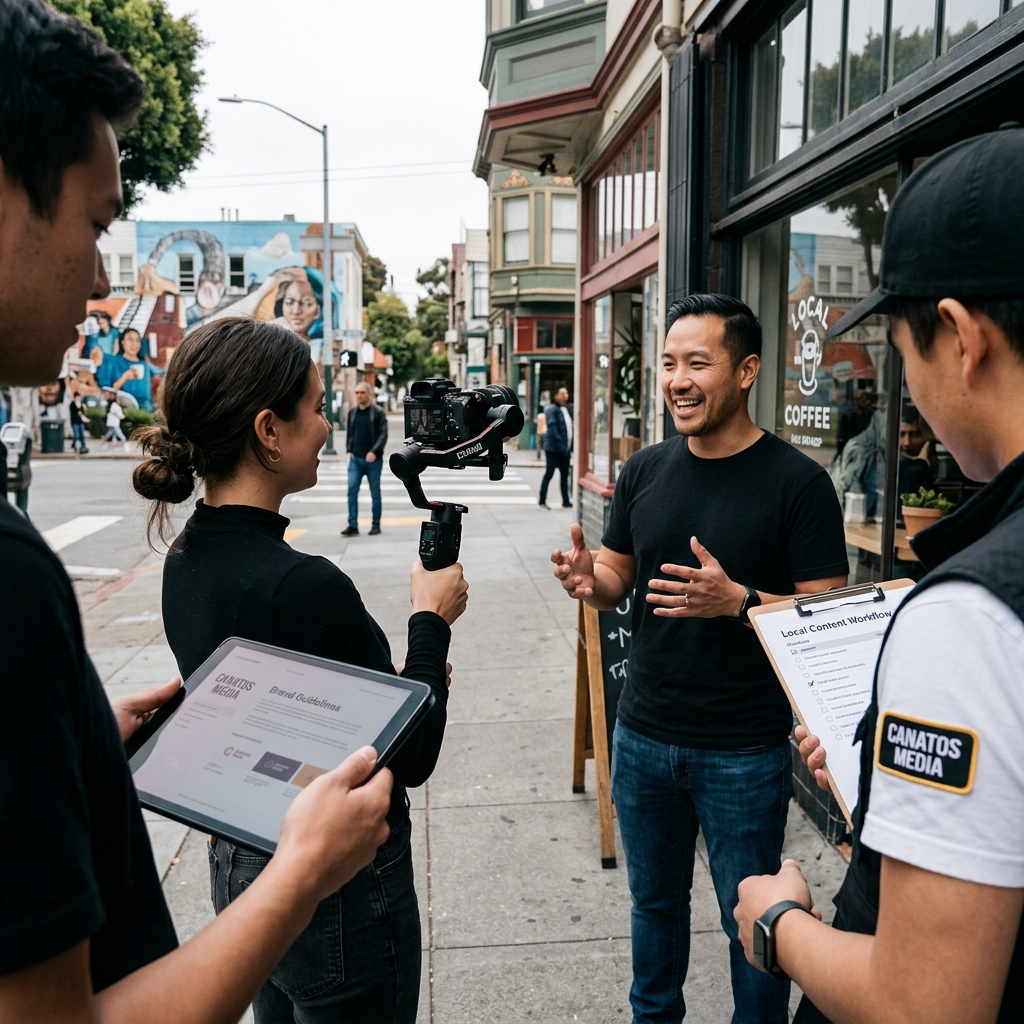
    How do we ensure our advertising spend actually produces leads, not just clicks?

    We connect our Meta and Google advertising directly to lead capture systems on your website and social channels, then track which campaigns and content types deliver qualified leads specific to your business model. Rather than optimize for vanity metrics, we structure everything from video production through paid spend around your actual conversion goals and cost per lead targets.

  • How to Not Go Broke Using LinkedIn Paid Advertising

    How to Not Go Broke Using LinkedIn Paid Advertising

    Why LinkedIn Paid Advertising Cost Catches So Many Businesses Off Guard

    LinkedIn paid advertising cost is one of the most Googled questions by B2B marketers — and for good reason. The numbers can feel steep at first glance.

    Here’s a quick snapshot of what you can expect to pay in 2026:

    Metric Typical Range
    Cost Per Click (CPC) $2 – $6
    Cost Per 1,000 Impressions (CPM) $6 – $20
    Cost Per Send (Sponsored Messaging) $0.26 – $0.50
    Cost Per Lead (CPL) $50 – $200
    Minimum Daily Budget $10
    Minimum Lifetime Budget $100
    Average Monthly Spend (most businesses) $0 – $500

    LinkedIn is significantly more expensive than Facebook or Google Ads on a per-click basis. But that higher price tag comes with something those platforms can’t fully match — access to verified professional audiences: decision-makers, executives, and buyers defined by job title, seniority, and industry.

    The result? B2B advertisers are seeing a 121% return on ad spend (ROAS) on LinkedIn in 2026, meaning every $1 spent returns an average of $2.21 in attributed revenue.

    Still, without a clear understanding of how LinkedIn’s pricing works, it’s easy to burn through your budget fast and have little to show for it.

    I’m Nic Canobbio, founder of Canatos Media, and my experience negotiating high-stakes media deals and managing paid ad strategies across multiple platforms has given me a front-row seat to the real-world impact of LinkedIn paid advertising cost on business growth. This guide breaks down exactly what drives those costs — and how to make every dollar work harder.

    2026 LinkedIn ad cost benchmarks infographic with CPC, CPM, CPL, and ROAS data - linkedin paid advertising cost infographic

    Understanding the LinkedIn Paid Advertising Cost in 2026

    When we talk about linkedin paid advertising cost, the first thing we have to address is the “sticker shock.” If you’re used to paying $0.50 for a click on Meta, seeing a $6.00 CPC on LinkedIn can feel like someone just tried to sell you a $20 cup of coffee. But on LinkedIn, you aren’t just buying a click; you’re buying a seat at the table with a professional identity.

    How the Auction and Pricing Models Work

    LinkedIn operates on an online auction system. You aren’t just paying a flat fee; you are competing against other advertisers who want to reach the same “New York-based CTO” or “Long Island marketing director.”

    Your actual cost is determined by three main things:

    1. Your Bid: What you are willing to pay.
    2. Target Audience Desirability: How many other people are trying to reach that same person?
    3. Ad Relevance Score: LinkedIn rewards ads that people actually like. If your ad has high engagement, LinkedIn might actually charge you less than a competitor with a boring ad.

    LinkedIn uses objective-based pricing, which means you only pay for “billable events” tied to your goal. If your objective is “Website Visits,” you only pay when someone clicks. If it’s “Brand Awareness,” you pay for impressions (CPM).

    LinkedIn vs. The World

    To put things in perspective, let’s look at how LinkedIn stacks up against other platforms in May 2026:

    Platform Average CPC Average CPM
    LinkedIn $2.00 – $6.00 $6.00 – $20.00
    Meta (Facebook/IG) $0.40 – $1.30 $3.00 – $6.00
    Google Ads (Search) $1.00 – $4.00 $10.00 – $15.00

    While LinkedIn is the “premium” option, it is currently the only major platform delivering a consistent 121% aggregate ROAS for B2B. For every $1.00 we see our clients invest, they are averaging $2.21 in attributed revenue. That’s because the lead quality is often much higher—you’re getting fewer “tire kickers” and more genuine decision-makers.

    Minimum Budgets and Bidding Strategies

    One of the most common questions we get at Canatos Media is: “What’s the bare minimum I need to spend?”

    LinkedIn has some hard floors you need to know about:

    • Minimum Daily Budget: $10.00 per campaign.
    • Minimum Lifetime Budget: $100.00 (for new campaigns).
    • Minimum Bid: Generally $2.00 for CPC or CPM.

    However, just because you can spend $10 a day doesn’t mean you should. We usually recommend a daily spend of at least $25 to $50 to actually give the algorithm enough data to learn. If you’re serious about seeing results, check out our guide on Paid Social Media Advertising from Zero to Hero in One Hour to see how to structure these budgets effectively.

    Choosing Your Bidding Strategy

    How you bid significantly impacts your linkedin paid advertising cost. You have three main choices:

    1. Maximum Delivery (Automated): This is the “set it and forget it” option. LinkedIn’s AI tries to get you the most results for your full budget. It’s great for beginners, but it can sometimes be the most expensive way to buy.
    2. Cost Cap: You tell LinkedIn, “I don’t want to pay more than $50 per lead.” The system will try to keep your average cost below that. It’s great for controlling costs, but if your cap is too low, your ads might stop showing entirely.
    3. Manual Bidding: This gives you total control. You specify exactly what a click or 1,000 impressions are worth to you. We generally recommend this only for experienced advertisers who are monitoring their campaigns daily.

    Benchmarking Costs by Industry and Seniority

    Not all LinkedIn users are priced equally. Targeting a junior graphic designer in the Midwest is going to be significantly cheaper than targeting a C-suite executive at a Fortune 500 company in the Tri-state area.

    According to 2026 benchmarks, your linkedin paid advertising cost is heavily influenced by “professional identity.” You are paying for the privilege of skipping the gatekeeper and landing directly in the feed of a decision-maker.

    Average LinkedIn Paid Advertising Cost by Sector

    Different industries face different levels of competition. Here is what the Cost Per Lead (CPL) looks like across various sectors in 2026:

    • Technology/SaaS: $75 – $200 (High competition, high reward).
    • Financial Services: $80 – $180 (Strict regulations and high-value clients).
    • Professional Services: $50 – $130 (Consulting, legal, accounting).
    • Manufacturing/Industrial: $60 – $150 (Niche audiences, often lower CPC).
    • Healthcare/Pharma B2B: $70 – $160.

    How Seniority and Region Impact Your LinkedIn Paid Advertising Cost

    If you are targeting “C-Suite” titles, expect to pay 2x to 3x more than you would for mid-level managers. These individuals have the most “desirable” profiles, meaning more advertisers are bidding for their attention.

    Geography also plays a massive role. In the Americas (especially the Tri-state area and Long Island), CPCs average around $1.70 to $6.00. In contrast, the EMEA region can see CPCs as high as $5.00 to $8.00 depending on the specific country.

    Seasonality Tip: We’ve noticed a unique trend in late Q4. While many B2C advertisers go crazy on Meta for Black Friday, some B2B players pause their LinkedIn ads in December. This can lead to lower CPCs for those who stay in the game, as executives are often using that downtime to research tools for the upcoming year.

    High-level executive targeting settings in LinkedIn Campaign Manager - linkedin paid advertising cost

    Strategies to Lower Costs and Improve ROAS

    You don’t always need a bigger budget; sometimes you just need a better strategy. At Canatos Media, we focus on an Integrated strategy that connects content to conversions to ensure you aren’t wasting money.

    1. Boost Your Ad Relevance Score

    This is the single biggest lever you have. LinkedIn assigns every ad a score from 1 to 10 based on click-through rate (CTR), comments, likes, and shares. A high score (7–10) tells LinkedIn your ad is valuable, and they will reward you with lower costs and better placement.

    2. Use Lead Gen Forms

    Instead of sending people to a slow-loading landing page on your website, use LinkedIn’s native Lead Gen Forms. These forms auto-fill with the user’s profile data. Because they reduce friction, they often result in a 2x to 5x higher completion rate than standard website forms, significantly lowering your CPL.

    3. Combat Ad Fatigue

    If your audience sees the same ad eight times in three weeks, they’ll stop seeing it—literally. This is called ad fatigue, and it causes your CTR to plumment and your costs to skyrocket. We recommend refreshing your creatives every 2 to 3 weeks and using frequency caps to ensure you aren’t over-saturating a small audience.

    4. Leverage Thought Leader Ads

    In 2026, people trust people more than they trust brands. Thought Leader Ads—where you “boost” a post from a real person’s profile (like a CEO or founder)—consistently outperform company page ads. They feel more authentic and often see much higher engagement for a lower linkedin paid advertising cost.

    5. Try Predictive Audiences

    Think of these as LinkedIn’s version of “lookalike” audiences. By using machine learning, LinkedIn can find users who share similar professional traits with your existing customers. This allows you to expand your reach without having to manually guess every single job title or skill.

    Frequently Asked Questions about LinkedIn Ad Pricing

    How long does it take to see results from LinkedIn campaigns?

    LinkedIn is a demand generation channel, not a “quick fix” like Google Search. B2B buyer journeys are long and complex—often requiring 80+ touchpoints before a deal closes. You should commit to a 3-month testing phase. The first month is for the algorithm to learn; the second is for optimization; and the third is where you start to see the real pipeline impact.

    What are the typical cost per applicant and cost per hire benchmarks?

    If you’re using LinkedIn for recruiting, the costs are slightly different. Promoted job posts generally see a cost of $1 to $8 per applicant, with the U.S. average sitting around $2.83. However, for high-demand roles like cybersecurity or data science, the total “cost per hire” (including all advertising and software) can range from $4,700 to $12,000.

    What is a realistic monthly budget for a small business?

    While 48% of businesses spend under $500 a month, we find that this often leads to “data starvation.” To give the LinkedIn algorithm enough information to actually optimize your ads, we recommend a minimum of $3,000 to $5,000 per month. If you are a larger enterprise, you might spend $10,000+ to truly dominate a specific niche.

    Conclusion

    The linkedin paid advertising cost in 2026 is undeniably a premium, but it’s a premium that pays off when handled with precision. By understanding the auction system, leveraging Lead Gen Forms, and focusing on ad relevance, you can reach the exact decision-makers who move the needle for your business without going broke in the process.

    At Canatos Media, we specialize in an integrated strategy that connects cinematic short-form video with high-intent targeting. We don’t just want you to get clicks; we want you to see measurable growth in your revenue. Whether you are in the Tri-state area or Long Island, we can help you navigate the complexities of paid social to ensure your brand stands out in a crowded professional feed.

    Ready to stop guessing and start growing? Explore our Services today and let’s build a strategy that actually converts.

  • End-to-End Video Production and Ads Management for Multi-Location Brands

    End-to-End Video Production and Ads Management for Multi-Location Brands

    The Challenge of Managing Video Content Across Multiple Locations

    Running a multi-location or franchise business means balancing brand consistency with local relevance. Each location needs to feel like part of the same brand while resonating with its specific community. When it comes to video content, this tension becomes acute.

    Most multi-location brands face a familiar problem: corporate headquarters creates one generic video, sends it out to all locations, and expects it to work everywhere. It doesn’t. A dental practice in Denver needs different messaging than one in Miami. A plumbing franchise in suburban markets operates differently than one in urban centers. Generic content gets ignored because it doesn’t speak to local audiences.

    At the same time, producing custom videos for every single location becomes prohibitively expensive and logistically complex. You’d need separate crews, different shoots, competing timelines, and budget overruns. There’s no scalable system, no quality control, and no clear way to measure whether the investment is actually generating leads.

    The real challenge isn’t just creating content. It’s creating content that maintains brand integrity while being locally adaptable, all while staying within production budgets and integrating seamlessly with paid advertising strategies. Without a unified system, you end up with scattered efforts that drain resources without delivering results.

    Why Generic Video Agencies Miss the Mark for Multi-Location Businesses

    Most video production agencies operate on a project basis. They shoot, edit, deliver, and hand you a finished file. For a single-location brand, this works fine. For multi-location businesses, it’s a fundamental mismatch.

    Here’s why: generic agencies don’t understand the operational demands of franchises and multi-unit service businesses. They don’t account for the fact that you need content that’s modular, flexible, and integrated with advertising systems. They produce beautiful videos that sit in your library untouched because there’s no clear process for getting them deployed across locations or tied to paid campaigns.

    Additionally, most agencies separate video production from advertising strategy. Your video gets made in one silo while your paid ads run in another, with no coordination between them. This creates waste: you’re paying for ad spend without optimized creative, and you’re investing in production without a clear performance framework tied to lead generation.

    The agencies that understand single-client, single-location needs haven’t built systems for scale. They can’t produce monthly content across multiple locations. They don’t have workflows that allow local customization without redoing the entire production. They’re not equipped to manage how video content performs in paid channels and adjust accordingly.

    What multi-location brands actually need is an end-to-end partner who produces video, runs advertising, tracks performance, and builds systems that get stronger with volume, not weaker.

    How Cinematic Short-Form Content Drives Lead Generation at Scale

    Short-form video is where attention lives now. Whether it’s Instagram Reels, TikTok, or YouTube Shorts, audiences are scrolling through dozens of videos per session. What stops them scrolling is cinematic quality combined with emotional relevance.

    We’ve found that cinematic short-form content outperforms generic talking-head videos by a significant margin on paid platforms. When you invest in production quality, higher frame rates, intentional color grading, and professional sound design, the content stands out in ad feeds. People don’t just watch it; they engage with it.

    For multi-location brands, this becomes a lead generation engine. A 15-second cinematic video of a service being delivered, a before-and-after transformation, or a customer testimonial shot with professional production values gets clicked, watched, and acted upon. That same content repeated across locations with local variations amplifies reach while controlling costs.

    The key is structural: you produce core cinematic elements that work across all locations, then customize the messaging or talent for each market. One production shoot in one location can yield content for dozens of markets. You’re not recreating the wheel for each franchise; you’re templating it intelligently.

    Paired with proper audience targeting in Meta and Google ads, this approach generates qualified leads consistently. The cinematic quality removes skepticism, and the local relevance drives conversions.

    Our Integrated Approach to Video Production and Paid Advertising

    We combine video production, social media management, and paid advertising into a single integrated system. Rather than handling these as separate services, we build them together from the ground up.

    Here’s how it works: when we plan your video content, we’re simultaneously planning how it will perform in paid channels. We know which videos will work best as 15-second ads on Instagram, which ones suit YouTube’s longer-form placements, and which benefit from Google’s visual search features. We build variations into the production itself, not as an afterthought.

    Once content is produced, we manage deployment across your locations’ social channels while running paid campaigns at the platform level. We handle everything: account setup, audience segmentation, bid management, and creative rotation. You get monthly reporting that ties video performance directly to lead volume and cost-per-lead.

    This integration eliminates waste. You’re not overspending on ads because you have weak creative. You’re not producing expensive videos that never see daylight because there’s no advertising strategy behind them. Every piece of content has a purpose, a placement, and a performance expectation.

    Building a Cohesive Brand Story Across All Your Locations

    Multi-location brands often struggle with a core question: how do we feel like one brand when we operate in different markets?

    Video answers that at a visceral level that text and static images can’t. Through consistent production style, color grading, music, and messaging, your brand becomes recognizable instantly, whether someone sees your content in Boston or Boise.

    We develop a visual language specific to your brand that scales across locations. This includes production templates, approved music and sound design, color palettes, and messaging frameworks. Every location can create content that feels distinctly theirs while maintaining unmistakable brand identity.

    For a multi-unit service business, this might mean all locations use the same opening shot style, the same customer testimonial format, and the same call-to-action, but with locally sourced talent and location-specific details. The formula is consistent; the execution is local.

    This approach also builds trust faster. When customers see your brand consistently presented across locations, they perceive stability and professionalism. That perception converts to leads.

    Streamlining Your Entire Video Workflow From Concept to Campaign

    Without a defined workflow, video projects bog down: unclear timelines, miscommunication between teams, revisions that spiral, and delays before anything goes live.

    We build workflows that move fast without sacrificing quality. This starts with concept development aligned to your lead generation goals, moves through production and editing with clear approval checkpoints, and ends with deployment across social and paid channels on a predictable schedule.

    For multi-location brands, we establish a content calendar that accounts for production capacity and each location’s promotional needs. Rather than everything being reactive and firefighting, you have a system: X new pieces of content every month, produced at scale, deployed consistently, and measured rigorously.

    The workflow also includes feedback loops. When a video performs well in paid channels, we know immediately and can produce variations. When something underperforms, we diagnose why and adjust the next piece. You’re not waiting months to see if an investment paid off.

    Measuring ROI: From Video Production to Qualified Leads

    Video production feels expensive on the front end. Without clear measurement, it’s easy to question whether the investment made sense. We tie everything to performance.

    Our reporting connects video completion rates, click-through rates, and view costs directly to lead volume. You see not just that a video got 50,000 views, but that those views generated 15 qualified leads at a $50 cost-per-lead. Over time, you understand which types of video, which messaging angles, and which locations are most efficient at converting attention into actual business opportunity.

    This data drives optimization. If one location’s testimonial video generates leads at half the cost of another location’s, we understand why and replicate that approach. If short-form reels outperform longer YouTube content for your audience, we adjust the content mix accordingly.

    You’re also able to forecast. With three months of data, you can predict fairly accurately what video investment will generate at a specific cost-per-lead, allowing you to plan marketing budgets with confidence rather than guesswork.

    Getting Started With Your Complete Video Marketing System

    The best time to implement an end-to-end video and advertising system is before you’re desperate. The worst time is when you’re scrambling to generate leads and have no content infrastructure.

    If you run a multi-location brand and video feels like a missing piece of your marketing, we can help you build a system that scales. We’ll start by understanding your business, your locations, and your lead generation targets. From there, we’ll outline a production roadmap, establish workflows, set up advertising accounts, and create a measurement framework tied to your actual business goals.

    You won’t be thinking about video production and advertising as separate challenges anymore. You’ll have one unified system designed specifically for how multi-location brands actually operate. That clarity, combined with professional execution, is what drives both lead volume and profitability in competitive service markets.

    Ready to talk through what an integrated video system looks like for your business? Let’s start there.

    For further reading: Live video production.

    Contact us today for a free consultation to see how we can help you grow your business.

    Frequently Asked Questions (FAQ)

    How do we handle video production and advertising for businesses with multiple locations?

    We create a cohesive brand template that works across all your locations while allowing for local customization. Our team produces cinematic short-form content that maintains your brand identity, then we manage paid advertising campaigns on Meta and Google to ensure each location gets the qualified leads it needs. This approach lets you scale your video marketing without losing the consistency that builds brand recognition.

    What’s included in your end-to-end video marketing system?

    We handle everything from initial concept development and filming through final campaign optimization. Our services include short-form video production, social media management, Meta and Google paid advertising setup, SEO optimization, website design support, and lead generation systems. We also provide ongoing performance tracking so you can see exactly how your video content converts into leads and sales.

    How do we measure whether our video campaigns are actually generating leads?

    We set up tracking systems that connect your video ads directly to lead capture and sales data. We monitor metrics like cost per lead, lead quality, and conversion rates across all your locations so you understand the true ROI of your video marketing investment. Our reporting shows you not just views and engagement, but the actual business results you’re paying for.