Author: canatosmedia

  • How We Build Integrated Lead Generation Systems for Service-Based Brands

    How We Build Integrated Lead Generation Systems for Service-Based Brands

    Why Service-Based Brands Struggle with Disconnected Marketing

    Service-based businesses often face a critical problem: their marketing operates in silos. Social media content sits separate from email campaigns. Paid ads run independently of website lead forms. Video production happens without connection to sales follow-up. The result is wasted budget, confused prospects, and leads that slip away because no one’s managing the handoff between departments.

    At Canatos Media, we’ve worked with hundreds of multi-location and service-based brands, and we’ve learned that the highest-performing lead generation systems aren’t about individual tactics. They’re about creating seamless workflows where every piece of marketing reinforces the others. This article explains how integrated systems work and how to build one that actually converts prospects into clients.

    Most service-based brands grow organically. A plumber gets referrals. A home services company relies on repeat customers. But when growth plateaus, many owners patch together tools: a Facebook page here, Google Ads there, a website form somewhere else. Each channel operates independently, with no clear connection between discovery and conversion.

    The problem becomes obvious once you trace a prospect’s journey. Someone watches your Instagram video, gets interested, clicks to your website, but the landing page doesn’t match the story from the video. They fill out a form, but no one follows up for three days. By then, they’ve called a competitor. Or they download a guide but never hear from you again because your email system isn’t connected to your CRM.

    Disconnected systems force your team to do manual work. Your social media manager doesn’t know which posts generate leads. Your sales rep doesn’t know which ads are bringing qualified prospects. No one can answer the question: “Where did this customer come from, and what can we do more of?”

    Next step: Audit where your leads actually come from right now. Most businesses can’t answer this clearly, which signals fragmentation.

    The Cost of Fragmented Lead Generation Workflows

    Fragmentation has real financial consequences. When marketing channels don’t talk to each other, you pay for visibility multiple times. A prospect sees your ad, then you retarget them, then they land on a page that doesn’t mention your offer, so they leave. You’ve spent three dollars to reach them twice and converted zero of it.

    Your team also suffers. Sales reps waste time qualifying leads that marketing doesn’t properly screened. Marketing doesn’t get feedback on which leads actually close, so they keep running the same campaigns even when conversion rates are dropping. Customer service handles questions that a better onboarding process could prevent. Everyone’s busy, but nothing’s optimized.

    The data itself becomes unreliable. You’ll see that Google Ads generated 50 leads last month, but you won’t know if those leads were warm prospects who saw your video first, or cold clicks from people who had no context. That makes budget allocation nearly impossible. Do you increase Google spend or shift to social? You’re guessing.

    For a service-based business generating $500k in annual revenue, fragmentation often costs 20-30% in missed opportunities. That’s $100k to $150k left on the table. For larger multi-location brands, the number is exponentially higher.

    What an Integrated Lead Generation System Actually Does

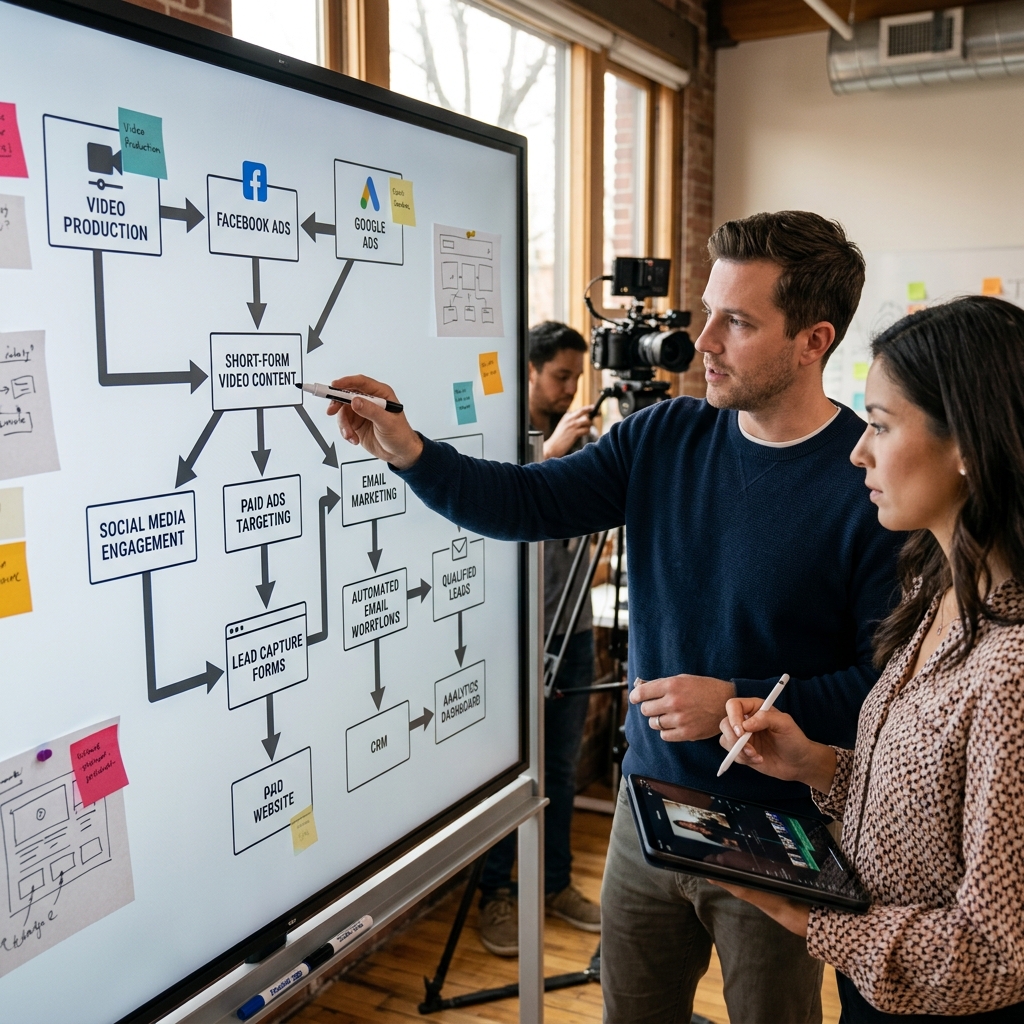
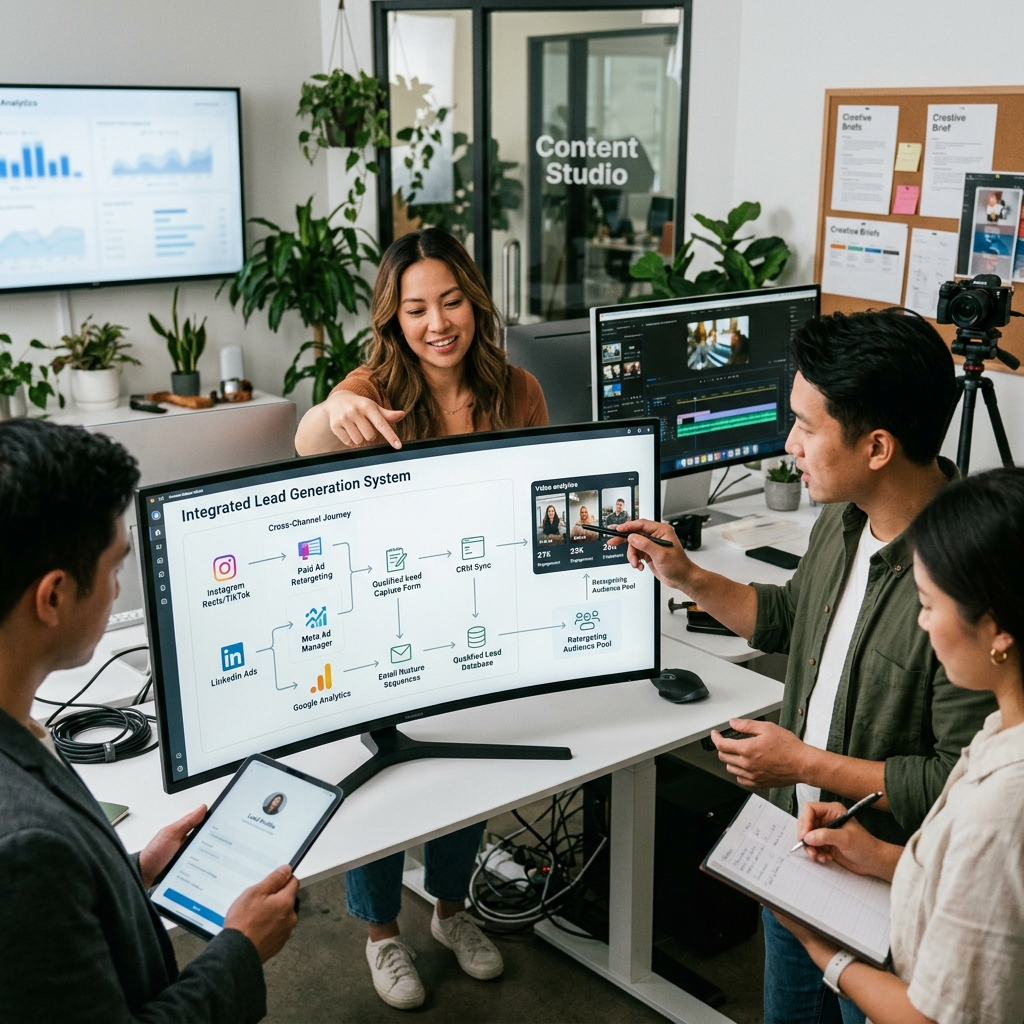
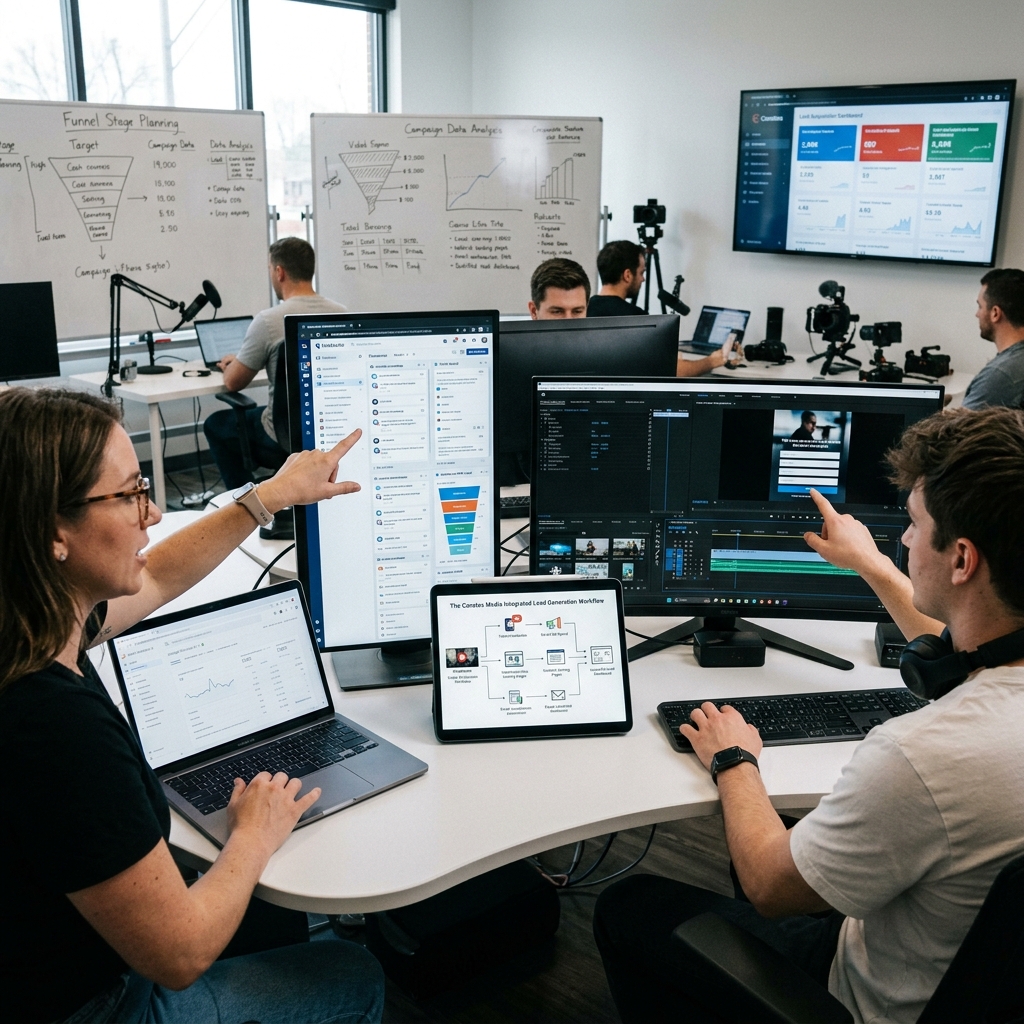
    An integrated system connects four core functions: content creation, lead capture, lead qualification, and conversion tracking. Each function feeds data to the next.

    Content creation generates awareness and builds trust. For service businesses, this usually means short-form video that shows your process, results, or team. That content lives on social platforms where your audience actually spends time.

    Lead capture happens through multiple touchpoints: a form on your website, a link in your video description, a call-to-action in an email. But instead of each channel operating independently, they all feed the same database. A prospect might discover you on Instagram, click to your website, and fill out a form there. The system records all three touchpoints.

    Lead qualification automatically separates promising prospects from tire-kickers. If someone downloads a guide but doesn’t match your ideal customer profile, they get a different email sequence than someone who booked a consultation call. Qualification rules are based on behavior: pages visited, content downloaded, how recently they engaged.

    Conversion tracking ties revenue back to each channel. When a qualified lead becomes a paying customer, the system logs which video, ad, or email sequence brought them in. This data becomes your roadmap for scaling.

    Our all-in-one marketing funnel approach is built on this framework. We connect video content to lead capture forms, link lead qualification to your CRM, and track revenue back to source.

    How We Connect Video Content to Lead Capture

    Video is the entry point for most service businesses in 2026. A well-crafted short-form video showing your team solving a customer’s problem builds more trust in 60 seconds than a written case study does in five minutes.

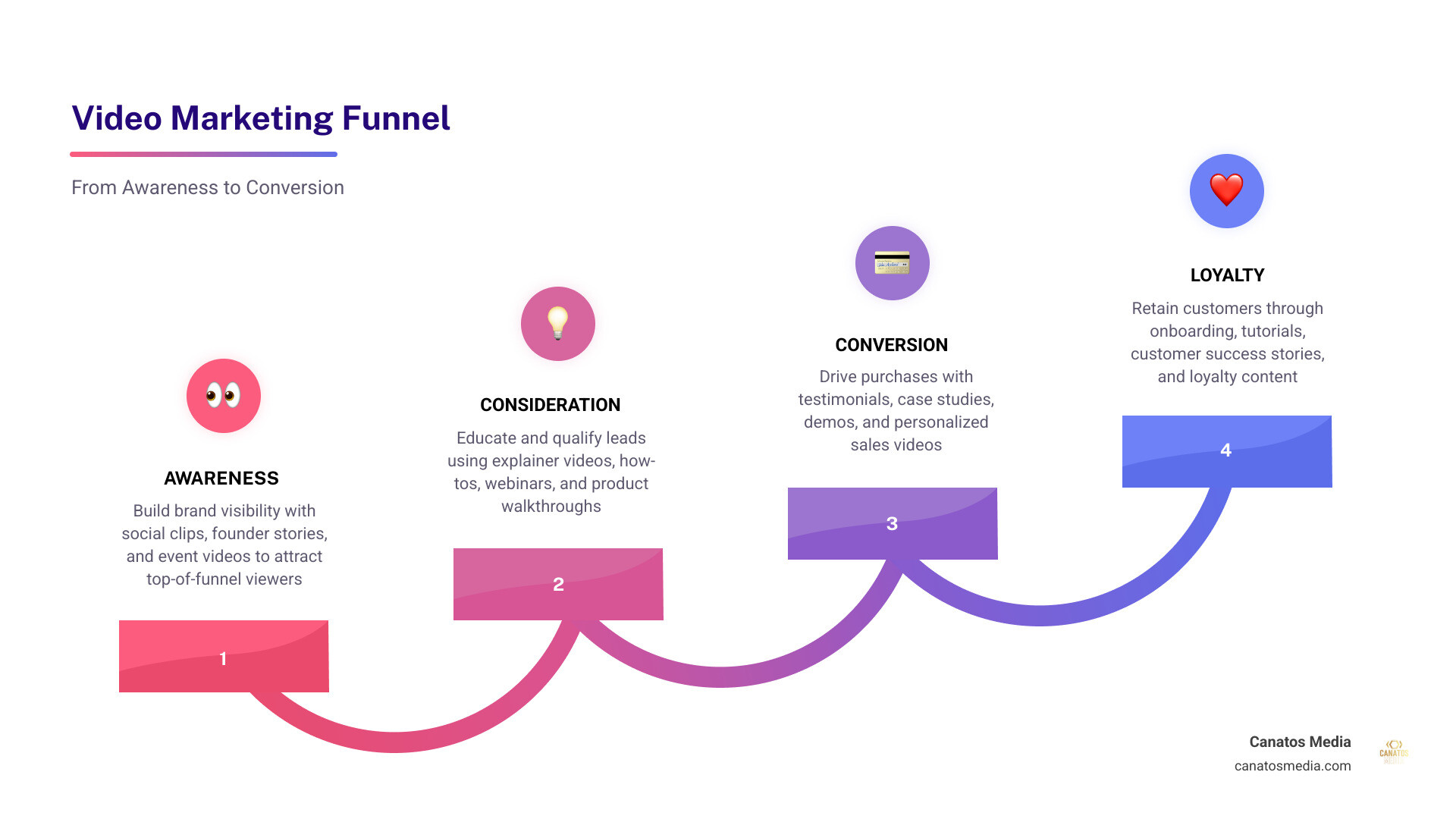
    The mistake most brands make is treating video as standalone content. They produce a great clip, post it to Instagram, and hope people engage. But integration means every video has a purpose in your funnel. An awareness video introduces your process. An education video answers a common objection. A proof video shows results.

    Each video needs a lead magnet or call-to-action attached. This might be a landing page link in the description, a calendar link to book a consultation, or a form to download a resource related to the video topic. The key is making the next step obvious and low-friction.

    When someone engages with your video, they enter the system. The platform tracks which video they watched, how long they watched it, and whether they clicked your CTA. If they click and convert to a lead, you now know this specific video is driving qualified prospects. Scale it.

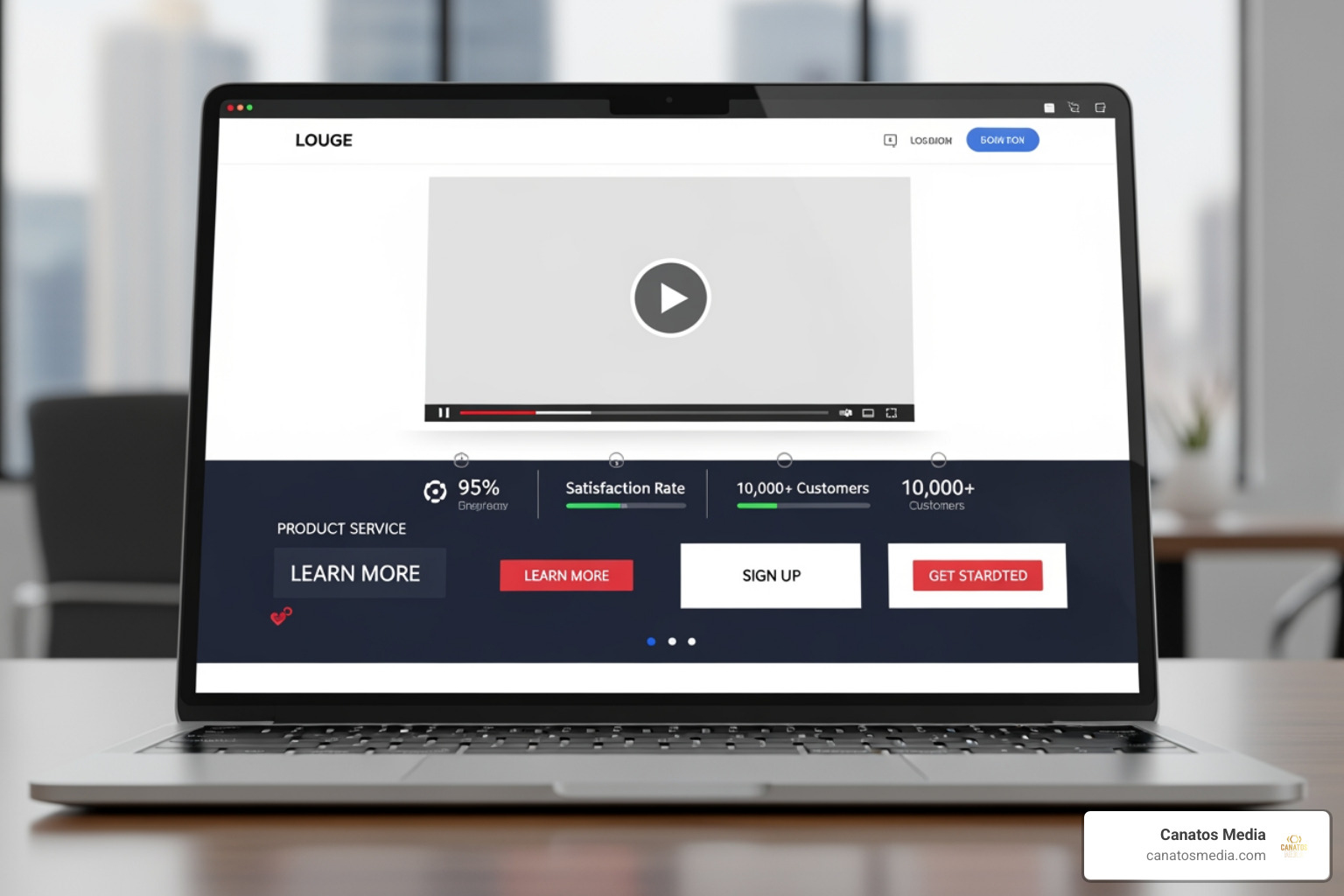
    For service-based brands, cinematic website videos also work as conversion tools. A video on your services page showing your team or past projects increases form completion rates by 25-40% on average. It’s the bridge between awareness content on social and the decision-making stage.

    Building Your Sales Funnel Across Multiple Channels

    Your sales funnel should meet prospects where they are, not force them into one channel. Most service-based prospects have a journey that looks like: discover on social, research on your website, explore on Google, then decide.

    Build dedicated landing pages for different audiences or campaigns. A prospect who found you through a paid ad to accountants shouldn’t land on the same page as someone who found you through organic search for tax preparation. Customized messaging increases conversion rates.

    Each channel feeds into the next. Social media drives awareness and directs traffic to your website. Your website captures email addresses and qualification data. Email nurtures cold leads and segments warm ones. Paid advertising retargets people who visited your site but didn’t convert.

    The channels create multiple exposures to your brand. A prospect might see your ad three times, watch one of your videos, read an email, and visit your website once before booking a call. That wasn’t one channel working. That was integration working. They were exposed through five different touchpoints.

    Segment your audience at each stage. Top-of-funnel prospects get educational content. Mid-funnel prospects see case studies and comparisons. Bottom-funnel prospects get pricing, guarantees, and social proof. Without segmentation, you’re sending the wrong message to the wrong people.

    Our Approach to Social Media and Paid Advertising Integration

    Social media and paid advertising are most effective when they work together, not separately. Social builds audience and brand trust over time. Paid advertising accelerates that process for specific offers.

    We structure it this way: organic social content performs the awareness role. We post consistently, build community, and establish your voice. Paid social amplifies the best-performing organic content and targets specific customer segments. Someone who engaged with an organic post gets retargeted with a paid version asking them to book a call.

    Google Ads capture high-intent search traffic. Someone searching “tax preparation near me” is further along the decision journey than someone casually scrolling Instagram. So Google Ads get more aggressive conversion messaging, while Instagram gets educational content.

    Cross-channel remarketing ties it together. Someone who clicked your Google Ad but didn’t convert gets served a Facebook ad later. Someone who watched your Instagram video but didn’t click the link gets shown a different angle of your offer on Google. Prospects see consistent messaging across platforms, which increases conversion rates.

    Attribution becomes clearer with this structure. You can trace a conversion back to a specific campaign and channel. “This customer saw our Instagram video, then clicked a Google Ad, then booked a call.” That clarity shows which investments are working.

    Automating Lead Qualification and Follow-Up

    Manual lead follow-up is where most service businesses leak revenue. A lead comes in, sits in an inbox for two days while someone’s busy, and by then the prospect has moved on.

    Automation fixes this. When someone fills out a form or downloads a resource, they immediately get a confirmation email with the resource attached. Thirty minutes later, they get a second email with more information. Two days later, a third email presents a specific offer or next step. None of this requires human intervention.

    The system also qualifies leads based on behavior. If someone visits your pricing page five times, they’re probably further along than someone who only read your blog. The system knows this and flags hot prospects for immediate sales attention.

    Automation rules should match your business model. A service business with a long sales cycle might have a 30-day nurture sequence that gradually builds case and handles objections. A business with quick turnaround might move qualified leads to sales in 48 hours.

    Lead scoring is the backbone here. Assign points based on actions: downloading a guide (5 points), visiting pricing (10 points), watching a video twice (3 points), opening three emails (2 points). When a lead hits 25 points, they’re sales-ready. Automation routes them there.

    Measuring System Performance and ROI

    Without clear metrics, you can’t optimize. We track: cost per lead (how much you spend to generate one), cost per customer acquisition (how much you spend for a paying customer), lead-to-customer conversion rate (what percentage of leads close), and customer lifetime value (how much a customer is worth over their relationship with you).

    These metrics connect directly to profitability. If your cost per customer acquisition is $500, and your average customer is worth $3000 in revenue, you have a 6x return. Scale that. If it costs $1500 per acquisition, you need to improve your conversion funnel before spending more.

    We measure channel performance too. “Google Ads generated 30 leads at $25 per lead” is useful. But “those 30 leads had a 20% close rate, while Facebook-generated leads had a 28% close rate” is actionable. It tells you Facebook leads are higher quality, so you shift budget there.

    Website behavior metrics matter as much as conversion metrics. How long do prospects spend on your site? Which pages do they visit? Do they watch your videos? If visitors are bouncing from your homepage, no amount of traffic increase will help. Fix the page first.

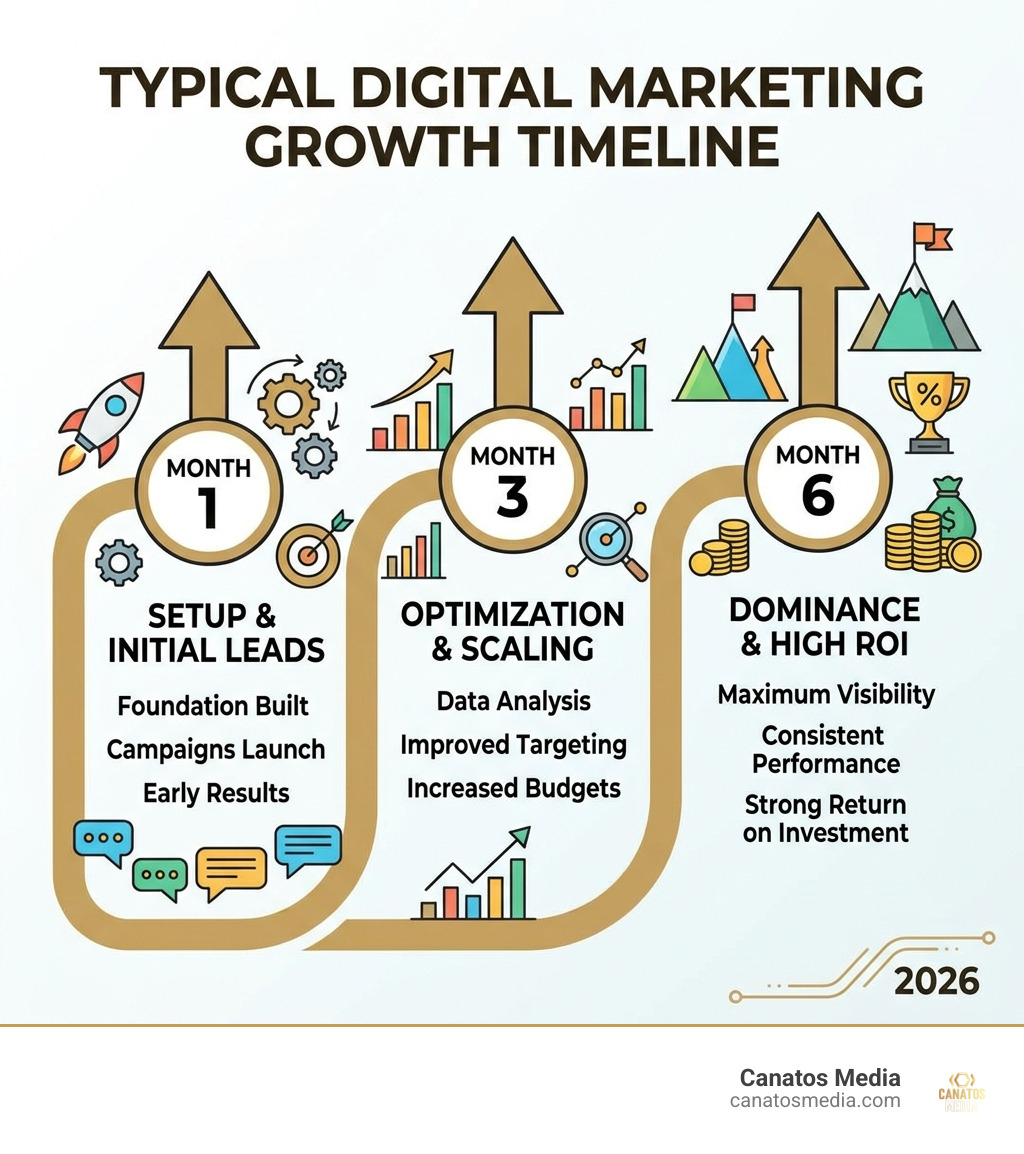
    The ROI calculation becomes simple once you have these pieces. Revenue from customers attributed to your integrated system, minus the cost of the system and your team’s time, gives you true ROI. Most integrated systems show 3-5x ROI within the first six months for service businesses.

    Common Mistakes That Break Lead Generation Systems

    The first mistake is treating lead generation as a one-time setup. You build the system, launch it, and expect it to work forever. Reality: markets change, customer behavior evolves, and what worked last year needs adjustment. Dedicate someone to review metrics monthly and test improvements.

    The second mistake is poor list management. When leads come in but don’t convert, they often stay in generic nurture sequences forever. They should either get re-qualified, moved to a long-term nurture track for future campaigns, or removed. Dead leads clutter your database and make metrics unreliable.

    The third is misalignment between marketing and sales. Marketing generates leads. Sales qualifies and closes them. If there’s no conversation between teams about what “qualified” means, marketing will send unqualified leads to sales, and sales will complain that marketing isn’t generating quality. Define your ideal prospect profile together.

    The fourth is insufficient follow-up. Most service businesses give up after one or two attempts to reach a prospect. Studies show it takes 8-12 touches to convert a cold lead. Your system should have consistent touchpoints across email, social, and ads.

    The fifth is poor video quality or relevance. You can’t fake authenticity. If your video looks amateurish or doesn’t address your audience’s actual problem, it won’t drive engagement or leads. Invest in production quality and script messaging tightly around customer pain points.

    The sixth is ignoring mobile. Most of your leads will come from mobile devices. If your forms take three minutes to fill out on a phone, if your website doesn’t load fast, if your videos aren’t optimized for vertical viewing, you’re creating friction that kills conversion rates.

    Getting Started with Your Integrated Strategy

    Start where you are. If you currently have scattered marketing efforts, pick the biggest leak first. Is it that you generate leads but can’t follow up quickly? Build automation. Is it that you generate traffic but your website doesn’t convert? Improve that. Is it that you’re invisible on social? Create a content strategy.

    Document your current customer journey. How does a prospect actually discover you today? How long does it take from discovery to sale? Where do they drop off? This baseline helps you measure improvement.

    Choose your core platforms. Most service businesses succeed with three to four channels: organic social (usually Instagram or LinkedIn), one paid channel (Google or Meta), email, and your website. Master those before adding complexity.

    Get clear on your lead qualification criteria. What does a qualified prospect look like for your business? How many employees do they have? What’s their budget? How soon do they need your service? Build your automation rules around these specifics.

    Invest in the infrastructure: a CRM to track leads, an email platform for automation, and analytics tools to measure attribution. These don’t need to be expensive. Most service businesses can start with mid-tier tools and scale up.

    Start with one campaign. Test your messaging, video content, and funnel with 100 leads before scaling. Does the video perform? Does the follow-up sequence convert? Does the landing page work? Once you have proof of concept, scale what works.

    We work with service-based brands every day building these systems from the ground up. The brands that see the biggest growth aren’t necessarily the ones with the biggest budgets. They’re the ones with integrated systems where every piece of marketing supports the others. That’s where we can help.

    Contact us today for a free consultation to see how we can help you grow your business.

    Frequently Asked Questions (FAQ)

    How do we connect video content to actual lead generation instead of just views?

    We build cinematic short-form videos designed specifically for conversion, not just engagement. Each video sits within a lead capture system where we strategically place calls-to-action, landing pages, and follow-up sequences that turn viewers into qualified prospects. Our process ties video performance metrics directly to lead quality and cost-per-acquisition, so we can continuously optimize what actually drives results for your business.

    What makes an integrated lead generation system different from managing social media and ads separately?

    When we integrate your channels, we create a unified workflow where video content flows from social platforms into paid advertising, then into lead capture, and finally into your sales follow-up process. Rather than operating in silos, each component feeds data back into the others. This means we can identify which content types generate the highest-quality leads and reinvest accordingly, eliminating the guesswork that typically wastes budget across disconnected platforms.

    How do we measure whether our integrated system is actually working for our clients?

    We track specific metrics that matter to your bottom line: cost per lead, lead quality score, conversion rate through your sales funnel, and revenue generated per marketing dollar spent. We provide transparent reporting that connects every video we produce and every ad we run directly to measurable business outcomes, so you always know exactly what’s driving growth.

  • Why Your Multi-Location Brand Needs a Local Video Production Studio

    Why Your Multi-Location Brand Needs a Local Video Production Studio

    The Scaling Problem Every Multi-Location Brand Faces

    Multi-location brands face a unique challenge in 2026: maintaining consistent brand identity while speaking authentically to each local market. A single generic video rarely performs across franchise locations, regional branches, or distributed service teams. When we work with growth-focused business owners managing multiple locations, we see the same pattern: corporate headquarters creates content that falls flat with local audiences, leads dry up, and teams across locations feel disconnected from the brand story.

    The solution isn’t creating separate content systems for every location. Instead, it’s partnering with a local video production studio that understands how to scale cinematic, location-specific content while keeping your brand message unified. We’ve built our approach around this exact problem, and the results speak for themselves: higher engagement, more qualified leads, and stronger local market presence.

    Growing a multi-location business means juggling competing priorities across different markets. Each location has its own local audience, unique competitive landscape, and customer demographics. Yet most multi-location brands try to solve this with a one-size-fits-all content strategy: a corporate video library that gets reused everywhere.

    This approach breaks down quickly. A video that resonates in your Denver office may fall flat in Miami. Generic “thank you” videos lack the authenticity that drives engagement on social platforms. Worse, when local teams feel disconnected from the marketing materials representing them, they’re less likely to promote content or engage with customers authentically.

    The real problem isn’t the idea of scaling. It’s that scaling usually means uniformity rather than flexibility. Your customers want to see the actual people, places, and stories from their local market, not a corporate template.

    What to do next: Audit your current video content. Note which videos perform well at specific locations and which ones get ignored. That data reveals where your audience wants local relevance.

    Why Generic Content Fails Across Your Locations

    Generic content fails because it doesn’t acknowledge what makes each location special. A video shot at your headquarters assumes every location has the same team dynamic, customer base, and visual identity. It treats your locations as interchangeable, which signals to local audiences that you don’t really understand them.

    Consider a real scenario: a home services franchise in Florida creates a testimonial video with customers and staff from their corporate office in North Carolina. The video is polished, well-produced, and brand-aligned. But Florida customers watch it and think, “These aren’t my neighbors. I don’t know these people.” The conversion rate stays flat because emotional connection requires familiarity.

    Another issue: generic content doesn’t capture local storytelling. Your Denver market might care about sustainability and outdoor lifestyle. Your Austin location attracts tech-savvy professionals. Your Midwest branches value community trust and family-owned credibility. One script can’t speak to all three.

    When content feels corporate or distant, engagement metrics suffer across the board. Social platforms reward authentic, location-specific posts with higher reach and better targeting options. Generic content gets lower engagement signals, which means fewer impressions and fewer leads.

    What to do next: Identify 2-3 pieces of content currently underperforming. Ask yourself whether a more locally-relevant version might perform better. This insight becomes your baseline for measuring improvement.

    How Local Video Production Drives Consistent Brand Messaging

    Consistent brand messaging doesn’t mean identical content everywhere. It means your core brand values, visual language, and voice remain recognizable while adapting to local contexts.

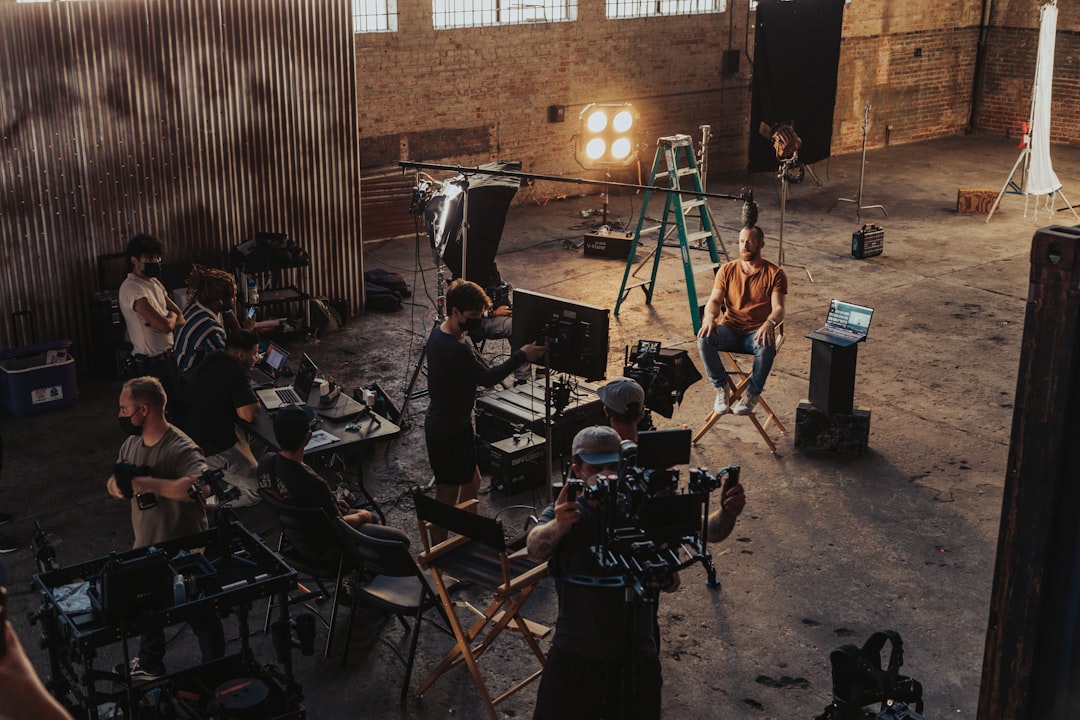
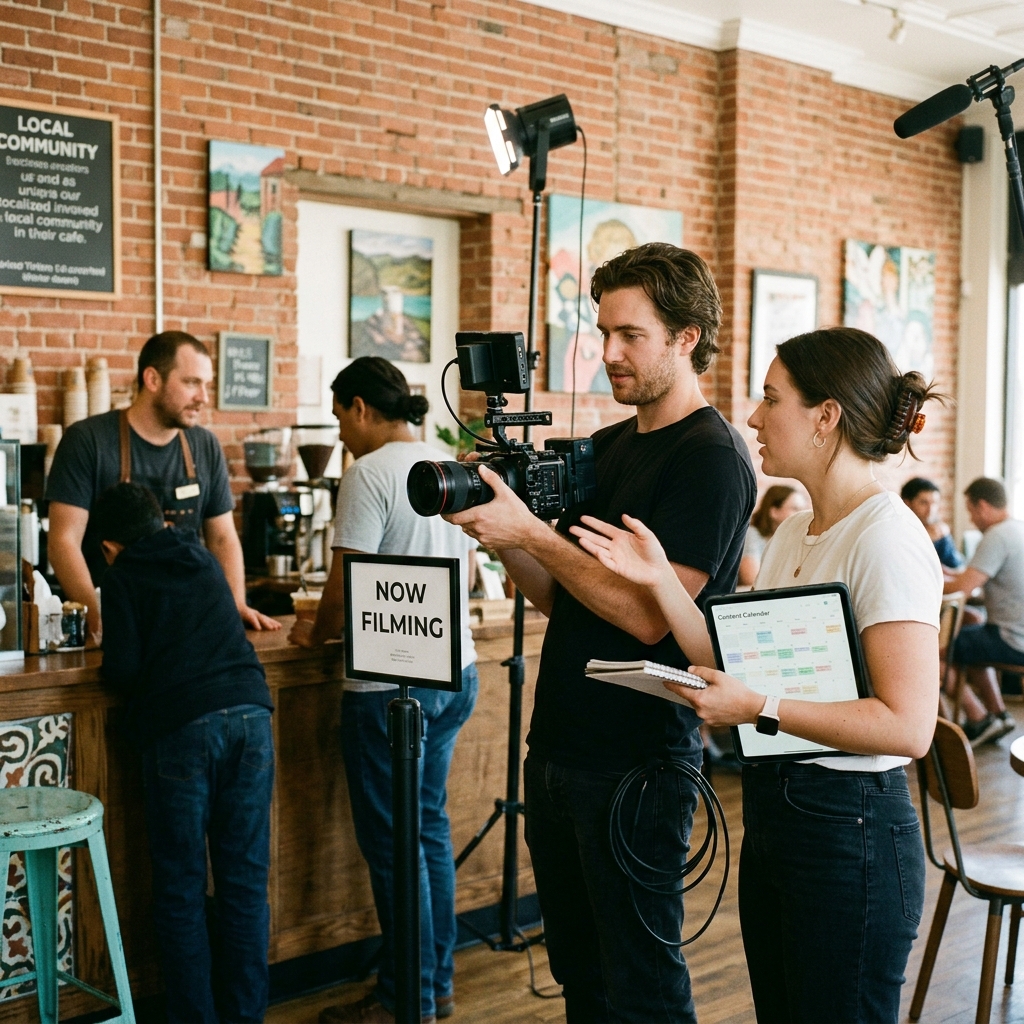
    We approach this by establishing a flexible brand framework. Your logo, color palette, and brand voice stay constant across every location. But the people, settings, and stories in your videos come from the actual community each location serves. A local video production studio works on-site, capturing real team members, local customer stories, and location-specific details that corporate teams miss.

    This builds trust faster. When customers see people from their neighborhood, in familiar settings, telling authentic stories, they’re much more likely to engage and convert. The cinematic quality keeps your brand feeling professional and premium, while the local element makes it feel accessible and real.

    The technical side matters too. Professional production standards (lighting, audio, color grading) create a cohesive visual identity across all locations. Even though each video is locally-produced, they all feel like they belong to the same brand family.

    What to do next: Document your core brand values and visual guidelines. This becomes the foundation for any local production team, ensuring consistency while allowing local flexibility.

    The Connection Between Quality Video and Lead Generation

    Video is the fastest way to build authority and credibility with potential customers. But not all video drives leads equally. Generic or low-quality video can actually hurt your brand perception and lead generation efforts.

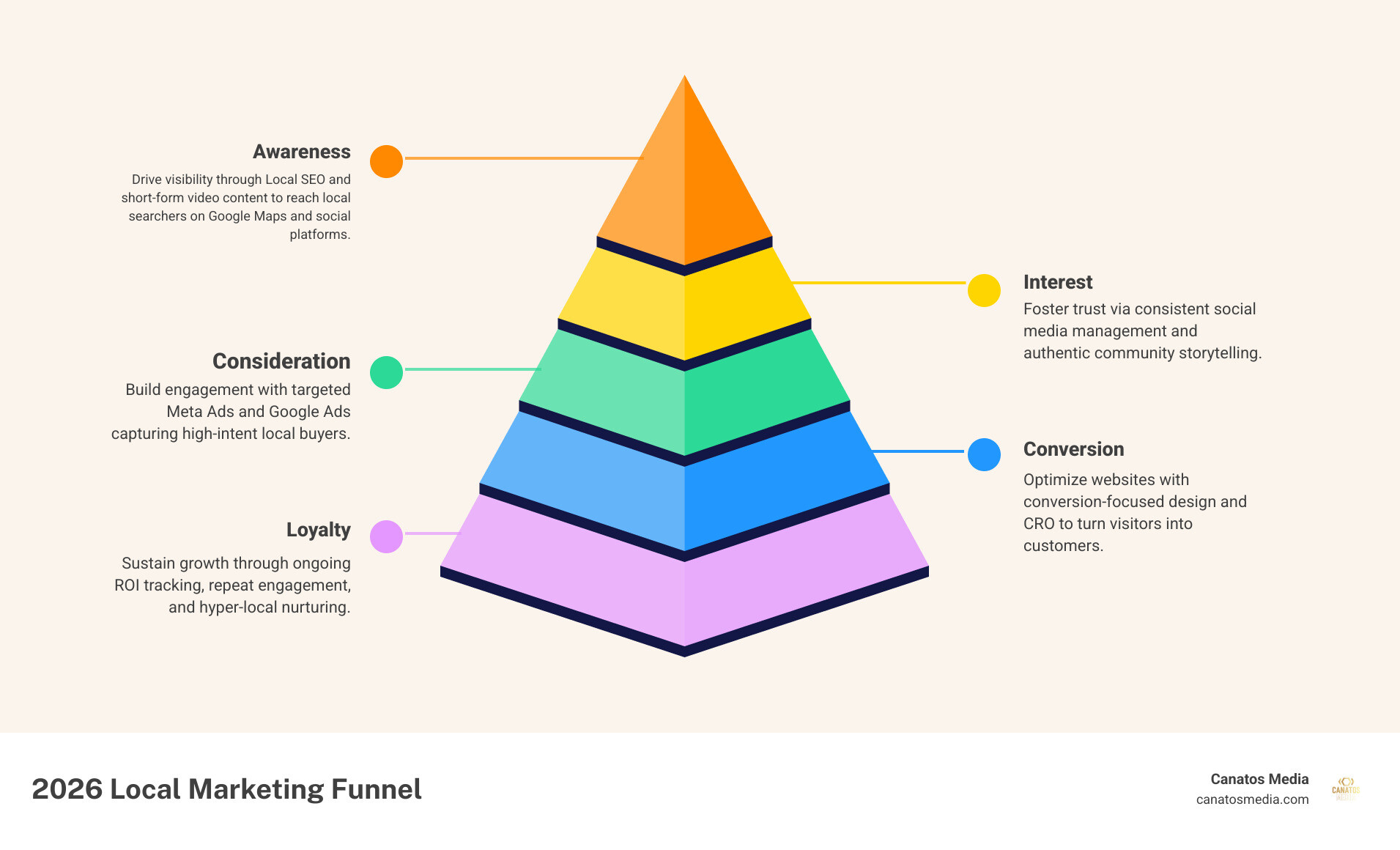
    High-quality, location-specific video serves multiple purposes in your lead generation funnel. At the awareness stage, cinematic brand storytelling pulls people in and makes them want to learn more. At the consideration stage, location-specific testimonials and service videos build confidence in your local team’s expertise. At the decision stage, professional presentation signals that you’re a legitimate, trustworthy business worth paying for.

    We’ve seen multi-location brands double their lead volume within 90 days of implementing location-specific video content across social platforms and paid advertising. The improvement comes because video works harder across your entire marketing system: it performs better on social feeds, improves engagement in paid ads, boosts email click-through rates, and increases trust on your website.

    Quality matters because your video is often the first impression potential customers have of your brand. A poorly-shot video suggests you cut corners on quality. A professionally-produced video suggests you take your work seriously.

    What to do next: Identify which stage of your sales funnel currently has the lowest conversion rate. Video content tailored to that stage (awareness, consideration, or decision) will typically show the fastest ROI improvement.

    Our Approach to Location-Specific Video Strategy

    We start every engagement by understanding your specific business model, customer journey, and what makes each location unique. This means working with location managers, front-line teams, and your corporate leadership to identify the stories that matter most.

    From there, we build a location-specific production plan that includes:

    • Site-specific scouting and planning: We visit each location to identify the best shooting locations, lighting conditions, and background settings that feel authentic to that community.
    • Local talent and testimonials: We cast team members and customers from the actual location, capturing genuine reactions and stories that resonate locally.
    • Flexible production scheduling: We coordinate shoots across multiple locations efficiently, minimizing disruption to daily operations while maintaining high production standards.
    • Consistent post-production and optimization: Every video goes through the same professional color grading, sound design, and editing process, ensuring visual consistency across locations.
    • Platform-specific delivery: We optimize each video for the platforms where your audience spends time, whether that’s social media, email, or your website.

    Beyond production, we integrate video into your broader marketing strategy. That means pairing location-specific videos with social media management, paid advertising on Meta and Google, and SEO optimization so your content reaches the right people at the right time.

    What to do next: Schedule a brief conversation with your team about which locations have the strongest stories to tell. Start there, and expand to other locations as you see results.

    Building a Content Calendar That Works for All Locations

    A content calendar is the difference between scattered videos and a cohesive content strategy. For multi-location brands, the calendar needs flexibility for local storytelling while maintaining predictable publishing schedules.

    We build location-specific content calendars that include:

    • Monthly themes: A unifying theme (like “Meet Our Team” or “Customer Success Stories”) gives direction while allowing each location to interpret it locally.
    • Local events and milestones: Seasonal promotions, local sponsorships, and location anniversary content tied to when customers are actually paying attention.
    • Consistent publishing rhythm: A regular cadence across platforms (usually 2-4 short-form videos per location per month) trains audiences to expect and engage with your content.
    • Paid and organic integration: Videos scheduled for organic reach on specific days, with paid amplification on the same content to extend reach beyond your current followers.

    A realistic calendar accounts for production time, post-production, and approval workflows. It doesn’t overcommit: producing one high-quality video per location per month is better than producing four mediocre ones.

    What to do next: Choose a 3-month window and outline the themes, events, and holidays most relevant to your business. This becomes the foundation for your content calendar.

    Measuring ROI Across Your Video Marketing Efforts

    Video ROI is measurable when you track the right metrics. We don’t just count views. We track the metrics that connect to your business goals: leads generated, sales influenced, and customer acquisition cost.

    Key metrics to monitor include:

    • Engagement rate: Comments, shares, and saves on each video reveal which stories resonate most with local audiences.
    • Click-through rate: How many viewers go from video to your website or landing page? This shows intent to learn more.
    • Lead volume and quality: How many video viewers convert to leads? How do video-generated leads compare to other marketing channels?
    • Customer acquisition cost: What’s the average cost to acquire a customer from video traffic versus other channels?
    • Location-specific performance: Which locations generate the most leads from video? Use this to refine strategy for underperforming locations.

    We review these metrics monthly and adjust content strategy based on what’s working. If a particular video format drives leads, we produce more of that type. If one location’s videos outperform others, we analyze what makes them different and replicate those elements elsewhere.

    What to do next: Establish a baseline. Pick two weeks of your current marketing performance and measure. Then implement location-specific video and re-measure after 60 days to see the difference.

    Getting Started With Professional Video Production

    Starting your local video production journey doesn’t require a huge commitment. Most brands see meaningful results by producing location-specific content for 2-3 locations first, measuring what works, then expanding.

    Here’s how we typically structure a first engagement:

    1. Discovery and strategy session: We spend time understanding your business, visiting locations, and identifying your strongest stories.
    2. Production plan development: We create a detailed plan covering locations to film, types of videos to produce, and timeline for delivery.
    3. Initial production and testing: We film location-specific content (testimonials, team introductions, service explanations) and deploy it across your marketing channels.
    4. Measurement and optimization: We track results and adjust based on what drives the most leads and engagement.
    5. Scaling: Once we understand what works, we expand production to additional locations and refine the process.

    Throughout this process, video becomes part of your broader marketing system. We integrate it with social media management, paid advertising on Meta and Google, and SEO optimization so your content reaches more people and drives more leads.

    The investment in professional production pays back quickly when you’re reaching the right audience with authentic, location-specific content. Most of our multi-location clients see lead volume improvements within 60-90 days.

    Ready to transform how your multi-location brand connects with local audiences? We work with growth-focused business owners who understand that authentic, high-quality content drives measurable results. Let’s talk about your specific situation and build a video strategy that actually scales.

    For further reading: Live production services.

    Contact us today for a free consultation to see how we can help you grow your business.

    Frequently Asked Questions (FAQ)

    How do we handle video production for brands with multiple locations?

    We develop location-specific video strategies that maintain your core brand identity while reflecting the unique characteristics of each location. Our team works with you to create a master content calendar and production schedule that ensures consistent cinematic quality across all your sites, then we customize messaging, testimonials, and local details for each market to maximize relevance and engagement.

    Why does generic content underperform for multi-location service businesses?

    Generic content ignores the fact that customers in different markets have different pain points, local competitors, and community expectations. We’ve found that location-specific videos featuring local team members, client testimonials from your area, and region-relevant messaging drive significantly higher conversion rates because they speak directly to the audiences you’re trying to reach.

    What’s the connection between our video production and actual lead generation results?

    We don’t just create beautiful videos—we integrate them into paid advertising campaigns, social media funnels, and SEO strategies that push qualified prospects toward your conversion points. Every video we produce includes clear calls-to-action and is tracked through our measurement systems so you can see exactly how many leads and sales each piece of content generates across your locations.

  • How to Optimize Short-Form Video Ads for Local Lead Generation

    How to Optimize Short-Form Video Ads for Local Lead Generation

    Why Local Businesses Struggle With Video Ad Performance

    Short-form video dominates how people discover and engage with brands, yet most local businesses still treat video ads like static ads with motion. They upload content, set a budget, and wonder why views don’t translate to leads. The gap between attention and action is where most local video campaigns fail.

    We’ve seen this pattern repeatedly: strong creative, decent reach, minimal qualified leads. The issue isn’t the video quality. It’s the strategy connecting that video to your business goals.

    Local service businesses face a unique advertising challenge. You need customers within a specific geographic area, and your sales cycle often requires trust and consideration before conversion. Generic video ad approaches don’t account for how local buying decisions actually work.

    Most local businesses either ignore video advertising entirely or copy tactics from national brands. National campaigns prioritize broad awareness. Your business needs the opposite: highly targeted video that reaches people ready to hire you soon.

    Budget constraints compound the problem. A local HVAC company, plumber, or home contractor has a smaller ad spend than a nationwide brand, which means every dollar must work harder. Wasted clicks to irrelevant viewers cost money you don’t have to spare.

    The platform algorithms also work against the unprepared. Meta and Google reward ads that drive specific actions (leads, calls, purchases). If your video ad doesn’t clearly direct viewers toward those actions, the algorithm deprioritizes it, pushing your CPM up and your ROAS down.

    What to do next: Audit your current video ads. Track how many views convert to actual leads, not just clicks. This baseline reveals whether your struggle is creative, targeting, or structural.

    The Core Challenge: Converting Views Into Qualified Leads

    Watching a video and clicking to learn more are two different behaviors. A view is passive consumption. A lead requires active intent and commitment of contact information.

    Many local businesses optimize for views or clicks. That’s the wrong metric. A video can get 5,000 views and generate zero leads if it doesn’t signal value clearly or direct viewers to a next step they’re willing to take.

    Consider a roofing company running video ads. A 15-second video showing beautiful roof installations might get high view-through rates. But if viewers watch out of curiosity without understanding the company’s guarantee, pricing, or urgency, they won’t convert. They simply watched something visually interesting and moved on.

    The conversion gap widens when video sends traffic to a generic landing page or outdated website. The viewer sees a compelling 6-second hook but lands on a page that doesn’t match the promise or feels slow to load. That friction kills conversion rates.

    Time-sensitive service businesses have an additional layer of complexity. An emergency plumber needs leads from people with urgent problems right now. A general contractor can work with longer sales cycles. Your video and landing page structure must align with how fast your customer needs to act.

    Actionable step: Map your customer journey from video view to lead submission. Identify friction points where viewers drop off. A simple friction audit (slow pages, unclear CTAs, irrelevant forms) often reveals more ROI gains than creative changes.

    What Makes Short-Form Video Different From Traditional Ads

    Short-form video operates on different psychology than traditional display ads or even long-form video. A 15-second or 30-second video viewed on mobile while someone scrolls isn’t the same as a 2-minute explainer or a TV commercial.

    Short-form demands immediate relevance. You have 2-3 seconds to signal why this video matters to this specific person. A roofing company’s video for someone searching “roof replacement near me” needs to open with the problem or solution, not a company logo or talking head.

    The platform context also shapes performance. A video native to Instagram Reels performs differently than the exact same video pushed to Facebook feed viewers. Aspect ratios, captions, pacing, and hooks must adjust for the platform and placement.

    Short-form video also rewards authenticity and speed over polish. A slick 30-second production can underperform a faster, more direct 15-second video that gets to the point immediately. This works in favor of local businesses that can’t match national production budgets.

    Mobile viewing dominates short-form consumption. Most viewers watch on phones, often without sound. Your video must communicate through visuals and on-screen text, not voiceover alone. This constraint actually simplifies messaging and often improves results.

    Our Approach: Cinematic Content That Drives Local Results

    We build short-form video ads that look cinematic but function as sales tools. The two aren’t mutually exclusive, and local businesses benefit from both.

    Cinematic storytelling creates emotional connection and brand recall. A homeowner considering a new roof doesn’t just want a functional service. They want confidence that the work will be done well, on time, and with professionalism. A cinematic video showing the transformation of a home alongside customer testimonial builds that confidence faster than listing features.

    We structure each video with a specific conversion goal in mind, not just awareness. If your video drives 10,000 views but the targeting and messaging don’t align with lead quality, those views waste budget. We reverse-engineer from your lead requirements: who needs to convert, when do they need to act, and what objection must the video overcome?

    Our short-form video production process includes testing. We don’t rely on assumptions about what your audience responds to. We produce variations on hooks, pacing, and CTAs, then measure which version drives the highest-quality leads at the lowest cost.

    We also integrate these videos into your broader digital strategy rather than treating them as standalone assets. Your video ads feed into social media management, landing page optimization, retargeting campaigns, and email follow-up. A lead generated by video performs better when the next touchpoint is already prepared to convert them.

    Strategic Video Targeting for Your Service Area

    Geographic targeting is the lever that separates local video advertising from national campaigns. You can target people within 5 miles of your address, by zip code, by neighborhood, or by custom radius.

    But geography alone isn’t enough. A plumber targeting all people within 5 miles of their office will waste money on people who don’t currently need service or can’t afford the price point. Smart targeting layers in behavior, demographics, and intent signals.

    On Meta, we combine location with audience interests and behaviors. A contractor targeting “kitchen remodeling” and “home improvement” interests, within a specific radius, reaches people actively researching that category. We exclude past customers and people who’ve already converted to lower wasted spend.

    Google Ads offers different targeting strength through search intent. People typing “emergency plumber near me” have immediate need. That intent-based targeting often outperforms demographic targeting alone because it reaches people actively looking for your service right now.

    Income and homeownership targeting also matter for local service businesses. A luxury landscaper serves different homeowners than a general maintenance company. We use platform data to filter for properties and demographics aligned with your ideal customer.

    Testing different geographic radiuses reveals efficiency. A 3-mile radius might deliver higher-quality leads than 10 miles, even if it reduces total volume. Quality leads matter more than quantity when your conversion cost is high.

    Next step: Define your true service area realistically. Many local businesses overestimate how far they can profitably serve. Use past customer data to identify your geographic sweet spot, then build targeting around that.

    Structuring Your Video Ads for Maximum Lead Capture

    The video structure itself determines conversion probability. We follow a tested framework for local lead generation.

    Open with the problem or desired outcome in the first 2 seconds. A homeowner watching a roofing ad should immediately recognize their situation. “Your roof leaks and you need it fixed this month” hits faster and more effectively than “Welcome to ABC Roofing.”

    Build urgency or credibility within seconds 3-8. Show a customer transformation, a before/after, a customer testimonial, or a specific guarantee. This section proves why they should hire you specifically.

    Close with a single, clear call-to-action in seconds 9-15. “Call now for a free inspection” or “Book your consultation with one tap.” Make the next step obvious and frictionless.

    Text overlays should highlight the most important information. Your service area, phone number, or offer appear on screen so viewers watching without sound still understand the action. Many mobile viewers have sound off by default.

    Pacing and cuts matter more in short-form than in long-form. Faster cuts (new visual every 2-3 seconds) hold attention. Slower, lingering shots often bore short-form viewers accustomed to rapid cuts on social platforms.

    A 15-second video often outperforms 30-second for local lead generation because it forces clearer messaging and costs less to produce and test.

    Platform-Specific Optimization: Meta and Google Strategies

    Meta (Facebook/Instagram) and Google Ads require different video optimization approaches because users come with different intent and context.

    Meta thrives on visual storytelling and emotional resonance. Viewers scroll through feeds for entertainment and social connection, so your video competes against personal content, not just ads. The hook matters more on Meta. We often test multiple opening visuals or text overlays to find which grabs attention first.

    Facebook and Instagram feed placements perform well for local service businesses because the visual dominance lets cinematic content shine. Reels placement requires faster pacing. Audience Network placements can expand reach but often reduce lead quality, so we typically exclude them for local service campaigns.

    Google allows video ads on YouTube and in Search and Display placements. YouTube viewers are often more intent-focused than Meta users, so we can use slightly longer, more detailed videos. Google also lets us layer in search keywords, so a video ad can appear when someone searches “plumber” + your city. That keyword context improves conversion dramatically.

    Google’s lead form extension lets people submit their information without leaving YouTube, reducing friction. We always enable this for local lead generation campaigns.

    Meta’s lead form ads work similarly. A viewer doesn’t leave the platform. They fill out a form right inside the app, then your system captures the lead immediately. This format consistently delivers lower lead cost than sending traffic to external landing pages.

    Custom audiences on Meta let us retarget people who watched our video without converting. A second video with different messaging often converts viewers who ignored the first video, so we always build retargeting into multi-video campaigns.

    Building Landing Page Integration With Your Video Ads

    Where your video sends traffic determines conversion rate as much as the video itself. A compelling video sending traffic to a slow, unclear landing page wastes the video’s potential.

    When we run video ads directly to your website, we ensure the landing page matches the video message and loads fast on mobile. If the video promises a “free consultation,” the landing page should make booking a consultation frictionless, ideally within two clicks.

    Form fields should ask only for essential information. An HVAC lead doesn’t need to answer 10 questions to schedule a service call. Name, phone, and maybe address suffice. Each extra field drops completion rate.

    Load time below 3 seconds is non-negotiable on mobile. Even a 2-second delay increases bounce rate. We test landing pages on actual mobile connections (not just fast wifi) to catch speed issues.

    If you don’t have a high-converting landing page, we can guide you toward building one. A cinematic website video that auto-plays above the fold often increases landing page engagement and time on page, signaling quality to search engines and improving overall conversion rate.

    Dynamic landing pages that personalize based on traffic source also improve conversion. A viewer who clicked a video about “kitchen remodeling” lands on a kitchen remodeling page, not a generic homepage. This relevance reduces friction.

    Measuring Video Ad Performance and Lead Quality

    Not all leads are equal. A video ad might generate 50 leads at $10 cost per lead, but if only 3 convert to customers, your actual customer acquisition cost is $167. We measure both volume metrics and quality metrics.

    View-through rate and engagement tell part of the story. A 50% view-through rate indicates the video holds attention. But this metric alone means nothing without conversion data.

    Lead volume and lead cost per platform show efficiency. Meta might generate leads at $8 while Google costs $15. This difference could reflect audience overlap or intent differences, not necessarily platform quality. We track both to optimize budget allocation.

    Lead quality metrics matter most. How many leads call you versus submit a form? How many schedule appointments versus just request information? How many become paying customers? We work with you to define what a “qualified lead” actually is, then measure conversion rates from video ad to that definition.

    Cost per acquisition (the video ad cost divided by customers it generated) is your true bottom-line metric. A video driving 100 low-quality leads at low cost underperforms a video driving 10 high-quality leads if the 10 eventually become customers.

    We establish benchmarks early, then test variations to beat them. A 2% conversion rate from video view to lead might improve to 3% through messaging changes, or to 2.5% through better targeting. Small improvements compound into significant ROI increases.

    How We Integrate Video Ads Into Your Complete Marketing System

    Video ads work best as one component of a coordinated strategy, not as standalone campaigns.

    When we manage your social media, we use video ads to drive awareness and leads, then nurture those leads through content and retargeting. A viewer who watches your video but doesn’t convert might see organic content from your social media the next day, improving brand recall and later conversion.

    Paid advertising across Meta and Google often work together in our approach. A prospect might first see your video ad on Instagram, then retarget on Google Search when they’re actively searching for your service. This multi-touch attribution shows that both channels contributed to the lead.

    Our SEO optimization ensures your website already ranks for local searches. Video ads then speed up the awareness and lead generation for competitive keywords. Combined, organic search and video ads create a more complete funnel.

    Landing page design and website support integrate directly with video campaigns. Fast, clear pages built to convert specific traffic aren’t an afterthought. They’re built in parallel with video production and are part of the success equation.

    Lead generation systems we implement capture leads from video ads, then automatically trigger follow-up email sequences or CRM notifications. The lead doesn’t just arrive in your inbox forgotten. It enters a system designed to contact and nurture it toward conversion.

    Getting Started With Your Local Video Ad Strategy

    Start by identifying your clearest opportunity. Which service or offer generates your highest-margin business? Which customer type has the shortest sales cycle? Which geographic area has the most underserved demand? Focusing your first campaign on this sweet spot increases the chance of early success and builds momentum.

    Define your conversion metric. Not views, not clicks, not leads by themselves. How do you define a qualified lead or a successful outcome? This definition shapes everything from targeting to ad structure.

    Conduct competitor reconnaissance. Search your local service area on Google and Meta. What ads are your competitors running? How are they structured? This reveals what’s already working in your market without copying it directly.

    Audit your landing page or website. Does it load fast on mobile? Can someone schedule an appointment or request information in fewer than three clicks? If not, this becomes your first priority before launching video ads.

    Connect with us to discuss your specific situation. We’ll assess your current position, identify your biggest opportunity, and propose a video ad strategy tailored to your business. We work with growth-focused business owners across service industries to turn video attention into measured leads and customers.

    Your local market is ready. The businesses generating consistent leads from video ads aren’t waiting for perfect conditions. They’re testing, learning, and optimizing. The question is whether you’ll start this quarter or let another season pass.

    Contact us today for a free consultation to see how we can help you grow your business.

    Frequently Asked Questions (FAQ)

    How long does it typically take to see leads from short-form video ads?

    We usually see meaningful lead volume within 2-4 weeks of launching optimized campaigns, though this depends on your service area size and competition level. Our process involves testing different video angles and targeting parameters during the first two weeks, then scaling what works. Most of our clients report their best ROI kicks in after 6-8 weeks once we’ve refined audience targeting and landing page alignment based on actual performance data.

    Why do our existing video ads get views but not conversions?

    The gap typically comes down to three things we fix: your videos aren’t addressing the specific problem your local customers have, your targeting reaches people outside your service area, or there’s friction between what the ad promises and what happens on your landing page. We restructure videos to lead with the outcome your customers actually want, tighten geographic targeting to your real service zones, and ensure every click lands on a page built to capture that specific lead type rather than a generic homepage.

    Can short-form video ads work for service businesses, or just e-commerce?

    Service businesses actually perform better with short-form video ads than most industries because we can showcase results and build trust quickly. We focus on before-and-after transformations, customer testimonials, and process clarity rather than product shots. Your local customers need to see that you understand their specific problem and can deliver, and cinematic short-form content is the fastest way to prove that across Meta and Google.

  • How to Pick an Ecommerce SEO Firm That Actually Delivers

    How to Pick an Ecommerce SEO Firm That Actually Delivers

    Why Most Online Stores Never Find the Right Ecommerce SEO Partner

    An ecommerce seo firm is a specialized agency that helps online stores rank higher in search engines, drive qualified organic traffic, and turn that traffic into real revenue — not just clicks.

    Top things to look for when choosing an ecommerce SEO firm:

    1. Ecommerce-specific experience — not a generalist agency that “also does ecommerce”
    2. Revenue-first reporting — tracks organic revenue and conversions, not just rankings
    3. Platform expertise — deep knowledge of Shopify, Magento, WooCommerce, or BigCommerce
    4. Technical SEO capabilities — crawl budget management, Core Web Vitals, structured data
    5. AI and GEO readiness — optimizes for Google AI Overviews, ChatGPT, and Perplexity
    6. Transparent process — clear deliverables, no black-box reporting
    7. Proven case studies — real numbers, not vague claims

    The ecommerce landscape in 2026 is more competitive than ever. Organic search has evolved beyond blue links — AI-powered tools like ChatGPT and Google AI Overviews now shape how shoppers discover products before they ever visit your store. At the same time, paid advertising costs keep climbing, making organic traffic one of the few sustainable, high-ROI channels left for online stores.

    The problem? Not all SEO agencies are built for ecommerce. Managing thousands of product pages, seasonal keyword shifts, faceted navigation, and crawl budgets requires a completely different skill set than a standard content or lead-gen SEO campaign. Picking the wrong partner wastes both time and money.

    I’m Nic Canobbio — through my work at Canatos Media leading data-driven content and digital growth strategies, I’ve seen how the right ecommerce seo firm can transform organic search into a predictable revenue engine. This guide will help you cut through the noise and find a partner that actually delivers.

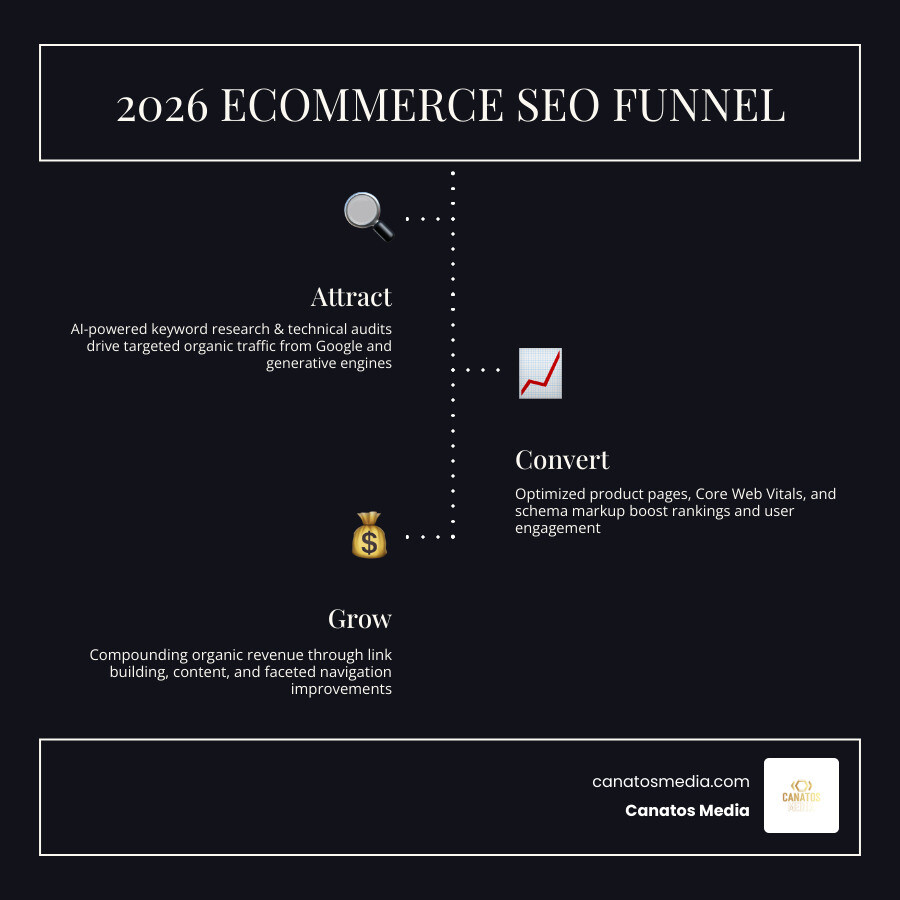
    Ecommerce SEO lifecycle from crawling to conversion to revenue growth - ecommerce seo firm infographic roadmap-5-steps

    Why Your Online Store Needs a Specialized Ecommerce SEO Firm in 2026

    In 2026, search is no longer a static list of results; it is generative, conversational, and highly unpredictable. For online stores in the tri-state area and Long Island, the stakes have never been higher. If you aren’t visible where people are searching—whether that’s Google, TikTok, or ChatGPT—you are effectively invisible to your customers.

    A specialized ecommerce seo firm understands that ecommerce isn’t just about traffic; it’s about transactional intent. While a general SEO agency might celebrate a blog post getting 10,000 hits, an ecommerce expert cares about how many of those visitors actually added a product to their cart.

    Comparison of organic vs paid traffic showing long-term ROI of SEO - ecommerce seo firm

    The Complexity of Scale

    Unlike a service-based website with ten pages, an online store might have 500, 5,000, or even 50,000 SKUs. This creates unique challenges:

    • Crawl Budget Management: Ensuring search engines don’t waste time on low-value pages (like login screens or search filters) and instead focus on your top-selling products.
    • Faceted Navigation: Managing those helpful sidebar filters (size, color, price) so they don’t create thousands of duplicate content issues.
    • Seasonal Trends: Preparing for Black Friday or summer surges months in advance so you’re ranking when the “buy” intent is highest.

    At Canatos Media, we believe in integrated strategies that connect your technical foundation with high-quality content. We focus on sustainable growth—the kind that has facilitated over 20 million ecommerce transactions across the industry. While rankings are a leading indicator, the only metric that truly matters in 2026 is organic revenue.

    Furthermore, with the rise of AI-driven discovery, your store needs to be optimized for more than just “blue links.” You need AI search optimization to ensure your products appear in generative summaries and conversational AI responses.

    Key Elements of a High-Performance Strategy

    To outpace the competition, your ecommerce seo firm must move beyond basic keyword stuffing. A high-performance strategy is built on a “revenue-grade” framework that prioritizes the most profitable pages of your site.

    Technical Foundation and Core Web Vitals

    Site speed is no longer “nice to have”—it’s a conversion killer. Statistics show that nearly 40% of people leave a site if it takes more than 3 seconds to load. In 2026, Google’s Core Web Vitals (LCP, INP, and CLS) are the baseline for ranking. If your site is sluggish, your rankings will suffer, and your ad spend will be wasted on high bounce rates.

    Site speed performance metrics showing load time impact on conversions - ecommerce seo firm

    Semantic SEO and Entity Mapping

    Modern search engines use “entities” to understand the relationship between products, brands, and user intent. Advanced technical SEO now involves semantic keyword mapping. This means instead of just targeting “running shoes,” we optimize for the entire ecosystem of that product: “best marathon footwear for flat feet,” “durable carbon-plate trainers,” and “moisture-wicking socks.”

    Traditional SEO vs. Ecommerce SEO

    It is helpful to understand how these two worlds differ. Here is a quick breakdown:

    Feature Traditional SEO Ecommerce SEO
    Primary Goal Awareness & Lead Gen Sales & Revenue
    Page Volume Low (10-50 pages) High (500 – 100,000+ pages)
    Technical Focus Content & Backlinks Crawl Budget & Faceted Nav
    Keyword Intent Informational/Educational Transactional/Commercial
    Success Metric Form Fills/Calls Organic Revenue/ROAS

    By focusing on the buyer’s journey, we ensure that your category pages act as persuasive landing hubs. As seen in our Case Studies, transforming a generic category list into a high-intent “buying guide” can drastically reduce Customer Acquisition Costs (CAC).

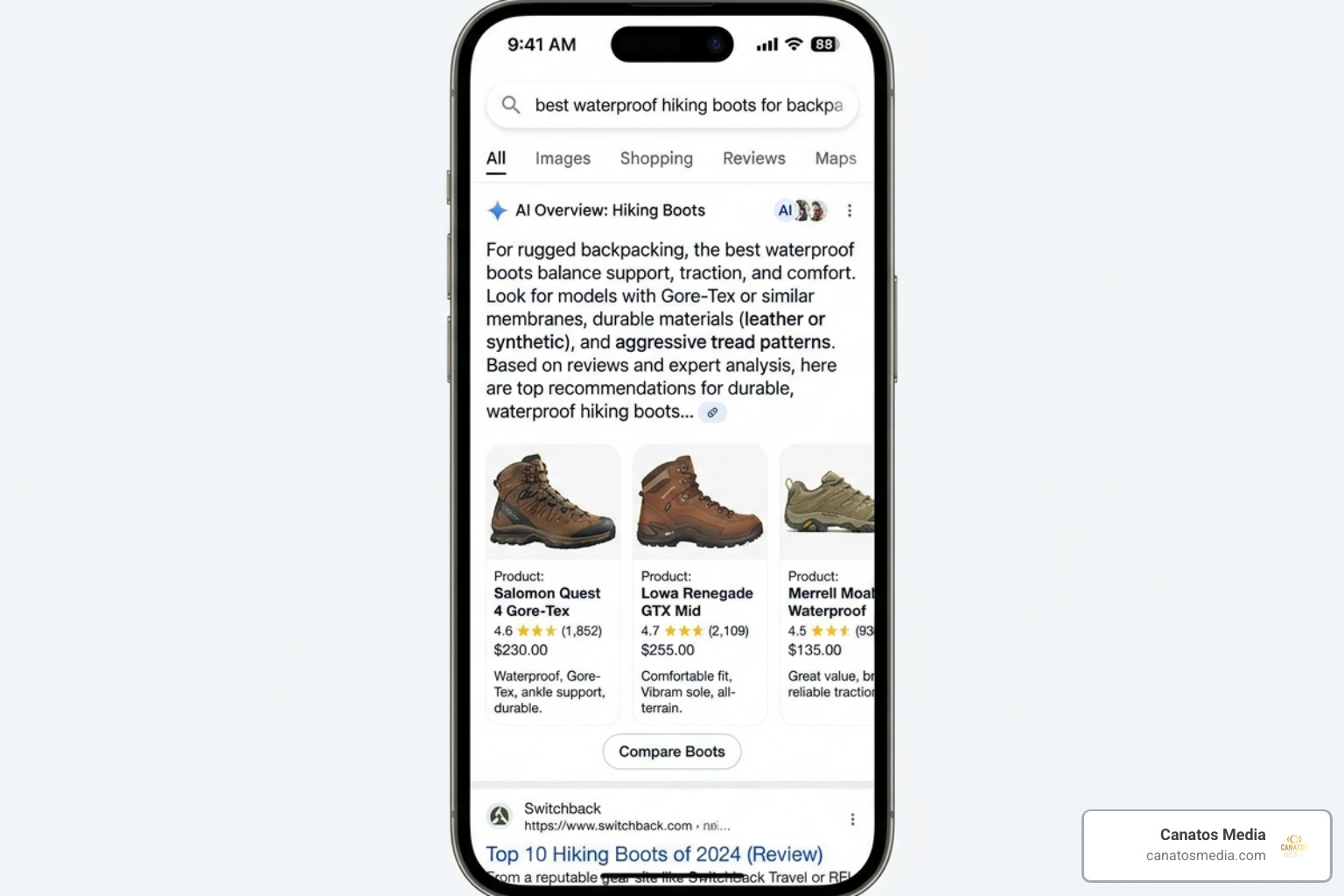
    The biggest shift we’ve seen leading into 2026 is the rise of Generative Engine Optimization (GEO). Search is becoming a conversation. When a user asks ChatGPT, “What are the best sustainable leather boots for a New York winter?” your brand needs to be the answer.

    ChatGPT and AI Overviews

    Top-tier agencies are now optimizing for visibility in AI Overviews and LLMs (Large Language Models). This requires:

    • Structured Data (Schema): Giving AI agents clear, machine-readable data about your prices, availability, and reviews.
    • Brand Authority: Building a digital footprint that proves your brand is a trusted expert.
    • Conversational Content: Writing in a way that answers the specific questions shoppers ask AI tools.

    We regularly discuss these shifts on our Blog, highlighting how sites that achieve 25M+ monthly visitors are those that embrace AI discovery rather than fighting it. If your ecommerce seo firm isn’t talking about GEO, they are living in 2020.

    Common Pitfalls to Avoid When Hiring

    Hiring an agency is a major investment. Unfortunately, many businesses fall into what we call the “Shitty Agency Problem”—where you’re sold by a senior executive but then passed off to a junior staffer who has never managed a site with more than 200 SKUs.

    Watch out for these red flags:

    • Vanity Metrics: If an agency only talks about “ranking #1 for [obscure keyword],” run. You can’t pay your employees with rankings; you need revenue.
    • Long-Term “Lock-In” Contracts: While SEO takes time, you should never be trapped in a 12-month contract with no exit clause. We believe in transparency and fair pricing based on measurable outcomes.
    • Lack of CRO Integration: Traffic is useless if your site doesn’t convert. A 40% bounce rate often stems from a disconnect between what the user searched for and what they saw on the page.
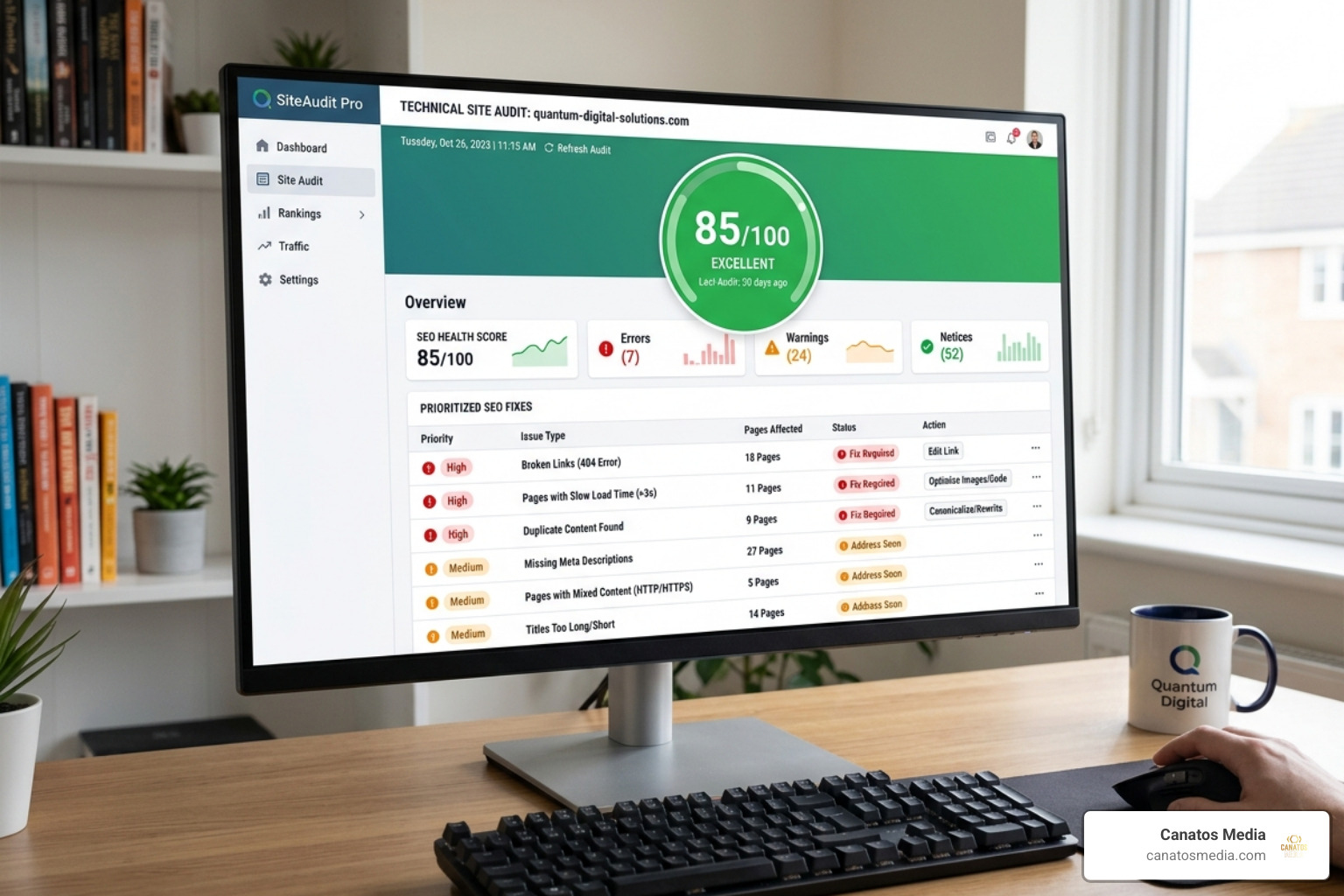
    • Technical Debt: Agencies that ignore 404 errors or use 302 (temporary) redirects instead of 301 (permanent) redirects are actively harming your site’s long-term health.

    Frequently Asked Questions about Ecommerce SEO

    How long does it take to see results from an ecommerce SEO firm?

    Typically, you will see “leading KPIs”—such as ranking improvements for long-tail keywords and technical health scores—within the first 3 months. Significant surges in traffic and meaningful organic revenue growth usually materialize between 3 to 6 months.

    We have seen real-world examples where a focused roadmap led to a 1,065% increase in organic revenue over a year by prioritizing “quick wins” like category page optimization.

    What is the typical pricing for an ecommerce SEO firm?

    High-quality ecommerce SEO is a managed service that requires a team of specialists (developers, copywriters, and strategists). Pricing often starts around $5,000 monthly for mid-sized stores. At Canatos Media, we use custom scoping to ensure your budget aligns with your revenue goals. We don’t believe in one-size-fits-all packages; we believe in ROI attribution that proves the value of every dollar spent.

    What platforms do top agencies specialize in?

    The best firms are platform-agnostic but have deep technical “black belts” in specific systems. Common specializations include:

    • Shopify & Shopify Plus: Great for scaling quickly with integrated SEO tools.
    • Magento (Adobe Commerce): Ideal for massive catalogs but requires heavy technical lifting.
    • BigCommerce: Known for strong out-of-the-box SEO features.
    • WooCommerce: Highly customizable for WordPress-based stores.

    A top-tier ecommerce seo firm should also be an expert in site migrations—ensuring that if you move from Magento to Shopify, you don’t lose your hard-earned organic rankings in the process.

    Conclusion

    Choosing an ecommerce seo firm is one of the most important decisions you’ll make for your online store’s growth. In the tri-state area and Long Island, where competition is fierce, you need more than just a “vendor”—you need a partner who understands the intersection of content, technology, and commerce.

    At Canatos Media, we don’t just “do SEO.” We build growth engines. By combining cinematic short-form video, expert social media management, and data-driven paid ads with our revenue-focused SEO strategies, we help brands dominate their niche.

    Ready to turn your store into an organic revenue machine? Explore our full range of digital marketing services and let’s start growing your brand today.

  • How Cinematic Short-Form Video Drives Meta and Google Lead Generation

    How Cinematic Short-Form Video Drives Meta and Google Lead Generation

    Why Generic Video Content Fails Your Lead Gen Strategy

    Most brands treat video as just another asset to fill their content calendar. They shoot something, post it, and hope it converts. The reality is that generic video content rarely moves the needle on lead generation because it lacks a core purpose: turning viewers into prospects.

    We’ve seen countless campaigns where a business invests in video production only to see minimal lead volume. The problem isn’t the camera quality or editing style. It’s that the video was created without a clear conversion path baked into its narrative. A well-shot video of your product sitting on a shelf tells viewers what you sell, but not why they should care or what to do next.

    When video lacks strategic intent, viewers scroll past it. They may enjoy it momentarily, but they don’t take action. This is especially true on social platforms where attention spans are measured in seconds and competition for engagement is fierce. Your video needs to do more than entertain or inform; it needs to compel the viewer to click, fill out a form, or reply with their contact information.

    Generic content also fails because it doesn’t align with platform-specific behaviors. A video optimized for YouTube’s longer watch time performs differently than one designed for the thumb-stopping friction of TikTok or Instagram Reels. Without this strategic alignment, your video reaches the right audience but misses the conversion entirely.

    The Gap Between Attention and Conversions on Social Platforms

    There’s a massive difference between getting views and generating leads. A video can rack up thousands of impressions while producing zero qualified leads if it doesn’t bridge the attention-to-action gap. This gap exists because social platforms reward engagement metrics that aren’t directly tied to business outcomes.

    When you run a video ad on Meta or Google, the algorithm optimizes for metrics like watch time, clicks, and engagement. These are good indicators that your creative is working, but they’re not the same as lead quality. A user might pause on your video because it caught their eye, but without a clear next step, that moment of attention dissipates. They keep scrolling, and your marketing dollar is partially wasted.

    The gap widens when brands focus only on vanity metrics. They celebrate a 50,000-view count while ignoring that only 12 of those viewers became leads. Conversely, some brands create content so focused on the hard sell that it alienates viewers before they’re ready to convert. The real skill is creating video that holds attention while planting seeds of desire that turn into action.

    Social algorithms also compound this problem. They’re designed to keep users on the platform, not necessarily to send them to your landing page or contact form. Your video needs to be so compelling within the platform’s native environment that users are willing to leave it and take the next step. This requires both emotional pull and a crystal-clear call to action.

    What Makes Cinematic Short-Form Content Different

    Cinematic short-form video isn’t just about production value, though that matters. It’s about combining filmmaking techniques with conversion psychology to create content that stops the scroll and drives measurable action.

    Cinematic storytelling uses lighting, composition, color grading, and narrative pacing to create an emotional response. When done well, it makes viewers feel something about your brand before you’ve made a single product claim. A well-framed shot of a client’s transformation or a problem being solved stays with viewers longer than a talking-head explanation ever could.

    Short-form adds the critical element of respect for attention. Rather than asking viewers for five minutes, we deliver a complete story arc in 15 to 60 seconds. This constraint forces clarity. Every frame serves the conversion goal. There’s no filler, no tangential storytelling. The viewer gets in, feels the impact, and knows exactly what to do next.

    When we combine these elements, we create content that performs across Meta and Google platforms without feeling like an ad. It looks like content users actually want to watch, which means the algorithm favors it, it gets better placement, and viewers engage authentically rather than out of obligation.

    How We Combine Storytelling with Performance Metrics

    We don’t treat video production and performance marketing as separate disciplines. From the moment we conceptualize a cinematic short-form video, we’re thinking about how it will perform in paid campaigns and what conversion actions we want to drive.

    Our process starts with defining the lead stage. Are we building awareness among cold audiences who’ve never heard of you, or are we nurturing prospects who already know your brand? The story we tell and the metrics we optimize for change dramatically based on this answer. A top-of-funnel awareness video might optimize for watch time and engagement, while a bottom-funnel video optimizes for clicks to a form.

    We build in performance hooks from the script stage. These are narrative moments that naturally lead viewers to take action. Maybe it’s revealing a solution to a pain point they’ve been sitting with, or showing a transformation that makes them want to learn more. These hooks feel organic because they’re part of the story, not bolted on as afterthoughts.

    Our team measures success against lead metrics from day one. We track not just how many people watched the video, but how many of those viewers clicked through to your website, filled out a form, or replied with a message. We tie revenue data back to specific videos so you see exactly which creative drives bottom-line results.

    Building Lead Gen Funnels with Visual-First Content

    A single video rarely generates leads at scale. Instead, we build funnels where multiple pieces of video content work together to move prospects from awareness to decision.

    At the top of the funnel, we use cinematic short-form video to identify and attract your ideal customer. This video tells a story about a problem they face or a result they’re after. It’s aspirational, visually rich, and designed to make viewers curious enough to engage.

    In the middle, we deploy video that builds trust and credibility. This might be client testimonials told cinematically, case studies that show real transformations, or expert content that positions your team as knowledgeable. At this stage, the viewer is aware of you and considering whether you’re the right choice.

    At the bottom of the funnel, we use video to overcome final objections and push toward the conversion. This is where direct calls to action become appropriate. A short video walking through your booking process, showcasing your pricing structure, or highlighting your guarantee removes friction at the critical moment.

    Each video in the funnel serves a strategic purpose and uses different visual language and messaging. Together, they create a cohesive journey that educates, builds confidence, and converts.

    Meta Ads Optimization for Cinematic Videos

    Meta’s platform powers Facebook, Instagram, and Threads. It’s where most short-form video lead generation happens today, and optimizing your cinematic videos specifically for Meta increases performance dramatically.

    Meta prioritizes native video over external links, which means a beautifully shot, in-feed cinematic video will get better placement and cheaper cost-per-result than a video that’s clearly trying to drive users away. We create videos knowing they’ll live in Meta’s feed environment first.

    Hook optimization is critical on Meta. The first three seconds determine whether a user keeps watching or scrolls past. We use quick cuts, movement, text, and compelling visuals in the opening to stop the thumb. The rest of the video maintains interest through narrative pacing and emotional resonance.

    We also test multiple creative variations against the same audience. One video might use text overlay extensively, while another relies purely on visual storytelling. We measure which approach generates the lowest cost-per-lead and scale that winner. A small difference in creative approach can mean 30-40% improvement in lead volume at the same budget level.

    Audience targeting on Meta becomes more powerful with video. Rather than showing your cinematic video to broad demographics, we use lookalike audiences built from your existing customers and website visitors. This ensures your high-production-value video reaches people most likely to convert.

    Google Advertising Strategies for Short-Form Content

    Google’s ecosystem includes YouTube, Google Search, and Display Network placements. Short-form cinematic video performs differently on each, and we adjust our strategy accordingly.

    On YouTube, viewers have come to the platform with intent. They’re searching for tutorials, product reviews, and how-to content. Our cinematic short-form videos work well here because they deliver value quickly. We create videos that answer specific search queries (like “How do I choose a contractor?” or “What does physical therapy cost?”) and include clear CTAs that send interested viewers to your lead form.

    Google Search ads using video are newer but powerful. We create short cinematic videos highlighting your unique value proposition and use them alongside text ads to capture users actively searching for solutions you provide. These videos interrupt the normal search results and significantly boost click-through rates.

    On the Display Network, our cinematic videos appear across thousands of websites users visit. Here, we optimize for early engagement rather than immediate leads. We’re building familiarity and recall, knowing that viewers might see your video multiple times before they’re ready to convert.

    We structure Google video campaigns to retarget viewers who watched your first video. If someone watched 75% of your awareness video but didn’t convert, we show them a nurturing video with more specific information. This sequential storytelling approach converts significantly better than random video placement.

    Measuring ROI: From Views to Qualified Leads

    We track the complete customer journey from first video impression to qualified lead. This means our reporting goes well beyond standard video metrics.

    A view is the start, not the endpoint. We measure view-through rates (how much of the video someone watched), engagement rates (clicks, shares, replies), and most critically, conversion rates (how many viewers became leads). A video with fewer views but significantly higher conversion rate is more valuable than one with high vanity metrics.

    We implement tracking pixels on your landing pages and form submissions so we can attribute leads back to specific videos and campaigns. This gives us concrete data on which creative drives the lowest cost-per-lead and which audiences convert most readily.

    We also segment leads by quality. Not all leads are equal. Some are high-intent prospects ready to buy, while others are exploratory and might need months of nurturing. We measure both volume and quality, adjusting our video strategy to emphasize whichever better serves your business model.

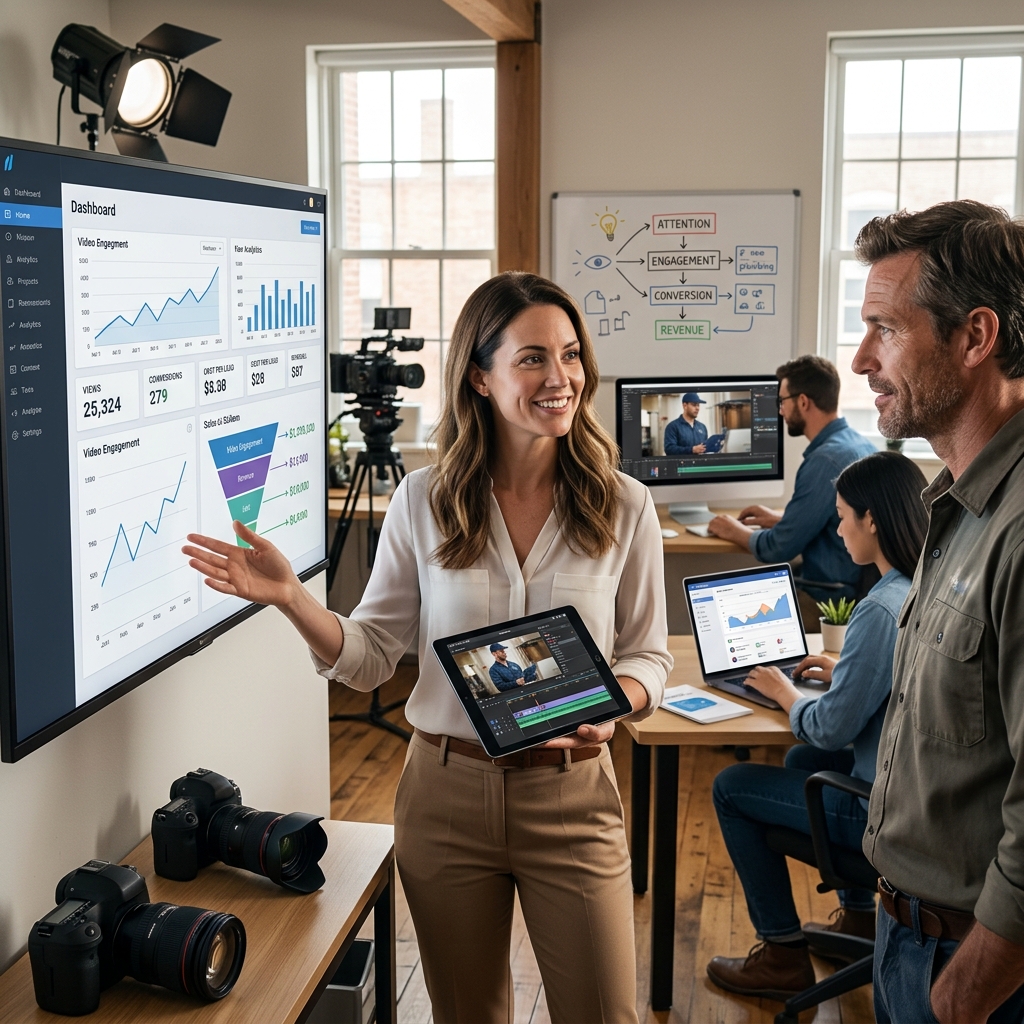
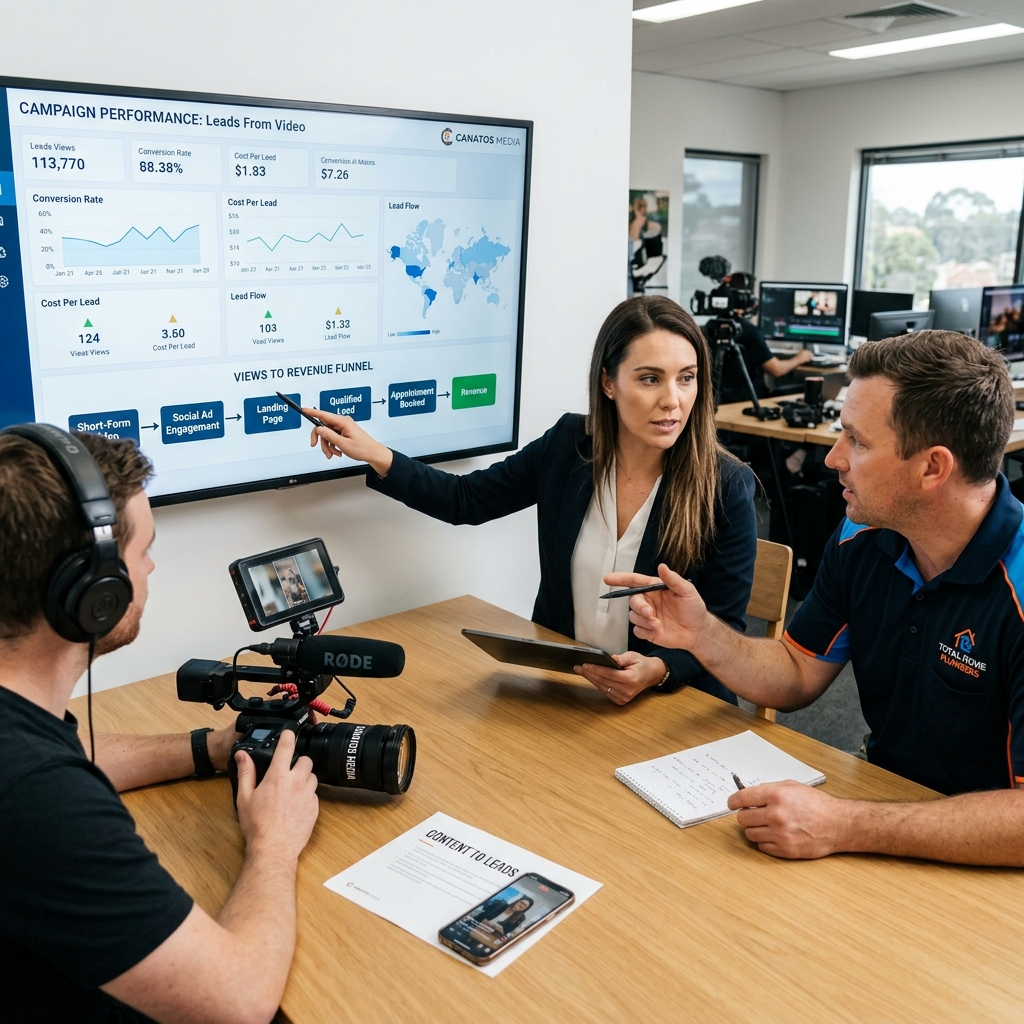
    Our dashboards show you real-time performance data: total video views, cost-per-view, total leads generated, cost-per-lead, and conversion rate from lead to customer. You see exactly how much revenue each video campaign is generating, not just how many impressions it received.

    Common Mistakes Brands Make with Lead Gen Video

    We’ve seen patterns emerge from working with hundreds of brands. Understanding these mistakes helps you avoid them.

    The first mistake is starting production before defining the conversion goal. Too many brands shoot beautiful video without asking “What specific action do we want viewers to take?” This results in content that impresses but doesn’t convert. Know your goal before you roll cameras.

    The second mistake is underestimating the importance of the first three seconds. On social platforms, the opening moment determines everything. Brands often bury their hook deep in the narrative or rely on slow cinematic reveals that lose viewers before the payoff. We frontload interest and grab attention immediately.

    The third mistake is ignoring platform specifics. A video optimized for YouTube Shorts doesn’t automatically perform on Instagram Reels or TikTok. Aspect ratios, captions, and pacing all need adjustment. Using the same video across all platforms leaves performance on the table.

    The fourth mistake is weak calls to action. Some brands create excellent cinematic video but then end with a generic “Learn more” or no CTA at all. At the end of your video, viewers should know exactly what to do next: click the link, call the number, or send a message. Make it impossible to miss.

    Our Integrated Approach to Video and Digital Marketing

    We’ve found that cinematic video performs best when integrated into a complete digital marketing system. Video alone is powerful; video combined with optimized landing pages, strategic paid media, social management, and SEO creates exponential results.

    Our approach starts with your website. We ensure that when viewers click through from a video, they land on a page designed to convert them. This might mean cinematic website videos that maintain storytelling momentum or a dedicated landing page with form fields matching the video’s promise.

    We manage your paid advertising across platforms so your video reaches the right audience at the right time with the right frequency. This includes Meta campaigns for awareness and engagement, Google Search for high-intent prospects, and YouTube for educational content.

    On social channels, we layer organic content strategy with paid video distribution. Organic posts build community and trust while paid videos reach new prospects at scale. These work together rather than cannibalizing each other.

    We optimize your website for search engines so prospects searching for solutions you provide find your content before they ever see your ads. This creates a marketing engine where multiple channels reinforce each other and compound results over time.

    Getting Started with Your Lead Generation System

    If you’re ready to move beyond generic video and build a lead generation system that actually converts, here’s what we recommend.

    Start by auditing your current video content. Watch it as a prospect would. Does it grab attention in the first three seconds? Does it tell a clear story? Does it end with an obvious next step? Most brands find gaps in at least one of these areas.

    Next, identify your highest-value lead sources. Are leads from certain audiences more likely to convert into customers? Do some customer segments have higher lifetime value? Focus your cinematic video strategy on attracting and converting your best-fit prospects rather than casting a wide net.

    Then, work with our team to map out a lead gen funnel that tells a cohesive story across multiple videos. Rather than creating one standalone video, we’ll build a system where prospects move through awareness, consideration, and decision stages with carefully crafted cinematic content at each stage.

    Finally, commit to measurement. Set up tracking, define your baseline metrics, and give your system 60 to 90 days to generate data. We’ll optimize based on real performance, improving cost-per-lead and conversion rates over time.

    Our team at Canatos Media specializes in this exact work. We’ve built cinematic short-form video systems for service-based brands, multi-location businesses, and growth-focused companies across industries. Let’s talk about building your lead generation system from the ground up.

    For further reading: Cinematic website videos.

    Contact us today for a free consultation to see how we can help you grow your business.

    Frequently Asked Questions (FAQ)

    How do we ensure our cinematic videos actually convert to leads, not just get views?

    We build performance metrics into our storytelling from day one. Our team creates visually compelling content that’s optimized for Meta and Google’s conversion objectives, meaning we’re tracking click-through rates, form submissions, and qualified lead data throughout the campaign. We don’t separate the art from the results—we measure both cinematography quality and actual sales pipeline impact so you know exactly what your investment is generating.

    What’s the difference between the short-form videos we produce and generic video ads?

    We approach each video as a cinematic brand story rather than a quick promotional clip. Our production captures your brand’s unique value through intentional framing, color grading, and narrative structure—elements that stop the scroll and hold attention. We then optimize these premium visuals for each platform’s specifications and your specific lead generation objective, so the production quality directly supports your conversion goal, not just your brand image.

    How do we integrate video with the rest of our digital marketing strategy?

    Video is the foundation, but we connect it to paid advertising, SEO, social media management, and our lead capture systems so every piece of content works toward your sales pipeline. When we run cinematic videos on Meta or Google, we’re simultaneously supporting your website’s visibility, managing your social presence, and ensuring the leads we drive land on optimized landing pages. We see ourselves as responsible for the full conversion path, not just the video production.

  • YouTube PPC Ads for People Who Like Results

    YouTube PPC Ads for People Who Like Results

    Why YouTube PPC Ads Are One of the Most Powerful Tools for Local Business Growth

    YouTube PPC ads are a pay-per-click advertising model that lets businesses run video promotions on YouTube — and only pay when someone watches or clicks. Here’s the quick version:

    What You Need to Know The Short Answer
    What is YouTube PPC? Video ads on YouTube where you pay per view or click
    How much does it cost? Typically $0.10–$0.30 per view; $5–$15 CPM
    Who sees your ads? Targeted audiences by age, interest, location, behavior, and more
    Where do ads appear? YouTube, Google TV, and Google Display Network partner sites
    What formats are available? Skippable, non-skippable, bumper, Shorts, in-feed, masthead
    How do you measure success? View rate, CTR, CPA, ROAS, and watch time

    YouTube is the second-largest search engine on the planet. It pulls in over 2.1 billion monthly users and generated more than $40 billion in ad revenue — outearning major TV networks like Disney, Paramount, and Warner Bros. Discovery combined. For local businesses trying to cut through the noise, that reach is hard to ignore.

    Here’s what makes YouTube PPC different from a billboard or a Facebook post: you only pay when someone actually engages. And because it runs through Google Ads, the targeting is backed by the most detailed user data on the internet — search history, viewing habits, purchase intent, and more.

    87% of users who discover a brand on YouTube or Google say they took some kind of action afterward. That’s not passive scrolling — that’s a platform built for decisions.

    I’m Nic Canobbio, founder of Canatos Media, and with over two decades in media production and content strategy — including building campaigns that have driven over 60 million social views — I’ve seen how YouTube PPC ads can transform a local business’s visibility and lead flow. This guide walks you through everything you need to run them the right way.

    YouTube PPC ecosystem infographic showing ad formats, targeting options, cost models, and key metrics infographic

    Understanding the Mechanics of YouTube PPC Ads

    At a basic level, YouTube PPC is Google Ads for video. You upload or connect a video hosted on YouTube, choose an objective, define your audience, set a budget, and enter an auction every time a potential viewer becomes available.

    That auction is the part many businesses overcomplicate. It is not just “highest bid wins.” Google also looks at relevance, expected performance, and how well your ad matches the viewer and the placement. So yes, money matters, but so do good creative and smart targeting.

    Compared with other ad models:

    • PPC means you pay when someone engages, such as a qualifying view or click
    • CPM means you pay per 1,000 impressions
    • vCPM focuses on viewable impressions
    • CPA or ROAS-based bidding tells Google to optimize for conversions or conversion value

    Because YouTube runs inside Google Ads, it works nicely with broader paid media efforts. If you want a primer on the big picture, our Step-by-Step Guide to Paid Ads pairs well with Google’s own overview on how to Drive the results you care about with YouTube Ads.

    google ads auction process for youtube video campaigns

    Core Components of YouTube PPC Ads

    There are four moving parts we pay the most attention to:

    • Bidding strategy
    • Ad relevance
    • Audience intent
    • Creative quality

    Bidding strategy controls how aggressively Google pursues views, impressions, clicks, or conversions. Ad relevance affects whether the platform sees your message as a good fit. Audience intent determines how close the viewer is to taking action. Creative quality decides whether anyone cares after the ad starts.

    A quick example: if someone has recently searched for “best apartment in Long Island” or “dentist near me” and then watches a related video, that viewer is much more valuable than random cold traffic. That is why intent-based targeting often beats broad reach when lead quality matters.

    Setting Up Your First Campaign

    If you are launching your first campaign, keep it simple.

    1. Link your Google Ads account to your YouTube channel.
    2. Choose a campaign objective such as Sales, Leads, Website traffic, or Awareness and consideration.
    3. Select a video campaign type and subtype.
    4. Set your budget and bidding strategy.
    5. Build ad groups around audience themes.
    6. Add targeting, exclusions, and devices.
    7. Create your ad with headline, CTA, final URL, and video.
    8. Launch, then give the campaign a few days to stabilize.

    Google’s official walkthrough is here: Create a Video campaign – YouTube Help.

    A few practical setup tips:

    • Start with one clear goal per campaign
    • Use conversion tracking before spending real money
    • Group audiences by intent, not by chaos
    • Upload videos as Unlisted if you do not want them on your public channel feed
    • Create multiple ads per campaign for testing

    If you want more paid media resources after launch, our Tag: Paid Ads page is a useful next stop.

    High-Performance YouTube Ad Formats for 2026

    Not every format is right for every goal. Some are built for awareness, some for clicks, some for conversions, and some for “please remember us when you are ready.”

    The main YouTube ad formats for PPC campaigns in 2026 are:

    • Skippable in-stream ads
    • Non-skippable in-stream ads
    • Bumper ads
    • In-feed video ads
    • Shorts ads
    • Masthead and other premium awareness options
    Format Best For Billing Model Typical Length
    Skippable in-stream Traffic, leads, sales, awareness CPV, CPA, ROAS 7 seconds to several minutes
    Non-skippable in-stream Strong awareness CPM Up to 15-30 seconds
    Bumper Fast recall and frequency CPM Up to 6 seconds
    In-feed video Intent-driven discovery Clicks, views Flexible
    Shorts ads Mobile-first reach and efficient acquisition Varies by goal 5-30 seconds
    Masthead Massive reach Reservation/CPM Premium placement

    If we had to pick the most versatile format for most local businesses, it is still skippable in-stream. You only pay after a qualifying engagement, and it gives you enough time to explain the offer without trapping the viewer in a hostage situation.

    Optimizing YouTube PPC Ads for Mobile Users

    More than 70% of YouTube watch time happens on mobile devices. That means your ad should be built for a thumb, not a theater screen.

    What that looks like in practice:

    • Use large text that can be read on a phone
    • Favor 9:16 vertical or mobile-safe compositions when running Shorts
    • Add captions because many users watch with low or no sound
    • Show the product, service, or benefit immediately
    • Keep landing pages fast and mobile-friendly

    A lot of this overlaps with social creative best practices too. Our take on thumb-stopping ad design over on Stop the Scroll and Start the Toll with Meta Paid Ads applies here as well.

    The 5-Second Rule for Creative Success

    The skip button appears fast. Your ad needs to work faster.

    We often use a simple structure:

    • Hook
    • Amplify
    • Bridge
    • CTA

    Here is what that means:

    • Hook: grab attention in the first 2-5 seconds
    • Amplify: make the pain point, benefit, or curiosity stronger
    • Bridge: explain why your business is the solution
    • CTA: tell viewers exactly what to do next

    Strong YouTube creative also follows Google’s ABCD framework:

    • Attract attention
    • Brand early
    • Connect emotionally or practically
    • Direct the viewer to act

    A few creative rules we live by:

    • Do not open with a slow logo animation
    • Put the brand or offer in early
    • Use real visuals, not generic filler
    • Match the message to the audience’s awareness level
    • End with one clear CTA, not five

    Strategic Targeting and Bidding for Maximum ROI

    The targeting is where YouTube becomes more than “TV, but internet.”

    Inside Google Ads, you can target by:

    • Location
    • Language
    • Age, gender, household income, parental status
    • Affinity audiences
    • In-market audiences
    • Custom intent or custom segments
    • Keywords
    • Topics
    • Placements such as specific channels or videos
    • Customer Match
    • Remarketing

    For local businesses in the tri-state area and Long Island, layering matters. Instead of targeting “everyone,” we can narrow to likely buyers in your service area who are showing purchase intent right now.

    A few useful examples:

    • A multifamily property can target renters in-market, by ZIP radius, plus people researching moving or local neighborhoods
    • A medical practice can target by service area, age bracket, relevant interests, and intent signals tied to treatment research
    • A B2B company can use custom segments based on search behavior and placement targeting on industry-specific channels

    This is also where YouTube supports the rest of your Google strategy. Search captures existing demand. Display expands visibility. YouTube creates demand and warms the audience before they search your name later. Our Meta & Google Advertising page covers that multi-channel view in more detail.

    Scaling Your Business with YouTube PPC Ads

    YouTube works especially well in categories where people want to see, feel, and trust before they convert.

    For multifamily marketing:

    • Video tours, neighborhood lifestyle clips, and amenity highlights help renters picture themselves there
    • YouTube can reach people early in the research phase, before they book a tour
    • It is especially useful when vacancy pressure makes every qualified lead count

    For medical practices:

    • Video can build trust faster than static ads
    • Doctors, clinics, and specialists can explain services, process, or patient experience clearly
    • Retargeting website visitors with educational video often improves conversion rates later

    For B2B lead generation:

    • Explainer videos, demos, screen recordings, and proof-based case content can pre-qualify prospects
    • Placement targeting on relevant channels can work surprisingly well
    • Longer-form skippable ads often outperform ultra-short creative when the service is complex

    Advanced AI and Automated Bidding

    Google AI is now deeply baked into YouTube campaign setup and optimization. Used well, it helps. Used blindly, it can also spend your budget in very creative ways.

    The main bidding strategies to know are:

    • Target CPV for efficient views
    • CPM or target CPM for awareness
    • Maximize conversions for lead generation
    • Target CPA when you have stable conversion data
    • Maximize conversion value or Target ROAS for revenue-focused campaigns

    Our rule of thumb:

    • Use CPV or controlled bidding when gathering early data
    • Shift toward conversion-based bidding once tracking is reliable
    • Do not ask Smart Bidding to optimize around broken conversion tracking and then act surprised

    AI can also assist with:

    • Audience expansion
    • Creative recommendations
    • Asset variations
    • Forecasting and optimization signals

    That same paid media discipline shows up across channels, not just YouTube. For a broader look at campaign automation and social strategy, see Paid Social Media Advertising: From Zero to Hero in One Hour.

    Measuring Success: Key Metrics and Common Pitfalls

    A campaign is not successful because it got views. It is successful because it moved the business.

    The key metrics we track depend on the goal, but usually include:

    • View rate
    • Click-through rate
    • Cost per view
    • Cost per click
    • Conversion rate
    • Cost per acquisition
    • Return on ad spend
    • Watch time
    • Audience retention
    • View-through conversions

    General benchmarks vary by industry and campaign type, but research commonly shows:

    • CPV often falls between $0.10 and $0.30, though some campaigns land lower
    • CPM often ranges from $5 to $15
    • Cold-traffic CTR is often modest
    • Healthy skippable ad view rates are commonly around 30% or higher

    For awareness campaigns, view rate and watch time matter. For lead generation, CPA and qualified conversion volume matter more. For ecommerce, ROAS and conversion value take center stage.

    To keep optimization grounded in reality, we recommend connecting YouTube performance to broader ad management and reporting frameworks like the ones discussed in our Category: Ad Management.

    Top Mistakes to Avoid in YouTube PPC

    The biggest mistakes are usually not technical. They are strategic.

    Common issues we see:

    • Ignoring mobile-first creative
    • Weak hooks in the first 5 seconds
    • Targeting too broad, too early
    • Using unrealistic budgets
    • Sending traffic to weak landing pages
    • Letting the same ad repeat until people mentally file a restraining order

    How to fix them:

    • Build mobile-safe creative with captions
    • Test multiple openings, not just multiple edits
    • Narrow targeting around intent and geography
    • Give campaigns enough budget to learn
    • Match the landing page message to the ad
    • Watch frequency and rotate fresh creative regularly

    A/B Testing and Optimization Tactics

    Good YouTube performance usually comes from testing, not guessing.

    What we test most often:

    • Different hooks in the first 5 seconds
    • Different CTAs
    • Short vs long versions
    • Vertical vs horizontal edits
    • Audience segments
    • Placement exclusions
    • Landing page variations

    A simple testing plan:

    1. Keep one main variable different at a time
    2. Launch at least 2-3 creative versions
    3. Let data accumulate before making changes
    4. Exclude poor placements weekly
    5. Double down on the best hook, not just the cheapest view

    Also make sure conversion tracking is correct. If the platform cannot see the result, it cannot optimize toward the result. That sounds obvious, yet it breaks an amazing number of campaigns.

    youtube ad testing infographic with hooks audiences and bidding infographic

    Frequently Asked Questions about YouTube PPC

    What is the average cost of YouTube PPC ads?

    Typical YouTube PPC costs often land around $0.10 to $0.30 per view or click for many campaigns, while CPMs often range from $5 to $15. Some skippable campaigns can run lower on CPV depending on audience and creative. A practical starting budget is often at least $30 to $50 per day if you want enough data to optimize.

    How do YouTube PPC ads differ from Search ads?

    Search ads capture demand that already exists. Someone types a query and wants an answer now. YouTube ads work more in a discovery mindset. People are watching, learning, comparing, and researching. Search is more pull. YouTube is more push-meets-intent. That makes YouTube great for storytelling, trust building, and warming up future searchers.

    Can I target my competitors’ audiences on YouTube?

    Yes, indirectly. You can build custom segments using competitor-related search behavior or relevant keywords, and you can use placement targeting on specific channels or videos where your audience spends time. The key is to target intent and relevance, not just names.

    Conclusion

    YouTube PPC ads are not magic. They are better than magic, honestly, because they can be measured.

    When strategy, creative, targeting, and landing pages work together, YouTube becomes a serious growth channel for local businesses in the tri-state area and Long Island. It can build awareness, generate qualified leads, support Search and Display, and give your audience a reason to trust you before they ever click.

    That is how we approach it at Canatos Media. We do not treat video as a nice extra and ads as a separate department. We connect cinematic short-form content, paid targeting, and conversion-focused strategy into one system built for measurable growth.

    If you want help building that system, explore how we Partner with experts for end-to-end video marketing.

  • How We Connect Cinematic Brand Stories to Qualified Leads

    How We Connect Cinematic Brand Stories to Qualified Leads

    Why Visual Storytelling Alone Doesn’t Drive Conversions

    Stunning video content attracts eyeballs. A well-shot brand story can accumulate thousands of views, generate comments, and boost engagement metrics across every platform. Yet we’ve seen countless growth-focused business owners hit a frustrating ceiling: impressive view counts that somehow don’t translate into meaningful leads or revenue.

    The problem isn’t the quality of the storytelling. It’s the assumption that awareness and engagement are the same as conversion. A viewer who loves your cinematic content may never become a customer if there’s no clear path from emotional connection to action. They watch, they feel something, and then they scroll to the next video. Without a system designed to capture that interest and move it toward a purchase decision, even brilliant storytelling becomes expensive brand-building with limited ROI.

    This gap exists because traditional video production focuses on the creative execution while leaving the business mechanics to someone else (or no one at all). Your audience doesn’t convert because the story ends where the engagement begins.

    The Gap Between Engaging Content and Qualified Leads

    Most brands produce content and social media management in isolation from their lead generation and sales infrastructure. Your production team creates the video. Your social media manager posts it. Your sales team waits for inquiries that rarely arrive in predictable volume. Each piece operates independently, and the entire system leaks potential customers at every handoff.

    Consider a multi-location service business that runs a cinematic brand video showing their team in action. The video gets 8,000 views and 120 likes. But those 8,000 people have no reason to provide their contact information because the content doesn’t ask them to. There’s no landing page waiting for their email. No retargeting campaign following them across their next browsing session. The video was created to be watched, not to be monetized.

    The qualified leads you need require intent capture at the moment of highest interest. That window closes fast. If your audience finishes your video and has no next step, they’ve forgotten about you by the time they’re ready to buy.

    Real conversion happens when storytelling combines with a deliberate lead capture system that recognizes where each viewer sits in their buying journey.

    How We Blend Cinematic Production with Lead Capture Systems

    At Canatos Media, we build video-first marketing strategies that treat storytelling and lead generation as a single system, not two separate projects. We start by understanding what defines a qualified lead for your business: what information do you need, what behavior signals buying intent, and where in the customer journey do they become valuable to your sales team?

    From there, we architect the entire experience backward. The cinematic content becomes the hook that draws attention. But the landing page, email sequence, retargeting ads, and sales funnel are built simultaneously with the video production. When someone watches your story, they’re guided toward a specific next step: downloading a resource, scheduling a consultation, or entering a webinar.

    Our approach connects:

    • Short-form cinematic content optimized for platform algorithms and emotional impact
    • Lead capture pages designed for conversion, not just information
    • Meta and Google advertising that puts your story in front of high-intent audiences
    • Follow-up systems that nurture early-stage interest into qualified opportunities
    • SEO and AEO optimization so potential customers find your story when they’re actively searching

    This isn’t content creation followed by marketing. It’s a unified system where every element reinforces the others.

    Our Integrated Video-First Approach to Revenue Growth

    We’ve learned that growth-focused business owners need more than beautiful content. They need a measurable path from awareness to revenue. That’s why our video-first strategy begins with your revenue targets and works backward to identify what content, channels, and conversion systems will actually get you there.

    A typical engagement might look like this: we produce three to five cinematic short-form videos per month, each designed for different stages of the buyer journey. Awareness videos tell your brand story. Consideration videos demonstrate your unique value. Decision videos address common objections or show social proof. Each video serves a purpose in the funnel, and we track which content resonates with which audience segments.

    We pair video production with full-service digital management that includes paid advertising on Meta and Google, organic social media strategy, and landing page optimization. When someone engages with your content, they’re not left to wander. They’re directed into a system designed to qualify them, nurture their interest, and ultimately connect them with your sales team at the right moment.

    The result isn’t a spike in views followed by silence. It’s a consistent flow of qualified leads, month after month, with measurable attribution back to the content that started the conversation.

    Building Trust Through Authentic Brand Narratives

    Lead generation at scale requires trust. A viewer converts when they believe your brand understands their problem and has the credibility to solve it. Cinematic storytelling creates that belief faster than any sales pitch because it shows rather than tells.

    When we develop your brand narrative, we look for the authentic details that make your story memorable: how your team solved a customer’s real problem, what drives your founders, where your competitive advantage comes from. These become the centerpiece of our cinematic content. We shoot in your locations, with your people, demonstrating your actual work.

    This authentic approach doesn’t just generate leads. It generates higher-quality leads because people who connect with your genuine story are more likely to become loyal customers. They’ve already experienced a preview of your values and competence through the content before they ever speak with your sales team.

    Trust built through storytelling converts faster and at higher margins than trust built through ads alone.

    Converting Viewers Into Leads with Optimized Landing Systems

    The moment someone is emotionally engaged with your brand story, the next interaction is critical. We design landing pages that feel like a natural continuation of your cinematic content rather than a disconnect. The visual style, messaging, and value proposition carry forward from the video into the page.

    Every landing page we create has a single primary goal: move the visitor toward the specific next action they’re ready for. That might be entering their email address for a downloadable guide, booking a consultation call, or registering for a webinar. We A/B test headlines, benefit statements, form length, and call-to-action buttons to identify what converts highest for your audience.

    Retargeting campaigns then follow viewers who didn’t convert on the first landing page, keeping your story and offer in front of them across their browsing sessions. By the time they’re truly ready to engage, your brand feels familiar and credible.

    This combination of engaging storytelling plus optimized conversion pages turns 5 to 10 percent of viewers into leads, compared to less than 1 percent from video content alone.

    Measuring Impact: From View-Through to Sales

    We treat lead generation like the revenue driver it is, which means every piece of the system is measured and optimized. We track video view-through rates, landing page conversion rates, cost per lead, lead quality scores, and ultimately, which leads become paying customers.

    Our reporting shows you not just what happened, but why. We identify which videos generate the highest-intent viewers, which landing page variations convert best, and which audience segments become your most valuable customers. This data then informs our next round of content production and audience targeting.

    Most importantly, we connect video metrics to actual sales outcomes. You’ll know how many leads came from the cinematic content we produced, how much you spent to acquire each lead, and what percentage become customers. That attribution clarity is what separates video as a vanity metric from video as a core revenue driver.

    Real-World Results: Multi-Location Brands Growing Revenue

    We’ve worked with service-based and multi-location brands across home services, fitness, healthcare, and professional services. One client, a regional HVAC company, had a strong reputation but struggled to drive consistent lead flow to their multiple service territories. They were producing some content, but without a cohesive strategy connecting storytelling to lead capture.

    Over six months, we developed a series of cinematic videos showing their technicians solving real customer problems, built a landing page strategy that captured leads by service area, and ran targeted Meta and Google campaigns. Result: 340 percent increase in qualified leads month-over-month, with a 22 percent close rate from those leads.

    Another client, a multi-location fitness brand, needed to fill their new studio openings with memberships. We created brand storytelling content around member transformations and studio community, paired it with location-specific landing pages and retargeting campaigns. They went from 12 qualified inquiries per month to 85, with measurable attribution back to the cinematic content strategy.

    These results aren’t anomalies. They’re what happens when storytelling has a business system behind it.

    Why Traditional Video Agencies Miss the Lead Generation Mark

    Many video production companies excel at the creative work but stop there. They deliver beautiful content and consider their job complete. The business outcomes that follow are someone else’s responsibility. This creates a fundamental misalignment between what you need (qualified leads and revenue growth) and what you’re paying for (video production).

    We’re different because we’re built as a marketing agency that happens to specialize in video, not a video production company that dabbles in marketing. We care about your lead flow and revenue because that’s how we measure our own success. Our compensation is ideally tied to results, not just deliverables, which means we’re incentivized to think beyond creative execution toward actual conversion.

    This orientation changes everything. It means we’re asking whether the video serves your sales funnel, not just whether it’s beautiful. It means we’re building landing pages, managing retargeting campaigns, and optimizing for cost per qualified lead.

    Getting Started with End-to-End Digital Marketing Systems

    If you’re ready to connect cinematic storytelling to qualified leads, start by clarifying what a qualified lead looks like for your business. What information do you need from them? What buying stage are they in when they’re ready to talk to your sales team? What’s the lifetime value of a customer so you know how much you can spend to acquire them?

    From there, we can audit your current content and marketing stack to identify gaps. You might already have some video content, some social media activity, and some landing pages. The question is whether they’re connected as a system or operating independently. We help growth-focused business owners build or optimize all-in-one marketing funnels that turn attention into action.

    Ready to see how cinematic storytelling performs when paired with lead generation systems? Let’s discuss your goals. We’ve helped brands across industries transform their video investment from a content expense into a measurable revenue driver. Check out our case studies to see what’s possible, then reach out to discuss your strategy.

    Contact us today for a free consultation to see how we can help you grow your business.

    Frequently Asked Questions (FAQ)

    How do you ensure our cinematic videos actually convert viewers into leads?

    We don’t treat video production and lead generation as separate services. When we develop your cinematic content, we build conversion pathways directly into the storytelling through strategic calls-to-action, optimized landing pages, and tracking systems that connect each piece of content to measurable lead capture. Our approach means the stunning visuals your audience engages with on social media funnel directly into our lead capture systems where we can nurture prospects toward a sale.

    What’s the difference between what we do versus traditional video production agencies?

    Most video agencies stop after delivering beautiful content, leaving you to figure out how to turn views into actual business outcomes. We handle the entire system: cinematic production, paid media strategy across Meta and Google, landing page optimization, and lead nurturing sequences that work together. We’re accountable to your revenue goals, not just video quality metrics.

    How do we measure whether our cinematic storytelling is actually driving revenue growth?

    We track the entire customer journey from initial video view through lead capture to final sale, giving you clear visibility into which stories perform best and how much revenue each content pillar generates. This means we can continuously refine your cinematic narrative strategy based on what’s actually converting for your business, rather than relying on vanity metrics like view counts.

  • Lights, Camera, Action: A Deep Dive into the Three Stages of Film

    Lights, Camera, Action: A Deep Dive into the Three Stages of Film

    What Are Pre-Production, Production, and Post-Production?

    Understanding pre production production post production is the foundation of every successful film or video project — whether you’re making a Hollywood feature or a short-form ad for your business.

    Here’s a quick breakdown:

    Stage What Happens Typical Duration
    Pre-Production Planning, scripting, budgeting, casting, location scouting 3-8 weeks
    Production Principal photography — cameras roll, footage is captured 4-10 weeks
    Post-Production Editing, color grading, sound design, visual effects 4-12 weeks

    Think of it like building a house. Pre-production is the blueprint. Production is the construction. Post-production is the finishing work that makes it livable — and beautiful.

    Every stage depends on the one before it. Skip or rush any phase, and the cracks show up in the final product.

    Most people think filmmaking is mostly about the shoot. It’s not. The shoot is actually the shortest part of the journey. The real work happens before the cameras roll and after they stop.

    In 2026, this is true whether you’re producing a feature film or a 60-second video ad designed to convert leads for your local business. The principles don’t change — only the scale does.

    I’m Nic Canobbio, founder of Canatos Media, and with over two decades of experience overseeing live production, content editing, and social media content that has reached over 60 million views, I’ve guided the full pre production production post production cycle across countless projects. In this guide, I’ll walk you through every stage so you know exactly what to expect — and how to get the most out of each one.

    Infographic showing the 3-stage pre production production post production workflow with timelines and key tasks infographic

    The Blueprint: Mastering Pre-Production

    Pre-production is the planning and preparation stage where the vision for the project is solidified. It begins immediately after the “development” phase—where the initial idea is hatched and the script is finalized—and ends when the cameras are ready to roll. In the industry, we often say that for every hour spent in pre-production, you save five hours on set.

    This phase is about logistics. It involves breaking down the script to identify every single requirement: how many actors do we need? What kind of locations? Is there a scene that requires a specific prop, like a vintage 1950s telephone or a high-end sports car? We tackle these questions now so we aren’t scratching our heads while a 20-person crew sits idle on the clock.

    Key activities during this stage include:

    • Script Breakdown: Identifying every character, prop, and location mentioned in the script.
    • Budgeting: Allocating funds for crew, equipment, locations, and insurance. Pre-production typically accounts for 20-30% of a film’s total budget.
    • Casting: Finding the right talent to bring the characters to life.
    • Location Scouting: Finding and securing the perfect spots to film, which often involves getting permits and insurance in the Tri-State area or Long Island.
    • Pre-Visualization: Creating storyboards and shot lists to map out exactly how each scene will look.

    At Canatos Media, we believe that Short Form Video Production lives or dies in the planning phase. Without a clear map, you’re just capturing “content” rather than telling a story. For a deeper look at industry standards, check out The Essential Guide to Pre-Production Planning.

    Why Pre-Production is Critical for Success

    The primary goal of pre-production is risk mitigation. Filmmaking is expensive, and mistakes on set can lead to massive budget overruns. By planning meticulously, we ensure creative alignment between the director, the client, and the crew.

    When we look at How We Scale Cinematic Short-Form Content Without Sacrificing Quality, the secret is always in the preparation. Thorough planning allows us to handle the “sprint” of production without losing sight of the brand’s goals. It prevents last-minute problems, such as showing up to a location only to realize there’s no power outlet for the lights, or hiring an actor who isn’t available for the necessary reshoot dates.

    Essential Checklists and Tools

    To keep things organized, we rely on several industry-standard tools and checklists. One of the most important is the storyboard, which is a frame-by-frame drawing of the script. This allows the director and cinematographer to agree on the visual style before a single light is plugged in.

    Detailed storyboard sequence showing camera angles and character movement

    Another vital tool is the shot list. This is a detailed list of every camera setup needed for a scene. We often group these shots by color or location to make the shooting day more efficient. For example, if we have three different scenes that take place in a kitchen, we’ll shoot all those “kitchen shots” at once, regardless of where they appear in the script. This is known as “shooting out” a location.

    The Sprint: Navigating the Production Stage

    Production, also known as principal photography, is the phase where the actual filming happens. If pre-production is the marathon of planning, production is the high-intensity sprint. For most feature films, this lasts between 4 to 10 weeks, though for a half-hour TV episode, it can be as short as 4 days.

    This is the most expensive stage because you are paying for the entire crew, the talent, the equipment rentals, and the locations all at once. Every minute counts. The day usually starts with the “call sheet,” a document that tells everyone exactly where to be and when.

    Executing the Pre Production Production Post Production Workflow

    On a professional set, there is a very specific rhythm to the day. It usually follows a sequence:

    1. Block: The director and actors walk through the scene’s movement.
    2. Light: The crew sets up the lighting and camera while the actors go to hair and makeup.
    3. Rehearse: A final run-through with the full crew to ensure the camera movement matches the actors.
    4. Shoot: The actual recording.

    The standard command sequence on set is a classic for a reason: “Sound?” (Sound mixer confirms they are recording), “Camera?” (Cinematographer confirms), “Marker!” (The slate is snapped), and finally, “Action!”

    For businesses looking for Short Form Video Production, this stage is where we capture the high-quality raw footage that will eventually be polished into a final product. We always aim for multiple angles to give our editors plenty of options in the next phase.

    Roles and Responsibilities on Set

    A film set is a hierarchy designed for maximum efficiency. Understanding who does what is key to a smooth pre production production post production workflow:

    • The Director: The creative lead who oversees the acting and visual style.
    • The Producer: The “business” lead who manages the budget and schedule.
    • The Assistant Director (AD): The drill sergeant of the set who keeps everyone on schedule and coordinates the different departments.
    • The Cinematographer (DP): The person in charge of the camera and lighting.
    • Gaffer and Grips: The lighting and rigging technicians.
    • Sound Mixer: The person responsible for capturing clean dialogue.

    In the Tri-State area, we work with highly specialized crews who understand that on-set logistics are just as important as creative genius. Everyone has a job, and when everyone does that job well, the production stays on track.

    Director and camera crew filming a scene on a professional set

    The Final Polish: Post-Production Processes

    Once the director yells “Wrap!” on the final day of shooting, the project enters post-production. This is where the “bunch of files” we captured during production are assembled into a cohesive story. Many people think post-production is just “editing,” but it is actually a massive undertaking involving several distinct disciplines. For a deeper dive, see The Post-Production Process: A Step-by-Step Guide to the Final Cut.

    Post-production can last anywhere from 4 to 12 weeks. It’s the stage where we fix the things we couldn’t control on set and add the layers of emotion—music, sound effects, and color—that make a video feel “cinematic.”

    Achieving Picture Lock in Pre Production Production Post Production

    The editing process typically moves through three main stages:

    1. The Assembly Cut: The editor puts all the “best takes” in order according to the script. It’s usually very long and lacks flow.
    2. The Rough Cut: The first real version of the film. The timing is tightened, and the story structure is refined.
    3. The Fine Cut/Picture Lock: This is the final version of the visual edit. Once we hit “Picture Lock,” no more changes are made to the timing of the shots. This is a critical milestone because it allows the sound and color departments to start their work without the “ground moving” under their feet.

    Our approach to End-to-End Video Marketing ensures that the edit isn’t just “pretty”—it’s designed to drive real results for your business by keeping the viewer engaged until the final call to action.

    Sound Design and Color Grading

    After picture lock, the project moves into the “finishing” stages.

    • Sound Design: This involves dialogue cleanup, adding “Walla” (background crowd noise), and Foley (recording sound effects like footsteps or doors slamming). It also includes the musical score and the final audio mix.
    • Color Grading: This is the process of adjusting the colors to create a specific mood. Want the scene to feel cold and lonely? We’ll lean into the blues. Want it to feel like a warm summer memory? We’ll bring out the oranges and yellows.

    Connecting the Dots: How the Stages Depend on Each Other

    It is a mistake to view pre production production post production as three isolated boxes. They are deeply interconnected. If you have a poor script in pre-production, no amount of fancy editing in post-production can save the story. Conversely, if you capture beautiful footage but rush the sound design, the final video will feel “cheap” to the audience.

    The budget often dictates where the emphasis goes. A high-concept sci-fi film might spend a massive chunk of its budget in post-production for visual effects (VFX), while a character-driven drama might put more resources into pre-production casting and rehearsals.

    Focus Area Pre-Production Heavy Post-Production Heavy
    Project Type Live Events, Interviews, Dramas Sci-Fi, Music Videos, Animation
    Main Goal Accuracy and efficiency Visual flair and “magic”
    Risk Lack of creative flexibility “Fixing it in post” costs more

    For businesses, understanding these dependencies is vital. As we discuss in The Ultimate Guide to Video Marketing for Service Businesses in 2026, a balanced approach across all three stages is the most cost-effective way to produce high-quality content.

    Common Pitfalls and How to Avoid Them

    The most common mistake we see is “fixing it in post.” While modern software is powerful, it cannot fix a blurry image or a poorly recorded interview. It is always cheaper to do it right the first time on set than to pay a VFX artist to “clean it up” later.

    Another pitfall is rushing the pre-production phase. When you don’t have a clear storyboard or shot list, you end up “searching” for the scene on set, which wastes time and exhausts the crew.

    By Integrating Website Design and Video, we help businesses avoid these technical errors by ensuring the video content is planned with the final destination—your website or social media feed—in mind from day one.

    Frequently Asked Questions about Pre Production Production Post Production

    What is the most important stage of film production?

    While every stage is vital, pre-production is arguably the most important. It is the foundation upon which everything else is built. A project with a solid plan can survive a difficult shoot, but a project with no plan will almost certainly fail, no matter how good the crew is.

    How long does the average post-production phase last in 2026?

    In 2026, post-production typically lasts between 4 to 12 weeks for professional projects. However, with the rise of AI-assisted editing and cloud collaboration tools, we are seeing these timelines compress for short-form content, often allowing for a “fine cut” within just a few weeks of shooting.

    Can you fix production mistakes during the post-production stage?

    To an extent, yes. We can use color grading to fix minor lighting issues or “digital makeup” to hide a blemish. However, you cannot fix fundamental issues like bad acting, out-of-focus shots, or distorted audio. The mantra should always be: “Get it right in the camera.”

    Conclusion

    The journey of pre production production post production is a meticulous progression from a simple idea to a polished, professional film. Each stage requires a different set of skills—from the logistical precision of pre-production to the high-energy execution of production and the creative artistry of post-production.

    At Canatos Media, we specialize in navigating this entire lifecycle for our clients in the Tri-State area and Long Island. We don’t just “film videos”—we build integrated strategies that connect content, targeting, and conversions for measurable growth. Whether you need a cinematic short-form video for social media or a full-scale commercial production, we have the expertise to guide you through every step of the process.

    Ready to bring your vision to life? Elevate your brand with professional short-form video production and let’s make something great together.

  • How to Create Cohesive Social Content Across Multiple Locations Without Losing Local Relevance

    How to Create Cohesive Social Content Across Multiple Locations Without Losing Local Relevance

    The Challenge of Scaling Content Across Multiple Locations

    Managing social media for multiple locations feels like juggling flaming torches while riding a unicycle. You need consistency so customers recognize your brand across all touchpoints. You also need authenticity and local relevance so each community feels seen and valued. Most multi-location brands end up choosing one or the other, which creates problems either way.

    The truth is that scaling social content across branches doesn’t require sacrificing either consistency or local flavor. It requires a deliberate framework, the right tools, and a content approach built specifically for distributed teams.

    Running social media for ten locations simultaneously means managing ten different teams, ten different customer bases, and ten different competitive landscapes, often with minimal central oversight. Your Portland location operates in a different market than your Denver branch. The staff turnover is different. The seasonal demand is different. The local influencers and community partners are different.

    Without a system in place, you face several friction points:

    • Team members post inconsistently, sometimes missing posting schedules altogether
    • Brand messaging shifts between locations, confusing customers who follow multiple branches
    • Content gets repetitive because central teams lack insight into local opportunities
    • Approval processes either bog down posting schedules or disappear entirely
    • Performance data stays siloed, so you never learn what actually resonates across your network

    For service-based brands and multi-location franchises, this isn’t a minor operational issue. It directly impacts lead quality, conversion rates, and customer lifetime value across your entire business.

    Why Generic Posts Fail Multi-Location Brands

    A single post pushed out to all ten locations might reach a lot of people, but it rarely converts them into leads. Generic content treats your entire customer base as interchangeable, which they’re not.

    Consider a dental practice with five locations. A post that says “Keep smiling with regular checkups” works everywhere, but it doesn’t speak to the frustrated 35-year-old in Boise who’s been putting off a crown, or the 28-year-old in Tucson who’s considering teeth whitening for an upcoming wedding. It doesn’t mention your Boise team’s emergency appointment availability or highlight the new tech at your Tucson location.

    When you skip local relevance, engagement drops noticeably. Comments decline. Shares are rare. The algorithm notices low interaction and shows your post to fewer people. Worst of all, those visitors who do see your post often can’t tell whether they should visit your Phoenix location, your Sacramento location, or neither.

    The fix isn’t to abandon centralized messaging. It’s to use central messaging as a foundation while empowering each location to add the context and details that make it resonate locally.

    The Balance Between Brand Consistency and Local Authenticity

    Strong multi-location brands maintain recognizable visual identity and core messaging while allowing local teams freedom in execution. This balance prevents two problems simultaneously: brand confusion and content staleness.

    Think of it like a restaurant chain with a signature dish. The recipe stays consistent. The plating follows brand guidelines. But the location’s head chef can feature seasonal ingredients from local farmers, highlight regional flavor preferences, and photograph the dish in their own dining room with their own team.

    The framework requires clarity on three levels:

    Non-negotiable brand elements – Logo treatments, color palette, core value propositions, and legal messaging that never change regardless of location.

    Flexible strategic themes – Monthly content pillars or campaign angles that all locations participate in, but adapt locally. For example, “Customer Success Stories” might look different in Denver versus Dallas, but both locations contribute stories.

    Local execution authority – Each location controls the specific details: which stories they tell, which community partnerships they highlight, which local trends they tap into, and what call-to-action they emphasize.

    This three-tier approach prevents the “corporate drowning local flavor” problem while ensuring customers see a cohesive brand experience.

    Building a Centralized Content Framework That Allows Local Flexibility

    A centralized framework starts with a shared content calendar and defined content themes, not prescriptive daily posts. Instead of “Post about summer sales every Thursday,” your framework says “Each location will run a promotion in June, but you choose the angle and timing that makes sense for your market.”

    Structure the framework around these components:

    • Monthly themes that all locations address through their own lens
    • Content templates that provide starting points without dictating final output
    • Visual guidelines that ensure consistent quality and branding
    • Approval workflows that catch problems without killing momentum
    • Performance dashboards that show which content types drive engagement and leads

    The calendar should live in a shared tool, visible to all locations but organized in a way that prevents chaos. Clarity about deadlines, approval processes, and who has authority to publish prevents bottlenecks.

    How to Empower Each Location with Customization Tools

    Each location needs the same basic toolkit: access to brand assets, content templates, and approval workflows. But they also need authority to make decisions without waiting for head office approval on every post.

    Establish clear decision-making authority by category. For example:

    • Auto-approve: Posts about local events, staff spotlights, and customer testimonials from that location
    • Needs approval: Posts that reference pricing, promotions, or claims about product performance
    • Escalate: Posts that might generate controversy or touch on sensitive topics

    Provide each location with ready-to-customize templates for common post types. A customer success story template might include placeholders for the customer’s name, challenge, solution, and results. The location fills in their own customer details and adapts the messaging to their voice. This cuts content creation time by 60-70% while maintaining quality standards.

    Give teams access to a shared asset library: brand logos, product photos, approved backgrounds, and music tracks. This prevents the situation where one location uses a licensed photo without permission while another shoots at an unprofessional angle.

    Leveraging Cinematic Storytelling for Consistent Quality Across All Branches

    Video content is the most powerful tool for maintaining brand consistency while celebrating local teams. Professional, cinematic production creates a quality floor that plain photography and text can’t match. It also compels attention more reliably than static posts.

    We’ve found that brands using short-form cinematic video across their locations see 3-4x higher engagement rates than brands mixing amateur user-generated content with professional assets. The consistency signals quality and professionalism. The local storytelling keeps it human and relevant.

    Instead of creating one master video and hoping it lands everywhere, create video story templates. A “Meet Your Local Team” video might follow the same structure, transitions, and music across all locations, but feature each location’s unique staff, workspace, and culture. The consistency makes it recognizable as part of your brand. The local variation makes it genuine.

    This approach also scales production efficiently. Rather than creating entirely custom videos for each location, you’re creating one structural template and shooting location-specific footage to fill it. Production costs and timelines shrink significantly while quality remains high.

    Creating Location-Specific Video Content That Drives Real Engagement

    Video content that drives engagement speaks directly to what matters to that specific community. A pet grooming franchise’s Austin location might create a video about “Hot weather coat care for Texas dogs.” The Seattle location creates “Rainy season mat prevention.” Same brand, same production quality, completely different relevance.

    Start by researching what questions each location’s customers actually ask. What search terms do people use? What problems appear in customer reviews? What are local competitors talking about? This research becomes the foundation for video topics.

    Each location-specific video should follow this structure:

    • Local hook – Open with a problem or question unique to that area
    • Expert solution – Show how your team solves it
    • Local proof – Feature a customer from that community
    • Simple next step – Make it easy to book, call, or visit

    Short-form videos (under 90 seconds) perform better on social than longer pieces. They’re easier to watch on mobile, they get consumed while people are scrolling, and they’re more likely to be shared. Platform-specific versions (Instagram Reels, TikTok, YouTube Shorts) maximize reach without requiring separate shoots.

    Systems for Managing Content Approval and Publishing at Scale

    Without clear approval workflows, you either create bottlenecks that slow posting, or you lose all oversight. Both problems damage results.

    Implement a simple system based on content type and risk level. Use a shared platform (Monday.com, Asana, or similar) where locations submit content for review. Create approval rules: low-risk posts move straight to publishing, medium-risk posts get a quick review, high-risk posts trigger a longer approval cycle.

    Build in a “holding period” for published content. Once something goes live, allow 24-48 hours before it’s locked. This gives someone the chance to catch mistakes or compliance issues early, before the post gains traction and becomes harder to modify.

    Train location teams on what requires attention. Make sure they understand why certain posts need review. Context prevents resentment and helps teams become more thoughtful about what they’re publishing.

    Track approval times. If posts are stuck in approval for days, you’ve created a system problem. Locations will stop using it and post directly, defeating the entire system. Most posts should move through approval in 4-8 hours maximum.

    Measuring Performance by Location to Identify What Works

    Raw engagement numbers (likes, shares, comments) tell you what content gets attention. They don’t tell you what actually matters: whether that attention converts to leads and revenue for each location.

    Set up location-specific dashboards that track:

    • Engagement rate – Comments, shares, saves divided by reach
    • Click-through rate – How many people clicked the link or CTA
    • Lead quality – Which content types send leads that actually convert to customers
    • Revenue impact – Attribution data showing which social content influenced purchases

    This data reveals patterns. You might discover that video content converts in your Denver location but text posts convert better in your Miami location. That Instagram Stories drive leads in one market but TikTok dominates in another. That your team spotlights consistently convert better than promotional posts, even though they generate lower raw engagement.

    Use these insights to guide future content. Locations should double down on what works for their specific market, not what worked best company-wide. The data becomes the conversation starter: “Hey Miami team, we’re noticing that longer-form storytelling is converting 40% better for you. How should we adjust your Q2 strategy?”

    Turning Local Social Momentum Into Qualified Leads for Each Branch

    Social media engagement only matters if it converts to customers. The bridge between attention and leads is usually a clear, friction-free next step.

    Every location-specific post should have a location-specific call-to-action. Instead of “Book now,” say “Schedule your free consultation at our Denver office” with a link to Denver’s booking page. Instead of “Shop today,” say “Pick up at our Nashville store” with hours and directions.

    Create location-specific landing pages that match the content. If a video is about “Five signs you need a new HVAC system,” send viewers to a landing page about HVAC replacement, not your general services page. The relevance increases conversion rates substantially.

    Consider location-specific incentives. “Book this week and get 20% off” works better than a generic discount, especially if you tie it to what that community cares about. Your beach location might offer “Free UV protection treatment with every window tint” while your mountain location offers “Free winter weatherproofing.”

    Track which social posts send the most qualified leads. A piece of content that generates ten leads at 25% conversion rate is more valuable than something that generates 100 leads at 5% conversion. This measurement guides your content strategy more accurately than engagement metrics alone.

    How We Solve Multi-Location Social Strategy for Growing Brands

    Managing cohesive social content across multiple locations demands a strategy that respects both brand integrity and community relevance. It also requires production quality, approval systems, and performance measurement that most teams can’t handle alone.

    At Canatos Media, we solve this for multi-location brands by combining cinematic short-form video production with integrated social media management systems. We build content frameworks that give each location breathing room while maintaining brand consistency. We handle video production at scale, using templates and local shooting days to create professional content efficiently. We manage approval workflows and posting schedules so content moves fast without losing oversight.

    Most importantly, we measure what matters: which content actually drives qualified leads for each location, and we adjust strategy based on that data.

    If you’re running social media for multiple locations and struggling to balance consistency with local relevance, that’s a sign your current approach needs to evolve. Our case studies show how we’ve helped similar brands scale content without sacrificing quality or local impact. The first step is clarifying your content framework and understanding which posts are actually converting to leads. From there, a structured system and quality production make the rest manageable.

    Contact us today for a free consultation to see how we can help you grow your business.

    Frequently Asked Questions (FAQ)

    How do we help multi-location brands maintain consistent quality while keeping content locally relevant?

    We build a centralized content framework that establishes your brand’s visual standards, messaging pillars, and cinematic style guidelines upfront. Then we equip each location with customization tools and approval workflows so they can adapt content to their local audience while staying true to your overall brand identity. Our process ensures every branch can tell authentic local stories without diluting what makes your brand recognizable across all channels.

    What’s your approach to managing content approval and publishing across multiple locations?

    We implement scalable systems that streamline approval processes without creating bottlenecks. Our teams work with you to establish clear workflows where local managers can customize content, submit for review, and publish on their own timelines while maintaining centralized oversight. This gives your locations autonomy while keeping brand consistency intact across all your branches.

    How do you measure which content strategies actually work for each individual location?

    We track performance metrics by location so you can see exactly which content types, posting times, and messaging drive engagement and leads at each branch. This data-driven approach reveals what resonates locally while identifying best practices we can scale across your entire network. We use these insights to continuously refine your multi-location strategy and connect social momentum directly to qualified leads for each location.

  • The Best Creative Digital Agency Shortlist for 2026

    The Best Creative Digital Agency Shortlist for 2026

    Why Choosing the Right Creative Digital Agency in 2026 Can Make or Break Your Brand

    The best creative digital agencies in 2026 blend social-first strategy, AI-powered production, and immersive experiences to drive real business growth. To succeed, your brand needs a partner that excels in these critical areas:

    • Social-first integrated marketing: Focusing on live commerce and the creator economy.
    • Cultural brand storytelling: Creating iconic campaigns that resonate with modern audiences.
    • Immersive web experiences: Utilizing WebGL and interactive design to engage users.
    • Human-centered digital products: Prioritizing award-winning UX and technical development.
    • AI-augmented production: Leveraging AI for speed, flexibility, and measurable growth.

    Picking a creative digital agency is one of the most important decisions a growing brand can make right now. The gap between brands that stand out online and those that disappear into the noise has never been wider.

    In 2026, attention is the scarce resource. Audiences are fragmented across platforms. Gen Z is already buying through live social shopping. And AI is reshaping how content gets made, distributed, and measured.

    The agencies that win aren’t just making pretty visuals. They’re building systems — connecting creative, media, data, and technology into one engine that compounds over time.

    I’m Nic Canobbio, founder of Canatos Media, and with over two decades in media production and content strategy — including producing social content that has reached over 60 million views — I’ve seen what separates a forgettable creative digital agency from one that actually moves the needle for your business.

    2026 creative digital agency ecosystem showing pillars: social, AI, immersive tech, live commerce, and conversion

    What Defines a Top-Tier Creative Digital Agency in 2026?

    As we navigate through May 2026, the definition of a creative digital agency has evolved far beyond the traditional “ad agency” model. Today, a top-tier partner is defined by its ability to marry high-level artistry with technical precision and cultural speed.

    The leading agencies of 2026 don’t just guess what will work; they use audience listening to decode culture in real-time. This means moving away from mass messaging and toward individual relevance. Industry trend reports highlight that brands must now act as community participants rather than just broadcasters. A modern brand has to understand what people care about this week, this day, and sometimes this hour, then translate that insight into content, offers, and experiences that feel native to the platform.

    Technologically, the bar has been raised. A modern agency integrates WebGL and immersive brand experiences to make the digital world feel “alive.” We are seeing a shift toward Answer Engine Optimization (AEO), where content is structured specifically to be the definitive answer provided by AI search agents. At Canatos Media, we believe this full-funnel impact-connecting the first social touchpoint to the final conversion-is the only way to ensure long-term viability. Explore our More info about digital services to see how these elements come together.

    Just as important, the best agencies no longer separate brand, performance, and web experience into isolated departments that barely talk to each other. They connect messaging, media buying, SEO, website behavior, and creative testing into one operating system. That means your short-form video is not just designed to look good on social; it is built to attract the right audience, reinforce your positioning, move people to a landing page, and support conversion once they arrive.

    This shift also reflects broader changes in how people discover brands online. Search behavior is becoming more conversational, recommendation-driven, and platform-dependent. Users may discover a company through Instagram, validate it through reviews, explore it on a website, and then return through retargeting before converting. A top-tier creative digital agency understands that nonlinear path and designs for it. For a broader look at how digital marketing continues to evolve, even foundational resources like digital marketing help illustrate how much the field has expanded beyond traditional campaign thinking.

    5 Essential Pillars of a 2026 Creative Digital Agency

    To survive in the current market, an agency must excel in five core areas. These aren’t just “add-ons”; they are the foundational pillars of growth.

    cinematic video production set with high-end cameras and lighting - creative digital agency

    Service Pillar Traditional Agency Approach 2026 Agency Approach
    Strategy Broad demographic targeting Culture-decoding & social signals
    Creative TV-first, adapted for social Social-first storytelling & AI-augmented
    Technology Static websites Immersive WebGL & AI-integrated systems
    Commerce Basic e-commerce links Live commerce & social shopping
    Media Focus on reach/impressions Focus on attention & business outcomes

    1. Social-First Storytelling

    In 2026, social media is the center of the marketing universe. It is where discovery happens. A creative digital agency must understand community behaviors and the creator economy. It’s no longer about making a “commercial”; it’s about creating “talkability.” Whether it’s through All-in-one social content or high-stakes Paid social media advertising, the goal is to turn micro-trends into lasting connections.

    2. AI-Augmented Production

    Efficiency is the new competitive advantage. Modern agencies use AI-driven marketing workflows to accelerate content production without losing the “human” touch. From AI-augmented copywriting to automated creative scaling, these tools allow us to test thousands of creative variations to see what truly resonates with your audience. This predictive analytics approach ensures that we aren’t just creating content; we are building a machine that optimizes itself.

    3. Immersive WebGL Experiences

    The digital experience should be cinematic. By using WebGL, agencies can create 3D motion design and immersive websites that empower the user to interact with the brand. Pairing these high-end visuals with Cinematic website videos transforms a standard landing page into a memorable journey.

    4. Live Commerce Integration

    The stats don’t lie: 70% of Gen Z has already purchased through live shopping. Live commerce is a multi-billion-dollar market growing 30% every year. A top agency in 2026 must be able to execute real-time engagement strategies that turn a livestream into a high-converting storefront.

    5. Data-Driven Conversion Optimization

    Creativity without conversion is just art. Top agencies focus on the “moments of wonder” that drive action. We’ve seen that a UX overhaul can reduce bounce rates by 22% and increase average basket sizes by 19% in the very first month. It’s about delivering implemented changes, not just a list of recommendations.

    Driving Measurable Business Outcomes

    At the end of the day, your creative digital agency should be a revenue generator, not an expense. In the tri-state area and Long Island, businesses are looking for multimedia solutions that provide a clear ROI.

    data analytics dashboard showing growth curves and conversion metrics - creative digital agency

    We look at real-world results to define success. For instance, redesigning a digital journey can lead to a 12x increase in online donations or generate £300k in additional e-commerce revenue just by fixing friction in the mobile experience. For B2B brands, high-performance web design and strategy have been shown to increase session duration by 42%, proving that when you engage the user correctly, they stay longer and buy more.

    Whether it’s generating 600+ qualified leads in a single week at a major event or achieving a #1 placement in AI search results within six months, the focus is always on the bottom line. You can view our Case studies of success to see how we apply these principles to real businesses, or check our Pricing and value page to see how we structure our partnerships for maximum impact.

    Frequently Asked Questions about Creative Digital Agencies

    What is the role of AI in a creative digital agency?

    AI is the “engine” behind the creativity. In 2026, we use AI for everything from deep market research and AI search optimization to personalizing user experiences in real-time. By embedding AI into the digital infrastructure, agencies can provide a significant conversion lift and accelerate the speed at which content is delivered to the market. It’s about being “AI-accelerated” to get better results, faster.

    How does a creative digital agency impact social media ROI?

    An agency impacts ROI by moving beyond vanity metrics like “likes” and focusing on “social signals” that indicate intent. By using All-in-one social management, we ensure that every post is tied to a business outcome. We listen to what the audience is saying right now—not what they said last month—to ensure your brand remains relevant and top-of-mind.

    Why is live commerce essential for 2026 retail brands?

    Live commerce is where the modern consumer lives. With the market growing at 30% annually, it has become a multi-billion-dollar ecosystem. It combines the entertainment of social media with the instant gratification of e-commerce. For brands, it offers a way to build community-led shopping experiences that feel interactive and authentic, rather than forced.

    Conclusion

    The landscape of 2026 demands more from a creative digital agency than ever before. It requires a partner who understands that “more traffic” isn’t the answer—better conversion is. It requires an integrated strategy that connects cinematic content with precision targeting and a seamless user experience.

    At Canatos Media, we pride ourselves on being that partner for businesses in the tri-state area and Long Island. We don’t just make videos or manage social accounts; we build the digital systems that drive measurable growth. From Commercial Production to Live Production, we are here to ensure your brand doesn’t just exist in 2026—it leads.

    Ready to close the gap between what’s possible and what’s actually happening for your brand? Contact Us today or explore our full suite of Services to get started.