Tag: Paid Ads

  • Brand Awareness Marketing Campaigns: From Ghosting to Gushing

    Brand Awareness Marketing Campaigns: From Ghosting to Gushing

    Why Most Brands Stay Invisible — And What the Best Campaigns Do Differently

    Brand awareness marketing campaigns are the engine behind why you reach for one product over another — even when a cheaper option sits right next to it on the shelf.

    Here’s a quick look at what they are and why they work:

    Question Quick Answer
    What is a brand awareness campaign? A coordinated effort to make more people recognize, recall, and trust your brand
    Why does it matter? 69% of consumers prefer buying from a familiar brand over the cheapest option
    What makes a campaign work? Consistent messaging, emotional connection, and showing up where your audience already is
    How do you measure success? Social engagement, website traffic, search volume for your brand name, and brand recall surveys
    Who can run one? Any business — from Fortune 500 to a local shop with a tight budget

    Think about this: when you need a tissue, you probably ask for a Kleenex. That’s not an accident. It’s the result of decades of intentional brand awareness work. The goal of every great campaign is to own a piece of your customer’s mental real estate before they ever decide to buy.

    In May 2026, with consumer attention more fragmented than ever across streaming, short-form video, and social platforms, the brands that win aren’t always the ones with the biggest budgets. They’re the ones with the sharpest stories and the most consistent presence.

    I’m Nic Canobbio, founder of Canatos Media, and I’ve spent over two decades producing content and building media strategies — including spearheading campaigns that generated over 60 million social media views — so I know what separates brand awareness marketing campaigns that stick from the ones that disappear into the noise. Below, I’ll break down real campaigns you can actually learn from, along with the strategies and metrics that make them work.
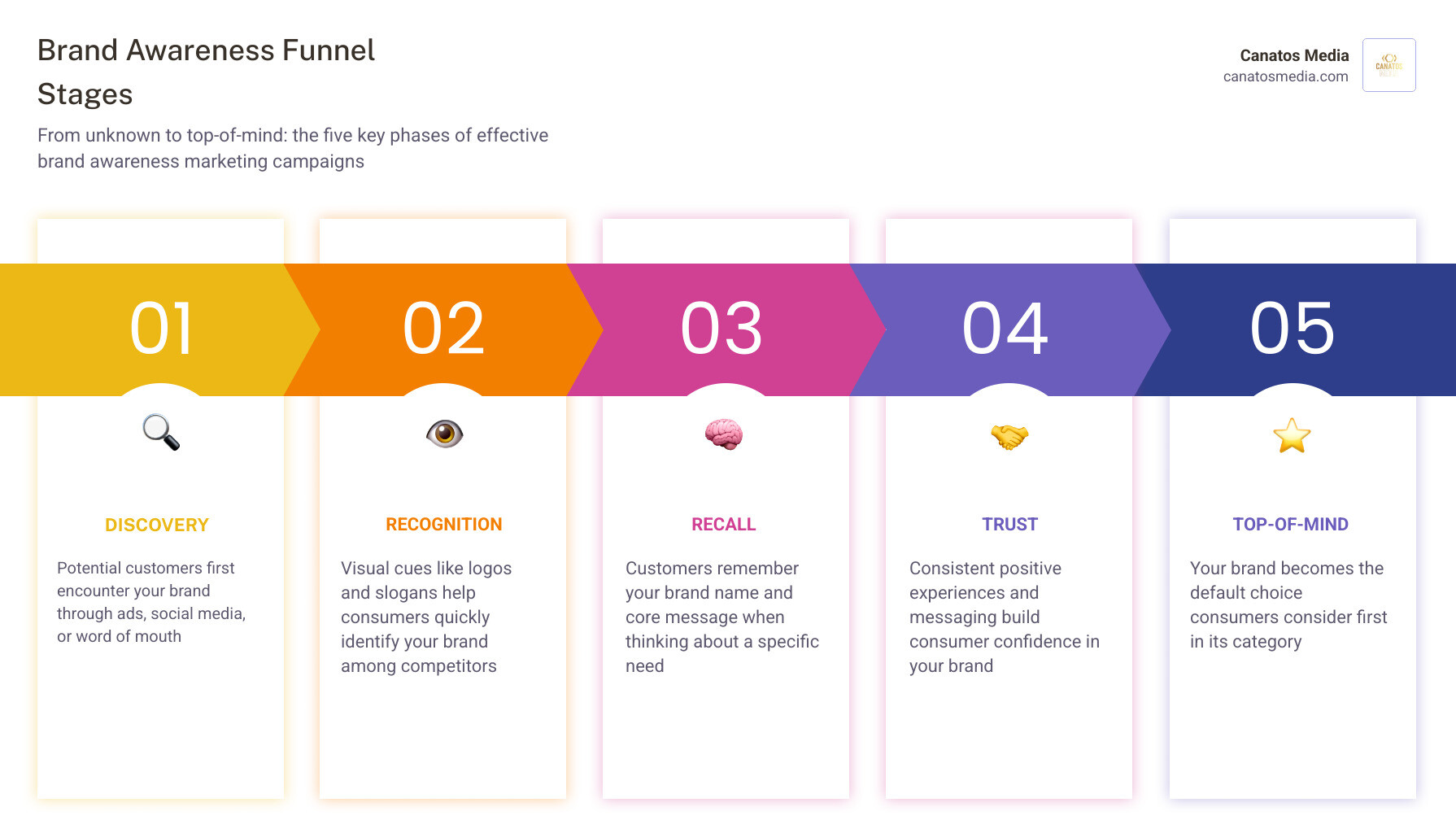
    Brand awareness funnel from unknown to top-of-mind: stages, tactics, and key metrics infographic

    Why Brand Awareness Marketing Campaigns Matter in 2026

    As we navigate the middle of 2026, the marketplace is no longer just about who has the best product; it’s about who has the best relationship with the consumer. Building brand awareness is the first step in the All-in-One Marketing Funnel, acting as the foundation for every lead generated and every sale closed.
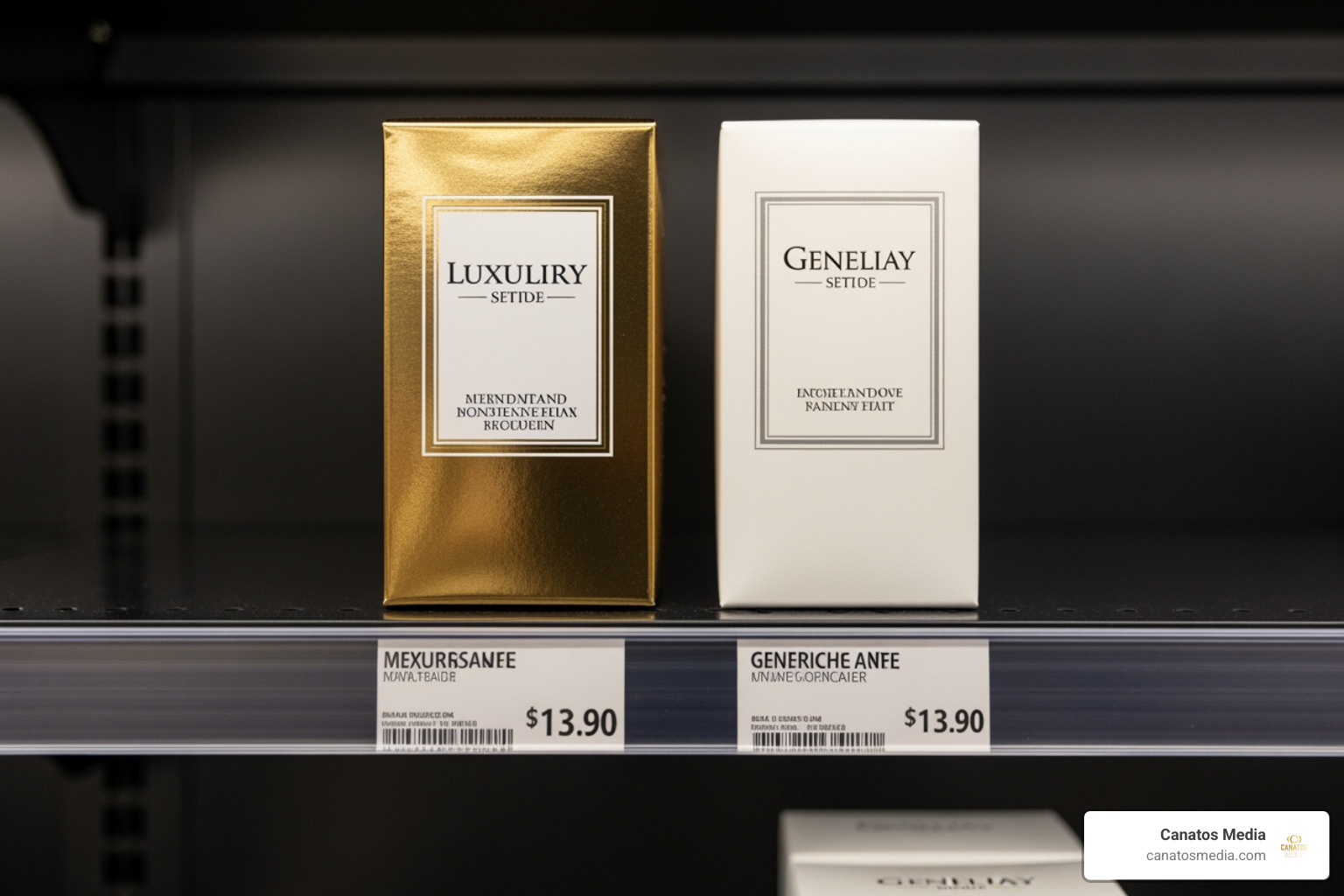
    The growth of brand equity and its impact on premium pricing power

    Why is this so critical right now? Because brand equity — the value consumers perceive in your name alone — has reached record heights. In 2024, the world’s top 100 brands saw their aggregate value jump over 20% to a staggering $8.3 trillion. People aren’t just buying “stuff”; they are buying into identities. In fact, 79% of consumers are more likely to purchase from brands whose values align with their own.

    When brand awareness marketing campaigns succeed, they create “proprietary eponyms.” This is the holy grail of marketing where your brand name becomes the generic term for the product. Think of “Googling” a question or “Ubering” to a restaurant in Manhattan. This level of name recall allows businesses to charge premium prices. Research shows that 5 out of 10 consumers are willing to spend extra for a brand with an appealing image, even if a generic version exists for less.

    The Difference Between Recognition and Brand Awareness Marketing Campaigns

    It is common to use these terms interchangeably, but in creative digital marketing agencies, they represent two different levels of consumer psychology.

    • Brand Recognition: This is the “I’ve seen that before” phase. It relies on visual cues like your logo, your specific shade of blue, or a catchy jingle. It’s the ability of a customer on Long Island to spot your storefront or your social media ad and know it’s you.
    • Brand Awareness: This goes much deeper. It’s the “I know what they stand for” phase. It involves an emotional connection and an understanding of your brand’s attributes. While recognition is about the eyes, awareness is about the mind and heart.

    Effective brand awareness marketing campaigns bridge this gap. They take a logo and infuse it with meaning, ensuring that when a customer sees your brand, they don’t just recognize the shape — they recall your values, your quality, and how your product makes their life better.

    8 Standout Brand Awareness Marketing Campaigns to Study

    To understand how to move the needle for your own business, we have to look at the brands that are currently “winning” the attention war. These examples range from global giants to clever niche players.

    1. Heinz: “Look Familiar?”

    Heinz billboard showing a fry box that looks like their logo

    In late 2025, Heinz launched a brilliant campaign that turned every fry box in the world into a hidden billboard. They realized that the trapezoid shape of a standard French fry container perfectly matches the Heinz keystone logo. By simply pointing this out through minimalist photography, they leveraged a pre-existing consumer behavior. It didn’t feel like an ad; it felt like a discovery.

    2. Sydney Sweeney x American Eagle

    American Eagle’s collaboration with Sydney Sweeney is a masterclass in Gen Z targeting. By using a celebrity with genuine brand affinity, they saw their stock price jump 10% within 24 hours of the launch. They didn’t just post photos; they integrated AR try-on lenses and shoppable social edits, proving that modern awareness is interactive.

    3. Subaru: #MakeADogsDay

    Subaru has long aligned itself with pet lovers. Their #MakeADogsDay campaign used a “Tease, Reveal, Sustain” framework on social media to promote pet adoption. By focusing on a cause rather than a car, they achieved 100% positive sentiment and over 10 million video views, cementing their image as a brand that cares.

    4. Taco Bell: Freeing “Taco Tuesday”

    When Taco Bell challenged a long-standing trademark on the phrase “Taco Tuesday,” they turned a legal battle into a social justice movement for foodies. This campaign generated 21 billion earned media impressions. They showed that being a “challenger brand” is a powerful way to stay top-of-mind.

    5. Sheba: “Ignored to Adored”

    Cat owners know the struggle of being “ghosted” by their pets. Sheba’s campaign leaned into this relatable pain point, offering a 12-day program to win over a feline’s affection. It was funny, relatable, and perfectly positioned their product as the solution to a common emotional hurdle.

    6. CeraVe: “Face of Legs”

    Taking a cue from viral internet culture, CeraVe partnered with NBA star Kevin Durant (who had previously been teased online for having dry skin). By leaning into the joke and naming him the “Face of Legs,” CeraVe destigmatized skin care for men and expanded their awareness beyond just facial products.

    7. Spotify Wrapped

    Every December, Spotify turns its users into its marketing department. By providing personalized, shareable data stories, they create a viral loop that dominates social media for a week. This is experiential awareness at its finest — making the consumer the hero of the brand story.

    8. Dropbox: The Referral Engine

    Though an older example, Dropbox’s referral program remains a gold standard. By offering extra storage for every friend invited, they grew their customer base by 3,900%. This proves that awareness doesn’t always need a billboard; sometimes, it just needs a great incentive for word-of-mouth. At Canatos Media, we often use video marketing to amplify these kinds of referral wins for our clients.

    Strategies for Building Brand Awareness on Any Budget

    You don’t need a Super Bowl budget to make an impact. Whether you are a local business in the Tri-State area or a growing national brand, the principles of integrated marketing remain the same.

    Organic and Content-Driven Brand Awareness Marketing Campaigns

    Organic growth is about playing the long game. It’s about building authority so that when a customer is ready to buy, you are the first name they think of.

    • Content Marketing: 87% of B2B marketers say content is their top awareness driver. This includes blog posts, infographics, and short-form video.
    • SEO: If you aren’t on the first page of Google, you don’t exist to most consumers. Proper SEO ensures your brand appears when people search for solutions to their problems.
    • Social Media Engagement: Don’t just post and ghost. Interact with your followers. 49% of U.S. consumers say friends and family are their top sources of brand discovery — social media is the modern “backyard fence” where these recommendations happen.
    • Employee Ambassadors: Your team is your greatest asset. When employees share company culture and wins on their personal LinkedIn or Instagram, it humanizes the brand and expands reach exponentially.

    If organic is the slow burn, paid tactics are the gasoline.

    • Influencer Partnerships: This is no longer just for fashion brands. 61% of consumers aged 18-34 have been convinced to buy something by an influencer. The key is finding partners whose values match yours.
    • Retargeting: Ever visit a website and then see their ads everywhere? That’s retargeting. It keeps your brand top-of-mind for people who have already shown interest, preventing them from forgetting you.
    • Cinematic Video: In 2026, static images are easily ignored. We specialize in high-end video production because cinematic storytelling stops the scroll.
    • AR and 3D Billboards: For brands with larger budgets, immersive experiences like AR try-ons or 3D billboards in high-traffic areas (like Times Square) create “wow” moments that are highly shareable on social media.

    Measuring the ROI of Your Brand Awareness Efforts

    The biggest myth in marketing is that brand awareness can’t be measured. While it’s not as direct as a “Buy Now” button, we use several metrics to track growth.

    Metric Type What to Track Why it Matters
    Quantitative Website Traffic & Direct Hits Shows how many people are looking for you by name.
    Quantitative Social Reach & Mentions Measures the size of the conversation around your brand.
    Qualitative Brand Recall Surveys Asks consumers: “Which brands come to mind for [Product]?”
    Qualitative Sentiment Analysis Tracks if the conversation around your brand is positive or negative.
    Advanced New-to-Brand Metrics Amazon and other platforms now track if a sale came from a first-time customer.

    By using tools like Google Trends, social listening software, and Brand Lift studies, we can see exactly how brand awareness marketing campaigns impact the bottom line over time. We often integrate website design with video data to see how increased awareness translates into higher on-site conversion rates.

    Frequently Asked Questions about Brand Awareness

    How do you measure brand awareness success?

    We look at a combination of “hard” and “soft” data. Hard data includes increases in branded search volume (people typing your name into Google) and direct website traffic. Soft data comes from social listening and surveys that measure brand recall and sentiment.

    What is the difference between brand awareness and brand recognition?

    Recognition is purely visual — like recognizing a logo on a hat. Awareness is the deeper understanding of what the brand does, its reputation, and its values. You want recognition to get them to look, but you need awareness to get them to buy.

    Can small businesses build brand awareness with limited budgets?

    Absolutely. Small businesses can win by dominating “Local SEO” and being highly active in their specific community. Referral programs are also incredibly cost-effective. A well-placed QR code on offline marketing materials or a partnership with another local business can drive significant awareness without a massive ad spend.

    Conclusion

    In the fast-moving landscape of May 2026, brand awareness marketing campaigns are the difference between being a commodity and being a community staple. Whether you are leveraging the viral power of short-form video or the steady growth of SEO, consistency is your best friend.

    At Canatos Media, we don’t believe in marketing for the sake of “likes.” We believe in integrated strategies that connect cinematic content with precision targeting to drive measurable growth. From the Tri-State area to Long Island, we help businesses move from “invisible” to “indispensable.”

    Ready to stop ghosting your audience and start a conversation that converts? Let’s build something that sticks.

  • Hire a Local Marketing Agency That Doesn’t Suck

    Hire a Local Marketing Agency That Doesn’t Suck

    Why Finding the Right Marketing Agency Near Me Can Make or Break Your Business

    Looking for a quick answer? Here’s how to find and hire a great local marketing agency:

    1. Search local directories like Thumbtack or Bark.com and filter by rating and reviews
    2. Check their case studies — look for real results in your industry, not just pretty websites
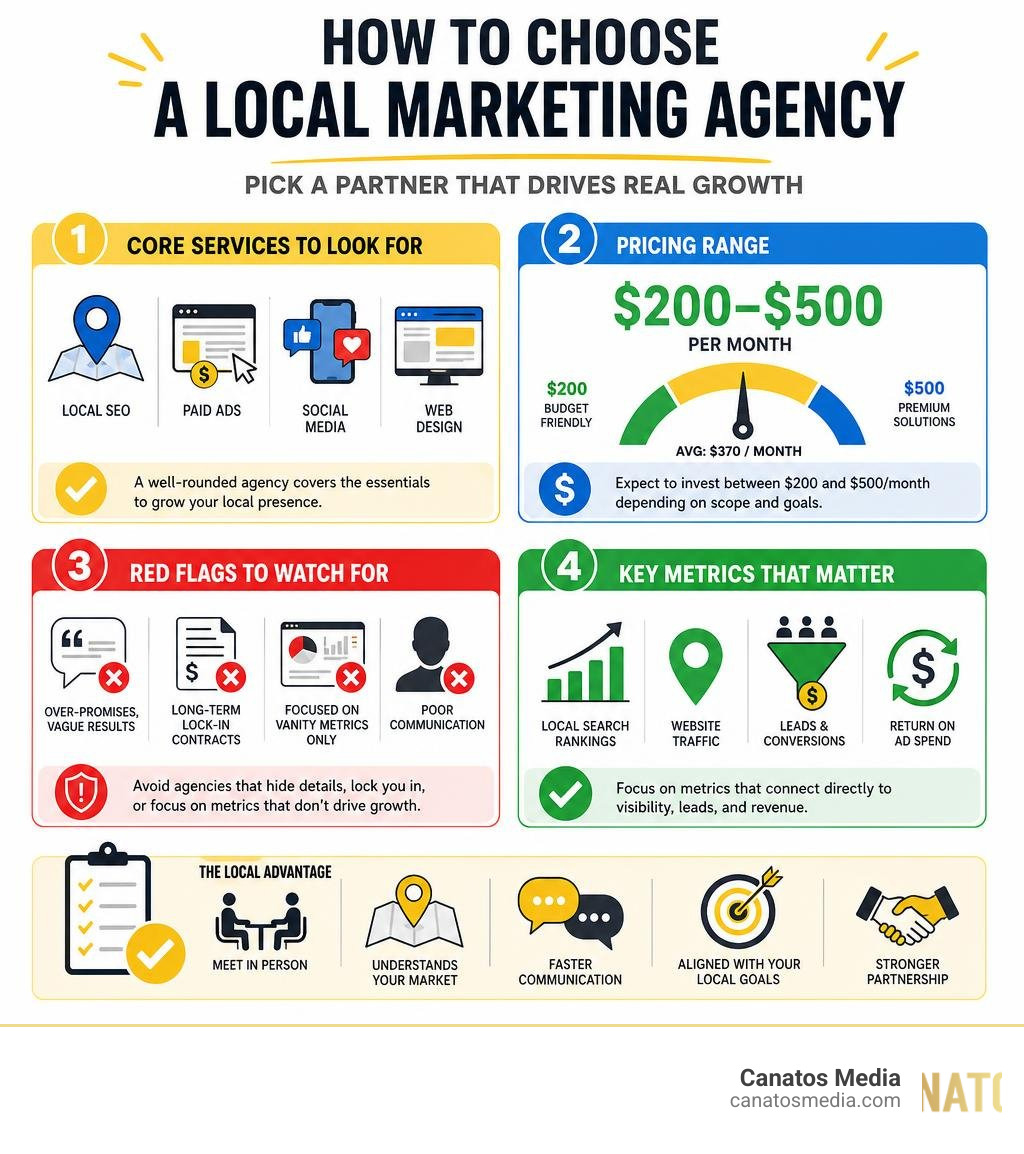
    3. Confirm their core services — at minimum: local SEO, paid ads, social media, and web design
    4. Ask about pricing — expect to pay around $370/month on average, with quality options ranging from $200 to $500/month
    5. Meet them in person — a local agency should be willing to sit down with you and learn your business

    Most local business owners waste months bouncing between agencies that over-promise and under-deliver. They sign contracts, pay retainers, and end up with a generic social media calendar and a dashboard full of metrics that don’t mean anything.

    Here’s the uncomfortable truth: not all marketing agencies are created equal — and proximity alone doesn’t make one worth hiring.

    With over 87 marketers listed in major cities on platforms like Thumbtack, and agencies rated as high as 4.90 out of 5 based on more than 162,000 reviews, there’s no shortage of options. The hard part isn’t finding an agency. It’s finding one that actually fits your business, your market, and your goals.

    This guide cuts through the noise. It gives you a clear, practical framework for vetting, choosing, and working with a local marketing agency that will actually move the needle.

    I’m Nic Canobbio, founder of Canatos Media — I’ve spent over two decades navigating media production, content strategy, and high-stakes business deals, which gives me a front-row seat to what separates agencies that drive growth from those that just burn your budget when searching for a marketing agency near me. Everything in this guide comes from that experience, plus hard data from the market.

    Infographic showing how to choose a local marketing agency: services, pricing range $200-$500/month, red flags, and key

    Marketing agency near me helpful reading:

    Why Hiring a “Marketing Agency Near Me” Beats Going Remote

    When you run a business in the Tri-State area or right here on Long Island, your market is unique. The rhythm of a Tuesday morning in Manhattan is entirely different from a Saturday afternoon in Nassau County. That is why hiring a local partner is almost always superior to hiring a remote team halfway across the country.

    A remote agency might know how to run a Facebook ad, but they do not understand the local consumer. They do not know the difference between the North Shore and the South Shore, nor do they understand the seasonal shifts that dictate how local residents spend their money. Working with a team that can physically visit your storefront, capture authentic local content, and sit down with you for a face-to-face strategy session changes everything.

    When we work locally, we tap into existing community connections and regional trends. This isn’t just about convenience; it is about building a brand that feels authentic to the people living in your neighborhood. If you want to dive deeper into how local agencies stack up against each other, check out our guide on A No-Nonsense Comparison of Local Digital Marketing Agencies.

    What to Expect When Searching for a Marketing Agency Near Me

    As you begin your search for a marketing agency near me, you will notice a wide variety of pricing models and service offerings. To help you make sense of the landscape, we have broken down the typical market data for local agencies versus massive national firms.

    According to data from platforms like Thumbtack, the average cost of marketing services sits around $370 per month. However, this varies depending on your business size and goals. A “Great Value” tier typically starts around $200 per month, while premium, highly tailored local campaigns sit closer to $500 per month.

    Feature Local Marketing Agency National / Remote Firm
    Average Cost $200 – $500+/month $1,500 – $5,000+/month
    Market Knowledge Deep understanding of Tri-State/Long Island Generalized, broad-market approach
    Communication In-person meetings & direct phone access Ticket systems & automated emails
    Content Creation On-site video, real photos of your team Stock photography & generic graphics
    Community PR Direct relationships with local media/influencers Automated, generic press releases

    When you look at local directories, you will find highly rated professionals right in your backyard. For instance, Thumbtack lists 15 five-star marketers in New York, NY alone, with 87 total marketers near you ready to quote. Using platforms like the THE BEST 10 MARKETING IN LONG ISLAND, NY – Yelp directory is an excellent starting point to see who is active in your immediate area.

    The Power of Local PR and Community Networking

    One of the most overlooked advantages of hiring a nearby agency is their established network. A local agency does not have to build relationships with regional media outlets, business chambers, or local influencers from scratch—they already have them.

    If you are a business on Long Island or in the surrounding NY/NJ/CT metro area, getting featured in local publications or participating in community events can build massive brand trust. Local PR is not about sending out a cold press release to a national wire service; it is about knowing the local editors, supporting regional charity events, and engaging in neighborhood online communities. When your marketing partner has their boots on the ground, they can weave your brand directly into the community fabric.

    5 Core Services Your Local Agency Must Master in 2026

    In 2026, marketing is no longer about running isolated campaigns. It is about creating an integrated digital ecosystem where your social media, website, search visibility, and paid ads all work together.

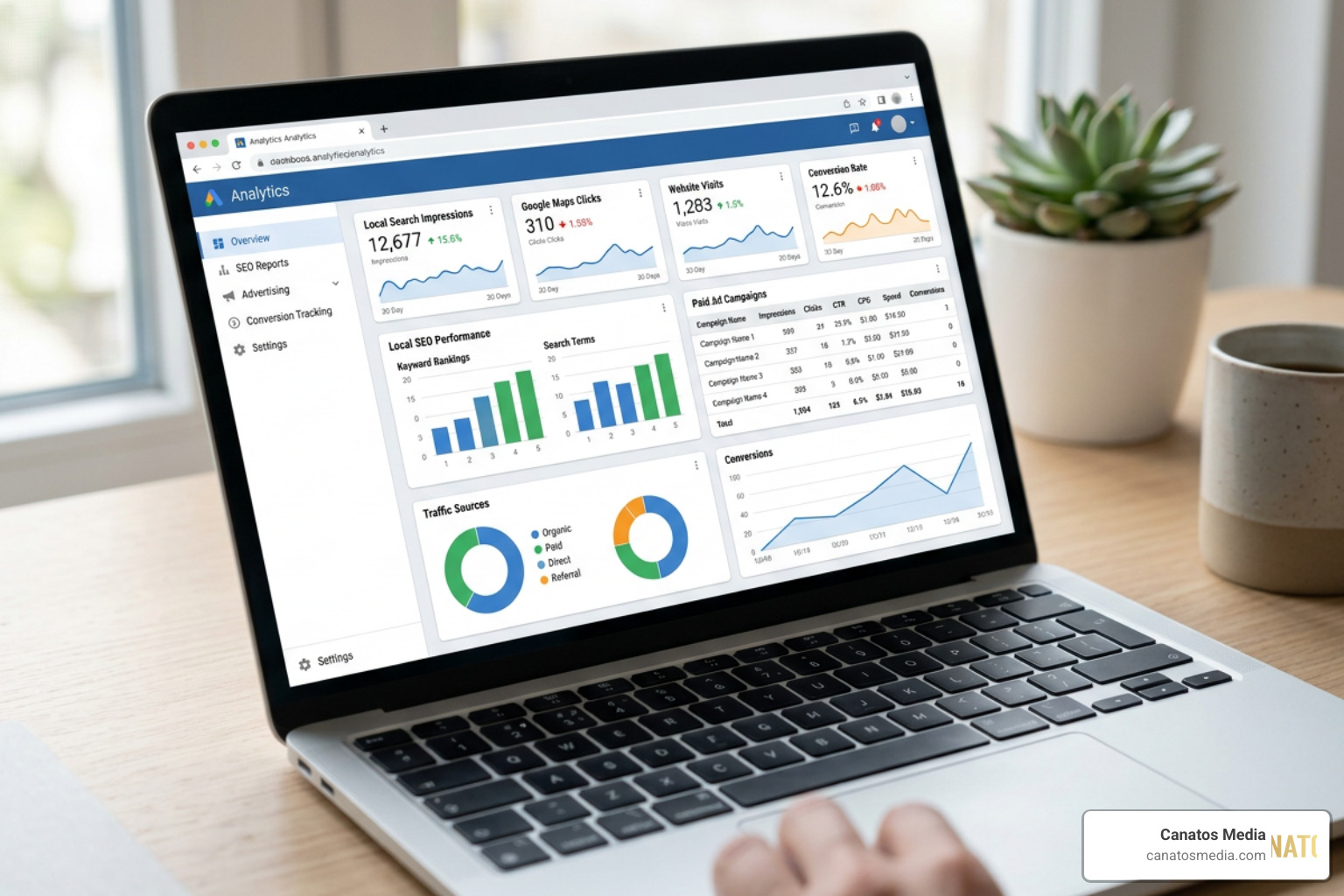
    A close-up of a modern digital marketing dashboard displaying local SEO metrics, conversion rates, and paid ad performance

    If you are looking for a partner to help you grow, they must have a firm grasp on how these channels connect. For a complete breakdown of how these moving parts fit together, read our article on The Ultimate Breakdown of What a Creative Digital Marketing Agency Actually Does.

    Local SEO and Google Business Profile Optimization

    If a customer searches for your services in your town and you do not show up in the “Map Pack” (the top three local map listings on Google), you are losing money to your competitors every single day.

    An expert local agency will optimize your Google Business Profile, build consistent local citations, and help you establish a system to collect and respond to customer reviews. They will also optimize your website for local keywords so that you rank high when people search for your services nearby.

    High-Converting Web Design and Development

    Your website is your digital storefront. It does not matter how many people click on your ads if your website is slow, confusing, or looks like it was built in 2012.

    A great local agency will focus on user experience, mobile speed, and conversion rate optimization (CRO). Every page should have a clear purpose, fast load times, and frictionless ways for potential customers to call you, book an appointment, or buy your products. Investing in high-quality web design is essential to elevate your local brand and turn visitors into paying customers.

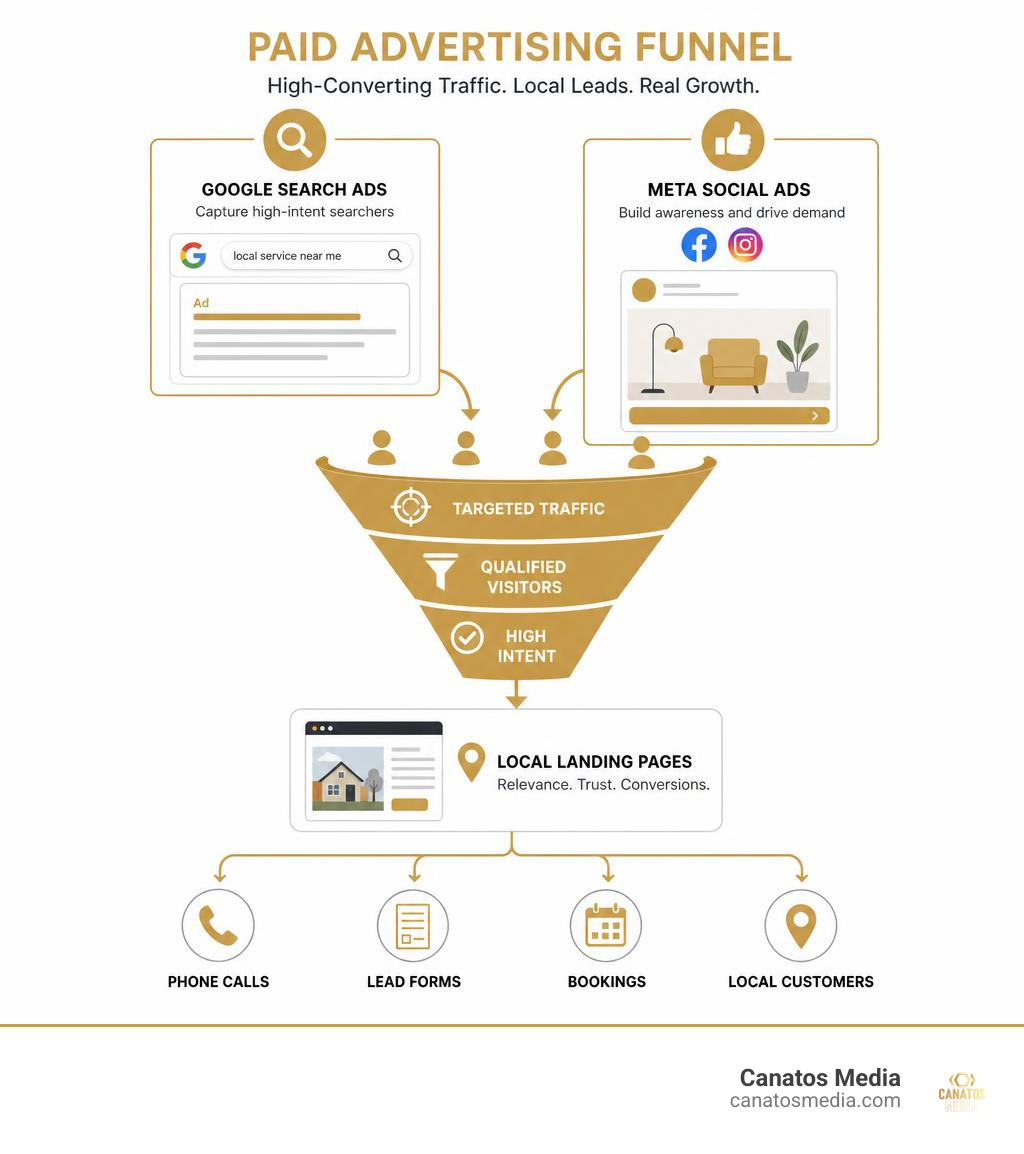
    Organic reach on social media is harder than ever to achieve, which is why a hybrid approach of paid ads and organic content is essential. Your agency should be running targeted Meta (Facebook/Instagram) and Google Ads campaigns that place your brand directly in front of local buyers.

    But ads alone are not enough. In 2026, cinematic, short-form video content is the king of social media engagement. People want to see real faces, real projects, and real behind-the-scenes moments. If your agency is only posting stock images with generic captions, they are failing you. For businesses looking to scale using video, check out our curated list of the 5 Best Video Marketing Agencies for Growth-Focused Businesses in 2026.

    How to Evaluate and Choose a Local Marketing Partner

    Choosing an agency is a major business decision. You are not just hiring a vendor; you are choosing a partner who will represent your brand to the public.

    Two business owners in a bright office reviewing marketing case studies and digital performance charts on a tablet

    To avoid getting burned, you need a structured vetting process. Start by reading our guide on how to Stop Searching and Start Growing with the Best Local Marketing Companies.

    Red Flags to Avoid When Vetting a Marketing Agency Near Me

    When you are interviewing agencies, keep your guard up. Here are some immediate red flags that should make you run the other way:

    • Guaranteed Rankings: If an agency guarantees you the #1 spot on Google in 30 days, they are lying. Search algorithms change constantly, and no one has a secret cheat code.
    • Lack of Transparency: If they cannot explain where your ad spend is going or refuse to give you direct access to your ad accounts, they are hiding something.
    • Overuse of Stock Photography: If their own website and client portfolios are filled with generic stock images of people shaking hands, they lack the creative capability to build an authentic brand for you.
    • Vanity Metric Reports: If their monthly reports only talk about “impressions” and “likes” rather than leads, phone calls, and actual revenue, they are distracting you from a lack of real results.

    Verifying Industry Expertise and Client Results

    Before signing any contract, ask to see real case studies and client reviews from businesses similar to yours. Look for established firms in the region that can demonstrate a proven track record of success and transparent reporting.

    When reviewing their portfolio, pay attention to the metrics they highlight. Did they double a medical practice’s patient inquiries? Did they help a local restaurant increase bookings by 40%? These are the tangible results that matter. If you want a shortlist of top-tier creative teams to compare, check out The Best Creative Digital Agency Shortlist for 2026.

    Frequently Asked Questions About Local Marketing Agencies

    How much does a local marketing agency typically cost?

    While national agencies often demand hefty retainers starting at several thousand dollars per month, local marketing agencies are much more accessible for small and mid-sized businesses. On platforms like Bark and Thumbtack, the nationwide average sits at $370 per month. A basic, high-value campaign can cost around $200 per month, while premium, highly active local management typically ranges up to $500 per month.

    How long does it take to see measurable results?

    It depends on the channel. Paid advertising (like Google Ads and Meta Ads) can drive leads and phone calls within the first week of launching. Organic strategies like SEO and content marketing are long-term investments; you should expect to see measurable shifts in search rankings and organic traffic within 60 to 90 days, with full momentum building over 6 to 12 months.

    Do local agencies handle both organic and paid digital strategies?

    Yes, the best local agencies use an omnichannel approach. They combine organic strategies (like SEO, Google Business Profile optimization, and organic social posts) with paid strategies (like Google PPC and Meta Ads) to build a dominant local presence. This integrated approach ensures that you capture both immediate buyers and long-term brand advocates.

    Conclusion

    Finding a marketing agency near me does not have to be a stressful trial-and-error process. By focusing on local expertise, transparent pricing, and authentic content creation, you can find a partner that genuinely cares about your business growth.

    At Canatos Media, we do things differently. We serve the Tri-State area and Long Island with an integrated strategy that connects cinematic short-form video, hyper-targeted paid ads (Meta and Google), local SEO, and complete website support. We do not hide behind vanity metrics or send you confusing, automated reports. We focus on what actually matters: connecting your content to conversions to drive measurable growth.

    Ready to stop searching and start growing? Explore Canatos Media’s services today and let us build a marketing engine that actually works for your business.

  • Meta Business Suite 101: Streamline Your Instagram and Facebook Presence

    Meta Business Suite 101: Streamline Your Instagram and Facebook Presence

    Why Meta Business Suite Is the Smartest Way to Manage Facebook and Instagram

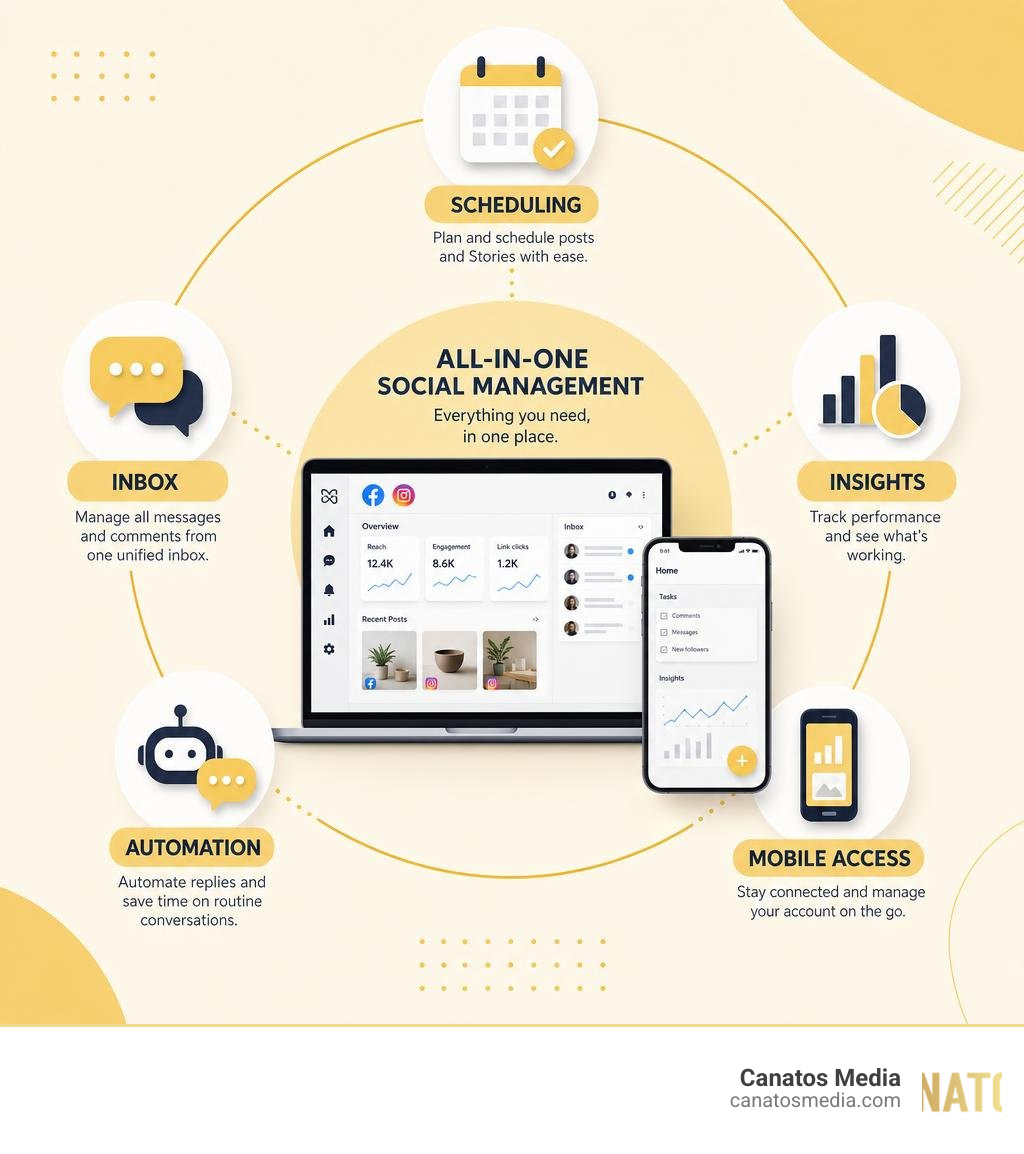
    Meta Business Suite is Meta’s free, all-in-one platform for managing your Facebook and Instagram business presence from a single dashboard — on desktop or mobile.

    Here’s what it does at a glance:

    • Create and schedule posts and Stories for Facebook and Instagram
    • Manage all messages and comments from one unified inbox
    • Automate replies to save time on routine customer questions
    • Track performance with insights on posts, Stories, and ads
    • Stay on top of tasks with a centralized notifications and to-do list

    If you’re running a local business and trying to juggle Facebook and Instagram at the same time, you already know how quickly things fall apart. Posts go out late. Customer messages get missed. You have no clear picture of what’s actually working.

    That’s exactly the problem Meta Business Suite was built to solve.

    With over 100 million downloads on Google Play alone — and a 4.7-star rating across nearly half a million App Store reviews — it’s clearly a tool that millions of business owners rely on every day. And for good reason: it brings your most important social media tasks into one place, so you spend less time platform-hopping and more time growing.

    I’m Nic Canobbio, founder of Canatos Media, and after managing social content and paid campaigns across Meta platforms for clients in multiple industries, I’ve spent considerable time inside Meta Business Suite — learning exactly where it shines and where it falls short. In this guide, I’ll walk you through everything you need to know to use it effectively.

    Meta Business Suite ecosystem infographic showing features: scheduling, inbox, insights, automation, and mobile access

    Simple meta business suite glossary:

    What is Meta Business Suite and Who Is It For?

    At its core, Meta Business Suite is a centralized platform designed to bring your Facebook Pages and Instagram professional accounts under one roof. Instead of logging into separate apps, switching profiles, and trying to remember where you left off, you get a single workspace. This workspace is built to streamline your workflow and make your digital marketing efforts far more efficient.

    By linking your business assets, you can manage your organic content, interact with your audience, and run basic promotions without ever leaving the dashboard. To learn more about how Meta’s ecosystem fits together, you can explore the Marketing Tools and Advertising Solutions on Facebook and Instagram | Meta for Business portal, which outlines the broader scope of Meta’s business tools.

    Target Audience and Business Support

    Whether you are running a cozy coffee shop on Long Island or managing a multi-location brand across the tri-state area, Meta Business Suite is built to adapt to your scale:

    • Small Businesses: If you are a team of one (or have a handful of employees wearing too many hats), this platform is a lifesaver. It allows you to schedule a week’s worth of content in one sitting, so you can get back to serving your customers.
    • Content Creators: Creators can manage their brand partnerships, track which Reels are driving the most engagement, and interact with followers without getting distracted by their personal feeds.
    • Large Enterprises & Agencies: For larger teams, the suite offers robust role permissions. You can assign specific access levels to employees or external agencies (like us!) to manage content and community moderation without hand over your master login credentials.

    The platform is designed for resource allocation. By automating tedious tasks and putting your critical metrics in front of you, it frees up your schedule so you can focus on high-impact business decisions.

    Core Features for Cross-Platform Management

    Managing a modern digital presence requires constant content creation and swift customer interaction. Meta Business Suite acts as your central command center, optimizing your workflows so you never feel overwhelmed by the demands of maintaining two distinct social networks.

    Scheduling Content with Meta Business Suite

    One of the most powerful features of the meta business suite is its cross-platform publishing and scheduling engine. Instead of posting in real-time, you can plan your social calendar days, weeks, or even months in advance.

    When you create a post or a Story, you can customize the text, hashtags, and links specifically for Facebook and Instagram. For example, you can add a clickable link to your Facebook post while keeping your Instagram caption clean and pointing users to your link-in-bio.

    To see this in action, check out this guide on How To Use Meta Business Suite to Schedule Posts to Instagram … .

    Planning your content ahead of time is especially important when you are producing high-quality media. We often emphasize how much visual quality matters; for instance, understanding How Cinematic Short Form Content Improves Meta Paid Ad Performance can help you design organic posts that transition beautifully into high-performing paid campaigns.

    Unified Inbox and Automated Replies

    Customer service can make or break a local business. If a potential client sends a message on Facebook Messenger or leaves a comment on an Instagram Reel, they expect a quick response.

    The unified inbox in Meta Business Suite aggregates:

    • Facebook Messenger conversations
    • Instagram Direct Messages (DMs)
    • Comments on Facebook posts
    • Comments on Instagram posts

    To make things even easier, you can set up automated replies. These include “Instant Replies” (sent as soon as someone messages you), “Away Messages” (for when your business is closed), and custom automated responses for frequently asked questions (like your hours, location, or pricing).

    By streamlining these interactions, you improve your customer service efficiency dramatically. For a deeper look at how to leverage these messaging tools, read about The Best Way to Utilize Meta Business Suite to Run Your … – Reamaze .

    Analyzing Performance in Meta Business Suite

    You can’t improve what you don’t measure. The Insights dashboard in Meta Business Suite gives you a clear, side-by-side view of how your content is performing on both platforms.

    analytics dashboard showing reach and engagement metrics

    Within the dashboard, you can track:

    • Audience Demographics: See exactly who is following you, including their age, gender, and top locations in the tri-state area.
    • Post Reach & Engagement: Learn which posts, Reels, and Stories are getting the most eyes and interactions.
    • Ad Performance: Get basic overviews of how your boosted posts and simple ad campaigns are performing.

    Understanding these metrics is vital, especially when trying to generate local leads. For example, knowing How to Optimize Short Form Video Ads for Local Lead Generation relies heavily on monitoring your reach and engagement data to see which creative hooks resonate most with your local audience.

    Mobile App Performance and Platform Comparison

    While the desktop version of Meta Business Suite is perfect for deep-dive planning and detailed analytics, the mobile app is designed for on-the-go updates. Whether you’re snap-shooting a behind-the-scenes Story or replying to an urgent customer message from the field, the mobile experience is crucial.

    content calendar view mobile management on the go updates

    Android vs. iOS Features and Ratings

    The mobile experience can vary slightly depending on your device’s operating system. Both platforms offer the core suite of tools, but user ratings and feedback show some interesting differences.

    Metric / Feature Android (Google Play) iOS (App Store)
    Average Rating 4.4 out of 5 stars 4.7 out of 5 stars
    Total Reviews / Ratings ~4.99 Million reviews ~472,000 ratings
    Total Downloads 100 Million+ N/A (App Store does not publicize downloads)
    International Ratings High volume of global users 4.6 stars (Switzerland), 4.8 stars (Bolivia)
    Core Features Scheduling, inbox, insights, real-time calls Scheduling, inbox, insights, real-time calls
    App Size Varies by device ~315 MB (requires iOS 15.1 or later)

    To download the app or read more user reviews for Apple devices, visit the ‎Meta Business Suite App – App Store page.

    Common User Complaints and Technical Issues

    Despite its high ratings, the mobile app is not without its flaws. Social media managers and business owners frequently report a few common technical bugs in recent app reviews:

    • Notification Delays: Some users report that they do not receive push notifications for new messages or comments in real-time, forcing them to open the app and refresh manually.
    • Sync Errors: Occasionally, the app may struggle to sync scheduled posts between the mobile and desktop versions, causing temporary panic about whether a post will actually go live.
    • App Crashes: Following major software updates, some users experience sudden app crashes, particularly when trying to upload high-resolution video files or managing multiple accounts.
    • Login Issues: Security protocols can sometimes trigger loop logins, where the app repeatedly asks for verification codes or fails to connect to linked Instagram accounts.

    Privacy, Recent Updates, and Complementary Tools

    As digital privacy regulations tighten and platforms evolve, staying compliant and up-to-date with Meta’s technical ecosystem is essential for keeping your business accounts running smoothly.

    App Store Privacy and Data Collection Practices

    According to the official App Store privacy disclosures, Meta Business Suite collects a significant amount of user data to power its business tools and ad networks. This collection is standard across Meta’s app family but is worth noting for privacy-conscious business owners.

    Data collected and linked to your identity may include:

    • Financial and Purchase Info: Used primarily when you run ads or manage shop features.
    • Location Data: To help target local audiences and provide localized insights.
    • Contact Info & Contacts: To help connect your business network.
    • Usage & Diagnostic Data: To monitor app performance, track crashes, and improve user experience.

    Recent App Updates and Feature Improvements

    Meta frequently updates the suite to make managing your business easier. As of our current date in June 2026, several major improvements have rolled out:

    • Side-by-Side Content Report: You can now view organic post metrics and paid ad performance side-by-side in real-time, making it incredibly easy to see if a top-performing organic post is worth boosting.
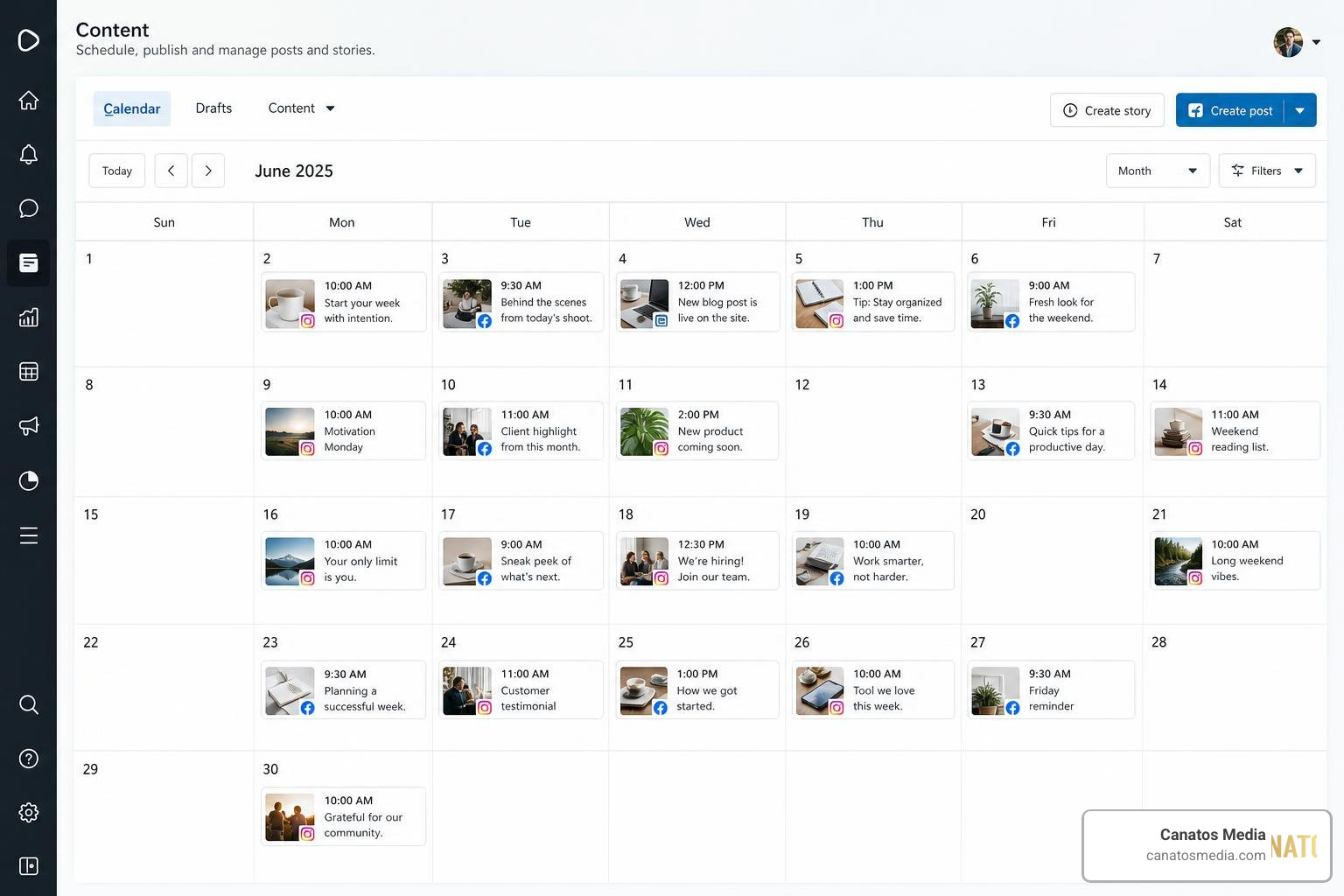
    • Enhanced Calendar View: The content calendar has been upgraded to show published, scheduled, and draft content in a much cleaner, drag-and-drop monthly grid.
    • Real-Time Call Feature: Businesses can now make real-time audio calls to customers directly through the inbox interface, simplifying lead follow-ups.

    Complementary Tools for Advanced Advertisers

    While Meta Business Suite is fantastic for organic management and basic post boosting, serious advertisers will eventually outgrow its simplified ad creation tools.

    If you are looking to scale your business with paid campaigns, we highly recommend integrating these complementary tools:

    • Meta Ads Manager: This is where the real magic happens. It offers advanced targeting, custom audience building, A/B testing, and deep funnel optimization. If you are new to the platform, check out our guide on Mastering Meta Business Suite Ads Manager for Beginners and our comprehensive Meta Ads Management Ultimate Guide to get started.
    • Meta Blueprint: Meta’s free educational resource that offers courses and certifications to help you master digital marketing across their platforms.

    To avoid costly mistakes when transitioning to paid advertising, we also recommend reading our guides on how to Stop Burning Cash on Bad Meta Ads and how to Stop the Scroll and Start the Toll with Meta Paid Ads.

    Frequently Asked Questions

    How do I schedule posts on both Facebook and Instagram simultaneously?

    To schedule posts simultaneously, open the Meta Business Suite dashboard (or mobile app) and click Create Post. In the “Placements” section at the top, check the boxes for both your Facebook Page and your Instagram account. Write your caption, upload your media, and then select Schedule instead of publishing immediately. You can choose different dates and times for each platform if you want to optimize for when your specific audiences are most active.

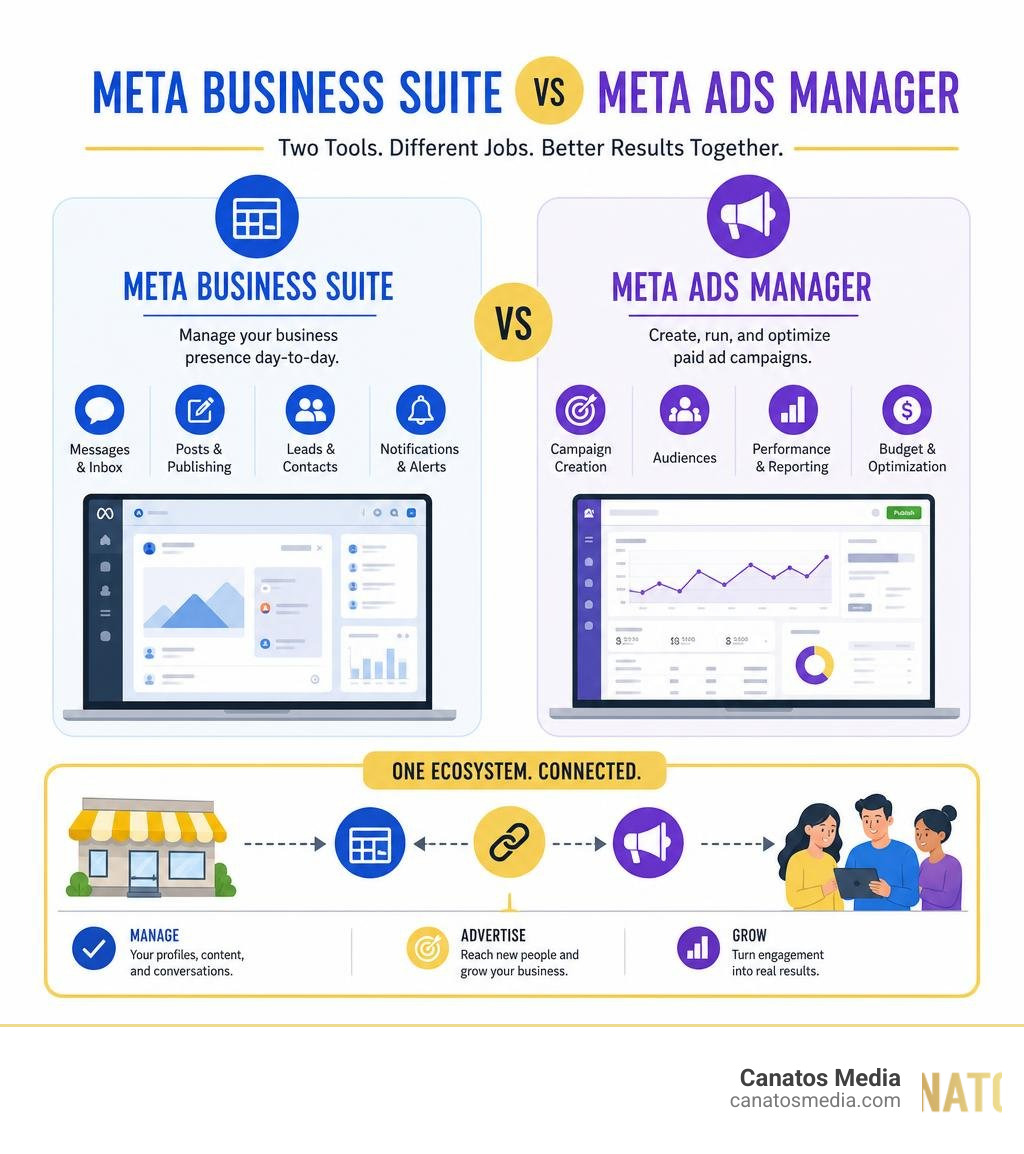
    What is the difference between Meta Business Suite and Meta Ads Manager?

    Meta Business Suite is primarily designed for organic social media management, community engagement (inbox), and basic page administration. Meta Ads Manager is a separate, highly advanced tool built specifically for creating, managing, and scaling paid advertising campaigns with complex targeting, budgeting, and placement options.

    Is Meta Business Suite free to use?

    Yes! Meta Business Suite is a completely free tool provided by Meta. There are no subscription fees or hidden costs to use any of its organic management, scheduling, inbox, or insight features. You only pay if you choose to run paid advertising campaigns or boost your posts.

    Conclusion: Strategic Growth with Canatos Media

    Mastering the meta business suite is one of the fastest ways to take back control of your time and build a consistent online presence on Facebook and Instagram. By scheduling your content, automating your customer service, and keeping a close eye on your analytics, you transition from reactive posting to proactive brand building.

    However, consistent digital growth requires more than just scheduling posts. To truly stand out—especially in competitive markets like Long Island and the broader tri-state area—you need an integrated strategy that connects high-quality content with precision targeting.

    At Canatos Media, we specialize in creating cinematic short-form videos, managing social media channels, running high-ROI paid ad campaigns (Meta and Google), and optimizing your website’s SEO. We don’t just post to post; we connect content, targeting, and conversions to drive measurable growth for your business.

    Ready to stop guessing and start scaling? Explore our Meta Google Advertising services today, and let’s build an advertising engine that turns local clicks into loyal customers.

    Visit Canatos Media to supercharge your digital growth today!

  • The Best Local PPC Agencies for Your Next Campaign

    The Best Local PPC Agencies for Your Next Campaign

    Why Finding the Right PPC Agency Near Me Can Make or Break Your Local Ad Budget

    If you’re searching for a PPC agency near me, here’s a quick answer before we dive deeper:

    Top ways to find and evaluate a local PPC agency:

    1. Search Google for PPC agencies in your city and check verified reviews on Clutch, Google, or Yelp
    2. Look for certifications — Google Partner or Premier Partner status signals real platform expertise
    3. Ask for case studies showing results for businesses similar to yours
    4. Compare pricing models — most local PPC retainers start between $1,000–$5,000/month plus ad spend
    5. Request a free audit or consultation before committing to any contract

    Running paid ads without the right strategy is one of the fastest ways to burn through a marketing budget. For local business owners, the stakes are even higher — you’re competing for attention in a specific area, often against bigger brands with deeper pockets.

    The good news? A skilled local PPC agency can flip that disadvantage. When campaigns are built around your market, your community, and your customers’ exact search behavior, even a modest ad budget can generate real, measurable leads.

    PPC campaigns can increase website traffic by 5–15% on average when managed properly — and well-optimized campaigns can drive far bigger gains in conversions and revenue.

    But not every agency delivers on that promise. The difference between wasted spend and strong ROI often comes down to who is managing your campaigns and how they approach your local market.

    I’m Nic Canobbio, founder of Canatos Media, and after two decades in media production, business strategy, and paid advertising — including building a sports betting data division from the ground up — I’ve seen what separates a PPC agency near me that drives real growth from one that just talks a big game. In this expert roundup, we’ve done the vetting work for you.

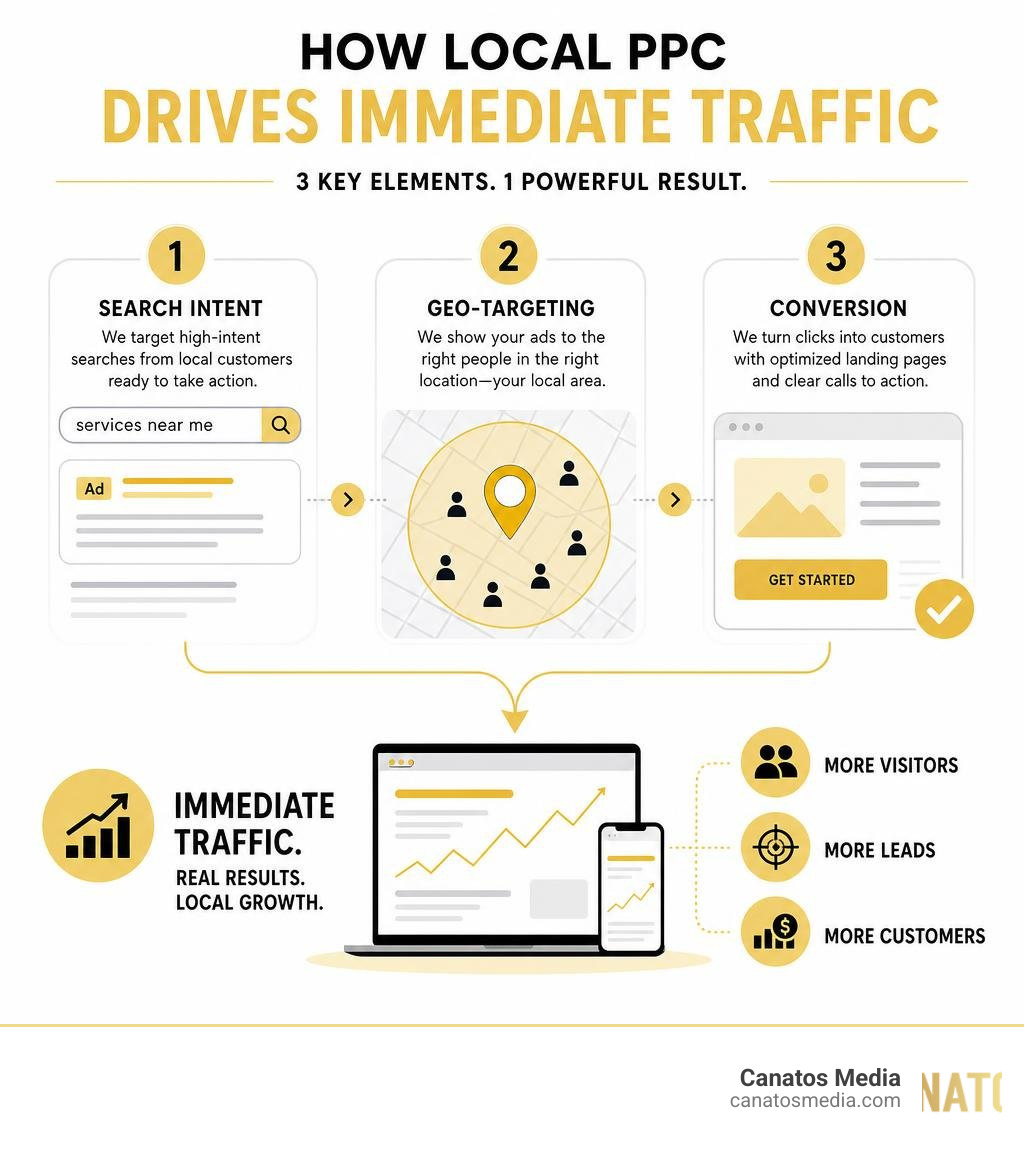
    Infographic showing how local PPC drives immediate traffic through search intent, geo-targeting, and conversion infographic

    Ppc agency near me basics:

    What is a PPC Agency and How Does It Help Local Businesses?

    A Pay-Per-Click (PPC) agency is a team of certified digital marketing specialists who build, manage, and optimize paid advertising campaigns. Unlike organic marketing strategies like SEO, which take time to build momentum, PPC allows you to buy highly visible ad placements on search engines like Google and Bing, as well as social media platforms like Meta and LinkedIn.

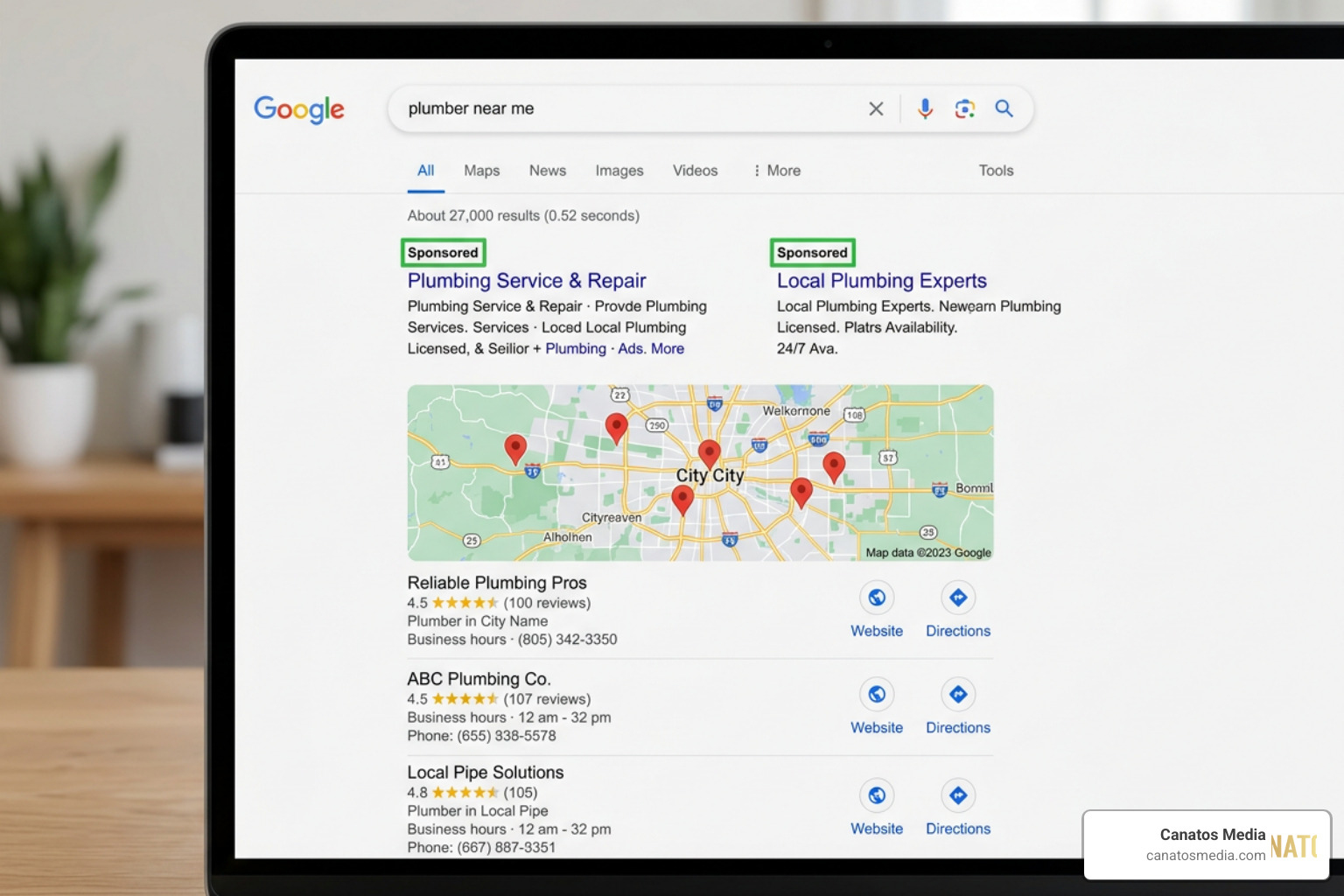
    For local businesses in highly competitive regions like the tri-state area and Long Island, a PPC agency serves as an engine for immediate visibility. When someone in your neighborhood searches for “emergency plumber near me” or “best family lawyer in Long Island,” a well-optimized Google Ads campaign ensures your business appears at the absolute top of the search engine results page (SERP), even above the organic listings.

    Localized Google search results showing map pack and sponsored ads

    By utilizing advanced geotargeting, a local PPC agency ensures that your ad spend is only used when high-intent prospects within your exact service zip codes click on your ads. Instead of wasting money showing your ads to people who live too far away to buy from you, your budget is focused entirely on local leads. If you are new to paid search, our Step-by-Step Guide to Paid Ads provides an excellent foundation for understanding how these dynamic auction systems operate.

    Benefits of Hiring a Local ppc agency near me

    When you work with a local PPC agency near me, you gain access to regional market intelligence that national agencies simply cannot replicate. National agencies often run “cookie-cutter” campaigns designed for broad audiences, completely missing the nuances of localized search behavior.

    A local agency understands your regional trends, seasonal shifts, and local competitor behaviors. For example, a PPC agency based in Long Island understands the distinct consumer differences between Nassau and Suffolk counties, or how seasonal traffic patterns in the Hamptons alter search volumes.

    Furthermore, working with a local partner allows for face-to-face strategy sessions and deep community insights. Rather than being a nameless client in a massive corporate queue, you receive personalized care. For additional strategies on optimizing local-first campaigns directly through search engine tools, you can explore the Google Ads Local Campaigns Guide.

    Core Services Offered by Local Paid Search Specialists

    Reputable local PPC agencies offer a comprehensive suite of services designed to convert clicks into paying customers. These services include:

    • In-Depth Keyword Research: Finding high-intent search terms that your local audience is actively typing into search engines.
    • Localized Landing Pages: Building dedicated, fast-loading landing pages designed to convert local traffic into phone calls and form submissions.
    • Conversion Rate Optimization (CRO): Continuously testing layout elements, forms, and call-to-actions (CTAs) to maximize the percentage of visitors who take action.
    • A/B Split Testing: Running multiple variations of ad copy, headlines, and visuals to identify which combinations generate the lowest cost-per-lead.
    • Multi-Platform Integration: Coordinating search campaigns with social media channels to capture demand across different touchpoints. To understand how search and social channels can support one another, read our guide on Meta Google Advertising.

    How to Find and Evaluate a Reputable ppc agency near me

    Finding the right agency in the tri-state area or Long Island requires looking beyond flashy websites and focusing on verified performance. The best agency partners hold active Google Partner or Premier Partner certifications, indicating they maintain rigorous account standards and have proven experience managing significant ad budgets.

    Business team reviewing a marketing proposal

    When conducting your agency evaluation, start by looking at third-party directories and review platforms like Clutch, Google Business Profiles, and Yelp. Checking verified reviews and client testimonials on these platforms can give you an idea of how top-tier agencies operate and present their credentials.

    To help you decide what type of agency is right for your growth goals, here is a breakdown comparing local specialists with large national firms:

    Feature Local PPC Agency National PPC Agency
    Market Knowledge Deep understanding of local neighborhoods, local search intent, and regional competitors. Broad, high-level understanding of national trends; lacks localized nuance.
    Communication Personal, face-to-face meetings, real-time collaboration, and dedicated local account managers. Primarily automated dashboards, support ticket queues, and periodic group calls.
    Budget Flexibility Flexible structures tailored to local budgets and small-to-medium business needs. Often requires high minimum monthly spends (e.g., $10,000+) to get started.
    Strategy Tailoring Highly customized campaigns built around specific local services and regional demographics. Scaled, template-based structures designed to be replicated across dozens of markets.

    If you are looking for localized partners in the tri-state area, exploring dedicated regional agencies is highly beneficial. Working with a team that lives and works in your target market ensures they understand the local demographics, regional trends, and search behavior.

    Similarly, local options in your immediate area can tailor their search strategies to match your specific neighborhood dynamics. If you are researching broader regional standards, looking at how top-tier urban agencies structure their localized campaigns can offer excellent benchmarks for your own marketing efforts.

    Key Questions to Ask a ppc agency near me During a Consultation

    Before signing any agreement, schedule a consultation and ask direct, revealing questions. This prevents you from getting locked into restrictive relationships with agencies that do not align with your business model. Ask the following questions:

    1. Who owns the ad accounts? (Always ensure you retain full ownership of your Google Ads and Meta Ads accounts. If you part ways, you must keep your historical campaign data).
    2. What are your contract terms? (Look for agencies that offer flexible, month-to-month arrangements rather than forcing you into rigid 12-month commitments).
    3. How frequently do you report, and what metrics do you focus on? (They should report on revenue, qualified leads, and Return on Ad Spend (ROAS) — not just vanity metrics like impressions or clicks).
    4. How do you prevent wasting budget on bad clicks? (They should have a clear strategy for negative keyword management and audience exclusions).

    To help protect your budget across other paid platforms, check out our resource on how to Stop Burning Cash on Bad Meta Ads.

    Cost, Timeline, and Expected Results of Local PPC Campaigns

    When hiring a PPC agency near me, you need to understand the financial commitments, the time it takes to see traction, and what realistic success looks like.

    While paid ads can generate traffic almost immediately, campaigns require an ongoing optimization phase to reach peak efficiency. During the first 30 days, your agency will focus on gathering baseline data, refining bids, and weeding out non-converting search terms. By days 60 to 90, you should expect to see compounding ROI as the account’s Quality Score improves and lead acquisition costs drop.

    Understanding PPC Management Costs and Pricing Models

    PPC agencies typically charge for their services using one of three primary pricing models:

    • Flat Monthly Retainer: A set monthly fee (typically starting between $1,000 to $5,000/month for local businesses) that covers all management, optimization, and reporting.
    • Percentage of Ad Spend: The agency charges a fee equivalent to 10% to 20% of your total monthly ad budget. This model is common for businesses with larger budgets (e.g., spending over $10,000/month).
    • Hourly or Project-Based: Best suited for one-time account setups, audits, or short-term seasonal promotions.

    When determining your budget, your ad spend (the money paid directly to Google or Meta) is separate from the agency’s management fee. To understand how to set up and allocate your ad budgets effectively, read the official Google Ads Budgeting Basics.

    Campaign Timelines and Measuring Performance

    PPC campaigns are highly measurable. Unlike traditional billboards or print ads, every dollar spent can be traced directly to an action. To track this, top agencies establish robust conversion tracking using Google Tag Manager and GA4, linking form submissions, phone calls, and purchases directly to the ads that generated them.

    As your campaign progresses, your agency will monitor key performance indicators (KPIs) like Click-Through Rate (CTR), Cost Per Click (CPC), and Quality Score. For businesses expanding their reach into social media, knowing How to Navigate Meta Ad Manager Like a Pro is essential for tracking cross-channel performance.

    To put the potential of professional management into perspective, well-optimized campaigns across various industries frequently achieve significant performance gains, such as a 15% to 35% increase in Return on Ad Spend (ROAS), a 20%+ improvement in conversion rates, and a substantial reduction in Cost Per Acquisition (CPA). By focusing on continuous optimization, professional management helps businesses maximize their ad spend and drive predictable revenue growth.

    Frequently Asked Questions About Local PPC

    How long does it take to see results from a local PPC campaign?

    While your ads can go live and drive immediate traffic to your website within hours of launching, a campaign typically requires a 30-day optimization phase. During this initial month, data is collected to prune non-converting search terms. Highly profitable, compounding ROI is typically achieved within 60 to 90 days as the campaign’s Quality Score improves.

    Can a PPC agency guarantee specific conversion rates or sales?

    No ethical agency can guarantee specific conversion rates, sales volumes, or rankings. Ad auctions are dynamic, and external factors like competitor bidding, seasonal shifts, and your website’s user experience all play a role. A reputable agency will instead focus on continuous optimization, transparent reporting, and building systems that maximize your conversion probability.

    Should I run PPC ads if my local SEO is already strong?

    Yes. Running PPC ads alongside a strong SEO strategy allows you to dominate search engine results. It provides a defensive barrier against competitors who may be bidding on your brand name, captures high-intent searchers who skip organic listings entirely, and provides valuable keyword data that you can use to improve your organic SEO strategies.

    Conclusion

    Finding the right PPC agency near me is about finding a partner that values transparency, understands your local market, and aligns campaigns with your actual business goals.

    At Canatos Media, we do things differently. We believe that paid ads perform best when they are supported by an integrated digital strategy. We don’t just set up ads and walk away; we connect cinematic short-form video, professional social media management, targeted Google and Meta campaigns, and conversion-focused web design to build a complete growth system for your business.

    Serving the tri-state area and Long Island, we are here to help you turn your ad spend into predictable, measurable revenue. Ready to stop burning cash on unoptimized ads? Visit our Canatos Media Services Page today to schedule your strategy session.

  • The Ultimate Guide to Social Media Ads

    The Ultimate Guide to Social Media Ads

    The Ultimate Guide to Social Media Ads

    Why Social Media Ads Are the Fastest Way to Grow Your Business Online

    Social media ads are paid promotions that businesses run on platforms like Facebook, Instagram, TikTok, YouTube, and LinkedIn to reach targeted audiences and drive real business results.

    Quick answer — what you need to know:

    Question Answer
    What are they? Paid content shown to targeted users on social platforms
    How do they differ from organic? Organic reach is free but limited; paid ads guarantee visibility to specific audiences
    Top platforms Facebook, Instagram, YouTube, TikTok, LinkedIn
    Average cost $0.38–$5.26 per click depending on platform
    Who should use them? Any business that wants faster reach, leads, and sales

    Nearly 5.2 billion people use social media worldwide. And here’s the number that should stop you in your tracks: 80% of people make purchasing decisions based on what they see on social media.

    Yet most local business owners are either ignoring paid social entirely — or burning budget on ads that don’t convert.

    That gap is exactly what this guide closes.

    Social media advertising is now the second-largest digital ad market in the world, trailing only search advertising. Meta alone controls nearly 24% of all global digital ad spend. This isn’t a trend. It’s where attention lives, and where your customers are making buying decisions every single day.

    Whether you’re running a single location or managing multiple, this guide walks you through every key decision: which platforms to use, what formats work, how much to spend, and how to measure what’s actually working.

    I’m Nic Canobbio, founder of Canatos Media, and over the past two decades I’ve built and scaled social media ad strategies that have generated over 60 million views across platforms. I’ll share exactly what works — and what wastes your budget.

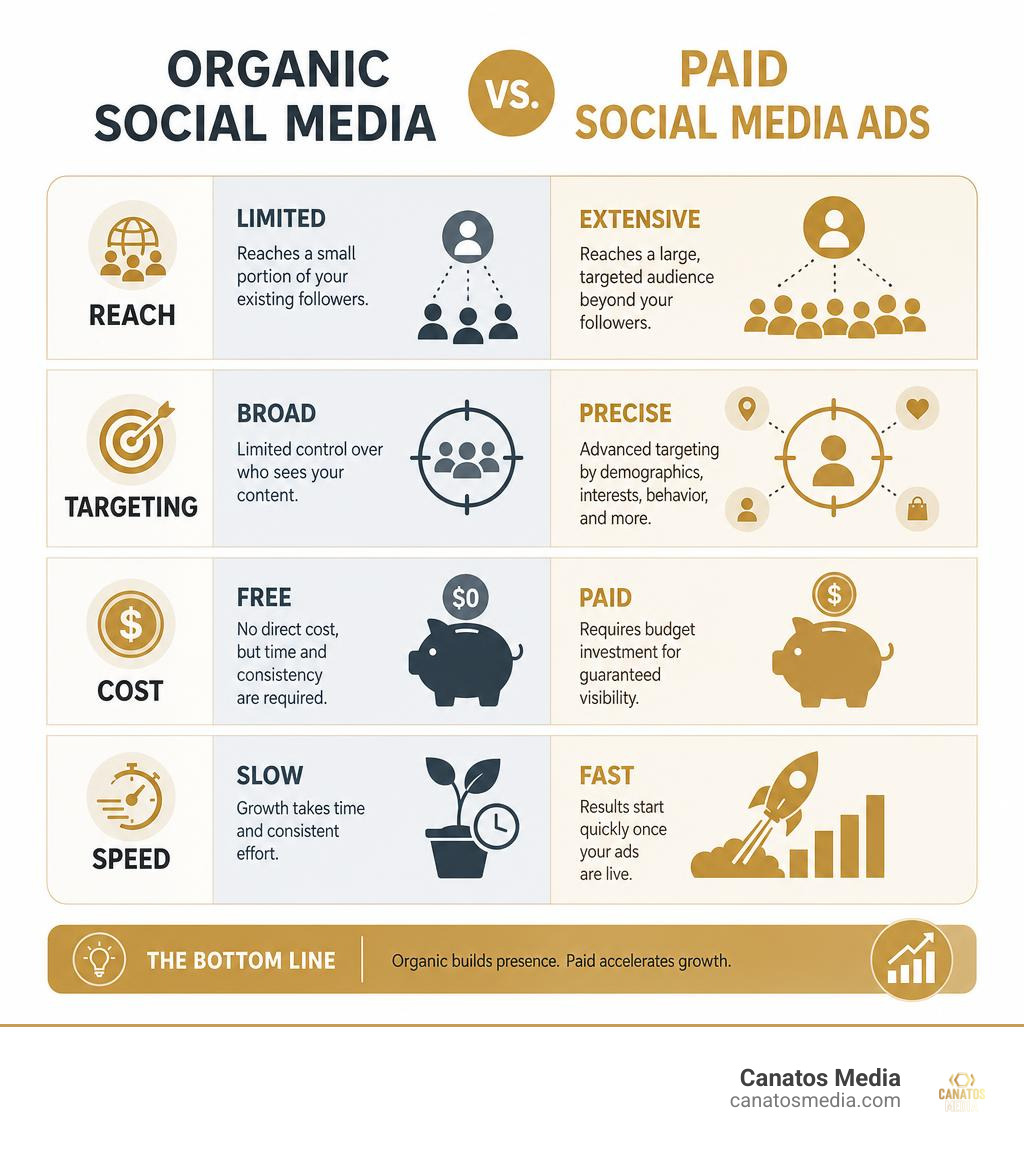
    Infographic comparing organic social media vs paid social media ads: reach, targeting, cost, and speed infographic

    What Are Social Media Ads and How Do They Work?

    To understand why paid social is such an absolute powerhouse for growth, we have to look at the fundamental shift from organic social media marketing to paid advertising.

    Organic social media is fantastic for nurturing the community you already have. It is your digital storefront, your brand’s personality, and your customer service desk. But let’s be completely honest: organic reach has plummeted across almost every major network over the last few years. If you post an update on your business page today, you are lucky if 2% to 5% of your followers actually see it in their feeds. Relying solely on organic reach to acquire new customers is like standing on a street corner whispering and hoping someone three blocks away hears you.

    Paid social media ads, on the other hand, are like handing you a megaphone with a laser-guided targeting system.

    When you run paid social campaigns, you bypass the restrictive organic algorithms entirely. You pay to place your content directly in front of the exact people who are most likely to buy from you. This is why we created our guide on Paid Social Media Advertising From Zero to Hero in One Hour—to show business owners that you don’t need to wait months for organic traction when you can launch highly targeted campaigns in an afternoon.

    The Mechanics of Paid Social: Targeting and Machine Learning

    The true magic of paid social lies in how these platforms find your customers. Unlike search engines, which rely on what someone is typing in at that exact second (search intent), social platforms rely on deep behavioral data and interest targeting.

    When you set up a campaign, you can define your target audience using three primary layers:

    1. Demographics: Age, gender, location, job titles, income, and education.
    2. Interests and Behaviors: What pages they like, what content they interact with, their shopping habits, and even the devices they use.
    3. Custom and Lookalike Audiences: You can upload your existing customer list, and the platform’s machine learning algorithm will find “lookalikes”—millions of other users who share identical behavioral traits with your best buyers.

    Once your campaign goes live, the platform’s machine learning engine takes over. The system enters a “learning phase” where it tests your ads on small segments of your target audience to see who clicks, watches, or converts. As it collects data, it optimizes delivery, showing your ads to the users most likely to take your desired action. If you don’t set this up correctly, however, you run the risk of overspending, which is why we always warn business owners to Stop Burning Cash on Bad Meta Ads by understanding how these algorithms function before launching.

    Every ad campaign is built on a specific campaign objective. Whether you want to build top-of-funnel brand awareness, drive traffic to a blog, capture leads via a native form, or secure direct e-commerce sales, choosing the right objective tells the algorithm exactly what to optimize for.

    The Top Platforms and Formats for Paid Social

    Not all social media platforms are created equal. Each network has its own unique user culture, primary demographics, and ad placements. To get the best return on your ad spend, you must match your product or service to the platform where your target audience naturally hangs out.

    Choosing the Right Platform for Your Social Media Ads

    Let’s look at the breakdown of the major players in 2026:

    Facebook

    • Active Users: Over 3.03 billion active users.
    • Key Demographics: Spans all age groups, but holds the strongest purchasing power among users aged 25–65+.
    • Why Use It: Facebook remains the undisputed king of local lead generation and e-commerce. Its targeting capabilities and sheer volume of historical user data are unmatched.

    Instagram

    • Active Users: At least 1.7 billion users.
    • Key Demographics: Highly popular among Millennials and Gen Z (ages 18–44).
    • Why Use It: Highly visual. If you sell lifestyle products, fashion, food, or aesthetic services, Instagram is your playground. It is also the home of Reels, which are incredibly effective for short-form video ads.

    YouTube

    • Active Users: Over 2.5 billion monthly active users.
    • Key Demographics: Broad appeal across all age groups, particularly strong with males and younger demographics who prefer video over text.
    • Why Use It: YouTube functions as the world’s second-largest search engine. Running video ads here allows you to capture users who are actively looking to learn, solve a problem, or be entertained.

    LinkedIn

    • Active Users: 1.15 billion users.
    • Key Demographics: Professionals, decision-makers, B2B buyers, and job seekers (ages 25–64).
    • Why Use It: If you are a B2B company, LinkedIn is essential. While it is notoriously expensive, it allows you to target users by specific job titles, industries, company sizes, and seniorities.

    TikTok

    • Active Users: 1.6 billion active monthly users.
    • Key Demographics: Dominated by Gen Z and younger Millennials (ages 13–34), though older demographics are growing rapidly.
    • Why Use It: TikTok is built on raw, authentic, and video content. If you can create ads that “don’t look like ads,” you can unlock massive, low-cost virality.

    Pinterest

    • Active Users: 553 million monthly users.
    • Key Demographics: Highly female-skewed (approx. 70%), with users actively planning future purchases (weddings, home decor, fashion, DIY).
    • Why Use It: Pinterest users have high commercial intent. They use the platform as a visual search engine to plan what they want to buy next.

    Snapchat

    • Active Users: 443 million daily active users.
    • Key Demographics: Heavily skewed toward Gen Z and younger audiences (ages 13–24).
    • Why Use It: Great for mobile-first, interactive campaigns, AR filters, and reaching a younger demographic at a lower ad cost.

    X (formerly Twitter)

    • Active Users: Around 611 million monthly active users.
    • Key Demographics: Highly educated, tech-literate, and male-skewed.
    • Why Use It: Excellent for real-time engagement, tech, finance, and news-related promotions.

    To build a truly bulletproof strategy, many businesses run a hybrid approach. If you want to see how to balance your strategy across different ecosystems, check out our guide on Meta Google Advertising. Additionally, mastering the back-end software is crucial to your success, so we highly recommend reading up on How to Navigate Meta Ad Manager Like a Pro to avoid costly setup mistakes.

    Ad Formats and Creative Specifications

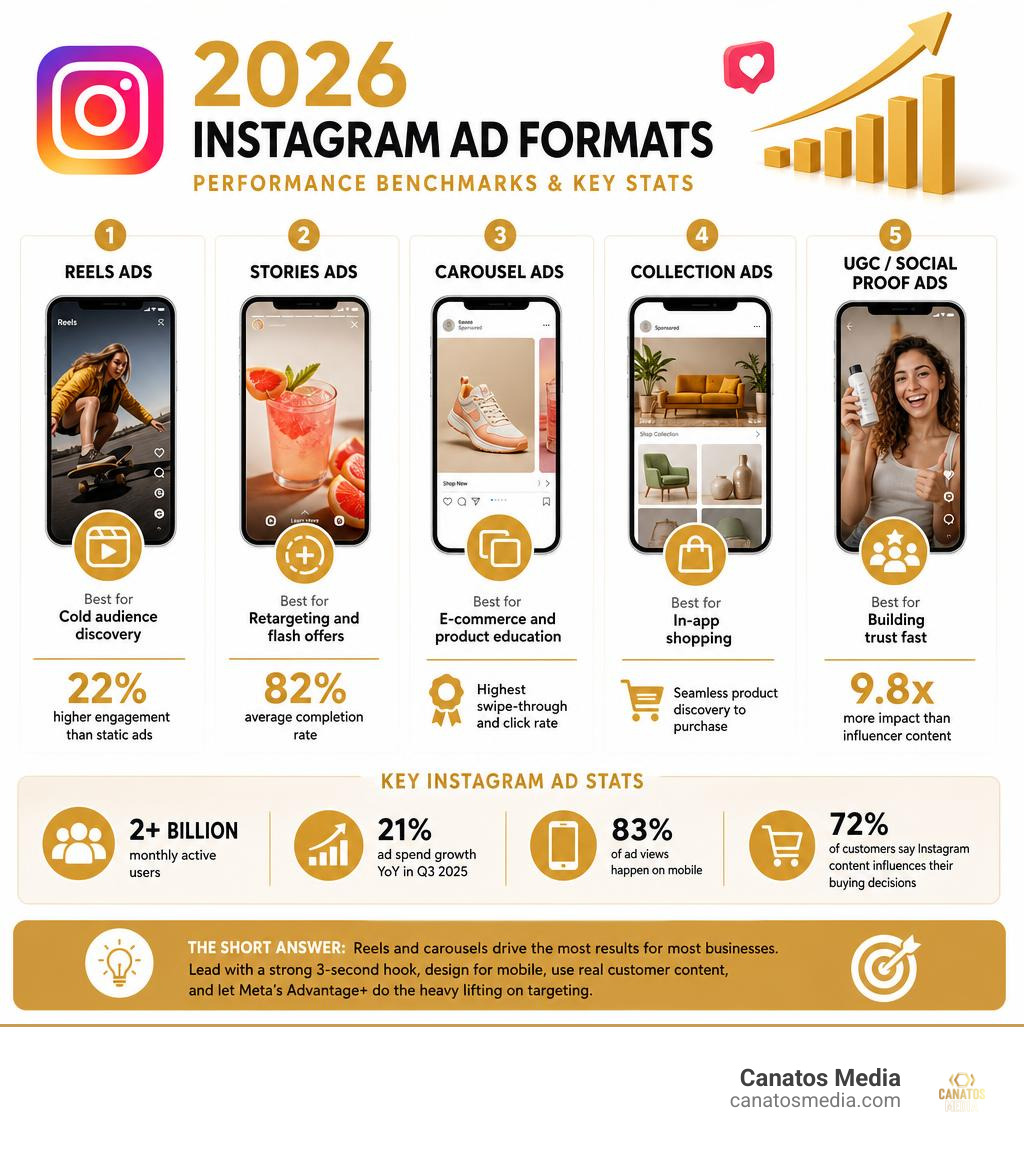
    Once you have selected your platform, you need to choose the right ad format to showcase your offer. The primary formats include:

    • Photo Ads: A single, high-quality image paired with a compelling headline and caption. Best for clean, straightforward product showcases or quick local promotions.
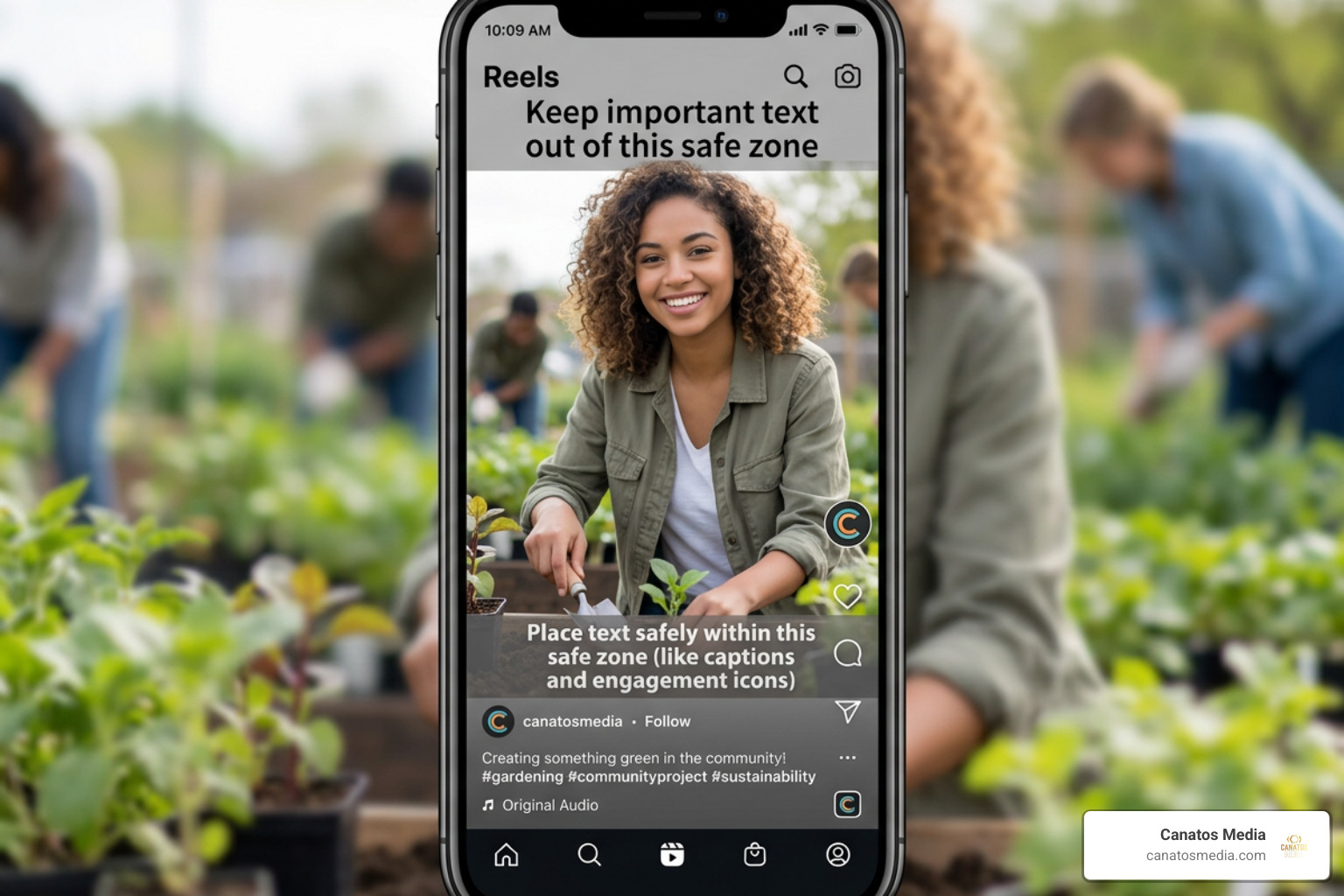
    • Video Ads: Engaging video clips that tell a story or demonstrate a product. In 2026, short-form, vertical video (9:16 aspect ratio) is the highest-converting format across almost all networks.
    • Carousel Ads: These allow you to showcase up to 10 images or videos within a single ad, each with its own link. They are incredibly effective for showing multiple products, highlighting different features of a single product, or telling a step-by-step story. If you are developing your own campaigns, you can refer to the Instagram Carousel Ads | Developer Documentation for detailed technical specifications and API guidelines.
    • Story Ads: Full-screen vertical ads that appear between users’ organic stories. They offer an immersive experience with high conversion rates when paired with a clear swipe-up CTA.
    • Collection Ads: A primary video or image accompanied by four smaller product images in a grid layout, allowing users to browse and buy products directly within the social app.

    To make your life easier, you don’t always have to create ad creatives from scratch. You can leverage your top-performing organic posts and boost them to a wider target audience. For a deep dive into the technical side of how to do this, check out the official guide on how to Use Posts as Instagram Ads | Developer Documentation.

    Furthermore, if you want to drive direct, high-intent conversations with your prospects, you can set up campaigns that open directly into a chat. You can learn how to build these interactive experiences using the Ads that Click to Messenger | Developer Documentation to capture leads instantly in real-time.

    How Much Do Social Media Ads Cost in 2026?

    One of the most common questions we hear is: “How much should I expect to spend?”

    The honest answer is that social media advertising is highly accessible, allowing you to start with as little as $5 to $10 a day. However, your actual costs—measured primarily in Cost Per Click (CPC) and Cost Per Mille / Cost Per Thousand Impressions (CPM)—will vary wildly depending on your industry, target audience, season, and campaign objective.

    To give you a realistic picture of the paid social landscape in 2026, here is a comparison of average costs across the major networks:

    Platform Average CPC (Cost Per Click) Average CPM (Cost Per 1,000 Impressions) Primary Audience Focus
    Facebook $0.70 – $0.97 $7.19 – $12.50 Broad / All Demographics
    Instagram $0.20 – $3.56 $7.91 – $11.00 Visual / Millennials & Gen Z
    YouTube $3.21 $9.68 Video / Educational & Entertainment
    LinkedIn $5.26 $6.59 B2B / Professionals & Decision-Makers
    TikTok $1.00 $6.06 Short-Form Video / Gen Z & Millennials
    Pinterest $0.10 – $1.50 $2.00 – $5.00 Visual Search / Shopping & DIY
    Snapchat $0.57 (per swipe up) $2.19 Youth / Interactive Mobile
    X (Twitter) $0.38 $6.46 Tech, Finance, Real-Time News

    Note: These benchmarks represent median averages. If you are in a highly competitive industry like legal services, finance, or dental care, your CPCs will naturally skew higher. For a deep dive into industry-specific performance metrics, check out the comprehensive Facebook Ads Benchmarks 2025: NEW Data, Trends, & Insights for Your Industry | WordStream.

    Understanding Bidding Strategies and Budget Allocation

    Social media platforms run on an auction-based system. You are competing with thousands of other advertisers to get your ad in front of the same user. To win the auction without overpaying, you need to understand the platform’s bidding options:

    1. Lowest Cost / Maximize Conversions: The platform automatically bids to get you the most results possible for your budget. This is the best option for beginners.
    2. Cost Cap / Bid Cap: You set the maximum amount you are willing to pay for a click or a conversion. This keeps your costs predictable but can limit your reach if your cap is set too low.
    3. Target ROAS: The system adjusts bids to hit a specific return on ad spend. This is ideal for mature e-commerce brands with plenty of historical pixel data.

    budget allocation dashboard

    When allocating your budget, we recommend starting with a 70/30 split. Allocate 70% of your budget to prospecting campaigns (reaching new people who have never heard of you) and 30% to retargeting campaigns (reaching people who have visited your website, watched your videos, or interacted with your social pages).

    Best Practices for Running Successful Campaigns

    Launching a campaign is only 10% of the battle. The real work lies in optimization, testing, and scaling. To ensure your campaigns generate a positive return, you must treat your ads as an ongoing scientific experiment.

    How to Measure the ROI of Social Media Ads

    If you aren’t tracking your metrics, you are essentially throwing money into a black hole. To understand if your social media ads are actually working, you need to focus on the key performance indicators (KPIs) that align with your ultimate business goals:

    • Return on Ad Spend (ROAS): The total revenue generated divided by the total ad spend. If you spend $1,000 and make $5,000, your ROAS is 5x.
    • Cost Per Acquisition (CPA) / Cost Per Lead (CPL): How much it costs you to acquire a paying customer or a qualified lead.
    • Conversion Rate (CVR): The percentage of people who clicked your ad and completed your desired action on your landing page.
    • Click-Through Rate (CTR): The percentage of people who saw your ad and clicked it. A low CTR (under 1%) usually means your creative or targeting is missing the mark.

    To manage this data effectively, you need a structured approach. We keep our readers updated with our specialized resources in our Category: Ad Management and compile our best optimization strategies under our Tag: Paid Ads.

    Creative Strategies and Optimization Tips

    If you want your ads to convert in 2026, you must prioritize the quality and authenticity of your creative assets. Here are our proven strategies for running successful campaigns:

    • Embrace Cinematic Short-Form Video: Social feeds are faster and more crowded than ever. Standard static images rarely stop the scroll anymore. If you want to capture attention, you need engaging, high-production-value video assets. To see how this works in practice, read our analysis on How Cinematic Short Form Content Improves Meta Paid Ad Performance.
    • Scale and Adapt Your Creative: Don’t just create one video and hope for the best. You need to adapt your creative assets to fit different platforms and placements. Learn How to Scale Short Form Ad Creative Across Meta and Google Ads to maximize your production budget.
    • Optimize for Local Lead Generation: If you run a local brick-and-mortar business or service company, your video ads should be highly tailored to your local community. See our step-by-step guide on How to Optimize Short Form Video Ads for Local Lead Generation.
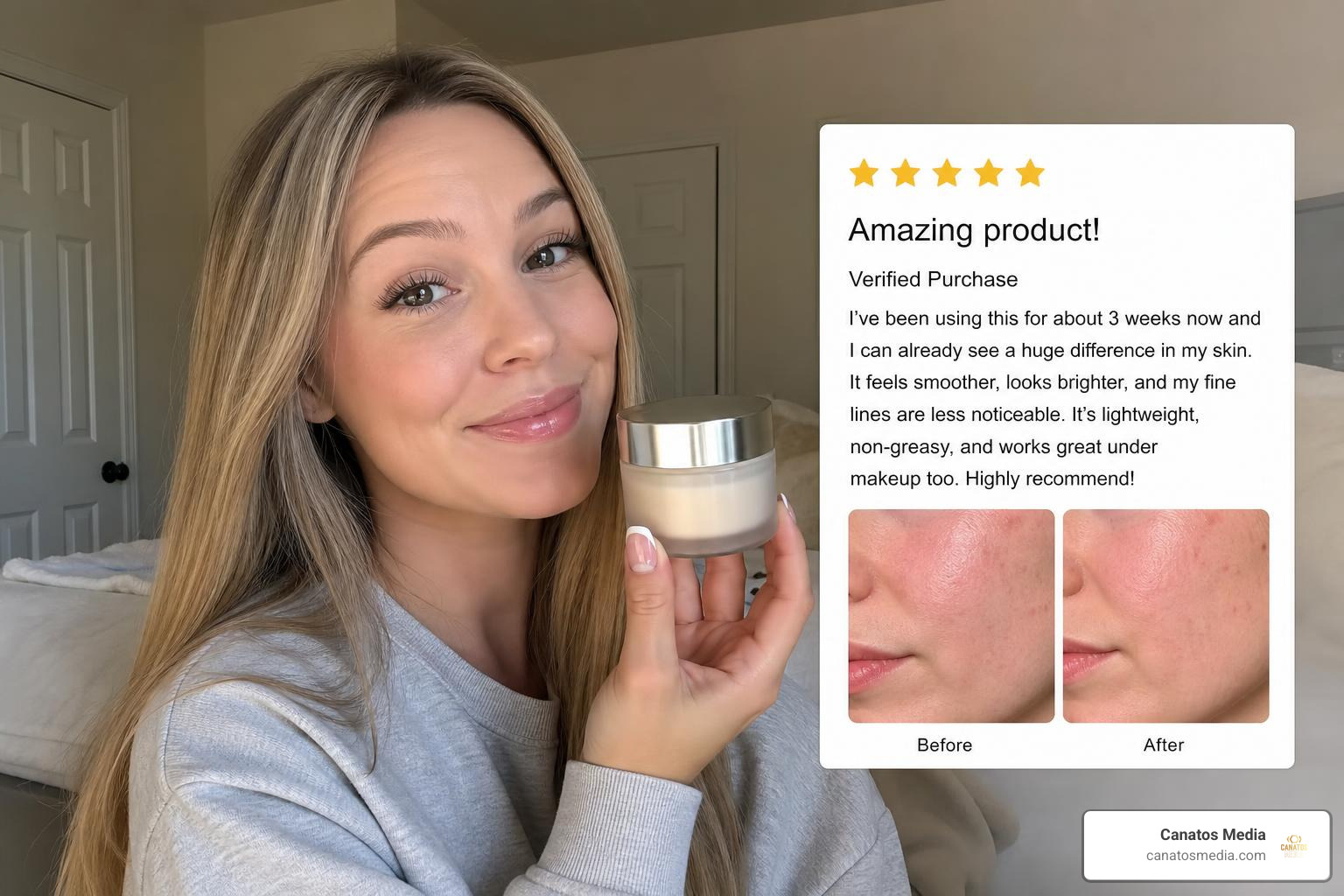
    • Leverage User-Generated Content (UGC): People trust other people far more than they trust brands. Running ads that look like organic organic reviews, unboxing videos, or customer testimonials can dramatically lower your acquisition costs.
    • Fight Creative Fatigue: In social media, ad creatives decay quickly. Because users scroll their feeds daily, they will quickly get tired of seeing the same ad over and over. Rotate your creative assets every 1 to 2 weeks to keep your frequency low and your conversion rates high.
    • Build a Systematic Follow-Up Process: No matter how incredible your ads are, they are only as good as your sales follow-up. For example, in our breakdown of The Gym Owner’s Guide to Paid Ads in 2026 – Two-Brain Business, we highlight that lead quality issues are almost always follow-up problems. If you don’t reach out to a new lead within 5 minutes of them submitting a form, your conversion rates will plummet.

    high-converting video ad storyboard

    Frequently Asked Questions About Paid Social

    Paid search (like Google Ads) is based on pull marketing. It captures users who are actively searching for a specific keyword with high intent (e.g., “plumber near me”). Paid social (like Meta Ads) is based on push marketing. It introduces your brand, product, or service to users based on their interests, behaviors, and demographics while they are browsing socially. Paid search is ideal for capturing immediate demand, while paid social is unmatched for building brand awareness, visual discovery, and generating demand where none existed before.

    How often should I refresh my ad creatives to avoid fatigue?

    As a general rule of thumb, you should refresh your ad creatives every 10 to 14 days for active, high-budget campaigns. If your target audience is smaller (such as a local geographic radius of 5 miles), your ads will reach the same people multiple times very quickly, meaning you may need to rotate creatives even faster to prevent your cost-per-click from rising.

    What is a good benchmark for social media ad ROI?

    While a “good” ROI depends heavily on your business model, profit margins, and industry, a standard benchmark for e-commerce is a 3x to 4x ROAS (Return on Ad Spend). For lead-generation businesses, a healthy benchmark is to ensure that your Customer Acquisition Cost (CAC) is at least 3 to 5 times lower than your Customer Lifetime Value (CLV).

    Conclusion

    Running successful social media ads in 2026 is no longer about simply hitting a “Boost Post” button and hoping for the best. It requires an integrated digital marketing strategy that seamlessly connects cinematic short-form video, hyper-precise audience targeting, and high-converting sales funnels.

    At Canatos Media, we specialize in helping brands build, run, and scale profitable paid media campaigns. From producing high-end, scroll-stopping video content to managing complex ad accounts across Meta and Google, we handle the heavy lifting so you can focus on running your business.

    Ready to stop burning cash and start driving measurable growth? Dive into our comprehensive Meta Ads Management Ultimate Guide to learn how we structure high-performing campaigns, or reach out to our team today to build a custom paid social strategy for your business.

  • A No-Nonsense Comparison of Local Digital Marketing Agencies

    A No-Nonsense Comparison of Local Digital Marketing Agencies

    A No-Nonsense Comparison of Local Digital Marketing Agencies

    Why Most Local Businesses Struggle to Get Found Online

    If you’ve ever typed digital marketing near me into Google, you already know the frustration: a wall of agencies, consultants, and freelancers all claiming to be the best — with no easy way to tell them apart.

    Here’s a quick answer to help you cut through the noise:

    The fastest way to find a good local digital marketing provider:

    1. Search Google for agencies in your city and check their reviews on Google, Clutch, or UpCity
    2. Look for agencies that specialize in businesses like yours (industry + service type)
    3. Ask for case studies with real numbers — leads, rankings, or ROI
    4. Confirm they offer the core services you need: SEO, paid ads, social media, or web design
    5. Schedule a free strategy call before committing to anything

    Here’s the reality: 70% of consumers research a business online before ever visiting or calling. If your business isn’t showing up in local search results, a competitor is getting that customer instead.

    The good news? You don’t need a massive budget or a national agency to fix it. Local digital marketing providers — the ones who know your market, your competitors, and your community — often deliver faster, more targeted results than big-name remote firms.

    But not all local agencies are created equal. Some are full-service growth partners. Others resell generic packages with little customization. Knowing the difference is what this guide is about.

    I’m Nic Canobbio, founder of Canatos Media, and I’ve spent over two decades working at the intersection of media production, content strategy, and business development — including building digital and paid media campaigns that have driven tens of millions of content views and tangible revenue results, which gives me a grounded perspective on what actually works in digital marketing near me searches. In the comparison below, I’ll break down what separates the best local providers from the rest, so you can make a confident decision.

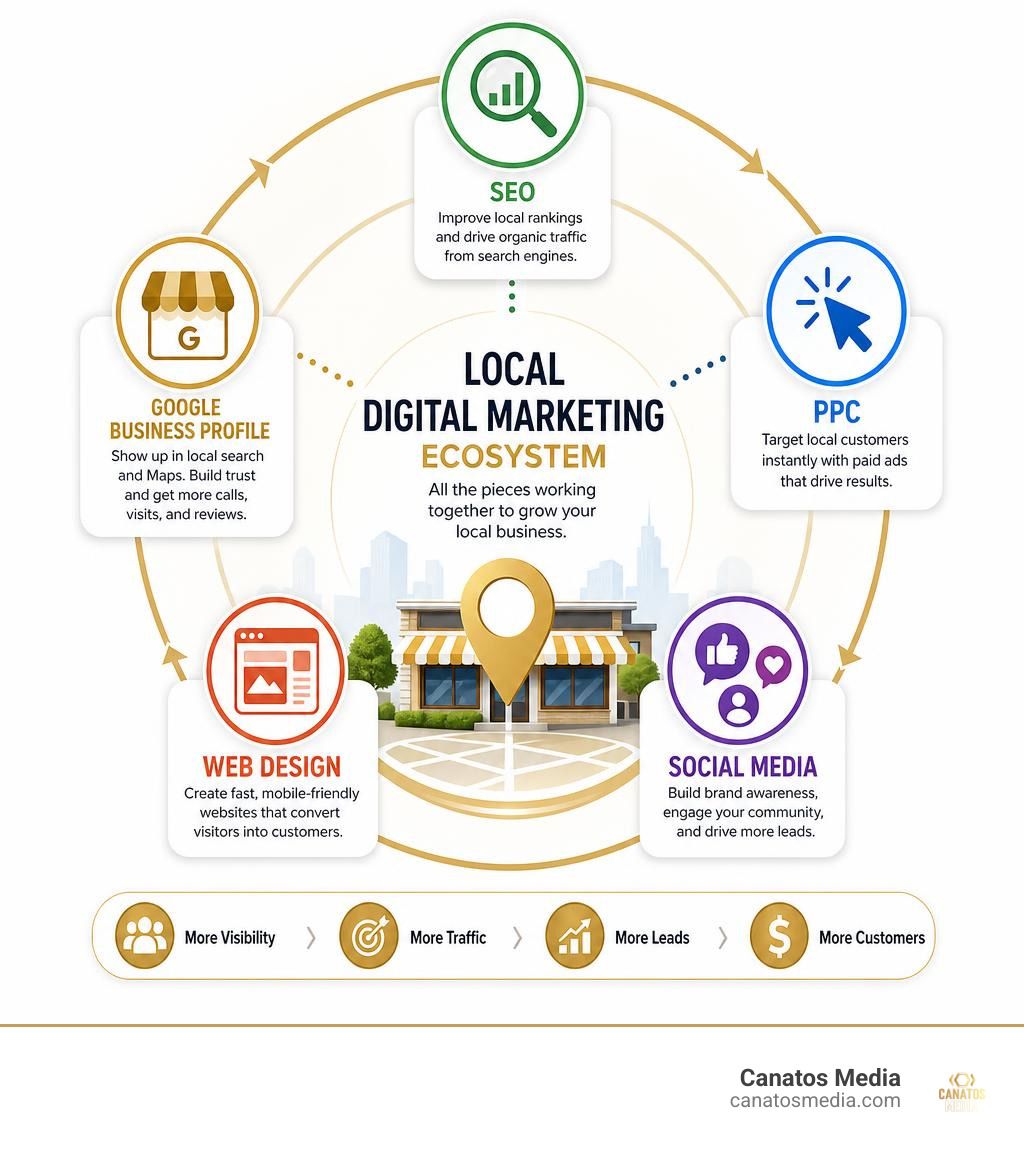
    Local digital marketing ecosystem showing SEO, PPC, social media, web design, and Google Business Profile infographic

    Digital marketing near me word guide:

    Why Search for “Digital Marketing Near Me” Over National Agencies?

    When you run a business in the Tri-State area or on Long Island, your target audience isn’t a generic demographic profile spread across the country. Your audience consists of real people living in specific neighborhoods, commuting on the LIRR, or looking for services across New York, New Jersey, and Connecticut.

    National agencies might have massive teams, but they lack the regional pulse. They don’t understand the difference between targeting customers in Nassau County versus Suffolk County, nor do they understand the hyper-local competitive landscape of the NYC metro area. Searching for a digital marketing near me partner ensures you work with professionals who actually understand your market dynamics.

    Local agency collaboration and strategy meeting

    Choosing a regional expert means your campaigns are built with local nuances in mind. If you are looking to build a brand that stands out in a crowded regional market, you need a partner featured on The Best Creative Digital Agency Shortlist for 2026 who understands how to blend local relevance with world-class creative execution.

    The Benefits of Hiring a Digital Marketing Near Me Provider

    The most immediate benefit of hiring a local agency is their hands-on approach to local search signals. A nearby agency can physically visit your location to capture high-quality, authentic photo and video assets, which are critical for building community trust.

    Furthermore, local agencies excel at managing your local search footprint. This includes building accurate local citations and optimizing your Google Business Profile (GBP). According to industry data, local businesses that optimize their Google Business Profile see up to 70% more website visits and 35% more direction requests.

    A local agency ensures your business is properly categorized, your service areas are accurately mapped, and your customer reviews are managed effectively to build authority. For a step-by-step understanding of how to manage your business listing, you can consult the Google Business Profile Help Center.

    How Local Agencies Differ from Remote or National Firms

    The difference between a local agency and a remote national firm comes down to communication, execution, and tailored strategies.

    • Communication: With a local agency, you aren’t just another ticket in a project management queue. You can pick up the phone, speak to someone in your time zone, or even meet for a coffee in Manhattan or Garden City to discuss your quarterly goals.
    • Regional Insights: A remote agency in another state won’t know that a winter storm in the Tri-State area requires a sudden shift in your home services ad copy, or that local events are prime opportunities for real-time social media campaigns.
    • Tailored Strategies: National firms often rely on rigid, pre-packaged templates. Local agencies build custom strategies designed to compete specifically against the businesses down the street from you.

    For a deeper dive into how local businesses can leverage these dynamics to outcompete national brands, check out HubSpot’s Local Marketing Guide.

    Comparing the Core Services of Local Marketing Providers

    To get the most out of your marketing investment, it helps to understand the primary levers local agencies pull to drive growth. The best local agencies don’t just offer one isolated service; they integrate multiple channels to build a cohesive customer acquisition system.

    To understand the full scope of what these teams handle daily, read The Ultimate Breakdown of What a Creative Digital Marketing Agency Actually Does.

    Here is a quick comparison of the three most common service pillars:

    Marketing Pillar Primary Goal Best For Typical Timeline for Results
    Local SEO Long-term organic visibility in search engines and map packs. Sustainable lead generation, local search dominance, and authority building. 3 to 6 months
    Paid Ads (PPC) Immediate traffic, leads, and phone calls from high-intent searchers. Scaling quickly, promoting seasonal offers, and filling immediate booking gaps. 1 to 15 days
    Social Media / Video Community engagement, brand awareness, and visual trust-building. Educating customers, humanizing your brand, and retargeting warm audiences. 1 to 3 months

    Local SEO and Google Business Profile Optimization

    Local SEO is the art and science of making sure your business shows up when someone searches for your services in your specific town or neighborhood. The holy grail of local SEO is the “Map Pack” — the top three local business listings that appear alongside a map at the top of Google search results.

    To win a spot in the Map Pack, a local agency will focus on:

    1. Google Business Profile Optimization: Ensuring your business name, address, and phone number (NAP) are 100% consistent across the web.
    2. Local Citation Building: Listing your business in prominent regional directories, including localized platforms like Yelp’s Long Island Business Directory.
    3. On-Page Local SEO: Creating dedicated location landing pages on your website targeting specific towns across NY, NJ, or CT.

    For a detailed look at the ranking signals Google uses to determine local placement, read Google’s Official Local Search Ranking Guide.

    While SEO builds long-term equity, paid search and paid social ads are your fastest path to generating immediate leads. By combining Google Ads (which captures high-intent searchers actively looking for your service) with Meta Ads (which builds visual demand on Facebook and Instagram), you create a highly efficient lead-generation system.

    Paid advertising funnel showing Google Search Ads and Meta Social Ads driving high-converting traffic to local landing pages

    When properly managed, businesses using targeted local SEO and paid ads report a 40-60% lower cost per lead compared to non-optimized campaigns.

    To build a high-performing paid campaign, you need to structure your ad accounts correctly, write compelling local copy, and design conversion-focused landing pages. You can master the fundamentals using our Step-by-Step Guide to Paid Ads.

    Additionally, to avoid common budget pitfalls and maximize your return on ad spend, explore our comprehensive resources on Meta Google Advertising, learn how to navigate platforms like a professional with the Meta Ads Management Ultimate Guide, or discover how to self-optimize using our tutorial on How to Navigate Meta Ad Manager Like a Pro.

    Social Media and Video Marketing

    In 2026, social media is no longer just about posting occasional updates. It is a visual search engine and a trust-building platform. Modern consumers want to see the faces behind your business, watch behind-the-scenes footage of your work, and consume engaging, short-form video content on platforms like Instagram Reels and TikTok.

    Working with an agency that can produce high-quality, cinematic video content gives you a massive unfair advantage. It allows you to build real, human connections with your local audience before they ever pick up the phone.

    To build an effective organic and paid social presence, check out The Complete Guide to Social Media Management. If you want to dive deeper into video creative, read our guides on How to Create High-Impact Short-Form Content That Converts on Facebook and Instagram Reels and The Ultimate Guide to Video Marketing for Service Businesses in 2026.

    How to Evaluate and Choose a Digital Marketing Near Me Agency

    Selecting the right partner can feel overwhelming, but keeping a few key criteria in mind will save you thousands of dollars and months of wasted effort.

    First, look for structural alignment. Agencies operate under various business models — some sell pre-packaged hourly services, while others build custom, outcome-based growth engines. To find the right fit for your business goals, read about the 6 Best Agency Models for Monthly Video and Social Ads in 2026.

    Agency vetting checklist and selection process

    When evaluating local providers in the Tri-State area, look for established firms with deep roots in the region who understand the local market dynamics. If you require sophisticated website development alongside your marketing, choosing a partner that integrates web design with active SEO and paid advertising can help ensure your digital foundation is rock solid.

    Key Questions to Ask a Digital Marketing Near Me Agency

    Before signing any contract, schedule a discovery call and ask these direct questions to separate the true growth partners from the sales-heavy agencies:

    1. “How do you track and measure campaign success?” (Red flag: They only talk about “impressions” or “clicks.” Green flag: They talk about leads, phone calls, cost per acquisition, and booked revenue.)
    2. “Do we own our ad accounts and website assets if we part ways?” (Red flag: They host your website on a proprietary platform or refuse to give you admin access to your Google Ads or Meta accounts.)
    3. “Who will be managing my account on a day-to-day basis?” (Ensure you have a dedicated account manager and regular, transparent reporting meetings.)
    4. “Can you show me a case study of a business similar to mine in the NY/NJ/CT area?” (An agency should readily provide localized examples of their success.)

    For more advice on vetting marketing vendors, check out Search Engine Land’s Guide to Hiring an SEO Agency.

    Cost, Timelines, and Measuring ROI

    A major concern for any business owner is understanding the financial commitment and when they will see a return on their investment.

    • The Timeline: Paid search campaigns can start generating phone calls within days of launch. SEO, on the other hand, is a compounding asset. SEO campaigns for local service businesses typically show measurable ranking improvements within 60-90 days and meaningful traffic gains in 3-6 months.
    • The ROI: Marketing should never be viewed as an expense; it is an investment. Companies combining SEO, PPC, and conversion-focused websites experience an average ROI of 500% on monthly marketing investments. For example, a monthly local marketing investment of $5,000 can realistically scale to return $30,000 in tracked, closed local business once the compounding systems are fully optimized.

    Frequently Asked Questions about Local Digital Marketing

    How much does local digital marketing cost?

    Local digital marketing costs vary based on your competitive landscape, target geographic area, and growth goals. In the Tri-State area and Long Island, professional local marketing retainer services typically start around $800 to $1,500 per month for basic local SEO and Google Business Profile management.

    For integrated campaigns that combine custom web design, active search engine optimization, paid advertising management, and ongoing video content creation, monthly investments usually range from $3,000 to $7,500+. Additionally, most agencies recommend a minimum starting ad budget of $500 per month to gather enough initial data to optimize your paid campaigns effectively. To understand industry-standard paid ad costs, consult WordStream’s Local Advertising Benchmarks.

    How long does it take to see results from local SEO?

    For most local businesses in competitive markets like New York or New Jersey, you will begin to see measurable movement in search keyword rankings within 60 to 90 days. Meaningful increases in organic website traffic, phone calls, and lead form submissions typically build momentum between months 3 and 6.

    Because search engines prioritize websites with established authority, consistent content, and clean technical structures, local SEO is a long-term strategy that continues to deliver low-cost leads long after your initial optimization. For more on how search engine algorithms process local business authority over time, read Google Search Central on SEO Timelines.

    What industries benefit most from local digital marketing?

    Any business that relies on customers within a specific geographic radius benefits heavily from local digital marketing. However, the industries that see the highest and most immediate return on investment include:

    • Home Services: HVAC, plumbing, roofing, electrical, landscaping, and cleaning companies. These businesses rely on high-intent local searches (e.g., “emergency plumber near me”) to book immediate, high-ticket jobs.
    • Professional Services: Law firms, accounting practices, real estate agencies, and insurance brokers.
    • Healthcare & Medical: Dental practices, medical clinics, physical therapists, and local chiropractors.

    Conclusion

    Finding the right partner when searching for digital marketing near me doesn’t have to be a gamble. By choosing a local team that understands the unique pulse of the Tri-State area and Long Island, you ensure your marketing budget is spent on strategies that actually drive local foot traffic, phone calls, and booked jobs.

    At Canatos Media, we don’t believe in generic, one-size-fits-all marketing packages. We partner with local businesses to build custom, integrated growth engines. We combine high-end, cinematic short-form video production with aggressive local SEO, paid Meta and Google ad campaigns, and website support to turn attention into real, measurable revenue.

    Ready to stop chasing vanity metrics and start scaling your business with a clear, cohesive digital strategy? Let’s talk.

    Book a strategy call with Canatos Media today to unlock your local growth potential.

  • Mastering Meta Business Suite Ads Manager for Beginners

    Mastering Meta Business Suite Ads Manager for Beginners

    Why Meta Business Suite Ads Manager Confuses So Many Business Owners (And How to Fix That)

    If you’ve ever logged into Facebook trying to run an ad and ended up lost between tabs, you’re not alone. The Meta Business Suite Ads Manager ecosystem is actually two separate tools that work together — and most beginners don’t realize that until they’ve wasted hours clicking in circles.

    Here’s a quick breakdown of what each tool does:

    Tool Primary Purpose
    Meta Business Suite Manage your Facebook Page and Instagram account — posts, messages, leads, and notifications
    Meta Ads Manager Create, run, and optimize paid ad campaigns across Facebook, Instagram, Messenger, and more

    The simple version:

    • Use Meta Business Suite to manage your business presence day-to-day
    • Use Meta Ads Manager when you want to spend money to reach new customers

    Both live inside the same Meta ecosystem. Both can be accessed from your Facebook Page. But they do very different jobs — and mixing them up costs time and money.

    I’m Nic Canobbio, founder of Canatos Media, and after producing content that’s reached over 60 million views and managing paid media strategies across multiple platforms, I’ve seen how mastering the Meta Business Suite Ads Manager combination can transform a local business’s ability to generate leads and drive real growth. In this guide, I’ll walk you through everything you need to know — from setup to optimization — in plain language.

    Meta Business Suite vs Meta Ads Manager ecosystem comparison infographic infographic

    Meta business suite ads manager terms to remember:

    What is the Meta Business Suite Ads Manager Ecosystem?

    To understand how to grow your brand in the Tri-State area or out on Long Island, you have to understand the layout of Meta’s digital landscape. Many local businesses get caught in an endless loop because both portals appear inside Facebook and both deal with business activities.

    Let’s clarify: Meta Business Suite is your centralized control room for organic business assets. It was built specifically for page managers to handle day-to-day operations across Facebook and Instagram. Through Meta for Business (formerly Facebook for Business), you can view notifications, respond to direct messages, schedule organic posts, and look at high-level engagement analytics.

    On the flip side, Meta Ads Manager is a highly specialized, technical powerhouse built solely for performance advertising. It replaced older tools like Power Editor to give advertisers granular control over targeting, budgeting, placements, and complex split-testing.

    Feature Meta Business Suite Meta Ads Manager
    Primary Goal Asset management & organic growth Paid customer acquisition & ROI
    Key Activities Posting, scheduling, customer messaging Campaign creation, audience building, bidding
    Ad Capabilities “Boost” posts (basic targeting) Advanced campaign structures, custom audiences
    Reporting Depth Basic page likes, reach, and post engagement Conversion tracking, ROAS, cost-per-click, placement breakdowns

    While Meta Business Suite offers light, simplified advertising options (like boosting a post to get quick local visibility), relying on it for your main advertising campaigns is a fast way to burn through your marketing budget. For a truly professional, structured campaign, you need to transition into the dedicated Ads Manager platform. You can learn more about how these interact in our guide on Facebook Ads Manager vs Meta Business Suite 2026.

    Core Capabilities of Meta Business Suite

    For day-to-day social media management, Meta Business Suite is an incredibly powerful, free platform. It saves business owners on Long Island and throughout the Tri-State area from having to pay for expensive third-party scheduling tools.

    Meta Business Suite content scheduler calendar view

    If you are just getting started, you can watch How To Set Up A Meta Business Account in 2026 – YouTube to get your business accounts linked up properly.

    To access Meta Business Suite, make sure you are logged into your personal Facebook account, then switch your profile to your Facebook Page. On the left-side menu of your desktop screen, you will see the shortcut to Meta Business Suite.

    Once inside, the navigation menu on the left side is your gateway to everything. The most critical button here is All Tools. Clicking this expands a directory where you can jump straight into advanced settings like Business Settings, Events Manager (for tracking your website pixel), Audiences, and even Ads Manager.

    If you manage multiple local brands, you can easily switch between different business accounts and Facebook Pages using the dropdown menu in the top-left corner of the Business Suite dashboard.

    Managing Organic Assets and Engagement

    The magic of Meta Business Suite lies in how it streamlines community management.

    • Unified Inbox: Instead of opening separate apps, you can read and reply to messages and comments from Facebook, Instagram, and Messenger in one single screen. You can even connect WhatsApp Business to keep all client inquiries organized.
    • Post and Reel Scheduling: You can draft a post or upload a vertical video for a Reel, write your captions, add local hashtags, and schedule them to go live at different times on Facebook and Instagram to match when your specific audiences are most active.
    • Lead Center: When you run lead generation forms, you don’t have to open Ads Manager to find your prospects. Meta Business Suite has a built-in Lead Center where you can view, download, and organize incoming leads.
    • Stories: Share behind-the-scenes moments of your business by scheduling Stories across both platforms simultaneously.

    Deep Dive into Meta Ads Manager

    When you are ready to transition from simple social posts to generating measurable conversions, it’s time to step into Meta Ads Manager. This is the exact tool we use at Canatos Media to build high-converting paid social campaigns. To explore this in-depth, check out our Step-by-Step Guide to Paid Ads.

    Ads Manager campaign creation workflow hierarchy

    To access the platform directly, you can visit Meta for Business (formerly Facebook for Business).

    Ads Manager is built on a rigid, three-tier campaign hierarchy:

    1. Campaign Level: This is where you define your ultimate business objective. Meta asks you: What is the goal of this campaign? You can choose from Awareness, Traffic, Engagement, Leads, App Promotion, or Sales. This is also where you can toggle on Advantage Campaign Budget (which automatically distributes your budget across your ad sets).
    2. Ad Set Level: This is where the logistics happen. You define who sees your ads (targeting), where they see them (placements), and how much you want to spend. This is where you build custom audiences, lookalike audiences, or target specific geographic locations like Nassau and Suffolk counties.
    3. Ad Level: This is the creative layer. It’s what your potential customers actually see on their feeds. Here, you upload your images or cinematic short-form videos, write your primary ad copy, design headlines, and select your call-to-action (CTA) buttons.

    By keeping these three levels organized, you can easily run A/B split tests to see if a certain video creative performs better than a static image, or if a warm lookalike audience converts at a lower cost than broad demographic targeting.

    Setting Up Campaigns in Meta Business Suite Ads Manager

    To set up a campaign that won’t drain your bank account, you must align your campaign objective with your actual business goal. If you want phone calls or form fills, do not choose “Traffic” — choose “Leads.” If you choose Traffic, Meta’s algorithm will optimize for people who like to click links but rarely buy or sign up. Choosing the wrong objective is one of the primary reasons businesses struggle; learn more about how to Stop Burning Cash on Bad Meta Ads.

    Once your objective is set, you will configure your targeting. You can target users based on:

    • Demographics: Age, gender, relationship status, education, and job titles.
    • Interests and Behaviors: What pages they like, what products they buy, and what devices they use.
    • Custom Audiences: Uploading your customer email list, targeting past website visitors via the Meta Pixel, or retargeting users who watched 50% of your Instagram Reels.

    For a deeper look at setting up your pixel and managing these assets, read our Meta Ads Management Ultimate Guide.

    Leveraging AI and Automation Features

    In 2026, Meta’s advertising platform relies heavily on artificial intelligence. Marketers who learn to collaborate with these AI features get far better results than those who try to manually control every variable.

    • Advantage+ Campaigns: These are Meta’s highly automated campaign setups. Advantage+ Shopping Campaigns, for example, are designed specifically for e-commerce brands. They automate creative combinations, placements, and audience expansion, using machine learning to find the buyers most likely to convert.
    • Dynamic Creative: Instead of building ten different ads manually, you can upload up to ten images/videos, five text options, and five headlines. Meta’s AI will mix and match these assets to serve the best-performing combination to each individual user.
    • Automation Rules: Think of these as your campaign safety net. You can set up rules that say: “If the Cost Per Lead goes above $25, pause the ad set automatically,” or “If an ad set generates a Return on Ad Spend (ROAS) greater than 3.0 over the last 3 days, increase the daily budget by 15%.”
    • The Learning Phase: Whenever you launch a new ad set, Meta enters the “Learning Phase.” This is when the algorithm is gathering data to figure out who is most likely to click or convert. During this time, performance can fluctuate. Making large edits (like changing budgets by more than 20% or editing ad creative) restarts this phase, so it’s critical to let your ads run uninterrupted until they exit the learning phase.

    Reporting, Troubleshooting, and Mobile Functionality

    Launching your campaigns is only half the battle; tracking performance and fixing technical hurdles is where the real work begins.

    Desktop vs. Mobile Ads Manager App

    While we always recommend building your campaigns on a desktop computer for maximum control, the mobile app is an excellent companion tool for checking in on the go.

    The mobile app has earned a solid reputation among business owners, boasting over 10 million downloads and a 4.4 rating on Meta Ads Manager on Google Play and a 4.6 rating on the Apple App Store. You can download the iOS version via Meta Ads Manager 4+.

    • What you can do on mobile: Monitor real-time campaign performance, pause underperforming ads, adjust daily budgets, receive instant alerts when a campaign budget is spent, and quickly switch between different ad accounts.
    • What you should do on desktop: Build complex campaign structures, set up custom conversion tracking, run detailed audience research, export custom reports, and manage pixel integrations.

    Troubleshooting Common UI Frustrations

    Meta’s interface is notorious for updates that can leave users feeling lost. Here are a few common issues and how to solve them:

    • “Why is everything greyed out?” If you can’t click the “Edit” button or create a new campaign, it’s almost always a permissions issue. You need to make sure you have “Admin” or “Advertiser” access to the specific ad account.
    • Missing Ad Accounts: If your business page is showing up but your ad account is missing, check the dropdown menu in the top-left corner of Ads Manager. You may have your personal ad account selected instead of your business ad account.
    • Two-Factor Authentication (2FA): Meta now strictly requires 2FA for all business managers. If you or your team members don’t have this enabled, Meta may restrict your ability to edit ads or access Page settings.
    • Onboarding Team Members Safely: When granting access to employees or agencies, always follow the principle of least privilege. Assign them as an “Advertiser” or “Analyst” rather than giving away full “Admin” control. For step-by-step instructions on secure setup, refer to the Meta Ads Add User Access | OpsBlu Docs.

    Frequently Asked Questions about Meta Advertising

    What is the difference between Meta Business Suite and Ads Manager?

    Meta Business Suite is built for organic page management (scheduling posts, responding to customer messages, and viewing page growth). Meta Ads Manager is a dedicated platform built for paid advertising campaigns (audience targeting, budget bidding, and conversion tracking).

    Why can’t I see my ad account or edit campaigns?

    This usually happens because you have the wrong ad account selected in the top-left dropdown, or you do not have the proper user permissions assigned to your Meta Business account. Go to your Business Settings to verify your access level.

    What is the learning phase in Meta ads and why does it matter?

    The learning phase is the period when Meta’s algorithm is actively delivering your ads to find the best audience. During this time, performance may be unstable. Avoid making significant changes to your budget, targeting, or creative during this phase to keep the algorithm from resetting.

    Conclusion

    Navigating the meta business suite ads manager ecosystem doesn’t have to feel like a chore. By using Meta Business Suite to keep your community engaged and using Ads Manager to run structured, conversion-focused paid campaigns, you can build a highly effective digital marketing funnel.

    For local businesses in the Tri-State area and Long Island, standing out online requires a cohesive approach. At Canatos Media, we specialize in an integrated strategy that connects high-end, cinematic short-form video content with precise targeting and conversion optimization. Whether you need hands-on social media management, technical paid ad support, or strategic direction, we are here to help your business grow.

    Ready to take your digital marketing to the next level? Explore our Meta Google Advertising Services and let’s build a strategy that drives real, measurable results for your business.

  • Stop Scrolling and Start Selling: The Secrets of Most Effective Instagram Ads

    Stop Scrolling and Start Selling: The Secrets of Most Effective Instagram Ads

    Why the Most Effective Instagram Ads Are Your Fastest Path to More Local Customers

    The most effective Instagram ads in 2026 share a few things in common — and once you know what they are, you can start replicating them for your own business.

    Here’s a quick breakdown of what works best, right now:

    Ad Format Best For Key Strength
    Reels Ads Cold audience discovery 22% higher engagement than static ads
    Stories Ads Retargeting and flash offers 82% average completion rate
    Carousel Ads E-commerce and product education Highest swipe-through and click rate
    Collection Ads In-app shopping Seamless product discovery to purchase
    UGC / Social Proof Ads Building trust fast 9.8x more impact than influencer content

    The short answer: Reels and carousels drive the most results for most businesses. Lead with a strong 3-second hook, design for mobile, use real customer content, and let Meta’s Advantage+ do the heavy lifting on targeting.

    Instagram now reaches over 2 billion monthly active users — and ad spend on the platform grew 21% year-over-year in Q3 2025. That growth isn’t slowing down. But more spend doesn’t mean better results. Most local businesses waste their budget on weak creative, wrong formats, and zero measurement strategy.

    The competition for attention is real. A user scrolls past hundreds of posts every session. If your ad doesn’t stop them in the first three seconds, it’s invisible. And with 83% of all Instagram ad views happening on mobile, the stakes for getting your creative right have never been higher.

    Up to 72% of customers say Instagram content directly influences their buying decisions. That’s not a small number — that’s most of your potential customers being shaped by what they see in their feed before they ever visit your website.

    This guide breaks down exactly what separates forgettable ads from ones that drive real sales.

    I’m Nic Canobbio, founder of Canatos Media — with over two decades in media production, live content, and paid social strategy, I’ve spent years studying and producing the most effective Instagram ads for brands that need real growth, not just vanity metrics. Let’s get into what actually works.

    2026 Instagram ad formats, performance benchmarks, and key stats infographic infographic

    Decoding the Most Effective Instagram Ads Formats in 2026

    To build a high-converting campaign, you must first understand where your ads live. Too many advertisers make the mistake of treating Instagram as a simple extension of their Facebook campaigns. As we discuss in our breakdown of Facebook Ads vs Instagram Ads (2026), user behavior, platform culture, and creative language are fundamentally different on these two networks.

    While Facebook users are highly accustomed to clicking outbound links, Instagram users prefer to consume content and make discoveries directly inside the app. This means the most effective Instagram ads are designed to feel native to their specific placement.

    Let’s look at the benchmarks for the primary placements on Instagram:

    • Instagram Reels: The undisputed king of organic reach and low-cost attention. Reels ads feature a 30-40% lower Cost Per Thousand Impressions (CPM) compared to the standard feed because Meta aggressively subsidizes this inventory to keep users engaged.
    • Instagram Stories: Ideal for direct response, quick promotions, and retargeting campaigns. Stories have an incredible 82% average completion rate when designed correctly.
    • Instagram Feed: The traditional home of high-resolution imagery. While feed CPMs are higher ($10–$16 on average), they still command excellent conversion rates for high-intent buyers.
    • Explore Page: A highly underutilized, high-Click-Through-Rate (CTR) placement. Users on the Explore page are actively looking to discover something new, making it the perfect spot for cold-traffic prospecting.

    For local companies in Long Island and the Tri-State area, understanding how these placements interact is the key to running successful campaigns. Whether you are partnering with a top Long Island social media marketing company or building your campaigns in-house, matching your creative format to the user’s mindset is non-negotiable.

    Why Reels and Stories Dominate the Most Effective Instagram Ads Landscape

    If you want to build campaigns that convert in 2026, you must prioritize vertical video. Reels now absorb nearly 50% of the total time spent on Instagram. Because of this massive shift in user behavior, Reels ads lead engagement by 22% over static image ads. Furthermore, Instagram Stories are viewed daily by 70% of Gen Z users, making vertical formats the primary language of the platform.

    To dominate this space, your creative needs to look like organic content. This is where we emphasize the shift from high-production commercial styles to authentic, vertical storytelling. In our guide on How to Create High-Impact Short Form Content That Converts on Facebook and Instagram Reels, we highlight that native-looking, phone-shot vertical video consistently outperforms polished corporate commercials.

    When you design for Reels and Stories:

    1. Use a 9:16 vertical ratio (1080 x 1920 pixels) to occupy the user’s entire screen.
    2. Incorporate native platform signals, such as Instagram-style fonts, stickers, and interactive elements.
    3. Build your creative around trending audio or clear, voiceover-led hooks to ensure immediate engagement.

    The Power of Carousels and Collection Ads for E-Commerce

    While video is crucial, static and mixed-media formats still have a powerful role to play—specifically in e-commerce and product education. Carousels continue to outperform other formats for pure view counts on Instagram, regardless of account size. They allow you to showcase multiple angles of a product, tell a sequential story, or present a step-by-step tutorial that users can swipe through at their own pace.

    Collection ads take this a step further by pairing a primary video or image with a grid of smaller product shots underneath. When a user taps the ad, they are taken to a fast-loading, immersive storefront within the Instagram app. This minimizes post-click friction and prevents drop-offs.

    Here is how Carousel and Collection ads stack up in performance metrics:

    Metric Carousel Ads Collection Ads
    Average Engagement Rate 0.55% (Highest on Instagram) 0.42%
    Primary Advantage Ideal for storytelling & multi-benefit education Perfect for instant, in-app catalog browsing
    Best Creative Combo A video on card 1, followed by static detail cards A lifestyle video header with clean product grids
    Average ROAS Lift 1.5x compared to single static images Up to 1.8x when using creator-generated assets

    By leveraging these formats, local e-commerce brands in the Tri-State area can transform casual browsers into active buyers without forcing them to wait for a slow external website to load.

    The Anatomy of a Scroll-Stopping Creative Strategy

    The auction algorithm on Meta has changed. In 2026, targeting is no longer the main lever for ad performance. Meta’s AI is incredibly smart; it reads your video hooks, analyzes your visual frames, and decodes your captions to find your buyers. This means creative is 70% of your performance, while targeting is only 30%.

    To win the auction and earn lower CPMs, you must build “scroll-stopping” creative. If you want to dive deeper into how Meta’s auction rewards engaging creative, check out our insights on how to Stop the Scroll and Start the Toll with Meta Paid Ads.

    The absolute secret to a scroll-stopping ad is the first 3 seconds. This is your hook. If you fail to capture attention here, the rest of your video does not matter. You can use pattern interrupts to grab eyes instantly:

    • Visual Interrupts: A split-screen comparison, a dramatic before-and-after contrast, or an unexpected motion in the first frame.
    • Text Hooks: A bold, polarizing statement or a question that addresses a specific pain point (e.g., “Stop wasting money on paper notebooks”).
    • ASMR / Audio Hooks: Satisfying sounds, like a product unboxing or a crisp voiceover, to draw users in immediately.

    How to Design the Most Effective Instagram Ads for Mobile-First Audiences

    With 83% of all Instagram ad views occurring on mobile devices, your creative must be designed mobile-first. This goes beyond just choosing the right aspect ratio. You must respect the platform’s layout and user habits.

    First, you must design for sound-off viewing. Up to 80% of users scroll through their feeds with their phones muted. If your video relies entirely on spoken words without text support, your message is lost. Always include clear, dynamic captions or text overlays that explain the core benefit of your product.

    Second, you must respect ad safe zones. When running ads on Reels or Stories, Instagram overlays profile icons, usernames, captions, and Call-to-Action (CTA) buttons on the top and bottom of the screen. Keep your text, logos, and critical visual elements within the central 1080 x 1420 pixel safe zone to prevent them from being covered by the platform’s user interface.

    Diagram showing Instagram Reels safe zones for text and logo placement

    Finally, consider the visual style. High-end, cinematic production can work beautifully when it feels authentic and narrative-driven. To see how this works in practice, read our guide on How Cinematic Short Form Content Improves Meta Paid Ad Performance. The goal is to balance professional visual quality with the raw, personal feel that Instagram users expect.

    Leveraging UGC and Social Proof to Build Trust

    People do not trust corporate promises; they trust other people. In fact, 83% of consumers trust reviews and recommendations from peers over traditional ads. Furthermore, users find User-Generated Content (UGC) to be 9.8 times more impactful than polished influencer content.

    The most effective Instagram ads leverage this psychological trigger by placing real customer experiences at the center of the creative.

    To successfully use UGC and social proof in your campaigns:

    • Use “Lo-Fi” Phone Footage: Ask your customers or creators to film simple, authentic selfie-style videos explaining how your product solved their problem. Avoid overly polished scripts.
    • Screenshot Real Reviews: Place a screenshot of a five-star review directly over a lifestyle photo of your product. This simple visual combination builds instant credibility.
    • Focus on the “Before and After”: Show the real, unedited transition from a pain point to a solution.

    Example of an authentic, high-converting user-generated content (UGC) ad layout

    For local service businesses in Long Island, showcasing real local testimonials in your ads is the fastest way to build community trust. If you want to explore advanced localized tactics, check out these Advanced Instagram Ad Strategies for Long Island Businesses to see how local social proof drives real-world bookings.

    Structuring Campaigns for Maximum ROAS and Minimum Fatigue

    You can have the most beautiful creative in the world, but if your campaign structure is messy, you will burn through your budget. To prevent this, you need to understand how to build campaigns that maximize your Return on Ad Spend (ROAS). If your current campaigns are showing high activity but flat revenue, you are likely falling into common structural traps. We highly recommend reviewing our guide to help you Stop Burning Cash on Bad Meta Ads.

    To build a modern, high-performing campaign structure, follow these three rules:

    1. Implement the Meta Conversions API (CAPI): Relying solely on the standard browser pixel is a recipe for failure in 2026. Browser-based tracking can miss 20% to 40% of your conversions due to privacy updates and ad blockers. Setting up CAPI alongside your pixel ensures server-side tracking, capturing crucial platform actions like story link taps and direct message initiations.
    2. Embrace Broad Targeting: Stop micro-segmenting your audiences into tiny interest stacks. This limits Meta’s AI and drives up your CPMs. Instead, use broad targeting (audiences of 10 million+) and let the creative do the targeting. To learn how to transition your account to this modern workflow, read our comprehensive playbook on Instagram Ads in 2026: A Practical ROI Playbook.
    3. Use Advantage+ Creative: Enable Meta’s automated creative optimizations. This allows the algorithm to automatically adjust image brightness, add subtle background music to silent videos, and swap headlines based on what a specific user is most likely to engage with.

    Creative Testing Frameworks and the 70/20/10 Rule

    To keep your ad costs low and prevent creative fatigue (which typically starts when your ad frequency hits 5+), you must establish a structured creative testing framework. You cannot simply launch one ad and let it run for months. You need a system that regularly identifies new winning creatives.

    We recommend allocating your budget using the 70/20/10 Rule:

    • 70% of your budget goes to your Proven Winners. These are your stable, high-converting ads that drive consistent sales.
    • 20% of your budget goes to Optimization Tests. Here, you test minor variations of your winning ads—such as testing three new hooks on your best-performing video.
    • 10% of your budget goes to Experimental Swings. This is reserved for testing wild, completely new creative angles or formats that you have never tried before.

    When running these tests, Meta’s algorithm requires approximately 50 optimization events per ad set per week to exit the learning phase. Keep your testing structured, isolate your variables, and give the algorithm enough budget and time (at least 7 to 10 days) to find statistically significant data.

    For a detailed look at how to scale these test assets across different platforms, read our guide on How to Scale Short Form Ad Creative Across Meta and Google Ads.

    Frequently Asked Questions about Instagram Advertising

    Running paid social campaigns can feel overwhelming. To help you navigate the platform, we have compiled and answered the most common questions and strategic rules of thumb used by top digital agencies.

    What is the 3-3-3 rule in marketing?

    The 3-3-3 rule is a strategic framework designed to reduce campaign complexity and keep your messaging clear. It dictates that your marketing strategy should focus on:

    • Three Core Messages: Do not try to explain ten different benefits in one ad. Focus on your three strongest selling points.
    • Three Audience Segments: Define three distinct customer personas (e.g., the busy parent, the budget-conscious shopper, the high-end enthusiast).
    • Three Primary Channels: Avoid spreading your budget across ten different social networks. Master three core channels (like Instagram, Google, and email) before expanding.

    What is the 3-2-1 rule on Instagram?

    The 3-2-1 rule is an organic engagement strategy that brands use to build community trust and boost their algorithmic reach. Every day, your brand should:

    • Interact with 3 Accounts: Leave genuine comments on three relevant accounts in your industry or local area.
    • Respond to 2 Comments: Reply to at least two comments left on your own posts to spark conversation.
    • Ask 1 Question: Post one interactive element (like a poll sticker in Stories or a question in a caption) to encourage your audience to engage with you.

    What are the most common mistakes to avoid in Instagram ads?

    Even experienced media buyers make mistakes that drain their ad budgets. Here are the top four pitfalls to avoid:

    1. Over-Targeting: Creating highly narrow interest groups. This restricts the algorithm and increases your cost per click.
    2. Ignoring the Conversions API (CAPI): Relying solely on the Meta pixel, which results in lost data and poor attribution.
    3. Using Weak Hooks: Failing to capture attention in the first 1.5 to 3 seconds of your video ads.
    4. Allowing Creative Fatigue: Running the exact same image or video for weeks without refreshing the hook, copy, or visual format.

    Conclusion

    Building the most effective Instagram ads is not about having the largest production budget or finding a secret targeting hack. It is about understanding the platform’s culture, designing native vertical content, leveraging authentic human proof, and structuring your campaigns to let Meta’s AI do its job.

    At Canatos Media, we specialize in connecting these pieces. We create cinematic, short-form videos that capture attention in the first second, and we back them up with technical Meta Ads management to ensure your creative translates directly into sales. Based right here in the Tri-State area and Long Island, we know exactly what it takes to help local businesses stop the scroll and start converting.

    If you are ready to take full control of your advertising, read our Meta Ads Management Ultimate Guide to master the platform, or reach out to us today to start building campaigns that scale.

  • Stop Searching and Start Growing with the Best Local Marketing Companies

    Stop Searching and Start Growing with the Best Local Marketing Companies

    You’re Losing Customers Right Now — Here’s What a Digital Marketing Service Near Me Can Do About It

    If you’re looking for a digital marketing service near me, here’s a quick answer to get you started:

    Top local digital marketing services to look for:

    1. Local SEO — Get found on Google Maps and in local search results
    2. Google Ads (PPC) — Capture high-intent buyers actively searching for your service
    3. Meta Ads — Reach local audiences on Facebook and Instagram
    4. Social media management — Build trust and stay visible in your community
    5. Short-form video production — Drive engagement and conversions across platforms
    6. Web design and conversion optimization — Turn visitors into paying customers

    Every day, potential customers in your area search Google for exactly what you sell. If your business doesn’t show up, a competitor takes that sale. It’s that simple.

    The problem isn’t that people don’t want what you offer. The problem is they can’t find you — or they find you and aren’t convinced. A strong local digital marketing partner fixes both.

    Local agencies bring something national firms often can’t: they know your market, your community, and your competition from the inside. We believe local businesses deserve partners who are just as passionate about the community as the business owners themselves. That shared investment changes everything about how a strategy gets built.

    I’m Nic Canobbio, founder of Canatos Media, and with over two decades in media production and content strategy — including building national-reach campaigns with over 60 million views — I know what it takes to find the right digital marketing service near me that actually moves the needle for local businesses. In this guide, I’ll walk you through everything you need to make a smart, confident decision.

    2026 local marketing funnel: Awareness via SEO and video, Consideration via ads and social, Conversion via web design and

    Why Proximity Matters for Your Digital Marketing Service Near Me

    local marketing team meeting with a business owner - digital marketing service near me

    When you search for a digital marketing service near me, you aren’t just looking for a vendor; you’re looking for a partner who understands the specific “vibe” of the Tri-state area or the unique demographics of Long Island. Proximity isn’t just about physical distance; it’s about cultural alignment and the ability to meet face-to-face to discuss high-level strategy.

    Local SEO and the Google Business Profile

    For local businesses, the most valuable real estate on the internet is the “Local Pack”—the top three results on Google Maps. Research shows that securing a spot in the top 3 can happen within 90 days with the right optimization. This involves more than just picking keywords; it requires a deep dive into SEO Search Engine Optimization that includes managing citations, gathering local reviews, and ensuring your name, address, and phone number (NAP) are consistent across the web, as recommended by Google’s local search guidelines.

    Community Roots and In-Person Strategy

    National firms often treat your business like a line item on a spreadsheet. In contrast, a local agency understands regional nuances—like knowing which neighborhoods in Long Island are booming or how to speak to the specific needs of Tri-state homeowners. We believe in high-touch communication. Monthly in-person reviews allow us to pivot quickly based on real-world feedback that a dashboard might miss.

    Feature Local Agency (e.g., Canatos Media) National “Big Box” Firm
    Market Knowledge Hyper-local (neighborhood level) General/National trends only
    Communication In-person meetings & direct access Ticket systems & call centers
    Strategy Custom-built for local competition Cookie-cutter templates
    Accountability Community-reputation based Volume-based

    Essential Strategies for Local Business Growth

    high-quality video production for a local brand - digital marketing service near me

    In May 2026, simply “being online” is no longer enough. To truly scale, you need an integrated strategy that connects your content directly to targeting and conversions. It’s about creating brand resonance rather than just brand reach.

    Integrated Strategy and Authenticity

    The most successful local brands today are moving away from “polished perfection” and toward “real and raw” content. This shift toward authenticity helps a brand not just reach an audience, but actually resonate with them. By using an All-in-One Marketing Funnel, we ensure that every piece of content—from a 15-second Reel to a 5-star Google review—serves the singular purpose of moving a lead closer to a sale.

    Lead Generation That Works

    We’ve seen local service businesses achieve massive growth by focusing on high-intent channels. For example, some firms have helped clients see a +664% increase in organic traffic and a +360% increase in online leads by simply fixing the “leaks” in their digital presence. Whether you are in Home Services or professional consulting, the goal is to build a “growth engine” that compounds over time.

    Essential Services Offered by a Digital Marketing Service Near Me

    To dominate your local market, you need a balanced “stack” of services. This usually starts with Paid Ads to generate immediate traffic while your SEO builds long-term equity.

    • Google Ads (PPC): This is about “Demand Capture.” When someone in your town searches for “emergency plumber” or “best lawyer near me,” you need to be the first name they see.
    • Meta Ads (Facebook & Instagram): This is about “Demand Generation.” You can Stop the Scroll and Start the Toll with Meta Paid Ads by showing beautiful, cinematic video of your work to people who didn’t even know they needed you yet.
    • Hyper-Local Targeting: Modern ad platforms allow us to “geo-fence” specific areas, ensuring your budget isn’t wasted on people who live too far away to become customers.

    Modern Content and AI Search Optimization

    The digital landscape of 2026 has introduced a new player: AI Search. People are no longer just using Google; they are asking ChatGPT, Claude, and Perplexity for recommendations.

    • AEO (Answer Engine Optimization): We now optimize your content for AEO AI Search Optimization. This ensures that when an AI assistant is asked, “Who is the best digital marketing service near me in Long Island?”, your business is the one it cites as the authority.
    • Short-Form Video: Attention spans are shorter than ever. Short Form Video Production—specifically cinematic, high-quality clips—is the most effective way to tell your story quickly and drive conversions.

    How to Evaluate and Choose the Best Local Partner

    Choosing the wrong agency can be an expensive mistake. I’ve spoken to many business owners who felt “burned” by previous teams that overpromised and underdelivered. To avoid this, you need to look past the sales pitch and look at the data.

    How do I find and evaluate the best digital marketing agency near my location?

    1. Check the Reviews: Look for agencies with a high volume of 5-star reviews. For example, top-tier firms often boast hundreds of reviews and high ratings on platforms like Clutch or UpCity.
    2. Examine the Case Studies: Don’t just take their word for it. Review their Case Studies to see if they have achieved results for businesses similar to yours. Look for specific metrics like “X% increase in leads” or “9X ROI.”
    3. Technical Audits: A good agency will offer a “Marketing Clarity Audit” or a website health check before asking for a dime. This shows they are interested in fixing your specific problems, not just selling a package.
    4. Ownership: Ensure you maintain 100% ownership of your ad accounts and website. Some agencies try to “lock” you in by holding your assets hostage; this is a major red flag.

    Red Flags to Avoid in Local Marketing

    • Guaranteed Rankings: No one can guarantee the #1 spot on Google. If they say they can, they are likely using “black hat” techniques that will eventually get your site penalized.
    • Long-Term Contract Traps: In 2026, the best agencies work on a month-to-month basis. They should earn your business every single month through performance, not a legal loophole.
    • Lack of Transparency: If you can’t see your Ad Management data in real-time via a live dashboard, what are they hiding? You should always know exactly where every dollar of your ad spend is going.

    Realistic Timelines, Costs, and ROI Expectations

    Marketing is an investment, not an expense. However, you need to have realistic expectations about how much it costs and how long it takes to see a return.

    How much do digital marketing services near me typically cost?

    Pricing for a digital marketing service near me can vary wildly based on your industry and goals.

    • Small Business Entry: Basic local SEO and social management often start around $800 to $1,500 per month.
    • Growth Phase: For businesses looking to scale aggressively with Paid Social Media Advertising, budgets typically range from $2,500 to $5,000+ per month.
    • Ad Spend: Most experts recommend a minimum ad budget of $500/month just to gather enough data for the AI algorithms to learn who your best customers are.

    How long does it take to see results?

    Digital marketing isn’t a light switch; it’s more like a flywheel.

    • 1–14 Days: You can start seeing leads from Google and Meta Ads almost immediately after launch.
    • 90 Days: This is usually when the “Learning Phase” for ad algorithms completes, and you start seeing a more stable cost-per-lead.
    • 6 Months: This is the “Gold Standard” for SEO. By the six-month mark, your organic rankings should be significantly higher, providing “free” traffic that lowers your overall customer acquisition cost.

    Typical Growth Timeline: Month 1 (Setup & Initial Leads), Month 3 (Optimization & Scaling), Month 6 (Dominance & High ROI)

    Frequently Asked Questions about Local Marketing

    What questions should I ask during a consultation?

    When you sit down for a strategy session, don’t be afraid to get technical. Ask:

    • “How do you measure success? Is it traffic, or is it actual revenue?”
    • “Will I own all the content and ad accounts if we stop working together?”
    • “How do you integrate Short Form Video Production into my paid ad funnel?”
    • “What is your process for Social Media Management and community engagement?”

    How can I measure the ROI of my local investment?

    Stop looking at “likes” and “followers.” Those are vanity metrics. Instead, focus on:

    • Cost Per Lead (CPL): How much does it cost to get a phone call or form fill?
    • Media Efficiency Ratio (MER): Total Revenue divided by Total Ad Spend.
    • Conversion Rate: What percentage of website visitors actually take action? Check our Blog for deeper dives into how we track these metrics for our clients.

    Why is short-form video essential for local brands in 2026?

    By 2026, social algorithms have pivoted almost entirely toward video. If you aren’t using All-in-One Social Content and Management, you are invisible to a huge portion of your market. Video improves information retention by 52% and allows you to build a Unique brand voice that people recognize and trust.

    Conclusion

    Finding a digital marketing service near me shouldn’t feel like a gamble. Whether you’re a local shop in Long Island or a service provider in the Tri-state area, the goal is the same: to be seen, to be heard, and to be chosen.

    At Canatos Media, we don’t just “run ads.” We build integrated growth engines. We combine cinematic short-form video that stops the scroll with data-driven SEO and paid search strategies that capture intent. Our USP is simple: we connect content, targeting, and conversions for measurable growth.

    Stop settling for mediocre growth and start dominating your local “digital jungle.” If you’re ready to see what a professional, integrated strategy can do for your bottom line, let’s talk.

    Start Growing with Professional Digital Marketing Services

  • YouTube PPC Ads for People Who Like Results

    YouTube PPC Ads for People Who Like Results

    Why YouTube PPC Ads Are One of the Most Powerful Tools for Local Business Growth

    YouTube PPC ads are a pay-per-click advertising model that lets businesses run video promotions on YouTube — and only pay when someone watches or clicks. Here’s the quick version:
    What You Need to Know The Short Answer
    What is YouTube PPC? Video ads on YouTube where you pay per view or click
    How much does it cost? Typically $0.10–$0.30 per view; $5–$15 CPM
    Who sees your ads? Targeted audiences by age, interest, location, behavior, and more
    Where do ads appear? YouTube, Google TV, and Google Display Network partner sites
    What formats are available? Skippable, non-skippable, bumper, Shorts, in-feed, masthead
    How do you measure success? View rate, CTR, CPA, ROAS, and watch time

    YouTube is the second-largest search engine on the planet. It pulls in over 2.1 billion monthly users and generated more than $40 billion in ad revenue — outearning major TV networks like Disney, Paramount, and Warner Bros. Discovery combined. For local businesses trying to cut through the noise, that reach is hard to ignore.
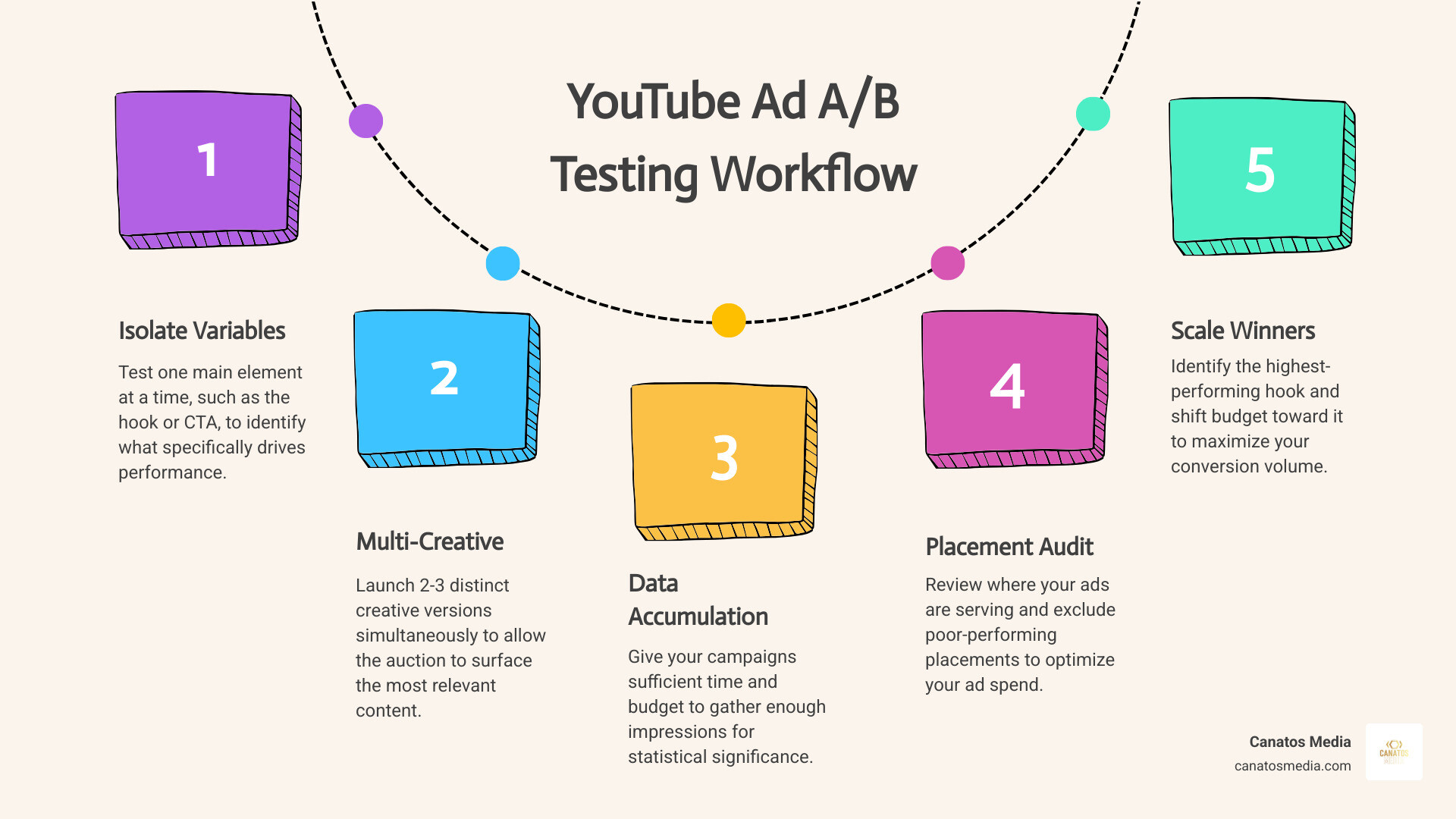
    Here’s what makes YouTube PPC different from a billboard or a Facebook post: you only pay when someone actually engages. And because it runs through Google Ads, the targeting is backed by the most detailed user data on the internet — search history, viewing habits, purchase intent, and more.

    87% of users who discover a brand on YouTube or Google say they took some kind of action afterward. That’s not passive scrolling — that’s a platform built for decisions.

    I’m Nic Canobbio, founder of Canatos Media, and with over two decades in media production and content strategy — including building campaigns that have driven over 60 million social views — I’ve seen how YouTube PPC ads can transform a local business’s visibility and lead flow. This guide walks you through everything you need to run them the right way.

    YouTube PPC ecosystem infographic showing ad formats, targeting options, cost models, and key metrics infographic

    Understanding the Mechanics of YouTube PPC Ads

    At a basic level, YouTube PPC is Google Ads for video. You upload or connect a video hosted on YouTube, choose an objective, define your audience, set a budget, and enter an auction every time a potential viewer becomes available.

    That auction is the part many businesses overcomplicate. It is not just “highest bid wins.” Google also looks at relevance, expected performance, and how well your ad matches the viewer and the placement. So yes, money matters, but so do good creative and smart targeting.

    Compared with other ad models:

    • PPC means you pay when someone engages, such as a qualifying view or click
    • CPM means you pay per 1,000 impressions
    • vCPM focuses on viewable impressions
    • CPA or ROAS-based bidding tells Google to optimize for conversions or conversion value

    Because YouTube runs inside Google Ads, it works nicely with broader paid media efforts. If you want a primer on the big picture, our Step-by-Step Guide to Paid Ads pairs well with Google’s own overview on how to Drive the results you care about with YouTube Ads.

    google ads auction process for youtube video campaigns

    Core Components of YouTube PPC Ads

    There are four moving parts we pay the most attention to:

    • Bidding strategy
    • Ad relevance
    • Audience intent
    • Creative quality

    Bidding strategy controls how aggressively Google pursues views, impressions, clicks, or conversions. Ad relevance affects whether the platform sees your message as a good fit. Audience intent determines how close the viewer is to taking action. Creative quality decides whether anyone cares after the ad starts.

    A quick example: if someone has recently searched for “best apartment in Long Island” or “dentist near me” and then watches a related video, that viewer is much more valuable than random cold traffic. That is why intent-based targeting often beats broad reach when lead quality matters.

    Setting Up Your First Campaign

    If you are launching your first campaign, keep it simple.

    1. Link your Google Ads account to your YouTube channel.
    2. Choose a campaign objective such as Sales, Leads, Website traffic, or Awareness and consideration.
    3. Select a video campaign type and subtype.
    4. Set your budget and bidding strategy.
    5. Build ad groups around audience themes.
    6. Add targeting, exclusions, and devices.
    7. Create your ad with headline, CTA, final URL, and video.
    8. Launch, then give the campaign a few days to stabilize.

    Google’s official walkthrough is here: Create a Video campaign – YouTube Help.

    A few practical setup tips:

    • Start with one clear goal per campaign
    • Use conversion tracking before spending real money
    • Group audiences by intent, not by chaos
    • Upload videos as Unlisted if you do not want them on your public channel feed
    • Create multiple ads per campaign for testing

    If you want more paid media resources after launch, our Tag: Paid Ads page is a useful next stop.

    High-Performance YouTube Ad Formats for 2026

    Not every format is right for every goal. Some are built for awareness, some for clicks, some for conversions, and some for “please remember us when you are ready.”

    The main YouTube ad formats for PPC campaigns in 2026 are:

    • Skippable in-stream ads
    • Non-skippable in-stream ads
    • Bumper ads
    • In-feed video ads
    • Shorts ads
    • Masthead and other premium awareness options
    Format Best For Billing Model Typical Length
    Skippable in-stream Traffic, leads, sales, awareness CPV, CPA, ROAS 7 seconds to several minutes
    Non-skippable in-stream Strong awareness CPM Up to 15-30 seconds
    Bumper Fast recall and frequency CPM Up to 6 seconds
    In-feed video Intent-driven discovery Clicks, views Flexible
    Shorts ads Mobile-first reach and efficient acquisition Varies by goal 5-30 seconds
    Masthead Massive reach Reservation/CPM Premium placement

    If we had to pick the most versatile format for most local businesses, it is still skippable in-stream. You only pay after a qualifying engagement, and it gives you enough time to explain the offer without trapping the viewer in a hostage situation.

    Optimizing YouTube PPC Ads for Mobile Users

    More than 70% of YouTube watch time happens on mobile devices. That means your ad should be built for a thumb, not a theater screen.

    What that looks like in practice:

    • Use large text that can be read on a phone
    • Favor 9:16 vertical or mobile-safe compositions when running Shorts
    • Add captions because many users watch with low or no sound
    • Show the product, service, or benefit immediately
    • Keep landing pages fast and mobile-friendly

    A lot of this overlaps with social creative best practices too. Our take on thumb-stopping ad design over on Stop the Scroll and Start the Toll with Meta Paid Ads applies here as well.

    The 5-Second Rule for Creative Success

    The skip button appears fast. Your ad needs to work faster.

    We often use a simple structure:

    • Hook
    • Amplify
    • Bridge
    • CTA

    Here is what that means:

    • Hook: grab attention in the first 2-5 seconds
    • Amplify: make the pain point, benefit, or curiosity stronger
    • Bridge: explain why your business is the solution
    • CTA: tell viewers exactly what to do next

    Strong YouTube creative also follows Google’s ABCD framework:

    • Attract attention
    • Brand early
    • Connect emotionally or practically
    • Direct the viewer to act

    A few creative rules we live by:

    • Do not open with a slow logo animation
    • Put the brand or offer in early
    • Use real visuals, not generic filler
    • Match the message to the audience’s awareness level
    • End with one clear CTA, not five

    Strategic Targeting and Bidding for Maximum ROI

    The targeting is where YouTube becomes more than “TV, but internet.”

    Inside Google Ads, you can target by:

    • Location
    • Language
    • Age, gender, household income, parental status
    • Affinity audiences
    • In-market audiences
    • Custom intent or custom segments
    • Keywords
    • Topics
    • Placements such as specific channels or videos
    • Customer Match
    • Remarketing

    For local businesses in the tri-state area and Long Island, layering matters. Instead of targeting “everyone,” we can narrow to likely buyers in your service area who are showing purchase intent right now.

    A few useful examples:

    • A multifamily property can target renters in-market, by ZIP radius, plus people researching moving or local neighborhoods
    • A medical practice can target by service area, age bracket, relevant interests, and intent signals tied to treatment research
    • A B2B company can use custom segments based on search behavior and placement targeting on industry-specific channels

    This is also where YouTube supports the rest of your Google strategy. Search captures existing demand. Display expands visibility. YouTube creates demand and warms the audience before they search your name later. Our Meta & Google Advertising page covers that multi-channel view in more detail.

    Scaling Your Business with YouTube PPC Ads

    YouTube works especially well in categories where people want to see, feel, and trust before they convert.

    For multifamily marketing:

    • Video tours, neighborhood lifestyle clips, and amenity highlights help renters picture themselves there
    • YouTube can reach people early in the research phase, before they book a tour
    • It is especially useful when vacancy pressure makes every qualified lead count

    For medical practices:

    • Video can build trust faster than static ads
    • Doctors, clinics, and specialists can explain services, process, or patient experience clearly
    • Retargeting website visitors with educational video often improves conversion rates later

    For B2B lead generation:

    • Explainer videos, demos, screen recordings, and proof-based case content can pre-qualify prospects
    • Placement targeting on relevant channels can work surprisingly well
    • Longer-form skippable ads often outperform ultra-short creative when the service is complex

    Advanced AI and Automated Bidding

    Google AI is now deeply baked into YouTube campaign setup and optimization. Used well, it helps. Used blindly, it can also spend your budget in very creative ways.

    The main bidding strategies to know are:

    • Target CPV for efficient views
    • CPM or target CPM for awareness
    • Maximize conversions for lead generation
    • Target CPA when you have stable conversion data
    • Maximize conversion value or Target ROAS for revenue-focused campaigns

    Our rule of thumb:

    • Use CPV or controlled bidding when gathering early data
    • Shift toward conversion-based bidding once tracking is reliable
    • Do not ask Smart Bidding to optimize around broken conversion tracking and then act surprised

    AI can also assist with:

    • Audience expansion
    • Creative recommendations
    • Asset variations
    • Forecasting and optimization signals

    That same paid media discipline shows up across channels, not just YouTube. For a broader look at campaign automation and social strategy, see Paid Social Media Advertising: From Zero to Hero in One Hour.

    Measuring Success: Key Metrics and Common Pitfalls

    A campaign is not successful because it got views. It is successful because it moved the business.

    The key metrics we track depend on the goal, but usually include:

    • View rate
    • Click-through rate
    • Cost per view
    • Cost per click
    • Conversion rate
    • Cost per acquisition
    • Return on ad spend
    • Watch time
    • Audience retention
    • View-through conversions

    General benchmarks vary by industry and campaign type, but research commonly shows:

    • CPV often falls between $0.10 and $0.30, though some campaigns land lower
    • CPM often ranges from $5 to $15
    • Cold-traffic CTR is often modest
    • Healthy skippable ad view rates are commonly around 30% or higher

    For awareness campaigns, view rate and watch time matter. For lead generation, CPA and qualified conversion volume matter more. For ecommerce, ROAS and conversion value take center stage.

    To keep optimization grounded in reality, we recommend connecting YouTube performance to broader ad management and reporting frameworks like the ones discussed in our Category: Ad Management.

    Top Mistakes to Avoid in YouTube PPC

    The biggest mistakes are usually not technical. They are strategic.

    Common issues we see:

    • Ignoring mobile-first creative
    • Weak hooks in the first 5 seconds
    • Targeting too broad, too early
    • Using unrealistic budgets
    • Sending traffic to weak landing pages
    • Letting the same ad repeat until people mentally file a restraining order

    How to fix them:

    • Build mobile-safe creative with captions
    • Test multiple openings, not just multiple edits
    • Narrow targeting around intent and geography
    • Give campaigns enough budget to learn
    • Match the landing page message to the ad
    • Watch frequency and rotate fresh creative regularly

    A/B Testing and Optimization Tactics

    Good YouTube performance usually comes from testing, not guessing.

    What we test most often:

    • Different hooks in the first 5 seconds
    • Different CTAs
    • Short vs long versions
    • Vertical vs horizontal edits
    • Audience segments
    • Placement exclusions
    • Landing page variations

    A simple testing plan:

    1. Keep one main variable different at a time
    2. Launch at least 2-3 creative versions
    3. Let data accumulate before making changes
    4. Exclude poor placements weekly
    5. Double down on the best hook, not just the cheapest view

    Also make sure conversion tracking is correct. If the platform cannot see the result, it cannot optimize toward the result. That sounds obvious, yet it breaks an amazing number of campaigns.

    youtube ad testing infographic with hooks audiences and bidding infographic

    Frequently Asked Questions about YouTube PPC

    What is the average cost of YouTube PPC ads?

    Typical YouTube PPC costs often land around $0.10 to $0.30 per view or click for many campaigns, while CPMs often range from $5 to $15. Some skippable campaigns can run lower on CPV depending on audience and creative. A practical starting budget is often at least $30 to $50 per day if you want enough data to optimize.

    How do YouTube PPC ads differ from Search ads?

    Search ads capture demand that already exists. Someone types a query and wants an answer now. YouTube ads work more in a discovery mindset. People are watching, learning, comparing, and researching. Search is more pull. YouTube is more push-meets-intent. That makes YouTube great for storytelling, trust building, and warming up future searchers.

    Can I target my competitors’ audiences on YouTube?

    Yes, indirectly. You can build custom segments using competitor-related search behavior or relevant keywords, and you can use placement targeting on specific channels or videos where your audience spends time. The key is to target intent and relevance, not just names.

    Conclusion

    YouTube PPC ads are not magic. They are better than magic, honestly, because they can be measured.

    When strategy, creative, targeting, and landing pages work together, YouTube becomes a serious growth channel for local businesses in the tri-state area and Long Island. It can build awareness, generate qualified leads, support Search and Display, and give your audience a reason to trust you before they ever click.

    That is how we approach it at Canatos Media. We do not treat video as a nice extra and ads as a separate department. We connect cinematic short-form content, paid targeting, and conversion-focused strategy into one system built for measurable growth.

    If you want help building that system, explore how we Partner with experts for end-to-end video marketing.